Tag: dublin

  • “A cowardly choice” – Motion to accelerate Eviction Ban Bill fails in Dáil  

    “A cowardly choice” – Motion to accelerate Eviction Ban Bill fails in Dáil  

    By Jake Mc Laughlin

    A motion to accelerate the progress of the People Before Profit (PBP) Solidarity Eviction Ban Bill 2022 has failed to pass in the Dáil following a vote on Wednesday evening.  

    The votes were counted at 52-69 against the motion.   

    The bill moved to the committee stage of the Dáil back in February but has not progressed since, prompting PBP to claim that the Government had purposely delayed the bill by not conducting an examination through the Select Committee on Housing, Local Government and Heritage.  

    The committee stage involves a section-by-section examination of the bill where amendments may be made by both Government and opposition members. 

    Had the motion passed, the bill would have been automatically moved past the committee stage, bringing it a step closer to becoming state law.  

    The bill seeks to amend the Residential Tenancies Act 2004 by reinstating a ban on no-fault evictions for an “emergency period” of 12 months.  

    Debating the motion on Wednesday morning, PBP TD Richard Boyd Barrett said that since the Government lifted the previous temporary eviction ban in March, there has been a large increase in termination notices for tenancies, with 5,735 notices of termination issued from April to June 21, 21% higher than the 4,753 notices of termination in the first quarter of 2023.  

    Mr Boyd Barrett said that current statistics indicated that a large increase in the number of homeless people is likely in the coming winter months, necessitating the urgent reintroduction of an emergency ban.  

    “There is no doubt the Government’s decision to lift the eviction ban has made the situation worse and it is Orwellian that the Government claims this is not the case.” 

    Dáil chart outlining the results of the vote. Source: oireachtas.ie  

    In the same debate, Junior Housing Minister Kieran O’Donnell said that the temporary ban “did not have the desired impact in reducing homelessness numbers”.

    “Any merit in introducing an eviction ban in the short term would be countered in the medium to long term by a significantly reduced housing supply for rent. Landlords would continue to exit the market and the signal would be to avoid any further investment in the sector,” he said.  

    “At the crux of everything we do is the need to increase the supply of housing. Introducing an eviction ban would not do that,” he added. 

    Mr Boyd Barrett said that although people continued to enter homelessness during the temporary ban, “the vast majority of those did so because they had received notice to quit prior to the introduction of the temporary ban”.

    He added that despite Government arguments suggesting an eviction ban would encourage landlords to leave the market, the Central Statistics Office (CSO) had recorded a seven percent increase in privately rented homes between April 2016 and April 2022.  

    CSO statistics were noted to conflict with numbers put forward by the Residential Tenancies Board (RTB) which stated that tenancies registered from 2017 to 2021 fell by almost 12 percent. 

    The RTB has said that differences in data collection methods are a primary reason behind the contrasting statistics, with the CSO adding that census data is generally completed by tenants, whereas RTB registrations are made by the landlord. 

    Considering the conflicting data, Mr Boyd Barrett said that the differing figures are a result of institutional investors and landlords failing to register with the RTB.  

    After the vote, Mr Boyd Barrett took to X, formerly known as Twitter, to protest the result describing it as “A cowardly choice” made by the Government.  

    Source: @RBoydBarrett on X

    As of June 2023, 12,600 individuals were recorded accessing emergency accommodation. Almost 4,000 of those were under the age of 18, according to a report issued by the Department of Housing Local Government and Heritage.  

    Data table supplied by Department of Housing, Local Government and Heritage   

    Sinn Féin TD Eoin Ó Broin claims that current homelessness figures fail to include individuals in domestic violence refuges, direct provision or those sleeping in hostels funded by religious orders.  

    “It does not even begin to contemplate the unknown number of people who are hidden homeless and are forced to sofa surf or sleep in overcrowded, cramped or unsuitable conditions with family and friends,” he said.  

    “Even if you take those initial categories, the real level of adults and children in emergency accommodation tonight is somewhere closer to 18,000.”
  • Lost and Left Behind: The Ongoing Struggle with Homelessness in Ireland

    Lost and Left Behind: The Ongoing Struggle with Homelessness in Ireland

    by Alla Pavlutska

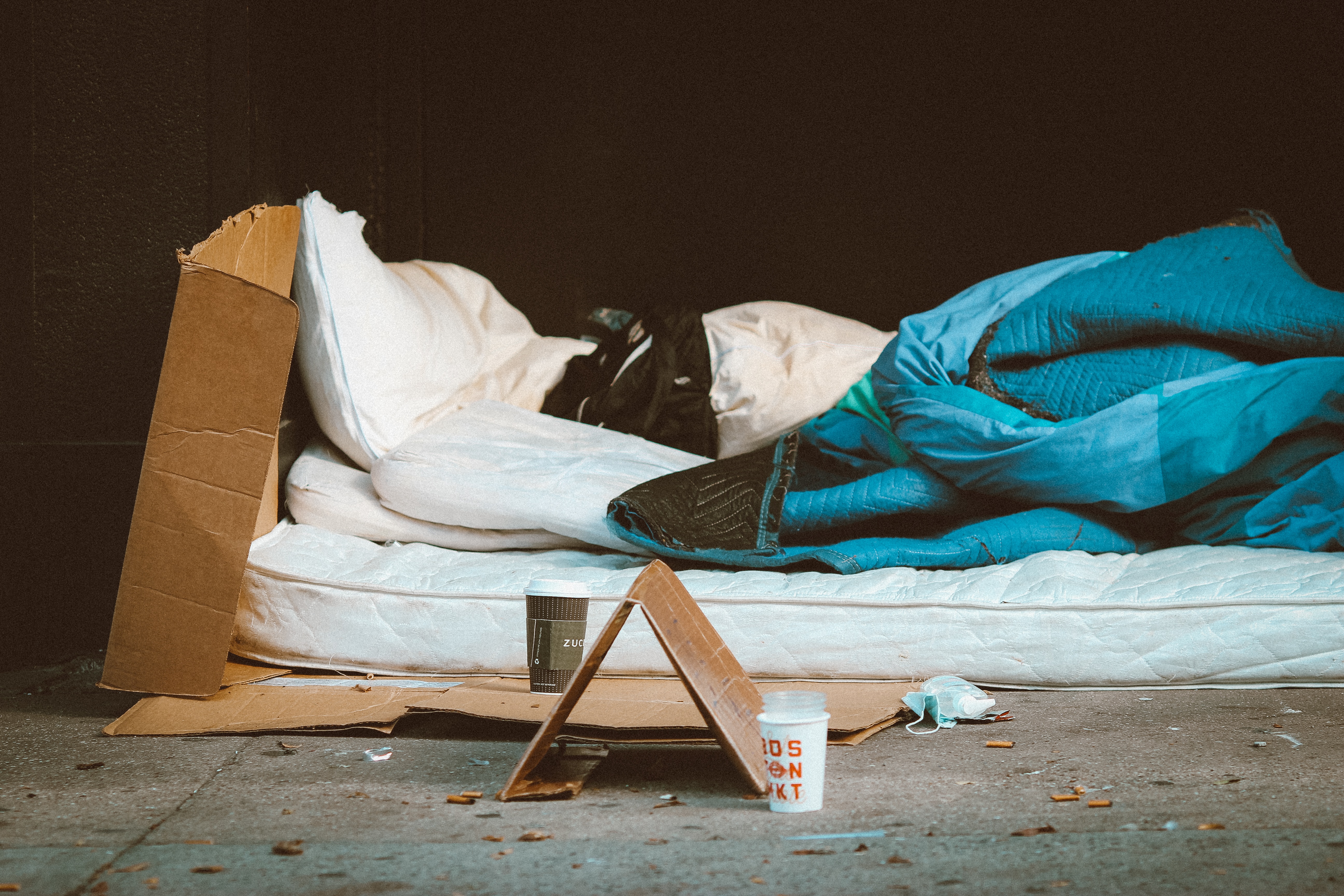
    Photo by Jon Tyson on Unsplash

    Homelessness is an issue that has been plaguing many countries around the world, and Ireland is no exception. Despite efforts by various organisations, the number of people experiencing homelessness in the country has continued to rise. In March 2023, a new report was released that shed light on the current state of homelessness in Ireland. TheCity will explore the key findings of the report, the factors contributing to the issue, and the measures being taken to address it. It will also delve into the lived experiences of those affected by homelessness and the impact it has on their lives.

    According to the latest report from the Department of Housing, the number of people accessing emergency accommodation in the country decreased slightly in February to 11,742 – a drop of 12 individuals compared to the previous month. However, it was a 23% increase over a year – from 9,492 in February 2022. 

    A total of 8,369 adults and 3,373 children were living in emergency accommodation during the week of 20 to 26 February. There were 1,599 families, of which 876 (55 per cent) were headed by single parents.

    The figure includes 5,057 Irish citizens, 1,862 European Economic Area / UK citizens and 1,450 non-EEA citizens. 

    “In Dublin, where over 70% of the homeless population reside, the number of people in emergency accommodation actually increased in February 2023,” says Caoimhe O’Connell, spokesperson for the Dublin Simon Community.

    She explains that the reason for this is a lack of supply. As people continue to fall into homelessness, fewer and fewer are exiting, causing a blockade in the emergency accommodation system.

    “People are spending longer than ever before stuck in emergency accommodation due to the chronic lack of social and affordable housing, which is robbing people of their futures as sustained periods in emergency accommodation negatively impact the physical and mental health,” she says.

    Kenny Eivers, a Secret Street Tours guide who spent a decade living on the streets of Dublin, is convinced that the statistics are inaccurate and that the number of homeless people is higher than reported.

    “The government is not doing much [to solve this problem],” he claims. “They’re building new hotels and offices, but they’re not building apartments that people can afford. You won’t be able to pay three and a half grand a month to rent a two-bedroom apartment. It’s crazy.

    “I think we need to look at Norway and Finland. These countries have a lot better [fight homelessness] strategy. Whereas over here, the rich get richer, and the poor get poorer.”

    Housing for All

    Despite Mr Eivers’ criticism, the Housing for All plan launched in September 2021 reveals that measures have been put in place to deal with the homelessness crisis. The plan aims to ensure that everyone in Ireland has access to a secure and affordable home and has set a target of delivering 300,000 new homes by 2030.

    The latest report shows that over 20,000 new social houses were built for the first three quarters of 2022. Furthermore, the building commenced on almost 21,000 between January and September last year.

    Eviction ban

    An eviction ban was in place during the winter emergency period from 30 October 2022 to 31 March 2023. It had been introduced as a temporary measure to provide relief for renters and homeless services. However, a bill aimed at extending this ban until 31 January 2024 was rejected by the Government.  

    One Man’s Journey to Overcoming Adversity

    Kenny Eivers told TheCity that he had been struggling with addiction for a long time.

    “I started off with alcohol at the age of 11,” he says. “I couldn’t stop, no matter what. If I took drugs, I just took more than everybody else. In my late teens, I found heroin. Eventually, when you’re on heroin, you either end up in homeless services or in prison.”

    Subsequently, the latter happened to him. However, he is sure that it saved his life.

    “If I hadn’t ended up in prison, I would have been dead. That’s how some of us survive. It’s crazy because you don’t really do drugs there. You just eat healthily and go to the gym.”

    There are people, though, who “did not make it to prison”. This is what Mr Eivers remembers about the worst day of his life.

    “It happened around 14 years ago. I was in a hostel. My friend and I bought heroin and used it. Then I woke up, and he didn’t. He overdosed.”

    However, serving time in prison had an unfortunate consequence. Upon his release, Mr Eivers found himself without a place to call home, effectively rendering him homeless.

    “I kept on overdosing all the time, purposely trying to kill myself, and then I kept on being found by paramedics. The last time it happened, I woke up in Beaumont Hospital. There was a guy in the bed next to me, who was dying of cancer. He had a breathing machine. I was left lying there for about six hours. Basically, I was listening to his last breaths, and something inside my head just clicked and said I couldn’t go on like this. It was my rock bottom. I decided there that I would change.”

    It was a long journey for Mr Eivers. He had to recover, put in a lot of effort to improve himself, and practice before he eventually became a guide. Currently, he provides tours, using his own past experiences of being homeless to bring attention to the issue.

    Root Causes of Homelessness

    There are various reasons why people have nowhere to live. According to the Dublin Region Homeless Executive, the most popular are:

    • Shortage of housing supply
    • Low income
    • Unemployment
    • Mental health problems
    • Addiction

    Words You Should Never Say

    “I’ve experienced when people asked me, ‘Why don’t you go out and steal?’” says Mr Eivers. “I’ve spent years robbing and stealing, and I don’t want to go back to prison again.”

    You don’t look homeless

    “I was begging, and a guy came up to me and went, ‘Why are you doing that? You have a pair of €250 runners [Nike Air Max].’ I said these runners were given to me. I didn’t avoid them, and they’re actually fake.”

    Why don’t you stay in a shelter?

    “Sometimes it’s safer on the streets than in a hostel. You can have ten people in a room. Then, you wake up, and your stuff is gone. You get robbed or even beaten up.”  

    Get a job

    “People think we’re all the same. But they don’t know that some people who are homeless were abused as kids and have childhood trauma, addiction, or mental health issues. You can’t just get a job if you have mental health issues. You need to work on yourself. It’s not straightforward.”

    How to Interact with People Experiencing Homelessness

    There are a lot of stereotypes about people affected by homelessness. However, Kenny Eivers says they can be the nicest people you’ve ever met. “Some are very good artists, musicians, painters, rappers,” he says. “You can offer to buy them coffee, tea or cigarettes. If you don’t have money, just be polite. You don’t even have to say words, only acknowledge and smile. A smile makes someone’s day.”

  • Dublin Christmas Lights During Energy Crisis 

    Presenter : Chloe Seymour
    Producer: David Little
    Video / Edit : Injae Kang

    TheCity.ie asks residents of Dublin City Centre about the atmosphere created by the Christmas lighting and asks whether the government is doing enough to keep electricity bills low for the holiday season. 
  • Rory’s Stories talks mental health

    Rory O’ Connor, author of the bestselling book Rory’s Story, delivered a seminar on Monday aimed at tackling mental health stigma to TU Dublin students.

    Known as Rory’s Stories on social media, Mr O’Connor is a prominent advocate for mental health in Ireland today, serving as brand ambassador for the Construction Industry Federation.

    During his talk at Blanchardstown Campus, he shared details about his own struggles and experiences to raise awareness for suicide prevention and mental health awareness.

    “When I was a young fella my cousin took his own life completely out of the blue, had everything going for him from the outside world but obviously he didn’t feel that internally. 

    “This is why mental health and suicide prevention is so important and trying to find ways to combat it.

    Speaking about a particularly low point in his life, Mr O’Connor said “In 2013, I hit rock bottom. The club I adored playing for were knocked out of the championship, when we were favourites to win.

    “I took that to heart, the next day I went into Dublin and spent all day in the bookies and pubs, running away from my problems.

    “I put my last 200€ on a roulette table in a casino and lost it in minutes. I should have really said to my friends I was going to go off gambling, but that’s the thing with addiction, you never want to admit it.”

    Since then, Rory has built a career doing what he loves, producing comedic skits and performing stand-up routines, while doing more to improve his mental health.

    “I met with Gerry Cooney from the Rutland Centre, he told me how my addictive personality could be used on a positive platform like some of the most successful people in the world.

    “I made a Rory’s Stories Facebook account in 2014, where I started to do sketches of the GAA and these started to go viral very quickly. That’s where Rory’s Stories came from.”.

    “I can’t emphasise how important exercise is for your mental health, along with talking about the good days and bad days.”

  • This weekend will be Ireland’s coldest of the year so far

    A winter weather advisory for Ireland has been put in place until Monday, with temperatures set to reach as low as minus seven degrees overnight.

    The advisory was issued by Met Eireann on Tuesday – which takes effect on Thursday – with an extra yellow warning for ice set to be in place from 10pm on Thursday night until 10am on Friday. 

    The most severe impacts will be on driving conditions which could be treacherous in places on Thursday morning, particularly during commute times,” said Meteorologist Andrew Doran Sherlock. 

    “An Arctic air mass will bring sharp to severe frosts with ice on footpaths and roads. Showers of hail, sleet, snow and freezing rain are likely with fog and possibly freezing fog towards the weekend,” said Andrew. 

    Ice in Ireland during December 2010, the country’s coldest recorded month

    “A cold front will hit Ireland on Wednesday, that’s going to introduce Arctic air, the air mass will be coming directly down from the Arctic,” said Met Éireann’s head of forecasting Evelyn Cusack.

    “That’s coming down into all of northern Europe, Ireland and the UK. That’s going to introduce very cold weather for Thursday, Friday, Saturday, Sunday and next Monday, possibly longer.

    We will have daytime temperatures really close enough to zero, just low single figures at best. The nighttime temperatures will be gradually dropping down,” said Evelyn. 

    A statement from Met Eireann reads: ‘Fog is essentially thick, low-lying cloud composed of tiny water droplets where visibility is reduced below 1km. The reduced visibility is a major hazard for those travelling on or near roads. 

    ‘Freezing fog is where the water droplets are supercooled, and while suspended in the air, can be converted to ice upon contact with a surface such as a car windscreen. This leads to further hazardous driving conditions.

    ‘Black ice is especially dangerous as it is invisible and can be mistaken for wet surfaces – leading to treacherous conditions on roads and paths. Freezing rain can also lead to ice build-up on car windscreens impairing visibility,’ the statement read.

    A statement has not yet been issued by the department of education on the closing of schools due to the cold weather. If various factors are at play, such as the conditions of the school, its facilities and population will determine whether they will be advised to close. 

    Cold weather can have quite a few negative effects, as noted by the HSE: 

    ‘The negative health effects of cold weather start at temperatures of 4-8°C (39 – 46°F) or below’. 

    ‘It can affect your body’s ability to fight off viruses and infections. The body is not as effective at fighting a virus when cold air enters the nose and upper airways, so viruses such as the common cold, the flu and COVID-19 often spread more easily in the winter.

    It can worsen underlying health conditions such as heart and lung disease and can increase the risk of a heart attack, stroke, falls, injuries and hypothermia. It is also associated with an increased risk of mental health problems, such as depression and anxiety.’

  • Vacancy reports lack correct ‘classification and consistency’ says TU Dublin Planning professor

    A planning professor has called for a consistent definition of vacancy and dereliction across all stakeholders as “fit for purpose data has not been achieved”.

    The Residential Buildings Report by GeoDirectory found that the number of vacant properties in Q4 of 2021 represented 4.4% of the national housing stock.

    In comparison, the Census Vacancy report shows 166,000 vacant properties in Ireland, with 48,000 dwellings recorded as vacant since 2016, according to the Central Statistics Office (CSO).

    Helen Murray O’Connor of the School of Transport Engineering, Environment & Planning at TU Dublin has called for ‘stronger definition and classification’ when preparing reports on dereliction and vacancy. 

    “These reports are authoritative and statutory sources of data, but we need to look at what definitions they are using,” she said. 

    GeoDirectory says their database distinguishes between a ‘dwelling’ which is a single residential unit as opposed to a ‘building’ which can comprise one or more dwellings”, the Residential Building Report predominantly focused on individual ‘dwellings’.

    In comparison, the CSO, who deems a vacant dwelling as “classed as vacant by census enumerators if it is unoccupied on Census night, is not used as a holiday home and is not usually inhabited by occupants who are temporarily absent at the time of the census”.

    The Census definition of a vacant dwelling is a point-in-time indicator taken on Census night as to whether the property was inhabited or not on Sunday 03 April 2022.

    The GeoDirectory report contained a range of variables on residential dwellings such as address point for each dwelling and building type, dwellings by building type (detached, semi-detached, terraced, duplexes, bungalows, temporary), there was no separate classification for apartments, but GeoDirectory defines an apartment as a dwelling which exists in a building of 5 or more dwelling and buildings under construction. 

    “Although both the Census and GeoDirectory’s databases are thorough and useful data, I do not think there’s consistency in it as we don’t know what they are measuring and what they are counting,”

    “There needs to be a consistent definition between vacancy and dereliction across all researchers, publishers, county councils, and government departments to achieve truly fit-for-purpose data”, O’Connor said. 

    Reports findings 

    According to the report, the counties with the highest rates of vacant properties were Leitrim (13.3%), Mayo (11.9%) and Roscommon (11.6%). Dublin had the lowest vacancy rate with 1.4%, followed by Kildare (2.1%), Waterford, and Louth (both 2.8%).

    In addition, the report said there were 22,096 residences classed as derelict, a 7.3% decrease since 2016. 

    Annette Hughes, director of EY Economic Advisory, said “based on our analysis for this report, the 90,158 vacant residential properties and the 22,096 derelict residential properties across Ireland should be investigated to ascertain if they can be returned to the housing stock, a move which would also support our retrofitting targets.”

    Kevin Duff, Planning Officer for An Taisce believes stakeholders do not have the resources or the correct understanding of the vacancy and dereliction issue in Ireland. 

    “We need to look at how councils and agencies are differentiating between a dwelling or a building, while also ensuring the stakeholders have defined the difference between a vacancy and a derelict building”, he said.

    Duff believes the regeneration or redevelopment of derelict buildings can help aid the current housing crisis, whilst also maintaining the heritage and history of the city. 

    The redevelopment of formerly derelict buildings at 71-75 Aungier Street is a perfect example of this he says. Truncated buildings were retained and reconstructed adding additional stories, with individual shop units developed below. 

    Speaking of the redevelopment, Duff said “This is a great example of inner-city regeneration, where 

    derelict buildings were maintained and reconstructed with a new student housing development behind,”

    “It goes to show how derelict buildings can provide a good mix of uses that add to a city.”

  • Scenes from the FAI Cup Final

    Derry City and Shelbourne played out this season’s FAI Cup Final with the favorites Derry winning 3-0. A largely uneventful contest was held in front of a fantastic crowd of 32,412 at the Aviva Stadium. Here are some photos describing the day.

  • Just three people in Dublin prescribed medicinal cannabis

    By Johnny Kelly

    Medicinal Cannabis- photo courtesy of BBC News

    There are currently only three people in the Dublin area receiving medicinal cannabis according to the Health Service Executive.

    The figure was confirmed to TheCity.ie  following a freedom of information request

    The Medical Cannabis Access Programme (MCAP) was launched in the summer of 2019 by then Health Minister Simon Harris as a pilot programme for five years. 

    Barry Fuchs (30) from Swords was diagnosed with an inflammatory disease called Ankylosing Spondylitis a few years ago. The condition is a type of arthritis that causes the vertebrae in the spine to fuse. 

    Speaking to thecity.ie he describes his pain.

    “My condition causes me to be very stiff and sore, especially in the mornings there before I move around and do my stretches,” he says.  

    Once simple tasks such as tying his shoelaces or putting on his jumper have now become ordeals. 

    “I asked my GP about the medical cannabis but he told me that he doesn’t think I’m at that stage yet, so, maybe if I get very bad he might let me,” he adds with optimism. “I just think medical cannabis could help just take your mind off it at certain points during the day and also help you sleep at night.”

    Currently the MCAP only applies to people with multiple sclerosis, people with severe epilepsy or patients suffering bad side effects from chemotherapy. Researchers don’t know for certain if cannabis can ease the symptoms of arthritis, but some studies suggest it helps with pain relieve and aids sleeping. 

    TD Gino Kenny told thecity.ie that “hopefully the MCAP will be expand to include other conditions. There is an ongoing review into the programme and early next year they will announce if the programme should include any other conditions.”

    The People before Profit TD has been a vocally prominent supporter of decriminalising cannabis and legalising medicinal marijuana. Last week he introduced a bill to amend the Misuse of Drugs Act 1977 that would legalise cannabis for personal use. “Seven grams would be personal use,” Mr Kenny tells thecity.ie, adding “this [would be] emulating what has happening in Malta and Luxemburg.” 

    The bill first needs to be approved by Government TDs before going for a vote. “Hopefully early next year we will have a debate and more crucially a vote to see if the bill should progress to the next stage of the process. Even if it does progress that doesn’t necessary mean it will become law,” Gino warned.

    According to Euronews.com, medicinal cannabis has been available in Germany since 2016. The German health minister unveiled plans this month to legalise it for recreational use. 

  • Sing for Vulnerable Society at Christmas

    By Injae Kang

    With shining Christmas lights across Dublin City Centre and colourful projections illuminating 16 City Centre locations, Christmas is just around the corner.

    While many people are revelling in Christmas, which is widely regarded as the season of giving and spending time with loved ones, there are volunteers for people who are sleeping rough on the streets, not just on Christmas day.

    As the number of people who are at the risk of homeless or at risk of homelessness has increased due to the cost of living crisis in Dublin, Dublin Simon Community provides essential services for those who need support. 

    A crowd of people in a city

Description automatically generated with medium confidence

    The Christmas lights on Grafton Street have been switched on. Photo by Injae Kang

    “The number of elderly people experiencing homelessness in Dublin has increased by 28 per cent in the last 12 months. A record-breaking number of people will spend this Christmas in homelessness”, Roisin Coulter who is a community and events manager at Dublin Simon Community said.

    “As housing supply remains at an all-time low, these people will have no indication of how many more Christmases will be spent this way. Several more will spend their Christmas at home in fear that it may be their last as the cost-of-living crisis pushes more and more people below the breadline”, she said. 

    Number of People Homeless in Ireland. Source by Department of Housing, Planning and Local Government

    With over 200 volunteers, choirs, and artists who give up their time during the Christmas days, Dublin Simon Community will plan to hold upcoming Christmas events for the purpose of raising much-needed funds for those most vulnerable in Irish society who are homeless or at risk of becoming homeless.

    The Sing For Simon event will take place on the 8th of December in the Powerscourt Townhouse Centre. Wild Youth, the Lucan Gospel Choir, Curtis Walsh, and others will be performing and showing their support for the event.

    Dublin Simon Community will also have a ‘Carolathon’ event, which is 24 hours of carolling on the streets of Dublin. Where Choirs will come together in a relay to raise vital funds for the events and services.

    Also, its Christmas events will round off with its traditional Christmas Eve Busk outside the Gaiety Theatre. In the busk, “For over 10 years, some of Ireland’s favourite artists have come down to show their support and raise vital funds for our work”, she said. 

    Students from Trinity and UCD founded the Dublin Simon Community in 1969 to provide soup and sandwiches to people sleeping rough in the City Centre.

    “Dublin Simon works to prevent and address homelessness in Dublin, Kildare, Wicklow, Meath, Louth, Cavan and Monaghan. We provide services at all stages of homelessness and enable people to move to a place they can call home”, she said.

    In addition to the Christmas events, Dublin Simon Community provides a variety of services for those who are homeless or at risk of homelessness. A variety of services are provided, including emergency accommodation, soup runs, health care, and treatment.

    She spoke about one of the charity events provided by the organization: “Next year will mark the 40th year of what was the Fun Run but is now the Home Run. Home Run is a fun and challenging, five-mile race through our capital’s beautiful Phoenix Park on the first Saturday in October.

    “This is more than just a run. Each year members of the public, the business community, students, teachers, Simon staff, volunteers and clients all take part in this fantastic event. They run, walk or jog through the park; coming together as a community to challenge themselves and show their support for those living through the nightmare of homelessness.”

  • Support Local with TheCity.ie’s Market Guide!

    Support Local with TheCity.ie’s Market Guide!

    By Sadhbh McDonnell

    Supporting local has never been more important, with an increasing number of small businesses feeling the strain of the current cost of living crisis. TheCity.ie has created a guide to markets happening all over Dublin.

    Munya Market is an up-and-coming late-night market, which takes place in Fegans 1924 on Chancery St. Dublin 7. The late-night market is one of Irelands firsts and started in June this year by Oran Lapettina. 

    Every Thursday and Saturday from 6pm-10pm, the café consists of stalls selling Jewellery, photo prints, crochet pieces and preloved clothes. Flash tattoos from tattoo artists such as big smoke ink, are also available from €30.  The market also hosts open mic and hip hop nights for you to enjoy while browsing the stalls.

    Speaking to Olivia Grimes, a student from Maynooth, she described how helpful the market has been for buying and selling clothes at reasonable prices. “I’ve rented a stall at the market before, and it’s really helped me make and save some money as a student”. She added, “it almost feels like a real life Depop, and there’s always a good atmosphere on the night”.

    A picture containing chart

Description automatically generated

    Via Munya Market Instagram

    Munya Market have recently began collaborating with The Soundhouse Dublin, to host an extended late-night market.  The event is free entry all night and celebrates local talent from tattoo artists to crochet designers. It’s a whole venue takeover, with local DJs playing until 2:30am. Dates for future Soundhouse collaborations can be found on Munya Market’s Instagram.

    If you’re on the hunt for a good Flea Market somewhere in Dublin, The Useless Project, hosts a monthly market in The Workman’s Club located near Temple Bar. The founders, Geraldine Carton and Taz Kelleher, have announced they’ll be hosting a Christmas market on the 18th of December.

    A picture containing text, indoor, closet

Description automatically generated

    Via TheUselessProject Instagram

    They stated on their Instagram it’s their biggest flea market yet, with over 50 stalls taking over three floors. Vintage fashion, candles, homeware, crafts, and prints will be found throughout the market, all sustainably sourced and made. Combined with complimentary drinks and music. 

    The Alternative, a Dublin based cultural hub, are also hosting a Dublin Christmas Flea Market in The Grand Social, on Liffey Street. The market will be taking place from Saturday the 10th of December to Sunday the 11th of December.  From 11am to 4pm, the market will consist of 25+ stalls selling fashion, art, and some fun Christmas décor across all four rooms. The venue is expecting a large turn out so to guarantee entry, event tickets can be found here, free of charge.

    WeloveMarkets is also hosting their annual Dandelion Christmas Markets, every Sunday from the 13th of November to the 19th of December in the Well located near Grafton St. If you’re looking to support local businesses this Christmas pop down between 12pm to 5pm for unique, personal, and handmade gifts with over 60 stalls across the whole venue.  

    Jewellery and accessories all handcrafted by Ciarna Pham are available at her own stall, ‘KIKI NA ART’ at this market. Ciarna specialises in hand painted earrings and necklaces of iconic public figures such as David Bowie, Kate Bush and many more. 

    Via KIKI NA ART Instagram 

    According to her website, “I studied fine art painting and also love photography, so I wanted to find a way to mix my love for fashion, art and photography in a way that was funky and wearable.”

    She added, “I always liked the idea of people wearing religious icons around their neck, however I am not religious myself, so I decided to work on the idea of modern icons.”

    If you can’t make these dates, The Liberty Market takes places weekly in Dublin 8 from 9:30am to 4:30pm every Thursday through to Saturday. It’s one of Irelands’ longest running markets, selling freshly made pastries, cakes, and other sweet treats. 

    If you’re shopping on a budget this Christmas, the market is an ideal alternative to higher end retail shops, offering low prices and great bargains.

    On The Liberty Market website they stated, “we work on tiny profit margins (a fraction of your average shop). We have vastly reduced overheads compared to average shops and the overheads which do apply are shared amongst all the traders”.

    They added, “we simply have no time for overcharging customers.”

    If you can’t find what you’re after there, you can always pop down to the Ha’penny market which takes place every Saturday from 12pm to 6pm.  With no market the same as they rotate stall holders each week.

    The Ha'penny Flea | Collect Ireland

    Via www.thegrandsocial.ie

    With an abundance of markets to choose from you’ll have no trouble finding the perfect Christmas gifts, that won’t break your bank account, whilst also supporting Irish local businesses.