With consumer demand growing, many people are looking for a chance to get a look at the latest cars on sale.
The NEVO Electric Vehicle show was held in the RDS on November 8th and drew a crowd of around twenty thousand people across the day.
The show was an exhibition of the latest electric and hybrid-electric vehicles on sale in Ireland, offering customers a chance to get up close with the cars.
But they weren’t just to be looked at, as customers could also book a test drive with a car of their choice.
There were also demonstrations, talks, and information available to people about financing, home charging, and solar power.
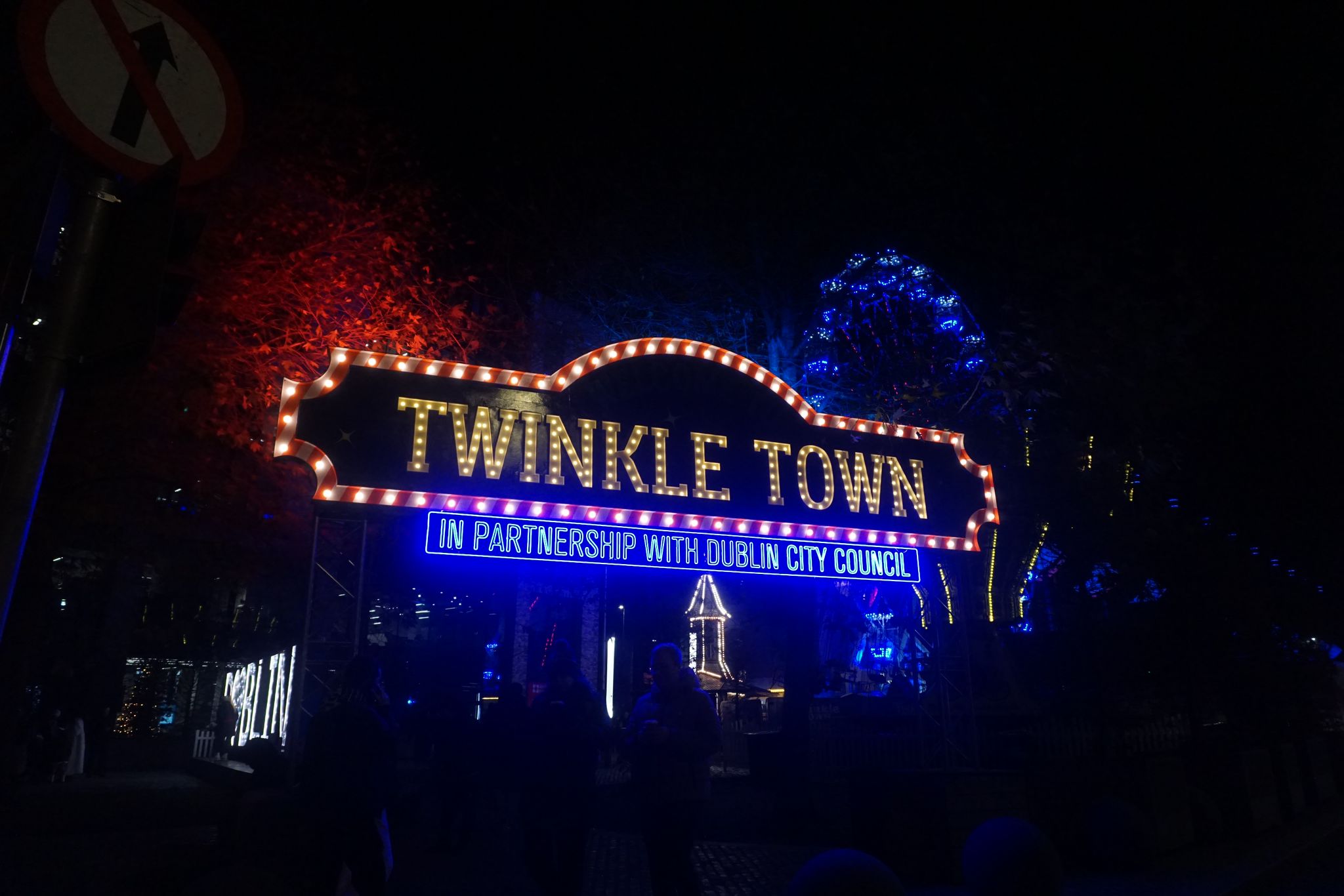
The festive market, located in Smithfield Square, opened its doors on November 28th and will run until January 4th.
The hustle and bustle of the market really only begins after dark. With big crowds walking through the little square.
The Christmas Market is in partnership with Dublin City Council.
As you take a stroll through the Market, you will be met with lots of festive activities. The Market offers ice-skating, Santa Panto, an Ice rink, a Spiegeltent, a Ferris wheel, plenty of food and drinks, and of course, small gift stores alongside the chaos.
Click here to begin a walk through starting at the entrance of the market and guiding you through the bustling crowds.
A deep look at a woman whose journalism, feminism, and anti-colonial solidarity shaped both her career and the students she inspired along the way.
“It’s my DNA… I have to do it.”
These words are spoken with absolute certainty by a journalist who has spent decades challenging power structures. Roisin Boyd’s journalistic journey and ethical and moral compass is shown through her courageous storytelling.
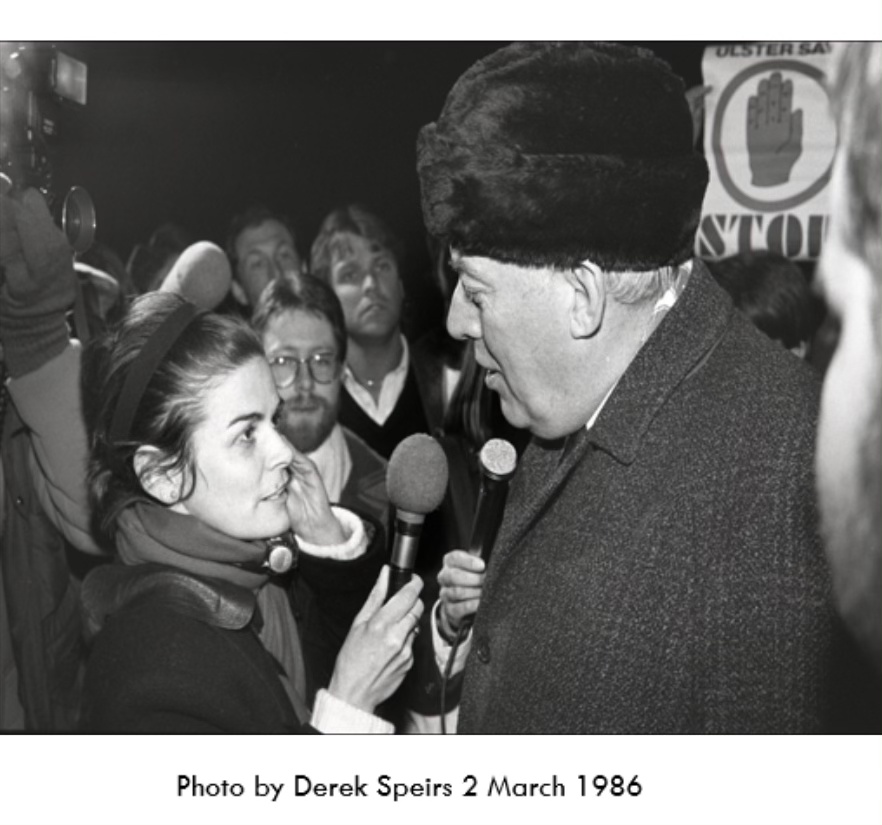
Boyd’s path to journalism began in the politically charged atmosphere of 1980s Ireland, a place held in a political chokehold by profound social constraints. “I was interested in becoming a journalist from the age of 14,” she recalls. “My family was quite political, and my mom was a feminist. There were meetings in our house, feminist women’s liberation meetings.”
These weren’t just your average family gatherings; they were revolutionary assemblies. In an Ireland where contraception was restricted, divorce was forbidden, and women’s voices were systematically marginalized, these meetings were acts of radical resistance.
A common misconception when talking about the issues above, and many others, is that nothing was being done about the unjustness of it all, but many voices like Boyd’s spoke out against them even when that was maybe not the norm.
“We were not all lying down, taking it,” Boyd said. “There was resistance, and people were protesting.”
From the get-go Boyd stood up and wrote about what she believed in. Her early journalistic experiences were rooted in feminist publications. At a time when many young women were confined to traditional roles, Boyd was writing for Wicca, a feminist magazine that challenged societal norms. Later, at Trinity College, she worked on Bell Jar, named after Sylvia Plath – another important symbol of women breaking through systemic silences.
A defining moment of her early career came with Spare Rib, a radical London-based feminist magazine. Boyd became the first ever Irish woman on its collective, a position that would reshape her understanding of journalism and activism.
“When I was in London, it was really tense,” she explains. The time that Boyd made this move was during the height of the Troubles in Northern Ireland, a period of intense political conflict. Being Irish in England meant navigating difficult political landscapes. For Boyd, this meant that every story was potentially considered controversial.
One of Boyd’s most difficult and controversial articles, “Why You Can’t Be a Zionist and a Feminist,” shows her fearless approach to journalism. She interviewed an Israeli Jewish woman, a Lebanese woman, and a Palestinian woman in the aftermath of the Sabra and Shatila massacres. This was one of the most harrowing massacres committed in the Lebanese civil war, a conflict known for its violence.
“All hell broke loose,” she remembers. Shops in New York refused to sell Spare Rib, and she faced accusations of anti-Semitism. “It was so painful and so difficult to be accused of being anti-Semitic when I was trying to amplify voices of resistance and solidarity. And to highlight the horror of what had happened in the camps.”
Looking back, what Boyd did is somehow even more impressive today. Decades before it became more “acceptable” to speak openly about these topics, she was amplifying the voices that were ignored, showing how journalism really can challenge silence. Now, with more people speaking out, even the younger generation, it’s clear how necessary that courage was.
Boyd says that “the slur of anti-semitism is frequently weaponised to silence critics of Zionism and the Israeli state’s aggression against Palestinians.”
Returning to Ireland, Boyd joined RTÉ, where she encountered another form of censorship through Section 31, a law restricting media coverage of the Northern Ireland conflict. “This had a disastrous effect on RTÉ’s coverage of the north and human rights issues,” she explains.
Yet Boyd was not easily silenced. She found innovative ways to tell important stories, working alongside colleagues who shared her commitment to truth. Her reporting spanned international landscapes from conflicts in Somalia to highlighting the struggles of cleaners at University College Dublin, all with the same goal: to have voices heard and make a difference.
“Even with censorship, there were always ways, if you’re a good journalist and you’ve got supportive colleagues, to do the story,” she said. “But you have to work a lot harder to make sure your story gets out.”
Boyd has always balanced journalism and activism and never backed down from what she believes in. She was Head of Communications for the Irish Refugee Council from 2007 to 2010 and, when working with refugees in Ireland, she used and shared her skills by training refugee women so that their voices could be heard.
Her involvement with the Ireland Palestine Solidarity Campaign also demonstrates her belief in using your voice for the right reasons, whether that is in your career or day to day life.
Boyd’s dedication to speaking out is not just in a journalistic sense but in everything she does.
“Journalism always will matter,” she said, “the truth obviously really matters, and finding the truth often takes a lot of time and energy.”
Her approach to journalism is very layered. “I would have aligned a lot with women from the Global South,” Boyd said. “I interviewed Nawal el Saadawi, a very well-known Egyptian feminist who had been campaigning against FGM in the 80s.”
Her work never just skimmed the surface or the news agenda: Boyd dug deep, connecting human’s personal experiences to broader social and political struggles and issues.
In recent years, Boyd has been increasingly vocal about emerging challenges in Irish media and society. The rise of far-right narratives, the treatment of immigrants, and the systematic marginalization of people of colour are not just news stories for her, they are urgent calls to action.
“I think there’s an amazing opportunity for good journalism today in Ireland,” she said. “How do we communicate with each other on these topics? Because a lot of it’s just shouting. There’s no real communication.”
Her advice to young journalists is both valuable and inspirational. “If you’re going to be a journalist, you need to be engaged. You can’t just switch off from the realities happening around you.”
Boyd retired from her role as a lecturer in TU Dublin last year, but in her time there she inspired and taught a generation of journalists by showing them that their work is not just a profession, but a responsibility.
Boyd’s students had firsthand accounts in something invaluable, especially because it was reporting at times that some were not around for.
“I always like to say to people who weren’t around then, to remember that there was huge resistance in Ireland at that time.”
Boyd highlights this important fact because the students were the next generation at the sidelines of history unfolding.
Her motivation remains unchanged, even after retirement, as Boyd still speaks out in what she believes in, “It’s my DNA… I have to do it.”
In a world where the tensions rise higher every day Róisín Boyd continues to use her voice.
Her legacy is not just in the stories she’s told, but in the countless journalists she has inspired to see their work as a form of resistance.
In the words of Boyd, “Journalism is about finding the truth, no matter how difficult the journey.”
There are no cheap shots when it comes to the price of coffee
The business of coffee, like any other business, has its up and downs. However, the cost of coffee in the last few years is showing an upward trend.
Statistics released by the Central Statistics Office show that coffee prices in Ireland will have risen by 10.6% by the beginning of November 2025. This is also in line with a general increase of the overall Consumer Price Index (CPI), which has increased by 2.9%.
Internationally, coffee prices have risen by 109% globally, and this is just in the past year. In the past five years there has been an increase of 145%, which is a very high jump from previous years. This has to do with the type of coffee beans being used, the most popular coffee bean being Arabica.
Stephen Kennedy, a café owner in Dublin has been involved in the business of coffee for ten years. “It is challenging. Coffee prices have risen by about 40% in the last three years,” said Kennedy. “There are several reasons for this. Firstly, the demand for coffee is increasing. There are issues around the supply chain because of weather events like floods and droughts, which result in crop damage, all of which contribute to the higher cost of our coffee beans.” Milk has gone up by 65 %, packaging has increased by 40%, insurance has gone up by anywhere between 45% and 70%. The highest cost increase is in the price of a latte, and that is a 25% increase over the last 3 years. So, our cost base has increased by anything up to 70% but we can’t pass that on to the customer. Businesses are absorbing the cost of the increases, and the only way to stay afloat in this sector is to get busier.”
The Central Statistics Office (CSO) released figures that show that dairy prices have soared since November 2024 with the national average price of two litres of full fat milk having gone up by 10c. As of November 2025, this has since shot up by a whopping 12.1%, or a total of 27c. This doesn’t seem like a lot but when running a business which buys in bulk supply, this is a significant increase.
Kennedy also said that rising electricity costs are another challenge to keeping the business going. “Prices increased by 200% because of the war in Ukraine. They have now fallen back to 122%. The minimum wage has also had an impact as it has increased by 4%. Although I am in favour of improving pay and conditions for lower paid workers, the real question is affordability and how businesses meet those increased costs.”
According to IBEC, 84% of businesses surveyed were planning a pay increase in 2025, with a forecast average increase of 3.4%. In 2024, the average increase was 4.1%.
“We have pushed very hard for a reduction in the VAT rate which will come into operation in July 2026. But there are other factors like national minimum wage increase, pension auto enrolment, statutory sick pay, and additional bank charges which must be factored in. These are all costs that businesses need to shoulder which make the business model very challenging and very tricky. It’s a balancing act to make it work.”
So how to keep afloat and stay profitable with all these charges?
“Get busier, have an excellent product that people will return to, create a neighbourhood style café that is part of the community and be sensitive to the environment you are working in.”
Sports like hurling, football, and rugby are considered most popular in Ireland. Most athletes learn the rules and how to play at a young age. Ireland’s deep-rooted passion for sports stems from a long lineage of physical activities that date back to as early as the 19th century. While the Gaelic Athletic Association (GAA) keeps traditional sports like hurling and Gaelic football at the heart of local communities, other traditional sports have long been forgotten, while some are making a comeback in other counties or rural areas.
One sport that is gaining popularity in Ireland is rounders.
This type of sport was played long before the term rounders was coined; its origins can be traced back to medieval Europe.
Sport historian Professor Paul Rouse said,“Hitting a ball with a stick is going out all across the world, and there are variations of this big game that can be seen in different cultures”.
In Ireland the history of rounders goes all the way back to 1744, where versions of the sport had been played for generations.
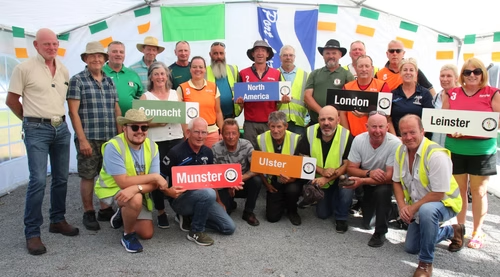
Rounders is considered a traditional Irish sport and is one of the sports included in the GAA charter since 1884.
Shirley Lennon, secretary for GAA rounders, told The City, “When the GAA was first set up in 1884, there were four sports: hurling, football, handball, and rounders. The organization changed greatly over the years, and rounders was revived in the 1950s.”
Rounders is a bat and ball game team sport where two teams alternate between batting and fielding.
It’s similar to baseball and softball but it’s different in terms of mechanics and equipment.
“We would have more space between our bases… the ball we use is different; we use the slither, which is the same ball they use for hurling,” Lennon explained.
Currently, there is no official team for rounders, “just like all GAA sports, it’s all part-time volunteering,” Shirley Lennon said.
Despite this, rounders is slowly gaining popularity, especially in Dublin.
“I think we definitely are gaining in popularity, especially since COVID. During 2021 to 2022, there’s been quite an explosion of rounders clubs,” said Lennon.
Rounders is also the only sport in the GAA that features mixed teams, with both male and female players competing on the same team.
Rounders is expected to be one of the games to be included in the upcoming 2026 Tailteann games, that is to be held in Kilkenny in the spring of next year.
Another sport that has made a comeback in Ireland in recent years is road bowling.
The origins of road bowling are unknown, but it is believed that stone-throwing traditions existed across Europe during the pre-1600s.
The earliest record of road bowling in Ireland started in the late 17th century to the early 18th century. The sport was commonly practiced in County Cork and Armagh.
Road bowling slowly faded during the 20th century due the fact that some impromptu gatherings with occasional betting led to the game to be banned by authorities, but the game was kept alive by small communities in rural areas.
Road bowling competition in Co. Cork. Photo by: Road bowling association
Seamus O’Tuama, public relations officer for the Road Bowling Association, told The City that “when the association was set up in 1954 it created competitions for players using the standard rules”.
The association also included competitions for women and under 18s. “Then over time team competitions started, then in 1963 the association of Ireland got involved with two international road bowling associations, Germany and the Netherlands, which established European championships,” O’Tuama added.
Road bowling all Ireland competition. Photo by: Road bowling association
Today, thanks to the influence of social media, road bowling is slowly making a comeback in Ireland; games are now being organized in County Cork and Armagh.
Paul Rouse said, “Road bowling is gaining its popularity because it offers something different and it’s incredibly compelling viewing.” This comeback is no surprise because “games go through queues of popularity and that’s normal. It’s not unusual,” Rouse added.
Sports are an important aspect of Irish culture, and it’s a factor that shapes identity in Ireland.
“Sports are something that thrive both at the local level and at the international level. People have traditions in their lives, and one of the traditions is to play those sports; it’s about family, it’s about heritage, and it’s about locality… so the comeback of these sports would add to what’s there already,” said Rouse.
A restaurant known worldwide is opening in Dublin this month. Gloria Osteria already has restaurants in Barcelona and Milan. The chain is owned by the Big Mamma Group.
The restaurant had been rumoured to open in Dublin since the start of this year, and the news was confirmed on July 6 when they made an Instagram specifically for the Dublin location. Since September, they have been posting videos of the food they will be serving when it opens. They have also posted three videos about some of the chefs that are involved, as well as a video talking about Parmigiano Reggiano (parmesan).
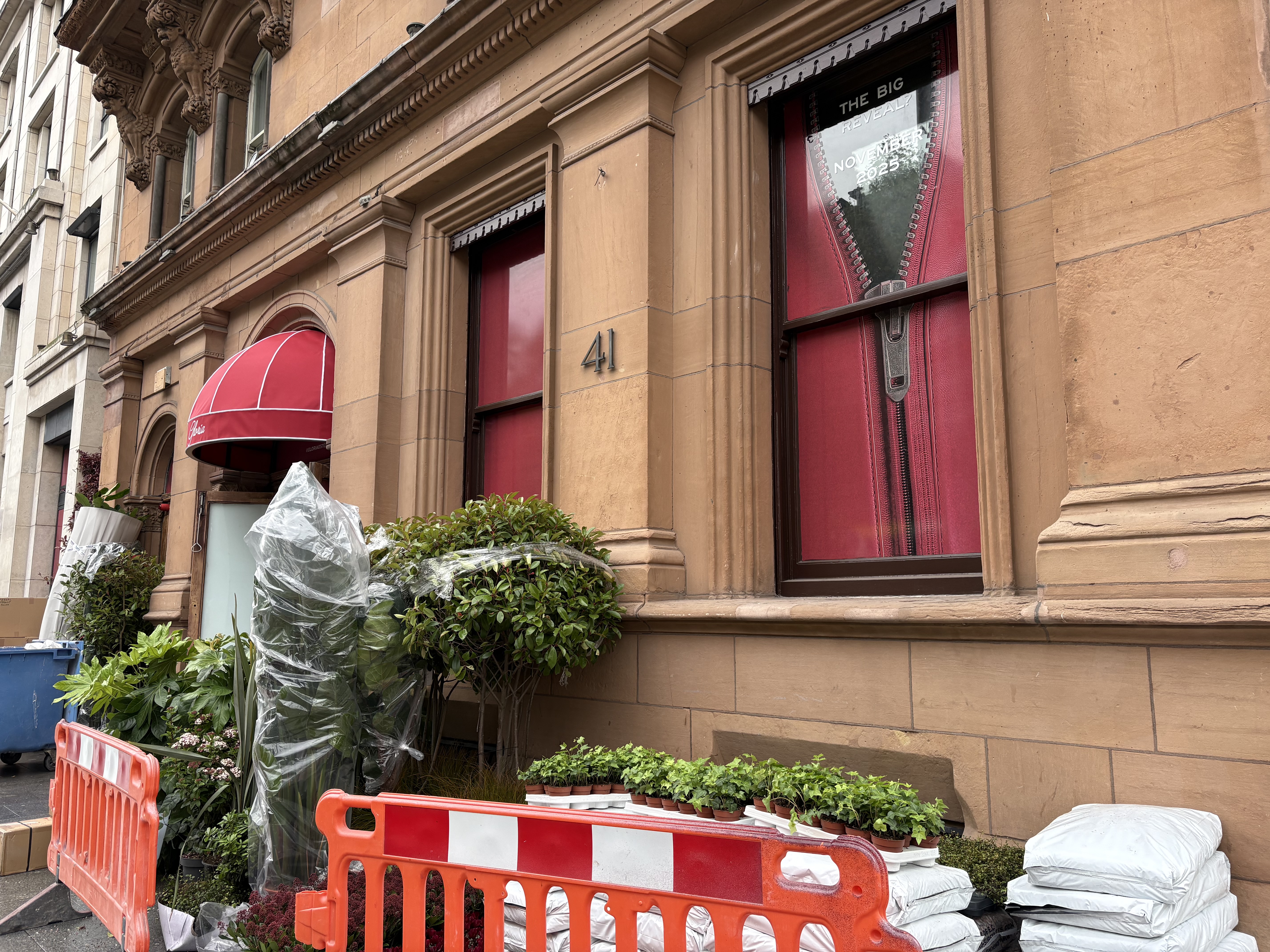
Gloria Osteria Dublin is set to open Nov. 27 on 41 Westmoreland Street, right in the middle of the city.
Outside of the building where the public can see a sneak peak of the restaurant. Photo credit: Zita Fox
According to the Big Mamma website, they are a French restaurant group formed in 2015. It was founded by entrepreneurs Victor Lugger and Tigrane Seydeux. They opened their first restaurant, Mamma Gorda, in the South of France in April of 2015.
They have said it was with the opening of East Mamma in Paris that they cemented themselves in the Italian restaurant world properly. Before opening they made the effort to transport ingredients from Italy and started making their own pasta. They also mentioned how they found an antique roaster to make their own coffee.
The restaurant is known for its authentic Italian food and elegant 1970s interior design in all their restaurants. The Dublin location will seat about 180 guests. It will also have a private dining room that can seat 22 people.
One of the construction workers on site said, “We’ve been working hard every day to make the restaurant as nice as possible. Hopefully the hard work pays off, and we get it done soon.”
TheCity had the chance to have a quick look into the building and from the quick glance we can see the burgundy design within. In the middle of the room, we can see a huge chandelier with marble steps leading up to it. If they are taking inspiration from the other Gloria Osteria restaurants then Dublin can expect to see a lot of mood lighting with funky but fashionable furniture sourced from Italian markets throughout. There will be a huge marble bar that will supposedly sit under 700 used bottles.
Just outside the building, TheCity can see they are almost ready for the big opening night as they are starting to bring in plants and flowers to help bring the place to life.
The name Gloria Osteria is most likely derived from Italian. Gloria translates to glory and osteria is a traditional place to enjoy food and wine in Italy. Therefore, the name is a play on words and loosely translates to glorious Italian food; some may say this is the perfect name for the restaurant as that is what it’s known for.
The original restaurant opened in Milan in 2023 with the Barcelona one opening just last year. Adding Dublin and Paris to the list of places this month, Gloria Osteria is only growing bigger every year.
A new exhibition celebrating the work of Picasso has opened at the National Gallery of Ireland. The exhibition spans several periods of Picasso ‘s life, showcasing the evolution of his style and vision.
The thoughtfully designed exhibition consists of four interconnected rooms arranged in an open plan that allows visitors to move freely between them.
The first room shows Picasso’s early years and explores how he developed into the artist we know today.
The remaining three rooms are arranged chronologically, tracing the evolution of his style across different periods of his life. Informative panels throughout the gallery explain how Picasso’s relationships and experiences influenced his art, making the exhibition engaging and accessible even for visitors unfamiliar with his work.
Photo 1: This Picasso introduction is the first piece of information that visitors are greeted with as they enter the Picasso exhibition in the National Gallery. The piece provides background context to the artist and the works that are on display.
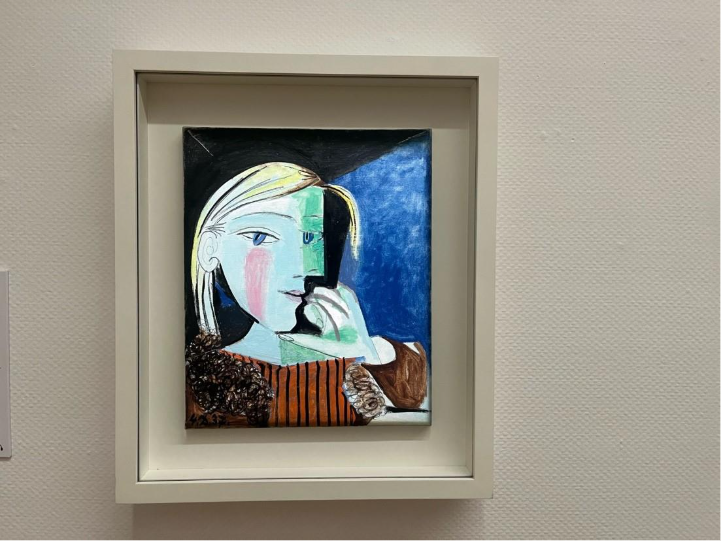
Photo 2: One of the exhibitions most iconic works, this portrait of Marie-Therese Walter from 1937 was the chosen image for the exhibitions promotional run, given how symbolic it is; Picasso had been in a relationship with Marie-Therese Walter for a decade when he painted the picture.
Photo 3: This standout piece displays Picasso’s change in style from portraits to scenes. Produced in January 1951, the image depicts a wintery view of Vallauris from Picasso’s studio.
Photo 4: This photo shows the layout of one of the rooms in which Picasso’s work is on display. The room is centered around a bronze statue of his, surrounded by other works of art from the same era with a video of Picasso discussing his works and creative process.
Photo 5: This photo shows the range that Picasso had as an artist. The piece of art is positioned in the center of the room and is surrounded by different art works from the same period showing similarities and contrasts in his work.
Photo 6: In this photograph we see the wide range of ceramics that Picasso produced during his lifetime. The image displays how his ceramics changed and developed over the late 1940s. He created over 1000 unique ceramic pieces between the years 1947 and 1948.
Photo 7: In this photograph we can see people watching a projected recording of Picasso. In the video Picasso discussed both his art and what inspired him at various stages of his life.
Photo 8: This photograph displays another of Picasso’s paintings that he done during 1956 called Femmes E la toilette.
The undeniable growth of Artificial Intelligence (AI) over the last few years has led to a massive increase in AI data centres all over the world, including Ireland. These are buildings that host a large number of infrastructures in order to keep internet servers running smoothly.
As of October 2025, there are approximately 82 data centres in Ireland, with an additional 40 having already been granted planning permission. It is a market that is constantly growing due to the increased demand of AI tools, with 1,200 data centres in Europe. This number is expected to see a huge increase in the next few years.
These data centres have come about from the European Union’s AI Act, which will be governed by the National AI Office in April 2026. The goal of the act will be to implement more AI data centres but ensure the AI systems are regulated and safe for all involved.
A proposed design for an AI data centre in Dublin: Photo from datacentredynamics.com
In a press release from gov.ie, the Minister for Enterprise, Tourism, and Employment, Peter Burke, said “Ireland is building a future where AI is transformative, trusted, and transparent. We’re balancing innovation with safeguards, ensuring AI works for people, not against them.”
As well as these comments from Burke, the Minister of State for Trade Promotion, Artificial Intelligence, and Digital Transformation, Niamh Smyth, spoke about the hopes she has for the act:
“This is about leadership with purpose. We’re creating a system that protects the vulnerable, empowers innovators, and positions Ireland as a global hub for ethical AI. The successful implementation of the AI act requires collaboration, co-operation and collective responsibility amongst all stakeholders,” she said.
However, one prominent issue that has become cause for concern as a result of these new data centres is the effect on Ireland’s climate goals. The current goal set out in the Climate Action Plan is to reduce greenhouse gas emissions by 51% by 2030. The Environmental Protection Agency (EPA) projects a reduction of only about 22-29% by 2030.
AI data centres have led to a major increase in environmental issues. Some of these include a high water and energy consumption and a massive amount of greenhouse gas emissions. With all these new AI data centres being constructed in Ireland, it is likely that these projections will further hinder Ireland’s attempt to hit their climate goals.
In order to get some insight into how damaging the climate effects could potentially be, I spoke to a climate activist, Olivia Byrne:
“Our greenhouse gas emissions are already really bad, especially in comparison with other European countries, considering our population and size. It’s scary to think what they’ll be in the next few years. The data centres are only something I’ve recently been looking into and while I get the argument that they have a place in the modern world, they have to be regulated. They use an extraordinary amount of water to cool the systems and huge CO2 emissions. It’s only going to get worse in the next few years. I’d be shocked if we hit those climate goals, I think they have to be revised eventually.”
It is clear that while these centres are necessary in this ever-changing world, the proposed National AI Office as well as the government’s climate department have to ensure that everything is regulated in order to keep climate goals to an acceptable level.
20-year old Dublin Ladies Football star Ashling Nyhan is representing her club, St Brigid’s, at the highest level,all while studying Sports Science and Health at TU Dublin. “From playing myself, I wanted to understand how athletes can get the very best out of themselves physically and mentally,.” said Nyhan.
Hailing from Castleknock in Dublin, near Phoenix Park, Ashling told TheCity how she got into sport and what drove her to play at such a high level.
“I was kind of nearly forced into GAA when I was younger. I have three older sisters who all play sports and I use to kick around with them in the garden, my oldest sister played underage for Dublin as well. My dad also coached a few underage Dublin teams, and I loved going out to watch their games, that definitely sparked my hopes to play for Dublin.”
As children we often brush off memories as our minds are so busy with different thoughts and it’s hard to remember things, but certain memories will live with us forever. Ashling told us about her earliest childhood memories.
“My earliest memory is probably playing the Go Games for both the girls and boys teams, I played with my cousin on the boys team which was quite funny as we were very competitive.”
The sports stars of today are expected to take on so much in their younger years between representing their school or college, to working a part time job. Playing for their club and doing it all while pulling on the Dublin jersey, and Nyhan is no exception to this trend.
“I do find it quite hard to juggle both college and training. Sometimes one has to give for the other to progress. Especially around exam time, I could have a very long training session the night before an exam. Some nights I’id be up late trying to get everything done but it all balances out in the end, so far anyway. I love what I study and the high intensity environment, so it’s worth the balance.”
For many of those who are lucky enough to succeed in their sport, it comes at a great sacrifice to their free time. Events and social gatherings often take a back seat as a result.
“I don’t really have much free time, but when I do I like to spend it with my family, friends and my boyfriend. I like to try switch my brain off from football the days I have off. I think it’s important to try separate the environments and basically have a life outside of football. I think it helps keep a good mental space for the long season we do end up having.”
Photo Credit: Maurice Grehan
The days are long for students like Ashling as they aim to squeeze their busy schedules into a short space of time that comes in a day. Athletes balance more than most adults do in their day-to-day routines.
“Typically if I am in season during college, In the morning at 5:45 I work in a gym as a PT so it’s early hours ( I am so bad for early mornings). I then head into college – the commute isn’t too bad its only around 25 mins to Tallaght. I get home after college around 4/5 and then I head to training around 5/6 ish. Training does go on for quite a while nearly 5 hours sometimes but we’d cover everything from pitch work, gym work, meetings and videos. I normally get home around 10:30pm and then It’s just about switching off and getting ready to go to bed.”
Reeping the rewards of a busy life is an amazing incentive to keep going and word through the hard times.
“Captaining Dublin at U14 was a really special moment because it was the first time I realised how much I loved leading and being part of something bigger than myself. Making the step up to the Senior panel and pulling on the Dublin jersey at that level was another proud moment ,it’s something I dreamt of as a kid, and to live it is unbelievable and play with some of the girls I looked up to growing up as well was surreal. But I think my proudest was winning the All-Ireland Final this year, I have been to watch the All-Ireland Finals every year, dreaming of doing it myself I never thought it would be possible so to do that with girls I have grown up playing with from u13 was a dream come true.”
Photo Credit: Maurice Grehan
Ashling as achieved so much already in her playing career so we asked her what helped to keep her going and the best piece of advice she ever received from a coach over the years that has stuck with her all this time.
“One thing that has stuck to me that coaches have said are “Control the Controllables” – there’s so much you can’t control in a game or training, but your attitude, your effort, and how you respond to things are always in your hands. I think that helps keep my head when going through the highs and lows of the game.”
Life is filled with goals and ambitions. There is life after college and we all take different paths, whether that is continue our studies in another field or gaining a job.
“After college I want to do a masters in physiotherapy. Any components of my course that relate slightly to physiotherapy I love and actually understand so well. It has always been an area of interest for me even outside of sports.”
Ashling is just one of the thousands of student athletes up and down the country balancing their busy lives and they are an inspiration to us all.
Food waste is something that isn’t mentioned as often when speaking about the climate crisis, as it is only accounting for 10% of the total percentage with the climate crisis.
The main issue with food waste is the significant resource waste it uses to bring your food from fork to plate, but also the carbon monoxide emissions. Deforestation is another major consequence for the ever-growing demand on the agriculture sector.
On a global scale, the average number of hectares of forests lost is 10 million each year. This happens everywhere but is most apparent in tropical forests in Brazil, Indonesia and the Democratic Republic of the Congo.
Climate activist Arielle Calajate, who is involved in multiple eco-friendly initiatives said, “People don’t realise how truly important the trees are to the climate, and responsible for a lot of what food we can eat. They give us fruits, nuts, healthy soil for food, a water cycle regulation, and pollination. So many important things are given to us by trees.”
Ireland’s deforestation rate is historically low for 2024, with only 670 hectares of trees lost. From 2001 to 2023, Ireland wasn’t as lucky and lost a total of 161,000 hectares of trees. For the small isle of Ireland, it meant we had lost 19 per cent of our national tree coverage from 2000 onwards.
According to Calajate,“by cutting down trees to provide us with more food, we are effectively hurting the one thing that is helping to keep everything okay. This is something the earth has been doing for centuries, long before we started abusing it.”
Statistics released by the Environmental Protection Agency (EPA) show that Ireland has wasted over 835,000 tonnes of food waste in 2023. This means that the average weight of food waste for a person in Ireland is 162kg. Ireland’s food wastage is higher than the European average, which is 132kg per person.
Statistics released by The Central Statistics Office (CSO) stated that food and non-alcoholic drinks increased in waste from 4.7% in the beginning of 2025. It is now at 5.0% in September 2025.
When you keep food in a highly acidic environment of vinegar or brine, it can add to the shelf life of that food for months, when they are properly preserved and sealed. This way of preserving food helps to prevent spoiling by preventing bacteria from growing.
Statistics by the Environmental Protection Agency mention that global food waste accounts for 8-10% of the total greenhouse gas emissions. When food is disposed of in landfills, it releases methane gas, which is a potent gas with a climate warming potential that is 84 times higher than carbon dioxide over a 20-year period.
There is no problem with the usage of agricultural land to produce food for the growing population, the problem lies in large percentages of these patches of land are used to grow food which is not consumed and wastes valuable resources.
Research done by the World Bank Organisation found that around 70% of the world’s water usage is used for food. This makes food a significant waste of freshwater and groundwater resources. Another resource used is the energy consumption, as 38% of the total energy used globally for food, is for food that is never eaten.
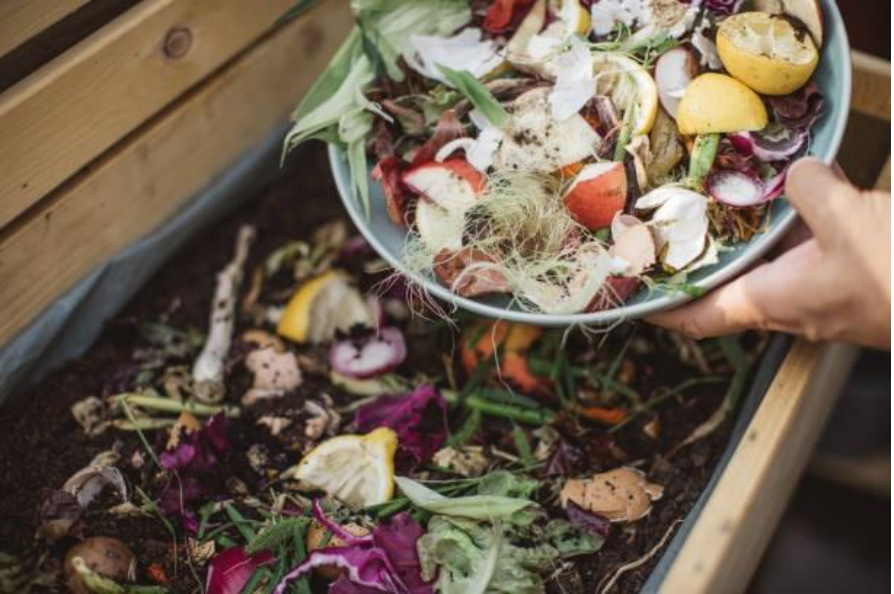
Your own impact on food waste can be a big help to stop the growing problem of food waste and its depletion of natural resources, and most are decisions that can be made at home. Buy in smaller quantities, if possible, from your local markets.











You must be logged in to post a comment.