Tag: feature

  • DIT Aungier Street suffers the effects of Grangegorman’s development

    DIT Aungier Street suffers the effects of Grangegorman’s development

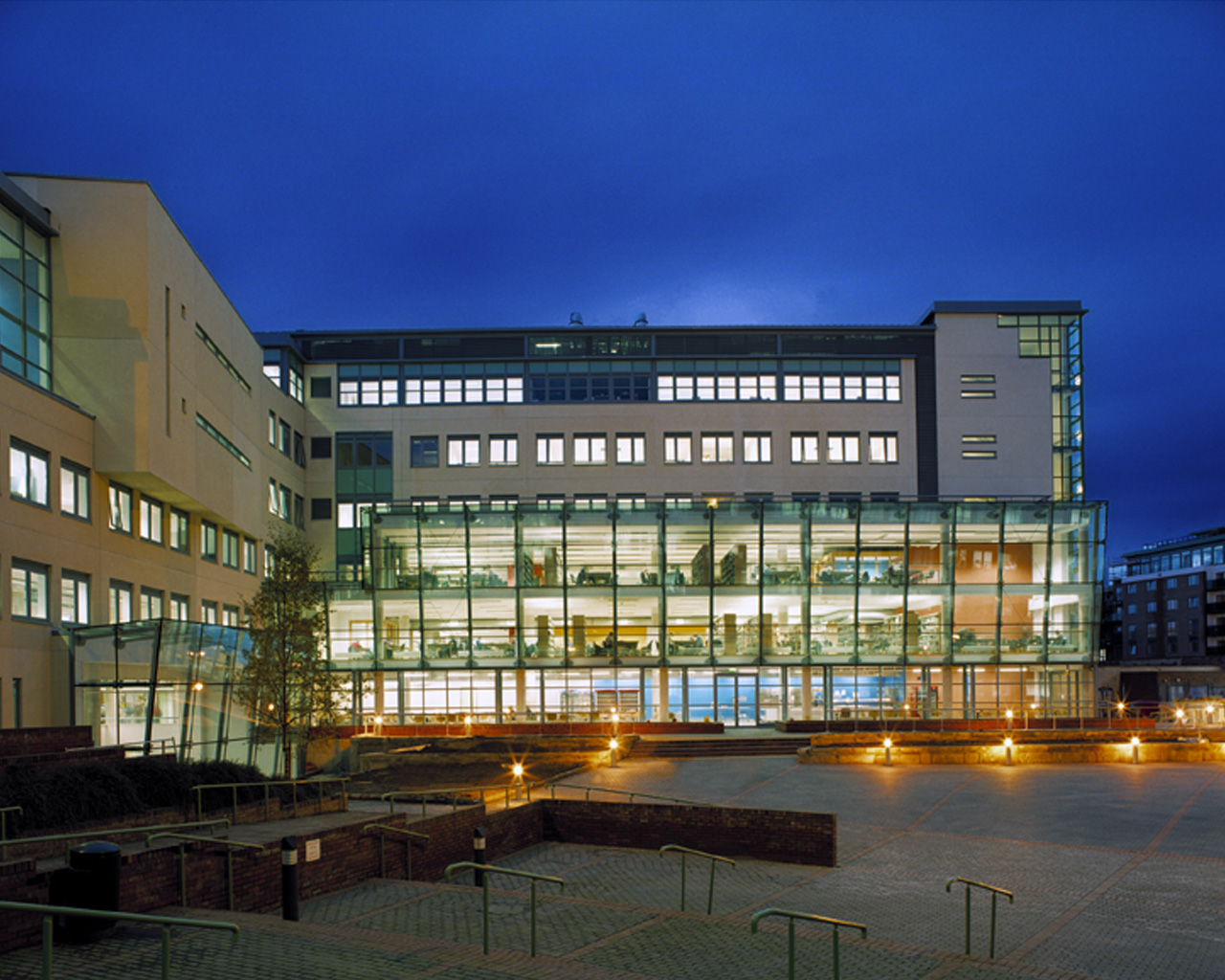
    The ‘Grangegorman Urban Quarter’ is a proposed education, health and community development by the Grangegorman Development Agency (GDA) for Dublin Institute of Technology and the Health Service Executive. The GDA was awarded funding to begin the construction of the new campus based off the back of the country’s €2.5 billion stimulus package.

    The construction of the new DIT campus began back in 2013, with several listed buildings in need of extensive refurbishment. The buildings listed include those that will now accommodate up to 1,400 staff and students that would have moved into the campus in 2014.

    Integrating over 20,000 staff and students and for the first time having all DIT activities which are currently spread over 39 different buildings into one campus is a long-awaited development. It will make for a much more appealing prospect for Leaving Cert students as they decide on where to undergo their third-level studies.

    However, for those like myself who became a student of DIT Aungier Street back in 2015, it’s fair to say it does leave you feeling a little ‘hard done-by’. My 4 years of studies in DIT will all take place inside the walls of DIT Aungier Street, meaning I will not have the privilege of availing of the modern Grangegorman campus.

    That said, I don’t feel this would be an issue if the facilities in the rest of the DIT locations remained to a certain standard. Especially when you’re forced to pay €3,000 to avail of them. Sadly however, this is not the case. Into my fourth year here in Aungier Street, and still the same problems occur now as they did on my first day attending the college.

    “I attended my first lecture with a great amount of excitement. Sitting in a large lecture hall for the induction day, I expected a similar environment would greet me for each of my classes. However, I didn’t arrive to anything like the induction day. Instead, I arrived at quite a small classroom with roughly 25-30 computers with a seat at each one.”

    Luckily, I was a couple of minutes early for this class because if you arrived on the hour or any time after that, you were left without a seat and had to sit on the ground or stand at the back. Whichever you preferred. Keeping in mind that a full attendance would have meant roughly 60 students were in a room with enough seats for 50% of the attendance, and it’s easy to realise the uncomfortable setting we were in on only our first day.

    In one particular module I took in my 3rd year, there were only 12 computers which have a particular programme which we needed in order to complete our coursework. The problem here is that over 4 different years there are roughly 220 students who can be in need of using these computers at any given time. Particularly when there are deadlines to be met, this can cause quite a lot of unrest as the programme costs over €100 for its most basic package, with prices reaching as high as €2,555 for the more advanced versions.

    This is still a common problem in DIT and the fact remains that most of the classes I have don’t have sufficient seating for the number of students attending the lecture, and even if they are lucky enough to pull a seat from another room, it still leaves them without a desk or computer to work at.

    DIT say that during the period between 2010 to 2015 the state provided no money by way of devolved grant for the maintenance and the upkeep of any of the institute’s properties. As a result, this means that any small essential works were only those that could be funded from recurrent funding.

    On top of the lack of seating, there is a severe lack of computers available in the library which are essential for students in college, especially towards the end of semester. The fact there are only sixty computers available at any given time is extremely disappointing. Even if you are able to find a free computer in the library, which is often full, there is also the chance that the free computer is not working which has been the case on many occasions. It’s extremely easy to feel as if the large fees you pay to attend the college don’t necessarily improve the facilities available for these reasons.

    There is also the fact that our sports teams don’t have any facilities for training or matches on the campus. Instead, they must travel to Grangegorman, where state of the art facilities are now in place.

    Over the last two years, the Department of Education and Skills has reinstated the Devolved Grant. This is limited funding which is provided to maintain all the Institutes of Technology (IOT). IOTs are categorised into three categories based on the number of students attending each IOT. With DIT being in the highest category, it meant that over the last years they have received around €900,000. This money has been more or less evenly split between building fabric (essential maintenance, lifts, fire safety, seat replacement, window blinds, etc.) and computer and ICT upgrades.

    “Aungier Street represents approximately 20% of the total DIT estate and thus has benefitted from a “commensurate, if limited investment”, described as not adequate, as there is a backlog of essential repairs due.”

    It’s quite evident the main authorities are aware that the current state of the DIT Aungier Street campus is not acceptable, and they clearly state that more funding would be required in order for them to maintain the campus at a more reasonable rate. However, it doesn’t take a genius to realise why there is such lack of funding, when there is €47.5M being provided to fund the Grangegorman campus.

    The Grangegorman Development Agency (GDA) is the group responsible for the recent development of the impressive 73-acre site located in the North City Centre of Dublin. The reasoning behind the recently developed campus is to merge all the existing IOTs of this institute into one campus. In September 2014, 1,100 students were relocated to the Grangegorman campus. In September 2019, it is planned that a further 10,000 students will relocate to the campus and it is envisaged that the relocation of all students will be completed by the year 2021.

    The opening phase of the Grangegorman project has been completed, with the institute committed to providing funding totalling €47.5M. Other public bodies have also contributed towards this cost with €11.1M of the total cost amount. In 2014, the institute paid €14.586M towards this total funding, and as of the 31st of August 2015, the institute paid amounts totalling €28.961M to the Grangegorman Development Agency. These payments made toward the GDA have been stated to be treated as “a long-term debtor” by the institute.
  • Living with Cystic Fibrosis

    Living with Cystic Fibrosis

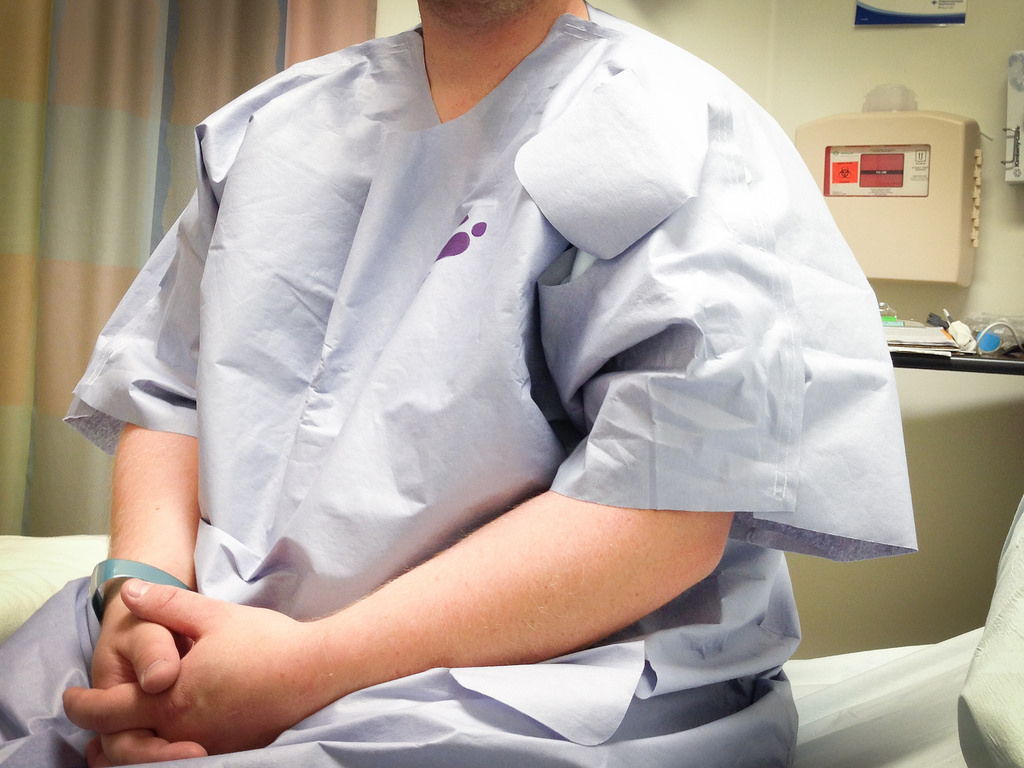
    Cystic fibrosis (CF) is an inherited chronic disease that primarily affects the lungs and digestive system of about 1,200 children and adults in Ireland.

    A defective gene and its protein product cause the body to produce unusually thick, sticky mucus that clogs the lungs and leads to life-threatening lung infections. It also obstructs the pancreas and stops natural enzymes from helping the body break down and absorb food.

    We had a one on one chat with someone who lives with the condition to tell us more about what life is like with CF.

    What is daily life like with cystic fibrosis?

    It’s more complicated than other people’s normal routines and there’s a lot more involved in my day than meets the eye, a lot more to consider.

    How much more stress is added to your day?

    Well I have to get up earlier than I would if I didn’t have cystic fibrosis and stuff like physio can set you up for a good day or bad day chest wise. I don’t have spontaneous days as much because I have to pre-plan things like have I my tablets for the day? Is my chest clear enough? Am I feeling good?

    How does it affect your social life?

    It can negatively impact my social life. This week for example I’m not feeling the best so I might not be able to go to a ball in college which everyone is excited for and I might not be able to go to my friends 21st. It’s bad because I can’t plan in advance. I have to really take it day by day because on Monday I could be fine and on Tuesday I could be really sick. I’m not as spontaneous as I would like to be, but if I am in good health I just have to be confident I can get through the night without feeling ill.

    Do you have to tailor your diet in any way?

    In general, the diet of someone with cystic fibrosis is high protein and high fat because due to the insufficient function of the pancreas, fats and vitamins and the nutrients in food aren’t absorbed as much as a normal person so some people with cystic fibrosis can find it hard to put on and maintain their weight. They tell you as a kid to pretty much eat as much as you can. They don’t really place an emphasis on healthy eating which I don’t like because I think you can have a healthy diet and also include what you need to maintain your weight. There can be problems due to the high fat aspect with blood sugar and diabetes, but diet you just have to be a lot more mindful of it and try your best to work with it.

    Was having cystic fibrosis something you considered when choosing a course in college and do you think it will affect future job opportunities?

    It went through my mind obviously because it always has to when planning my future. I think because of the person I am, I’m a determined, hard working person, so cystic fibrosis is a part of me but it’s not what dictates my life because I don’t allow it to. In relation to hours and things I just decided I’d take it as it comes because that’s just the best way to look at things and I try meet the challenges that would come with any course.

    I would like to think it won’t affect my job opportunities but that would be in an ideal world. I think it will affect how I pursue getting a job and what hours I can do when considering I might have to take some time off if I get quite ill or maybe I’ll lose a job because I’m ill. So it is a worry and it is a constant worry how I’ll cope being in a professional environment but as I said before you just have to take things as they come.

    Has it gotten any easier over the years to live with?

    I spent a lot of my childhood in and out of hospital; it frames a big part of my childhood memories. It’s definitely not easier because I’m older, if anything it’s harder. When I was a child I didn’t know any different whereas now as an adult that knows this is a condition that hinders me, I feel a lack of control when I should feel control. It’s harder because I have things like an academic life, a social life, a romantic life to tend to so being in hospital is much more of a hindrance when I want to get on in my life.

    By Shane McGannon

  • Over-priced, under-funded: the numbers behind Dublin’s transport system

    Over-priced, under-funded: the numbers behind Dublin’s transport system

    The year is 2011, a jubilant Enda Kenny has been elected as Taoiseach for the first time, Labour are still a credible political party, the Arab Spring is in full swing and Donald Trump has just finished the eleventh season of the Apprentice.

    More importantly at the end of 2011 the price of a one way fare on Dublin Bus is €2.30. The price of a trip on the DART is similar, €2.40 to be exact. The cash price for both Dublin Bus and Irish Rail has been increased every single year since then, as well as for Luas and Bus Éireann.

    2012 and the same journey on the bus or the DART is suddenly more expensive. DART prices aren’t too heavily altered, with a four percent increase from €2.40 to €2.50. Dublin Bus is a different story however. Suddenly you’re paying €2.65 for the same journey you were paying €2.30 for yesterday, a whopping fifteen percent increase.

    2013 is no different, with DART prices shooting up to €2.80, an increase of twelve percent. Dublin Bus went up by another 15c to €2.80, another five percent increase.

    2014 encompassed a huge leap in price for both Dublin Bus and DART prices. They both leapt from €2.80 to €3.05, a nine percent increase on the previous year.

    The prices have continued to rise since then, Dublin Bus is now €3.30 and the DART is €3.25. That means that in a five-year period Dublin Bus prices have increased 43 percent and DART prices 35 percent.

    That’s just inflation though right? Not quite. When the percentage increases in public transport is compared to the average inflation in Ireland over the last five years it doesn’t add up.

    The highest inflation has been over those years was in 2011, when it was 2.45 percent. It hasn’t surpassed two percent since then and was actually minus 0.3 percent in 2014.

    Dublin now has the seventh most expensive public transport system in the whole world, ahead of New York, Berlin, or Barcelona.

    That stat is made more ridiculous considering how poor Ireland’s public transport system is.

    Dublin Airport is one of the only major European airports without any sort of rail connection. The new “Metro North” underground system won’t be operational until 2026, at the absolute earliest.

    There are regularly waits of half an hour for a DART or bus, and sometimes even an hour in off peak times. This doesn’t happen in London or New York or many other major cities, where waiting times on public transport are rarely over ten minutes.

    When all this information is analysed it doesn’t reflect well on Ireland and its transport system. If the price of public transport is so much how can the actual system be as poor as it is?

    The problem may lie in the subsidies provided by the government.

    Back in 2013 TD Clare Daly, then of United Left Alliance, claimed that Ireland has the least subsidised public transport in Europe and asked Taoiseach Enda Kenny to increase funding, especially to Bus Éireann to enable them to cut prices.

    Kenny refuted this, but did not present anything to argue against it and while the funding to public transport has not been cut over the last few years it also hasn’t been increased, which may be where the problem lies.

    In summary, Irish public transport rises on average by about eight percent every year, the Dublin transport system is the seventh most expensive in the world, Dublin Airport is one of the worst connected major airports in Europe and the whole Irish transport system is massively underfunded.

    No wonder so many people have a new bike at the top of their Christmas lists.

    By Leo McGuinn

  • Film Review: Sully

    Film Review: Sully

    By Luke Carry 

    Friday sees Tom Hanks crash land on our screen as Captain Chesley Sullenberger, pun intended. Hanks’ newest movie, Sully, sees him take on the role of Sullenberger, the hero responsible for saving all of his passengers during an ill-fated flight from New York.

    sully-thecity
    Source: Wikipedia

    Based on a true story, it’s hard to forget Sullenberger’s real life heroics of landing the aircraft in New York’s Hudson River. The story at the time sought to make a celebrity of a man who, for all his heroic efforts, never really seemed to want the limelight.

    In this respect, Hanks is expertly cast. Playing the role with great humility he lets us explore the human side of Sullenberger, which is really what this film is about.

    A supporting cast of Aaron Eckhart, as co-pilot Jeff Skiles, works well with Hanks to create a very real feeling during the in-flight sequences. Hanks always seems to have a warmth to his characters that transcends most boundaries. Similarly to that, Sullenberger is a hero for all. This performance helps to carry the film through its faults.

    The National Transport Safety Board are the villain here, trying to pin the incident on pilot error which would in effect, end Sullenberger’s career. Or at least they are portrayed to be.

    Clint Eastwood directs at a pace that will keep the audience captivated and entertained throughout. The film does at times try to be something it’s not. It all gets a little muddled when we delve into the investigations taken against Sullenberger and his crew. While these events took place, and are part of the true narrative, they seem to try to matter more than they ever could. The real story is Sullenberger.

    While not living up to its full potential, Hanks and Eastwood have enough experience to carry the film to a rather safe landing.

    Sully is an enjoyable tale of the everyday man achieving the extraordinary and triumphing in the face of adversity. Suitable for all the family and at just over 90 minutes it makes for an easy enjoyable ride.

  • Local paper sticks with tradition

    Local paper sticks with tradition

    Since 1975, The Raheny News has brought the community of Dublin 5 together.

    The newsletter began in the home of Fr. Con O’Keefe on St. Assam’s Road, Raheny in February of that year. The small group of volunteers were led by Liam Flynn, the editor at the time as they wrote, produced and distributed the first newsletter in the area.

    After the success of the first issue of “The Raheny News”, or “The Green Paper” as it is known now to many of the older residents in the area, the group of local volunteers continued to sacrifice their Saturday afternoons in exchange for sitting down to produce what is now a staple in the community.

    Despite being in production for the last forty years, the Raheny News hasn’t changed too much from the original issue. While the content may vary, the design is still very much the same – as is the green paper the newsletter is printed on. In fact, the very printing of the Raheny News hasn’t changed.

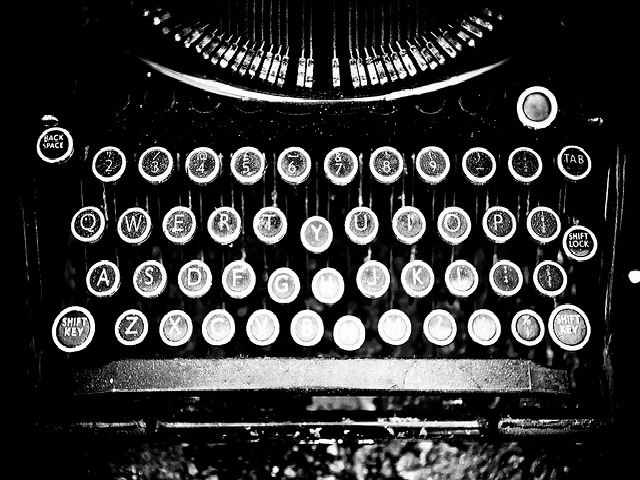
    Each week, volunteers would meet in Fr. O’Keefe’s house to discuss the local goings-on, write news articles, type them up on their typewriters, print the issues manually and then distribute them to all the local shops.

    Now the editor Peter Harper then decides what is newsworthy and the group begin to type it up. Heather Kavanagh and Theresa Kelly type up their pages on the same typewriters they had in the 70’s. However, Peter has slowly brought in some technology with the use of his laptop to help with the typing and news gathering process.

    Once the typing is done, the pages are handed over to Linda Spellman to proof read, and then onto Maire Ni Bhraoin to print. Each of the four pages of the newsletter is printed 780 times, and then manually stapled together later in the evening by Catriona Harper, Kay Harper and the rest of the volunteers.

    The newsletters are then put into groups and are ready to be distributed to the local shops where they are sold for 20 cent per issue. These costs, along with advertising fees cover the cost of ink, paper and of course tea for the staff.

    One of the highlights for many of the volunteers, is the chance to sit down at the end of the evening with their fellow volunteers for a good catch up and to discuss their plans for the upcoming days.

    At 21 years of age, Catriona Harper is the youngest volunteer in the group, but wasn’t at all surprised when she found out that the group haven’t moved along with the times in terms of the technology they use.

    Regardless of whether the newsletter moves further into the digital age, it will always be a staple in the local community – technologically advanced or not.

    Follow us on twitter at @NiamhHaskins, @MichelleDardis_ and @StephenFLarkin.

    By Michelle Dardis, Niamh Haskins and Stephen Larkin

  • City of a Thousand Welcomes

    City of a Thousand Welcomes

    Have you ever wondered how to show off your knowledge of our fair city, meet new people and get a free beer or coffee in the process? Well then the City of a Thousand Welcomes programme may be just the thing for you.

    Coordinated by The Little Museum of Dublin, the programme is an award-winning civic initiative which allows tourists to sign up and be matched with an ‘Ambassador’ from Dublin. They then schedule to meet for a free coffee or drink, with the Ambassador providing the tourist with an authentic view of Dublin, free of charge.

    Sponsored by organisations such as Fáilte Ireland, KPMG, Luas Cross City and Dublin City Council, the initiative has consistently grown since it first commenced in 2011.

    “Well when we first started the programme we were hoping to get 1,000 volunteers, but within the first few weeks we had over 2,500 people looking to volunteer. Since then, we run at capacity of 2,000 visitors each year,” Simon O’Connor from The Little Museum of Dublin explains.

    According to Simon, many of the Ambassadors are retired and semi-retired professionals, however a small number of students are involved in the programme as well.

    Interested individuals must be over 21 and can apply online. The process also requires that you fill out a short questionnaire and take an online quiz that tests your basic knowledge of the city.

    If successful, potential Ambassadors are then invited for an informal interview in The Little Museum of Dublin, where a representative of the programme will assess the candidate’s suitability, as well as asking for some general information about the candidate and their interests.

    With summer positions usually filling up by March, Simon explains that despite the programme’s popularity, they are hesitant to expand the initiative for fear of it becoming commercialised.

    “The programme runs so well at the moment, we have a 100% immaculate customer service… and our ambassadors are absolutely brilliant. We’ve had four years of proofing the programme in a way, but of course it’d be great if the programme was at a stage where every Dubliner felt it was obligatory to even take part and meet a tourist once,” he said.

    “However we don’t up-sell and we resist the temptation to commercialise the service,” he added.

    Simon admits that tourists are sometimes “baffled” by the fact the service is free. “They always wonder what the catch is, but then we just have to tell them that there is no catch,” he said jokingly.

    Well with no catches involved and the chance to meet new people and a free drink, what more could you want?

    For more information about the service, just visit their website here.

  • Don’t bark up the wrong tree this Christmas

    Don’t bark up the wrong tree this Christmas

    At the age of five, sprinting down the stairs at six o’clock Christmas morning is one of the best feelings a child will ever have. However, opening the sitting room door to see a puppy is a thousand times better – at least that is from the child’s perspective.

    Owning a pet is one of life’s most rewarding experiences. However, pets are more than just a seasonal gift – they’re a long term commitment.

    As the countdown to Christmas is truly upon us, people are searching the city trying to find the best presents for their loved ones. Many households are planning for a furry arrival come the 25th of December.

    Across Dublin at the moment it is almost guaranteed that there are children persuading their parents that this Christmas is the perfect time to get a pet.

    Trying to impress their children, parents get carried away and ignore the fact that a dog will usually live for between ten and fifteen years.

    Dogs Trust and The Dublin Society for Prevention of Cruelty to Animals (DSPCA) are urging people to think long and hard about the decision and are reminding us that, ‘A dog is for life, not just for Christmas’.

    After Christmas, Dogs Trust receive more than 1,000 abandoned and unwanted dogs arriving through the doors of their Rehoming Centre.

    Back in November, the charity’s, ‘A dog is for life, not just for Christmas’ campaign launched, asking the public to pledge and promise not to buy a puppy this Christmas.

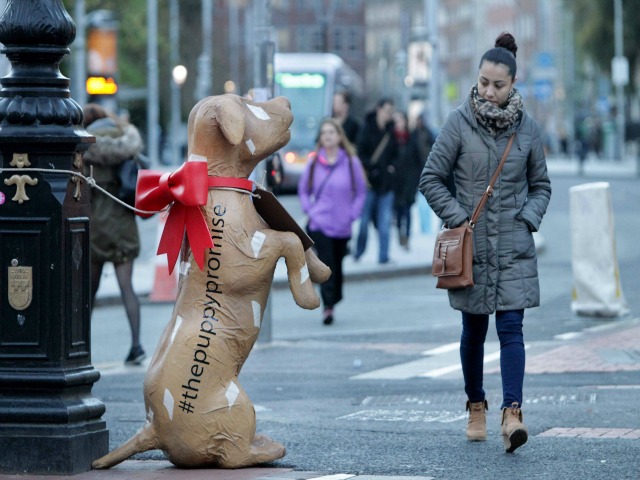
    The campaign also saw large four-foot wrapped model dogs displaying messages like “I was too old” and “They drove off and left me” scattered across key locations in the city centre.

    Mark Beazley, executive director at Dogs Trust, spoke about the importance of the campaign. He said that the model dogs were “abandoned in an aim to provoke awareness and discussion around buying a puppy as a gift this Christmas”.

    “We wanted to try something a little different for our Christmas campaign this year in order to attract the public’s attention and hopefully spread our charity’s message of ‘A dog is for life, not just for Christmas’,” he said.

    He continued: “For us, as Ireland’s leading dog welfare charity, this campaign is very much about encouraging people to stop and think really carefully about the commitment you are taking on when you consider buying that puppy at Christmas. Can you be certain that once the celebrations are over you will still feel the same way about the puppy and your decision?

    “We are at the front line of the sad reality of abandoned and unwanted dogs every day. We really would encourage anyone who is set on getting a dog this Christmas to wait until the busy festive period is over and to consider adopting from your local rescue centre, pound or Dogs Trust.”

    Emma O’Neill, a volunteer with Dogs Trust, said, “We advise people not to get a dog for Christmas because it’s such a busy time with people coming and going they can’t settle. It’s the wrong time of year.”

    She continued: “When you get a puppy for the first year or so it’s bound to be crazy. They’re just like babies in the sense they’re not trained and they teethe. At first thought it can be a great idea, but eventually the excitement fades out and the dogs are being rehoused. It affects the dogs in so many ways. Although we give them the best care we can, sometimes they need more.”

    The charity is asking the public to support and share this important animal welfare message at Christmas by joining the cause and pledging to take #ThePuppyPromise online at www.thepuppypromise.com.

  • Exciting times for BLOQ Apparel

    Exciting times for BLOQ Apparel

    Before saying goodbye to 2015, we spoke to the creative directors behind urban brand BLOQ Apparel, who captured and harnessed their creativity to create a uniquely Irish and innovative fashion label.

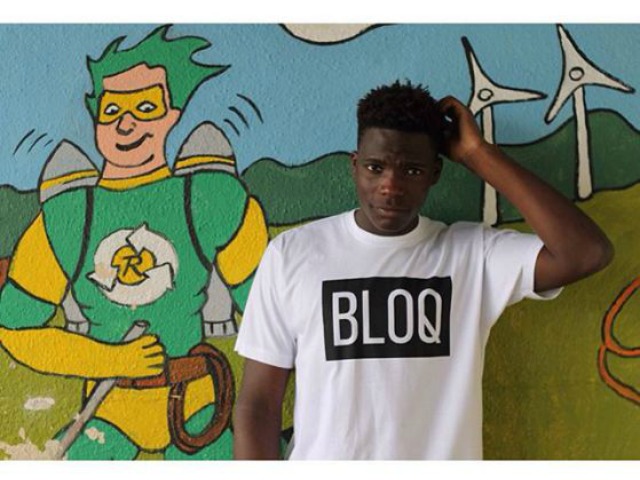
    Launched in late 2014, BLOQ Apparel is a metropolitan clothing brand designed and produced locally by Dublin natives Simon Bastable and Brendan Ennis. The inventive duo left their financially stable careers in retail and finance, to fulfil their desire for design. One year on, and three collections later, we find out whether their risk was worth taking.

    For many, obsession with creativity and design begins at a young age and is later ignited by a growing devotion to produce beautiful designs; whether that’s in the form of technology, cuisine, advertising, or fashion. The finished product behind the design may be different, but the semantics and passion required remains the same.

    After conforming to the social norms of going to college, obtaining a degree and getting a nine-to-five job, both Simon and Brendan, who are life-long friends from Dun Laoghaire, repeatedly found themselves becoming bored in their mundane day jobs.

    “I was doing it because that’s what I was told you were meant to do. Since a young age, I’ve been obsessed with all forms of art and design. Looking back, I should’ve definitely gone down that road,” said Simon.

    Simon has a background in online marketing and digital strategy and has experience in luxury retail, while Brendan studied business and entrepreneurship where he acquired a solid skill set that prepared him for starting out in business.

    “We both offer a completely different dynamic which is why we work so well together,” added Simon.

    Both the brand concept and name are unique to the Irish market, as he explains:

    “We want our clothing to be everyday wear, but to also have the versatility and adaptability to be that ‘special piece’ in your wardrobe.

    “The name is derived from the term ‘Bloc’ which translates as ‘a combination of groups who share a common interest, and who have formed an alliance. A community’. We dropped the ‘C’ and replaced it with our trademarked ‘Q’ to give us individuality, but still in keeping with the original pronunciation.

    “At the core, BLOQ is a community of people who are passionate about, and share, a common interest,” he added.

    Simon and Brendan have successfully built a solid customer base within the last twelve months, and are enjoying continued success with their third capsule collection, as Brendan illustrates:

    “The overall feel for Collection 03 is that we are embracing designs and fits that are resounding of late 90’s and early 00’s street and athletic wear. This is broken into three subsections – t-shirts, sweats and headwear.

    “We have five t-shirts that fall under our ‘Classics’ that we are carrying on from the previous two collections. In addition to these, we’ve added on two more freshly designed t-shirts, a long sleeve-sweater, a hoody, and a crewneck.

    “We work with a manufacturer on designs from the beginning. This is a lengthy process, but it’s done so that we can provide the exact cut, fit and fabric that we feel our customers will really appreciate and love,” he added.

    Although the Irish fashion community has welcomed BLOQ, the directors believe that more needs to be done to ensure the longevity of independent Irish labels.

    “There’s a reason why we’re so far behind the likes of London and Paris, but in my opinion, there just isn’t the support systems in place for independent producers. We felt that we were on our own at the beginning. However, even though it is extremely difficult, it’s great to see more young designers and brands making a go of it here,” Brendan added.

    What do the directors hope to achieve in 2016? Simon and Brendan will soon be launching two new concepts to the brand – BLOQ Sound System and BLOQ Natives – with the aim of further enhancing the lifestyle aspect of the brand. They are also actively looking to take BLOQ to an international market.

    “We launched in winter of 2014, and have seen a massive rise in such a short space of time. This has given us the impetus to keep pushing boundaries and see how far we can go. Exciting is an understatement,” Simon concluded.

    You can follow Simon and Brendan’s story and progress on Facebook , and Instagram.


  • A catch up with The Beer Market

    A catch up with The Beer Market

    The Beer Market was the first dedicated beer-only bar in Ireland. Up to 90% of the beer on tap is not available anywhere else in Ireland and they pride themselves on that fact.

    I caught up with Damian Breslim, from The Beer Market, to find out a little bit more about what they do.

    Tell me a little bit about The Beer Market?

    “The Beer Market is part of the Galway Bay Brewery Company, and we are one of their nine bars that they have in total.” (Others include Against The Grain on Wexford Street, and The Brew Dock, in the IFSC).

    “When we started off here, we had the idea that we would sell all twenty of our craft beers, while rotating the kegs every time one ran out. We didn’t want to do any other drinks, just beer, beer, beer!

    “However in the last couple of months, we’ve changed that slightly to suit a range of other people and we’ve since added wine. We used to just sell pies from The Pie Man in Temple Bar too, but now we’re open at 12 for lunch.”

    When did you guys open?

    “We opened our doors late last April.”

    Who drinks in The Beer Market?

    “I really couldn’t pinpoint just one demographic that drinks in The Beer Market, it’s a very mixed bag; from students, to professionals, to locals, and after work crowds.”

    Do you run any events or theme nights?

    “Not at the minute, although we do have tasting nights where people can come in, talk us through how much they’d like to spend, and we guide them through the different beers we have, where they come from, the brewing process etc.

    “As I said, we currently stock twenty beers, eight of which are from Galway Bay, while the others include a mixture of Belgian, German, American, English and so on.”

    Are there any future plans for The Beer Market?

    “Well, we’ve recently opened our kitchen, so that’s pretty much our biggest change. We’ll wait and see how that goes before we make any more plans.”

    To find out more about The Beer Market, you can find them on Facebook or you can log onto their website.

  • A catch up with Fresh Cuts Clothing

    A catch up with Fresh Cuts Clothing

    Developing a start up in Ireland can be challenging to say the least. High production costs and a saturated market can leave a company struggling to stay afloat.

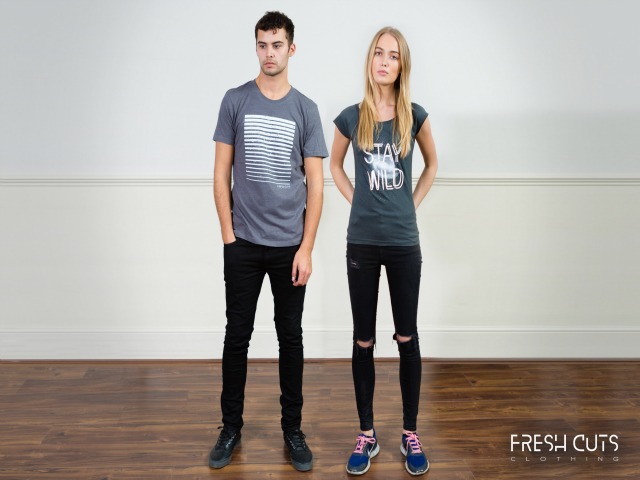
    Fresh Cuts Clothing is a fashion lifestyle brand based in Dublin that designs eco-friendly clothes and active apparel. While still in its infancy, having only launched in December last year, the company has already taken part in a national charity campaign and have just released their newest range.

    We spoke with Steven Murphy, founder of Fresh Cuts, about the company’s origins, social responsibility and their plans for 2016.

    First off, how did Fresh Cuts Clothing come about?
    A lot of it came from being unhappy in my previous job and wanting something more exciting and fulfilling in my life. This and the fact I live in t-shirts and hoodies was basically where it started. I had no experience in any of it, but thankfully it’s come a long way since then – or so I hope!

    How do you differentiate yourselves from other clothing companies within the market?
    I like to describe the company as an athleisure wear brand. At the end of the day it is casual clothing that people wear every day and feel comfortable in. I don’t see it on the catwalks of Paris Fashion Week any time soon, but in saying that it does have some great qualities that differentiate it from other clothing companies within the market.

    Our Fresh Designs line are limited edition pieces that are printed on a run of 100. You know buying that t-shirt or jumper that there is only 99 others printed. All these items are screen print, labelled and designed here in Dublin. Our Eco-Cuts line is simple in design, but superior in fabric. We source top of the line fabrics and processes to create that unmissable feel of our hoodies and jumpers. This, coupled with the fact that they are ethically produced under fair working conditions [makes] for a very guilt free purchase!

    Have you faced many challenges as a relatively new start up?
    The company is pretty much a one man band at the minute. Working from a spare room I do everything from website development to sewing labels. As with all start-ups there is always challenges. Time and money has been a huge factor for me so far as I’ve been working by myself.

    My plan was always to start off small and grow naturally. I didn’t have the resources to do it any other way and it’s working out so far. The industry itself is very tough and competing with global brands was always going to be a challenge, but what’s life without a few challenges? It makes it all the more sweet when you succeed.

    fcc_indoors_jm_v1 (2)

    One of Fresh Cut’s main slogans is ‘Designed by you – For you’. Why did you decide to outsource the majority of your designs?
    This was really to build on the commitment of limited edition pieces. Along with wanting to showcase Irish based designers and illustrators, I wanted to have a constant flow of new designs available to the public. I see the brand growing to the size where new designs aren’t available for long once they go online.

    In order to have constant access to new designs I had to open up this facility to work with new designers when this growth is achieved. With most of our designs being done in house at the moment, this is really something that will be built on in the future and something that could potentially be very exciting for the collaborations we come up with.

    As a company, you seem to put a strong emphasis on social change and responsibility through the production of your clothes. Is this something that Fresh Cuts feels very strongly about?
    It’s something I feel strongly about and definitely something I think we should all at least think about! Some clothes now are just becoming disposable, you buy them and throw them out after two washes. It’s great to get a t-shirt for €3, but you need to ask yourself at what cost was this made. I put a lot of effort into the fabrics and the process in which the clothing is made and where I source our products. At the end of the day, some people will appreciate this and some won’t unfortunately.

    How would you describe Fresh Cut’s latest range?
    The line has grown considerably since it launched last Christmas. From the first run of limited edition tee’s to the introduction of the Eco-Cuts range, I still try to keep things simple and in tune with the brand.

    With our new line I really think it’s the quality of the garments that stands out. The materials and processes used to make them make for an incredible feel. This coupled with our exciting designs and unique colours makes for a really exciting line that shouldn’t be missed. It’s something you won’t find any other Irish brand offering at the moment.

    fcc_outdoor_jm_v1Recently you joined forces with the National Centre for Youth Mental Health, Headstrong. Do you plan on working with other charities in the future?
    Yes, 100%. I think if you are in a position to help out in some way, big or small, you should. We had a great response from the Headstrong campaign and raised over €1000 for the charity along with some vital awareness regarding mental health in Ireland.

    I had plans to do one more before the year was out, but as mentioned in the challenges I faced, time and money got in the way of this. I put my own money into the charity tees and it does put a bit of a financial strain on the business, so I wasn’t able to get it worked out before Christmas. However come the new year I hope to do another one for an equally worthy cause that I would be passionate about.

    What can we expect from Fresh Cuts over the next few months?
    Having just launched the new line it is full steam ahead until Christmas. Along with our online store, I have a big presence on the Dublin Market scene. I pop up in various markets throughout the city, but you can catch me in The Designer Mart in Cows Lane every Saturday, Smithfield Market Fair and I will be trading in the I Believe in Christmas market in the IFSC from the 26th November right up until the 23rd of December.

    Early next year I am hoping to get a permanent location in town and am currently working out the details on this, so fingers crossed. This will be the next big step for the company and I see it as a huge move forward with the business.

    For more information about Fresh Cuts Clothing, you can visit their website, Facebook and Twitter.