Tag: ireland

  • Building greener pastures

    Building greener pastures

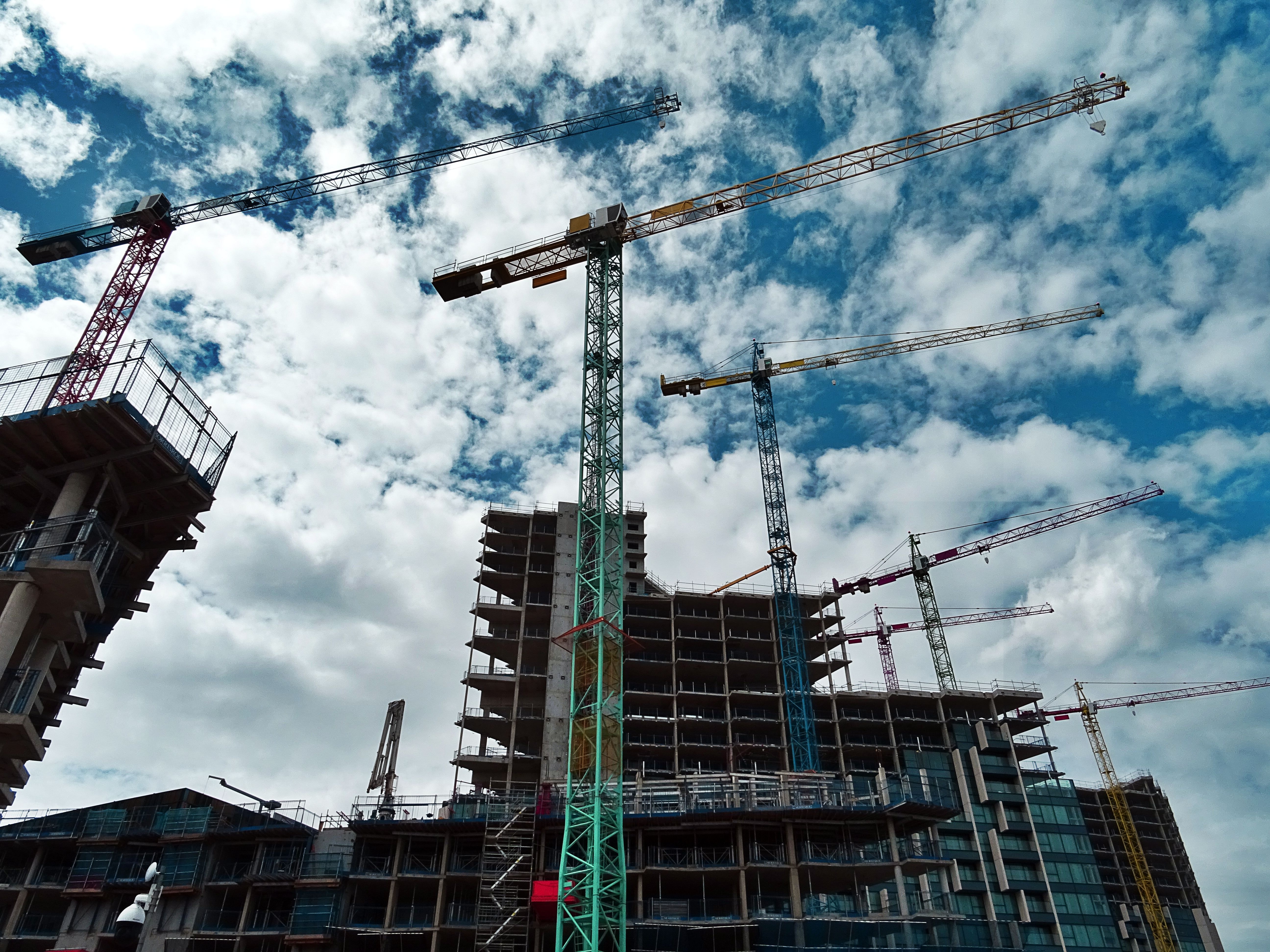
    Can we build the green future we need? Image courtesy of SevenStorm via Pexels.com

    Construction and buildings account for 36% of the world’s energy use, 39% of energy related carbon dioxide (CO2) emissions, and 33% of global water use and waste.

    The ever-looming climate crisis means something’s gotta give – Ireland’s construction industry has to change, and it has to make that change affordable to the average person.

    According to Francis Duffy, Green Party TD and spokesperson for housing, most of the homes now built in Ireland are highly-insulated and airtight ‘passive houses’, designed to use external elements like sunshine and shade to maintain a cosy climate and smaller carbon footprint.

    Unfortunately, there is more to truly green construction –  the materials used have carbon footprints all of their own, and that’s where our attention needs to be.

    “The big elephant in the room now is embodied carbon,” says Duffy.

    “When you dig a hole in the ground and take material out of it, whether that’s steel, iron, or cement, it gets transported, processed, manufactured, and transported again to site.

    “Then it lives a life on a site or in a building. It may be replaced or maintained, but at the end of its life, it’s transported again, disposed of, recycled, or upcycled.

    “There’s energy and carbon involved in all of that, which means that a bit of material gains embodied carbon,” Duffy explains.

    “We’re hitting around 900 kilograms per square meter of embodied carbon in our buildings, and an A-rated building is 300 kilograms per square meter,” he tells me.  

    As an architect, Duffy is working on a private project in Dublin with the Irish Green Building Council. The aim is to use materials with low levels of embodied carbon.

    “The big elephant in the room now is embodied carbon”

    Francis Duffy

    The frame of the building will be made from timber which “absorbs CO2 as opposed to spewing it out, which makes it CO2 negative”, says Duffy, who has extensively studied the use of timber as a sustainable material in construction.

    “We’re using recycled bricks and lime mortar to hold them together. That makes the bricks easy to separate at the end of the building’s life, which means they can be used again,” he explains.

    Duffy believes this is the future of building.

    “You’re looking at 80% of a building being designed and constructed with the idea that at the end of its lifespan you can take it apart and re-use a lot of it in another project,” he explains.  

    Globally, efforts are being made to reduce the waste produced by building.

    Cobod (construction of buildings on demand) are a construction technology company in Copenhagen, Denmark, who are pioneering 3D printed housing in Europe.

    “We generate less waste [by 3D printing], because we have more precise numbers on how much material is needed for the building in advance,” says Vytautas Naslenas, a sales and marketing coordinator for Cobod.

    However, Cobod print with concrete which Naslenas admits is not particularly sustainable.

    “There are new solutions and companies are investigating how to make a mixture with a smaller CO2 footprint, but of course that is yet to come,” he says.

    Affordability, speed, and how little waste is produced are the major draws to this method – by automating the process you make it quicker and reduce labour costs.

    “I believe that in 15 years this will be the norm. Looking at how quickly things are moving from our side, it could be even sooner,” says Naslenas.

    The cost of sustainable building is a huge issue – if construction emissions are so significant, as many people as possible need to be able to embrace sustainable construction methods.

    “The housing regulations have improved significantly over the last number of years but they have made building really expensive,” says Michael Canney, chair of the board of Sustainable Projects Ireland.

    “There’s a need to facilitate a more low-cost build without compromising on quality and energy efficiency,” Canney says.

    Canney lives in the Cloughjordan Ecovillage, and Sustainable Projects Ireland work closely with the ecovillage.

    An eco paradise: an aerial view of Cloughjordan Ecovillage. Photograph courtesy of Eoin Campbell JustMultimedia.com

    The ecovillage is 67 acres in total and divided into three parts: high-performance green homes, a community farm, and biodiverse woodlands.

    The houses in the ecovillage are built “using local labour, local materials, recyclable and reclaimed materials” as much as possible, says Canney.

    Cloughjordan is working hard to attract young people who are potentially earning less to their community.

    “We’re in negotiations with a couple of housing associations to take a number of sites and develop them using an affordability model,” Canney explains. “And we’d be offering those at rates that acknowledge the need for affordable housing rather than the maximum yield we could get for them.”

    “We are also looking at co-housing models where a number of people can come together and build a house cooperatively,” he says, explaining that people would choose DIY construction methods that allowed them to build themselves without the cost of employing skilled labour.

    “There’s a need to facilitate a more low-cost build without compromising on quality and energy efficiency”

    Michael Canney

    Canney feels there’s a bigger issue lurking in the shadows here.

    “So many people are really confused about these ideas of embodied carbon, recyclability, and what’s recyclable in real terms,” says Canney.

    “I think people could do with some really clear guidance on this, because we are bombarded with greenwashing from manufacturers.

    “There’s a real obligation on state and semi-state bodies to really inform the public in a very non-biased way about this, so people can really make informed decisions.”

  • It’s about bloody time

    It’s about bloody time

    Photo by Anna Shvets on Pexels.com

    Period poverty impacts women and people who menstruate all over the globe. It is referred to as the inability to afford basic female sanitary products.

    Recently, there have been a few developments in eliminating period poverty in first-world countries, most notably Scotland.

    Scotland was the first nation to provide free period pads and tampons in schools, colleges and in public areas. When the Bill that provided these products passed, the First Minister Nicola Sturgeon tweeted, “Proud to vote for this ground-breaking legislation, making Scotland the first country in the world to provide free period products for all who need them. An important policy for women and girls”.

    For centuries, women were not given the opportunity to speak freely about menstruation, and even in today’s society, elements of shame still persist. Pads are advertised as ‘discreet’ which reinforces the subconscious shame women are forced to bear during their menstrual cycle.

    A few weeks ago, New Zealand passed a law stating that complimentary period products would be made available at schools. They have allocated NZ$25m (€15m) over the next three years to promote period dignity.

    The country’s Prime Minister, Jacinda Ardern said: “Providing free period products at school is one way the Government can directly address poverty, help increase school attendance, and make a positive impact on children’s well-being,” reported Reuters.

    Photo by Dolapo Agunbiade

    Ireland may have its own period Bill on the horizon.

    “I believe in period justice as I want everyone to be able to easily access period products and not have financial inequality hold them back,” Labour Party senator Rebecca Moynihan, who has been spearheading this Bill, told The City

    “We don’t expect people to carry around toilet paper or soap, so why are we expecting them to carry tampons and pads? We need to challenge the idea that these are non-essential items,” she continued.

    The Senator also expressed the need for the State to collaborate with charities, so that those who experience homelessness and who are living in Direct Provision can also have access to period products.

    If passed, Ireland’s Period Provision Bill would be similar to Scotland’s. The Government would make menstrual products accessible to all by supplying free tampons and pads to schools, colleges and public areas.

    While period poverty has been discussed in the Dáil and the Seanad, the Period Products (Free Provision) Bill 2021 has been brought forward by Senator Rebecca Moynihan, Senator Ivana Bacik and other members of the Labour Party. It is currently on its Second Stage in the Seanad and has nine more stages to go before it can be passed.

    At the moment, period pads and tampons are subjected to 0% tax. However, this law was made before the advancement in period technology – such as menstrual cups, period underwear and bikinis. This limits women and people who menstruate from being able to purchase these items as they are classified as ‘luxury’ goods – luxuries that many cannot afford. 

    “We have an uphill battle when those responsible for covering news stories do not consider this issue important enough to turn up”

    Marcella Corcoran Kennedy

    Currently, there are three Dublin county councils that are running a pilot period scheme –they have been providing free sanitary products in local recreation centres.

    In a Plan Ireland survey of over 1,000 girls and young women between the ages of 12 and 19, 50% admitted to struggling with the cost of period products and, because of that, were forced to use other materials.

    The underlying problem is that menstruation is viewed as a woman’s issue and not a general issue. In this country, the majority of media coverage on this topic has been done by women. Periods will never be normalised until they are openly acknowledged by all genders. 

    “The women’s caucus held a photocall and press conference to promote the motion…not one male journalist saw fit to attend and not one television station, including the State broadcaster, saw fit to cover the matter,” said former Fine Gael TD Marcella Corcoran Kennedy in a Dáil Éireann debate regarding period poverty in Ireland.

    “We certainly have an uphill battle ahead to have this important issue discussed more widely when those responsible for covering news stories do not consider this issue important enough to turn up,” she continued.

    The eradication of period poverty relies on the eradication of poverty in general, as the latter cannot live without the former. 

    In terms of what we as the public can do to get the Bill passed, Senator Annie Hoey told The City to “get in contact with your local councillor, your local TD and Senator about it.”

    She explained that the more we pressure those in charge to address important matters, the more likely things are to change.

    Here is a link to an anonymous period survey – made by Senator Mary Seery-Kearney – to assist the government in collecting more data about the extent of period poverty in Ireland. 

  • Irish women weightlifters snatch the spotlight

    Irish women weightlifters snatch the spotlight

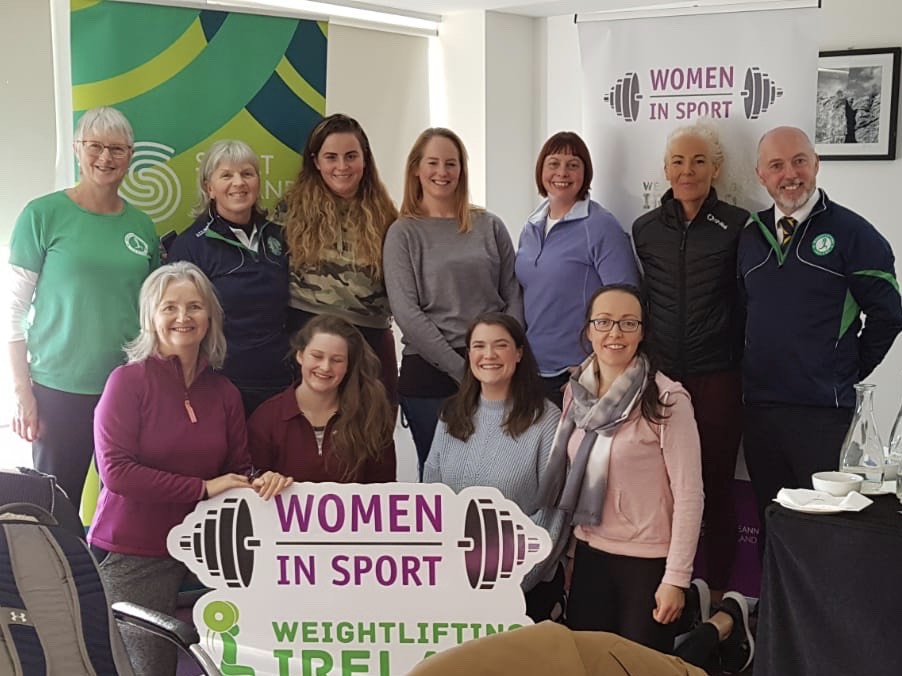
    The Women in Sport Initiative by Sport Ireland was supported by Weightlifting Ireland. Change is afoot? Front row: Ruth Deasy, Isla Hoe, Aoife Bradley, Sinead Ryan. Back row: Lucy Moore, Phil Brown, Freya Hammer, Kathy Boylan, Shauna Kane, Kate Meenan, Peter Carroll (General Secretary, Weightlifting Ireland). Photo courtesy of Harry Leech

    There’s no doubt about it – weightlifting is a traditionally male dominated sport.

    Women’s weightlifting didn’t even make it into the Olympics until 2000, while their male counterparts had been there since 1896.

    Thankfully, times are changing. 

    “We have a very high representation of women within the sport in Ireland. There are instances of people being sexist – there’s that underlying bias that exists in people, but I don’t think that’s inherent to the sport,” says Isla Hoe, an amateur weightlifter and self-described ‘casual competitor’.

    “Within weightlifting in Ireland, the issues are wider systemic issues that have to be addressed by society as a whole, rather than just the sport,” Hoe explains. “Where I would see sexism appear is in how non-weight-training people perceive females within weight training sports.”

    There are undoubtedly stereotypes held about women weightlifters – one only has to go to the more misogynistic corners of the internet to find people babbling about how weightlifting makes women ‘look like men’ – apparently a fate worse than death.

    The instagram account You Look Like A Man is a wild read – each post chronicling typical sexist comments made to women in sports, including weightlifting.

    “Certainly, for an older generation of women, there’s been a misconception that lifting weights is dangerous or it’s not feminine – all of these are very outdated ideas,” says Harry Leech, the head coach and co-founder of the Dublin-based weightlifting club, Capital Strength.

    “There’s no reason why women shouldn’t do weightlifting, so we thought: what are the potential barriers going to be to them? It’s important that you have that welcoming environment and ethos, then the only other barrier is investing in equipment that’s suitable for men and for women,” he says.  

    “Where I would see sexism appear is in how non-weight-training people perceive females within weight training sports”

    Isla Hoe

    Traditionally, 20-kilo bars were the standard in weightlifting clubs and gyms. These best suited men’s, on average, larger hands. Women are, on average, smaller, and have smaller hands than men, which required the introduction of the 15-kilo bar. It weighs less simply because it’s narrower – making it easier to grip for female weightlifters.

    From left to right: Isla Hoe, Aoife Bradley, and Sorcha Brady at Capital Strength gym. Image courtesy of Harry Leech

    Initially, these bars were very expensive and as the sport was so small in Ireland, clubs didn’t have enough money to invest in much equipment. As the sport was male dominated, it was more common for clubs to purchase 20-kilo bars than 15-kilo ones. However, now the market has opened up and the equipment is more affordable.

    Currently, Leech reckons that Capital Strength owns more 15-kilo bars than 20-kilo ones.

    “It’s always been important to have a very equal, very welcoming, very gender-neutral aspect to our club,” Leech says.

    “I think some people have an image of a weightlifting gym in their head, and it’s guys in leotards, making crude, offensive jokes, and lifting heavy weights – but that couldn’t be further from the truth,” he tells me.  

    Clubs like Capital are a fantastic addition to weightlifting in Ireland, however, there are still issues that have to be dealt with.

    “The sport needs to encourage more women’s coaches and women’s officials now. They are coming through, but it’s probably something that’s going to take time to get to the point where it should be,” Leech says.  

    “If you can’t see it, you can’t be it,” says Dr Lucy Moore, a masters athlete, and athletics and weightlifting coach who feels that positive representation for women is an important factor in creating equality.

    “There are very few women coaches at senior level, and if you want to be it, you have to see it. It’s the same issues in the professional world, why don’t women go forward for promotion? Why are women underrepresented on boards?

    “Women tend to hold themselves back – and that’s not just in weightlifting,” Dr Moore explains, suggesting that issues of imposter syndrome and a lack of confidence plague women in sport.

    “I think some people have an image of a weightlifting gym in their head, and it’s guys in leotards, making crude, offensive jokes and lifting heavy weights – but that couldn’t be further from the truth”

    Harry Leech

    “Sport also tends to operate at very un-family friendly hours,” she continues.

    “You’re expected to do things at weekends and the evenings, and to travel. That’s grand when you have a partner at home who will do anything that needs to be done, but traditionally, it’s the man who is going out while his [female] partner stays at home. You only have to look at the pressures people are under at the moment with Covid – who’s doing the lion’s share of the home schooling, trying to keep the house running, and working from home?” Dr Moore explains.

    Fortunately, things are taking a turn for the better.

    “It’s very recently in weightlifting that women came to be referees in any significant numbers, but it is improving, there has been a specific drive to get more women involved in these roles,” Dr Moore says, who has been involved in programs specifically intended to train female weightlifting referees.

    “It’s going in the right direction, but it just needs to push on.”

  • Covid-19 abroad: Canada’s response to the coronavirus pandemic

    Covid-19 abroad: Canada’s response to the coronavirus pandemic

    Watch Katy Brennan and Nicole Kidd discuss how Covid-19 has been handled in Vancouver, British Columbia

    As Canada begin to ease its restrictions , Katy Brennan speaks to Nicole Kidd, who gives an account of the country’s dealings with the Covid-19 pandemic over the past year

    The first community transmitted case of coronavirus in Canada occurred on 5 March 2020. Cases grew rapidly, and by mid-March, all provinces had declared a state of emergency.

    In response to the growing number of cases, Canada severely restricted its borders, banning all non-essential travellers and forcing any exceptions to self-isolate for 14 days.

    Each province implemented varying degrees of restrictions and has continued to do so as case numbers rise and fall.

    Some provinces, such as Ontario and Quebec, introduced heavy restrictions like school closures, shutting down non essential retail, and curfews. Other areas, like British Columbia, have taken a lighter approach.

    Nicole Kidd left Ireland for Vancouver, British Columbia, three years ago.

    We feel really spoiled over here because we have never not been able to go eat food, or go out for lunch, and our bars are open

    Nicole Kidd

    She explains that social gatherings are banned and most people work from home, but stores, cafes and bars have remained open throughout – offering people some sense of normality.

    People are expected to socialise exclusively with people from their own household, but exceptions are made for those who live alone, who are permitted to have a ‘bubble’ of two other people.

    A shot overlooking Vancouver. Photo by Adi Kavazovic on Pexels

    Kidd is grateful to have maintained a decent social life – something she thinks is important for mental health and hard for those back home in Ireland. 

    “We feel really spoiled over here because we have never not been able to go eat food, or go out for lunch, and our bars are open,” she says.

    Kidd is a qualified yoga teacher and while she is eager to get the vaccine and return to normal life, she is happy the pandemic has allowed her to devote more time to her yoga.

    Canada’s vaccine rollout began on 14 December, and since then the country has vaccinated 1.1 million people. The rollout consists of three stages, working its way down from most vulnerable to least vulnerable.

  • Gaelic games players reflect on importance of competitions lost to level five

    Gaelic games players reflect on importance of competitions lost to level five

    Aishling Moloney and Sarah Rowe celebrate winning the 2018 O’Connor Cup. Photo courtesy of Eóin Noonan/Sportsfile

    Let’s not kid ourselves here; the cancellation of camogie, football and hurling competitions for higher education students measures fairly low on the adversity scale in the current scheme of things.

    Parking perspective for a moment though, to compete and succeed in these tournaments is often a huge honour for young players, and an important formative experience on and away from the pitch. It’s another experience the class of 2020/21 will have to do without.

    Tipperary star and Ladies Gaelic Football Association ambassador Aishling Moloney has, at 22, a mantlepiece for a veteran to envy — two intermediate football All-Ireland medals, two national league titles, and a Player of the Year award, not to speak of club honours. Representing her university, DCU, has brought more glory.

    “I was honoured to be captain of the O’Connor Cup winning team in 2018, and to live that all over again would be a dream,” she says. “It’s sad to see that it won’t be going ahead this year but, given the circumstances, it is the appropriate call.”

    “I’ve made best friends for life playing with DCU, and will always cherish the wonderful memories”

    Aisling Moloney

    Sporting accomplishment is one thing; forging friendships that can long outlast a student’s playing days is at least as valuable for many players. Moloney describes her time playing for DCU as “a very special part of my experience as a student. It’s different from any other competition; your social life mixed with playing football. It’s a roller-coaster. I’ve made best friends for life and will always cherish the wonderful memories.”

    Dozens of competitions across four codes give students of all levels the chance to compete, and the upper tiers feature much of the best young talent around. 

    “Getting the opportunity to play among and against some of the best players in the country is a real privilege,” Moloney says.

    Aishling Moloney receives the Player of the Match award for the 2018 O’Connor Cup final. Photo courtesy of Eóin Noonan/Sportsfile

    Monaghan footballer Conor Boyle agrees. Now a regular starter with his county, he was on the fringes when he won a Sigerson Cup with DCU in 2015.

    “It’s a very high standard and it’s a great opportunity to get onto your county squad. If you start on a UCD team, for example, you’re not going to be far off getting on your county panel, even for the top counties.

    “The DIT team of 2013 was ridiculous! I remember their full-forward line was Darren O’Sullivan, Aiden O’Shea and Jason Doherty. You’re looking at those three walking on and thinking, ‘What have I signed up for here?’”

    He remembers, too, the confidence he gained from excelling among such company.

    “I found after a while it made you see that you’re at a similar level to a lot of these players you’d play against on the inter-county scene. The year before we won it we were playing with the likes of Johnny Cooper, James McCarthy, Dean Rock, and when you were playing with Monaghan you’d nearly look at these boys like they’re at a different level. But playing with them on the college team can open your eyes that there’s no big gap between players in a lot of these top teams, and those from smaller counties.

    “I trained with Dean Rock for a full year and I can’t say that he’s any better than [Boyle’s club-mate] Conor McManus. It’s a good leveller because you put a lot of these boys from more successful counties on pedestals sometimes.”

    While undergrads missing out this year may at least get another bite at the cherry, there may be, in the words of Kildare hurler Martin Fitzgerald, “no tomorrow” for postgraduate students.

    “Most of what I learned in hurling, I learned playing Fitzgibbon Cup”

    Martin Fitzgerald

    Fitzgerald captained Limerick Institute of Technology in hurling’s coveted Fitzgibbon Cup while studying for a Master’s in 2013, before going on to win two Christy Ring Cups with his county.

    He sees that year in Munster — under the management of Davy Fitzgerald — as crucial to his development.

    “Most of what I learned in hurling, I learned playing Fitzgibbon Cup. That was the best year I had of my playing career, and if I hadn’t had it, I probably wouldn’t have experienced that level of hurling ever.”

    Martin Fitzgerald in action for his club Ardclough

    He notes the value of training and preparing alongside county players from the country’s top sides.

    “I found it really interesting when I went in there to see what the Laois hurlers, the Clare hurlers, the Limerick hurlers were doing. Everybody brought something different that you might not be exposed to at club and county level. So you got insights into how the rest of the country was preparing.

    “You pick up things that you can implement at home, that I could have implemented with Kildare and my own club Ardclough as well.”

    Fitzgerald says the self-discipline and focus required to lead his LIT team fed into his studies too.

    “Playing Fitzgibbon cup put a huge amount of structure on my college life,” he tells The City, “because it’s the highest level of hurling there is really at that age group.”

    Camogie player Sinead Murphy has represented Dublin at intermediate level and should have been playing in the Ashbourne Cup for UCD this year.

    “I think it’s great for player development,” she says. “Especially for players like myself that don’t play senior inter-county. It allows you to play at a higher level and train with and play against some of the best camogie players in the country.”

    Murphy is next in line to stress the value of these tournaments for their off-field perks.

    “From a social side, I think, especially in first year, it’s a great way to get to know people and to have a few more familiar faces around campus. I think what’s great about college sport is the mix of people you meet that you wouldn’t have met otherwise. You’re playing with girls doing a wide range of courses from different counties.”

    Darragh Biddlecombe, GAA Development Officer at TU Dublin, feels sorry “for this year’s freshers cohort especially, who have missed out on their camogie, ladies football and GAA experience. It can be so important for making friends and settling into university life.

    “In light of public health and the safety of everyone, [cancelling the tournaments] was the right thing to do. If it’s safe to return, hopefully a dedicated second year championship can be run next year for this group.”

  • ID service users and workers continue to  compromise, awaiting clarity on re-opening

    ID service users and workers continue to compromise, awaiting clarity on re-opening

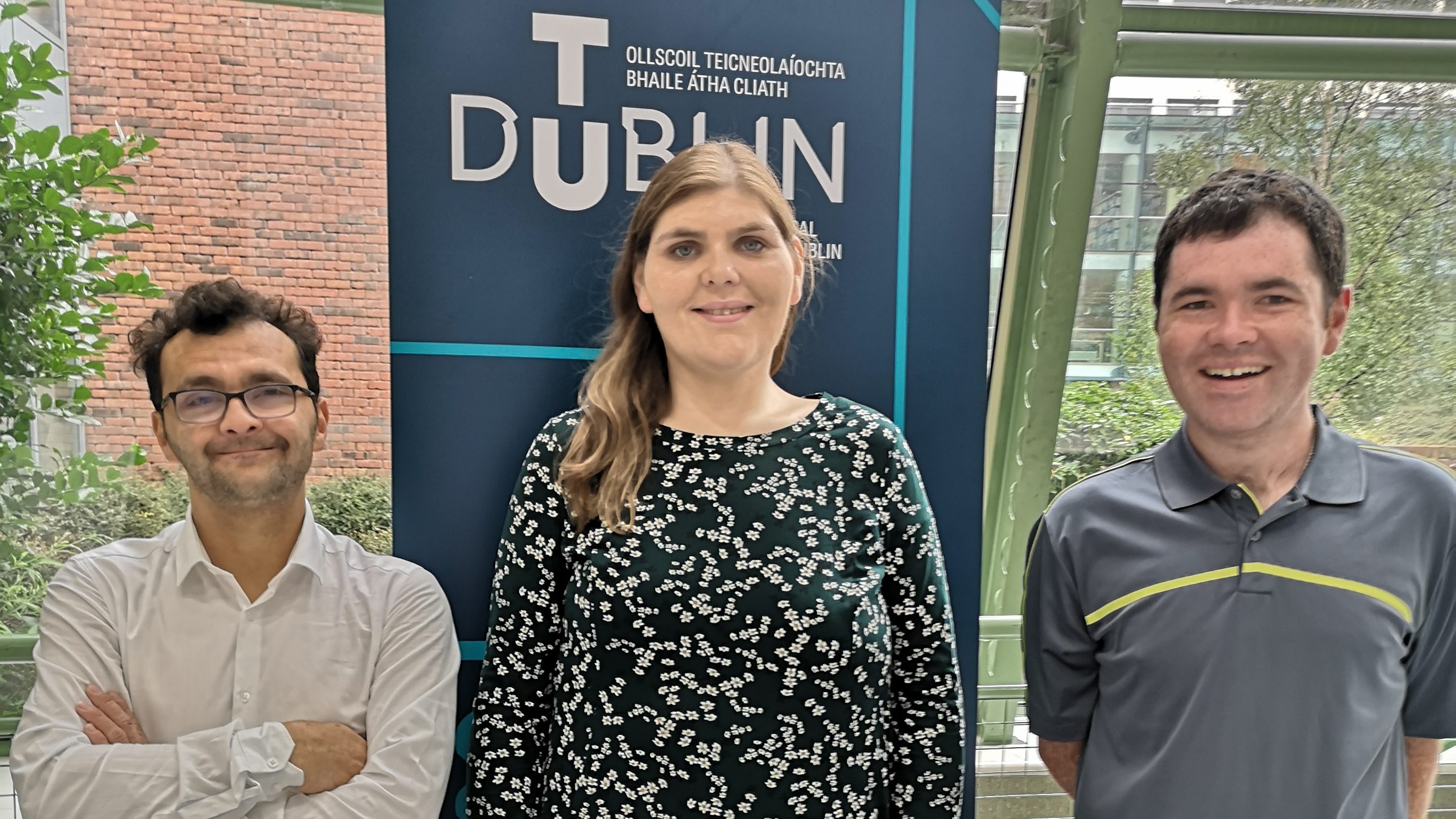
    Tomás Murphy, Margaret Turley, and Chris Byrne spoke to several adults with intellectual disabilities to research the impact of Covid-19 on their lives. Photo courtesy of Harry Browne

    As special schools across the country begin to reopen, many people are still calling for clarification on the status of respite and adult day centres. 

    This comes just a week after 18 new cases were reported in centres for people with disabilities.

    The HSE funds almost 1,000 locations across Ireland, catering to around 19,000 adults with disabilities. 

    Organisations such as CI Dawn in Co Donegal provide day services to adults with mild to moderate intellectual disabilities, and aid young adults in the transition from school to day centres. Service users can choose from up to 30 modules provided by the centre, ranging from art and music to travel training. 

    Dean Larkin from the CI Dawn says that the focus is on community inclusion:  “That’s what we’re here for. We’re out and about a lot, we’ve got work experience. A few of the service users go out on work experience so some of them are maybe in shops, or one person works in a garage. It’s really about providing opportunities for everyone.”

    After initially closing at the beginning of the pandemic, day services throughout Ireland eventually resumed in August 2020, operating at approximately 38% capacity. 

    On 11 November 2020, Minister of State at the Department of Health, Deputy Anne Rabbitte, stated that the objective was to have day services operating at a minimum of 50% capacity.

    At the CI Dawn, there are just two service users out of eight attending the centre at the moment.

    “You’re still keeping in contact with the families and the service users just so they know you’re still there if they need anything”

    Dean Larkin

    A survey conducted by Inclusion Ireland found that only 20% of adults with intellectual disabilities reported feeling happy to stay at home, and many mentioned missing the support from staff at the centres.

    One of the main difficulties, says Larkin, is the closure of many other services in the community:

    “Normally on a Tuesday we would have gone to the gym, Wednesday would have been the swimming pool, on a Thursday we’re doing Discover Donegal. So you’re out and about a lot. But obviously everywhere is closed at the minute, and you don’t want to be in contact with other people, so if service users are in, you’re just limited with what’s happening.”

    A report on the experiences of adults with intellectual disabilities during the pandemic – which was conducted and written by people with intellectual disabilities – highlighted some of the difficulties faced:

    “It was mayhem. We couldn’t get back at all with this Covid-19. I was very panicky, annoyed, upset, anxious – can’t see staff, can’t see friends. It’s lonely, and scary, and worried. I miss my friends, I miss my family, I miss my loved ones.” Said Gary McCabe, a participant in the report.

    There was a general consensus among the participants that the boredom and social isolation was one of the worst aspects of lockdown, and most were eager to return to work or day service.

    “It’s kind of sad not having a reason to get up in the morning, waiting for the bus to come and take us to day service.” Said Peggy McDonnell, another participant.

    Report on the impact of Covid-19 on people with intellectual disabilities in Ireland by TU Dublin

    For people with intellectual disabilities, the uncertainty of lockdown can be quite challenging, and the survey by Inclusion Ireland found that loneliness was a “significant issue” for 56% of respondents.

    To help combat this, many centres are reaching out to service users over the phone and online.

    “We provide an outreach programme. So for service users at home, we send out a pack every two weeks. You’re still keeping in contact with the families and the service users just so they know you’re still there if they need anything. We also call every week to chat to the service users if they want to talk,” says Larkin.

    The centre has also been utilising Facebook, going live and posting interactive videos such as quizzes, live music and even classes like yoga and gymnastics.

    “There’s been no respite at all. Day centres can do bits and pieces online but it’s still not the same”

    Paul Kelly

    Larkin says that the response to the online presence has been positive and one benefit is that the videos are saved to the page so people can watch them in their own time.

    However, for many people with intellectual disabilities, online communication and learning on its own is not a viable long-term solution, and for these people it is important that they are able to access the services they require safely and regularly. 

    Drumboe Respite House in Co Donegal allows people to stay over and go for trips to the cinema, shops, and restaurants. 

    Due to the nature of the service they provide, they are not able to work online and have been closed since the pandemic began, says Paul Kelly, a nurse at the respite house.

    “There’s been no respite at all. Day centres can do bits and pieces online but it’s still not the same. They’re just on a screen all day and when they’ve been doing it for years, they have a routine of getting the bus in. Maybe meeting the busman and going to the shops and meeting other people. Now they’re just at home on a screen and they might find it hard to understand that,” says Kelly.

    With the Covid-19 vaccine being administered to more and more people, disability workers are hopeful that this will speed up the safe reopening of disability services.

    “We’re hoping that both the staff and service users will be vaccinated soon and then it’s just totally up to the service users and their families when they want to come back in. There’s no pressure because their spot is always going to be here,” says Dean Larkin.

  • FAI provides cover as League of Ireland enters corridor of uncertainty

    FAI provides cover as League of Ireland enters corridor of uncertainty

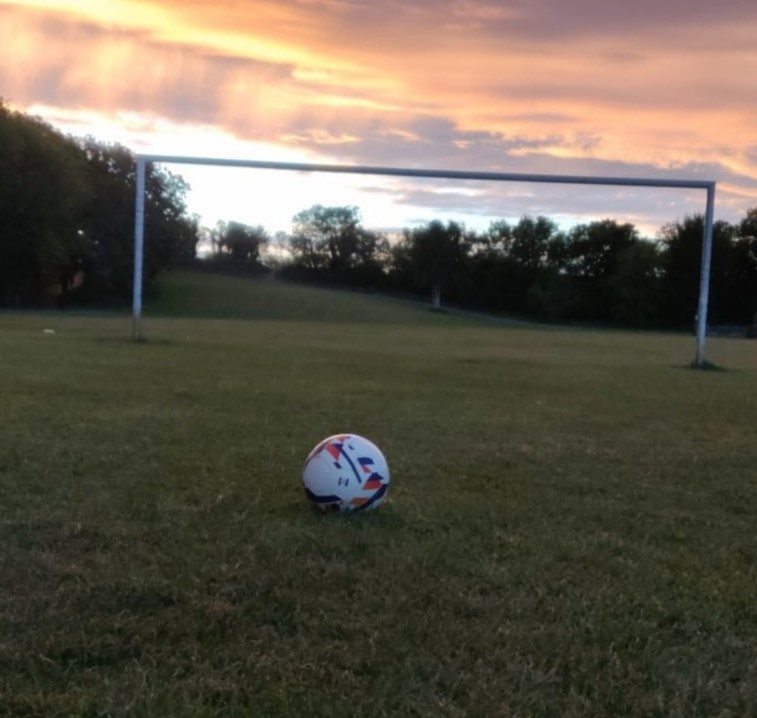
    A football taking in the sunset. Photo by David Doyle

    The Football Association of Ireland (FAI) will provide a €3.6 million funding support package for League of Ireland clubs that will be distributed to Premier and First division clubs.

    The Minister of State for Sport, the Gaeltacht & Defence, Jack Chambers, confirmed that the government will provide additional support to kickstart the SSE Airtricity Premier and First Division in the upcoming League of Ireland season. 

    The FAI have revealed a package of €3.6 million to clubs in the Premier and First Division, providing support for the clubs preparing for a season that will begin behind closed doors. The support package will be of benefit to clubs at the beginning of the season, particularly during the period of the absence of fans.

    “Work is continuing on the safe return of grassroots football when the public health situation allows”

    Jack Chambers

    Chambers took to social media on confirming the funding would be allocated to the League of Ireland. ‘’Positive engagement with the FAI today, I made clear the Government’s support for the return of the League of Ireland’’, tweeted Deputy Chambers.

    “I also provided assurances that we will provide additional supports in the period ahead. Work is continuing on the safe return of grassroots football when the public health situation allows,’’ Chambers added.

    Each Premier Division club will receive a minimum support fund of €215,000, with an additional €135,000 to be added depending on their revenue streams generated from the 2019 season. However, it is thought that more funding may be required as crowds are not expected to return to the games until at least June 2021. First Division clubs will receive a minimum amount of €50,000 for the upcoming season.

    Sponsorship

    The FAI announced a new three-year sponsorship deal with Bank of Ireland, who will be associate sponsors of the League of Ireland and the FAI Cup. Bank of Ireland will launch a range of campaigns for the FAI, as they are reintroducing the community engagement programme, More Than A Club, after it was withdrawn in 2019 due to a loss of EU funding.

    FAI Chief Executive Officer Jonathan Hill spoke at the official announcement of the deal saying: “This is another important day for the League of Ireland football and another significant boost for our domestic game”.

    ‘’The League of Ireland has captured the hearts and minds of Irish football for over 100 years and Bank of Ireland will now help us strengthen and improve the league and cup structures moving forward into the modern era,’’ Hill said.

    When speaking on the reintroduction of the community engagement programmes, Hill was ‘particularly delighted’ that Bank of Ireland will be a supporter of the More Than A Club programme, which is specifically designed to improve the relationship between clubs and local communities around the country.

    This positive sponsorship deal for Irish football follows weeks after the announcement of SSE Airtricity’s extension of its patronage to the Women’s National League. 

    Having sponsored the men’s Premier Division for over ten years, the Irish energy company will now subsidise both the men and women’s leading divisions for the first time. 

    “It is a ‘significant boost’ for the direction of the League of Ireland structure”

    Jonathan Hill

    Hill expressed his delight with the double sponsorship announcement, by saying that it is a ‘significant boost’ for the direction of the League of Ireland structure.

    Clubs have made their return to training this week, as they prepare for the season, due to kick-off on 19 March. Fixtures for the Premier Division have been released, with the First Division and Women’s National League fixtures to be announced this week. Broadcasting deals for the League of Ireland’s upcoming season are yet to be confirmed.

  • Love in the time of Corona

    Love in the time of Corona

    faceless young couple drinking takeaway coffee on terrace
    Photo by William Fortunato on Pexels.com

    Valentine’s Day can be a tough time for single people. Scrolling through photos of happy couples sometimes triggers that voice in your head that reminds you – you’re alone. 

    Add a global pandemic, isolation, and government-imposed celibacy to the mix, and it’s not a far reach to assume this year’s going to be a lot harder than usual. 

    In-person socialising has been put on hold and life is happening online. It is no surprise that the sense of loneliness this brings can have a massive impact on someone’s mental health.

    “Dating is, at its core, about hope and connecting with somebody”

    Roe McDermott

    Speaking to TheCity, Roe McDermott, Sex and Relationships Expert at The Irish Times, said she believes people are really underestimating the importance of physical contact and dating throughout the pandemic.

    “Dating is, at its core, about hope and it’s about connecting with somebody. Even a mediocre or bad date, it’s the hope that you’ll get an entertaining story to tell your friend. Losing that sense of hope and connection when we are so isolated is seriously psychologically damaging,” she says.

    Many people have turned to online dating as a means of coping with this. Match Group – who own popular dating platforms like Tinder and match.com – have reported a significant increase in users since the pandemic hit.

    Enda Collins, a 22-year-old musician from Dublin, has been taking part in online dating for the past year.

    “One guy sent me, let’s just say a very explicit picture, with the caption ‘Can you handle this?’ I was like oh my god. You’ve ruined it!”

    Enda, musician

    “I think it can be good, but I miss physical contact. You get to that point after a few days of chatting online where you want to meet up but it’s like… you just can’t,” he says.

    While he feels these conversations can be helpful to combat loneliness, some users only have one thing on their mind – and it’s not the R number.

    “You get people messaging you like ‘what do I have to do to get you to come out now?’

    “One guy, we were chatting for over an hour and really hitting it off. Next minute, he sends me, let’s just say a very explicit picture with the caption ‘Can you handle this?’ I was like oh my god. You’ve ruined it!”

    However, Frances Kelleher, a Killarney based dating coach, believes online dating can be a beneficial tool in helping you find the right person.

    “I believe online dating is great if you know how to use it correctly and know how to sell yourself,” she says.

    “You have to be strategic in the way you use it. I advise my clients to be online as you can throw your net so much wider in the pool of potential partners. The more you put yourself out there, the better chance you have of meeting the right person.”

    McDermott also believes online dating can be a great experience, but its potential benefits are relative to how you present yourself. Being clear about what you’re looking for is essential and can help you navigate the online world more easily, as well as counteract any time wasting or negative experiences.

    “The basic act of filling out your profile – which a lot of people don’t do – is about saying what you’re looking for and telling people what you have to offer. It takes [dating] to a different level of thoughtfulness and seriousness,” she explains.

    Your profile is in your hands, so why not put your best self out there, you might not meet the right person, but you might get a funny story or two and find a welcome respite to lockdown boredom.

    Online dating presents its own set of challenges, it is far from perfect, but it can be what you make of it, and for singles everywhere, now is the perfect time to give it a try.

    For those out there who are reluctant to dive into the world of online dating, Frances thinks it’s worth a shot.

    “For people who are reluctant, I would say just give it a try. There are different apps so try a few to see which one you prefer. You can always come off if you hate it.”

  • Covid Abroad: How Italy was woken up to the first wave of coronavirus in Europe

    Covid Abroad: How Italy was woken up to the first wave of coronavirus in Europe

    An eerie empty duomo during the Italian Covid-19 crisis. Image by Andrea Lattanzi from Pexels.com
    Mario Bowden spoke to Maria Elena Tagliabue face-to-face over Zoom to hear about her experience as an Italian during the pandemic

    On the 23 February 2020, Maria Elena Tagliabue read the news that a town 20km from her was going into lockdown after an outbreak of a then-unknown virus imported from China. Back in her hometown of Crema for the weekend, in the north of Italy, an unusual gut feeling came over Maria Elena when her friends asked her to join them in a bar. 

    “I texted one of my friends saying ‘I don’t know if we should meet, is it safe?’ and he laughed a bit at me saying ‘Cmon! It’s just a flu. Our friend is a med student and he’s coming. C’mon see you later’. We met up beforehand and we noticed that the town was very eerie. Months later he apologised for pushing me to go out that night,” Tagliabue tells me.

    Two weeks later, coronavirus cases were spiralling out of control, and Italy’s hospitals became overwhelmed – especially in the North. The whole country was rapidly instructed to stay inside, without exception. Tourist sites were deserted.

    The coronavirus had arrived in Europe – and Italy was its first victim. 

    To this date, there have been 2.65 million cases of Covid-19 in Italy – and 92,000 deaths.

    Tagliabue calls me from her apartment in Varese, a town 50km from Milan. Varese is not far from Bergamo – a town where the virus hit its community hard and fast. Its hospital became overflowed with patients. Images emerged of mass coffin convoys – amplifying the virus’ threat on our screens.

    “I think it made it more real and [us] more anxious and cautious” says Tagliabue.

    “The stories people told from Bergamo and even my hometown Crema are heartbreaking. Especially in the first wave when things were more hectic. Hospitals were less organised and doctors had less masks,” she says.

    Despite the threat remaining high, Italy is easing its restrictions. Each region operates on a tiered coloured zone system – red being the most severe, orange slightly less restrictive and yellow the most moderate. There is also a white zone – a marker of low-danger Covid world. However, no region is currently there yet. 

    A lone seagull at the Roman Forum. Image by Stefano Barbieri via Pexels

    At the moment, regions across the country have begun transitioning to a yellow zone. Household visits are allowed, in-person teaching at schools can resume at a reduced capacity and restaurants and bars can open up until 6pm are among the most notable changes. Lombardy has entered the yellow zone.

    While it is a welcomed change, Tagliabue remains sceptical about opening up too soon. 

    “It doesn’t feel like this yellow zone can last very long.” she concedes. “Especially in Lombardy, which is the most populated region in Italy. There are things to do which leads to crowds. It feels liberating now but at the same time, I’m not confident this can last. Maybe [we can implement it in] March or April when [the] outdoors can be more useful,” she continues.

    “It doesn’t feel like this yellow zone can last very long. It feels liberating now – but I’m not confident it can last”

    Maria Elena Tagliabue

    The pandemic also spun Italy’s ever-controversial political climate into further uncertainty. While popularity was high for Giuseppe Conte after his initial dealing with the pandemic, the Prime Minister was forced to resign after Italia Viva leader Matteo Renzi, pulled his party out of an already unstable coalition – collapsing it in the process.

    Renzi’s decision was met with some scrutiny – as it embroiled the unwanted idea of fresh elections. But as a former Prime Minister himself, Renzi saw the need for change – and a pandemic was no excuse to continue on in the same vain. Italy’s economy shrunk by 8.9% in the last year and is experiencing its worst recession since the second World War. 

    On Thursday 4 February 2021, Mario Draghi was drafted in by President Sergio Mattarella to become the new Prime Minister. As the former chief of the European Central Bank, Draghi has been hailed for his role in pulling the EU out of the European debt crisis in 2012. He’s hoping that 2021 can mirror a similar, colossal turnaround. For Mario Draghi, it’s now his objective to prevent Italians going to the polls – by smoothly forming a new government and help recover Italy’s economy. 

    For Tagliabue, the virus remains an ongoing threat. Despite the lifting of restrictions, she believes sticking to her built up routine will keep herself and others safe. But she is a believer too. She looks forward to the first gig that she can go to in a post-covid world.

  • Watch: Being an immigrant in Ireland

    Watch: Being an immigrant in Ireland

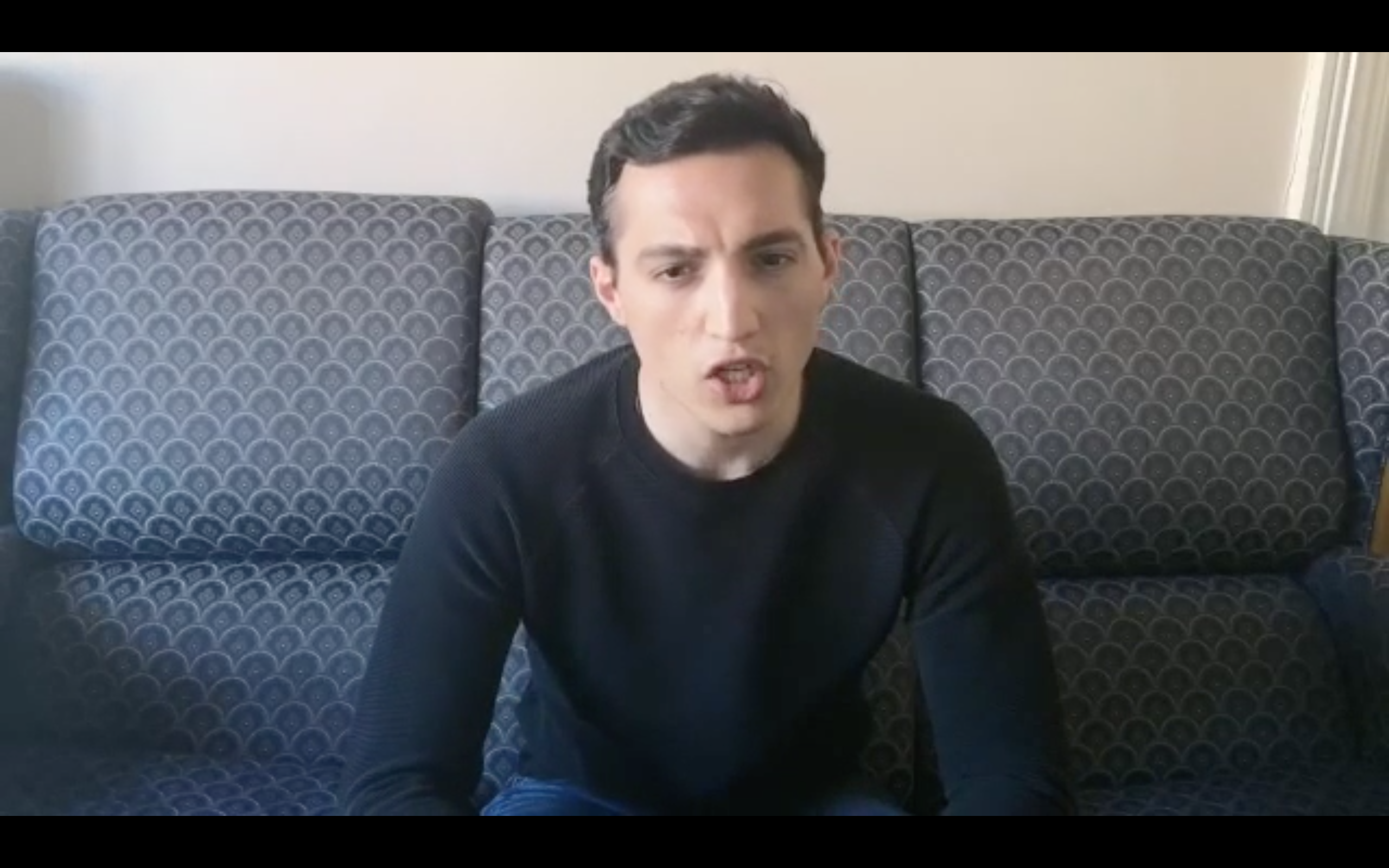
    First generation immigrants in Ireland spoke about their experiences in Ireland, the good, the bad and the ugly. A report for TheCity.ie by third year TUD student journalists.

    Two of the immigrants are 3rd year student journalists and focus on their first impressions of Ireland, racism they may have encountered and even what they miss about their home countries and also recount the kind Irish people that they have encountered while living in the country. Racism is a huge issue in Ireland and this video goes to show that it is still present in 2020 and this needs to come to an end. However, the pleasant memories are recalled and spoken about too.