Tag: ireland

  • Our Balbriggan is your Balbriggan

    Our Balbriggan is your Balbriggan

    By Robert Geoghegan

    Balbriggan is Ireland’s youngest town with an average age of 30.8 years and Ireland’s fastest-growing town. There has been rapid immigration in the last two decades resulting in Ireland becoming an increasingly diverse country in terms of national and ethnic origin.

    In 2016, 535,475 non-Irish nationals were living in Ireland, a decrease of 1.6% since 2011. Balbriggan has grown to a population of 21,722 according to a 2016 census population, a 191% cent increase compared with the national average of 35%.

    Data compiled by Fingal County Council shows almost one-third, 28%, of the population is foreign-born, compared with 13% nationally with a further, 19.1% identifying as non-Irish.

    With this in mind, Balbriggan is seen as a litmus for how Ireland will deal with integration for future generations. Unfortunately, there has been a conflation of race and gang issues.

    Credit: Robert Geoghegan

    This sentiment between racial issues and youth gangs came to a head-on, in November 2017; it was reported at the time that a large group of residents met at Balbriggan Garda station to highlight the growing issue and to sign a petition to get more Gardai on the street and to call on the Government to do more in the fight against crime.

    Another article reported that residents were concerned about the lack of resources and the growing need for more Gardaí on the streets. Quoting the then Sinn Fein councilor, Malachy Quinn, “people make their voice heard that we demand more investment in Gardai and services for our town.”

    Mr Quinn concluded: “As a region with the youngest population, it is vital that investment should reflect this.”

    “I don’t see myself as anything but Irish,” said local Balbriggan resident Ilya Gourilev.

    Ilya said: “I have spent most of my life here in Ireland, my passport is Irish”. Ilya, moved to Ireland when he was twelve; first he lived in Blanchardstown and then in 2006, he moved to Balbriggan. 2006 saw the population increase from 9,615 too 15,146 in 2011, an increase of 57%  during the worst global economic crises.

    Credit: Robert Geoghegan

    Our Balbriggan and new Irish

    A Balbriggan Leadership Group, Our Balbriggan, is chaired by President of Dublin City University, Professor Brian MacCraith. Our Balbriggan was set up to connect with residents, public services and businesses in a meaningful way. It was announced that a ring-fenced €20 million plan is to be put in place to help transform Balbriggan main street and harbour. The Our Balbriggan development document notes the town “felt divided”, the lack of integration holding back its potential.

    A spokesperson from Balbriggan Integration Forum talked about what Fingal Council have been doing to try and improve integration in Balbriggan: “With the help of the Fingal County Council Community Development Office and Cairde, the Balbriggan Integration Forum runs many activities that help people to integrate into their community.

    “From participating in the Balbriggan Patrick’s Day Parade to the committee baking cupcakes decorated with the flags of all the different nationalities who live in Balbriggan.

    Credit: Robert Geoghegan

    “We were recently given a Communities4Environment grant to clean and improve the grounds of the Cairde Centre, where we are based: we plan to invite the people of the town in to paint a mural together. We held an Integration Through Art exhibition in the Cairde Centre in October.” He added.

    It is through education that change happens, TheCity.ie spoke to local resident Charmaine Nolan about the changing identity of Irish people: “My children are Irish, they are mixed race, and they only identify as Irish. Which is something I would have had difficulty wrapping my head around a couple of years ago.

    “Growing up in Balbriggan has been a blessing with how diverse it is. I am however worried when my kids become teenagers because my oldest is eight and my youngest is five, so it is okay at the moment. I am not sure what will happen in secondary school, and maybe I shouldn’t have to be.”

    The country is looking to Balbriggan for the future, and hopefully, Our Balbriggan is Ireland’s future.

  • “At least in Ireland I have a better life”

    “At least in Ireland I have a better life”

    By Ana Novais

    Dublin will ensure you’ll discover amazing homemade scones, caffeine shots in hidden cafés and the perfect vintage clothes in a second-hand shop. To a historic landmark with an inspiring back story or a chance to chat with a Dublin character, this city is layered, unique and full of treasures waiting to be found.

    However, it is not only the welcome that brings people into this country. Some people come to look for a better life, and it’s here where they think that their dreams will come true.

    Like many Brazilian people living in Ireland, Luz Mauricio followed her dreams to Dublin where she came to learn English

    Luz Mauricio Photo Credit: Ana Novais

     “I came to Ireland in 2016 and have now attained a proficient level of English which is excellent,” said Luz.

    But for Luz, one of her biggest struggles was finding somewhere to live

    “When I arrived, I ended up living in a house in Dublin 1, with eight other people and for seven long months, I shared a room with one other girl and two guys,” she continued.

    “I got depressed,” said Luz, “but I kept going because my goal was to find a job and to learn a new language.”

    Living in overcrowded places is the norm for many Brazilians and other international students living in Dublin and people are regularly evicted with short or no notice.

    “Eventually, I found a less crowded place to live, but I never got my deposit back from the previous landlord,” she added. “But, everything I have been through was worth it and at least in Ireland, I have a better life.”

    “Coming to Ireland has been a great experience, but it is so tough to find a suitable place to live,” said Luz.

    According to the Immigration in Ireland Statistics 2018, Ireland granted permission to 22,414 Brazilians to remain in the State last year.

    “Ireland granted permission to 22,414 Brazilians to remain in the State last year”

    Colm Daly, Executive Officer at the Department of Justice and Equality.

    “There were 12,618 Brazilians with a permission to remain on Study grounds (Stamp 2 and 2a) in 2018,” said Colm Daly, Executive Officer at the Department of Justice and Equality.

    The biggest motivation among all these people is the desire to be in contact with different cultures and the chance to learn a new language.

  • Trinity animal testing increases by 90 percent

    Trinity animal testing increases by 90 percent

    The number of animals used for biochemical experiments by Trinity College Dublin more than doubled last year, according to figures released under the Freedom of Information Act.

    There was an increase from 12,490 to 26,252 animals used in various tests and experiments between 2016 and 2017.

    Trinity College has a range of research projects which involve the use of animals in the investigation of human diseases including Alzheimer’s and others relating to genetics, arthritis, autoimmune diseases and “age related memory loss”.

    2016 saw Trinity College testing three times the amount compared to University College Cork (UCC) in the same year, with UCC having a total of 4,100 live animals used for research experiments.

    In 2014, Trinity spent €400,000 on mice and rats alone. By 2016, the amount decreased to €310,000.

    Laura Broxson, founder of the National Animal Rights Association (NARA) said she was “one hundred percent opposed to animal testing” and believes this practice is unnecessary.

    “Today when there is a wealth of sophisticated techniques including computer modelling, tissue cultures, epidemiological studies and clinical studies available for use that offer a cruelty-free, reliable alternative to vivisection, it makes no sense whatsoever to continue to use animals.

    “Animal research has been shown time and again to hold back medical progress for people…[the] arthritis painkiller Vioxx, which was withdrawn in 2004, caused…strokes and heart attacks…even though it appeared safe when tested on animals.”

    Trinity has an Animal Research Ethics Committee (AREC) which aims to “foster ethical behaviour among the college scientific community” who wish to use animals for research.

    According to a statement given with the figures obtained through the Freedom of Information Act, all studies are conducted on the basis of well-defined consideration and with consideration taken of the animal welfare by minimising the number of animals used and using animal tissue or other replacements where possible.

    “Scientists in TCD are required to demonstrate that there are no alternatives available before the ethical review process will permit the procedure.”

  • Dublin’s Christmas food market

    Dublin’s Christmas food market

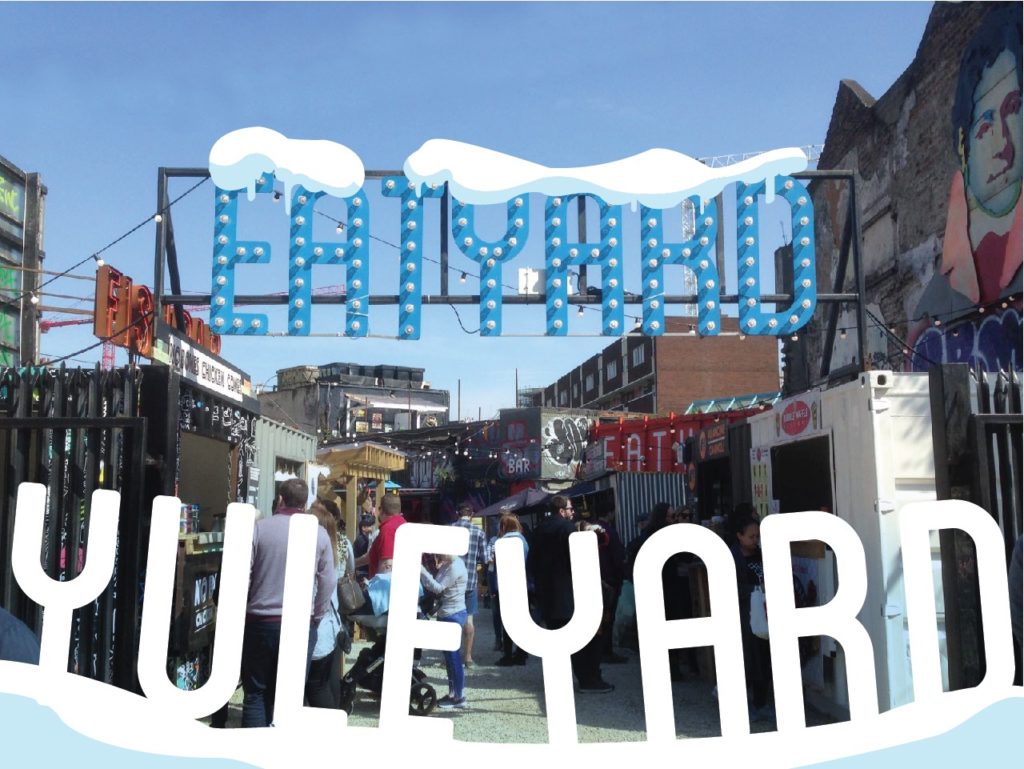
    Yuleyard, Dublin’s Christmas food market, was open to the public recently. TheCity decided to head down to the place and see what was the buzz going on there. 

  • While the SUSI grant helps many, some students still fall through the cracks

    While the SUSI grant helps many, some students still fall through the cracks

    Just over 85,000 college students received a grant under the 2018 Student Grant Scheme according to figures released by Student Universal Support Ireland (SUSI) under Freedom of Information legislation.

    During the 2018 academic year, 98,508 applications for a grant were submitted to SUSI’s Awarding Authority. This means a total of 13,483 students were refused a grant, a figure that has risen from 10,623 in 2017.

    SUSI is Ireland’s single national awarding authority for all higher and further education grants. Beginning in 2012, SUSI offered funding to eligible students in approved full-time third-level education in Ireland and also, in some cases, funding for students studying outside the State.

    Students are split into two categories for assessment, dependent and independent students. Dependent students are assessed on their own income and that of their parents/legal guardians, whereas independent students are assessed on their own income and that of their cohabitant.

    Robert Ralph has been refused the grant every year he has been in college (now in his final year), despite meeting the criteria for the grant.

    “Since I was leaving school and getting my Leaving cert results I knew I’d need to apply for the SUSI grant to get by in college because I wasn’t working at the start of first year and only my dad was working at home. On top of that, my older brother was a couple of years ahead in college and my younger brother was coming into the leaving cert at school so it was a pretty expensive time for the family.”

    Having been refused during his first two years of college, Robert was faced with the decision to struggle through or defer and save money and come back to the course at a later date.

    “Halfway through first year I finally managed to get myself a job just working in a clothes shop in the shopping centre next to my house, but I was really only able to do enough hours that would give me enough money to cover food and transport for the week and it was tough to have a social life on that kind of budget.

    “I did that routine for year one and two but in third year after getting refused again, I decided to take on close to full-time hours in work just so I’d have a surplus of money rather than having to scrape by and I was still doing 30 or so hours of lectures a week on top of all the studying as well.”

    With over 10,000 students refused in each of the last three academic years, there are calls for applications to become more transparent.

    “Each year it’s the same story with SUSI, to be honest,” said Robert. “I just apply for it out of habit because I know I’m not going to get it. The whole process could do with being a bit more open because I haven’t been given a specific reason for being refused despite being within the criteria for it and it can be like chasing shadows at times when trying to chase up replies or to see what stage your application is at.

    “I know every case is different and they can’t give one to everyone but there’s definitely hundreds of genuine people in need being refused every year and something has to be done about that. College is difficult enough as it is without having to top it off with financial pressure.”

  • Disability services remain an issue

    Disability services remain an issue

    Trinity College has records of two complaints made in relation to disability access during 2017 while other colleges and Dublin County Council said they had no records of any complaints made.

    Under the Freedom of Information Act 2014, records with “information pertaining to the amount of complaints (including the nature of the complaint) about disability access across the city/campus for the years of 2017 to present,” were requested from Trinity College Dublin, DCU, UCD, Dublin Institute of Technology, IT Tallaght and Dublin County Council (DCC).

    However, only Trinity held any records of complaints in relation to the FOI request. The rest invoked section 15 (1) of the FOI act: “The record concerned does not exist or cannot be found after all reasonable steps to ascertain its whereabouts have been taken.”

    Wheelchair users experience trouble across Dublin where some buildings are listed, and therefore have not been modernised to include a ramp or elevator.

    “That’s the excuse I’ve been given before, oh we can’t make it accessible because it’s a listed building in terms of making it accessible by lift or anything like that,” said James Cawley, a wheelchair user and the policy officer at the Independent Living Movement Ireland.

    2017 saw the launch of the National Disability Strategy Inclusion Plan where the government will focus on:

    • Equality and Choice 
    • Joined up policies and public services 
    • Education 
    • Employment 
    • Health and Well-being 
    • Person centred disability services 
    • Living in the Community; and 
    • Transport and access 

    In a recent report, published by the Irish Human Rights and Equality Commission (IHREC) and the Economic and Social Research Institute (ESRI) it was found that people with disability face the most amount of discrimination and inequality in terms of housing.

    Some of the findings show that people with a disability can experience higher housing and environmental deprivation and are more likely to live in over-crowded conditions. They are also more than twice as likely to report discrimination in relation to access to housing and more likely to live in an area with environmental problems.

    #HackAccessDublin was set up in partnership with Google to try and raise awareness of disability access problems across the city of Dublin and to help modernise buildings that are difficult to access.

    The initiative sees professionals from the communities of service design, engineering, technology and design working alongside professionals from disability community organisations like the National Disability Authority and The Rehab Group to try and come up with modern and effective solutions.

    TheCity.ie also revealed this year that elevators at Luas stops were out of use for the equivalent of 82 days over the past two years, leaving wheelchair users and others with disabilities unable to easily access the stops. Dundrum has been out of use for the combined time of 1,966 hours since 2016.

    When making a complaint about disability access, the Ombudsman is the best place to start, making sure to refer to the Disability Act 2005.

    “What I’ve found is that when I went to do it in the right form, through emails, where there is a paper trail,” Mr Cawley said.

    He recently had an incident at a hotel where he was soaked through trying to reach the hand drier that was placed above the hand basin. According to Mr Cawley, after he emailed, complaining, they offered him a complimentary night’s stay and changed the layout of the bathroom.  

    However, Mr Cawley said this level of attention isn’t the normal response to complaints.

  • Irish prison population decreasing

    Irish prison population decreasing

    7,484 people were committed to Irish prisons in 2017, according to the Irish Prison service, figures obtained under the Freedom of Information Act show.

    The latest figures from the Irish Prison Service show the number of people committed to Irish prisons has decreased significantly since 2014. In 2014 13,408 people were sent to Irish prison. This figure increased to 14,182 in 2015. 2016 saw marked improvement with a drop down to 12,579. While 2017 saw the level almost halve; down to 7,484.

    Of this number, 6,043 were male, with 1,081 females entering prison the same year. Irish men and women make up the bulk of the Irish prison population. In 2017, 882 Irish women and 4,844 Irish men were incarcerated here.

    This was followed by 15 Polish females and 253 Polish males. The third highest nationality in Irish prison was amongst Romanians; with 39 females and 203 males.

    The bulk of the prison population for both males and females is made of persons between the ages of 21 and 40 years. The highest age demographic in 2017 was males and females between 30 and 40 years, with 2,498 men and 2,109 women in this age group committed to prison last year.

    For home address, by county, given by persons committed in 2017, Dublin ranks the highest with 2,490 people. This is followed by Cork with 721 and Limerick on 464.

    For people who stated their chosen religion to the Irish Prisons Service, Roman Catholics made up the largest demographic on 716 in 2017. Overall, 191 practicing Muslims were in Irish prisons in the same year, while Christians made up the third largest religious group on 189.

  • How do Irish citizens compare to other Europeans?

    How do Irish citizens compare to other Europeans?

    Just under half of Irish men between the ages of 25 and 29 years have attained third level education, while 57.3 percent of Irish women have achieved the same level of education.

    According to Eurostat, the 49.6 percent average for men is over double Italy’s 21 percent rate for the same demographic. Their free tool is available to all EU citizens who want to compare themselves to their European counterparts. The European average of men this age who get a third level education is 32.8 percent.

    Paulstat1

    Ninety percent of European men this age use the internet every day. Finland leads the way, with 100 percent of their young men using the web daily. Ireland is close behind with 92 percent, while Romania has the lowest engagement of this demographic, with 72 percent. Overall, 86 percent of Irish women meanwhile use the Internet every day.

    Social media is the main reason young Europeans use the internet with 79 percent of young Europeans using social networks.

    paulstat2

    The average European lifespan is currently 78.1 years. Irish males have an expected lifespan of 79.3. Italy has the longest expected male lifespan of 80.7, while Latvia has the shortest expected lifespan for males with 69.1 years. Irish women’s expected lifespan is longer than Irish men by 4.2 years (83.5 years).

    paulstat3

    Ireland’s population average of people who do not own their own residences is above the EU average by 1.3 percent. According to Eurostat, the EU average of people who do not own their own residence is 30.1 percent while 31.4 percent of Irish people own their own dwelling. This is lower than Germany with its 47.5 percent rate but considerably higher than Romania where it is just 3.8 percent.

    paulstat4

    Finally, yesterday “The Climate Change Performance Index 2019,” results were published and Ireland was given the lowest score of any European country. Despite this, Eurostat calculates Irish citizens as having the lowest rate in the EU for “reporting pollution, grime or other environmental problems in their neighbourhood.”  

    On average 14.2 percent of EU citizens have reported environmental issues in their neighbourhood. Malta has the highest rate with 37.7 percent.

    paulstat5

  • Christmas in Stephen’s Green

    Christmas in Stephen’s Green

    Every year, Stephen’s Green shopping centre, in the heart of the city, lights up with huge hanging baubles and Christmas trees. Although, each year it seems decorations are placed earlier and earlier. TheCity.ie ventured to the shopping centre to ask shoppers about their Christmas celebrations and decorating decisions.

  • Sport Ireland record rise in doping for 4th consecutive year

    Sport Ireland record rise in doping for 4th consecutive year

    Sport Ireland recorded a rise in “doping whereabouts” failures in 2017 for the fourth year in a row, TheCity.ie can reveal.

    Failures have risen from four in 2014 to twelve in 2017, a 200 percent increase in a four year period. Over this time, the number of athletes tested has fallen from 1,054 in 2014 to 989 in 2017.

    A whereabouts failure includes those who have missed a test or failed to make a whereabouts filing, according to the World Anti-Doping Agency.

    Under the Sport Ireland Act (2015), Sport Ireland’s function in relation to Anti-Doping includes “to facilitate, through the promulgation of guidelines and codes of practice, standards of good conduct, fair play and the elimination of doping in sport.”

    Although testing as a whole fell from 2014 to 2017, GAA testing both in and out of competition and blood also rose steadily by 29 percent over the last four years.

    Testing by the IRFU also increased over the four year period by 29 percent while the FAI testing rose by 2 percent.

    jackstat
    Source // Flourish

    No surprises as Athletics Ireland conducted the most tests over the last four years combined. Perhaps more unexpectedly, Ladies Gaelic Football testing has remained static at four each year for the last number of years.

    The IRFU do not test in competition and the FAI do not do blood testing, while organisations like the GAA, Athletics Ireland, Swim Ireland and Horse Sport Ireland test both in and out of competition as well as blood.

    Ciaran Dunne, the vice-captain of the London Senior Football Team and a player representative on the GPA isn’t surprised to see the number of GAA players tested rising.

    “I don’t think any current or former players would have a problem with increased frequency of testing. Players have an ownership and responsibility for what we/they ingest and what goes into our bodies.

    “I don’t feel it’s a major issue in the game and for the sport to be recognised and merited within the sporting world then anti-doping will need to be an element of it.”