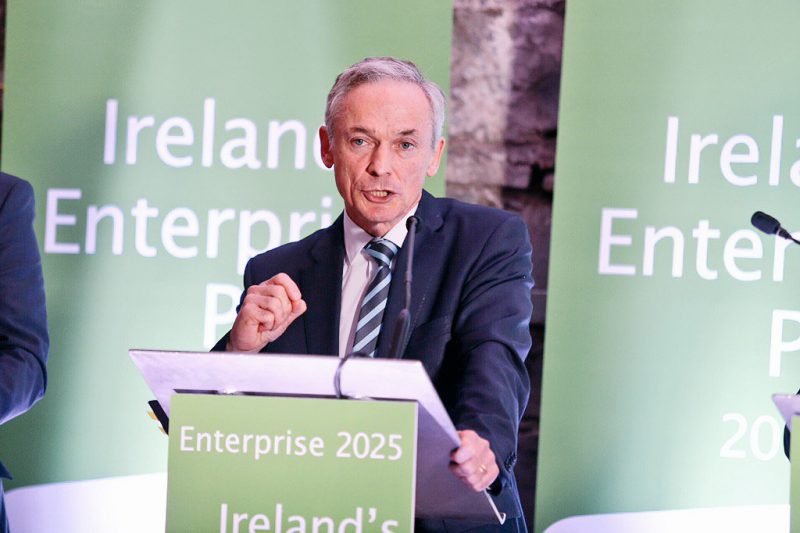
The government is set to invest €4.5 million in tackling climate change after it was revealed that Ireland is the worst performing European country for climate action. The UN Climate Conference took place in Poland on Monday, where Ireland was ranked as the 48th out of 56 worldwide countries when it comes to addressing climate issues. In response to this revelation, Richard Bruton, Minister for Climate Action and Environment has announced significant funding to make Ireland a ‘leader’ in the battle to halt climate change. It is thought that the funding will go towards a number of projects, including the Green Climate Fund, and the Great Green Wall Initiative. The Great Green Wall project aims to reduce the impacts of climate change and will increase the resilience of a number of developing countries involved in the scheme. When completed, it is expected to improve food security, resilience to droughts, and will abate an estimated 250 million tonnes of CO2 annually. It will also generate an estimated ten million land-based green jobs across Burkina Faso, Cameroon, Chad, Djibouti, Eritrea, Ethiopia, Ghana, Mali, Mauritania, Niger, Nigeria, Senegal and Sudan. In a statement released to thecity.ie, Minister Bruton said: “Ireland is fully committed to the implementation of the Paris Agreement. “This conference is about making those commitments stick by agreeing a rule book among all countries so that we are all making progress in a consistent, transparent manner. “It is the foundation for moving on in the coming months to see how, acting in solidarity, we can stretch our ambitions beyond what we have committed to. We need to be honest with where we are at so that we get to where we need to be.”
The statement said: “Multilateral action is the only way to tackle the global challenge of climate change. This funding is crucial if we are all to meet our global ambition. “We must support developing countries to adapt and to mitigate against the costs associated with the effects of climate change.
“This funding is in addition to the supports provided by the other Government Departments involved in international climate action this year and represents a further scaling-up of climate finance provided by Ireland.”
In 2017, Health Ireland (HI) conducted one of the largest social surveys in Ireland in recent years. They looked at general health and health behaviour. In their findings, they discovered that 62 percent of people are overweight or obese. To add to these shocking figures, only 49 percent of people who are obese or overweight are trying to lose weight.
In today’s modern society, convenience food is needed due to the fact that everyone is too busy to cook. But at what point does this become too much? Only over a third of Irish people, 37 percent, admitted they eat their five portions of fruit and vegetables daily.
We spoke to Sorcha Hanway, the founder behind the healthy, wholesome and aesthetically gorgeous Instagram page @my_happy_plate_ which encourages people to get back in the kitchen and fall in love again with cooking.
Where did it all begin?
“I thought that the way to lose weight was to eat really clean and only eat steak, turkey burgers, broccoli and rice. I didn’t understand that healthy food could be tasty. I just started cooking and experimenting and it became so much fun. The more I cooked, the more experience I got, the more creative I became. Then it became a challenge how can I make something yum or how can I use something that was going off so I can eliminate waste.”
Why did you set up the page?
“I didn’t want to share it on my own page anymore but I didn’t want to make a food page. I felt I didn’t have the confidence but then one day I just thought I’d do it. I got great feedback and it just encouraged me to keep going. Knowing I had an audience and knowing how demanding Instagram is, it just encouraged me to cook loads.”
What are the benefits of @my_happy_plate_ for you personally?
It’s such a hobby for me like such an outlet. When I am cooking in the kitchen it’s like I go into a state of flow. I am so mindful in the kitchen. It’s like a form of meditation for me, it totally gets rid of anxiety. It’s so easy and healthy to do knowing you’re saving money and not eating badly.”
Where did you get the inspiration for @my_happy_plate_ ?
“I was inspired by the Body Coach because I liked to do things quickish and each meal I made had me buzzing to do something new. I always had cooking on my mind and how I could turn an everyday item into something different and inventive. It was a game of unlocking whopper taste. A collection of Instagram pages helped me conceptualise dishes and my general knowledge and flair for cooking.”
Have you had any cooking disasters?
“I tried blending beetroot into pancake mix to make it pink and it was so horrible I wanted to cry. So it’s all about experimentation but you won’t discover whopper stuff unless you are bold.”
What do you think about modern-day eating habits?
“I think with modern-day eating habits, people are in a very fixed mindset. They don’t realise that eating healthy isn’t that hard and once you make the transition, after a few days it becomes like the bible. Just like anything the more you practice the better you get at it. Once you start seeing how much you save money and how much better you feel, how you can jump out of bed, how much energy you have, you feel so much better.”
What steps do you think people can take to change their eating habits?
“Change their mindset. You know it’s not expensive to eat healthy, everything I make is easy, it’s not hard. Get a cookbook, an easy one like Lean in 15 by The Body Coach and just practice, practice, practice. If you’re picky, try have open mind.”
What tips would you recommend?
“Oh, definitely spices. I cook with spices every day. They transform a meal. You can turn a plate of veg to a plate of yumminess by making them spicy. Also if you want to eat healthy to lose weight, get tupperware, batch cook something and put it in the freezer and then you don’t have to worry for the rest of the week.”
Check out Sorcha’s Instagram page here for meal inspiration.
The Army Reserve fitness exam was the most common area of failure for applicants over the past four years according to figures obtained under the Freedom of Information Act.
In order to be accepted into the Irish Army Reserve, candidates must be between the ages of 18 and 35 years, complete a fitness test, interview, medical exam and pass garda vetting.
*The years 2015 & 2016 were combined. 2016 results are included with 2015 data in the graph.
The fitness exam is composed of three aspects:
A candidate’s Body Mass Index (BMI) is recorded to ensure they are considered healthy and within the required parameters (BMI between 19-24)
If successful, they may complete a local muscular endurance test. This consists of candidates performing 20 push-ups and 20 sit-ups within a minute.
Next, applicants must undergo an Aerobic Capacity exam which requires them to run 2.4 km in a given time. The maximum time for males being 11 minutes and 40 seconds, while females are given a time of 13 minutes and 10 seconds.
“Physical fitness is a basic requirement of military life which places unique physical and psychological demands on personnel,” said Captain Paddy Molloy from the Defence Forces Press Office. “In order to be prepared for these demands, regular assessment is required to ensure the standards are being adhered to.”
Speaking to TheCity.ie, the HSE has commented that “in relation to the general population, the Healthy Ireland Survey highlights that almost two-thirds of the adult population in Ireland are not sufficiently active to meet the national physical activity guidelines. In addition six out of ten adults in Ireland are overweight or obese, with BMI greater than 25.”
“The number of personnel failing fluctuates annually, but is assessed as being within acceptable parameters,” said Captain Molloy.
Statistics showed that last year 20 percent of failures were among female applicants.
According to Captain Molloy, “the fitness test makes allowances for age, gender and chronic physical injuries in line with international standards and best practice.”
Females made up 15 percent of those that have applied in 2018 so far. Last year saw a peak in female applications at 678, while this year saw a record low in recent years with 201 applicants so far.
No females have failed the garda vetting in the past four years.
Irish weather is ugly. That’s a topic I’m sure everyone here can agree on. “At times like this, I do miss Malaysia’s hot weather,” I thought to myself as Storm Diana kicked in. In the face of increasingly freezing temperatures and totally erratic weather conditions, I hold up my mug of hot coffee, reminiscing about how my time has been in the Emerald Isle (so far).
“Are you heading to England to study? Is Ireland part of England?” I recall the amount of times I had to answer, “No, I am going to Ireland and Ireland is not part of England.” See, that’s what most of my friends and relatives back home thought, that Ireland is part of England. Clearly, the Emerald Isle is not as well known outside of Europe as you might think. In fact, the first countries when you think about Europe would be countries like England, France, Germany as they are the traditional powerhouses of Western society.
A developed country is generally characterised by their levels of Gross Domestic Profit (GDP) and quality of life. Most European nations are classified with a developed country status, and Ireland is not excluded. There are clear distinct differences between Ireland and where I come from, Malaysia, which is a developing country.
The general consensus is that Ireland is a friendly nation. People are generally friendly and willing to strike up a chat with almost anyone. That is evident from the number of times casual chats were initiated as I waited for buses. Car drivers on the road seem to be relaxed and easy-going too. They would usually stop to let you cross the road when traffic is free and easy. Cars stopping for you is certainly not something you would ever witness in Malaysia.
In fact, I don’t think cars ever stop in Malaysia. According to the Nielsen Global Survey of Automotive Demand, Malaysia has the third highest car ownership in the world. My country has one of the highest road death rates in Asia, with thousands of people killed on the road each year.
Stigma
Moreover, I am impressed with the level of mental health awareness in Ireland. For example, Mental Health Week is an eye-opening experience for me. It lands on October every year. At first, I couldn’t believe that there’s actually occasions dedicated to mental health.
People actually talk about these issues? It’s such a taboo subject back where I come from. In my culture, there is a widespread belief that having mental health problems is generally your own problem which means that you are just ‘weak’ or ‘lacking willpower’.
So during October every year, it was surprising to see campaigns on mental health awareness, with people talking about their fears and struggles. I would not expect people to openly talk about their problems in public and especially to the media. There’s a huge unbearable stigma surrounding mental health in Malaysia. While stigma surrounding mental health is still present in Ireland, I feel there is a considerable awareness on the issue.
Gender-neutral bathrooms are signs of a progressive country and acceptance for change. I first saw one of these toilets two years ago and it was something that never even crossed my mind while living in Malaysia.
In Ireland, homosexuality was decriminalised in 1993, and now Ireland has an openly gay Taoiseach. “It’s not something that defines me, I’m not a half-Indian politician or a doctor politician, I’m not a gay politician for that matter, it’s just part of who I am,” the Taoiseach told RTE Radio One in June 2017.
This makes for quite the contrast to Malaysian Prime Minister Tun Dr Mahathir Mohamad. “There are certain things we cannot accept even though it is accepted as [a] human right in the West. This includes LGBT and same-sex marriage,” he told Malaysian newspaper The Star in September. There’s a noticeable difference in culture between the two countries.
Final thoughts
On a personal level, the problem that has affected me most in Ireland, is none other than the harrowing accommodation crisis, a problem that is sweeping across European countries. Back home, none of my friends needed to set up as many house viewings, make countless phone calls, and endlessly track available rooms on accommodation renting websites. They could easily snap up a room at close proximity to their respective colleges. The toxic anxieties that come with searching for accommodation in Dublin is quite the cross to bear.
While Malaysia may well be seeing a new day after recent general election results which saw a 60-year period of political control end, the country still has ways to come to be considered developed. From my point of view, the grass is indeed greener on the other side, but home always has a place inside my heart.
Figures obtained under the Freedom of Information Act show that almost 90 percent of horses seized in 2017 in the Fingal County area were euthanised.
These figures show that 139 of 155 horses taken in around the Fingal area were euthanised with only fourteen being reclaimed by their owner and two horses being rehomed.
To deal with horses in public places, Fingal County Council use by-laws that were created under the Control of Horse Act 1996 and came into effect on the 12th January, 1998 led by the DSPCA.
These by-laws are in place to regulate and control the horse population in the Fingal area and create procedures for the impounding and disposal of unlicensed horses.
According to these by-laws any person keeping a horse in a control area must have a license that costs up to €31.25 (Licence holders must be over 16 years of age), a horse passport and suitable accommodation for the horse.
Fingal County Council said: “When horses are seized they sometimes have to be euthanised when they are not claimed and it isn’t possible to rehome them.”
In terms of prevention and looking for solutions to this problem they said that “there are education programs run by the Department of Agriculture as well as initiatives such as Horse Projects and the DSPCA also pursue many initiatives to alleviate this problem.”
Independent councillor Francis Timmons has spoken out on the issue before suggesting that fewer horses be available to the public. “It’s really to look at what can be done, obviously we want to try and limit the amount of horses being euthanised. Part of that will be to limit the amount of horses that are available,” he said.
The Animal Welfare Convention took place in 2018 under the Department of Agriculture, Food and the Marine where a new Animal Welfare Strategy Consultation Document was presented and submissions from members of the public were invited.
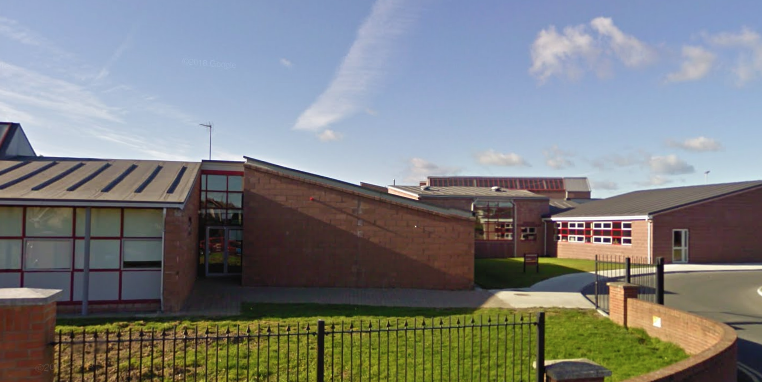
A temporary autism unit for St Peter’s College in Dunboyne has been approved for September 2019.
The approval for this comes three years after it was initially accepted, but delays led to frustration for families campaigning to have the services made available locally.
Orla Fagan Gormally spoke to TheCity.ie about her Facebook post and ensuing campaign which garnered enough support for the fast-tracking of the unit.
“I posted to my page publicly with very little hope it would be open on time. I had such a good reaction from the community I decided to start a petition, along with four other parents who needed the unit on board,” she said.
“We had two local councillors to help, Maria Murphy and Damien O’Reilly, along with [TDs] Regina Doherty and Thomas Byrne. I want to thank the LMETB, these councillors, TDs, and the principal of St Peter’s for making this a reality,” she said.
It will take a year for the unit to get up and running, but St Peter’s plan to accommodate the five children in an existing space until then.
“It’s a remarkable early Christmas present for all families involved,” said Fagan.
A spokesperson for the Department of Education and Skills spoke to TheCity.ie regarding the development.
“A permanent four classroom ASD Unit has been approved. The delivery has been devolved to Louth and Meath Education and Training Board. To meet the immediate need [September 2019] temporary accommodation is being provided,” said the spokesperson.
In another similar case regarding a service in Dublin City for adults with autism, information under the Freedom of Information Act 2014 showed there was a delay for the Botanic Horizons service from October 2016 until February 2017.
This delay was due to a conflict involving Dublin City Council over the requirement for a disability toilet. The council felt it was required but the architect deemed it unnecessary due to the ‘independent mobility of the service-users’.
Minister Finian McGrath opened the Botanic Horizons service in Glasnevin in February 2017.
The HSE has released a new report, which has asked hospital staff to rethink how they refer to patients.
The report mentions a programme which seeks to personalise the treatment of patients within the healthcare system over the coming months, with eighteen hospitals already committing to the new guidelines.
“In nursing, it’s more about asking the patient what they want to be called. It’s always been that way,” said Liz Roche, Area Director of Nursing and Midwifery planning and development at the HSE.
“Some patients want to be called ‘Mr. Bloggs’ rather than by their first names and vice versa some would rather be called by their first name. It all comes under the umbrella of ‘person-centred care’,” Ms. Roche continued. “It also works in reverse – that is us,as professionals, should be introducing ourselves to patients. There is a big drive called #hellomynameis.’
Amy Mc Grath, 21, is a recently qualified nurse working in Dublin. As a young nurse, she doesn’t predict any personal changes in relation to “person-centred care”.
“We were taught from the beginning not to be using ‘pet names’ with patients because most of them are so much older than us that it can seem patronising,” she told TheCity.ie. “So, I don’t see it changing how I talk to patients. I think some people will find it difficult but that’s just because it’s in the Irish culture to use ‘lads’ and stuff.”
According to the report, the HSE’s main aim is “to enable a culture of person-centredness within the health and social care system that positively impacts on [the] experience of people who use services, their families and staff.”
“Calling someone ‘love’ or ‘pet’ is seen as being not ‘person-centred’ as you can call it to anyone.”
“People prefer to be called by their own name as they find it more personal and [they feel] that people are trying to get to know them,” said psychiatric nursing student Niall Treacy, 22.
Treacy believes a “balance” should be achieved as “we can’t look at everything in a clinical matter and some informal language around patients may comfort them rather than the constant professionalism.
“It’s a career where compassion is the centre force so the clinical language isn’t always needed and people may find it more comforting to be called ‘love’ or ‘pet’.”
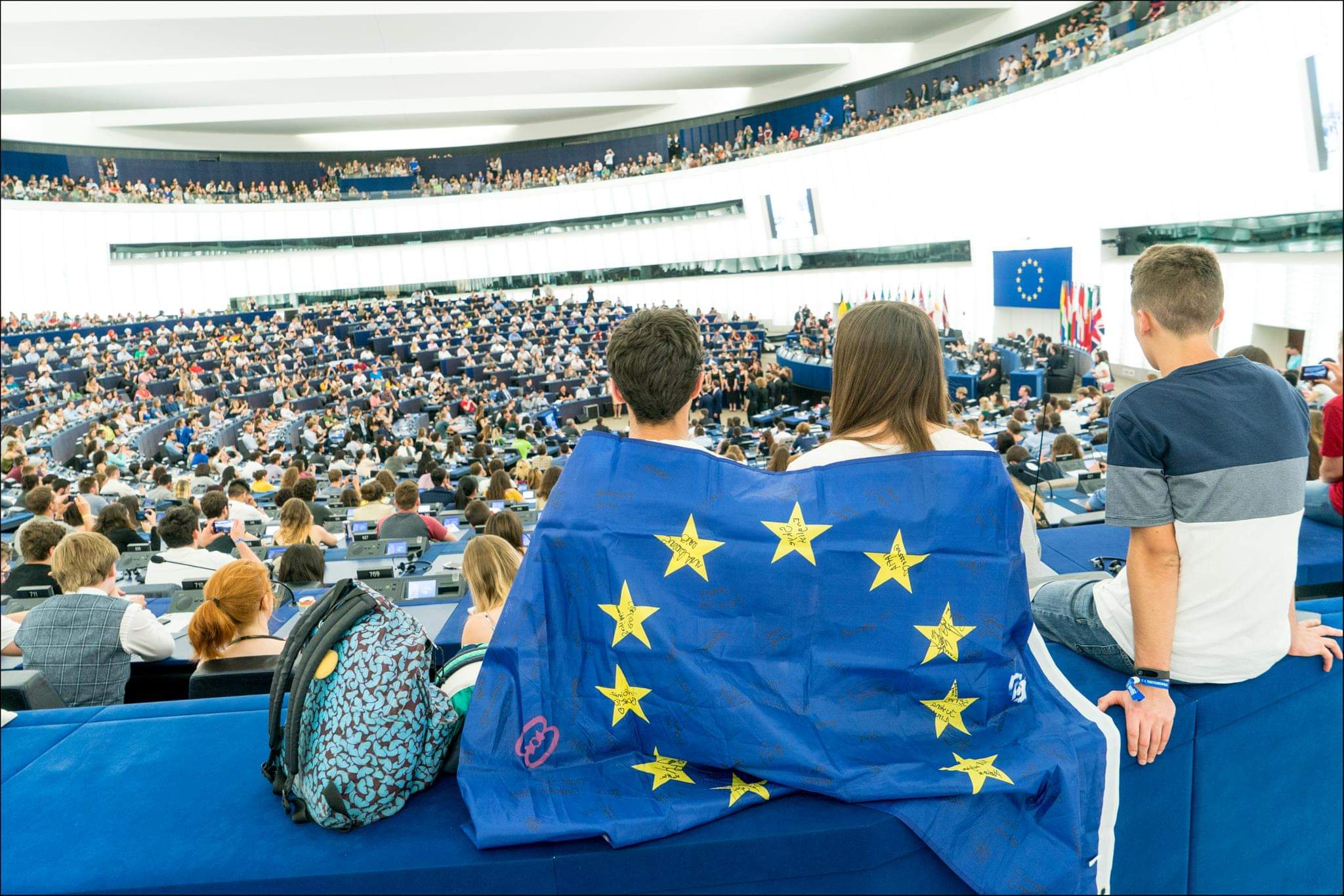
This Time I’m Voting is a campaign run by the European Parliament (EP) in order to encourage European citizens to vote in the upcoming elections.
The campaign is supported by thousands of volunteers across Europe who are committed to promoting the campaign, and ultimately motivating the public to vote. However, social media is the main platform used to promote the campaign, aiming to attract the attention of young users.
Sanne De Ryck, EP press officer, said: “It is indeed important for young people to go out and vote as we are all aware that it is now crunch time, that the future of Europe is at stake. Young people have a whole life ahead of them and will face the consequences of the 2019 European elections.”
De Ryck said social media is ‘part of the answer’ to grab the attention of potential young voters.
The campaign has over a thousand volunteers in Ireland and over 88,000 volunteers across the EU, and aims to inspire citizens to campaign for issues they feel passionate about.
Sarah Buttle, 23, a recent Griffith College graduate, will vote in the upcoming elections and hopes young citizens will do the same. Ms Buttle said: “I would encourage all of my friends to use their vote to help shape the future of the EU. EU issues affect us all, whether it’s migration, privacy or climate change, and having elected MEPs that can voice the Irish opinion, our vote does matter.”
Ms Buttle supports the This Time I’m Voting campaign and hopes the elections will see a big turnout from Irish voters. She said: “The upcoming elections in the EU need an increased voter turnout, especially within the youth.”
Jack Moloney, EP press officer for Ireland, said: “Ultimately, we wish to increase interest in European affairs and de-mystify the electoral process. I have often been asked ‘what does the EU do for me?’ or been told that Brussels is too far removed from everyday life. Our active, young and intelligent participants have already begun to communicate on their own behalf why Europe matters to them and I have found it to be truly amazing.”
The EP also organise events to promote their campaign and on Wednesday December 5, there is a EU pub quiz held in the Boar’s Head pub on Capel Street, Dublin. European Parliament elections take place from 23 to 26 May 2019.
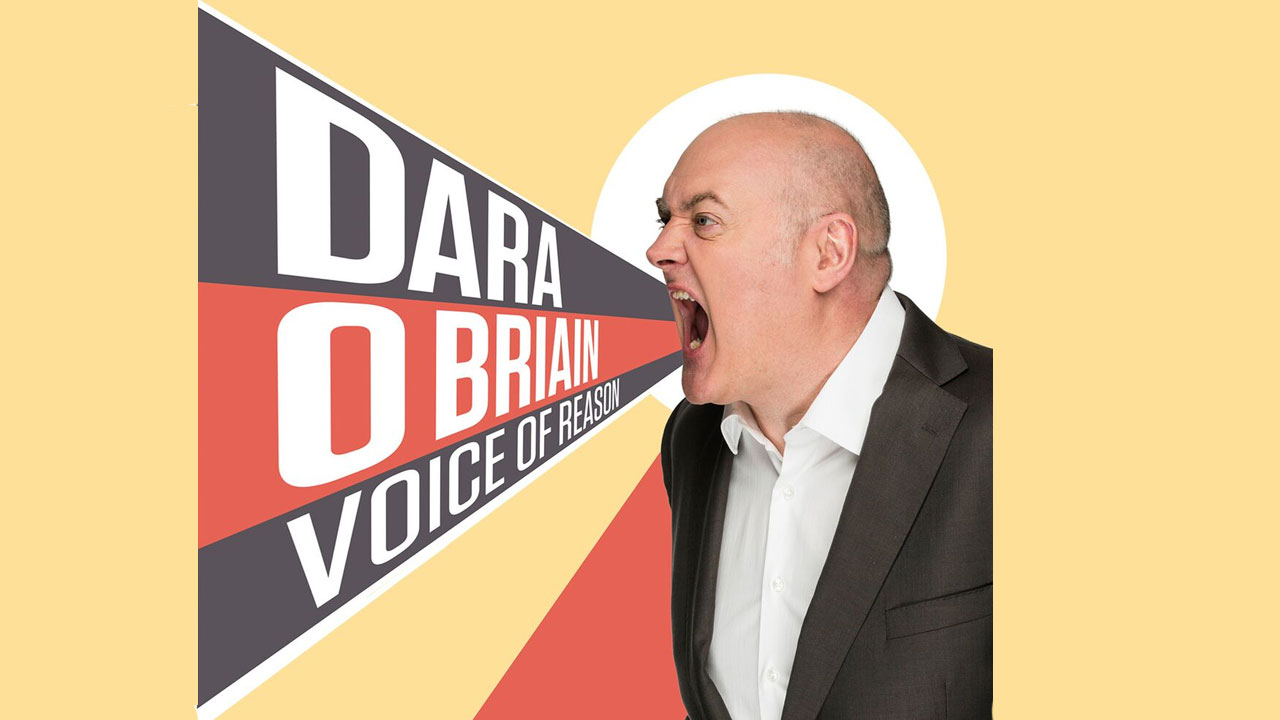
One thing to take away from Dara O’Briain’s performance in Vicar Street is that he has the clever ability to make a bunch of mid-twenties year-olds laugh, even if they are not sure what they are laughing about. Though his show last Thursday wasn’t sold out, the energy filled the room as O’Briain told various anecdotes and imagined scenarios.
Dublin was one of his final stops for his tour Voice of Reason, with extra dates being added only recently. “‘I’ve been doing this show for a year and you lot waited until the last minute to buy tickets. Will we? Won’t we? Maybe now … no no let’s wait a bit longer,” quipped O’Briain to the audience.
Jokes varied from material only an older generation would have experienced, but O’Briain was still very much aware of the twenty-something generation in the audience. Recounting a classic situation of false promises made by builders (“you know when you have builders over…” ), he described the mystical problem of “snagging” that builders enjoy mentioning when a job is stalled. “Sure half of you probably have no idea what snagging is,” joked O’Briain.
He commented to the audience that he couldn’t make that joke over in London, because half of the crowd probably would never be property holders.
He went on to hold an imaginary brick in the air, “you see this here, this is called a brick… which you will never own.” The doom and gloom of the joke wasn’t an unheard of situation for many in the audience, with some glancing at the person next them, laughing nervously while also mixed with a good sense of humour.
The improv in the first half of the show continued the steady climb of humour for the rest of the night. Not an easy task, yet O’Briain managed to find an entertaining side to every individual in the front row. A man from New York (who O’Briain kept returning to during the night with explanations, “God how do I explain who Crystal Swing is?”), a HR specialist from Linkedin (“so you fire people for a living?”), and a nervous nineteen year old (“do you know what snagging is?).
Returning after the interval, the audience were already warmed up with laughter and O’Briain took advantage of this by telling anecdote after anecdote, not leaving time for the audience to catch their breath in between laughs.
Finally, one of his final stories was the biggest hit of the night. On the screen behind him he brought up a news article that falsely reported that he had died. The article, which was “clearly fake”, as O’Briain pointed out while wildly gesturing to himself, said that he and his driver Mark Bean (“already a bad start that my driver is called Mr Bean”) fell into a “riverian” in Dublin after a night of “showbiz”.
O’Briain played off the ridiculous nature of the article and began creating a scenario of what he imagined the backstory of his driver to be and what a night of “showbiz” involved. He continued to make the story grow and grow until the audience were weak with laughter.
By the end of his set the comedian walked off stage to a standing ovation, leaving the lasting impression that O’Briain is a true master of imagination and storytelling.
Diversity in children’s books has become a more and more popular topic over the last few years, with the majority of people in agreement that there is room for more stories about women and a wider variety of ethnicities in the genre.
The issue was recently brought back into the spotlight by teenage American activist Marley Dias who was tired of reading about “white boys and their dogs” and started the campaign ‘1000 Black Girl Books’. This movement is needed as only nine percent of children’s books published in the U.S. in 2017 featured an African or African-American character, according to data from the Cooperative Children’s Book Centre.
A quick look inside popular Irish bookshops will show you that there’s also a serious issue here in terms of what books are on offer to children in Ireland.
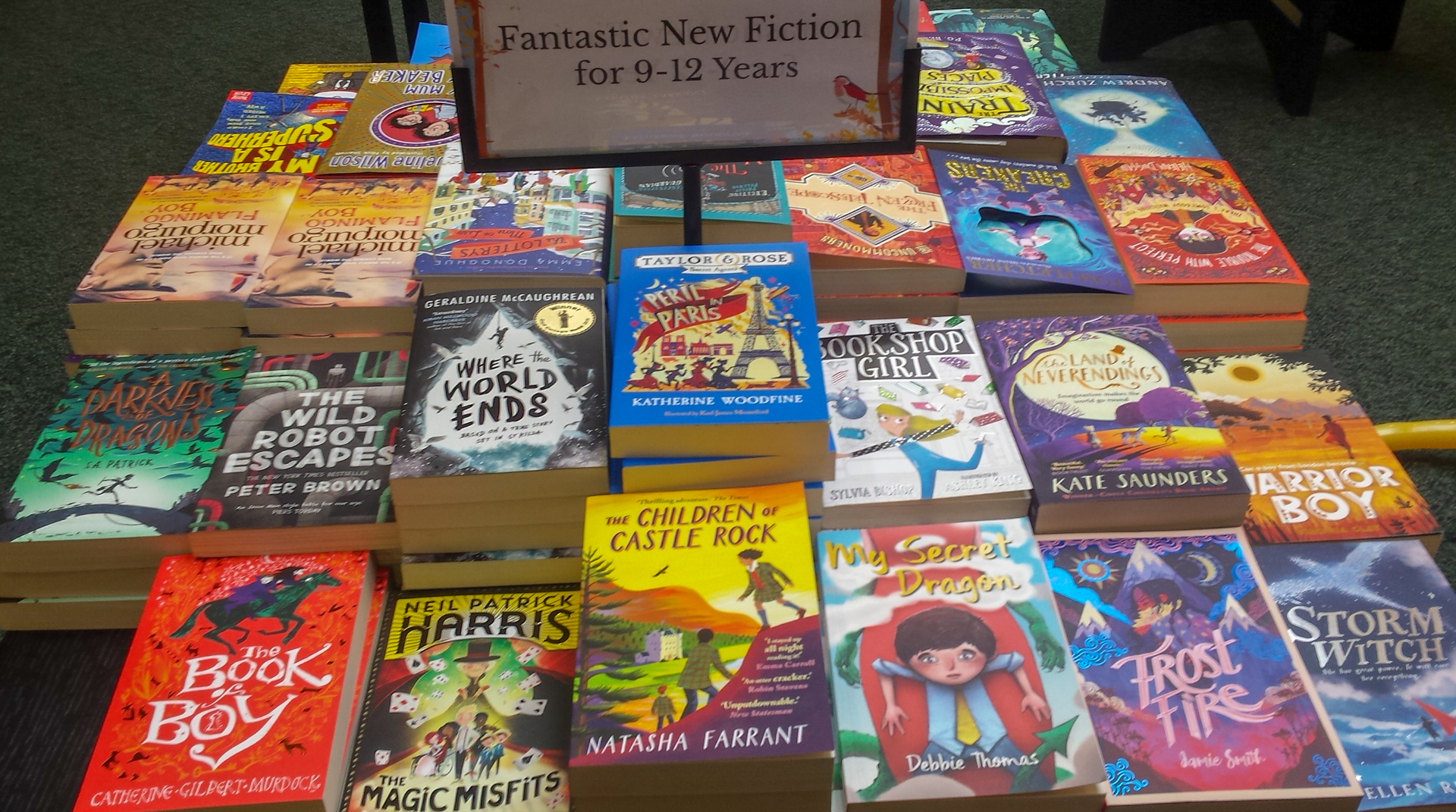
The research was carried out in three major bookstores, Eason’s in St. Stephen’s Green shopping centre, Dubray Books on Grafton St. and Hodges Figgis on Dawson St. Of the selection of children’s books looked at in these three bookshops 48.8 percent had male protagonists, 22.6 percent were about animals and 28.6 percent featured a female main character.
There was a similar imbalance in terms of the author’s gender with 54.8 percent of the books in the selection written by men, 31 percent by women and 14.2 percent by a collaboration of male and female authors.
When it came to individual bookshops, the selection in Eason’s had a lower level of diversity with 72 percent of the books sampled featuring male leading characters and 76 per cent written by men.
By comparison, 35.5 percent of the books in Dubray Books had male central characters with 45.2 percent of them written by men. In Hodges Figgis, 42.9 percent of the books in the sample featured male leads with the same percentage of 42.9 percent written by male authors.
Of course, this is only a small, random sample that could have been influenced by a multitude of factors such as the way in which employees are told to stack shelves, be it by genre or by author name.
In saying that, there was nothing intentionally biased in the selection methods as it was a randomised sample. This meant the first children’s bookshelf spotted out of one specific section such as the character or fiction for 9-12-year-olds in each shop.
To learn more about diversity in Ireland’s publications, Jenny Murray, Publications Manager at Children’s Books Ireland (CBI), spoke to The City. She said that diversity in books needs to be “wholeheartedly supported and encouraged” especially in children’s books. CBI is the national children’s books organisation of Ireland. Their aim is to make books central to children’s lives in Ireland through developing audiences for children’s books, and supporting and celebrating excellent authors and illustrators.
A children’s book stand in Dubray Books, Grafton Street // Ethan McDonagh
“You only have to walk into any school in Ireland, especially in Dublin, to encounter the most diverse age-group population in Ireland currently. It is an extraordinary time to be a child in Ireland, the sheer cultural range of language, religion, ethnicity and tradition in an average classroom in Ireland is so diverse.
“But while the environment is enriching it is also challenging to ensure everyone is represented. With regard to books, if children and young people cannot see themselves and their own experiences represented within the pages of books then their interest will wane, they will think that books are not for them. At CBI we think it is fundamental to all literature, but most especially within books for children and young people and especially when you are dealing with visual texts,” she said.
Recent figures released in the UK this year with regard to BAME (Black, Asian, Minority, Ethnic) representation within children’s books, show that of the 9,115 titles published for children and young people, only 4 percent featured BAME characters. The Centre for Literacy in Primary Education (CLPE) who carried out the study, found that only one per cent of British children’s books feature a main character who is black or minority ethnic. This compares to the 32.1 percent of schoolchildren of minority ethnic origins in England identified by the Department of Education last year
“We [CBI] do not as yet have comparable statistics for Ireland, but the UK and Irish markets are comparable so the statistics are relevant to us. The shockwave that the findings sent out across publishing was gigantic, with the majority of publishers swiftly responding and putting the publishing of representative titles to the very top of their to-do lists. Publishing, in general, is a reactive industry and is led by trends. While I don’t want to label this as a ‘trend’ per se it will essentially and hopefully have the same industry-wide effect, and in late 2019 we should see more titles hitting shelves that have BAME representation,” she explained.
Our research contained a sample from three bookstores and according to Ms Murray, although the results showed a majority of male characters compared to female, she’d have to disagree.
“If you take something like Children’s Books Ireland’s annual publication the Inis Reading Guide as a representative sample, this is an independent review of the best titles for children and young people aged 0-18. This year’s guide features 342 titles reviewed across age groups and including a poetry and non-fiction section. Within those 342 titles – 196 men were either author/illustrator/translator against 295 women. Almost 100 more women! I think female representation within books is lower, however,” she maintained.
“According to a survey published recently in the Observer, girls and female characters, in general, tend to be underrepresented in books for very young readers, where they account for only about 40 percent of the main protagonists found in the hundred bestselling picture books of 2017. They are almost never baddies or criminal masterminds and are more likely to have a non-speaking part. Girls, in short, are often limited to the role of sidekick, when they appear at all. Unless, of course, they are mothers or grannies; parent characters are overwhelmingly female and dads are alarmingly absent.”
Despite our finding showing the majority of characters and authors being male, Jenny believes that 2018 was the Year of the Girl.
The Children’s classics section in Hodges Figges, Dawson Street // Ethan McDonagh
“As I mentioned earlier, representation of strong female characters and role-models with children’s and young adult fiction was low in previous year’s. But publishers listened to campaigns and adapted, leading to an industry-wide change. It did help that 2018 was the centenary of suffrage in the UK and Ireland, but there was barely one children’s publisher in 2018 without at least one title that fitted these criteria, the majority had numerous titles and almost all had at least one non-fiction title highlighting extraordinary women throughout the ages. Some of these were women we all know very well but more often than not they were women history has forgotten and even more welcome, there were titles focusing on current inspiring women, which is almost even more important.
“We [CBI] ran our own Bold Girls campaign around this subject matter and gained huge media and public acclaim. There is a definite push for books celebrating women’s achievements in science, sport, the arts and history in general. This is all to be welcomed and celebrated, but there is still a lot of work to be done around the casual, invisible sexism that pervades books that are not specifically about restoring the imbalance. In those books, more males should be seen cooking, cleaning and caring, more females working and wrestling and wondering. It doesn’t have to be the main point of the book; it would be all the more powerful for it,” she continued.








You must be logged in to post a comment.