Tag: ireland

  • No need for €1,000 student fee increase

    No need for €1,000 student fee increase

    Calls from the Department of Public Expenditure and Reform (PER) to increase third level fees by at least €1,000 appear unjustified when recent university figures are taken into account.

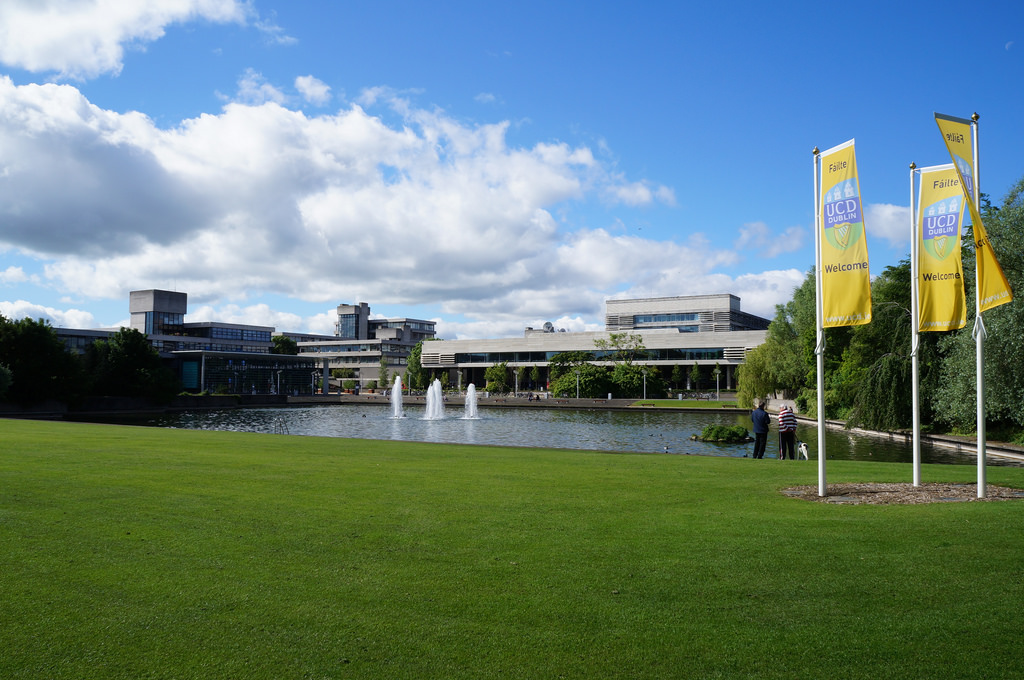
    University College Dublin (UCD), Ireland’s largest university, reported a surplus of over €20 million for the year ending September 2016, an increase of €2.3 million from 2015.

    Furthermore, UCD experienced a €13 million rise in academic fees paid over the course of the year, with the figure rising to €211 million, an increase of 6.5 percent.

    ucd

    What is telling, however, is the figure for state grants and funding. In 2006, that figure stood at over €120 million and was the college’s main source of income, eclipsing academic fees by some €15 million. Ten years on, however, that figure had dwindled to €60 million, less than half of what it was a decade ago.

    It is much the same story for DIT and DCU, two of Dublin’s largest colleges. Trinity college, on the other hand, has experienced budget deficits since the economic crash of 2008, but its finances have vastly improved over the past years.

    A deficit that stood at €22.5 million in 2013, now stands at €9.4 million. Trinity, like UCD, has experienced drastic cuts to state funding and has seen a 25 percent decrease since 2012 (€58 million to €44 million).

    Like UCD, Trinity College has also experienced a huge increase in academic fees, overseeing a 17.5 percent rise since 2012 (€113 million to €133 million).
    Both of the above changes are a direct result of the economic downturn; funding for universities was cut annually during the recession, while academic fees were controversially imposed across the board at €3,000.

    The Department of Public Expenditure’s newest proposals have been met with widespread resistance from the student body, with protests and demonstrations taking place at the beginning of this academic year and it is easy to see why.

    The department argues that there is a funding shortfall for third level education in Ireland, but there only is a shortfall in funding because of cuts implemented by various governments since the recession.

    Academic fees are not the issue. According to the Central Statistics Office (CSO), there are now 180,000 full time third level students in the country along with 39,000 part-time students, more than there ever has been. Colleges, therefore, have never taken in more money from academic fees than they do at present.

    The department estimates that 50 percent of students are either totally or somewhat exempt from paying college fees owing to family income levels. Even so, a €1,000 increase to academic fees would roughly yield an additional €110 million annually for Irish colleges.

    Government funding is badly needed, rather than an increase in student fees, and Budget 2018 saw the department pledge an extra €47.5 million to third level funding. An awful lot more is needed, UCD’s funding alone has been cut by more than that in the past decade, but it is a start at the very least.

    The Budget also pledged to increase funding by €310 million by 2021, but the government were criticised for an “absence of any specific direct funding to support third level education” by the Irish Federation of University Teachers.

    Members of the opposition, including Labour’s Aodhán O Ríordáin, have criticised the “precious little efforts” made by the government to address the funding problem in third level education.

    Fine Gael gleefully pointed out during the Rugby World Cup in 2015 that Ireland had the fastest growing economy of any of the nations competing in the tournament. Perhaps it is time they start acting like that is the case and giving back to the Irish taxpayer.

    By Shane O’Brien
     

  • Time to say goodbye? Defeat to Denmark should spell the end for Martin O’Neill

    Time to say goodbye? Defeat to Denmark should spell the end for Martin O’Neill

    “Just to say, thank you very much for giving us the space,” Danish manager Age Hareide sarcastically said following Denmark’s 5-1 drubbing of the Republic of Ireland, before going on to say, “they [Ireland] made it a little bit easy for us.”

    To have an opposition manager make comments of that ilk about a fellow professional’s  tactics does not bode well for Martin O’Neill’s future.

    O’Neill got it drastically wrong on Tuesday, maybe not initially, but his response to Ireland conceding was nothing short of farcical. Ireland had not conceded more than one game in a competitive home match under O’Neill prior to Tuesday night, mainly because they never leave themselves exposed as they did. To abandon such an approach with such a huge game still delicately poised beggar’s belief.

    Ireland were absolutely outclassed by an average Danish team at home in what surely ranks as the country’s worst defeat since the embarrassment that was the 5-2 defeat to Cyprus in 2006 (there have been bigger defeats since then, but the losses to Spain and Germany in 2012 can at least be put down to the fact that both teams were world class).

    It started so perfectly as well. Shane Duffy’s sixth minute goal gave Ireland the lead in the tie and seemingly set up 85 minutes of nerves for the Irish fans. Unfortunately, those nerves, or the lead, didn’t even last half an hour before the wheels came off.

    The equaliser changed everything. Ireland were moderately comfortable up to that point and even carved out two decent chances to extend their lead. However, once the Danes got on the scoresheet (shambolically) it was one-way traffic.

    Ireland proceeded to play with what Keith Andrews labelled ‘gung ho’ football and threw bodies forward in the immediate aftermath of conceding the equaliser and paid the ultimate price for it. There was no need to panic. With over an hour left, there was plenty of time to probe at the Danish defence and regain the lead.

    Instead, they played like they were 2-0 down and left themselves exposed on the break and were punished within three minutes. What was a manageable task suddenly became exceedingly difficult and the half time substitutions only compounded the problem. Removing two defensive midfielders exposed the Irish defence even more and Christian Eriksen made them pay dearly.

    Eriksen is genuinely world class and to give him the space that the Irish midfield did at 1-1 is criminal, especially when there was a need to be compact and see the game out to half time.

    Of course, O’Neill cannot have accounted for the individual errors that were the catalyst for so many of the Danish goals. Stephen Ward, a mark of consistency throughout Ireland’s campaign, froze on the big occasion and two of the Danish goals came directly from his errors. Cyrus Christie, usually dependable in a green jersey, looked edgy from the off and should have done so much better with his goal line clearance for the Danish equaliser. However, the tactics remain unjustifiable and inexcusable despite the errors.

    The ends have always justified the means during O’Neill’s reign, impressive 1-0 wins against Germany, Austria and Wales were built off the back of a rearguard action, but any one of those games could have gone the way Tuesday night’s match did. Had Germany put away one of the many first half chances they had in Dublin, you could make a case that the final score would resemble the one against Denmark. The same goes for Austria, who absolutely dominated the opening half in Vienna and, to a lesser extent, Wales.

    It is not last night that should be seen as the killer blow in Ireland’s qualifying campaign however. It is the absolutely abysmal 2017 that wrecked any hopes of automatic qualification.

    The group was there for the winning – ten points out of twelve at the beginning of the year was the perfect launchpad, but a lack of ambition against Wales at home (who had ten men for the best part of half an hour), an Austrian side who were in complete disarray, and a Georgian side that were sixth seeds in the group ultimately saw Ireland pick up three points from their next four games.

    Losing at home to Serbia, who were reduced to ten men around the hour mark, was also inexcusable. A lack of ambition on the manager’s behalf was at the forefront of these results. Sitting back on a 1-0 lead in Georgia perhaps best showcased this lack of ambition, and saw the Georgians enjoy more than 70% of the ball.

    Austria came to Dublin in June lacking confidence and lacking any real hope of qualifying for the World Cup. That should have been the game where Ireland laid down a marker and really went at the opposition, instead they resorted to the same type of football that had seen them drop points against Wales in March.

    O’Neill’s reign has not been all doom and gloom by any means and qualification for Euro 2016 and the subsequent qualification from the group stages are undoubted high points. However, these feats were only achieved because of the expansion of the Euros into a 24 team tournament. Ireland would not have qualified for any previous European Championship based off their last qualification, nor would they have made it out of the group stages in any other tournament.

    Admittedly, O’Neill has been a vast improvement on both of his predecessors in Giovanni Trapattoni and Steve Staunton, but his refusal to blood new talent and continue with the tried and trusted has led to Ireland continuing to play negative football where the ball is treated as the enemy.

    Whether O’Neill stays or goes, whoever is in charge next year has a rebuilding job on their hands and has to give youth a chance. There are some promising players in the Irish Under 21 squad, and friendlies in March offer the perfect chance to hand the more promising players their debuts. There is a plethora of promising players in the squad already that for too long have been overlooked, it is time also to put that to an end.

    By Shane O’Brien

  • The City Sports Podcast Episode 7

    The City Sports Podcast Episode 7

    This week’s edition sees host Leo McGuinn joined by regulars Shane O’Brien, Scott Howe, Eoghan McGrane and Daniel Osborne to look ahead to Ireland’s mammoth game against Denmark.

  • Ireland last in EU for reading news online

    Ireland last in EU for reading news online


    Shane mcg image

    Ireland ranks dead last in reading news online and has one of the highest percentages of booking travel and holiday accommodation in Europe.

    A 2017 edition of Eurostat’s ‘The life of women and men in Europe’ shows there are large differences in how Irish men and women use the internet and how that compares to the rest of the EU.

    On average 72 percent of men and 68 percent of women use the internet to read news online, whereas in Ireland, only 53 percent of men do and less than half of women (46 percent) who use the internet read news online. These figures are enough to rank Ireland last out of all EU countries and not exactly close to the second lowest country France (Men: 57%; Women: 55%).

    When it comes to online shopping, Ireland is right up there with the highest spending nations. Sixty seven percent of men and women have booked travel and holiday accommodations in the last year, 15 and 16 percent over the EU average respectively.

    According to the report, Irish men and women use the internet in a lot of similar ways but there are some categories where there are differences.

    The report also shows what men and women are buying when they are online shopping. Overall, 68 percent of women buy clothes and sports goods online and 17 percent buy electronic equipment. On the other hand, only 53 percent of men use the internet for buying clothes and sports goods and 35 percent buy electronic goods.

    In total, 74 percent of women spend time on social media compared to 66 percent of men. It’s the opposite story searching for jobs online however where twenty percent of men seek employment online which is just below the EU average, but only 14 percent of women do (less than two-thirds of the average).

    The full report can be found here.

    By Shane McGannon

  • New alcohol laws put in place to tackle Ireland’s binge drinking problem

    New alcohol laws put in place to tackle Ireland’s binge drinking problem

    New minimum prices on some alcoholic beverages will effectively ban the low-cost sales of alcoholic products.

    The proposed law of a minimum unit pricing of 10 cent per gram of alcohol will mainly affect drinks with higher alcohol content levels and the majority of alcohol products will not be impacted at all.

    The minimum costs under the new rules will work out as follows:

    • A 500 ml can of Guinness — €1.66
    • 750 ml bottle of Jacob’s Creek classic Chardonnay — €7.52
    • 700 ml bottle of Gordon’s dry gin — €20.71
    • 700 ml bottle of Smirnoff Ice — €20.71
    • 700 ml bottle of Jameson whiskey — €22.09
    • 500 ml can of Dutch Gold – €1.58

    Minister for Health Simon Harris said: “This is about targeting the cheapest drinks which have high alcohol content and … we all noted it is about ensuring that we are having a particular impact on our younger citizens and the next generation of citizens and decision makers in this country.”

    According to figures released by the Central Statistics Office (CSO) in 2015, nearly a quarter (23%) of Ireland’s young people aged between 15 and 24 binge drank at least once a week. In that study, binge drinking was classified as drinking six or more units of alcohol in one sitting.


    Picture1

    Sixteen percent of those who drink alcohol, stated that they have binge drank at least once a week, which is an increase from 13.7 percent the previous year.  This is well above the EU average of 5.6 percent in 2014.

    Picture2

    There is a significant difference between the percentage of Irish males and females who engage in binge drinking. In 2014,  just under one in six (15.5 percent) Irish women aged 18 to 24 engaged in binge drinking at least once a week, which is the highest rate in the EU, and well above the EU average of 4.3 percent. However, the male average was much higher at 26.8 percent for 18 to 24 year olds that same year, which was more than double the EU average of 11.7 percent.

    Picture3

    Picture4

    The proposed alcohol laws will most likely affect these statistics, as young people in Ireland may need to switch to cheaper beverages with lower alcohol contents, or engage in binge drinking less frequently.

    By Alison Egan

  • Exotic animals on the rise in Ireland, says DSPCA

    Exotic animals on the rise in Ireland, says DSPCA

    The Dublin Society for Prevention of Cruelty to Animals (DSPCA) has recorded an increase in the number of exotic or dangerous animals rescued in Dublin over recent years.

    Micro pigs, pygmy goats, scorpions and snakes are but some of the non-native animals recovered by the DSPCA who then must care for the animals until they can be re-located. Some can be adopted by new owners while others are housed in sanctuaries like the National Exotic Animal Sanctuary (NEAS) in Co Meath.

    In the Irish media there have been some high profile cases of exotic animal rescue, such as the rescue of a scorpion from a building site last month, which has raised the question of whether there is adequate legislation and regulation governing exotic animal ownership. While the scorpion likely came into the country on a foreign shipment of building materials, most of the exotic animals cared for by the DSPCA and NEAS are handed in by owners who feel they can longer care for the creatures.

    The current legislation governing Irish wildlife trade is the Wildlife Act of 1976/2000 and the EU’s CITES [Convention on International Trade in Endangered Species] legislation. This legislation offers very few restrictions on the breeding and importation of exotic wildlife.

    For example, it is perfectly legal to own a tiger in Ireland. There is no license required and no registry is kept of the animal or its owner. While it may be difficult to import the animal, if it is bred within the EU, no paperwork is required to be kept about its existence. It is almost impossible to trace the origin of an animal once it is handed in or rescued, although it is believed that many may be bred in Ireland.

    There are many risks posed by these undocumented animals in Ireland, apart from immediate public health concerns, like the possibility they are carrying diseases and the danger they pose to indigenous species. Gillian Bird, press officer at the DSPCA, said many of the animals identified thus far are not invasive and there is little threat to native animals but only at the moment. She also said that tackling the issue of exotic animals in Ireland needs education. Most owners are unaware of the degree of care many of these animals need as well as the extra costs which will inevitably arise during the course of their care.

    Today, exotic animals in Ireland are still considered uncommon and a niche interest, but the problem is growing and without proper guidelines and legislation in place, rules cannot be enforced and the problem and risk to Irish animals and people will only continue to grow.

    By Chris Kelly

  • Over-priced, under-funded: the numbers behind Dublin’s transport system

    Over-priced, under-funded: the numbers behind Dublin’s transport system

    The year is 2011, a jubilant Enda Kenny has been elected as Taoiseach for the first time, Labour are still a credible political party, the Arab Spring is in full swing and Donald Trump has just finished the eleventh season of the Apprentice.

    More importantly at the end of 2011 the price of a one way fare on Dublin Bus is €2.30. The price of a trip on the DART is similar, €2.40 to be exact. The cash price for both Dublin Bus and Irish Rail has been increased every single year since then, as well as for Luas and Bus Éireann.

    2012 and the same journey on the bus or the DART is suddenly more expensive. DART prices aren’t too heavily altered, with a four percent increase from €2.40 to €2.50. Dublin Bus is a different story however. Suddenly you’re paying €2.65 for the same journey you were paying €2.30 for yesterday, a whopping fifteen percent increase.

    2013 is no different, with DART prices shooting up to €2.80, an increase of twelve percent. Dublin Bus went up by another 15c to €2.80, another five percent increase.

    2014 encompassed a huge leap in price for both Dublin Bus and DART prices. They both leapt from €2.80 to €3.05, a nine percent increase on the previous year.

    The prices have continued to rise since then, Dublin Bus is now €3.30 and the DART is €3.25. That means that in a five-year period Dublin Bus prices have increased 43 percent and DART prices 35 percent.

    That’s just inflation though right? Not quite. When the percentage increases in public transport is compared to the average inflation in Ireland over the last five years it doesn’t add up.

    The highest inflation has been over those years was in 2011, when it was 2.45 percent. It hasn’t surpassed two percent since then and was actually minus 0.3 percent in 2014.

    Dublin now has the seventh most expensive public transport system in the whole world, ahead of New York, Berlin, or Barcelona.

    That stat is made more ridiculous considering how poor Ireland’s public transport system is.

    Dublin Airport is one of the only major European airports without any sort of rail connection. The new “Metro North” underground system won’t be operational until 2026, at the absolute earliest.

    There are regularly waits of half an hour for a DART or bus, and sometimes even an hour in off peak times. This doesn’t happen in London or New York or many other major cities, where waiting times on public transport are rarely over ten minutes.

    When all this information is analysed it doesn’t reflect well on Ireland and its transport system. If the price of public transport is so much how can the actual system be as poor as it is?

    The problem may lie in the subsidies provided by the government.

    Back in 2013 TD Clare Daly, then of United Left Alliance, claimed that Ireland has the least subsidised public transport in Europe and asked Taoiseach Enda Kenny to increase funding, especially to Bus Éireann to enable them to cut prices.

    Kenny refuted this, but did not present anything to argue against it and while the funding to public transport has not been cut over the last few years it also hasn’t been increased, which may be where the problem lies.

    In summary, Irish public transport rises on average by about eight percent every year, the Dublin transport system is the seventh most expensive in the world, Dublin Airport is one of the worst connected major airports in Europe and the whole Irish transport system is massively underfunded.

    No wonder so many people have a new bike at the top of their Christmas lists.

    By Leo McGuinn

  • Unemployment rate falls to post-recession low

    Unemployment rate falls to post-recession low

    Unemployment in Ireland is at its lowest since before the economic crash of 2008, according to new data from the Central Statistics Office (CSO).

    The latest figures from the CSO show that the seasonally adjusted unemployment rate for October fell to 6 percent, down from 6.1 percent in September.

    The unemployment rate has continuously decreased in the last year, with a 1.2 percent decrease between October 2016 and October 2017.

    The figures released show that 131,300 people in Ireland were unemployed in October 2017, compared to the 158,100 people who were unemployed in Ireland during the same month last year.

    Although the unemployment rate is higher in males than females, both rates decreased in the last year. In October 2017, the seasonally adjusted unemployment rate was 6.7 percent for males, down from 6.8 percent in September 2017 and down from 8.1 percent in October 2016.

    The seasonally adjusted unemployment rate for females in October 2017 was 5.1 percent, which remained unchanged from September 2017 and was down from 6.1 percent in October 2016.

    The unemployment rate for young people aged 15 to 24 years is still higher than the unemployment rate for people aged 25-74 at 14 percent in October 2017 down from 14.7 percent in September 2017. However, unemployment in young people decreased by 2.7 percent between October 2016 and October 2017.  The unemployment rate in people aged from 25 to 74 has remained unchanged since June 2017 at 5.2 percent.

    The Department of Finance has predicted that the unemployment rate in Ireland will fall below 6 percent by the end of the year.

    chart.png
    Unemployment expected to dip below 6% before the year’s end.

    Fiona McCudden from the Department of Business, Enterprise and Innovation directed thecity.ie to the government’s ‘Action Plan for Jobs’ initiative as one explanation for the encouraging employment figures.

    The most recent plan released by the government in February of this year details 164 actions and 430 measures to be implemented throughout the year 2017 by 16 Government departments and 43 agencies under the department’s remit.

    The plans aim to support job-creating businesses and remove barriers to employment. It also attempts to prepare businesses for unexpected disruption to the employment sector, such as Brexit, by providing advice on minimising risk regarding exports, investment and expansion etc.

    Since the first ‘Action Plan for Jobs’ was released in 2012, the unemployment rate has fallen by nine percent, but positive economic growth across all sectors of the economy is undoubtedly a contributing factor to these promising figures.

    By Cara Croke and Chris Kelly

  • Number of students receiving grants up almost 19,000 since 2013

    Number of students receiving grants up almost 19,000 since 2013

    The number of third-level students that have received financial grants over the past five years has risen by 18,778 in Ireland.

    According to figures provided by Student Universal Support Ireland (SUSI), the number of students that have received financial grants rose from 60,022 in the academic year 2013-2014 to 78,778 in the academic year 2016-2017. That is an increase of 31%.

    In the academic year 2013-2014, the number of third-level students that were awarded grants was 73,326, that number drastically increased by over 5,000 to 79,861 students in the year 2014-2015.

    For many, the student grant scheme is the only possible way for them to attend university, with student contribution fees currently set at €3,000 per year, more than trebling since 2008.

    In 2002, the registration fee rose by 70%, from €396 to €670. This was followed by a further increase to €750 in 2003. Fees gradually built up over the following six years, and jumped from €900 to €1,500 in 2009, and then again to €2,000 in 2010, and are now at the current contribution of €3,000 in 2015.

    On top of this €3,000 a year, there are travel costs, accommodation, living costs and books which can add up to a hefty amount for students.

    In recent reports by the European Commission, it was found that Irish third-level students pay the second highest fees in Europe, after England, where students pay up to £10,000 a year for tuition.

    The idea of a student loans scheme has been put forward in the past, but Taoiseach Leo Varadkar quickly ruled it out.

    This proposal of a student loan scheme resulted in thousands of students protesting last year in October, calling for more public investment in third-level education in Ireland.

    The Union of Students in Ireland are against this loan scheme, which they said will result in a radical increase in student fees from €3,000 up to €5,000 and could leave students graduating with a debt of at least €20,000.

    By Aimee Walsh


  • Women more likely than men to experience workplace discrimination

    Women more likely than men to experience workplace discrimination

    Women and disabled people are twice as likely as men and those without a disability to experience discrimination at work, a new study has revealed.

    The study, published by the Irish Human Rights and Equality Commission and the Economic & Social Research Institute (ESRI), revealed almost one in eight people feel they have been discriminated against in the last two years.

    This report comes at a time when Minister for Training and Skills John Halligan has come under fire from the media and fellow TDs after asking a female about her marital status and if she had children during a job interview.

    The woman has been awarded €7,500 in compensation after the Workplace Relations Committee found that she had been discriminated against.

    The data, taken from a survey of 15,000 people nationally, showed Irish travellers are ten times more likely to experience discrimination.  This makes members of the travelling community the most discriminated against.  Black people are three times more likely to be discriminated against.

    Dr Frances McGinnity, Associate Research Professor and co-author of the report, said the different types of discrimination in the workplace include poor working conditions, bullying and harassment and unequal pay and promotion opportunities.

    In recruiting, people are being discriminated against because of their race, gender, sexual orientation and disabilities along with the other five recognised grounds of discrimination in Irish law.

    Different examples of how people may be mistreated based on a lack of equality include being turned down for a job, not being called for interviews, being denied an apartment or a house as well as being turned away from shops, restaurants and getting poor treatment in banks and other financial institutions.

    Speaking on Ivan Yates’ show The Hard Shoulder on Newstalk, Dr McGinnity said: “We feel it’s important because of the consequences it has for that individual, be it their psychological well-being and also financial cost if they don’t get jobs or affordable housing.”

    The problem of discrimination doesn’t appear to be improving or getting worse overall, although there have been some improvements in certain sectors.

    “Overall, we find relative stability in the number of people reporting discrimination between 2004 and 2014 but we do find within those particular settings some changes. For example, discrimination in recruitment has gone up since there are more people reporting that and there are fewer people reporting discrimination in their access to private services, that’s banks, insurance companies, shops and restaurants.

    “Housing is also included in that but the experience of discrimination in housing hasn’t fallen over time. In general, there’s been a fall in private services with the exception of housing.”

    Anyone experiencing discrimination can contact their HR Manager, trade union representative or contact the Irish Human Rights and Equality Commission.

    The report can be found here: http://www.esri.ie/pubs/BKMNEXT342.pdf

    By Shane McGannon