Tag: ireland

  • Living with Cystic Fibrosis

    Living with Cystic Fibrosis

    Cystic fibrosis (CF) is an inherited chronic disease that primarily affects the lungs and digestive system of about 1,200 children and adults in Ireland.

    A defective gene and its protein product cause the body to produce unusually thick, sticky mucus that clogs the lungs and leads to life-threatening lung infections. It also obstructs the pancreas and stops natural enzymes from helping the body break down and absorb food.

    We had a one on one chat with someone who lives with the condition to tell us more about what life is like with CF.

    What is daily life like with cystic fibrosis?

    It’s more complicated than other people’s normal routines and there’s a lot more involved in my day than meets the eye, a lot more to consider.

    How much more stress is added to your day?

    Well I have to get up earlier than I would if I didn’t have cystic fibrosis and stuff like physio can set you up for a good day or bad day chest wise. I don’t have spontaneous days as much because I have to pre-plan things like have I my tablets for the day? Is my chest clear enough? Am I feeling good?

    How does it affect your social life?

    It can negatively impact my social life. This week for example I’m not feeling the best so I might not be able to go to a ball in college which everyone is excited for and I might not be able to go to my friends 21st. It’s bad because I can’t plan in advance. I have to really take it day by day because on Monday I could be fine and on Tuesday I could be really sick. I’m not as spontaneous as I would like to be, but if I am in good health I just have to be confident I can get through the night without feeling ill.

    Do you have to tailor your diet in any way?

    In general, the diet of someone with cystic fibrosis is high protein and high fat because due to the insufficient function of the pancreas, fats and vitamins and the nutrients in food aren’t absorbed as much as a normal person so some people with cystic fibrosis can find it hard to put on and maintain their weight. They tell you as a kid to pretty much eat as much as you can. They don’t really place an emphasis on healthy eating which I don’t like because I think you can have a healthy diet and also include what you need to maintain your weight. There can be problems due to the high fat aspect with blood sugar and diabetes, but diet you just have to be a lot more mindful of it and try your best to work with it.

    Was having cystic fibrosis something you considered when choosing a course in college and do you think it will affect future job opportunities?

    It went through my mind obviously because it always has to when planning my future. I think because of the person I am, I’m a determined, hard working person, so cystic fibrosis is a part of me but it’s not what dictates my life because I don’t allow it to. In relation to hours and things I just decided I’d take it as it comes because that’s just the best way to look at things and I try meet the challenges that would come with any course.

    I would like to think it won’t affect my job opportunities but that would be in an ideal world. I think it will affect how I pursue getting a job and what hours I can do when considering I might have to take some time off if I get quite ill or maybe I’ll lose a job because I’m ill. So it is a worry and it is a constant worry how I’ll cope being in a professional environment but as I said before you just have to take things as they come.

    Has it gotten any easier over the years to live with?

    I spent a lot of my childhood in and out of hospital; it frames a big part of my childhood memories. It’s definitely not easier because I’m older, if anything it’s harder. When I was a child I didn’t know any different whereas now as an adult that knows this is a condition that hinders me, I feel a lack of control when I should feel control. It’s harder because I have things like an academic life, a social life, a romantic life to tend to so being in hospital is much more of a hindrance when I want to get on in my life.

    By Shane McGannon
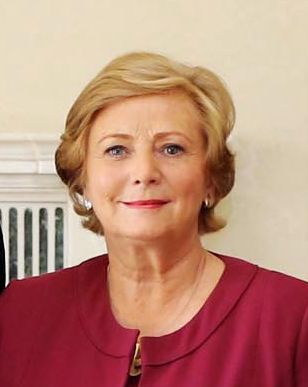
  • Timeline of Tánaiste’s demise

    Timeline of Tánaiste’s demise

    The Irish government was on the  brink of collapse at the most crucial time in Brexit negotiations but surprisingly it was not Brexit that almost caused an early election. Louise Burne explains the timeline of events that almost brought down the Dáil.

    The last two weeks have provided Leo Varadkar’s first real challenge since he was elected leader of Fine Gael and Taoiseach in June 2017.

    The controversy surrounding Tánaiste Frances Fitzgerald and her knowledge of the legal tactics undertaken by the legal team for An Garda Síochana against garda whistleblower Sgt Maurice McCabe threatened to bring an end to the confidence and supply agreement between Fine Gael and Fianna Fáil.

    A pre-Christmas general election was narrowly avoided when Fitzgerald, former Minister for Justice, handed in her resignation to Varadkar on Tuesday 28th of November. This resignation came just hours before Fianna Fáil’s planned vote of no confidence in the Táiniste.

    With more new information being released hourly in the last few weeks, it has been difficult to keep up with the many twists and turns of the story.

    This story is not one that began recently. It dates back to 2006 when garda whistleblower Sgt Maurice McCabe first started expressing concern over malpractice in An Garda Siochana.

    However, it was Fitzgerald’s role in the controversy that threatened to bring Varadkar’s government down in recent weeks.


    15th May 2015
    Minister for Justice France Fitzgerald received an email advising her of the legal strategy that was being undertaken by the legal team for An Garda Síochána during the O’Higgins Commission of Investigation. The commission was established in February 2015 to investigate Garda malpractice in the Cavan/Monaghan division, as alleged by Sgt McCabe.

    The email sent to Minister Fitzgerald outlined that the legal team for an Garda Síochána would reference a previous allegation of child sexual abuse that had been made against Sgt McCabe in 2006.

    “The counsel for the Garda Síochána has raised as an issue into the hearings an allegation made against Sergeant McCabe which was the case examined by the IRM,” the email read.

    “The allegation had been that a serious criminal complaint against Sergeant McCabe (which he has always denied) had not been properly investigated by An Garda Síochána”.

    The email went on to say that the legal team could use the previous allegations against Sgt McCabe as his motivation to imply that there was malpractice in the gardaí.

    It also confirmed that the Garda Commissioner Nóirín O’Sullivan had “authorised” the legal team’s approach.

    O’Sullivan also called a senior official in the Department of Justice around this time to advise that this would be the legal approach that An Garda Síochána would be taking.

    Leinsterhouse

    October 2017
    The questions surrounding what Fitzgerald knew and didn’t know about the legal strategy taken by An Garda Síochána in the smear campaign against Maurice McCabe did not surface for nearly two and a half years.

    Labour TD Alan Kelly questioned Frances Fitzgerald’s knowledge of the legal strategy using parliamentary questions.

    9th November 2017
    The Department of Justice searched official records and unearthed the email sent to Frances Fitzgerald in May 2015.

    Current Minister for Justice, Charlie Flanagan, was made aware of the email on 13th November.

    14th November 2017
    Leo Varadkar says in a Dáil meeting that the Department of Justice had been unable to find any correspondence that may have indicated that Frances Fitzgerald had been told in advance of the O’Higgins Commission of the legal strategies of an Garda Síochána.

    He repeated this again on November 15th.

    Varadkar later says that Fitzgerald had only been made aware of the strategies in May 2016 following the Commission. He asserted that Fitzgerald and the Department of Justice were only made aware of the stance taken by the legal team when they became known to the public. At this stage it was too late to do anything.

    16th November 2017
    The Department of Justice confirms to Fitzgerald that an email was found.

    The Tánaiste later says that the email sent to her in May 2015 has now been brought to her attention. She says she assumes she read it at the time but cannot remember.

    The Taoiseach sees the email for the first time on 20th November.

    20th November
    The Department of Justice confirms that it was made aware of the legal strategies undertaken by An Garda Síochana in May 2015. The Department also confirms that Fitzgerald knew of the strategy at this time.

    23rd November
    Sinn Féin tables a motion of no confidence in the Tánaiste. Sinn Féin’s Mary Lou McDonald had warned Fitzgerald earlier in the day that it was her last chance to come clean and provide clarity on what she did and did not know about the emails sent to her in 2015.

    Fine Gael says the party unanimously supports Fitzgerald.

    24th November
    Fianna Fáil confirms on Friday they will call a vote of no confidence in the Tánaiste on Tuesday. This threatens to end the supply and confidence agreement struck up between Fianna Fáil and Fine Gael after the last general election. Fianna Fáil leader Michael Martin meets Leo Varadkar and says that Fianna Fáil does not want a general election before Christmas and instead were seeking Fitzgerald’s resignation.

    Varadkar pledges support to Fitzgerald and says that if Fianna Fáil successfully votes no confidence in the Tánaiste, a general election would be held before Christmas.

    25th & 26th November
    Martin and Varadkar meet to discuss the controversy. On Saturday, the Fine Gael leader hands over Department of Justice documents to Martin which outline the legal strategies of the lawyers for An Garda Síochána.

    Martin continues to call for the Tánaiste’s resignation but Varadkar continues to pledge both his and his party’s support to Fitzgerald.

    27th November
    New documents are released by the Department of Justice on the eve of the vote of no confidence.

    One document reveals that the Minister for Justice’s then private secretary responded to the May 2015 email saying that “the minister has noted the below”.

    Fitzgerald insists she will not be stepping down.

    Taking to Twitter, she says that she could not interfere with the O’Higgins Commission.

    Snip20171201_2

    Snip20171201_3


    28th November
    Just hours ahead of the vote of no confidence, Tánaiste Frances Fitzgerald resigns.

    Fitzgerald says she resigned to “avoid an unwelcome and potentially destabilising general election at this historically critical time.”

    Taoiseach Varadkar says that he regrets accepting Fitzgerald’s resignation and that he believes that “a good woman is leaving office with a full or fair hearing.”

    A general election is now off the cards.

    30th November
    A crazy two weeks in the political world comes to an end as Varadkar announces Simon Coveney as the new Tánaiste. Heather Humphreys takes over from Fitzgerald as Minister for Business, while Josepha Madigan becomes Minister for Arts.

  • Ireland’s greenhouse gas emissions continue to rise

    Ireland’s greenhouse gas emissions continue to rise

    The Environmental Protection Agency (EPA) has estimated that greenhouse gas emissions in 2016 were 3.5 percent higher than in 2015.

    A report by the EPA shows that Ireland is one of four countries in Europe in which greenhouse gas emissions are still above 1990 levels.

    The report states that in the last two years greenhouse gas emissions have increased by 7.3 percent. The EPA attributed this increase to economic and employment growth, particularly in the energy industries, agriculture and transport sectors.

    Agriculture is the single largest contributor to overall emissions at 32 percent of the total. Emissions in this sector grew by 2.7 percent in 2016, with the main reason for this being higher dairy cow numbers (6.2 percent increase).

    The transport sector has shown an increase of 3.7 percent, with 2016 being the fourth consecutive year that emissions have increased in this sector.

    EPA
    Provisional Greenhouse Gas emissions in Ireland for 2015 and 2016. Source: EPA.

    Greenhouse gas emissions in the energy industries sector has shown an increase of 6.1 percent between 2015 and 2016. The EPA said that this increase is due to natural gas use for electricity generation increasing by 27.7 percent and a reduction in electricity generated from wind and hydro renewables.

    The figures in the report show that Ireland was in compliance with its 2016 annual limit set under the EU’s Effort Sharing Decision (ESD), however the EPA’s projections indicate that Ireland will exceed its annual target in 2017.

    Dr. Eimear Cotter, Director of the EPA’s Office of Environmental Sustainability, said: “Achieving Ireland’s long-term decarbonisation objective can only take place with a transformation of our energy, agriculture and transport systems. We need to adopt a much greater sense of urgency about reducing our dependence on fossil fuels while radically improving energy efficiency. In relation to agriculture, Ireland must optimise agricultural production to ensure long term environmental integrity and sustainability. The growth in this sector, particularly for dairy and other cattle, points to very significant risks in relation to meeting our decarbonisation objectives.”

    EU member states have agreed to reduce their greenhouse gas emissions by at least 40 percent by 2030 under the Paris Agreement. Ireland will also face a fine of €75 million per year if 16 percent of its energy doesn’t come from renewable energy sources by 2020.

    Dr Cara Augustenborg, Chairperson of Friends of the Earth Ireland took to Twitter today to express her embarrassment at the release of the figures. She said: “Most EU member states have decreased emissions by 10 to 14 percent while Ireland continues to rise. So utterly embarrassing.”

    By Cara Croke

  • Army numbers decreasing despite recruitment drive

    Army numbers decreasing despite recruitment drive

    Despite a recruitment drive over the course of last year, there are more than 100 fewer Defence Forces personnel now than there were at the end of 2015.

    Following a Freedom of Information request, the Defence Forces released information which shows that 551 people were recruited into the army in 2016. This leaves the Defence Forces with a total permanent membership of just over 9,000, well below the approved establishment strength of 9,500 members.

    The problem, according to Fianna Fáil’s defence spokesperson Lisa Chambers, is down to the slow process of replacing members leaving the Defence Forces. She said: “The recruitment process is fine, it’s constant, we are taking in people but we’re losing people at an even faster rate and we’re not replacing them.”

    These numbers come despite the Defence Forces’ significant recruitment drive over the past two years, as the number of recruits actually brought into the Defence Forces is nearly fifty less than planned for 2016.

    It remains to be seen if the Defences Forces’ original plan of recruiting 1,450 new members from April 2016 will actually come to pass, with Minister Simon Coveney saying that the army will recruit 850 new members in 2017.

    By Sean Meehan

  • Irish secondary schools offering little language choice

    Irish secondary schools offering little language choice

    Less than half the secondary schools in the Dublin area offer a modern European language, aside from French, Spanish, German and Italian, as a Leaving Cert subject.

    According to the Department of Education, out of the 80 secondary schools in the Dublin area, 27 offer only the basics of French, German and Spanish as subjects for the Leaving Cert.

    Latin is taught in half the schools in the Dublin area and is offered in more schools than modern languages such as Chinese, Japanese or Russian, as shown in the table below.


    Ancient Greek 11
    Arabic 14
    Bulgarian 2
    Chinese 31
    Croatian 1
    Dutch 5
    Finnish 2
    Hebrew Studies 5
    Hindi 1
    Hungarian 3
    Italian 53
    Italian (Basic) 4
    Japanese 28
    Japanese (LC only) 28
    Latin 40
    Latvian 4
    Lithuanian 25
    Modern Greek 3
    Polish 26
    Portuguese 5
    Romanian 13
    Russian 16
    Russian (LC only) 23
    Sign Language 2
    Slovakian 1
    Swedish 2

    These statistics are taken over the last five years. In 2012, Ireland was found to have one of the lowest percentages in Europe of citizens who were able to hold a conversation in at least one foreign language – 40 percent compared with an average of 54 percent.

    It was also found in 2014 by EIL Ireland (which encourages intercultural learning) that less than seven percent of Irish 10 year-olds learn a foreign language. The European average is above 70 percent.

    Minister for Education Richard Bruton vowed to address these problems earlier this year with the introduction of new Leaving Cert languages and a promise that all Junior Cycle students would be learning a foreign language by 2021.

    With Ireland lagging so far behind its European counterparts in the teaching of languages it is important that Mr. Bruton’s promises are upheld or else we may find ourselves even further behind the rest of Europe.

    Statistics are over the last five years as provided by the Department of Education.

    By Leo McGuinn

  • The City Sports Podcast Episode 8

    The City Sports Podcast Episode 8

    This week’s edition sees host Leo McGuinn joined by regulars Shane O’Brien, Sean Meehan, Scott Howe and Daniel Osborne to look over Ireland’s play-off failure, Tony Pulis’ sacking and the seemingly unstoppable Manchester City, as well as looking at the insipid Irish rugby display against Fiji.

  • Over 15,000 people employed in Ireland didn’t complete primary school

    Over 15,000 people employed in Ireland didn’t complete primary school

    More than 15,000 people in the Irish labour force over the age of 15 have had no formal education, according to the 2016 census.

    12,827 of these are Irish Nationals, which equates to 84% of the total figure.

    Of those who have had ‘no formal education’ (meaning that they never completed Primary School) the top five industries they find work in are:

    Top 5 Industries Chart

    Overall, 210 workers classed as ‘Corporate Managers and Directors’ fall into this category of ‘no formal education’, and 215 are considered to be ‘Other Managers and Proprietors’. A total of 55 are employed in the Science, Research, Engineering and Technology sector, and seven are working in the teaching and education professions.

    Unfortunately 5,885 of the workers in this category of having ‘no formal education’ have fallen into the ‘other/unstated’ category for their occupational industry, and so their professions can’t be included in this data.

    This figure of 15,155 in the 2016 census has gone up by 1,671 people since the 2011 census, and so going by this trend, lack of a primary education may actually be an issue on the rise, contrary to popular belief.

    For 97,409 of the workers in the country over 15, completing primary school has been the highest form of education they’ve received, and for 260,960 the highest education they’ve completed is ‘Lower Secondary’ (Junior Certificate).

    The figures were not broken down by age, and so it can’t be determined if this figure is predominantly made up of older residents or not. There was also no indication of gender to break it down into male and female figures.

    By Mary Kate Findon

  • Number of children in foster care falls by almost 200

    Number of children in foster care falls by almost 200

    An amendment to the Adoption Act 2017 now recognises foster children, who were born to married parents, as eligible for adoption.

    The new legislation, which was implemented in mid-October, opens a new door for children in foster care to be adopted. Before this, they were not permitted to be adopted, even if they had spent a significant amount of time living with one foster family.

    According to figures provided by TUSLA, the Child and Family Agency, under the FOI Act, the number of children in the Irish foster care system has been decreasing since 2013.

    In 2013, the overall number of children in foster care, whether based with a foster family, or living with relatives, was at 6,009. This was the highest it’s been in the past five years.

    The newest report show that as of 31st December 2016, 5,817 children were in the foster care system, a decrease of 192 since 2013, but still higher than in years previous to that.

    Foster Care NEW

    Under this new act, unmarried couples who have been living together for more than three years will also benefit from this change, as they will be able to adopt a child together. Gay couples who are in a civil partnership can also now adopt.

    This is one of the most significant changes in family law since the Children and Family Relationships Act 2015. The act addressed anomalies in family law and gave a new meaning to the word ‘family’. It gave rights to grandparents, step-parents and gave other relatives new avenues in which they could seek custody and guardianship of a child.

    However, domestic adoption figures have dropped significantly in the past decade or so, from 253 adoptions in 2005 to just 95 in 2016.

    Overall, adoption numbers had been in decline generally over the past number of decades, mainly due to a wide variety of social and cultural factors and changes in attitudes, and this has continued through the changeover,” said Mark Kirwan of the Adoption Authority of Ireland (AAI).

    The largest decrease in domestic adoptions between the years 2005 and 2016 was between 2010 and 2011. Figures dropped from 189 in 2010 to 39 in 2011.

    Domestic Adoption NEW

    The main reason for this was because the Adoption Act 2010 commenced in November of that year. The enactment of the Adoption Act 2010 made it a requirement that all applicants wishing to adopt in Ireland must be in possession of a valid Declaration of Eligibility and Suitability before an adoption order can be made.

    It necessitated major changes in the assessment procedure, leading to a drop in orders granted immediately afterwards as new responsibilities were assumed by Tusla.

    In 2016, a total of 95 Adoption orders were granted. The majority of these, 65, were made in step family adoptions.

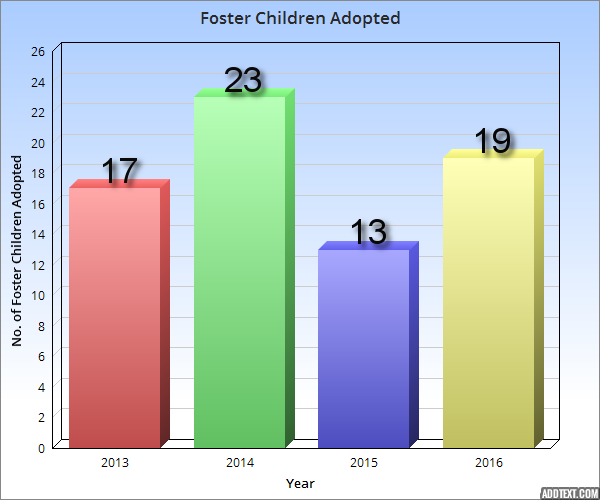
    While the majority of these were step family adoptions, nineteen adoptions were made in respect of children who had been in long term foster care. This was an increase of three since 2015 where there were sixteen foster care adoptions made.

    2014 still had the highest number of foster care adoptions in the past five years, with 23, an increase of six from 2013.

    It is expected that these numbers will rise over the coming years because of the modified Adoption Act.

    Foster Children Adopted NEW

    By Megan Walsh and Keeva Tyrrell

  • Dublin rally for America’s ‘Dreamers’

    Dublin rally for America’s ‘Dreamers’

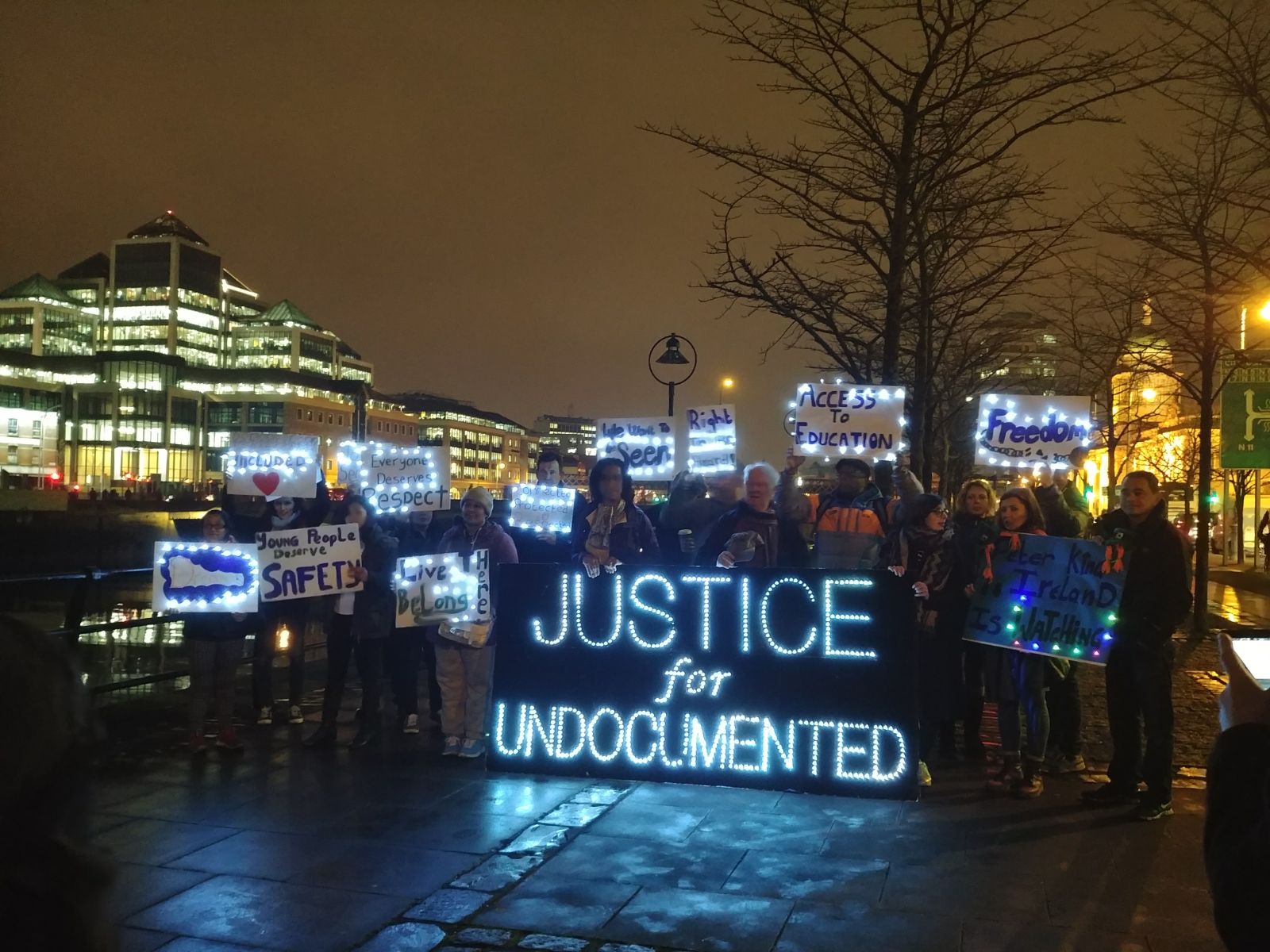
    A rally was held in Dublin on Monday evening in support of the Deferred Action for Childhood Arrivals (DACA) programme in the United States.

    The DACA programme was established by the Obama administration in 2012 to protect those who entered the US as minors from deportation. Donald Trump made the decision to end the programme in September this year.

    Those protected under DACA are called the “Dreamers” and 787,580 were granted approval by the time Donald Trump announced his decision to rescind the programme.

    On September 5th, the New York Times reported that US officials said “some of the 800,000 young adults brought into the United States illegally as children, and who qualify for the programme … will become eligible for deportation” as early as March.

    The New York Times also reported that Mr. Trump had said in a statement that he was driven by a concern for “the millions of Americans victimised by this unfair system.” Jeff Sessions, US Attorney General, said the program had “denied jobs to hundreds of thousands of Americans by allowing those same illegal aliens to take those jobs.”

    The rally in Dublin was organised by the Young, Paperless and Powerful (YPP), a group that focuses on the rights of undocumented youth in Ireland. The twin rally in New York was organised by ‘Make the Road New York’, an immigrant organisation based in the US.

    The two organisations are appealing to Irish-American Republican congressman Peter King to “stand for the undocumented in the US” before the 6th of December, which is the deadline Congress was given to find a legislative alternative and to draft a bill that would allow Dreamers to permanently stay in the US.

    Speaking to the crowd gathered at the Famine Memorial in Dublin, Sumayyah, a member of YPP said: “We believe that no young people should grow up undocumented in Ireland or anywhere. We’re a group of about 25 people, some of us are undocumented, some of us are not.

    “But tonight is not about us. It’s about the undocumented young people in the US who really need our help,” she added.


    Hajar 3
    Rally held in Dublin for undocumented in America. Photo by Hajar Akl


    “Young people in the United States are in the fight of their lives [to protect DACA],” said Migrant Rights Centre Ireland (MRCI) community worker Kate O’Connell, addressing the crowd.

    A letter written by a formerly undocumented student called Shiv was read out to the crowd. He spoke of his depression and fear of being “taken away” from his family during the seven years he was undocumented.

    “Every single year since 2007 I would watch a Taoiseach go to the US and seek the legalisation of undocumented Irish and I thought, ‘what a hypocrite’. Ireland has always been a nation of immigrants who left many years ago for a better life.

    The Irish diaspora in the UK, the US and the Australia, for example, are a testament of how much immigrants can contribute to a country.”

    In the letter, he also said “undocumented people make a huge contribution to Ireland, but so often their potential is wasted. We are young and full of potential, we are products of the Irish education system who cannot go to university.”


    Hajar 2
    People gather by the river Liffey in support of the undocumented in America. Photo by Hajar Akl


    The MRCI estimates there are up to 26,000 undocumented people in Ireland and that between 3,000 and 5,000 of them are under the age of eighteen.

    By Hajar Akl

  • RSA earned €3 million from failed driving tests

    RSA earned €3 million from failed driving tests

    The Road Safety Authority (RSA) has taken in over €3 million in income from failed driving tests this year.

    To be categorised as a failed driving test, an RSA spokeswoman said that a person must have sat their test and failed it.

    This means that those whose learner permits may have expired pre-test or other ways of failure are not included in the €3.04 million figure.

    “A failed driving test includes only those tests which have been scheduled, conducted and have failed to pass,” confirmed the spokeswoman.

    The figures, obtained under the Freedom of Information (FOI) Act, include the period spanning between the 1st March 2017 and the 29th September of this year.

    Fadhila Hajji, 20, failed her driving test in April 2017. The exam cost her €85 but she failed due to her car breaking down during the exam.

    She took her car to the mechanics before the exam. The test was going well until the last ten minutes when the engine would not turn on.

    “Everything was going so smoothly. I was confident I was going to pass. I had ten minutes left of my test. Unfortunately, my car broke down. The engine would not turn on, I opened the bonnet to see if anything was faulty but everything seemed to be in perfect condition,” said Ms Hajji.

    Eventually, her car turned back on but her signals weren’t working and the examiner said they should head back to the centre.

    “We went back to the office. The examiner sat me down and he said ‘I won’t fail you but I would have to terminate your test due to what happened with the car’. Also, I would have to re-book my test and pay for it again.

    “Things happen but I was disappointed due to the fact that he didn’t take into consideration what just happened and how well it was handled. Also, I had ten minutes left before my car broke down. By then I had done all of the requirements,” she said.

    Ms Hajji said the incident made her “lose confidence” and she did not take her test again until September. She passed on her second time.

    Money received from failed driving tests is one of the sources of income for the RSA and it is used primarily for costs associated with conducting the driving tests.

    The money is primarily used to cover the costs “relating to scheduling and conducting each driving test” regardless of the outcome of the test, the RSA explained in response to the FOI request.

    The RSA has a number of other income sources, said Kim Colhoun, the RSA’s Finance Manager.

    Ms Colhoun explained that the RSA is a “statutory body that earns revenue from services provided to the public.”

    “The main sources of revenue are driver licensing income, national car test levies, commercial vehicle test levies, digital tachograph income (driver cards used for the bus and truck category), approved driving instructor income, carriage [of] dangerous goods income and other miscellaneous income,” she said.

    According to the RSA’s 2016 annual report, the Authority received €73.6m in ‘other resources’ that year, which included all the income the RSA received from the sources mentioned above by Ms Colhoun, as well as other income.

    As the RSA is a state agency, its 2016 annual report showed that it received a grant of €139,000 from the Department of Transport, Tourism and Sport. It received the same amount in 2015.

    In 2016, the RSA received just over €4 million from employees for the pension scheme. A grant of €279,000 was given by the Department of Transport, Tourism and Sport specifically to cover some of the RSA employee pensions.

    The annual report notes that the Department will continue to pay a grant to the RSA employee pension schemes on a ‘pay as you go basis’.

    The Road Safety Authority is a state agency which was founded in 2006 to promote road safety in Ireland.

    By Hajar Akl and Leanne Salmon