Tag: ireland

  • The Silent Champions: The Battle for Recognition in Women’s Sport 

    The Silent Champions: The Battle for Recognition in Women’s Sport 

    By Áine McKeon

    Despite breaking records, winning major championships and motivating generations, female athletes are frequently overshadowed by their male counterparts.  

    Even though their performances on the field, court or track are on par with that of any male athlete, they are continuously having their achievements overlooked, and they receive an unfair level of media coverage, sponsorships and public attention that they receive. 

    This not only downplays these women’s achievements, but also worsens the restrictions that have prevented women up until now from participating in sports, especially in Ireland. This begs the question; why does this disparity still exist today, and how can it be improved?  

    Media Coverage: The Numbers Tell the Story 

    According to a survey carried out by HerSport, gender disparity in sports participation is only at 3.4% in Ireland, with women’s sporting efforts receiving only 6% of the country’s sports media coverage. Despite this, the study also found out more than 60% of Irish people wanted to see women’s sports receive greater attention. 

    Less than 20% of all sports coverage goes to women’s sports, according to the Irish Sports Monitor. This coverage is typically saved for high-profile events, or when women’s teams accomplish something remarkable, such as their historic 2022 World Cup run. 

    In contrast, regardless of the importance of their games or events, male sports receive regular and everyday attention. For instance, the success of local or national women’s teams frequently remains unrecognised until they hit a significant milestone, while men’s club football or rugby matches frequently receive media focus.  

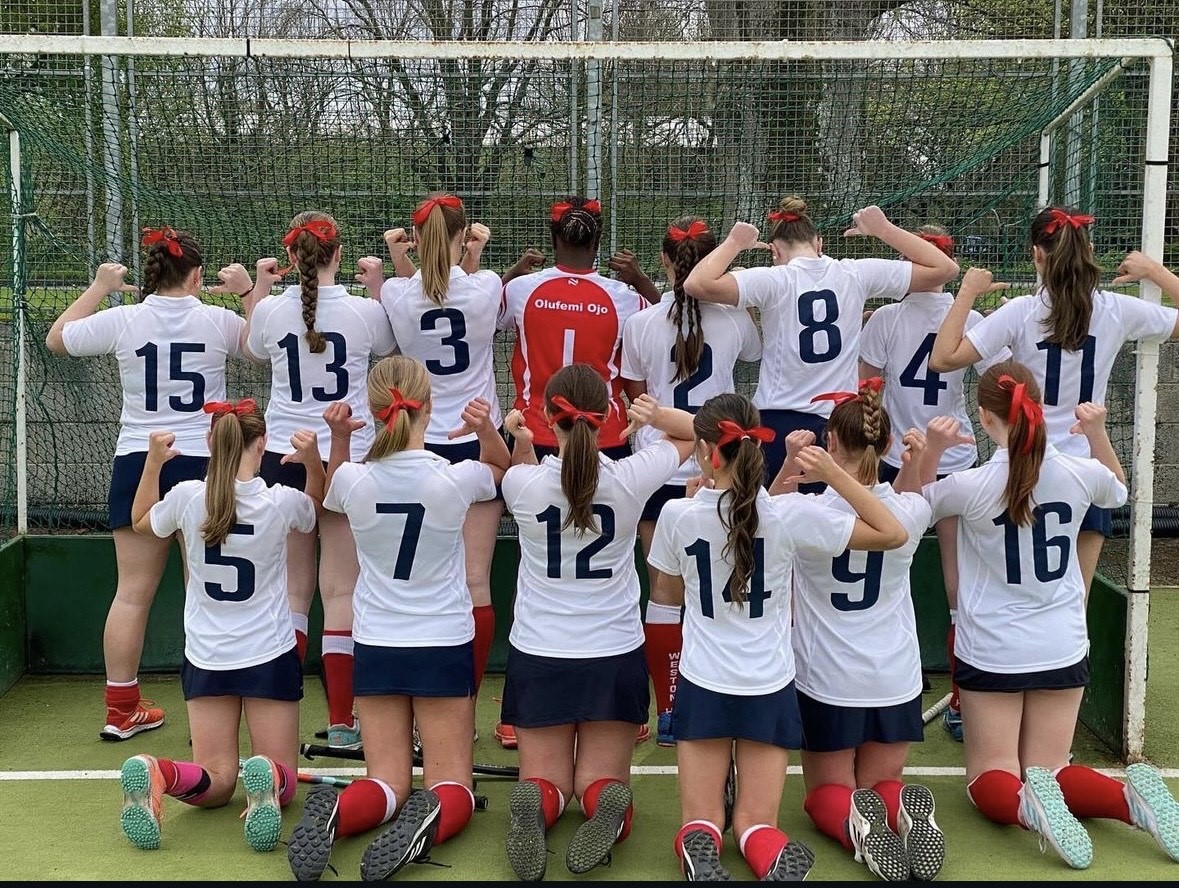
            Photo credit: Weston Hockey Club 

           “We have to do more to be seen”

    Síofra Ní Dhonghaile, a midfielder for Lucan’s Weston Hockey Club, has been playing the sport for several years. Despite her team’s consistent effort at a senior level, she feels the media attention that their achievements receive is only a fraction of what the men’s hockey team get. 

    “Even when we do win a major championship, it’s nothing more than a little headline in the occasional publication – but when compared to the men, it’s disappointing,” she admitted. “We seem to have to put in twice as much effort just to get noticed, I’ve seen my male counterparts receive attention for much less.” 

    Many Irish female athletes in a variety of sports feel the same as Ní Dhonghaile. Women’s sports are frequently confined to smaller portions and are only highlighted during significant international achievements, while men’s sports like hurling and Gaelic football receive hours of coverage throughout radio, television, and print media. 

    TheCity.ie spoke to Brian Percy, who has been coaching both men and women’s field hockey teams for over a decade now.  

    “To be honest, the gap is pretty clear,” he said. “Even for smaller matches, our men’s team receives significantly more media attention than the women’s team, who may win a major tournament and yet not garner a lot of buzz. The ladies put in just as much work, if not more, which is frustrating.” 

    Women’s sports lack sponsorship, which creates an endless cycle whereby companies are reluctant to make investments when there is no media attention, female athletes find it difficult to gain recognition. When the Irish women’s soccer team went public with their complaints in 2017, it became apparent that they were forced to share kit bags and change in airport restrooms. While improvements have since been made after their strike, sponsorship and money are still major problems 

                 Photo credit: Maynooth University Volleyball team via Trisha Zaragoza 

    Despite the challenges, there are signs that change is on the horizon, and the media is slowly starting to catch up.  Sports such as volleyball are mainly female dominated, although more male teams are forming. 

    Kildare native, Trisha Zaragoza, plays volleyball for Naas Cobras, Maynooth University and Valkryies. 

     “I’ve been playing since I was 11, for nearly 10 years now, because volleyball is a female dominated sport in Ireland I haven’t felt left out – although there are many male teams beginning to form,” Zaragoza said. 

    “Regardless of gender, sport to me is my outlet, my way of blocking out reality and stress. I’ve made many friends through volleyball and that’s been the most rewarding part for me,” she added. 

    What needs to happen next? 

    Experts, campaigners, and female athletes all concur that prioritising funding for women’s sports should begin with equitable access to sponsorship opportunities, more regular media coverage, and structural adjustments within sports organisations. 

    “We’re not asking for favors, we’re asking for fairness,” said Zaragoza. 

    Irish female athletes will continue to work hard, achieve success, and break down barriers even if the spotlight isn’t always shining as brightly on them as it should be. 

  • An Ghaeilge: Exploring the Revival of Ireland’s Native Language

    An Ghaeilge: Exploring the Revival of Ireland’s Native Language

    By Liam Murphy

    “Why would you bother learning that? Sure, it’s a dead language” – the words many Irish speakers have heard while growing up.  

    However, in 2024, that could not be further from the truth.  

    Today, TheCity.ie speaks with Mícheál Ó Nualláin, director of Baile Átha Cliath le Gaeilge and Ola Majekodunmi, Irish language programme co-ordinator with Fighting Words, about all things Irish, and in particular, their own journeys with the language. 

    From schooling to job opportunities, to what they believe the Government needs to do to further progress the language, the Gaelgóirí tells all.  

  • New beginnings for later life: A Dublin nursing home and its journey to maximum resident capacity after nine months in operation 

    New beginnings for later life: A Dublin nursing home and its journey to maximum resident capacity after nine months in operation 

    By Gary Petrov

    As people journey through life, independence can grow and thrive – however, sometimes, in life, and especially as some people get older, independence can unfortunately decline. 

    With a decline in a person’s ability to be independent, comes dependency with everyday issues, that can begin to overpower, to the point where living at home might prove to be unsustainable. 

    Long-term care facilities are a beacon of hope for a person who needs 24/7 care – allowing the person to still be able to indulge in their own life experience, all while in the hands of professional care givers. 

    However, it’s not always an easy journey into long-term care as established nursing homes are more than often full and have waiting lists for potential future admissions. 

    In August 2024, research involving 1000 people was conducted by Coyne Research and commissioned by Nursing Homes Ireland (NHI) and found that six out of 10 people fear for their loved ones being able to find a place in local nursing homes. 

    It was a nursing home in Kinsealy, Co. Dublin, that had the advantage of space and more accessible admissions, for a time – as it was only recently opened, with no waiting list, and with rooms available for anyone in its local community, looking at long-term care options. 

    A short distance from coastal towns, Malahide and Portmarnock, in the tranquil countryside setting of Kinsealy, Woodlawn Manor opened its doors in February 2024 to less than 10 new residents requiring care facilities. 

    The entrance to Woodlawn Manor on the grounds of St. Doolaghs Park in Kinsealy, Co. Dublin. Photo: Gary Petrov 

    With a maximum capacity of 97 residents, Woodlawn Manor had space for new residents for a total of nine months, before reaching its maximum capacity earlier this month. 

    Teagan MacAodhagáin is the Director of Nursing at Woodlawn Manor and has worked exclusively in elderly care since graduating as a nurse, and has been a Director of Nursing since 2018.  

    “We’re very passionate about what we do,” said MacAodhagáin. “The core team, myself, the clinical nurse managers, reception administrators and that – we really live by our motto ‘Care is what we do’.” 

    Teagan MacAodhagáin, Director of Nursing at Woodlawn Manor. Photo: Courtesy of Woodlawn Manor. 

    “I always tell my staff that the standard of care is what you want for the person you love most and anything less than that is falling below the standard that we should have. I think that’s important, that that’s what you aim to deliver – you try and achieve that.  

    “Some days the tea might be cold when it arrives, or the laundry might be a bit delayed. Things will happen with human error and various things, but if you’re aiming for something you would like for the person you love most, then I think you’re going to do a good job, nine times out of 10. 

    “We have filled up remarkably fast. I’ve been involved in a number of new nursing homes, and I would be familiar with nursing homes opening up. It was faster than what would’ve been expected, perhaps, given the number of nursing homes in the locality. What has led to that? Definitely, I think the setting, the setting is beautiful. The countryside and sea-views. Having a brand-new purpose-built facility was also very helpful. That had a big attraction, early on.  

    “Internal factors – assembling a good core team at the beginning. I hired people I was familiar with and people I worked with before – people I knew. It wasn’t a brand-new venture with lots of people pulled into it. It was a team that knew each other and worked together before. We knew one another and knew how we worked together.  

    “Having a dedicated admissions nurse helped, a role I created for the first year – which was really important and instrumental in filling the place up. Someone who was out doing assessments, being a point of contact for all. 

    “It was a little bit daunting to have 97 rooms and the onus to fill them, but not having to have a waiting list, it was really nice. It was great to not have to turn anyone away. To be able to take people for respite, short-term care, to take people who were at the end of life and needed a few days of care while passing. It was nice to be able to do that,” he said. 

    Staff from the dedicated team at Woodlawn Manor. Photo: Courtesy of Woodlawn Manor 

    Since reaching maximum capacity this month, MacAodhagáin discussed the inevitable shift in the admissions process saying that they are starting their waiting list now and new admissions will only be selected from the waiting list when a room becomes available. 

    MacAodhagáin said he must “give credit” to Woodlawn Manor’s admissions nurse Camelia Ganea, who is also a clinical nurse manager in the facility – for her “marvellous” hard work all year as they welcomed their new residents.

    Staff at Woodlawn Manor during a fire brigade visit, where they discussed safety procedures for their residents, in case of emergencies. Photo: Courtesy of Woodlawn Manor 

    Since 2018, at least 77 nursing homes have closed around Ireland. Of that number, 10 closed in 2023 and seven have closed this year to date. Last month, Nursing Homes Ireland said that this is due to a mixture of rising operational costs and Fair Deal Scheme pressures. 

    When asked about the issues and worries surrounding nursing home closures in the country, MacAodhagáin said, “From what I know, the nursing homes that have closed down have been smaller, family-run nursing homes.” 

    “Standalone nursing homes, or the building might be old and isn’t up to the current regulations. Fire regulations and things like that have become, and rightly so, more stringent and more in depth of what’s required. For older buildings, they can be a very large cost implication, to bring them up to the standard that’s required. 

    “I’m also aware of lots of larger companies opening more and more homes or buying homes. I do think there are homes out there, all-right,” he said.

    Woodlawn Manor’s new purpose-built facility was built adjacent to an existing manor on the grounds of St. Doolaghs Park. Photo: Gary Petrov

    Something that can naturally accompany a person being placed into long-term care is the emotional element for their family, ending their chapter of life with their loved one in the family home. 

    Patrick Maguire recently placed his spouse into long-term care and chose Woodlawn Manor. “When the time came to put my wife into long-term care, my family and I, while coping with the emotional aspect of it, feared it would be a race against time with her individual case, to find a nursing home in the local community that tended to her needs, with a vacant room available as soon as it was needed for her,” he said.  

    “With all of the organising and preparing of affairs that comes with this difficult choice of accepting that your spouse can no longer live independently at home, it was daunting for my family and I to go and view nursing homes in my local area and be told that they are currently full and that they have waiting lists that I could add my wife’s name to. 

    “Not everyone has time for waiting lists and we didn’t. Woodlawn Manor was a God send. After enquiring about several nursing homes, my family and I rushed to view it as soon as we were made aware of it having less than 10 residents, at the time. 

    “We were very impressed and acted quickly. We were then able to have my wife in their care within a few days, after the necessary admission paperwork was done. The process worked out well for us in the end, and I say that delicately, because her condition proved for living at home to no longer be an option. However, luck played a huge part as firstly, we liked the nursing home for my wife, and secondly, the nursing home had room. 

    “The difficulty of finding a local nursing home with a vacancy, and one that is suitable for your loved one’s needs, is a task in itself – on top of all of the emotions and pain that comes with accepting the reality of it all. 

    “We were lucky to have a difficult journey made easier with Woodlawn Manor not being full, but when the time comes for people nationwide, not many will find themselves with a new nursing home nearby, full of rooms at their convenience for them or a loved one,” he said. 

    The exterior of the newly built facility in St. Doolaghs Park. Photo: Courtesy of Woodlawn Manor 

    Asking the Director of Nursing what he would say to someone looking at Woodlawn Manor as a long-term care option for a loved one, he referred to their motto and the feedback they have received since opening, and said, “Our motto is ‘Care is what we do’, and I came up with that motto because care is what I’m really passionate about. Firstly, we’ve been told that it’s a very calm and homely environment. Secondly, people most commonly say that the staff really care.” 

    “As the Director of Nursing, it makes me very very proud that people can see that the staff genuinely care about the residents. I think that’s what we have to offer. When you care, you go the extra mile for the residents. This is their home and their time with us is perhaps the last time they’ll have anywhere – and we want it to be good, we want people to feel at home. We want people to be cared for and cared about,” he said. 

    Woodlawn Manor offers residential nursing care, respite care, convalescence care, dementia care and end of life care. 

    Useful resources from Nursing Homes Ireland on choosing a nursing home can be found here

  • New Documents on the Chernobyl disaster reveal more on Ireland’s involvement in relief efforts. 

    New Documents on the Chernobyl disaster reveal more on Ireland’s involvement in relief efforts. 

    By Sean Norman

    On April 26th, 1986, the most devastating event in the history of nuclear power took place at the Chernobyl nuclear power station in Ukraine.  

    The UN estimated that 50 deaths could be attributed to the immediate explosion and that up to 4,000 people would eventually die due to medical issues attributed to the radiation released after the explosion. 

    Through new documents (marked DFA/2023/47/6737) obtained from the National Archives of Ireland, we explore Irelands relief response and broader role during the Chernobyl disaster. 

    Correspondence between the UN Secretary General and Michael Gaffey. Photo: Sean Norman 

    On the 28th of September 1993, the United Nations Under-Secretary-General for Humanitarian Affairs at the time, Jan Eliasson, sent a letter to, Michael Gaffey who at the time was the Director General of the Development Cooperation Division within the Department of Foreign Affairs.  

    This came after a meeting of the Governments of Belarus, the Russian Federation, Ukraine and the United Nations Coordinator of International Cooperation on Chernobyl, held at Minsk on the 26th of May 1993. 

    After meeting with the UN’s Humanitarian Liaison Working Group, Eliasson, who would later become the president of the United Nations General Assembly, selected Ireland to help in a list of projects, “for priority action to address the consequences of the Chernobyl disaster.” 

    The projects included help in four “priority areas,” that of “health; food, agriculture, and the economic environment”. Ireland was also asked for assistance with “social rehabilitation and socio-psychological rehabilitation.”  

    These projects corresponded to the needs of three affected states Belarus, the Russian Federation and the Republic of Ukraine – and had been “officially endorsed” by the nations. They promised to provide a solid basis for “future activities in the medium and long-term.”  

    The UN proposed a list of individual projects that could be funded independently of one another. In mid-November of 1993, the 48th session of the General Assembly took place and was an opportunity for all donor countries to present their official response to the request and “where necessary, to allow further discussion of the projects directly with representatives of the proposing United Nations agencies”. 

    They hoped that Ireland would view the requests, “in a favourable light and respond generously to the plight of those, who continue to suffer from the consequences of the Chernobyl disaster.” 

    On the 7th of December 1993 Ireland put forth its relief project proposal to the European Community Humanitarian Office (ECHO) and stated the countries to be receiving the aid. This included both the Russian Federation and the Republic of Ukraine but not Belarus.  

    The disasters described in the document include tuberculosis epidemics, the collapse of both countries healthcare systems, the destitution and displacement of the populations of the countries, conflicts in the North Caucasus region and radiation.  

    According to the documentation, Ireland provided 4 million euros worth of relief items to the disaster-stricken countries, including “medicines and medical materials, medical assistance, food parcels and other basic relief items”. 

    The supplies were delivered through a variety of means including intermediaries for contributions such as, the United Nations High Commissioner for Refugees (UNHCR), the International Committee of the Red Cross, the Netherlands Red Cross, Les Enfants De Chernobyl, Associazione per la Partecipazione Allo Sviluppo and another European NGO chosen by the Moscow Delegation to help with tuberculosis cases in Tomsk. 

    In the Russian Federation aid was sent to Moscow, Tomsk Oblast, Vornej, St. Petersburg and North Caucasus. In the Republic of Ukraine aid was delivered to Chernobyl and Rovno. The relief packages were expected to arrive in the countries throughout December and February.  

    The City.ie spoke to Professor Gearoid Ó Tuathail, who is Professor of Government and International Affairs at Virginia Polytechnic Institute and State University. 

    We asked him about his thoughts on the documents we had acquired and his view on how Ireland fit into the broader narrative of the Chernobyl disaster. 

    What is your view on Ireland’s initial response to the disaster? 

    “In my view, Ireland has always been on the periphery of Europe, we’ve been wary of bigger nations simply by nature, and it must be understood that Chernobyl was not as simple as the meltdown. It has and still does shape geopolitical views on nuclear power, and at the time that was something Ireland was already sceptical about, even today we’re resistant to the idea of nuclear power stations being built in the country.” 

    Do you think these documents reflect that scepticism? 

    “These documents show that reserved nature I think rather well, at least in the political sense. We sent the most urgent items and spread them out as best we could. From other documents on relief efforts I’ve studied in the past these are fairly typical.” 

    So, you believe Irelands response to the disaster was entirely standard? 

    “I’ve always found that we’re unique when it comes to responding to human suffering, not just with Chernobyl, look at our response to the war in Gaza, or, and this of course relates well, our response to the war in Ukraine.” 

    Recent figures from the Central Statistics Office reveal that 109,566 Personal Public Service Numbers (PPSNs) were given to Beneficiaries of Temporary Protection (BoTP) from Ukraine between 04 March 2022 and 29 September 2024. 

    Source: CSO. Chart showing the number of Ukrainians given PPSNs after receiving temporary protections 

    “The documents show the numbers to the story sure, but I was still living in Ireland during the disaster and the outpouring of support really had to be seen to be understood, you had Irish parents reaching across oceans to help children in Chernobyl bringing them into their own homes for recuperation.” 

    Since 1986 Chernobyl Children has brought, 25,600 children from radiation zones to Ireland for rest and recuperation. The clean air is believed to add an extra two years onto the lifespans of those suffering from the effects of radiation. 

    We also reached out to multiple organisations such as Irish Refugee Council and Ukrainian Action in Ireland for comment but did not receive a response. 

  • Leinster Maintain Perfect Form with Win Against Connacht 

    Leinster Maintain Perfect Form with Win Against Connacht 

    By Jessica Lee

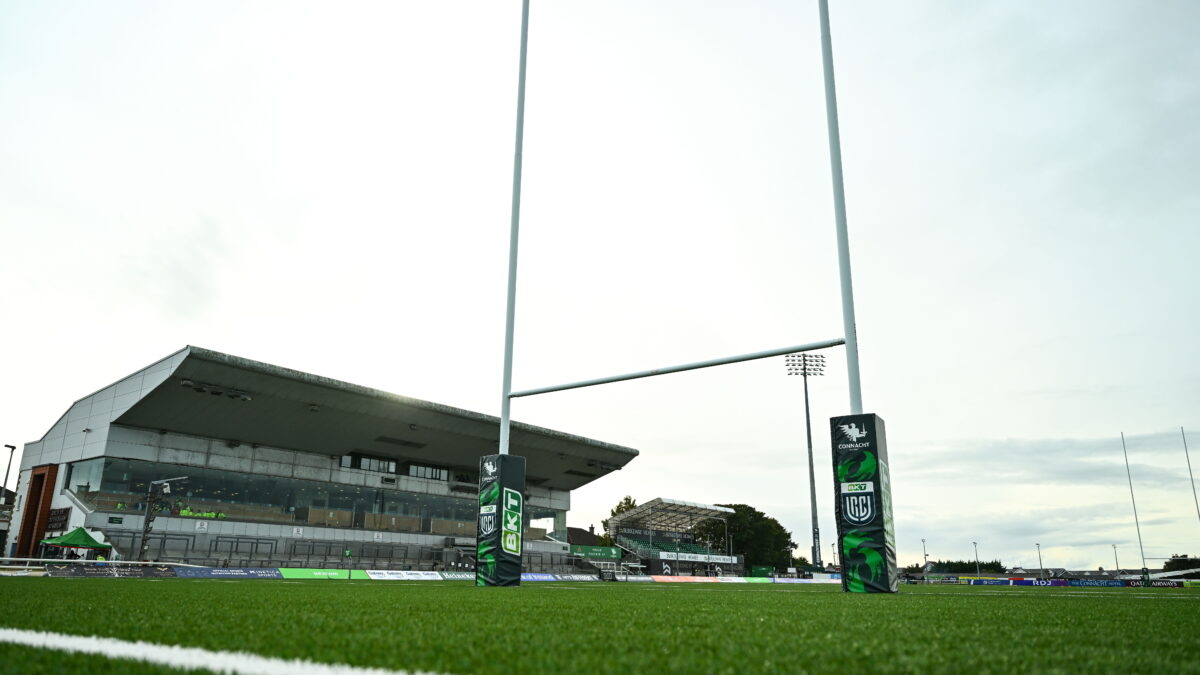
    Leinster have kept their perfect record in the United Rugby Championship (URC), with a stunning bonus-point 33-12 win over a strong Connacht side in Galway on Saturday night.  

    Coming off the back of their win against Munster in a sold-out Croke Park last weekend, the boys in blue made a fast start to the game, with Jamie Osborne scoring a try in the seventh minute and was quickly followed by Ciaran Frawley kicking the conversion. 

    Despite Connacht’s defense holding firm against Leinster’s strong efforts, Liam Turner scored a try just minutes later, and the kick was converted. 

    Ciarán Frawley suffered an ankle injury during the buildup to Turners try and was replaced by Ross Byrne.   

    An injured Frawley will be a concern for Irish Rugby manager Andy Farrell, as Leinster are set to face New Zealand in the Aviva Stadium in three weeks’ time.  

    Leinster Captain James Ryan appeared to have scored a try; however, it was later disallowed due to accidental offside when Ryan received the ball and Connacht were awarded the scrum. 

    Connacht finally got into the game at the 33rd minute, after a scrappy tackle on the try line with Sean O’Brien getting the score.  

    World Cup winner and South African native, RG Snyman, got Leinster’s third try after gathering a loose ball just before half time, with Ross Byrne adding two points to Leinster’s advantage.  

    Just five minutes into the second half, Leinster further proved their dominance over the home side as flanker Max Deegan scored their fourth try for the bonus point. 

    Connacht returned from half time hungry to get scores on the board but struggled to get through the robust Leinster defense. However, a try from Cathal Forde came in the 64th minute and the conversion was scored by Josh Ioane.  

    This small win for Connacht was short lived, as just minutes later Andrew Osborne ripped up the wing to catch Byrne’s kick from the restart and scoring the final try of the game.  

    With 10 minutes left on the clock, Connacht desperately tried to close the gap, but it was too little, too late. The score was 12-33 to Leinster when the final whistle blew.  

    This is Leinster’s second consecutive inter-provincial victory so far in this URC campaign, with RG Snyman receiving player of the match for his performance. 

    Connacht: P O’Conor; S Bolton, D Hawkshaw (C Forde 62), B Aki, S Cordero (H Gavin 59); J Ioane, B Murphy (C Blade 56); D Buckley (P Dooley 52), D Heffernan (D Tierney-Martin 56), F Bealham (J Aungier 52); J Joyce (N Murray 52), D Murray; C Prendergast (c), S O’Brien (S Jansen 56), P Boyle. 

    Leinster: H Keenan; L Turner (H Cooney 74), G Ringrose, J Osborne, A Osborne; C Frawley (R Byrne 17), J Gibson-Park (F Gunne 71); J Boyle (A Porter 44), G McCarthy (S Smith 74), R Slimani (T Clarkson 44); RG Snyman (B Deeny 70), J Ryan (c); M Deegan, W Connors (S Penny 59), J Culhane. 

    Referee: Eoghan Cross (IRFU) 

  • “I’ll take the bus,”- increased taxi fares for Ireland 

    “I’ll take the bus,”- increased taxi fares for Ireland 

    By Amy Murphy

    The National Transport Authority (NTA) has approved a nine per cent increase in the National Maximum Taxi fare. This increase is due to take effect from the 1st of December.  

    This adjustment is to ensure that taxi fares reflect the rise in inflation and costs of operating a taxi service in Ireland.  

    “I’ll just take the bus, I have a 24-hour bus that I can get home after being out, but for people who don’t, it’s just going to break their banks,” said Niamh Linnane, a 22-year-old student.   

    “The cost of a taxi in Ireland is extortionate if you aren’t sharing with people,” said Linnane.  

    We will also see a change to the ‘Special Rate’, which a rate charged only for journeys taken between Christmas Eve, Stephen’s Day, New Year’s Eve and New Year’s Day during unsocial hours.  

    The Special Rate will now cover the weekend peak hours from midnight to 4:00 AM on Friday night into Saturday morning and Saturday night into Sunday morning, year-round. The fare will be higher rate, and this change aims to encourage more drivers to support the nighttime economy.  

    There also will be an increase in pre-booking fees. During weekend peak times it will rise from €2 to €3.

    Photo by Naseem Buras / Unsplash

    “With the cost of petrol, diesel and all that goes into owning a car, never mind a taxi, I am happy to see this fare increase,” said Paul Murphy, a taxi driver of nearly 20 years.  

    “I know it sounds bad to customers but with the cost-of-living crisis it’s just something that needs to happen,” said Paul Murphy. 

    This National Maximum Taxi Fare Review takes place every two years to ensure the fares match the costs of maintaining a good quality taxi service and the cost of living within Ireland.  

    The 2024 Review, published in July, revealed that taxi operating costs increased by approximately 9-11% between 2022 and 2024. Following public consultations regarding these rising costs for taxi drivers, the Taxi Regulation (Maximum Fares) Order 2024 implemented an average fare increase of nine per cent, adjusted across different time bands and distances. 

    ‘Numbeo’ has ranked countries in order of the highest fare of a taxi per kilometer. Switzerland was ranked 1st with the average fare per kilometer being €4.15. According to ‘My Swiss Company’ the average salary in Switzerland is relatively high, reflecting the country’s strong economy, with figures around CHF 78,000 per year as of 2024, which is equivalent to around €83,000.  

    Ireland placed 13th out of 97 countries with an average of €2 per kilometer. 

    Taxi fares should reflect the country’s cost of living. Given Ireland’s cost of living crisis and high inflation, this has led to the increase on the taxi fares.  

    However, with the inflation rate falling to 1.7% in the month of August, figures from the Central Statistics Office (CSO) have shown. This is the first time the inflation rate has lowered since June 2021.  

    Despite this, The Budget 2025 informed us that the rate will increase from €56 to €63.50 for petrol and diesel. This means an extra €1.20 per full tank for motorists. Potentially meaning this increase taxi fare will not be changed. 

    “This increase will be in place for the next two years, if inflation continues to decline, then it will be considered and there may be a decrease in taxi fares, but it must match the cost of living at that time,” said The NTA press office.  

    Photo: Amy Murphy

  • How Communities are Tackling Loneliness in the Elderly

    How Communities are Tackling Loneliness in the Elderly

    By Paul Lee

    A recent study from The Irish Longitudinal Study on Ageing (TILDA) in Ireland shows that about one-third of adults over 50 in the Republic of Ireland have experienced emotional loneliness at some point, with 7% feeling lonely often.  

    The research found that loneliness tends to decrease between the ages of 50 and 67 but rises again after that. 

    People over 75 are more likely to report feeling moderately lonely compared to younger groups. Factors like lower education, living alone, poor self-rated health, physical limitations, and chronic health conditions were linked to higher levels of loneliness. 

    Ireland is currently ranked number one in Europe for people suffering grom loneliness as of last year, with the coronavirus pandemic forcing generations to feel isolated.   

    Source: Institute of Public Health 

    Men above 65 years old saw a 25.1% increase in living alone, while women over 65 saw an 18.4% increase in the last six years. “The numbers are only going to continue rising,” said psychotherapist Maggie Molloy. 

    “I often deal with young people suffering from loneliness, so I know how bad it must be for the elderly who have far more reasons, most of which are out of their hands for feeling lonely.” 

    Last year The World Health Organization (WHO) declared loneliness to be a pressing global health threat, with the US surgeon general saying that its mortality effects are equivalent to smoking 15 cigarettes a day. 

    Anne Butler is a woman who knows the effects of loneliness all too well, inspiring her to commit her life to helping the most vulnerable in her community. 

    “Loneliness is a big issue for older people, and I don’t think the general public realises this enough,” said Mrs. Butler, who is the manager of Walkinstown Social Service Centre. 

    “It is dangerous to the elderly, we are social creatures that need to interact and get out of the house, but for some people that’s just impossible. It is heartbreaking because some of the faces around here were stuck in nightmare cycles of being upset, refusing to eat, or turning to drinking alcohol at home. It’s stories like these that make me so happy that we’re making an impact in the community and the bigger problem,” she says.  

    The centre takes in 60 people daily between lunch and dinner with some walking and others taking the centre’s bus that collects them from their houses. The centre charges €10 for transport, a meal, and bonus activities, whether that is a game of bingo, or a fitness instructor to get them exercising. 

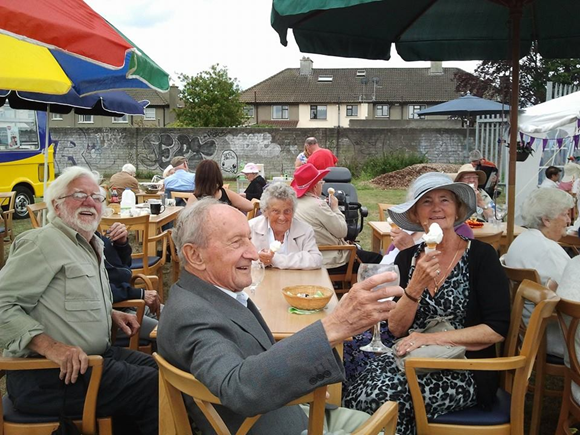
    Members of the centre enjoying the warm summer 
    Source: Facebook – Walkinstown Social Service Centre 

    Group day trips around the country are organised and voted on. Special events happen year-round with ‘Strictly Come Dancing’ watch parties and even live shows with staff members performing dances. 

    “I’ve been coming for the last few years now and it’s just brilliant,” said Monica Walsh, age 72. 

    “I’m not great on my feet any more so going out wasn’t really possible unless I waited for my kids to come and bring me out somewhere. The centre is great because I get a sense of independence back, able to go out on my own. 

    “I feel like a kid again, going out with friends, singing songs. This place has given me some of the best moments I’ve had in years. All the staff are true heroes.” 

    The centre’s staff is made up of half full-time workers and half part-time voluntary workers from the local area such as Amanda Nic Fhannchaidh.  

    “I don’t work on Thursdays or Fridays, and I’d just be watching the Telly all day, so it’s really a no-brainer for me to come here, have a laugh, and feel good about myself for helping out where I can,” said Amanda.   

    Both local schools, the Assumption Secondary School Walkinstown and Drimnagh Castle Secondary School, have included helping out at the centre as a part of the transition year experience. 

    “It’s the right thing to do, so it’s what the lads will do. It gives the school a good name in the community and a chance for the boys to see how far a little help can go,” said Drimnagh Castle Secondary School principal John Haze. 

  • Hundreds line the streets of Nenagh to celebrate Shane MacGowan mural launch

    Hundreds line the streets of Nenagh to celebrate Shane MacGowan mural launch

    By Jason Quigley

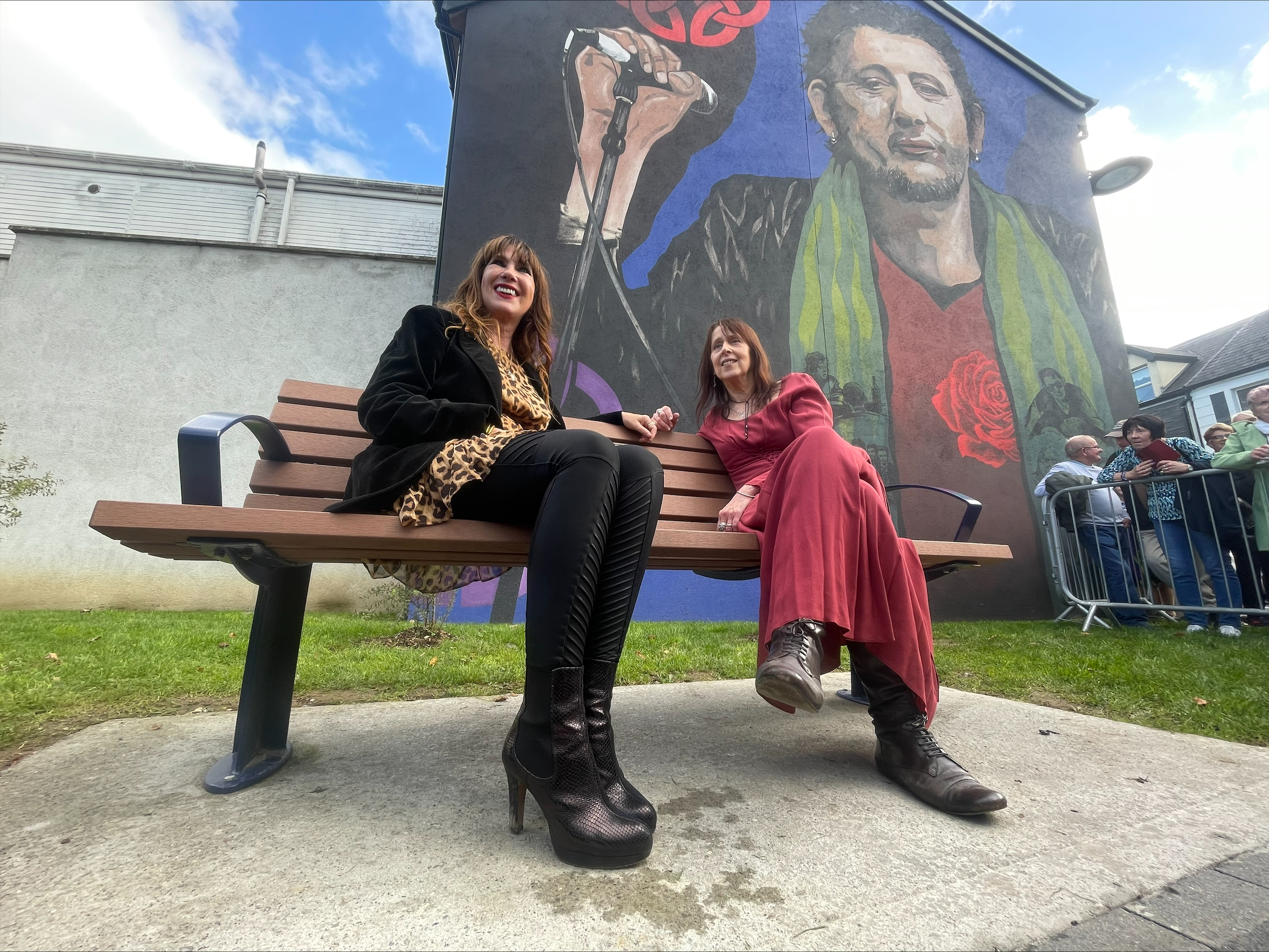
    The wait is finally over for locals in the town of Nenagh, Co Tipperary, many of whom have watched and waited for the mural of the late Shane MacGowan to be completed. 

    The official launch ceremony took place at the gable end of a building at Emmet Place just off Mitchell Street. 

    Shane’s wife, Victoria Mary Clark and his sister, Siobhan arrived marking the launch with speeches about the famous song writer. The painting of the mural was proposed by members of Tipperary County Council and for artist, Neil O’Dwyer it was the opportunity of a lifetime. We spent the day at the mural event in the “Premier County” and spoke with some familiar faces. 

  • German Champions Leverkusen frustrated by Holstein in shock draw

    German Champions Leverkusen frustrated by Holstein in shock draw

    By Ethan McDonagh

    Last weekend, Bayer Leverkusen took on newly promoted Holstein Kiel in the side’s first ever league meeting, in what was expected to be a strong win for the home side.  

    Leverkusen fan takes part in passionate pre-match anthem – Photo: Ethan McDonagh

    Holstein are playing their first top division German soccer since before the second World War and were expected to be beaten heavily.  

    However, Holstein had other ideas and despite being two goals down after eight minutes, they fought back to earn a draw.  

    Die Werkself came flying out at the start of the game, with Nigerian international Victor Boniface opening the scoring after just four minutes by placing a low driven shot past the keeper, whose touch wasn’t enough to prevent it from going in.  

    Things got even better for Leverkusen manager Xabi Alonso’s team in the eighth minute, with winger Jonas Hoffmann doubling the advantage with an accurate strike into the bottom left corner – after Holstein failed to properly clear the ball from a Boniface effort on target.  

    It looked like the game was going to be out of sight for the weekend in the 26th minute, when Boniface put another shot past Timon Weiner in goal – only for his effort to be ruled out for offside by the Video Assistant Referee.  

    At this point, it seemed like it was only a matter of time before Leverkusen scored more and would secure an easy victory. However, the Holstein players managed to improve their defending and keep Leverkusen’s chances to a minimum.  

    Then, just before half-time, the away side had a rare venture into the champion’s half and managed to get a goal back, with Max Geschwill powering the ball home with his shoulder following an excellent corner delivery by Lewis Holtby.  

    The pattern of play that saw Leverkusen as the team holding possession of the ball continued into the second half, as the hosts tried everything to break down the compact defending from the visitors.  

    A major shock occurred in the 68th minute, when Armin Gigovic managed to break past the Leverkusen defenders into the box and was brought down for a penalty by Jeremie Frimpong, who mistimed his challenge.  

    Jann-Fiete Arp kept his composure from the resulting spot-kick and sent Lukas Hradecky the wrong way, to bring The Storks back on level terms.  

    The remaining 25 or so minutes of the match was spent with Leverkusen in possession of the ball outside of Kiel’s box, as they desperately tried to retake the lead. 

    Try as they might, they were unable to breach the compact defence and were only able to go close on few occasions.  

    The Holstein players used every trick in the book to see out the result, from feigning an injury, to keeping the ball in the corner of the pitch for the remainder of the game.  

    They rewarded their excellent travelling away fans who were loud all game, with just their second point of the season as they try to avoid immediate relegation back to the second tier of German football. 

    Holstein have now conceded 19 goals in just 6 matches and will need to improve their defensive record if they are to have any chance of surviving in the topflight of German football.  

    Leverkusen on the other hand, have had quite a mixed start to their defence of the Bundesliga title season – having taken just 11 points from the opening six games, with three wins, two draws and one defeat.  

    They have however, already won the German Super Cup against Stuttgart and are perfect in the Champions League, having won their opening two fixtures against Feyenoord and Milan. 

    The atmosphere at the game was exceptional, with both sets of fans doing German soccer justice and living up to being some of the most passionate sports fans from across the globe.  

    Here’s a short video of some footage to capture the experience

  • SITTING THE LEAVING CERTIFICATE AS AN ADULT- PODCAST

    SITTING THE LEAVING CERTIFICATE AS AN ADULT- PODCAST

    By Oscar Lawlor Plazas

    Today’s episode dives into a topic that is relevant to many people, but often goes under the radar—taking the Leaving Certificate outside of the traditional school setting. 

    Did you know that every year, around 5 to 10% of the 60,000 students sitting the Leaving Cert in Ireland are adult learners or external candidates? That means approximately 3,000 to 6,000 people are taking these important exams after leaving the conventional school system. Many do it through alternative pathways, like the Back to Education Initiative or Vocational Training Opportunities Scheme, but some, like our guest today, are navigating this journey independently. 

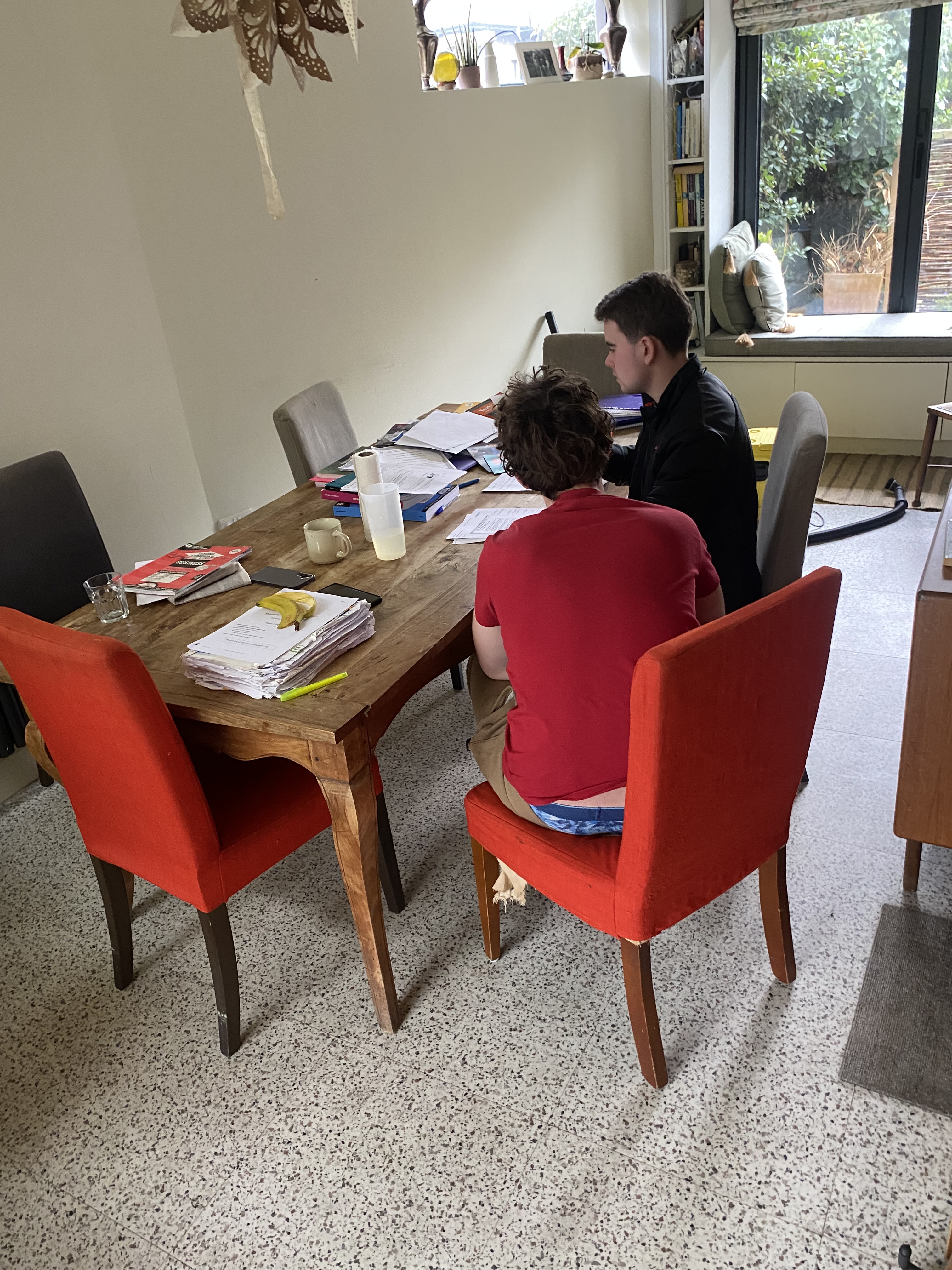
    Joining me is Séamus O’ Riordan, a 19-year-old who has decided to take on the Leaving Cert outside of school. We’ll be hearing about his motivations, the challenges he’s faced, and his unique perspective on preparing for such a significant exam without the traditional classroom structure.