Tag: news

  • German Champions Leverkusen frustrated by Holstein in shock draw

    German Champions Leverkusen frustrated by Holstein in shock draw

    By Ethan McDonagh

    Last weekend, Bayer Leverkusen took on newly promoted Holstein Kiel in the side’s first ever league meeting, in what was expected to be a strong win for the home side.  

    Leverkusen fan takes part in passionate pre-match anthem – Photo: Ethan McDonagh

    Holstein are playing their first top division German soccer since before the second World War and were expected to be beaten heavily.  

    However, Holstein had other ideas and despite being two goals down after eight minutes, they fought back to earn a draw.  

    Die Werkself came flying out at the start of the game, with Nigerian international Victor Boniface opening the scoring after just four minutes by placing a low driven shot past the keeper, whose touch wasn’t enough to prevent it from going in.  

    Things got even better for Leverkusen manager Xabi Alonso’s team in the eighth minute, with winger Jonas Hoffmann doubling the advantage with an accurate strike into the bottom left corner – after Holstein failed to properly clear the ball from a Boniface effort on target.  

    It looked like the game was going to be out of sight for the weekend in the 26th minute, when Boniface put another shot past Timon Weiner in goal – only for his effort to be ruled out for offside by the Video Assistant Referee.  

    At this point, it seemed like it was only a matter of time before Leverkusen scored more and would secure an easy victory. However, the Holstein players managed to improve their defending and keep Leverkusen’s chances to a minimum.  

    Then, just before half-time, the away side had a rare venture into the champion’s half and managed to get a goal back, with Max Geschwill powering the ball home with his shoulder following an excellent corner delivery by Lewis Holtby.  

    The pattern of play that saw Leverkusen as the team holding possession of the ball continued into the second half, as the hosts tried everything to break down the compact defending from the visitors.  

    A major shock occurred in the 68th minute, when Armin Gigovic managed to break past the Leverkusen defenders into the box and was brought down for a penalty by Jeremie Frimpong, who mistimed his challenge.  

    Jann-Fiete Arp kept his composure from the resulting spot-kick and sent Lukas Hradecky the wrong way, to bring The Storks back on level terms.  

    The remaining 25 or so minutes of the match was spent with Leverkusen in possession of the ball outside of Kiel’s box, as they desperately tried to retake the lead. 

    Try as they might, they were unable to breach the compact defence and were only able to go close on few occasions.  

    The Holstein players used every trick in the book to see out the result, from feigning an injury, to keeping the ball in the corner of the pitch for the remainder of the game.  

    They rewarded their excellent travelling away fans who were loud all game, with just their second point of the season as they try to avoid immediate relegation back to the second tier of German football. 

    Holstein have now conceded 19 goals in just 6 matches and will need to improve their defensive record if they are to have any chance of surviving in the topflight of German football.  

    Leverkusen on the other hand, have had quite a mixed start to their defence of the Bundesliga title season – having taken just 11 points from the opening six games, with three wins, two draws and one defeat.  

    They have however, already won the German Super Cup against Stuttgart and are perfect in the Champions League, having won their opening two fixtures against Feyenoord and Milan. 

    The atmosphere at the game was exceptional, with both sets of fans doing German soccer justice and living up to being some of the most passionate sports fans from across the globe.  

    Here’s a short video of some footage to capture the experience

  • A tight squeeze: Public transport in Dublin severely congested at peak times and on popular routes 

    A tight squeeze: Public transport in Dublin severely congested at peak times and on popular routes 

    By Gary Petrov

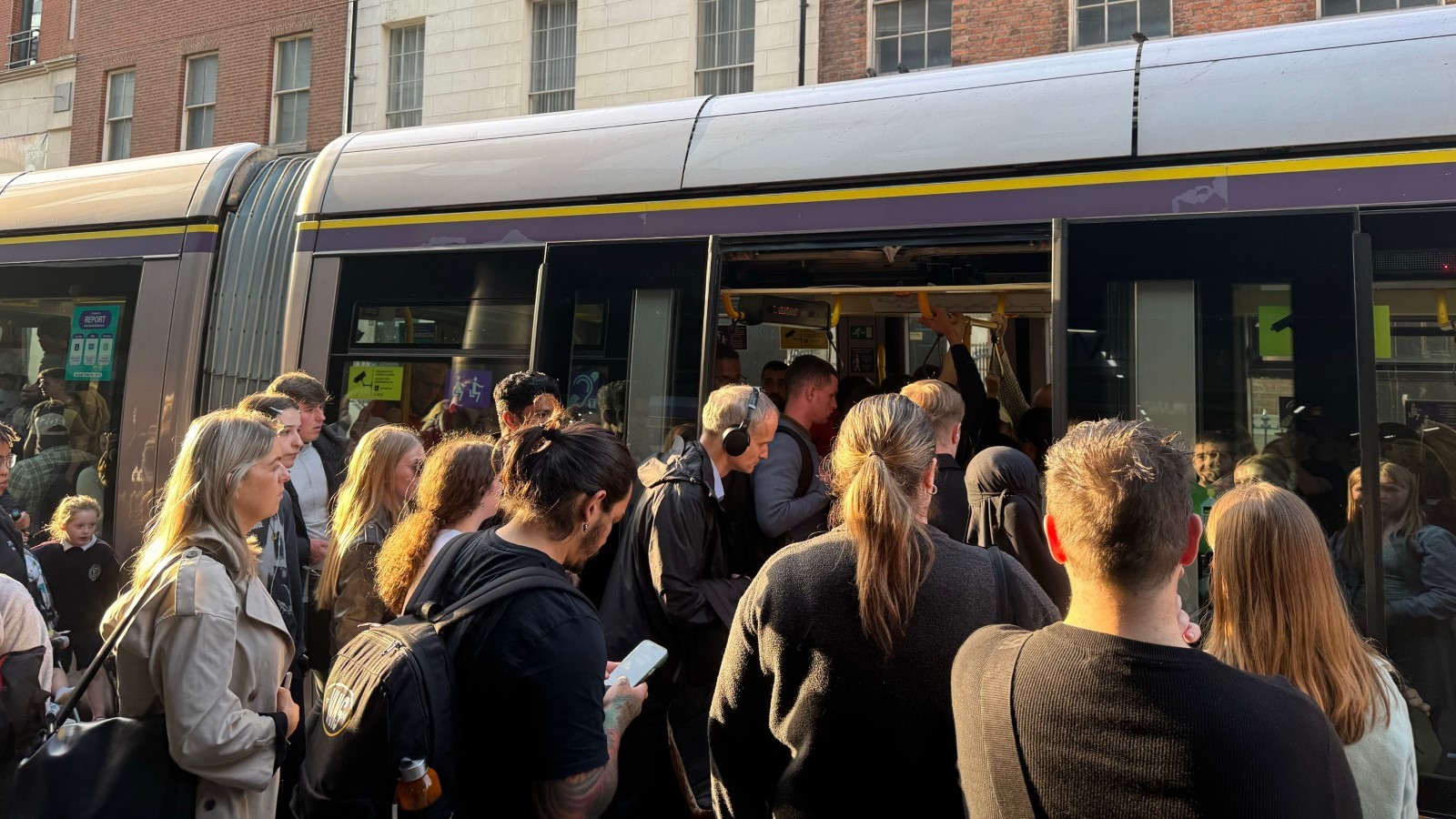
    A display of photos from the point of view of a commuter using public transport in Dublin. Examples of overcrowding can be seen here on Dublin Bus, Luas and Irish Rail services in densely populated or heavily visited areas in Ireland’s capital – in which the photos below were taken during peak times of travel, on-board and at stops and stations. 

    Nevertheless, the photos pose the question: Do Dublin commuters need more frequent services of existing public transport, or do they need more modes of public transport? Or both

    Whether the answer is a swift underground metro system, or more frequency on existing services – or both, the population is growing and commuting access in and around Dublin is becoming more of an issue and needs urgent attention. 

    All photos present the same problem – Dublin’s public transport system is overwhelmed. 

    The photos also present how this overcrowding issue can prove difficult for accessibility on public transport for wheelchair users, mobility aid users and parents with children. Even in busy times, not everyone can just squeeze on and stand. People are inevitably being left behind – hoping that the next bus, train or tram will have room. 

    Commuters joining a lengthy queue for Blanchardstown Shopping Centre’s busiest bus route to Dublin City Centre, the 39a – hoping to get on as it fills very fast. 
    The standard sight at this shopping centre bus stop at peak morning and evening times, as commuters fight for a spot on the 39a service. 
    The 39a route journeys down the Navan Road, in which sections of the journey lack bus corridors in both directions, leaving passengers stuck in traffic at peak times. 
    Meanwhile at the Jervis Luas stop in Dublin City Centre, peak times result in commuters pushing themselves on-board to very packed carriages, with just about enough room to stand, for the few at the busy stop that manage to squeeze on. 
    Finished work and want to hop on the Luas Red Line home? You’re not the only one – and that’s not even including commuters already on-board. 
    A Luas has arrived, and the carriages are evidently full. With some commuters possibly disembarking, maybe there will be room for some intending to board. 
    “Oh my God, let us get off first,” said a young woman as commuters tried to get off while commuters on the platform scurry towards the doors for a spot on the mostly full Luas carriages. 
    “Oh, there’s another one coming in three minutes, maybe we’ll get on that one,” said one woman as disgruntled commuters accepted not being able to get on-board – but hopeful they remained, as another Luas was due in a few short minutes. 
    The next Luas has arrived at the Jervis Luas stop and like the previous one, it’s almost full and the next round of commuters on the platform attempt to get a spot on-board.  
    Three Luas trams later and the platform begins to clear as the Luas carriages begin to have more space than the previous trams – but was there space for commuters who have accessibility issues? How many trams must pass for there to be room for a person in a wheelchair or with a mobility aid, or a person with a baby pram to board comfortably and safely? 

    Getting on a train at peak times is no different. Commuters at Broombridge Station queue at every door, wondering if they will fit on-board as the train arrives full from the city centre – in which it will remain like that until it reaches the outskirts of Dublin. 

    If a commuter manages to squeeze on-board, there is only room to stand, and it gets quite uncomfortable. Like the Luas, accessibility issues are present here. 
    Dublin’s only service that has flow is Irish Rail, due to no road traffic, but commuters experience peak times with traffic by foot – if you stay on-board until disembarking in a Dublin suburb. 
    Traffic standstill mayhem: The need for more efficient modes of public transport is hiding in plain sight here. Modes of transport that aren’t subjected to peak time road traffic. Commuters using an underground metro system around Dublin would go from A to B in an instant, in comparison to this.
    A bus stop and rain: Commuters already report it to be a struggle to get on-board popular routes, but adding bad weather to the equation does not make for a comfortable experience – when all a person wants to do is start their day commuting with ease or commute home swiftly, after a long day. 

    _____________________________________________________

    Everyone understands that peak times will always be busy for public transport users, that’s why it’s referred to as ‘peak times’ – but that doesn’t mean it’s acceptable for Ireland’s capital city and its surrounding areas’ public transport network to be severely overwhelmed, at a constant. 

    In a day and age where people are being encouraged to use public transport instead of private transport, as a means of reducing carbon emissions through minimising their individual carbon footprint – it’s worth noting that the correct infrastructure is vital for that to be sustainable, otherwise, people who can won’t use public transport, if it becomes more and more overcrowded, uncomfortable and unreliable. 

    A popular route having frequency in its service isn’t good enough, as it can be seen in the photos above that the demand is too high at peak times for ‘frequency’ to be enough. Ireland’s capital needs an expansion of public transport services across the board, not statements to brush the issues under the mat. 

    Dublin’s public transport congestion is clearly failing people with accessibility issues, despite the designated accessible areas on-board services – as abled people are filling up the designated areas at peak times. 

    Dublin needs more efficient public transport that facilitates everyone, and these photos are prime examples why improvement is needed – the only question now is, when will anything be done? 

  • Bolt powering Bray’s E-bicycle Movement 

    Bolt powering Bray’s E-bicycle Movement 

    By Jamie Ryan  

    Since June of last year, popular taxi app ‘Bolt’ has extended their services to provide the people of Bray Co. Wicklow with electric bicycles.  

    These bikes have been a massive success across the town among people of all ages due to their cheap costs and easy accessibility.  

    Green Party Councillor for Bray East, Erika Doyle, was one of those involved in getting the scheme up and running in the town.  

    “With the introduction of the bikes, there has definitely been a modal shift, which is great because in a town like Bray we have a congestion problem. It’s very hilly as well, so with the pedal assist it has become much more accessible for people that otherwise maybe wouldn’t have used a push bike,” Doyle explained.  

    “It’s been a really positive thing for the town, and data from Bolt shows that these are being used even during winter months, because originally, there was a suspicion that they might only be used during the summer, but people are clearly just dressing for the weather and using them regardless which is great.”  

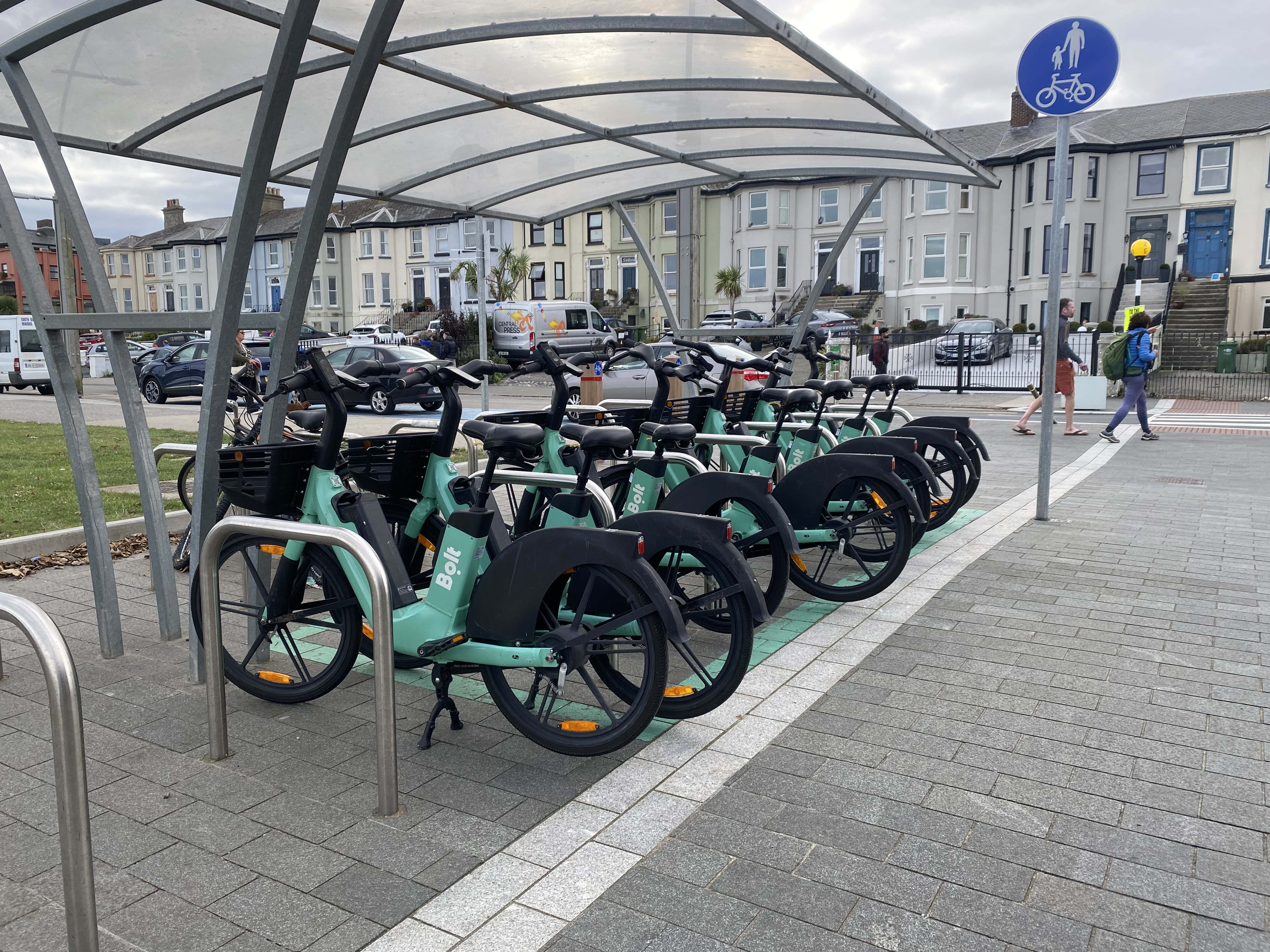
    The success of this scheme is partly due to just how easy the bikes are for people to use. Users simply download the Bolt app, scan the barcode on the bike, and they will then be charged 18 cent per minute.  

    Once the user completes their journey, they park the bike in one of the ‘park zones’ that can be found on the app or can be identified by a green square on the ground and bike racks.  

    Along with a pay as you use option, there are also a variety of subscription passes available to users too, such as a day pass, weekly passes, monthly passes and ‘unlimited unlocks for 30 days’. 

    The bikes go up to 25 kilometres per hour, but can be capped at 15 kilometres per hours if users wish.

    Bolt Bikes at Little Bray ’Parking Bay’ – Photo Credit: Jamie Ryan 

    Sinn Féin Councillor for Bray West, Dermot O’Brien, speaks highly of the impact that the bikes have had in Bray.  

    “I would say overall there has been a very positive impact from the introduction of Bolt bikes in Bray. The user numbers are a good reflection of this, and the feedback from local people who see them as an alternative to the car, or as an easy option for getting around the town,” he said.  

    “I particularly notice the variety of local users, young and old, as well as tourists and exchange students who benefit from an easy and accessible option to move around the area.” 

    “On a personal level, I would use Bolt bikes very often, and they are a wonderful asset to someone who lives on the edge of being on time for meetings, as I bounce from one venue to another around the town.” 

    The bikes are easily maintainable due to there being no shock absorbers in their frames, and the tyres not containing air.  

    However, although there has been a plethora of extremely positive experiences from Bolt bike users, there have been issues with bikes being damaged, defaced or suffering from wear and tear.  

    Councillor O’Brien himself has fallen victim to this, he explained. 

    “In recent weeks, I changed my bike four times because of malfunctioning and ultimately, I just walked home which was frustrating,” he said. 

    Adam Byrne, 20, regularly uses Bolt bikes to get around the town.  

    “The bikes have made such a difference for me. Getting to and from work has become so much handier and it only costs me maximum €3 per journey which is much better than spending it on petrol – not to mention not having to sit in traffic the whole time,” Byrne said.

    Bolt Bike at Bray Harbour with graffiti at the rear mud guard – Photo Credit: Jamie Ryan 

    “Of course, like anyone else who uses them regularly I’ve had one or two issues, but nothing crazy, more so just maybe a lack of maintenance with the brakes and minor damage to the pedals, but overall, I really can’t say any bad about them. I hope they stay around for a long time.”  

    The contract between Bolt and Bray Municipal Council has recently been extended for a further year, for locals to enjoy and utilise.  

  • In Photos: Thousands take to the streets for Dublin’s largest Palestine protest to date 

    In Photos: Thousands take to the streets for Dublin’s largest Palestine protest to date 

    By Liam Murphy

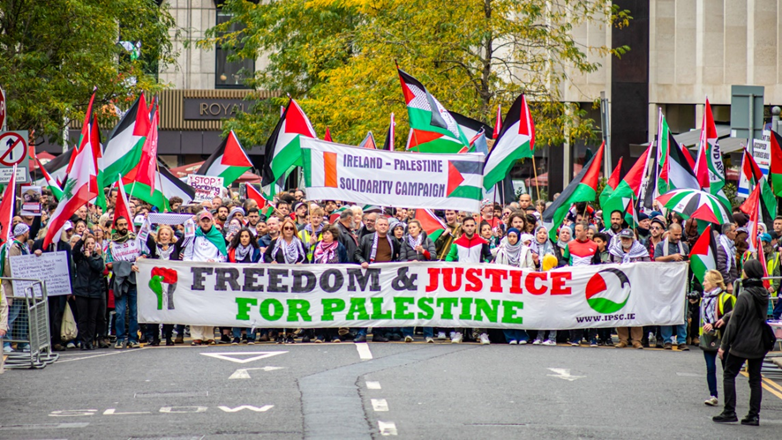
    On Saturday, October 5, thousands of people took to the streets of Dublin to mark one year of Israeli escalation in Gaza. 

    The march, the biggest of its kind to date in Ireland, called for an end to Israel’s occupation, an end to the use of Irish airspace for transporting weapons, and for the Irish Government to act in holding Israel accountable.  

    Several chants were also heard supporting Lebanon, following recent attacks there, also by Israel. 

    The national march, titled ‘GAZA: One Year of Israel’s Genocide’, began at the Garden of Remembrance and made its way to Molesworth Street, where a stage had been set up. 

    Speakers on the stage included Oscar-nominated and BAFTA-winning Palestinian filmmaker Farah Nabulsi, Palestinian photojournalist Eman Mohammed, Zak Hania, who recently returned home from Gaza after seven months, and Ireland Palestine Solidarity Campaign’s chairperson Zoë Lawlor. 

    Music on the day came from renowned Irish singer-songwriter John Spillane, Palestinian-Irish singer Roisin El Cherif, and Palestinian rapper Talha Alali.   

    All photos taken by Liam Murphy

    Protestors gather at Dublin’s Garden of Remembrance with signs and banners. 
    A group gathers with signs; Some with donation QR codes, others with song lyrics, others with art – Each with meaning. 
    Supporters gather around a 30ft Palestinian flag, as the crowd prepares to march. 
    A young girl wearing a keffiyeh poses as the march makes its way down O’Connell Street. 
    ‘From the River to the Sea, Palestine will be free’ – chants are heard across the capital city. 
    Protestors feel the heat as one bloc light up flares as the march moves down O’Connell Street 
    A masked up keffiyeh-wearing group stand roadside on O’Connell Bridge holding a red Hezbollah flag. 
    A woman holds up a scarf, branded with the Keffiyeh pattern and the Palestinian flag and Irish tricolour flag. 
    ‘You’d care if it was Cork!’ – A protestor holds up a sign on Molesworth Street, calling out the Irish Government 
    The march makes its way around the corner from Dawson Street, now heading up towards Leinster House. 
    Cork singer songwriter John Spillane tuning up before taking to the stage to perform his song ‘Palestinian Sunbird’ 
    Zak Hania smiles as crowds applaud his entrance. Hania spent seven months in Gaza unable to return home. 
    Palestinian rapper Talha AlAli (known as Wise Wolf) performs his newest single ‘Inshallah’ with Irish artist Blue Niall 

  • Apple Day-Harvest Festival

    Apple Day-Harvest Festival

    By Luke Hurson

    The Organic Centre in Rossinver Co. Leitrim hosted its Apple Day-Harvest Festival on 29 September and The City went to check it out. 

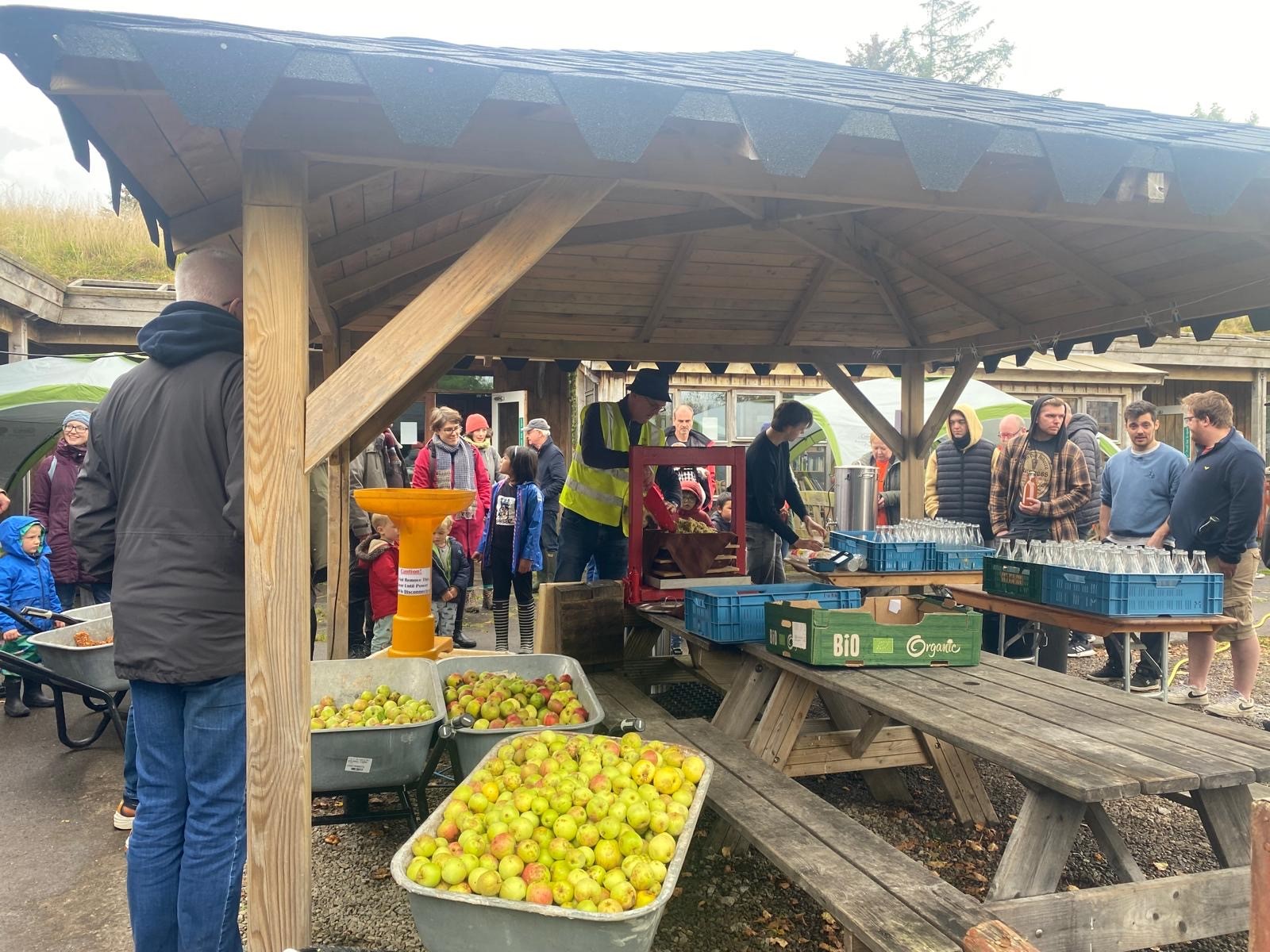
    The festival had a great turnout with lots of activities and stalls for the visitors. The highlight of the day was the apple pressing, where festival goers were shown how apple juice was made and could sample the finished product.  

    The stalls were full of sustainable crafts both inside and outside the building. There were craft demos, stone carving, weaving and wool spinning to keep the crowds entertained. 

    Talks and tours were on throughout the day by experts including The Organic Centre’s resident apple expert Phil Wheal and Botanist Maria Cullen. The Grass Roof Cafe provided all diverse kinds of apple tastes for the people to enjoy.

    All photos by Luke Hurson

    The crowds were shown apple pressing techniques
    The grass-roofed Organic Centre
    The Apple Day Harvest festival drew good numbers
    The greenhouses were full of organically-grown fruit and vegetables 
    The inside of one of the greenhouses
    The craft tent was a popular attraction
    The Grass Roots Cafe kept the visitors going throughout the day
    A different angle of the apple pressing where pressure is put on the apples to squeeze the juice out of them 
    Some beautiful wildlife paintings were on display 
    One of the many craft stalls with handcrafted goods 

  • Ireland Implements first stage of XL Bully ban: Key changes starting from October 1st

    Ireland Implements first stage of XL Bully ban: Key changes starting from October 1st

    Ireland has officially implemented a ban on XL Bully dogs, which came into effect on October 1st, 2024. The ban was introduced by Minister for Rural and Community Development Heather Humphreys in response to a series of high-profile attacks involving the breed. 

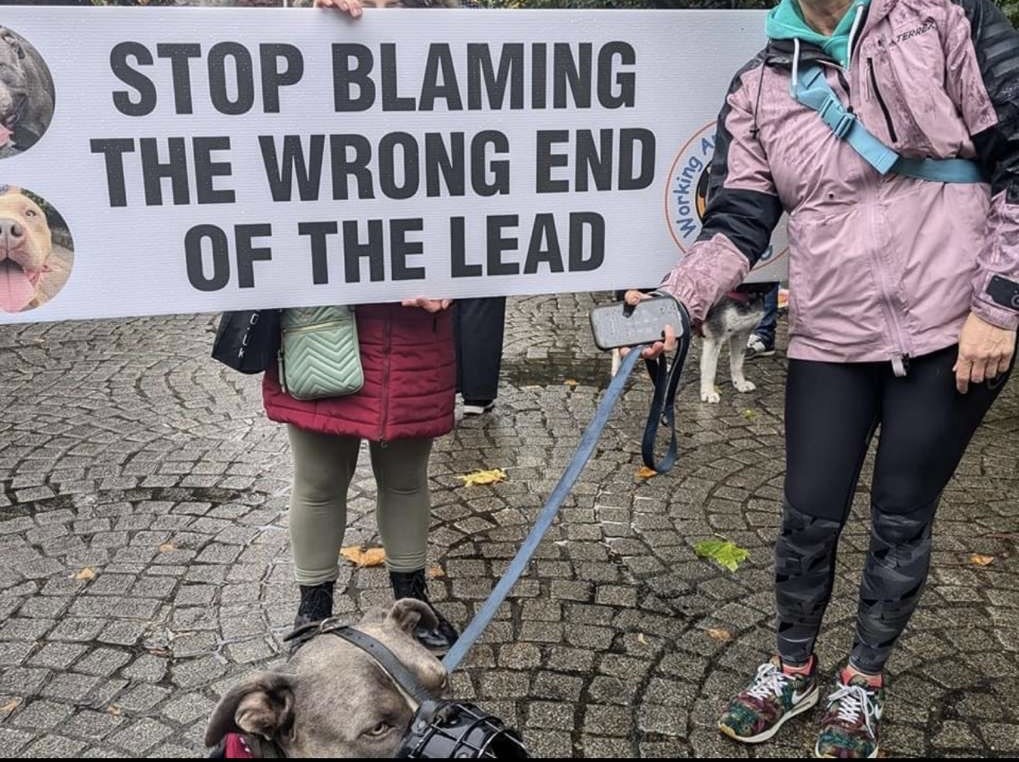
      Banners at XL Bully ban protest. Photo by Sandra Dudkiewicz 

    The ban will be enforced in two phases. As of October 1, 2024, it is illegal to import, breed, sell, or rehome XL Bully dogs. From February 1, 2025, it will also become illegal to own an XL Bully unless the owner has obtained a ‘Certificate of Exemption’. 

    This certificate will allow owners to keep their current XL Bully dogs, provided they meet certain criteria such as licensing, neutering, and microchipping the animal. 

    A deadline of February 2025 has been set for animal welfare groups and shelters to rehome or export XL Bullies already in their care. 

    The decision has generated debate, with some supporting the move as a necessary measure for public safety, while others, including animal rights groups, express concerns about the future of these dogs and the impact on shelters 

    A joint statement published by Dogs Trust Ireland, Irish Blue Cross, MADRA, and the ISPCA states that they will continue to urge the government to prioritize enforcing and adequately funding existing laws that address the root causes of dog aggression across all breeds and types of dogs. 

    This includes cracking down on unscrupulous breeders who prioritize profit over dog welfare and public safety, penalizing irresponsible owners of dangerously out-of-control dogs, and educating and empowering responsible dog owners. 

    “While we are disappointed with the approach the government is taking, we remain committed to continuing our work to advocate and ensure that the welfare of all dogs is protected,” the statement said. 

    Sister of Nicole Morey who was tragically killed by an XL Bully earlier in June this year spoke to RTE news and expressed that the ban is not enough and fears that there will be more accidents linked to the breed. 

    “I think there should be a stricter law brought in. They’re dangerous dogs. They’re not small little puppies. They’re not dogs that you could just mess around with. They can just switch in two seconds,” she said. 

    Earlier in September almost 200 people attended a protest at Stephans Green in Dublin following the news of the new regulations related to the breed. 

    XL Bully owner and attendee Wiktoria Kumorek spoke to The City. “It truly breaks my heart it is unfair that these dogs are being judged solely on their appearance. My dog is gentle, and affectionate and with proper training and care, they are no more dangerous than any other large dogs.” 

    “The problem is not the breed, it is irresponsible ownership just like with any other dog or animal,” she added. 

    XL Bully ban protests in September in Trinty Point. Photo by Sandra Dudkiewicz 

  • ‘Just one won’t hurt’:  A closer look into Ireland’s drinking habits 

    ‘Just one won’t hurt’:  A closer look into Ireland’s drinking habits 

    By Áine McKeon  

    ‘Don’t be rude, have a drink with me’, ‘You deserve a drink, after the week you’ve had’, ‘It’s tradition, you have to’ – these are just a few phrases you may hear around the table while having a few drinks.  

    Drinking as a social activity is quite common between friends and family across Ireland. 

    Stereotypes surrounding Irish people and drinking are deeply ingrained in popular culture, often exaggerating or misrepresenting the role of drinking in Irish society – whether that be heavy drinking or holding our liquor well. 

    But how much truth is behind them? If you read between the lines, you could argue that Ireland may have a few underlying issues with drinking that may have been swept under the rug. 

    As figures rise, an increasing worry is brewing regarding the effects of drinking, shifting how Irish people view their  drinking habits. 

    But how much do we really drink in Ireland? 

    When experts talk about the dire health implications linked to excessive alcohol use, people tend to assume that it’s directed at individuals who have an alcohol use disorder – but health risks from drinking can come from moderate consumption as well. 

    In 2023, alcohol consumption was 9.9 liters of pure alcohol per capita over the age of 15 years. This shows a fall of 10% since the passage of the Public Health (Alcohol) Act in 2018. 

    Alcohol consumption per capita has reduced in recent years from its historically high point, in the early 2000s. We are now drinking at a level of just under 10 liters per capita. 

    According to |Alcohol Action Ireland per capita consumption in Ireland in 2023 equated to 284 cans of beer, 12 bottles of spirits, 43 bottles of wine, and 35 cans of cider.

    Photo Credit: Sheila Gilheany, Alcohol Action Ireland 

    “If the whole of the country was drinking within the HSE lower risk drinking guidelines, we would be consuming about 40% less,” said Dr. Sheila Gilheany, CEO of Alcohol Action Ireland.  

    “We have very high levels of ‘binge drinking’. Ireland is the 8th highest within OECD countries,” she added. 

    About 70% of the population consume alcohol. Over half of all drinkers do so in a manner that is considered hazardous. About 20% of the drinking population have an alcohol use disorder. 

    Consumption and affordability  

    “Consumption patterns are driven by price, marketing and availability. You can see the changes in consumption in the graph above. In recent years, drops in consumption are usually linked to changes in alcohol taxation. Alcohol remains very affordable, despite industry protests,” said Dr Sheila Gilheany. 

    The price of alcohol in shops today is essentially the same as it was 20 years ago. 

                    Alcohol-Affordability-Ireland – Photo Credit: (Sheila Gilheany, Alcohol Action Ireland) 

    The Organization for Economic Co-operation and Development (OECD) found that Ireland has the second most affordable alcohol across OECD countries. 

     The Irish alcohol business spends a minimum of €115 million a year promoting its goods. This excludes sponsorship agreements like those for Guinness Six Nations.  

    Ireland ranks the 3rd highest in the world for the number of pubs per head, and three-in-four people live within walking distance of a premises licensed to sell alcohol. 

    “The term ‘responsible drinking’ is very much an industry term which has no public health meaning – i.e. it is not defined,” said Dr. Sheila Gilheany. 

    The HSE has guidelines on lower risk drinking, although, as these are now in the process of being revised, it likely will decrease in common with other jurisdictions which have examined this recently in Canada. 

    Finance and office manager Jennifer Bergin at Drinkaware said, “Anybody wanting to change up their drinking habits and are looking for information can access our 2023 barometer research paper and consumption page available on our website.” 

    It’s likely that the majority of people have encountered someone who has struggled with their alcohol intake. Excessive drinking is a widespread problem in Ireland that affects not only the individual, but also those around them. Alcoholism can affect a drinker’s emotional, financial, and physical well-being, which can be harmful to those around them as well.  

    According to Alcohol Action Ireland, Ireland’s drinking culture is evolving towards more mindful consumption, with health becoming a priority.  

    The impact of these changes on the country’s drinking culture remains uncertain. 

  • Bees, Trees and World Oxygen 

    Bees, Trees and World Oxygen 

    By Derek Price

    Planet Earth could be in serious danger of losing its main oxygen source.  

    With the Amazon rainforest continually being felled for its timber and cattle grazing at an alarming rate (since 1988, humans have destroyed an area of the rainforest roughly the size of the American State of Texas), what can Ireland do to try to offset and remedy this huge loss of oxygen- producing plants?  

    To say it is important for people to support the growth of trees, which support pollinating insects in Ireland and elsewhere, may seem like an understatement. Pollination, and having the right native trees and plants, which contribute to the ecosystem being in balance – is a vital part of nature.  

    If tree planting is knocked out of balance by human activity, it could have a devastating effect, resulting in the extinction of bats, bees, and other pollinating insects, and hence the plants that rely on them. Also, certainly, birds may be affected. This could have a domino effect, which could eventually lead to the extinction of the animal kingdom, which of course includes our own species, human beings. 

    It has been reported in the Irish Times by Ella McSweeney, that a third of all bee species in Ireland will be extinct by 2030.  

    Hanna Backmo, a beekeeper in Ireland, recently told Louise Walsh in the Irish Times, “It’s been a bad year for honey, but the native honeybees are real survivors. Two years ago, because of lack of rain, we had the worst summer in 30 years for honey production. Last year was excellent but, unfortunately, this year doesn’t look too good,” she said. 

    Orla Farrell is the project leader for the Easy Treesie organisation, whose objective is to plant and grow a million trees in Ireland by 2030. The City asked Orla her opinion on some important environmental issues currently happening in Ireland. 

    Orla Farrell, the Project Leader for the Easy Treesie. (courtesy of https://easytreesie.com)


    Do you think that Irish County Councils giving away thousands of Hawthorn, Mountain Ash and other trees natural to Ireland ahead of National Tree Week every year is a good idea? 

    Orla: “A super idea. Easy Treesie and Crann do this regularly. The members of the public are thrilled to get such a donation. We ask them only to take them if they have space and if they are going to plant them immediately. The Easy Treesie project is all about planting trees wherever we can find a corner or little spot, to put them. It is vital as a Climate Action.” 

    Do you think the public are made aware enough about the possible extinction of bees and other insect pollinators in the Irish media? 

    Orla: “Everyone my age remembers insects at the windows and on car windscreens in profusion in our youth. I was doing a tree-athalon in Sligo on Monday, discussing Yeats’ poem where ‘Moths like stars were flickering out’. Does that happen now? I don’t think so. On the day that Michael D. Higgins called for action on the extinction event that was happening during his address at the Biodiversity Conference in Dublin Castle, the report was only on page 6. The front page had the usual stories.” 

    I see you have a campaign to plant one million trees by 2030. I see this as a great objective, and I hope it is achieved. You are now halfway to that target. Do you think you will get that number planted by 2030? 

    Orla: “Yes. All we need is public land. This has been the only slow part of the project. Councils are not yet familiar with our project, so we are really happy Derek, that you are writing about our initiative. Once word gets out about how we are experiencing such success (500, 011 trees at present), we think they will find us space local to the children. We are also open to planting on a really mass scale where children have to travel to the site, though local is our preferred option where the children can easily watch the trees grow.”  

    At the end of the day, it may be preferable in the long run, for people around the world to choose to get active, and instead of preaching to the Brazilian and South American governments, plant their own trees, woods and forests, which would make a solid positive difference, to ensure planet Earth will continue to produce plenty of oxygen for many more years to come. 

  • Students in Ireland Struggling with Rising Rent and Limited Accommodation 

    Students in Ireland Struggling with Rising Rent and Limited Accommodation 

    By Jamie Ryan 

    Yugo Student Accommodation – Photo Credit: Jamie Ryan 

    The student accommodation crisis in Ireland has been an on-going issue for the past few years. 

    Every year, a new batch of students from across Ireland are accepted into universities, in which it is not an option for them to commute – along with returning students who are also actively seeking out accommodation for their upcoming academic year.  

    Kerry Ann-Darcy, 22, a recent graduate of Maynooth University, but originally from Dundalk in Louth, struggled each year during her time in university to seek accommodation.  

    “It’s not easy to find student accommodation in general, especially when there is a ‘first come, first serve’ general booking forum for on-campus accommodation,” Darcy explained.  

    “The university was not helpful and suggested that alternative accommodation could be found on a website called ‘Student Pad’ but that was it. But on Student Pad, the landlords are extremely picky with terms such as gender specific, academic year specific, course specific, degree specific and so on. 

    “Even once I did get accommodation, there were issues with it. My landlord had a table and chair for us in the dining room at the house viewing but had it removed for when I moved in and he told me that I ‘was imagining that there had been one there’. 

    Yugo Student Accommodation – Photo Credit: Jamie Ryan 

    “He complained and gave out to me because we had access to a bedroom, bathroom and kitchen – although that’s what I was paying him for but that’s the bare minimum. In third year, my landlady said that I had to be finished in the kitchen before 6pm but some of my classes only finished at that time,” Darcy added. 

    Back in 2022, the Minister for Further and Higher Education at the time, Simon Harris, made calls to homeowners living nearby to universities to rent out any spare rooms that they may have in their house to students – as a result of the severe lack of student accommodation to supply the high demands.  

    This alternative, however, does not necessarily end up costing students less as research carried out by the USI (Union of Students in Ireland) in February found that students are paying an average of €660 across the country to live in digs, with just 43% of those students given full access to the room, seven days per week. 

    This same study also found that of those surveyed, 59% said that they chose to live in digs as a result of being unable to find an alternative.  

    Antrim native Caitlin Procter, 19, was unable to attend university this year due to the lack of student accommodation available.  

    “After being accepted into multiple courses, I wasn’t even able to accept any of them because I couldn’t find anywhere to live,” she explained.  

    “I was really annoyed and frustrated about it so I sought elsewhere for digs but was still unsuccessful and unfortunately I can’t afford to commute two and a half or three hours per day to and from Belfast and Sligo,” she said.  

    This is a situation that unfortunately, too many students and university hopefuls find themselves in each year and it appears to be getting worse and worse.  

    Ardcairn House Student Accommodation – Photo Credit: Jamie Ryan 

    Dylan Downes, 22, a former student at the University of Limerick, originally from Wicklow, was living in digs for his first year in third level education as the commute between Wicklow and Limerick twice each week was unfeasible.  

    “I felt that living in digs was my only choice to be honest. I got an apartment with some of my friends for the following year, but I really felt that I probably lost out on the social aspect of college in first year,” Downes explained. 

    “My commute to and from college each day was around forty-five minutes, which is obviously better than three hours but even still, when you’re paying €700 per month for a room, it is disheartening, and I sometimes felt pretty isolated. 

    “Thankfully, my accommodation search in second year was far less stressful because one of my friends had already reserved an apartment for the following year and offered me the other room with him, in many cases looking for accommodation is more about who you know than anything else in my experience,” he said.  

    The student accommodation crisis is a direct result of the greater housing crisis that Ireland has been dealing with for the last decade. 

  • SPECIES Goth Festival in Leitrim Will Return 

    SPECIES Goth Festival in Leitrim Will Return 

    By Derek Price.

    Plans are underway for the return of the SPECIES Gothic and Industrial arts and culture festival to County Leitrim after a short absence.  

    SPECIES is a yearly festival that takes place in the Iron Mountains in County Leitrim. The festival is organised and run by Ilíocht O’Brien and his wife Harriet at their mountain home, and it features a vast array of Irish talent from both sides of the border, and abroad. The festival venue site has a very striking appearance with psychedelic coloured spiritual (but fun) murals mixed with Halloween images dotted around the venue. The first SPECIES festival was held during the May bank holiday weekend in 2015. 

    Now, over at An Dómhan Ilíocht, as Mr O’Brien calls it, they are busy preparing for the next Gothic and Industrial arts and culture gathering.  

    On the subject of the SPECIES festival return, Ilíocht said: “We are taking a break from hosting festivals up here while we are working on upgrading the site. SPECIES will return when we are ready, and at that time we will advertise extensively, and hope to re-unite all the beautiful weirdos up here!” 

                 Psychedelic looking mural on site at SPECIES (above). (Photo: Derek Price) 

                The Great Hall band and DJ performing area at SPECIES. (above). (Photo: Derek Price) 

    A colourful wall mural at the venue. (above). (Photo: Derek Price) 

    Dublin duo Freak Control onstage. (above). (Photo: courtesy of Kilian McLiam) 

    DJ Syrinx (above). (Photo: Derek Price) 

    Outdoor scenery at SPECIES. (above). (Photo: Derek Price) 

    There is a big selection of vendors at the festival, selling all types of wares like clothing, furniture throws, and various kinds of fun bric-a-brac and knick-knacks. (above). (Photo: Derek Price) 

    Cute cuddly items on sale at the stalls. (above). (Photo: Derek Price) 

    SPECIES revellers keep warm well into the night (above).  (Photo: Derek Price) 

    A view from the camping area (above). (Photo: Derek Price) 

    Species spooky environment with appropriate mysterious figures (above). (Photo: Derek Price) 

    Ilíocht,- the festival organiser, on the right, with a friend. (above). (Photo: Derek Price)