Tag: news

  • HSE Safer Nightlife Programme Promotes Safe Festival Culture at District X 

    HSE Safer Nightlife Programme Promotes Safe Festival Culture at District X 

    By Sadie Murray 

    The highly anticipated debut of District X Festival took place last weekend in Kildare, with HSE teams making headway amongst the crowd. 

    The festival is the result of a collaboration between popular venues District 8 and Index and is the first of its kind in Ireland. The organisers had a strong emphasis on harm reduction measures, working closely with the HSE to create a safer festival environment.  

    There were spaces throughout the festival provided by the HSE for harm reduction outreach teams and ‘back of house’ drug checking as part of their Safer Nightlife Programme.  

    The Safer Nightlife programme was launched by the HSE in 2022 in response to the evolving drug landscape in Ireland. This campaign involved the development of tailored resources, media awareness and an outreach drug service to support people at events, including four festivals over the summer of 2024.  

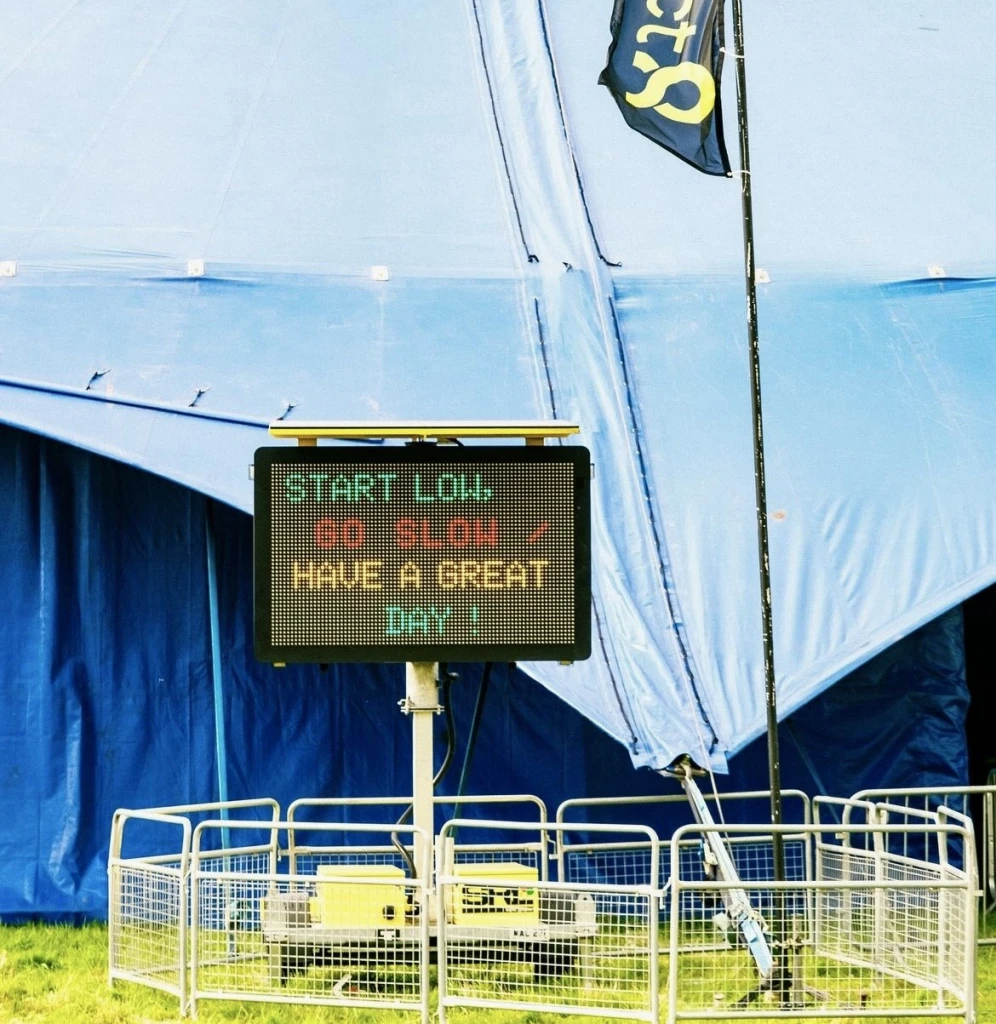
    The initiative has been successful in reaching festival goers. Karen O’Grady, from the HSE said, “Based on discussions at events this summer, we feel our message is reaching people, more and more people are reporting that they are aware of trends and are applying harm reduction measures like “start low, go slow.” 

    Photo Credits: http://www.drugs.ie/festivals  

    This is a key message from the HSE, to start low and go slow, meaning that if someone chooses to take drugs they should start with a small dose and pace themselves.  

    When the HSE’s festival campaign first began, there was a fear of Garda interference with the spaces. Karen O’Grady said:, “There is less fear of engaging with us now, people who come to the service see that it is not monitored and feel safe discussing use and surrendering drugs with us. 

    “We will continue to create awareness of drug trends and try to engage with more people to build trust,” said O’Grady.  

    Surrender bins were provided throughout the festival for people to submit drugs for analysis. The service relies on people surrendering drugs for harm reduction purposes- the more drug samples people provide, the more the HSE will know about what is in circulation. This process helps the HSE to issue alerts and spread awareness around particularly risky substances.  

    The ‘back of house’ approach means that the sample is destroyed upon analysis and the person will not be contacted directly with the results. If anything noteworthy is found, this information is broadcast on social media and on screens at events. 

    This HSE initiative was introduced following recommendations from the Government Emerging Drug Trends and Drug Checking Working Group, which examined nightlife environments including festivals.  

    The review identified these as risk-taking settings that can provide the HSE with more opportunity to engage with groups not typically presenting to traditional addiction services. 

    Photo by Sadie Murray 

    Karen O’Grady said:, “The overall aim of the programme is to engage with and support festival attendees in a non-judgemental way on the topic of substance use and related health issues that emerge in nightlife spaces. The programme is based on a harm reduction ethos to inform and support people to amend behaviours to help minimise harms caused by substance use.” 

    The development of a drug safety culture within festivals is crucial with an increasingly volatile drug market and substance abuse epidemic. 

    A recent report from The European Drug Report 2024 found that Ireland had the highest instance of drug deaths in the EU, with more than four times the average number of fatalities. The report showed that Ireland had 322 drug-related deaths in 2020 — 97 deaths per million people, compared to the EU average of 22.5. 

    The HSE’s core message is that it is safer not to use at all and that the drug market is currently very volatile. For those who do choose to use, it is advised that they stay up to date with drug trends and alerts on the HSE site and to follow harm reduction messages. 

    Photo from HSE’s Drugs.ie campaign 
  • Vigilante Maestro Brings the Rage to the Soundhouse 

    Vigilante Maestro Brings the Rage to the Soundhouse 

    By Mene Agbofodoh

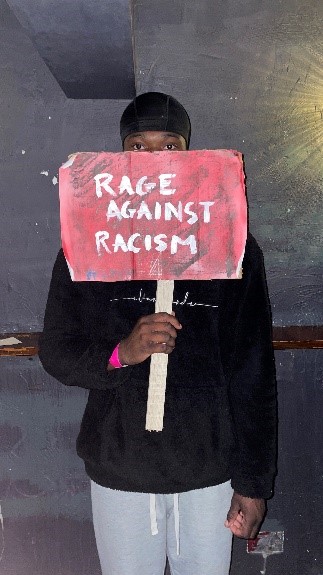
    The Vigilante Maestro also known as Fortune Igiebor brought the rage against racism to the Soundhouse on the 19th of September. 

    Fortune Igiebor is an emerging creative talent known for his work in visual arts, particularly in music and mixed media. He focuses on themes like identity, culture, and the experiences of Black people in Ireland and beyond. 

    The Soundhouse is home to many hip hop and rap concerts in Dublin. Not too long ago, the venue held the first-ever IRIS event from the collective, SPG with which Fortune Igiebor has collaborated in the past. 

    The show was titled Rage against Racism as that is the genre Mr Igiebor’s music reflects the most. “Rage Against Racism is a call to action for all who believe in the fundamental values that define the Irish spirit: kindness, inclusivity, and the unwavering belief in the dignity of every human being,” he said. 

    “Ireland has always been a land of welcomes, where communities are built on the foundations of solidarity and shared humanity. We are a nation that knows the pain of discrimination, the struggle for equality, and the joy of standing together in the face of adversity. At a time when hate seeks to divide us, it is more important than ever to reaffirm our commitment to these values and each other.” said Mr.Igiebor. 

    The event was free of charge and instead, attendees were asked to support the charities the event was hosted for, Doras and NASC, the two charities that help to fight for the rights of migrants in Ireland. 

    “We could have charged maybe €10 or €15 for the tickets but we decided to let the people decide how much they want to put into it, we have a lot of people in the Irish music scene right putting on events and as a performer myself I know sometimes not everyone has the money to spend to go to these concerts. That was one of the reasons why the event was also free of charge.” 

    “After dropping the Love Rage and Vigilante Maestro EP, the opening track ‘Scorching Sun’ which was inspired by the Dublin Riot that happened back in November, I started seeing more anti-immigration protests around the country and wanted to do something for the community because you see the Vigilante Maestro is someone who believes he is a man of the community something like a Robin Hood.” 

    The atmosphere in the Soundhouse was powerful, there was a sense of unity and understanding among the attendees at Rage Against Racism. 

    Nealo, an Irish artist kicked off the show with Under the Weather from his ‘All the Leaves are Falling’ album, which set the tone for not only his set time but for the night. 

    He continued his set with songs like ‘Tears You Cry’ and ‘You Can’t Go Home Again’ however the song that moved the audience the most was ‘What Colour Would Our Friendship Be’, the song from the vocals to the melody was enough to sway people to tears. 

    Nealo, performing at the Rage Against Racism Concert. Credit- Mene Agbofodoh 

    Celaviedmai brought the energy and stage presence with her performance, her performance was immersive and all-around good vibes.  

    Celaviedmai is an Irish rapper and singer known for her energetic performances and versatile style, blending elements of hip-hop, grime, and dancehall.  

    She has gained attention for her powerful lyrics, often touching on themes like identity, race, and personal empowerment. She raps primarily in English but incorporates her cultural influences into her music, giving her a distinctive sound in the Irish and international music scene. 

    Her rise in popularity reflects the growing diversity in Ireland’s music scene, and she’s seen as a pioneering voice, particularly for women in Irish rap. 

    She performed some of her songs from her recent EP ‘Issa New Era’, and hearing songs like ‘Break Me Down’ and ‘Reckless’ being performed live really added to the overall atmosphere. Celaviedmai had the whole place jumping and screaming her lyrics, she had the crowd going and it led to a great transition to the night’s main attraction, Mr. Igiebor. 

    If there is one thing to expect from a Vigilante Maestro performance, there is going to be energy and mosh pits, and for the people who were at the event, there was that and more. 

    Mr. Igiebor never fails to get the crowd going, creating chants for the people to say, from coming down from the stage to performing hit songs like ‘Leechers’ and ‘Paris at The Metro’. 

    Mr. Igiebor left the night off with the chant ‘Nobody’s free till everybody is free’ and that statement was repeated louder each time by the audience, thanks were given and the amazing night with a great cause came to an end. 

    As for what is next for the Vigilante Maestro, Mr. Rage Stage Three is currently in the works, it needs to be handled with care. 

    “Stage three will show Mr. Rage (myself) in a completely new light, something that has been teased but never shown”. Fortune said. 

    Headline Image; Credit- Mene Agbofodoh 

  • What it Takes to Win the Toughest Offshore Sailing Race in the World 

    What it Takes to Win the Toughest Offshore Sailing Race in the World 

    By Luke Hurson 

    “It would be the equivalent to winning an Olympic gold medal in what we do.” 

    Irish skipper Tom Dolan became only the third non-French sailor to win the ‘Solitaire du Figaro’, one world’s most prestigious yacht races on September 12.  

    Image credit: La Solitaire du Figaro Paprec Instagram 

    La Solitaire du Figaro Paprec is renowned as the toughest single handed multistage offshore sailing race in the world, with the finish positions for the race calculated on cumulative time. 

    “Three legs they call them, so three separate races between six and seven-hundred miles. We leave on a Sunday and get in on a Thursday, so we’re at sea for four days on our own and then we try to rest and recover as much as we can and then we go again the following Sunday. We do that for three weeks straight,” Dolan said. 

    The Mullagh man secured victory on the 55th edition of the race aboard his boat, the ‘Smurfit Kappa-Kingspan’. He finished ninth in the first of two stages but went on to win the second 515-mile stage and then finished 7th in the third and final stage but had already done enough to clinch the overall lead. 

    Dolan grew up on a farm in Mullagh, on the border of Meath and Cavan where he developed a keen interest in boats from a young age. 

    “When I was young, I used to love pirate movies, I used to make boats out of cardboard boxes,” he said. Dolan explained that this caught his father’s attention, and so they decided to buy a boat. 

    “We went up to Boyle in Roscommon and bought this little wooden boat. We used to go out on Lough Ramor in Cavan and float about a bit, I suppose that’s how I got the taste for it.” 

    He stopped sailing during his teenage years as his friends were more interested in football than boats. Despite this, whenever he sailed, he felt it always came naturally to him. 

    “My mother sent me to Dublin on a holiday for a week and I went to a sailing school out in Dún Laoghaire, I remember being good at it,” he said. 

    The 37-year-old first heard about La Solitaire when working for a boat racing association called Glenans in Cork. 

    “There used to be a lot of French volunteers that would come over and work during the summer. A buddy of mine started telling me about this race that he was going to try to do when he went back to France and he started showing me videos on YouTube. I remember thinking that ‘this is mad’, and ‘how do the skippers do all of this stuff on their own especially for so long?” he said. 

    Image credit: Tom Dolan Skipper Instagram 

    He decided to move to Concarneau, France in 2011 due to the lack of accessibility for sailing in Ireland. 

    “I wanted to learn more about boats and sailing. I wanted to be a technician on sailing boats. I never thought I’d end up being a skipper and definitely never thought I’d end up winning it, (La Solitaire). I first landed in France 12 years ago, so I’ve spent a third of my life there almost,” Dolan said.  

    The multiple stage race is an extremely challenging task. “It’s very intense because the level is so high and all the boats are the same, so there is always someone beside you. You’re continuously competing and you’ve no help. If you hurt yourself, you’ve got to patch yourself up, there’s no manager on the sidelines or substitutions, you’re completely on your own,” he said. 

    After spending so much time by himself, Dolan finds the return after the race a shock to the system. 

    “When you get in, there’s all these cameras and people throwing champagne and it’s a bit of a shock. You miss being on your own actually.” 

    Time is still needed for Dolan to fully process his big win. “It’s a bit weird, devoting 12 years of your life to something and now it’s done, I have to take it in and enjoy the moment for a bit.” 

    He hopes to return to Ireland for a trip to visit family in the near future. 

  • The Rise of Road Deaths and the Fall of Speed Limits: Have our Roads Become More Dangerous? 

    The Rise of Road Deaths and the Fall of Speed Limits: Have our Roads Become More Dangerous? 

    by Katie Shadlow 

    As the number of road fatalities in 2024 goes up, the speed limit goes down, but will this be enough to keep people safe on our roads? 

    As of September, according to An Garda Síochána, Irelands national police and security service, the amount of road deaths recorded has been a total of 132. 

    Of the 132 deaths, 52 of these deaths have been drivers, 29 have been passengers, 17 have been motorcyclists, 22 have been pedestrians, eight have been pedal cyclists, and three have been e-scooter drivers. 

    The number of road deaths this year has yet to surpass last year’s number of road deaths, which came to 184, but as we look at previous year’s numbers and the already rapid growth of road deaths this year, we can see that these statistics show no sign of slowing down or decreasing. 

    Between 2022 and 2023, there was a 19% rise in road deaths and fatal road accidents, with the rise in road deaths between 2021 and 2022 also being 19%. 

    Looking at these statistics, we can only hope that the same pattern does not follow in 2024. 

    The hope for safer roads for Irish people was not lost when significant decreases in road deaths were recorded over the last 2 decades, seeing a 55% road death drop from 1997 where 472 people lost their lives on Irish roads, versus in 2010 when this figure dropped to 212. 

    Source: Leitrim Observer 

    As quickly as the number of road deaths decreased, the rise started again.  

    From 2018 on, when recorded road deaths were at the lowest since 1945 at only 138 deaths, the numbers slowly started increasing until 2020, when we see a low of 130 road deaths and fatal collisions.  

    The Covid-19 lockdown is likely to play a big role in the decrease in road deaths for 2020. 

    Since then, the number has yet again been increasing, and precautions have been put in place as of 2024 to combat these rising numbers, but will they be enough?  

    A reduction in Ireland’s national speed limit will begin to take effect in November of 2024. 

    Mary Bolger from Blessington in County Wicklow was involved in a road accident when a drunk driver hit her vehicle in a head on collision just outside the town in 2004..  She questions whether the new lower limit will make a difference.”The problem is the people – if they didn’t mind the speed limit before they won’t mind it now,” she said. 

    Blessington seen a reduction in its speed limits both in and surrounding the town as far back as May. 

    Source: Irish Times. Photograph: Keith Arkins 

    “I know in my case anyway it wasn’t the speed that was the problem – drink driving has become second nature to far too many people from small towns – rural parts,” Mary explained 

    Junior Minister at the Department of Transport James Lawless has said it is the ‘intention’ from November the limit on local roads will fall to 60kph from 80kph. 

    Further limit drops will follow in the new year and are expected to include a fall on national secondary roads from 100kmh to 80km/h and from 50km/h to 30km/h in built-up areas. 

    “It’s definitely a step in the right direction though, so I suppose we can only wait and see how much good it does us,” Mary added. 

    Most road accidents have been recorded in Tipperary and Dublin so far in 2024. Drivers can only hope to see a change in this with the introduction of lower speed limits. 

  • Local Opinion Split Regarding Government Plans to Extend Carlingford-Omeath Greenway

    Local Opinion Split Regarding Government Plans to Extend Carlingford-Omeath Greenway

    by Ethan McDonagh

    Despite vocal protestation from locals regarding the proposed extension of the Carlingford-Omeath ‘Greenway’ there are those who are in support of the project. The existing trail in Co. Louth provides residents and tourists with a publicly available trail for both cycling and walking. 

    The proposal to extend the Greenway is part of the National Development Plan (NDP) 2021-2030 which is advertised by our current government as being a major benefit with the announcement document stating, “the investment planned under the NDP will result in increased GDP, employment and wages out to 2030.” 

    However, what these government documents don’t show is the localised impact of projects and the direct effect, whether positive or negative, they have on small communities. 

    Map of existing greenway. Source: Carlingford Tourist Office 

    Built along the old Dundalk Newry & Greenore railway line the Greenway, which opened in 2014, is subject to a government proposal under the NDP whereby the existing route will be extended from Carlingford to Dundalk.  

    The announcement has been met with a lot of vocal opposition from locals who have taken to constructing signs saying ‘No to Greenway’ at several points along the proposed route.  

    As the project would be placed on or near people’s homes and land used for agricultural purposes there has been a lot of resistance from people who believe the extension of the Greenway would only be detrimental to them and their livelihoods.  

    Many of the older residents in the peninsula have bad memories of government involvement in the area when the foot and mouth disease broke out in 2001 leading to the forced killing of farmer’s livestock and eradication of the local wild deer and goat population.  

    One homeowner in the locality, who wished to remain anonymous, is annoyed by the lack of proper consultation with locals surrounding the whole process. They spoke of “farmers who are going to have their fields cut in two, so they won’t be able to get cattle from one side to the other.” 

    “A friend is going to have the greenway going through her already very small garden which she is very upset about. I also don’t understand all of the proposed route and why some of the route can’t be on some of the quieter roads, they said. 

    Sign in resident’s garden opposing the greenway extension: Photo by Ethan McDonagh

    However not all local reaction is negative, with one local shop owner Aaron Farnon saying: “As a local person who has been working in Carlingford for the last six years I believe that the greenway will greatly enhance the business opportunities and the footfall in Carlingford.” 

    With a lot of Carlingford’s businesses being largely tourism- based and thus highly seasonal, Mr. Farnon believes that: ”The greenway gives people more of an initiative to go to Carlingford during the summer months and weekends and see the beauty that the village holds as well as giving local businesses and small shop owners the opportunity to showcase their offerings and bring people in to support them in these hard times.” 

    Optimism and support are a commonly shared sentiment among business owners in the region with David Hanlon, owner of a Carlingford bike hire company, stating: “The new proposed Dundalk to Carlingford Greenway will be the greatest infrastructure investment in Cooley in decades. It will create a safe passage for our kids and families to cycle and walk safely off the busy, truck laden, roads of the Peninsula.  

    “It will have massive health benefits for the people of the peninsula as it will encourage a lot more people to get out for walks and cycles, reducing obesity and mental health problems by building lifelong healthy habits. Finally, the Greenway will create hundreds of ancillary jobs through tourism to the area, just look at places like Waterford and Mayo. Louth County Council needs to work with landowners to find a pragmatic approach to getting a route agreed with minimum impact.” 

    Conversely, what is outlined on the government website for the proposal is that “The R173 Regional Road connecting Dundalk with Carlingford, along with other regional and local roads in the study area have no provision for pedestrians and cyclists.” 

    One of the stated goals of the greenway extension would be to change this with a key goal of the NDP being to “recognise the importance of active travel not only in reducing carbon emissions, but also in achieving other national strategic outcomes such as compact urban growth and balanced regional development.” 

    The website also states that the proposed greenway meets the seven appraisal headings identified in the Department of Transport’s “Transport Appraisal Framework” from June 2023; transport user benefits and other economic impacts, accessibility impacts, social impacts, land use impacts, safety impacts, climate change impacts and local environmental impacts. 


  • Dublin Divided: Anti-immigration Protest Faces Counter Demonstration 

    Dublin Divided: Anti-immigration Protest Faces Counter Demonstration 

    By Áine McKeon 

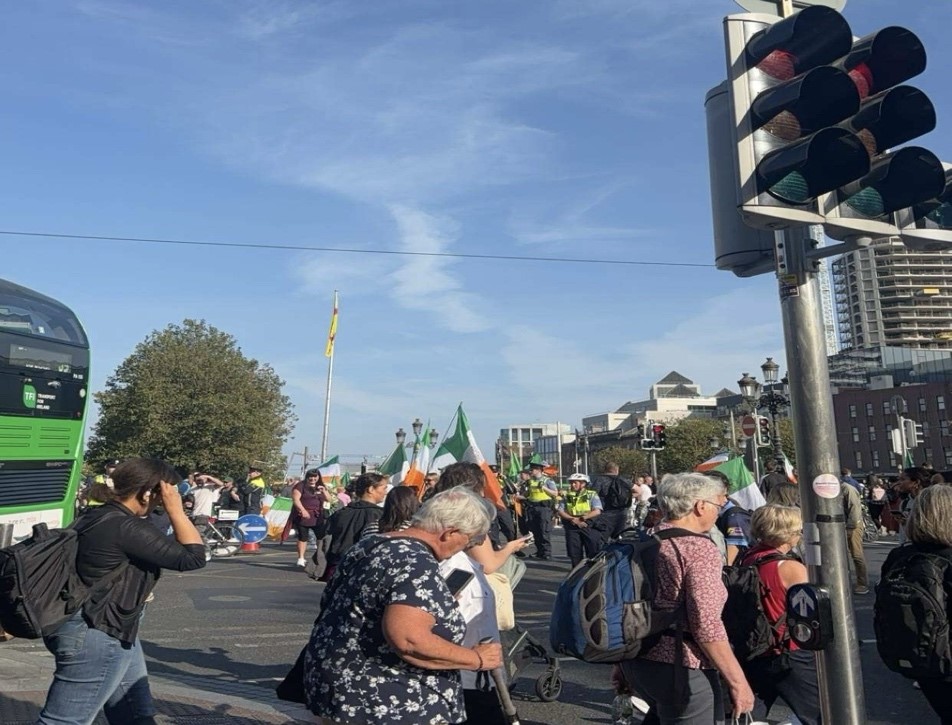
    On Thursday September 19th , Dublin witnessed a sharp division as anti-immigration protests were met with vocal opposition from counter protesters, displaying deepening divisions over the country’s immigration policies. 

                      Source: TheBurkeanIE on X 

    The protest resulted in considerable disturbance for the public and multiple arrests. Groups against Ireland’s immigration laws organised the march, which began in front of the General Post Office (GPO) on O’Connell Street. 

    Protesters expressed their disproval of the country’s immigration and asylum seekers laws. During the demonstration chants like “Get them out” and “Irish Lives Matter” could be heard. 

    Lorraine Vallessca, originally from the Philippines, who has lived in Ireland for nearly 16 years, described how she felt walking past the protest. 

    “I was on my way to work when I first saw the protest – as an immigrant myself who’s lived here basically my whole life, for the first time I felt scared”, she said 

    Irish flags and banners with anti- immigrant messages were held by the protesters and upon arriving at Leinster house, the marchers retreated to O’Connell bridge where they staged a sit-down protest that blocked important roadways.  This led to significant delays in Dublin City Centre, stopping the Luas and other public transportation systems causing extensive disruption. 

    “Close the borders” and “foreigners” were just some chants screamed at passerby’s during the march. 

    “Hearing the chants and anger in their voices was uncomfortable when I finally got to work, I thought I’d feel relieved, but I was anxious my whole shift” explained Lorraine. 

           Source: Aine McKeon 

    The Gardaí dispatched public order units in reaction to the crowds’ unwillingness to disperse on top of the increasing tensions.  

    Nineteen people were taken into custody for defying Gardaí instructions and causing disruption to the public. Investigations into the event are still ongoing. No injuries were recorded. 

    A short distance away, at the bottom of Grafton Street, a small anti- racism organistaion staged a counter protest, chanting “refugees are welcome here”. Gardaí were stationed to prevent clashes between the two groups. 

    The protests have generated a lot of discord. Numerous civil rights and community organisations have organised counter demonstrations to promote diversity and inclusion. The Irish Refugee Council and MAS (Movement of Asylum Seekers in Ireland) have denounced the anti-immigration discourse whilst highlighting Ireland’s longstanding status as a haven for refugees. 

    This protest follows a rising trend of far-right and anti-immigration protests in Ireland in recent years. 

    One of the onlookers of the protests who asked to remain anonymous said, “it is upsetting to see this happening in our country – Dublin hasn’t felt like a safe place in a very long time, it’s just not the same.” 

    The individual who claimed to have lived in Dublin for over 20 years, emphasised that the protest’s driving force was dissatisfaction with the way the immigration system is being run, not hatred. 

    Anti- immigration protests have been more frequent over the past year, which is reflective of the growing dissatisfaction among a minority of people with how the government is managing immigration and asylum policies. The highly publicised demonstrations have sparked a national conversation on Irelands Immigration laws, ranging from nonviolent marches to more aggressive riots. 

    Source: TheBurkeanIE on X             


    Over the past year, there has been a noticeable increase in the number of refugees and asylum seekers in Dublin’s inner-city areas, such as Ballymun, East Wall and Finglas. Anti-immigration sentiments have been concentrated in certain places, where locals have expressed discontent about the increasing demand for healthcare and housing provided by the influx of people. 

    Tensions in Ballymun escalated due to demonstrations at a shelter for asylum seekers, citing rising homelessness and stretched public resources. Nonviolent protests included vandalism and police clashes. 

    On November 23rd, 2023, after a stabbing attack that left three children and one adult injured, rioting broke out in Dublin. Rumors of the attacker’s immigration status contributed to the incidents anti-immigration riot. A few hundred people gathered in the throng, who at first expressed protest but soon turned aggressive. Buses, Gardaí vehicles and businesses vandalised and set on fire by rioters, Dublin’s city Centre was also looted, resulting in extensive damage.  

    While Ireland adjusts to the reality of its shifting demographic despite the polarising nature of the protests. The government has previously discussed enhancing efforts and discuss concerns between immigrant communities and Irish citizens. 

  • Dundalk Saved by Consortium with John Temple at the Forefront  

    Dundalk Saved by Consortium with John Temple at the Forefront  

    Via Dundalk Instagram  

    One of Ireland’s most successful clubs found themselves a couple of hours away from potential liquidation. 

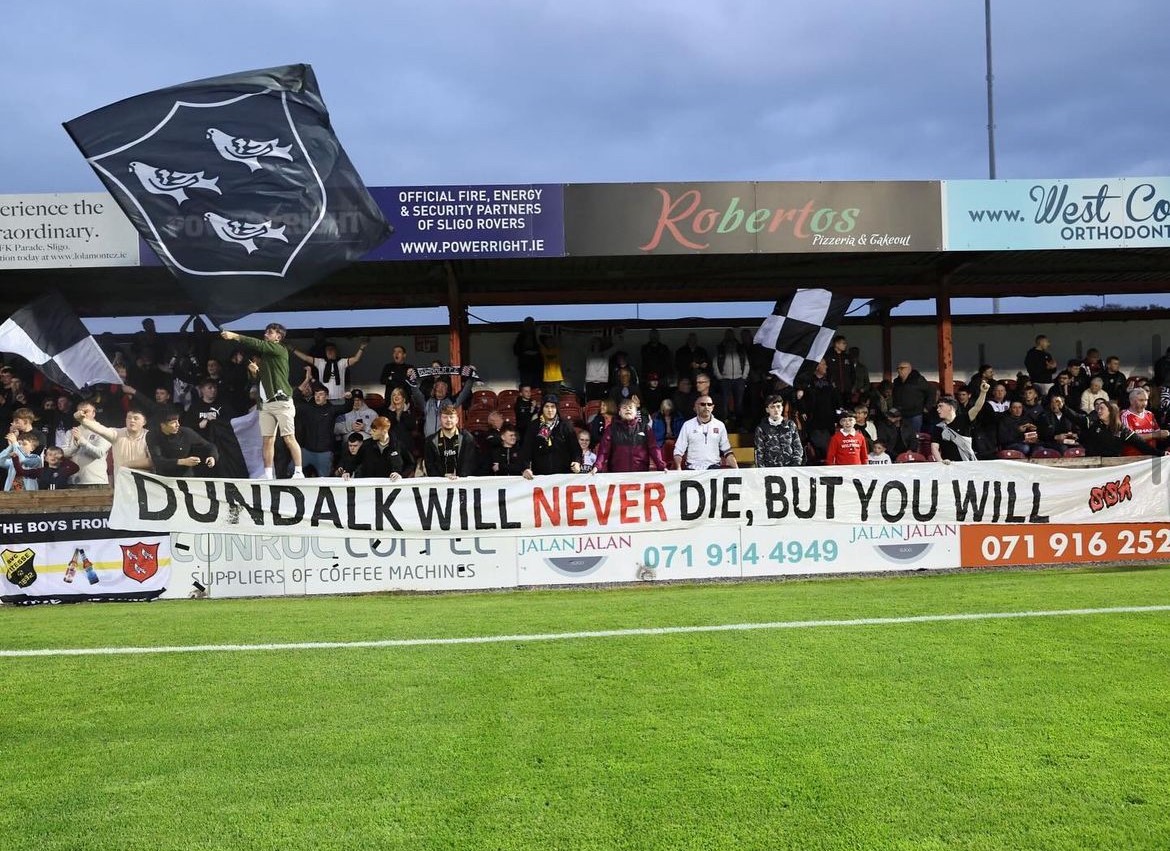
    The club has struggled this season on the pitch as manager, Jon Daly’s side find themselves at the bottom of the league, as relegation to the first division looms over the club for next season. With six games remaining having suffered a 2-1 loss on the weekend to Sligo Rovers the club needs a big turnaround to try and stay up for another season in the premier division.  

    The last few years finances at Dundalk,show that out of the last six years at the club there has been only one season (2020) in which the club made a marginable profit of just €108,386. Over the course of these years, the club has lost a total of €4.9 million.  

    Statistics via James Rogers on X 

    In terms of player wages there has been a significant increase after losing some key players like Patrick Hoban who is the club’s all time top goal scorer in history, along with some key players who contributed to the success of the club such as Daniel Kelly, John Martin and Greg Sloggett. Even with these players departing, the wage bill still went up a staggering €100,000 between 2022 to 2023.  

    The club confirmed over the past week that they had been taken over by a consortium led by Dundalk native John Temple, after he bought an 80% purchase of the club from Brian Ainscough who only acquired the club in December of 2023. 

    A statement from the club after the takeover was announced read that they have agreed to underwrite the players current wages until the end of the season and will examine the viability of the club and its facilities going forward. (“TAKEOVER AGREED WITH JOHN TEMPLE – Dundalk Football Club) 

    Dundalk aren’t the first club to struggle financially in Ireland as in recent years, every club has struggled, including Shamrock Rovers, St. Patricks Athletic, and Bohemians.  

    Local league of Ireland fan, Shannon Lester, said; “I personally don’t think the league gets enough from the likes of the government. Other sports in the country even get more air time, which I don’t think is right. 

    “I don’t think there is enough backing from the FAI, I think they’re a shambles and to be honest I feel like they only get involved when things are already too far gone,” Lester said.  


    “It was sad to see with what had gone on with Dundalk, but I do think that something should be done as if it was the likes of Rovers or Bohs and there would be more fuss over the situation,” she said. 

    She continued, “I think the last few years the clubs have gotten way more fans through the gates, and you can see it every week in the stadiums. I just feel that without the support of the FAI or even the media coverage, you will see these teams like UCD or Drogheda who don’t have a massive stadium so they wouldn’t get as many home fans as the bigger clubs in this country and won’t take in as much money due to this.” 

  • ‘It’s a disgrace at present’ – Dublin Councillor Welcomes Controversial Redevelopment Plan 

    ‘It’s a disgrace at present’ – Dublin Councillor Welcomes Controversial Redevelopment Plan 

    By Liam Murphy 

    Dublin Councillor Nial Ring has welcomed An Bord Pleanála’s decision to approve Hammerson’s controversial redevelopment plan, calling Moore Street’s current state a disgrace.

    This comes days after An Bord Pleanála’s approval of a highly debated plan that will see a €500 million redevelopment undertaken between Moore Street and O’Connell Street. 

    The UK property group first made applications for this redevelopment in summer 2021, with approval following just seven months later in January.

    However, appeals were made to the board and Dublin City Council by a number of Moore Street preservationists, campaign groups, and businesses, which caused for more than two and a half years’ worth of delays.

    “I see huge benefits of this project for the local area,” said Councillor Ring, who, along with being a member on the Moore Street Advisory Group, represents the North Inner City electoral area.

    “Not only in preserving the history and heritage of the street, but also in bringing Moore Street back to life. It is a disgrace at present.”

    The plans, made up of three applications, include the demolition of several buildings, the construction of a nine-storey hotel, the development of a public gallery and café, and the development of a public square – plans which are allowing Hammerson up to 12 years construction on site. 

    A generated image of Moore Street post-Hammerson development – Photo: Dublin Central / Hammerson 

    The An Bord Pleanála decision and announcement coincides with the 10-year anniversary of campaign group ‘Save Moore Street from Demolition’, who have gone on to receive over 380,000 signatures opposing Hammerson’s plans.

    The group started in September 2014, when members Bróna Uí Loing, Vivenne Kelly, Diarmuid Breatnach and Mel Mac Giobúin met to begin a weekly presence on the street with a campaign table, leaflets, and petition sheets.

    “Moore Street is of huge importance, not just to Dublin, or Ireland, but to the world,” Breathnach told The City. “We have been here over 500 Saturdays. We talk to people, we take photographs, we hear stories – sometimes stories from people coming up with their parents when they were children, others tell us of them coming up to Croke Park for matches and coming home with bangers.

    “People have different views as to what we can do with the street,” he said. “Some of us think there should be small shops and stalls here, no chain stores. Any restoration work done should be done piece by piece so that there’s not a huge disruption to the street”.

    “The Hammerson plan envisages destruction of some buildings, a high-end shopping area, a street cut through the terrace and up to 12 years of building,” Breatnach said. “That would just kill any street market here.” 

    Diarmuid Breatnach, co-founder of the ‘Save Moore Street from Demolition’ campaign group – Photo: Liam Murphy 

    The National Monument buildings of 14-17 Moore Street are currently earmarked for a 1916 Rising Commemorative Centre with an estimated cost of €16.25 million.

    The building was originally due to open in 2016 to mark the centenary, before being pushed back to 2023.

    Work, however, has not yet started.

    “The National Monument site has approval for funding, and it is imperative that this be worked on immediately,” Councillor Ring said. “Now that this [An Bord Pleanála’s] decision is out, I think it will give everyone time to reflect and, in memory of the men of women of 1916, make sure that the work starts immediately.”

    “I have an interest in the project, not only as a local councillor, but my grandfather and his four brothers were in the GPO garrison,” Ring said. “It really distresses and depresses me to walk down the street and look at the national monument site, in particular, knowing that some people with their own agenda have managed to delay work on that site for many years.” 

    One of the many stalls on Moore Street – a street currently under threat of demolition – Photo: Liam Murphy

    Hammerson’s plan outlines potential for up to 2,500 jobs after the development, but those currently trading on the street aren’t as optimistic. 

    “The plan means losing my job,” Andrea, a jeweler who has been trading on the street for two years said. “While there may be jobs after the building, it will destroy our jobs during that time. I’m only new here, but there are people here whose family have traded for 100 years. No one will want to come to a market if there’s construction being done nearby.” 

    “Other than what it means to me losing my job, my trade, and my community, it’s also what it means for the people of Dublin,” she said. “Those people care about this street. This street’s history is retail.” 

    “I lived in Spain for quite a while and saw a lot of markets,” she said. “But I have never seen something like Moore Street. Here we have a street full of its background, culture, and history, but also a marketplace. There’s a lot of potential in this street and I don’t think it’s being used.” 

    “In what world does someone think it’s a good idea to erase all this history to put more shopping centres and hotels.” 

  • Studies Find That Media Framing Can Contribute to Online Harassment for Female Politicians 

    Studies Find That Media Framing Can Contribute to Online Harassment for Female Politicians 

    By Jessica Lee 

    In the digital age, politicians and the public have never been more accessible to one another. While social media can make it easier for politicians to reach potential voters, platforms such as ‘X’ and ‘Facebook’ have become breeding grounds for trolling and online harassment.  

    A report by UCD found that 73% of the Oireachtas members are experiencing abuse on social media regularly. 

    While politicians of every gender identity and background receive hate online, female politicians in particular are targeted the most by sexist and derogatory harassment.  

    It has been argued by academics such as Daphne Joanna Van der Pas and Loes Aaldering that the difference in the way male and female politicians are framed in the media is a contributing factor for the harassment women are subjected to online. 

    Research conducted by Utah State University found that media coverage of female politicians is primarily “focused on their background, family life and personality. Media tended to emphasise women candidates’ lack of viability, focusing more attention on the “horse race” or outcome-predicting aspects of their campaigns.”  

    The study also found that of the articles sampled, 13.6% of them contained reference to female candidates’ physical appearance – such as clothing, age, makeup and weight.  

    Source: Utah Women and Leadership Project  

    A 2019 study by Amanda Haraldsson and Lena Wängnerud notes that, “The media agenda follows male candidates’ political agendas more than female candidates and is more likely to question the chances women have of winning. Media frames, including trivialisation framing, and type of media attention – tabloid outlets for women and broadsheets for men – contributed to the media bias against female candidates.” 

    On the type of online abuse female politicians receive, Social Democrat councillor for Leixlip, Nuala Killeen said that “women are targeted about their looks and their age, it generally has nothing to do with our politics and more to do with misogyny.”  

    When it comes to male politicians, Councillor Killeen states that “they [men] are criticised for their politics and policies, not their appearance.” 

    Although she is “thick skinned” and rarely fazed by cruel comments, Killeen notes that negative media coverage as well as the personal nature of online harassment experienced by female politicians has led to women feeling discouraged about getting into politics or rerunning for election. “Women who are confident in their political experience and knowledge, who feel they can make a difference in their communities have seen the abuse other women have been subjected to and second guess if they really want to ensure the same thing.” 

    People Before Profit Councillor for Ballyfermot-Drimnagh, Hazel de Nortúin, has said that the rise in online misinformation and harassment will “make it very difficult for us to find female candidates willing to run in the future, particularly women of colour and from different backgrounds.”  

    De Nortúin added that councillors are “lacking resources when it comes to tackling online abuse” and are often subjected to “harassment about governmental issues which are out of our hand. People are angry at the government, which I understand, but we [councillors] in local politics have no say in what goes on in Leinster House… they are letting their frustration out on us.” 

    The type of political violence faced by Irish politicians based on gender. Source: Chr. Michelsen Institute 

    Research conducted by the Chr. Michelsen Institute found that female politicians are more prone to being subject to degrading talk and false rumours; in fact, they are 2.3 times more likely to experience this than men. Additionally, the false rumours that female politicians face are more likely to be of a sexual nature.  

    While male and female politicians across the political landscape experience trolling and abuse online, there has been a rise in incidents of verbal and physical face-to-face harassment taking place in Ireland. 

    Independent councillor for Fingal, Tania Doyle and her husband, were the victims of a violent attack by a member of the far right whilst out canvassing in their constituency. Doyle was punched in the head whilst trying to shield her husband, who was beaten to the ground and left bloodied and bruised after being kicked repeatedly. 

    Since the incident, Councillor Doyle has stated that she doesn’t know if she will stay in politics after the attack and has been questioning her decision to run.  

    With the increase in online and public abuse faced by politicians, a taskforce chaired by the former Garda Commissioner Nóirín O’Sullivan on safe participation in political life has been established to make recommendations about changes that can be made to ensure the safety of politicians, with a particular focus on protecting female politicians.  

    These recommendations include personalised security training and advice, and an opt-in social media monitoring service for political figures. Additionally, the taskforce also recommends that election candidates should not have to publish their home address due to safety concerns. 

  • A homeless man has been reduced to living in a tent in the town of Nenagh for the past two years 

    A homeless man has been reduced to living in a tent in the town of Nenagh for the past two years 

    By Jason Quigley  

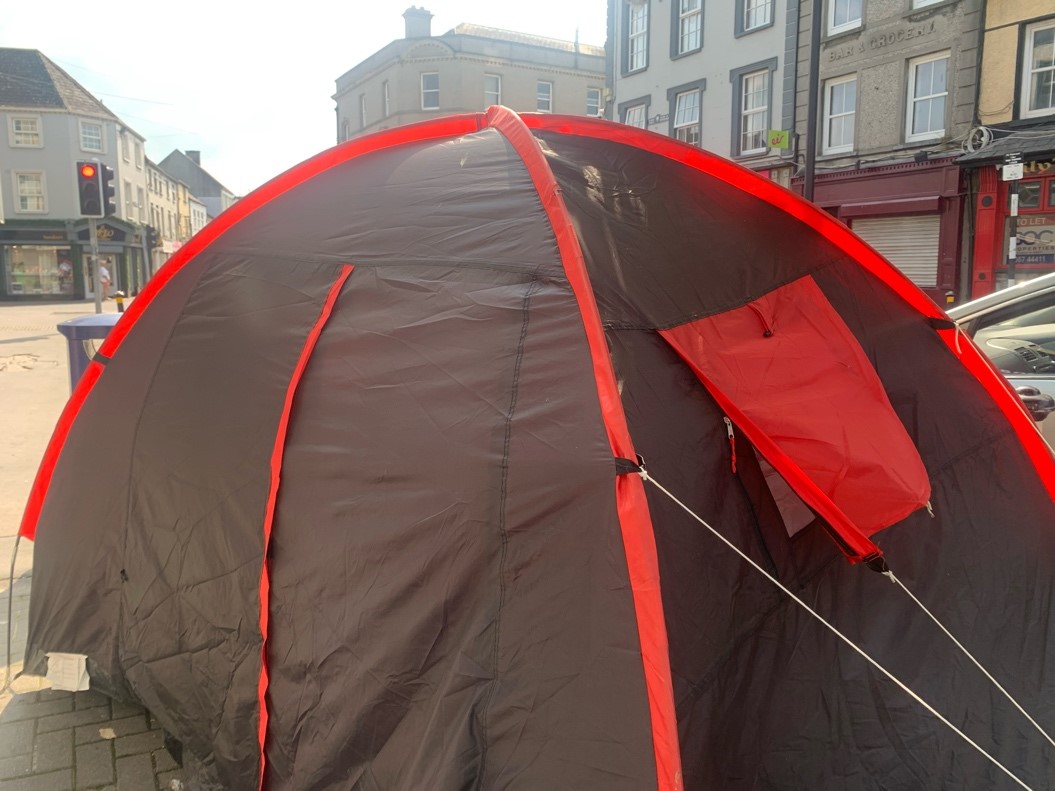
    The plight of homelessness has been brought glaringly home to the people of Nenagh with a destitute man living in a tent on the town’s main street for two years. 

    The man’s tent located on Pearse Street Nenagh. 

    Photo: Jason Quigley 

    The man, in his early 50’s, who agreed to speak under the condition of anonymity, said that he has no hope left and will eventually end up dying on the street. 

    The man, originally from Ballinasloe in Co Galway, became homeless over ten years ago and arrived in Nenagh in 2022. He has been sleeping rough ever since, alongside his small dog, in a tent located in the town centre. 

    “I’ve been in emergency accommodation, it’s all overcrowded and I need somewhere safe,” he said. 

    “At my age, I don’t want to be dumped into homeless accommodation where there could be drugs and fights – I’m not going to be associated with that behaviour.” 

    The man has claimed that Tipperary County Council told him to move the tent off the street. However, he says he’s staying put. “I’m going to get a mattress and lay outside the front door of the council building until I’m listened to.  

    “There’s a few others in the same situation like myself,” he said. 

    He stated that the town of Ballinasloe is not safe for homeless people and he feels “safer in Nenagh”. The man said, “I don’t sleep at nighttime and go to bed at five in morning when everyone is waking up and the birds start whistling. 

    “I haven’t experienced any hassle from anyone, no one really bothers me.” 

    I’ve no hope anymore, I’ve been doing this for ten years and can’t get anywhere. You give up believing when you’re in my situation, I won’t keep my hopes up,” he said. 

    Local homelessness volunteer, Maura Finn, believes more needs to be done to help this “vulnerable man” and people should not be worried about the man’s dog who is “everything to him.” 

    “They won’t allow him to enter any sort of accommodation with his dog. The dog is his only companion and protects him at night on the street,” she said.  

    Nenagh Sinn Féin representative Damian O’ Donoghue has described the alarming increase of homelessness in Co Tipperary as a “worrying and dire situation”. 

    Mr O Donoghue believes that the crisis needs to be treated as a “national emergency” and that the situation is “worse than it’s ever been”. He went on to say that the noticeable sightings of tents across Nenagh and North Tipperary was unacceptable and grim. 

    “The biggest problem with this situation over the last few months has been eviction notices from landlords,” said Mr O Donoghue. 

    “People are then put into a situation where they can’t find alternative accommodation in their area. Couples who are on relatively good incomes are struggling to find anything – this is placing many people into stressful and extremely difficult situations.” 

    Mr O Donoghue added: “I’m dealing with up to ten families now who have an eviction notice hanging over their heads, other councillors and politicians in the region are dealing with much higher numbers. 

    There’s also many people who are too afraid to come forward to seek emergency accommodation services in the county.” 

    He said that, ” we haven’t been building houses properly for the last few decades – which is a systematic failure from the government.” 

    However, Mr O Donoghue believes that Tipperary County Council aren’t receiving enough state funding from the government. “There’s a number of vacant council homes in Borrisokane and the surrounding areas which are currently being redeveloped, but there needs to be a faster approach from the council to these renovations. 

    “There’s so many derelict houses in every town in Tipperary and they all need to be urgently identified and tackled by the council. The cost of living is making it harder for couples to put down a deposit for a house, which then causes a massive domino effect on the situation. The homeless crisis in the area will unfortunately continue to degrade for another while longer. But we need houses built urgently and we need them built now,” Mr O Donoghue concluded.