Tag: news

  • Dublin referees cancel planned strike

    Dublin referees cancel planned strike

    By David Seagrave

    The Dublin branch of the Irish Soccer Referee Society (ISRS) have cancelled a formerly planned two week strike.  

    The planned strike followed incidents of assault and attempted assault on referees in Dublin. Referee assaults can carry a minimum ban of one year, however both instances resulted in suspensions of less than seven games. 

    ISRS’s Dublin branch had previously said that they would ‘withdraw their services’  at all levels of the game from 18th November – 2nd December, however they reversed the decision following talks with the Football Association of Ireland.

    (Image source- Irish Soccer Referees Society)

    Last month it emerged that 234 reports of assault had been submitted to the ISRS, spanning across 18 of their 27 branches. Of those 234 reports, eight were physical assaults. 

    The FAI released a statement following the news of the planned strike, with CEO Jonathan Hill saying, “the FAI will do whatever we have to do”. 

    “Our disciplinary regulations carry clear and serious sanctions to be enforced on anyone who abuses a match official, and we are calling on all leagues to enforce those sanctions. We cannot, and will not tolerate any abuse aimed at a referee at any level of the game,” the statement added 

    David Bergin, Vice Chairman of St Francis FC says that more needs to be done to address assaults against referees. 

    “For the referees, it’s a hard job, it’s a thankless job. Nobody ever says ‘thanks for a great performance, they always have one comment or two comments. We have tried to instill that in our club, and we feel that we’ve made real progress. But that’s not the case everywhere.

    “I believe that every club is working towards an environment that’s safe for players, coaches and especially referees. For the refs, it’s frustrating that it isn’t translating onto the pitch all the time.”

     “The FAI have done some great video work on how to treat referees on the side-line… it’s a lot more prevalent this year, I don’t know what it is. There must be a reason for people being more vocal, but nobody benefits from it,” Bergin added.

    When asked about the lack of lengthy bans for offenders, Bergin replied “I don’t think anyone, in any club, would question a lengthy ban.”

    “They get a few bob to cover their transport costs, but it’s not phenomenal money, you know? It’s a great service, the kids need to be playing and they need referees. You don’t learn [the rules] without referees.”

     Despite criticism of the bans, Bergin also noted that the leagues were run on a voluntary basis – and that clubs also have to take responsibility. 

    “We understand how difficult it is for leagues to administrate and come up with the right size ban for everyone. Everyone appeals everything. The leagues have a thankless job as well, a bit of cop on is needed from everyone; the clubs, the coaches and the players, to make sure that we aren’t forcing volunteers to have to conduct these types of meetings and to go through the processes they have in place. 

    “We should be able to talk about the football, and the performances, and how we can improve going into the next week. We shouldn’t have to talk about referees,” Bergin added.

  • Why is Racism in Ireland Underreported?

    Why is Racism in Ireland Underreported?

     By Injae Kang

    During the Covid-19 pandemic, racism came to the forefront as a serious social issue. Despite the fact that the number of racism reports is expected to decrease compared to the reports throughout the pandemic, underreporting is still a major problem with racism in Ireland.

    There were 530 reports of racial incidents in Ireland in 2019, according to annual reports of racism in Ireland, researched by the Irish Network Against Racism (INAR). The annual report indicates that the numbers have continuously risen since the beginning of 2019.

    Over 700 racial incidents were reported in total in 2020. 

    There were 334 reports concerning hate speech, a figure which has doubled since 2019. 

    Also, racial incidents accounted for 143 reports, 159 reports regarding criminal offences, and 99 reports concerning discrimination.. 

    “We’ve seen that since the outbreak of Covid-19 started, the incidents of racist harassment specifically towards the Asian community have increased,” said Gabriela Mejia, Program and Communications Manager at Hollaback – a global organisation aimed at preventing racial harassment against minorities.

    “Bias and fear were fuelling those incidents, and we all have a part in shutting down that hate,” Mejia added.

    “Especially in 2020, we’ve seen hate against Asian individuals show up in the form of harassment, and violence, but also in the form of microaggressions and harassment in the form of jokes or memes.”

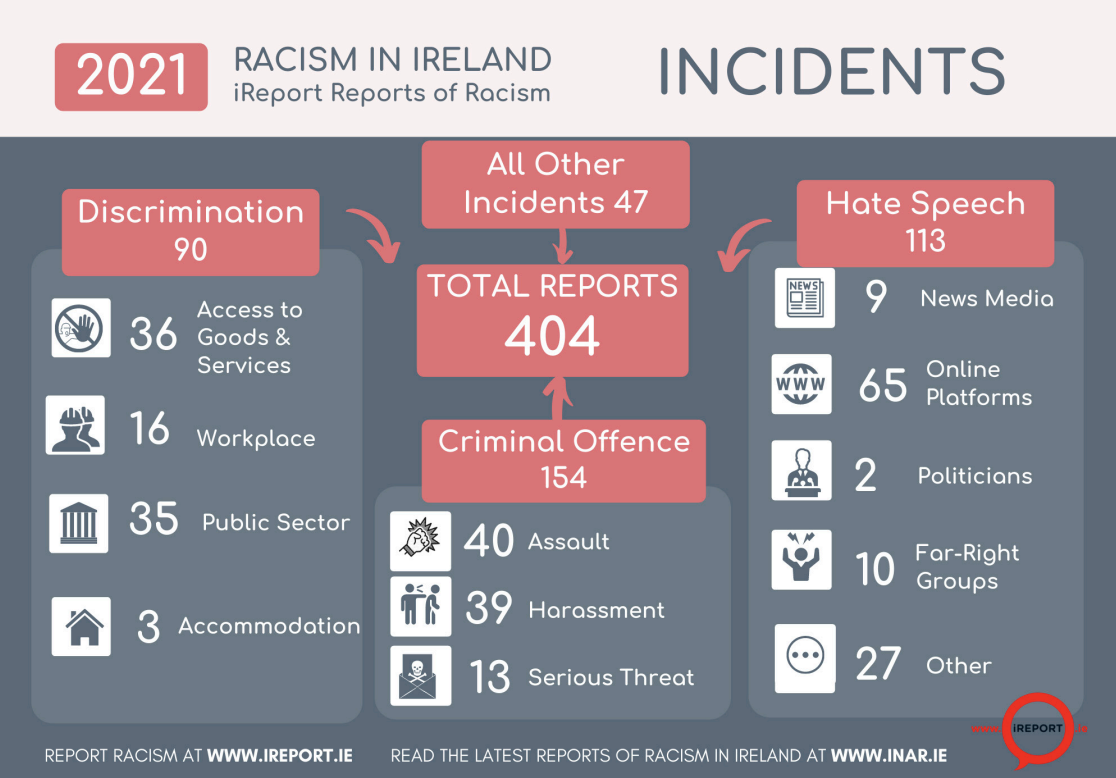
    “404 racist incidents were received in total in 2021”

    In comparison to 2019 and 2020, 2021 showed a reduction in the number of reports of racism. 404 racist incidents were documented  in 2021. Criminal offences accounted for 154 reports (including 40 assaults, 39 harassment, 13 serious threats). 113 reports regarding hate speech, 90 reports concerning discrimination, and 74 reports regarding all other incidents.

    A picture containing diagram

Description automatically generated

    Sourced by the Irish Network Against Racism (INAR).

    The annual report shows that Asian groups (including Chinese, South Asian and others) are most likely to be targeted for racially motivated crimes, with 64% of racist crimes being reported in 2021. In addition, the largest group of discrimination reports came from people of Black African, Black-Irish or Black-Other backgrounds at 24%.

    There were also likely many unreported racist incidents. 

    Fiona Hurley, policy and communications manager at the Nasc Migrant and Refugee Right Centre said that  “the numbers are still under-reported, and the rate is likely to be much higher than recorded.”

    “Our [NASC] own experience of working with people who have experienced a racist incident is that they often think that reporting it to the Gardai will be futile,” she said.

    The Irish Council for International Students released a report last year based on a survey of 760 international students from 75 countries. A survey of the international students revealed that approximately 40% of respondents had experienced racism either as a witness or as a victim in Ireland. 

    However, only 5 percent of respondents reported the incident. Similar findings were found in a survey carried out by iReport.ie. Only 25 percent of those reporting crimes to iReport.ie in 2021 reported the incidents to An Garda Síochána or to the Garda Síochána Ombudsman Commission (GSOC). 

    Although An Gardaí Síochána encourages reporting of crimes among minority groups, launching its online hate crime reporting facility, the figure is down from 43 percent in 2020.

    According to a survey conducted by iReport.ie in 2020, the organisation asked those who experienced racism but did not report it to Gardaí: “If you didn’t report racism incidents to police, why was this?”. 

    The most common reason for not reporting to Gardaí was “I did not think the Gardaí would do anything”. 

    When asked why they had not reported, half of those surveyed “did not expect Gardaí to act if they reported.”

  • Diwali- The Indian New Year

    Diwali- The Indian New Year

    Diwali, (festival of lights) is a popular Hindu festival which celebrates the triumph of good over evil is celebrated in conjunction with the Hindu New Year all over the world. 

    By Nimra Ahmed 

    ‘Diwali’ or the ‘festival of lights’ is a religious festival for Hindus and ties in with the Hindu New Year. It is celebrated by Hindus, Jains and Sikhs. Diwali means ‘row of lights’ in Sanskrit. It is a five day festival between October and November depending on the moon sighting. Diwali is generally a time for visiting family and friends, exchanging gifts, wearing new clothes, feasting, feeding the poor, and setting off fireworks. Diwali represents the triumph of good over evil, light over darkness and wisdom over ignorance.

    For the Hindus, it stands for different traditions in various area. In the north of India, it symbolizes the victorious return of Prince Rama with his wife, Sita, and brother, Lakshman, from a 14-year-long exile and war. People of Ayodhya lit lamps along the way to light their path in the darkness. In the south, it is the day Lord Krishna defeated the demon king Narakasura. In western India, the festival is the day that Lord Vishnu, the Preserver (one of the main gods of the Hindu trinity) sent the demon King Bali to rule hell.

    For the Jains, Diwali is the day when the last of the Jain Tirthankaras, Lord Mahavira, reached nirvana, also known as complete knowledge and enlightenment.

    For the Sikhs, Diwali is a story of the struggle of freedom because  it celebrates Guru Hargobind’s, (the sixth guru) victory from Emperor Jahangir, who had him imprisoned and 52 other princes with him, in 1619. Guru Hargobind did not leave the prison for freedom until he was able to take the princes with him.

    Diwali- by Nimra Ahmed.

    Many consider Diwali to be a fresh start, similar to the Lunar New Year in January. Many people clean, renovate, decorate their homes and buy new clothes in preparation for the upcoming year.

    The ‘Tilak ceremony’ is where the hosts apply a red ‘Tilak’ (made of red paste) on the forehead to welcome and honour guests. 

    The colours for Diwali are: Red, Yellow Magenta, Blue . Rangoli’, which means “an array of colours” in Sanskrit. Rangoli is a tradition that dates back nearly 5,000 years to the Aryans. 

    Rangoli has different names depending on the  Indian state and culture. They are usually made outside the main entrance, in the early mornings after cleaning the area as a welcoming gesture to the Gods for good luck. Rangoli designs are bright, colourful and beautiful made using rice, flower petals or coloured sand. Rangoli is intended to welcome Lakshmi (the goddess of wealth and good luck) into their homes and lives. It represents the happiness, positivity and liveliness of a household.   

    During Annakut,  people prepare and offer a large variety of vegetarian food to Lord Krishna as a mark of gratitude. There are 56 different dishes. Annakut means ‘mountain of food’. The story behind it is that Lord Krishna saved the people from torrential rain by lifting Govardhan Hill as shelter, so the ‘mountain of food’ represents the hill and the food represents the people’s gratitude towards Lord Krishna. 

    The national Indian dress for men is Kurta (shirt) and pajama (bottoms). Kurta is a long loose shirt, which falls below or may be just above the knees. It used to be worn by men but now it is a uni -sex dress. For the women it is the sari. There are many other traditional dresses depending on which area of India you belong to. The word ‘sari’ comes from a Sanskrit word meaning ‘strip of cloth’.  

  • Irish Sewage Plants Behind EU Standards

    Irish Sewage Plants Behind EU Standards

    By David Little

    According to a report released by the Environmental Protection Agency (EPA), half of Ireland’s wastewater is not being treated to EU standards.

    Source- Environmental Protection Agency.

    The report states that EU countries have an average sewage treatment compliance rate of 90%.

    Areas in Dublin such as Malahide and Ringsend have not reached all treatment standards set by the EU’s ‘Urban Wastewater Treatment Directive’ in 2021. The Ringsend plant has previously pumped untreated sewage into Dublin Bay during heavy rainfall, when the sewage treatment plant is overloaded.

    Meanwhile the report stated Howth pumps raw sewage directly into rivers, due to the area’s public sewer system not being connected to treatment plants.

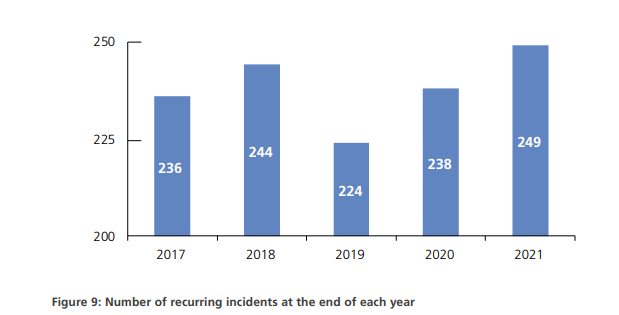
    Number of incidents leading to environmental damage across Ireland. Source: EPA Urban Wastewater Report

    The EPA has stated in the report that a “multibillion-euro investment” by Irish Water is necessary to bring the plants up to EU standards, which have not been met since 2005. 

    Speaking on the matter, Green Party MEP Grace O’Sullivan challenged Irish Water work quickly to meet EU standards. “While Irish Water have said they are playing catch-up  since their setting up in 2014, I don’t believe it is acceptable that we are missing targets from 2005.

    “Work on adamant treatment of our urban wastewater must be fast tracked as soon as possible”.

    Irish Water has previously rejected calls to treat sewage with UV light all year round, citing the lack of “any material improvement” when applied. See the tweet here.

  • Fixing or Worsening the Student Housing Crisis?

    Fixing or Worsening the Student Housing Crisis?

    By Injae Kang 

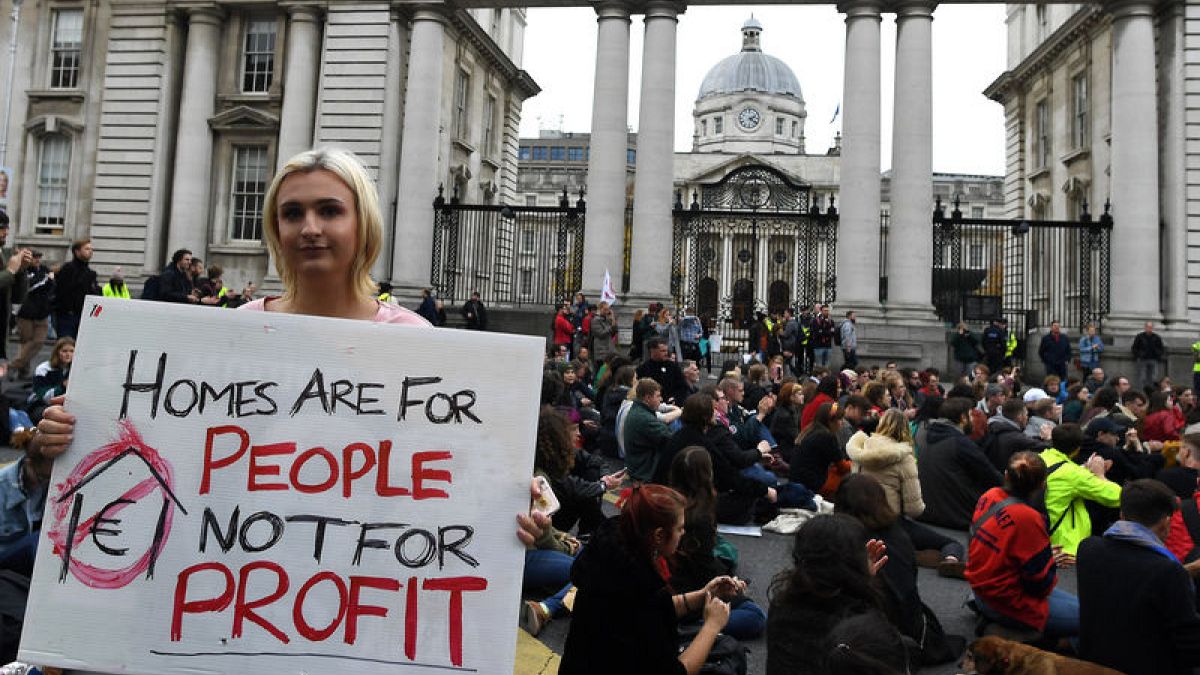
    People block traffic by staging a sit down protest at Ireland’s housing crisis in a ‘Raise the Roof’ rally outside the Taoiseach’s office at Government buildings in Dublin, Ireland, October 3, 2018. REUTERS/Clodagh Kilcoyne

    Finding an affordable room or accommodation in Dublin is an additional challenge for students living away from home. Third-level students in Dublin are facing difficulties with finding accommodation as excessive demand for living in Dublin City has led to a price spike.

    In response to the shortage of student housing, the Irish government launched the National Student Accommodation Strategy (NSAS) in July 2017 which is designed to deliver Purpose-Built Student Accommodation (PBSA). It is expected to reduce the demand for accommodation in the private rental sector by both domestic and international students. The government’s strategy aims to provide a supply of 28,806 bed spaces in the Dublin area and a total national supply of 54,654 bed spaces by 2024.

    PBSA Bed Space Projection

    Chart, line chart

Description automatically generated

    Source by the Department of Education and Skills and the Department of Housing

    Despite the government’s optimistic expectation of PBSAs being available to students in Ireland that would alleviate pressure on the private rental market, it has been criticised over both a lack of supply of PBSAs and the outrageous price.

    While the NSAS aimed to deliver 25,346 PBSA bed spaces to the Dublin area in 2021, the rate of delivery of bed spaces is tapering off. The Covid-19 pandemic created unexpected variables that caused third-level institutions and university campuses to remain closed and resulted in low occupancy rates in PBSAs in the 2020/21 academic year.  

    1,450 PBSA beds were delivered to the Dublin area in 2020 and 1,350 new beds have been delivered as of 2021, bringing the total number of beds to 18,900 in 2022. Furthermore, a total number of 19,300 beds are expected to be delivered by the end of 2023, according to a report from Cushman & Wakefield.

    The purpose of PBSA beds is to provide a solution to the shortage of student housing that offers some practical features, such as being located near the college and offering an affordable price. However, the PBSAs operate under private ownership, instead of universities. This means that they normally come with an extortionate price tag since luxury social areas such as cinemas, music rooms, and bowling alleys are included in the price.

    Prices for the rooms range from €250 to €300 a week. Paying over €1,000 per month for a single room with a shared kitchen is exorbitant for students.

    Caoimhe O’Carroll, a vice president for the Dublin Region in the Union of Students in Ireland said that: “Delivering affordable and fit-for-purpose PBSA will go a long way in alleviating the student accommodation crisis. However, the NSAS was launched in 2017 and since then hasn’t made a dent in the demand for student beds in Ireland.”

    “PBSA is often beyond student price points and puts a high burden of financial pressure on students and or their parents. It is shocking that PBSA rent is not capped at an affordable cost for students.”

    “Luxury PBSA that is outside students’ price points do not meet the demand in the market. Most Dublin PBSA complexes have cinema rooms, in-house gyms etc. These in-house amenities are an unnecessary cost to developers – a cost which is invariably transferred to the pockets of students and reflected in exorbitant rent.”

    In contrast with the realistic prices of student housing, some colleges in Dublin provide an ideal cost of living guideline for 2022/2023 to assist students in budgeting for college. According to the guidelines, monthly rent costs in the private rental market are €750  at Trinity College Dublin, €636 at Technological University Dublin, and €670 at Dublin City University. The average monthly rent cost for students living away from home is €685. 

    Trinity College Dublin says the monthly rental cost in the private rental market is up to €750. However, Vera Yakupova (21) a student at Trinity College Dublin says that the price suggested by TCD is only for a limited number of students. “This might be true only for people who either live at Trinity Hall (On-Campus accommodation) or in a private shared living space. But most students that I know pay more than €600, sometimes even double that.”

    “I searched for a room on Daft.ie for several months and was unable to find an affordable room. So I applied to Trinity Hall and got rejected. They said that there was only a very limited number of rooms available.”

    “Also, once my friends from college were rejected, they moved several times until they found a place to live that they like and find affordable.”

    A picture containing chart

Description automatically generated

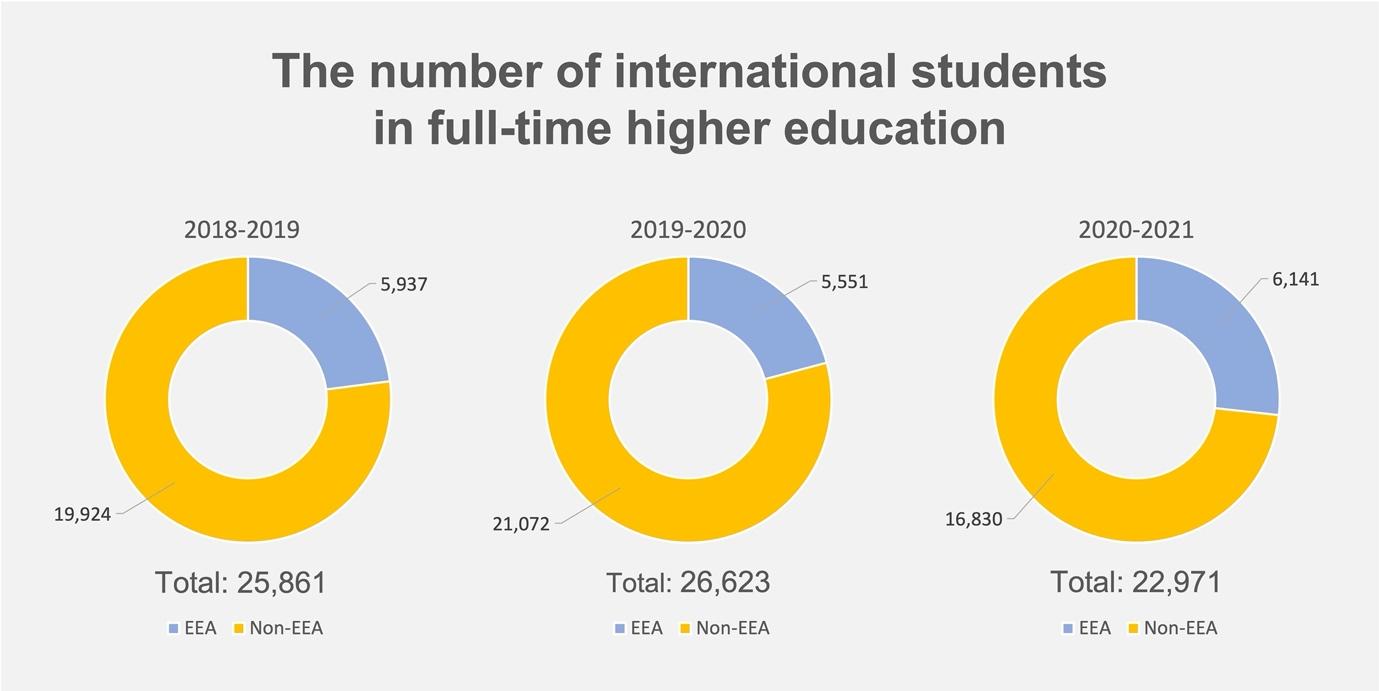
    The number of international students in full-time Higher Education

    Source by Higher Education Authority

    Furthermore, it has also been criticised that there aren’t enough PBSAs in Dublin, despite the extortionate price of PBSA beds. The supply of PBSA beds does not meet the demand for student housing, as the number of international students has been increasing (except for the academic year 2020/2021) and international students are more likely to find private accommodation rather than rent in the private rental sector because of Covid-19.

    The number of international students in full-time higher education in Ireland has risen from 25,861 in 2018/19 to 26,623 in 2019/20, which is the biggest number over 7 years.

    The number of international students in Ireland in 2020/21 decreased by 13.7% compared to the previous academic year following the pandemic.

    Due to the return of on-campus learning and the large portion of international students settling in Dublin for college, the shortages of PBSAs are expected to increase. As a result, some students in Dublin had to stay in hotels or hostels while they waited for their accommodation.

  • Where are they? – 900 long-term missing persons in Ireland

    Where are they? – 900 long-term missing persons in Ireland

    Image source: An Gardaí Síochána.

    There are more than 900 long-term missing persons cases in this country. The public only hears of roughly 300 cases while nearly 9000 are reported every year.

    By: Nimra Ahmed 

    In the past, missing people were often reported in newspapers but today social media has made its way into each and every home as a helpful tool. A loved one may be missing, some are found alive while others might be found too late.

    This is today’s scary reality. However, many investigations can remain open for years, leaving families in limbo hoping for the best, but fearing the worst. For these families going through the toughest time of their lives, not knowing if their loved ones are being exploited or abused, is a living hell!

    According to the National Missing Persons Helpline, the public only hears of approximately 300 missing persons each year but there are far more undocumented cases. This service collects figures on the number of missing person cases made public through Garda appeals.

    Figures released for 2022 by An Garda Síochána report 3257 – 7752 missing persons. Moreover, thirty-five people are still missing and have not yet been found. Between 9,300 and 9,600 reports for missing persons have been made since 2017 till date. Reports of children and teenagers disappearing tend to account for about three-quarters of these. 

    Tulsa (the Child and Family Agency in Ireland) is an organization that cares for immigrant children. They are responsible for placing children in foster care. From 2017 to date, 54 unaccompanied children – children who arrive in Ireland without an adult looking after them – have gone missing while under Tusla’s care. According to the agency’s figures, only eighteen of those kids were found or were accounted for.  

    As of 11 February 2022, 813 missing person cases remain open in Ireland, down from the 890 cases that were unresolved in December 2019. The longest-running case dates back to 1951. 

    “Unfortunately, there is no such profile for missing people. They can come from all parts of society,” – Garda spokesperson

    One such example of an adult gone missing is Anthony Kennedy (AK), 69, a teacher.https://www.hotpress.com/music/appeal-made-to-find-missing-dublin-musician-anthony-ak-kennedy-22894025

    He was reported missing when one of his friends who Anthony was in constant contact with, couldn’t get in touch with him and informed his family. Anthony went missing from his home in Whitefriar Street, Dublin 8 on 21st February 2022. Unfortunately, on 3rd March 2022, his body was recovered from the Grand Canal, Portobello Harbour, Dublin after ten days. 

    “Since AK was an older, mature adult the Gardaí did not seem overly concerned initially, however, they issued a missing person alert when days went by,” said AK’s friend, Catherine Ann Cullen, an award-winning poet. One can report a missing person and file a report with the Gardaí as soon as the person goes missing.

    Social media has become a useful source that helps in quickly spreading awareness of a missing person. It helps in tracing the person’s whereabouts. In this case, Cullen organized the social media search. She used Twitter, Facebook and WhatsApp to inform people of AK’s absence and asked for help in locating him. 

    In this age of misinformation, “his close friends were clear on when and where they had seen him last, but two possible sightings of him that were on social media, one by a former neighbour and one by a friend of a friend, turned out to be inaccurate if the Garda’s timing of his death is correct,” said Cullen.

    “People responded immediately to express their concern on social media, but the first possible sighting report came three or four days after the first post,” added Cullen.

    “Social media is a good way of spreading the news and photographs. The people who shared or made contact on social media were not anonymous, they were using their names. However, you can be anonymous, if you want, when calling a Garda helpline,” Cullen said.

    Do the Garda have a common profile for people who go missing in Ireland? “Unfortunately, there is no such profile for missing people. They can come from all parts of society and even foreign nationals who are reported missing in Ireland can show up just about anywhere all over the world,” said a Garda spokesperson.

    Scientific breakthroughs in DNA tracking and the formation of the National Missing Persons database in 2015, which is managed by Forensic Science Ireland, have played a vital role in solving many long-running missing person cases recently. 

    The ‘National Missing Persons Day’ in Ireland is an annual day of commemoration and takes place on the first Wednesday in December each year. It complements the existing ‘International Missing Children’s Day’ commemorated on 25 May. 

    Such days commemorate those who are missing and recognise the trauma of their families and friends. They also highlight open or unsolved missing persons cases, and provide information on available support services.

    The national Missing Persons Helpline can be reached on 1800- 442 -552 or through this website.

  • “It’s essentially a pay cut for us”- Liffey Valley staff continue protests against parking fees

    “It’s essentially a pay cut for us”- Liffey Valley staff continue protests against parking fees


    ‘No staff no centre’: Liffey Valley workers protesting in October. 

    BY CONOR KENNY 

    The staff of Liffey Valley shopping centre are into their second month of protesting against the introduction of car park charges for retail workers.  

    Introduced in mid-October, the staff car park charges were initially set at €2.50 for the first hour, with the next 2 for free, any hour after is charged at a rate of €2.50 per hour.  

    While this has been changed to a reduced rate of just €2.50 per day, the insufficient number of car park spaces in the staff car park, which is accessible for customers, means that staff who travel to work by car must park in the customer car park, which could potentially cost staff up to €15 per day. 

    “A full-time employee could pay up to €15 for the day, which amounts to over €3600 per year, that is if they are denied a space in the staff car park,” said the chairperson of the protest group.  

    “Retail workers are already some of the lowest paid workforces in the country, this extra charge is essentially a pay cut for all of us in the centre. 

    “The designated staff car park is behind Penney’s. Staff working at the other end of the centre must travel some distance to their workplace, often having to pass through loading bays and poorly lit walkways, which is making staff feel incredibly vulnerable. 

    “Staff at the centre were forced to sign the terms and conditions for the car park under duress, as if we failed to register by a specified date, we would be charged customer rates. It was only after signing this that we realised how outlandish some of the terms of use of the car park are,” said the chairperson.

     Mandate Trade Union standing in solidarity with Liffey Valley workers 

    Staff at the shopping centre have been protesting the charges since 16 October, resulting in reduced footfall for businesses in the centre.

    “The recent implementation of charges sees customers taking their business elsewhere if the footfall continues to drop there will be no people in the centre to shop at this new development, therefore, there could be a potential loss of livelihoods for many of the 2,500 people currently working at the centre,” said the chairperson.  

    “We just hope that we can reach a resolution to this issue as it has been at the forefront of our minds since the charges were announced. 

    “We feel that we have been thrown aside by employers and expected to accept these charges, all we want is for those with a meaningful voice to represent us and show their solidarity by supporting us in our efforts,” said the chairperson. 

    Gino Kenny, People Before Profit T.D.says that despite the issue being raised in the Dáil, a “desired outcome” has still not been agreed upon for workers. 

    “We stand with the workers because we can’t accept a third-party pay cut for workers,” said Gino.  

    “The staff have been supported by the Mandate Trade Union, who have tried to contact Liffey Valley management because they represent over 1000 workers in the centre, with nothing to show for it. 

    “Hines, the third-party company who is issuing the car park fees and owns Liffey Valley, has a portfolio that runs into billions and doesn’t care about the workers that work there. 

    “Staff need cars to get to work, and although there are other ways to get to work, they aren’t efficient enough for these workers that may have to start early in the morning or finish late at night. 

    “Do these big companies care about people who make the profits? No, they don’t,” said Gino.

    Liffey Valley staff urge the public to join their weekly protests.

  • Number of new electric vehicles up 81% from last year.

    Number of new electric vehicles up 81% from last year.

    By David Seagrave

    The number of vehicles registered in Ireland for the first time has decreased from the same period last year, new figures from the Central Statistics Office show.

    Conversely, the number of cars using electric-based engines has gone up, with Plug-in Hybrid Electric Vehicles (PHEV) the only type of electric-based vehicle to be registered less than last year. 

    Electric vehicles and hybrids both saw an increase in the number of registrations, with petrol and diesel both showing a decrease in new registrations. 

    The number of used petrol vehicles has reduced by less than 2%, while new diesel vehicles have reduced by 59%. The drop in diesel vehicles could also be attributed to the NOx levy and the introduction of VAT from cars imported from the UK, excluding Northern Ireland.

    Diesel vehicles have also reduced due to the impact of the cost of living crisis, as diesel prices have soared to more than €2 per litre. 

    Electric vehicles and PHEVs showed a drop in used registrations, while hybrid vehicles showed an increase of 17.5%.  

    The number of new cars registered in Ireland from January – September has dropped by just 1%, while the number of second-hand cars imported has dropped by a significant 35%. 

    The most popular brand of new private cars registered was Volkswagen, accounting for 17% of all new cars on the road. Kia, Hyundai, Skoda and Tesla also make up the top five respectively, accounting for just under half of all new car sales in Ireland. 

    Lower emissions vehicles make up the bulk of new cars registered in Ireland, with 82,929 of all cars falling into emission bands A1 – B2, meaning they have less than 140 grams of carbon per kilometre (g/km).

    Goods vehicles have also seen a decrease of 20% in new registrations, and another 29% in used registrations, following protests last December, and a second round of protests in April over spiralling fuel prices.

    Band G, which is anything above 226g/km, only registered 108 new cars, with 105 of those coming from petrol and diesel engines.

  • Dublin City lights up for Christmas

    Dublin City lights up for Christmas

    Samuel Beckett Bridge, photo credit: Conor McCabe

    By Jane Byrne, Shay Galon and Leigha O’Reilly Hughes

    After a long year and the beginning of a cold winter, Dublin lights up to get everyone in the Christmas mood. 

    Jane Byrne, Shay Galon and Leigha O’Reilly Hughes asks people in Dublin what they want for Christmas

    Dublin City Council returns with their very popular ‘Dublin winter lights.’ The lights were first switched on November 15 and will stay on until January 1. Twenty-one locations — up five from last year — have been transformed with colourful projections and light displays. Two locations, one on the Southside and the other on the Northside, are walking trails that bring the public across Dublin in the most Christmas-y way. A team of over 60 people work hard every year to deliver the winter lights. 

    The Lord Mayor of Dublin, Alison Gilliand, welcomed the Christmas lights back. “I’ve been a huge fan of ‘Dublin Winter Lights’ ever since it began in 2018. The contrast between the bright lights and the dark evenings makes for a stunning backdrop to the city.”

    Custom House – Photo credit: Conor McCabe

    In an effort to cut down on CO2 emissions Dublin City Council announced that no diesel generators were used this year. Instead, where main power was not accessible, they used Hydrotreated Vegetable Oil which is made from 100% renewable waste materials and results in an up to 90% reduction in CO2 emissions. Furthermore, they recycle all materials and branding from year to year and store all lighting in wooden crates instead of single use plastics. 

    A new location that was added this year and is proving very popular is the light installations at Merrion Square park. So much so that six new dates have been added allowing the light show to run every day up until December 22nd. 

    The park has been transformed into a magical winter walk with light installations, a 15m-high Christmas tree in the heart of the park projected with magical images, a virtual snowstorm and dancing penguins and polar bears. At the end, children are seen begging their parents for a nutella crèpe whilst adults can enjoy a mulled wine under the lights. Although tickets are free, due to limited numbers you are asked to book your free ticket online before attending. 

    Other locations garnering spectacular sights include, Trinity College, Grafton Street, City Hall, Millennium Bridge and the Samuel Beckett Bridge among others. 

    Btec GPO, photo credit: Conor McCabe

    New restrictions on nightclubs, the hospitality sector and vaccine requirements mean that we will be looking at a Covid Christmas for the second year in a row. However, a free walk around the Christmas lights in Dublin City is sure to lift the spirits.  In the video, we talked to the people of Dublin and gave you a look around the winter lights to get you in the Christmas mood. 

  • Brutal eviction of vacant space in Stoneybatter

    Brutal eviction of vacant space in Stoneybatter

    Reporter Jane Byrne went out on site to document the aftermath of the Stoneybatter eviction. 

    On Wednesday the 23rd of October, a private security firm, attempted to evict housing activists at 23 Prussia Street, Stonebatter. 

    The site has been occupied by housing activists since early September and is known amongst the community as Sunnyvale.

    The activist group known as ‘ThatSocialCentre’ on Instagram, announced on 10 September that they had “occupied an empty corner of Stoneybatter.” 

    They outlined the plans for the space by saying, “we hope to clean up, build infrastructure, host events and workshops, and resist any further eviction attempts.” 

    Since then, the group has hosted environmental workshops, bike fixing days and food drives. 

    On 23 October, the group called out for support at the site on social media. Footage of the private security firm violently evicting activists was quickly shared around and soon, the story had dominated Twitter and Instagram newsfeeds. 

    The McGrath Group, who owns the site, are ‘a privately owned investment and development company operating in Ireland, the U.K. and Germany’ according to their website. Randelswood Construction LTD which is an extension of the McGrath group wishes to demolish the infrastructure currently at 23 Prussia Street and replace it with 166 build-to-rent apartments. This is in accordance with a planning submission considered by An Bord Pleanána, Ireland’s national independent planning body that decides appeals on planning decisions. 

    In a statement given to The Irish Times, The McGrath Group was issued with a High Court order by Dublin City Council, instructing it to remove squatters from the site on Prussia Street. The group was legally required to keep the site vacant because of the council’s concerns about “serious fire and safety risks and the overall poor condition of the existing buildings,” it said. 

    The Guards were present at the eviction. A Garda spokesman told Dublin Live no injuries had been reported during the altercations but they will be carrying out further investigations into the incident. He continued, “Gardaí from the Bridewell attended at a property on Prussia Street Dublin this morning, 27 October 2021, where a property owner, in compliance with a court order, was securing a premises and facilitating access to persons to remove personal items.” 

    Although the group managed to resist the eviction, the area was destroyed. Currently, they are working on rebuilding the space and are calling out for help across their social media platforms. Supplies needed include food, kettles, boilers, and gardening gloves among other things.

    In the video attached, you can see the aftermath to the site. We spoke to Em, one of the activists who wishes to conceal her identity. 

    As this is an ongoing story updates can be found at thatsocialcentre on instagram

    **The McGrath group refused to comment on this matter. 

    The Guards could not be reached for comment.

    All comments in the video are those of activist Em.