Tag: news

  • Social Media platforms fails to protect its users from Covid-19 disinformation

    Social Media platforms fails to protect its users from Covid-19 disinformation

    By Leigha O’Reilly Hughes

    Photo credits: Leigha O’Reilly Hughes

    Mis- and disinformation has always been a big problem for social media, due to how easy it is to spread around. This problem has continued to grow since COVID-19 entered everybody’s world in 2020. Since then, false claims, conspiracy theories and disinformation about the virus remain online.  

    Even though Meta, formally known as Facebook, Twitter and Instagram provide a space to inform people about the virus as well as start up conversations, it also allows fake news and misinformation to spread.  

    The World Health Organisation, which is the United Nations agency that connects nations, partners and people to promote health, keep the world safe and serve the vulnerable so everyone can attain the highest level of health, have also spoken out about the spread of misinformation regarding Covid-19 on social media.  

     “As the world responds to the Covid-19 pandemic, we face the challenge of an overabundance of information related to the virus. Some of this information may be false and potentially harmful,” says the World Health Organisation. (The WHO)

     “Inaccurate information spreads widely and at speed, making it more difficult for the public to identify verified from trusted sources.” 

     More than half of Gen Z and Millennials (59.1%) are extremely aware of false news around COVID-19 and are able to recognise it frequently. However, persuading people to actively resist it, rather than letting it slip, is a difficulty, with many (35.1%) simply ignoring it, according to the WHO.

    Social media platforms are taking it upon themselves to help tackle the spread of misinformation on their sites.  

    Meta has stated that it has since removed over 20 million posts since the beginning of the pandemic and Instagram as they violated rules on Covid-19 misinformation. 

    The company implemented a direct link on any post that mentions Covid-19, vaccines or the pandemic that brings the viewer to the COVID-19 information centre. They have also stated that they are banning repeat offenders who spread the misinformation. 

    Twitter has also put in place guidelines when it comes to spreading information about Covid-19.

    “We’ve observed the emergence of persistent conspiracy theories, alarmist rhetoric unfounded in research or credible reporting, and a wide range of unsubstantiated rumours, which left uncontextualized can prevent the public from making informed decisions regarding their health, and puts individuals, families and communities at risk,” says Twitter.  

     Twitter states that they will label or remove false or misleading information about the virus and the vaccine. 

     However, finding misinformation on social media regarding Covid-19 is not difficult. It is easy to find tweets spreading misinformation that are not flagged or taken down before people can view them.  

    Below are examples of easily found tweets that spread misinformation about Covid-19 and how it can affect people.

     Newsguard, an organisation which monitors internet misinformation, identifies accounts, sites and organisations that were still spreading conspiracy theories and fake news about Covid-19 but were still online to earn thousands of new followers. 

    Newsguard also stated that even though some of these posts included labels offering links to coronavirus information, it did not state to the users whether the post was trustworthy or not.  

     This shows that even though social media platforms like Facebook, Instagram and Twitter have implemented tools to help identify when Covid-19 is talked about and state that they take action towards those posting fake news, they still contribute to the spread as false information is easily found.

  • ‘We will keep dancing’ – Uproar as government enhance night club restrictions

    ‘We will keep dancing’ – Uproar as government enhance night club restrictions

    By Leigha O Reilly Hughes 

    With the new restrictions hitting the hospitality sector once again, Leigha O’Reilly Hughes reports on the updates and how the nightclubs adopted new guidelines to keep their doors open.

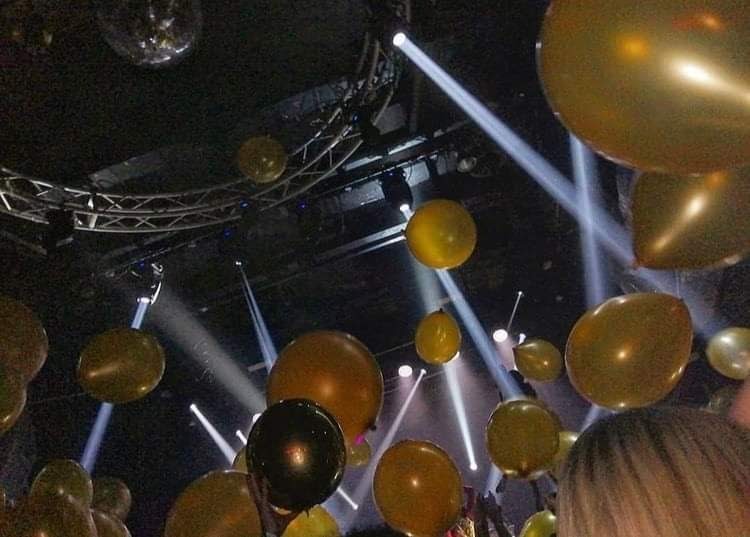
    Ceiling of a nightclub only recently opened back up – image by Leigha O’Reilly Hughes

    The government has announced new closing times for nightclubs, pubs and restaurants. From Thursday the 18th of November, they must close at midnight. This is due to the high number of COVID cases the country is experiencing.

    It has been less than a month since the curfew of 11:30 was lifted on pubs and restaurants and nightclubs were given the go ahead to open their doors.

    Nightclubs were the last to open since the pandemic hit in 2020. They were closed for more than 18 months. 

    Nightclubs were given specific guidance in order to open back up to the public. Covid passes are mandatory for entrance, face masks are to be worn except for when dancing, drinking or eating, and pre-bought tickets were also needed to gain entry. 

    These rules were put in place for protective measures to help avoid a surge in cases of Covid-19 cases. 

    The new restrictions were issued due to the high number of daily Covid-19 cases, as well as the hospital and ICU numbers. On the day the restrictions were announced there were 4,407 new cases confirmed by the Department of Health. There were 614 people in hospital, with 114 of them being in the ICU.

    The new restrictions have been a major hit for nightclubs. They were the last in the country to open and are now being forced to close their doors early. 

    Many nightclubs have taken to social media to announce the restrictions, while also showing how they feel about the situation. 

    Tramline, a nightclub located on D’Olier Street in Dublin took to Instagram to say “We will keep dancing.”

    “We are devastated at today’s government announcement. We have followed every guideline and put every safety measure in place. We have opened our doors and provided purpose to countless staff and artists over the past 3 weeks,” says the Instagram post.

    “We are devastated,” says Caoimhe, the creative director and social media manager in Tramline. 

    “In order to open, we had rules of queue systems, masks enforced in certain areas, tickets sold in advance and Covid isolation areas. This was all a massive change we had to take on as a team,” says Caoimhe. 

    “With the new restrictions, venues must close at midnight. This halves the shift times for our staff, lessens the experience for customers and limits any real progress we have made.”

    Caoimhe also expresses how closing the nightclubs early can be dangerous for those who enjoy nightlife. 

    “In Tramline we have toilet facilities, security, trained medical staff and access to emergency services. The above cannot be said about the illegal raves and after parties that will now happen. This is where our clubbers will go.”

    People have also taken to social media to express how they feel about the new restrictions for nightclubs. 

    People feel as though the hospitality and arts sector, as well as young people are being left behind by the government once again.

    Links to tweets:

  • The Wonder Women Club Wicklow – the importance of supporting women

    The Wonder Women Club Wicklow – the importance of supporting women

    By Julia Brennan

    (Photo: Creative Commons license)

    A group of ladies proudly known as The Wonder Women from county Wicklow band together to chat about security in Ireland for women.

    A local women’s chat circle has opened up in the centre of Wicklow to both promote womens’ well-being and have frank and healthy discussions simply about what it is like being female. They have named themselves The Wonder Women Club, a local drop-in where women can support women through deep and meaningful conversations on female empowerment and self-love.

    The meetings consist of sitting, listening and learning intently about the different life journeys of the individual women present, the youngest being 20 and the eldest 65. Discussions can range from how social media affects the female body image to consent in sex to women’s safety in nightclubs. Every week, different topics can be discussed and experiences shared and empathised with. When entering the small room of twinkly lights and relaxing music it is like entering a new atmosphere, a safe space where no judgement could possibly be felt. 

    After many events involving numerous breaches of security for women in both the UK and Ireland came to light once again, it felt like a good opportunity to have a sit down and ask what real life women think of Ireland’s treatment of its female population.

    I spoke to Hannah and Sheenagh, two young aspiring women and co-founders of the Wonder Women Club. The intuitive pair came together to create a group of like-minded people who could chat through all of their similar experiences as women in Ireland.

    “The inspiration was essentially the fact that we needed a space for ourselves as much as we realised other people needed it,” said Sheenagh. “Both me and Hannah went through a series of events that genuinely felt targeted at us as women, for example different forms of sexual harassment, different forms of street harassment and we were sitting back saying that there is just nowhere we can go to sit and talk about this stuff,” she added. 

    Hannah, the other half of the brains behind the operation had herself experienced sexual assault a few weeks before the club was set up. “I really wanted to meet women that would support me, there can be a difference between talking to strangers and to friends, friendships can be very intense but with people who don’t know you coming to support you, it can feel very nice,” she said.

    I asked the group if they felt that Ireland was progressive enough in regard to security for women, all of them collectively said no. 

    “Sheenagh and I had a bad experience on the DART recently where we and another girl were harassed and it was not even that late at night or anything,” said Hannah. “I think there should be security guards on DARTs for people’s safety, it is such a scary feeling to be alone or even with a friend and be harassed like that,” she added.

    “It’s almost like there are more ticket inspectors than security guards,” said Clara. “There are plenty of security guards on the Red Line but it feels like they are there solely for intimidation rather than to be of help.”

    “Security guards come on the DART to intimidate but they are never there when something actually goes down,” added Sheenagh. Sheenagh also stated that Hannah texted the emergency number made available on board when anti-social behaviour occurs, no one responded. “Those who are supposed to help don’t care, and it’s awful because it can be such a comforting feeling that if something did happen to you, someone would care,” she said.

    Many of the members attending the chat circle all had varying reasons for taking part. Clara had voiced that finding a club after leaving school was challenging. “There aren’t very many places outside of school or college where you can go and meet people of different age groups that isn’t a sports club or a Slimming World group, there was no middle ground until this came along,” said Clara.

    Emily, another participant, told me that despite having a friend group with similar interests, chatting about female-orientated things proved tricky. “In my first year, I fell into my friend group who are mainly all guys. We all like the same stuff and we’re all kind of nerdy and get on really well together but there are just some things that I feel I can’t talk about with a group of all guys but that I can talk about with other women,” said Emily.

    “Recently we had gone on a holiday and bear in mind, they have known me for nearly a decade and they asked me why I wear so much makeup, I said it’s not for you it’s for me,” she said with a laugh.

    Joan, an older woman who had moved from Tallaght to Wicklow to be with her husband fifteen years ago, told me she had seen an advert for the support group on Facebook at a time when she had been feeling particularly low. “My husband has dementia and Parkinsons, and I feel very alone, I know nobody here, most people I know are back in Tallaght so I feel it is lovely to be able to come and talk to a nice group of women,” she said.

    The way in which the group brings up subjects that could be deemed ‘taboo’ or uneasy for others also seems to be a very positive factor for members. “For me to be around a group of like-minded women and be able to discuss topics particularly ones that are uncomfortable is great because a lot of the time you can think: am I the only one going through this or is there something wrong with me? And it can be nice to find out that there are other people going through the same thing,” said regular member Anzel.

    Colette, another regular member, had known Sheenagh and Hannah for years before the group started. “I thought it was an amazing idea, I felt it would be nice to hear other people’s perspectives and also talk about mine and maybe learn a bit from all of it,” she said.

    Another member, Róise, voiced that events in the UK drove her to search for a movement that felt similarly in her frustration. “I was angry about what happened to Sarah Everard, and my boyfriend suggested I join a movement as a way of putting my anger into something and all other movements appeared really big or too far away which felt overwhelming, then I found this and it seemed like a good mix of fitting it into the week while also being able to make friends,” she said.

    Upon meeting this group of unique individuals I realised that all it can take is just one small group of incredible and supportive women to make a powerful impact on society today.

  • Steady rise in fuel prices causes stress in Ireland

    Steady rise in fuel prices causes stress in Ireland

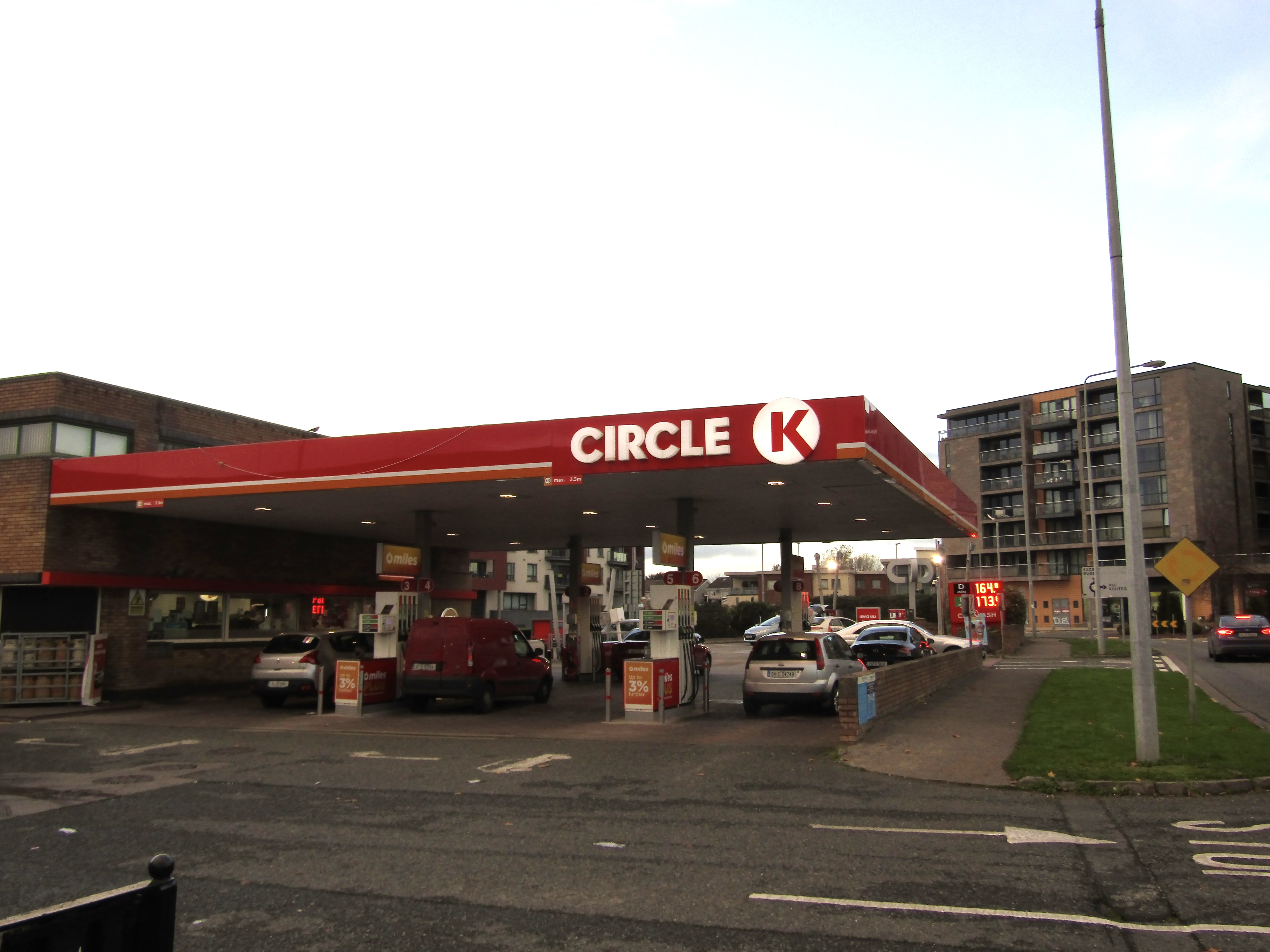
    Fuel prices continue to increase throughout the country. Photo credits: Shay Galon

    By Shay Galon

    Amid the rising fuel prices in the country, reporter Shay Galon looks at why the costs have increased this past year.

    With minimum prices at €1.70 per litre for petrol and €1.60 for diesel in several petrol stations, it is the highest fuel costs the country has seen in almost ten years.

    “Demand for oil dropped considerably during the Covid pandemic, which had a devastating impact on oil production as demand for the product dropped, and so consequently did supply,’ Anna Cullen, AA Ireland, stated.

    The demand for oil declined dramatically during the lockdown months in 2020 which naturally reduced the oil production. As the demand lessened, as did the supply. Cullen also outlined that the supply for fuel has not caught up to the demand for oil as traffic levels increase due to the reopening of the country. With more and more cars on the road, it is evidently more difficult for oil producing countries to catch up to the increasing demands, resulting in global shortages.

    As oil production fell last year, it had a positive effect on fuel prices for the consumer as there was a surplus of oil. This also had a positive effect on the oil industry as some reported evaporating profit, massive job losses and giant write-downs. 

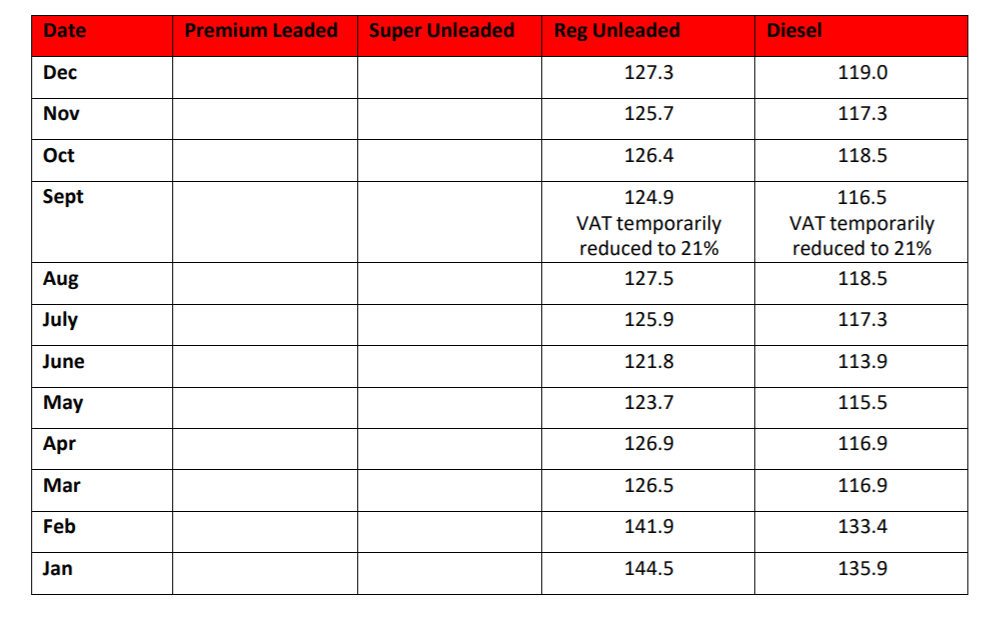
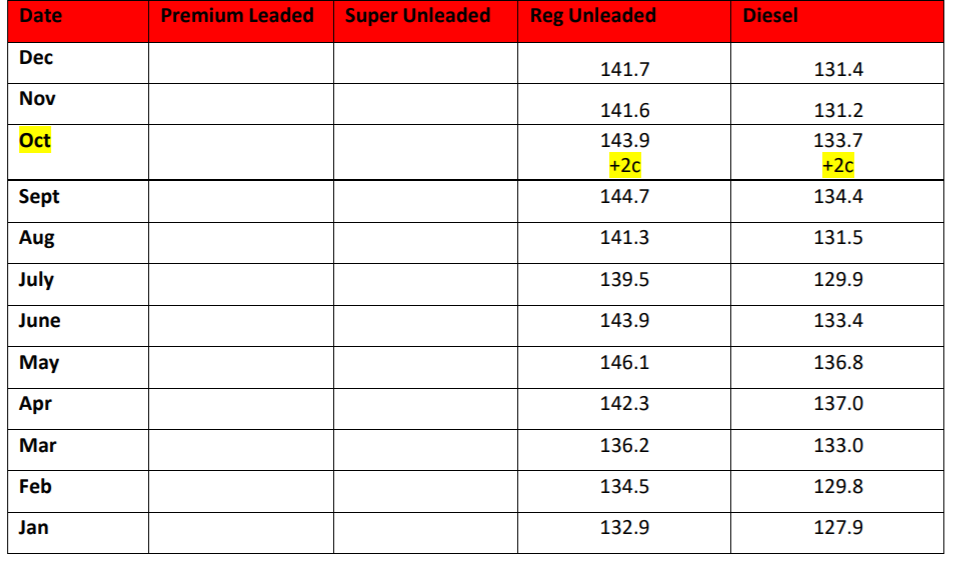
    The AA decided to look further into the increase of prices and released a report on the annual fuel prices dating back 10 years comparing the prices of petrol each year. 

              2020
    Table

Description automatically generated

    2021

    Table

Description automatically generated

     As of September 2021, there has been a 24.8% increase in petrol and 24.8% in diesel prices compared to 12 months prior. 

    “This time 12 months ago the average petrol price was 124.9 cents per litre, while diesel was at 116.5.” 

    2019

    Table

Description automatically generated

    Looking at the year right before the pandemic, the price for one litre of petrol was 144.7 cents while diesel costs 134.4 cents per litre. 

    The Head of the International Energy Agency said that 2020 represented the worst year in the history of the oil markets. Oil consumption fell by 9.1 barrels per day which equates to 9.3% last year.

    Not only has the pandemic affected the supply and demand of fuel, but the Government tax in the recent Budget 2021 of two cent on a litre of petrol and 2.5 cent on a litre of diesel, along with the annual escalating carbon tax, have left consumers struggling to pay for petrol, diesel or even heating for homes.
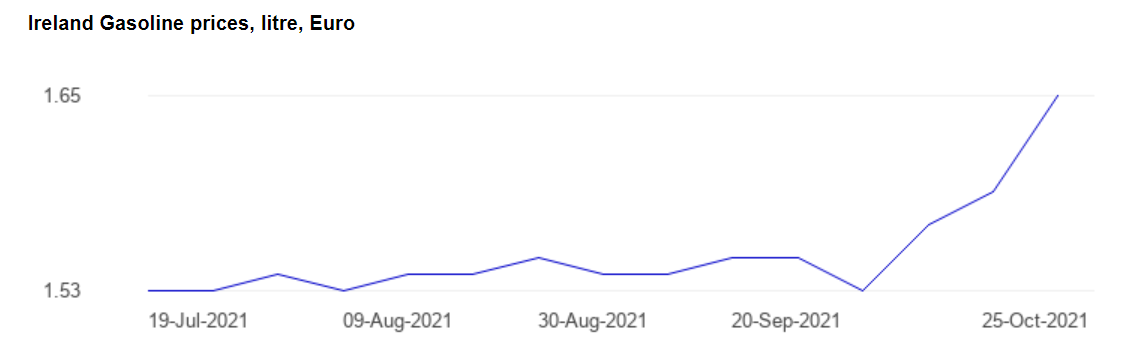
    Chart, line chart

Description automatically generated

    Source: https://www.globalpetrolprices.com/Ireland/gasoline_prices/

    These are the petrol prices for Ireland from July 19, 2021, to October 25, 2021. According to the report, the average value for a litre during that period was 155 cents with a minimum of 153 cents on July 19 and a minimum of 165 cents on October 25. 

    “With winter approaching us, temperatures are set to drop even more. Demand for oil has risen and will continue to rise even more.”

    The Organisation of the Petroleum Exporting Countries (OPEC) released an outlook report which said that global oil supply will continue to rise until it plateaus but not until 2035. Due to this, petrol prices will most likely continue for consumers as oil shortages resume around the world.

    However, with the popularity of electric cars in recent times, the demand for fuel could also lessen, allowing the supply to meet the demands. 

    Prices start at 173.8 cents per litre of petrol and 164.8 cents per litre of diesel. Photo credits: Shay Galon

    “So, in the future, one could argue that oil demand may drop as the world switches to electric vehicles and green energy,” adds Cullen

    However, the transition from petrol or diesel cars does not  necessarily rule out oil consumption for rural residents or at home heating. Oil will always be in demand, even into a greener, more sustainable future.

  • Women victims of domestic violence threatened by the lack of accommodations

    Women victims of domestic violence threatened by the lack of accommodations

    By Fantine Carron

    Fantine Carron reports on why the COVID-19 pandemic has made the issue of domestic violence the worst it has ever been and that organisations are struggling to help the victims.

    The pandemic is having dramatic consequences on domestic violence. [Source – Pixabay]

    Last year, a report published by Safe Ireland highlighted the main problem that domestic violence organisations are facing; the lack of available space in emergency accommodations. The data shown in this article has been gathered by Safe Ireland with the help of 32 Irish domestic violence services.

    Nationwide, there are only 144 spaces available to women in refuges, including 31 in Dublin. Nine counties do not have refuges. There are also no refuges at all for men in the country.

    In total, between March and December 2020, 2,159 requests for emergency accommodations for women, (that includes refuges, safe homes and supported housing), could not be met. This situation is putting women and children at risk every day as they are stuck in abusive homes.

    Figure 1

    The problem is not new. In 2018 already, 3,256 requests for accommodation were not met due to the lack of space available in refuges.

    Domestic violence organisations are forced to face this problem every day without being able to do anything about it.

    Priscilla Grainger, the founder of Stop Domestic Violence in Ireland said that even when a victim has reached out, it is hard, sometimes impossible to help her actually leave her abusive situation.

    “Right now, all of the refuges are full”, says Grainger. “Sometimes, we get help from homeless accommodations but they are struggling too. Airbnb also helped by offering some hotel beds at some point but that is still not enough.”

    “The majority of the women who call us have children with them.  So it is more complicated for them to move in with a relative or friends. Accommodations are only available for a limited time and some victims were also financially abused so they are left without any resources. It’s a vicious cycle.” she explains. 

    Grainger founded Stop Domestic Violence in Ireland in 2014 with Ainie Grainger, her daughter. After suffering years of abuse and managing to escape, they decided to take what they learnt from their experience to help other people in the same situation. They mainly help the victims to gather evidence to take their case to court.

    Figure 2

    According to Figure 2, on average 1,985 women contacted a domestic violence service each month from between March and December 2020. On average, 589 women were doing it for the first time. In nine months, helplines received more calls than they did in the entire year previously. 

    The victims were seeking a range of different support from call of help, a place in a refuge, simple information, etc. A large majority of them were contacting them via a call, probably outside their house in a safe place.

    The situation with domestic violence in Ireland was already bad and the pandemic did not help reversing the trend that had been going on for a decade now (see Figure 3).

    Figure 3

    Women’s Aid said in its 2020 Annual Impact Report that there was a 43% increase of contacts to the organisation compared to 2019 (from 20,673 to 29,717).

    ” ‘Stop Domestic Violence in Ireland’ is a small organisation compared to Women’s Aid for example but we still noticed an increase in calls after the pandemic started”, says Grainger.

    For Grainger, the issue of domestic violence cannot be solved without first bigger funding from the government. Domestic violence needs to be made a priority and there needs to be new refuges and accommodations getting built to protect the victims as much as possible.

  • ‘Systematic Ableism’: Disability Inequality in Europe

    ‘Systematic Ableism’: Disability Inequality in Europe

    By Luke Gillis

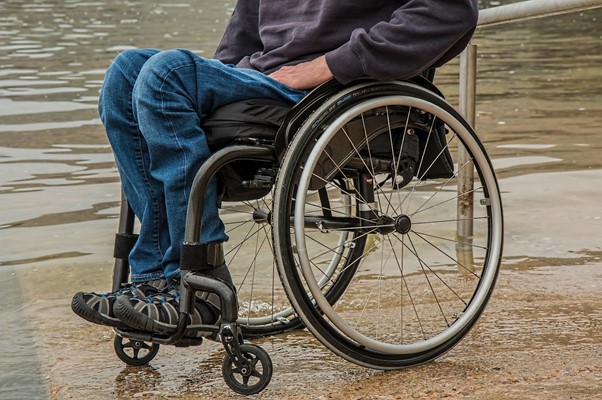
    Image via Pixabay

    Activist Michèle Taylor talks to TheCity.ie about how the social model of society is causing ableism across Europe

    There are 643,131 people in Ireland living with a disability. That’s more than 13 per cent of the population. Ireland is also the worst country for people with a disability to live in due to there being a 24% chance of them living in poverty. This all comes from a survey by the EU Statistics on Income and Living from 2017, and in the past four years, not much has changed at all.

    We spoke with Michèle Taylor, activist and director for Change at Ramps on the Moon. She is based in Nottinghamshire, England, but she has done many online workshops about disability equality including one she hosted for students of TU Dublin in October.

    “I think the key issue is around misconceptions about disabled people, is that we are defined by what we can’t do, and what our limitations are. This is perpetuated by the narrative that is so prevalent which talks about the achievements of disabled people as being ‘despite’ their conditions. In fact, the truth is that disabled people achieve the things we do despite ableism, not despite our conditions.”

    Ableism of course being the discrimination and social prejudice of people with disabilities. According to Oxford Languages: Ableism characterizes people who are defined by their disabilities as inferior to the non-disabled.

    When asked about what is brought up and talked about in the workshops, she said she talks about the power of stereotypes and how they come from the stories we are all of us immersed in from the moment we are born about what kind of people we are, and what other people are like. They also look at some key statistics and then explore the Social Model of disability which says that people are disabled by the way society and its environments are designed, built and maintained (environments being physical, digital, attitudinal, financial, etc.).

    “We can’t help the fact that we have been given these stories, but we do have a responsibility to examine those stories in order to surface which bits of our world view we want to continue to align with. […] We are not disabled by our medical conditions. There are many implications that flow directly from the Social Model.”

    But Taylor’s involvement in activism was not a deliberate choice. It began as she was working in the arts a performer, writer and director in the theatre and noticed that she was experiencing discrimination and limited opportunities compared to others. 

    “Honestly, I didn’t really put two and two together until I discovered the Social Model and then everything fell into place about what work I was and was not getting, what people expected of me and how people reacted to me. I started to talk openly about it and this gradually morphed into being asked to deliver training and to advise mainstream cultural organisations about how they could do better. For the last six years, I have been Director for Change at Ramps on the Moon, an Arts Council England funded consortium of mid-scale mainstream theatres that is having real impact changing the theatre industry.”

    When asked about what the likes of government could do to try and tackle these issues in the social model, Taylor said:

    “This is a huge question. Unfortunately, here in England, 19 months into a pandemic during which disabled people have been badly let down by our government, it is very hard to be positive. In many ways, disabled people, certainly in England at least, are in an even more precarious position than we have been for years.”

    Taylor went on to explain how the Social Model has been particularly hard during the pandemic.

    “I think there is a lack of understanding of who disabled people are and that it is systemic ableism that is the problem, not our medical conditions. A key engine of maintaining this ableism is vocabulary that uses words like ‘vulnerable’ as though it is an inherent characteristic rather than a situation into which people are put by systems that have let them down. […] Legislation looks like it’s positive, but it is rarely enacted and it is so difficult to call anyone to account through the law that its effectiveness is very limited.”

  • It’s ‘fine’ – I’ll park here

    It’s ‘fine’ – I’ll park here

    By Sean Cuttle

    Sean Cuttle investigates on the car parking fines issued by Dublin City Council

    Imagine this. You have just pulled into a parking space on the street in your local town. You see the pay and display sign but the meter is all the way down the road. You think to yourself “sure I’ll only be a minute, I’ll risk it”, and head into the shop. Inevitably, the dreaded fine awaits you on your return, tucked safely underneath your windscreen wiper. 

    Nobody likes fines, well, except the people who issue them. In 2019, South Dublin County Council issued a total of 7,983 fines for breaches of vehicle parking regulations on public roads.

    “Parking contrary to pay and display regulation” was by far the highest reason for receiving a parking fine in 2019, accounting for just over 50% of the total number of fines issued by South Dublin County Council and is 2,894 tickets higher than the next largest category: “Parking on a footpath.”

    In total the 7,983 fines consist of 30 different offences all relating to the location of parked vehicles.

    Also, out of the total 7,983 fines issued by South Dublin County Council in 2019, they were unevenly spread throughout 112 different streets. Lucan Main Street received the largest number of fines in 2019 with 1407. Rathfarnham Main Street came in second place with 733 fines.

    South Dublin County Council released this data under the Freedom of Information Act, however the council declined a similar request to release the total revenue generated by parking fines in 2019. Taking the average parking fine of €60, South Dublin County Council would have generated €478,980 in revenue from parking fines in 2019. This figure does not account for any fines that were successfully appealed or any late penalties applied to offenders who did not pay their fine on time.

    According to a separate freedom of information request obtained by Ken Foxe and reported in the Irish Independent, according to South Dublin County Council, only 74% of parking fines issued were paid in 2019, up 9% from 65% in 2017.

    But how does South Dublin County Council’s number of fines issued compare with other local county councils? 

    In the same year, Waterford County Council issued 15,233 fines in 205 different streets with an estimated value, again based off the average €60 parking fine, of €913,980.

    Dún Laoghaire Rathdown County Council issued 11,934 fines in 2019 spread throughout 416 different streets. Dún Laoghaire-Rathdown County Council said that parking fines had brought in €3.34m over the past three years. Dún Laoghaire-Rathdown also suffers from a relatively high rate of people who fail to pay parking fines that are issued to them . In 2017, 85pc of parking fines were paid, which dropped to 81pc the following year. In 2019, the rate fell again to 79pc. Ken Foxe also reported that according to Dún Laoghaire-Rathdown County Council, one person had amassed 349 unpaid parking tickets in the past three years, worth €21,000.

    Fingal County Council issued 22,289 fines in 2019 in 559 separate locations at an estimated revenue of €1.3 million (calculated in the same manner as previous estimations). Fingal County Council reported that only two-thirds of parking fines issued in the past three years were paid with 68% of fines issued in 2019 paid.

    Spokesperson for the pay and display department in South Dublin County Council, Catherine White, explained that “100% of parking fines are issued by third-party contractors on behalf of South Dublin County Council”. White elaborated that the average fine is €60 with a late fee of an additional €20. “All money generated through vehicle fines issued on behalf of SDCC is spent on maintenance and operation of the pay and display system,” White said.

  • Same ocean, different boat: The rural-urban lockdown divide

    Same ocean, different boat: The rural-urban lockdown divide

    Monellan Woods in County Donegal. Photo by Niamh Alexander

    “We’re all in the same boat.”

    We have all heard this saying in some shape or form since lockdown began. It has been repeated over and over as a way of reassuring the masses that we are all in this together – that we need to present a united front to beat the virus.

    Which is true – to an extent.

    It might be more accurate to say we are all in the same ocean, but different boats.

    Every one of us will have a different experience of lockdown to tell. Do you live with your family or housemates or even alone? Maybe you have not left the house since last March or maybe you are a key worker and haven’t actually stayed at home at all. Do you live on the top floor of an apartment building or in a spacious house with a garden?

    The River Liffey in Dublin city. Photo by Stephen Hylands via Pexels.com

    This is especially true in the case of quarantining in the countryside versus in a city. I have experienced both country and city living, and I can attest to the vastly different experiences. 

    “I spent the first lockdown at home, and I live in quite a rural area,” says Arlene Bonner, a student from Donegal who has since moved to Dublin.

    “We were lucky that the weather was really good, so I actually spent a lot of it outside, you know going for walks or just sitting in the garden. I think that maybe lessened the feeling of anxiousness or claustrophobia that a lot of other people talked about. There’s a woods near my house so I spent a lot of time there which was nice,” she says. 

    For Dublin resident Jennifer Carleton, the experience was very different:

    “I would definitely love to be quarantining in the countryside instead of the city. I live in a housing estate so there isn’t a lot of green spaces that I can really enjoy. I’m beside a really busy road so I don’t have a lot of options. I kind of just have the one route if I want to go for a walk or anything. I spend most of my time indoors,” she tells me.

    Georgian houses in Dublin. Photo by Skitterphoto via Pexels.com

    For a lot of people, this is the main draw for living in more rural areas, especially during lockdown. Having the option to explore more open spaces and scenic countryside can make for a more pleasant lockdown experience.

    “I think lockdown is going to be pretty lonely no matter where you are”

    Jennifer Carleton

    However, countryside living can also have its drawbacks.

    “I do think being in lockdown in Donegal was a lot more isolating than Dublin. I didn’t really see anyone except my family for the full six weeks, but in Dublin I live in an apartment complex, so I have lots of neighbours that I see most days. There’s always people around,” says Bonner.

    When asked if she found lockdown in a city to be isolating, Carleton said that lockdown is difficult regardless of where you spend it:

    “I think lockdown is going to be pretty lonely no matter where you are, but yeah I do think being in a city is easier in that sense. I know most of my neighbours so we’re able to meet up outside as long as we stay far apart.”

    Most people assume that the isolation of the countryside would be relatively safer than a crowded city. However, this has not rung true for Ireland’s Covid-19 statistics. Rural areas have reported some of the highest number of cases per 100,000 of the population since the pandemic began.

    For a while, Donegal had the highest 14-day incidence rate in the country. Other rural areas have been particularly high – Co Offaly currently has a 14-day incidence rate of 369.4, higher even than Dublin.

    In contrast, some urban areas such as Blackrock or Dun Laoghaire in Dublin have experienced a considerably low number of cases per 100,000.

    It is difficult to know exactly why cases in some rural areas have been so high, and health officials have yet to pinpoint an exact reason. 

    “I do think it’s a case of letting your guard down. I think people expect rural areas to be safer and they might not be as good at sticking to some of the restrictions. It’s a lot harder to forget about (the pandemic) in a busy city,” says Bonner.

    Whatever the reason, it is important to remember that not everyone’s experience of the lockdown has been equal.

    In particular, minority groups have been disproportionately affected by Covid, with “Black, Black Irish, Asian, Asian Irish and Traveller groups [being] more likely to contract Covid-19 than those who are white Irish”, which can be attributed to occupation and housing conditions, according to a recent report by The National and Economic Social Council (NESC).

    The report shows that groups such as migrants, Irish Travellers, and those living in Direct Provision centres live in circumstances that leave them more susceptible to the virus.

    Issues such as poor renting conditions, house-sharing with non-family members, and overcrowding has led to significant Covid-19 outbreaks within these groups.

  • “Twenty-seven years I carried a gun, I never had to use it”: Disarming the Garda

    “Twenty-seven years I carried a gun, I never had to use it”: Disarming the Garda

    An Garda Síochana have reduced the amount of members carrying firearms following a review in 2019 by the Policing Authority Ireland, as the force moves towards a model of having specialist armed response as their main firearm unit. Jonathan Kelly explores the relationship between the Garda and arms.

    Photo taken by Sean MacEntee. Sourced from Flickr.

    According to figures released by the Garda Ombudsman (Gsoc), armed Gardaí have fired their weapons on only 16 occasions since 2016, with accidental discharge accounting for a third of incidents. Last June, a detective guarding the Israeli embassy in Dublin accidentally shot himself in the leg.

    “That could happen in an emergency, a fella taking his gun out and the damned thing going off. Lucky no one was killed,” Mr. Michael Mangan, a recently retired detective said. “For 27 years I carried a gun, I never had to use it though.”

    “I withdrew it a couple of times in very dangerous situations but lucky enough I never had to use it” he added.

    The 2019 review found more than a quarter of the force, 27% or 3,778 members carried a firearms authorisation card. The Policing Authority found many of them were working desk jobs and non-frontline areas. More than 1,000 cards have been revoked to date, with now 19% or 2,776 of the force armed.

    Mr. Mangan said, “I wouldn’t agree with uniform people (Garda) being armed, I think guns should be carried by detectives though,” when asked about a fully armed police force.

    When the City spoke to some members of the public, the majority of people revealed they would feel less safe if all Gardai were armed. One of the respondents wrote: “Naturally I’d feel nervous, there’s always a few bad eggs in every bunch.”

    However, only half of the respondents agreed with reducing the number of armed Garda. “I’m proud that the Irish are one of the only countries in the world with an unarmed police force,” another replied. 

    According to Gsoc, Gardaí have used tasers on 125 separate occasions over the last five years. Taser guns are currently only available to specialist units such as the Emergency Response Unit, the Armed Support Units and Special Detective United, although consideration is being given to arm all frontline Gardaí with them. Less than half of the respondents would be in favour of such a move.

  • ‘Art and nature can help to erase the stigma associated with addiction,’ says founder of treatment centre

    ‘Art and nature can help to erase the stigma associated with addiction,’ says founder of treatment centre

    A ‘Wizard of Oz’ mural in the greenhouse which the members created. Photo: Kim O’Leary.

    The founder of an addiction and mental health treatment centre in Athy, Co Kildare, has said that artwork and a return to nature can help people in their battle against addiction and mental health issues. TheCity.ie’s Kim O’Leary speaks to Declan Nolan, who has seen patients thrive by making art works and gardening, while also helping to bring local communities together.

    Declan Nolan is the founder of Discover Oneself (D1-S) in Athy, set up in the town three years ago. Drug use, he says, is “becoming less hidden and more obvious” there and nationwide as well.

    “It has been bad for years in Athy and people are talking about it now because it’s becoming less hidden and more obvious, it can affect the whole community. People talking about it now also allows those who have struggled with addiction to tell their story. “

    “It’s happening all around Ireland. People are afraid to talk about drugs and other addictions so we have to keep fighting to erase the stigma surrounding addiction and mental health,” explained Declan.

    The current national drug strategy, ‘Reducing harm, supporting recovery: a health-led response to drug and alcohol use in Ireland 2017-2025’, was launched in July 2017 and its main aim is to minimise the harms caused by the use and misuse of substances, and to promote rehabilitation and recovery by supporting the development of a range of treatment, rehabilitation and recovery services using the four-tier model.

    The strategy also recognises the need for timely access to appropriate services for the client. The integrated care pathways model forms the conceptual basis for the National Drug Rehabilitation Framework.

    The Health Service Executive (HSE), which manages Ireland’s public health sector, is responsible for the provision of all publicly funded drug treatment. The management of all drug treatment services falls under the remit of the Primary Care Division, which oversees a number of national care groups. Drug treatment is provided through a network of HSE services (public), but also non-statutory/voluntary agencies, many of which are funded by the HSE. Some private organisations also provide treatment.

    Most drug treatment is provided through publicly funded outpatient services. These include 314 specialised drug treatment centres, 82 low-threshold agencies and 356 specialised general practitioners, which provide opioid substitution treatment (OST) in the community.

    The latest figures from the Health Research Board (HRB) show that, while cocaine is the third most common problem drug reported to the National Drug Treatment Reporting System, its use has risen every year without fail.

    https://www.hrb.ie/data-collections-evidence/alcohol-and-drug-treatment/latest-data/

    The data shows that while problem cocaine use fell slightly between 2011 and 2013, it has risen every year since. The largest increase is from 12.3% in 2016 to 16.8% in 2017 — an increase of 32%.

    A total of 1,500 cases were treated for cocaine use in 2017, almost double the number of cases in 2011 (770 cases). The number of new cases treated has risen from 396 in 2011 to 748 in 2017.

    The HRB data shows that men account for four in every five cases reporting, while the most common additional drugs reported among cocaine cases were alcohol (58%), cannabis (48%), and benzodiazepines (25%).

    A total of 63,303 cases presented for treatment for problem drug use (excluding alcohol) between 2011 and 2017. The number of treated cases increased from 8,361 in 2011 to 9,892 in 2015, and then decreased to 8,922 in 2017.

    Declan said that there has been a surge in the use of cannabis in the last year. “Cannabis is a big problem, the situation is worsening year on year and we have seen this in the latest stats as well as the people we are trying to provide help and detox to,” he explained.

    HRB chief executive Darrin Morrissey said the latest figures show drug use continues to seriously impact people right across Irish society.

    “This is evident in the latest drug treatment data, as well as the HRB’s recent drug-related deaths and alcohol treatment reports,” he said.

    “Over the recent period of economic recovery, drug treatment trends are changing and the data we analyse from the HRB information systems helps to inform health services provision and the health policy responses to problem drug use in Ireland,” he added.

    Photo: Kim O’Leary

    Meanwhile, D1-S Athy also encourages the individuals who receive treatment at their clinic to also participate in art classes and gardening in the greenhouses at the facility, with the aim of re-introducing them to the local community.

    Photo: Pexels

    “The art classes and gardening in the green houses has been positively received, people are really enjoying creating murals and other creative works in our new rooms at the residential treatment centre. We feel that art and nature can help to erase the stigma associated with addiction and mental health because it shows that everyone has a creative side and we’re working hard to encourage people to let their creativity flow,” said Declan.

    In terms of the current situation nationwide, Declan said that much more needs to be done to tackle the cannabis crisis in particular. And he is insistent that art and nature can prove a welcome distraction to those recovering from addiction or even to keep vulnerable people away from drugs entirely.

    “In rural towns like Athy and even the urban cities like Dublin, drugs are rampant and anyone can become addicted. Also, a lot of people have very full, busy lifestyles that can mean their mental health may suffer so we are seeing people coming in more than ever to talk and get help. This is good because it means things are changing but there’s still a lot more work to do locally in Kildare and nationally as well. The government should really try to support local initiatives and programmes trying to treat addiction and mental health issues, it’s something that the new government coming in should consider,” said Declan.

    For more information on D1-S Athy visit www.d1-s.com