Tag: news

  • Neil Fox – the will of the people can change the cycling landscape in Ireland

    Neil Fox – the will of the people can change the cycling landscape in Ireland

    By Mark Donlon

    When the first bicycle was invented in 1817, few could have imagined its longevity as a mode of transport. But its practicality and the ease of use it offers have allowed it to keep its wheels in motion, right up to the present day.

    It is, however, the bicycle’s place in the 21st century that is in question. Doubtlessly, the two-wheeled mode of transport has changed and developed considerably in over 200 years of existence, but it is other changes and developments in the realm of transport that now render its users more at risk than ever before.

    The city of Dublin is a perfect demonstration of this problem. Its modern-day city centre is a proverbial NASCAR arena comprising of all too many buses, trams, lorries, cars and, somewhere mixed in between, bicycles, all riding around in infinite loops from homes to places of work.

    Of course, some traffic congestion is normal and, to a point, each and every city must deal with this issue. However, Dublin’s remedies for a pacier rat race have not yielded any notable results and a mass of buses and LUAS trams serve only to delay and deter those looking to move throughout the city.

    And so, the merits of bike transport are probably unnoticed in all of this. If Dublin had shifted more emphasis on getting people to saddle up, the gridlock would lessen. But the BikeToWork Scheme has flopped and there is very little in the line of dedicated cycle paths which safeguard the average cyclist from the dangers on the roads. Infrastructure stops short of standards set in other EU capitals, and as a result so does health and safety.

    The issue of cycle safety will not disappear so long as basic requirements fail to be met. Encouragingly, however, neither will its most staunch and energetic activists. Neil Fox, whose sister Donna was killed in a collision with a lorry driver whilst cycling to work in 2016, is one such activist. Neil believes there is responsibility attached to all road users, but that the lack of Government intervention and across the board cooperation on the issue is what keeps this issue troublesome.

    “It is personal responsibility. We all must act well on roads. No laws nor no infrastructure, can force that. It’s up to us,” said Fox.

    “But yes, it is a governmental issue in terms of money, and also property owners need to agree to compulsory purchase of small pieces of gardens or land to widen roads especially rural ones.

    “Infrastructure is down to government, so they do bear the brunt. As for local, county and city councillor’s they seriously need to get backbone and fight for what’s right and not just for votes.”

    Neil has undertaken a serious body of work since he started out campaigning for cycle safety in honour of his sister. While he is well aware of the shortfalls, he does believe so many are pulling in the right direction.

    “I have been privileged to meet so many groups, organisations etc in the last three years. They’ve put up with me when I’ve been bit lost and emotional, but on the whole, I think they’ve understood why I wanted to do something and help.” he explained.

    “I believe every activist every group every organization has the same goal, to improve cycling safety and attitudes towards Cyclists and cycling.”

    Neil also believes that the media have played a part in the continuing awareness around issues of cycle safety and road safety more generally.

    “I do want to pay tribute to the media. I still get media attention -radio, TV, newspapers and online – three years on, and it’s down to a dedication to try and make our roads safer. We can never take it for granted that journalists will cover cycling and road safety issues. They are vital to everything and I really hope Ireland continues to keep strong road safety media coverage.”

    Neil reserves credit for a significant number of politicians from many different parties and doesn’t seek to point the finger solely at the political establishment. Obviously there have only been subtle Governmental flirtations with legislation thus far, but he believes that the onus is on the people to force their hand.

    “The more cyclists there are, the more safety becomes vital. Women and children should be encouraged to cycle in our city. Very few do and it’s out of fear,” he says.

    “I understand that fear, but the more who cycle the more Government and NTA and the Council have to act to provide the safety measures.”

    In the face of all the campaigning, Neil has had to maintain his resilience, and never more so than when he has heard the cynical comments along the way. He says that despite losing his sister from a cycling accident, part of his campaigning creed is to encourage others to cycle.

    “It was very important to me when Donna died to encourage cycling. Many don’t understand that,” he explained.

    “But what hurt a lot were the comments. ‘To cycle is to take your life into your own hands’, ‘women shouldn’t be on bikes, it’s too dangerous’. Donna didn’t die because she was cycling, she died because a lorry killed her.”

  • Irish Rail: Disorder  solutions continue to disappoint

    Irish Rail: Disorder solutions continue to disappoint

    By Mark Donlon

    The new live text alert system put in place by Irish rail to tackle anti-social behaviour, was used by 145 passengers between its inception on 16 August and 18 October, new figures have shown.

    The system was implemented by Irish Rail after a considerable rise in the number of complaints logged by passengers over disorder and anti-social behavior aboard trains.

    According to information obtained under the Freedom of Information Act, there has been 427 disorderly passenger cases logged aboard Irish Rail services between January 2017 and September 2018.

    The DART accounts for a majority of these complaints, with 120 filed, while the Cork and Galway lines are the most troublesome with 57 and 44 complaints respectively. It is important to note that these figures only account for cases logged owing to disorderly behavior and do not represent the number of overall complaints.

    Previously released figures detailed that there had been over 900 complaints made about passengers aboard Irish Rail trains since 2015. Of that number, 498 complaints were made about disorderly passengers across all routes. This demonstrates an increase in complaint numbers in the time that has since passed, even allowing for an overlap period between the two sets of statistics of the eight months between January and September 2018.

    The older findings were released in early September 2017, and accounted for the 32 previous months dating back to the start of 2015. With the disorderly passenger number at 498, this would have tallied to an average of 15 complaints of that nature a month. The new figures account for the 20 months between January 2017 and September 2018, and with this figure at 427, this would pertain to an average of 21 complaints a month.

    This means that disorderly conduct complaints increased in the 12 months following the publication of the 2017 figures.

    Back in September 2017,  Irish Rail commented that in light of the findings it would look to increase the number of staff on its trains. However, the upturn in complaints would suggest something to the contrary.

    Furthermore, action that is being taken is very recent in the context of the longevity of the problem. Prior to 12 October 2018, Irish Rail only listed six services whereby alcohol was not permitted; two Friday afternoon services from Dublin to Waterford; three Sunday services from Waterford to Dublin, and finally Sunday’s midday train from Galway to Dublin.

    However, when Irish Rail announced bans on further routes from 12 October 2018 onwards, they only added another four services to the list. All were Friday services from Dublin: two travelling towards Galway, one towards Waterford, and one to Westport.

    This underlines the fact that so many of the company’s services are environments where alcohol is permitted. Granted, services to and from Waterford were dealt bans, but between January 2017 and September 2018, the Belfast route had received one more complaint than the number received in relation to the Waterford route.

    This doesn’t seem like a huge difference, but when one route has one rule and the other has another, the difference for a paying customer could be considerable.

    The banning of alcohol is not the true resolution to the matter of disorder on trains, however. Even if it was, it is notable that Irish Rail is nowhere close to applying a no-alcohol policy across the board. And so, this begs the question, what is the solution to problems of traveller unrest aboard Irish Rail services?

    An Garda Síochána’s Press Office said: “Any incidents that are reported to Gardaí are fully investigated. An Garda Síochána regularly provides stakeholders, including transport providers, with Garda Support.”

    As regards the current system in place, all this revealed was that incidents reported to Gardaí are “fully investigated”. It would seem obvious then, that a cohesive text alert system – where all incidents are treated equally, would be useful and reassuring for passengers at risk in transit. However, the new live alert system has been far from thorough since its introduction.

    Many who have used the text alert service have received nothing more than an automated reply, with no indication from Irish Rail as to whether or not action has been taken. Some users have even been advised to pass on their complaint via a 999 call, passing responsibility back to An Garda Síochána, who themselves were only partially involved in apprehending disorderly passengers.

    It appears that a virtual service like the one newly implemented is in fact doing very little to calm the nerves of passengers looking to travel free from danger or disruption. It is not yet clear if many of the 145 people who initially availed of the service had any success from their complaint.

    A spokesperson for Irish Rail alluded to the evasive nature of some of the disruptors: “In some instances, those involved in anti-social behavior may have already left the train or station a short time after the report.”

    With this in mind, Irish Rail perhaps ought to have invested more into increased on-board security personnel instead of an easily manipulated live alert service.

  • “Our right to survive” – rebellion week rages on

    “Our right to survive” – rebellion week rages on

    By Jade Carpenter and Paula Bowden

    “Our future, our lives, our right to survive.” This was the chant coming from the crowd gathered outside Leinster House on Tuesday evening, as Minister for Finance, Paschal Donohoe’s environmental provisions for budget 2020 were met with a lukewarm reaction from climate activists and members of Extinction Rebellion.

    “Our future, our lives, our right to survive” Credit: Jade Carpenter

    As part of #RebellionWeek, the so-called rebels took to the streets of Dublin to stage sit-ins and protests, calling for action on the climate crisis —but exactly what action are protestors calling for?

    “Reducing cars, reducing traffic, even more bins. We need more recycling bins,” said protestor Sian Conway. “I live out in Kilbarrack and we had a bottle bank bin for ages and now it’s just gone. It’s just not there anymore. I think the government really need to be facilitating people to recycle with more resources.”

    Protestor, Brendan McGlynn, believes the government needs to think big to combat the crisis and halt climate change.

    “I think there has to be a massive active involvement to change the systematic problem that we have in place,” said Brendan. “It has to be across the board a massive change that makes people feel uncomfortable. You have to make people feel uneasy because everyone needs to change, and change a lot.

    “I think at the minute the government aren’t really putting all their cards on the table and really going for it, but they need to, because it is an emergency now and it isn’t enough to just push recycling as an incentive we need a massive systematic change otherwise things will just stay the same,” he added.

    “The workers, united, will never be defeated” Credit: JadeCarpenter

    Iryna, a member of Extinction Rebellion, was manning a refreshment tent at Merrion Square providing drinks and snacks for protestors. She told us about their aims for the protest and what action they want to see.

    “Extinction Rebellion’s main goals are; to tell the truth, organise a citizen’s response, reduce fossil fuels and to reduce our emissions completely by 2025,” Iryna said. “Every single person we’ve seen at the sight so far has been so friendly and so supportive and I think they really appreciate what we’re doing. I do believe we’re doing the right thing.”

    Outside Leinster House the focus was very much on a peaceful protest as activists held banners and sang songs late into the evening, taking turns at the megaphone to explain their own reasons for being there. As the Garda barrier around the entrance to government buildings eventually dispersed, protestors cheered and clapped, serenading members of the force with a chorus of “Gardai we love you, we’re doing this for your children too.”

    “Gardai we love you, we’re doing this for your children too” Credit: Jade Carpenter
  • Nationalities of international undergraduate students in Ireland’s ‘Big 3’ Universities revealed for academic year 17/18

    Nationalities of international undergraduate students in Ireland’s ‘Big 3’ Universities revealed for academic year 17/18

    University College Dublin (UCD) has 7,869 international undergraduate students, making up 27 percent of total undergraduate student numbers in that college for the academic year 2017/2018.

    The college had another 21,257 Irish undergraduate students in that time.

    Meanwhile, Trinity College Dublin (TCD) has 3,192 international undergraduate students while National University of Ireland Galway (NUIG) has 2,467.

    The figures were obtained via the Freedom of Information Act from the three universities.

    According to the figures, the United States is the country with the most students pursuing undergraduate education in these three universities. TCD has 687 US national students; while UCD has 1,753 and NUIG has 812.

    Students from Britain form the highest numbers from Europe attending Ireland’s top universities. The numbers are 506 in TCD; 579 in UCD; and 172 in NUIG. Canadian, French and German students are also attracted by these universities.

    In Asia, countries like China, Malaysia consistently have the most students coming to Ireland for a university education. Notably however, Singapore, a relatively small country, has 226 Singaporean undergraduate students at TCD, the most amount of Asian students in Ireland’s premier university.

    From the African region, Nigeria is the country with the most students coming to Ireland with TCD (33), UCD ( 64), NUIG (73). Its numbers are significantly higher than other African countries. On the other hand, Australia is the main country representing the Oceania region, with 40 at TCD; 77 at UCD; 35 at NUIG.

    The international undergraduate students that come from South America and Africa and Oceania make up the minority of international students.

    The tables below show the top ten nationalities of international undergraduate students studying at each of the universities for the academic year 17/18.

    TheCity has compiled the data received, and categorised the countries into their respective geographic regions.

    For the convenience of categorisation, we labelled countries that are located in the Caucasian states into the classification of ‘Asia’. The geographic location of Russia meanwhile has been much debated whether it is in Europe or Asia. We decided to categorise Russia to Asia, based on its majority landmass being located there.

    The data compiled shows that TCD has the most international undergraduate students coming from Europe (1,583), followed by North America (839) and Asia (645).  

    UCD, with the highest number of total international undergraduate students, has the most students coming from Europe (2,839), closely followed by Asia (2,418) and North America ( 2075). There are 139 ‘unknown’ students which were not categorised.

    NUIG has the most students coming from North America (975). European (792) and Asian (488) nations are the other main contributors for international undergraduate students in the college.

    TCD said: “We benefit from our international collaborations with universities around the world in developing both research links and opportunities for our students to study abroad during their programmes.”

    On the recruitment of students, NUIG said: “NUI Galway has focused its international recruitment efforts on the US, India, Gulf Cooperation Council (GCC), and South East Asia. We plan to target West Africa and South America as part of our next recruitment drive.

    “International students of which there are 3,000 in NUI Galway represents a significant economic contribution to Galway City and its hinterland. This cohort also adds diversity to the city.”

    UCD has been contacted for comment, but had yet to respond at the time of publication.

    The universities examined here are the highest ranked universities in Ireland, according to the QS World Rankings 2019.

    According to the World Rankings, TCD is currently 104th in the world. UCD is 193rd place while NUIG is 260th place.

    The latest data from the Higher Education Authority (HEA), shows that of the overall international students population in 2017/2018, 41 percent comes from Asia; 29 percent from North America; 20 percent from the EU; and 10 percent from the rest of the world.

  • Government responds to ranking of Ireland as worst performing European nation for climate change

    Government responds to ranking of Ireland as worst performing European nation for climate change

    The government is set to invest €4.5 million in tackling climate change after it was revealed that Ireland is the worst performing European country for climate action.

    The UN Climate Conference took place in Poland on Monday, where Ireland was ranked as the 48th out of 56 worldwide countries when it comes to addressing climate issues.

    In response to this revelation, Richard Bruton, Minister for Climate Action and Environment has announced significant funding to make Ireland a ‘leader’ in the battle to halt climate change.

    It is thought that the funding will go towards a number of projects, including the Green Climate Fund, and the Great Green Wall Initiative.

    The Great Green Wall project aims to reduce the impacts of climate change and will increase the resilience of a number of developing countries involved in the scheme.

    When completed, it is expected to improve food security, resilience to droughts, and will abate an estimated 250 million tonnes of CO2 annually.

    It will also generate an estimated ten million land-based green jobs across Burkina Faso, Cameroon, Chad, Djibouti, Eritrea, Ethiopia, Ghana, Mali, Mauritania, Niger, Nigeria, Senegal and Sudan.

    In a statement released to thecity.ie, Minister Bruton said: “Ireland is fully committed to the implementation of the Paris Agreement.

    “This conference is about making those commitments stick by agreeing a rule book among all countries so that we are all making progress in a consistent, transparent manner.

    “It is the foundation for moving on in the coming months to see how, acting in solidarity, we can stretch our ambitions beyond what we have committed to. We need to be honest with where we are at so that we get to where we need to be.”

    The statement said: “Multilateral action is the only way to tackle the global challenge of climate change. This funding is crucial if we are all to meet our global ambition.

    “We must support developing countries to adapt and to mitigate against the costs associated with the effects of climate change.

    “This funding is in addition to the supports provided by the other Government Departments involved in international climate action this year and represents a further scaling-up of climate finance provided by Ireland.”

  • This Time I’m Voting campaign aiming to bring people to the ballot boxes

    This Time I’m Voting campaign aiming to bring people to the ballot boxes

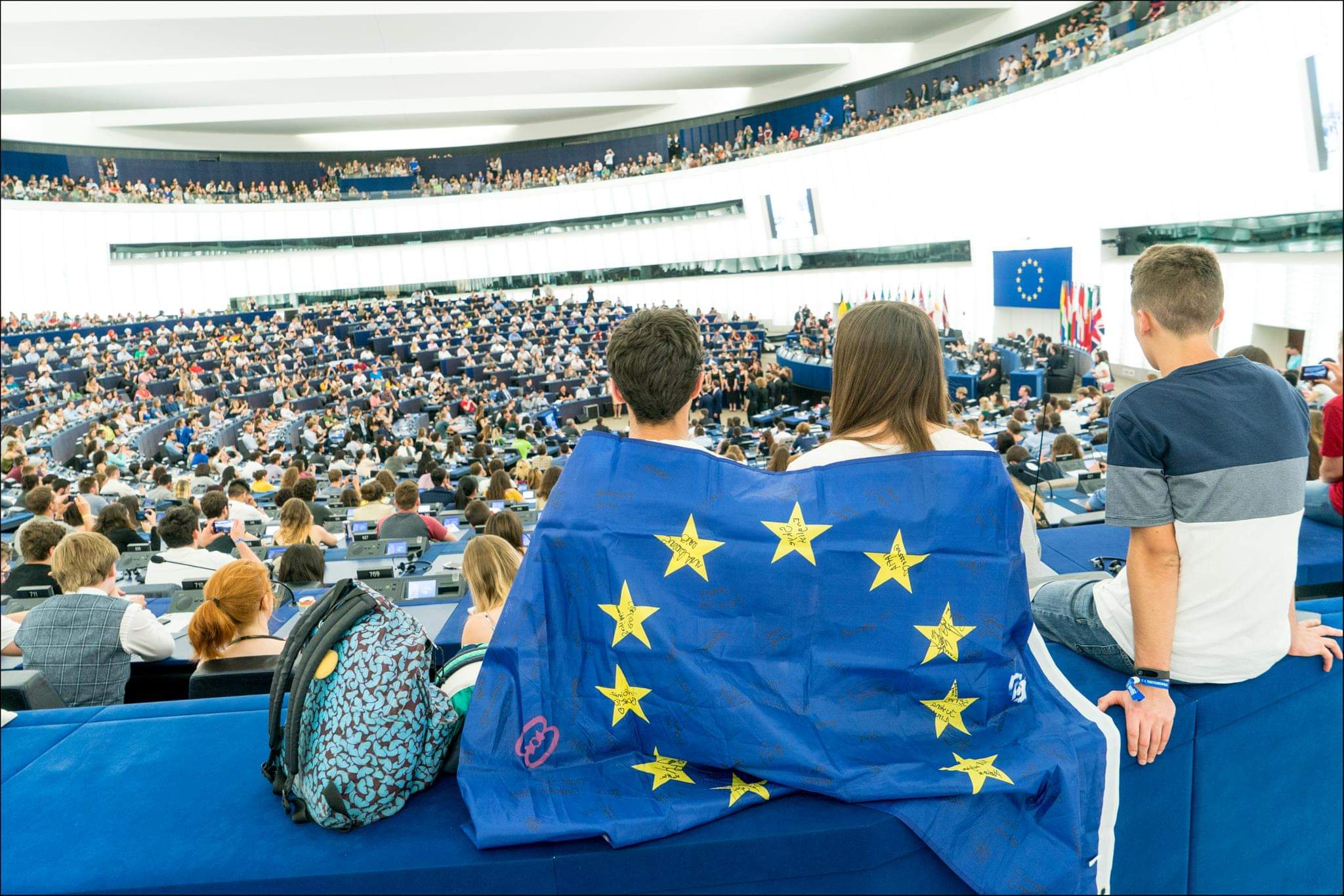
    This Time I’m Voting is a campaign run by the European Parliament (EP) in order to encourage European citizens to vote in the upcoming elections.

    The campaign is supported by thousands of volunteers across Europe who are committed to promoting the campaign, and ultimately motivating the public to vote. However, social media is the main platform used to promote the campaign, aiming to attract the attention of young users.

    Sanne De Ryck, EP press officer, said: “It is indeed important for young people to go out and vote as we are all aware that it is now crunch time, that the future of Europe is at stake. Young people have a whole life ahead of them and will face the consequences of the 2019 European elections.”

    De Ryck said social media is ‘part of the answer’ to grab the attention of potential young voters.  

    The campaign has over a thousand volunteers in Ireland and over 88,000 volunteers across the EU, and aims to inspire citizens to campaign for issues they feel passionate about.

    Sarah Buttle, 23, a recent Griffith College graduate, will vote in the upcoming elections and hopes young citizens will do the same. Ms Buttle said: “I would encourage all of my friends to use their vote to help shape the future of the EU. EU issues affect us all, whether it’s migration, privacy or climate change, and having elected MEPs that can voice the Irish opinion, our vote does matter.”

    Ms Buttle supports the This Time I’m Voting campaign and hopes the elections will see a big turnout from Irish voters. She said: “The upcoming elections in the EU need an increased voter turnout, especially within the youth.”

    Jack Moloney, EP press officer for Ireland, said: “Ultimately, we wish to increase interest in European affairs and de-mystify the electoral process. I have often been asked ‘what does the EU do for me?’ or been told that Brussels is too far removed from everyday life. Our active, young and intelligent participants have already begun to communicate on their own behalf why Europe matters to them and I have found it to be truly amazing.”

    The EP also organise events to promote their campaign and on Wednesday December 5, there is a EU pub quiz held in the Boar’s Head pub on Capel Street, Dublin. European Parliament elections take place from 23 to 26 May 2019.

  • 67 people have died in Irish prisons since 2010

    67 people have died in Irish prisons since 2010

    There have been 67 deaths in Irish prisons between 2010 and 2017 according to figures released under the Freedom of Information Act 2014.

    A high of 14 people died in 2015 while 2012 and 2016 saw the lowest figure since the turn of the decade with just five fatalities. Last year nine inmates died, which was an increase on the previous year.

    In 2010, a total of eleven people died which then dropped by five the following year. Nine people died in 2013.

    Prisonstat

    The most common form of death was misadventure, with sixteen deaths categorised in that way.

    Fourteen people died from natural causes, while the same amount of people died from suicide. A high of three people took their own lives 2013, while a record four died from natural causes in 2015.

    There was one confirmed unlawful killing in 2015, while there are ongoing inquests in relation to twelve incidents since 2010. There are seven active inquests from last year, while two inquests from 2013 are still ongoing.

  • Bus Éireann’s five most complained about routes

    Bus Éireann’s five most complained about routes

    Complaints made by Bus Éireann passengers nationwide are growing, according to figures obtained by TheCity.ie through Freedom of Information.

    Since the beginning of 2015, 1,268 complaints have been filed to the National Transport Authority by passengers about the bus service. These figures are rising by the year, too. There were 206 complaints made by passengers in 2015, which would rise to 273 complaints made in 2016.

    Complaint figures then skyrocketed nationwide in 2017 up to 458, in a year that saw Bus Éireann drivers go on strike for a three week period at the end of March into April.

    As of November 2018, 331 complaints have been made about the service so far this year, a significant increase on the number of complaints made in the years 2015 and 2016. However, it is unlikely to exceed the 458 complaint figure of 2017, which were inflated by the strike.

    Number of complaints per year


    So, what bus routes are the primary offenders over the last four years? The top five most complained about are all commuter buses to or from Dublin.

    The 133 service, which serves south County Wicklow, has the fifth highest number of complaints made, with 54 complaints being made about that bus service since the beginning of 2015. The highest number of complaints made in a year about the ‘133’ was 23 in 2017, with 10 being made this year, which has already exceeded the 9 complaints made in 2016 and has a chance of beating the 12 made in 2015. Complaints made by passengers of this route mostly consist of the service being unreliable.

    The 111 service, which runs from Athboy, Co. Meath to Dublin, comes in fourth place in the number of complaints made, with 72 complaints being filed to the NTA since 2015. However, this year the service appears to be running a lot more smoothly, with only two complaints made in 2018, compared to the high of 30 made in 2017 and 29 in 2016.

    The 109/109A/109x services, running from Kells, Co. Meath and Cavan Town comes next, with 73 complaints made since 2015, just one more than the ‘111’ Athboy route has received. There were only 11 complaints made about the service in total between 2015 and 2016, before a massive 52 complaints occurred in 2017. The majority of these complaints were regarding changes made to the service, but a good deal of them consisted of passengers complaining about the service being generally unreliable. The number of complaints in 2018 have fallen significantly to 10 so far this year, but this number still comfortably exceeds the 2015 and 2016 numbers.

    Now to the second highest total of complaints, which have been made about the ‘132’ bus route which runs from Dublin down to Bunclody in Co. Wexford. A huge 118 complaints have been made by passengers of this route since 2015, with the lowest figure for any of these four years being 22 in 2015. The highest number of complaints were made in 2017, with 42, an increase of 16 from 2016’s 26 complaints. So far, 28 complaints have been made about the ‘132’ route in 2018 and that number is expected to rise over the last month of the year. Practically all of the complaints made by passengers of this route surround the buses’ apparently being, “sub-standard”, which features heavily in all four years of data.

    Finally, the bus route(s) that holds the unfortunate honour of having the most complaints made about it in the the last four years, are the 103/103X, which serves Tayto Park and Fairyhouse from Dublin. There have been 124 complaints made in the last four years regarding the 103 services, with a whopping 67 of them occurring in 2016. The majority of the complaints that year were made in response to changes to that route by Bus Éireann. The following year saw 30 complaints to the NTA, with 19 made so far this year, both of these figures considerably higher than the mere eight that were made in 2015. Complaints made in the past two years have varied from buses being late to not showing up at all, with the reliability of the ‘103’ services being questioned.

    Top five most complaints


    The complaints filed by Bus Éireann passengers to the National Transport Authority are unfortunately not a true reflection of the service, as they do not include complaints made by passengers directly to Bus Éireann. However, it is still clear from the log of complaints seen by TheCity that Bus Éireann has reliability issues on multiple services and in the case of the ‘132’ route, some passengers believe buses are not up to standard.

  • A losing battle? Legal broadcasting versus illegal streaming

    A losing battle? Legal broadcasting versus illegal streaming

    The advances made in recent web-based technology is quite remarkable, with almost everything you could possibly desire available to you on your smartphone, laptop or any other device.

    As a football enthusiast, I still remember the frustration of my favourite football team not having their game broadcast on live TV, and instead having to check for any score updates using ‘Teletext’. Although I was grateful for this technology at the time, I can’t honestly say it’s something I miss using.

    Luckily, I was probably among the last generation who would have to resort to such ‘caveman’ technology.

    Today, you are only ever a few gentle thumb-presses on a screen away from viewing almost anything you want online. Twitter, one of the internet’s biggest successes at the moment, has even recently teamed up with Periscope, a live-streaming application which streams directly from the device of its users, so that they can broadcast anything to any number of people.

    There is no doubt that these two online ‘giants’ teaming up is great for us, as we are getting visual news and insights that we may previously have been starved of, and we are getting these insights almost as soon as they happen; quicker than ever before.

    However, as with almost all things good on the internet, there are many ways in which these live streams can be exploited in a way that breaks the law, and in turn, takes viewers away from legitimate broadcasts. This is something that is regularly happening in the English Premier League.

    In a survey completed by the UK-based sports industry (SIG) it was revealed that 54% of those aged between 18 and 24 years admitted to using illegal sports streams in order to watch their favourite team.  A third of this group also admitted that they use illegal streaming for football regularly.

    With only 4 percent of over 35s admitting to using online streaming to view football matches, it is hardly a surprise that the age group (which is almost three times more likely to be unemployed than the UK’s national average) is evidently far less likely to pay subscription fees for sports. Such subscriptions with Sky Sports and BT can cost up to €69.50 per month for a basic sports package. It is also the same age group that’s more likely to have the requisite skills in modern technology to comfortably bypass any TV subscription to watch whatever they desire.

    In 2017, Sky Sports released their viewing figures which revealed they were down a staggering 25 percent since 2010. Their flagship ‘Super Sunday’ had also seen a huge decrease in viewing, with the afternoon kick-offs averaging 1.1 million views in 2017/18 season compared to 1.7 million in 2011/12.

    SteStat1

    Denial

    Both Sky Sports and BT repeatedly decline to admit that this downfall in viewing figures was caused by illegal streaming. Instead, they pointed at other major events that occurred in particular years and claimed that regular viewers may have had other interests.

    However, in November 2017, BBC Radio 5 Live Daily surveyed 1,000 Premier League fans which again proved that illegal streaming was becoming more and more popular.

    According to the poll, “Nearly half of fans say they have streamed a match online through an unofficial provider – just over a third do so at least once a month and about one in five at least once a week.”

    The Main Reasons:

    • Other family member/friend is streaming and they just watched
    • The quality of streaming was of high quality
    • Sports packages were not viewed as good value for money
    • Fans ‘not knowing’ it was illegal to stream

    Following this report by BBC 5 Live, research company ComRes then proceeded to do a survey of 1,000 adults who reported to being regular viewers of all Premier League football.

    What were the survey’s results?

    • 34 percent of supporters said they streamed live Premier League matches online through an unofficial provider at least once a month, and 21 percent at least once a week.
    • 45 percent of these fans had illegally streamed a match using an illegal provider at least once.
    • Younger fans (aged 18-34) are considerably more likely than their older counterparts to say they stream live football matches online through an unofficial provider – 65 percent do so at least once a month compared to 33 percent of 35-54 year olds and 13 percent of those aged 55+.
    • Of those fans who stream matches illegally, the most popular reasons are because a friend/family member does it and they just watch (29%); because the quality of online streaming is good (25%) and because sports TV packages are not good value for money (24%).
    • 12 per cent of Premier League fans think it is legal to stream games online (not through an official provider), while 34 percent think it is always illegal and 32 percent don’t know; 4 percent believe it is not breaking the law but Sky or BT could fine you if they find out, 7 percent think it is sometimes illegal, and 10 percent believe it is legal to watch but illegal to upload a stream.

    SteStat2

    Since these surveys, both Sky and BT have begun a legal battle against all illegal streams which broadcast their footage to viewers who do not pay for the content.

    Matthew Hibbert, head of litigation at Sky UK has said that the Sky company have become successful in cutting off all illegal streams thanks to a recent court ruling granting them greater power to go after server providers and shut down illegitimate providers.

    Hibbert now claims that “live streams of the premier league can no longer be easily found in the UK.”

    In 2018, the High Court issued a “blocking order” which will force internet providers to cut streams throughout the 2017/18 Premier League season.

    However, there should be room for concern in this statement that illegal football streaming is becoming tougher to gain access to. While some popular streaming sites may have been targeted, meaning you can no longer stream matches on their sites, I personally have never struggled to find a stream when needed, and there are still many ways of finding these illegal streams all over the internet.

    I surveyed twenty men in my local pub, ranging in ages from 18 to 55 years old. All twenty admitted that they have often used illegal streaming sites to watch football matches.

    One twenty-year-old said: “Any time Liverpool aren’t live on TV I’ll try stream it. I don’t think I’ve ever struggled to get a good stream, I mirror my phone onto the telly and honestly you wouldn’t know I was watching a stream. That’s how good the streams are.”

    Another soccer fan had a similar outlook. He said: “My son downloaded an app onto my phone for me and it’s brilliant. It streams every sports channel from anywhere in the world. I do have a sports package at home but sometimes a match I want to watch won’t be on so I use my phone to stream it instead.”

    The only thing certain about the future of legal and illegal broadcasting is that app-makers will always find a way. With streaming applications and sites being both widespread and easily accessible, legal broadcasting stations are fighting an uphill battle.

  • Male unemployment down from 6.9 percent to 5.5 percent since last year

    Male unemployment down from 6.9 percent to 5.5 percent since last year

    In October 2018, the unemployment rate was 5.5 percent for males, down from 6.9 percent in the same month last year, according to the latest seasonally adjusted CSO figures. 

    The seasonally adjusted number of males unemployed was down from 88,800 to 71,800 from October 2017 to October 2018.

    IanStat
    Source // CSO

    The largest increases in employment in the second quarter of 2018 took place in construction, the wholesale and retail trade, accommodation and food service activities, and professional, scientific and technical activities, according to the latest Labour Force Survey figures. 

    In comparison, the seasonally adjusted unemployment rate for the entire population of the United Kingdom in September 2018 was at 4.1 percent, according to figures released in November by the U.K.’s Office for National Statistics.

    In August 2018, the Department for Business, Enterprise and Innovation announced the Future Jobs program, which will be introduced in 2019 to succeed the Action Plan for jobs and to maintain the momentum in employment growth. 

    Earlier this year, the Minister for Business, Enterprise and Innovation Heather Humphreys supported the continued efforts to tackle unemployment and believes the Government’s successful annual Action Plans for Jobs has played a key role in the continued improvement in the job figures.

    The Action Plan for Jobs was created in 2012 – when unemployment was at its peak of 16 percent across everyone in the country. Since the first quarter of 2016, 174,200 jobs were created, with 65 percent of these coming outside of Dublin.