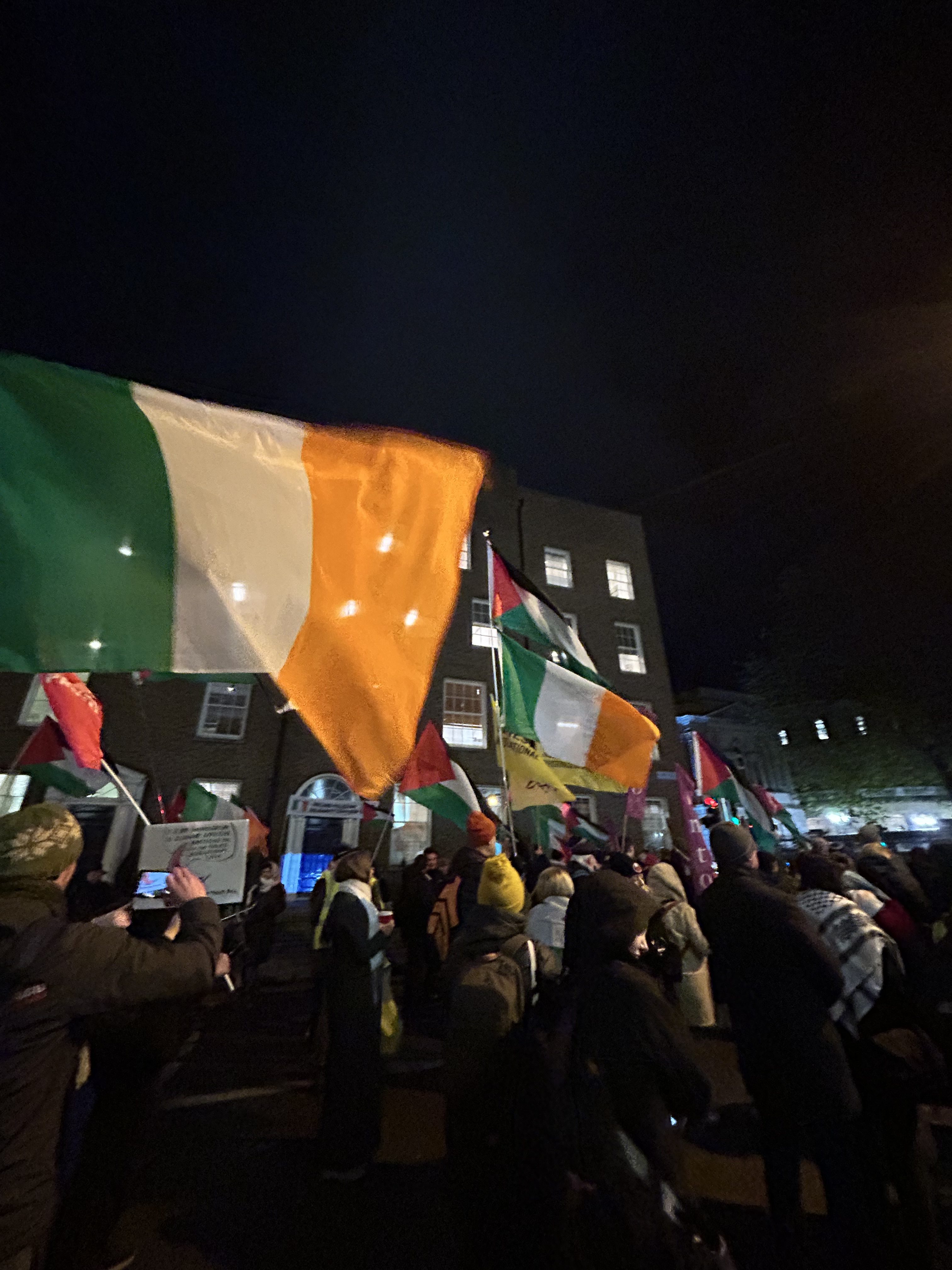
On the 19th of November 2025, a protest took place outside the Dáil calling for the Occupied Territories Bill to be implemented.
The Bill is a proposed law which would ban trade with countries who are illegally occupying territory, most notably Israel’s current occupation of Palestine.
This would lead to Ireland no longer engaging in the trading of goods with the Occupied Palestinian Territories.
There was a meeting that morning in which People Before Profit-Solidarity tabled a motion calling for the Bill to be passed through the Oireachtas before the end of the year, with other opposition parties also in support of the motion.
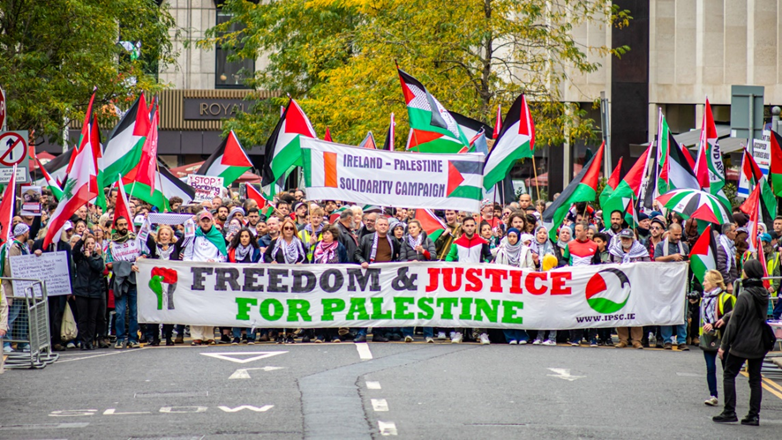
The protest was full of Irish and Palestinian flags, and everyone was in support of the Bill being passed.
With loud chanting and a clear message, here is how the protest unfolded.
Photo 1: The calm before the storm. The ever-bright Dáil Eireann lights up the area, half an hour before the protest was set to begin. As the numbers began to build, so did the police presence, with multiple guards and a Garda car in attendance. Photo 2: The protest began at 5:30pm just opposite the Dáil. Crowds began to increase at around 5:15pm, with banners, such as the “Ireland – Palestine Solidarity” banner, being raised above the gathering crowd.Photo 3: A man pictured with the Palestinian flag draped around him, anticipating the beginning of the protest. Photo 4: The man making all the noise. Constantly beating his Palestinian drum to show his support and make his voice heard, while inspiring others around him to make as much noise as him. Photo 5: This man had a clear message at the protest: “Pass The Damn Bill”. A message to the Irish Government to get the Bill passed as soon as possible, with bombs seen within some of the letters on the sign, highlighting the violence in the Middle East at the moment. Photo 6: As the flags began to be raised, so did the signs. This woman pictured holds hers up proudly, demanding the Bill be passed in its entirety. The speech bubble on the sign is being said by a watermelon, a symbol of Palestinian resistance and solidarity. Photo 7: This photo shows how large the crowd grew during the protest. At this point, everybody had their flags and banners but most importantly, their voices. With never-ending chanting, the crowd started to cover every inch of the road just across from the Dáil. Photo 8: With both Irish and Palestinian flags now on full display, hand in hand, a message is projected on one of the buildings, calling for the end of arms trade with Israel.
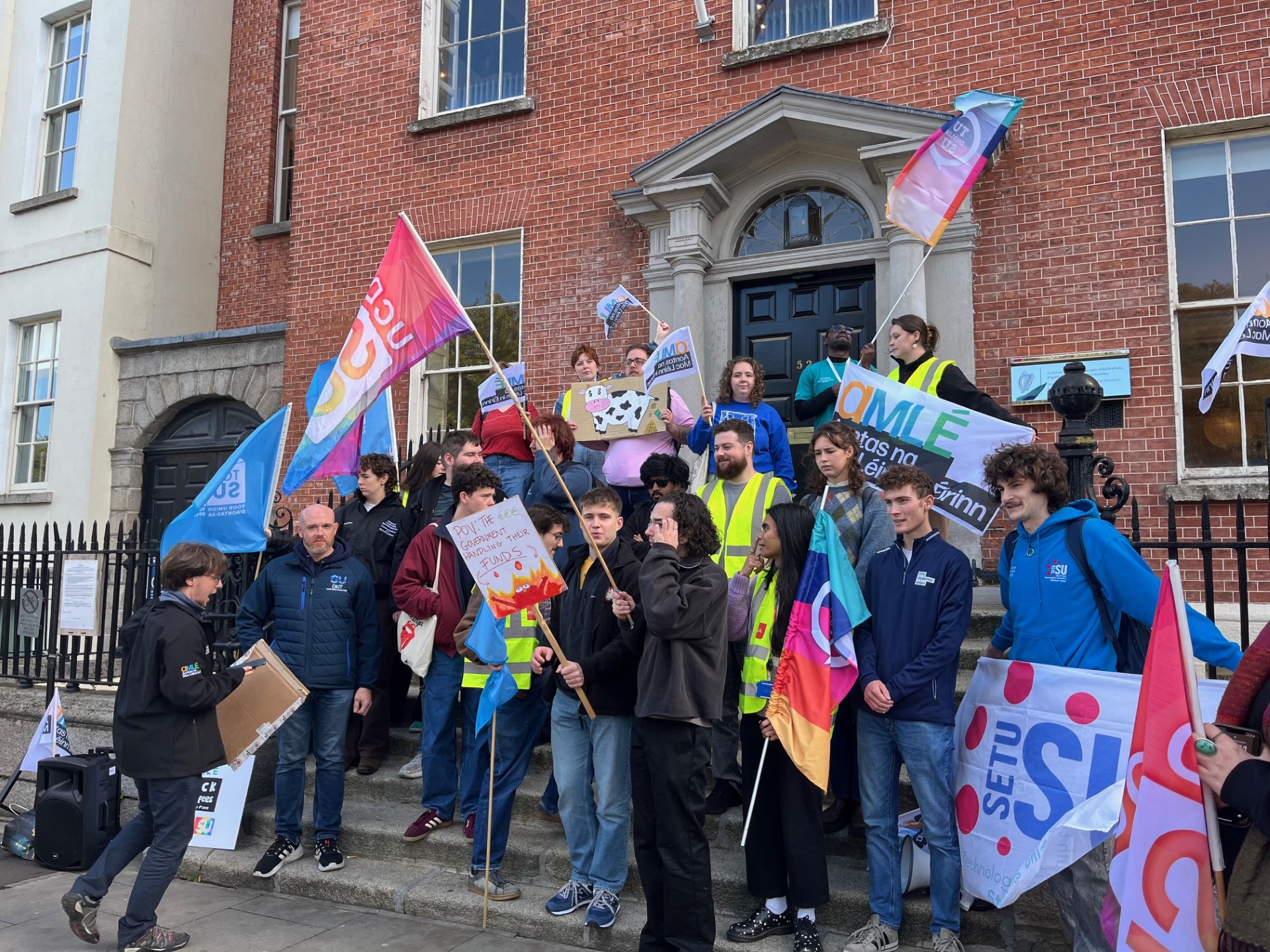
A group of over sixty third level students from across the country gathered outside the Department of Further and Higher Education on Monday demanding a cut in third level fees in Tuesday’s Budget.
Representatives from AMLÉ (Aontas na Mac Léin, formally Union of Students in Ireland), along with members of various university student unions attended the demonstration demanding the government lower fees for third level students.
Many travelled from across the country for the protest, including representatives from University of Galway, and SETU Carlow.
Some of the speakers at the event highlighted the cost of accommodation across the country, and that many technological universities have no on campus accommodation.
One speaker said that only 18% of accommodation at University College Cork was owned by the college.
Also in attendance was the Labour Party leader Ivana Bacik, who said that education should be free.
Labour Party leader Ivana Bacik TD speaking at the protest against third level fee increases.
“We will be fighting to ensure this budget does see a permanent reduction in fees,” she said.
As it stands, fees are currently around €3,000 for most students. But for the past three years, when the department was under Simon Harris and his successor Patrick O’Donovan, third level fees were reduced by €1,000 for the year, an act which was repeated each year.
Both Fianna Fáil and Fine Gael committed to cutting fees over the lifetime of the government during the 2024 election campaign, and it is something which features in the Programme for Government.
But the new minister for Further and Higher Education, James Lawless, shocked many students earlier this summer when he announced that it was unlikely that there would be another €1,000 reduction in Budget 2026.
Recent reports suggest that there will be a permanent €500 cut in fees this year, rather than another one-off reduction.
This news has angered students across the country, leading to Monday’s protest outside of the Minister’s office on Stephen’s Green.
Speakers led chants off, “Hey hey, ho ho! Student fees have got to go!” and “No way we won’t pay!”
There were also some expletive laden chants.
Over 60 students gathered outside the Department for Further and Higher Education to protest fee rises.
The attendees at the protest are hopeful that they got their message across.
“I think it’s a shame to be honest,” said Barry Sexton, Vice President for Welfare and Equality in SETU Carlow Student’s Union.
“The Government is absolutely swelling with money. There’s money coming from every corner in this government,” he said.
“They don’t need to take money from the students, of all people, the most underprivileged people in the country.”
Barry Sexton, VP for Welfare & Equality in SETU Carlow Student’s Union.
“Paying an extra €500 for people who are impoverished and less well-off is absolutely devastating.”
For Barry, he isn’t confident that the Government will keep their promise to abolish fees. “I don’t see it happening any time soon. Fianna Fáil and Fine Gael are in government together so they obviously should be working on the same goals, and they shouldn’t be falling back on what the other said to escape out of it.”
Members of Trinity College Student’s Union at Monday’s protest. Left to right: Lorenzo Cheasty, Natalie Byrne, Harry Johnston, Amelia Flanagan, Grace McNally.
Most of the students felt strongly about the issue of fees. Amelia Flanagan, Environmental Officer for Trinity College, Dublin, Student’s Union said, “this is student fees, and if we can’t stand up for ourselves in this regard, what we stand up for ourselves, if we’re not showing out, then what’s the point of a student’s union existing if we can’t protest against a fee rise for ourselves?”
Grace O’Malley, Health Science VP for TCD SU shared a similar sentiment. “I think from a health science aspect as well, we already have so many hidden costs in our course like our uniforms, transportation, placements, living on placement, having to work unpaid for the entire week, and on top of that having to work an actual job where we do get paid.”
“Now our fees are going up, and we’re not even sure if they are going up. We’re going back to college, unsure, uncertain, and scared of what’s going to happen,” she said.
A spokesman for Minister Lawless told TheCity.ie that, “Budget negotiations are ongoing, and Minister Lawless remains committed to securing the strongest possible package for students and their families, with a clear focus on directing the greatest support to those who need it most. This, of course, remains dependent on the Department of Public Expenditure and Reform.”
The issue of fees is sure to be one of the biggest stories from this week’s budget and will be watched closely by students and their families across the country.
Over the last 15 years, the number of daily Irish speakers has fallen by 13%, from 83,000 to 72,000. With the government investing only 0.1% of state expenditure into the Department of the Gaeltacht, it’s not difficult to see why numbers are dropping so drastically. On Saturday, September 20, thousands of people took to the streets to protest and campaign for the Irish Language and Gaeltacht investment plan 2024-2029. We spoke to attendees and two top level members of Conradh na Gaeilge about their demands.
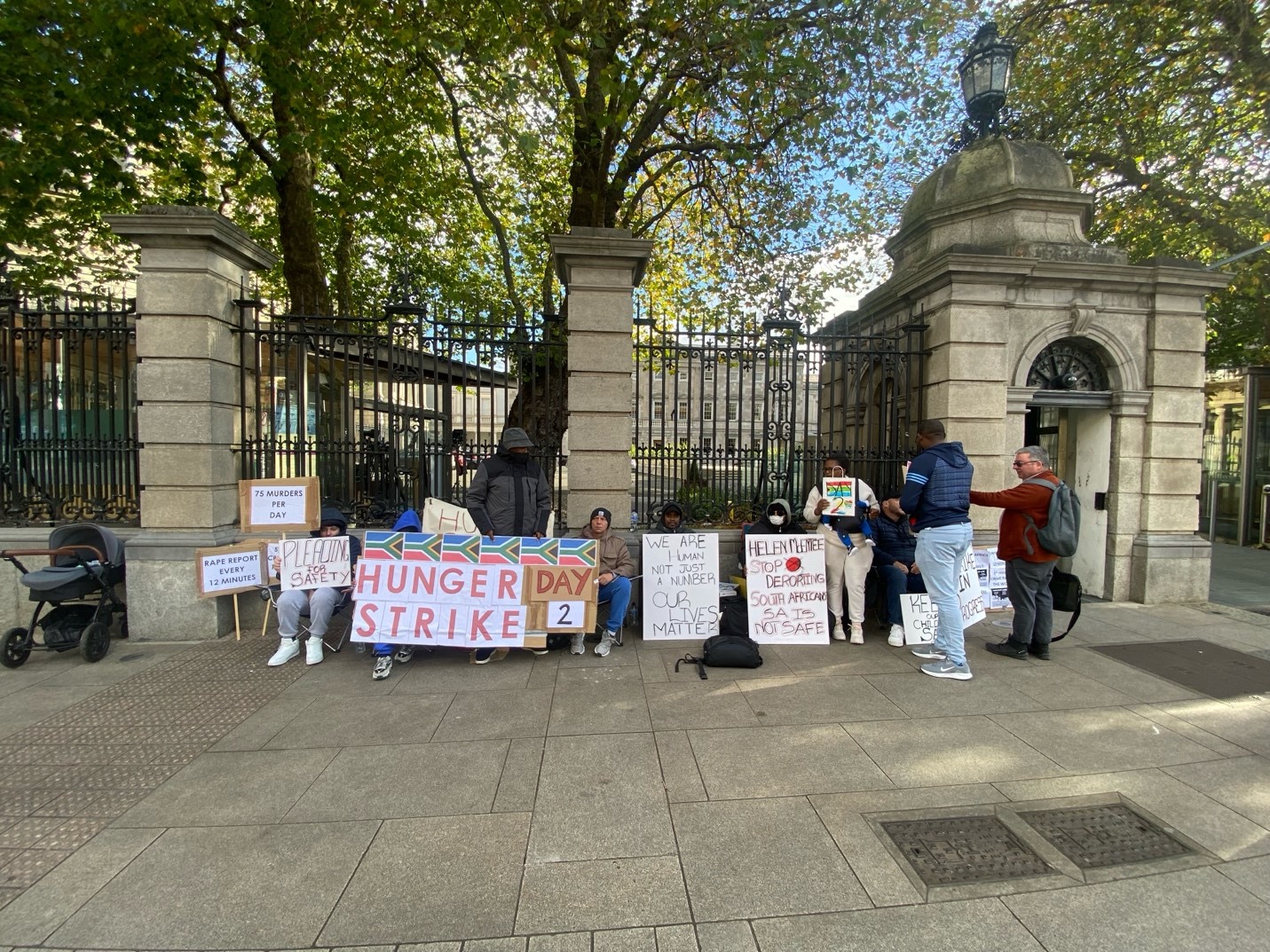
Since Monday 21 October, these South African men and women who are living in Direct Provision have gone on a hunger strike in the hopes that the Irish Government will reconsider having South Africa listed on Ireland’s ‘Safe Countries’ list.
The EU and Irish Government define a ‘safe country of origin’ as a country in which: “there is generally and consistently no persecution, no torture or inhuman or degrading treatment or punishment and no threat by reason of indiscriminate violence in situations of international or internal armed conflict.” Neels Heystek – a South African that are taking part in the hunger strike. Heystek told TheCity.ie his daughter is suffering from PTSD and is having regular panic attacks at school as a result of what has happened to their family in South Africa.
“This is our last resort now.”
Neels Heystek
Passersby and sympathisers have donated water to the hunger strikers.On the otherside of Dáil Éireann’s gates, was a protest held by Irish Healthcare Workers for Palestine. Some of these protesters came over to the hunger strikers in support when a far-right agitator arrived.The IrishHealthcare Workers for Palestine lending their megaphone to the South African hunger strikers to drown out the far-right heckler. A collection of the protester’s signs
‘Rape Report every 12 minutes’
‘75 Murders Per Day’
‘Pleading for Safety’
Hunger strikers displaying their respective signs telling those passing by why they are on hunger strike.One of the protesters, down on their knees sticking together another sign for passersby and government officials coming through the gates of Dáil Éireann to see and take notice of.Brian Mogotsi is another of the hunger strikers. He is taking part in this protest in the hopes that the Government will engage in a dialogue with South Africans that are living in Direct Provision to reconsider their position on deeming South Africa as a safe country
On Saturday, October 5, thousands of people took to the streets of Dublin to mark one year of Israeli escalation in Gaza.
The march, the biggest of its kind to date in Ireland, called for an end to Israel’s occupation, an end to the use of Irish airspace for transporting weapons, and for the Irish Government to act in holding Israel accountable.
Several chants were also heard supporting Lebanon, following recent attacks there, also by Israel.
The national march, titled ‘GAZA: One Year of Israel’s Genocide’, began at the Garden of Remembrance and made its way to Molesworth Street, where a stage had been set up.
Speakers on the stage included Oscar-nominated and BAFTA-winning Palestinian filmmaker Farah Nabulsi, Palestinian photojournalist Eman Mohammed, Zak Hania, who recently returned home from Gaza after seven months, and Ireland Palestine Solidarity Campaign’s chairperson Zoë Lawlor.
Music on the day came from renowned Irish singer-songwriter John Spillane, Palestinian-Irish singer Roisin El Cherif, and Palestinian rapper Talha Alali.
All photos taken by Liam Murphy
Protestors gather at Dublin’s Garden of Remembrance with signs and banners. A group gathers with signs; Some with donation QR codes, others with song lyrics, others with art – Each with meaning. Supporters gather around a 30ft Palestinian flag, as the crowd prepares to march. A young girl wearing a keffiyeh poses as the march makes its way down O’Connell Street. ‘From the River to the Sea, Palestine will be free’ – chants are heard across the capital city. Protestors feel the heat as one bloc light up flares as the march moves down O’Connell Street A masked up keffiyeh-wearing group stand roadside on O’Connell Bridge holding a red Hezbollah flag. A woman holds up a scarf, branded with the Keffiyeh pattern and the Palestinian flag and Irish tricolour flag. ‘You’d care if it was Cork!’ – A protestor holds up a sign on Molesworth Street, calling out the Irish Government The march makes its way around the corner from Dawson Street, now heading up towards Leinster House. Cork singer songwriter John Spillane tuning up before taking to the stage to perform his song ‘Palestinian Sunbird’ Zak Hania smiles as crowds applaud his entrance. Hania spent seven months in Gaza unable to return home. Palestinian rapper Talha AlAli (known as Wise Wolf) performs his newest single ‘Inshallah’ with Irish artist Blue Niall
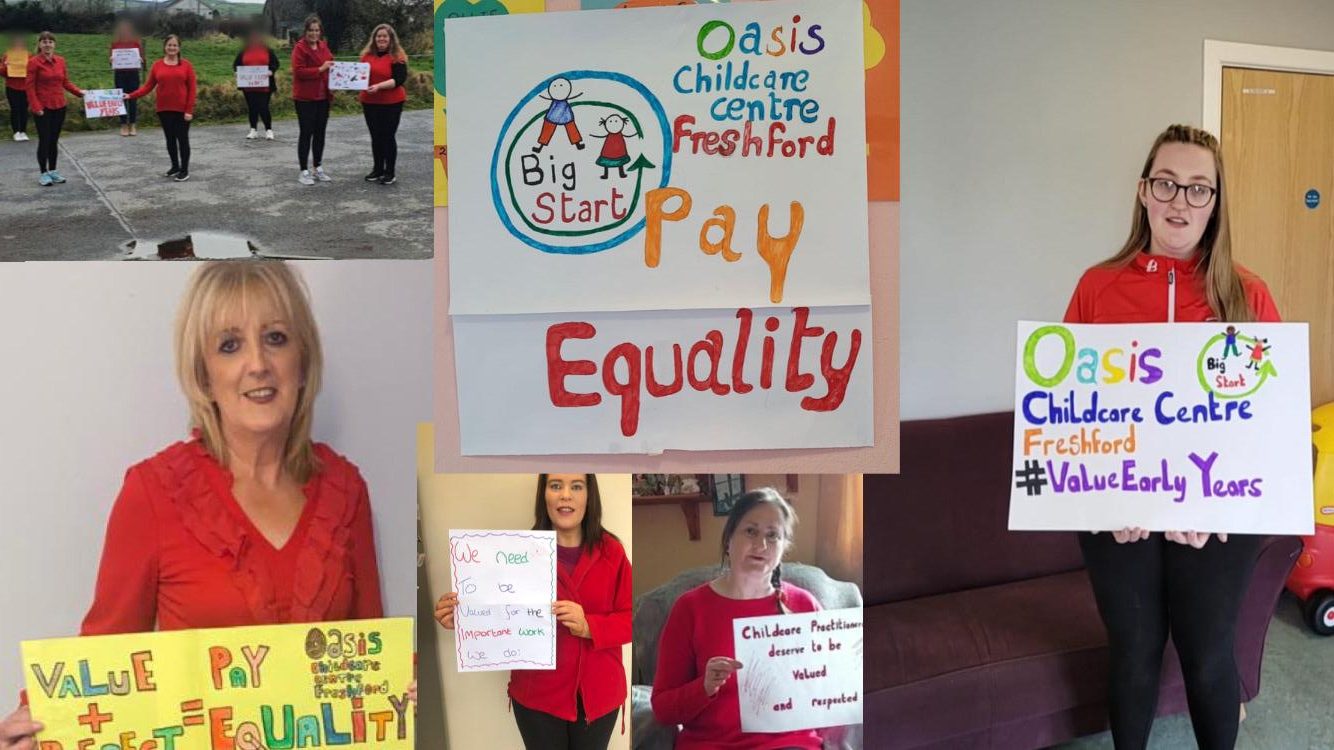
Pictured above: Oasis childcare workers virtually gather to protest. Photos by Caroline Cody Brennan
On Friday 5 February, childcare practitioners took to social media, donning bright red outfits and holding home-made signs, in an effort to raise awareness of the ongoing problems within the childcare sector.
As it stands, many workers earn below the living wage and often have to deal with poor working conditions, while parents are forced to pay expensive rates for the service.
The virtual day of action, which was organised by SIPTU’s Big Start Ireland campaign, highlighted the key causes of these issues – a lack of state investment.
This is why thousands are taking action today👇. Poverty pay and conditions are driving passionate educators from their profession. It is time to #ValueEarlyYearspic.twitter.com/MBNuX50lHG
— SIPTU – The Early Years Union (@EarlyYearsUnion) February 5, 2021
Currently, Ireland invests just 25% of the European average in the Early Years Education sector.
Caroline Cody Brennan, a childcare worker from Kilkenny, says she feels let down by the government.
“I really love what I do, but for the amount of work I do, to be making under the living wage, I think it’s unfair. You hear a lot of empty promises about the government investing more money and possibly giving us raises, but that seems to be all false promises,” she says.
She adds that while this is such a critical line of work, she feels like young people would not be encouraged to pursue careers in the field given the current issues.
“It’s definitely more like a vocation – you have to really care and be drawn to it. There’s obviously no way young people go into this line of work for the money.”
Eve Kavanagh, who is currently undergoing a Level 8 in Early Childhood Studies, says she feels quite disheartened by the issues highlighted last Friday.
“You see so much about primary and secondary school teachers and the urgency of vaccinating them, but it’s like people forget about childcare workers”
Caroline, child care worker
“I’ve always loved working with children, so I knew I wanted to go into [childcare] as a career. But it’s really disheartening to think that even after completing college and putting all this time and money in, that I’ll probably make just above minimum wage. I know that’s the situation for a lot of people, but surely there’s something wrong there.
“It’s such an important job in the functioning of society, and young people just aren’t being encouraged to pursue a career in it.”
The virtual day of action came exactly one year after 30,000 practitioners marched in Dublin city to highlight the lack of government funding – but much has changed since then. As the Covid-19 situation unfolded, so did new issues in this sector.
Currently, childcare workers are in line to be vaccinated alongside teachers in group 11 of the government’s vaccine rollout plan.
But practitioners are now asking to be vaccinated with key workers, who fall under group six of the rollout.
A survey conducted by Amárach Research revealed that 82% of Irish adults believe childcare professionals should be vaccinated along with key workers.
Caroline and her co-workers think it is essential that childcare practitioners receive the vaccine as soon as possible.
“It’s like people forget about childcare workers”
Caroline, childcare worker
“You see so much about primary and secondary school teachers and the urgency of vaccinating them, but it’s like people forget about childcare workers. We are in much closer proximity to the children, pre-school kids and babies can’t socially distance and they sure as hell can’t wear masks. Because of this, it really can make the workplace a scary place to be at times.
“I absolutely think we should be vaccinated along with all other key workers. We have been key workers throughout this entire pandemic. It’s not just going to protect us, it’s for the children and their families too.”
On 11 February, Big Start Ireland released an open letter to Minister Stephen Donnelly, requesting childcare workers be recognised as key workers. Diane Jackson, SIPTU organiser, wrote:
“Our members are at work despite the risk to themselves and their families, they are making an enormous sacrifice on behalf of society in the provision of what is a key service. There is a great deal of fear and anxiety amongst the workforce which has existed ever since services first reopened. We are asking that the case of this workforce is recognised.”
There has been no response as of yet about moving childcare practitioners forward for the Covid vaccine.
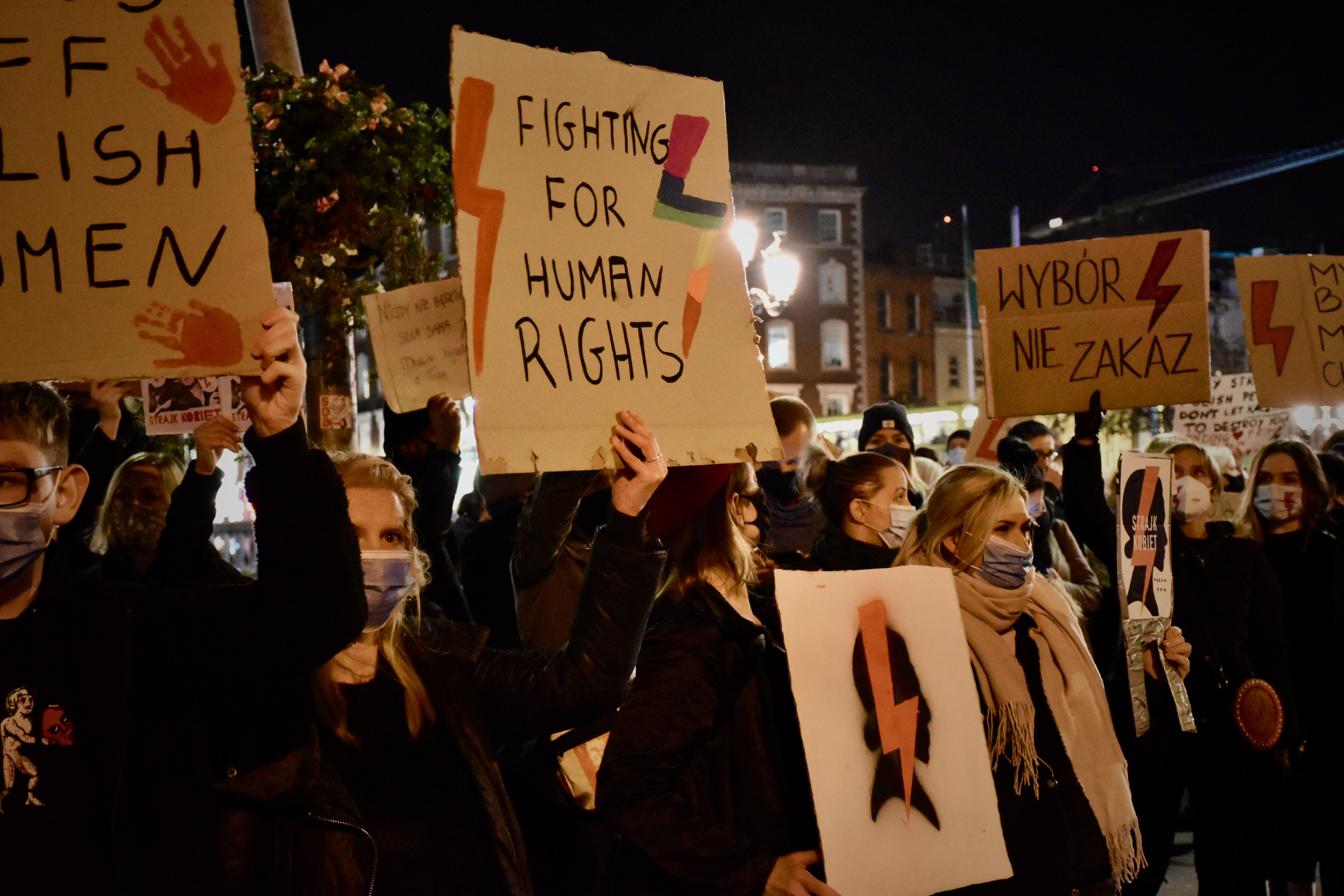
The Women’s Protest became a massive movement in Poland. Women and everyone supporting them took to the streets in a fight for their rights. As protests in Poland hit the third week, similar protests in solidarity with Polish women have been taking place all over the world.
On the 30th of October the march to support Polish women was held in Dublin City Centre. The organisers of the march were surprised by the amount of people that showed up.
Laura Matjusaityte spoke with the organiser of the march Ariana Jeż about the march in Dublin and the situation in Poland.
As restrictions to tackle Coronavirus are in place, some people choose to show their frustration in a form of protest. Many have condemned such protests not only for posing a greater risk to public health, but also for their possible links with far-right groups. Laura Matjusaityte talked with counter protesters and the people supporting them.
Anti-lockdown protesters. Photo by Barry Delaney.
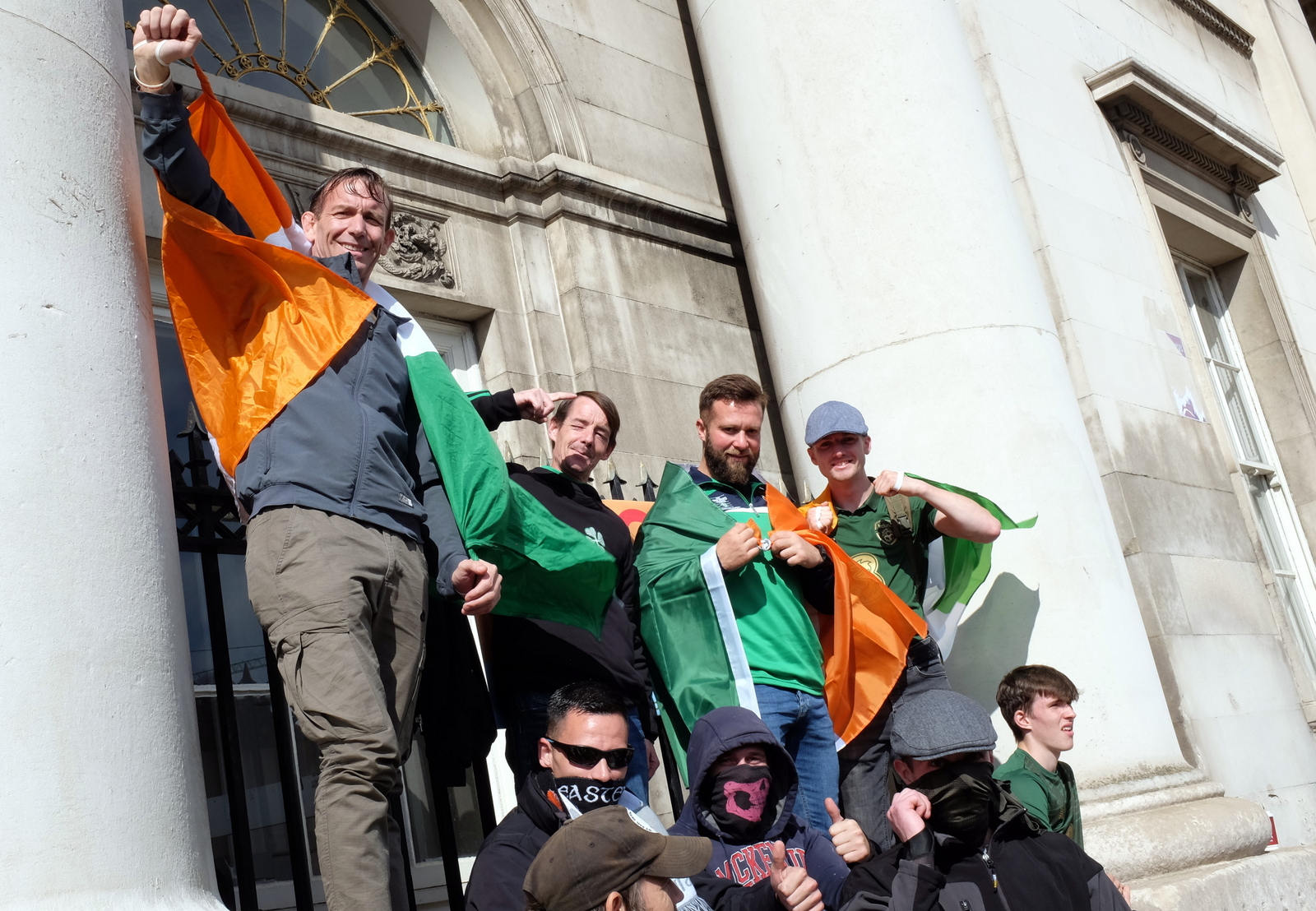
Protests organised by such groups as Yellow Vests Ireland, which claims to be an independent citizens movement, and Health Freedom Ireland have been taking place in Dublin City Centre on the weekends since the start of autumn.
Within a short time the protests seemed to attract even more attention not only from like-minded, but also from opposing groups, which in some occasions ended up in clashes among the demonstrators.
It was reported that up to 100 Gardaí were called in to patrol a protest which took place near the Dail on the 10th of October. There were two instances where Garda intervention was necessary in order to break out clashes among protesters and counter protesters.
During the protest two men, one in his 30s and one in his 40s, were arrested due to the public order offences.
Garda reported that further investigations being carried into the organisers of both the anti-lockdown protests and the counter protests.
The current situation of the pandemic and public anger over government’s decisions has sparked an increase in various conspiracy theories, which are said to be being exploited by far-right leaders in order to gain influence.
The anti-lockdown, anti-mask protests are often being linked with the far-right political parties, the National Party, and the Irish Freedom Party.
Tommy Hamzat, an activist for the Black Lives Matter, said that allowing the far-right activists to organise such events is dangerous.
“Giving them a platform extends their reach and potential to recruit people who are completely unaware of how really dangerous they are,” Hamzat said, on the subject of an incident where an LGBTQ+ activist was assaulted in one of the first clashes against protesters and counter protesters.
The incident happened during an anti-lockdown protest on the 12th of September when a confrontation between the opposing groups started in front of Leinster House. During the clashes LGBTQ+ rights and Repeal the Eighth activist Izzy Kamikaze was struck in the head with a large wooden object and sustained a serious head injury.
Hamzat, talking about clashes among protesters and counter protesters, said that it was expected but “it was a massive disgrace that the Garda didn’t clamp down on the protest even happening”.
Antifa Ireland, an anti-fascist organisation operating in Ireland, is believed to be the organisation behind the counter protests. When asked about the anti-lockdown protesters, a spokesperson from the organisation said that their “only concern are fascists”.
Counter protesters gathered in Dublin City Centre. Photo by Barry Delaney.
“The National Party led by Justin Barrett has links to the German National Democratic Party and Italian Forza Nuova, ” they claimed.
The National Party leader Justin Barrett, known to the public for his strong nationalistic rhetorics, was seen giving speeches to the crowd of cheering protesters outside Leinster House during one of the protests.
The National Party leader is well known for his anti-abortion activism.
Back in 2002, Barrett admitted to the Irish Times that he did speak in the meeting of the far-right Forza Nuova party and participated in the meetings of the far-right German National Democratic party. Back then Barrett claimed that he wasn’t aware that both of these parties were regarded as neo-fascist organisations.
“Anti lockdown protesters, whatever we may think of their ideas, are not our opponents,” the Antifa spokesperson said.
In the midst of the clashes, the existence of the pandemic was completely forgotten. Many recordings circulating on social media show that while counter protesters wore face masks to cover their faces, the original group of protesters did not and the guidelines for social distancing were not being followed.
Hamzat said that the reasons why the safety measures and the threat of coronavirus was forgotten was because “the far right doesn’t care about anyone but themselves”.
“They used the lockdown aspect to get people to come,” he said.
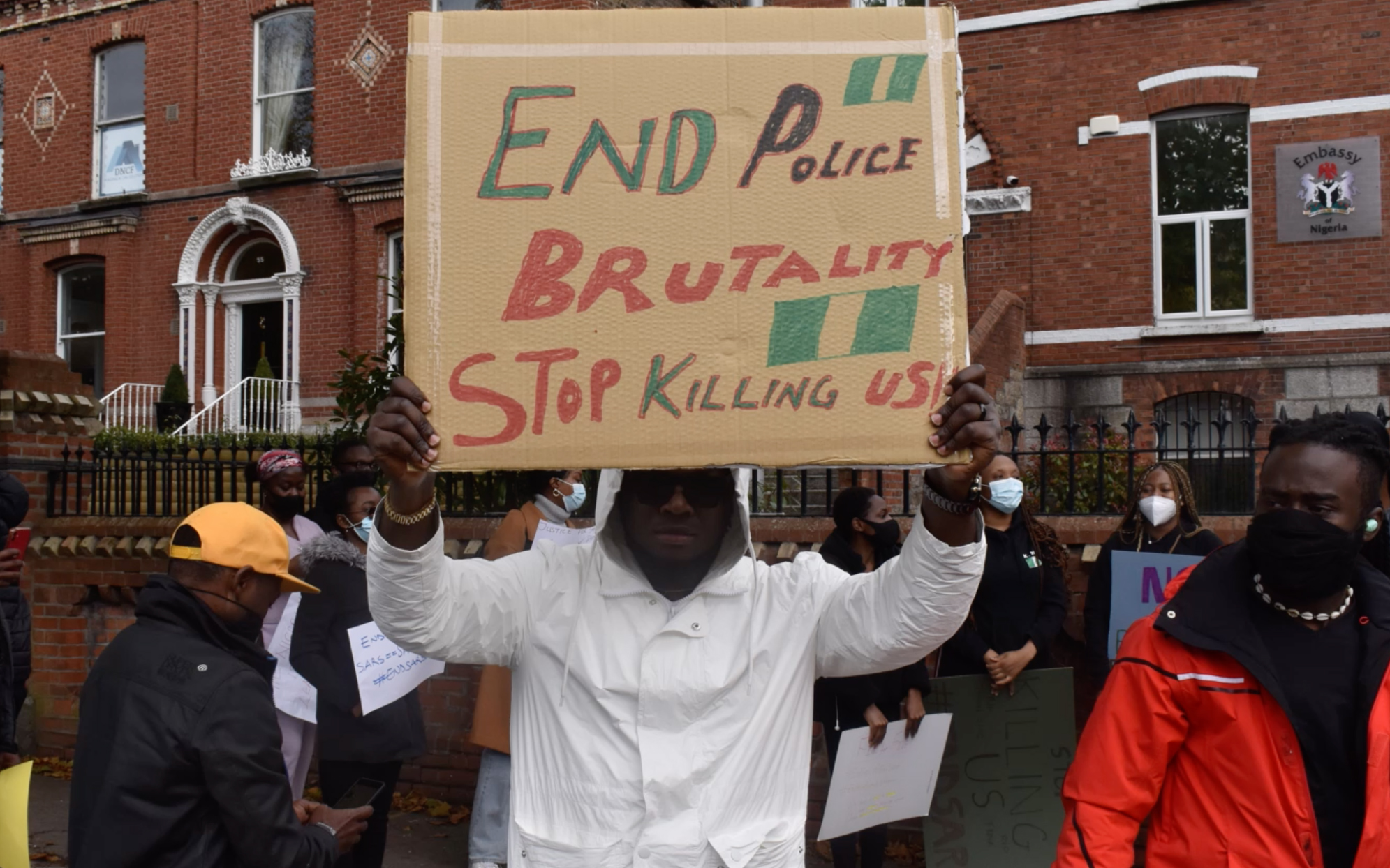
Nathan Davies attended the #endSARS protest in Dublin last week, bringing you images from the event and opinions from protestors on recent police brutality in Nigeria.
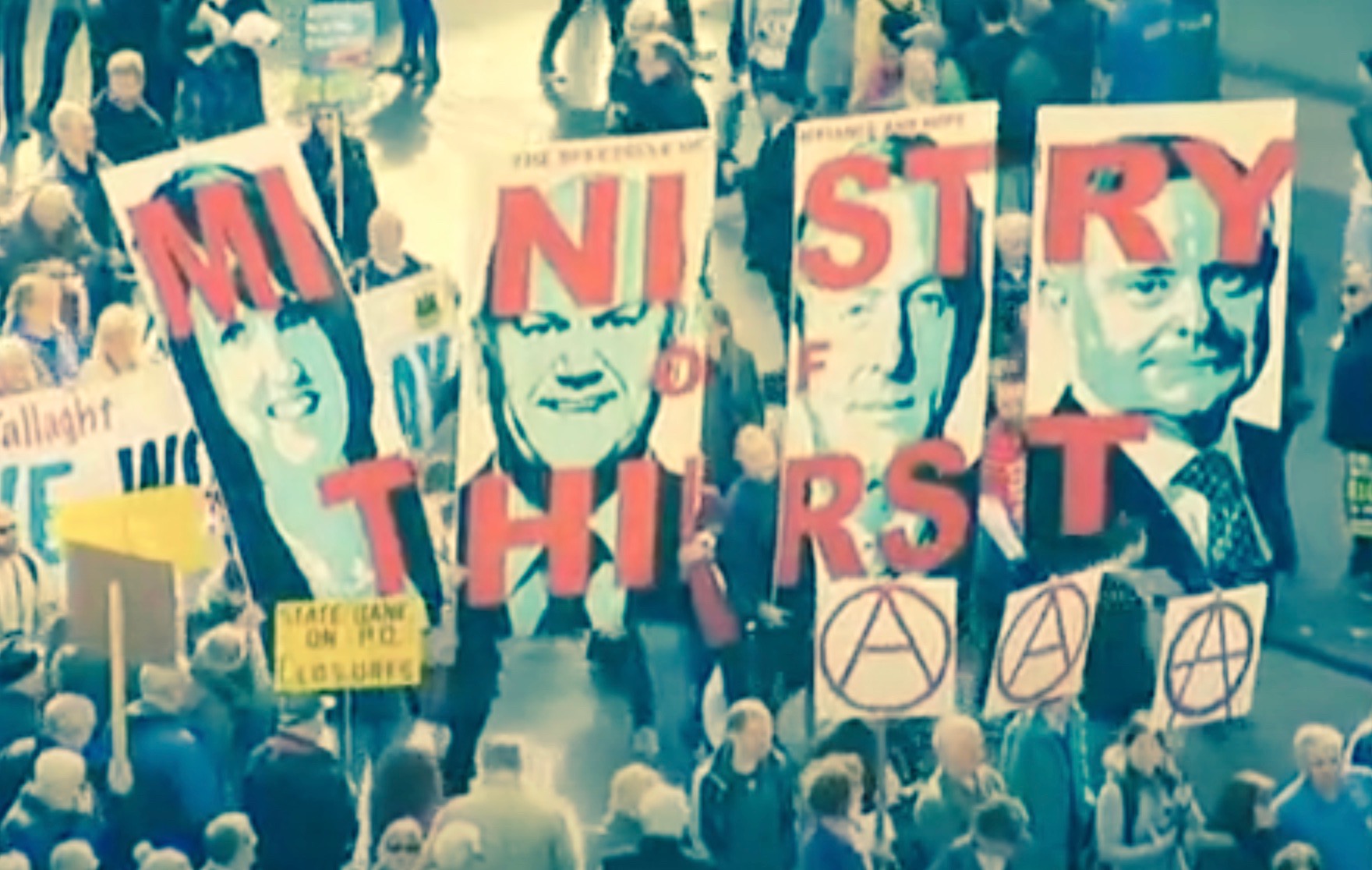
POLITICAL STATEMENT: Thousands marching through Dublin in March 2015 in opposition to water charges (Photo: YouTube)
TCD Professor of Law Gerry Whyte believes he has the secret to lobbying governments on pressing social issues, writes TheCity.ie’s Paul Caffrey
With public anger at fever pitch about everything from housing and homelessness to climate change and childcare, it seems we’re never too far from a major traffic-stopping protest.
Is activism on big issues such as third-level education funding, soaring rents, mental health provision or hospital waiting lists a waste of time?
Mary Lou McDonald celebrating an SF surge on Sunday (Photo: Twitter)
Having won the largest share of first preference votes in General Election 2020, it’s clear that Mary Lou McDonald’s party rode a wave of frustration on a number of those issues.
It’s certainly a shot across the bows for the establishment – with a number of Dáil stalwarts like Transport Minister Shane Ross and Social Protection Minister Regina Doherty losing their seats. Yet, Sinn Féin’s potential role in any new government isn’t yet clear.
But, apart from casting “protest votes” in elections, what else can we do?
According to the co-author of book Judicial Power In Ireland, Trinity College Dublin Professor of Law Gerry Whyte, ordinary citizens who “create a storm” over a pressing social issue have the best chance of bringing about real change.
WATCH: RTÉ highlights of GE2020 Results, Day 1 (Video: RTÉ/YouTube)
Canadian academic Nick Srnicek has robustly questioned the power of marches, protests and other methods of what he terms “folk politics” in a 2015 book he co-authored with Alex Williams, Inventing The Future: Postcapitalism and a World Without Work.
Discouragingly, the pair claim: “This is politics transmitted into pastime – politics-as-drug experience, perhaps – rather than anything capable of transforming society.”
But seasoned Dublin-based law lecturer Gerry Whyte has a different take – and a few tips for any potential changemakers.
Well co-ordinated campaigns on multiple fronts are far more effective than using any single method in isolation, such as staging a street protest or taking the Government to court, Whyte says.
TCD Professor Gerry Whyte (Photo: Twitter/UCD School of Law)
In an interview with TheCity.ie, the TCD academic said: “The idea that litigation can always solve a problem is a little bit naive.
“If you can create a big enough storm about something — and create an impression that there’s a lot of interest on a particular topic — that should get politicians motivated to do something.”
He suggests you might start a petition and/or fundraiser, get the media on your side and march to the national parliament to voice your ire.
The legal expert also recommends getting a specialist pressure group on your side and asking them to lobby TDs for change.
Trinity College Dublin, where Professor Whyte is based (Photo: Paul Caffrey)
While you can sue the State, top judges have far less power to deliver change than you might imagine – even if you win, Whyte asserts.
He suggests that you shouldn’t bother suing the State unless your writ is “in conjunction with political action” to put extra pressure on the powers that be.
However, those mounting a wide-ranging campaign should ideally have “a profile of being politically active in terms of voting,” as politicians will always “respond to a fear of losing their seat,” he said.
“It has to be a group that’s likely to vote and have a significant impact in elections.
“Politicians have an interest in responding to people in the status quo; they have less interest in people on the margins,” the academic added.
FURY: Over-70s taking over the centre of Dublin in October 2008
The activism of the so-called Grey Army of 15,000 demonstrators forced the Fianna Fáil government of the day into one of the biggest political U-turns in the State’s history.
Whyte’s contribution to Judicial Power in Ireland explores the power struggle between our national parliament, the courts and the people when important policy changes are crying out to be made.
The book Professor Whyte penned a section of (Photo: Paul Caffrey)
Over the past 40 years, the right-to-die of the terminally ill, transgender rights and other controversial social problems have been considered by the courts.
But even when the courts ruled in favour of the claimants, those positive decisions have been “frustrated by delay or inaction” in the Dáil, the book points out.
Only painfully slow – or non-existent – legislative change followed key court rulings in a number of high-profile cases because our ruling politicians dragged their heels.
The Wicklow woman died in December 2013 – but to this day, such laws are still only being discussed.
WATCH: Marie Fleming’s partner Tom Curran speaking outside the Supreme Court in April 2013 after losing the right-to-die case (Video: NewsTalk/YouTube)
In other cases where urgent social change was ordered by the courts, governments have left the law unaltered for up to 15 years afterwards, according to the 2018 academic tome.
Unless our TDs simply don’t object to a court’s decision – or are left with “no real choice” in the matter – they are unlikely to change existing laws with any urgency at all, Whyte claims.
Indeed, in recent decades, politicians have often failed to obey court orders from top judges for changes in the law in any timely manner.















You must be logged in to post a comment.