“Our future, our lives, our right to
survive.” This was the chant coming from the crowd gathered outside Leinster
House on Tuesday evening, as Minister for Finance, Paschal Donohoe’s
environmental provisions for budget 2020 were met with a lukewarm reaction from
climate activists and members of Extinction Rebellion.
“Our future, our lives, our right to survive” Credit: Jade Carpenter
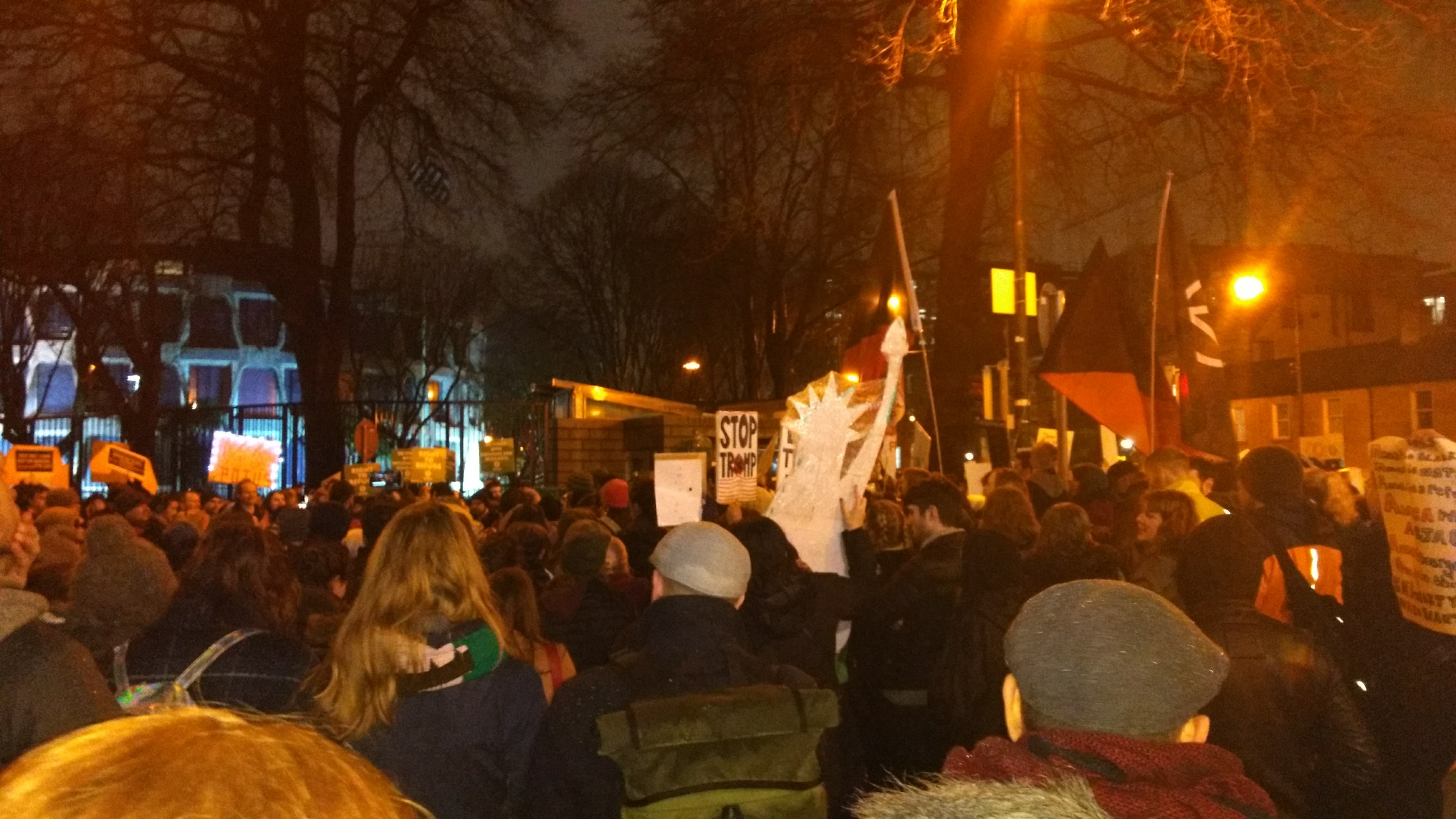
As part of #RebellionWeek, the so-called rebels took to the streets of Dublin to stage sit-ins and protests, calling for action on the climate crisis —but exactly what action are protestors calling for?
“Reducing
cars, reducing traffic, even more bins. We need more recycling bins,” said
protestor Sian Conway. “I live out in Kilbarrack and we had a bottle bank bin
for ages and now it’s just gone. It’s just not there anymore. I think the
government really need to be facilitating people to recycle with more
resources.”
Protesters Luke Byrne, Sian Conway and Brendan McGlynn Photo Credit: Paula Bowden
Photo Credit: Paula Bowden
Photo Credit: Paula Bowden
Protestor, Brendan McGlynn, believes the
government needs to think big to combat the crisis and halt climate change.
“I think there has to be a massive active
involvement to change the systematic problem that we have in place,” said
Brendan. “It has to be across the board a massive change that makes people feel
uncomfortable. You have to make people feel uneasy because everyone needs to
change, and change a lot.
Protester Laura Costello Photo Credit: Paula Bowden
Photo Credit: Paula Bowden
Photo Credit: Paula Bowden
“I think at the minute the government
aren’t really putting all their cards on the table and really going for it, but
they need to, because it is an emergency now and it isn’t enough to just push
recycling as an incentive we need a massive systematic change otherwise things
will just stay the same,” he added.
“The workers, united, will never be defeated” Credit: JadeCarpenter
Iryna, a member of Extinction Rebellion,
was manning a refreshment tent at Merrion Square providing drinks and snacks
for protestors. She told us about their aims for the protest and what action they
want to see.
“Extinction Rebellion’s main goals are; to
tell the truth, organise a citizen’s response, reduce fossil fuels and to
reduce our emissions completely by 2025,” Iryna said. “Every single person
we’ve seen at the sight so far has been so friendly and so supportive and I
think they really appreciate what we’re doing. I do believe we’re doing the
right thing.”
Photo Credit: Paula Bowden
Protester David Larkin Photo Credit: Paula Bowden
Photo Credit: Paula Bowden
Photo Credit: Paula Bowden
Photo Credit: Paula Bowden
Outside Leinster House the focus was very
much on a peaceful protest as activists held banners and sang songs late into
the evening, taking turns at the megaphone to explain their own reasons for
being there. As the Garda barrier around the entrance to government buildings
eventually dispersed, protestors cheered and clapped, serenading members of the
force with a chorus of “Gardai we love you, we’re doing this for your children
too.”
“Gardai we love you, we’re doing this for your children too” Credit: Jade Carpenter
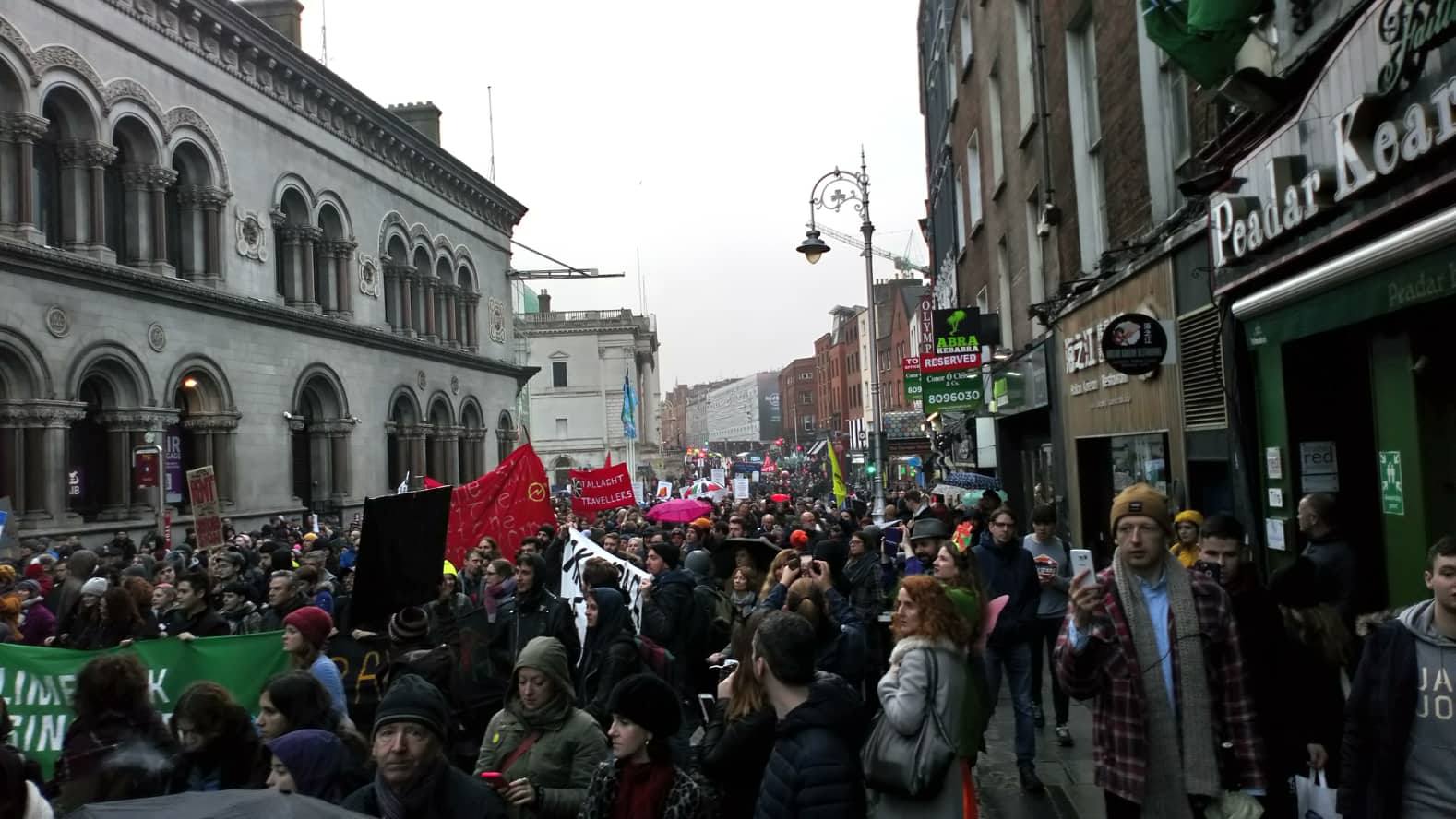
Last week, held on the fourth anniversary of the death of Johnathan Corrie, an estimated 10,000 people took part in a protest organised by the National Housing and Homeless Coalition, represented by about fifty different groups of homeless activists and unions.
The protest began at the Garden of Remembrance on Frederick Street, and followed a path to Dame Street, where spokespeople such as Tina McVeigh of People Before Profit called for Government action to introduce constitutional rights to housing and other measures to combat homelessness throughout the city.
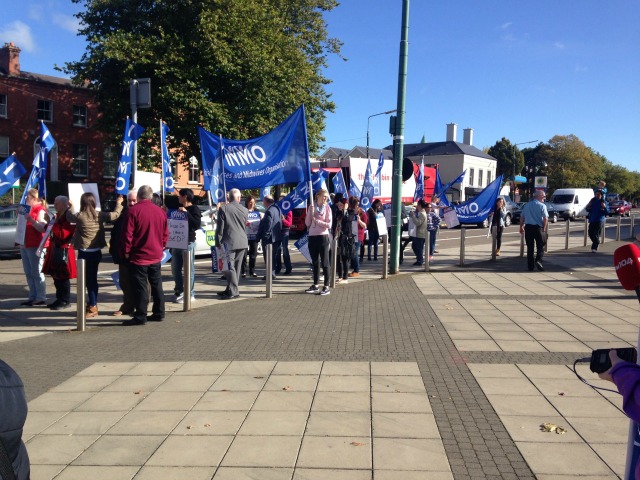
Staff at the Emergency Department in St Vincent’s Hospital took part in a protest this afternoon to highlight the ‘intolerable’ conditions within the department.
Dozens of medical staff and representatives of the Irish Nurses and Midwives Organisation (INMO) came together between 1pm and 2pm this afternoon to demonstrate against severe under-staffing and a shortage of beds within the Emergency Department.
It comes after recent figures showed a 134% increase in the number of patients who spent time on trolleys between January and September this year compared to the same time last year.
Addressing the crowd outside St Vincent’s, Liam Doran, the general secretary of the INMO, urged staff to lean on each other and focus on the patients during this time.
“There’s too few of you and too many patients. Your practice, your needs and the welfare of your patients come before budgets and policies and ducking and diving by those who should know better,” he said.
He also warned that this was just the beginning of industrial action nationwide.
He said: “We’re going to continue negotiating at national level. If we don’t get progress, this hospital will be joined by other hospitals when we ballot them for other work to rules. If we have to have a withdrawal of labour in a collective and coordinated manner, we will.
“Stick with it, lean on each other, put pressure on management, focus on patient care and we will prevail. We are absolutely solid with you.”
Aisling Carr, a nurse in St. Vincent’s, emphasised the importance of finding a solution, as the current situation is putting pressure on staff as well as patients.
She said: “It’s massively stressful. We need to get more beds and more staff for the patients, they’re sitting in there for 3 or 4 days on trolleys. It’s intolerable. Hopefully with the Budget coming up the Government will have some extra money to put into healthcare. Fingers crossed.”
The staff will begin a work to rule as of 8am tomorrow which includes a withdrawal from any clerical work and any non-nursing duties.
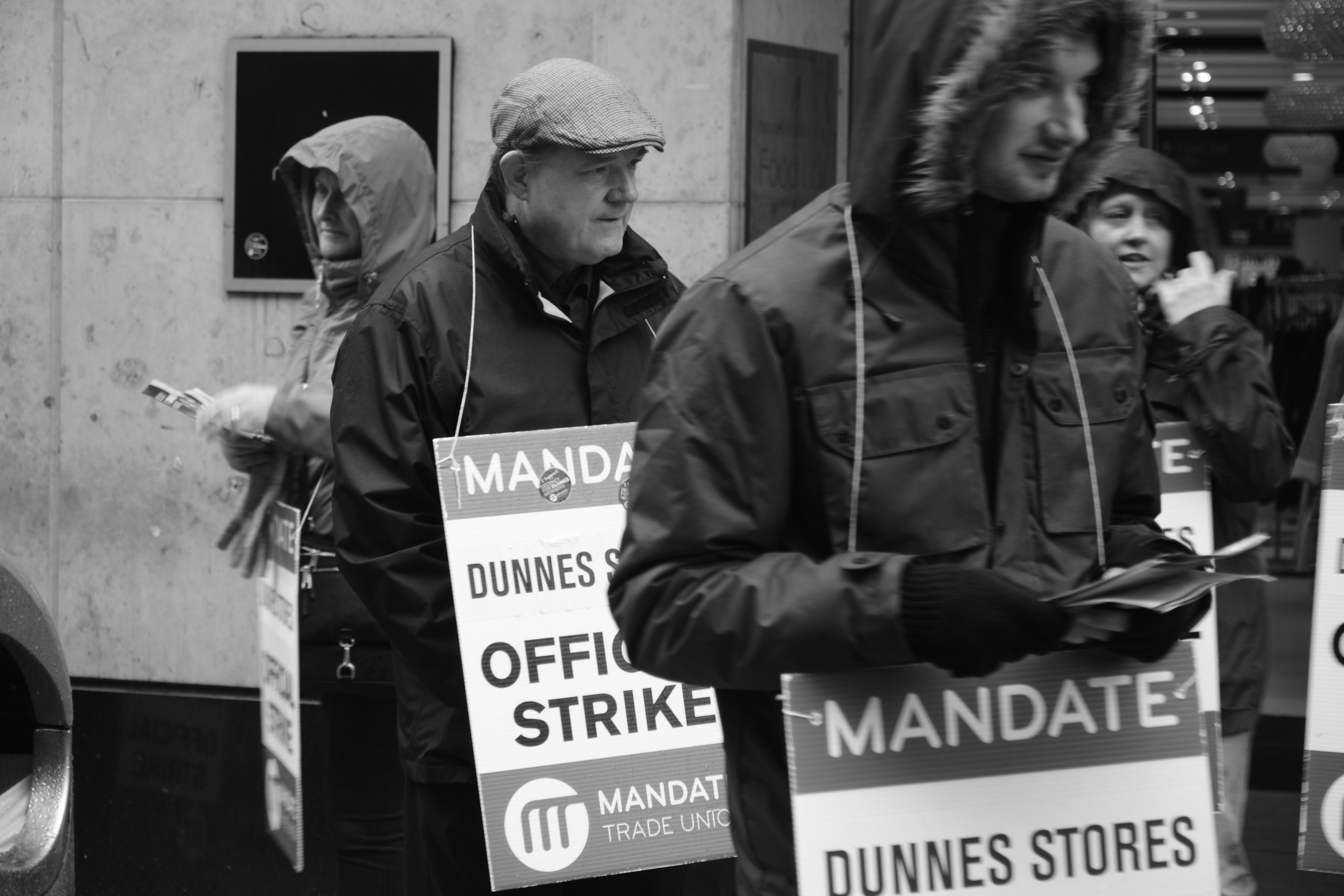
This Thursday, employees from Dunnes Stores went to Henry Street to protest against working conditions, part of a strike against the chain of stores across the country.
The workers are striking for increased job security, more working hours per week and increased pay.
Michael Meegan, organiser for the Mandate trade union, which is seeking to represent Dunnes workers, said: “We claim for better contracts, but the company refuses to talk to us. Most Dunnes Stores workers are working under 15 hours per week. A number of members come to us very frustrated because they cannot get a bank loan or credit union loan.”
While journalists and photographers were watching the protest, some employees were distributing “Decency for Dunnes Works” stickers urging people to support the workers’ claims and not cross the picket line.
Sarah B, sales assistant, said: “Basically, we want security in our job because 15 hours is not enough. What they do is to give you a three month contract and then they let you go and hire someone else.We call for right to representation, secure jobs and fair pay.”
Whatever the ongoing Irish Water debacle may yet throw up, it has so far provided some memorable quotes.
Still not happy, the protest goes on. Photo: Charlie Heasman
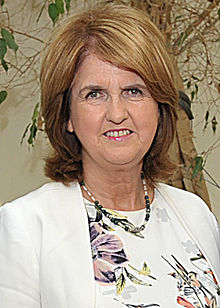
Tánaiste Joan Burton was first off the mark when, at the beginning of October, she made her infamous statement in the Dáil condemning protesters who filmed Garda handling of demonstrations on their “expensive phones, tablets and video cameras.”
Given the circumstances it probably ranks as one of the most ill-advised comments ever made by a serving Irish politician, and her opponents fell upon it gleefully. She might not have actually said that if they can afford iphones they can afford to pay for water, but this was the meaning inferred from her words and her tone. It immediately appeared to turn her into a figure of hate for the anti-water movement.
Since then she has been booed and heckled wherever she goes, with protesters sharing and mobilising through social media in order to keep track of her movements.
The culmination of all this so far was the fracas in Jobstown, Dublin.
Allegations and counter-allegations have been made as to who did what and who was to blame for it, whether it was a peaceful protest or a riot, who should apologise and on what basis to who, but what is not disputed is that Burton was trapped in her ministerial car for two hours by angry demonstrators.
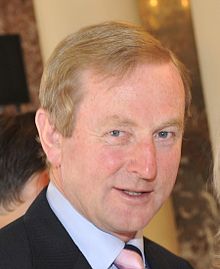
This led to Enda Kenny bitterly complaining in the Dáil that the protesters had “descended on her like hounds after a fox”. One organisation responded immediately. Sensing an opportunity, The Irish Council Against Blood Sports stated that if Mr Kenny felt that strongly on the subject he should…
… Ban fox hunting.
Meanwhile as far as the demonstrators are concerned it is still open season on politicians.
At the Rochestown Park Hotel in Cork, Fine Gael citing “security fears”, pulled out of a planned regional meeting which Mr Kenny was due to attend. Perhaps in part because Enda himself attended a function in Dublin where he was confronted outside the Mansion House by a group of some 50 protesters.
When asked to comment on their concerns he replied: “Well it’s not about water, is it?”
His response might have been off the cuff but nevertheless it happens to be the most succinct and insightful comment he has made so far. It is not just about water any more; it is about the Irish people saying enough is enough, and a significant portion of them bringing the Government to account.
Unfortunately Enda’s moment of lucidity did not last long. Two days later, appearing on RTE’s Nine News to discuss changes to the water charges, he managed to iterate “The average worker, a single worker on the minimum wage of €35,000 is going to get back €400 in the income tax returns starting in January…”
Once again the mob bayed for blood; the man’s so out of touch with the people he thinks the minimum wage is twice what it actually is. No wonder himself and Joan think that people can afford to own mobile phones and pay water charges.
To be fair to Enda, it was probably simply a slip of the tongue, which is something we are all occasionally prone to. The difference is that when we suffer one it is invariably either ignored or immediately forgotten; a politician, and a Taoiseach at that, must always be on his guard or regret it. Like Joan Burton’s faux pas earlier, this one did him no favours.
Meanwhile the Government has been forced into a massive climb-down. PPS numbers are gone, a €100 Water Conservation Grant promised to every household that signs up, rates reduced and capped until 2018. Opposition TDs are accusing the Government of “buying votes for the next election”, and in a way they are correct in saying so.
But the simple fact is that the Government had no choice. To carry on regardless against the will of the people would have been political suicide at the next election. For the time being at least the situation has been defused, but there is still a long way to go.
What happens after 2018? Will charges inevitably go up? People still remember the introduction of the Bin Tax: recyclables free and “You only pay for what you throw away.” The service was to be Local Authority run and not to be privatised.
What happened to all those promises then? Can we expect the ones we are getting now to be broken in the same manner in three year’s time?
“People shouldn’t be afraid of their government. Governments should be afraid of their people.” So said the 2005 film V for Vendetta. Right now Enda Kenny should be very afraid of his people.
Enda. Out of Touch
When the Fine Gail/Labour coalition came to power they faced an onerous task. The banks were bust, the economy was in ribbons and some tough decisions had to be made in order to clear up the mess left by the previous Fianna Fáil administration. The electorate knew this and left them to get on with the job.
To be fair, the Government made a pretty good job of it for a while. Yes, austerity hurt, but sacrifices had to be made and the people uncomplainingly acquiesced. Wages were cut and taxes raised. As a result things slowly seemed to be getting better.
And then came Irish Water.
Whatever any one person might think about the merits of water metering, the state of the infrastructure and the necessity of paying for its refurbishment, the roll-out of Irish Water was a farce on the grandest scale. It provides the ultimate textbook working model on how not to go about setting up such an institution.
The NAMA sale of Siteserve, a bankrupt company with debts of €100m, to Denis O’Brien, Ireland’s richest man, was the first of a long litany of controversies. That €100m was immediately written off and the debt foisted on to the taxpayer. A few months later Siteserve was awarded, by the Government, the very lucrative contract to install the new water meters.
Shortly after this every household in the country was sent an ‘Information pack’ inviting them, with a deadline, to apply for metering. This without any indication whatsoever at the time of how much they were agreeing to be charged for the service.
PPS numbers were demanded, not just for the principal occupier, but for every man, woman and child in the house. Bank details and email addresses were also requested.
The arrogance of the Government and Irish Water was breathtaking. What right had they to expect people to sign a legally binding contract for water without even being told how much it was going to cost? And to then demand their personal details and PPS numbers to keep on file into the bargain? Who in their right mind would ever agree to such a thing?
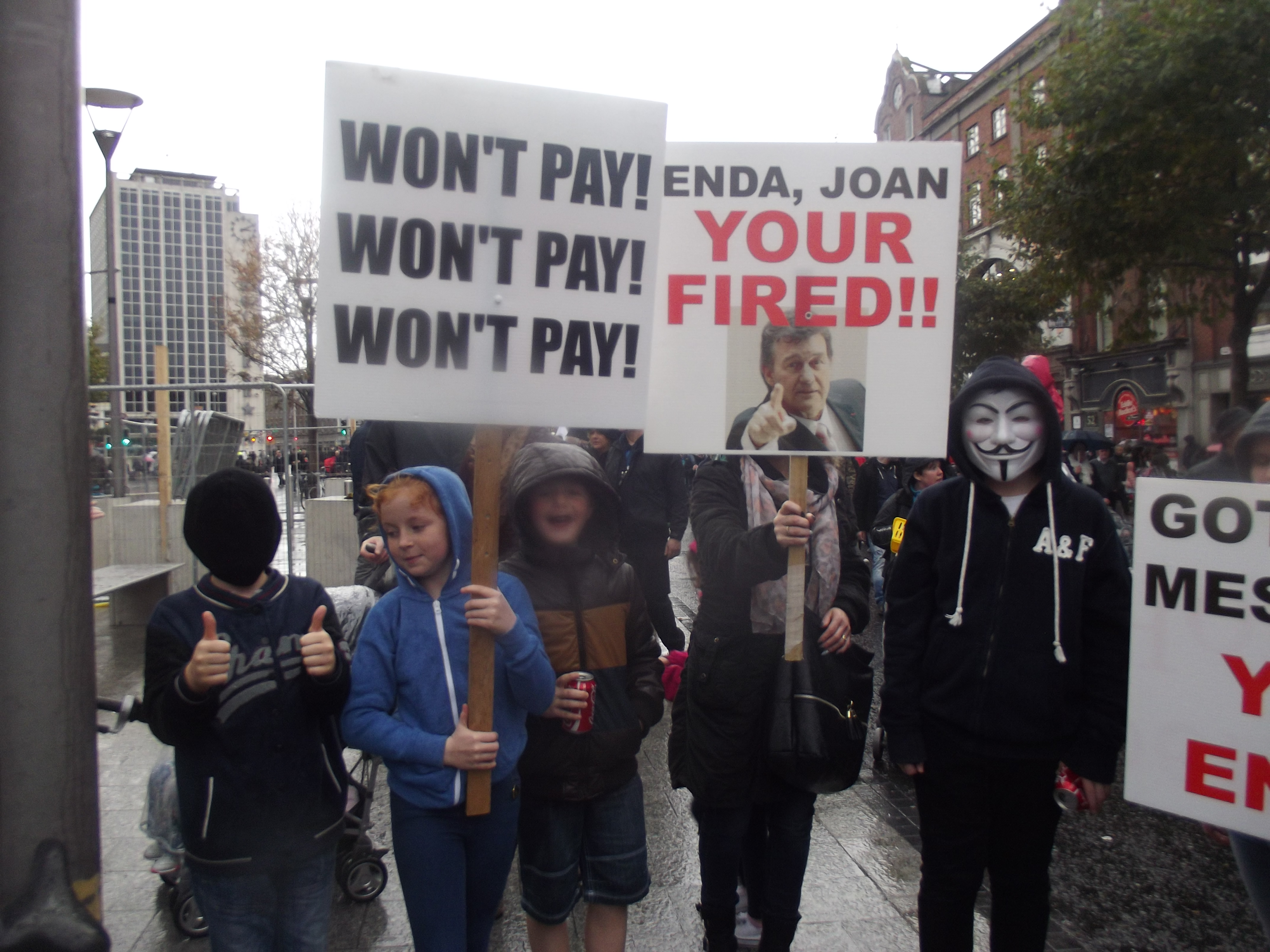
Unsurprisingly the people were outraged and took to the streets in protest. Some marched; others blocked the installation of the meters themselves. Many filmed themselves doing so.
Joan Burton, in a further show of Government arrogance, subsequently complained in the Dáil that if people could afford expensive mobile phones to film with then they could certainly afford water charges. Who pays for your phone Joan? Answer: the taxpayer.
The people have continued to march and plan to march again.
All of this means that the country is rapidly becoming ungovernable. A government rules by the consent of the people and the people are withdrawing that consent.
Enda Kenny says that the only alternative to water charges is to raise income tax on the upper four per cent. What is so very wrong with that?
The poor and lower income earners of Ireland have borne the brunt of austerity for years. Cuts in incomes and Social Welfare have been mirrored by increased taxation. A little trimmed off here, a little taken from there. They have given up to the point where they have nothing left to give. Meanwhile the rich have escaped and become progressively richer at their expense.
If this Government is to survive it must win back the trust and confidence of its people. To do this it must first admit it has made mistakes and then redress them. An admission might be humiliating, but it will be telling no-one anything that they don’t already know. It is their only course of action.
And it is to be hoped that they succeed.
Never in the history of the Irish State has the electorate been so divided. If an election were to be held tomorrow many Irish voters may decide not to vote at all or lend their support to non-party candidates.
Voters have always had notoriously short political memories, but even they are not yet ready to forgive Fianna Fáil. Labour has all but disappeared off the bottom of the opinion polls and the various socialist parties never seem able to pull together in a coherent way. Green is gone; if anyone even remembers them.
The rising star in the Irish political firmament is now Sinn Fein; despite all the controversy regarding alleged IRA killings and the moving of sex offenders south of the border. Ordinarily it would be more than reasonable to expect these allegations to damage the party; but this does not seem to be the case now. Could it be that the people are so desperate for a party to vote for that they are prepared to overlook these transgressions?
In any case, for all its political posturing Sinn Fein has no experience of government at national level and experience is what is needed now.
Much the same can be said about the only other option: Independents. While there are many laudable and honourable such politicians out there, and I for one would be tempted to vote for some of them, a rainbow coalition of Independent TDs is not what a strong government is about.
Ireland needs a strong government, now as much as ever. Fine Gael can still be that government but it is absolutely essential that it gets back on track and becomes a government for the people; not against the people.
Saturday November 1 saw a nationwide day of protest against the proposed introduction of water charges.
Marches were organised in all the major cities and towns across the country, with the largest gathering taking place in Dublin. Smaller local marches took place throughout the greater Dublin region in the morning, with protesters then coming together in the city for the main event at 2pm.
There were two starting points: one at Connolly Station, the other at Heuston. The two groups marched on their respective sides of the Quays before joining and converging at the GPO in O’Connell Street.
As with last month’s march the atmosphere was good, with no reports of arrests. At the same time, however, a palpable feeling of anger against the Government and Irish Water pervaded. The message which the people were sending out was “enough is enough”, and that after years of austerity they were not prepared to be squeezed any more.
Unlike many parts of the country the rain held off for most of the day, but by late afternoon the bad weather had set in and many people did not stay for the end of the speeches. Nonetheless, the organisers once again claimed a higher turnout than expected, pointing out that the sheer volume of protesters sent a clear message to the Government.
Speaking at the Fine Gael presidential dinner in Dublin that evening, Taoiseach Enda Kenny said that the Government would not be scrapping water charges. He admitted, however, that mistakes had been made in their introduction, and that the setting up of Irish Water had been badly handled.
He went on to point out that the alternative to water charges would be an increase of 4% on the higher bracket of income tax, an option which he was not prepared to consider.
Meanwhile, the latest opinion poll for the Sunday Independent shows a further slip in Government popularity.
Dissatisfaction with the Taoiseach has grown to 67%, up 9% since September; Joan Burton’s popularity has also slipped by 8% in the same period.
The poll also asked voters who they would vote for if a general election was called tomorrow. Results suggest that Sinn Féin, at 26%, is now the most popular political party in the country, ahead of Fine Gael at 22% and Fianna Fail at 20%.
Further water protests are planned for the end of this month.







You must be logged in to post a comment.