Tag: review

  • BLOOD AT THE SCIENCE GALLERY


    "Blood Vessels" by Charlie Murphy, made of borosilicate glass filled with red and blue toluene that's used in thermometers.
    “Blood Vessels” by Charlie Murphy, made of borosilicate glass filled with red and blue toluene that’s used in thermometers.

    As soon as you walk in through the glass door of the Science Gallery, you are greeted by the large sign that says “Blood: Not for the faint-hearted”. It really isn’t.

    If you’re prone to getting squeamish at the sight of the tiniest trickle of blood, you might want to miss this one. However, if you’re fascinated by the crimson red liquid that runs through your veins and want to learn more about it, you need to see this exhibition.

    25 different installations and artworks in the Science Gallery incorporate the main theme of blood, exploring its nature, its scientific use and its perceptions in our society.

    The whole atmosphere in the gallery space is eerie in the evening, with dimmed lights illuminating the intriguing installations: a baby sculpture made out of freeze-dried animal blood; a vampire killing kit with four different sizes of wooden stakes; various one-man cinema quarters with videos of stem-cell extractions and blood transfusions; a machine that lets you feel the blood pressure through the aorta by holding the aortic arch simulator; and many more.

    If you have some time to kill, you can even stand in the pitch dark corner to watch as luminol drops down onto a sculpture made of blood and resin, slowly revealing the structure made by Beatrice Haines. Luminol is the substance that’s used in TV criminal dramas like CSI, where the cops are looking for evidence of blood residue in crime scenes.

    You see, blood on its own doesn’t really show up under fluorescent light. First, forensic scientists would pour luminol over the area and then illuminate it with the bluish-green light. When luminol comes into contact with the haemoglobin in the blood, it glows under the light.

    This is one of the more fascinating installations, however it does take time to truly see the structure in its full form. Apparently, it’s approximately 20 minutes, though it does take a lot of patience to stand still in pitch dark while concentrating on one spot.

    Another interesting installation is the work of an electronic artist, Rafael Lozano-Hemmer. It’s called “Pulse Index”, and it is an interactive installation where you can scan your finger on a sensor located in a small tube-shaped digital reader. The scanned image instantly pops up on the screen and keeps moving sideways.

    All of the participants’ fingerprint scans are accumulated into a digital gallery and displayed onto a huge monitor, divided into hundreds of smaller screens – each person’s finger scan travels along the screens and gets smaller and smaller until it reaches the end of the installation. Finally, the picture completely disappears into the maize of finger scans. The scanner is so precise that it even picks up the tiniest sweat droplets off your finger.

    This slideshow requires JavaScript.

    Sequence 01_2


    “Blood Jukebox” is yet another interactive installation that catches people’s attention. There was even a queue to this intriguing device. This machine, made by the art collective, Robot Versus Future, reads your pulse and tries to estimate your age, generating tracks from your teenage years.

    Additionally, it reads the tempo of your pulse and picks a song that matches the beat – the faster your pulse, the more upbeat song the machine generates.

    The exhibition at the Science Gallery runs until 25 January and is open to the general public, though it is recommended for over 15s due to its gory and bloody nature. (No sign prohibiting vampires from entering, though. Mind you, that would get quite messy, what with the free buffet of blood installations and curious mortals lurking in the dark corners of the Science Gallery.)

    Photography by Aida Skirmantaite.
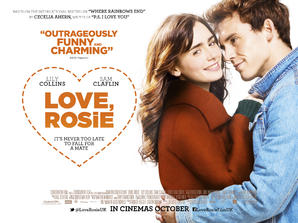
  • PS “Love, Rosie”:  a rom com with a difference

    PS “Love, Rosie”: a rom com with a difference

    Lily Collins’ eyebrows. This was the main reason I wanted to see “Love, Rosie”. Obviously the trailer has me interested, who doesn’t love a good rom com.

    The film is loose adaptation of Cecelia Ahern’s book, “Where Rainbows Ends…” and follows Rosie and Alex, childhood friends, and their constant conflict with bad timing in search of their happily ever after. Through flashbacks and passing years the film shows life’s strain on the typical boy/girl friendship. However despite the supposedly ageing lead characters, Lily Collins and Sam Claflin looked as young as ever by the end of the film.

    Cecelia Ahern’s latest book adaptation was shockingly good. I know not to judge a book by it’s cover but with the ‘Diddly aye potato’ accents that came with ‘PS I Love You’s’ adaptation I had my concerns, however I needn’t have with director, Christian Ditter abandoning half attempted Irish accents.

    The film is set in England and Boston, however Irish viewers will notice that all is not as it seems with the supposed backdrop of England really being set in our own fair city with views from St Stephen’s Green shopping centre and The Harlequin on Drury Street.

    The 102 minute rom com had laughs, sighs and a few tears as well from beginning to end. And although there was no complete plot twist, the film definitely had the viewer hooked from beginning to end with it’s cringe situations and witty one liners.The film itself was uplifted by it’s time travelling soundtrack with tunes from The Ketchup song to Lily Allen’s “F**k You”.

    The daughter of Rock’n’Roll royalty, Lily Collins is an ideal lead as the part of English Rose meets girl next door. Her portrayal of the hopeless heroine Rosie Dunne, without being the typical chick flick damsel in distress breaths a new lease of life into this romantic comedy. And her on-screen chemistry with the film’s eye candy, Sam Claflin brought the characters credibility.

    Overall “Love, Rosie” was an extremely enjoyable film which kept me entertained until the end and had me wanting to watch it again. And yes, Lily Collins’ eyebrows were fabulous and flawless throughout.

    Image courtesy: Lionsgate Publicity

  • Falling out of Love/Hate

    Falling out of Love/Hate

    When it ended just before Christmas last year, Love/Hate season three had provided Irish viewers with some of the best television ever produced by the national broadcaster.

    Stuart Carolan had struck gold with his gritty crime drama set on the streets of Dublin.  Drawing in viewers in the hundreds of thousands each week, Love/Hate had the perfect formula.

    Carolan and his team of writers showed no loyalty to characters and were willing to wield the proverbial axe over any star on the show.

    This past Sunday saw the conclusion of season four in the hit drama, and viewers across the country are feeling more than slightly disappointed.

    After the colossal conclusion to season three, fans were expecting another major bombshell this time around.  Unfortunately, this bombshell never came.

    The final episode, as well as the season as whole, is best described as a let-down.  The fourth season followed crime boss Nidge, portrayed brilliantly by Tom Vaughan-Lawlor, as he tries to import a major drug shipment through Dublin port.

    Throughout the six episodes, audiences watched as the Garda drug squad monitored Nidge and his crew.  The stage was set in the final episode for either a major drugs bust which would see Nidge and his “associates” arrested.  When the moment came though, the Gardai, lead by Detective Mick Moynihan (Brian F O’Byrne) made their move to early, and could not pin anything to Nidge.

    Much of the series is based around the importing of drugs through Dublin Port. Image by William Murphy on flickr
    Much of the series is based around the importing of drugs through Dublin Port. Image by William Murphy on flickr

    Many characters throughout the season, who had major roles in the previous season, were brought back simply to play bit parts culminating in them being killed off.  I’m speaking of course of Dano, played by Jason Barry, and Debbie, played by Susan Loughnane.

    In sporting terms, the writers behind season four of Love/Hate bottled it.  They had the potential to create something fantastic, but the series went so slowly, and in such an elongated manner, it suggests that it was written just to set up season five.

    While Carolan and his writers failed to kill off any major characters, the season finale saw two minor characters meet their maker.  Young gun for hire Wayne Cardiff was gunned down by a former friend, while dentist Andrew played by Peter O’Meara was suffocated by Fran (Peter Coonan).

    The deaths of these characters almost make much of the season’s events pointless.  Wayne (Barry Keoghan) spent the majority of the series attempting to hunt down Nidge in order to kill him. However, almost miraculously, all was forgiven and forgotten between the two after a minor run in with the Gardaí.

    O’Meara also had the potential to play a massive role in the outcome of the series, after he agreed to help Moynihan and his drugs squad before being killed by Fran, without the latter even knowing of the dentist’s involvement with Gardaí.

    While the final episode did help to increase the mounting tension between Fran and Nidge, the series never reached the anticipated heights it was believed to be capable of.

  • A Swashbuckling Adventure

    A Swashbuckling Adventure

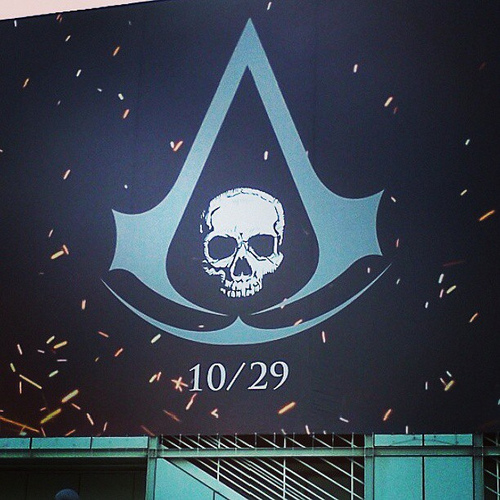
    After the cliff hanger ending of Assassin’s Creed III, where fans of the video game series were left to wonder if protagonist Desmond Miles was dead or alive, last week’s release of Assassin’s Creed IV was hotly anticipated.

    The sixth multi-console release in the series, Assassin’s Creed IV was developed by Canadian gaming company Ubisoft, and had great expectations to live up to; it does not disappoint.

    This is the first time the series has diverged from the line of important periods in history.  Having experienced the Crusades with Altaïr, the Renaissance and Ottoman Empire with Ezio and lastly the US Revolution with Connor, Assassin’s Creed IV follows the story of Edward Kenway, an 18th century Welsh pirate operating in the Caribbean Sea.

    Edward is the grandfather of Connor, the protagonist from Assassin’s Creed III, and in this game we learn how Edward went about trying to make money in order to return to his family in Wales.

    Conor Kenway, the protagonist from Assassin's Creed III is the grandson of Captain Edward Kenway. Image by Rooster306 on flickr
    Conor Kenway, the protagonist from Assassin’s Creed III is the grandson of Captain Edward Kenway. Image by Rooster306 on flickr

    There are no major differences in gameplay between this game and its predecessor.  As expected, this game is heavily focused on maritime missions and travel in order to arrive at the main missions which usually occur on land.

    In the early stages, gameplay can prove to be almost tedious at times. Instead of enjoying the game, there is a feeling that you are playing just for the sake of it.  The story may appear to be fragmented and a little difficult to grasp also. However, one small bombshell later and this game completely changes.

    The graphics, as usual, are fantastic.  Every minor detail is accounted for, from rogue waves during a storm at sea to pods of dolphins breaching in the wake Edward’s ship, the Jackdaw, leaves behind it.

    The subplot is also extremely interesting.  Instead of following a modern day protagonist in a third person view, following Desmond’s demise, the player now actively takes over as the protagonist in the first person.  Working under the premise that you are researching for a “new pirate based video game” for Abstergo, you are recruited by insiders in the company to try to discover what the company’s real aims are.

    In full, Assassin’s Creed IV is a thoroughly enjoyable game for any fans of the series. Although maybe not matching the excitement of the previous instalment in the series, IV is a worthy purchase.

    Score: 8.5/10

  • Bastille grace Olympia stage

    Bastille grace Olympia stage

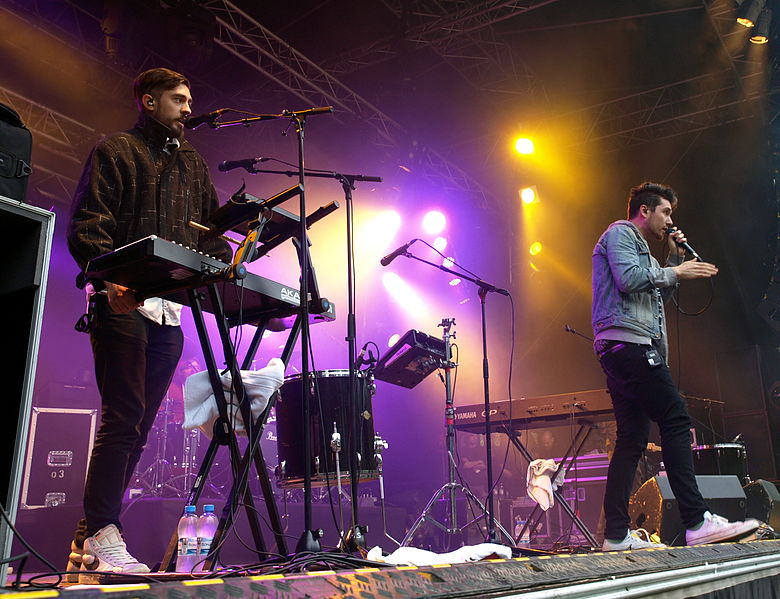
    Provinssirock_20130614_-_Bastille_-_12
    Image courtesy of Wikipedia Commons

    There’s something endearing about a band that repeatedly thanks the audience for coming out to see them. It’s a refreshing display of humility and gratitude in an industry that is becoming increasingly dominated by money. But as Bastille took to the Olympia stage on Friday night, it was clear that the London quartet are still getting to grips with their newfound fame.

    Opening with catchy hit Badblood, what is immediately evident is an affectionate casualness between the four lads that almost makes you feel as if you’re watching your friend’s band rehearse in his basement, rather than the global chart toppers who are actually on stage.

    What’s not casual however, is their performance. Flashing strobe lights, snare drums and questionable, yet infectious dance moves are all a loud accompaniment for the band’s blend of indie-rock and electronic pop.

    Not one to chitchat, lead singer Dan prefers to let his voice do the talking as he effortlessly rattles his way through popular hits Overjoyed and Things We Lost In The Fire.

    At one point during the night, Dan decides that he wants a piece of the action and jumps into the crowd while launching into a rendition of Flaws much to the delight of his many admirers.

    The setlist is an eclectic mix of new records such as Campus and Brave combined with old familiars like Laura Palmer, These Streets and Weight of Living Pt. II.

    They even throw in a cover of City High’s What Would You Do? which instantly goes down a treat among their predominantly young spectators. It’s a generous delivery of 17 songs that is more than enough to satisfy the masses.

    During the encore, Dan playfully asks the audience to join in on his dancing during club anthem Of The Night, and of course the crowd are only happy to oblige.

    As they bid farewell with their most well-known hit Pompeii, every single concertgoer jumps to their feet, a sure sign of an enjoyable night.


  • New movie takes quirky look at sex addiction

    New movie takes quirky look at sex addiction

    thanksfors

    Modern society is bombarded by sexually themed marketing but when it comes to getting personal, it often comes with an air of disillusionment.  People with a desire for sex may walk the walk but not talk the talk. Such an attitude seems unbelievable. In his new film Thanks for Sharing, director Stuart Blumberg attempts to remove this stigma.

    Starring Mark Ruffalo and Gwyneth Paltrow, Thanks for Sharing follows the lives of Adam, Mike, and Neil as they battle to overcome an addiction that has taken over their lives.

    Adam (Ruffalo) is a successful environmental consultant living in New York, who after being sober for five years seems to be well on the road to recovery. This is until he falls for attractive cancer survivor Phoebe (Paltrow), who begins to question her feelings upon hearing Adam’s revelation.

    Mike (Tim Robbins) is Adam’s sponsor, and also head co-ordinator of the group sessions. For the past 15  years, Adam has dedicated his life to providing support for recovering addicts. But, in the midst of helping others, Mike has neglected his relationship with his own son Danny (Patrick Fujit), who has returned to the family home after struggling with an addiction of his own.

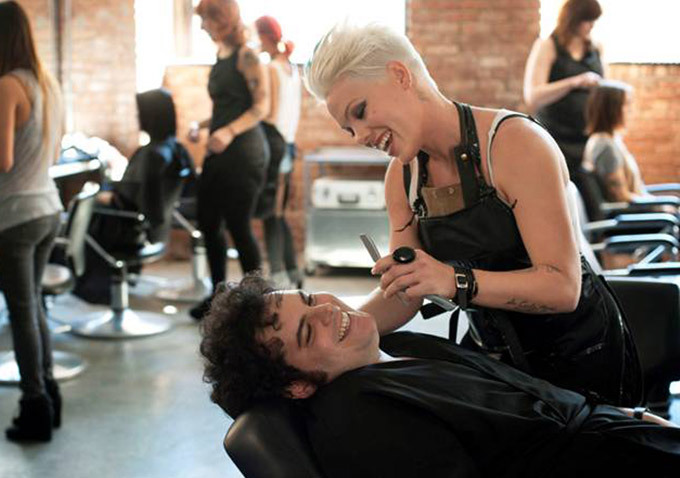
    Neil (Josh Gad) is an emergency room doctor and Adam’s mentor, who in the beginning is unwilling to take his addiction seriously.  However, when inappropriate behavior results in him losing his job, Neil is determined to turn his life around. It is during this time that he encounters fellow addict Dede, played by popstar Pink. Together, they keep each other in check, acting as a motivator each time one of them shows signs of faltering.

    With instances of subtle humour throughout, Thanks for Sharing is an insightful, yet surprisingly enjoyable drama that explores the dark and lonely side of addiction, while illustrating the importance of family and friends in striving for a positive outcome.

    Image top via Facebook


  • New thriller ‘Prisoners’ captures audiences

    New thriller ‘Prisoners’ captures audiences

    This taut, suspense filled psychological thriller starring Hugh Jackman and Jake Gyllenhaal is, without a doubt, one of the best films of the year so far.

    Taking place over seven days, Prisoners follows the search for Anna Dover and Joy Birch; two six-year old girls abducted from outside their homes on Thanks Giving, as well as the mental and emotional toll this takes on their families.

    Jackman excels as a man struggling to come to terms with his daughters disappearance
    Jackman excels as a man struggling to come to terms with his daughters disappearance  [credit:cinemablend.com]
    The film begins at a break-neck pace, the opening credits barely finished rolling before the girls go missing. However, this is by no means another fast-paced action flick, the next two hours slowly building suspense and gathering pace to culminate in a breathless final sequence.

    Jackman is again hugely impressive, this time as devout survivalist Keller Dover, father of the missing Anna. Keller’s desperation to find his daughter and the strain this puts on his faith is a central theme to the story.

    Following Dover’s descent into violence is Detective Loki, the intriguing police-officer who has never failed to solve a case up till now. Gyllenhaal’s range is apparent here, his restrained performance as the tattooed loner-cop with the facial tick at odds with his last role in the light-hearted End of Watch.

    Troubled cop Detective Loki
    Gyllenhaal as troubled police-officer Detective Loki         [credit: popmatters.com]
    The film’s subdued sound-track helps cultivate the sense of tension through-out the film, while the prevalence of trees and other wooden objects is a subtle nod to Dover’s inability to see ‘the wood for the trees’ in his manic attempts to locate the missing girls.

    ‘Skeletons in closets’ (or under floors) are another key theme; histories of characters becoming increasingly relevant as the film progresses. Indeed, the consistent mentions of both Dover and Loki’s pasts are invaluable in developing a three-dimensional sense of the protagonists.

    At its heart though, Prisoners is an impressively told story, one that reels you in and keeps you on the edge of your seat right up to the final second.