
Tag: slider

  • Is driving dead in Dublin?

    Is driving dead in Dublin?

    Will we go back to pre-pandemic bumper-to-bumper traffic jams? Image courtesy of Life of Pix via Pexels.com

    Over the last year, Dublin’s city centre has gone through periods of being like a ghost town, with shops, restaurants, and retail outlets shut down, causing reduced traffic and nearly barren streets due to restrictions.

    Drivers, businesses, cyclists, and pedestrians are all competing for space in the city, and with the pandemic’s demand for outdoor spaces the competition for space is more prevalent than ever.

    The Covid-19 mobility plan has introduced new cycle lanes citywide, leading to movements like the Cycle Lane Action Group sprouting up to oppose road space being handed over to cyclists.

    Reducing the number of cars in the city isn’t anything new – before the pandemic, the installation of Luas tracks meant fewer streets in the city could be driven through. Dublin County Council’s city development plan has, since 2016, been working to make Dublin into a pedestrian and cyclist friendly city.

    If you do choose to venture into the city by car, the parking prices are often sky-high, with spaces ranging from 60 cent to a whopping €3.20 an hour.

    Is Dublin’s city centre destined to become pedestrianised, with public transport walking, and cycling being the only way to venture into the heart of the city? And is that such a bad thing?

    I asked the people of Dublin for their thoughts on the matter.

    “At 30km you’re barely moving. I understand safety but I don’t think it’s fair”

    Brian

    Earlier this month, the Love 30 campaign backed by Lord Mayor of Dublin Hazel Chu, sought to bring the speed limit of the city down to a blanket 30km/h in an effort to improve safety and reduce road accidents.

    However, while the campaign garnered some support it was also met with backlash from certain members of the public and some county councillors.

    The campaigners are now attempting to bring in a 40km/h, which will apply to roads like Dorset Street and the Clontarf Road.

    “At 30km you’re barely moving. I understand [it for] safety, but I don’t think it’s fair. The guy in the car now, the motorist, is being penalised for every single thing. People are paying high car tax and insurance, and I think they have a right to bring their car [into Dublin city] and pay exorbitant prices in car parks,” says Brian, a Dublin native.

    These streets belong to the pedestrian! Image courtesy of Jeshoots.com via Pexels.com

    This frustration is understandable for those working by car or van in and around the city. Changes in infrastructure over the last few years has already meant changing routes and a reduced speed limit, which can lead to further disruption of services and cause motorists frustration and stress.

    “The government and the councils have tried to get rid of cars and traffic from the city centre for long enough, some of us live areas not too far from the city who do not have an adequate public transport system”

    Brída

    What about those sharing the road with motorists, the people whose safety this campaign is trying to protect – would a lower speed limit make the city safer?

    “Absolutely, especially for cyclists as well. I know there’s a lot of talk ‘oh you know they’re not paying road tax’ but a lot of cyclists are motorists as well, and they cycle in the city. I’ve cycled on the ‘Tunnel of Death’ on Westmoreland street and it’s tricky enough, especially for cyclists but pedestrians as well,” says Jo, an avid cyclist who I met on Grafton Street.

    While there are some clear benefits to this proposal, it’s unclear if the Love 30 campaign will be robust enough to stave off its critics, and that plan may already be dead in the water.

    However, this campaign isn’t the only plan to change the city’s infrastructure.

    Minister for Transport Eamon Ryan and the department of transport have released a paper proposing that congestion charges should be implemented in Dublin and Cork city.

    This is in an effort to reduce carbon emissions by discouraging motorists from driving in the city – reducing traffic and air pollution.

    “Today is my first time in the city for god knows how long and I’ve just found it so easy to cross the road”

    Stephen

    “A lot of people already leave their cars in train stations and travel in by train,” says Graham from Dublin, who agrees with the idea of congestion charges.

    For pedestrians, less traffic around Dublin city is a nice prospect – especially when they’ve become accustomed to it after a year of lockdown.

    “Today is my first time in the city for god knows how long and I’ve just found it so easy to cross the road. There’s buses but there’s not so many cars, which I was surprised by because I thought people were genuinely back at work, and I’ve really enjoyed that, but then again I’m a bit of an introvert,” says Stephen.

    Apart from pleasing the pedestrians, the environmental benefits of congestion charges are clear, and can be seen by the success of cities like Stockholm.

    But, is the city ready for a change like this?

    “The government and the councils have tried to get rid of cars and traffic from the city centre for long enough. Some of us live areas not too far from the city that do not have an adequate public transport system. We’re not near the Luas, not near the proposed underground and we have an appalling bus system,” says Brída, a Rathfarnham native who feels strongly that the government should focus on improving public services before ridding the city of cars.

    It’s clear that something needs to change, and it needs to provide adequate services to the public while considering the environmental impact.

    If we are to tackle emissions in a meaningful way traffic needs to be reduced, but if the intention is to pedestrianise the city further, the public transport system may need a closer look.
  • Superclubs in the Celtic Tiger – the Temple Theatre revisited

    Superclubs in the Celtic Tiger – the Temple Theatre revisited

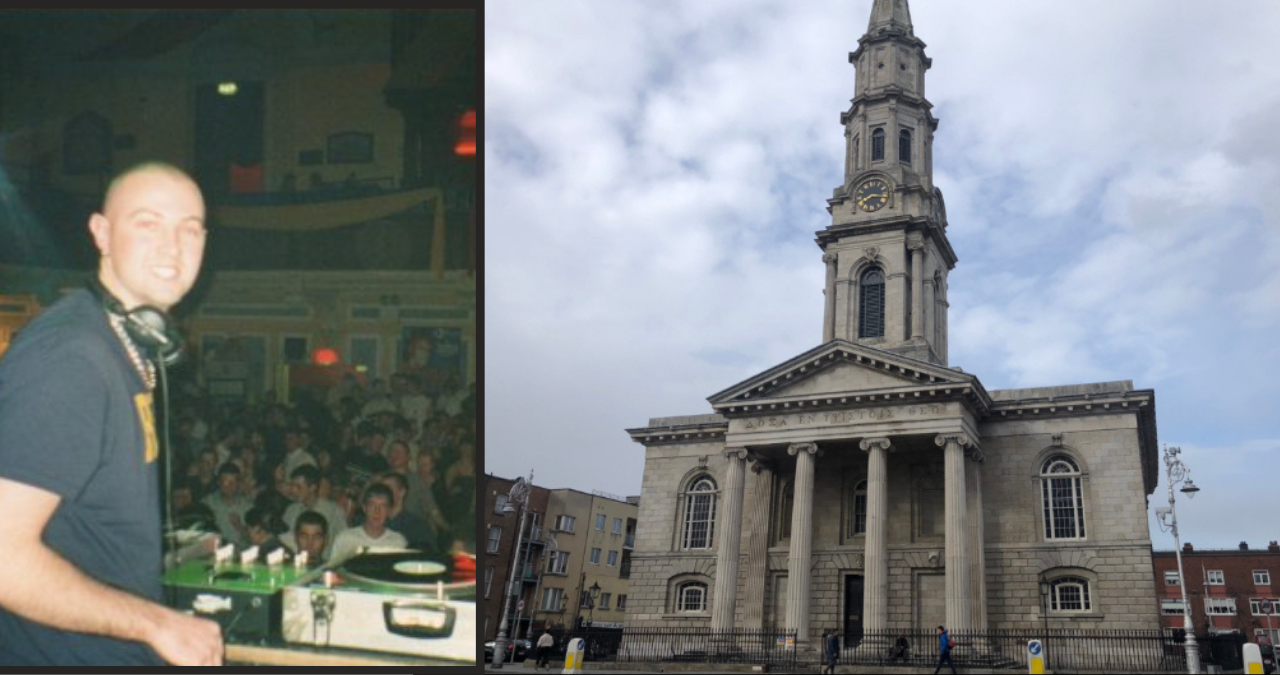
    Dj Orbit playing in the Temple Theatre (left) Image via Temple Reunion. St George’s Church (Right), photo taken by Mario Bowden

    Ah, clubbing. How I miss it.

    The past year of idle inactivity has confronted many people my age with a tug-of-war-like stand-off between the inevitability of growing up and past memories of socialising in basement dance floors with chest-rattling baselines. I prefer the latter.

    This trip down memory lane led me to wonder: What was clubbing like in Dublin during the Celtic Tiger era? Was the extravagance of the times retold to me an exaggeration? Or a fever dream? Were they really living it large in ridiculous and experimental ways? As it turns out, yes, yes they were.   

    Passing hands

    The Temple Theatre was a nightclub in St Georges Church on Temple Street, in Dublin’s north inner city. Set up in 1996, three million pounds was invested in the site to convert it into a music venue and theatre space. The club held 3,000 people, with two bars – converted in the vaults of the former church.

    Formally home to the Church of Ireland, St Georges Church dons a triple-tiered steeple. The original architect, Francis Johnston, also designed the GPO on O’Connell Street. The Church’s bells are also of note, having been mentioned in Dublin-writer James Joyce’s Ulysses.

    Up and running

    After building momentum and enthusiasm from the general public, Temple Theatre became a hit. The club started picking up big names coming into the millennium – Paul Todd, Paul Cox, Green Velvet and Italian DJ Mauro Picotto – to name a few. Temple Theatre always had a host of local DJ’s too, providing space to play to a crowd and promote their work.

    But Temple Theatre was not a standalone thing in Dublin in terms of ‘superclub’ stature. Dublin hosted an array of similarly big clubs like The Kitchen in the Clarence Hotel, owned by Irish rock-band U2 and the Spirit nightclub on Abbey Street. What Temple Theatre offered differently was a unique clubbing space – tucked far away from Temple Bar’s jarring bustle.

    Of course, when we think of Temple Street, techno is not the first thing that comes to mind. With the children’s hospital a stone’s throw away – an über nightclub club does not seem like the most suitable of neighbours. Loud music, drink and drugs and disobedience all became a fixture outside the place – a ‘rough shop’ one local tells TheCity.

    The club used to do “Flash event” promos too – getting a famous person into the club to build a bit of hype. One such celebrity drafted in for the night was former Irish TV host and Big Brother star Anna Nolan. Former journalist Jason O’Callaghan remembers covering a story on Nolan’s appearance – but also remembers the pitfalls the club began to see.

    St George’s Church, formally the Temple Theatre, photo by Mario Bowden

    “It was a massive club to fill. [There was] no parking and it was hard to get to. So they started letting everyone in to fill it,” says O’Callaghan, speaking to The City.

    Alas, Temple Theatre closed its doors in 2003, having its last party in late September. The superclub era was dying, and after seven years, the fire went out. A spokesperson at the time of its closure told The Independent, “superclubs are not happening anymore, and people would rather stay in smaller, more intimate venues.”

    Changes to Ireland’s licensing laws for pubs and bars that same year are also noted as a factor in Temple Theatre’s locking up for good. Clubs required an extra music licensing law to stay open longer than 12:30 am. And, at most, they could only stay open until 2:00am at the latest rather than the former time of 4:00am.

    Dublin’s clubbing future

    As Ireland emerges from its lockdown, nightclubs and music venues will inevitably be among the last things to reopen.  And with Dublin being dug up for rental properties and the hotelier industry, it is unclear what cultural spaces will be available, come the day.

    On 26 April, Jigsaw, a cultural and clubbing space on Belvedere Court announced that it was shutting its doors for good.  The spokesperson for the Give Us the Night campaign, Sunil Sharpe, told the Oireachtas that cultural spaces and venues need more protection.

    “We are going to need a lot more spaces. We need a clause, a cultural clause,” Sunil says.

    “With all the development going on right, there has to be cultural spaces within those buildings. It’s not good enough to let developers do what they like with these spaces,” Sunil continued.

    Undoubtedly, Dublin’s music spaces are feeling the heat of the pandemic. Could Dublin’s vast amount of empty properties and spaces be used more creatively? While it was a different time and era, the Temple Theatre proved that just anywhere can be a dance floor.

    To visit the Temple Reunion facebook page: click here

  • Pandemic as muse? Artists on their art in a year of lockdowns

    Pandemic as muse? Artists on their art in a year of lockdowns

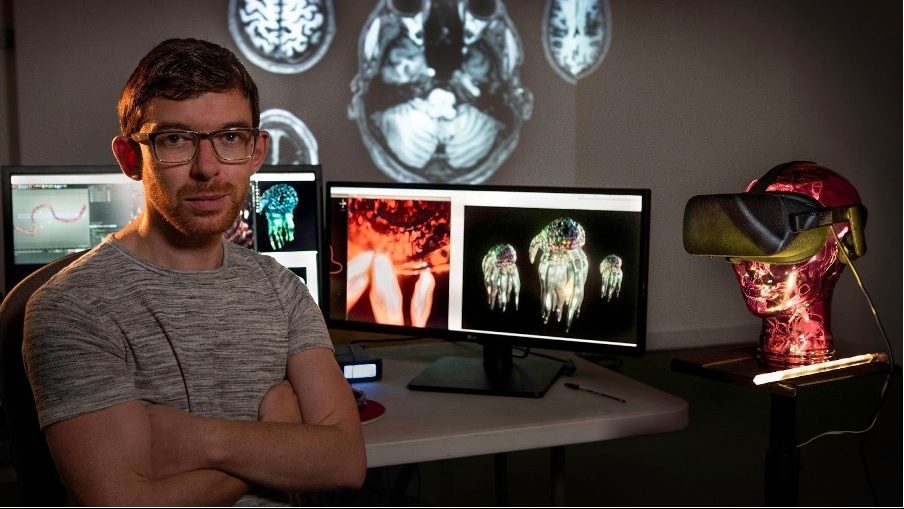
    Alan James Burns in his studio. Photo courtesy of Trevor Whelan

    Alan James Burns

    “I’ve had to move a lot of work online, which is quite interesting because it’s something that I never thought would be possible,” says Cavan-born visual artist Alan James Burns. “I usually create large events with up to 50 people attending, so that went completely out the window. Moving online has opened me up to be able to work from my bedroom, or work with international partners because you kind of break down the idea of having to be in the studio together.”

    Burns says he “can’t work now without putting in the context of the pandemic somehow.”

    “When I’m writing up my ideas and developing new works, it’s all with the context and background of this last year.

    “Everyone’s gone a lot more digital now, and the idea of the human machine – the digital world and our interconnectedness with that – has started feeding into a lot of new works I’m creating. I’m working with brain computer interfaces – looking at the idea of the human machine and what possible futures are like when we become more integrated with technology, which the pandemic has forced us all into.”

    Along with Sinead McCann, Burns is currently collaborating with users of intellectual disability services at St John of God Hospital in Dublin, as part of an artist in the community project. Participants are receiving training in audio recording and editing, and the piece they’ll create together will be exhibited on Culture Night in September.

    “That came about because of the pandemic. With everyone being at home, we decided to create a work, and the one medium we could think of that people would have access to tools, like a phone and stuff, was sound. So we’re all recording sounds and editing them together remotely online.”

    Tonally, Burns says his latest output has been “actually more hopeful than what it probably had been before the pandemic. The works that I’m creating have more joy within the production and also within what they’re trying to achieve for an audience when they do engage with it. So rather than looking negatively outward, they’re looking positively outward.”

    Burns says the Irish government’s Pandemic Unemployment Payment (PUP) has been a lifeline in compensating for cancelled projects.

    “Actually, I’m better off [than before the pandemic] thanks to the PUP. As an artist, you have no regular income, you live on minimal amounts of money, so the PUP was the first time many of us got a living wage that you could rely on.”

    Upcoming work: “Open Mind, Closed System”, Carlow Arts Festival, Co Carlow (June 2021)

    Ella Bertilsson

    Ella Bertilsson. Photo by Ella Bertilsson

    For Swedish multidisciplinary artist Ella Bertilsson, the initial lockdown last March was a case of life imitating art.

    “In the month before lockdown,” she tells The City, “I was working on a piece where I did a performance from inside a cardboard box, which was all about being trapped in a domestic space. That opening was I think two weeks before [the first] lockdown. So that was a super-odd coincidence.”

    In terms of concepts, Bertilsson feels the pandemic “will probably feed into my art at some point, but I think at the moment I find it hard to tell.”

    In terms of practice, however, her studio’s closure forced a rethink, as her workspace became “a tiny sewing machine table in a tiny room” at home.

    “I was like, ‘What do I do now?’ So, that was nice because it really brought me back into drawing a lot. I ended up illustrating a book cover and went back and sold a lot of prints, and I did a lot of photography. So the circumstances had an impact on my practice. It definitely had a creative impact. I’m now working with 35mm photographs I took around my neighbourhood every day for six months, and I’m turning them into digital collages with written text. That will be in my solo exhibition in Ballina next year.

    LOOPING SQUIRREL by Ella Bertilsson, music by Economusic

    “I hadn’t been doing drawings since my BA really,” continues Bertilsson, who’s been based in Ireland for the better part of two decades. “Now I’m drawing, and I’m printing and I’m doing things that I would have done a long time ago, so I think that’s kind of nice because I’ve done a bit of a circle and now it’s part of my practice again.”

    Bertilsson says she has “really enjoyed” the slower pace of the last year, in which she’s had “time to reflect on the work, and not have the pressure of exhibitions”.

    She counts herself fortunate to have been funded by the Arts Council for a number of projects in the lead up to and during the pandemic.

    “I think I was kind of lucky that I had that time to apply for awards,” she says, “and didn’t really have to use the PUP at all.”

    Upcoming works: Solo Exhibition, Ballina Art Centre, Co Mayo (2022),  Solo Exhibition, The Complex, Co Dublin (2022)

    Marcel Vidal

    Marcel Vidal. Photo by Marta Faye

    Sculptor and painter Marcel Vidal came into 2020 having picked up three prestigious awards in the previous year and landed a partnership with a commercial gallery.

    “I was in the midst of making work for a solo show,” Vidal says, “so that work had been established and the ideas were in place of how that might manifest itself. In a way, the work, as it’s developed, it’s changed in terms of what the overall show might have or potentially could have appeared like. It has a lighter tone. 

    “Some of my work would be large-scale cultural installations that are predominantly black, with paintings hung around the sculptural objects, whereas now the show is going to take on a lighter tone. The weight of [the work he is known for], its energy, is at this time unnecessary. So that all left my brain, and then it became about being in the studio [to focus on painting].

    “But it’s also maybe just that, as an artist,” continues the Wicklow native, “you find a way to manage the work. So for me, painting has been the easiest form to work in, in terms of just the practicalities of getting into the studio and being motivated. So in that way, [the pandemic] has influenced my art, in that I haven’t thought about sculpture, or that overall idea of making sculpture. But in conceptual or thematic elements, it wouldn’t play in that way. The type of art I make is never trying to speak on current or topical issues in that way.”

    The possibility of exhibiting Vidal’s show online was mooted, which he found “quite difficult, because it’s imagery that has a materiality, a physicality and a present. If it goes digital, the viewer is not having their own personal experience with it in a space. 

    “You come to a gallery or exhibition space with a set of criteria or a set of expectations as a viewer. And for me, the image and how it’s displayed and how you navigate that space – that brings out something else and that’s personal to that viewer. But if it goes into a digital format, you lose that context and it becomes something that could be viewed in distraction while doing something else. The subtlety of the work would be diminished and it could be misrepresented too.”

  • Podcast: Sophie Doyle Ryder making a splash at 18

    Podcast: Sophie Doyle Ryder making a splash at 18

    18 year old Sophie Doyle Ryder is making a name for herself in the Irish music scene. Photo by Ray Keogh

    At just 18 years old, Sophie Doyle Ryder already has four singles under her belt. Her third single Too Much made it to number nine on the top 100 Irish Artists on Irish Radio.

    Ryder writes all of her own music and says that, while lockdown has been tough (her first headline show has been postponed four times in the last year), it has allowed her to throw herself into writing more songs than ever.

    “When all this does end, I have no issues just releasing as much music as I want and doing as many gigs as I want because I have all these songs that I’ve written,” says Ryder.

    Her music has drawn comparisons to other artists like Anne-Marie and Rihanna, and while she welcomes the comparisons, Ryder is also putting her own individual style into her songs.

    As she waits for the go-ahead for her first headline show in Whelan’s music venue in Dublin, Ryder is already looking to the future, with hopes to release an EP in early August and a full album planned for 2022. 

    As a Malahide native, Ryder has one important goal for the future.

    “The one place, before I die, I hope I can play Malahide castle … that would just be a dream.”

  • Baseball Ireland: An American past-time becomes a new Irish tradition

    Baseball Ireland: An American past-time becomes a new Irish tradition

    Can baseball hit a home run in Ireland? Photo courtesy of Tom Kelley

    Ireland has become a more diverse place, and with that, our national past-times are changing and evolving.

    Baseball, although a niche sport on the island, is a melting pot, with players of all different backgrounds and cultures. 

    “Since Ireland is now such a globalised culture and society, interests beyond what had been traditionally available to people living here have expanded,” explains Tom Kelley, the president of Baseball Ireland.

    Inclusivity is something the President of Baseball Ireland prides himself on. “Our leagues definitely represent modern society. We have nationalities from all over the world, which also tells you that baseball is a global sport, not just an American past-time.”

    “We are proud of our league that involves teams in the Republic of Ireland and Northern Ireland.

    “We have nationalities from all over the world, which also tells you that baseball is a global sport, not just an American past time.”

    Tom Kelley

    “While the majority of players are Irish, we have players originally from the United States, of course, Canada, continental Europe, Japan, South America, even Iceland,” he explains.

    Baseball has developed as a niche sport in Ireland, but has gained popularity all across Europe – Baseball Ireland have played teams from Slovenia, Italy and Portugal in the European Championships. 

    Kelley states that one of his greatest accomplishments was “hosting the European Baseball Championship Qualifiers in 2018 and winning this tournament.”

    “Baseball is a minority sport in Ireland at the moment” says public relations officer of Baseball Ireland Adrian Kelly. 

    The sport may seem like an American past-time, but the hope from Baseball Ireland is that it is going to become a well beloved game in Ireland for all. 

    “We have seen modest growth in our leagues, especially with the youth side, in recent years, and I think this can be explained by easier access to the game and the efforts that Baseball Ireland has done to grow the game,” says Tom Kelley. 

    Getting new recruits is the biggest goal for Baseball Ireland, as more popularity leads to a greater longevity of the sport’s presence in Ireland. 

    Baseball Ireland has limited access to baseball diamonds around the country. As it stands now, there are only three baseball fields located in the Republic of Ireland; two in Dublin and one in Ashbourne – as well as one in Northern Ireland in Belfast. 

    Tom Kelley says that fields are crucial “for both players and for spectators. Fields need to be used regularly, and I would hope in highly visible public spaces.”

    “It’s important for people to see us in action, and there’s nothing better than watching a ball game”

    Tom Kelley

    “It’s important for people to see us in action, and nothing better than watching a ball game. Being able to see our sport generates questions, which creates awareness and might lead to a new player joining,” Kelley explains. 

    Adrian Kelly states that the focus on recruitment is “through youth participation as this is a big focus of our vision and strategy for the support over the next 5 to 7 years.”   

    According to Tom Kelley, the sport has grown from 300 players in 2014 to 510 players in 2020 who are registered with Baseball Ireland, mostly through youth and adult baseball leagues. 

    Concentrated pitching face. Photo courtesy of Tom Kelley

    Despite the slow increase of recruits, Tom Kelley reiterates that it is the passion of the game that connects their tight-knit community. “My goal as President of Baseball Ireland,” he says, “is to deliver the best baseball experience possible to our members.

    “Maybe that will create more Irish champions, maybe more children will pick up the sport, we mainly just want people to enjoy the sport, and build supporting communities within a nurturing and safe environment.”

  • High heels, big problems?

    High heels, big problems?

    The idea has graced the internet for over a decade: the economic climate determines the fashionable height of heels in women’s shoes. Is this an undeniable fact or just fabulous fiction?

    The stiletto – typically ranging from one to five inches – has been adored for decades. The designers credited with its creation were Salvatore Ferragamo, Roger Vivier and André Perugia. The shoe, rising to prominence in the 1950s, came at a time when Europe’s economy began recovering from World War II. The stiletto swiftly became a staple for many women across the globe. The shoes were famously seen on the character Carrie Bradshaw who spent a small fortune on Manolo Blahnik. Popular luxury brands such as Jimmy Choo, Christian Louboutin and Oscar de la Renta still carry this style today  

    In 2009 – at the ‘height’ of the recession – it was reported that the average size of women’s heels mentioned in social-media posts was an incredible seven inches. However, by the year 2011, the average dropped to a far more comfortable two inches.

    Clogs first appeared in 1300s European fashion. Their transformation to platform state – like many popular shoes – began in the 1970s, when clogs were worn by both men and women. Their demand slowly decreased until they resurfaced in Viktor & Rolf’s 2007 Winter Ready-To-Wear fashion show

    Also in 2011, Researchers at computer company IBM analysed fashion data to determine what the most popular pair of shoes were. They found that during those times flat shoes and kitten heels were in high demand.

    The evolution of the platform sandal started with 13th-century middle eastern kabkabs, which then led to the European chopine. Other periods where there were major spikes in heel height were in 1929 following the Great Depression and in the late 1960s and early 70s. Notably, the 1970s brought with them another economic downturn for the Western world

    “Usually, in an economic downturn, heels go up and stay up — as consumers turn to more flamboyant fashions as a means of fantasy and escape,” says Trevor Davis, a consumer product expert at IBM’s Global Business Services Unit.

    Even trainers couldn’t escape elevation. By 1990 the original trainer – the plimsole – was a thing of the past. Collections by Buffalo London, Fila, Nike and Northwave in the 90s paved the way for today’s chunky sneakers. Could the West’s recession of the early 1990s be a part of this trend? The fad originally died out in the early noughties only to be revived again in 2013 by the Adidas Ozweego
    In 1938, designer Salvatore Ferragamo presented a multi-coloured platform wedge named ‘The Rainbow’. Coincidentally (or not), the US faced a brief recession between 1937 and 1938 – America’s third worst downturn of the 20th century
    During World War II, wedges grew in popularity because of the lack of leather and rubber available. The materials were needed for the war effort and women were forced to use alternative materials to make their footwear. The desire for wedges faded as the fashion cycle turned to other heels for inspiration. However – along with platforms – wedge heels were all the rage in the 1970s
    One of the most iconic wedges was seen on Ginger Rodgers in 1945, where she sported a pair with no mid-soles
    Fashion is not only an art form but a means of escapism. The fluctuation in heel size has distracted consumers from focusing on economic failures in the past and may continue to do so

    Despite the fact that for the last year the majority of heel wearers have traded their stilettos for slippers, even a pandemic can’t stop the fashion wheel from turning.

    In terms of footwear, it seems like the only way is up. Luxury brands such as Miu Miu, Versace and Moschino lure us onto greater heights with their current collections. Could it be an indication that the worst is yet to come?

    [poll id=”2″]

  • Podcast: Covid-19 abroad – how Germany dealt with the pandemic

    Podcast: Covid-19 abroad – how Germany dealt with the pandemic

    Listen to Johannes Thom speak to James Molloy about how Germany handled the pandemic

    Germany had its first reported cases of Covid-19 in January of 2020 near Munich, and has been in and out of regional lockdowns ever since. The country is currently in its third wave of the virus.

    Varying levels of restrictions have been imposed on a region-to-region basis depending on the severity of the virus. Currently, Chancellor Angela Merkel is calling for unified Covid-19 restrictions nationwide, which would see an “emergency brake” in order to try and control the spread of the virus.

    Since we recorded this interview, 7.3% of Germany’s population of 83 million have been fully vaccinated with just under 26 million doses given in total. This is due to the accelerated rollout of vaccines. From next month, it is hoped that GPs will be able to administer their preferred vaccine, with the federal government providing family doctors with the choice of vaccines from BioNTech/Pfizer and AstraZeneca.

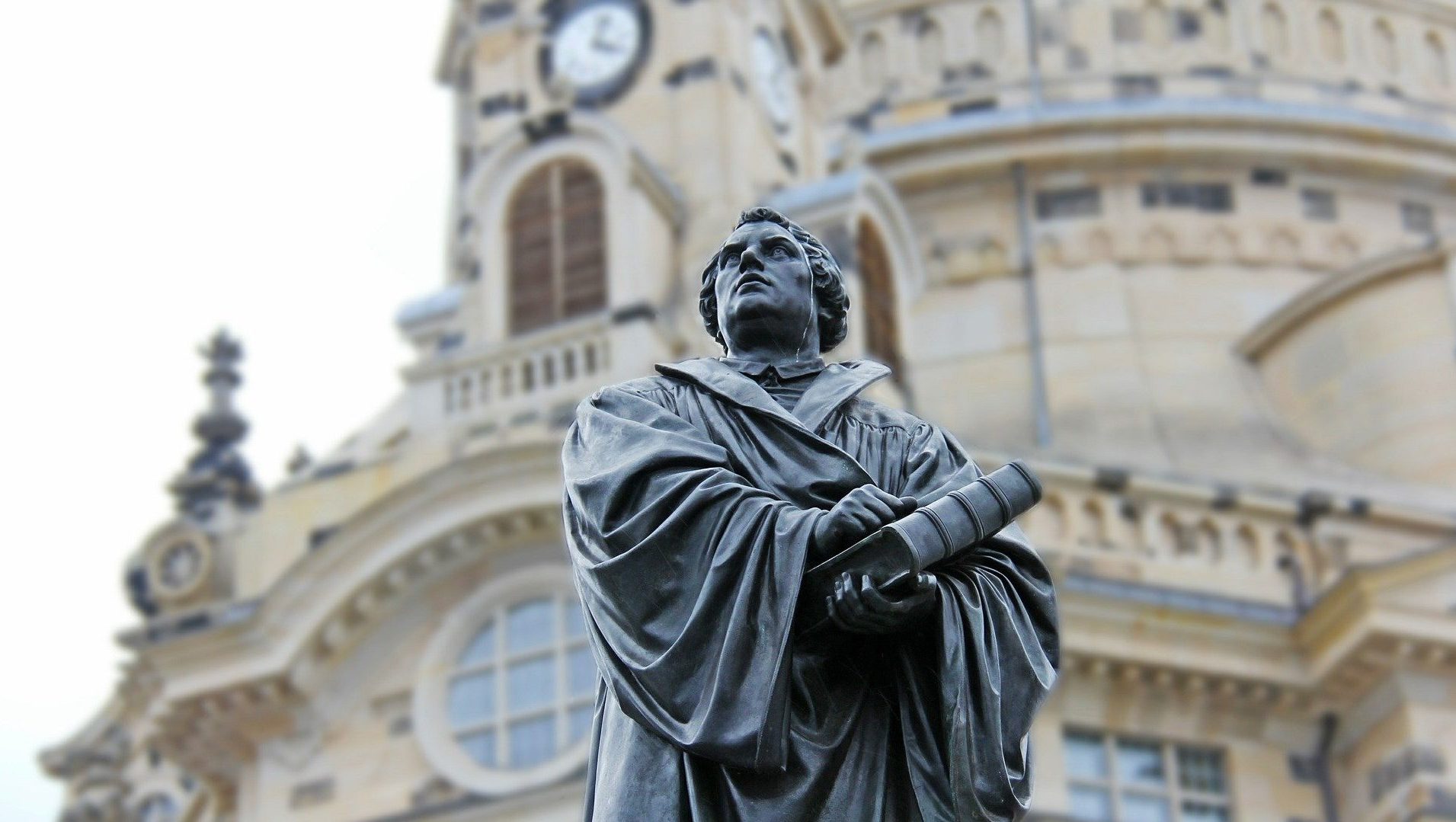
    Martin Luther’s statue at Dresden via Pixabay

    Europe has seen a rise in anti-lockdown protests from Paris to London and even closer to home, as Dublin saw violent protests in late February. Germany too has seen this rise in protests over Covid restrictions with regular demonstrations taking place across the country.

    The most recent protests planned for Dresden in Saxony were banned by the Saxony Higher Administrative Court.

    The banning of these protests is significant especially in the state of Saxony where the highest mortality numbers in Germany have been recorded. One of the main reasons for this is that the region has an ageing population and a large number of retirement homes that have been devastated throughout the pandemic.

    A snap of Dresden taken by James Molloy

    Another factor is its proximity to the Czech border, with many crossing it for work. The Czech Republic has been one of the worst hit countries worldwide. Saxony has been fighting an uphill battle from the start.

  • Cleanup in Ireland’s dirtiest old town

    Cleanup in Ireland’s dirtiest old town

    Watch Colm McGuirk investigate cleaning up the streets in Dublin

    According to work carried out by Irish Business Against Litter and An Taisce, the level of littering in Ireland reached a 13-year high last year. Of the 37 towns and cities inspected, the amount of litter increased in 24.

    With parts of Dublin ranked worst overall for litter volume and illegal dumping, community cleanup groups in the capital are a welcome sight. The City joined one such group as they treated a sports court in The Liberties area to a spring clean.

    “We’re aiming to do cleanups around Dublin within our 5k,” says Kathleen Reilly, referring to the allowed travel limit under Covid restrictions.

    Spurred into action by the state of the stretch of the Royal Canal near her home, Reilly’s friend Ciara Haughney proposed the group’s first cleanup in March.

    “I just got so down and disheartened looking at all the trash in the canal,” she says. “Especially when you see nesting birds and swans trying to make a nest, and they’re picking up litter with their beaks. It’s just really depressing.”

    After being supplied with litter pickers, bags and gloves by Dublin City Council, Haughney put the word out to friends in the area, “and surprisingly loads of them were like, ‘yeah it’s a disgrace, I really want to help.’”

    The success of the first cleanup effort encouraged Kathleen Reilly to set up an Instagram page, and more volunteers signed up.

    “Whenever you actually look,” says Reilly, “it’s very dirty. There’s a lot of litter, there’s a lot of dumping. It’s not pretty to look at. So it’s just kind of encouraging people to be looking after their city.”

    A number of factors connected to the Covid-19 pandemic have contributed to the recent spike in littering. Firstly, restrictions on indoor activities have meant a massive increase in outdoor recreation, where not everyone, it seems, pays the appropriate respect to the surroundings they’re enjoying.

    Another factor is the deluge of disposable containers produced by a shift to a takeaway model for restaurants, bars and cafes, while PPE equipment also featured high up on An Taisce’s list of most common litter items.

    How rubbish! An image of torn bin bags with their content scattered across the pavement. Photo by Colm McGuirk

    Cleaning up the streets during Covid-19 has brought its own unique challenges for councils.

    “We’ve broken our [street cleaning] crews into pods,” says John McPartlan, Dublin City Council public domain officer. “If someone is sick or is a close contact, you lose that person; you can’t take anybody from another pod to make up for it.”

    McPartlan also explained the rationale behind the positioning of bins in the city – many have suggested there aren’t enough around.

    “The rule of thumb for a bin is that the area has to have heavy footfall or else have food outlets like chippers or takeaways, sandwich shops, that type of thing. Where someone comes out and eats their food and then wants a bin. We don’t put bins in housing estates, or quiet streets.

    “A lot of the parks only have bins at the entrance to the park. The workers in the park are there to maintain the park and then the waste management function is to empty the bins. But you won’t have vehicular access into the parks, which is generally how we empty bins; we send the side loader around. But we do try to put as many bins in heavily used areas as we can. We’ve started putting out beach barrels now in these locations [that have recently become popular for outdoor recreation].”

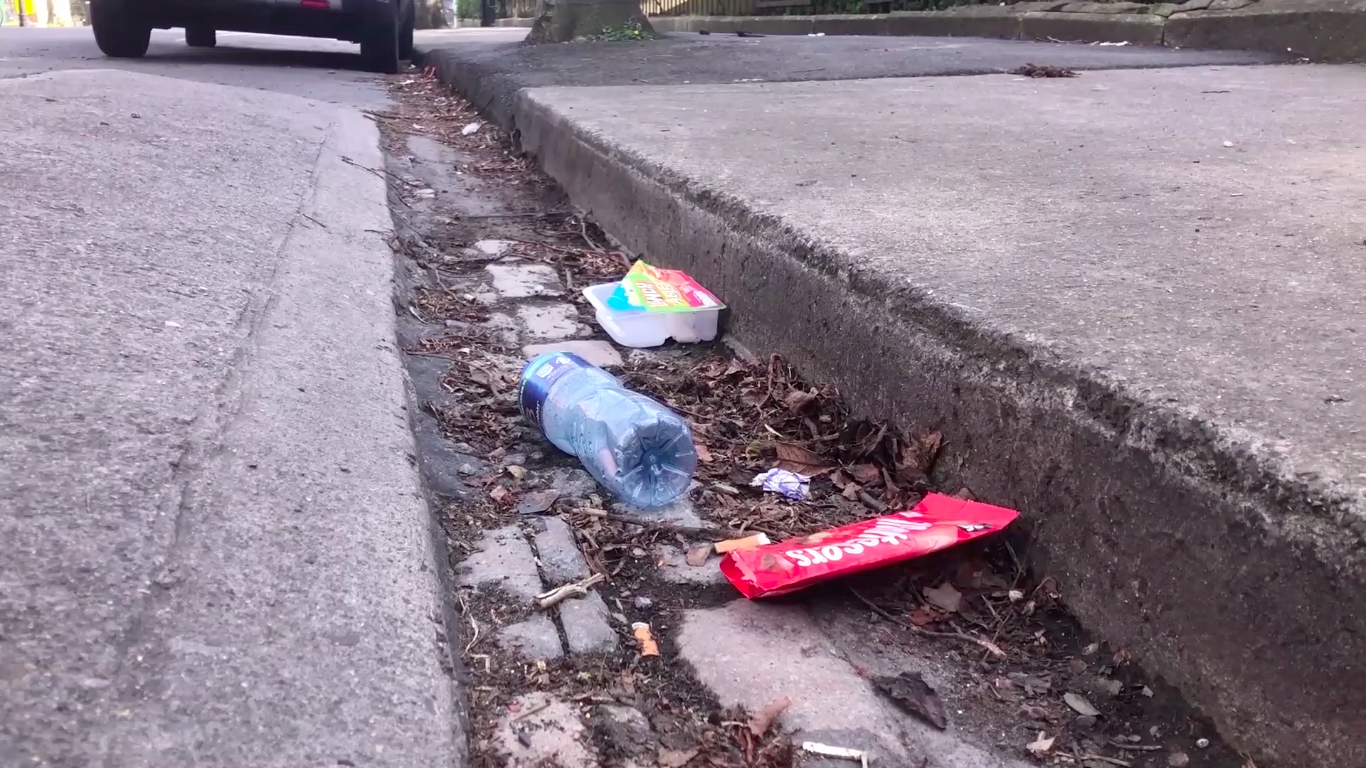
    Today’s snack, tomorrow’s problem? Photo by Colm McGuirk

    To date, Haughney and Reilly’s group have done six cleanups and counting, and anyone can join in; look for Make Our Streets Clean on Instagram if you’d like to get involved. The floor is open to suggestions on where to tidy up next – the scene of today’s mission is beside the home of one of the volunteers.

    Alternatively, search online for a similar group near you, or ask your local council for litter-picking equipment.

  • Covid-19 abroad: Public health vs economy in Switzerland

    Covid-19 abroad: Public health vs economy in Switzerland

    Watch Nina Suter and Izzy Rowley discuss the situation in Switzerland

    Switzerland has vaccinated 2,431,709 people and is on its way out of a national lockdown.

    It’s clear that the country was hit hard by the crisis. The Swiss government recently announced that, at a conservative estimate, a third of the country’s population has been infected by Covid-19.

    However, when the country was facing its second wave of the virus the government was slow to respond, and many businesses remained open, including bars and clubs, resulting in a superspreader event.

    “As is probably the case everywhere, but especially here, the economy is really prioritised over health,” says Nina Suter, a Swiss native who is currently living in Zurich.

    “It’s wild when you have the Swiss Finance Minister [Ueli Maurer] saying ‘oh, we can’t afford a second lockdown,’ which is wild, this is one of the richest countries globally,” adds Suter.

    Zurich’s streets are finally opening up after a long lockdown. Image courtesy of H. Emre via Pexels.com

    The country is only now emerging from restrictions that were put in place to avoid a third wave, with restaurants and pubs allowed to open their outdoor seating.

    The government has introduced a new strategy of rapid self-testing. Swiss people will be able to obtain five tests per month each. It’s hoped that this will allow for early detection of the virus and will help to contain any new variants. 

  • Plant powered athletes

    Plant powered athletes

    Do veggies make you run faster? Image via Pexels.com

    There’s no doubt that veganism has been rising in popularity in recent years – a lifestyle that was once obscure has now become common. Still, the words vegan and athlete don’t seem to go together.

    When it comes to sports nutrition, we are told protein is key. This is often wrongly assumed to be something a plant based diet can ultimately lack – conjuring the image of one who follows the diet as a frail, weak, possibly malnourished person.

    Thankfully it’s 2021 and that particular image is, slowly but surely, dying out. 

    “I was always interested in nutrition, especially for improving performance,” says Gerard Prendergast, a gym owner, personal trainer, triathlon coach and yoga instructor.

    “I felt [veganism] would suit my training at the time which was endurance sports. I was blown away at how my body adapted to eating a wholefoods, plant-based diet. I had more energy, felt lighter, my stamina improved and even my mood and mental health seemed to improve.”

    Prendergast began boxing and weightlifting at an early age and went on to play for the ROI VI International Futsal team at 28. At 32, he completed his first triathlon, which encouraged him to take on bigger and more challenging events.

    Gerard Prendergast crosses the finish line at DecaUK – Image courtesy of Gerard Prendergast

    “In 2017 I entered into DecaUK, 10 Ironman distance triathlons in 10 consecutive days. Every day for 10 days I was required to swim 3.8k, Cycle 180k, and run a full marathon – 42k. I won that event 4.5 hours ahead of the second place finisher.

    “In 2018 I completed 52 Ironman distance triathlons in 52 weeks to raise money for Mental Health Ireland. I have completed other challenges such as 100 mile run on a 500m loop and cycling the height of Everest on an indoor trainer.”

    Judging by Prendergast’s impressive lifestyle, it appears there’s no doubt a vegan diet can provide an athlete with the power they need to succeed.

    “Athletes absolutely can thrive on a plant based diet,” he says. “It’s been proved all over the world over the past few years with athletes like Serena Williams, Novak Djockovic and Lewis Hamilton all seeing great benefits to their careers by eating plant-based. I myself can back that up, after struggling to finish a 5k run in 2012 to becoming a Deca Ironman champion.”

    “Athletes absolutely can thrive on a plant-based diet and it’s been proved all over the world over the past few years.”

    Gerard Prendergast

    “I had always worked out and eaten well but I really wanted to go even further with knowing what is in my food,” says Dawn Butler, a 35-year-old athlete from Kildare. 

    An ex professional wrestler, Butler now trains in Brazilian jiu jitsu as well as partaking in weightlifting. On days spent away from the intensity of the gym and training, Butler enjoys long walks, hikes, and hill climbing.

    After recovering from stage four Hodgkin’s Lymphoma, Butler turned to veganism as a way to repair and nourish her body.

    Dawn Butler on a plant powered hike in the Connemara mountains. Image courtesy of Dawn Butler

    “I took my time and looked into lots of research and eventually I just couldn’t stand dairy anymore. I was really put off when I saw where dairy comes from and I knew I couldn’t be a part of that world,” explains Butler.

    “I knew with the level of training I do that I have to really pay attention to my nutrition. I always check in with how I’m feeling and I always get a good variety of foods. I notice that I have more energy being vegan.”

    Despite her fitness level and rigorous training, Butler admits she is no stranger to ridicule from her gym buddies due to her diet choices.

     “I train as hard as anyone I know – I have muscles and strength and I train with a lot of men. I definitely do not feel I am any weaker because of my diet. I get very frustrated when some people try to tell me about my protein intake when, in fact, they can’t tell me theirs. They assume because they eat meat they get more than me when in truth I probably get twice the amount of protein.

    “If I am seen having a protein shake, it’s because my diet is ‘wrong’, but that does not apply to a meat eater who also uses protein shakes. I don’t use protein shakes because I am vegan. I use them as part of the diet and lifestyle that I have.

    “People assume and don’t ask. If somebody asks me about it I’m happy to chat and educate but when someone assumes my protein intake it gets very disheartening. It feels like a throwaway ‘fact’ and a way to debunk veganism.”

    As annoying as such remarks might be, Butler has no plans to ditch her plant based diet any time soon and has her sights set on pursuing Brazilian jiu jitsu, currently training to take part in a tournament later this year.

    Veganism undoubtedly has the potential to enhance one’s athletic performance, but Butler has some advice for those starting out.

    “I do believe it’s possible for athletes to thrive on a vegan diet. I do however think it is harder. There is less room for error and I think you need to keep on top of it. It’s very important to keep the range of foods wide and get sources of everything in there.”