From rugby, to hockey, and especially the Gaelic Games, we have always been a country that has prided ourselves on our strong sporting tradition. But sport in Ireland has always been predominately male dominated. 3rd year TUD student journalists examine the evolution of women’s sports for TheCity.ie.
It has taken us quite a while to warm to the fact that our women can become the great athletes they have become. However, as time has passed and more waves have been made, we have discovered that our female athletes are just as brilliant as the men- a thriving rugby scene in which the women rival the men, a successful hockey team that have qualified for the Olympic games and a series of determined and hard working women behind all of Irish women’s sports success.
We have looked into why this could be the case, what movements such as 20×20 movement have done for women’s sports, in the eyes of the athletes themselves and what this means for Irish women’s sports in the future.
For many people, exercise is an essential part of anyone’s lifestyle. Whether it’s a run in the morning, a couple of hours in the gym or even a few exercises at home – for athletes, it’s not a lifestyle, it’s their life. Third year TUD student journalists take a look for TheCity.ie.
Athletes need to stay in shape in order to reach their peak condition, and with the sudden shutdown of all available facilities, athletes find themselves at a serious disadvantage. Many of the most hardworking and determined have had to adapt and use whatever they can to their advantage.
Their exercises may seem silly to some, but they’re so important to others – even now, exercise can be used as a form of charity; to the frontline workers putting their lives on the live every night. We look at a variety of stories, from athletes to our own journalists, finding out how much their exercise means to them and why they are doing it so passionately.
The online gambling world has expanded. Photo: Pexels
As people go without live sport to watch on their screens, TheCity.ie’s Kim O’Leary examines how certain fans are turning to gambling online to ease their boredom – with potentially harmful consequencesfor those battling an addiction.
The global coronavirus pandemic has rocked the sporting world, with the cancellation and postponement of major live events ranging from the Tokyo Olympics to Wimbledon.
"I'd like to thank all who love Wimbledon for their understanding of these unique and challenging circumstances. Your passion has shaped our event and continues to do so.
"We look forward to preparing a fantastic Championships in 2021."
As most countries respond to the Covid-19 threat with social distancing, sports fans who are missing live events are turning their attention to virtual sports, which have seen a surge in popularity thanks to technological advances.
Betting companies, endeavouring to keep their punters gambling,d have set up their own online platforms to facilitate virtual sports such as horse racing, grey hound racing, cycling, football, and tennis as well as traditional casino games like roulette and the slots.
What are virtual sports?
Virtual sports are a selection of fixed odds games/events that use a random number generator to decide the outcome. All gamblers betting on these games and events view the same schedules and the same outcomes. Currently the most popular virtual sports include football, horse racing, motor racing, basketball, and virtual cycling.
Despite their recent surge in popularity during the global Covid-19 pandemic, virtual sports have actually been around since the early 2000s. Virtual horses ran during the foot and mouth disease outbreak in 2001, when live racing was cancelled in Britain and Ireland.
Earlier this month, hundreds of thousands of people watched ITV’s broadcast of the The Virtual Grand National – an AI version of the country’s biggest horse race, at the exact same time the real race was meant to be held.
Virtual football games are proving a hit on Betway
While real-world sporting attractions are limited this weekend to the likes of Belarusian Premier League clashes – FC Smoldvichi-STI versus Dinamo Minsk on Friday and Slavia Mozyr’s fixture against FC Minsk on Saturday at 1pm – there is a full-schedule of virtual sports for punters to tune into.
There is, in theory, no physical limitation on the number of virtual sports events that could run, and punters are being reminded that the dangers of excessive gambling online are very real.
Speaking to TheCity.ie, Barry Grant, counsellor and founder of charity Problem Gambling Ireland, says that the pull of virtual sports and gambling online can pose a very real danger.
“The lockdown in Ireland started after the Cheltenham races which is a big event for betting, and now there is a risk certainly with people at home or off work where they are becoming bored and start gambling online and through virtual sports. In some ways we have seen an increase in the numbers taking to online gambling, yet our helpline has been fairly quiet so far which is a little worrying. But being at home and out of work all increase the risk for people to start gambling,” says Grant.
Gambling problems may worsen
Grant explains that counsellors around Ireland are working hard to continue offering counselling services during the Covid-19 pandemic, themselves taking to apps such as Zoom to talk to people who have contacted them for help.
But Grant feels that more can be done by the Government and betting companies to try curb the rate of gambling addictions in Ireland, as many gambling companies are now tweeting advertisements and links to virtual markets.
For example Boylesports’ Twitter feed shows messages such as “You can bet on virtual events every minute 24/7!” alongside a link to the nine different virtual markets.
Don't forget, you can bet on virtual events every minute, 24/7!
Grant says that perhaps Ireland can look to other countries’ gambling restriction laws to help the current situation. “The Government and the gambling companies could follow the likes of Belgium and Sweden who have placed financial restrictions like on how much a person can bet, taking into account what people have to lose. The National Lottery here also has a restriction on its website for how much people can spend. I think something like this would help,” says Grant.
— Extern Problem Gambling (@ExternProbGam) April 23, 2020
And what advice would Grant give for those who have started gambling online through virtual sports?
“The advice is that people should look at how much time and money they spend on gambling sites. it’s also possible to self-exclude yourself and block certain online sites through software such as Bet Blocker. And I would definitely recommend that people look at other hobbies like physical exercise instead,” says Grant.
While virtual sports are all the rage during this pandemic, punters are reminded to not let the virtual world become an addiction.
ContactProblem Gambling Ireland on 089 241 5401 (call-back service) or Gamblers Anonymous on 01-8721133for assistance.
In June 2019, Ireland
welcomed home one of the most decorated athletes of this generation, newly
crowned lightweight undisputed champion of the world – Katie Taylor. Last
weekend, Taylor added to her WBA, WBS, IBF and WBO world titles to date, by
becoming WBO light-welterweight Champion in Manchester.
Since Taylor’s rise to
prominence, public interest in combat sports or ‘fight sports’ such as boxing
has risen dramatically. Be it boxing, MMA or martial arts, not only have the
public engaged with coverage that the likes of Taylor or Conor McGregor have
received on the international stage, more and more people are taking up these
sports, hugely expanding the sports’ status on the island of Ireland.
Lydia Des Dolles was one
of the many people who took up a combat sport four years ago, in the wake of
Taylor’s rise to notoriety. After a ten-year career in the music industry, she
wanted to try something different but never anticipated it would lead to a
platform with an audience of 45,000 people per month and videos with over 1.2
million views.
Winning the ‘Rising Star
in New Media’ award at 2018’s All-Ireland Business Summit, her channel Fight Connect TV, reports on combat sports and documents the journey from
amateur to the professional ranks in the sport.
“The stereotypical viewpoint surrounding combat sports is that it’s barbaric or that it’s dangerous and it’s only skinhead guys with tattoos that get inside an octagon, a ring or a cage“
Lydia Des Dolles
Lydia speaks to Conor McGregor after his first UFC loss Source: FightConnectTV Youtube
“I
joined a Jiu Jitsu gym which is a ground based, wrestling, grappling martial
art. I did that for about a year and a half and I didn’t do anything else, just
worked and trained,” said Des Dolles.
“After
that I kind of fell into doing social media for an MMA event that was held in
the Three arena. It was there that I was exposed to a whole new world that I
had no idea existed in Ireland”
From there, Des Dolles
started a Snapchat account
where she covered events happening in Ireland. As the scene grew dramatically
she started to receive requests to cover more and more shows and Fight Connect TV was born.
“The
growth in combat sports has been incredible. There’s easily two or three combat
sports or martial arts’ events happening per week.”
“The
major ones are predominantly in Dublin and the capital gets the bigger events
but it is growing nationwide. There’s more and more smaller community-based
events happening and they need the support of the public as well.”
“There’s room for MMA, there’s room for martial arts, there’s room for combat sports alongside hurling and football and all these other great sports that are in Ireland at the moment”
Lydia Des Dolles
Des Dolles has seen
people’s attitudes change drastically since she first started out.
“The
stereotypical viewpoint surrounding combat sports is that it’s barbaric or that
it’s dangerous and it’s only skinhead guys with tattoos that get inside an
octagon, a ring or a cage. But that stereotype is really outdated.”
“You
only have to look at the likes of Katie Taylor, the highest-ranking sports star
that this country has ever produced and she fights and she’s in combat sports
so that alone should spark something in the media and the government to get
behind fight sports.”
Taylor’s homecoming in Dublin
Airport in June will go down in the history books, but not for all the right
reasons. Minister for Sport, Shane Ross, made a now infamous appearance at the
arrival gates that resulted in an array of memes, plastered on social media. Thankfully,
people didn’t hold back when it came to calling out the Minister for Sport for
his farcical photobombing.
Source: @LydiaDesDolles Instagram
“Anyone
who saw the footage of Katie Taylor coming home from America with all of her
belts this summer would have seen the Minister for Sport, Shane Ross, behind
her.”
“As
funny as they are, the reality is that Minister Ross does not support combat
sports.”
“It’s definitely not a niche sport anymore”
Lydia Des Dolles
“He
has spoken in the past about how he doesn’t think combat sports including
boxing and MMA should be regulated as national sports. Hopefully that PR
disaster might change his mind.”
Des Dolles truly believes
the time has come for these sports to receive the same respect and recognition
as some of the other sports that are vastly covered in mainstream Irish media.
Photo Credit: @FightConnectTV
“It’s
definitely not a niche sport anymore, and from what we’re seeing, the likes of
kids that once would have gone to hurling or rugby or football are now starting
to take up MMA as well”
“There’s
room for MMA, there’s room for martial arts, there’s room for combat sports
alongside hurling and football and all these other great sports that are in
Ireland at the moment”
Lydia Des Dolles is the
creator of Fight Connect TV.
You can follow her on
Facebook, Twitter, Youtube, Instagram and Twitter @FightConnectTV.
The most common injuries in football are
pulled hamstrings, sprained ankles and dead legs. However, a far more serious
injury is starting to become more prominent across the sport in recent years.
Anterior Cruciate Ligament (ACL) tears have
been on the rise in recent years and offer far more serious consequences for
footballers, often ruling them out for over eight months.
Photo Credit: Pixabay
Dr. Riley Williams of the Hospital for
Special Surgery (HSS), recently explained some reasons for the ACL tear being
closely associated with sports people, footballers in particular.
“High-velocity, change in direction, pivots
and rotation of lower extremities can affect the function and stability of an
ACL,” said Dr Williams. “ACL injuries can occur when contact is made with
another player but can also arise from non-contact situations such as landing
awkwardly when passing a ball.”
“Recovery time for an ACL tear can be anywhere between six months to a year”
Recovery time for an ACL tear can be
anywhere between six months to a year, depending on the circumstances and professional
clubs will often enlist specialist treatment and around-the-clock
rehabilitation services to aide their players recovery. Notably, Florian
Lejeune, of Newcastle United, who amazingly returned from an ACL tear after
just six months last season.
However, for football clubs in Ireland who
do not have such luxuries, an ACL tear to one of their players can be highly
damaging and often lead to a prolonged length of absence. Hugh Douglas of Bray Wanderers, Darren Cole of Derry City
and Gary Boylan of Sligo Rovers are all SSE Airtricity League players who have
suffered an ACL injury recently.
One player who knows both the physical and
mental anguish of injury is 20-year-old Bohemians striker, Cristian Magerusan.
The highly rated, Romanian-born forward has suffered several metatarsal
injuries and one ACL tear in the last two years alone.
“The recovery was basically like starting from the beginning”
“It was the worst pain ever when I did it,”
said Magerusan about tearing his ACL. “The recovery was basically like starting
from the beginning, so like small movements of the knee and trying to walk on
it and all.
“It’s been a long road and mentally very
tough but I feel much stronger now coming back.”
Magerusan is now nearing return following a
gruelling nine months on the side-lines. He underwent ACL reconstruction
surgery and was back walking without crutches just three days later.
From that point on, it has been a difficult
journey for him both mentally and physically, but with a return to the pitch
just around the corner, Magerusan and others show that the dreaded ACL tear can
be conquered.
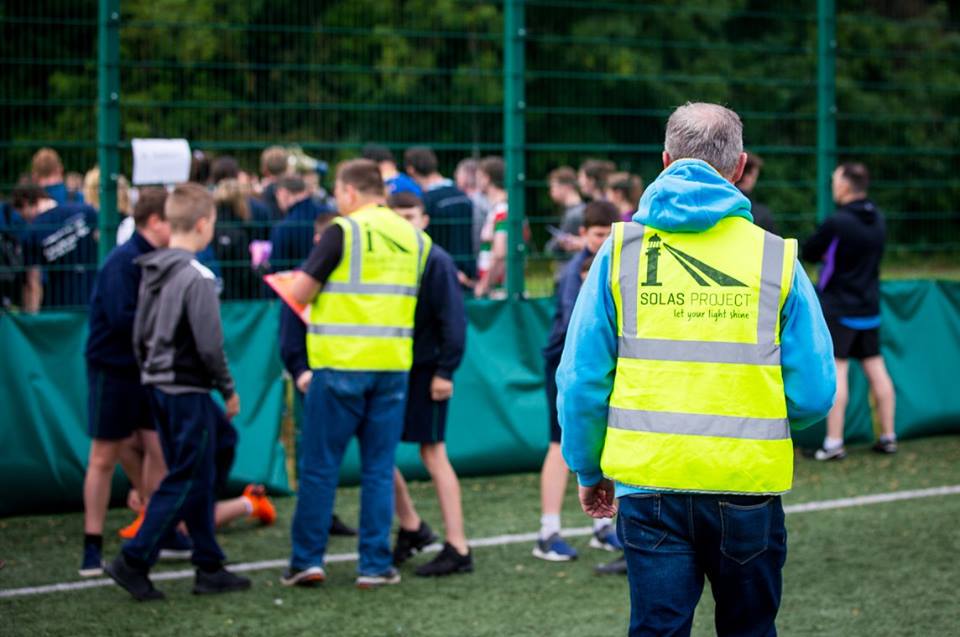
The ‘Solas Project’ is a community development organisation which tackles early school leaving and youth crime. The project has been in operation since 2007, and fundamentally, the belief is that tackling these issues will allow communities as a whole to benefit as they look to pursue a vision of Ireland where the youth of today learn to truly acknowledge their self-worth and attain the ability to take full advantage of their potential.
The Solas Project is responsible for running a variety of programmes, each with a heavy emphasis on building the self-esteem and confidence of the children and teens that they mentor. Speaking about the project’s main goals, current Head Gardener (CEO), of Solas, Eddie D’Arcy, said: “We run five different programmes … and it is really about improving the self-esteem in these boys and girls and making sure that they have a bit of support there for them. Having that caring adult in their life is really recognised as a strong supportive measure.”
One of the many initiatives that Solas run is their sports programme. Eddie believes this plays an integral role in the Solas group, by providing fun school-based activities, Eddie believes they can “increase children’s attendance and participation in school, leading to school retention and academic success.”
Eddie continued: “What we try to focus on with the sports programme is very much about engaging with the children in each school. It’s very much based around building their appreciation of self-worth and the self-esteem of the kids.”
Eddie believes that sport is a great way to get everyone involved, he said: “We generally play tag-rugby in the sports programme because there isn’t an extremely high skill-level required in order to participate, so then all of the kids can be good at it.”
Through the Solas Sports programme, the aim is to teach life skills and develop character through the vehicle of sport. The end goal is to develop confidence in each student by teaching them new skills.
In charge of running this programme is Stephen Mullarkey; he runs a five-week tag-rugby course with 5th and 6th classes in twelve different primary schools throughout the academic year. Stephen has a level 1 coaching certificate from the Football Association of Ireland, and the programme has been a “roaring success for Solas,” according to Eddie, with students becoming “more and more confident in getting involved.”
Although Solas place a big importance on their sports programme, it’s not the only programme where they help build up character in young people in Dublin.
Eddie said: “We run five different programmes. One programme is called ‘step-up’, where we provide an individual mentor for sixty teenagers every week and these same teenagers will stay with us right the way through secondary school. The programme is spread over four nights, each night fifteen teenagers attend the programme and they’re provided with a personal mentor. It all takes place in a club setting and we also have one member overseeing the whole thing. Last year, we had eight young men who graduated and they all spent six years on this particular programme.”
There is also an active programme for younger kids that find themselves in similar situations, who are supported by the Solas ‘After School Club’, where Eddie believes the children are given an excellent chance to excel in their education. He said: “We run a range of after-school clubs, this programme deals with children that are struggling in the national school system.
The Solas Project aims to create an Ireland where every young person knows their self-worth // Facebook @SolasProject
There are three clubs there, one is the junior club which is for senior infants up to second class. Then we have a second club which operates in St. Catherine’s Church for the older primary school kids. Each of those clubs has the children coming 4 days a week for 4 hours each day. They’ll have a hot meal and homework support, and we continue that through the holidays as well so there is a high level of support there available for the kids.”
Unfortunately, running such a widespread organisation as Solas comes with obvious costs. Solas now have sixteen full-time staff, as well as roughly 160 committed volunteers. The funding for the programme is split 50/50 between the state, and Solas themselves have to raise €350,000.
With such huge demand having to be met, Solas are looking for any volunteers to get in touch with them about supporting their work.
Eddie said: “We are constantly looking for extra volunteers, so if there are students interested in social care or even criminology, we would love to hear from them.”
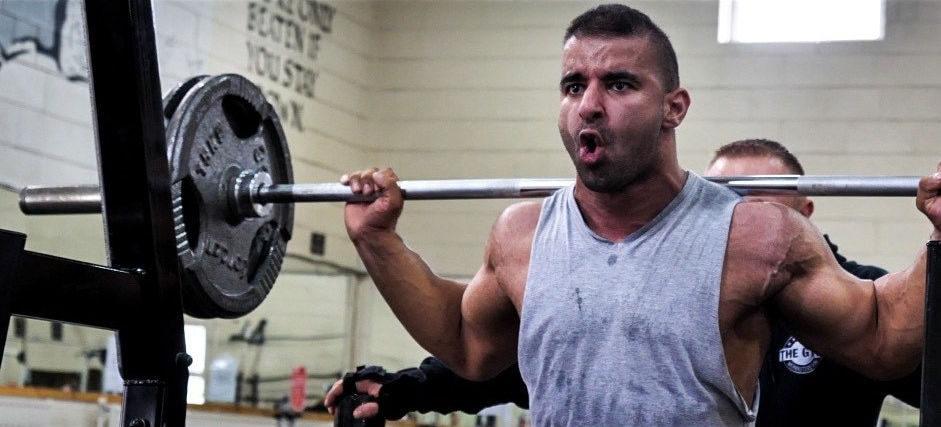
The Ireland of the 2010s is a country that has developed an infatuation with fitness and gym culture, and everything associated with the social media universe filled with the latest body trainers and influencers. For some, however, the word bodybuilding still conjures up images of Arnold Schwarzenegger and Mr Universe competitions. The City spoke to one of Ireland’s highest rated up and coming bodybuilders Eoin Vahey, particularly about the huge positive benefits, both physical and mental, that bodybuilding can bring to those looking to get involved.
“Bodybuilding in Ireland is thriving, it’s constantly growing and it’s becoming more popular to go to the gym and better yourself,” Eoin tells us. “More people are looking to partake in it, especially with the advent of social media, which to me can only be a positive for bodybuilding.”
While increased numbers partaking in the sport is a positive, Eoin stresses the point that people need to become involved in bodybuilding for the right reasons. “Some people take up bodybuilding as a quick fix to get what for them is the ideal body,” says Eoin. “People come up to me and ask me what it takes to look like I do. They just think it’s easy to get a body like this, I think because of people pushing a certain image on social media. Where a lot of the pictures are photoshopped anyway.”
It is this desire to emulate bodybuilders and other fitness figures on social media that Eoin feels can have a negative effect on people getting involved for the first time.
“It’s training to become a presence on social media, which I think will lead to failure. It’s not the right way to do it. You wouldn’t begin playing any kind of sport thinking I’m going to become an influencer or celebrity. I just think that mindset needs to change,” adds Eoin.
Eoin juggles his love for bodybuilding with a strenuous student life at UCD // Callum Murphy
Eoin thinks social media has had a positive impact on bodybuilding too, and for him personally, in helping to attract sponsorship and allowing bodybuilders to gain a following by providing a platform for self-promotion. “I’ve recently been sponsored by a gym so if I do a competition [at] home or abroad they will pay for my hotel and cover other costs.”
Eoin’s interest in bodybuilding came from a surprising source – his love of comic books. “Think about it,” he remarks, “superheroes are built the same as bodybuilders, and at 14 years of age I decided I wanted to look like that.”
He remembers having to initially research bodybuilding through magazines and conversing with other people, while noting how much easier it is to get involved in 2018. “It’s easier to get started now – back then I didn’t have the internet,” he explains. “If you’re getting started, just do a little bit of research, go online and look at diets and body plans. Don’t be afraid to ask people for help either. Established gyms will have experienced members. I’d have no issue in helping someone who asked or passing on some advice, and of course, have fun with it too, don’t overthink it.”
Eoin describes how he trains on average five to six times a week, typically done on a three day on, one day off basis. “If I feel good in myself I’ll keep training,” he says. “It’s three or four core sessions during the week which I know are going to help me, with another one or two around that if needed.”
A typical training session lasts between forty-five minutes and two hours, depending on which body part is being worked on. Diet also has a huge role to play in a bodybuilder’s training regime, with Eoin describing how he eats five large meals per day.
“Everyone is different, but for me, high calories, high protein, high carbs enable me to put on [muscle] tissue and recover from training. You need to be meticulous about it, you can’t miss meals during the week. That’s the core of training – your food intake. It’s not what you eat during the day, it’s what you eat over the week. If you have a good week of food intake, you’re going to respond in a positive way,” he explains.
Aside from the obvious physical benefits, Eoin also extols the virtues of bodybuilding in helping to maintain a healthy mental outlook too.
“I have never felt so mentally focused, I think it does absolutely help. Going to the gym and weight training has been proven to battle depression. If you see people battling clinical depression how do they tend to cope with it? They shut themselves away from people, the community and keep to themselves. But going to the gym or partaking in any sport or physical activity releases endorphins and dopamine into your brain which makes you feel good, and you feel like you can better yourself every time you train. Bodybuilding teaches you how to work hard, teaches you a good work ethic which you can apply to other areas of your life, which is mentally positive,” says Eoin.
Like any dedicated sports person or someone undertaking high-intensity physical training, however, Eoin, who works forty hours per week as well as studying in UCD, acknowledges that it can be difficult to balance training with his personal life at times.
“During my free time I do manage to fit in time for the gym, it gives me something to look forward to. My social life has taken a hit, but I’ve always told people that I would rather go to the gym than the pub anyway, it’s just about managing it and finding the right balance,” he says.
On his hopes for the future of the sport in Ireland, Eoin would like to see bodybuilding gain more mainstream exposure and acceptance, perhaps with more media coverage or even the filming of a documentary around the Irish bodybuilding community. He feels that the scene will continue to be successful and see more professional Irish bodybuilders established, both male and female. “Hardcore bodybuilding will always be there,” he states, “and currently it’s thriving.”
Two-time PDC World Grand Prix finalist Terry Jenkins said that darts is more of a mental game than a physical one. A cool head is necessary to thrive in the game and it’s an adjective that would aptly describe Steve Lennon. The Carlow native looks to become the first Irishman to win a World Grand Prix match on his home stage since Connie Finnan dispatched Jenkins five years ago. At 24 years of age, he will make his Dublin main-stage debut after a year that suggests Irish darts could finally have its first major talent.
Thousands will attend the annual week-long event in the CityWest where Lennon has the toughest task of all, a first-round tie with tournament favourite and world number one Michael van Gerwen. Lennon, in a typically understated Irish way, doesn’t seem too fazed by the task at hand:
“I would have been nervous at first yeah but then when the draw came out, [I thought] van Gerwen is world number one for a reason so the pressure is more on him than it is on me. That’s the way I am trying to look at it. It’s just how you play on the day. If I can play my A game, then anything is possible.”
Lennon lost to the three-time champion in the final of the Dutch Darts Masters on the European Tour as he became the first Irishman to ever reach a Euro Tour final but may benefit from the short ‘double-in’ format of the opening round. This means that players can only begin their leg with a successful double attempt and still must also finish it with a double, a unique structure which has proven a challenge for some of darts’ best down the years. Michael van Gerwen did crash out to the overwhelming underdog John Henderson at the same stage in 2017 and Lennon is aware of the potential advantage.
“[To beat him] a shorter format is probably better, obviously double-start is a bit of a leveller for anyone because it’s so unique; there’s only one tournament in the year with that format. I’d practice a lot on my doubles anyway and I try not to think too much about the double-start. I just let it flow and try and do my best.”
Michael van Gerwin celebrates another successful campaign as he looks to take on Steve Lennon this Sunday // Twitter @mvg180
The stats in 2018 have made excellent reading for Lennon, who over the eighteen non-televised Players Championship events has a higher three-dart average than former two-time Grand Prix champion James Wade and Premier League star Simon Whitlock. Lennon also has hit the fifth most 140s which is a testament to his scoring ability. The former Waterford IT student came to prominence at the 2018 World Darts Championship where he pushed Premier League runner-up Michael Smith in a final set decider.
“In that game I think nerves got to me a lot; when I was two sets down I thought to myself ‘I’ll try and make the score more respectable’ and then when I realised I had a chance to get back into it, I started playing better but it obviously wasn’t meant to be.
“I don’t feel as nervous anymore but I haven’t produced my A game on stage. I’m hoping I just get more experience on it and hopefully I can start winning more games on stage.”
Like many players, Lennon began playing in pubs from 14 and was introduced to the county darts scene in Carlow. It wasn’t until 2015 after qualifying for the World Youth Championship where things began to take off for the man who, unlike his fellow sportsmen, is still yet to get an official nickname. Lennon would go on to win the Irish Players Championship in 2016 before qualifying through the “ridiculously hard” PDC Q school in 2017.
Steve Lennon remains calm ahead of his upcoming match and relishes the opportunity to prove himself on the world stage // Pieter Verbeek Photography
There hasn’t been much Irish success in the World Grand Prix since its inception 20 years ago, with Lennon’s World Cup partner William O’Connor failing to get past the first round on four different occasions. But things are looking positive for the future.
“The Ireland National Darts Organisation do all of the Irish ranking tournaments and the standard has started increasing, they’re starting to get a few more entries for it. There’s a good few who went to Q school this year and I think there’ll be a few more going next year. Hopefully, we’ll see one or two more getting tour cards anyway.”
Former top professionals such as Chris Mason have tipped Lennon to rise to the elite top 16 in the future, but Lennon isn’t looking too far ahead. “I’m going to take the future as it comes – obviously I have small little targets. Each time I set targets I’m reaching them so hopefully it just keeps continuing.
“All your main focus is trying to qualify for all the TV majors but then when you qualify for all the TV majors you still want to make an impact on them. That’s the hope from now.”
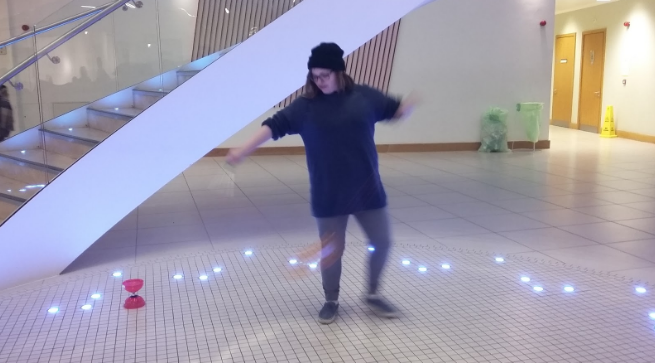
Tara McCamley joins UCDs juggling society in order to get an insight into the world of juggling and circus performing within Ireland. Tara explores the opportunities and events that aspiring and up-and-coming jugglers can take part in and attend as well as what draws people to the sport and these events in the first place.









You must be logged in to post a comment.