Bewley’s Café Theatre in Dublin City is currently staging a re-run of Barry McKinley’s “Elysium Nevada.” The Irish Times Best New Play Award nominee follows three residents of a sun-blasted retirement home as they dwell on fears of decline, memory and the approach of death.
Imageof The Quiet Men – courtesy of Bewley’s Theatre Café. Photo credit: Conrad Jones Creative
A play depicting the lives of Irish actors Barry Fitzgerald and Arthur Shields is currently running at Bewley’s Theatre Café on Grafton Street.
By Oscar Meagher
Bewley’s Café Theatre is currently staging a play chronicling the lives of two Irish screen legends.
Titled ‘The Quiet Men,’ the show delves into the many successes and personal struggles of brothers Barry Fitzgerald and Arthur Shields.
Both men were pillars of the Dublin theatre scene and important figures of Irish representation during Hollywood’s Golden Age.
Despite their illustrious careers, the two are best remembered for their roles in director John Ford’s 1952 adaptation of The Quiet Man.
The show highlights the pair’s hidden histories – from Shield’s multiple marriages to Fitzgerald’s Academy Award win, his 1945 manslaughter charge and closeted relationship with his stand-in. Further revelations include connections to James Bond, Alfred Hitchcock and James Connolly.
Following performances at The Viking Theatre last October, the play is set to run at Bewley’s Café from February 23rd – March 14th.
The Quiet Men is directed by Conall Morrison and performed by writer and actor, Morgan C Jones, the great grandnephew of Shields and Fitzgerald.
“It’s a story that’s very close to my heart,” said Jones. “I grew up hearing all these great stories about them and thought there was a fascinating thread to be explored.”
“I’ve been thinking about it for around 20 years,” he added.
Image of Morgan C Jones – courtesy of Bewley’s Theatre Café. Photo credit: Conrad Jones Creative
The brothers’ journey to Hollywood was intertwined with a significant part of Irish history.
“At 19 years old, Arthur Shields fought in the GPO during the Easter Rising of 1916,” said Jones. “After his internment, he left nationalism behind and properly pursued acting.
“His older brother followed soon after.”
Barry Fitzgerald holds the distinct honour of winning Ireland’s first Academy Award in acting for his supporting role opposite Bing Crosby in 1944’s Going My Way.
This achievement has cemented itself in cinema history, marking the only time an actor has won after receiving a nomination for both best lead and supporting performances.
Rules were implemented the following year to prevent any similar occurrences.
Image of Morgan C Jones – courtesy of Bewley’s Theatre Café. Photo credit: Conrad Jones Creative
Morgan C Jones takes the stage as both Shields and Fitzgerald.
“I always wanted to be an actor, and I’ve been doing it for about 42 years now,” said Jones. “It’s tough to say whether my turn for the dramatic was directly inspired by my illustrious forbearers, but I think it certainly helped.”
Despite coming from a lineage of acting talent, he admitted that his own journey to the stage wasn’t always easy.
“I became a stand-up comedian at one point because it was just so difficult to find work as an actor in Ireland,” he said. “I really broke into the stage around 1995, the same time when I came up with the idea for this play.”
While being conceived decades ago, the story’s long journey to the stage has been fraught with numerous delays.
“My daughter is a playwright herself, and she tried to get it up and running several times. After a few false starts and interruptions, I figured I should jump in.”
The Quiet Men will run at Bewley’s Theatre Café from February 23rd – March 14th.
Poster for The Quiet Men – courtesy of Bewley’s Café Theatre
The “I Can’t Go On” writer/director reveals her early inspirations and addresses the challenging realities of breaking into the film industry.
By Oscar Meagher
Laoisa Sexton never set out to be a filmmaker. In her own words, “I’m an actor, and then I started plays, and one thing just led to another.”
“I grew up in a rural area where there wasn’t much around, apart from community theatre. My mother always encouraged me to take part, especially when we moved to the city. I remember she’d always play showtune records for me and tell me about the stories behind them. Shows like West Side Story or Les Misérables.”
Sexton recently won the Best Director award at the Dublin International Comedy Film Festival for “I Can’t Go On,” a short film which follows a children’s entertainer trapped in a party from hell. She describes it as “an angst-ridden dark comedy panic attack”.
Image from “I Can’t Go On” – credit: Laoisa Sexton
“I wanted the viewer to have a visceral experience; to be inside that costume with our lead and to feel her claustrophobia. It’s based on my own experience as a kid’s party entertainer, which can be hell on earth!”
The short creates such an overwhelming atmosphere of discomfort that it’s almost off-putting to the viewer. However, that seems to be the point.
“As a filmmaker, I love to explore the tragedy of what it means to be human while making an audience laugh at the same time. Sometimes, you must go for the jugular by tapping into disturbing levels of discomfort and being unapologetic to get at the truth.”
“I Can’t Go On” was produced under the Screen Ireland Focus Shorts scheme and marks the first of Sexton’s films to receive industry funding. She emphasised how appreciative she is of the support, but doesn’t cower from addressing the difficulties faced elsewhere.
“Most people who are making films come from more privileged backgrounds than I have. I’ve had to rely on crowdfunding to raise money for much of my work. A short film can take the guts of a year to complete without proper funding. Some of my films have taken longer to create, as I’ve had to start and stop to raise more money for postproduction.”
Her story is proof that no person can be considered entirely self-made. Both Laoisa Sexton, the person and filmmaker, were born from a passionate and supportive mother.
“She’d plonk me down in front of the TV and make me watch these incredible films that I probably shouldn’t have been watching at that age. Films like The Red Shoes, Black Narcissus, Double Indemnity, Irma La Douce, and North by Northwest. My mother knew the names of all the actors, even the producers. She was always a wealth of film knowledge, and I think that planted the seed.”
“I Can’t Go On” ends with a dedication to her late mother.
The short was recently awarded Best Irish Film at the horror festival, Imblog: Women Who Terrify, held in Griffith College Dublin as a celebration of St Brigid’s Day. The event spotlighted original works by women and LGBTQA+ creatives.
While film festivals are often the best place for blossoming filmmakers, financial matters may tarnish a promising career before it can even begin.
“The Irish film festivals are brilliant and passionately supported by the public. They can be wonderful opportunities to get your work out there, but it costs money to submit and to go to the festivals to represent your film. Some of them are very pricey, especially internationally. You really need a budget for this because they can cost upwards of €2K. More affluent filmmakers can afford to pay short film distributors to get their films included in more festivals and promote them. If you don’t already have the financial backing, you are clearly at a disadvantage.”
Sexton embodies the romantic ideal of a filmmaker. She is honest, uncompromising in her vision, and she fights to get her work made and shown – a task generally more challenging for a female creative.
“Statistically, we make up less than any other group making films, I think it’s about 8% for female directors. While there are opportunities for us to make short films, when it comes to funding our features, we aren’t being given the same opportunities as our male counterparts. This isn’t just in Ireland; it’s across the board. The subject matter of what we want to make is not given the same weight either.”
The challenges faced by Sexton are sadly universal. She articulates the limitations imposed on anyone with the desire to push beyond the comfortable and recognisable.
“I want to make the kind of films that I want to see, but that I don’t see being made. The truth is that unless something has been done before or proven as worthy of financing, it may not happen. Cinema is not like that; you never know what an audience will respond to.”
A filmmaker’s personality, interests, heritage and identity will naturally inform their work. For Laoisa Sexton, the diversity of new voices is a necessity for the future of filmmaking.
“I think when people talk about diversity, they should also include class. It’s very important to include more voices, especially when it comes to funding. Hopefully, that will lead to more types of stories being made.”
Mark Smith is an award-winning Irish actor and theatre maker.
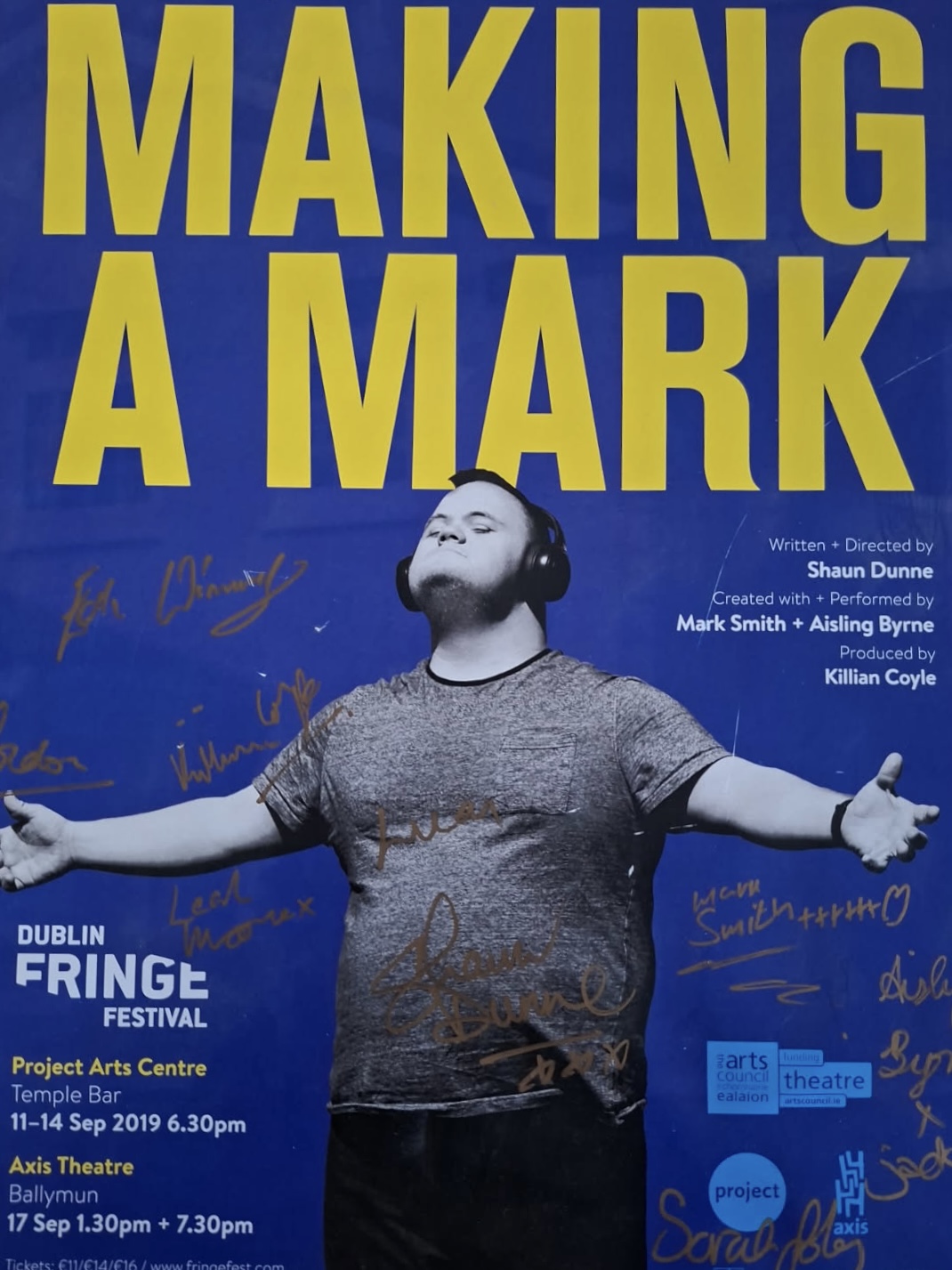
He is best known for his one-man autobiographical show, ‘Making a Mark’, which toured Ireland in 2019.
The Celbridge star, who has Down Syndrome, turned 44 in April, but started acting at just four and a half years old in school Christmas shows.
Smith’s accomplishments don’t stop there.
“As well as the acting, I won a silver medal for Ireland in the World Special Olympics in 1999. I went over to North Carolina, and I was this close to winning a gold!”, he told me.
He was involved in many Special Olympics after this and met Nelson Mandela and Stevie Wonder at the 2003 event, noting that Mandela was such a “lovely guy”.
At 14, he began acting classes in Leixlip, alongside Harry Potter star, Devon Murray, who played Seamus Finnegan in the iconic movies, and numerous Fair City stars.
“Have you ever heard of Song for a Raggy Boy? The director, Aisling Walsh, was my early acting mentor”, Smith explained, referring to the 2003 hit movie starring Robert Sheehan and Aidan Quinn.
He also recalled the moment his career took off, when he met Aisling Byrne, the creative director of ‘Run of The Mill Theatre’, a company he works very closely with.
“It was Christmas 2018; I was sitting in a cafe signing about eight or nine forms with Aisling for my show, ‘Making a Mark’, and I remember her saying to me – “You’re not an amateur anymore, you’re a professional actor now” – and I just couldn’t believe it,” he said.
The play was co-written by Shaun Dunne and produced by Aisling Byrne.
Smith explained how the show toured for over four months across nine venues, with his nephew Cian traveling with him.
He explained that this was an amazing experience, not just for him, but also for Cian, as he was a budding sound technician, who was able to get behind the scenes with his actor uncle.
Though he loved performing in Sligo and had a great laugh, his most memorable performance was at, “The the Axis Theatre in Ballymun – had a few shows there for my Nana, which was so important to me. It was the only time we did matinee and evening shows. She passed away not long after. It was the last time I saw her”.
Family is important to Mark Smith, especially with him being one of six children.
In 2014, four of the Smith family were attending Maynooth University together.
Smith’s mum Jacqueline, his sister Yvonne, and his brother Gary went to college alongside Mark, which he admitted was very helpful.
“I was able to get free lunches and coffees from them at the breaks”, he laughed.
He studied 14 different modules during his time in the ‘The Inclusive Learning Initiative’ (ILI) – a project with specialised teaching and tailored to those with special needs.
As well as professional acting, Mark has a second job on Tuesdays and Wednesdays in the same university, nearly ten years on from his time as a student there.
“I manage a lot of their post and big deliveries there, and I organise what goes in and out, like packages. I also help the students a lot, I sort out their student leapcards for them and help them get new ones,” he explained.
Meanwhile, in his other profession, he has been putting a huge amount of time and effort into a short film called, ‘Mary is Missing’.
“I play the main character, Pete O’Hara,” he said.
“Let’s just say he is evil, I can’t tell you any more than that yet.”
Mark Smith playing main character – Pete O’Hara – in new movie, ‘Marry is Missing’ – Photo courtesy of Run of the Mill Theatre.
Smith had to be a tad cryptic as though the movie has been released to film festivals, it hasn’t had a public showing yet.
Just a month ago, it won awards at the International Cork Film Festival and now has been long listed for the 2027 Oscars – a huge success.
Westlife singer Mark Feehily was watching the movie at the festival, and congratulated Smith on his incredible performance, telling him that he will follow his career.
“I couldn’t believe it, I love Westlife. He even sent me voice messages about the movie after he watched it, he called me an absolute legend. He also gave me two free tickets to the next Westlife concert! I can’t wait,” said Smith, after his interaction with a singer from his favourite band.
Nelson Mandela, Stevie Wonder, Mark Feehily, Harry Potter stars, and even Hozier?
Smith told me about the fellow celebrities he has met over his years in the industry, yet his favourite was none other than Canadian heart throb, Justin Bieber.
“It was 2016 and I was in Maynooth after winning a lip sync battle with a few friends. That’s when I met Justin Bieber, in the Glenroyal Hotel. We had a few drinks together and had a chat”, he told me.
Smith knew Bieber was in the area and spotted him in the carpark of the hotel and jumped out of the car to say hi. They chatted for hours about what they had in common over some Cokes and Fantas.
Smith and Bieber having a stroll in Maynooth 2016 – Photo courtesy of Jacqueline Smith.
Smith would like to live near Bieber in the future in a big house in LA – where his family could go and visit in “small batches”.
When asked about his five-year plan and he told me, “I’d love to work with Netflix and Disney, but that would be more of an eight or nine-year plan. I’d love to be in a big TV show and play a villain.”.
Smith’s favourite series is ‘Law & Order: SVU’, with his favourite character being Olivia Benson.
His top three films include The Silence of the Lambs, Harry Potter – The Deathly Hallows Part Two, and High School Musical – adding that he would love to star alongside Zac Efron one day.
Julie Walters, who played Molly Weasley in the Harry Potter franchise, is one of Mark’s inspirations as an actor, along with Judy Dench, and also Daniel Radcliffe, who Mark shares a birthday with.
Smith is a strong advocate for people with disabilities and Down Syndrome all around the world.
Mark Smith has a very important motto, “You have to see it to be it”.
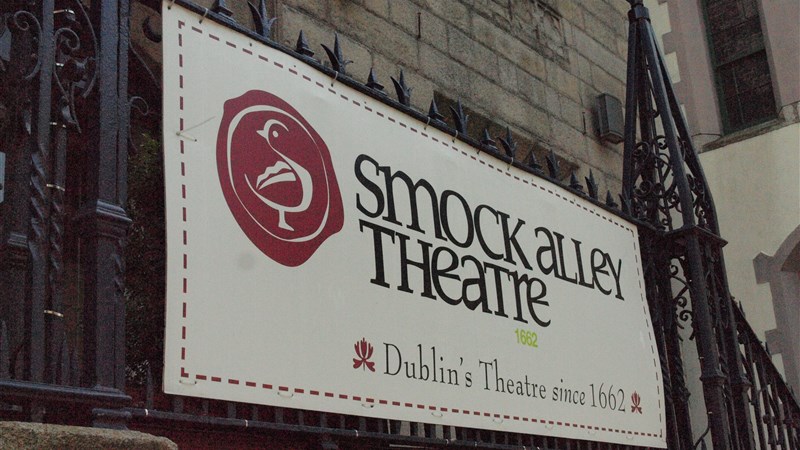
Recently, I had the pleasure of seeing Helen McNamara’s fifth play, Mis-Conceptions, charmingly performed at Smock Alley Theatre in Temple Bar. Upon first inspection, the performance space seemed simplistic and minimalistic, however, this allowed for the focus to be on the plot, which gripped your attention right from the beginning.
The set displayed different home-like settings for each scene for which the ‘Book Club meetings’ would take place, these meetings being crucial to the storyline. Inside the set we are introduced to our six leading ladies and as described by Super Pie Theatre, it is all about “Six women. Six books. Six very unexpected misconceptions.”
In the opening scene we are introduced to an angsty Sarah (Megan Bea Tiernan), adopted sister to Ann (Niamh Sweeney), upset and angry at a world where she feels she has no place, given up and never contacted again by her own birth mother. We are given slight insight throughout the play on each woman’s stance on having children, with the discussion of abortion popping up here and there.
The play’s setting aims to evoke a home-like feel // Facebook
The issue of women’s choices and women’s bodily rights is discussed frequently during the play and offers an insight into several different, and in some ways, opposing opinions from these six characters. There is mention of the Repeal campaign’s success in the play, which offers a new and exciting angle to the plot and ensures that, along with entertainment, this play addresses some real life issues faced in today’s Ireland.
From beginning to end we are introduced to each woman’s own dealings with childbirth, or lack thereof, and are left feeling connected to each woman. They represent different, yet all equally strong, modern, Irish women. With each heartbreaking story comes feelings of pity, not lingering long before we are brought back into the story with a pop of humour.
Spending the entire play trying to figure out the connection between all these women and their monthly book clubs, we are kept on the edge of our seat before finally the ultimate plot twist is revealed. We witness Grace (Rebecca Bloomfield) read aloud the missing chapter of her choice of book “The business of babies” where, in a surprising turn of events, a character that had previously remained very much in the background suddenly becomes the centre of the storyline. The acting that came as a result was next to exceptional and really brought the audience in.
Megan Bea Tiernan gives one of the play’s standout performances // Facebook
While all of the actors in this play are worth noting, the standouts include Michelle Costello playing the ever bubbly, humorous and, in some cases, goofy Elaine who continuously caused eruptions of laughter from the audience. Megan Bea Tiernan who played Sarah also gave a heart wrenching performance, and her acting chops are undeniable.
The play is beautifully written by Helena McNamara and directed excellently by Niamh Cummins, offering smooth scene changes, a clear focus and united form that was impressive to witness, with each actor knowing when to pipe up and when to pull back. With everything discussed here it is easy to say that this play was exceptionally written, directed and performed by all of the cast and crew.
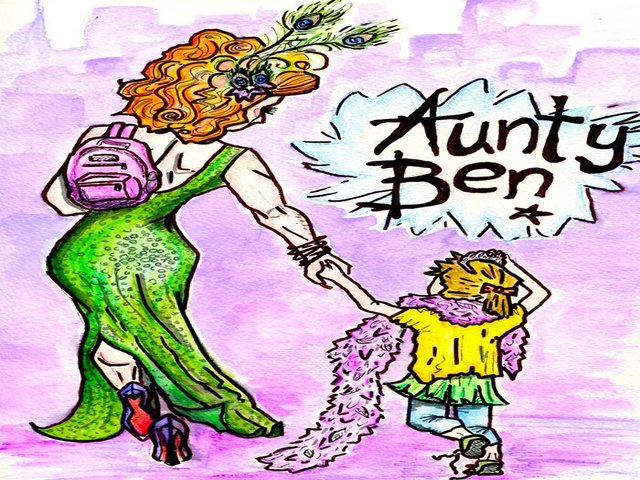
Better known to the patrons of the George as Lady Veda Beaux Reves, Enda McGrattan is now also the star of Ireland’s very first LGBT play for children, Aunty Ben. The City caught up with McGrattan to discuss the play and Ireland’s changing attitudes to gender politics.
Tell us a little bit more about Aunty Ben, it seems like a really interesting story.
“It’s really fun, the idea is that due to a break up of a marriage I, as Ben, end up helping [my] sister raise her child Tracy, who is around nine-years-old. She really enjoys Ben and all of his drag and all of his ways until she changes school and realises that because of Ben she becomes the subject of controversy and bullying from the kids in her class.”
A lot of people would know you from your performances as Veda in the George, how much of Veda is in Ben?
“Ben is very Veda, I think that’s the reason that I was approached. I’m not an actor or a theatre actor or anything so Ben is about as Veda as it comes, but at the same time Veda is very Ben. I have nieces and nephews and they’ve come to see me perform so it actually reflects my life pretty accurately. [And] although I’m far too old to be the subject of any kind of bullying by school kids at this stage in my life. I definitely can relate to it from when I was younger.”
Seeing as it’s a play for kids, has it been performed in schools?
“We’ve done a couple of shows in Educate Together schools. It hasn’t happened yet that we’ve done shows in Catholic schools but we have been to St Pat’s teacher training college twice … and we performed it for the students there who’ve loved it just as a kind of demonstration of how these issues can be dealt with in a school setting.”
Has there been any backlash to the play?
“There has been no backlash of late. Last year there was a couple of things online but lately I think those people are just cowering in the corner somewhere now. I don’t expect to be hearing from them. I think that essentially the mood of the country has really changed throughout the referendum and I feel like we’re in that strange position where we’ve experienced both. The atmosphere and support for the show is definitely clearer and more forthright than before. I think people are less afraid to say ‘yeah, that’s a great idea, let’s bring a drag queen into the school’. We’re definitely getting more interest from schools and youth groups”
Since Jonathan Rachel Clynch of RTE came out as gender fluid, has there been more of a conversation about gender issues in Ireland?
“It’s been a huge year really. Part of it is to do, I think, with the very public transition of Caitlyn Jenner. And also here, especially here, with the referendum and everything that came with it. It definitely feels like there’s something going on with drag queens at the moment. We’re in the zeitgeist, there’s something about gender going on, gender politics and that we’re all sort of freedom fighters for people that want to exist beyond gender.”
Last week celebrated the opening of Pygmankenstein’s latest show ‘Olympia’ in The New Theatre.
The show focuses on Nathaniel, a bright medical student who is heavily burdened from tales told to him as a child of a monstrous creature who comes at nightfall to steal the eyes of children who would not sleep.
The jittery Nathaniel lives with a peculiar ocular obsession, and visits every optometrist within radius of his home. He is best friends with his roommate and fellow student Lothaire, and fiancé to Lothaire’s sister Clara.
Apprenticed by his idol Doctor Coppola, it is she who introduces him to her beautiful, blind daughter Olympia.
The performance, described as ‘gothic-horror’, lasts for 70 minutes and is sure to leave your spine tingling.
The cast includes Michael David McKernan, Shane Robinson, Aenne Barr, Erin Gilgen, and Claudia Kinahan, all of whom executed their roles with precision and emotion.
The production, based on 19th Century horror literature, runs from the 12th to the 24th of October. Ending just before Halloween, there is a special fancy dress after party for those attending on October 25th.
Tickets range from €12 to €15 and are available at tickets.ie
‘Dancing at Lughnasa’ made its highly anticipated debut at The Gaiety Theatre on Tuesday, October 6th. The play celebrated its 25th anniversary this year so it was an obvious choice for the Dublin Theatre Festival. The play’s debut coincided however, with the sad passing of its author Brian Friel, so inevitably this run of performances has been especially poignant.
However, Friel’s passing has clearly motivated the cast to put on a show-stopping performance and it was undeniably the perfect tribute to one of Ireland’s greatest playwrights.
The opening monologue was delivered by Michael Evans, played by Charlie Bonner, and with ease he transported the audience back to 1930s Ireland where he was at home with his aunts, the Mundy sisters, in the small town of Ballybeg.
The Mundy sisters were then left to their own devices on stage, and with the same back drop throughout, they managed to show a repressed, close-minded Ireland within their small house, reflecting Friel’s ability to make the local universal.
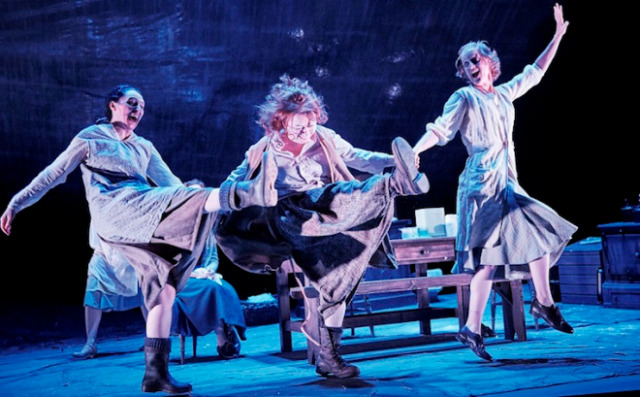
The infamous ‘wireless’ served as a focal point throughout the play, representing the freedom they yearned for. One of the most memorable scenes of the production is when they all lose themselves to the music coming from the wireless and dance around the kitchen.
To them it is not just any dance, it is a moment in time when they are free from repression, free from the restrictions this life has forced on them. All of the actresses completely lose themselves within this scene and it is obvious they are thoroughly enjoying this form of self-expression on behalf of the Mundy sisters.
This spontaneous form of expression is swiftly cut short by Kate Mundy, played by Catherine McCormack, who serves as the voice of reason throughout the play, when she reminds the sisters of what society expects of them.
Catherine delivered an incredibly apt performance of strict national school teacher Kate Mundy, her authoritarian role complimented by Rosie Mundy, played by Mary Murray, who provided much needed comic relief throughout the play.
However, the show was undoubtedly stolen by Cara Kelly who plays Maggie Mundy. Cara embraced her character to the fullest, showing Maggie to be the reasonable, emotionally intelligent and the humorous woman that Friel intended her to be.
Religion played a pivotal role throughout the production as it does in most of Friel’s work. Declan Conlon did an outstanding job of portraying the conflict of ideas surrounding religion through his character Father Jack.
The Gaiety stage served as the perfect backdrop to the play, the set and costumes all helped to give the best Dancing at Lughnasa experience.
There wasn’t a dry eye in the house when the play ended and director Willie White delivered a moving tribute to Brian Friel. It was clear the playwright meant a lot to the production team, as well as the actors, and this was undoubtedly reflected in their performance.







You must be logged in to post a comment.