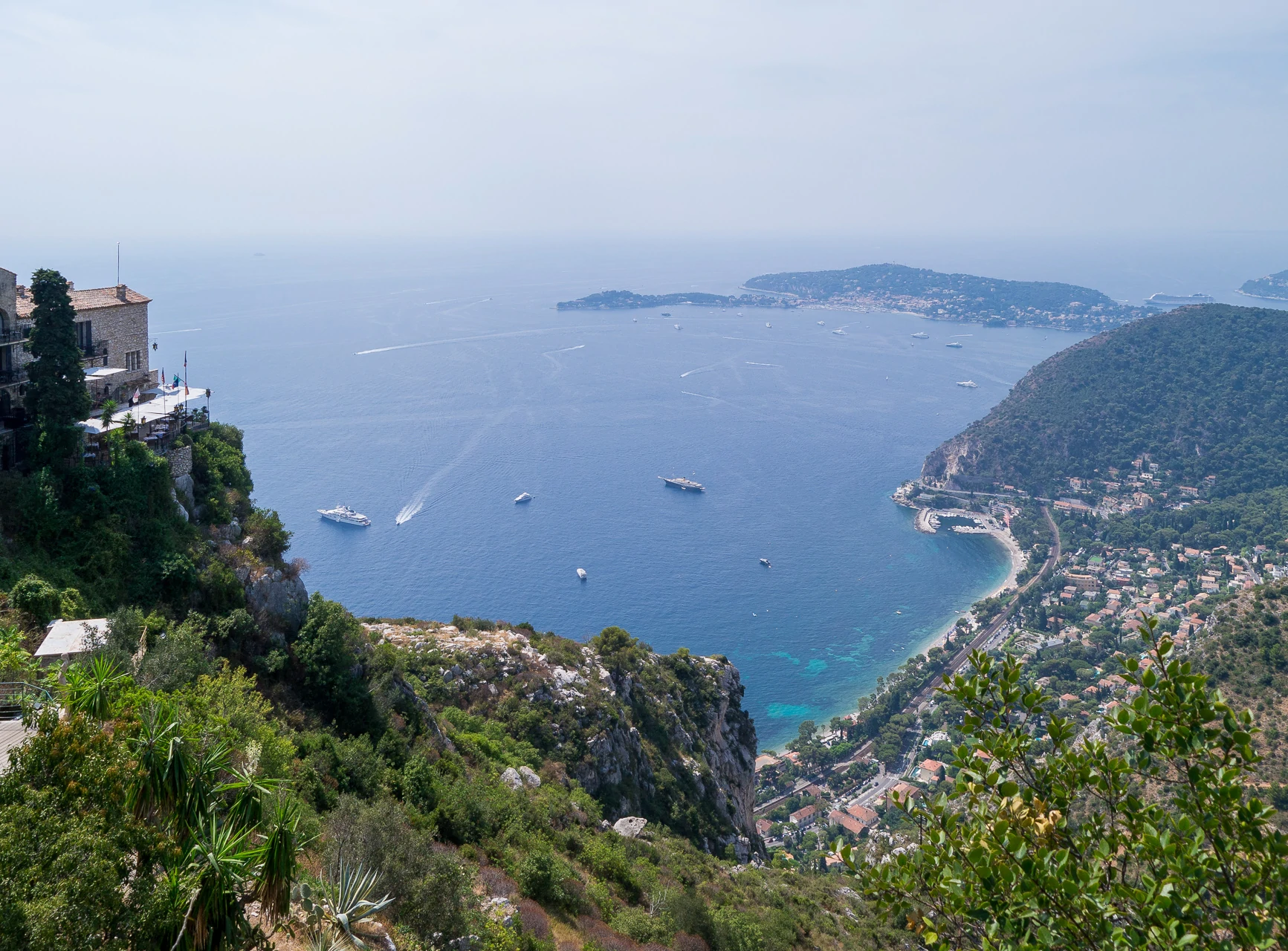
It was sold as guaranteed. A government-backed investment in the French sunshine. But for hundreds of Irish and international investors, the leaseback property scheme turned into a costly legal trap.
In this 7-minute audio documentary, journalist Patrick Domanico investigates the collapse of the French leaseback model through the voices of those affected — from Ireland to the U.S.
Featuring exclusive interviews with investors, excerpts from official statements, and a timeline of key European developments, the story explores how promises of rental income and state protection dissolved into stress, debt, and distrust.
Recorded and produced for TheCity.ie in April 2025 Featuring: Carol [Ireland], Deepak [USA] Voice, script & edit: Patrick Domanico
The N.I.C.E. Italian Film Festival returns to Ireland for its fourth edition, bringing a curated selection of contemporary Italian films to Dublin, Cork, Galway, and Limerick from March 27 to April 6, 2025.
Founded in Florence in 1991, N.I.C.E. (New Italian Cinema Events) promotes Italian cinema abroad, particularly the work of young and independent filmmakers. Over the years, it has grown into a prestigious cultural initiative with editions in the United States, Russia, China, and Europe, introducing global audiences to evolving trends in Italian cinema. In Ireland, the festival serves as a cultural bridge, fostering exchange and deepening appreciation for Italian storytelling.
Organised by the Embassy of Italy in Ireland and the Italian Institute of Culture, the festival showcases Italy’s finest talents, from acclaimed directors to emerging voices.
Since its Irish debut in 2022, the festival has expanded significantly. It began in two cities with ten screenings and now offers 22 across four locations, driven by enthusiastic audience response. N.I.C.E. organisation reports:
“When we were first approached by Marco Gioacchini, director of the Italian Institute of Culture in Dublin and our main collaborator in this endeavour, with the idea of bringing our festival to Ireland, we did not know what to expect from the Irish public. But the warm and engaged reception took us by surprise! Because of that, because of how the public has reacted to what we have to offer, we have been able to improve and expand every year.“
This increasing demand has enabled N.I.C.E. to bring more films, explore new themes, and reach wider audiences, strengthening cultural ties between Italy and Ireland.
The 2025 lineup focuses on female-driven narratives, reflecting the evolving interests of audiences and the industry.
According to the organiser, “This is in part a conscious choice, but it is also a direct reflection of the shift in interests of the audience. Simply put, female-cantered stories are now more popular than ever, and the market mirrors this interest by producing stories about women, often made by female filmmakers,” say the organizers.
One of the standout films is “Gloria!”, the directorial debut of singer-songwriter and actress Margherita Vicario. Set in an all-women musical institute in 18th-century Venice, the film explores themes of rebellion, artistic identity, and female agency — themes that still resonate today.
A scene from Gloria!, directed by Margherita Vicario. Courtesy of N.I.C.E. Italian Film Festival.
Maria Vittoria Dallasta, who plays Marietta, a character in the film, spoke with TheCity.ie about the experience.
“Working with Margherita was a wonderful and empowering experience,” said Dallasta.“She was a brilliant director that always connected us deeply to the story we were telling. Margherita is not only a director, but also a singer-songwriter and an actress… She’s a true all-round artist. Her creative approach to cinema, that fully embraces all the arts, is exactly what we need nowadays, and it’s brightly projected into the future.”
When asked if the film’s themes are still relevant for women today, Dallasta reflected on the emotional honesty of her character.
“Marietta is so pure and direct in what she does,” she said.” She allows herself to feel, without asking if it’s right or wrong. Playing such a spontaneous character was refreshing, because in my personal life I am too conditioned by what people expect me to do. Marietta stays true to herself thanks to the unbreakable bond with her friends… they rebel against patriarchal oppression through music. I truly believe that sisterhood and art are luminous values that resonate with women today and will always resonate in the fight for conquering the freedom to be who we are and who we want to be.”
One of the most talked-about selections of this year’s N.I.C.E. Festival is Parthenope, the latest film by Paolo Sorrentino. A poetic journey through youth, melancholy, and memory, the film pays homage to the director’s deep connection with Naples.
A scene from Parthenope, the latest film by Paolo Sorrentino. Courtesy of N.I.C.E. Italian Film Festival.
TheCity.ie spoke with Rienzo about the emotional depth of his character and what it means to bring Parthenope to Irish audiences.
“Working on set wasn’t too demanding; working with Paolo is a great privilege—everything runs smoothly.”
Yet the emotional preparation for Raimondo’s character proved more intense.
“Exploring such melancholic and poetic aspects of human nature—dark, in a way—such as absence, impossibility, and jealousy was an interesting yet exhausting task. Talking about suicide is like discussing a deep resignation, a great surrender, a complete detachment from everything that society today considers essential. Working on such an intense sense of detachment and letting go often felt beyond my reach. Looking back, I feel fortunate to have been part of a film like this, shaped by Paolo’s finest writing. It’s not every day that you get the opportunity to explore yourself so profoundly.”
As a Neapolitan, Rienzo spoke with deep affection for the city that serves as both backdrop and symbol in Parthenope:
“The idea of being Neapolitan and having taken part in a project of such poetic significance about Naples fills my heart with gratitude but also with pride. The Naples depicted by Paolo glides over a veil of cinematic beauty of the highest level, thanks in part to the incredibly sensitive photography of Daria D’Antonio. Finally, we get to see a distinguished Naples, with its own colours, without the violence that, in my opinion, unnecessarily characterizes it in the international perception. Naples is a very kind city.”
Reflecting on the film’s presence at N.I.C.E. Ireland, Rienzo shared a personal connection between Neapolitan and Irish culture:
“Bringing this film here to N.I.C.E. is also a great gift. I am a musician also, and Irish music has accompanied me for many years of my life, shaping the way I play the guitar. I have always deeply loved Dublin, and people have often told me that culturally, it is ‘the South of the North.’ I don’t know the city well, but I believe that this film about Naples—a city made up especially of sound and music—can resonate well with a culture as musically open as Ireland’s.”
Among the highlights of this year’s festival is “Romantiche” (Romantic Girls), the directorial debut of Pilar Fogliati, a film that follows four women navigating personal challenges and aspirations in their journey toward self-discovery. Another female-centered narrative is “Diamanti” (Diamonds) by Ferzan Özpetek, which takes audiences back to a 1970s Rome tailoring shop, weaving the lives and dreams of 18 female employees. The festival will also present historical dramas such as “Il treno dei bambini” (The Children’s Train) by Cristina Comencini, set in post-war Italy, and “L’abbaglio” (The Illusion), a gripping tale of deception and warfare during Garibaldi’s unification battles.
Contemporary issues are explored in “Real”, a documentary by Adele Tulli that explores the human condition in the digital age, and “Familia” by Francesco Costabile, a compelling thriller tackling domestic violence. Rounding out the programme is “Una storia nera”, a mystery following a man’s disappearance.
N.I.C.E. is not only about showcasing films—it also fosters meaningful connections between the Italian and Irish film industries. One example of this collaboration is the festival’s partnership withIrish Film Festa, a Rome-based festival that introduces Irish cinema to Italian audiences.
“Last year, we collaborated on a small series of screenings in Florence, our home base. It went very well, and we look forward to replicating the events this year too!” the organisers revealed.
This growing cultural exchange paves the way for stronger partnerships, co-productions, and artistic dialogue between the two countries.
Thanks to collaborations with UCC, the University of Galway, Galway Film Society, and the Limerick School of Art and Design (LSAD), the festival will be screened in multiple cities:
Limerick – TUS Millennium Theatre | March 27-29 Dublin – Odeon (Opening Gala), Light House Cinema | April 3-6 Cork – The Arc Cinema | April 4-6 Galway – EYE Cinema | April 4-6
All films will be screened in Italian with English subtitles.
With its blend of history, social reflection, and contemporary voices, N.I.C.E. Festival has become a key cultural event in Ireland. Whether you’re a cinephile or curious newcomer, this is a rare chance to experience Italy’s cinema in all its richness.
For the full festival programme, film synopsis, and ticket bookings, visit www.nicefestival.org.
In a rapidly evolving digital landscape, understanding the intersection of technology and society is more crucial than ever.
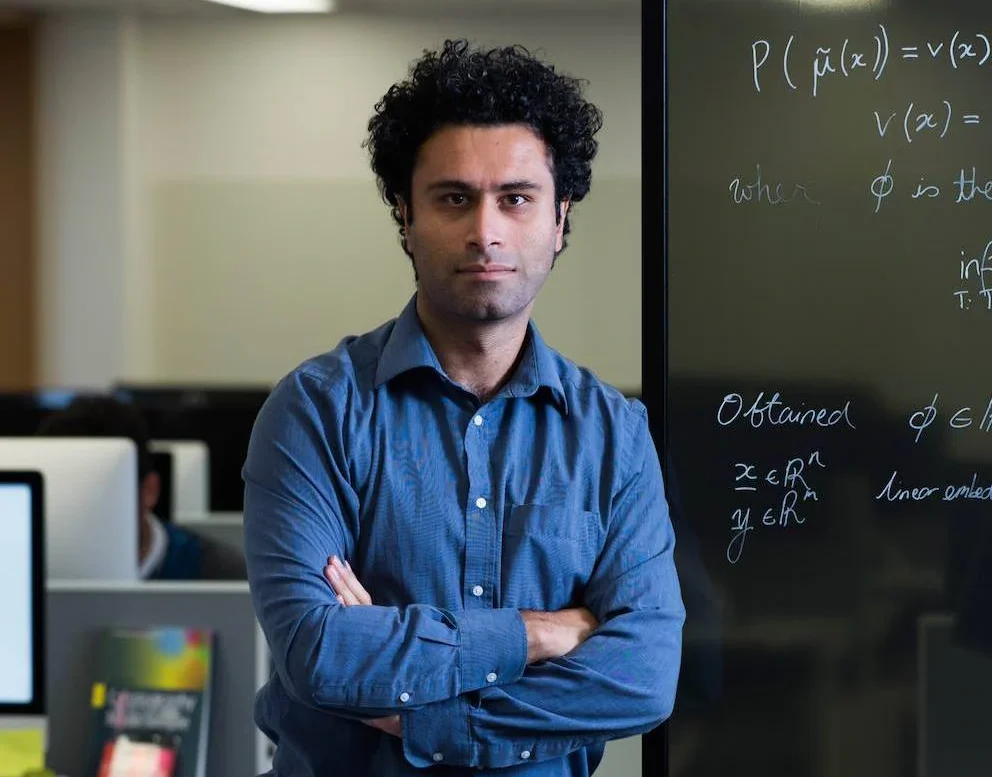
Professor Taha Yasseri, the inaugural Workday Professor of Technology and Society at Trinity College Dublin (TCD) and Technological University Dublin (TU Dublin), is at the forefront of this research. With a background in computational social science and a career spanning physics and sociology, he brings a unique interdisciplinary perspective to one of the most pressing conversations of our time: how technology—especially artificial intelligence—shapes our lives, governance, and public discourse.
In this interview, Professor Yasseri discusses his vision for the new TCD-TU Dublin joint center, the challenges of interdisciplinary research, the societal impact of AI, and Ireland’s role in global tech ethics.
Professor Yasseri sees his new position as an opportunity to bridge the gap between technology and society through three main pillars: research, education, and public engagement.
“This is the first academic chair in Ireland focused on technology and society, which is very exciting,” he says. “I have a few things in mind. First of all, I need to create a community around this theme. Second, I’d like this chair to have a very active community engagement aspect to it because technology and society—particularly AI—are crucial topics that impact everyone. I see this role as an opportunity to foster public discourse on technology, particularly AI. And finally, there is of course the research and education which is the basic part of any academic role.”
A central aim of the Workday Professorship is to create a platform where experts from different disciplines—engineering, sociology, ethics, and policy—can come together. “The knowledge we generate in the center is crucial. When studying issues like technology and society, or human-machine interactions, interdisciplinary research groups are essential,” he explains.
As an expert in computational social science, Professor Yasseri is well aware of the transformative nature of AI. When asked about its impact on human behavior and decision-making, he acknowledges the complexity of the question.
“It’s a billion-dollar—perhaps even trillion-dollar—question. While there’s no simple answer, one thing is certain: this will be a disruptive technology,” he says. “It’s going to change the way that we do things and it’s going to change us and of course we are going to affect the technology and the way it is developing and it is regulated.”
He points out that while AI as a concept has existed since the 1950s, recent advances have made it an undeniable force in society. “With large-scale datasets and the digitalization of society, AI has rapidly become an undeniable reality with profound effects on our lives.”
With AI becoming increasingly pervasive, ethical considerations are paramount. According to Professor Yasseri, academia has a crucial role to play in guiding the ethical deployment of AI.
“Our role is to generate knowledge and not only to shape and inform policies but also to feed back to the industry to people who are making these technologies and who are developing these services,” he says. “This is uncharted territory—we are dealing with intelligent actors that are not human. We’ve never encountered this in society before. It’s like we have landed on a new planet. We do need to understand how this new planet works. What is the physics of it? What is the chemistry of it? And of course, what is the social science of it? Without having this knowledge, we cannot regulate it, and we cannot further develop it.”
When asked if Ireland is prepared for the societal impact of AI, Professor Yasseri provides a nuanced response.
“Ireland is about as prepared as any other EU country, let’s say. That doesn’t mean that we are overly prepared,” he admits. “I cannot say that we are prepared but it’s not because we live in Ireland. I think the situation is more or less the same everywhere. I mentioned EU countries because the European Union is one of the entities that started looking into regulation and we had the AI Act last year. So, in a way we are ahead of the rest of the world but that doesn’t mean that we have done much.”
He draws a historical comparison to electricity regulation. “When electricity was first commercialized, it remained unregulated for nearly 50 years in the US. And in those 50 years, lots of people lost their lives, lots of buildings burned down to the ground. Hopefully, this time it doesn’t take us that long to come up with safety regulations and ways of minimizing the harm and maximizing the benefit of this new technology.”
Building an interdisciplinary research center dedicated to technology and society is no small feat. Professor Yasseri is already facing some of the challenges associated with this endeavor.
“We are developing the center and recruiting new researchers, including a community engagement officer. The main challenge is finding people willing to work across disciplines in an interdisciplinary culture,” he says. “Unfortunately, academia is structured around disciplines. You become a physicist, you become a computer scientist, you become a social scientist. Someone like me—holding a PhD in physics yet a professorship in sociology—often surprises people. It’s not the norm, but there is a need for experts from different areas to come together to study issues around technology in a holistic way.”
PhD students and postdoctoral researchers will be integral to the success of the center. “They are really the engine, and they are really the powerhouse of our research center because they are the ones who are developing the research ideas and conducting the research,” he explains. “Of course, they’ll be supervised by me and other faculty members, but they’re truly the brain and muscle of the center.”
His own research interests lie in AI’s role in collective intelligence. “How AI could be a member of our teams or how AI could manage human teams. These are the topics that I’m looking into,” he notes. “How AI can improve our collective intelligence.”
Given that the professorship is funded by Workday, a major tech company, there are natural questions about balancing academic independence with industry involvement. Professor Yasseri addresses these concerns directly.
“Of course, my chair is named after Workday, which is a private company, and this might be misleading to some individuals who are not familiar with this sort of named chair. But that doesn’t mean Workday tells me what to do,” he clarifies. “Workday has donated a sum of money to the universities, and that’s the extent of their involvement. There is nothing beyond that, which gives me all the freedom I need as an academic. Nevertheless, we do share a vision, and our informal conversations will mutually benefit us, Workday, and the broader industry sector.”
Public engagement is another key pillar of his work. “Unfortunately, there is a lot of myth around AI. For many of the members of the public, the main resource for information about AI is Hollywood, and I can tell you Hollywood is not very accurate in describing how AI will shape and form our societies,” he says. “We have to demystify AI for the public.”
Professor Taha Yasseri’s work at TCD and TU Dublin represents an important step in bridging the gap between technology and its societal implications. By fostering interdisciplinary research, engaging with industry and policymakers, and promoting public understanding, he hopes to ensure that technology serves humanity—rather than the other way around.
Congestion, infrastructure delays, and increasing demand continue to put pressure on Dublin’s transport system. To understand how effective these changes really are, TheCity spoke with Professor Brian Caulfield, a transportation expert at Trinity College Dublin.
On January 26, 2025, the latest phase of BusConnects (Phase 6a) was introduced, including two new 24-hour routes (E1 and E2) and Radial Route 19, which connects Dublin Airport to the city centre via DCU. Other local and express routes were also adjusted.
The goal is to increase capacity, improve frequency, and enhance connectivity. However, Professor Caulfield, who was part of the Greater Dublin Area Transport Strategy Steering Group, believes that while these expansions are necessary, they are only a small part of what is needed.
“They’re progressing towards the goals that we need,” he said. “But in transport, you can’t just click your fingers and make it all happen. It would be great if we could.”
One of the most anticipated changes of BusConnects Phase 6a is the expansion of 24-hour bus services, with the E1 and E2 operating around the clock.
Dublin’s hospitality workers, shift employees, and night-time economy have long required late-night public transport. Professor Caulfield welcomes the expansion but says it should have happened sooner.
“We know our city doesn’t go to sleep at 11 PM. We know we have a very vibrant night economy, with people that work in shift work,” he said.
While he supports adding more all-night services, he believes Dublin should also rethink its approach to evening transport in general.
“I think we should have more 24-hour bus services,” he stated. “I think we could maybe wait a little bit longer to put the lowest bed”
Cork was the first Irish city to introduce 24-hour bus routes, and they have been “massively successful,” he noted.
“We don’t have much data yet [on Dublin’s 24-hour services] ….I suspect that the passenger numbers are going to be, high,” he added.
Despite this, Dublin’s late-night public transport options still lag behind other European cities.
“I don’t see why we couldn’t do that on weekends, definitely, when there’s an awful lot more people in the city,” he said, referring to later Luas services on Fridays and Saturdays.
Sustainability and the push for hybrid buses
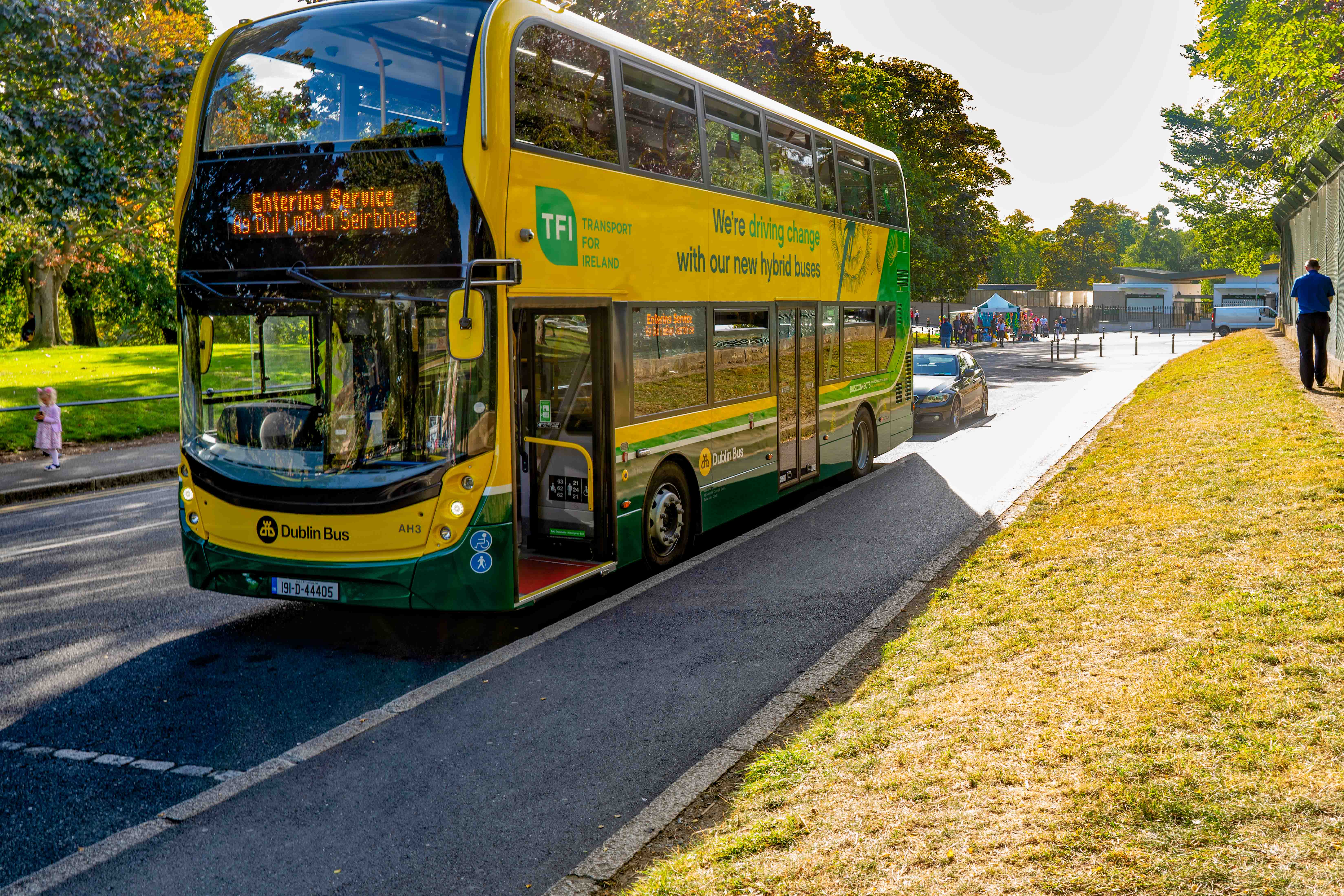
Sustainability has become a key focus of Ireland’s transport policy. On February 7, 2025, the National Transport Authority (NTA) introduced five hybrid buses on Route 139 (Blanchardstown – Naas), operated by JJ Kavanagh & Sons. These low-floor buses aim to cut emissions and improve accessibility.
Professor Caulfield acknowledges these efforts but warns that Ireland is still struggling to reduce transport emissions fast enough.
“All of the buses, the new policies that are coming into the fleet that are being paid for by the National Transport Authority, are low-carbon buses,” he explained. “They’re either hybrid or electric. And they’re also trialling hydrogen buses.”
But reducing emissions is a race against population growth.
Slow infrastructure development: why is Dublin lagging behind?
Despite ongoing improvements, Dublin’s biggest transport challenge remains project delays. The Luas Finglas extension (4 km) will take 10 years, and MetroLink—first proposed in the 1990s within the Transport 21 transport plan—may not be operational until at least 2035.
According to Professor Caulfield, bureaucracy is the biggest factor behind these delays.
“For the four-kilometer extension of the Luas, they had to produce 3,000 pages of analysis,” he pointed out. “And then the planning authority takes up to two years to review it. The construction itself doesn’t take that long—it’s the planning process that delays everything.”
What Needs to Happen Next?
While Professor Caulfield welcomes BusConnects, hybrid buses, and express services, he insists that these improvements alone will not fix Dublin’s transport challenges.
“BusConnects is bridging the gap,” he said. “But we’re not going to get the transformative change of loads of people leaving their cars behind until we invest in heavy rail.”
Professor Cualfield says Dublin needs to take major steps to To modernize transport, including:
Later-running Luas and DART services on weekends to meet night-time demand.
Faster project approvals for major infrastructure like MetroLink.
The introduction of Low Emission Zones (LEZs) to reduce city traffic and improve air quality.
“Certain transport projects must be prioritized as national strategic infrastructure. If we wait another 10 years for MetroLink, we’re going to be permanently behind.”
Dublin’s transport is evolving, but without faster infrastructure development and policy changes, demand will outpace improvements. In the meantime, another change is planned for March 3, 2025, with the revision of express bus routes, which will now serve UCD Belfield.
Dublin’s small shops are facing significant challenges, including escalating rents, rising energy costs, and persistent inflation. These factors are reshaping the city’s retail landscape, often at the expense of independent businesses.
Prime retail locations in Dublin, such as Grafton Street, command some of the highest rents in Europe. According to the press, of the time. it has been ranked among the world’s most expensive shopping streets, with rents reaching €3,372 per sq. m annually since 2004. More recently, retail accommodation of 4,359 sq. ft has been listed for €500,000 annually last September.
A 2023 Savills Ireland report, notes Dublin 1’s retail sector is recovering, with new stores expected in the following18 months. Recent entrants include Alo Yoga (US), Kiko Milano (Italy), and Swatch (Switzerland), now open in the area.
The high rental costs in these prime areas make it challenging for independent retailers to compete with larger international brands.
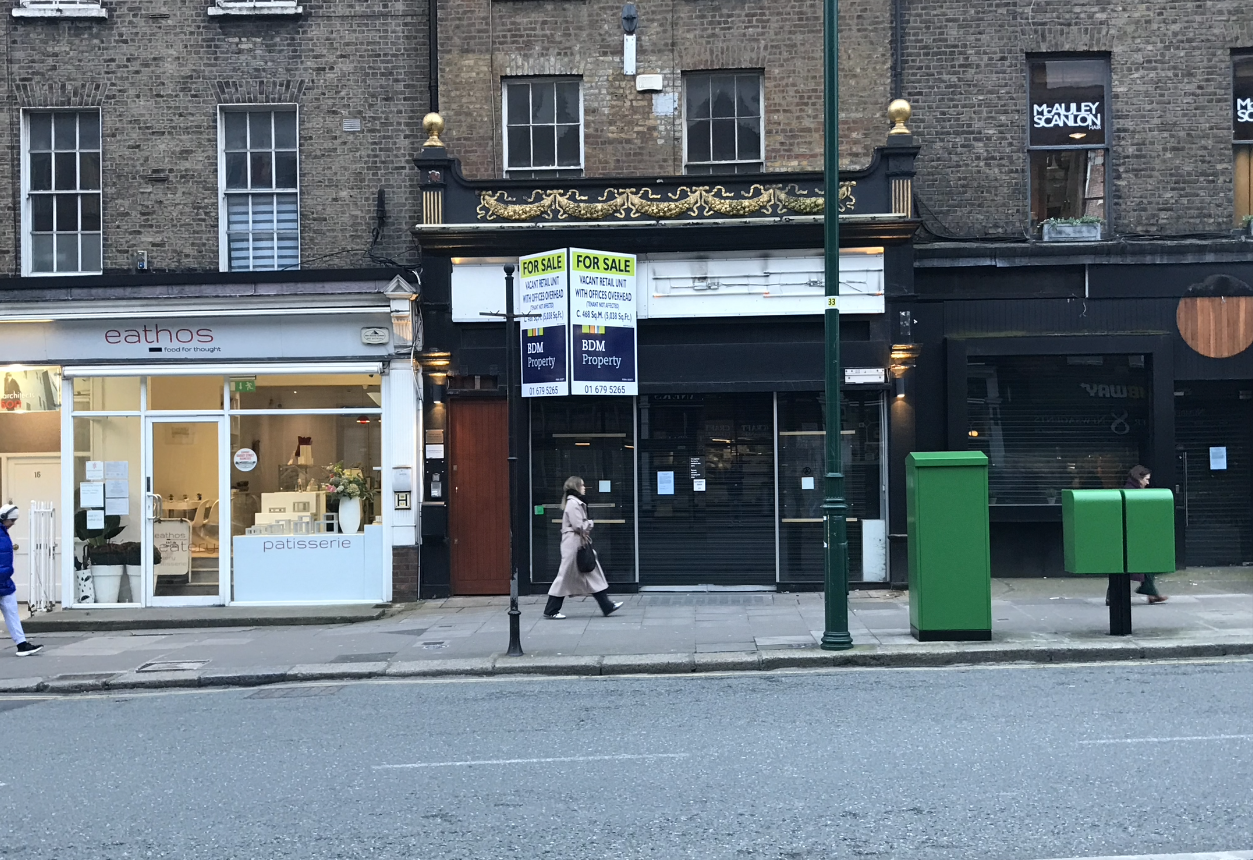
Consequently, small businesses are relocating to more affordable areas like Capel Street, which was pedestrianized following a 2022 consultation, as well as both Drury Street and Camden Street. However, these areas often lack the foot traffic of central shopping districts, creating additional challenges for independent business owners.
With soaring costs and shrinking support, Dublin’s small SHOPS sector fights for survival.
Energy expenses continue to be significant burden for SMEs. The Central Statistics Office (CSO) reported that wholesale electricity prices increased by 2.1% in April 2024 compared to the previous month, although they decreased by 29.5% compared to April 2023.
Despite the annual decrease, the volatility in energy prices continues to strain business operations. Recent government subsidies have relieved small businesses with modest premises. Daniela, a holistic practitioner based in North Dublin, stated that these supports have helped, but many energy-intensive businesses still struggle with fluctuating costs.
Similarly, Carol, a jeweller with 40 years of experience, acknowledged that while government reliefs have helped keep electricity costs manageable, rent and footfall remain greater concerns. She noted that over the years, many businesses have either relocated to cheaper areas or closed down, resulting in the gradual loss of the street’s unique local identity.
Inflation, as measured by the Consumer Price Index (CPI), stood at 1.7% in August 2024, marking the lowest level in over three years. While this indicates a slowing rate of price increases, certain sectors continue to experience significant cost pressures.
For instance, the hospitality sector saw an 4.5% increase over the same period, reflecting higher prices for food and services. These rising costs erode profit margins for businesses that are unable to pass on the increases to consumers.
The cumulative effect of these financial pressures has led to a concerning rate of business closures. Over 600 eateries have shut down in the past year, according to The Irish Sun, with potential closures rising to 1,000, resulting in the loss of about 15,000 jobs.
In response to the mounting financial pressures on small and medium-sized businesses, the government introduced a series of measures last May, these are aimed at reducing operational costs and promoting long-term financial sustainability.
Key measures include:
Reopening the Increased Cost of Business (ICOB) Scheme to provide short-term financial relief.
A second ICOB payment for retail and hospitality businesses.
Expansion of the Innovation Grant Scheme, increasing available funding to €10,000.
Enhancements to the Energy Efficiency Grant Scheme, with funding now up to €10,000 and a reduced business contribution requirement.
Widening eligibility for the Trading Online Voucher, now available to businesses with up to 50 employees and doubling the grant to €5,000.
Increasing Microfinance Ireland lending limits from €25,000 to €50,000 to improve SME access to capital.
Additional policy considerations include increasing the employer Pay Related Social Insurance (PRSI) threshold, using surplus National Training Fund resources for SME workforce upskilling, and extending fee waivers for outdoor dining permits until the end of 2024.
Additional policy considerations include increasing the employer Pay Related Social Insurance (PRSI) threshold, using surplus National Training Fund resources for SME workforce upskilling, and extending fee waivers for outdoor dining permits until the end of 2024.
Stakeholders, united in the SME Alliance, are advocating for government intervention to alleviate these challenges. Proposed measures include reinstating the reduced VAT rate for businesses serving food providing energy subsidies and offering tax incentives to support SMEs.
Dublin’s SMEs are integral to the city’s economic vitality and cultural identity. Addressing the challenges of rising rents, energy costs, and inflation is crucial to ensure their sustainability. Without meaningful support, there is a growing risk that independent retailers, service providers, and family-run shops will disappear from Dublin’s urban landscape, replaced by multinational chains that can absorb rising costs.
The future of Dublin’s small business sector remains uncertain, but one thing is clear: urgent action is needed to preserve the independent businesses that contribute to the city’s unique character.



You must be logged in to post a comment.