Author: The City’s Newshound

  • A Guide to the Irish Election Part 2: PR-STV Explained

    A Guide to the Irish Election Part 2: PR-STV Explained

    After nearly three weeks of frantic campaigning, the electorate will cast their ballots this Friday.

    By this point, if you’re eligible, hopefully you’re registered to vote and close to deciding who your first preference is. 

    With the day of judgment fast approaching, The City will provide a brief refresher – or, if you’re a first-time voter, an introduction – on PR-STV, the electoral system used in the general election.

    What is PR-STV?

    PR-STV stands for ‘Proportional Representation – Single Transferable Vote’. Besides Ireland, the only other country that uses PR-STV to elect parliaments is Malta. As the name suggests, PR-STV seeks to ensure proportional representation within each constituency – and by extension the country. This means that the distribution of seats more accurately reflects the numbers of votes cast for a candidate and party than does a so-called first-past-the-post system.  

    Britain does not use a PR voting system and the results of this can be reflected in the 2005 UK general election, when Labour received 35 per cent of the national vote but won 55 per cent of seats.

    How to vote?

    Voting itself is straightforward under the PR-STV system. When the voter goes to their local ballot station they will be given a list of the candidates standing in that constituency. To vote, you just have to rank the candidates in order of preference – with ‘1’ beside your preferred candidate and so on down the list.

    What happens to your vote?

    While the process of casting a vote is quite straightforward, the means of counting it are less so: candidates are elected by reaching what mathematicians call a ‘Droop Quota’. The ‘quota’ is set by this equation as, for example, a quarter of valid votes plus one in a three-seat constituency, a fifth of votes plus one in a four-seat constituency, and one-sixth plus one (about 16.7%) in a five-seater.

    If a candidate is elected on the first count, this candidate’s surplus votes – that is, the number of votes she or he has received above the quota –  are distributed to the others. If no one is elected on a count,  the candidate or candidates with the fewest votes are eliminated and their votes transferred to the lower preferences on each ballot.

    Tactical Voting?

    The mechanics of PR-STV allow votes to cast their votes tactically. There are many examples of this. One is that a voter might give his first preference to a candidate from a smaller party, or an Independent, who has no realistic chance of winning a seat. In effect, the voter is casting a vote of conscience in the knowledge that their second preference will ultimately hold more sway in the count centre – and that second-preference candidate will be able to see where the vote ‘came from’.

    The tactics are not, of course, only on the voting side. Many parties will run more than one candidate in a constituency so as to boost their chances of winning one seat. The plan here is for one candidate to steal lower preferences from other candidates, and upon being eliminated from the count, improve the chances of their party colleague getting elected.

    One of the notable features of PR-STV is that it allows voters to cross party lines when casting their votes. This contributes to the share of seats in a constituency not going to the same party, and also gives smaller parties or Independents the chance to win the final seats in constituencies if they transfer well. One explanation put forward for the Green Party’s strong showing in the 2007 General Election (six seats with less than 5 per cent of the first-preference vote) is that they got so many transfers, as many voters gave the party a lower preference to reflect environmental concerns.

    Consequences of PR-STV?

    The most apparent consequence of PR voting systems comes in the area of government formation. On the evening of 6 May 2010, the British public were left dumbfounded when exit polls indicated that the election had resulted in a hung parliament and that a coalition government was to be the outcome of the vote. This is not an alien outcome for electorates in PR voting systems where multi-partyism and coalition governments are the norm.

    The last single-party government in Ireland come about following the 1987 election, and this fell within two years. Since then, coalition governments have become part of the political landscape and  a coalition government is roundly expected to be the outcome following Friday’s vote. Whether it will require a coalition of five parties, as following the 1948 election, remains to be seen.  

    One of the most cited critiques of PR-STV is that it is conducive to localism and leads to constituency concerns to dominate the work of a TD over national affairs. The Healy-Rae’s in Kerry are often cited as examples of this. However, it is debatable whether PR-STV is solely responsible for this phenomenon or indeed if this constituency service is a negative.

    by FERGUS CARROLL
  • Getting our heads around sports concussions

    Getting our heads around sports concussions

    On first viewing it appeared an odd question, and Ireland’s Chris Henry seemed just as bemused as the sharp hearing viewers at home who heard the referee ask ‘What’s my name?’. The Ulsterman quickly composed himself and answered “Nigel” before giving the referee a pat on the back as he re-joined his waiting teammates. This brief interaction was mostly overlooked after Ireland’s 24-9 victory over France in the rugby world cup, but behind referee Nigel Owens’ trivial question was a hint of concern. He had noticed Henry kneel down and hold his head briefly and made sure to check he was fine to continue playing.

    On that occasion, Henry showed no ill-effects, but Mike McCarthy was not so lucky last Saturday as Ireland met France in another bruising encounter. After a nasty clash of heads no similar line of questioning was required. He was promptly withdrawn from the game and became the second Irishman to suffer a suspected concussion in this year’s Six Nations.


    Concussion_Movie_Trailer_2015
    Will Smith in promotional poster for Concussion.

    Defined as a mild traumatic brain injury, rugby fans are becoming increasingly aware of sports-related brain damage. This coincides with the release of the film Concussion earlier this month. It stars Will Smith as Dr Bennet Omalu, a Nigerian born doctor who discovered and drew attention to the prevalence of chronic trauma encephalopathy (CTE) – a degenerative brain disease that is thought to be caused by repeated blows to the head – in former American football players despite the opposition of the National Football League. The film may not be celebrated in the annals of cinema, it was described as ‘drab and occasionally useless‘ by the Irish Times, but its importance to sport and in raising awareness on concussion cannot be understated.


    The National Football League is a pillar of American life. It, as one character in the trailer for Concussion states, ‘is a corporation that owns a day of the week’. This year’s Super Bowl was the third most watched broadcast in US television history. This makes concerns over its players safety all the more pressing.

    In the build-up to the Super Bowl, The New York Times reported that the brain of Hall of Fame quarterback Ken Stabler showed evidence of CTE. This news sees Stabler join a growing list of former players who displayed symptoms of the disease. Junior Seau is another. He took his own life at  the age of 43 after a period of erratic behaviour, and his family are now embroiled in a lawsuit with the NFL.

    Then there is the case of Antwaan Randle El, who despite being only 36 is currently feeling the effects of a career in the NFL. ‘I have to come down [the stairs] sideways sometimes, depending on the day,’ he told the Pittsburgh Post-Gazette. His memory has similarly become affected and he discussed how he will repeat questions to his wife ‘three times the night before and get up in the morning and forget’.

    As the US and the NFL continues to come to terms with concussion, it would be foolish to dismiss these incidents as not applicable in this part of the world. Only this week, BBC Scotland tweeted an excerpt of an interview with former rugby player John Shaw, 47, in which he suffers a ‘cut out’. The clip makes for chilling viewing but exhibits the health risks faced by today’s professionals.

    Rugby is not the only game to take steps against concussion. The opening round of the Allianz football league at the end of January witnessed a bone-crunching collision between Lee Keegan of Mayo and Eoin Cadogan of Cork. Despite the one sided score in favour of Cork, Keegan was allowed to continue playing for a further 10 minutes despite appearing to show the symptoms of a concussion. When he eventually left the field, he had to do so with the assistance of medics. The Mayo medical team later conceded they had erred in this instance but the incident shows that the GAA need examine this issue.

    Youths are just as susceptible to concussion despite the lesser physicality of the game as exemplified by the recent schoolboy rugby match between Gonzaga and Roscrea. The game  was marred by an incident that saw a member of Gonzaga’s medical staff react angrily when the referee ordered the substitution of a player he suspected to have suffered a head injury. While the player ultimately did not play on, the medic intensely argued the referee’s decision. The medics actions are inexplicable and the distressing story of 14-year-old Ben Robinson should serve as a reminder of the dangers in allowing youths to continue playing in a game after taking a blow to the head.

    With this growing awareness of concussion in rugby, will amateur players reconsider playing the game? Barry Treanor suffered a concussion when playing for his club after being on the receiving end of a late and high tackle. The diagnosis left Barry with a three week period on the sideline and a complete ban on contact sports. When asked about his experience he answers that “of course” he has concerns of suffering another concussion but that ‘it doesn’t affect [his] desire to play rugby’ and he cites the introduction of the ‘Head Injury Assessment’ (HIA) protocols in rugby as a sign that the sport is committed to addressing this issue.


    Rugby attempt’s to tackle head injuries have not pleased all quarters. World Rugby’s former anti-doping commissioner Dr Barry O’Driscoll is one opponent. He has been joined by Dr Omalu who discussed this issue on Newstalk’s Off the Ball show in recent weeks while doing promotion for the film based on his work. He pointed out that much of the discourse centres around whether a player has suffered a concussion or not, and that brain trauma does not require a concussion to manifest. He said, ‘For one documented case of concussion there are thousands of sub-concussive blows. Mike Webster, for example, suffered CTE without suffering a serious concussion in his life.’
    As the daily experiences of Antwaan Randle El and  John Shaw show, the consequences of putting your body on the line do not cease alongside your playing days. Leinster’s Kevin McLaughlin last year became another player who was advised to retire after suffering a concussion. In the NFL, Chris Borland decided to walk away from the game before reaching that point. However, there are many more players who love sport too much to give up their livelihoods. Nor should they be faced with that decision, but until the sporting authorities find the way to combat this plight, it is a question many athletes will have to consider.

    by FERGUS CARROLL

    (Photo Credit). 

  • Journalists are dying to the tell truth

    Journalists are dying to the tell truth

    The general disdain for journalists is well known – in fact it’s a common trope used in the humour of media circles. However the recent threats made on two journalists’ lives following last week’s shootings in North Dublin have quieted the typically acerbic wit of the media community.

    The Independent News and Media journalists have been advised by Gardaí to leave their homes as they could be at risk from armed criminals for their coverage of Dublin’s recent outbreak of gangland violence.

    Circumstances surrounding the shootings are unclear, with the Continuity IRA claiming the first attack, but Gardaí believing that it – and the apparent retaliation shooting of Eddie Hutch – is the result of a drugs dispute.

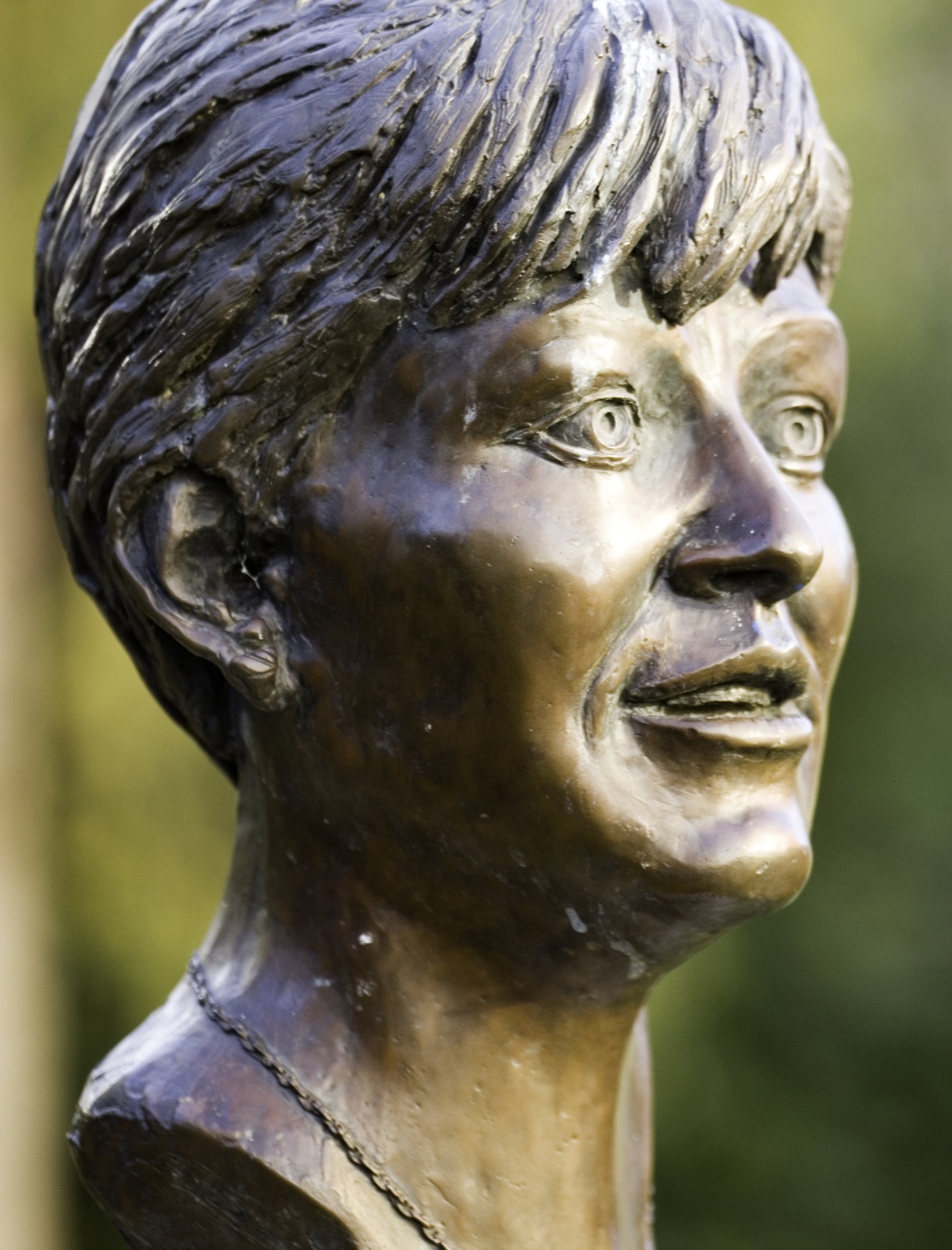
    What is clear however, is that the threats made to the two journalists involved in the gangland coverage have acted as a sobering reminder of Veronica Guerin’s death twenty years ago.

    By definition, a journalist is a person who collects, writes, or distributes news. Taking into account the widely held news values set down by sociologists Galtung and Ruge, a story’s worth is increased in value by factors such as negativity, unexpectedness and conflict. As a result, journalists habitually enter conflict zones to obtain stories of a higher news value, often putting themselves in danger in the process.

    What this means, is that even after Guerin’s high-profile murder, risking one’s life for the sake of a story is still considered stupendous rather than stupid in media circles.

    Two days after she was shot, Guerin was supposed to speak in a segment of a London forum titled “Dying to Tell the Story: Journalists at Risk”. We will never know what the journalist intended to say during her talk, but her sudden death compounded the fact that – in their desire to get a good story – journalists are literally selling their souls.

    Guerin’s murder was condemned by then Taoiseach John Bruton as “an attack on democracy”, a sentiment eerily echoed by Enda Kenny’s comments on the recent threats; “One of the pillars of a functioning democracy is freedom of speech, and in any self-respecting society journalists must be afforded the freedom to go about their jobs without fear of reprisal.” All over the world journalists are threatened and killed as a direct result of the stories they publish, but it is shocking to many that in a democratic society like Ireland’s, journalists lives are still at risk.

    Journalists’ unpopularity stems from the intrusive nature of their jobs. Typically, a journalist will only be interested in a person if he or she has something to hide, and the resulting revelations don’t tend to encourage feelings of fuzzy companionship between writer and subject.

    Nevertheless, in cases of crime journalism there is a certain degree of give and take between journalist and criminal. Although revealing sensitive information to the public is bound to decrease journalists’ popularity in the criminal world, media is also a good way for any upstart gangster to garner a fearsome reputation. And the same is true further afield, I.S is no stranger to the power of media and frequently uses it as way to intimidate.

    However there are  various dangers that lie in this symbiotic relationship, and all too often the journalist reporting on the conflict goes from being the storyteller to the story. Following the death of photojournalist James Foley at the hands of IS, a number of media companies stated that they would no longer be accepting stories from freelance journalists who were going into conflict zones of their own volition.

    This was a bid to remove the incentive for journalists to put themselves in danger for the sake of the of a story. IS was quick to harness the attention it received when it targeted media personnel and as such, the risk of reporting in that particular conflict – especially without the training or protection of a larger organisation – was eventually deemed not worth the story.

    Similarly, the seriousness with which the INM journalists’ safety is being treated shows that Gardaí have not forgotten what happened twenty years ago. However amid reports that the journalists are still writing – but from a secure location – it would seem that in this case that the public’s right to know, or the journalists’ need to tell, is worth more than the possibly empty threats of an unknown source.

    Freedom of speech – and subsequently freedom of the press – is central to a democratic society. Whether they are unpopular or not, journalists should be able to do their jobs without  fear of violent or fatal reprisals. However whatever our high and mighty notions of democracy are, we do not live in an ideal world. It’s common knowledge that pursuing a story in a conflict zone can quickly turn sour, but despite horror stories like Guerin’s and Foley’s, each journalist has to make his or her own choice – is it worth it?

    by IONA SHEARER

    (Image source)

  • It’s time to reconsider your social media accounts – privacy is extinct in the digital age

    It’s time to reconsider your social media accounts – privacy is extinct in the digital age

    The bus I was on had that horrendous familiarity; an elderly woman sat next to me, scanning The Herald — one eye on the paper, the other eye inquisitively purveying me while I texted; my knees were being impaled by the reclining chair in front of me; and the scent was of gone off rainwater. Dublin’s public transport is first class transport, let me tell you.

    My cries for on-board WIFI also dissipated when my phone wouldn’t connect. Then things got decidedly worse when I realised I had no earphones. All the better to expose myself to the unforgiving sounds of a commuter bus.

    I found amusement from the sound in the seat behind me. A young-sounding man behind me was topping up his phone credit via phone call. It first struck me that people still buy phone credit, I’d assumed we’d all transitioned to bill pay these days. Anyway, I sat there listening, the conversation becoming more and more hilarious, and my interest piquing. The young man appropriately transferred his credit card details to whomever was on the other line — was he forgetting he was side-by-side with a stranger?

    Name. Date of Birth. Address. CVV number. Expiry Date. He loudly recited these back to the sales agent on the other line. Hammering each response with a worrying compliance. Initially, I thought: what an idiot. However the interplay of other elements made me think. Firstly, are we entering the death of privacy, and secondly, what digital rights is there or what ones are emerging to save it?

    There comes a time, every decade or so, where a conversation about a generation takes place. This conversation is filled with venomous finger-pointing and victimising: a chaotic crisis infused with questions about the future of mankind. The blame-game is nowadays turning swiftly toward The Millennial Generation. This generation has come under scrutiny after the revenge porn ring that allegedly took place in UCD; the conversation has once again been reopened in regards to social media.  It has provoked a nationwide debate on many issues. However, no one cared to pay attention to the social media sites that promulgate and store these images, information, and conversations. No one seemed to question this large, never-ending web of stored information, whether in context of this occurrence or in the grander scheme  of things.

    Take for example this generation in general; it has come forcibly and selfishly equipped. They’re the largest consumer force the world has ever seen: they know what they want. They’re adamant to find their niche early so they can pioneer their entrepreneurial life: they know how to get what they want. However, their online documentation of these endeavours is potentially harmful. They’re going about it all wrong. They aren’t even listening to what Snowden has to say.

    The unsettling conversation and finger-pointing remains: is Generation Me ignoring privacy, or is it just one Venti-sized imbecile? We have been forced into the latter bracket because there’s no space for privacy anymore, when our lives: how we buy, how we communicate, how we work, how we’re informed, how we flirt, is all done so through technology. Human rights has been sparsely outrun by digital rights. Julia Angwin, an investigative reporter, has added to this digital riot; “retailers, shopping malls, even cities, are using the WiFi signal from your phone to track you.”

    The underlying fear is that we’re moving toward an Orwellian nightmare — without protection, without individual privacy. Two things are at play here: the image of the Millennial in their online self-promotion, and the datagrabbing from these websites that exploit this.

    Social media is exacerbating the self-promotion of individuals and is morphing into a tracking device of some sort. The Internet is the alcove of the narcissist; a hollow to embed ourselves and grow like a fungal bacteria. The maintenance and nutrition to this growth? Our validity. The ‘likes’ and ‘favourites’ and ‘shares’. It is these elements which enamour us. Each moment of vanity is imbued into each App. We use so much of our time and energy that we drain something else. Our iDevices become some sort of agony aunt; listening and viewing our incessant self-inflating personalities until she finally falls asleep. Is it any wonder we’re always trudging toward that ominous 1% battery mark? Granted, when one invests in a smart-phone, one is investing in a lifelong romance with oneself (in Apple’s case, ‘lifelong’ is synonymous to just-until-the-charger frays).

    The constant use of social media is having a dangerous effect. When one adds a location to their status, or when one publicly acknowledges that they’re going on holidays for a week, they’re telling everyone that their house is empty. It’s as if one is a burglar’s perfect accomplice. Irony is strong in the digital age. A simple scroll of social media platforms becomes a hunting ground for those maliciously inclined.

    Our device-obsessed generation do have concerns of our privacy. Recently, Snapchat updated its privacy policy. This update has caused a rift with those who use the App, claiming that Snapchat is storing user content and allegedly selling this content to marketers. Users do care about privacy, it appears. However, this platform differs from other platforms in that photos are sent privately. The concern, then, is connected to the image or reputation of an individual — the concern of where that ugly picture or that undisclosed nude photo is going to end up. When it comes to privacy those of this generation begin to second guess if their content is being patrolled by someone unbeknownst to them. The video-messaging company said it has never stored “snaps or chats” on its servers, refusing the allegations that Snapchat’s content is saved or used without an individual’s consent.

    Digital rights is a conversation worth having. Last year, US privacy laws were questioned by the EU in relation to personal data-transfers from the EU to the US. US laws “permitting the public authorities to have access on a generalised basis to the content of electronic communications must be regarded as compromising the essence of the fundamental right to respect for private life”, said the EU court. The pact “is accordingly invalid”, it said. Privacy no longer holds the same credentials as it once had. Privacy has, as we know, evolved. For example; you know that template that pops up? — the one that hovers over select webpages and says something about ‘cookies’ and you have an afterthought of eating and then click OK and your attention dissipates. Cookies aren’t as tasteful as one is led to believe. What you are clicking is an agreement to a tracking number — one that is amassed in a spider-web of networks where companies can access your location and browsing history. From the get-go, your privacy has been compromised. Google, for example, is your best friend. He knows everything about you — everything you have searched, that is. Google predicts what you’re typing. He’s like that friend who finishes your sentences. Not literally, but it’s terrifyingly close.

    After all this, I began to wonder where the future lies in my rights, and the rights of that idiot on the bus, and the rights of those girls whose content was possibly shared unbeknownst to them. For as long as we can remember a warrant is needed to access a home or physical documents. But what happens when an increasing amount of information is stored online, in a dark never-ending cyber-space, that we as users and consumers, don’t know that much about? The Electronic Frontier Foundation, a non-profit organisation set up to protect digital rights, have recently reported about California’s digital privacy laws. These laws enforced a warrant to be arranged before accessing an individual’s electronic data. Digital privacy protection globally, however, differs.

    The EU has long since protected users under its Digital Agenda by asking users to ‘grant their consent before cookies are stored and accessed in computers’. According to the EU’s Report on the Implementation of the Telecommunications Regulatory Package, Ireland’s social networking usage has increased by 63%. It’s something worth noting. It is in its Europe 2020 Initiative to ‘help reboot the EU economy and enable Europe’s citizens and businesses to get the most out of digital technologies’ — however, the actions taken for digital privacy are a distant memory of the past, with the most recent update in 2013. The Agenda ‘proposes a number of practical solutions, including a coordinated European response to cyber-attacks and reinforced rules on personal data protection.’ However, since then, no actions have been outlined.

    Cyber-security is a complicating foray of legal and human rights issues. Although there is an initiative to tackle these in the EU, it is a slow progression. The foil to tackling these issues is this generation, and our unwillingness or ignorance about these human rights issues, that aren’t forgotten about, but are never heard about from the beginning. Our data is being grabbed and our privacy ended when we first joined Facebook — but it is as a result of our conceited digital environment. Our marriage to our digital devices is more discontent than we realise. It’s time we call it quits and sign the divorce papers.

    by SHANE DEVEREUX

    (Photo credit)

  • #Grammys2016 – What you missed

    #Grammys2016 – What you missed

    Last night the 58th Annual Grammy Awards rewarded the many talents of the music industry at the Staple Centre in Los Angeles. The Grammy show was full of energy and surprises with an over-the-top David Bowie tribute by Lady Gaga, and Kendrick Lamar’s big win – bringing home five out of the 11 awards he was nominated for.

    Here are some highlights from this year’s show.

    Lionel Richie tribute by John Legend, Demi Lovato, Luke Bryan and Meghan Trainor

    After being named MusiCares Person of the Year, Lionel Richie was honoured with an amazing tribute by various artists. John Legend began the tribute, playing the piano while singing ‘Easy’ by the Commodores – the band Richie was part of from 1968 to 1982. After that, Demi Lovato performed an impressive rendition of ‘Hello’, followed by Luke Bryan who sang ‘Penny Lover’. Meghan Trainor honoured the man of the hour with a pleasant version of ‘You Are’ before Tyrese added some energy with a cover of ‘Brick House’. Finally Lionel Richie himself went on the stage to sing ‘All Night Long’ with the other artists.

    Lady Gaga honours late David Bowie with powerful tribute


    In light of David Bowie’s death ––a major loss for the music industry – Lady Gaga gave a spectacular performance as an homage to his career. With the help of Intel, the Queen of Pop opened with ‘Space Oddity’, featuring an intricate light effect that made it look like she was wearing the deceased icon’s makeup. She then moved on to a more lively act, singing classics from ‘Rebel Rebel’ to ‘Under Pressure’, emulating the great figure by wearing the same flaming red hair. Though she did an admirable job, no one will ever come close to Bowie’s greatness.

    Ed Sheeran finally wins a Grammy after being nominated for four years

    Margaux_Ed Sheeran
    Photo: @TeenVogue

    It was a great night for Ed Sheeran, as he finally won not one but two Grammy Awards after being nominated in various categories of the past four years. He thanked his parents for coming every year and consoling him after each loss by saying, “maybe next year”. The British singer and songwriter was given the award for Song of the Year by none other than the legendary Stevie Wonder. After opening the envelope, Wonder made a joke by singing “you can’t read it, you can’t read braille!” before taking the opportunity to promote more accessibility for people with disabilities. Sheeran did not forget to mention the honour in his acceptance speech, “if you’d have told 11-year-old self – or any age – that I’d be receiving an award from Stevie Wonder, then I’d have been chuffed, so thank you very much.”

    Taylor Swift wins Best Album of the Year for the second time – a Grammy first

    Margaux_Taylor Swift.png
    Photo: @SkyNews

    Finally, Taylor Swift made history by being the first woman to win Best Album of the Year twice. The 26-year-old singer also made the most of her acceptance speech by encouraging young women to be ambitious and work for their dreams. Her speech was also a response to Kanye West – for those of you who don’t know yet, the rapper dissed her in his song ‘Famous’ with the lyrics,“I feel like me and Taylor might still have sex. Why? I made that bitch famous.”

    By MARGAUX NADLER


  • #GE16 -How did the leaders fare in round 2?

    #GE16 -How did the leaders fare in round 2?

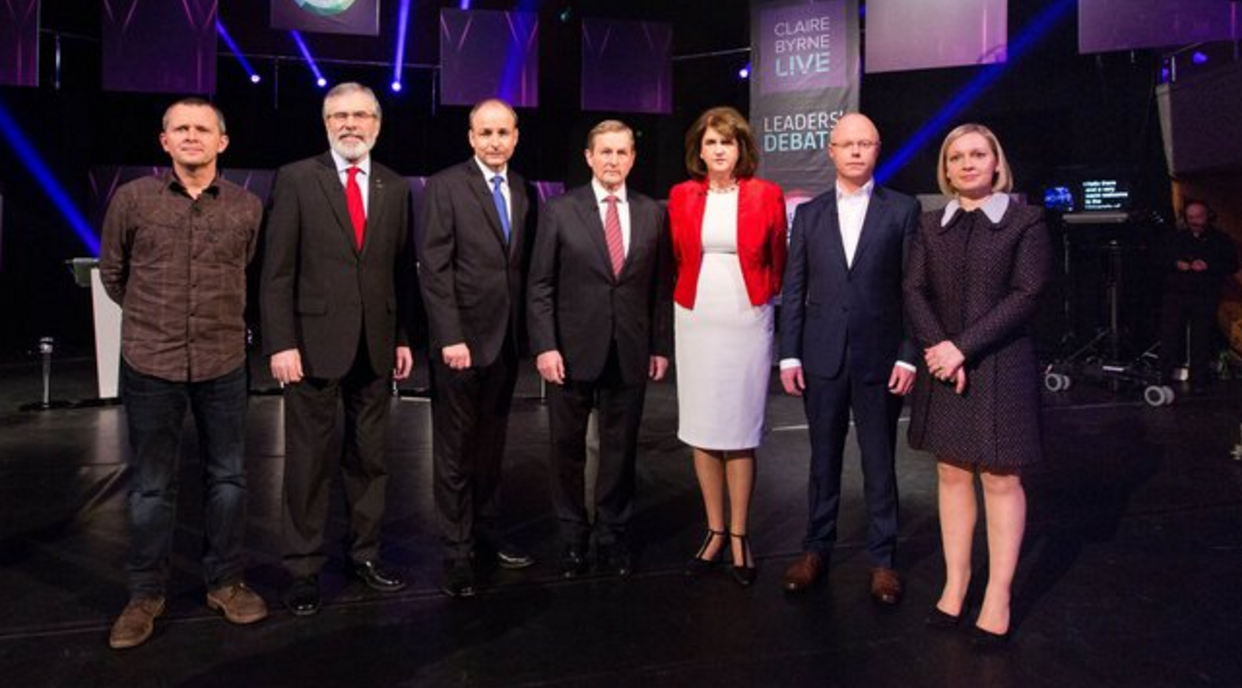
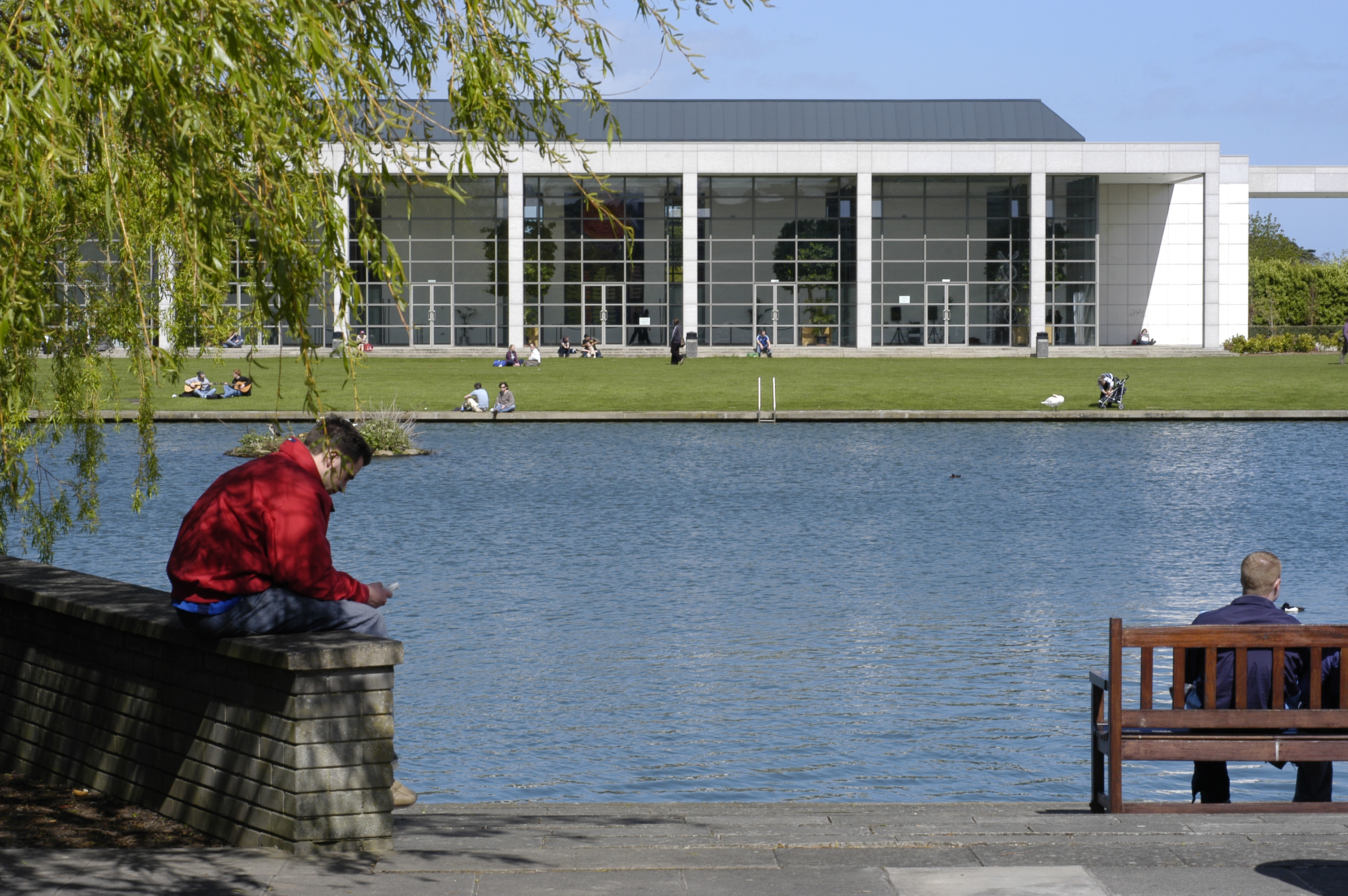
    The second leaders’ debate of the 2016 general election was broadcast last night on RTÉ in front of a live studio audience at the University of Limerick.

    Enda Kenny, Michéal Martin, Joan Burton and Gerry Adams were joined by Stephen Donnelly of the Social Democrats, Richard Boyd Barrett of the AAA-PBP and Lucinda Creighton of Renua on a packed stage.

    Here are the conclusions from an interesting night’s television.

    Wider field allows smaller parties to shine

    If the studio audience is any indication, then Stephen Donnelly and Richard Boyd Barrett performed the strongest of the candidates with both receiving extended applauses. The format of the debate was in some ways conducive to this result, allowing the smaller parties to focus on selling themselves while the leaders of the established parties had to fend off and launch their own attacks. That being said, the plain-speaking and confident delivery of both Donnelly and Boyd Barrett, and to a lesser degree Lucinda Creighton, would have won them new fans. The question is whether the electorate will keep this in mind on polling day.  

    No Green voice a missed opportunity

    Earlier on Monday, the Green Party failed in their legal challenge to be included in the leaders’ debate. The success of the smaller parties on the night will only have contributed to their disappointment but the electorate missed out too. The rationale behind RTÉ’s decision was that only a party with at least three elected TDs could take part, but considering that the electorate did not elect Stephen Donnelly or Lucinda Creighton under their current banners it is curious to include them and not the Green Party who have performed well in the past. The widened field saw different perspectives aired but the lack of an environmental voice was noticeable and a disappointment following the recent Paris Conference.

    Enda wants a Labour coalition but can Joan deliver it?

    Claire Byrne had yet to finish posing the question to Enda Kenny of who he would go into coalition with before he declared, “Labour. We want the stability of returning the government that is in office.” He followed this up by ruling out a Fine Gael – Fianna Fáil coalition.

    Kenny has been steadfast in this stance but recent polls suggest that a Fine Gael and Labour coalition may not possess the numbers to form a stable government. More worrying was that Joan Burton cut a subdued figure last night and was the focus of many attacks. If this form continues, 26 February may appear as more an execution date than polling day for Labour.

    Little of interest for the youth vote

    Heading into the general election, much of the talk was on how the political classes would look to repeat the youth involvement that was seen in the recent marriage equality referendum. So far, there has been little evidence of that movement being replicated – even to a small extent. Last night was more of the same. There was a discussion on creating jobs, but the stodgy discourse is unlikely to captivate and inspire, and the issue of abortion was not brought up – perhaps because it was such a non-issue last week.

    The fire from the TV3 debate was put out

    Where did the passion from the TV3 debate disappear to? Gerry Adams won some laughs for his depiction of Kenny, Martin and Burton as the three amigos, and Martin stoked the flames when he questioned the Sinn Féin leader’s IRA past, but there was little else of note. The crowded stage no doubt contributed to this, but with the smaller parties enjoying the exposure this may go down as a lost opportunity for Fianna Fáil and Sinn Féin to land a fatal blow on Fine Gael.

    Emergence of a left-right cleavage in Irish politics

    Irish politics has been dominated by the two civil war parties – Fianna Fáil and Fine Gael – since the foundation of the State. This sets Ireland apart from much of the rest of Europe. Last night’s debate might signal change in this area. Adams and Boyd Barrett positioned themselves as alternatives from the left, while Kenny, Burton, Martin and Donnelly see themselves as more centrist and, while they may not come out and say so, Renua and Creighton look like a party on the right.

    And the Winner is… Claire Byrne

    Perhaps it was an inevitable conclusion given her name forms the title of the programme, but Claire Byrne emerged from the night with the greatest enhanced reputation. From the start she was a commanding presence, banning the candidates from using jargon – and subsequently giving Boyd Barrett a rap on his knuckles when he brought up “fiscal space”. Under her watch the two-hour debate flagged but never bored and not one candidate escaped her strong line of questioning. Byrne has a selection of highlights to boast from the debate but her retort to Stephen Donnelly when he said he wanted to ask for the Garda opinion on battling crime – “we’re going to have endless amounts of guards if we continue as we are this evening” – visibly shook the Social Democrat leader.

    By FERGUS CARROLL

    (PHOTO: Twitter @RTÉ News)

  • Questions raised over UCD College Tribune article

    Questions raised over UCD College Tribune article


    The UCD College Tribune’s published article about a Facebook group chat has become discredited.

    The university started an investigation after the story was published. UCD’s panel was chaired by Professor Mark Rogers, Registrar and Deputy President.

    Rogers wrote: ‘I find that the evidence cited in the article was based on hearsay from anonymous comments on Yik Yak by a quoted source to the College Tribune. I further find that the editor and reporter of the article were aware that the source quoted in the article was basing her information on hearsay.’

    No student who had been victimised by the group chat had come forward to seek support.

    Rogers went on to say there was no evidence of a Facebook group chat where students were posting pictures of naked girls.

    He found evidence of only one anonymous Yik Yak post stating ‘I don’t even partake in what’s happening; I personally only have sent three photos and a story or two.’

    However, due to the anonymity of the social media site, there is no way of knowing if the comment is genuine.

    UCD will not be taking legal action, the report said, because ‘no material discovered as part of this investigation warrants referral to An Garda Siochana’.

    In respect of this, the politics and innovation editor of the College Tribune spoke to Marian Finucane on the issue, saying, ‘I absolutely stand over my story.’ Vice-president Hazel Beattie of the UCD Student Union has said that the investigation has not been satisfactory, saying the report was treated ‘as a public relations matter rather than as a social policy issue.’

    However, on the matter of breaches of the UCD Student Code and the university’s policy on dignity and respect, Rogers said UCD will refer students and members of the University community to the applicable disciplinary procedures where appropriate.

    by JENNY MOONEY

    (photo credit)

  • GE 16- 7 things we learned from the leaders’ debate

    GE 16- 7 things we learned from the leaders’ debate

    The first leaders’ debate of the 2016 general election saw Enda Kenny, Joan Burton, Micheál Martin and Gerry Adams engage in what was a lively, passionate, and often chaotic event.

    Moderators Pat Kenny and Colette Fitzpatrick sometimes struggled to maintain a hold on the proceedings but the debate ultimately provided engrossing viewing for the public.

    Ultimately no clear winners or losers emerged from the debate, with each candidate enjoying their highlights as well as their minor struggles.

    Here are some of the main talking points from the evening.

    1. Economic stability is Fine Gael’s top selling point

    “This is not the time for instability” said Enda Kenny… on many occasions. Kenny used last night to hammer home this point and presented Fine Gael as the safe option for the electorate. As repetitive as the strategy was, it may prove to be a successful one and his drawing upon the imagery of young emigrants beginning to return home would have a struck a chord with many at home. However….

    2. Was Enda Kenny statesmanlike or disinterested? 

    While the other candidates on the stage had their fiery and passionate moments, Kenny’s were few and far between. He was also happy to wait to be called upon by the moderators in direct contrast to the others. This was most likely a tactic going into the debate – with the intention of presenting Kenny as statesmanlike and above the squabbling of his rivals – but Kenny took it to the extreme and appeared disinterested and distant on more than one occasion – most notably on the discussion surrounding housing.

    3. Gerry Adams invokes spirit of 1916

    How many people were surprised to hear Gerry Adams began his opening remarks by saying that Sinn Féin “want to deliver on the promises of the 1916 proclamation”? Far more surprising was that Adams did not explicitly return to this motif again throughout the rest of the debate. It is true that criticism may have been directed his way if he tried to draw upon the imagery too often but don’t be surprised if Sinn Féin make adjustments in future debates, especially to deflect attention from other quarters.

    4. Micheál Martin is the most natural debater among the candidates

    While by no means suggesting an outright victory, Micheál Martin was the most assured candidate on the stage last night. He needled Kenny from the start, saying that: “we need to put aside the rehearsed slogans” but he was most impressive when the debate turned to health. Here he was able to trump his work in introducing the smoking ban while questioning Kenny’s record in this area. “You hired James Reilly for Health. That was the biggest mistake you made”. The question for Martin is whether his performance persuaded voters to forgive his party for their previous sins. Only time will tell, though the sense is that more will have to come for this to happen.

    5. Abortion debate was a damp squib

    Given the prominence of the ‘Repeal the Eighth’ movement, this portion of the debate could have generated interest but instead this segment revealed no new information. While Labour and Sinn Féin are committed to a referendum on this subject, both Kenny and Martin dodged the questioning of Colette Fitzpatrick on this topic. Kenny spoke of ‘depoliticising’ the topic so that a “citizens convention” could discuss the merits of it but he refused to offer a more explicit stance than this. Martin followed suit, though he did state that he dislikes the slogan of ‘repealing the eight’ – as he finds it ‘too simplistic’. While the positions of Kenny and Martin provoked some public ire – if the social media reaction is anything to go by – a more concrete stance would risk alienating elements of their parties’ own support base.

    This compounded what would prove a disappointing night for many of the younger viewers tuning in with the student housing crisis a notable omission from the housing discussion.

    6. A perfect storm as Adams taken to task for Special Criminal Court task

    In light of the events of recent days, it was no surprise that Pat Kenny turned to Gerry Adams immediately to begin the discussion on crime and security. Adams was subject to a sustained period of questioning on his party’s stance on abolishing the Special Criminal Court and Pat Kenny drew blood when he asked if this was motivated by the fact associates of Adams were tried through this process. The reluctance of the other candidates to intervene and end Adams’ interrogation only added to his torment – undoubtedly his weakest moment of the night.

    7. Joan Burton comes out swinging… but not at Fine Gael

    The Labour leader entered the debate facing questions on whether she is on course to lose her Dublin West seat but put these concerns aside as she gave a determined performance. Perhaps fearing that Labour are under pressure to losing their support from the left to Sinn Féin she made repeated attacks on Gerry Adams – at one point telling him to “stop waving your finger at me”. However, her refusal to criticise or distance her party from their coalition partners may yet cause problems for Labour. This was most conspicuous when she refused Pat Kenny’s invitation to criticise Enda Kenny’s (non) stance on abortion.

    Lasting Impressions

    Viewers who tuned in last night were treated to a passionate, if at times chaotic, debate. As Pat Kenny neatly surmised at one point, “I’m here listening to this at the moment and if I can’t understand what’s going on, what chance do the people at home have?”. Furthermore, any viewers who tuned in hoping the TV3 debate would have resolved all – if any – of the election questions would have been disappointed.

    Ultimately this debate fizzled out to a draw among the candidates. While each had their highlights, none truly distinguished themselves and they were unlikely to have strongly appealed to outside of their established support. Regardless, the debate was an important – if not defining – moment of the campaign.

    By FERGUS CARROLL

    (Photo: Sarah Joy. Source: Flikr)

  • Valentine’s Day getaway – Top Four Reasons why you should spend it in Brussels

    Valentine’s Day getaway – Top Four Reasons why you should spend it in Brussels

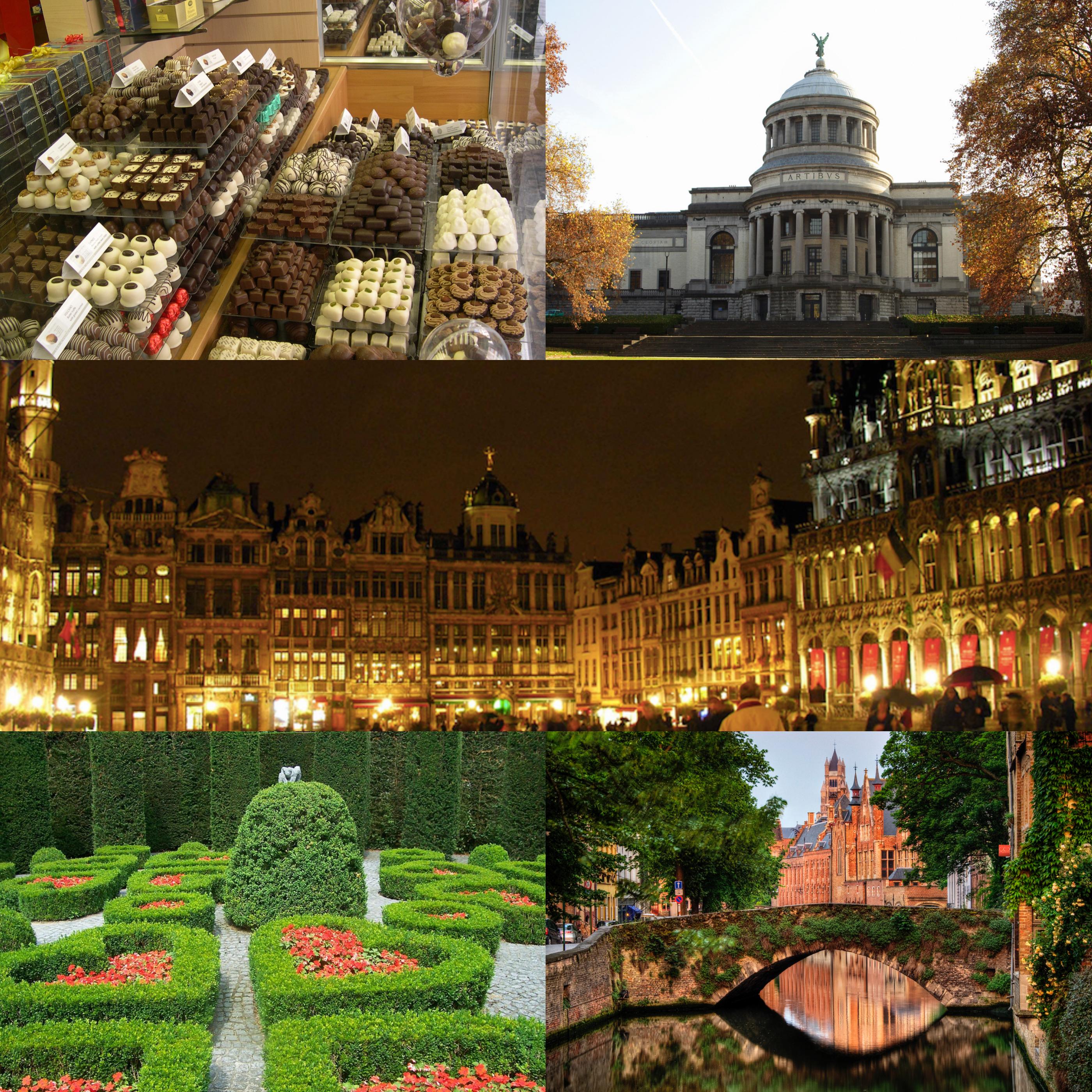
    Brussels, the European capital of beer, chocolate, waffles, and fries. It is a crowd favourite when it comes to city trips – it’s small enough to cover in a weekend. Boredom is not optional. Brussels is full of tourists in the summer – especially in mid-August for the famous flower carpet. It remains an incredibly romantic city as a result. Sound good? Stay with me, because here’s four reasons why you should spend the Valentine’s Day in Brussels.

    1. The Chocolate


    Chocolate alone should be a convincing reason. It is the tradition to gift your other half with chocolates on Valentine’s Day, as it is said to be an aphrodisiac. So what better place to get some than the place where chocolate pralines were created? There you can find the finest Belgian chocolate at varying prices, depending on your taste. But there is no denying that at least half the tourists in Brussels come for chocolate tastings at Marcolini, Neuhaus and Leonidas.

    2. The History 


    If you haven’t seen the Grand-Place of Brussels, you should add it to your bucket list. The main square of the city has remained almost the same for centuries now, and its beautiful buildings with intricate gold details is something worth seeing. The most impressive edifice of the square is the Town Hall, adorned with the sculptures of the Dukes and Duchesses of Brabant and completed by a 310 feet high tower on top of which Saint-Michael, patron saint of the city, is slaying a dragon. Though the construction was destroyed by a fire in 1695, it was rebuilt, and to this day, has kept its initial function of city hall. You can visit it on Wednesdays and Sundays, which is perfect as Valentine’s Day falls on Sunday this year. For those who would rather stroll around the centre, you will be more than pleased with the unique, small streets surrounding the Grand-Place.

    3. The Art


    Brussels is a very rich city when it comes to museums. There is something for everyone. Bookworms will enjoy the Royal Library and the Belgian Comic Strip Centre, while art lovers can spend hours in the Royal Museums of Fine Arts where they can see paintings from old Flemish masters like Bruegel or van Dyck as well as an entire section dedicated to the surrealist master Magritte. For couples who enjoy more unconventional museums, it’s the perfect occasion to visit the heart museum, where a collection of more than 500 objects illustrates the symbol. Museums are open everyday except Monday’s, and if you want a good deal, you might think about getting the Brussels Card, a 24/48/72 hours pass that gives you access to over 30 museums and many attractions.

    4. The Parks


    Nothing is more romantic than a walk in a beautiful park followed by a nice picnic next to the trees. Brussels has many parks and gardens open to the public. While the biggest park would be the Jubilee park, created for the 50th anniversary of the independence of Belgium, the most famous one is the park of Brussels, just in front of the Royal Palace. If you want a wilder setting, the Cambre woods are just what you need. A little outside of the city centre, it is easily accessible by public transportation and has a couple of small restaurants if you want a break. For those who have a passion for landscape gardening, the Van Buuren garden is a perfect attraction. Part of the David and Alice Van Buuren Museum, it is composed of three parts: the Picturesque Garden, The Labyrinth, and the Garden of the Hearts.

    by MARGAUX NADLER 

    ((Photos:  Rick Payette, Steve Walker, Kovalchuk Nikolay, Beth, Wolfgang Staudt)

  • GE16 — The War of the Words

    GE16 — The War of the Words

    The 2016 general election is barely a week old, but already there are election posters suspended on nearly every lamp-post across the country and home-owners are well used to answering their doors to canvassers. With 26 February looming large, the political elites are scrambling to communicate their vision to the electorate, while simultaneously launching staunch critiques of their rivals, with soundbites largely being preferred to statements of substance.

    Political spin is not exclusive to election campaigns, but it is during these short and intense periods that we expect the spin to be at its most cutting, incisive, and, at times, antagonistic. However, thus far too much of this spin is lacking in any real substance. The quotes and missives that are being dispersed through social media and email are longer than what you might fit on a poster, but not by much. This is not to say there is no place for this sort of spin, but it cannot come at the expense of more substantive discourse.

    This is especially important given the many agendas and narratives to follow in this campaign. On one hand Fine Gael and Labour are determined to defend their record government over the past five years, while both Fianna Fáil and Sinn Féin are putting themselves forward as viable alternatives. There is also the case of the smaller parties – such as the Greens, and the both the Social Democrats and Renua who are contesting their first election – who may yet find themselves in the position of king-makers in any future coalition if they can impress the electorate.

    Given these high stakes, the rhetoric of the campaign has been strongly partisan. One need only peruse the social media accounts of any of the political parties to attest to this. While it is debatable whether #GE2016 is the first Irish general election to fully embrace the social media revolution, there is no doubting the huge volume of tweets and statuses that have already been posted.

    It remains to be seen to what extent the party Twitter pages will have an impact on the result of 26 February, but the there is no doubting that large audience this medium is catering too. The twitter accounts of Fine Gael, Fianna Fáil, Labour and Sinn Féin each have in excess of 19,000 followers with Sinn Féin boasting the largest number at about 41,300.

    On the basis of these numbers alone, it is worth considering the value of this medium and the messages they transmit. Most carry the quote of a prominent candidate, or some graph or image seeking either to boost the claims of the party the account represents or to belittle its rivals.

    One of the more notable examples of this comes courtesy of Labour, and a highly charged tweet attacking a Sinn Féin proposal to have one-third of TDs elected through the list system of voting. It is not necessary to dwell on the specifics of the list system here save to mention that it is a system of voting widely used across Europe, with Italy and Spain among its proponents. You would not get this sense in the Labour tweet however which instead reads, “SF’s list opens way for people like their friend Slab Murphy appointed to Dail”.

    Whether you view this tweet as a clever bit of spin or a below-the-belt put down is down to your own interpretation but it is certainly a rather misleading tweet from Labour, and one that makes a proposal that has many supporters appear to be a move motivated by cronyism. The election would be more boring without these provocative statements, but it is doubtful that the electorate would welcome any adoption of Donald Trump’s childlike taunt tactics.

    While posts on twitter are subject to the 140 character limit, there is no such hindrance elsewhere. You could be forgiven for not realising this though with much of the election discourse focused on buzzwords and short soundbites that reveal little of any substance. Compare these two messages on the economy courtesy of Sinn Féin and Fianna Fáil respectively. The former promises to “give families a break” if elected, while the latter state they will introduce “fair and affordable” policies. What can be said about these statements? Besides saying that the first contains four words compared to the latter’s three, there is essentially no substance to the comments.

    While the parties are hoping to resonate with voters by using these soundbites, the electorate cannot be expected to wait long for the finer details. It hardly bears repeating that there is much at stake for the parties and candidates over the next few weeks but for all their ambitions, the voters will be the biggest losers of an unsatisfying campaign. They will be hoping there is more substance to come.

    By FERGUS CARROLL