Author: The City’s Newshound

  • A Guide to the Irish General Election: Part 1

    A Guide to the Irish General Election: Part 1

    Political Editor, Fergus Carroll, breaks down the Irish General Election, in a first-part guide to #GE16. 

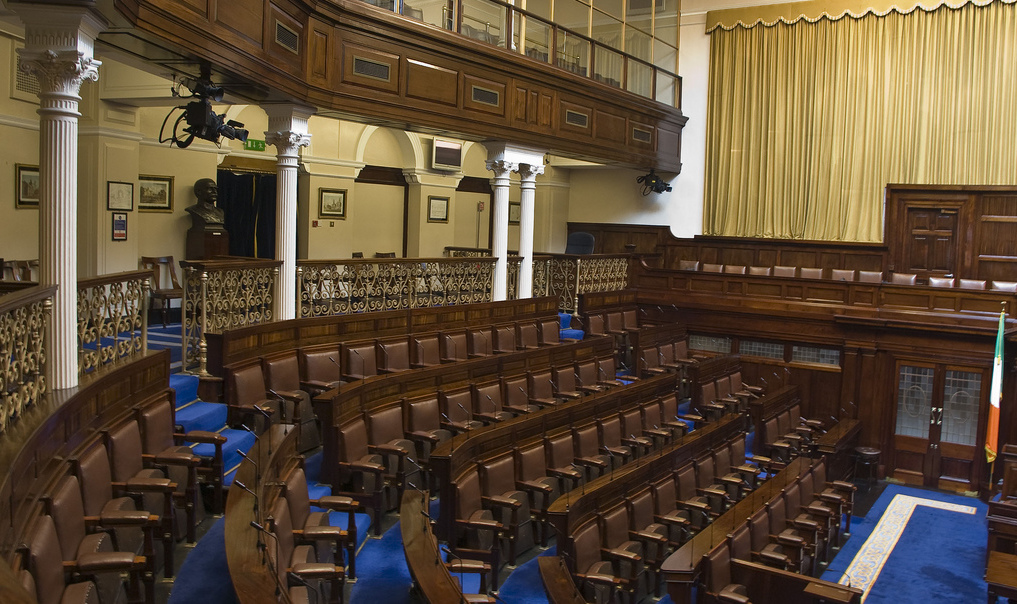
    On Thursday morning Taoiseach Enda Kenny ended weeks of mounting speculation when he announced that the general election will be held on 26 February. The announcement was made in a video posted to the Taoiseach’s Facebook and Twitter accounts as he made the short trip from Dáil Éireann to Áras An Uachtaráin to seek dissolution of the 31st Dáil.   

    Over the next three weeks posters will be erected, canvassers will knock on doors, and promises will be made so as to secure first preference votes when the general public head to polling stations to cast their votes. Whether you are a first time voter, or in need of having your memory refreshed, this article will provide a brief guide to the forthcoming election.

    To begin, some small changes have been made since the last general election in 2011. The most visible change is that there has been a decrease in the number of TDs who will be elected to the Dáil. In 2011 the Irish public elected 166 TDs but when the 32nd Dáil meets for the first time on 10 March there will be 158 TDs in attendance. While some are retiring, such as Olivia Mitchell of Fine Gael, and Eamon Gilmore and Pat Rabbitte of Labour, there remains a real risk that some high profile TDs will be left without a seat and many onlookers will follow the fortunes of Lucinda Creighton and Averil Power, who since the last election have left Fine Gael and Fianna Fail to stand for Renua and as an Independent respectively, with heightened interest. The only politician unconcerned in advance of the election is Seán Barrett, who in his capacity as Ceann Comhairle, is automatically re-elected.

    The number of electoral constituencies has also been decreased – from 43 to 40 – and there have been some notable boundary changes, with corresponding transfers of voters to new constituencies, throughout the country. Evidence of this change can be seen in Dublin where the old three seat constituencies of North Central and North East have merged to form a new five seater called Dublin Bay North. In addition, changes have been made to the number of seats allocated to many constituencies; as a result the upcoming election will have 11 fiver seat, 16 four seat, and 13 three seat constituencies in the upcoming election.  

    Whereas only Irish citizens who are 18 years of age are eligible to vote in a referendum, such as last year’s Marriage Equality referendum, any Irish or British citizen who is resident in Ireland and 18 years of age or over is eligible to vote in a general election. For those who are on the Register of Electors a polling card will be mailed to your home in advance of 26 February. This should then be presented at your polling station on the day of the vote. You may also be required to prove your identity, so bring a passport or driver’s licence in order to prove eligibility to vote on the day.

    You should check to confirm that you are already registered to vote. If not registered, it is not too late to do so. You can apply to be placed on a supplementary list which will enable you to vote on 26 February if you submit a RFA2 form to your local council by 11 February. This form can be found on www.checktheregister.ie alongside forms to apply for a postal vote if you have recently changed address.

    Now that the Dáil has been dissolved, the election campaign can begin in earnest. The clearest sign of this is that election posters will be erected all over the country on nearly every lamp-post, with space seemingly at a premium. The erection of these posters is only permitted once the Dáil has been dissolved – a fact that may come as a surprise to some readers since it appeared election posters had already been put up in some areas. Rather than breaking the law, it appears these posters are a clever or cheeky (depending on your disposition) way for candidates to get their face on show early. One example of this tactic comes courtesy of Labour’s Kevin Humphreys. The Dublin Bay South candidate erected posters around the capital announcing a 1916 Rising walking tour. The fact that these posters closely resemble those that will be put up over the coming days is hardly coincidental!

    Finally, now that the election campaign is officially underway the volume of canvassers coming knocking on doors will only increase. As the 26 February draws nearer this may become tiresome for some, but remember that this is a great opportunity to question or indeed grill your local candidates to help you make up your mind on how you to cast your vote.  In the months and years to come, you may yet regret that you had not made more of these opportunities.

    This is the first in a series of articles on The City regarding the 2016 General Election. The Guide to the Irish Election series will be continued over the election campaign with posts explaining Ireland’s voting system – PR STV – and a guide to the Seanad election.

    BY FERGUS CARROLL

    (Photo Credit: Gary Boggan. Image sourced through Flickr). 
     

  • Local paper sticks with tradition

    Local paper sticks with tradition

    Since 1975, The Raheny News has brought the community of Dublin 5 together.

    The newsletter began in the home of Fr. Con O’Keefe on St. Assam’s Road, Raheny in February of that year. The small group of volunteers were led by Liam Flynn, the editor at the time as they wrote, produced and distributed the first newsletter in the area.

    After the success of the first issue of “The Raheny News”, or “The Green Paper” as it is known now to many of the older residents in the area, the group of local volunteers continued to sacrifice their Saturday afternoons in exchange for sitting down to produce what is now a staple in the community.

    Despite being in production for the last forty years, the Raheny News hasn’t changed too much from the original issue. While the content may vary, the design is still very much the same – as is the green paper the newsletter is printed on. In fact, the very printing of the Raheny News hasn’t changed.

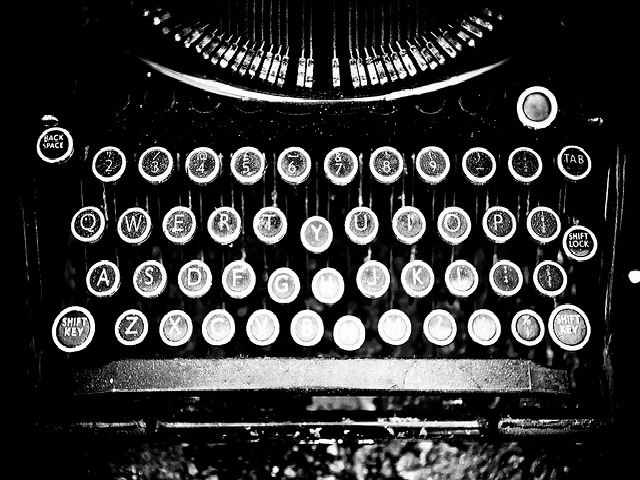
    Each week, volunteers would meet in Fr. O’Keefe’s house to discuss the local goings-on, write news articles, type them up on their typewriters, print the issues manually and then distribute them to all the local shops.

    Now the editor Peter Harper then decides what is newsworthy and the group begin to type it up. Heather Kavanagh and Theresa Kelly type up their pages on the same typewriters they had in the 70’s. However, Peter has slowly brought in some technology with the use of his laptop to help with the typing and news gathering process.

    Once the typing is done, the pages are handed over to Linda Spellman to proof read, and then onto Maire Ni Bhraoin to print. Each of the four pages of the newsletter is printed 780 times, and then manually stapled together later in the evening by Catriona Harper, Kay Harper and the rest of the volunteers.

    The newsletters are then put into groups and are ready to be distributed to the local shops where they are sold for 20 cent per issue. These costs, along with advertising fees cover the cost of ink, paper and of course tea for the staff.

    One of the highlights for many of the volunteers, is the chance to sit down at the end of the evening with their fellow volunteers for a good catch up and to discuss their plans for the upcoming days.

    At 21 years of age, Catriona Harper is the youngest volunteer in the group, but wasn’t at all surprised when she found out that the group haven’t moved along with the times in terms of the technology they use.

    Regardless of whether the newsletter moves further into the digital age, it will always be a staple in the local community – technologically advanced or not.

    Follow us on twitter at @NiamhHaskins, @MichelleDardis_ and @StephenFLarkin.

    By Michelle Dardis, Niamh Haskins and Stephen Larkin

  • Christmas Bazaar market stands out from the rest

    Christmas Bazaar market stands out from the rest

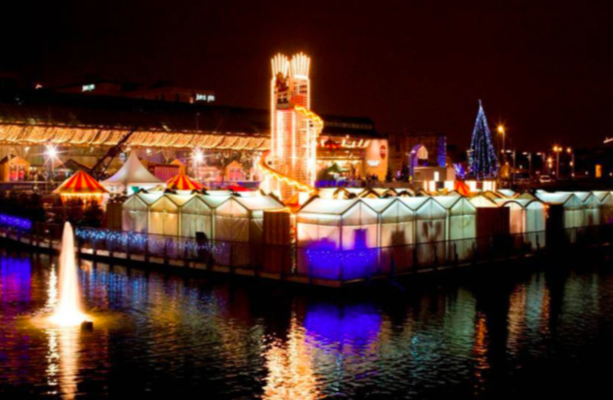
    The City went along to the Christmas Bazaar market in Smithfield last weekend and can confirm it definitely lived up to the hype of being one of the most original, wacky  and wonderful Christmas markets around.

    The Christmas Bazaar was organised by Block T, who collaborated with The Market Hub to create one of Dublin’s biggest indoor markets.

    It took place over the weekend of December 4 to 6 in Block B, Haymarket, Smithfield. Despite the treacherous weather conditions outside, customers turned out in their droves to see what the market had to offer.

    Hosting over 120 stalls of hand-made produce, crafts, retro, fashion flea, food music and much more, it was the perfect place to find creative and original Christmas presents.

    The City reported from the event and talked to some of the stall holders who were selling anything from vegan dog shampoo to framed doll heads.

    By Ben Finnegan, Laura Somers and Niamh Geoghegan

  • Dublin residents talk about problems with drugs in the city

    Dublin residents talk about problems with drugs in the city

    Last week, Labour TD Aodhán Ó Ríordáin’s walk through the streets of the city highlighted a major drug problem. This is something that many of us experience on a daily basis when walking around the centre of Dublin.

    We asked some of the city’s residents about their experiences with drugs in our capital.

    By Aidan Kelly and Matthew Colfer

  • Meeting the Celtic Clovers

    Meeting the Celtic Clovers

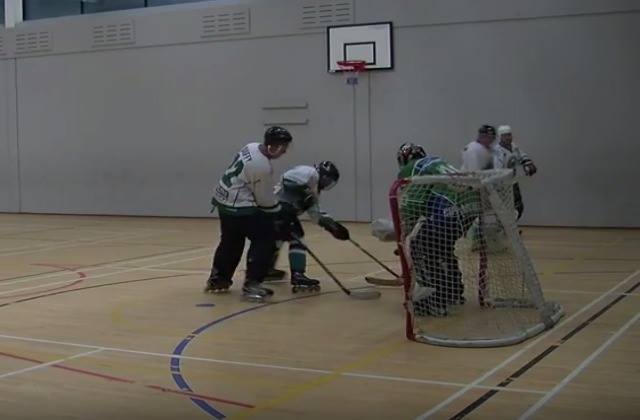
    The City’s Aaron Doyle and Conor Murphy went to the Mountview Centre in Blanchardstown, Dublin to see one of the few ice hockey teams currently playing in the Republic of Ireland.

    They met the players of The Celtic Clovers, spoke to those involved with the team and generally discussed the sport in Ireland.

    https://www.youtube.com/watch?v=lVGTCf9ojHg&feature=youtu.be

  • Calls for the government to recognise all types of gender identities

    gender identity Ireland

    Trans rights in Ireland have come on leaps and bounds in the past few years but it must not be forgotten that there are still some genders that the state is refusing to recognise.

    On September 4th 2015 Minister for Social Protection, Joan Burton announced she had signed the commencement order for the Gender Recognition Act 2015 which would allow transgender people to be formally recognised for all purposes by the state.

    “From 8th September, it will be open to any transgender person to apply for a Gender Recognition Certificate from my Department, and subsequently to obtain a new birth certificate which reflects their preferred gender,” announced Burton.

    This came after much persistence, determination and hard work of thousands of trans rights activists.

    It was a remarkable achievement for these activists for transgender people to finally be fully recognised by the state for who they truly are. However, non-binary and gender fluid people have still not been afforded the same rights as men, women and now transsexuals.

    TENI is an Irish network that seeks to improve conditions and advance the rights of trans people and their family. TENI Chief Executive Broden Giambrone recently said, “There is still more work to be done to ensure that young, intersex and non-binary people will also be afforded rights. TENI commits to vigorously advocating for those who need to be included in this Act. However, today we have taken a massive leap forward. This is a turning point for trans rights in Ireland and I hope this leads to further positive changes for our community.”

    Non-binary and gender fluid

    These two gender identities weren’t as focused on by the media until certain celebrities, such as Miley Cyrus and Ruby Rose and closer to home, RTE news anchor Jonathan Rachel Clynch came out as non-binary/gender-fluid. This has resulted in the different identities being discussed across all media platforms.

    Kay Cairns, a human rights journalist, who works with TENI explained to The City what it means to be non-binary and gender-fluid. “Non-binary is an umbrella term that involves quite a lot of different identities. Some people may identify between male and female or they might not consider themselves either male or female it tends to be something that’s fixed.”

    Kay identifies herself as non-binary and would consider herself more toward the male end of the spectrum and she believes she will always be more towards the male end of the spectrum.

    “If someone identifies as gender fluid it means their identity may fluctuate, so sometimes they may feel more male, female or a-gender, it varies,” she explains.

    Kay discusses how she came to put a name on her gender. “I always knew there was something different about me, but it wasn’t until I was in college that I came across the term transgender and I learnt that gender can be more than what you are assigned at birth.”

    Kay said: “I got into a relationship with a trans-guy and he was transitioning while I was with him, so we went to support groups and I got to talk to trans people about their experiences.”

    When someone is coming to terms with their own gender identity like Kay it can be an extremely sensitive time. Anne-Marie O’Toole, a psychotherapist with Insight Matters explained to The City it is important to allow the person to self-identify.

    “It’s not up to us to label them ‘gender-queer’ or ‘non-binary’,” Anne-Marie explains. “It’s up to the individual to decide how they want to be referred to – some don’t want to identify as anything.”

    There has been an increase in research both at home and abroad into this area of research. The University of Maryland found that gender is very flexible during pre-natal development. Researchers in the study succeeded in transforming the brain of a female rat to the a brain with male characteristics, proving that gender may not be as rigid as we once thought.

    One of the researchers, Bridget Nugent, explained: “It was thought that once established, sexual differentiation could not be undone. Our work shows that sex differences in brain and behaviour are epigenetically regulated, meaning that sex differences are not hardwired in our DNA but programmed during development.”

    Increased research and awareness like this in Ireland will undoubtedly help raise awareness and put pressure on the government to recognise non-binary and gender fluid as a genders in their own right.

    If you or anyone you are struggling with their gender identity visit teni.ie to find your local support group or call LGBT helpline on 1890929539.

  • Growing up in the city

    Growing up in the city

    Luisa Fusco, contributor to TheCity.ie, recalls her childhood as she grew up on one of the city’s most famous streets, Abbey Street.

    By Sean Whitty, Fiona Hyland and Luisa Fusco

  • Morning Gloryville – a new way to wake up

    Morning Gloryville – a new way to wake up

    An early morning rave? With fresh juices instead of alcohol and yoga mats set up next to the dance floor, Morning Gloryville is not your typical rave.

    The monthly event takes place in Hangar in Andrews Lane and attracts some 200 early risers each time.

    The City went along to see for ourselves what happens when people want to get their dance on before heading off to work.

    Want to get tickets to the next Morning Gloryville event? Just click here.

    By Laura Larkin and Niamh Geoghegan


  • A look into Dublin’s BMX scene

    A look into Dublin’s BMX scene

    Mark Twomey is part of TheBMXDays, a group of friends from Dublin who took up BMXing in the last five years and have since gathered a following on YouTube and Facebook.

    Here, Twomey discusses how he got into the sport, what the community in Dublin and Ireland is like now, how the opening of new skate parks is contributing to its growth and the financial costs of the hobby.

    For more from Matthew you can visit his Twitter @_Gogery.

    By Aidan Kelly and Matthew Colfer

    Photo courtesy of TheBMXDays

  • UCD students react to high repeat fees

    UCD students react to high repeat fees

    It’s exam time in most colleges, and in UCD the thoughts of repeat exams may cause students a slight panic. This is because UCD have the highest repeat fees in the country.

    The City reporter, Ronan Smyth, investigated repeat fees in colleges earlier this year. Check out his report here.

    We headed out to UCD to see some the reaction of students there.

    You can follow Ronan and Rachael on Twitter @RowSmyth and @rachieobrien


    By Ronan Smyth and Rachael O’ Brien