Author: The City’s Newshound

  • Missing person: What happens next?

    11270405_1586715118254503_8918963615772714321_o

    Harcourt Street Centre, Missing Persons location.Photo: Sinéad Fitzgerald.


    Missingpersons.ie was founded in 2003 in order to provide counselling for families in the limbo of searching for missing loved ones. The site is poignant with an interactive map that shows missing people from each county. Ciarán, a spokesperson for the organisation tells me ’What a person has to do after a family member goes missing, is to go to the Gardaí immediately.’ The organisation can only publish details after a media release has been made. ‘The family talk with all friends, check bank accounts, there is a check list.’ The checklist is detailed and includes the advice to nominate one gardaí liaison and a media liaison. I ask how long a missing person’s case is kept open and am told, ‘As long as they are missing.’ Claire Dixon, mother of Paul Shine Dixon who went missing in 2009 tells me, ‘When I rang missing persons they gave me the name and number of a trained counsellor that I could call anytime. To me that was so important.’

    Paul went missing at 28 years of age while travelling between France and Spain. He had been due to meet his partner in Barcelona. While on the phone to her, Paul chose to leave the train in Perpignan after claiming to have witnessed a shooting. Paul ended the call as he needed to charge his phone, but although they are aware that he was brought to a medical centre after being found disoriented by police, his family have not heard from him since.

    Claire and members of her family travelled to the town where the disappearance occurred and she tells me ‘It was an experience of complete panic.’ Claire has become a board member of Missing Persons, hoping to help other families who find themselves in the same situation. Claire tells me that the French authorities provided an interpreter and took DNA samples. ‘They couldn’t have done any more for us’ she adds. But Paul’s name has not surfaced anywhere in France or Spain.

    Every year, on the date of the anniversary of a person going missing, their profile is updated and highlighted though often information about individual cases is volunteered in the first five to six weeks. Missing Persons though primarily focused on emotional support and information for families, can provide access to searching organisations and Ciarán tells me, ‘We have a memorandum of understanding with different organisations and if we need to use dogs they’ll come up, from Cork, from anywhere to help out.’

    885660_1586715058254509_6564888282203277486_o10922280_1586715091587839_2048755133054015044_o

    In the event of a person choosing to go missing, the organisation can act as a mediary with friends or family if so the missing person can ease concerns about their wellbeing. . The website states, ‘If, for whatever reason, you have decided to live your life in a different way and different place, you may be most at ease in doing this if those who care about you know that you are safe and well. We can help in trying to ensure that this is the case.’

    The Missing People’s Bureau, found through the Garda website, highlights figures of missing persons since 2003 and what stands out is that the majority of people are located. In 2013, out of 7,753 missing persons cases, 15 remain open. For those families who do not have the answers they need however, the support of Missing Persons remains vital.

    Missingpersons.ie is mostly funded by the efforts of organisation members and supporters and partially by the Comission for the Support of Victims of Crime (CSVC). Volunteers interested in running or walking the women’s mini marathon on the organisation’s behalf are currently being recruited via mycharity.ie and there is a golf classic taking place in Kilenard, Co. Laois on the 26th of September. Donations can also be made via http://www.missingpersons.ie at any time.
  • Video: Outside of Dublin, how is the Marriage Referendum debate shaping up?

    On May 22nd, the country will vote on the same-sex marriage referendum which will decide if gay marriage is voted into law. 

    If you haven’t heard anything about the referendum, you quite simply must have been living under a rock for the past few months. In recent weeks, the ‘Yes’ and ‘No’ campaigns have been in full flight with both sides vociferous in their criticism of the other.

    There has been some controversy, with the ‘No’ side complaining that their banners are being defaced and pulled down. Then there was the mural on the side of the building in Dublin, depicting two men hugging, which was brought to the nation’s attention when Dublin City Council threatened to remove it.

    But the vast majority of the referendum debate and news coverage has been focused around Dublin. The capital is obviously of huge importance but we already know that the majority of Dubliners are voting ‘Yes’, what about the rest of the country and how they view the upcoming referendum?

    In light of this Donal, Daniel and James took the City.ie on a tour of Wexford to explore people’s opinions on the referendum in the sunny south east and investigate whether there is a rural-urban divide.

    The key finding was that the majority of people were firmly in favour of a yes vote. This would appear to be in line with the popular view in the capital. Whatever way the vote goes on May 22nd, it is important not to forget the rest of the country and be sucked into a city only view of the vote.

    By Donal Lucey, James Cox and Daniel Pim. 

  • Exhibition: 1916 and its Place in Irish History

    The Department of Arts, Heritage and the Gaeltacht has announced a €22 million investment in major commemoration projects.

    The money will be made available throughout next year in order to ensure that the sites, which are all of historical importance, will be open for the 1916 centenary.

    Taoiseach Enda Kenny, Tánaiste Joan Burton, Arts Minister Heather Humphreys and Minister of State Aodhan Ó Riordáin recently visited the National Museum of Ireland at Collins Barracks, Dublin, where a major 1916 exhibition will open in time for the centenary. They were there to announce the programme of commemorative events that will be launched to mark the 100th anniversary of the Rising.

    Some of the highlights include:

    • A major exhibition of 1916 archival material at the National Museum of Ireland, Collins Barracks
    • ‘Proclamation Day’, which will be held in all schools on March 15th 2016
    • The National Flag and a copy of the Proclamation will be delivered to every school in the country
    • A series of State commemorative events, including a parade from Dublin Castle to Parnell Square on Easter Sunday 2016 and a special State Reception for relatives
    • 7 new public projects at the GPO, Kilmainham Gaol, Pearse’s Cottage, the Military Archives and other sites
    • A multi-location public event, to be broadcast on television on Easter Monday 2016, telling the story of Ireland, through music, dance, drama and song
    • A series of conferences on 1916 through our universities
    • Cultural events around the globe, to be co-ordinated through our embassies and Culture Ireland, including Irish cultural festivals in Washington and London

    But that doesn’t mean we have to wait until next year, there is still plenty to see right now. There is already a 1916 exhibition, as well as other exhibitions from important parts of Irish history, on show at Collins Barracks.

    The City recently visited the museum to view the exhibition, which traces the background to the events of 1916, examines the battle itself, considers the aftermath up to 1923, and, finally, explores the ways in which the Rising has been commemorated to the present day.

    And we still managed to find time to check out some of the other interesting pieces of history on show!

    This slideshow requires JavaScript.

    By Donal Lucey & James Cox. 

  • Ukrainian Community in Ireland

    Ukrainian Community in Ireland

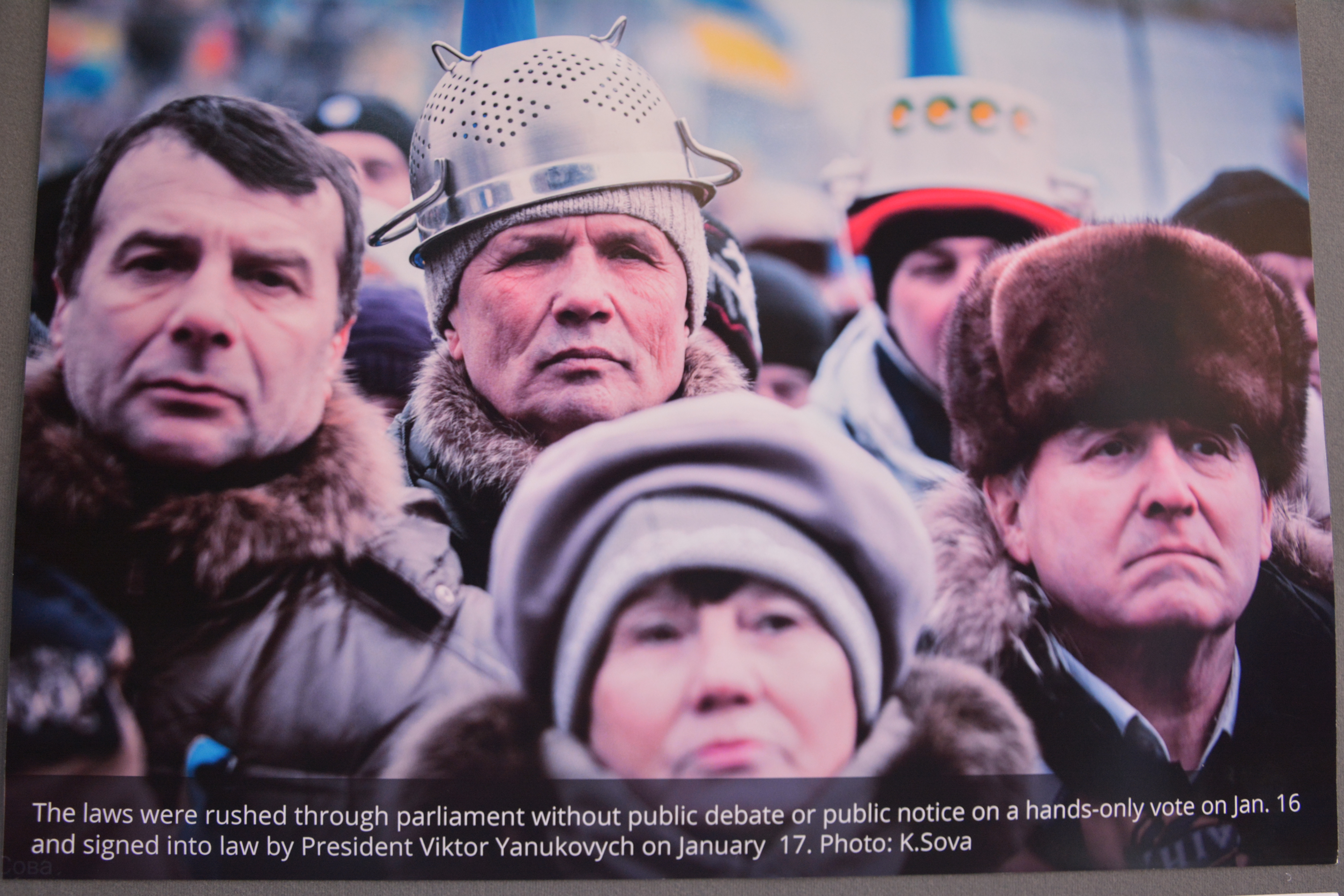
    The City met with a few Ukrainians living in Ireland to get their perspective on the Maidan Revolution and Ukraine’s political situation.

    To better understand the Ukrainian situation and the Maidan Revolution, click the sites below:

    http://www.irishtimes.com/news/world/ukraine-crisis/ukraine-joins-west-in-war-remembrance-on-ve-day-1.2205687

    http://www.kyivpost.com/hot/euromaidan/

    By Maira De Gois

  • Rory Gaffney – From GMIT to the Theatre of Dreams

    Photo: Cambridgeunited.co.uk

    By James Cox

    Rory Gaffney has achieved a lot for a 25 year old. Having started his footballing career while studying at GMIT, Gaffney is now plying his trade at Cambridge United. Remember them, Manchester United fans?

    (more…)

  • The future for migrants

    The future for migrants

    “The free movement of persons is a fundamental right guaranteed to European Union (EU) citizens by the Treaties. It is realised through the area of freedom, security and justice without internal borders.” This EU legislation guarantees freedom for its citizens but for the same cannot be said for those outside the strict EU borders. Outside Fortress Europe, migrants endure extreme hardship, risking their lives to enter the EU.

    In April around 900 Libyan migrants were drowned off the coast of Sicily in a desperate attempt to cross the EU border and escape the adversity they left behind. TheCity spoke to the journalist and PHD student, Roisin Boyd to discuss how such a tragedy occurred under EU legislation.

    Please see below for definitions:

    Asylum Seeker – Oxford Dictionary Definition – A person who has left their home country as a political refugee and is seeking asylum in another: ‘only asylum seekers who are granted refugee status are allowed to work in the country’

    Refugee – Oxford Dictionary Definition  – A person who has been forced to leave their country in order to escape war, persecution or natural disaster:  ‘tens of thousands of refugees fled their homes’

    Migrant – Oxford Dictionary Definition – A person who moves from one place to another in order to find work or better living conditions.

    For more information on this topic please click below:

    http://www.theguardian.com/world/2015/apr/22/most-migrants-crossing-mediterranean-will-be-sent-back-eu-leaders-to-agree

    http://www.irishtimes.com/news/politics/president-berates-eu-over-record-on-refugee-crisis-1.2191198

    http://www.eurotopics.net/en/home/presseschau/archiv/magazin/politik-verteilerseite/festung_europa_2007_08/debatte_festung_europa_2007_08/

    http://www.nytimes.com/2015/04/21/world/europe/european-union-immigration-migrant-ship-capsizes.html?_r=0


    By Maira DeGois and Rachael Hussey

  • Ulster Bank All Ireland League Final Report

    Ulster Bank All Ireland League Final Report

    CC Image courtesy of Cormac70 on Flcikr
    CC Image courtesy of Cormac70 on Flcikr


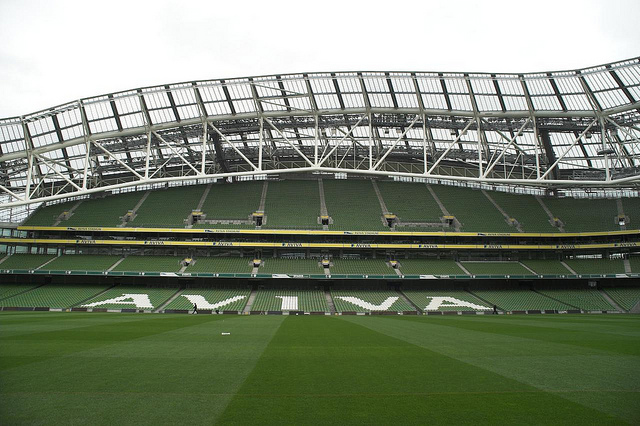
    This past Saturday the showpiece event in Irish club rugby took place in the Aviva stadium. The Division 1A League final between Clontarf and Lansdowne.


    Both teams had successfully navigated themselves through the long season to finish in the top four and then through the playoffs. Clontarf with a nervy 9-0 win over Terenure, while Lansdowne left it late to clinch a victory over Young Munster with an injury time try to win the game.


    The IRFU and Ulster Bank did their best to promote the event. Moving the final to The Aviva was a nice touch, giving the occasion a feeling of significance that it deserved. They put together some great footage of the occasion as well, evening gathering good luck messages to the teams from pro players. There was a surprisingly large amount of noise generated by the loyal pockets of supporters that attended.


    Ulster Bank had erected inflatable goal posts for a special drop goal competition for those who wanted to try their hand at it. They also had photographers placed outside the ground that were on hand to take pictures of the younger supporters. These were then shown on the big screens in the stadium at halftime, no doubt making many of young child’s day.

    The game itself lived up to expectations with some thrilling rugby being played by both sides. Lansdowne were dominated at times by the Clontarf team who put together some excellent passages of play only for the final pass to ultimately let them down.


    Being without their first choice outhalf and top points scorer David Joyce, Rob Keogh stepped up and took over the goal kicking duties. Keeping his side in the game with a series of penalties.


    Scott Deasy’s excellent cross field kick was gathered by Ian Fitzpatrick who did brilliantly to collect the ball and then feed Mark Roche who finished the try superbly. But Clontarf kept the pressure on Lansdowne, Colm O’Shea and winger Conor O’Brien worked fantastically down the right wing to create a break and had the line at their mercy only for the last pass to hit the deck and possession to be turned over. While stand out centre Matt Darcy made a break down the opposite flank off a midfield scrum only for a similar outcome to happen.


    Darcy then intercepted an incredibly telegraphed pass from Scott Deasy to race over half the pitch to score for Clontarf after half time putting Clontarf in a commanding position. But Lansdowne were beginning to come back into the game, this lead to them marching into the Clontarf territory and ending up with a line out right on the  opposition’s line. What followed was a well worked try from Man-of-the-Match, Joe McSwiney, from a maul close to the Clontarf line.


    No doubt, the turning point of the game when Clontarf substitute Ariel Robles was sin binned for a fairly innocuous looking tackle on full back Cian Kelleher. But down to fourteen men Lansdowne took the upper hand. This eventually lead to Scott Deasy landing a tricky kick to give them a one point lead. And that was how the score stayed, Clontarf were awarded a late penalty on the halfway line that looked to be out of range for their kickers, instead opting to tap and go leading the ball to be turned over two phases later. This must have been a hard pill to swallow for the men from north Dublin, having already lost the Bateman (All Ireland Cup) to Cork Constitution. They will not doubt rue their missed opportunities that they had to put this game away.


    Match report by Daniel Pim

  • Highest STI rates found in young adults

    Highest STI rates found in young adults

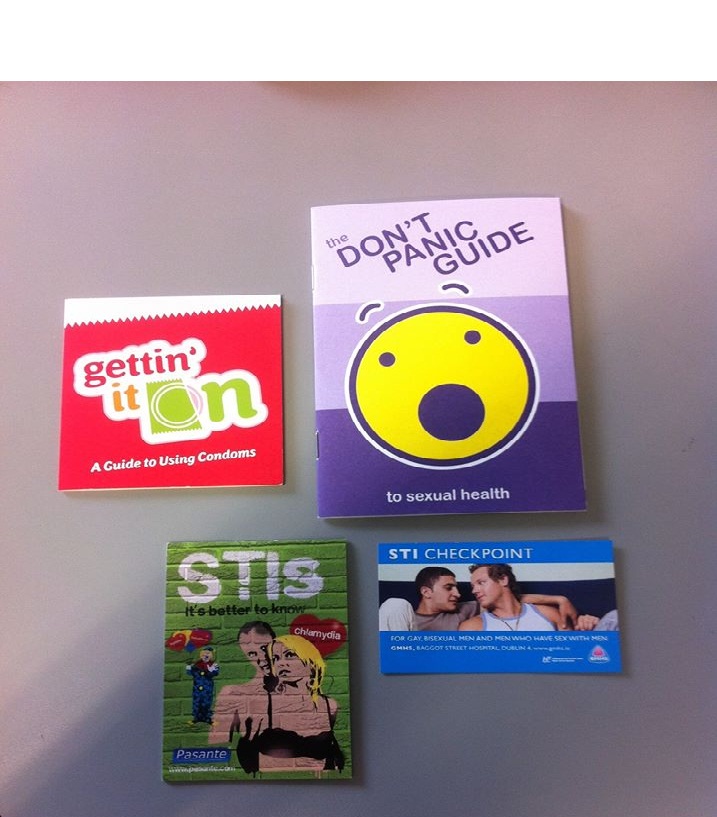
    Pamphlets from DIT medical centre. Photo by Rachael Hussey
    Pamphlets from DIT medical centre. Photo by Rachael Hussey

    Ireland has experienced huge changes in society over the last thirty years. While traditionally Ireland was a predominantly catholic and conservative country, attitudes and behaviours around sex are changing and with a more liberal contemporary Irish population emerging, our sex lives have transformed along with this.

    The National Medicines Information Centre says, “A recent Irish study found that there was a lack of awareness amongst young people (17-34 years) of symptoms suggestive of STIs, and that there were significant levels of high risk behaviour.”

    In 2006 the Crisis Pregnancy Agency and the Department of Health and Children published research on The Irish Study of Sexual Health and Relationships by UCD.  This study analysed the behaviours and attitudes of a group of Irish people in relation to sex, sexuality, contraception and sexually transmitted infections.

    Statistics on STI rates Ireland

    The Irish Study of Sexual Health and Relationships by UCD say “There is a great deal of evidence from research that sexual culture in Ireland is undergoing immense change and moving closer to that of the UK and continental Europe.” With these changes, awareness and education surrounding the dangers and challenges faced with unprotected sex needs to be addressed in a more vigorous way, particularly for young adults.

    The study revealed that younger people’s attitudes are now more liberal “Between 1973 and 2005, the proportion of Irish people agreeing that sex before marriage is ‘always wrong’ fell from 71% to 6%. Attitudes among younger Irish people have become more liberal at a faster pace than those of older Irish people.” The change in attitudes has impacted on average number of sexual partners for Irish people, which contributes to the higher levels of STIs in young adults. “Although 29% of men overall have had a single partner over lifetime, this proportion increases across age cohorts: 46% of men aged 55-64 reported a single partner compared to 23% of those aged 18 to 24.”


    While the rates of partners have increased the risk of contracting a sexually transmitted infection increases with that. Ireland’s change in attitudes and behaviours surrounding sexual activities may not reflect their knowledge and practise.  DIT students Louise Casey, 22 years old and Zoe Kinsella, 20 years old, both reveal they first received sex education in fourth year of secondary school but fail to remember any significant information given on STIs. “Just a few scary pictures, that was it” said Zoe Kinsella.  Louise Casey remembers an ‘ice-breaker’ with a condom and a banana but admits she “was still a bit foggy on the STI details”.

    The first year students feel female contraception methods such as the contraceptive pill impact on the use of condoms. “I think lads definitely rely on the girl to be on the pill and they look at it like it is so handy” says Louise Casey.  “I feel like if you are in a relationship and both of you have been checked then you are free to have sex without a condom if you are on the pill but besides that, if you are having sex with random people and you are like ‘well I am not going to get pregnant so that’s fine’ but you can still catch loads of STIs because if that is your attitude, how many other people have that attitude?” says Zoe Kinsella.

    The girls see alcohol as a huge factor for unprotected sex rates. Casey says, “When you are drunk nothing matters. You are so much more impulsive, if you want to do it you are going to do it, there is nothing stopping you.”

    Chlamydia being the most prevalent STI in Ireland, reveals the highest rates in young adults. According to the Health Protection Surveillance Centre in regards to the 2013 annual report, rates of chlamydia in 2013 were 6,262 with the highest age specific rate in 20-24 year olds. The rate in females (1,060 per 100,000) was almost 1.5 times greater than in males in this age group (687 per 100,000).

    HSPC STI 2013 annual report

    Femi Bankole, DIT’s student union welfare officer believes that education is key and thinks it is down to maturity as teenagers leaving secondary school and entering college start experiencing a lot of new things and experiences while education helps navigate young people towards safe sex. Bankole ran a sexual health campaign within the first six weeks of the first semester to ensure new students receive the most knowledge as early as possible.

    “Drink and drugs are a huge factor,” says Bankole. On a positive note Bankole sees a rise in the rates of young people who are choosing to get checked out after unprotected sex and an increase in students desire to learn and educate themselves on STIs.

    According to The Irish Study of Sexual Health and Relationships by UCD, the most common reasons for non-use among respondents aged 18 to 24 are: drinking alcohol/taking drugs (20%), no contraception available (18%), sex not planned (16%) and not thinking to use contraception (15%). A further 18% of those aged 18 to 24 report ‘no contraception available’, 16% that sex was ‘not planned’ and 15% that they ‘didn’t think to use’. The results suggest that, for the 18-24 group at least, unpreparedness and situational factors such as alcohol and drugs are the major reasons for failing to use contraception.

    Overall STI annual rates in Ireland have increased from 2,228 in 1989 to 12,753 in 2013. Alcohol and drugs, access to contraception and freedom are all factors when it comes to the rates of STIs amongst the under 25s. While Femi Bankole, welfare officer in DIT, sees a rise in student’s awareness and education around safe sex, there is still a long way to go in regards safe sex education in the early years, provided in an accessible way. As Zoe Kinsella states, “The most information I have ever received was from the back door of the girls toilets in DIT where they say 80% of women with chlamydia do not know they have it.”

    Info on sexual health and contraception

    By Rachael Hussey


  • Oireachtas report says direct provision system is “not fit for purpose”

    The direct provision system for asylum seekers is ‘not fit for purpose’ and needs to scrapped or replaced, according to a new report from an Oireachtas committee.  

    Direct provision was introduced 15 years ago to provide shelter for asylum seekers for just six months, until applicants were either granted refugee status or deported. This new report from the Committee on Public Service Oversight and Petitions has called for a series of changes in the existing regime, but ultimately wants it to be scrapped.

    There is around 4,360 asylum seekers currently living in direct provision centres around Ireland. Members of the committee visited four direct provision centres in Dublin, Galway, Limerick and Meath. Based on what they saw, the committee described the current living conditions as “intolerable” and “cramped”, with little private space for parents with children.

    Over one third of the asylum seekers in direct provision are children. Many of these children were born in Ireland but do not enjoy the same rights as other Irish children. The committee’s report says people in direct provision should have the right to work. The recommends that the restriction on working must be lifted soon as possible to avoid an long-term difficulties.

    The report also notes that the person living in direct provision for the longest time has been there for eleven years but the average stay is 5 years. It also commented on this figure, saying the delay in processing the applications was “inexcusable”.

    But haven’t we heard this all before?

    These figures and recommendations will not surprise people that are familiar with the conditions in direct provision centres. It has already been widely reported on. Last November, I spoke to a resident in the Birchwood House direct provision centre in Waterford. She had been involved in the recent protests in Waterford and Dublin and wanted people to know what kind of conditions they were being forced to live in. She asked me not to disclose her real name, in fear that it would affect her application for asylum.

    “I myself have been waiting nearly nine years. The protest was meant to spread the word that there are people in Waterford who have been abandoned,” Natasha told me.

    https://spritesapp.com/view/embed/26457

    She told me that the hardest part was trying to raise her children in this environment, after promising herself that they would have a better future in Ireland. At present, asylum-seeking children are entitled to primary and secondary level education but cannot go to third level because they do not qualify for free fees. Apart from his obvious issue, school can be very difficult for her children.

    “One day in primary school, my son was asked to write about his house. Everyone was talking about the different rooms in their houses, their own rooms and what colour it was.

    When it came around to my son’s turn to talk – he said I don’t have a house. The other children asked him where he lived if he didn’t have a house. He told them that he lived in a hostel and the teacher asked him to describe it. The kids began laughing when he told them that his family all live in one room and have to queue up for food”.

    One of the major problems with the current system came from a decision made by the State back in April of 2000. They decided to pay private contractors to provide accommodation for asylum seekers. But the majority of these contractors have backgrounds in property, not hospitality or catering. These contractors receive about €50 million in taxpayers’ funding each year and most are registered as private unlimited companies, which means their financial affairs are not open for public scrutiny. None of these companies come from a health or welfare background and Natasha tells me that they create a very hostile environment to live in.

    The chairman of the Public Service Oversight and Petitions Committee has called for direct provision to be scrapped. Speaking to RTÉ’s Morning Ireland, Pádraig Mac Lochlainn said that after visiting asylum centres around the country the committee felt it has to comment on the overall system.

    “These centres were only ever intended for residents for six months while some have been there for 11 years, which is outrageous. You can’t work and live on €19 a week. They are living in limbo,” he said.

    It also recommends the responsibility for inspections at the centres be carried out by an independent body such as the Health Information and Quality Authority.

    Mac Lochlainn also said, in an article he did for thejournal.ie, that those in direct provision felt excluded and isolated because they had nobody to report abuses too.

    “Ordinary Irish citizens have access to the Ombudsman to advance concerns on public service delivery, while those in the direct provision system do not. A section of Irish society is being neglected and quite possibly being discriminated against…

    So we are saying that, while the current system is in place, the respective jurisdictions of the Ombudsman for Public Service and the Ombudsman for Children must be extended to include the direct provision system. We also call for the FOI Acts to be extended to include the direct provision system and the Reception and Integration Agency.

    Given that robust independent oversight is required, the RIA should also establish a pre-Ombudsman independent complaints system for residents.”

    https://storify.com/Dtlucey/direct-provision-system-is-not-fit-for-purpose-the

    But reports and promises have been made before. Back in November, Natasha had told me that she and other residents of Birchwood House had met with Minister for Communities, Culture and Equality Aodhán Ó Ríordáin and had felt positive afterward.

    Speaking at the 15th anniversary of direct provision back in April, he said it was not an occasion to be proud of and marks a regrettable period in Irish history. He said that overhaul of the system would follow this committee’s report and that it would represent the biggest change in a generation. He didn’t give any precise details at the time but said speeding up the process was his number one priority.

    This is an issue that has had a tendency of dragging on and not being addressed. This is a report from Morning Ireland, over a year ago. Will we be listening to a similar report in a years time?

    http://soundcloud.com/morning-ireland/calls-for-end-to-direct

    It does not benefit us as a country to have asylum seekers in the system for 10 or 11 years. This is an issue that has already dragged on for 15 years and the Minister needs to finally address it, for the good of everyone involved.

    (Originally published at http://dlditmaj.blogspot.ie)

    By Donal Lucey
  • Prepping for the Eurovision

    This year, on the 21st of May, seventeen year old Molly Sterling will become the youngest Irish entry to the Eurovision since Dana. We do of course have to get through the dreaded semi finals but all going well she will take the stand on the 23rd. ‘Playing with Numbers is a haunting ballad, with depth not many would expect from a songwriter so young. Molly has received enthusiastic support as well as harsh criticism, making her an initiated Irish Eurovision entry

    Although Ireland remains the country with the highest number of victories, with seven to date, the last ten years have rarely been kind. Donna and Joseph McCaul became the first Irish Eurovision act to enter a semi final in 2005 but did not qualify. Brian Kennedy upped the anti with tenth place in the final in 2006 after a breathtaking performance; basically surprising nobody. 2007 saw Dervish give a lively performance of ‘They Can’t Stop the Spring’ but the song did not appeal to voters and came in at 24th. Dustin did not get through the semi final in 2008 and the less said the better. Under a youtube video of 2009 entry, Et Cetera, the second comment reads ‘thank god that they didn’t have the turkey again!’

    Et Cetera, performed by Sinéad Mulvey and Black Daisy just missed entry to the Eurovision final, finishing in eleventh place in the second qualifying round. Niamh Kavannagh’s performance of ‘It’s for you’ finished in 23rd place which was disappointing but did not prevent Jedward rocking Dusseldorf in 2011, taking the audience with them and coming in at 8th. Things went downhill in 2012 with Waterline ending in 19th place. There may be more of the duo in the future though, if their fans keep up the pressure.
    @LefaSN
    No Jedward reading points for Ireland? THIS IS THE WORST NIGHT EVER. (courtesy of storify).
    Ryan Dolan’s ‘Only Love Survives’ came in at 26th in the 2013 final in a surprising result and the run of bad luck continued into 2014 when the catchy ‘Heartbeat’ sung by Can-linn and Kasey Smith did not come out of the semi-finals.

    Ireland’s victories, between 1970 and 1996 are well documented. For those in need of a reminder:

    https://vis.occrp.org/account/metro/edit/2253

    Johnny Logan captured the hearts of Eurovision viewers like none before or since but anyone I’ve spoken to agrees it’s a toss up between Rock and Roll Kids and The Voice for best Irish entry.

    The eurovision has seen some fantastic acts over the years with both ABBA and Celine Dion first coming to the attention of the world through the contest. It has also seen some bizarre but unforgettable acts, with Lordy, 2005, taking the biscuit.

    2015 will be one to watch. Germany, who set a high standard with their 2010 winner Lena Meyer Landrut have this year experienced difficulty finding a representative, according to The Telegraph; ‘The UK’s 2015 contestant will be revealed this Saturday (March 7). Germany’s selection (announced Friday) is perhaps the most fraught, with the winner of the national talent contest (rock singer Andreas Kummert) turning down his place on live TV to shocked presenter and booing audience. Runner up Ann Sophie will now represent Germany in May.’

    2014 was a particularly interesting year with Concita Wurst taking first place singing ‘Rise like a Phoenix’. Wurst’s entry to the Eurovision had sparked conservative protests in Russia with some men shaving beards and posting photos to social media. Wurst received support from a number of high profile celebrities however, including Lady Gaga and Elton John and impressed viewers worldwide with her vocals.

    Congratulations to this years winner of Eurovision @ConchitaWurst. She slayed with her beautiful vocals and message of freedom and equality.
    11:38 PM – 10 May 2014 (Lady Gaga, courtesy of http://www.eurovision.tv).

    As the BBC point out in their article, ‘The top ten song contest controversies’, the show is not new to disagreement.
    ‘The 1963 contest was held in the BBC TV Centre (things were a little more low-key in those days!) During the voting it was a tight race between Denmark and Switzerland. When it came to Norway’s turn to vote, the votes were disallowed since the spokesperson had not used the correct procedure for announcing the results. The legendary presenter, Katie Boyle, informed the jury in Oslo that their votes would be collected later. In the meantime the Norwegian jury altered their votes resulting in Denmark winning whereas Switzerland would have won had the original Norwegian votes been used. There was considerable consternation in the hall and questions remain to this day about the fairness of the incident. Today the results have to be sent into the EBU before they are announced on-screen meaning that such an incident cannot happen again. New voting rules in place for 2014 mean that the process will be even more transparent with the names of jurors and their individual votes made public for the first time.’

    Eurovision humour is one of the best things about the competition, as proved by Marty Whelan. Getting into the spirit of the night, it’s worth listening to soundcloud podcast ‘Eurovision for Dummies.’

    The Eurovision year after year attracts music lovers, fun lovers and those who just want to see how crazy the costumes and dance routines will be this year. Whatever your reason for watching, do watch and get behind Molly. It makes for a great night with family and friends. And in particular, readers from the UK; vote for us and we’ll vote for you.

    Sinéad Fitzgerald