Author: The City’s Newshound

  • Still living under your parent’s roof at 30? Get a life.

    Are you still mama’s boy at 30? Your mum drags you out of bed to have breakfast, asks you what you will have for lunch or dinner and even reminds you to make your bed.

    What are you playing at? Wake up at your mum’s breakfast and get a life: you can’t really grow up until you leave home.

    Your parents will always be your parents; they will rarely be in a rush to see you leave as they might want you near them for some reason, but by all means you need to prove your independence.

    A quarter of young people in the UK now live with their parents, according to the recent Office for National Statistics (ONS).

    ONS released last year showed that British society is undergoing a significant shift, as one in four young adults now live with their parents. Those aged 20 to 34 are now more likely to be sharing a home with their parents than any time since 1996. Men are far more likely than women to be living with their parents.

    https://www.google.com/fusiontables/embedviz?viz=GVIZ&t=TABLE&q=select+col0%2C+col1%2C+col2%2C+col3%2C+col4%2C+col5+from+1ZEGwlaj1Mpg-U-UdSXRXuV2BzOxjgL3hbNDyADdJ&containerId=googft-gviz-canvas

    In Ireland, more than four in ten people aged 18 to 29 live with their parents, according to a new European study.

    Lack of employment opportunities often causes many young people to not go anywhere, or to move back home even when they graduate – at the time they should be becoming fully independent.

    In the past several months, some studies have suggested that the reasons grown children are returning to the nest in greater numbers than ever may have less to do with the rise and fall of the unemployment rate, and more to do with lasting changes to young adult life, such as the growth of student debt and delayed marriage

    The percentage of young adults living with their parents who are unemployed is almost twice the unemployment levels found amongst those in the same group who don’t live with their parents.

    https://spritesapp.com/view/embed/26382

    Least likely in London

    The number of young adults living with their parents drops considerably to 1 in 5 while in Northern Ireland which is more than 1 in 3, above the national average.

    In 2013, the study revealed that Northern Ireland had the highest percentage of young adults living with their parents with 36 per cent while London’s figures were the lowest with 22 per cent as you can look at the record levels below.

    https://spritesapp.com/view/embed/26463

    Case study

    “It is not a matter of getting married or not. Living on your own as a man teaches you to be more responsible,” says Bob Murphy, a 59-year-old retired army officer, who says he left his parents when he was 18 to make his own life.

    “It teaches you lessons that you would not learn from home. It helps open your eyes and earn living. You learn financial discipline, self-regulation and taking care of yourself,” he says.

    Bob argues that a 30-year-old who still lives with parents is like someone who rides a bus and, when the bus gets to his stop, refuses to get off. Or a visitor who has overstayed their welcome. “Yet you can’t leave that person out of the door or tell that person that time is up! As parents, we will never throw them out, but we expect to see them setting out their own stall and finding their way of living.”

    Elsewhere in the world people are more likely to move on. Renatus Mushi, 33, a lecturer at the Institute of Finance Management in Tanzania, argues that it is not good to stay with parents too long – most of his friends of that age have already got married and have kids.

    “I got married when I was 28 years old. Now I have a six year-old kid. Most of my colleagues have gone on the same path.

    “Some of them prefer to rent a single room staying with their colleagues, but once they get good financial positions they shift to good houses where they can get married: that is the most common situation in Tanzania.”

    Renatus says in Tanzania, more than 70 per cent of people grow up in villages. In many cases around age 20 to 22 they move out from their parents’ home for college, and after that they run to towns to look for jobs and start their own lives.

    “Most people in their twenties in my country, they are out of their families, even though there are some people who have genuine reasons for taking this dreaded decision to move back. After they graduate, they may come back to stay with their parents for one month, then they shift.”

    Renatus adds that in his country a “mama’s boy” is always the butt of jokes when the boys are out for drinks.

    “What is mum making us for dinner today?” “My son, I washed and ironed your clothes!” “Your mother will vet all your girlfriends or chase them out!” “Your father asks you what time you are coming home?” Such are the questions anyone in the unfortunate position of living with his parents will have to grapple with whenever he is out with friends in Dar es salaam.

    Roisin Crowe, 21, a fourth-year college, student says she would have problems dating a guy who at 30 still lives with his parents. “Living by yourself is totally prized. I bet that a grown man who still lives with his parent would be an alarm bell. If a guy like that wants a date, you run as fast as you can,,” says Roisin, laughing.

    But this is not only about Bob, Renatus and Roisin. What about the people whose pictures we use as screen savers or wallpapers on our computers, phones or tablets? Where were they at the age 30?

    Nelson Mandela, before he turned 30, had married his first wife Evelyn, had two children, became the first national Secretary of the ANC youth league and was a force to be reckoned with in anti-colonial politics.

    Fidel Castro, celebrated revolutionary who many regard as one of the few who boldly showed the American government the middle finger and got away with it, turned 30 in 1956. By then he already had a wife, had opened a law firm, led a revolution and unsuccessfully run for congress.

    At 30, Steve Jobs, the one who changed how we view gadgets, had cofounded the world’s renowned brand Apple, featured on the front page of Time magazine and became a global celebrity.

    Facebook founder and the social network genius, the young tech tycoon Mark Elliot Zuckerberg, is now 30 years old. He got married at 28, but before getting married  he used to rent a month-to-month apartment in California. He didn’t live with his parents.


    By Seraphine Habimana


  • Gay Marriage Referendum

    Same Sex Marriage Referendum Ireland 2015

    Daniel Pim


    On the 22nd of May this year Ireland will vote in a referendum to legalise same sex marriage. This has been a hotly debated subject over the last few months with both the Yes and No sides trying to promote their own views. This piece will try and give a brief overview of the arguments and comments that both sides are presenting to the public before the decision goes to vote later on in the month.

    Many Irish celebrities have come out and expressed their support for the Yes campaign. Actor, Colin Farrell has said the following about the vote in GCN magazine, an LGBT magazine, “This referendum is a chance for us to arise. To wake up yo the conviction that true love from the heart of one being to another cares not for the colour, nor the creed, nor the gender of who it chooses to share that path with.” Irish music superstar Hozier was featured in the same magazine expressing similar views to Farrell, “The more I consider the difficulty and frustration any LGBT community member might face living in a society that ‘others’ on an institutional level, the more I consider this referendum not just an opportunity to correct an injustice, but an opportunity to offer a long overdue gesture of solidarity and acceptance to fellow brothers and sisters on a national level.” Other Irish Stars like Niall Breslin, Glen Hansard and Brian O’Driscoll has also expressed their support for the Yes vote.

    Eamonn McGee, a long time serving member of the Donegal football GAA panel is also quoted in GCN. “If I ever have a child and he or she turns out be be gay, they could say to me ‘you had a chance to make a difference in that vote’. I don’t know would I be more ashamed that I didn’t vote or the fact that I voted against it. it comes down to equality and one less difference in society.” McGee was in the news earlier on this month when he was vilified by a local Donegal priest for his Yes vote stance, telling the congregation that McGee was wrong to support the cause. This style of sermon angered some of the parishioners for criticizing McGee, leading them to walk out on the service.

    Archbishop Diarmuid Martin, the country’s second most senior bishop has declared that he’ll be voting No on May 22nd. The Archbishop, who rarely announces his decision to vote said the following, “A pluralist society can be creative in finding ways in which people of same-sex orientation have their rights and their loving and caring relationships recognised and cherished in a culture of difference, while respecting the uniqueness of the male-female relationship.” He added that, “I know that the harshness with which the Irish Church treated gay and lesbian people in the past – and in some cases still today – may make it hard for LGBT people to accept that I am sincere in what I am proposing.” Archbishop Martin did go on to say that his views were not the same as saying, “that people in differing marital and other relationships cannot be good parents,“much less to deny that they even deserve the title parents.”

    https://spritesapp.com/view/embed/26453

    The No campaign suffered a setback recently when a couple used in one of their promotional posters expressed their disastifaction with their image being used. “We completely support same-sex marriage, and we believe that same-sex couples’ should of course be able to adopt, as we believe that they are equally able to provide children with much-needed love and care. To suggest otherwise is offensive to us, and to many others,” was their comments about the subject in a statement released through Amnesty International


    Ireland’s leading economist, David McWilliams has looked at a different side of the referendum,  he wonders what a Yes vote could do for a actually do for the country’s economy. He writes, “recent Us research reveals that a leading indicator of wealth of a city or region is a strong and open gay scene. The reason is very simple: there is, and has always been, a strong correlation between tolerance and wealth.” McWilliams argues that cities with a high blue-collar population are much more open to competition from third world countries to steal their trade. This has a knock on effect with more and more jobs being lost out of a region, the more introspective the region becomes. This eventually leads the creative classes of the region to flee to more attractive places where the arts and cafe society are thriving.

     Billy Hannigan writes in his opinion piece for GCN how even if a Yes vote is passed, LGBT people will still be fighting inequality. He explains how the Civil Partnership Act 2010 ensures serving and future public servants the offer to give pensions to their partners (husband or wife). Hannigan points out that for retired public servants who were faced with this before 1984, the offer was essentially meaningless as gay people couldn’t marry in 1984, there by not allowing them equal rights as their other co-workers. He goes on to criticize today’s government stating how, “for presenting itself as an upholder of equal rights for the LGBT community should at the same time be denying a fundamental right, the right to a pension to LGBT people, on the basis of a meaningless offer made to them over 30 years ago.” He goes onto explain the situation by saying how, “the situation could be remedied with a stroke of a pen, because there is no legal barrier to Minister for Public Expenditure and Reform , Brendan Howlin doing so.” Hannigan stresses that even if a Yes vote should pass later this month, the LGBT community shouldn’t get carried away with itself. Thinking that it will solve all their problems and give equality to everyone.

     Ireland’s first openly gay politician, Leo Varadkar has been quoted recently saying how a No vote would send a message to gay people that they’re no equal citizens under the law. He continued by saying how, it would be incredibly unfortunate for the vote not to pass, commenting that it would be a “backwards” step for the country. He then went on to talk a little bit about himself and the feedback that he’s experienced since he came out earlier on this year. Explaining how he had letters from people offering to “save his soul” since he announced his homosexuality.

    https://storify.com/danieltpim/new-story-554b6752a7777529070f5bc0

    Daniel Pim D14123237

  • Cyber bullying, a modern blight

    Bullying is something that everyone comes across in life at some stage be it at school, in the

    work place or in social situations. If you’re lucky enough to avoid it a close friend, colleague or family member is likely to have went through an experience of bullying. In the past, bullying in schools was easier for teachers to spot and deal with. It came in two main forms, verbal and physical. However in the last few years a new form of bullying has emerged that is far more difficult to deal with and often impossible to identify. The term Cyber bullying was unheard of until relatively recently, particularly in Ireland. Part of the issue of cyber bullying lies in the fact that parents and teachers find it so hard to understand; it is a completely foreign issue to them. It can be carried out over various mediums including text, Snapchat, Whatsapp, email, Facebook, Twitter and an abundance of other social media websites. Cyber bullying is an issue that is only going to grow and part of the problem with it is it often goes hand in hand with what would be identified as more conventional bullying. Indeed, it is extremely difficult to differentiate between the two in both primary and secondary education.

    Bully4u is a company that set up in 2010, their goal was to provide workshops for schools to address the issue of cyber bullying along with bullying in general. Their workshops focus on informing parents on teachers on how to recognise, and combat all forms of bullying. As well as information evenings for parents Bully4u provide staff in- service days to help educate teachers in the complex method of spotting signs of cyber bullying within a classroom. Student workshops are another one of the tools used by Bully4u. All workshops work in the same manner with a basic three point plan. Empowering the victims of bullying is their first step. They do this by encouraging them to reach out for help whether it is through a parent, guardian or a teacher. The second is to deal with the bullies themselves. The aim is to help them recognise and alter their behaviour. The third is probably the most difficult step, encouraging bystanders to help by reporting bullies. These three steps are of course nothing new, you will recognise them as familiar methods in combating bullying. However Bully4u are committed to following these steps intensively to secure the best possible outcome for both bullies and those being bullied. Understanding, Communicating and Empowering are the three buzzwords of the organisation.   While Bully4u is a non-profit organisation, they employ a dedicated team of full time payed staff.

    Jim Harding, Director of Bully4u, feels there is a lot more work to be done in getting parents involved although many are already on board, “I think parents are taking a very hands-off approach in general. They don’t seem to understand how much of a problem it is and while there has been a huge response they need to improve their attendance at our workshops.” Jim explains that cyber bullying is a huge challenge, “It certainly getting worse, an understanding of the mediums through which cyber bullying occurs is needed. Children using these social media apps are getting younger and younger so you have the root of the problem here. Added to the fact that there are constantly new forms of social media coming through such as Snapchat and Omeegle and it’s a very difficult issue to police.”

    Bully4y have expanded since 2010 to service schools in 17 counties in Ireland at both primary and secondary school level. Jim explains that this is not the final goal as Bully4u hopes to reach out to every school in the country. Jim explains that cyber bullying is not only a problem with secondary schools as many parents seem to believe. “No that is simply not the case at all. It is prevalent in both primary and secondary education. Children have access to the internet and social media even if their parents or guardians are not aware of the fact. People are starting to recognise this and that is good, but we still have a lot of progress to make.”

    Bully4u are accessible to students, parents and schools and as well as the workshops mentioned they are always available to organising private consultations. Jim foresees a positive future in constantly improving methods to dealing with bullying, however he stresses the fact it is an issue which is not likely to disappear anytime soon.  

    https://spritesapp.com/view/embed/26388

    https://storify.com/jamescox/cyber-bullying-in-ireland

  • Cunning Running

    CC Flickr Image courtesy of Federazione Italiana Sport Orientamento
    CC Flickr Image courtesy of Federazione Italiana Sport Orientamento

    Originally set up by the Scandinavian military to teach keep their troops physically fit and to help with their map reading skills. Orienteering has blossomed into one of Ireland’s best loved alternative sports.


    The sport is one of many that’s funded by the Irish Sports Council. There are three different ways that you can get involved in the sport. You can attend a “Come and Try It” event which are specifically designed for newcomers. Or you can join one of the 14 different orienteering clubs in the country.There are 6 cubs situated in leinster and 3/4 in the South east region alone. There is also the associations “active calendar” which is an up-to-date list of all events that take place throughout the coming year. The association is also launching a “Summer Series” this summer, which is specifically designed to introduce families to the sport.


    The website (http://www.orienteering.ie) is the best source of information for anyone that is newcomer to the sport. They have some brilliant instruction videos on not only the rules and regulations of the sport but what type of gear you need to compete. These videos even have views from Sweden and Norway. The facebook page has over 800 followers, which communications director Finn Van Gelderen describes as “100% organic followers, as we haven’t bought any advertising to promote the site. The main aim of any of our social media platforms is to funnel people back to the website, as we believe that it’s by far the best source of information for not only seasoned competitors but also to novices.”


    When asked about other ways that the Association have tried to encourage new members Van Gelderen adds “We’ve launched a summer series this year, that’s specific aim is to try and introduce families to the sport. There are a wide range of different courses, that are suitable for all ages. Some small kids see going round a course as like doing a treasure hunt, which is brilliant. The series finishes up at the end of the summer in Hollywood Co. Wicklow, with a big BBQ and party.”


    What is becoming more and more common now is the establishment of urban courses. Schools or colleges can be mapped and used as by clubs. These are usually “Sprint” events meaning that they’re shorter course than the traditional ones. Both UCD and Trinity run such competitions and our great ways for people to get involved too.


    This past Saturday there was a Come and Try It event in UCD, which was attended by just under 100 people. The event is aimed to try and introduce people to the sport and get people involved in orienteering. Obviously running around UCD is quite different to the forests that would usually be used as courses. These events are normally held nearer to Dublin or cities instead of out in the country, to try and encourage the highest levels of participation.


    Colm Moran UCD Orienteering Captain. Photo courtesy of UCD Orienteering Facebook page
    Colm Moran UCD Orienteering Captain. Photo courtesy of UCD Orienteering Facebook page

    Urban Orienteering is becoming more and more popular. Colm Moran is captain of the UCD Orienteering club explains how it differs from the more traditional form of the sport. “Urban is much more about being quick and making good decisions. It’s relatively easy to be able to navigate your way around a college, so it’s more about seeing how to get the quickest possible route. You don’t want to run around a corner and then be stuck in front of a wall or some awkward obstacle. The normal form is more about endurance and your ability to be able navigate more complicated terrain.”


    Moran’s been involved in the sport since he was ten years old, “My mum used to bring me and my brothers and sisters to the events, we’d maybe go one Sunday a month to an event. It was great because it’s really for all ages, from the age of ten up orienteering can cater for all ages. Obviously running around UCD is quite different to the forests that would usually be used as courses. These events are normally held nearer to Dublin or bigger cities instead of out in the country, to try attract as many people as possible and encourage the highest levels of participation.”


    Obviously a vital aspect of the orienteering is the map. Crucially, it is the clubs that pay for the mapping of courses and not the association. So if clubs want to create a new course or update an old one, fundraising for their incredibly accurate maps (1.5000 or 1.10000) must be done.


    How they map their courses is incredibly interesting. This is done by a method called Lidar (Laser Illuminated Detection And Ranging) Mapping. The association gets an additional 20-23 thousand euros to help with this process. The National Oceanic and Atmospheric Administration (NOAA) describes it as follows “This method uses a pulsed laser to measure the range of the earth. These light pulses—combined with other data recorded by the airborne system— generate precise, three-dimensional information about the shape of the Earth and its surface characteristics.”


    Targeting people in schools is the most ideal place admits Van Gelderen. “There’s a primary schools event that takes place in May and we’re expecting nearly 700 kids to be participating in it. One of the main reasons why you would chose to get involved in orienteering is that it’s a sport for all ages. All levels and abilities are catered for. It is inclusive of the whole family, and there’s a great social element to the whole day.”


    Most people get involved in it through Scouts or in school. Whenever our club goes to league or championship events, some of the older members are really helpful with lifts and stuff. They really encouraging to some of the younger members, because they can see where we’re coming from. Some of us are just beginners while others are more experienced.  Moran


    They have also linked up with Coillte, which manages Irish forestry to make permanent courses. So whenever you feel like doing an orienteering course all you need to do is print off the map and head outside.

    By Daniel Pim

  • University Costs in Ireland

    University Costs in Ireland

  • Graffiti as an art form

    Since the 1980’s people have seen graffiti as a form of vandalism, however the twenty first century sees graffiti as a form of modern day art. Graffiti is a form of expression, a way for our youth to show their artistic skills. This is a form of art , yet people see still see this as pollution or dirt, something that is just making our city look worse in the eyes of tourists and neighbourhoods that were once highly respected areas look like the ‘ghettos’.

    People have associated graffiti with the old Hollywood movies that show gangsters driving around damp ‘ghetto’ town such as Boston, were the roads are covered in graffiti from top to bottom. Since then people associate graffiti covered towns, as deprived areas.

    Graffiti has been around since the cavemen; they used different plant oils and mud to draw images on the walls of their caves. They would drawer images of mammoths, bulls, fish, rivers and mountains. They also used wall art to describe what their life was life, or what animals were significant to them. They also used wall art or ‘graffiti’ to express their feelings, some caveman art shows images of love hearts and butterflies and sunshine, meaning the sunshine or butterflies had touched their emotional side that specific day so much that they tried to remake what they saw on their cave wall.

    The Egyptians were utilising graffiti to show exactly what happens within their Kingdom. The pharaohs would demand that slaves create images is the large columns and doors that depicted what happened within the kingdoms by carving out pictures in the stones. Some rebel people would sometimes carve small images in the rock. Some pictures included, fishes, women, and children.

    Ancient Rome was most known for its graffiti signs that would show men that they were near brothels. They would carve a handprint that would vaguely resemble a love heart on a wall that would symbolise love followed by a footprint and a number. The footprint symbolising that you are within walking distance and the number meaning you will have to pay. http://bl.ocks.org/anonymous/raw/5b5a175aed1861229bcc

    Graffiti can also be used to describe the political state at the time the art was produced. In ancient Roman times, they would use graffiti or wall art to describe what the political situation was like, they would draw images of horses and chariots, surrounded by gladiators to represent the importance of the coliseum and gladiator battles in Rome at this time. The top five phrases used in Ancient Roman graffiti include, 1) “Philiros Spado – Phileros is a eunuch” 2) “Oppi, emboliari, fur, furuncle- Oppius, you’re a clown, a thief, and a cheep crook.” 3) “Maximus in lecto. Faetor, peccavimus, hospes. Si dices: Quare? Nulla matella fuit- we have wet the bed. I admit, we were wrong, my host. If you ask ’why?’ There was no chamber pot. “Found inside an inn. 4) “Talia te fallant utinam medacia, copo: tu vedes bibes ipse merum- if only similar swindling would dupe you, innkeeper: you sell water, and drink the undiluted wine yourself.”5) Admiror, o paries, te non cerise, qui tot scriptorium taedia sustineas- I wonder, O wall, that you have not yet collapsed, so many writers’ clichés do you bear.” This one was the most famous and appears all over Rome in a lot of different versions of the quote. Below is a video that shows some of the graffiti and phrases that were left behind by people in Ancient Rome and Greece.

    https://youtu.be/zzIKrzdNEMs

    Graffiti in most countries is still seen as a crime. Street artists can be heavily fined if they are caught in the act. In Ireland you can get fines as high as one hundred and fifty euro.

    Tagging is the most known form of graffiti, tagging began when gangs began. It was used to show which gang patrolled which area. It was a warning sign to rival gangs, to warn them to stay out unless they want war.

    Graffiti can be any form of writing or image on a wall, graffiti has always been seen as vandalism because of the visual look of it. It is usually large, not taught out and consists of many bright and unattractive colours, that wouldn’t generally add to the beauty of a building. It is also seen as a criminal act, this is usually due to vandals spray-painting private properties or shop shutters, or in the case of New York its subways. The majority of these properties would be privately owned. If the vandal was caught they could be charged with defacement and vandalism, which is a punishable crime.

    Graffiti began with the cavemen using oils, herbs and mud to draw on the walls. The Egyptians and the Romans would chisel their carvings into the wall. In modern day society graffiti has gone back in time to use the same style as the cavemen, just like then they also paint their artwork on to the walls unlike the Egyptian’s and Romans who chiselled their carvings into the wall.

    Today however the two main items a graffiti artist needs are a spray paint and a facemask, marker pens have also become popular in recent times. Society sees graffiti as trash, something that should be taken down as soon as it’s put up. https://youtu.be/UMK6n4_E3Q4

    Oxford dictionary’s description of art is as follows “ The expression or application of human creative skill and imagination, typically in a visual form such as painting or sculpture, producing works to be appreciated primarily for their beauty or emotional power” the first example of what art is, was painting. If the dictionary can use painting as an example of what are is, them why cant people see ‘graffiti’ as an alternative form of painting, and see it as a beautiful and powerful expression.

    Graffiti in Ireland is illegal; people caught performing the act can suffer severe fines or face being brought to court. However many businesses in Dublin have changed their views of graffiti, and no longer view it as vandalism. Many businesses in the centre of the City have hired graffiti artist to design to front of their business, many now have the entire front portion of their shop covered in graffiti.

    Graffiti in Ireland is seen as art, many galleries, colleges, restaurants and cafes now use spray painted canvases as decorations, and to bring a modern vibe to their facility.

    Manager of ‘Fresh’ a clothes store in Temple bar co-painted the front of the clothes store with his college. He said, “we wanted our shop to look modern, we also wanted to support the graffiti scene and make people stop and look”. Business owners are now seeing graffiti in a new light, it is considered by art by the majority of Irish citizens, shop owners and gallery owners who now display spray painted canvases in their shops and shows. https://storify.com/0857873844/graffiti-as-a-form-of-modern-art

    L.A has one of the hottest graffiti scenes, everywhere you go in Las Angeles you will most defiantly come across graffiti. L.A is a very modern city, its known for its celebrity status and all the celebrities who live there. However it is also known for its graffiti scene. L.A has a large amount of gangs. This is clearly evident through the graffiti tagging that appears throughout Las Angeles. Like the majority if other cities the citizens of Las Angeles also views tagging as unnecessary and considers it to be vandalism, however also like other cities they also have some very artist graffiti artists, who spray murals on what would have bee once a tagged wall. This is to show people that they don’t want to be seen as the vandals, they want to tagging to be seen as vandalism and their murals to be seen as art. Officials in LA are trying to find a distinction between graffiti art and graffiti vandalism. They want to know if one is different from the other. In 1991 the Las Angeles Times “All cities have an obligation to ensure that there are public spaces for what is one of the most vibrant and interesting art forms in Southern California,” said Michael Davis, an architect and author who has written about Southern California urban-design issues. Las Angeles is a very forward city, so of course they do have certain areas such as Huntington Beach that are free zones for graffiti artists, meaning they can do graffiti without the fear of being fined or arrested.

    The harsh reality for graffiti artists is that in order to create inspirational masterpieces and so off their creative skills they must go against the law. Graffiti artists will ultimately spend a period of their life, no matter how big or small the charge, they will spend time in jail for doing something they love and are truly passionate about.

    Why should the graffiti artists who are truly just doing it out of their over for art and their ability to create beautiful art out of spray paint, suffer because of the true vandals, the young men and women who spray their gang names all over residential estates, shopping centers, and the city centers. There should be two levels of graffiti, the first being graffiti artists and the second graffiti vandals( tagging)

  • Graffiti, is it vandalism or art?

    Since the 1980’s people have seen graffiti as a form of vandalism. However the twenty first century sees graffiti as a form of modern day art. Graffiti is a form of expression, a way for our youth to show their artistic skills. This is a form of art , yet people see still see it as pollution or dirt, something that is just making our city look worse in the eyes of tourists, and neighbourhoods that were once highly respected areas look like the ‘ghettos’.

    People have associated graffiti with the old Hollywood movies that show gangsters driving around damp ‘ghetto’ towns such as Boston, where the roads are covered in graffiti from top to bottom. Since then people see graffiti covered towns as deprived areas.

    Graffiti has been around since the cavemen; they used different plant oils and mud to draw images on the walls of their caves. They would draw images of mammoths, bulls, fish, rivers and mountains. They also used wall art to describe what their life was like, or what animals were significant to them. They also used wall art or ‘graffiti’ to express their feelings, some caveman art shows images of love hearts and butterflies and sunshine, meaning the sunshine or butterflies had touched their emotional side that specific day so much that they tried to remake what they saw on their cave wall.

    The Egyptians were utilising graffiti to show exactly what happened within their Kingdom. The pharaohs would demand that slaves create images in the large columns and doors that depicted what happened within the kingdoms by carving out pictures in the stones. Some rebel people would sometimes carve small images in the rock. Some pictures included, fishes, women, and children.

    Ancient Rome was most known for its graffiti signs that would show men that they were near brothels. They would carve a handprint that would vaguely resemble a love heart on a wall that would symbolise love followed by a footprint and a number. The footprint symbolising that you were within walking distance and the number meaning you will have to pay. http://bl.ocks.org/anonymous/raw/5b5a175aed1861229bcc

    Graffiti can also be used to describe the political state at the time the art was produced. In ancient Roman times, they would use graffiti or wall art to describe what the political situation was like, they would draw images of horses and chariots, surrounded by gladiators to represent the importance of the coliseum and gladiator battles in Rome at this time. The top five phrases used in Ancient Roman graffiti included, 1) “Philiros Spado – Phileros is a eunuch” 2) “Oppi, emboliari, fur, furuncle- Oppius, you’re a clown, a thief, and a cheep crook.” 3) “Maximus in lecto. Faetor, peccavimus, hospes. Si dices: Quare? Nulla matella fuit- we have wet the bed. I admit, we were wrong, my host. If you ask ’why?’ There was no chamber pot. “Found inside an inn. 4) “Talia te fallant utinam medacia, copo: tu vedes bibes ipse merum- if only similar swindling would dupe you, innkeeper: you sell water, and drink the undiluted wine yourself.”5) Admiror, o paries, te non ceidisse, qui tot scriptorium taedia sustineas- I wonder, O wall, that you have not yet collapsed, so many writers’ clichés do you bear.” This one was the most famous and appears all over Rome in a lot of different versions of the quote. Below is a video that shows some of the graffiti and phrases that were left behind by people in Ancient Rome and Greece.

    https://youtu.be/zzIKrzdNEMs

    Graffiti in most countries is still seen as a crime. Street artists can be heavily fined if they are caught in the act. In Ireland you can get fines as high as one hundred and fifty euro.

    Tagging is the most known form of graffiti, tagging began when gangs began. It was used to show which gang patrolled which area. It was a warning sign to rival gangs, to warn them to stay out unless they wanted war.

    Graffiti can be any form of writing or image on a wall, graffiti has always been seen as vandalism because of the visual look of it. It is usually large, not thought out and consists of many bright and unattractive colours that wouldn’t generally add to the beauty of a building. It is also seen as a criminal act,  usually due to vandals spray-painting private properties or shop shutters, or in the case of New York its subways. The majority of these properties would be privately owned. If the vandal was caught they could be charged with defacement and vandalism, which is a punishable crime.

    Graffiti began with the cavemen using oils, herbs and mud to draw on the walls. The Egyptians and the Romans would chisel their carvings into the wall. In modern day society graffiti has gone back in time to use the same style as the cavemen, just like then they also paint their artwork on to the walls unlike the Egyptian’s and Romans who chiselled their carvings into the wall.

    Today however the two main items a graffiti artist needs are spray paint and a facemask. Marker pens have also become popular in recent times. Society sees graffiti as trash, something that should be taken down as soon as it’s put up. https://youtu.be/UMK6n4_E3Q4

    Oxford dictionary’s description of art is as follows “ The expression or application of human creative skill and imagination, typically in a visual form such as painting or sculpture, producing works to be appreciated primarily for their beauty or emotional power” the first example of what art is, was painting. If the dictionary can use painting as an example of what are is, them why cant people see ‘graffiti’ as an alternative form of painting, and see it as a beautiful and powerful expression.

    Graffiti in Ireland is illegal; people caught performing the act can suffer severe fines or face being brought to court. However many businesses in Dublin have changed their views of graffiti, and no longer view it as vandalism. Many businesses in the centre of the City have hired graffiti artists to design to front of their business, many now have the entire front portion of their shop covered in graffiti.

    Graffiti in Ireland is seen as art, many galleries, colleges, restaurants and cafes now use spray painted canvases as decorations, and to bring a modern vibe to their facility.

    Manager of ‘Fresh’ a clothes store in Temple bar co-painted the front of the clothes store with his college. He said, “we wanted our shop to look modern, we also wanted to support the graffiti scene and make people stop and look”. Business owners are now seeing graffiti in a new light. It is considered as art by the majority of Irish citizens, shop owners and gallery owners who now display spray painted canvases in their shops and shows. https://storify.com/0857873844/graffiti-as-a-form-of-modern-art

    Maira De Gois

  • Can calorie information tackle Ireland’s growing obesity crisis?

    Can calorie information tackle Ireland’s growing obesity crisis?

    Obesity #1

    Photo by Ingo Bernhardt, Flickr.

    Most of us don’t question how many calories are in a steaming plate of creamy tagliatelle when out for a meal or while ordering our favourite takeaway, but very soon we will not be able to avoid this. In February this year, Ireland’s health minister Leo Varadkar announced that by 2016 all menus from restaurants, takeaways and any establishments serving food must include the calorie information on the menu.

    While statistics show that obesity is a growing crisis in Ireland and something that must be tackled – according to the Irish Heart Foundation (IHF) obesity has increased by 67% between 1990 and 2000  –  do we really need to know the calorie count for our meals when we’re eating out? What once in Ireland may have been a monthly treat has now turned into a regular occurrence and with so many people eating a number of their meals outside of the home, will calorie information positively impact on Ireland’s obesity crisis?

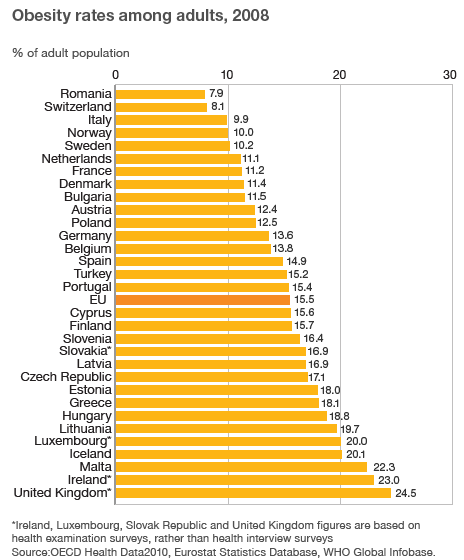
    Irish Obesity rates are now the second highest in Europe at 23 percent according to the Organisation for Economic Co-operation and Development. European obesity levels map

    2 out of 5 adults are overweight and 1 in 5 children aged between 5 and 12 are overweight or obese.Irish obesity level statistics

    “I think there is an issue with passive eating,” says Sinead Shanley a dietician from the Irish Heart Foundation. “There are studies showing after 20 minutes of sitting, there is a massive change in hormones, in your resting metabolic rate, in the calories you burn, in the fat you burn. We are sitting down for much longer, with sedentary lifestyles people are sitting down for at least eight hours a day, and this affects our bodies.”

    Obesity may not just be a matter of calories, but of appetites fuelled by the content of our food. Calorie information alone without details of fat, sugar and salt may be missing a big part of the problem. “The overriding message is we are eating too many convenience foods and whether we like it or not, they tend to be high in fat or high in sugar and/or salt,” Shanley says.”Anything that is high in energy and low in nutrition and is eaten on a regular basis makes it really, really difficult to try to control and manage your weight.”

    Stacey Machesney, from Glenville Nutrition, agrees that there are many factors contributing to the massive increase in obesity rates in Ireland. “We must look at the overall picture, the increase in fast foods, the accessibility and convenience of cheap processed foods, the increase in the variety of high sugar foods, the cost of the ‘bad’ food compared to the healthy options, taste, increase in sedentary lifestyle, the list goes on,” she says.

    While Ireland continues to lose the obesity battle, is it only governments that have a responsibility to keep up the fight? If our changed lifestyles are the main culprit for obesity, then the health sector, the food industry and the education system, among others, need to work together to ensure the problem is dealt with.

    “The onus is on the wider community and government to fund and allow charities to go in and implement initiatives and give support,” Shanley says. “It is the responsibility of society, the community and the food industry to try and regulate and make the healthier choices the easier choices. We need to support the individual making the choices.”

    People still choose foods based on factors other than health. Machesney recalls: “The Irish Universities Nutrition Alliance carried out a nutrition survey of 1,500 adults between 18 and 90 years of age in 2011 to see what adults are eating. They were given six food choice motives, including taste, cost, health and nutrition, convenience, ‘feel good’ (i.e. mood), and weight control. What do you think was the number one? Taste. Even when adults know about food health they still choose taste over health.”

    Rachael from TheCity, spoke with the managers of Joe Burger Jo’Burger on Castle Market Street and Urban Picnic Urban Picnic in George’s Street Arcade about the calorie information on menus and the effects this will have on their business.

    Calorie information in restaurants will no doubt help the public on better educating themselves on rough guidelines when eating out, and it is a step in the right direction, but, as Shanley says, “just a step”.  She says the Irish Heart Foundation would particularly like to see an emphasis on informing eaters about salt content: “Overeating and excess calories is a real problem in Irish obesity but this information doesn’t highlight the salt, so that would be a huge difficulty we would have with it. If we reduce our salt intake by half a teaspoon per day it would prevent 900 deaths per year from stroke or heart attack.”

    The IHF also recommends a traffic light system which looks at fats and the quality of fats along with calories. “We are looking at what type of fats are in the food. From our point of view the quality of fats is really important and that is missed completely.”

    Again, Machesney agrees. “I think it is never too late to make a change. As a society we are getting bigger in numbers and in waist sizes. We need to educate ourselves on what we are eating. It is great adding calorie information to menus but then let us also teach people how to read calories properly. It is not enough to count calories but we need to know what portion is being given to protein, carbohydrates and fat. If we could help people to help themselves we will have a better chance than trying to force change.”

    There is also the argument that the implementation of calorie information on the culinary industry will have grave repercussions for small businesses due to cost. The Food Safety Authority of Ireland (FSAI) have an online tool for businesses but Shanley suggests there needs to be more support.

    Shanley is, in the end, optimistic. “When calories are displayed, restaurants will make more of an effort to actually change and opt for healthier options because they are exposed,” she says. “The government have said calorie posting was one of a range of measures on obesity planning for 2015 and other measures will be revised like healthy eating guidelines a new obesity policy action plan such as the Health and Wellbeing Operational Plan 2015.”

    Looking at calories alone is not enough to ensure a healthy balanced diet but it can help people avoid meals that are extremely high in calories – which will more likely be high in fat, sugar and salt. But the focus needs to be more on overall health. The onus is on everyone from the schools to businesses and everyone in between to make the effort to provide healthy foods and to educate people on healthy eating, which in turn will lead to society making better choices with food.

    Experts’ Top 3 tips for a healthy lifestyle

    Sinead Shanley, dietician from the Irish Heart Foundation, recommends:

    • Reducing consumption of processed foods. We know now that they are generally the types of foods that are high in the unhealthier fats and also can be high in sugar and salt. Some 65 to 70% of our salt intake comes from processed foods. Freshly prepared food would be number one. That goes from breakfast to lunch boxes to dinners.
    • Keeping fats to a minimum. Keep high-quality fats in your diet, particularly polyunsaturated, which is in line with the Mediterranean style diet and the diet we advocate.
    • Prioritising fibre is key as it reduces your bad cholesterol, makes you feel fuller for longer. It is almost a negative calorie, as the body does not absorb any of the calories from fibre as it simply pushes through the body.

    Stacey Machesney from Glenville Nutrition recommends:

    • Eating the Rainbow – ensure you are eating a colourful range of fruits and vegetables.
    • Eating a little protein with every meal to help balance insulin levels and keep you fuller for longer.
    • Measuring your portion size. Many people are overeating without even knowing. The recommended meat portion is the size of a deck of cards.

    Links to more information and articles on obesity and the growing crisis in Ireland Storify Irish Obesity and Calorie Info

    By Rachael Hussey

  • A taste of the sea at Matt the Thresher

    A taste of the sea at Matt the Thresher

    By Aoife Lawless

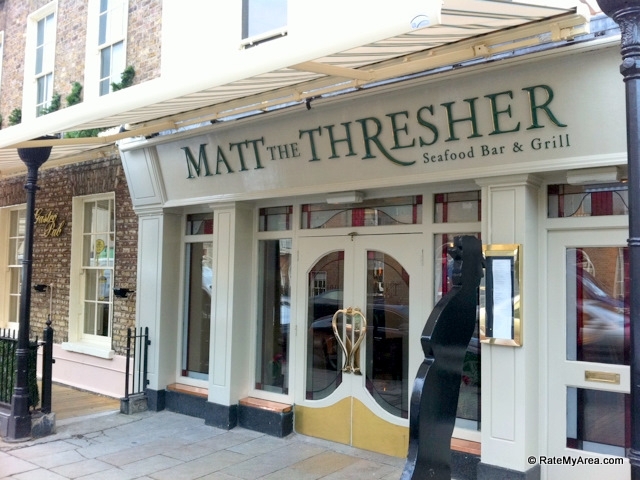
    Matt the Thresher, Pembroke street
    Matt the Thresher, Pembroke street

    Seafood lovers of the nation, stop what you’re doing and listen up! If like me, the edible bounties of the sea linger first and foremost in your ideal culinary experience then I give you; Matt the Threshers of Pembroke street, Dublin.

    I had heard of this restaurant many times and was aware that it promotes fresh fish and seafood in a fine dining and elegant arena, yet it was only recently that I had the joy of beholding its fishy wonder and wares first hand.

    Being a coastal native, I’ve grown up with an inherent respect for all the delights our ocean has to offer. As a child collecting periwinkles and crab fishing was a common pastime during summer months. The sight of crates of whelks by the pier, wafting their fresh and salty odours as they squirmed helplessly by the basin in Courtown is a vivid memory from childhood.

    This being the case, when I crave seafood I will not be sated by pathetic offerings of defrosted king prawns, frostbitten sea soldiers disguised in rich sauces.

    It is exactly for this reason that when I visit coastal areas renowned for their seafood, such as Donegal and Wexford that I become positively childlike in my excitement at the treasures proffered in their eateries. In my twelve years in Dublin my expectations for the capital to meet these expectations in the same manner has become pessimistic and positively jaded.

    It was then to my absolute delight to stumble upon the online menu for Matt the Thresher upon googling ‘top seafood in Dublin’. While hungrily ogling the menu online, my jaw dropped and quickly reset into grinning even drooling position to read of their ‘taste of the sea’ platter, an oceanic cacophony of oysters, crab arms and toes, prawns, lobster and a seasonal variety of shellfish. My mind was blown! The downside was, oh dear, the asking price of €60. Was I deterred? Was I heck! I may be a student on a budget but I have my priorities. I have been searching for the holy grail of the marine world, so who am I to look it in the face and argue over value. The ‘Phew’ moment came when my companion and I were seated and I enquired as to whether it was a sharing platter, the relieving answer was, “Yes, of course!” Happy days, €30 saved! I’ll have a glass of Sancerre to celebrate and celebratory it should be at €11.95 a glass.

    Our waitress for the evening was most intuitive. Once we learned of the sharing aspect of the platter and paused to deliberate over starters, she helpfully suggested the main course crab claws to share which, in our ravenous states we jumped upon eagerly and jokingly noted her telepathy.

    The crab toes were a wonder, not purely because of their fleshy goodness, but because of the simply rich and glorious savoury butter that dressed their de-shelled bodies. My palate recognised the usual notes of lemon, dill and chilli within the clarified butter which was a vibrant amber colour. They were served up with simply delicious homemade brown malt bread which was made to marry successfully with all seafood.

    When the platter itself was set in front of us, it was indeed a taste of the sea and nothing short of all my wildest seafood imaginings. The bountiful collection of crustaceans and molluscs were ingeniously spread over two tiers, one hot, one cold.

    The chilled bottom tier consisted of shucked oysters and little boats of baby gem leaves holding king prawns in marie rose. In the middle lay a small bowl of cold crab meat in a light dressing.

    The top tier was filled with steaming mountains of mussels and clams along with crab toes and prawns. Atop this sat huge crab arms and lobster claw and tail. The latter called for the use of the weaponry we had been armed with on ordering, a nutcrackers and a special long and thin fork-like device, used to draw the meat from beneath the stubborn shells of crustaceans. The hot molluscs were deliciously fresh and salty. We plucked them from their shells in quick succession one after another after another, breaking only to tackle the big guns; the crab and lobster.

    This slideshow requires JavaScript.

    At this point I should also mention the assortment of condiments and sauces we received with our mammoth dish, these included two flavoured butters, one of which was citrus, marie rose sauce, shallot vinegar (perfect for oysters) and Tabasco. It was after some time that we began to slow down and eventually come to a very final halt. It was with a heavy heart that I looked at the still teeming two tiered tower of uneaten shellfish. My personal mantra of ‘never leave a prawn behind’, instead of encouraging was now taunting. I was defeated.

    In retrospect, I think that not alone should this be advised as a sharing platter for two, but for three. The leftovers could have easily fed a third person amply. A doggie bag was never so necessary.

    That night I slept with one eye open half expecting a knock on the door from Greenpeace calling me to task for depleting the oceans.

    The experience overall was fantastic and I shall definitely return and probably very soon, but next time maybe to try their Dover sole or even just for a bowl of fresh mussels and that tasty brown bread. The best part of it all, guilt aside, was the bill at the end of the meal only came to €130 including various glasses of wine, the aforementioned Sancerre, Chablis and a less costly but much more palatable Viognier. Pretty good considering the excellent quality of the meal, great service and pleasant surroundings.

    Matt the Thresher, I will certainly be darkening your door again, Greenpeace and creatures of the ocean, please forgive me for I have sinned and will again..

  • Meet Ini, an abuse victim who uses her experience to empower survivors and those at risk

    By Seraphine Habimana

    Ini(not her real name) is tall and glamorous and her short afro is rugged and shaggy. She has so much energy that it is hard to imagine her standing still or asleep. She is 35 years old, though you’d never guess it. She constantly uses words like ‘forgiveness ‘, ‘change’ and ‘healing’ as she offers non-stop pronouncements on how her story would heal other many survivors.

    It was very challenging and frightening for her to accept that she had been abused, she was in denial at first. She says the shame, embarrassment, stigma and many other things weighed down on her but she said to herself that she had a choice to either remain silent and wallow in self-pity or swallow her pride, break the silence and free herself from the burden of shame and help others who are probably experiencing the same feelings.

    When I first meet Ini, she is seated in a living room decorated with African crafts and group photos of other children and women. Most photos in her house are labelled two words: love and care. But what is the story behind those labelled pictures, I ask.

    “For many who live in developing countries, and from “special cultures”, abuse in all its form is seen as a norm- a normal way to live. If this never happened to me I would not believe that it can occur in this world”.

    At 20 – Ini was forced by her husband to come abroad. “It was not my choice to come to Ireland in the first place, all the way from Nigeria. My husband told me that he wanted me to raise our child abroad and  if I did not come he would impregnate another woman”.

    The beginning

    During her final years in secondary school, Ini fell in love with a teacher. “I could speak freely with him about anything. I had made a friend who understood me I thought. Just after I graduated from secondary school, he invited me to his friend’s house and there he tried to rape me after offering me some Guinness. It was a very narrow escape for me. I was still a virgin and wanted to keep it that way”.

    She says it got her quite upset and she ended her friendship with him. “After I left home for the University, he would call my house to ask about me. Once I came home for holiday, he came as usual and said he wanted to talk. He used words which I interpreted as being him asking me out. He showed an interest in me at that time and I forgave him even though he never apologised for attempting to rape me. It was not long after that I fell in love with him. I was so young and so naïve. But I never knew that there is another dark story behind all his interests in me,” says Ini, after drying tears on her chest as I was trying to comfort her.

    She says they got married in 2000 when she was 20 years old, without the consent of her parents. “Even though he always told me he did not love me but only wanted me, I still married him because I really and truly loved him. We did not live as a couple until 2001, after our official church wedding. Just after the wedding, I discovered he had lied – he had a child from another woman. We were more than two in the marriage (story for another day)”.

    Coming to Ireland

    Ini, who was born in Nigeria, first came to Ireland in 2001 against her will. Her husband, she says, kept telling her he wanted his children to be raised abroad and kept intimidating her and told her that if she refused to travel he would then take another wife. She became resigned to her fate. “I had no idea where we were going”.

    “He told me that he wanted our child to be raised abroad. This caused a lot of tension between us because I did not want to leave Nigeria. I became sad and depressed without realising it. I was broken emotionally and mentally. I was in a lot of pain. I carried this inside without talking about it because when I tried talking I was told ‘it is normal to experience all these things in marriage’. My parents kept on telling me that I had to be brave and build my marriage”.

    She adds that at that time, she was eight months pregnant. She came to Ireland with her husband but when they arrived at the airport he left her with empty hands. He just gave me 100 euro to pay the taxi. He immediately went back to Nigeria and left me alone.


    “After paying the taxi, I was left with only 20 Euro. I did not know where to start from, I was desperate. How would I give birth and raise my child in that situation,” says Ini with a choke. At the airport I met a young lady who said to me she lived in Cork, she offered me a room”.

    After one month in Ireland, Ini gave birth. She says that her husband refused to send her money to survive in Ireland, adding he even refused to pay her fees to go back to college, and did not support the idea of her having a business as he had promised.

    Although she tries to hide her tears from me during our discussion, when she starts talking about leaving her country at a young age she bursts into tears.

    “You know when you are passionate about your country and your career? When you had set your goals and stick to achieve them and then it all falls apart suddenly? You know when you are trapped, not living your life but living to please someone who had no atom of love for you. I was brainwashed into accepting a lot of false information. Sometimes, when I wanted to be intimate with him, he would say a woman should not be asking for that. When I asked him questions, he would say I talk too much. In order to be the submissive wife he wanted, I changed to please him even though something inside me did not really accept his approach and actions toward me”.

    Despite all his mistreatment, I remained in the marriage with the hope that he will one day love me. I always wondered why he married me if he really did not love me. “After sometime, I decided to go back to Nigeria. Maybe I can save my marriage, I thought”.

    On her return to Nigeria, she discovered her husband was as much of a husband to the mother of his first child as he was to her. “I was heartbroken when I realised it. I returned to Ireland and found out that I was pregnant again. I told him and he asked me to get an abortion”.

    This was the height of anything I could accept. I was very weak from my entire ordeal and wanted no more. He threatened me and I told him I would not have an abortion and if he insists on me having an abortion, I wanted no more of him. That was the end of our marriage.

    As any aging couple would say, “Marriage is not a bed of roses.” The Ini’s marriage has never been smooth and in 2005, she went into another relationship and was abandoned with a two month pregnancy. “I was withdrawn, depressed and lonely. I had no real friends because those I thought as friends either used me, bruised me or exploited my vulnerability,” says Ini, now a mother of three.

    She says it was before 2007 when she chose to accept her experience, forgive herself and everyone else and let it go. “I have learnt to forgive and love again because I had given up on love. I had also learnt to love who I am now and this helped my inner healing. I am grateful to my children because I am still here because of them,”.

    Ini, who is now a wealthy farmer, involved in ‘Love and Care for People’,  a group which helps people, particularly children, young people and women affected by abuse.

    She is currently doing a Masters in Entrepreneurship, which she says will enable her to build a business empire.