Author: The City’s Newshound

  • Still living under your parent’s roof at 30? Get a life

    Are you still mama’s boy at 30? Your mum drags you out of bed to have breakfast, asks you what you will have for lunch or dinner and even reminds you to make your bed.

    What are you playing at? Wake up at your mum’s breakfast and get a life: you can’t really grow up until you leave home.

    Your parents will always be your parents; they will rarely be in a rush to see you leave as they might need you near them for some reason, but by all means you need to prove your independence.

    National statistics released last year showed that British society is undergoing a significant shift, as one in four young adults now live with their parents. Those aged 20 to 34 are now more likely to be sharing a home with their parents than any time since 1996. Men are far more likely than women to be living with their parents.

    https://www.google.com/fusiontables/embedviz?viz=GVIZ&t=TABLE&q=select+col0%2C+col1%2C+col2%2C+col3%2C+col4%2C+col5+from+1ZEGwlaj1Mpg-U-UdSXRXuV2BzOxjgL3hbNDyADdJ&containerId=googft-gviz-canvas

    In Ireland, more than four in ten people aged 18 to 29 live with their parents, according to a new European study.

    Lack of employment opportunities often causes many young people to not go anywhere, or to move back home even when they graduate – at the time they should be becoming fully independent.

    Least likely in London

    The number of young adults living with their parents drops considerably to 1 in 5 while in Northern Ireland which is more than 1 in 3, above the national average.

    In 2013, the study revealed that Northern Ireland had the highest percentage of young adults living with their parents with 36 per cent while London’s figures were the lowest with 22 per cent as you can look at the record levels below.

    https://spritesapp.com/view/embed/26463

    Case study

    “It is not a matter of getting married or not. Living on your own as a man teaches you to be more responsible,” says Bob Murphy, a 59-year-old retired army officer, says he left his parents when he was 18 to make his own life.

    “It teaches you lessons that you would not learn from home. It helps open your eyes and earn living. You learn financial discipline, self-regulation and taking care of yourself,” he says.

    Bob argues that a 30-year-old who still lives with parents is like someone who rides a bus and, when the bus gets to his stop, refuses to get off. Or a visitor who has overstayed their welcome. “Yet you can’t leave that person out of the door or tell that person that time is up! As parents, we will never throw them out, but we expect to see them setting out their own stall and finding their way of living.”

    Elsewhere in the world people are more likely to move on. Renatus Mushi, 33, a lecturer at the Institute of Finance Management in Tanzania, argues that it is not good to stay with parents too long – most of his friends at that age have already got married and have kids.

    “I got married when I was 28 years old. Now I have a six year-old kid. Most of my colleagues have gone on the same path.

    “Some of them prefer to rent a single room staying with their colleagues, but once they get good financial positions they shift to good houses where they can get married: that is the most common situation in Tanzania.”

    Renatus says in Tanzania, more than 70 per cent of people grow up in villages. In many cases around age 20 to 22 they move out from their parents’ home for college, and after that they run to towns to look for jobs and start their own lives.

    “Most people in their twenties in my country, they are out of their families, even though there are some people who have genuine reasons for taking this dreaded decision to move back. After they graduate, they may come back to stay with their parents for one month, then they shift.”

    Renatus adds that in his country a “mama’s boy” is always the butt of jokes when the boys are out for drinks.

    “What is mum making us for dinner today?” “My son, I washed and ironed your clothes!” “Your mother will vet all your girlfriends or chase them out!” “Your father asks you what time you are coming home?” Such are the questions anyone in the unfortunate position of living with his parents will have to grapple with whenever he is out with friends in Dar es salaam.

    Roisin Crowe, 21, a fourth-year college, student says she would have problems dating a guy who at 30 still lives with his parents. “Living by yourself is totally prized. I bet that a grown man who still lives with his parent would be an alarm bell. If a guy like that wants a date, you run as fast as you can,,” says Roisin, laughing.

    But this is not only about Bob, Renatus and Roisin. What about the people whose pictures we use as screen savers or wallpapers on our computers, phones or tablets? Where were they at the age 30?

    Nelson Mandela, before he turned 30, he had married his first wife Evelyn, had two children, became the first national Secretary of the ANC youth league and was a force to be reckoned with in anti-colonial politics.

    Fidel Castro, celebrated revolutionary who many regard as one of the few who boldly showed the American government the middle finger and got away with it, turned 30 in 1956. By then he already had a wife, had opened a law firm, led a revolution and unsuccessfully run for congress.

    At 30, Steve Jobs, the one who changed how we view gadgets, had cofounded the world’s renowned brand Apple, featured on the front page of Time magazine and became a global celebrity.

    Facebook founder and the social network genius, the young tech tycoon Mark Elliot Zuckerberg, is now 30 years old. He got married at 28, but before getting married  he used to rent a month-to-month apartment in California. He didn’t live with his parents.


    Seraphine Habimana

  • Will the same-sex marriage ruin everyone’s life and put Ireland into chaos?

    No. No it won’t. Your life will be pretty much be the same as it was before, except that you will be able to marry whoever you love, without worrying about what is between his or her legs. And that’s great.

    A referendum to chose between equality and inequality.

    Ireland will hold a referendum on May 22nd. Voters will decide if the Constitution should be modified in order to grant access to civil marriage for same-sex couples.

    Marriage may be contracted in accordance with law by two persons without distinction as to their sex.”

    This small modification to Article 41 is very important as same-sex couples will finally have access to the same protection that the Constitution gives to families composed of heterosexual couples. Everyone should be able to marry the person he or she loves. It is all about equality. 

    https://twitter.com/Mrs_OC/status/587889244284289024

    Encouraging, but yet tricky polls.

    Ipsos MRBI did a survey for The Irish Times, in order to figure out the voters’ intentions. Even if the results seem very encouraging – estimating 74% of the voters will choose YES whereas only 26% will choose NO – the survey only included voters who were sure about their decision. In other words, undecided voters were left aside. Nothing is done yet: organisations still have to fight for equality. 

    The way to same-sex marriage is never simple.

     In Europe, only twelve countries have voted for same-sex marriage. (Click on the map to see the date when it came or will come into effect.)


    Click On The Map To See More

    In France, for instance, the question of same-sex marriage resulted in several demonstrations from both sides of the cause. But frankly, nothing changed for the lives of the ‘Pro No’ campaign, because the law does not force you to marry someone from the same-sex. It just enables you to do so. People are just afraid of change, unreasonably afraid of change.

    The case of France.

    Same-sex marriage was one of François Hollande’s promises during his presidential campaign in 2012. A law was then presented to the members of the government on November 7th, 2012. On May 17th, 2013, the law was voted and finally applied the next day. The first same-sex marriage took place on May 29th, making Vincent Autin and Bruno Boileau France’s first same-sex married couple.

    I was in Paris when all the talks and demonstrations were going on about same-sex marriage. Demonstrations were made by both sides, and organised as if they were answering to each other’s. When the pros did one, you could be sure that the contras would organise a demonstration a week or two later, and vice-versa.


    Marriage Pour Tous, Photo by Pierre-Selim on Flickr
    Marriage Pour Tous, Photo by Pierre-Selim on Flickr

    I remember being in the pro same-sex marriage demonstration. It was a very colourful crowd, people were waving rainbow flags, dancing, singing and holding funny signs to express their point of view. The crowd was composed of various types of people, young and old, male and female, homosexual and heterosexual, from all ethnicities and religions. Those people were supporting and fighting for equality.

    The only thing  I remember about the other side is seeing families in the subway, with their flags saying “La Manif’ Pour Tous” ; which can be translated as “The demonstration for all”. Their colour code was blue and pink. I guess that blue was supposed to represent the idea of masculinity and that the pink was supposed to represent that of femininity. Sweet clichés.


    One of their arguments was that a family had to be composed of a mother and father, and that legalising same-sex marriage and adoption might cause great damage to kids. Those kinds of arguments were used by a man who decided to put children in front of the riot police so that they would not push them, during one of the demonstration.

    Those kinds of incidents shocked me, but I was even more shocked that those people were basically protesting against more rights for the community. In my opinion, protests should be used if individuals need their rights to be considered – not in order to prevent part of the population from finally having access to equal rights.

    Defné Cetin

  • Opinion: Chelsea deserve more credit for their success

    Opinion: Chelsea deserve more credit for their success

    Chelsea_2_Spurs_0_Capital_One_Cup_winners_2015_(16692085921)By Donal Lucey

    The reaction to Chelsea’s 1-0 win over Manchester United on Sunday was puzzling to say the least. The backlash began before the final whistle had even sounded, with United and ‘neutral’ fans taking to social media to voice their outrage at the manner of Chelsea’s victory.

    While their tactics mightn’t have been pretty, they were extremely effective and helped stretch their lead at the top of the table to 10 points. But somehow, in the midst of all the discussion online, a debate was provoked. People actually began questioning whether this Chelsea side were worthy of the title. Comparisons were being made with the truly awful side that won Alex Ferguson his last league title.

    These people seem to have forgotten that there is more than one way to play football. Would they have Mourinho try to emulate Barcelona’s attacking style, putting entertainment ahead of success in the process? You may not like the way Chelsea are seeing out the season but they should be given the credit they deserve. Looking ahead to today’s big clash with Arsenal, let’s take a closer look at what has made Chelsea successful this season.

    Tactics

    Sunday’s win was every bit the tactical masterclass we were expecting from Mourinho, and don’t let anyone tell you otherwise. It was no surprise to see Kurt Zouma’s name on the teamsheet, with the defender widely tipped to be used to nullify Marouane Fellaini’s attacking threat and he did so very effectively. Fellaini couldn’t move without Zouma tracking, and indeed, challenging him for every ball. If Fellaini attempted to drift out wide, a Chelsea defender would then get to tight to Fellaini with Zouma often acting as cover for them. This allowed Chelsea to keep their shape throughout the game.

    http://gfycat.com/LonelyScientificGoldenretriever

    After the game Mourinho was quick to champion the efforts of Cezar Azpilicueta, who he said was the best player on the pitch. It’s true that he did a very impressive job of shutting Mata out of the game but it seems that other players roles in the victory were overlooked by some pundits. Many people after the game were left scratching their heads at how Manchester United were able to have 70 per cent of possession but only manage two shots.

    Pressure

    It wasn’t just a case of Chelsea “parking the bus”, they stopped the threat at the source. Wayne Rooney and Fellaini were deployed by Louis Van Gaal as the forward players in a midfield three, with Ander Herrera sitting deep. Herrera was meant to play that quarterback role, receiving the ball in deep areas and picking out passes to get them moving forward. To counter this, Mourinho had Didier Drogba and Cesc Fabregas diligently try to block Herrera off from his defenders. This forced Herrera to go out wide and into other areas to try and receive the ball. It did allow McNair and Smalling to venture into midfield often but neither are renowned for their passing prowess.

    It was Chelsea that looked the more dangerous team. Every time they launched a counter-attack, Fabregas, Oscar and Hazard threatened the United defense with their speed and link up play.

    Source: Imgur

    Mourinho made sure of the game as early as the 67th minute when he brought on Ramires for Oscar. Whereas Oscar had left Ivanovic exposed at times during the first half, Ramires was able to keep Luke Shaw from having the same impact as he’d had on the first half.

    It was another example of a well-drilled Chelsea side following their game-plan to perfection. How you could even consider Chelsea as being a weak champion is beyond me when they probably have one of the greatest quartet of defenders in recent memory. But I don’t believe you could even call it a safe performance. Mourinho took a calculated risk putting Zouma in that team. If United had scored first, he would have been left with the wrong players out on the field and an uphill battle looking at the attacking options on his bench.

    But Mourinho’s team don’t play this defensive brand of football against all teams. At the beginning of the season, Fabregas and Costa were winning rave reviews for their attacking displays. This has been disrupted since Christmas by injuries and suspensions but Costa has still managed 19 goals, with Fabregas chipping in 3 goals and 16 assists. That’s before we even consider the player that should win the Premier League Player of the Year, Eden Hazard. Hazard has scored 13 goals and eight assists but the crucial statistic is that his 13 goals has also gained Chelsea 14 points. Their attacking abilities are there for all to see. Unfortunately for Chelsea, Costa has only been able to start 24 games and a now 37-year-old Drogba doesn’t offer the same focal point in attack.

    Big-game mentality

    If there is any doubt remaining that Chelsea are not only worthy of the title, or are not a great side, let’s put them to bed now. No team has scored more goals per game than Chelsea, no team has converted a higher percentage of its chances than Chelsea and no team in the top six has conceded less goals than Chelsea. They are set to break the record in terms of days spent at the top of the table, which was previously held by Manchester United from 1993/94.

    I’m not a Chelsea fan but I respect how they are able to get results in big games time and time again, and you should do. Their results against the top five this season read: W3, D3, L0.  Results against the same sides last season are: W6, D2, L0. Are these the statistics of a side that isn’t worthy the Premier League title?

    This has been a season where a lot of fans have been disappointed in their teams performances. It has been easy to criticise English teams, especially given their performances in Europe. It seems watching the likes of Chelsea and Manchester City go down to teams that play a more attacking brand of football has caused a reaction from some fans but that doesn’t cheapen Chelsea’s fourth Premier League title.

    They may not always play the brand of football we would like but they have been by far the best team in the league this season and deserve credit for it.

    Do you think Chelsea deserve their criticism?

  • Dublin’s Very Own Art House Cinema

    Dublin’s Very Own Art House Cinema

    ‘We do everything from highbrow arts screenings to very lowbrow cult screenings and everything in between. It is a beautiful and comfortable cultural space filled with like-minded film lovers.’

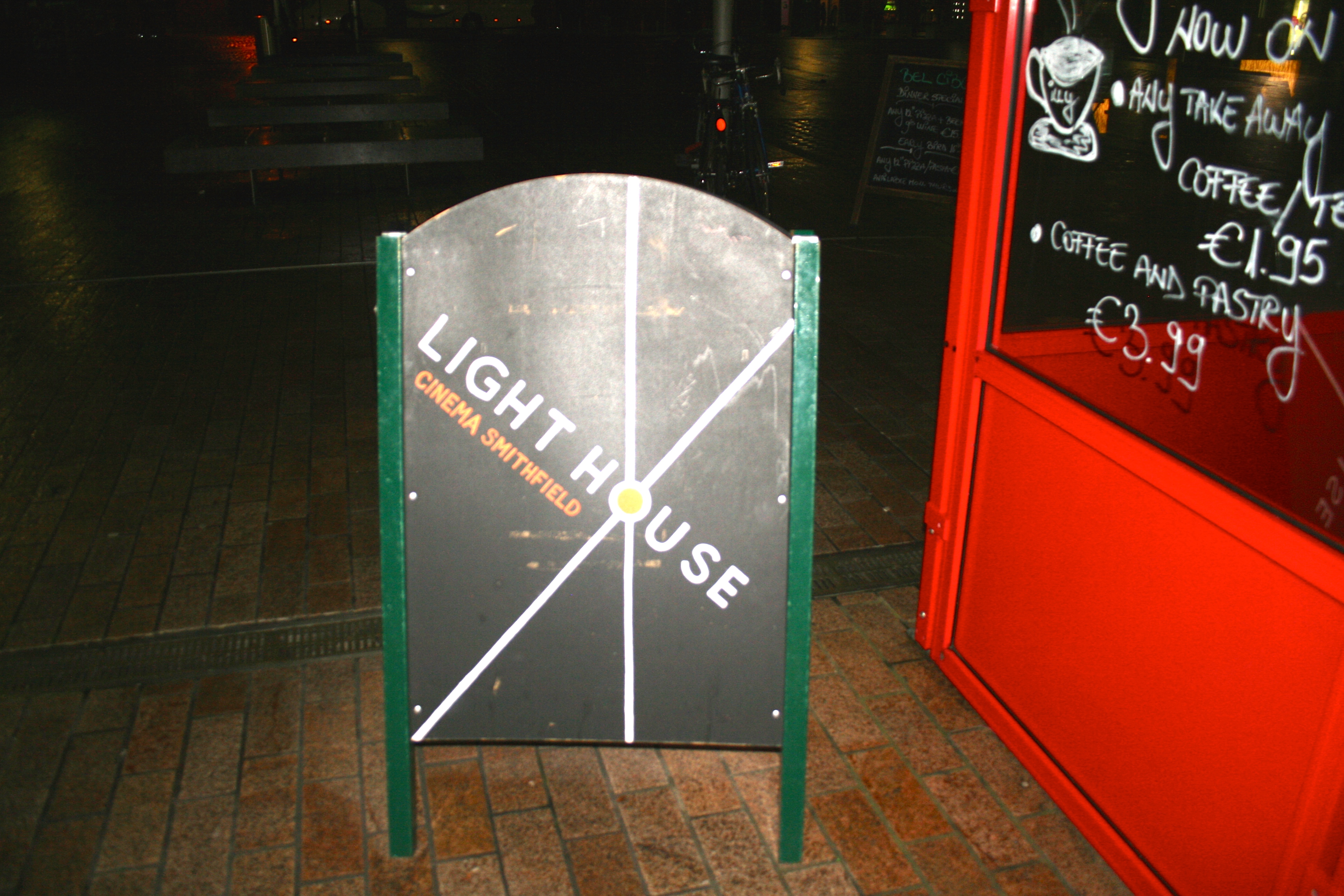
    Outdoor sign for Light House Cinema, Smithfield. Photo by Rachael Hussey
    Outdoor sign for Light House Cinema, Smithfield. Photo by Rachael Hussey

    Located in Smithfield, the Light House Cinema is an extraordinary space offering a special viewing experience. Whether you are a fan of Indie films and documentaries or you just want a new encounter, away from the generic, offerings of the ‘omniplexes’ scattered across the Dublin streets, this cinema is for you!

     Set up in 1988, originally this cinema was based in the city centre on Middle Abbey Street until 1996. In 2008 the cinema was re-established in Smithfield with the help of State funding for the area. It is based in the Market Square development, surrounded by office buildings, residents, cafes and shops.

     With four screens and a capacity of 614 seats this cinema offers an intimate and unusual experience. The building itself has an aura of a sizeable art gallery with stylish architecture and a minimalist interior design. The contemporary feel is developed further in its attention to detail such as lightings, the café, wine bar and table tennis set up. The whole atmosphere of the place encourages you to sit back and relax, take some time for yourself and expand your horizons. If cinema is a form of escapism, encouraging viewers to enter a different world for a few hours, then the surroundings at the Light House elevate this escape to the level of art.

    Classic Film Posters in Light House Cinema, Smithfield. Photo by Rachael Hussey
    Classic Film Posters in Light House Cinema, Smithfield. Photo by Rachael Hussey

     Apart from its relaxing atmosphere and interesting location, the film choices for the cinema only add to its charm. With a mixture of small, independent films and a few Hollywood movies, the cinema manages to cater to a wide audience. If there is an exciting new Irish film or a thought-provoking documentary, it is likely you can find it at the Light House. Paired with a slice of decadent chocolate biscuit cake and a glass of red, who can resist?

     The cinema is similar to the Irish Film Institute in the city centre where art house cinema is mixed with a cafe and film clubs. This approach, where love of film is paired with arts and culture and interactive participation through loyalty cards and membership is something that is appreciated by film buffs. The IFI has a two-tiered membership card from €25 (€15 concession price) to €99 http://www.ifi.ie/home/membership/ while the Light House offer a three-tier system including a free membership, a €25 membership and a €100 membership. http://www.lighthousecinema.ie/membership.php?PHPSESSID=k57kromja1j7dfathvav97k2v1

    Sign for Light House Cafe, Smithfield. Photo by Rachael Hussey
    Sign for Light House Cafe, Smithfield. Photo by Rachael Hussey

     Price wise the Light House fares competitively with bigger cinemas where the focus is on blockbusters and Hollywood movies. For an evening adult ticket in the Light House it is €9, while the Savoy Dublin charges €8.50 and Movies at Dundrum charge €10.20. For students an evening ticket will set you back €7.50 in the Light House and respectively it is €7 at the Savoy Dublin and €8 for Movies at Dundrum.

    http://www.movies-at.ie/index.php?__site=M-DUNDRUM

    http://www.imccinemas.ie/home.asp?venue=savoy

    http://www.lighthousecinema.ie/index.php

     As many cinema lovers know, the level of comfort while watching a great film is paramount to your experience (along with great snacks). The Light House seats are extremely comfortable and are en par with Movies at Dundrum which is definitely a good thing as both are large and cushy.

     Images from the Light House Cinema 

    This slideshow requires JavaScript.

    I spoke with the Light House Cinema’s programmer Charlene Lydon to get her take on what makes the cinema special and how they run their cinema compared with the competition.

    What do you think draws viewers to the Light House cinema versus the regular ‘run of the mill’ cinemas around Dublin

    C. I think the diversity of the programme that we offer is one of the main attractions to Light House. We do everything from highbrow arts screenings to very lowbrow cult screenings and everything in between. Also the fact that it is a beautiful and comfortable cultural space filled with like-minded film lovers. We aim to ensure that our customers feel at home and comfortable here. We also have a bar which serves wine and craft beer that you can take with you into the screening. That usually sits very well with people.

     Between Hollywood Babylon and The Cinema Book Club and art exhibitions, the Light House cinema provides a niche service to the customers. Does this encourage the build up of repeat and loyal customers, building a relationship with the patrons?

    C. I believe that Light House can be everything to everyone. We reach out to all kinds of audiences and hopefully the focus that we have on niche films and groups makes the space feel like “theirs” when they come here. Our book club and various cult film nights create great memories for people and I absolutely think (hope!) that creates a very special relationship between the cinema and its audience.

    Can you elaborate on the services: Cinema Book Club and Hollywood Babylon and what this provides to customers?

    C. Cinema Book Club is both a cultural and a social initiative. We started it about two and a half years ago with the idea of making our space a social space, but also as a way of including some film-themed discourse in a very informal way. We encourage people to read a specific book each month, then we show the big-screen version and have a post-screening chat in the bar afterwards. We have a great group and the discussions are always very lively!

    Hollywood Babylon is actually programmed separately to our regular programme. The club does regular monthly screenings of cult films, preceded by “Trailer Trash” which is a playlist of fun, silly, crazy videos so it gets the audience warmed up before the film begins. Always a bit raucous and always very fun!

    Is it a priority of the Light House to include these alternative experiences along with just screening films?

    C. Definitely! As the programmer of the cinema, I feel that it is really important to satisfy all the various crazy desires of the Dublin cinema-goer which includes the acclaimed films that are released each week, but also classic films, cult films, films that scare you, films that make you dance (of course, dancing is always encouraged, where appropriate) and we even do morning screening at half-volume for parents with babies to attend so they can keep up with the best new films. We also, on very special occasions, throw themed party nights, such as our Lebowski party and our Wes Anderson party and a The Shining-themed Halloween party! It all adds to the individual experience.

    As your cinema screens many art house films, documentaries and small indie films, does this put added pressure financially as they are not as lucrative as big Hollywood blockbusters?

    C. It certainly means that we have to work harder to promote the films we show. Many of them don’t have big marketing budgets so you won’t see posters on the sides of buses. However, our audience is made up of discerning film lovers who tend to keep their fingers on the pulse so we find that they do their research. We also bolster the programme with one-off event screenings, live arts screenings and film retrospectives.

    A lot of people enjoy the differences provided even food wise, the addition of coffees, fresh cakes and wine is very popular. Why do you think this is?

    C. The audience that comes here tends to enjoy the fact that we feel very different to the multiplexes. While we do serve the traditional popcorn (of course!) we also offer a selection of lovely cakes and coffees and a great selection of fine wines and craft beers at the bar so you feel that little bit fancier on your night out. AND we have a ping-pong table and board games in our bar for our customers to enjoy.

    Are there any plans for the future to further develop the cinema?

    C. No plans as yet but we always have something up our sleeve!

    I highly recommend you check out the Light House if you have yet to visit this fascinating spot. Take the time to enjoy the experience, whether you go for a coffee before hand, have a glass of wine after the movie or just stopping for a game of ping pong and a stroll through the building, looking at the old movie posters.

     While the location may be slightly off the beaten track for some, with car park access available and the red-line Luas a stones throw from Market Square, no Dubliner has an excuse to avoid this cinema!

     For the latest film showings at The light House see programme below:

    http://lighthouse.admit-one.eu/index.php?s=LHSMITHF&PHPSESSID=rr3sghtfl23nmmuc6s0me3ht42

     By: Rachael Hussey

  • How Catherine fell in love with crocheting


    How Catherine fell in love with crocheting

    P1200504
    Sitting in front of her house in Arklow,  Wicklow county Caterine’s style is is uniquely Tanzanian. Photo by Seraphine Habimana


    Catherine Murphy says she learnt to crochet at a very young age, when she was in primary school.

    “It was something that girls would like to do in our village, we used to crochet a piece of tablecloth and bring it to our class teacher at the end of the term exams as part of Art and get marks for it. I really enjoyed that and I felt good about that.

    When she moved to Ireland from Tanzania in 2006, Catherine says she started involving herself in women’s groups where they did different crafts like knitting, crocheting, mosaics etc.  “So I fell in love with crocheting all over again.

    “Back then when I was a child, I was only inspired by women who crocheted table covers and furniture throws as a business. But now my inspiration comes from seeing people in cold regions wearing knitwear in a high fashion kind of way – it’s really cool.”

    Since she moved to Ireland, Catherine says she has made lots of woollen hats and scarfs and sold them. Her craft prices range from €10 to €20.

    “I do not want to be too greedy, I sometimes only charge less than €10 per hat and I am happy about that.”

    She began by making crocheted hats but Catherine is now making ‘tops’ with sarong or Kitenge (an East African fabric, often worn by women and wrapped around the chest or waist, or over the head as a headscarf).

    “I recently made a top! This would be the biggest piece I have ever made; I usually like making small things for quick results,” says Murphy with a smile.

    “I always try to find unique ways to crocheting and make it stand out a bit, so while I was exploring my talents, I got this idea of mixing African fabric and crochet. I made a hat and it turned out really well that I was blown away myself. Then I got people interested in it and placed their orders too.”

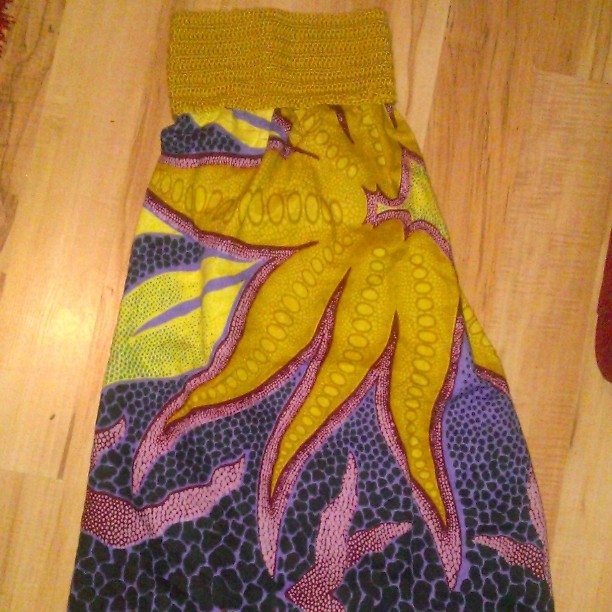
    Catherine1
    The first top Catherine made. Photo by Seraphine Habimana


    Why crochet?

    “When I moved to Ireland, I did not realize that I would find a chance to do that again but when I saw some other women crocheted I decided to keep it up.

    “I told myself why can’t I bring Tanzanian crocheting here to Ireland? On top of that I find crocheting comforting to me, especially in winter seasons where there is not much to do. So I would be very into crocheting while watching telly. So I crochet to keep myself occupied and also as a hobby.  Apart from crochet, I also love and to make bracelets and earrings and designing an outfit. This business is helping me to put food on the table and pay bills: I am loving and enjoying it,” says Catherine, a mother of two.

    Although Catherine showcases her products mainly in Ireland, her products are exported to other countries of Africa and Europe. “The work I am doing blends modern lifestyles with an African touch that is uniquely Tanzanian. It’s a simple way of expressing our culture and creative textile abroad and I like to mix it with Irish culture: it is a good move!”

    Cathrine
    One of the clients wearing a hat made by Catherine. Photo by Seraphine Habimana


    Challenges

    Catherine says the main challenges she faces is to find African fabric materials to provide a wide variety to customers, adding she had to order to all these materials all the way from Tanzania.

    “To import the African fabric materials from Tanzania to Ireland is too expensive. Sometimes they can be delayed or go missing.”

    The talented designer says she is planning to go to college this year, which she says might help to improve her business in the future.

    cath
    Catherine wearing one of the hats, she made recently.


    By Seraphine Habimana.


  • The legalities of watching someone die

    The legalities of watching someone die

    There is a forum thread on the site Reddit called Watch People Die. Although the nature of this thread seems self-explanatory, many questions remain on the ethical and legal side of sites such as these.

    The forum in itself comprises of various videos uploaded by users of people’s deaths. It is assumed that these are real videos. Some are shot by mobiles, CCTV or even official footage. Most are graphic and gruesome in nature.

    reddit

    There is a section where you can search for certain types of videos, clearly laid out for your viewing pleasure.

    reddit 2

    What is perhaps more harrowing are the strict guidelines and rules for video submissions. The first rule is that ‘there must be a person – not an animal – actually dying in the link.’ The moderators can and will remove posts which do not fit their guidelines.

    reddit 3

    What are the current implications for viewers in Ireland?

    “European directives and regulations transposed into Irish law require that Internet access services are provided without any monitoring of what people are accessing by ISPs,” says Paul Durrant, chief executive of the Internet Service Providers Association of Ireland. ”This also applies to state authorities, who require a valid court order or warrant relating to specific subscriber connections to access user records or system logs.”

    So content such as this forum are not currently illegal. Should it be?

    “There are only two types of content where the content is, in itself, illegal, and users should not deliberately engage with or try to find such material online,” Durrant explains. “These are child pornography, which is illegal to knowingly obtain and possess, and incitement to hatred, which is only illegal to publish or distribute.”

    Legality aside, then, what exactly are the intentions of a forum such as this, and more importantly the purposes of those who view the content? While it is in human nature to be curious, some requests for certain videos posted by users often leave a sense of bewilderment: Why on earth would someone, for example, request a video containing flaying?

    One wonders whether there is an extreme sexual fetish at play with some users. Considering that some videos feature children it then brings us to the question of whether this forum at times crosses the line into an extreme version of child pornography.

    Niall Colgan from Hotline.ie, a site where users can report illegal material on the internet, explains, unsurprisingly, that the net ‘is extremely difficult to regulate’. As technology advances, this difficulty multiplies.

    What is left is then the idea of our rights to expression, and freedom to search whatever we feel fitting on the internet. The reddit site is a well-known one, but the forum might not be. There is a warning before you enter the forum asking if you are over eighteen years old, explicitly stating that it has ‘adult content’.

    Should sites like these stay untouched or should we be actively trying to take them down?

    – Natasha Reis

  • How social media has changed our daily life


    Although people certainly still meet others at social venues like clubs and parties, it is safe to say that tools like Facebook and Twitter have profoundly changed most people’s lives and how they interact with each other and the world around them.

    Social media have forever changed the way society works, for instance the way people share ideas, the communication of news or how we express an opinion.

    They also have benefits for business owners, as it allows them to reach out to their customers and get the attention of more people at lower cost and with more targetting than traditional advertising. For media companies and journalists, there are no longer overnight trips, nor will they need to communicate by phone or meet people in person, as social media provide more means to get in touch with sources.

    In social media you just choose the people and groups that you want to follow on Twitter, Facebook, or other social networks.  In doing this, you know who is recommending the news, and can easily communicate with that person about it. But that is not all.

    Adrianna Murto is a Spanish student who is currently studying in Ireland. She says she uses Facebook to be in touch with her family and friends in Spain.

    “For me, Facebook is really good and helpful. It is hard to imagine growing up without social media. All my family is on Facebook, so I am studying here in Ireland we communicate with each other every day, and we get to know each other’s news, rather than using phone calls, which are quite expensive.”

    Adrianna adds that for students, social media make life easier.

    “It really helps us as students, we have a Facebook page where we share all class information about exams, subjects, homework and among others.”

    On top of all that, social media has been the source from which many people around the world get their news.

    For many people, before they check Yahoo or Google news or an online newspaper site in the morning, they first look at the stories their friends and people they follow are sharing via Twitter or Facebook.

    They are also quicker and easier ways to reach an audience rather than using press releases: you can just do a Facebook post with some images and it reaches an audience quicker.

    “Facebook makes my work easier as I work for an environmental organisation and we do quite lots of press releases — we can reach an audience directly without needing to go via journalist, newspapers or magazines” says Jack Jackson, an environmental lawyer. “We can put up regular posts on Facebook and they can be shared and liked by lots of people. We can reach more than 10,000 people with decent posts.”

    Jackson says he uses Facebook even more for personal reasons: keeping in touch with friends and family, and that Twitter is a work tool. “With Twitter I can keep in touch with lots of issues that are happening around the world and keep updated in terms of news and development in the area I work in.”

    Even if social media make life easier, you need to think twice before posting anything online.

    Andrew Jackson, the National Anti-Bullying Coordinator says social media is good for everyone’s daily life, but beware of oversharing: “You need to think twice about everything you put online because it will never get deleted, it gets shared or retweeted. So only put online what you would not mind your grandchild seeing in the future. Do not share online images or posts you will in the future be embarrassed about.”

    Parents are often the worst culprits, Andrew adds. “Today we see children who cannot walk or talk but they have massive digital images shared by their parents. Before sharing their photos, parents should think about what type of information their children want to see about themselves online at a later date.”

    Sharing children’s information online, Andrew says,  can put a child at risk in the present and in the future.

    A recent US study found that 63 per cent of mothers use Facebook; of these, 97 per cent said they post pictures of their children; 89 per cent post status updates about them, and 46 per cent post videos.

    Social media, for all the positive things they bring, still need to be handled with care.

    By Seraphine Habimana


  • How Catherine fell in love with crocheting

    How Catherine fell in love with crocheting


    P1200504

                                                                                        Sitting in front of her house in Arklow in Wicklow county, Catherine’s style is uniquely Tanzanianl. Photo by Seraphine Habimana.


    Catherine Murphy says she learnt to crochet at a very young age, when she was in primary school.

    “It was something that girls would like to do in our village, we used to crochet a piece of tablecloth and bring it to our class teacher at the end of the term exams as part of Art and get marks for it. I really enjoyed that and I felt good about that.

    When she moved to Ireland from Tanzania in 2006, Catherine says she started involving herself in women’s groups where they did different crafts like knitting, crocheting, mosaics etc.  “So I fell in love with crocheting all over again.

    “Back then when I was a child, I was only inspired by women who crocheted table covers and furniture throws as a business. But now my inspiration comes from seeing people in cold regions wearing knitwear in a high fashion kind of way – it’s really cool.”

    Since she moved to Ireland, Catherine says she has made lots of woollen hats and scarfs and sold them. Her craft prices range from €10 to €20.

    “I do not want to be too greedy, I sometimes only charge less than €10 per hat and I am happy about that.”

    She began by making crocheted hats but Catherine is now making ‘tops’ with sarong or Kitenge (an East African fabric, often worn by women and wrapped around the chest or waist, or over the head as a headscarf).

    “I recently made a top! This would be the biggest piece I have ever made; I usually like making small things for quick results,” says Murphy with a smile.

    “I always try to find unique ways to crocheting and make it stand out a bit, so while I was exploring my talents, I got this idea of mixing African fabric and crochet. I made a hat and it turned out really well that I was blown away myself. Then I got people interested in it and placed their orders too.”

    Catherine1
    The first top, Catherine made recently. Photo by Seraphine Habimana


    Why crochet?

    “When I moved to Ireland, I did not realize that I would find a chance to do that again but when I saw some other women crocheted I decided to keep it up.

    “I told myself why can’t I bring Tanzanian crocheting here to Ireland? On top of that I find crocheting comforting to me, especially in winter seasons where there is not much to do. So I would be very into crocheting while watching telly. So I crochet to keep myself occupied and also as a hobby.  Apart from crochet, I also love and to make bracelets and earrings and designing an outfit. This business is helping me to put food on the table and pay bills: I am loving and enjoying it,” says Catherine, a mother of two.

    Although Catherine showcases her products mainly in Ireland, her products are exported to other countries of Africa and Europe. “The work I am doing blends modern lifestyles with an African touch that is uniquely Tanzanian. It’s a simple way of expressing our culture and creative textile abroad and I like to mix it with Irish culture: it is a good move!”

    Cathrine
    One of her clients wearing a hat made by Catherine.


    Challenges

    Catherine says the main challenges she faces is to find African fabric materials to provide a wide variety to customers, adding she had to order to all these materials all the way from Tanzania.

    “To import the African fabric materials from Tanzania to Ireland is too expensive. Sometimes they can be delayed or go missing.”

    The talented designer says she is planning to go to college this year, which she says might help to improve her business in the future.

    cath

    Catherine wearing her hat made from Kitenge. Photo by Seraphine Habimana.


    By Seraphine Habimana

  • The Fantastic Story Of Studio Aardman

    The Fantastic Story Of Studio Aardman

    What is studio Aardman, you might ask. Aardman is a studio which is responsible for a whole lot of very creative animated movies. Ever heard of Chicken Run, Wallace and Gromit, or more recently, Shaun The Sheep? Well, all those movies were made by Aardman’s studio.


    How it all started


    Studio Aardman’s story started in 1966, when Peter Lord and David Sproxton were 12 years old. Those two kids, who were truly passionate about cartoons, decided to create their own little animated cartoon. David’s father, who was working as a producer at the BBC, lent them a roll film and a camera and that was the beginning of it all.


    They experienced several techniques and met Patrick Dowling, who was producing a kid’s TV show on BBC 1. He became interested in one of their cartoon about a super-hero called … Aardman. Dawlin decided to buy it for fifteen pounds, David and Peter opened their first bank account at the name of Aardman Animations.


    On the Road to Success


    In 1976, Peter and David got their first proper studio in Bristol. From then on, they never stopped creating animated videos and movies. They started with Morph, a small character able to change its shape.


    They began to do some commissioned works to earn a bit of money, in order to be able to experiment more and more. Peter and David worked in the advertising sector as well as for musicians, creating their video clips.


    In 1990, they created Creature Comforts with Nick Park. That’s when Studio Aardman won its first Oscar. Creature Comfort is a movie in which animals in a zoo are talking about the problems that they encounter.


    The successful work with Park has continued for more than two decades now: Wallace and Gromit (1991), Chicken Run (2000), Wallace & Gromit and the Curse of the Were-Rabbit (2005) and Shaun the Sheep (2015), just to name a few.


    A distinct way to create animated movies


    Studio Aardman uses claymation. All their characters are made out of clay, and they use stop-motion in order to bring them to life. It can take an entire day to create a one-second movement.


    The character is a solid object. The artists behind this clay-modelling process came out with the idea that it would be way easier to create puppets. They managed to put some mechanical parts under the clay so that it will be easier to make them move.


    Where to see some of their works?


    Their innovative works can be seen in Paris until August 30th at Art Ludique, Le Musée. This rather small museum is located along the Seine, in between a design & fashion school and a trendy nightclub.


    As soon as you get in the museum, a big statue of Shaun the Sheep welcomes you. Rooms are filled with the drawings used to create the characters, clay characters, weird inventions and original sets, taken from the movies.


    On the amazingly detailed drawings, you will be able to read notes, and some of them are rather funny. It is very amusing to see all the details on every single thing that is shown in this exhibition. Several annotations are made around the characters, such as “red bow tie”or “should look less ‘lady of the night’”.


    If you plan to visit the museum, you have to pay attention to all the details. Even on a big boat that is placed in the middle of a room. The embarkation is more than two meters high, but a very special attention is given to tiny details.


    This exhibition will amuse kids as well as adults. During the visit, children are going to be attracted by all the original sets, which are indeed very colourful and beautiful as well as by the short movies that are projected. Parents are going to become kids again, or will enjoy seeing the technical part of such creations.


    It is indeed a very well-made exhibition, in which you can not get bored. If you are planning to visit Paris during the summer, give it a try!


    PS Remember to let your kids play with clay, who knows what they might create?


    Defné Cetin

  • The City’s Guide to Barcelona

    This slideshow requires JavaScript.


    By James Cox

    If you’re looking for a city break, think Barcelona. The city guarantees sun, good food, shopping, and culture. Situated on the Mediterranean sea you can jump right from a busy day wandering the city’s streets  into the sea. Whether you’re there for a short break or a longer period, these are five attractions not to miss out on.

    Las Ramblas

    Las Ramblas is the heart of the city, you really cannot miss it. It’s just as popular with the locals as it is with tourists and you can find literally anything on the stalls that line the street. There are also an abundance of restaurants but you would be well advised to avoid what the locals call street vendors, let’s leave it at that. However if it’s a bargain you’re looking for you can find anything, souvenirs, clothes, books, tickets for walking tours or FC Barcelona matches, ice-cream, seeds (for legal things of course), jewellery or anything else. Las Ramblas stretches 1.2 kilometres from  Plaça de Catalunya in the centre to the Christopher Columbus monument at Port Vell. The towering statue casts a huge shadow which looks spectacular in the sun. You could spend anything from a few hours to a day happily wandering Las Ramblas and when you reach Port Vell the magnificent harbour is the perfect place to take a break. One thing to be wary of on Las Ramblas is pickpockets. While this is true in every major city, pick pocketing is particularly prevalent in Barcelona. The city holds the unwanted title of being the European capital for pick pockets and Las Ramblas is an easy destination for them given the high density of tourists. This should in no way put you off visiting Barcelona or Las Ramblas but it’s just something to be aware of. Strolling up and down the bustling activity of Las Ramblas really gives you a sense of the vibrant city. It makes you feel like you’re at the heart of Barcelona, you get the sense Las Ramblas has been untouched by time. It could be 2015 or 1970, the sounds and smells are the same.

    Barcelona Aquarium

    This is off the beaten track but the aquarium is well worth a visit. T Admittance is only €20 and it would be a good place to visit in conjunction with your visit to Las Ramblas because it’s at the heart of Port Vell where Las Ramblas ends. It is the largest Mediterranean aquarium in the world containing 450 different species. The highlight is the ocean tank which is home to sharks, rays and a whole host of other larger fish. The unique 80 metre “shark tunnel” allows you to walk underneath the tank to get a close up view of the sea predators. Indeed, you catch a sense of what it may like to be their prey, fear not however theres a solid tank saving you from becoming their dinner.

    Camp Nou

    For football lovers or those with no interest in the game a visit to the home of FC Barcelona is a highly enjoyable way to spend an afternoon. Tickets for the Camp Nou are €20 with concessions for larger groups and can be done with a tour guide or without one. The stadium is steeped in history and is guaranteed to dwarf any arena you’ve visited with a capacity of 99,354 making it the largest stadium in Europe. The circular arena has a colliseum like feel to it and the club’s trophy room is worth the admittance alone. The first team often hold open training sessions in the pitch beside the entrance to the arena so you might be lucky enough to see Messi and co making the magic happen if you happen to be there at the right time. Even better you could see the team in action with a full stadium roaring on the team, tickets can be purchased at stalls all along Las Ramblas. No need to be afraid of scalpers either as these are all Barcelona accredited sellers.

    La Sagrada Familia

    You don’t have to be religious to recognise the magnificence of Gaudi’s famous cathedral. Once the atheists among you see if you might even have an epiphany, and if not the stunning architecture won’t leave you feeling disappointed. The UNESCO world heritage site is one of the most popular attractions in Barcelona. This means there are huge queues to get inside literally morning, noon and night. The throngs of people snaking around to get their chance to see inside is a sight in itself. Fear not though even walking around the outside is well worth it and if you’re determined to brave the queue, just make sure to be there before 10am.

    The Gothic Quarter

    The Gothic Quarter is the centre of the old city of Barcelona. Walking along the narrow streets feels like taking a trip back in time. The buildings are mostly preserved and have a medieval feeling to them. For those of you who burn easily in the midsummer height (ignoring your mammy’s nagging to wear factor 50) the many squares in the Gothic quarter offer some shade while not completely blocking out the midday sun. While there were some updates to areas of the Gothic Quarter around the 19th and early 20th century, the remains of some of the old Roman buildings in the city can be seen. The most spectacular of these is the Roman Wall in the North of the Gothic Quarter. The remains of this huge structure are an absolute must see. And who said the Irish didn’t go everywhere the Roman’s did? At the northerly point of the Roman Wall a single Irish pub called Dunne’s faces the ancient structure with its beer garden boasting a great view. Sláinte!