
Tag: Coronavirus

  • Same ocean, different boat: The rural-urban lockdown divide

    Same ocean, different boat: The rural-urban lockdown divide

    Monellan Woods in County Donegal. Photo by Niamh Alexander

    “We’re all in the same boat.”

    We have all heard this saying in some shape or form since lockdown began. It has been repeated over and over as a way of reassuring the masses that we are all in this together – that we need to present a united front to beat the virus.

    Which is true – to an extent.

    It might be more accurate to say we are all in the same ocean, but different boats.

    Every one of us will have a different experience of lockdown to tell. Do you live with your family or housemates or even alone? Maybe you have not left the house since last March or maybe you are a key worker and haven’t actually stayed at home at all. Do you live on the top floor of an apartment building or in a spacious house with a garden?

    The River Liffey in Dublin city. Photo by Stephen Hylands via Pexels.com

    This is especially true in the case of quarantining in the countryside versus in a city. I have experienced both country and city living, and I can attest to the vastly different experiences. 

    “I spent the first lockdown at home, and I live in quite a rural area,” says Arlene Bonner, a student from Donegal who has since moved to Dublin.

    “We were lucky that the weather was really good, so I actually spent a lot of it outside, you know going for walks or just sitting in the garden. I think that maybe lessened the feeling of anxiousness or claustrophobia that a lot of other people talked about. There’s a woods near my house so I spent a lot of time there which was nice,” she says. 

    For Dublin resident Jennifer Carleton, the experience was very different:

    “I would definitely love to be quarantining in the countryside instead of the city. I live in a housing estate so there isn’t a lot of green spaces that I can really enjoy. I’m beside a really busy road so I don’t have a lot of options. I kind of just have the one route if I want to go for a walk or anything. I spend most of my time indoors,” she tells me.

    Georgian houses in Dublin. Photo by Skitterphoto via Pexels.com

    For a lot of people, this is the main draw for living in more rural areas, especially during lockdown. Having the option to explore more open spaces and scenic countryside can make for a more pleasant lockdown experience.

    “I think lockdown is going to be pretty lonely no matter where you are”

    Jennifer Carleton

    However, countryside living can also have its drawbacks.

    “I do think being in lockdown in Donegal was a lot more isolating than Dublin. I didn’t really see anyone except my family for the full six weeks, but in Dublin I live in an apartment complex, so I have lots of neighbours that I see most days. There’s always people around,” says Bonner.

    When asked if she found lockdown in a city to be isolating, Carleton said that lockdown is difficult regardless of where you spend it:

    “I think lockdown is going to be pretty lonely no matter where you are, but yeah I do think being in a city is easier in that sense. I know most of my neighbours so we’re able to meet up outside as long as we stay far apart.”

    Most people assume that the isolation of the countryside would be relatively safer than a crowded city. However, this has not rung true for Ireland’s Covid-19 statistics. Rural areas have reported some of the highest number of cases per 100,000 of the population since the pandemic began.

    For a while, Donegal had the highest 14-day incidence rate in the country. Other rural areas have been particularly high – Co Offaly currently has a 14-day incidence rate of 369.4, higher even than Dublin.

    In contrast, some urban areas such as Blackrock or Dun Laoghaire in Dublin have experienced a considerably low number of cases per 100,000.

    It is difficult to know exactly why cases in some rural areas have been so high, and health officials have yet to pinpoint an exact reason. 

    “I do think it’s a case of letting your guard down. I think people expect rural areas to be safer and they might not be as good at sticking to some of the restrictions. It’s a lot harder to forget about (the pandemic) in a busy city,” says Bonner.

    Whatever the reason, it is important to remember that not everyone’s experience of the lockdown has been equal.

    In particular, minority groups have been disproportionately affected by Covid, with “Black, Black Irish, Asian, Asian Irish and Traveller groups [being] more likely to contract Covid-19 than those who are white Irish”, which can be attributed to occupation and housing conditions, according to a recent report by The National and Economic Social Council (NESC).

    The report shows that groups such as migrants, Irish Travellers, and those living in Direct Provision centres live in circumstances that leave them more susceptible to the virus.

    Issues such as poor renting conditions, house-sharing with non-family members, and overcrowding has led to significant Covid-19 outbreaks within these groups.

  • Covid-19 abroad: The US and the impact of the pandemic from coast to coast

    Covid-19 abroad: The US and the impact of the pandemic from coast to coast

    Video by Liam Daly

    The first US Covid-19 fatality was reported in Seattle on the 28 February 2020 – one year later and the deaths have now risen to half a million.

    In that time the US has been a mainstay in worldwide news and media for a multitude of social and political issues ranging from the strange to the shocking.

    Throughout the last year, the American people have become increasingly polarised – the brutal killing of George Floyd and the resulting protests revealed systemic issues of racism in the US which were brought to the fore in worldwide media, on top of that, then-president Donald Trump’s approach to handling the pandemic was controversial, and did nothing to quell the tense atmosphere in the US.

    The US entered the pandemic with an already problematic healthcare system, which the Trump had inherited – a healthcare system which had been decreasing in funding every year since 2002.

    Trump’s devil-may-care attitude to the virus and his peddling of conspiracy theories did not help this fragile system, and the magnitude of lives lost is a sad reflection of this.

    Through this historic period, Cillian Dunne, 24, a recent college graduate, published author, and budding Hollywood screenwriter has lived on both the east and west coasts of the United States.

    First in Boston, where he has been living for the past five years while completing his college degree, then, upon graduating, he drove cross-country to settle in Santa Monica, where unfortunately he has been mostly confined to his apartment since October.

    “Since we got here we’ve been under the strictest lockdown in America”

    Cillian Dunne

    While things are starting to reopen as more than one million people in LA have been vaccinated, thousands of cases per day keep the locals wary.

    “ICU wards are getting within their threshold. I’m sure we’ll get put into another lockdown,” says Dunne.

    A quick vaccine rollout has lead to an increase in optimism. Some reputable sources are backing ‘herd immunity’ and speculate that a herd immunity threshold can be achieved as early as late-spring or at worst, the end of summer.

    This theory has its complications however, and arguments have been made against it. While a quick vaccine rollout seems the perfect solution that we all have been searching for, the danger of increasing variant strains of the coronavirus complicates the situation – we may vaccinate against the current strains but a new variant could come along tomorrow and make that work null and void.

    The only way to tackle this problem is to learn to live with Covid-19 while work on vaccines and studies of the virus improve – and in the US, the new president’s policies are putting this into action.

    President Biden’s approach to the pandemic has been significantly different to Trump’s.

    Biden has focused on personal protective equipment (PPE) and improving access to it. Increases have been made to testing capacity, travel restrictions, and mandates requiring Americans to wear masks have been introduced. There has also been a focus on returning to schools and workplaces safely.

    If the US can maintain their current vaccine trajectory, the country could reach herd immunity as early as July, however it is also projected that in that time an additional one million people could die – and that is without interference by new variants.

    The more important strategy could prove to be in the policies the new administration are implementing rather than in the questionable herd immunity plan.

    Sunset in Boston, Photo by Kristin Vogt via Pexels.com
  • A Covid tale of two cities

    A Covid tale of two cities

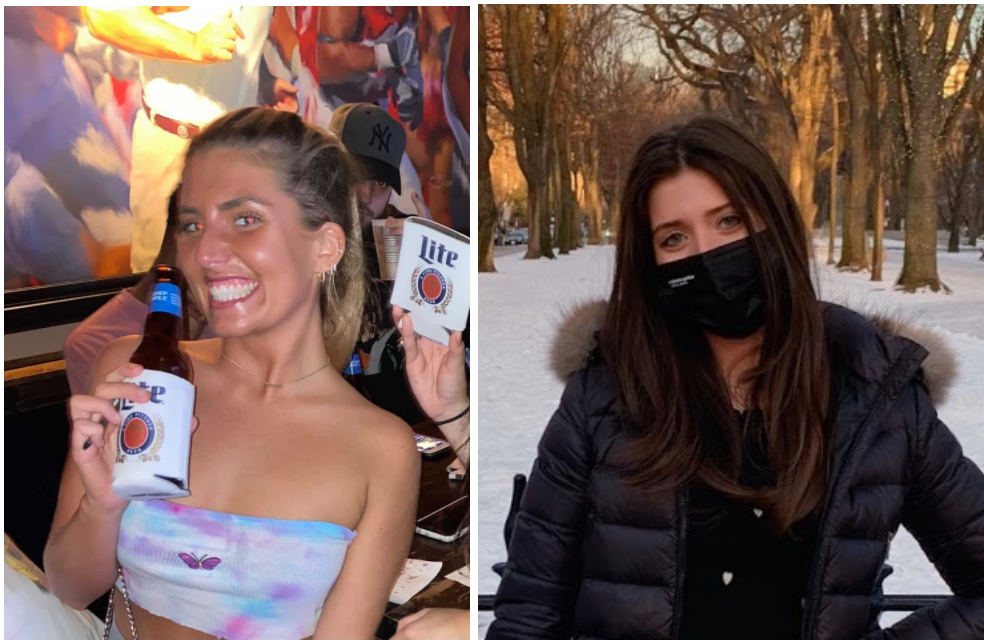
    Beaming Tara Wiekert (left) enjoys a brew indoors at a bar in Tuscaloosa, while Julia Hadley (right) is smiling through her state-mandated mask outdoors in Boston. Photos courtesy of Tara Wiekert and Julia Hadley

    In North America, each state decides on its own Covid-19 regulations. Different states can have radically different restrictions – changing the experience of the pandemic for their residents.

    A part of Biden’s 2020 presidential campaign was the requirement of masks to be worn throughout the US as he stated it could “save 100,000 lives” if masks were made mandatory to wear in every state.

    Less than a month into his inauguration, President Biden has already pushed nationwide mandates, requiring masks to be worn by all Federal employees and by those who use public travel throughout the US.

    However, social distancing regulations are very different depending on the state.

    Answering the same set of questions, two students who reside in different states share their lifestyle and opinions with Jessica Viola on the Covid-19 pandemic.

    Tara Wiekert lives in Tuscaloosa, Alabama, and studies advertising with a minor in German at the University of Alabama.

    Julia Hadley is a health science major at Boston University in Boston, Massachusetts. These responses are based on the student’s opinions as well as on their state’s individual regulations. 

    What is your opinion on Covid-19 now, in 2021? 

    Tara Wiekert: “I think it’s serious and something everyone needs to be made aware of. I know it affects older people more severely, which is why I think a lot of people at school don’t take it that seriously, since we are in a college town surrounded by people who are all mainly around the age of 20-25.”

    Julia Hadley: “My opinion on Covid-19 has remained the same over the past months. It is a very scary time for so many individuals and has affected far too many people. While the vaccination is bringing so much hope for the future, it’s still imperative people take precautions.”

    “While the vaccination is bringing so much hope for the future, it’s still imperative people take precautions”

    Julia Hadley

    What measures are being taken to prevent the spread of Covid-19 in your college?

    TW: “The school requires students to be tested for Covid-19 randomly. I try to wash my hands as often as possible, but since life here feels so normal, I do not take immense measures to prevent the spread of Covid-19. I still go out, eat out, and hang out with all my friends the same way as we did before.”

    JH: “At BU, students who attend classes on-campus or live on-campus must take a Covid-19 test every three days. When taking a class in-person, students must provide proof of their negative Covid-19 test. Throughout campus, students must wear masks at all times.”

    Are you taking college classes in person now and are other work spaces open?

    TW: “Alabama is probably one of the states with the least amount of Covid restrictions. We have some in-person classes and some online depending on what the professor prefers. Libraries and other study areas are open, however, you must wear a mask on campus at all times.”

    JH: “All students and faculty are required to get a Covid-19 test every 3 days, allowing students to take classes in person, if permitted. Libraries and study areas are open, but space is limited. Students must wear a mask at all times, while also having a negative Covid-19 test result, in order to enter the space.”

    “I still go out, eat out, and hang out with all my friends the same way as we did before”

    Tara Wiekert

    How has socialising been for you in 2021?

    TW: “In all honesty, life in Alabama has been rather normal. Bars have been open for a while now. They only shut down at the beginning of last semester for about two weeks.

    “All or most college organised events are happening here in Alabama. We just won the National Championship for (American) football.”

    JH: “Boston does have indoor dining and restaurants utilise glass shields and place diners a safe distance away from one another. The state’s mandates include setting limits on gatherings, also mask and face-coverings must be worn indoors and outdoors with a capacity limit and there’s a curfew for restaurants as well as businesses.

    “At this moment, no organized events are happening within my college campus and are highly discouraged within Massachusetts.”

    University of Alabama students celebrating their American football victory in January 2021. Video courtesy of Tara Wiekert

    What is your opinion on how your state is handling Covid-19 procedures now?

    TW: “In my hometown of New Jersey, my life has changed a lot, and I am able to do a lot less, yet both states seem to be doing ‘fine’. I do think wearing a mask in public should be required for the safety of others and the elderly. However, in Alabama, my life seems rather normal and I often forget Covid-19 is even a ‘thing’. I am doing everything that I used to do even before Covid-19 hit.” 

    JH: “Just as everyone around the world, my life has changed since COVID-19. I have limited traveling, restricted seeing people outside of my immediate circle, among many other things. While adapting to our new ‘normal’ has had its challenges, it is a sacrifice I am willing to contribute to keep myself, family, and friends safe during the pandemic and, I am extremely fortunate for their good health thus far.”

    “Adapting to the new ‘normal’ is a sacrifice I am willing to contribute to keep myself, family, and friends safe during the pandemic”

    Julia Hadley

    American universities have been a hot spot for the spread of Covid-19. Throughout the course of the pandemic, more than 85 colleges have had over 1,000 reported cases on campus. In a recent study, 70% of Covid-19 cases in the US have been spread by young aged 20-49 years old.

    Although Massachusetts has almost over 2 million more residents in it than Alabama, they comparatively have a little over 72,000 more confirmed Covid-19 cases than this southern state. As it stands now, Massachusetts has 546,800 confirmed cases and Alabama has had 474,666 coronavirus cases since the beginning of the pandemic.

    Masks, social distancing, and socialising remain hot-button issues – will Biden manage to unite his nation?

  • Increase in people feeling downhearted or depressed between April and November this year

    Increase in people feeling downhearted or depressed between April and November this year

    The Central Statistics Office has released findings of a survey in relation to ‘well being and lifestyle under level 5 restrictions’– a survey relative to the social impact of Covid-19 for the month of November 2020. Gavin Dalton examines the results of this survey.

    Image source: Pikist

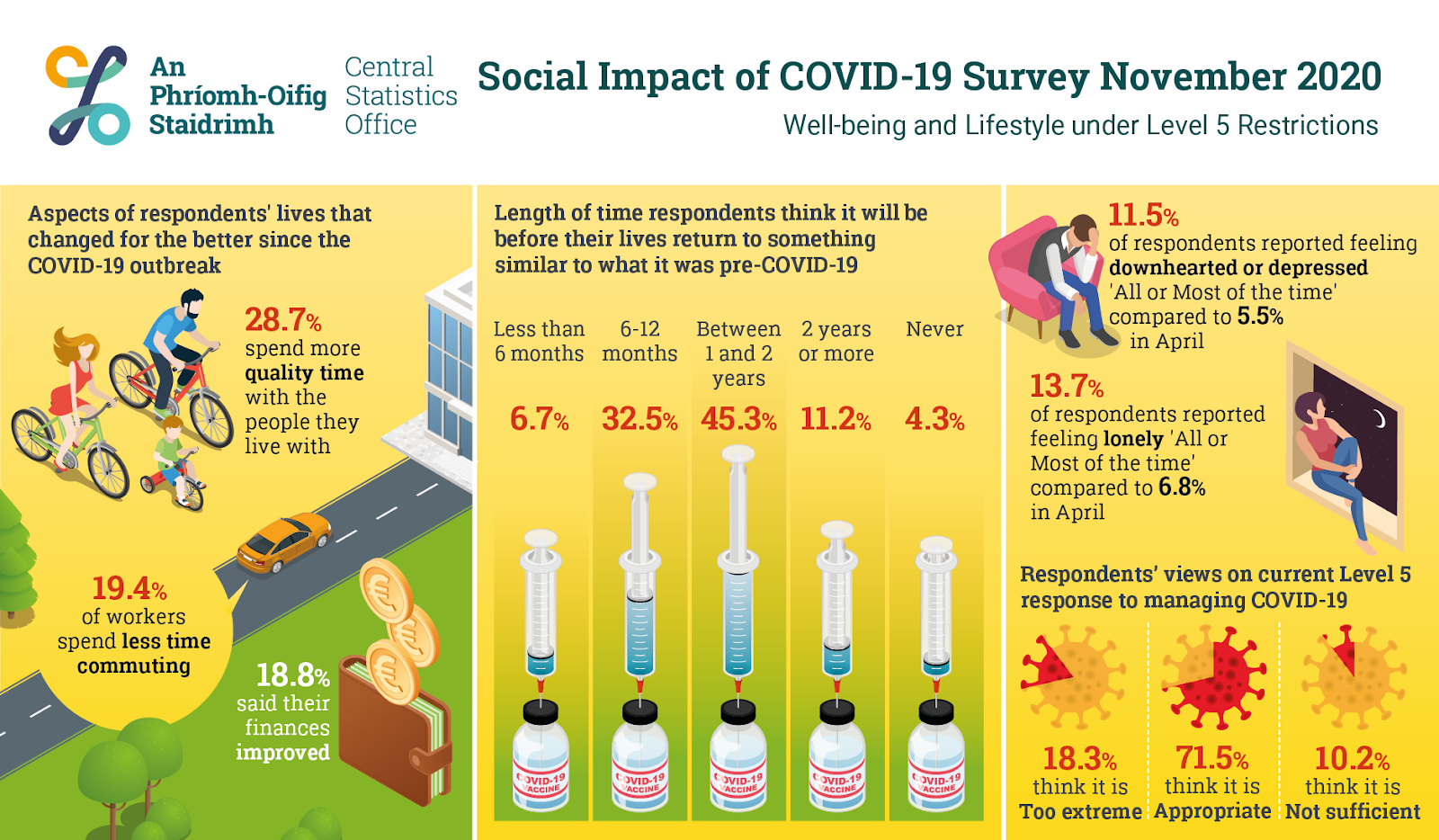
    Published on the morning of the 30th of November, the Central Statistics Office (CSO) well-being survey shows some eye catching findings. 19.4% of workers spend less time commuting, which was an aspect of repondants’ lives that have changed for the better during the pandemic, whereas in contrast 11.5% of respondants reported feeling downhearted or depressed ‘all or most of the time’. 

    The survey, which was carried out between Thursday November 12th and Wednesday November 18th, was based on a sample of 5,105 persons aged 18 and over. The survey availed of an online questionnaire to produce an achieved sample size of 1,585 individuals.

    There were some findings that arose in relation to the appropriateness of the implementation of Level 5 to Covid-19 risk, in which one could argue were rather expected results. Over 71% of those who responded to the survey indicated that the level 5 response was appropriate, 18.3% were of the impression it was Too extreme, with 10.2% feeling it was not sufficient. Analysing the findings by age shows the likelihood of a respondent feeling that the Level 5 response was Appropriate increased with age, with 63.2% of respondents aged 18-34 agreeing that the Level 5 response was appropriate rising to 88.2% for those 70 and over. 

    Some of the findings from the survey may raise cause for concern: The percentage of respondents that felt lonely All or Most of the time in the four-week period prior to interview doubled between April, when a similar survey was carried out and November 2020, from 6.8% to 13.7%, whilst the percentage of respondents that felt downhearted or depressed All or Most of the time in the four-week period prior to interview doubled between April and November 2020, from 5.5% to 11.5%.

    Speaking of these specific increases, councillor Mairin McGrath isn’t overly surprised but remains hopeful for the year to come. Speaking to The City, she said: “When we look at the first lockdown compared to the 6 week lockdown we’ve just come out of, there’s been a huge difference. There was probably a novelty to the first lockdown and although we were kind of facing into the unknown, it was genuinely a very scary time for the country, people being at home, having the long days and the good weather to do your few DIY jobs around the house and spend time like it was Christmas with family, was probably something a lot of people enjoyed.

    “And then when you compare the last 6 weeks we had in level 5 lockdown, it’s just been totally different. Much more grim in a sense. It wasn’t as much of a lockdown, life was still going on as normal for some people but I suppose the whole aspect of not being able to have that whole social outlet to look forward to, but I think people have grown more wary of the whole situation.

    “It has been very challenging. I’m not one bit surprised that the figures are as they are. As a young councillor, I for one can see it first hand through my job, I can feel the struggles myself. Working hard all week and then having nothing to look forward to at the weekend, no place to go, no plans to look forward to as we head into Christmas especially. So look it’s been a challenging year for all, it has been difficult.”

    Remaining positive for the approaching year, McGrath said: “The increase in figures doesn’t surprise me, but hopefully we can look forward to a better 2021 with lots of plans and get togethers with our friends.”

    CSO statistical publication, 30 November 2020, 11am. Taken from the CSO website.

  • HSE changes its Covid-19 policy to allow partners to attend 20-week scan

    HSE changes its Covid-19 policy to allow partners to attend 20-week scan

    The HSE has announced updates to their Covid-19 guidelines to allow for partners of pregnant people to be allowed to attend the 20-week scan. The measure that prevented partners from attending the scans were originally introduced as precaution in hospitals. Amber Baxter reports on what this means for those affected.

    Image by parentingupstream on Pixabay

    It is expected the HSE will ask maternity facilities to allow partners to visit for anomaly scans if possible.

    Emails and letters from people and their partners to the government have been released to Aontú leader and Meath West TD Peadar Tóibín following a Freedom of Information request (FOI). He described their content as “harrowing” and “deeply distressing”.

    A letter sent to Taoiseach Micheál Martin which was forwarded to Minister for Health Stephen Donnelly on the 30th of September stated that the Taoiseach asked his colleague if the “points raised could be examined” and if he could “advise me [Martin] of the position”. 

    The letter sent to the Taoiseach was from one woman who said she was left “exasperated” by the restrictions after going through the “heartbreaking, gut-wrenching” event of a missed miscarriage at 8 weeks. 

    The woman wrote in her letter: “Can you please tell me why I am able to eat a meal with women I have not seen in months, but my husband who I live with is not allowed to be there when I am told the most devastating news that a pregnant woman can hear?”

    Under the current guidelines, partners are allowed in for births but not for scans or emergency procedures. The news comes after hundreds of people and their partners wrote to Minister for Health Stephen Donnelly and Taoiseach Micheál Martin. A petition organised against the restrictions by campaign group, Uplift, has gathered 52,000 signatures and was handed into Cork University Hospital last week.

    Tóibín said, “During a six-week period over 170 emails were sent to the Minister for Health, the majority of them from women outlining their shocking experiences in maternity hospitals as a result of the Covid-19 restrictions.”

    He continued, “We must remember that one in four pregnancies ends in miscarriage in this country. No woman should be left to face this bad news alone, in a hospital corridor without a partner to support her.”

    Alan Kelly, Labour Leader, also called on the Government last month to consider modifying the restrictions on partners not being allowed to accompany or visit expectant mothers during and after pregnancy.

    Holly Smith, an expectant mother, told TheCity.ie: “People should be able to support their partners in person. Thankfully I was not in a position where I received bad news on my own but there are hundreds of women who are going to their scans not knowing what will happen.”

    She continued, “Partners and fathers shouldn’t have to receive bad news alone in a hospital car park on the phone.”

    Another of the letters from one woman who experienced a miscarriage read: “I had to sit in a room alone to be told my baby had died. I was sent from this room alone reeling from what I had just heard and left to sit on a busy ward corridor sobbing alone,

    “This is simply unacceptable. At no point was I allowed to have my husband present to provide any sort of comfort. I sat for hours alone and broken in one of your maternity hospitals. Not a single person to offer me the comfort I craved and needed.”

  • Smartwatches are changing how we exercise

    Smartwatches are changing how we exercise

    In the midst of the Covid-19 pandemic, fitness resources like trainers and gyms are harder to access. Nathan Davies explores how technology makes it easier than ever to get fit at home.

    Photo taken by Mike Mozart. Sourced from Flickr.

    Never before has the topic of health been as important as it is today. Covid-19 continues to dominate the news cycle, placing our mental and physical health at the forefront of public consciousness.

    The pandemic has also created new problems that must be overcome around health and fitness. Covid-19 restrictions have made it harder to access the resources needed to improve ourselves. Personal trainers and physiotherapists are harder to reach, while most gyms have been closed or severely restricted.

    This new environment has seen an acceleration of an already growing trend; the digitisation of fitness.

    Studies conducted in the past few months have shown just how Covid-19 has impacted the ways in which we keep fit. One survey from Dublin-based Amárach Research found that almost two-thirds of people surveyed had spent more time in online fitness classes than they did before the pandemic.

    The study also brought to light the growing use of devices when tracking fitness goals, with 60% of people having used mobile apps, smartwatches, and other devices in order to track their activity and compete with family and friends.

    The numbers show just how popular digital fitness is becoming, and personal accounts from athletes explain why.

    “For me, the best thing about them [smartwatches] is being able to track how far and how long I swim for with the GPS in the watch.” said Wicklow-based triathlete Anthony McGrath. “I like to see how far I go and try to beat it the next time.”

    Fellow triathlete Jean Fogarty favours the health benefits from her smartwatch: “I use mine to keep track of my weight,” she said. “Counting calories, checking resting heart rate and peak heart rate. You couldn’t do any of that years ago.”

    Agreeing with McGrath, she sees the benefit in tracking her progress. “I can set a distance on the app and start running. 

    “When I hit that distance, the watch will buzz to let me know I have hit my goal. It takes so much of the weight off my shoulders. I don’t have to work out how far I ran. It knows how many calories I burned whether I’ve swam, cycled or even gone kayaking.

    “It keeps me motivated. I know when I’m doing well. I know when I’ve had a lazy day. It kept me motivated during lockdown to keep exercising.”

    However, these technologies have not come without their downsides. Like all digital technologies, the issue of privacy has inevitably been raised given how much data these devices are gathering.

    Google’s ongoing acquisition of Fitbit has raised alarms given their history with gathering data for advertisement purposes. The ramifications of the merger have been scrutinised by the EU, who warn that it presents a “high level of risk to the fundamental rights to privacy and to the protection of personal data.”

    Despite Google claiming they have no intention to use the data in this manner, the EU’s fears may be justified. Fitbit’s ability to gather sensitive health information on its 28 million users may present yet another digital privacy issue in the wrong hands.

  • Home advantage remains despite crowd restrictions in League of Ireland

    Picture from Pixabay.

    COVID-19 restrictions have seen crowd numbers drastically reduced in the League of Ireland. Nathan Davies analyses the results of the 2020 campaign to see just how much of an impact fans have on Irish football.

    On the 7th of March 2020, Sligo Rovers kicked off against Shamrock Rovers in front of a crowd of 2,342 supporters – it turned out to be the last match played in the league for almost five months.

    Following government recommendation, the Football Association of Ireland (FAI) suspended all football matches nationwide just five days after that Sligo game. When the league finally returned on the 31st of July, the landscape of Irish football had changed dramatically. Stadiums were empty. The roars of support were gone, and with them went much of the spirit of the game for many fans.

    Under the government’s “Living with Covid” plan, an outdoor event could be watched by a limit of 200 people. In practice, most of the 200-person allowance was taken up by players, staff and matchday officials. This left only a few dozen fans able to attend. This was a far cry from the thousands that attended stadiums around the country before March.

    Fans are considered integral to football. Often referred to as “the 12th man”, they bring an atmosphere to the game that pushes their team to do better. Figures from the League of Ireland seem to support this; a team playing in front of their own fans is likely to win 45% of the time, draw 24% of the time and lose just 31% of games.

    With the number of fans attending matches now limited or gone entirely, we looked at the League of Ireland results post-lockdown and compared them to previous seasons to see exactly how empty stadiums are affecting matches.

    The results may come as a surprise.

    Since the return of football in Ireland in July, the win percentage of home teams sits at 44% – just a 1% difference from the previous season, and the same percentage as both 2017 and 2018. This would suggest that the lack of fans has had little impact on the likelihood of a home victory.

    A similar metric of Points Per Game (PPG) reveals the same result:

    The above graph shows that there has been little change in the success rate of the home team in the past 5 seasons, despite the lack of fans since the restart in 2020.

    When factoring in wins and draws, the success of home teams this season is identical to last season. With home advantage remaining despite no crowds, questions are raised about what causes it. Many stars in the game have placed the blame on the effects of travelling long distances for the away team. However, in a country as small as Ireland, this might not be quite as relevant.

    Research published in the England-based Journal of Sports Sciences suggests that the phenomenon of home advantage in football may be down to the home team feeling more comfortable in the familiarity of their own stadium.

    While home advantage may not be impacted, one aspect of the game has been affected by the lack of crowds: goals.

    Results since the restart have seen some of the lowest number of goals per game in League of Ireland history.

    The average goals per game scored after the restart have been lower than the few matches that were played before March. The goals-to-game ratio this season has been one of the lowest seen in the League of Ireland since its formation in 1985.

    The season has been marred by a surprisingly high number of scoreless draws and few high scoring results. While the results do not appear to be affected by the lack of crowds, it does seem that the number of goals scored along the way has diminished. 

  • Remembering pints past with Old Dublin Pubs

    Remembering pints past with Old Dublin Pubs

    Facebook Group Old Dublin Pubs is a place to share nostalgic memories of wet pubs that are long-gone. Rebecca Daly spoke to members of the group to find out what the group offers and why it is so relevant today.

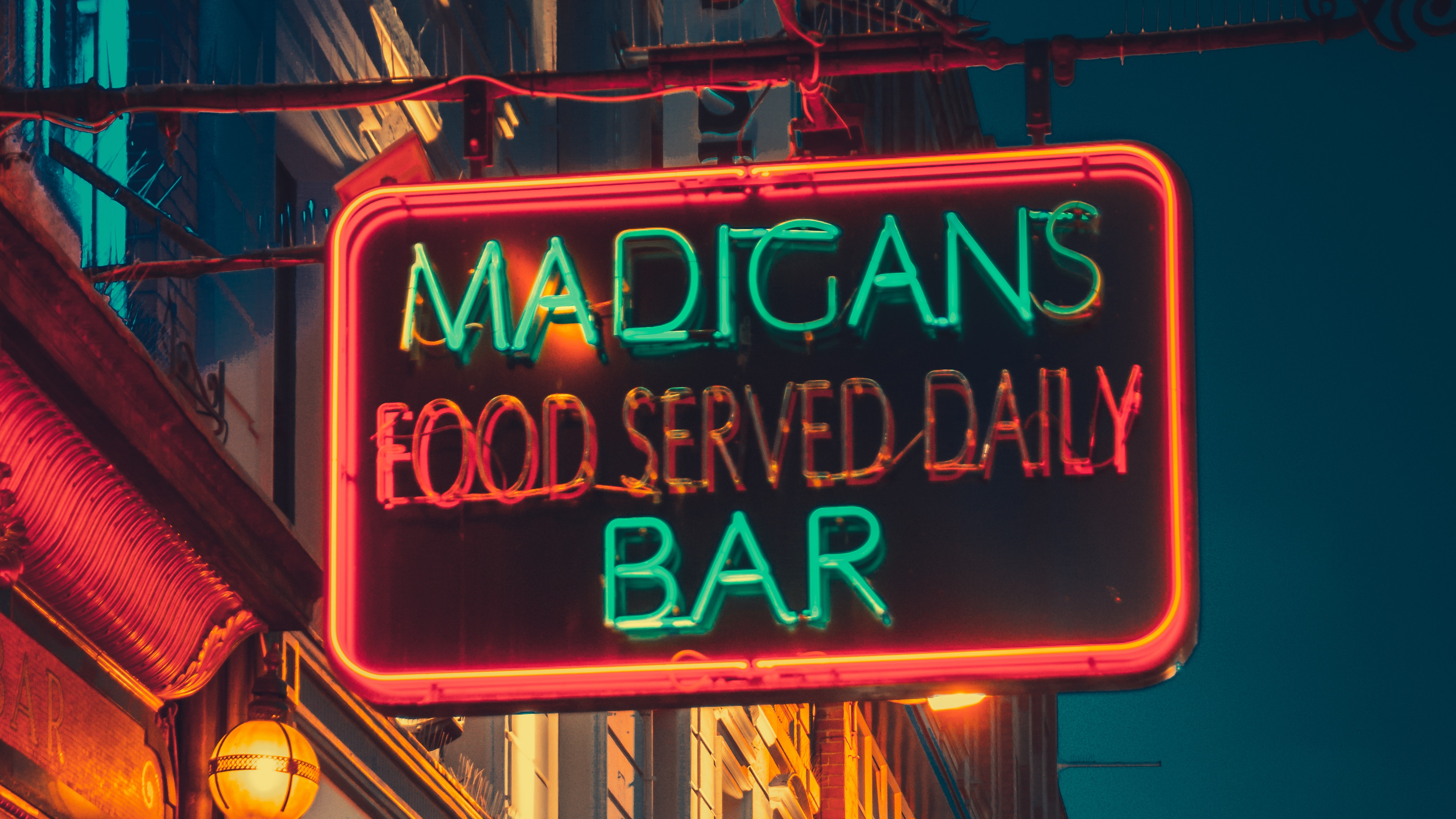
    Madigans Bar on Amiens Street. Photo by Lucian Petronel Potlog via Pexels.com

    The 15th of March brought with it the closure of all pubs in the country as a result of concerns over the then-new virus COVID-19. 

    While wet pubs in other counties were given the green light to re-open on the 21st of September, Dublin’s pubs were told to remain shut due to a rise in positive coronavirus cases. Now with the introduction of Level 5, it will be another four weeks at least before they can even consider welcoming patrons in again. 

    Eager pub-goers in the capital have certainly been missing the act of heading to their local for a few rounds with their friends. 

    However, one Facebook group has come together to recall times spent in their favourite pubs over the years and share retro photos of long-gone spots. 

    Set up in 2014 by a group of Dubliners, Old Dublin Pubs looks to bring nostalgic memories of popular watering holes together. Some of the charming images shared there are of pubs that shut their doors before the new millennium, while others only shut their doors in March.

    Regardless of if the pubs have still traded up until the pandemic, the group asks members to focus on pre-2000s images and stories. 

    Throughout the hundreds of photos on their page, you’ll find familiar places such as the Brazen Head, The Liberty Belle and Toners, as well as pubs that have long since shut down or changed their name. Some of the images even go back as far as the 1900s. 

    Under each photo are comments from strangers around the county. They recount memories of lively nights filled with song, dance and conversation

    Some photos feature famous faces in their local pubs such as The Dubliners, Phil Lynott and even Christy Brown. 

    Pub adverts are also featured on the page, which can bring a whole new level of nostalgia to the group members. One 1967 ad for The Embankment in Tallaght reads, “There you can leave behind congested city streets, park your car in the roomy car park, take a seat in the spacious Lounge, and relax over your drinks to the best of entertainment.” 

    Tony Carey from Tallaght had his first pint of Guinness in the Tap Pub in Chapelizod in 1964. Four years later, he became a distillery delivery driver until 1986. Carey would deliver to pubs across the country as well as in Dublin City. He recalls that in those days, bartenders would offer free pints to their delivery drivers. 

    For Carey, going to the pub was not about alcohol. It was more a social event than an opportunity to drink.

    Joining the Old Dublin Pubs group allowed him and many others like him to recall the golden days in their favourite spots. 

    “It’s like going down memory lane of one’s social life of the past.” He said.

    The group helps people to relive the joy of heading to the pub in pre-Covid times. Carey said, “It’s important to remember the Dublin culture of socialising in different ways, and of the enjoyment of being part of that and remembering friends present and past who were part of your life.”

    Old Dublin Pubs now has 5,100 members and will allow anyone with an interest in getting nostalgic over some of Dublin’s greatest pubs to join.

  • How much does sports contribute to the high COVID case numbers?

    How much does sports contribute to the high COVID case numbers?

    All local sports clubs and gyms are completely closed now, taking away a necessary outlet for exercise and mental health from many nationwide.  Conn McGillion investigates whether sports activities were spreading the Covid-19 virus.

    Photo taken by TLC Photography. Sourced from Flickr.

    From June to August, there have been only fourteen positive cases reported nationwide across all sports clubs within GAA, rugby and football, according to documents received by the HSE in accordance with the FOI (Freedom of Information) act. According to the documents, under five of these cases were reported from within Dublin, and the other nine cases were scattered around the rest of the country. These cases came after all sports clubs had restrictions lifted in June to train in a controlled environment.

    Prior to the second lockdown, diagnosed cases were at an all time high. 1000+ case daily have become the norm from August to September. Only fourteen cases nationwide across three months is indicative that sports clubs, and gyms, are not a primary spreader at all in comparison to the likes of restaurants and factories. In fact, many of those cases come from one isolated incident.

    An example of this would be in the GAA. Claughan United in Limerick had tested a player positive in mid-August, and the safety precautions were immediately taken. The player, who was asymptomatic, was instantly placed in quarantine, along with the entire club and the local rugby club, Shannon RFC. Claughan released a statement at the time, suspending all club activities indefinitely, after careful consideration was given to correct procedures regarding self-isolation and efficient testing.  

    The majority of the cases came from a club in Clare, Cratloe. Cratloe had six players who tested positive for Covid on the 7th of August. While they quarantined those initial positive cases on the day, they initially continued their activities – as the virus began to spread, they were forced to abruptly put a stop to their training. 

    While cases such as these are reckless, they are not indicative of how the majority of sports clubs react – many of the sports clubs are happy to abide by the government guidelines, and adhere to them properly. Sports-related case numbers are not comparable to large outbreaks in the likes of meat factories and pubs. 

    The Health Protection Surveillance Centre (HPSC) has recorded 2,736 outbreaks in other settings such as nursing homes, workplaces and private houses. It is also reported 1,500 cases alone were reported from meat factories. Clusters, which involve more than one outbreak case, are commonplace in these more social areas.

  • Counter protesters say they are opposing ‘fascists’, not anti-lockdown demonstrations

    Counter protesters say they are opposing ‘fascists’, not anti-lockdown demonstrations

    As restrictions to tackle Coronavirus are in place, some people choose to show their frustration in a form of protest. Many have condemned such protests not only for posing a greater risk to public health, but also for their possible links with far-right groups. Laura Matjusaityte talked with counter protesters and the people supporting them.

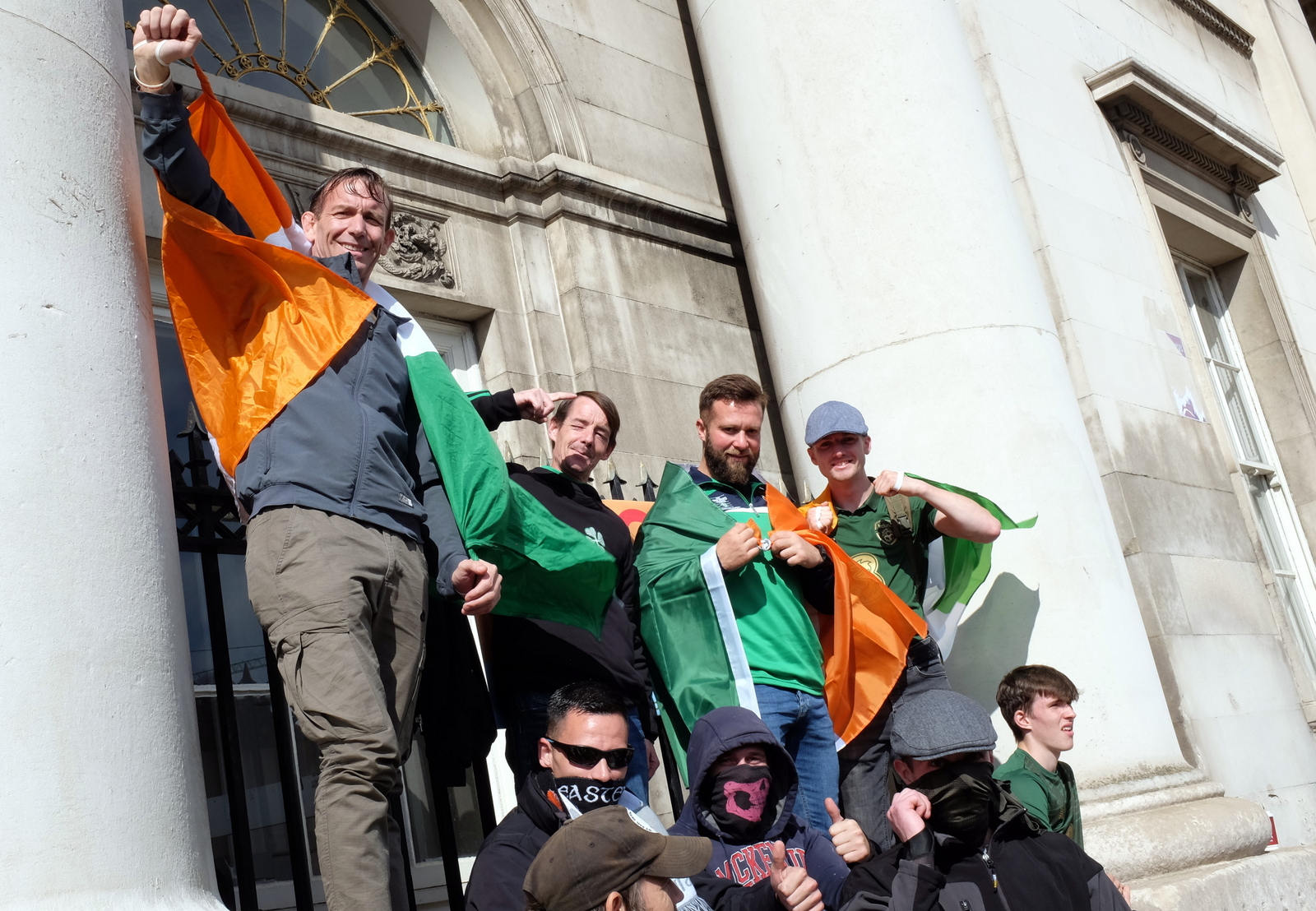
    Anti-lockdown protesters. Photo by Barry Delaney.

    Protests organised by such groups as Yellow Vests Ireland, which claims to be an independent citizens movement, and Health Freedom Ireland have been taking place in Dublin City Centre on the weekends since the start of autumn. 

    Within a short time the protests seemed to attract even more attention not only from like-minded, but also from opposing groups, which in some occasions ended up in clashes among the demonstrators. 

    It was reported that up to 100 Gardaí were called in to patrol a protest which took place near the Dail on the 10th of October. There were two instances where Garda intervention was necessary in order to break out clashes among protesters and counter protesters.  

    During the protest two men, one in his 30s and one in his 40s, were arrested due to the public order offences. 

    Garda reported that further investigations being carried into the organisers of both the anti-lockdown protests and the counter protests.

    The current situation of the pandemic and public anger over government’s decisions has sparked an increase in various conspiracy theories, which are said to be being exploited by far-right leaders in order to gain influence. 

    The anti-lockdown, anti-mask protests are often being linked with the far-right political parties, the National Party, and the Irish Freedom Party. 

    Tommy Hamzat, an activist for the Black Lives Matter, said that allowing the far-right activists to organise such events is dangerous. 

    “Giving them a platform extends their reach and potential to recruit people who are completely unaware of how really dangerous they are,” Hamzat said, on the subject of an incident where an LGBTQ+ activist was assaulted in one of the first clashes against protesters and counter protesters.  

    The incident happened during an anti-lockdown protest on the 12th of September when a confrontation between the opposing groups started in front of Leinster House. During the clashes LGBTQ+ rights and Repeal the Eighth activist Izzy Kamikaze was struck in the head with a large wooden object and sustained a serious head injury. 

    Hamzat, talking about clashes among protesters and counter protesters, said that it was expected but “it was a massive disgrace that the Garda didn’t clamp down on the protest even happening”. 

    Antifa Ireland, an anti-fascist organisation operating in Ireland, is believed to be the organisation behind the counter protests. When asked about the anti-lockdown protesters, a spokesperson from the organisation said that their “only concern are fascists”. 

    Counter protesters gathered in Dublin City Centre. Photo by Barry Delaney.

    “The National Party led by Justin Barrett has links to the German National Democratic Party and Italian Forza Nuova, ” they claimed.

    The National Party leader Justin Barrett, known to the public for his strong nationalistic rhetorics, was seen giving speeches to the crowd of cheering protesters outside Leinster House during one of the protests. 

    The National Party leader is well known for his anti-abortion activism.

    Back in 2002, Barrett admitted to the Irish Times that he did speak in the meeting of the far-right Forza Nuova party and participated in the meetings of the far-right German National Democratic party. Back then Barrett claimed that he wasn’t aware that both of these parties were regarded as neo-fascist organisations. 

    “Anti lockdown protesters, whatever we may think of their ideas, are not our opponents,” the Antifa spokesperson said. 

    In the midst of the clashes, the existence of the pandemic was completely forgotten. Many recordings circulating on social media show that while counter protesters wore face masks to cover their faces, the original group of protesters did not and the guidelines for social distancing were not being followed. 

    Hamzat said that the reasons why the safety measures and the threat of coronavirus was forgotten was because “the far right doesn’t care about anyone but themselves”. 

    “They used the lockdown aspect to get people to come,” he said.