Tag: dublin

  • Women in Sport: Lyndsey Davey, Dublin GAA

    Women in Sport: Lyndsey Davey, Dublin GAA

    Picture credit: Brendan Moran / SPORTSFILE
    Picture credit: Brendan Moran / SPORTSFILE

    The City’s Alison O’ Hanlon talked to Dublin Ladies GAA All Star Lyndsey Davey about the commitment of playing for your county and her hopes for the future.

    It’s been a year of highs and lows for Dublin vice captain Lyndsey Davey whose side were beaten by Cork in a one point defeat in this years All Ireland Final.

    Davey also received an All Star award, along with three of her team-mates, for her performances throughout this year’s championship.

    “It was a great honour to have been even nominated and I was very shocked to have won as I was up against some brilliant players. It was a great achievement for Dublin to get 11 nominations and I feel privileged to be one of the four Dublin players to have won an All-Star”, Davey told The City.

    But success like this doesn’t come easy or without commitment. Davey started playing Gaelic at 5 years old for Skerries Harps and progressed on to play with the boys teams until under 14 when a girls team was set up in the club.

    Davey spoke of how much of a commitment GAA players have to give to play county football, but insists that the success is a just reward for the sacrifices she has to make,

    “Players have to give massive commitment when playing county football. The standard of Ladies Gaelic is increasing every year and girls are training like professional athletes while still holding down a full time job or education. Even in terms of nutrition players have to be very disciplined.

    “At times it can be difficult as you can’t be going out at the weekends with your friends when you have training or are playing matches. However, when you get the opportunity to represent your county, especially in an All-Ireland final, it’s an easy sacrifice to make.”

    Given that most GAA players train as much and as hard as many professional athletes, the 25 year old said given the opportunity she would love to play Gaelic football at a professional level, but it’s the love of the game that keeps her going, “I suppose if the option was there then I would but it’s not really something I think about. I play Gaelic because I enjoy it and I love playing for Dublin.”

    “Even if there was a chance to play Gaelic for Ireland I would be interested. There was a female International Rules game a few years ago but unfortunately I was unable to play. If the opportunity was to arise again then I would love to play.”

    Davey also commented on the highly topical area of media coverage that female athletes receive and the coverage gap that seems to be closing in Ireland in the last few years.

    “I think over time that gap is starting to close and female sports are getting increased media coverage. This is helped by the success of Katie Taylor and the ladies Irish rugby team and I think Stephanie Roche being short listed for goal of the year is a massive boost to Irish female athletes. It was brilliant when AIG announced their sponsorship of all Dublin teams, including the ladies, as this has gone a long way in helping to close that gap and I hope other sponsors start to do the same.”

    Although Davey’s September didn’t have quite the ending she hoped for she was honoured when her fellow team-mates picked her as their Player of the Year.

    “I think to win any individual award is always a nice achievement but the players player is definitely a special one to me, as it was my team mates who voted for me. So many Dublin players had a great season this year and I think that was proven when we received 11 All-Star nominations so to have been picked as the players player of the year was a massive honour for me.”

  • 12 Pubs – Which ones to go to

    12 Pubs – Which ones to go to

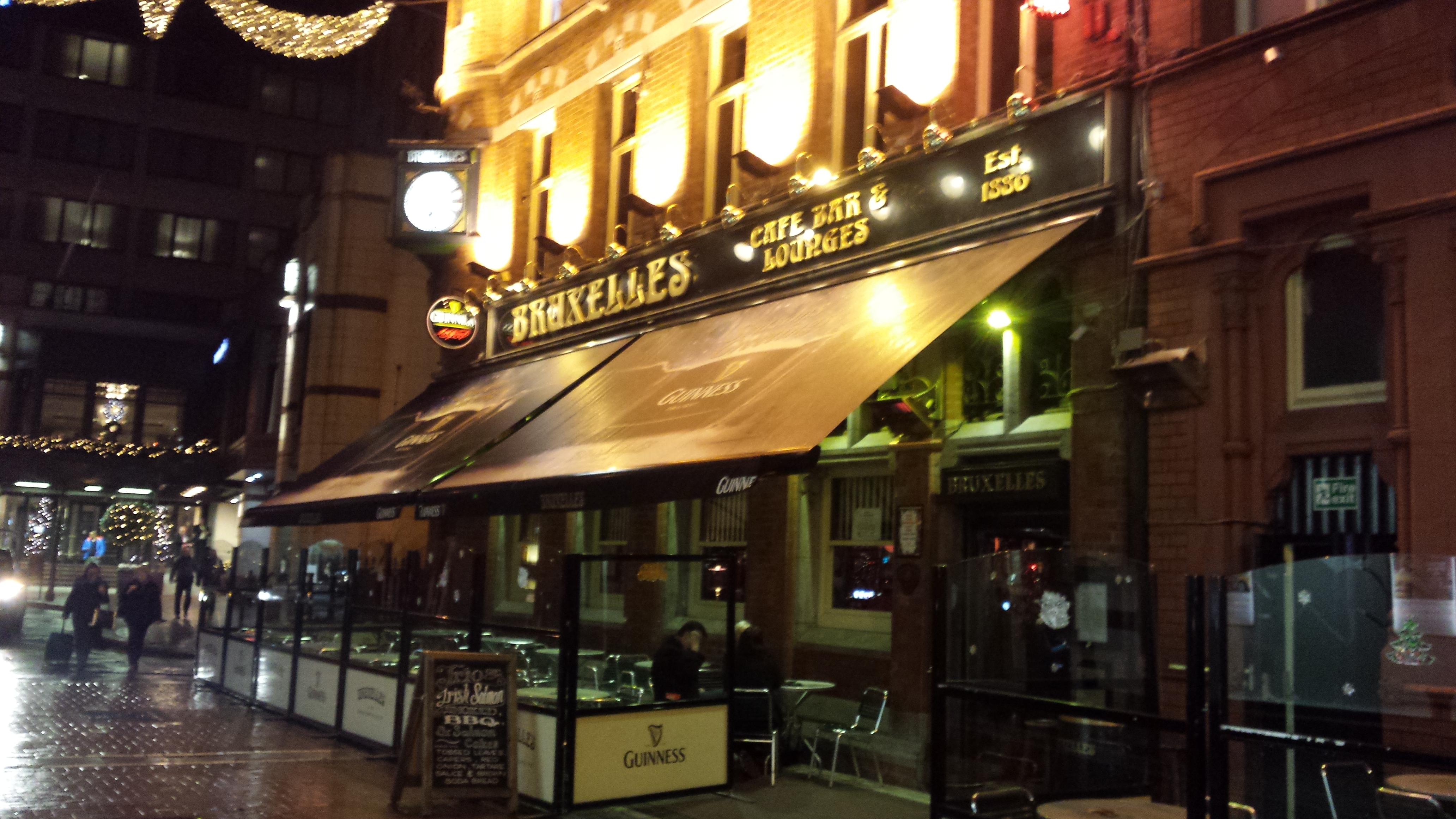
    The 12 Pubs has become a feature of the Christmas season for many Dubliners. For bar staff it can be a trying ordeal, because of this many establishments choose not to let large groups through their doors during the festive season. The City is always keen to lend a helping hand and here we present to you a list of places that are –shall we say- willing to accept you and your friends.  

    Some places complain that accepting large groups disturb their local customers and that due to size they’re not in a position to accommodate the larger numbers of patrons. However some places like The Bernard Shaw sum up how they feel about with the attitude that: “Sure, it’s Christmas”.

    But we would urge you that others are looking to strike a balance between regulars and still have you enjoy yourself. Cassidy’s on Camden Street told us that: “It’s fine as long as you can control it”.

    Others though like Flannery’s, also on Camden St, simply say: “Sure we’re designed for that type of thing”. Wherever you do go we ‘d like to suggest that you bear in mind the person behind the bar and on the floor, helping you enjoy your night of festive revelry.

  • Black Friday

    Black Friday

    As Black Friday hit America by storm for another year, Ireland jumped on the bandwagon. It crashed onto our isle on waves of insanity as shoppers took to the streets in droves to avail of the discounts on offer.

    Black Friday began as a shopping day in the States in the early 2000s. It takes place the day after Thanksgiving. It became a ritual for shops to open their doors at 6.00am, offering massive discounts for one day only. Now shops are beginning to open their doors as early as 4.00am for the hungry shoppers. What probably began as a brilliant business initiative has now become a global joke, as television programmes such as South Park belittle the day as nothing more than an excuse for temporary insanity and greedy consumerism.

    This ideology of commercialism and “more, more, more” has been leaking into European culture steadily in the last few years. It seemed to start off with the January sales; people would queue and shop for hours, saving whatever they could spare during Christmas to be able to buy the practical items that they couldn’t afford otherwise. With shops like Boots, Argos and Easons offering incredible percentages off their products, it seemed to be a great success this weekend. We must keep in mind though those who had to work in these retail shops during the madness; what did they think of everything?

    Sara Hanly, who worked in the Dundrum Shopping Centre during the first Irish Black Friday said; “I’ve been working in Dundrum shopping centre for 4 years and absolutely dread “events” like Black Friday. So many customers get crammed into the shops that it becomes a highly stressful environment. Customers are aggravated because it’s too crowed to reach the clothes they want and there’s such long queues.” When it comes to the behaviour of the shoppers Sara said: “Some customers are rude but I think it’s more to do with the stress of the crowds. Sometimes I’m rude to customers myself just because of the pressure, and sales assistants are under a lot of pressure trying to tidy the floor while endlessly running up and down to the stockroom for customers. I finished my shift early on Friday and on my way home a Dundrum security guard asked me if I wasn’t going to do some discount shopping for myself. I said no way, I don’t see the appeal of it at all. He answered “greed”. Kind of summed it up for me ”

    Shops all over the City Centre advertise their discounts to entice eager shoppers into their place of business
    Shops all over the City Centre advertise their discounts to entice eager shoppers into their place of business

    The residents of Dundrum were not too impressed either with the events of the weekend. Many residents said that it was “madness” and that they felt like their weekend was stressful, as they tried to go about their business amongst the crowds. Jane O’ Donoghue, who lives opposite the shopping centre said that there should have been warnings given out. “It would have been nice if they gave some type of warning. It might have been good if they even dropped a leaflet in the post box to say it was going to be on and expect traffic! That’s been the most annoying thing! It’s the whole way around the place which is very annoying when you’re just trying to get home and not trying to shop.”

    However it didn’t seem to be doom and gloom for everyone working the day. Taxi driver Ronan states that sales days like these are the best for taxi drivers. “You see the thing is, no one wants to be carrying all that shopping on the bus. And some of them can’t even lift all their shopping, they’ve gone and bought so much! It’s a great boost in fares for us, we just drive through town or stay in the Dundrum area and there’s always gonna be someone flagging you down. I’ve been working about eight hours now today and I have definately seen a massive difference in the amount of people I’ve picked up today in comparason to an ordinary day. It’s like Paddy’s Day.”

    Henry Street calming down after a crazy weekend of Black Friday
    Henry Street calming down after a crazy weekend of Black Friday

    You could think of this as a harmless day, a great day for those who might not have enough money to afford the finer things in life without these discounts. Unfortunately, the truth is that this day in shopper’s heaven has become nothing more than a violent, animalistic event that shows us how the need to consume more and more has taken over our brains. Sadly, in 2008, a person working in a shop on Black Friday died, having been crushed in a stampede in Long Island. This is not the only case of death that has been reported during Black Friday, with another person in 2011 suffering a heart attack as people stepped over him.

    During the most recent Black Friday in the UK, police forces were called in all over the country to deal with assaults, threats by shoppers, traffic issues and crowd control. Consumers showed behaviour that one would expect to happen in a political riot. UK police were seen to be quoted all over the newspapers  stating that the crowds behaviour was disgraceful. They also commented that the chaos was “predictable” and that retailers should have been more prepared for the frenzy that ensued. One paper claimed that a Tesco store had to be closed 36 minutes into opening as crowds became out of control.

    As Dylan Moran put it so wonderfully: “The other thing that we seem to have bought into in a big way is consumerism. That’s what people use to fill the void. The stuff… All the stuff all the time, that you can’t get away from… You walk around the house looking for a pen or a piece of paper, you cant find anything useful like that but you can always put your hands on a purple furry cube with the number six on the side and rubber legs underneath and you pick it up and you go ‘What is this? Why is it in the house?!’ Because you bought it that’s why! Like all the other useless crap you never use!”

  • The most fun you can have in a wetsuit?

    The most fun you can have in a wetsuit?

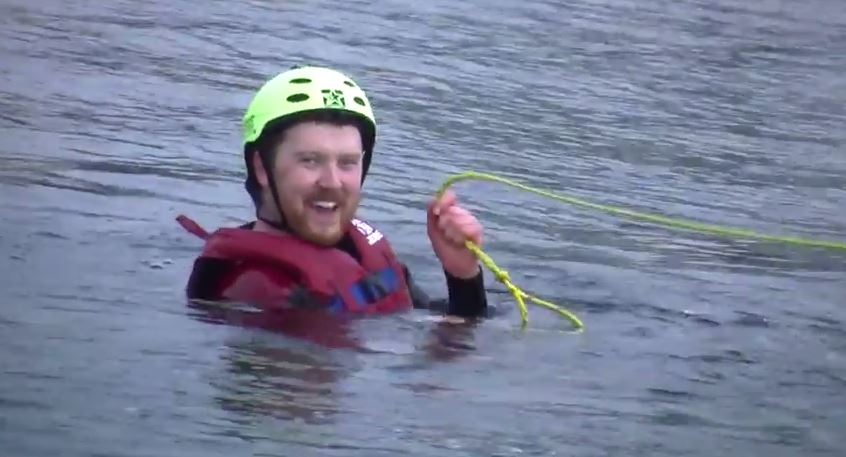
    So it’s the middle of the Irish winter and I’m a little bit bored. So how better to get the adrenaline flowing than to don a wetsuit and jump into the Grand Canal.

    Wakeboarding is one of the most popular water sports over in the US but it’s never really had a big following here in the Emerald Isle – experience tells me it’s because you’ll be numb after two minutes in our icy waters! But at least the cold made me forget just how fantastic I look in a wetsuit…

    I headed down to Wakedock at Grand Canal Dock to take one for the team and show off my impeccable skills.

    Wakedock is open all year round and prices start from €30. Tuition and board and wetsuit rental are also available.

    See www.wakedock.ie for more details.

  • Dublin’s Monthly Fetish Party

    Dublin’s Monthly Fetish Party

    DSC_0172
    Photo: Louise McLoughlin

    Nimhneach is a fetish or BDSM club night held in Dublin on the first Saturday of almost every month. The club boasts an age range from 18-80, and attracts men and women from all walks of life – although careers aren’t on the night’s conversation list. Instead leather, whips, dominance and submission are the focus of the evening.

    The name Nimhneach comes from the Irish word for ‘painful’ or ‘sore’ and, according to some of its attendees, that sums up the experience of the night pretty well. Erotic author, Evie Hunter, states on her website that the scene pushed both my erotic and ouchie buttons” and adds that for her first experience,

    “If it wasn’t for the metal cage in the middle of the dance floor, it might have been a perfectly normal evening.”

    After moving on from its run in The Academy, Nimhneach’s new venue is The Hub in the middle of Temple Bar, located right under the noses of unsuspecting Dubliners and tourists alike. The club is in the venue’s basement, but one attendee says the atmosphere doesn’t reflect the tucked away location.

    “What genuinely surprised me the most my first time was how lovely everyone was…I actually get harassed in regular clubs a lot, but here it was far more open.”

    DSC_0146
    Photo: Louise McLoughlin

    Like many clubs, Nimhneach has a strict dresscode policy of ‘No effort, no entry’, but in the case of Nimhneach that doesn’t mean put on a nice shirt or dress. Its website sums up the dresscode pretty simply –

    Look in the mirror and ask yourself this, Could I walk into most bars in town and get served wearing this without looking seriously out of place?”. If no, you’ll probably pass!”.

    Nimhneach sends out a strong sexually charged vibe – outfits are revealing and provocative, and play between people such as spanking and rope play is encouraged. Because of this there are also strict guidelines for both physical safety and to remove anyone who is deemed to be harassing anyone else. Nimhneach’s organiser says that staff called ‘dungeon monitors’ patrol the floor constantly, overlooking play to make sure that its safe, and making sure that everyone is behaved and comfortable. Rules are strictly enforced, and include:

    Not touching people without consent or interfering in a ‘scene’ (where people are involved in BDSM play) without being invited”.

    However, the organiser says that for people who don’t want to dive into the deep end of the scene events called Munches are held in Dublin every second Saturday and third Tuesday of the month. At these attendees dress in what is called Vanilla (non-fetish) clothing, and newbies can be eased into the scene in a non-fetish environment.

    For more information, see nimhneach.ie or check out the Nimhneach Facebook page.

  • Video: Would you rather?

    Video: Would you rather?

    The City’s Alison O’ Hanlon and Áine Hennessy took to the streets of Dublin to ask the public to make some tough choices.. The question is.. “Would you rather…?”


  • A Graduate’s Story: Life After College

    A Graduate’s Story: Life After College

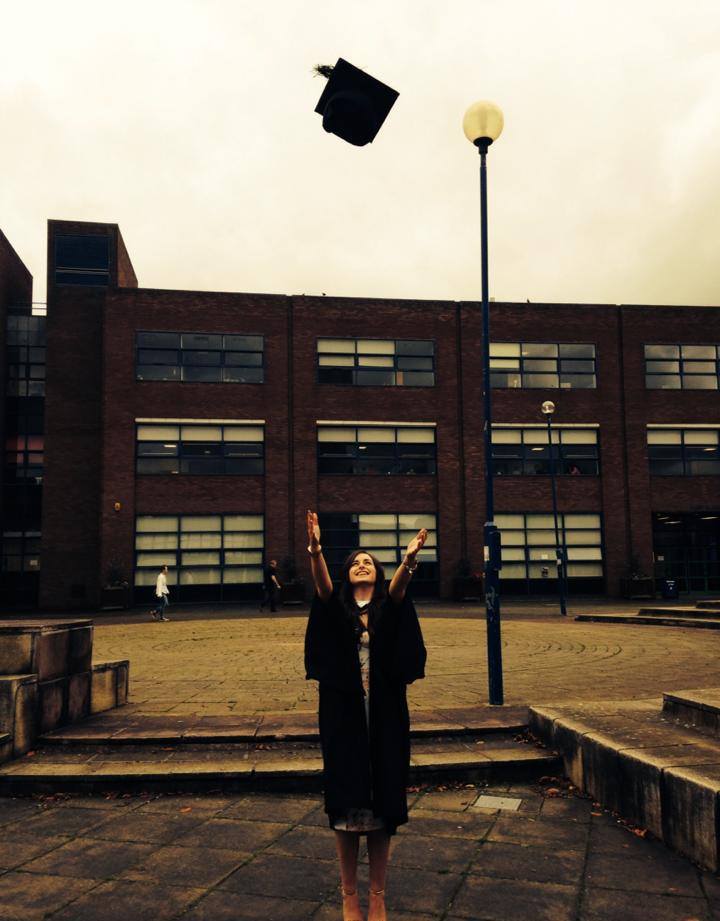
    After slaving away in college for three or four years most of us shiver at the thought of not finding a job in our respective fields. We spoke to Ruth (21), a recent DCU graduate about the real struggles of finding work as a newly qualified journalist in Ireland.

    Did you think it would be as difficult as it is proving to be to find a job?

    No, I didn’t think it would be as hard. Obviously I didn’t expect to walk into a full-time job, but I thought I might at least get an internship or even a graduate programme to begin with … but even those seem hard to come by. I’m working in retail at the moment and I hope to move back to Dublin next year as it is the best place for someone in my field to find work.

    Did you feel ready to start work in the area you hold a degree in?

    I think I was ready to start working in journalism because I felt I had acquired the relevant skills to succeed in my profession. My course covered all elements of journalism and it was possible to choose classes based on your preferences.

    Do you feel you had enough experience and skills from your course to pursue a job in this field?

    I felt I had learned most of what I needed to know, and though I gained practical journalism experience outside of college, I felt the course itself was lacking a little in practical experience. I had to complete just eight weeks of placement which is a relatively  short space of time in the grand scheme of things. After all, the best way to learn is by doing. I would also have liked the chance to specialise in a particular area of journalism.


    So, have you applied for internships or have you applied for all types of jobs in journalism?

    I applied for every job that came up, from internships to full time contract positions.  The majority of employers wanted applicants with a number of years’ experience, but how do you gain experience if they won’t hire you?

    Image: Jennifer McDonald
    Image: Jennifer McDonald

    Do you feel pressure to get a job in order to stay skilled?

    I definitely feel a small amount of pressure to get a job in my field, but I am only out of college a couple of weeks so I can afford a little more time to find the right position.


  • Video: Dublin’s First Traditional Christmas Market

    Video: Dublin’s First Traditional Christmas Market

    Dublin’s first city centre traditional Christmas market opened on 13th November outside the St Stephen’s Green Park. The market offers a selection of Irish crafts, including hand-made accessories, wood-crafts, jams, cookies and knitted jumpers. A large selection of food and drinks are also available, with crepes, hot-dogs, burgers, hot chocolates, mulled wine and lots more. The market is open to the public every day from 12pm to 8pm and is planned to run until the 23rd of December. Last week, TheCity.ie spoke to the people outside St Stephen’s Green to see what they think about the market.

  • ‘One Million Dubliners’ Review

    ‘One Million Dubliners’ Review


    Aoife Kelleher’s One Million Dubliners is a beautiful homage to the people of Glasnevin Cemetery – living and dead.

    Resident historian Shane MacThomáis, the obvious star of the show, is our guide throughout the documentary.

    With great wit, he tells the stories of Parnell, de Valera, Collins, Markievicz, Behan and the many other 19th and 20th century heroes buried here. He recalls the stories of ordinary Dubliners too, with equal charisma and passion.

    There are more people under the ground at Glasnevin than walking the streets of Dublin today. That neat little sum is plugged throughout the film as proof that the cemetery serves as Ireland’s national burial grounds; modern Irish history can be mapped out simply by the names and ailments listed on the death register.

    As we quickly learn, Michael Collins’ grave draws the most interest from visitors. He gets flowers for Valentine’s Day (while de Valera gets none).

    We meet the “mysterious” Frenchwoman who regularly visits to place roses by Collins’ graveside. She has fallen in love with him (or rather, Liam Neeson’s portrayal of him in the eponymous biopic). She vows never to marry because no man can live up to Collins.

    Far from being the oddball we might expect, the woman actually offers a unique insight into our devotion to heroes and how we celebrate the lives of the dead.

    Her Vietnamese friend offers the best quote of the film: People are not truly dead “until the day I forget them”.

    What really makes the film is the chirpy cast of characters: the florists; the gravediggers; the funeral director. They guide us through the history of the cemetery, with MacThomáis at the helm.

    Kelleher beautifully captures the spirit of Dublin and explores the mysteries and sadness of death without being over sentimental.

    Footage of the Angels Memory Garden, the resting place of thousands of stillborn infants, makes for the most difficult viewing. Such tragedies have affected many families in Ireland and Kelleher handles this sensitive topic with such care.

    One Million Dubliners is naturally very moving and emotive, but it also bluntly answers some unspoken questions: What happens to the body when it is cremated? How does a gravedigger go about his work? Do funeral directors harden to death?

    A must-see, One Million Dubliners will get you thinking about the big questions — and it will lift your spirits

    One Million Dubliners is showing at the Light House Cinema until November 27 or catch it on the RTÉ Player

  • Espresso yourself: Coffee Stereotypes

    Espresso yourself: Coffee Stereotypes

    Coffee is an institution, fuelled by busy lives, early morning and Starbucks.

    For some it’s their ‘elixir of life’, the only thing that gets them through the day. For others it is the only socially acceptable way to drink pints of cream, and also acts as a gateway drug to all things baked, puffed and sprinkled in sugar.

    Once you have become devoted to the black stuff, whatever your reasons, you will quickly notice yourself clocking up hours of waiting in queues for your daily fix. This is when you begin to notice the coffee stereotypes, because how you like it, is a reflection of you.

    According to the DeLonghi National Coffee Report what coffee you drink can say a lot about the type of person you are. The report found latte drinkers are high-maintenance, while flat white consumers are plain and boring.

    Following from this, an espresso is a reflection of the purist coffee drinker. An Americano is the bread and butter of any coffee enthusiast. Filter coffee is reserved for students; prepare for the sound of cascading coins on the counter.

    Soy, chai and matcha are all adjectives reserved for hipsters as they sit endlessly in cafes discussing the ethical ramifications of the Xfactor. As for those that order decaf coffee (cough) enough said; you are unwelcome into our haven of excellence.

    Trying to find a great cup of coffee is no easy task. In unfamiliar territory we often find ourselves strolling in to a café, salivating, wide eyed and eager hoping the establishment’s expertise will deliver us from a tired haze into a jittery state of euphoria.

    After handing over a few euros we are forced to wait in suspense for the hand-crafted beverage to slide our way; hoping it will tantalise our taste buds on arrival. Often, sadly, we are handed a gut wrenching drink that you wouldn’t serve to your worst enemy.

    Coffee chains, like their average aesthetic appeal, provide average coffee. There is no love brewed into your adored beverage, you are a number on a spreadsheet and thanks to your dedication to “the man”, your eighth one is free.

    But the people of Dublin are catching on. Take for instance Clement Pekoe on South William Street. All those spotted working here are just too cool and hailing from a genetic disposition that makes them innately more beautiful than you or I, but they pride themselves on good coffee.

    3FE, on Grand Canal Street, is another café providing exemplary coffee. Every week they run classes for people who want to learn how to make better coffees at home. Or alternatively they run tastings for groups who want to truly broaden their knowledge and become coffee connoisseurs.

    Coffee is a way of life, and in no uncertain terms it is what dreams are made of. So whatever it is that satisfies those coffee loving taste buds, get drinking and enjoy.