Tag: dublin

  • OPINION: Is Dublin Bus a reliable service?

    OPINION: Is Dublin Bus a reliable service?

    According to the National Transport Authority’s (NTA) quarterly figures, less than 5% of Dublin Bus services have been more than five minutes late for scheduled departure times between January 2012 and May 2013.

    On its website the NTA, which publishes performance reports on all public sector transport under its remit, officially states that “Dublin Bus are required to report quarterly on their performance” to the authority. When asked by TheCity.ie how exactly these figures are collated and whether or not the process is self-regulatory, as is indicated in the aforementioned statement, the NTA refused to comment.

    So, we want to know what service users from across the capital think.

    Do you believe the figures? Take part in our online interactive poll below and watch the reactions of the Dublin’s commuters as we ask them whether Dublin Bus can be relied upon to get them from A to B.

  • Can’t We All Just Get Along?

    Can’t We All Just Get Along?

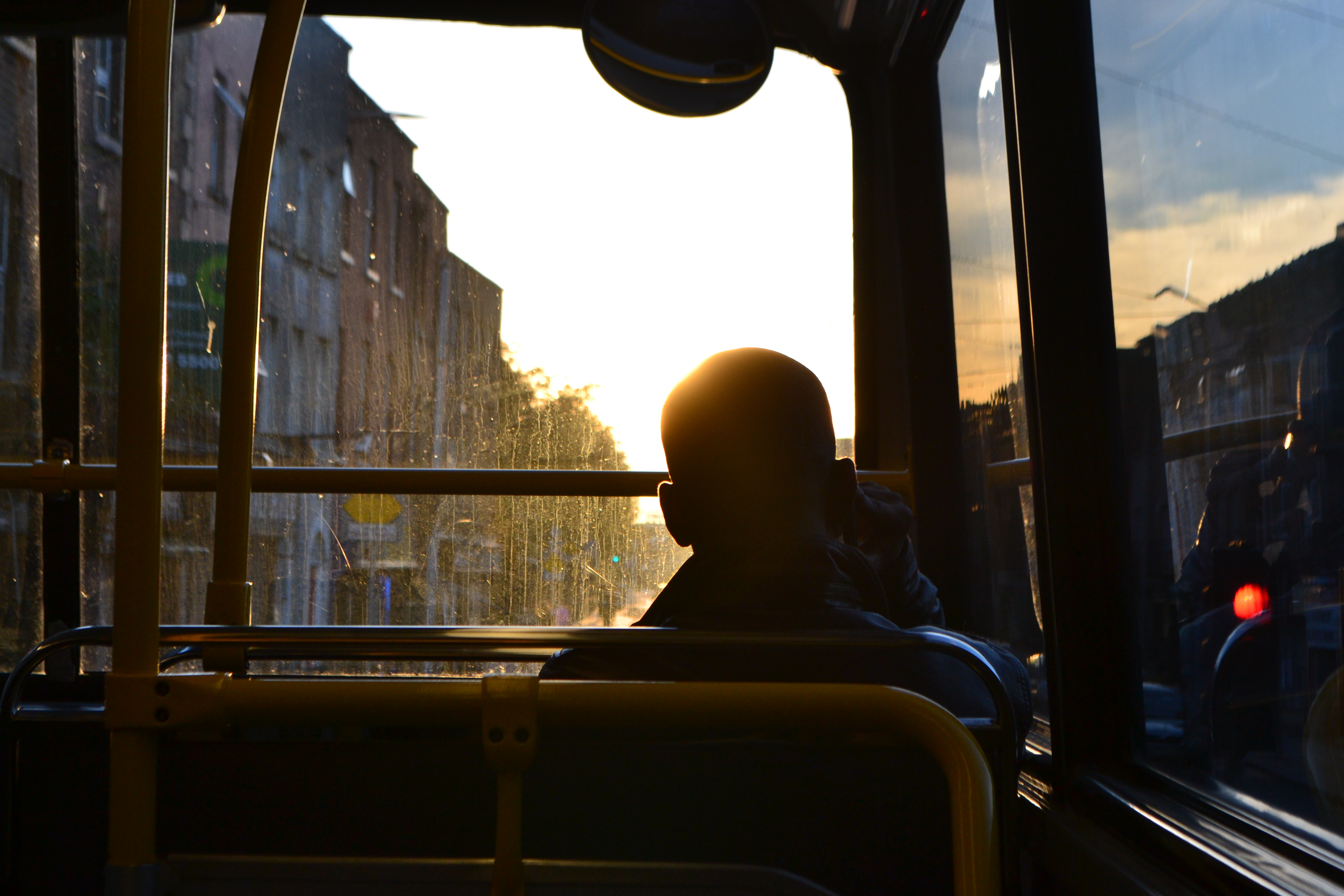
    This is the rant of an old man, I know this, but I can’t let it go. I feel very strongly about this. Why is everyone so bloody grumpy and anti-social on the bus in Dublin?

    Every morning hundreds of thousands of grumpy, moody, little worker ants head to work, college or wherever they’re going and speak to nobody. They just sit there or stand there with there headphones in and ignore all outside influences. I have never known such an anti-social or introverted group of people in my life.

    When did the Irish become so anti-social? Are we not the nation that others look to for the “craic” and social events? Did we not win over the planet with niceness? What the hell happened?

    Should we look to how we spend our time these days? We go to work/college and then go home. Many of us will be too tired to do anything social in the evenings due the pressure today to perform at work and keep our jobs.

    A lot of people will just sit at home and watch TV or play video games. I am one of these people. I love watching TV and playing video games.

    However, contrary to popular belief, these activities are not exclusively anti-social. Yes you can play games on your own or online (which, I feel, is still kind of on your own) or you can have a few mates around and play them together. This is far more enjoyable, in my opinion. Mainly because it adds a new type of competition to the activity as well as a form of camaraderie if you are trying to achieve the same goals.

    This is not a piece about gaming though, that will come soon. This is a piece about a distinct lack of social etiquette in society today.

    Even on a night out these days it’s sometimes hard to spark up a conversation with strangers. People are wary of one another and seem to think that everyone is a threat. If you try to talk to a stranger you get looked at like you’re a freak… Well I do anyway…

    Why do we just sit there on the bus or the LUAS and ignore one another? Why not have a chat to pass the time before we get to work?

    Honestly, if I hadn’t spoken to strangers I would never have met some of my best friends. I also would never have had my jaw broken, but you take the good with the bad.

    Talking to strangers is not a dangerous activity, especially on the bus. It’s just a chat. Make small-talk. Seriously.

    I’ve been trying to have a conversation every morning on the 13 bus from my apartment for the past two weeks and not one person had reciprocated. They look at me like I’m some kind of leper or freak. I’ll admit it’s not the social norm and I probably do look like a weirdo trying to steal their brainwaves to communicate with the lizard people who live under the city, but why is that?

    Is it so bad to try and have a fecking conversation in the morning? I don’t want to steal your phone, I don’t want to get off with you, I don’t want to start a fight, I don’t want to or mean to hassle you, and I certainly don’t want to steal your brainwaves to speak with my lizardy friends (mine work fine, thanks). I just want some social activity. A chat. Small-talk. A conversation.

    I don’t care if its about Xfactor, football, bra sizes, or the recent referendum relating to the Seanad and how the Government were upset with the public’s decision and are telling us (yet again) to “try one more time, and get it right this time”. We did get it right! We voted! Get on with it!

    I don’t care what the talk is about just talk to me,  or the person next to you. At the very least say good morning.

    Don’t be so fecking rude people. It’s not nice.

  • From the Frontline

    From the Frontline

    Hamas Rally in Damascus
    Hamas Rally in Damascus

    “Syrians have come to believe that the world knows what’s happening to them and just doesn’t care.”

    Two leading journalists in the field of war corresponding and foreign affairs were in Dublin last night to speak about the conflict in Syria and the challenges of reporting it. The Guardian correspondent Martin Chulov and freelancer Rania Abouzeid were the guest speakers at a From the Frontline talk hosted by the Clinton Institute, UCD in partnership with the Irish Times.

    The civil war in Syria is almost 3 years old and both journalists spoke eloquently of the way the story has failed to galvanise popular opinion and the role of journalism in combating this.

    “It is getting harder to get stories published”, said Abouzeid, “there is this emotional fatigue people have. The rising doesn’t seem to invoke the same passion. We haven’t seen any popular mobilisation and I don’t know what as a journalist to do about it.” She went on to recount that Syrians have become more reluctant to talk to journalists as the conflict has worn on, “the Syrians have come to believe that the world knows what’s happening to them and just doesn’t care.”

    As the war has dragged on so have the dangers in reporting it increased. Some 56 journalists have been killed and over 30 kidnapped. Both speakers recounted how their ability to report had been curtailed by the difficulty of gaining entry to Syria. Ramia Abouzaid told how, barred from getting a visa, she must smuggle herself across borders, substantially increasing the dangers she is exposed to.

    “The issue of safety has become so vexed, especially in the last 6 months”, said Chulov.

    Both guests had interesting and challenging things to say on the issue of social media and its role in journalism.

    “Twitter can be useful…but it is also a bubble which some people tend to live in instead of the real world…there is no substitute to being there” said Abouzeid.

    Martin Chulov sounded a similar note of caution,

    “Twitter can be an echo chamber. It’s a value add but must be handled with care. It’s easy to get burnt if you rely on it.” In a succinct summing up he said “social media is information and journalism is what you do with that.”

    Neither journalist had any optimism that there was any end in sight to the civil war or the suffering of the Syrian people. Martin Chulov was particularly downbeat in his analysis,

    “There is a real danger of a potential Balkanisation of the region, with divisions along sectarian lines and that is the nightmare scenario…something simply must be done.”

  • Could Ireland realistically host the Rugby World Cup?

    Could Ireland realistically host the Rugby World Cup?

    It is now common knowledge that the IRFU, as well as the governments of both the Republic and Northern Ireland are working on a plan to submit a bid to host the 2023 Rugby World Cup.

    The two biggest sporting events ever to be hosted in Ireland are the 2003 Special Olympics and the 2006 Ryder Cup.  Both these events were viewed as great successes.  However, the Special Olympics only lasted eight days, while the Ryder Cup lasted for just under a week.

    To host the Rugby World Cup, Ireland would have to take on a task, the likes of which it has never seen before.  To give an example, the next RWC will be held in England in 2015.  Visitors from 20 countries will be landing in 11 cities all across England and Wales, to witness an event lasting a month and a half.  13 state of the art stadia will be used throughout the tournament, ranging in capacity from 16,500 (Kingsholm Stadium, Gloucester) to 90,000 (Wembley Stadium, London).

    The problem for the IRFU is that in order to host the tournament in 2023, solely in Ireland, with no games being played in a joint host country, would be to get full participation from the GAA.

    Nine of the ten biggest stadia in Ireland are owned by the GAA.  The only stadium in the top ten, is the Aviva Stadium, which is part owned by the IRFU.  The only problem with these stadia, is that the majority of their capacity crowds, come from terraced stands.  To host a successful international tournament, all stadiums  would need to be fully seated.

    The stadia which would be recommended in the bid, as well as the infrastructure surrounding them would need to be greatly improved.

    It will not be an easy task by any stretch of the imagination, but with a lot of work put in over the next ten years, it is definitely a possibility.

    This slideshow requires JavaScript.

  • Keeping warm in Dublins Winter

    Keeping warm in Dublins Winter

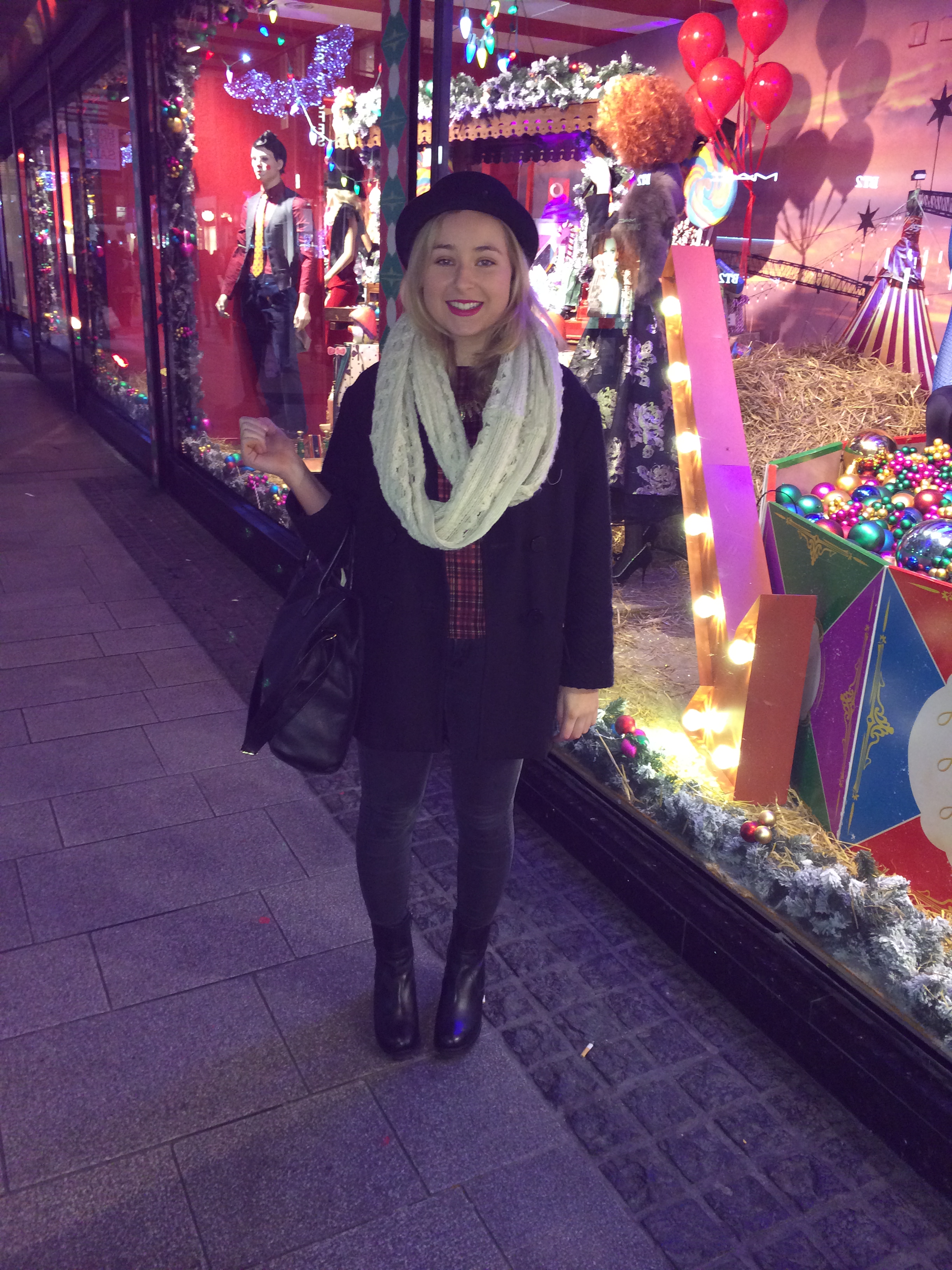
    With the cold spell set to stay for another while yet, the city took to the streets of Dublin to find out how you are keeping warm this winter.

    Credits:

    Photography: Stephanie Quilligan & Niamh Casey

    Voice recordings: Stephanie Quilligan

    Production: Graham Barry

  • Christmas Fair at the National Print Museum

    Christmas Fair at the National Print Museum

    Step back in time and come along to the Christmas Fair at the National Print Museum at Beggars Bush, where you can start your Christmas shopping and pick up unique presents you won’t see elsewhere.

    On the ground floor you will find the permanent exhibition of printing machines, printing blocks, photographs, books and pamphlets as well as a coffee shop looking out onto the old military barracks of yesteryear.

    As you walk up the steps to the sounds and smells of Christmas, you will see all the stalls selling home-made chocolates, hand-made soaps, 3D jewellery, home-made preserves and most importantly, there is a letterpress stall.

    This is the third year the Christmas Fair has been running and Carla Marrinan, managing the museum, told me the museum tries “to create a shopping experience that is beyond a regular shopping mall and they have a variety of stalls with only two of the same stalls having participated every year”.

    Carla pointed out “there are also activities for children, a chance to see the collection and, you can also try the printing yourself and make a Christmas poster”.

    The National Print Museum has a reference library, ideal for research at third-level, as well as an online searchable catalogue.

    It’s open every week day from 9am-5pm and in the afternoons on Saturdays. You can book a guided tour or browse at your leisure.

    This slideshow requires JavaScript.

  • Grappling with the Irish Muay Thai scene

    Grappling with the Irish Muay Thai scene

    In a country gripped by medals success in Olympic boxing and the UFC’s pay-per-view extravaganza, it is perhaps difficult to uncover the strong Muay Thai presence in Ireland.

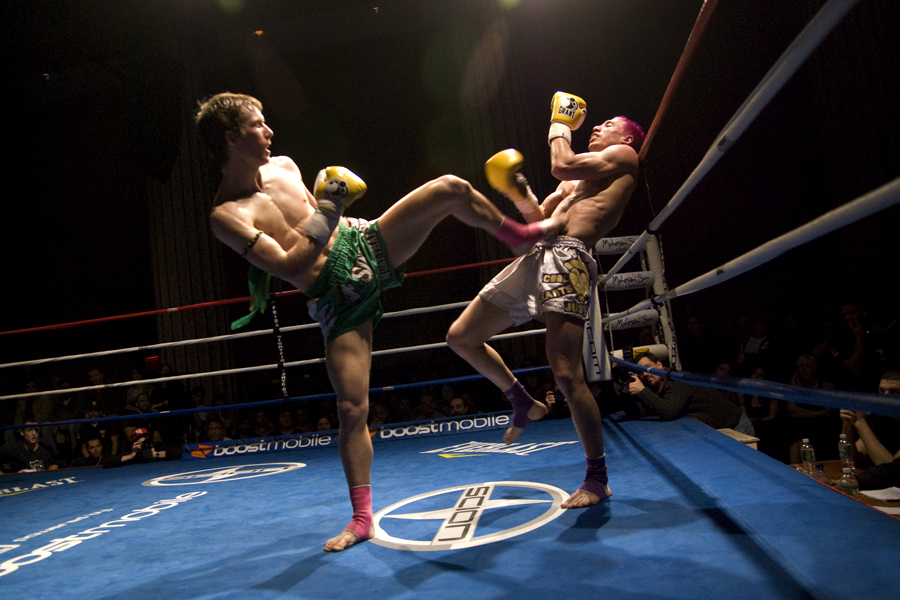
    Muay Thai, occasionally known as Thaiboxing, is a combat sport that utilises all parts of the body for striking, kicking and clinching. A match consists of five three minute rounds with scores being kept by judges.

    There are approximately 30 Muay Thai gyms in Ireland where potential champion fighters learn and study the art. In recent years, the Irish Muay Thai scene has been boosted by the talented Dubliner Jono Bracken and the booking of a fight featuring the legendary Saenchai which was held in Cork earlier this year.

    Wishing to learn about the sport, The City spoke to Daniel O’Reilly, a Muay Thai student and fighter from Dublin. He has been balancing his passion with work commitments since 2009.

    “I had always been fascinated with the sport due to the film Kickboxer, which was my favourite film throughout my childhood,” he said.

    Daniel has experienced several venue changes during his time with the Warriors Thai Boxing Dublin Gym, but has stayed true to the art. “They were first located in Loughlinstown Leisure Centre but then moved to Bray, where I started my training under Mike Dockery,” he explained.

    “Then in late 2009 the club moved to a permanent specialised location in Monkstown. Also now there is a head trainer, Cian Cowley. He is also a multiple title holder in Muay Thai and also K-1.”

    Photo credit: MartialArtsNomad.com on Flickr
    Photo credit: MartialArtsNomad.com on Flickr

    Daniel also described the similarities between Muay Thai and the likes of MMA and boxing, both in advertising and style. “Yes [Muay Thai and MMA share techniques in common], although most MMA fighters have a hybrid style of stand up fighting. It wouldn’t be possible to fight with a true Thai stance due to takedowns so the techniques are slightly altered,” he said.

    He continued, “there are many shows, promoted just like MMA and boxing cards. Fighters are flown in from all over Europe and some even from Thailand. Just last month, Siam Warriors gym in Cork held a super show with two elite Thai fighters, Pornsae and Rungravee.”

    Luckily for Daniel’s Warriors gym, they have an event of their own to look forward to this month.

    It is relatively inexpensive to buy the necessary gear for Muay Thai, according to Daniel. Items used by Thaiboxing fighters include gloves, shin pads, shorts, a protective cup and gumguard and wrist wraps. Gyms provide certain pieces of equipment until a student wishes to commit to training.

    Muay Thai is primarily taught to adolescents and adult students, but younger students can be catered for. “In Thailand they start from a very young age. Over here it’s limited due to the intensity of the sport. Junior classes are held but they’d be heavily padded and only really learn the techniques of the style,” he said.

    Featured image by Mario_Arias on Flickr.

  • Does Love/Hate do justice to Dublin City?

    Does Love/Hate do justice to Dublin City?

    With the anti-climactic end to Love/Hate this month, we took to the streets of Dublin to see if its inhabitants believe the RTE drama is an accurate portrayal of the city.

    Do you think Love/Hate is accurate? Let us know in the comments below.

    By Conor Lennon and Ciaran Ward

  • 5 People you meet on the Luas

    5 People you meet on the Luas

    I, like countless other people living, working, and studying in the capital, use the Luas fairly regularly. Cheap, reliable, and convenient, the light rail service is invaluable for many commuters. However, use the Luas for any length of time and you can’t help but notice certain recurring stereotypes in your fellow passengers; some disruptive, most a mere nuisance, and a few that can even be entertaining.

    Here are some of the culprits:

    The Fare-dodger

    [Credit: Phil Guest}
    [Credit: Phil Guest}
    Invariably young and male, the Fare-dodger is usually a college fresher, (newly relocated from the country and released into the big smoke) attempting to travel to his destination without the advantage of a ticket. Instantly recognisable by his rucksack and head-on-a-swivel body language, the Fare-dodger’s natural enemy is the ticket-inspector. While definitely not the only passenger without a valid ticket, he will be by far the most obvious offender.

    The Talker

    Luas photoshopped

    While there is nothing wrong with engaging other passengers in conversation, The Talker has no interest in conversing and only wishes to inflict their opinion on as many of their fellow travellers as humanly possible. Aggressively-mannered and seemingly oblivious to personal space, The Talker may pick one individual to educate, or (just as likely) decide to inflict their views on the whole tram.

    The Busy Man

    [credit: louiseisawesome.wordpress.com]
    [credit: louiseisawesome.wordpress.com]
    Obviously in a great hurry to get somewhere very important, and do equally important things when he gets there, The Busy Man can be distinguished from other well-dressed commuters by how he enters and exits the Luas. Strategically positioning himself to be directly in front of the door when the tram stops, he clears disembarking passengers in the same manner as Paul O’Connell clearing rucks. Arriving at his destination bouncing on the balls of his feet, Usain Bolt would be jealous of this man’s take-offs as he slips through the smallest possible opening of the doors and disappears into the hustle and bustle of his busy life.

    The Nightmare

    [credit: politics.ie]
    [credit: politics.ie]
    The whole mood on the Luas changes when these individuals enter. Always intoxicated and usually nursing a can of Druids, these pillars of their communities seem unaware that they are actually on public transport. Domestic disputes, personal histories, and *ahem* pharmaceutical discussions are all fair game, while the rest of the passengers are left awkwardly trying not to make eye contact. Universally clad in worn tracksuits (blood and/or vomit optional), if you don’t see them coming don’t worry, it won’t take too long for them to announce themselves (loudly).

    The “Room for a Small One”

    We’ve all been there, rush-hour in the city centre, packed carriages becoming more and more claustrophobic with every stop, until eventually there is simply no room left. That’s when this particular pest will surface, just to make everyone’s journey even more enjoyable. While most people will see the lack of available space and decide to wait for another Luas, Room-for-a-Small-One has no time for that nonsense and is adamant on embarking, regardless of what passengers already on board think. If The Busy Man is reminiscent of Paul O’Connell, this commuter is more in the Cian Healy-mould, putting the head down and driving forward, scattering fellow travellers and making sardines of those ahead of them.

    Cian Healy entering the Luas [credit: stuckinthescrum.wordpress.com]
    Cian Healy entering the Luas [credit: stuckinthescrum.wordpress.com]
  • Lead us not into Temptation…

    Lead us not into Temptation…

    Image

    It was Ronald Reagan, of all people, who pointed out that if prostitution was the world’s oldest profession, and politics it’s second oldest, there was often not a lot of difference between the two. Political corruption is as old as the hills, but is it inevitable?

    “You will never get rid of the human tendency to corruption, but it can be combated with better safeguards, more openness and transparency,” said Sean Byrne, a lecturer in economics at Dublin Institute of Technology.

    It’s important not to overstate the problem of corruption in Ireland. Political corruption was at its worst in the years before the Celtic Tiger and Ireland is currently ranked 25th out of 176 in Transparency International’s annual Corruption Perceptions Index, ranking joint 11th with Austria of the E.U member states. Corruption is certainly not as bad as some would have you believe, nor as widespread as in the past.

    “Ireland ranked rather high in the official corruption index in the late nineties and early noughties, but since then levels of corruption have been declining significantly,” said John Gallagher, a PR course director at DIT.

    It is a view echoed by Sean Byrne: “Relative to other countries, we are not doing too badly. A country like Italy, for example, is far more corrupt. The amount of over regulation by the state inevitably leads to corruption, because it is simply impossible to get anything done without it.”

    If Ireland is not anymore corrupt than comparable European countries ,it has traditionally been weak at holding corrupt politicians to account.

    “Parliament in Ireland is weak relative to government, and has no right to launch independent investigations,” said Sean Byrne, “contrast this to the UK, where independent parliamentary inquiries are common, for example, the recent Leveson Enquiry in to the press.”

    It is often said that a society gets the politicians it deserves. Perhaps the public must shoulder some of the blame for allowing corruption to go unpunished in the past.

    Sean Byrne detects an air of ambivalence from people and perhaps a level of tolerance:
    “People don’t like the idea of corruption, but at the same time often have the idea that one day they might benefit from it,” he said.
    But things are moving in the right direction. This July saw the publication of the Protected Disclosures Bill which provides for the protection of whistleblowers in all sectors of the economy. It was a move welcomed by Transparency International Ireland, an organisation dedicated to the eradication of corruption.

    “This could be a hugely important step in the fight against corruption and promotion of good governance in Ireland” said John Devitt, Chief Executive of TI Ireland. “With almost half of all cases of fraud and other forms of wrongdoing exposed by whistle-blowers, it’s time that they enjoy the protection of the law for acting in the public interest,” he added.

    “Our politicians have learnt a bitter lesson,” said Sean Byrne. “All the political parties are now eager to show themselves as full of probity – Fianna Fáil are particularly anxious to show that the era of Haughey and Ahern is behind them.”