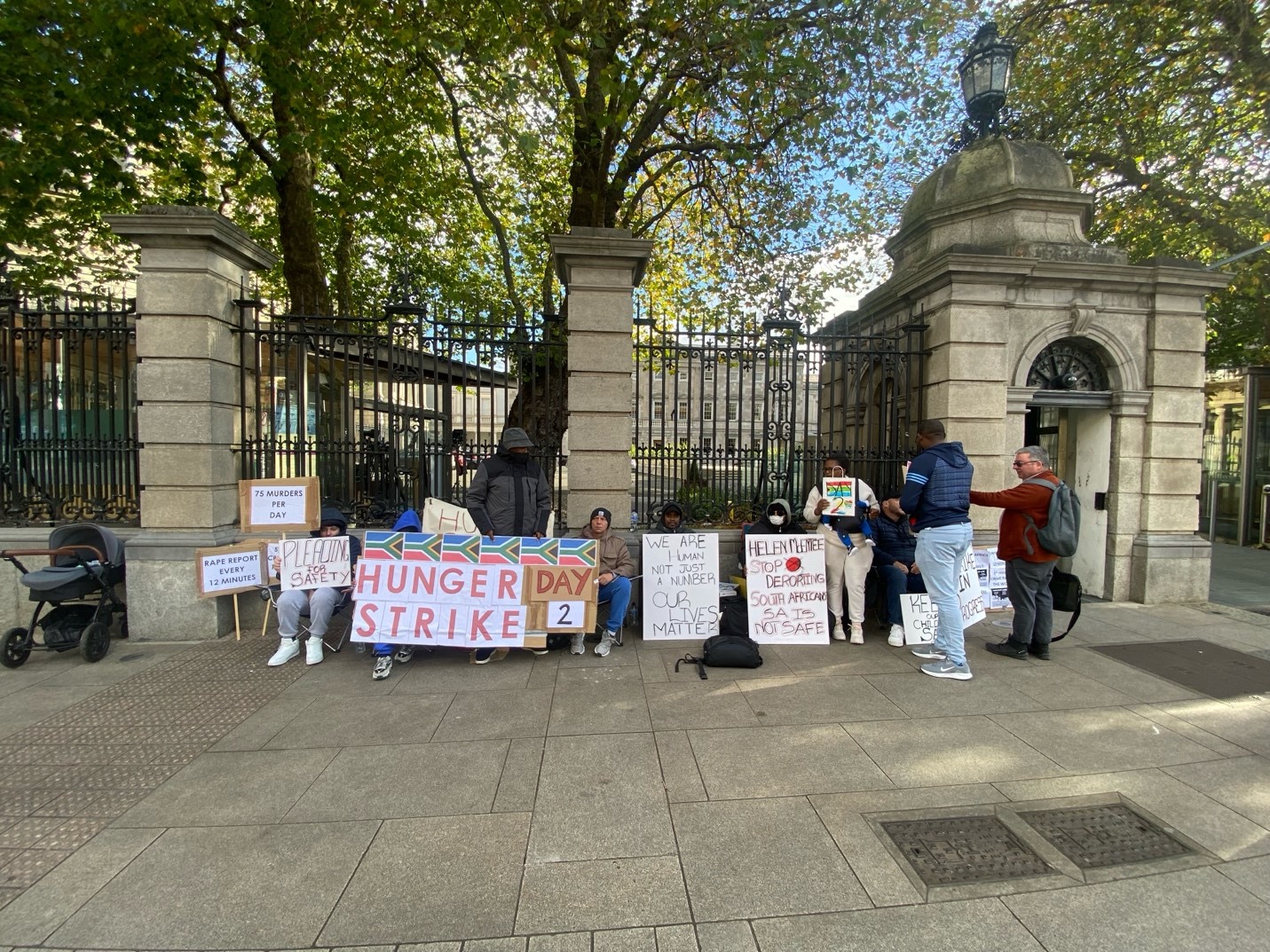
Since Monday 21 October, these South African men and women who are living in Direct Provision have gone on a hunger strike in the hopes that the Irish Government will reconsider having South Africa listed on Ireland’s ‘Safe Countries’ list.
The EU and Irish Government define a ‘safe country of origin’ as a country in which: “there is generally and consistently no persecution, no torture or inhuman or degrading treatment or punishment and no threat by reason of indiscriminate violence in situations of international or internal armed conflict.” Neels Heystek – a South African that are taking part in the hunger strike. Heystek told TheCity.ie his daughter is suffering from PTSD and is having regular panic attacks at school as a result of what has happened to their family in South Africa.
“This is our last resort now.”
Neels Heystek
Passersby and sympathisers have donated water to the hunger strikers.On the otherside of Dáil Éireann’s gates, was a protest held by Irish Healthcare Workers for Palestine. Some of these protesters came over to the hunger strikers in support when a far-right agitator arrived.The IrishHealthcare Workers for Palestine lending their megaphone to the South African hunger strikers to drown out the far-right heckler. A collection of the protester’s signs
‘Rape Report every 12 minutes’
‘75 Murders Per Day’
‘Pleading for Safety’
Hunger strikers displaying their respective signs telling those passing by why they are on hunger strike.One of the protesters, down on their knees sticking together another sign for passersby and government officials coming through the gates of Dáil Éireann to see and take notice of.Brian Mogotsi is another of the hunger strikers. He is taking part in this protest in the hopes that the Government will engage in a dialogue with South Africans that are living in Direct Provision to reconsider their position on deeming South Africa as a safe country
The October chill has hit which means the Bram Stoker festival has begun. It’s Dublin’s time to celebrate and honour Bram Stoker, the author of the most famous vampire around- Dracula. Events over four days and four nights lead you all around Dublin City, from the Casino of Marino to Dublin Castle, you are sure to learn all about Stoker and Dracula’s life.
On Friday the 25th of October a fantastic family friendly spectacle ‘Frank and McSteins Monster Laboratory- Out of the Lab and into the Fire’ took place in Dublin Castle.
Starting the evening early- queues had begun building up half an hour before the event started. Groups of people entering the grounds at 6pm sharp- the tower highlighted red for Dracula himself People were starting to warm up to the spooky ideas with interactive games and flames Frank and McSteins helpers putting out the fire Fire and crazy scientists meet art and street theatre for Halloween Frank teaching the youth of today his evil waysWhere there’s smoke there’s fire Getting gothic at Dublin CastleFrank gave us a wave before the big show- little did we know what was to comeFrank led the crowds through bringing this animatronic to life, many attempts were made, and many arguments were had with the other mad scientist McStein. Eventually, the two scientists pulled it together. There he is, slowly coming to lifeAnd after a long day of creating life, fighting fire… and lighting fire, witches and ghouls alike skipped home ready for bed.These guys had seen enough madness to last them through Halloween
A nail-biting end to a dramatic game on a windy day in Parnell Park saw Cuala overcome local rivals Kilmacud Crokes with a last gasp hand passed point by Eoin Kennedy, after Luke Keating’s freekick fell short with seconds to go on Sunday afternoon.
This put a stop to Kilmacud’s hopes of winning 4-in-a-row for the first time since the 1960s and gave Cuala their first ever Dublin Senior Football Championship win, in their first finals appearance since 1988.
Players appeared to struggle to determine which way the wind was blowing. In the first half, it appeared to benefit Crokes, but that didn’t last long. It was evidently blowing in the main from the church-end and behind Cuala’s backs but was equally indiscriminatory and unpredictable throughout the afternoon.
Crokes tried to smother Cuala’s strong first half and contain the damage until they could make use of the wind in their favour, but they were guilty of a few hurried attempts at goal and, predictably, bad choices considering the difficult conditions.
With their ace attackers Paul Mannion and Shane Walsh each scoring one point in the first half, Crokes missed six opportunities, blowing attempts at the uprights wide or short into goalkeeper Skollard’s hands.
During this period, Cuala’s offensive style was much more direct and focused. They made fewer poor attempts and had some well worked teamplay as they repeatedly drove up the pitch in packs to take a healthy lead going into halftime.
Dublin defender Michael Fitzsimons contributed to their onslaught, by fist passing a smart point and following it up by hitting another creative score after flicking the ball over Walsh’s head and collecting it on the other side.
Cuala’s five-point advantage at the half was only cheapened by the fact that two goal scoring opportunities had escaped them in the first six minutes of the second half.
Con O’Callaghan had the first but was denied by brave defending. This was followed up by Niall O’Callaghan’s excellent strike at the top corner being elegantly tipped over the bar for a point by Devon Burns.
Within a frenzied few minutes though, everything looked as though it might change.
Cuala fans rush onto pitch after final whistle
The Dalkey men kept Crokes at bay with the odd score and some outstanding defending but couldn’t stop a more experienced Crokes side from cutting the margin to three points between the forty- and fifty-minute marks. This was then made worse for Cuala when after just a few minutes in play as a blood substitute, Kilmacud’s Luke Ward scored the game’s first goal to tie the score for the first time since the fourth minute, when Mannion found him with a sweeping pass across Cuala’s last line of defenders.
Then, during the break in play, there was drama at the opposite end of the ground when Con O’Callaghan was shown a straight red card by referee Sean McCarthey at Stillorgan sides goalmouth, for an elbow on Crokes goalkeeper Devon Burns. This made for a tense end to the finals for both sets of supporters, but the purple and gold of Kilmacud Crokes didn’t have enough in the end to halt a history making day for the red and white of Cuala.
The team’s victory was well-earned, handling the match and Storm Ashley with skill and caution. They now progress to the quarterfinals of the Leinster Senior Football Championship and will take on whoever comes out on top between the Wicklow and Longford Championships respectively.
Scorers for Cuala: L Keating (0-3, 0-2 frees); C Doran (0-3); M Fitzsimons (0-2); E Kennedy, C McMorrow, P Ó Cofaigh Byrne, P Duffy N O’Callaghan and C O’Callaghan (all 0-1).
Scorers for Kilmacud Crokes: P Mannion (0-4, 0-1 free and 0-1 mark); S Walsh (0-3, 0-1 free); L Ward (1-0); H Kenny, C Dias, D Mullin (all 0-1).
CUALA: R Scollard; D Conroy, M Fitzsimons, E O’Callaghan; E Kennedy, C McMorrow, D O’Dowd; P Ó Cofaigh Byrne, P Duffy; C Dunne, C Ó Giolláin, C Doran; L Keating, N O’Callaghan, C O’Callaghan.
Subs: C Groarke for Ó Giolláin (43); C Mulally for Dunne (48); L Ward for O’Brien (blood, 54) and for Murphy (56).
KILMACUD CROKES: D Burns; M Mullin, T Clancy, D O’Brien; M O’Leary, A McGowan, J Murphy; B Shovlin, R O’Carroll; H Kenny, C Dias, D Mullin; P Mannion, P O’Connor, S Walsh.
Subs: C O’Connor for O’Leary (43); T Fox for Kenny (45); M Conroy for D Conroy (56); S Cunningham for O’Connor (71).
“Why would you bother learning that? Sure, it’s a dead language” – the words many Irish speakers have heard while growing up.
However, in 2024, that could not be further from the truth.
Today, TheCity.ie speaks with Mícheál Ó Nualláin, director of Baile Átha Cliath le Gaeilge and Ola Majekodunmi, Irish language programme co-ordinator with Fighting Words, about all things Irish, and in particular, their own journeys with the language.
From schooling to job opportunities, to what they believe the Government needs to do to further progress the language, the Gaelgóirí tells all.
The City caught up with the ‘Bray Beach Bathers’, who are a group of men and women who all share a common love for swimming in the ocean, as they brave the cold water on a brisk, but beautiful October morning – which made for perfect swimming conditions.
In seaside towns across the country, sea swimming has become a rapidly rising phenomenon – but for many, it’s become much more than just a hobby – it’s become a way of life.
As part of their now daily routines, sea swimmers have formed several groups who come together for their daily dips into the Irish Sea all year round.
While every swimmer has their own respective reasons for being involved in taking part, one thing is for sure – no matter the weather, sea swimming is here to stay.
As people journey through life, independence can grow and thrive – however, sometimes, in life, and especially as some people get older, independence can unfortunately decline.
With a decline in a person’s ability to be independent, comes dependency with everyday issues, that can begin to overpower, to the point where living at home might prove to be unsustainable.
Long-term care facilities are a beacon of hope for a person who needs 24/7 care – allowing the person to still be able to indulge in their own life experience, all while in the hands of professional care givers.
However, it’s not always an easy journey into long-term care as established nursing homes are more than often full and have waiting lists for potential future admissions.
In August 2024, research involving 1000 people was conducted by Coyne Research and commissioned by Nursing Homes Ireland (NHI) and found that six out of 10 people fear for their loved ones being able to find a place in local nursing homes.
It was a nursing home in Kinsealy, Co. Dublin, that had the advantage of space and more accessible admissions, for a time – as it was only recently opened, with no waiting list, and with rooms available for anyone in its local community, looking at long-term care options.
A short distance from coastal towns, Malahide and Portmarnock, in the tranquil countryside setting of Kinsealy, Woodlawn Manor opened its doors in February 2024 to less than 10 new residents requiring care facilities.
The entrance to Woodlawn Manor on the grounds of St. Doolaghs Park in Kinsealy, Co. Dublin. Photo: Gary Petrov
With a maximum capacity of 97 residents, Woodlawn Manor had space for new residents for a total of nine months, before reaching its maximum capacity earlier this month.
Teagan MacAodhagáin is the Director of Nursing at Woodlawn Manor and has worked exclusively in elderly care since graduating as a nurse, and has been a Director of Nursing since 2018.
“We’re very passionate about what we do,” said MacAodhagáin. “The core team, myself, the clinical nurse managers, reception administrators and that – we really live by our motto ‘Care is what we do’.”
Teagan MacAodhagáin, Director of Nursing at Woodlawn Manor. Photo: Courtesy of Woodlawn Manor.
“I always tell my staff that the standard of care is what you want for the person you love most and anything less than that is falling below the standard that we should have. I think that’s important, that that’s what you aim to deliver – you try and achieve that.
“Some days the tea might be cold when it arrives, or the laundry might be a bit delayed. Things will happen with human error and various things, but if you’re aiming for something you would like for the person you love most, then I think you’re going to do a good job, nine times out of 10.
“We have filled up remarkably fast. I’ve been involved in a number of new nursing homes, and I would be familiar with nursing homes opening up. It was faster than what would’ve been expected, perhaps, given the number of nursing homes in the locality. What has led to that? Definitely, I think the setting, the setting is beautiful. The countryside and sea-views. Having a brand-new purpose-built facility was also very helpful. That had a big attraction, early on.
“Internal factors – assembling a good core team at the beginning. I hired people I was familiar with and people I worked with before – people I knew. It wasn’t a brand-new venture with lots of people pulled into it. It was a team that knew each other and worked together before. We knew one another and knew how we worked together.
“Having a dedicated admissions nurse helped, a role I created for the first year – which was really important and instrumental in filling the place up. Someone who was out doing assessments, being a point of contact for all.
“It was a little bit daunting to have 97 rooms and the onus to fill them, but not having to have a waiting list, it was really nice. It was great to not have to turn anyone away. To be able to take people for respite, short-term care, to take people who were at the end of life and needed a few days of care while passing. It was nice to be able to do that,” he said.
Staff from the dedicated team at Woodlawn Manor. Photo: Courtesy of Woodlawn Manor
Since reaching maximum capacity this month, MacAodhagáin discussed the inevitable shift in the admissions process saying that they are starting their waiting list now and new admissions will only be selected from the waiting list when a room becomes available.
MacAodhagáin said he must “give credit” to Woodlawn Manor’s admissions nurse Camelia Ganea, who is also a clinical nurse manager in the facility – for her “marvellous” hard work all year as they welcomed their new residents.
Staff at Woodlawn Manor during a fire brigade visit, where they discussed safety procedures for their residents, in case of emergencies. Photo: Courtesy of Woodlawn Manor
Since 2018, at least 77 nursing homes have closed around Ireland. Of that number, 10 closed in 2023 and seven have closed this year to date. Last month, Nursing Homes Ireland said that this is due to a mixture of rising operational costs and Fair Deal Scheme pressures.
When asked about the issues and worries surrounding nursing home closures in the country, MacAodhagáin said, “From what I know, the nursing homes that have closed down have been smaller, family-run nursing homes.”
“Standalone nursing homes, or the building might be old and isn’t up to the current regulations. Fire regulations and things like that have become, and rightly so, more stringent and more in depth of what’s required. For older buildings, they can be a very large cost implication, to bring them up to the standard that’s required.
“I’m also aware of lots of larger companies opening more and more homes or buying homes. I do think there are homes out there, all-right,” he said.
Woodlawn Manor’s new purpose-built facility was built adjacent to an existing manor on the grounds of St. Doolaghs Park. Photo: Gary Petrov
Something that can naturally accompany a person being placed into long-term care is the emotional element for their family, ending their chapter of life with their loved one in the family home.
Patrick Maguire recently placed his spouse into long-term care and chose Woodlawn Manor. “When the time came to put my wife into long-term care, my family and I, while coping with the emotional aspect of it, feared it would be a race against time with her individual case, to find a nursing home in the local community that tended to her needs, with a vacant room available as soon as it was needed for her,” he said.
“With all of the organising and preparing of affairs that comes with this difficult choice of accepting that your spouse can no longer live independently at home, it was daunting for my family and I to go and view nursing homes in my local area and be told that they are currently full and that they have waiting lists that I could add my wife’s name to.
“Not everyone has time for waiting lists and we didn’t. Woodlawn Manor was a God send. After enquiring about several nursing homes, my family and I rushed to view it as soon as we were made aware of it having less than 10 residents, at the time.
“We were very impressed and acted quickly. We were then able to have my wife in their care within a few days, after the necessary admission paperwork was done. The process worked out well for us in the end, and I say that delicately, because her condition proved for living at home to no longer be an option. However, luck played a huge part as firstly, we liked the nursing home for my wife, and secondly, the nursing home had room.
“The difficulty of finding a local nursing home with a vacancy, and one that is suitable for your loved one’s needs, is a task in itself – on top of all of the emotions and pain that comes with accepting the reality of it all.
“We were lucky to have a difficult journey made easier with Woodlawn Manor not being full, but when the time comes for people nationwide, not many will find themselves with a new nursing home nearby, full of rooms at their convenience for them or a loved one,” he said.
The exterior of the newly built facility in St. Doolaghs Park. Photo: Courtesy of Woodlawn Manor
Asking the Director of Nursing what he would say to someone looking at Woodlawn Manor as a long-term care option for a loved one, he referred to their motto and the feedback they have received since opening, and said, “Our motto is ‘Care is what we do’, and I came up with that motto because care is what I’m really passionate about. Firstly, we’ve been told that it’s a very calm and homely environment. Secondly, people most commonly say that the staff really care.”
“As the Director of Nursing, it makes me very very proud that people can see that the staff genuinely care about the residents. I think that’s what we have to offer. When you care, you go the extra mile for the residents. This is their home and their time with us is perhaps the last time they’ll have anywhere – and we want it to be good, we want people to feel at home. We want people to be cared for and cared about,” he said.
Woodlawn Manor offers residential nursing care, respite care, convalescence care, dementia care and end of life care.
Useful resources from Nursing Homes Ireland on choosing a nursing home can be found here.
The National Transport Authority (NTA) has approved a nine per cent increase in the National Maximum Taxi fare. This increase is due to take effect from the 1st of December.
This adjustment is to ensure that taxi fares reflect the rise in inflation and costs of operating a taxi service in Ireland.
“I’ll just take the bus, I have a 24-hour bus that I can get home after being out, but for people who don’t, it’s just going to break their banks,” said Niamh Linnane, a 22-year-old student.
“The cost of a taxi in Ireland is extortionate if you aren’t sharing with people,” said Linnane.
We will also see a change to the ‘Special Rate’, which a rate charged only for journeys taken between Christmas Eve, Stephen’s Day, New Year’s Eve and New Year’s Day during unsocial hours.
The Special Rate will now cover the weekend peak hours from midnight to 4:00 AM on Friday night into Saturday morning and Saturday night into Sunday morning, year-round. The fare will be higher rate, and this change aims to encourage more drivers to support the nighttime economy.
There also will be an increase in pre-booking fees. During weekend peak times it will rise from €2 to €3.
Photo by Naseem Buras / Unsplash
“With the cost of petrol, diesel and all that goes into owning a car, never mind a taxi, I am happy to see this fare increase,” said Paul Murphy, a taxi driver of nearly 20 years.
“I know it sounds bad to customers but with the cost-of-living crisis it’s just something that needs to happen,” said Paul Murphy.
This National Maximum Taxi Fare Review takes place every two years to ensure the fares match the costs of maintaining a good quality taxi service and the cost of living within Ireland.
The 2024 Review, published in July, revealed that taxi operating costs increased by approximately 9-11% between 2022 and 2024. Following public consultations regarding these rising costs for taxi drivers, the Taxi Regulation (Maximum Fares) Order 2024 implemented an average fare increase of nine per cent, adjusted across different time bands and distances.
‘Numbeo’ has ranked countries in order of the highest fare of a taxi per kilometer. Switzerland was ranked 1st with the average fare per kilometer being €4.15. According to ‘My Swiss Company’ the average salary in Switzerland is relatively high, reflecting the country’s strong economy, with figures around CHF 78,000 per year as of 2024, which is equivalent to around €83,000.
Ireland placed 13th out of 97 countries with an average of €2 per kilometer.
Taxi fares should reflect the country’s cost of living. Given Ireland’s cost of living crisis and high inflation, this has led to the increase on the taxi fares.
However, with the inflation rate falling to 1.7% in the month of August, figures from the Central Statistics Office (CSO) have shown. This is the first time the inflation rate has lowered since June 2021.
Despite this, The Budget 2025 informed us that the rate will increase from €56 to €63.50 for petrol and diesel. This means an extra €1.20 per full tank for motorists. Potentially meaning this increase taxi fare will not be changed.
“This increase will be in place for the next two years, if inflation continues to decline, then it will be considered and there may be a decrease in taxi fares, but it must match the cost of living at that time,” said The NTA press office.
A recent study from The Irish Longitudinal Study on Ageing (TILDA) in Ireland shows that about one-third of adults over 50 in the Republic of Ireland have experienced emotional loneliness at some point, with 7% feeling lonely often.
The research found that loneliness tends to decrease between the ages of 50 and 67 but rises again after that.
People over 75 are more likely to report feeling moderately lonely compared to younger groups. Factors like lower education, living alone, poor self-rated health, physical limitations, and chronic health conditions were linked to higher levels of loneliness.
Ireland is currently ranked number one in Europe for people suffering grom loneliness as of last year, with the coronavirus pandemic forcing generations to feel isolated.
Source: Institute of Public Health
Men above 65 years old saw a 25.1% increase in living alone, while women over 65 saw an 18.4% increase in the last six years. “The numbers are only going to continue rising,” said psychotherapist Maggie Molloy.
“I often deal with young people suffering from loneliness, so I know how bad it must be for the elderly who have far more reasons, most of which are out of their hands for feeling lonely.”
Last year The World Health Organization (WHO) declared loneliness to be a pressing global health threat, with the US surgeon general saying that its mortality effects are equivalent to smoking 15 cigarettes a day.
Anne Butler is a woman who knows the effects of loneliness all too well, inspiring her to commit her life to helping the most vulnerable in her community.
“Loneliness is a big issue for older people, and I don’t think the general public realises this enough,” said Mrs. Butler, who is the manager of Walkinstown Social Service Centre.
“It is dangerous to the elderly, we are social creatures that need to interact and get out of the house, but for some people that’s just impossible. It is heartbreaking because some of the faces around here were stuck in nightmare cycles of being upset, refusing to eat, or turning to drinking alcohol at home. It’s stories like these that make me so happy that we’re making an impact in the community and the bigger problem,” she says.
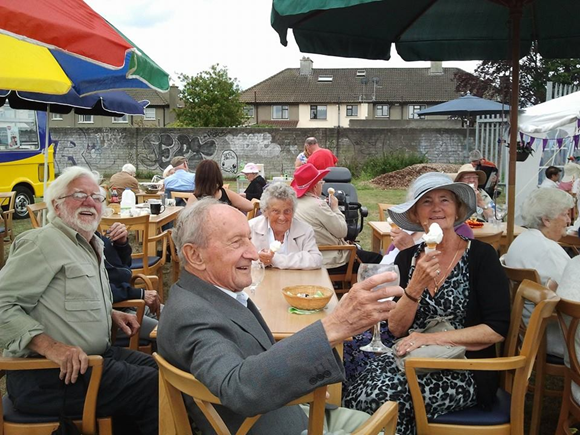
The centre takes in 60 people daily between lunch and dinner with some walking and others taking the centre’s bus that collects them from their houses. The centre charges €10 for transport, a meal, and bonus activities, whether that is a game of bingo, or a fitness instructor to get them exercising.
Group day trips around the country are organised and voted on. Special events happen year-round with ‘Strictly Come Dancing’ watch parties and even live shows with staff members performing dances.
“I’ve been coming for the last few years now and it’s just brilliant,” said Monica Walsh, age 72.
“I’m not great on my feet any more so going out wasn’t really possible unless I waited for my kids to come and bring me out somewhere. The centre is great because I get a sense of independence back, able to go out on my own.
“I feel like a kid again, going out with friends, singing songs. This place has given me some of the best moments I’ve had in years. All the staff are true heroes.”
The centre’s staff is made up of half full-time workers and half part-time voluntary workers from the local area such as Amanda Nic Fhannchaidh.
“I don’t work on Thursdays or Fridays, and I’d just be watching the Telly all day, so it’s really a no-brainer for me to come here, have a laugh, and feel good about myself for helping out where I can,” said Amanda.
Both local schools, the Assumption Secondary School Walkinstown and Drimnagh Castle Secondary School, have included helping out at the centre as a part of the transition year experience.
“It’s the right thing to do, so it’s what the lads will do. It gives the school a good name in the community and a chance for the boys to see how far a little help can go,” said Drimnagh Castle Secondary School principal John Haze.
The Government announced during Budget 2025 that e-cigarettes will increase in purchasing due to new taxes being introduced.
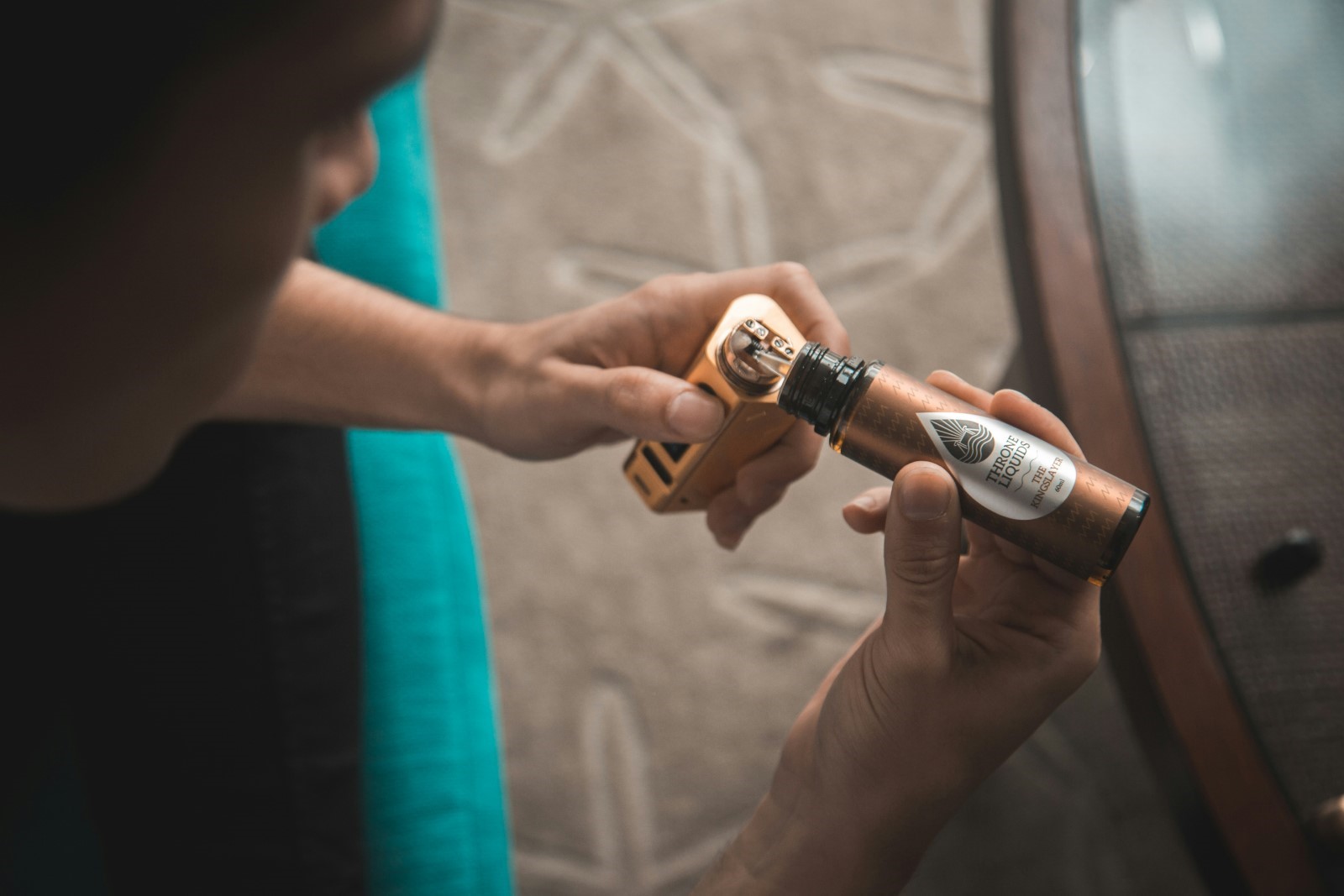
The tax will apply to all e-liquids at a rate of 50c per ml of e-liquid. A typical disposable vape contains 2ml of e-liquid and costs in the region of €8.
This new tax will bring the price of such a product to €9.23 including VAT.
The tax will come into effect in the middle of next year.
It is not a surprise that vapes are seeing this new tax being implemented as it can be seen as a way to discourage young people in Ireland from using vapes.
Minister for Finance Jack Chambers told the Dáil he was introducing the tax “on public health grounds as there has been a significant rise in their use”.
The Government believes the tax on vapes is a step in the right direction.
The Government is also working on legislation to ban the sale of disposable vapes on environmental and public health grounds.
If that is achieved there could potentially be a big decline in the smoking industry and shopkeepers that primarily sell vapes could be at risk.
The City.ie was able to sit down with Mohammed, a store owner at Moore Street who sells various items in his store like Prime, keychains, and vapes.
“See my friend, I don’t mind the new tax coming to my store, I will still get my customers why? Because the vapes sell very well, I just do not want the ban of disposable vapes many people come and buy it here and if it is no longer available, I will lose business”.
Vape/Cigarette store on Moore Street, Dublin Photo credit: Mene Agbofodoh
Occupational Therapist Adora Maxell spoke to the City.ie about some of the health risks associated with vaping amongst young people.
“One of the most common effects of vapes is that they are highly addictive due to their nicotine content and with the youth there are multiple flavourings that create this feel of a different taste with each vape”.
“During my internship, I saw cases of EVALI (E-cigarettes Vaping-Associated Lung Injury). This condition has been linked to vaping especially vapes that contain THC, it can cause serious lung damage, with symptoms like difficulty breathing, coughing, chest pain, and even hospitalization or and it more severe cases in death fortunately I have not experience to that level.
“The chemicals within vapes are possibly the worst things about them, they contain very harsh substances like formaldehyde, acrolein, and diacetyl which are damaging to the body when inhaled. Some of the substances can be responsible for what is commonly known as ‘popcorn lungs’ which is another way of saying bronchiolitis,” said Maxell.
The City.ie also took to the streets of Dublin to ask the general public how they felt about the new taxes being put in place on the vapes.
“Honestly, I think it is a good incentive going forward, it helps younger and older people alike the question of whether they should be spending their money on vapes right now or use it for something beneficial for themselves”. said Lee Mullen from O’Connell Street.
Jane,19 from Cork, also spoke to The City.ie on the issues of vapes.
“As a young person who buys the occasional vape on a night out or whenever I need to calm myself down it feels unfair going forward, I’ll have to spend even more to do now”.
“I feel the Government should focus more on helping younger people in other areas like education and housing instead of stuff like this honestly, at least the tax isn’t coming into effect until next year, so I’ll probably stock up or something I don’t know”.
Last weekend, Bayer Leverkusen took on newly promoted Holstein Kiel in the side’s first ever league meeting, in what was expected to be a strong win for the home side.
Leverkusen fan takes part in passionate pre-match anthem – Photo: Ethan McDonagh
Holstein are playing their first top division German soccer since before the second World War and were expected to be beaten heavily.
However, Holstein had other ideas and despite being two goals down after eight minutes, they fought back to earn a draw.
Die Werkself came flying out at the start of the game, with Nigerian international Victor Boniface opening the scoring after just four minutes by placing a low driven shot past the keeper, whose touch wasn’t enough to prevent it from going in.
Things got even better for Leverkusen manager Xabi Alonso’s team in the eighth minute, with winger Jonas Hoffmann doubling the advantage with an accurate strike into the bottom left corner – after Holstein failed to properly clear the ball from a Boniface effort on target.
It looked like the game was going to be out of sight for the weekend in the 26th minute, when Boniface put another shot past Timon Weiner in goal – only for his effort to be ruled out for offside by the Video Assistant Referee.
At this point, it seemed like it was only a matter of time before Leverkusen scored more and would secure an easy victory. However, the Holstein players managed to improve their defending and keep Leverkusen’s chances to a minimum.
Then, just before half-time, the away side had a rare venture into the champion’s half and managed to get a goal back, with Max Geschwill powering the ball home with his shoulder following an excellent corner delivery by Lewis Holtby.
The pattern of play that saw Leverkusen as the team holding possession of the ball continued into the second half, as the hosts tried everything to break down the compact defending from the visitors.
A major shock occurred in the 68th minute, when Armin Gigovic managed to break past the Leverkusen defenders into the box and was brought down for a penalty by Jeremie Frimpong, who mistimed his challenge.
Jann-Fiete Arp kept his composure from the resulting spot-kick and sent Lukas Hradecky the wrong way, to bring The Storks back on level terms.
The remaining 25 or so minutes of the match was spent with Leverkusen in possession of the ball outside of Kiel’s box, as they desperately tried to retake the lead.
Try as they might, they were unable to breach the compact defence and were only able to go close on few occasions.
The Holstein players used every trick in the book to see out the result, from feigning an injury, to keeping the ball in the corner of the pitch for the remainder of the game.
They rewarded their excellent travelling away fans who were loud all game, with just their second point of the season as they try to avoid immediate relegation back to the second tier of German football.
Holstein have now conceded 19 goals in just 6 matches and will need to improve their defensive record if they are to have any chance of surviving in the topflight of German football.
Leverkusen on the other hand, have had quite a mixed start to their defence of the Bundesliga title season – having taken just 11 points from the opening six games, with three wins, two draws and one defeat.
They have however, already won the German Super Cup against Stuttgart and are perfect in the Champions League, having won their opening two fixtures against Feyenoord and Milan.
The atmosphere at the game was exceptional, with both sets of fans doing German soccer justice and living up to being some of the most passionate sports fans from across the globe.
Here’s a short video of some footage to capture the experience









You must be logged in to post a comment.