Dublin Independent Fashion Week took place this year from 22nd-29th September with an array of events around the City. Alison Gussago reports on two of the weeks’ events.
Tag: dublin
-
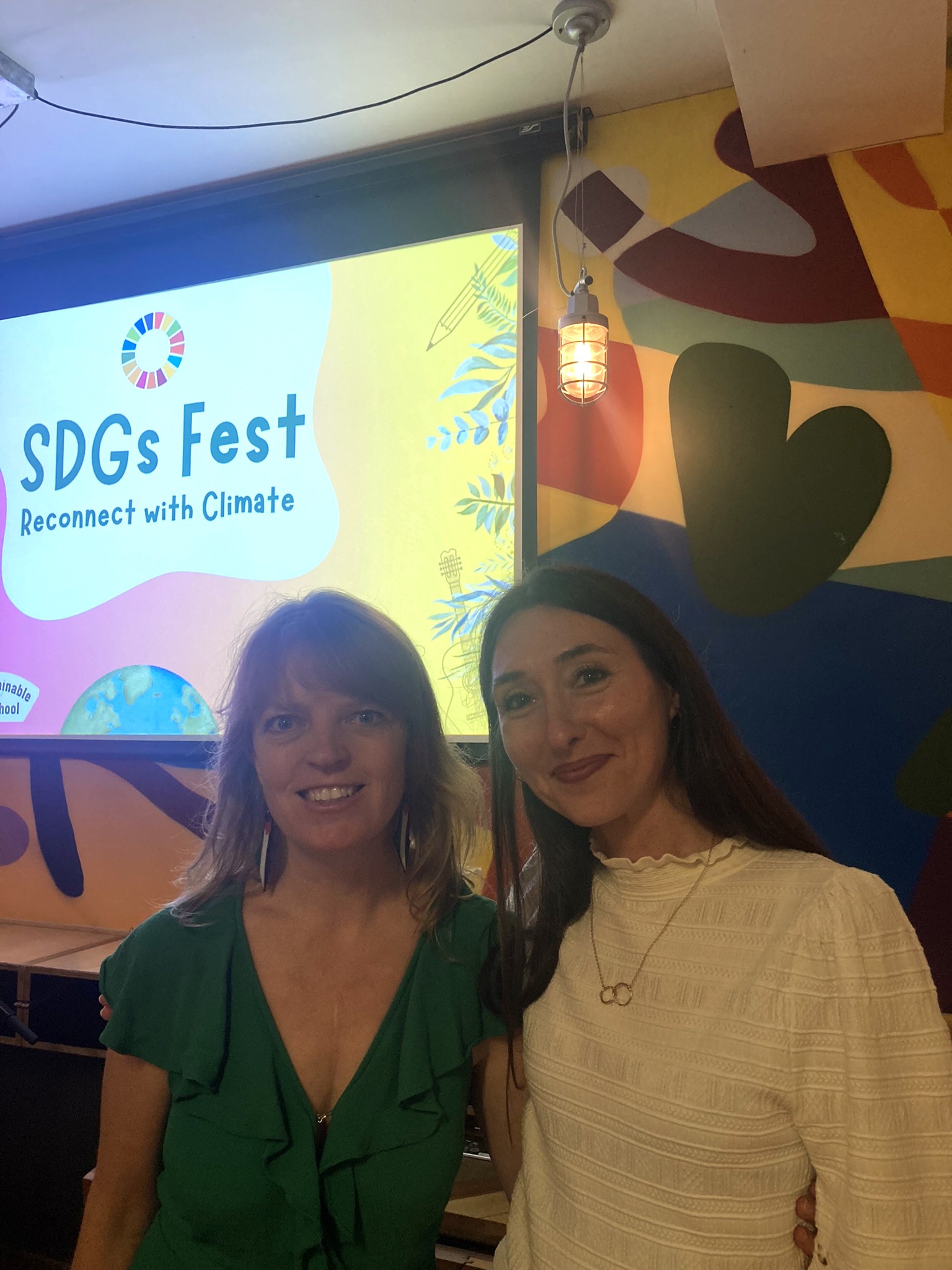
This year’s SDG Fest showcases the climate crisis through comedy, community, and conversation
by Niamh Dobbs
An evening full of comedy, jazz, and of course, climate chats.
The third Sustainable Development Goal Fest kicked off on Thursday, the 18th of September.
The event was organised by co-founders of the Sustainable Life School, Nathalie Pavone and Dianne O’Connor, an organisation that provides impact-driven programmes in the hope of addressing the climate crisis and providing positive solutions and lifestyle changes in workplaces and communities.
The event was partnered with and took place at The Tara building, where they have previously held clothing swap events and helped members of the Tara community to live more sustainably.
The mini festival ran from 7 to 9.30pm and began with three guest speakers: Tom Popple (Climate Cocktail Club), Keith Maggie (Global Action Plan), and Catriona Kenny (Connecting Cabra). They shared heartfelt stories about what they do and how climate change has affected their own lives.
After this, the guests were asked to split up into smaller groups and have their own chats about how they feel about the climate and what brought them to the event. This included an opportunity to write some inspiring quotes on their ‘Good Vibes Wall’.

Women reading the good vibes wall This was the main goal of the evening described by Pavone, creating the type of atmosphere to encourage conversation: “This year we wanted to actually get people to have a chat, because the theme is reconnecting, and we wanted people to hopefully make new friends and new connections.”
Another important aspect of the event was to make it free. “It’s a free event because it’s part of our social mission, because we really want to make sure that everybody can afford to have a conversation, and we don’t want to leave anybody behind,” explained Pavone.
Following this was a live jazz performance by Luisa Annibali, where guests were offered to sing and dance alongside Luisa, which added an element of playfulness to the event.

Guests at the event participating in an exercise The evening wrapped up with two comedic performances, firstly by co-founder Dianne O’Connor and secondly by Colm O’Regan, which centred around the climate crisis.
Taking a step back to where it all started with the Sustainable Life School and where they are at now, co-founder Nathalie Pavone was first motivated through sustainable fashion. “I watched a documentary called ‘The True Cost of Fashion’, which showed me the social and environmental negative effects of the fashion industry,” said Pavone. “And that’s how I became passionate. So, I started with fashion, and then I started to learn about climate and how everything was connected.”
The business offers a sustainable living programme in some of Ireland’s largest organisations. In which they provide six sessions that cover many areas, including but not limited to fashion, food, digital pollution, and travel, which on average results in 160 changes per programme.
Through these sessions, Pavone also explained the importance of recognising the struggles that come with living more sustainably. “What we do as well is that we are honest with each other and with how difficult it is to live sustainably, because obviously you’re going against the grain, because we’re not in a system that’s very sustainable. So, it’s really about kind of sometimes going out of your way.”
One piece of advice Pavone shared to start living a sustainable life is “just start in an area of your life where you know, where you’re passionate about or interested in. Whether it’s clothes, travel, or food, focus on that area and see what you can do to adapt or change in a more climate-conscious fashion.”
-
Marina Carr brings ancient Greece to the Irish Stage
The Boy: A Two-Play Theatrical Event, is finally opening in Dublin after a five year delay. Carr’s brilliant retelling of old Greek myths finally gets to be shown on Ireland’s national stage. The official opening night is Wednesday, October 1st and it is already sold out.
The two-play spectacle is based on three Greek myths – Oedipus Rex, Oedipus at Colonus, and Antigone, written by Sophocles. The audience is encouraged to see the plays back-to-back, but they can also see them individually. Carr has spoken about these plays trying to “marry the ancient with the contemporary”.
The two actors taking centre stage are Frank Blake and Eileen Walsh, who are playing Oedipus and Jocasta, respectively.
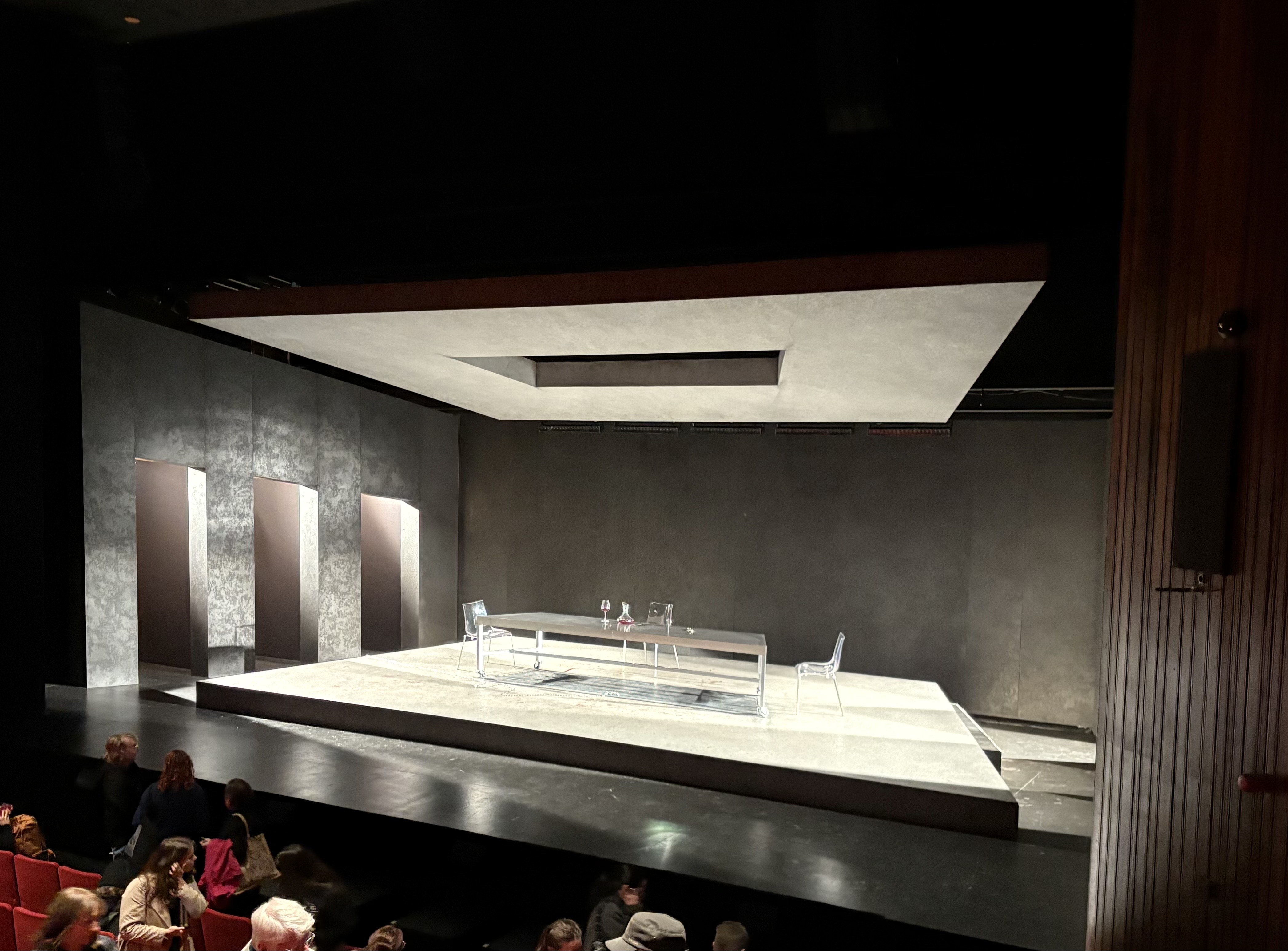
The staging is deliberately basic, forcing the audience to focus on the actors and not their surroundings. For most of The Boy, the stage only has a dining table on it. Above the stage there is a projection of what is being shown on the stage from above; this represents the gods always looking down over the action – they are ever-present in this world. There is a thick plastic curtain that comes and goes throughout both plays, acting as a barrier between the audience and stage. The sound-heavy plastic whooshing across the stage gives an eerie feeling to the audience, almost like we were watching a crime scene.
The Boy
The first play The Boy surrounds the life of Oedipus from birth to after he fulfils his curse. It is based on the Greek myth, Oedipus Rex. The play is set in the kingdom of Thebes, where Oedipus’ father Laius is king.
The audience finds out that Oedipus has been cursed from when he was a child, or more so that his father, Laius, was cursed. He gets confronted by The Shee (played by Olwen Fouére) after he captures and rapes a young boy, Chrysippus (played by Noah Behan and Harley Cullen Walsh). Laius’ curse is that he must not have a child for if he does, his child would grow up to kill him and marry his wife, Jocasta.

The poster that can be seen outside The Abbey Theatre and on the front of the programmes promoting the show. The two main actors (Blake and Walsh) are at the centre of the poster. Captured by: Zita Fox The God and His Daughter
The second play opens with the exact same dialogue as the first but the context has shifted. The audience knows about the crimes Oedipus and Jocasta have committed together; we also know that in comparison to the first play Thebes is suffering under new kings and its crops are failing.
This play is based on the Greek myths, Oedipus at Colonus, and Antigone. The play follows Oedipus in the final stages of his life and how his curse has continued onto his children, particularly his daughter, Antigone.
The star of the show is Éilish McLaughlin who plays Antigone. Though she is only on the stage for the first half of the play she is what the audience is drawn to the most. Her presence and monologues are incredible, it was impossible to take your eyes off her.
TheCity got the chance to talk to Fionnuala Maher, a costume supervisor assistant. Though Maher was mainly working in the background of the costume department, she did give us an insight to what it is like to prepare for a show. Maher mentioned how the decisions were made by the designer, Catherine Fay, and the main costume makers, Tara Mulvihill and Breege Fahy. She would then go out with a brief and grab samples or photos of items she deemed appropriate. She said: “Sometimes we had to make sure there were doubles available of everything in case they were used in any scenes with blood, [amongst other things].”
She went onto explain how like with a lot of shows, a lot of the costume changes would come down to the practicality of the clothes. She continued: “Something could look perfect on the hanger and even on the actor but might not sit correctly on them in the action of a scene.”
-
Not Tapping Out: Family-run Rascals Brewery fights rising costs and global giants to keep Irish craft beer independent
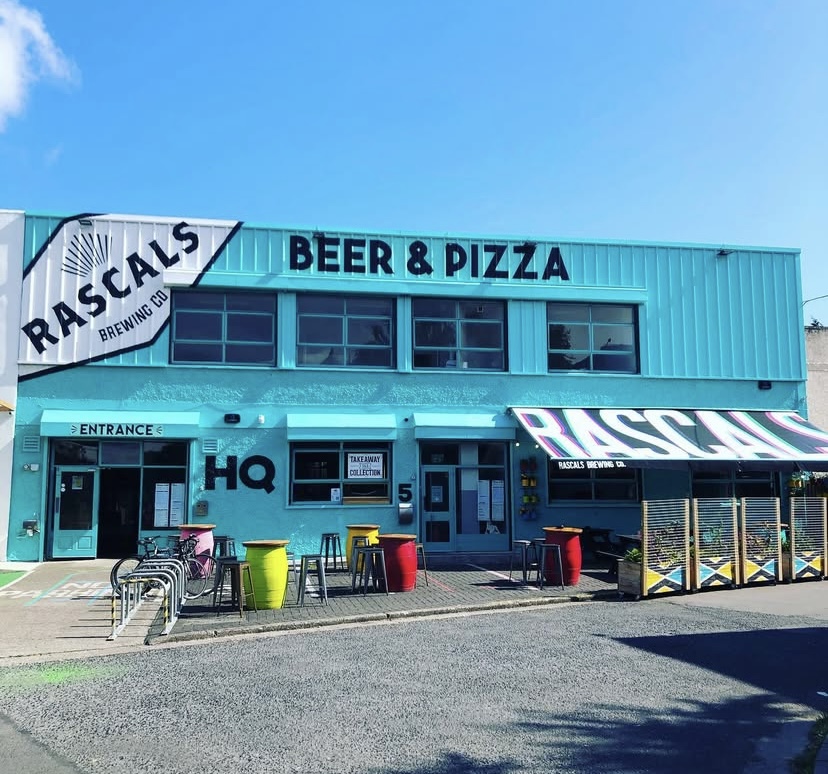
“We’re not in the business to buy a yacht. We do this because we love what we do,” says Joe Donnelly of Rascals Brewing Company — a family-run Dublin brewery that now finds itself at the sharp end of rising costs, regulatory burdens, and a drinks industry dominated by global giants.
With a 30-hectare brewing facility and a popular pizza restaurant on-site in Inchicore, Rascals have built a loyal local customer base over the past 11 years, despite this many of Ireland’s independent craft breweries, it is now grappling with a mounting wave of operating costs — with a recent hike in commercial water charges threatening to push many over the edge.
“It’s not one thing in isolation,” Donnelly says. “It comes on foot of years of obstacles put in the way of doing business. Energy costs, inflation, rates — now water charges. At what point do we go — can the government not find the money somewhere else?”
The Commission for Regulation of Utilities recently announced a 9.5% rise in water charges for non-domestic users. For breweries, whose product is more than 90% water, it’s not just inconvenient — it’s existential.
Ireland’s ageing water infrastructure has long required investment, and few dispute that upgrades are urgently needed but for small businesses like Rascals, the government’s approach to funding those improvements is raising questions.
“We didn’t cause the problems with the water infrastructure, but we’re being held to account for it,” Donnelly continues. “Of course, it needs to be fixed. But do businesses have to suffer punitive increases as a result?”
While rising utility costs affect all sectors, small and medium enterprises like Rascals feel the pinch hardest. Donnelly notes that major industries such as Heineken and Diageo can absorb costs far easier — while local independents are left with little room to manoeuvre.
“People think when you raise prices, you’re just chasing profits,” he says. “But we’re trying to stay open, employ staff, and keep our product at a standard customers expect.”
That standard is non-negotiable, he adds. Despite cost pressures, Rascals refuses to cut corners.
“We won’t start using inferior raw materials just to protect margins. We have loyal customers who expect quality. That’s what we stand for.”
It’s also about more than just beer. Rascals employs 26 people, many from the local area, and supports Irish suppliers across its supply chain. In Donnelly’s view, the company plays a much bigger role than just brewing.

Pizza served at Rascals Brewery Inchicore “We serve a purpose that’s much bigger than just making beer and pizza,” he says. “There’s a circular economy here that’s being overlooked.”
But competing on taps with multinational brands remains a challenge. Donnelly points to the increasing saturation of 0% beers by large brands, which he claims is more about market dominance than consumer demand.
“They’ve flooded the market with 0% beers,” he says. “It’s not because everyone’s drinking them — it’s about taking up taps. That’s a spot a small Irish brewery can’t get now. It’s an unfair playing field.”
He also criticises how alcohol-free beers are being used as a loophole to advertise at sporting events, a tactic that further develops the dominance of global brands.
Off-trade access is another uphill battle. While SuperValu is praised for its support of Irish producers, Donnelly says other retailers are more difficult to break into.
“Every chain is different, but it’s hard,” he says. “And most people don’t drink craft beer, so you’re introducing them to it for the first time. You have to work hard to stay visible.”
Despite it all, Rascals remain positive— cautiously.
“We’re going to be here. We’ll still be brewing beer,” Donnelly says. “There might be a bit of economic Darwinism — only the strongest will survive.”
But Rascals Brewery is not tapping out.
-

Emporium gives Dublin a taste of the big apple
By Rían Cahill
Dublin-based streetwear brand Emporium announced a brand-new collaboration last week with their New York-based counterparts Brigade, along with a special homecoming show with Wiki in the Sugar Club.
Emporium, who have rapidly grown from a small local brand to a cultural hub in the centre of the capital in the form of their Drury Street Store, also announced a surprise culture night pop up on the 19th with music and complimentary drinks from long time partners Hennessey.
The exclusive collection and shows were announced on the brands’ Instagram page in a video hosted by New York rapper Wiki, a longtime friend of both brands with deep roots in Ireland.

The brand and rapper’s relationship was first displayed at the 2024 Paris Fashion Week, where they bonded over their similar approaches to fashion and culture. Wiki’s regular visits to Ireland also encouraged his decision to join the brand for future projects.
“I might have stopped by the shop before, but not put it all together, then at Paris Fashion week, we put it all together”
Wiki
The culture night pop up shop brought some New York style to the city, with the collections boasting exclusive, one-off caps featuring both brands’ graphics, and a heavy knit jumper with graphics of the Wiki flag, a combination of the Irish and Puerto Rican flags, an Ode to Wiki’s family ties with the two island nations.
In classic Emporium fashion, the crowds and sounds from the store leaked out onto the streets, and the event turned into a public reminder of the influence that the brand has gained on the city’s youth.
On Saturday, the crew took over Leeson Street for their Sugar Club show with DJ sets from Brigade’s resident DJs and a set from Irish rapper Curtisy before Wiki was welcomed to the stage for his second show in the country since 2023.

The former Ratking Member has harboured a cult following from devoted rap fans throughout his solo journey since 2016 with a rough and fast-paced approach to his music, which portrays his New York attitude to life.
Emporium
This Dublin Brand has exploded in popularity in recent years, with their logo being featured in a glimpse of any trendy bar around the city centre, and a mainstay of the Irish DJ culture through collaborations with nightclub, Index.
They have also continued their tradition of a free drop of exclusive, one-off shirts at the Heineken stage at Electric Picnic in collaboration with the brand.
Growing in leaps and bounds, Emporium have also just announced a new collaboration with NFL team the Pittsburgh Steelers, consisting of varsity jackets, jumpers and t-shirts.

Brigade USA
Brigade is a New York-based brand which deals in unisex, one-off clothing releases which prides itself in firmly rooting itself in the essence of New York life.
Similar to Emporium, they take pride in creating a community through ongoing collaborations with local artists, designers, models, stylists and musicians.
Although Emporium originates from the bedroom of two young Dubliners, ambition has forced their vision out of the confines of the Irish fashion scene as they continue to conquer worldwide fashion. From New York Collabs to Japanese stores, Emporium seem to have a solid grasp on worldwide fashion so far.
-

Phase three of royal canal greenway opens, expanding Ireland’s longest greenway
Phase three of the Royal Canal Greenway reached its long-awaited completion earlier this month, opening the picturesque 800m stretch between Binns Bridge and the Bloody Sunday bridge. This allows for segregated walking and cycling facilities along a 2.1km route from North Strand Road to Phibsborough Road.

Binns Bridge pictured from the Royal Canal Greenway – photo by Will Daly The Royal Canal Greenway project began in different stages, with some sections opening as early as July 2014. The official launch of the project began in 2021. In February of 2023, the construction phase of phase three began.

Croke Park overlooks the Royal Canal Greenway – photo by Will Daly Speaking to TheCity, Senior Resident Engineer for the project Fergal Connolly shed some light on the Royal Canal Greenway project.
“Initially, phase three was meant to be a 24-month contract, and it had transpired to be 32-month contract,” he said.

One of many canal accessibility points along the Royal Canal Greenway – photo by Will Daly With three of the four stages completed, the final phase will focus on the improvement and redevelopment of the 4.2km route between Phibsborough and Ashtown.

The Royal Canal pictured from Newcomen Bridge – Photo by Will Daly “There has been talk that we possibly will not be starting phase four until 2028. As of now it is a speculative date, depending on the outcome of the planning process that’s currently underway,” added Fergal.

A mural dedicated to the Swans of the Royal Canal – photo by Will Daly “It also depends on funding but 2028 will probably be the earliest we can commence phase four of the Royal Canal Greenway.”
“The NTA formed all these active travel projects, and they give us a certain amount of funding every year,” Fergal said.

A statue of poet and playwright Brendan Behan, found on the Royal Canal by the exit to Binns Bridge – photo by Will Daly According to the NTA’s Active Travel Investment grants 2024, phase three of the Royal Canal Greenway has been granted €10 million.

Dublin’s Commuter train runs alongside the Royal Canal Greenway – photo by Will Daly -

The impact of Saint Carlo Acutis to the Catholic Church
Carlo Acutis, a 15-year-old teenager, was canonised by Pope Leo XIV at Saint Peter’s Square in Vatican City on Sept. 7, 2025.
As the first saint born in the Millennial era, St. Carlo Acutis has captivated the hearts of hundreds of thousands of Catholics worldwide, with people of different nationalities and ages visiting his tomb.
Carlo acutis was born in london in 1991, but was raise in Italy. Growing up he had developed a passion for catholicism and technology, which he used to spread the catholic faith. He died of leukemia in 2006 and after his death two miracles were accredited to him which led to his canonization.
Carlo Acutis love for the Eucharist were recognised by the late Pope Francis. Father Michael Collins, a priest at the Archdiocese of Dublin, wrote a book on the new saint, God’s Influencer: A short biography of Carlo Acutis.

The Book of Fr. Michael Collins Photo by: Synoah Peñaflorida Fr. Collins told TheCity.ie that there has already been an increase in young people who are showing interest in the new saint.
“I regularly get people contacting me saying ‘that I’ve been interested in Carlo Acutis’ and they share with me their stories” he said.
Nowadays, when the Church is experiencing a lack of young Christians, Saint Carlo Acutis serves as a reminder that even the younger generation can be influenced through modern Eucharistic practice.

Carlo Acutis Ireland Members
Photo courtesy of: Carlos Acutis Ireland
Carlo Acutis Ireland Members
Photo courtesy of: Carlos Acutis Ireland“The fact that he combined a reverence for the Eucharist, which has been in the church since the beginning, with new ways of presenting the Eucharist to the younger generation makes him an important saint,” Fr. Michael Collins added.
Aside from being an inspiration to the youth, Saint Carlo Acutis has also impacted the development of the modern Eucharist.
In his lifetime, St Carlo Acutis was fascinated with the internet. In his life the internet was still in its infancy, but that did not stop him from creating his own website and documenting the Eucharistic miracles from different places he visited.
Dr. John Scally a lecturer in theology at Trinity College, Dublin, told TheCity.ie that although the new saint doesn’t have a huge theological significance, he has so much to offer to the development of the modern Eucharist.
“I would see him as an innovator, I mean he’s gone bravely where no saint has gone before in terms of taking the church in a new direction.” Dr. Scally said.
Dr. Scally explained that in this new generation, St Carlo Acutis has developed a method that would allow him to easily connect with people.
“Jesus was a brilliant communicator because he communicated in the language of the time, in ways that people could understand. So young people can relate to Carlo, and he was able to come up with a new way of nurturing Eucharistic devotion” he said.
In his first few weeks as saint, St Carlo Acutis has already caught the devotion of the masses and it could possibly help in promoting the Catholic faith to people and specifically the younger generation.
Dr. John Scally said he “would not have great confidence in the fact that the church is using Carlo, as a poster boy to sell Catholicism […] Carlo’s story on his own is not going to be enough to save the church. We need much more people getting involved and living, being ambassadors for Jesus on Earth.”

Books inspired by St. Carlo Acutis
Photo by: Synoah Peñaflorida
Totems inspired by St. Carlo Acutis
Photo by: Synoah Peñaflorida
Candles inspired by St. Carlo Acutis
Photo by: Synoah PeñafloridaFr. Michael also pointed out that having a saint from this era is more than a publicity stunt for the church. “The church would be foolish to look as if it’s looking for publicity […] all we want to do is share when there is good news.”
St Carlo Acutis’ tomb is currently housed at the Santa Maria Maggiore church in Assisi, Italy, where devotees visit and pray to him daily.
-

WorldSkills Ireland returns to the RDS
WorldSkills Ireland 2025 returned to the RDS Simmonscourt in Dublin from September 17th to 19th. More than 180 finalists competed in 35 skill areas ranging from engineering to culinary arts as thousands of spectators watched on. The event demonstrated how skilled jobs may influence Ireland’s future.
-

OSCAR WILDE AT MOLI – A LOVE LETTER TO BOSIE
De Profundis – a story of love, loss, anger and acceptance
What an opportunity to feel the depth and sorrow of the love of one man for another.
To celebrate 125 years since Oscar Wilde’s death, the Museum of Literature Ireland (MOLI), has produced in film key passages of the letter described as a love letter called De Profundis – written by Wilde to his lover ‘Bosie’ while Wilde was in prison from 1892 to 1895.

Photo: Mary Phelan
Luke Fallon, Visitor Experience Assistant in the museum says “although primarily people will come to the museum for James Joyce, there has also been a great interest to learn more about Oscar Wilde”.
He says that apart from celebrating 125 years since Wilde’s death this year “most people will relate only to his witticisms, whereas this piece shows a very profound and different side to the man”.
The background story is that Wilde and Lord Alfred Douglas (Bosie) were in a relationship together, much to the disgust of Bosie’s father, the powerful Marquess of Queensbury, who was a very cruel man and was determined to ruin Wilde, which he succeeded in doing, by taking him to court for gross indecency. He won his case. Wilde was sent to Reading Gaol for two years.
The film consists of the reading of some passages of his letter written to Bosie by a number of artists, writers and activists from the LGBTQ+ community.
In the reading we learn how Wilde, after his conviction in London, was brought in shackles on a train from Reading Gaol where he spent two long years in prison. The conditions were rough.
In prison he goes through a whole gamut of emotions, including anger, sadness, and incomprehension as to why Bosie never wrote to him all the time he was incarcerated. He realises that he made a huge psychological error in going with Bosie’s suggestion to press criminal libel charges against his father. He contemplates the affection he had for Bosie, and how little it was returned. In hindsight he realises he should have got rid of him before his own ruination. He recalls the bills that Bosie ran up during his stay in a Brighton hotel with a friend and which were so onerous that Wilde could not pay them. As a result he could not leave the hotel, and was ultimately arrested.
As the letter continues, he concludes that hate was always stronger than love with Bosie. He says hate blinds people, and Bosie was blinded by hate. He questions if Bosie had ever known what love was, and also why Bosie never wrote to him, not even once while he was in prison. However, he realised Bosie was also suffering, and that he had to forgive him, and wanted to turn what happened to him into a spiritual experience. He makes references to God and of learning the meaning of sorrow and beauty.
He writes “beauty and sorrow is all that interests me now. I used to live purely for pleasure and lived a selfish life. I no longer want this life.” He writes that “pain unlike pleasure wears no mask.” Prison had given him new spirit. He used to say to himself “what an ending, now I think what a beginning.” He longs to be in nature again, seeing the flowers and trees bloom again. He looks forward to meeting Bosie when he is finally liberated from prison.
The film is approximately 50 minutes long and is in a quiet room, away from the main exhibition area on the 3rd floor.
The film runs until early October.
MOLI is open 7 days a week, and also has a café and outdoor dining area.
-
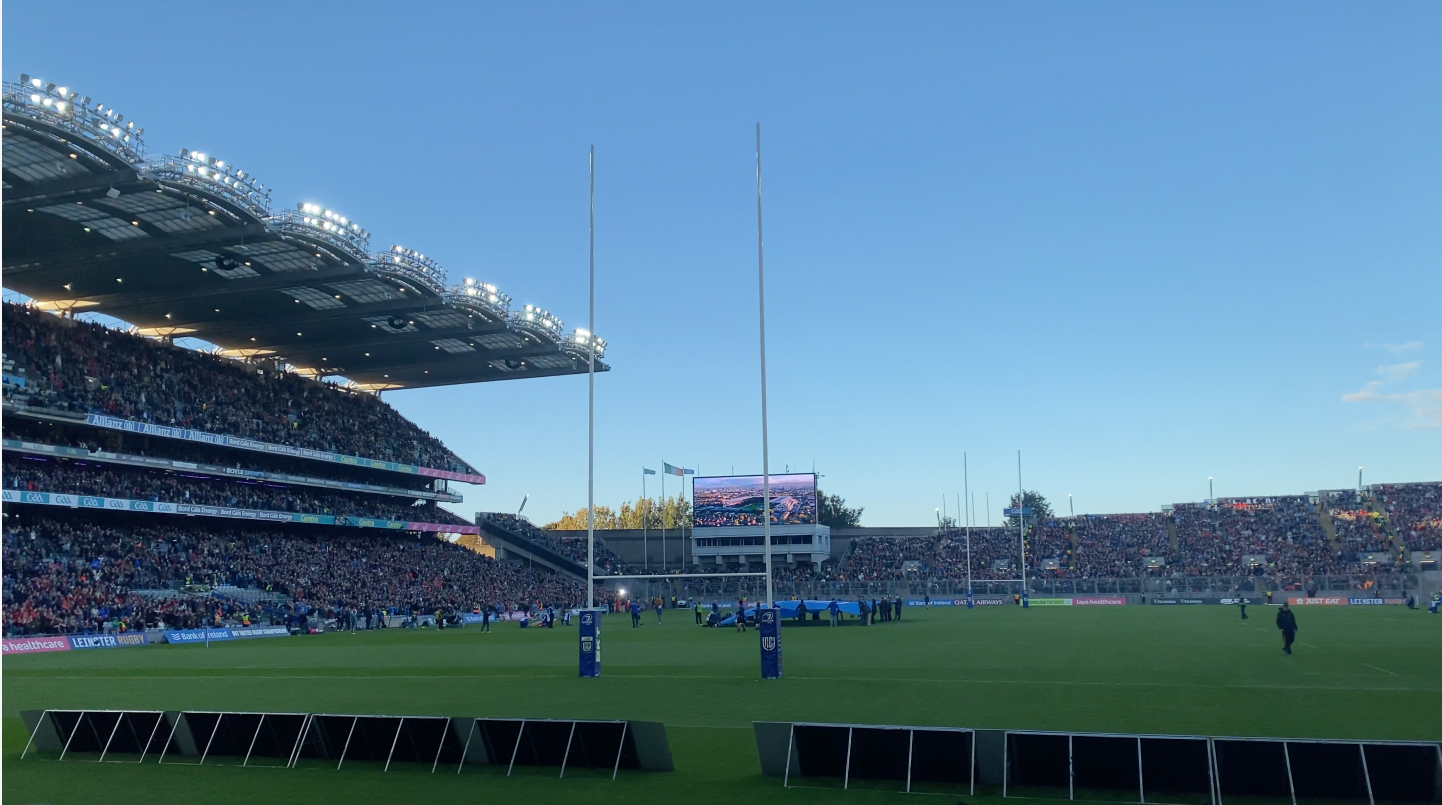
How Irish Rugby is Growing Beyond Confines of Dublin’s Private Schools
By Jamie Ryan
Rugby is quickly becoming one of Ireland’s most popular sports – but has often been viewed by many as ‘upper-class’.
This is because a large majority of home-grown professional Irish rugby players have come up through the school system, which is heavily featured by fee-paying schools – particularly those who rose through the Leinster ranks.

The pinnacle of school-boy rugby in the East of Ireland, is the annual Leinster Schools Rugby Senior Cup – which is hotly contested by sixteen teams from across the province.
This has been dominated since its inaugural competition in 1887, by Blackrock College with 71 Senior Cup titles respectively.
De La Salle Churchtown was the last public school to claim Senior Cup glory back in 1985 – an achievement that has become increasingly more difficult to beat, as private schools have swept up every title since.
Back in 2014, the Irish Rugby Football Union (IRFU), appointed former Australian hooker, David Nucifora, as their High Performance Director. Since then, the IRFU have invested heavily in rugby playing private schools across the island with the aim of producing an athlete that is already prepared and has exposure to high intensity and pressure rugby by the ages of 18 or 19.
Schoolboy rugby in Ireland has become noticeably more professional in recent years with how these young players are expected to commit, train and diet, while also balancing their education.
This has put these players in a great position for when they graduate from schoolboy rugby to adult grades, however, the reason for rugby’s reputation as a posh sport is arguably because of these fee-paying schools having more funds at their disposal to dedicate to their school’s team.
This has no doubt played a vital role in many of these schools’ success while also reiterating the belief that rugby is upper-class by many, as the majority of public schools do not have the privilege of this financial backing.

European Champions Cup Final 2023 between Leinster V La Rochelle – Photo Credit: Jamie Ryan Ryan McCormack, 18, played rugby right throughout his secondary school days with Temple Carrig, a public school is Greystones, and currently plays club rugby for Greystones Rugby club. “Rugby in private schools is such a culture – the players are given so many resources because they can afford to pump as much money into the sport as they want which adds to the idea that it is a posh sport,” he said.
“Blackrock College for example has nine rugby pitches, one of which being an astro turf. They have put so much money into gathering the best coaches and providing players with the best facilities at their disposal. It allows those players to get ahead of the curve but at the end of the day, it is worth nothing unless the player themself is willing to hard work and is determined to make it to the professional rugby scene.” said McCormack.
“I have been to many schools’ games with the likes of Blackrock, Clongowes, St Mary’s, and Belvedere and there are always at least three Leinster staff watching out for talent, but for other public schools’ games, there are very rarely Leinster development officers or scouts in attendance. There are far too many exceptionally talented players who have been overlooked due to where they play,” McCormack further explained.
While it is difficult to argue against the prioritisation of this focus given the results that have been achieved by the Irish team because of this system, many feel that it can appear from the outside looking in to be elitist and excludes young rugby players from reaching a professional level if they came through the club system or the public school system.
While this system clearly produces results for the national squad, it is also heavily catering to Leinster on an inter-provincial front – far more so than Munster, Ulster or Connacht due to the pure quantity of private schools in Dublin particularly.
On the island of Ireland, there are 30 private schools that play rugby with 12 of these being in Leinster, 6 in Munster, 6 in Ulster and 3 in Connacht.
This rhetoric does, however, seem to be slowly changing slightly in that interest in rugby is at an all-time high in Ireland thanks to the recent success of Irish Rugby in international competitions, but also in club competitions such as the URC, the Champions Cup and also in the AIL (All Ireland League).
Jamie Osborne has been one of the most recent examples of a player breaking the mould by rising through the juvenile ranks with his boyhood club, Naas, to now representing Leinster and Ireland but in recent times, playing coming from a non-private school system has been a rare sight.
Irish rugby fan Andrew Jones, 23, said: “It kind of sends a message really, doesn’t it? The best way for a player to get to that level is to go to a private school, which is unfair when you consider that where someone goes to school doesn’t tend to be their choice. As soon as that elitist aspect is brought to anything, there can also sometimes almost be a distaste toward the sport itself in certain areas.”

Page 19 of IRFU’s Strategic Plan 2018 – 2023: Building Success, Together via IRFU Website The IRFU has over the last number of years, been developing a series of strategic plans to promote growth in the game across the country beyond just the confines of just South Dublin and other surrounding areas’ private schools.
The promotion of the game in areas where rugby is not as popular would aid in combatting this ‘posh’ reputation that it currently has, as it would be more freely available for those who want to get involved.
You must be logged in to post a comment.