A Q&A with one of Dublin’s latest viral content creators. The City’s Gary Petrov speaks to Dublin’s ‘Mini Mic Gal’ Olivia Spuds about her content creating, her rising platform, how it all came to be, and where she hopes it will all take her.
Allie Sherlock was just 9 years old when she first started playing music.
The Cork native then took to the streets busking just two years after, aged 11.
Since then, the singer songwriter, now aged 19, has gone on to gain an online following of almost 15 million, amassed over 1.5 billion views online, performed on The Ellen DeGeneres Show, the Late Late Toy Show, and at a concert for Queen Elizabeth’s Platinum Jubilee, has completed a sold-out UK and Ireland headline tour, and is now working on releasing her own music and growing herself.
Following a performance of her brand-new single ‘How Love Works’ on RTÉ’s Late Late Show on Friday, November 22, Sherlock spoke with The City about her career so far, and what’s next.
Allie Sherlock poses in front of Grafton Street’s Brown Thomas, a popular spot for buskers – Photo: Liam Murphy
“I started busking because I wanted to perform in front of people,” Sherlock said. “Also, just simply because I loved music.”
“Busking on the street is very unpredictable,” she said. “You never know what can happen.”
Allie says that although her performance on ABC’s The Ellen Show was six years ago, what followed afterwards was still her best day on Grafton Street.
“When I came back from The Ellen Show, I got one of the biggest crowds I have ever gotten,” she said, speaking of the success the show gave her.
“That whole day was crazy. The most amount of CD sales, most tips, most selfies. It was all so crazy.”
Allie Sherlock speaking with Ellen DeGeneres following a performance of Adele’s Million Years Ago. The show estimated 2.1 million views during 2018. Photo: TheEllenShow / YouTube
It’s clear while speaking with Sherlock just how much she loves Grafton Street.
After all, the Cork singer is touring, doing various TV and Radio appearances, topping the Spotify viral charts, but still continues to travel up from Cork to Dublin every weekend for busking.
But why is that?
“I love it,” she said. “I’ll stop when I can’t do it anymore or if I really don’t want to do it anymore.”
“I don’t plan on doing it forever. If this whole music thing works out, I’ll be touring more, charting more, and eventually it will stop, but for now I’ll continue.”
Allie Sherlock during a busking set on Grafton Street – Photo: Liam Murphy
‘This whole music thing’, as Allie calls it, has recently taken off following the release of Sherlock’s debut original single ‘How Love Works’.
The track, co-written by X Factor star Ella Henderson, released in October, has already gained almost 300,000 streams on Spotify, and is currently ranked number one on Spotify’s Viral 50 Irish charts, at time of writing.
Allie says that after all this time of writing songs in her room, with friends, and during writing sessions, she felt that now was the best time to start releasing her own music.
“Over the years I’ve been offered loads of label deals and record deals but never took them because I was always too young or it just wasn’t the right deal, but I’m now with a label and I’m thinking ‘I’m at a perfect age, this is a great deal, let’s do this’.”
“I wasn’t sure what to expect but I’m really happy with how it [the release of ‘How Love Works’] has gone.”
“I don’t let numbers get to me,” Allie said, of both streaming figures and her almost 15 million online followers.
“I never think that ‘oh my god this is so scary’ or that I have all these eyes on me. I just think it’s all crazy how many people decided to follow me, or watch my videos, like over a billion on YouTube is just crazy to me.”
“I’m just out here living my best life.”
‘Out here living my best life’ – A smiling Allie Sherlock plays for crowds on Grafton Street – Photo: Liam Murphy
But what’s next for a 19-year-old who has seemingly already made it?
“Next year will see more releasing and more touring,” Allie said, before hinting at a tour announcement for early next year, followed by an “I don’t know if I can say that.”
“But what I can say is definitely a lot more music and more tour dates.”
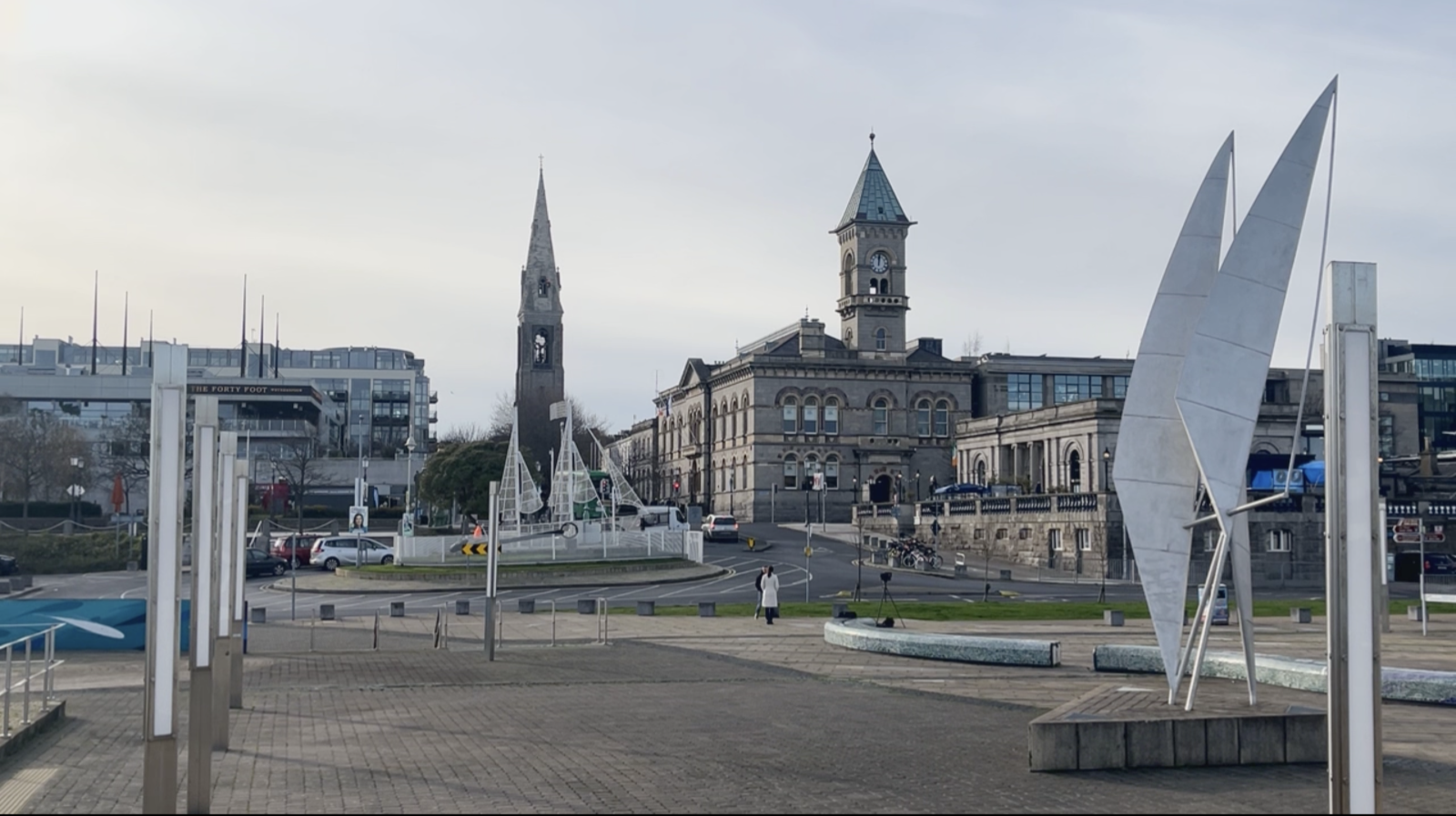
Located on the south coast of Dublin Bay, Dún Laoghaire gained popularity in the Victorian era as a popular tourist destination due to attractions like the East Pier and Ireland’s first passenger railway.
However, in recent years, locals have become increasingly dissatisfied about the lack of shopping and social amenities in the area.
Some buildings in the town, such as the unused Dunne’s Stores-owned building on Upper Georges Street, have been vacant for 20 years.
The City took to the streets of Dún Laoghaire to hear from locals and get their thoughts on their town.
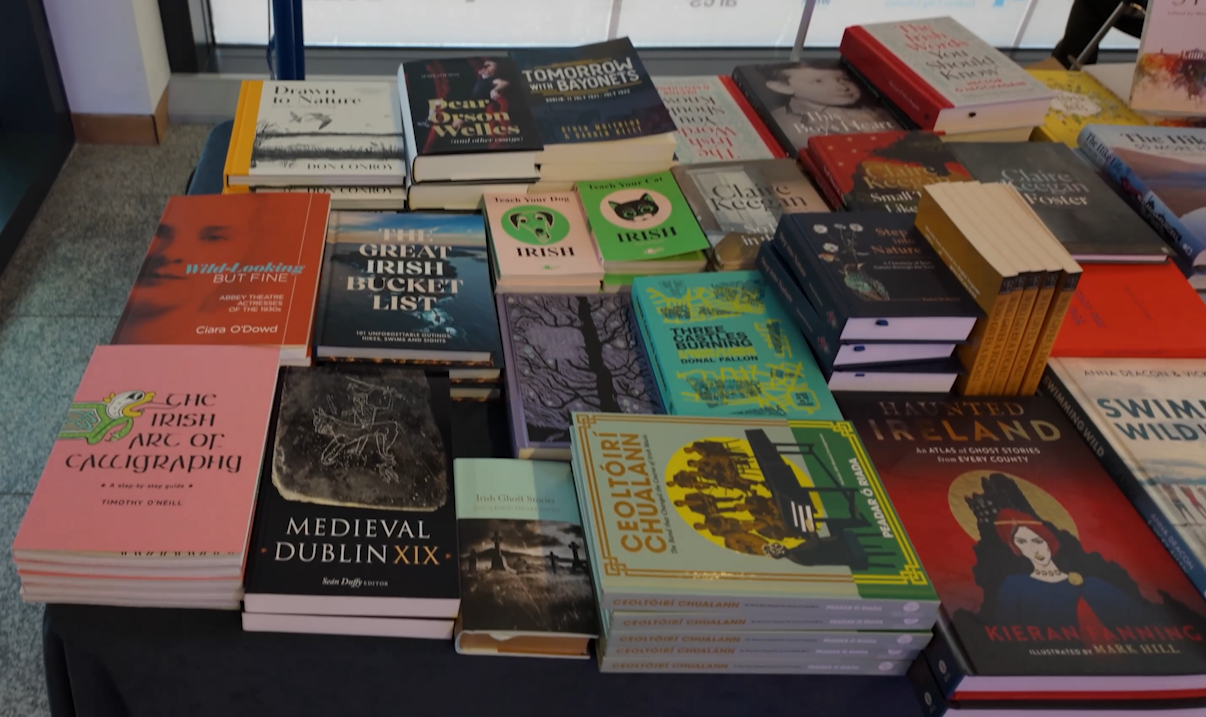
The Dublin Book Festival took place between November 6th-10th this year and provided people with a variety of informative discussions from renowned Irish authors as well as guided tours to learn about some of Dublin’s most famous writers.
The festival takes place every year and is an incredible showcase of Irish literary works and talent.
Below is a video of the experience along with interviews from some of the festival’s attendees.
O’Connell Street, once the heart of Dublin’s city centre and a vibrant hub of activity, has seen noticeable neglect and signs of urban decay in recent years.
This iconic thoroughfare, known for its historic monuments and central location, is now marred by a range of issues including vacant and derelict buildings, deteriorating facades, and an increase in anti-social behaviour.
The lack of consistent investment and urban management has allowed the street’s architecture and infrastructure to fall into disrepair, which has contributed to a feeling of abandonment and insecurity among visitors and locals alike.
The following images capture the true extent of this decline. From damaged facades and boarded-up windows to graffiti-covered walls and poorly maintained shop fronts, these photographs reveal the scale of neglect that has impacted O’Connell Street.
They highlight the deteriorated state of once-vibrant buildings, showing how years of minimal upkeep and insufficient investment have led to visible decay. These images serve as a stark reminder of how urban neglect can transform even the most historically significant areas into spaces that feel unwelcoming.
The following images give a compelling case for an urgent need to restore and revitalise this once-proud avenue in Dublin’s city centre.
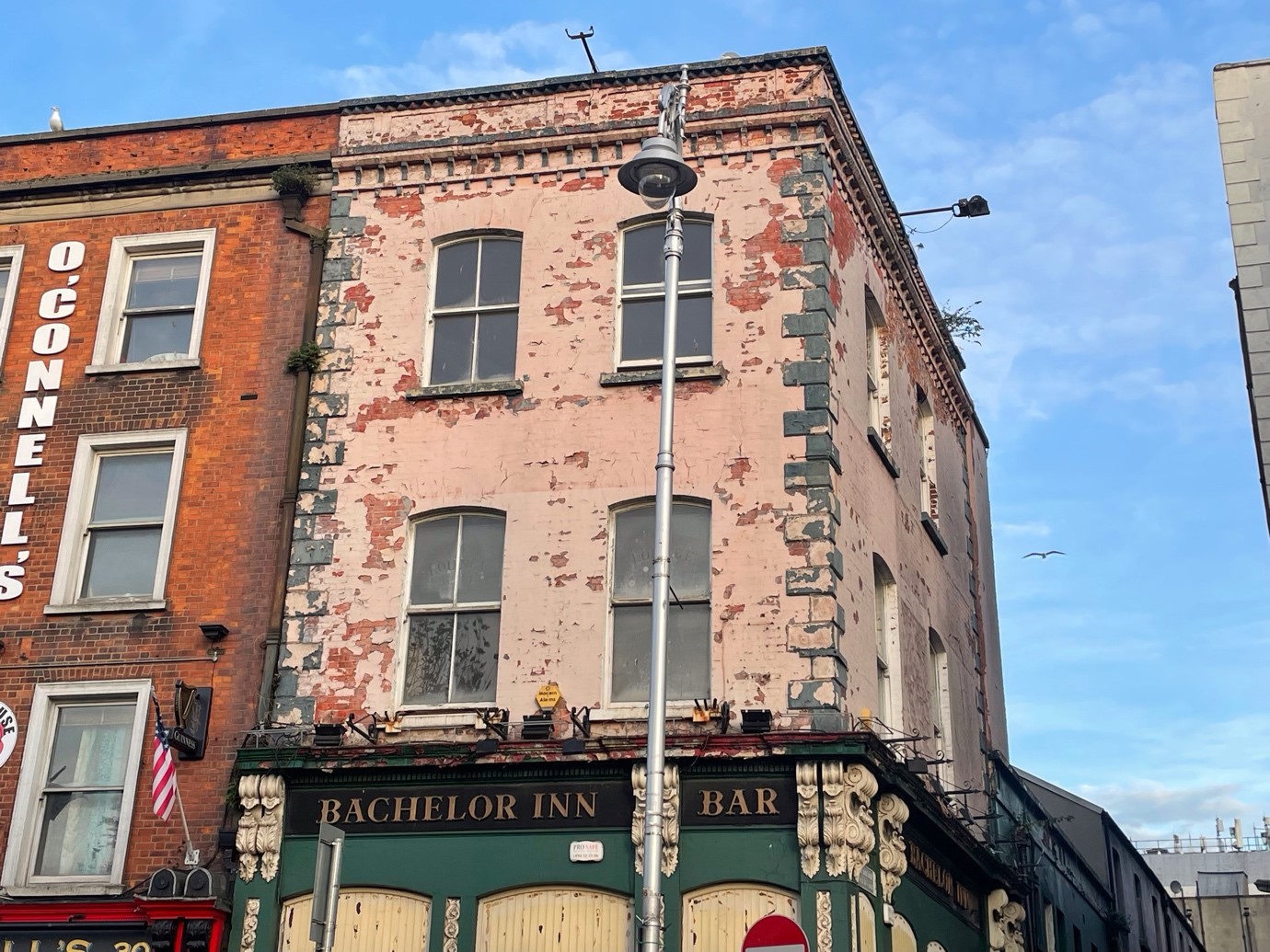
The Bachelor Inn Pub failed to reopen after closing during the Covid-19 pandemic. The building remains empty with visible exterior damage. An empty shop at O’Connell Street lower with extremely damaged windows and façade in a grave condition. Facing The GPO, the roof top of this large empty retail unit shows no visible signs of care, with roof titles damaged and rotting away. Weeds can be seen growing from the roof titles.
The previous 3 images show 3 empty and derelict buildings all within 300 metres of each other, with cracked and damaged concrete on the facades.
The final 4 images are at O’Connell Street upper and show the true dark colours of this capital’s Main Street. Major neglect with no proper treatment of structural integrity.
Inclusivity and providing a safe space for all participants are core values of sport, especially when it comes to identifying as LGBTQ+.
A basketball club in Dublin has been set up this year – aimed at being an inclusive sports environment for members of the LGBTQ+ community, wishing to partake in basketball.
The basketball club in question is Shamrock Sióga. Set up in May of this year, it became the first LGBTQ+ basketball club in Ireland.
Shamrock Sióga had their first game of the season, last month, against Renegade and won 38-35.
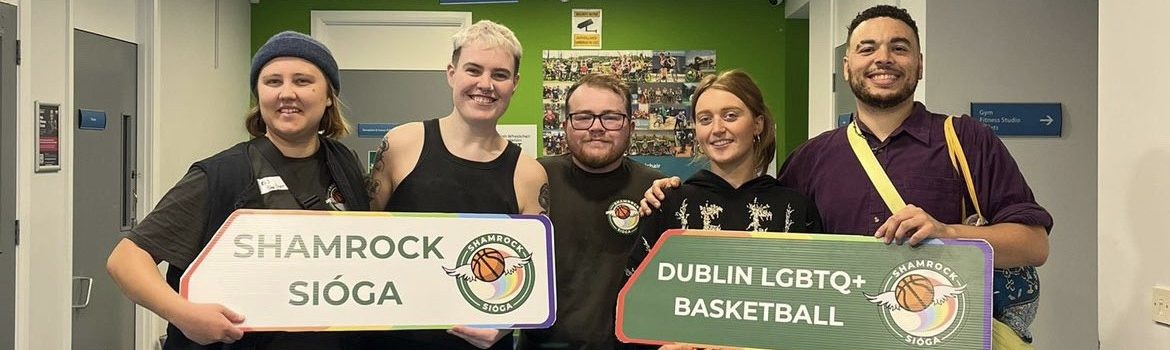
The Shamrock Sióga team and committee before their first game against Renegades. Photo: @dublinlgbtbasketball
Tatiana O’Brien–Santos (She/her) is the coach at Shamrock Sióga and gave The City an insight into her experience in the LGBTQ+ inclusive club.
“Being the coach of Shamrock Sióga is so rewarding, all of our players are so hard working and give it their all at every session. There is nothing but respect both ways,” she said.
Speaking about what Shamrock Sióga means to her, she said, “LGBTQ+ people face their obstacles in life and many times these are in a sports setting. For women and LGBTQ+ people, there is almost always justification needed for their participation and I have felt this personally almost all of my sporting life. I want to eliminate that for everyone.”
The coach refers to Shamrock Sióga as the “beginning of history”. She said, “As the first LGBTQ+ basketball club in Ireland, it’s an example – a statement that’s paving the way for all and any LGBTQ+ athletes and any other minority communities, and sometimes you just have to create that space yourself.”
Coach Tatiana O’Brien-Santos in her element at a recent training session. Photo: Tatiana O’Brien-Santos
When asked about the club’s success since its formation, she said, “Our growth rate and the feedback from our members on how impactful the club has been in terms of helping people feel like they belong and feel confident in a sports context is something I’m so proud that the club has been able to achieve.
“We have been featured in national media three times over the last 6 months. We have over 140 people in our club, our followers on our socials have tripled. We played our first ever basketball match and won, we are about to host the first exclusively LGBTQ+ basketball match in Ireland. I couldn’t be happier to see the support we have received.
“Being involved in basketball for so much of my life, I wanted to use my knowledge to help fuel growth for the club and get it to where I knew it could be. Within 3 months, we were a fully established basketball club with registered members, a clear structure and a great club culture, something made possible in collaborating so well with the committee of the club who truly work so hard for Shamrock Sióga,” she added.
Along with O’Brien-Santos, Shamrock Sióga thrives in its current success thanks to several additional members of a dedicated committee.
The Shamrock Sióga committee. Left to right: Kris Kalniņa, Jess Devine, Fionn Collins, Tatiana O’Brien-Santos and Danny Carby-Robinson. Photo: Tatiana O’Brien-Santos
DannyCarby-Robinson (He/Him) is the treasurer and registrar at Shamrock Sióga.
Carby-Robinson thrives on “connecting with others” and believes in the “power of small-scale community changes – to create a larger impact.”
“Being part of Shamrock Sióga has been such a fabulous experience. Having an LGBTQ+ basketball club is super important because it creates a safe and supportive space for people to enjoy the sport without fear of discrimination, judgment or shame,” he said.
He believes that everyone brings diverse aspects of being LGBTQ+, which will help ensure their work remains “inclusive, multifaceted, and representative of all walks of life.”
He attributes homophobia, transphobia and toxic masculinity in traditional sports environments as factors when considering LGBTQ+ hesitancy with engaging in sport.
“As a closeted teenager, I joined a rugby team but quickly became discouraged by the negativity around me during an impressionable time in my life. These experiences left a lasting impact.
“Joining an inclusive club has helped me rediscover my love for sports and has shown me the importance of creating supportive environments for LGBTQ+ individuals,” he said.
Carby-Robinson hopes for Shamrock Sióga to participate in the EuroGames 2025 in Lyon as the first ever Irish basketball club to do so.
“I also want to focus on building a stronger community. I hope to connect more with other queer organisations in Dublin on collaborative events, fostering relationships that strengthen our impact in the broader LGBTQ+ community,” he added.
Jess Devine (They/Them) is the club secretary and PR officer at Shamrock Sióga.
Devine calls their experience with Shamrock Sióga “life changing”. They said, “It’s a club I didn’t know I needed in my life. Now that I’m part of it, I can’t imagine my life without it. The community that has been built through this club is fantastic. I can’t wait to see this grow and flourish with more LGBTQ+ people.”
Speaking about inclusivity in sports, they said, “I think a lot of queer folk in sport would’ve played when they were younger and as they grow up there is no inclusive space for them anymore and they fall out of love with the sport.”
“I’ve felt this way in past basketball teams as a non-binary person on a women’s team. I didn’t feel included due to the language, the gendered terms in sport and not feeling safe to come out as non-binary.
Devine calls it “crucial” for people to have a safe space where they can be their 100% authentic self, and believes this should apply to sports clubs.
Devine’s future hopes for the club are to grow bigger and have an U18s division for queer kids. They’d also “love” to get into “as many tournaments as possible” and represent Ireland.
Fionn Collins (He/Him) is the chairperson at Shamrock Sióga.
Collins wanted to create a basketball team that “catered for all” in the LGBTQ+ community. He said, “The community we have created is amazing – a safe space for all the community in sports.”
Collins feels the club is opening doors for conversations about the LGBTQ+ community in sports. He sees it as a chance to educate people and show that sports is for everyone.
In relation to LGBTQ+ people staying away from sport, he attributes this to toxic masculinity – but believes things are “slowly changing” with the help of Sporting Pride and other organisations.
Collins believes it’s “super important to have an inclusive sport” – to have “all parts of minority communities” feeling recognised and seen in the sport they want to play.
Collins feels that improving inclusion in sports will reduce poor mental health in the LGBTQ+ community.
Collins’ future hope for the club is to become as big as other LGBTQ+ clubs in Ireland like Emerald Warriors and Na Gaeil Aeracha.
“I want us to also help push policies for our trans siblings within the basketball community, to allow them to be safe and play in the sport,” he added.
Kris Kalniņa (She/Her) deals with fundraising and court bookings at Shamrock Sióga.
Growing up in Latvia, where the sports culture is “rooted in the rigid traditions of the USSR,” Kalniņa felt isolated there as an LGBTQ+ athlete “as there was little room for openness.”
She claims being part of Shamrock Sióga’s committee has been “transformative”. She said, “It’s allowed me to help build a community that prioritises inclusivity and support for LGBTQ+ athletes – fostering connections among diverse individuals who share a love for basketball and sport.”
Kalniņa attributes “experiences of exclusion” to LGBTQ+ people avoiding sports and personally felt this way growing up. She said, “The fear of rejection often overshadowed my passion for athletics. Addressing these barriers is essential for fostering acceptance.”
“An LGBTQ+ basketball club is crucial for creating a safe space where individuals can express themselves freely while enjoying the sport,” she said.
Kalniņa’s future hope for the club is to “challenge the status quo by advocating for inclusivity and equity in sports,” and envisions “participating in competitions, proposing fair rule changes, and inspiring positive change.”
“It is something I’m incredibly passionate about. My experiences in sport have shown me the power and impact of creating a space where everyone feels they belong,” she said.
Unity Sports builds on the basketball coach’s mindset and approach, by “aiming to foster inclusivity and growth in sports,” particularly for women and the LGBTQ+ community.
O’Brien-Santos’ plan with Unity Sports is to “provide opportunities for people to be their best selves in sport, and to educate coaches, teams, and organisations on creating environments that truly welcome all athletes – all with the intention to grow the audience of women and LGBTQ+ sports events.”
“Whether it’s helping women feel valued in traditionally male-dominated sports or supporting LGBTQ+ athletes who’ve often felt overlooked, we’re focused on building leaders and advocates who can bring real change to sports culture.
“I’m creating Unity Sports to break down barriers and reshape what sport can look like for everyone,” she concluded.
The AV Club is a new art collective seeking to promote Black alternative culture in Ireland, by curating events that celebrate Black individuals in subcultures, such as punk, goth, rock, metal.
Founders Tina Wekare and Jasmine Odabi described their creation as an aim to “return these subcultures to the control of their original creators.”
They have also said they are “dedicated to creating a welcoming and inclusive environment, where everyone can express themselves authentically and connect with like-minded individuals, fostering a sense of community and empowerment within the vibrant subcultures we champion.”
The new art collective opened their doors to the public for the first time this month with their inaugural event, ‘BLACKOUT.’ The event included a headline performance from band Cable Boy, as well as pop up stalls for various Black Irish artists.
Cable Boy performing at BLACKOUT event – Photo: Lucia Burke
According to organisers Wekare and Odabi, this event was created to “foster a burgeoning Black Irish alternative scene, which is only now starting to reach mainstream. It was created in a response to the constant racism within alternative spaces, which for the longest time, has been predominantly white.”
However, the aim of these events is not only to benefit Black people seeking community in Dublin. A portion of the proceeds of ‘BLACKOUT’ ticket sales were donated to Friends of the Congo, a nonprofit organisation who strive to “bring about peaceful and lasting change” in the Democratic Republic of Congo (DRC).
Event organisers said the reason behind making the event a fundraiser was to start a conversation.
“We need people to join the dialogue and the fight. We want people to leave with a sense of empowerment; to feel like they too can help out – no matter how small the impact. Every little helps,” they said.
When asked about plans in the works for more events like this for the Black Alt community in the future, Wekare and Omondi said, “Absolutely! There is a need for more events and safe spaces for Black alternative people in Ireland. AV stands for ‘Audio Visual’. And we plan to have a lot of events that explore alternative art in all its mediums, from music to fashion to films to visual art etc.”
Eventgoer Ani Dhore said the event evoked “a sense of belonging” and was “inspiring” for her, which organisers said was one of their many goals.
DJ Booth at BLACKOUT Event – Photo: Dearbhla Kiarie
“We want people to come out feeling like they’ve found like-minded alternative people,” they said. “And we want others to feel like they have a safe space to be loud as well. To be truly heard. To feel seen.”
The AV Club has plans to host a movie night as one of their next projects in December, as “Christmas time is notoriously a lonely time for the outcasts. It will hopefully be a great time, having people just hang out and get to enjoy being weird and free and together.”
What the event organisers want people to take away from their collective is that “Black people aren’t a monolith. We fit into a vast variety of subcultures which is why intersectionality is so important to us; and why we are dedicated to curating a safe space for people all over the diaspora.”
The Red Line Book Festival held a book conference for influential Black Women in Ireland to celebrate Black History Month.
The Red Line Book Festival is a cultural event that happens once every year.
It is held to appreciate and celebrate literature, storytelling, and creativity.
It aims to bring people together from across Dublin and Ireland, spark conversations, and inspire the next generation of writers and readers.
The Red Line Festival is normally held throughout an entire week with multiple events happening throughout the week. and one of the events was ‘Stories of Black Women in Ireland’.
Luas Red Line in Tallaght. Photo: Mene Agbofodoh
Dr. Ebun Joesph, a special rapporteur for racial equality and racism Ireland and founder of Anti-Ireland and Black Studies was also in attendance for the talk.
Melissa Bosch, (Head of Diversity, Equity, and Inclusion at where?, Eya Lawani, a Special Needs assistant who has a background in assisting charities for Black Irish children, and Carline Thompson, a nurse, researcher, entrepreneur, and activist, also attended to talk about their new book, ‘Equity in the Workplace Stories of Black Irish Women in Ireland’.
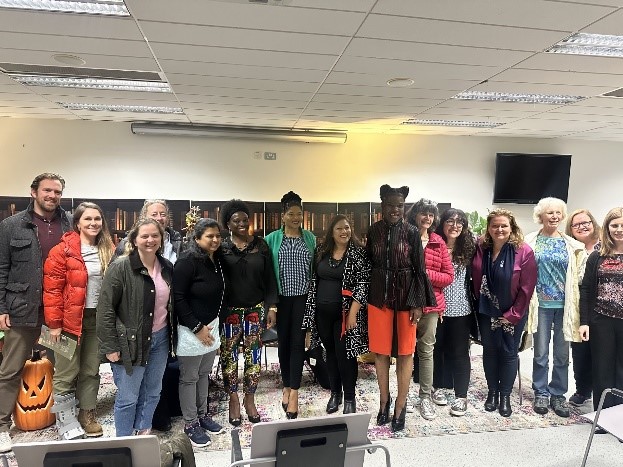
Left to Right- Eya Lawani, Carline Thompson, Melissa Bosch, and Dr. Ebun Joesph speaking at their Red Line Book Conference. Photo: Mene Agbofodoh
The purpose of the book was to amplify the voices of black Irish women and examine their experiences within the Irish labour market.
It aims to uncover the challenges they face and their perceptions of achieving equity in the workplace.
Despite progress in gender parity, disparities still exist, with women being underrepresented in leadership roles and facing lower pay, poor working conditions, and instances of bullying and harassment.
Dr. Ebun Joesph spoke about the importance of women finding their voices within the workplace.
“I think it is important that us women find our voice especially us black women, so that our stories can be heard, to be told and not told from a perspective that doesn’t truly represent us,” she said
Melissa Bosch talked about understanding the power your voice has.
“When you see something that is wrong along the lines of racism and discrimination, your voice is so powerful and when speak out against these things, it can drive change,” she said.
“If we do not speak about things like this and if we don’t open our minds, our hearts to create those spaces for this kind of level of dialogue, we are not going to change anything. Ireland won’t be able to move forward”.
Melissa Bosch’s chapter in the book revolved around trying to help people see their place in the world and what they can do to help marginalized people.
“Whatever ethnic background you come from, whatever demographic background you come from, you have the power to make that change, it’s about understanding your privilege and position in this world.”.
Carline Thompson spoke about the challenges of writing her chapter in the book.
“One of the challenges I had when writing my chapter wasn’t the 2,500-word count even though I only had a week to do it, it was how do I write so much about this topic without exceeding the limit?”
“People think racism only happens in the workplace however, it’s everywhere around you. It’s in the supermarket where you feel you’re being watched by security whilst you’re shopping, it’s in the library, it’s in the restaurant when you’re going out to eat with family and you get stares throughout the night”.
Eya Lawani also spoke on her challenges when she was writing her chapter.
“My problem or challenge about writing my chapter was I didn’t know how I was going to convey the message that systematic racism is the problem in our society without blaming white people as a whole.”
“It was a very difficult topic to write because I had to relive certain moments in my life that made me feel belittled, moments when applications were rejected despite having my bachelor’s degree from Nigeria but because it wasn’t an Irish degree it wasn’t good enough”.
“I struggled with the fact people in society were willing to accept I could be discriminated against because I was a woman but If I said I felt discriminated against because I’m black suddenly it couldn’t possibly be because I’m black and having to convey that in my chapter was very challenging.”
Black History Month is observed in Ireland from the 1st of October until the 31st.
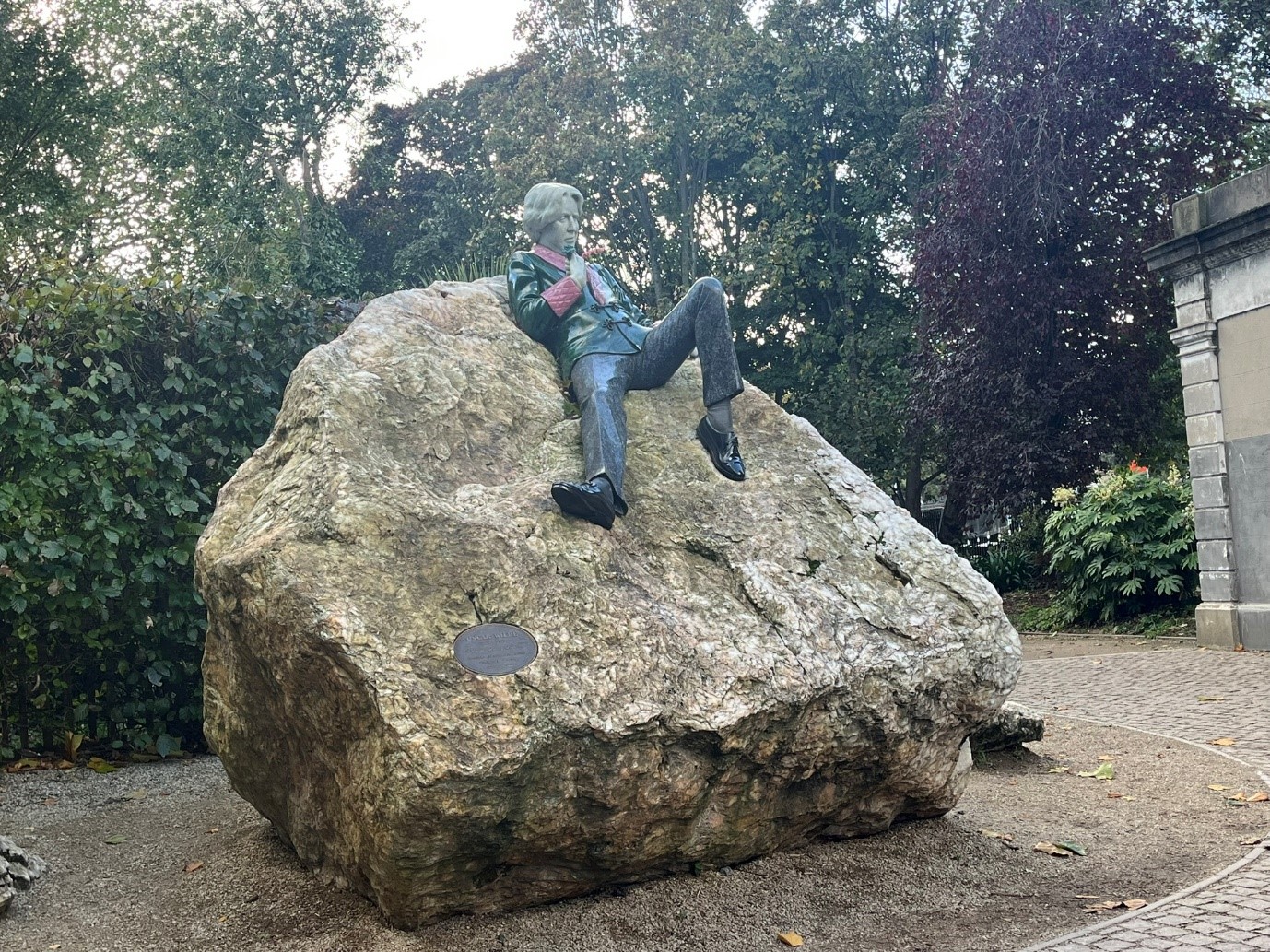
Last month, marked the 170th birthday of Oscar Wilde. The City.ie took a visit to the famous poet’s childhood house where the event Oscariana was taking place, while also going to see key locations around Dublin associated with the poet’s life.
Some of the key items in Oscar’s life were on display in the home where he grew up. Many people attended the open house tour at 1 Merrion Square, which occurred over the weekend.
A walk on the Wilde side showed off aspects of his life, from where he was baptised to when he studied at Trinity College at the old library. Each stop showed a vital part of the poet’s life from early places to memories of his later life.
The Oscar Wilde statue in Merrion Square opposite the Oscar Wilde house. A statue of Oscar Wilde by Melaine lo Brecquy The outside of Wilde’s family home from 1855 to 1879An image published in Harper’s Bazaar during Oscar Wilde’s tour of America. A portrait of Oscar Wilde in his childhood bedroom A portrait of a young Oscar Wilde in a dress hung in his childhood bedroomOscar Wilde’s birth and baptism certificate and a copy of his parent’s marriage certificate. Some books that were written by Oscar Wilde and an Oscar Wilde action figure A portrait of Oscar Wilde hanging at his house. Some of Oscar Wilde’s published worksThe outside of Oscar Wilde‘s house at 1 Merrion Square The outside of the Old Library at Trinity College, Dublin, where a young Oscar Wilde studied.
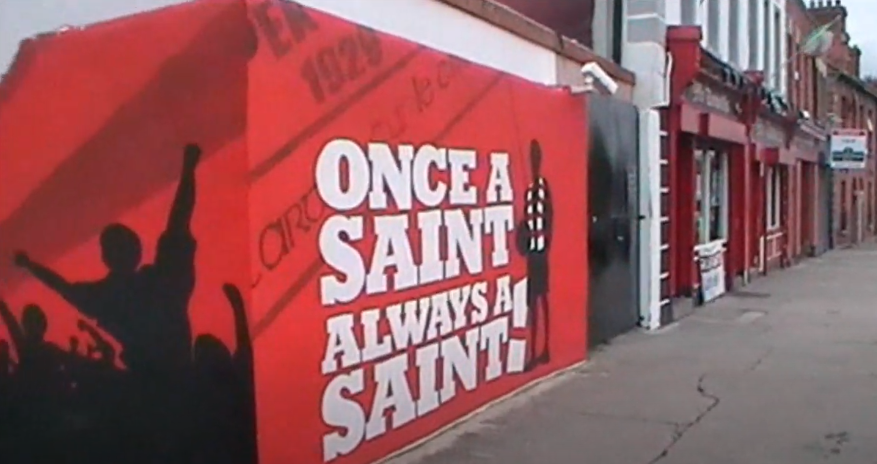
Richmond Park is the well-known venue, pitch, and home, of St Patrick’s Athletic football team in Dublin, in the heart of Inchicore in Dublin.
Photo: Derek Price
According to the team’s website, the ground was originally used as a recreational area by the British Army, from Richmond Barracks. This barracks has since been demolished many years ago.
The pitch was then unused for 3 years.
Brideville Football Club, originally based in The Liberties, Dublin. then began using the ground in 1925.
Although St Pats were founded in May 1929, back then they played their home matches in the Phoenix Park.
In 1930 Brideville F.C. moved from the Richmond Park football pitch to the Harold’s Cross Greyhound Stadium, as St Patrick’s Athletic then took it over and moved in. St. Pats used the ground until 1951, and then entered the League of Ireland, but the league declared the pitch inadequate, and for the best part of 9 years, St. Pats had to play on different pitches in Dublin, while they redeveloped Richmond Park.
In 1960, the team returned to the Inchicore pitch. The ground then closed for a upscaling in May 1989. Due to St Pats suffering financial difficulties, the team did not return to the site until 5 December 1993.
The ground is situated behind a row of terraced houses in a natural valley off Emmet Road, and is regularly used for the Republic of Ireland youth teams, and women’s soccer matches.
Richmond Park also is usually the venue for the non-league clubs in surrounding areas if they qualify for the FAI Cup.
Some music acts such as the 1970s and 80s rock band Thin Lizzy, have also used the venue to stage their concerts in the past.
In 2020, St Patrick’s Athletic used Richmond Park as a hub for donated items, and a food bank to provide aid to the needy during the COVID 19 pandemic, which was reported on the St Pats website, and in The Irish Times.
There are numerous shops, restaurants, cafes, and pubs in the area, which one could imagine, must enjoy the influx of football supporters and their families, buying lots of food and items, and increasing their business and livelihood.
There is also a high level of security provided by An Garda Síochána, at every match, to ensure that law and order is maintained, with several Garda squad cars, vans, and motorcycles present, to keep the fans and patrons on the straight and narrow.
The St Patrick’s Athletics’ fans have been very enthusiastic about their team staying in Inchicore village, but how do the locals feel about the soccer fans etc., being around the surrounding area?
“I’m not a Pats supporter myself, but I drink in the pubs around the area, and I’m usually there on the weekends. The atmosphere is great because of the matches, and I for one am in favour of it. It wouldn’t be the same without it,” said Johnny Byrne (48) from Inchicore.
Susan O’Donnell from Bluebell is a fan of soccer.
“I drop down to some of the home games in Richmond Park. I’ve not seen much of any serious trouble at the matches, I have to say. A bit of monkeying around at times, with some young fellas messing, shouting at, and slagging the other team’s fans, but nothing that would stop me from turning up at the matches. They’re a good bunch of lads overall, as far as I’m concerned.” Susan said.
Patrick Evans (55) said: “I don’t live around here these days, but my parents do. I’m not a football fan myself, but I do watch the odd match when it’s on TV. I come up on the weekends when most of the matches are on. The buzz here on match nights is great and livens up the area. The supporters seem so loyal and mad into it. I’d recommend any football fans to drop up and take in the experience, and see it for themselves, whether they’re from Dublin, Ireland, or abroad,” he said.
Several shop workers from the Inchicore area where also asked for comment regarding this article, but unfortunately all declined to voice their opinions, and participate on the day.













You must be logged in to post a comment.