Tag: ireland

  • Ireland’s relationship with tobacco – the stats

    Ireland’s relationship with tobacco – the stats

    An estimated 80,000 fewer people are now smoking in Ireland according to the annual Healthy Ireland Survey that was published in October.

    This means the percentage of smokers has gone from 23 percent in 2015 to 20 percent in 2018.

    The survey, launched by Minister of State for Health Promotion Catherine Byrne TD and conducted by Ipsos MRBI, also shows figures for how the recently introduced plain packaging on cigarettes and graphic health warnings affects the motivation of smokers to quit, as well as how many smokers have attempted to quit in the previous year.

    According to the Irish Cancer Society, the fifth most common cancer in the country is lung cancer, with an estimated annual diagnosis rate between the years 2015 and 2017 of 2,566.

    Lung cancer is also the fourth most common cancer in both men and women, with an estimated nine out of ten instances of lung cancer being either a direct result of, or partially caused by smoking.

    In addition to this, only one out of ten lung cancer patients will live for five years or more following diagnoses, as opposed to other types of cancers i.e. prostate cancer where nine out of ten patients will live for five years or more following their diagnosis.

    Up to 5,200 people die annually from smoking-related diseases throughout the country, which is approximately 100 deaths per week according to the Health Service Executive (HSE).

    There are many reasons why the percentage of smokers has changed, not only due to new packaging regulations but also rising prices with each budget.

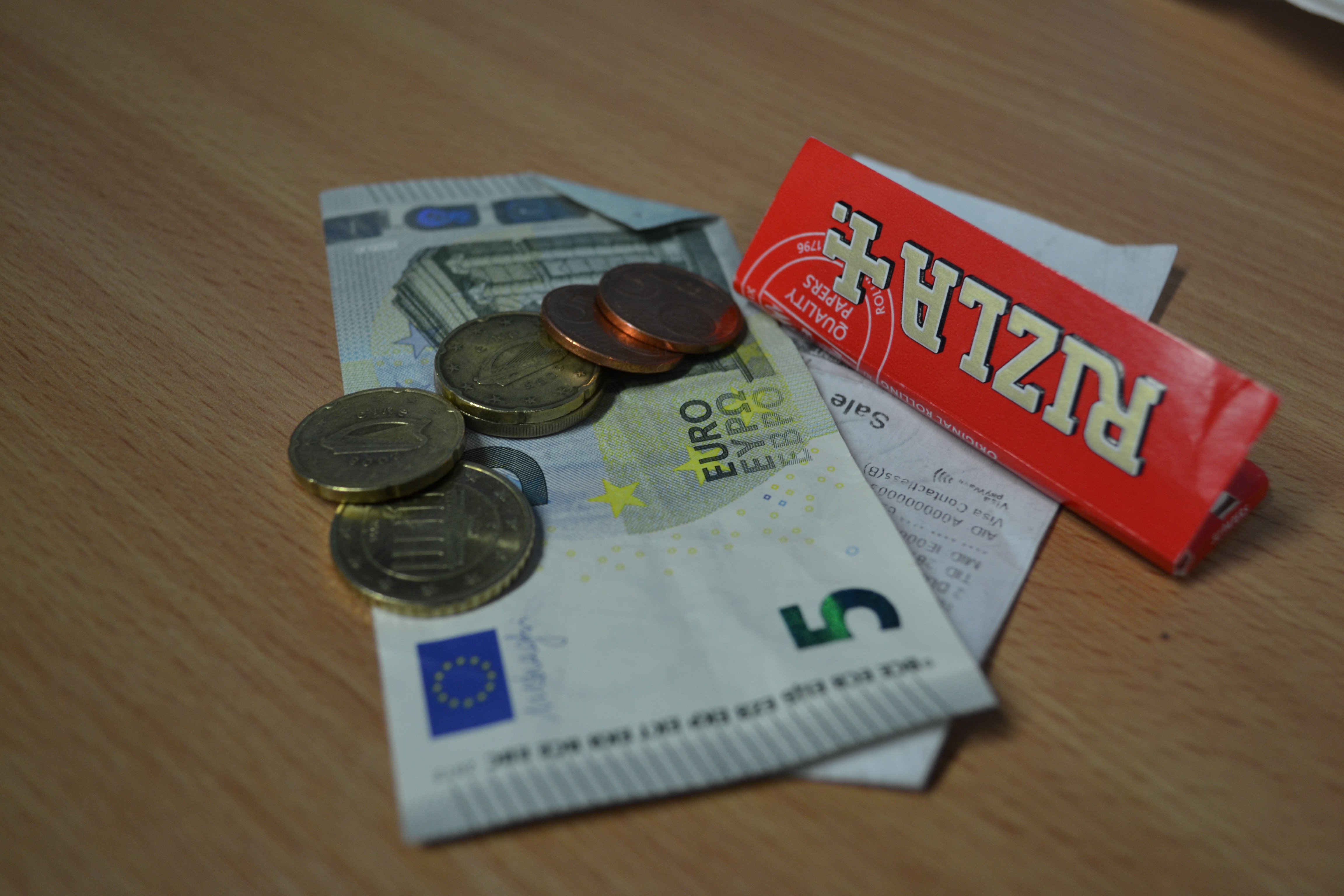
    Roll your own cigarettes, according to the HSE, have risen in usage from just 3.5 percent of smokers using roll your own in 2003 to 24.6 percent in 2014.

    This latest figure has also risen significantly since then, with an estimated 30.3 percent of smokers using roll your own cigarettes and 6.2 percent of the overall population using e-cigarettes according to the HSE’s mid-year report for 2018.

    Another reason for the change in numbers can be attributed to the prohibitions put in place as well as the ‘old reliable’ for budget increases each year.

    Without fail since 2011 the price of cigarettes has risen every year in Ireland, the average price of a pack of twenty cigarettes in 2010 being between €7.50 and €7.75.

    At the time, Irish legislation mandating a minimum pricing on cigarettes was deemed to be an infringement of European Union competition laws, yet this has not stopped the almost continual increase on prices and tariffs.

    It was not until 2015 that the price of twenty cigarettes rose to over €10, with the average price nowadays being approximately €12.50.

    These spikes in prices have no doubt contributed to the lower numbers of people smoking today, although advertising campaigns and other similar efforts have also contributed.

    The rise in roll-your-own cigarettes has also had an impact in other areas of tobacco consumption, as they tend to represent better value for money than cigarettes. These two have seen drastic price increases, however, in addition to the removal of smaller, 12.5 gram boxes from the market.

    The government has plans to reduce the percentage of the population that is smoking and by extension the number of deaths related to it.

    The Departments of Health and Welfare, and by extension the current government, has plans to reduce smoking in Ireland to just three percent, or to below five percent, which would allow for the title of “tobacco-free” by 2025.

    While this may or may not happen, it gives good incentive and allows for quite an optimistic projection of where the country may become 2025 and beyond in the numbers of people who succumb to smoking-related diseases.

    If it is assumed that the population is 4,800,000 in 2018, that leaves 960,000 smokers today.

    If the projections are met, and around three percent of the population is smoking in 2025, and we allow for an increase in population every year of approximately one percent (total estimations of yearly change, just for simplicity, with numbers rounded to the nearest whole number and estimating by average yearly percentage increase), the approximate population of Ireland in 2025 would be in the region of 5,197,712 (give or take quite a few in either direction).

    Three percent of this would be just 155,931, markedly lower than current numbers.

    While there will be people who unfortunately die as a result of smoking during and after 2025, if we assume that 5,200 people out of 960,000 die every year, a rough estimate of the change in deaths come 2025 would be something closer to 845 (5,200 being roughly 0.54% of 960,000, 845 being roughly 0.54% of 156,000).

    This, remarkably, means that if the Department of Health and the government are successful in creating a ‘tobacco-free’ Ireland, around 4,355 fewer people would die each year of tobacco-related diseases.

    (Data sources: CSO, HSE, Irish Cancer Society, Ipsos MRBI)

  • Male unemployment down from 6.9 percent to 5.5 percent since last year

    Male unemployment down from 6.9 percent to 5.5 percent since last year

    In October 2018, the unemployment rate was 5.5 percent for males, down from 6.9 percent in the same month last year, according to the latest seasonally adjusted CSO figures. 

    The seasonally adjusted number of males unemployed was down from 88,800 to 71,800 from October 2017 to October 2018.

    IanStat
    Source // CSO

    The largest increases in employment in the second quarter of 2018 took place in construction, the wholesale and retail trade, accommodation and food service activities, and professional, scientific and technical activities, according to the latest Labour Force Survey figures. 

    In comparison, the seasonally adjusted unemployment rate for the entire population of the United Kingdom in September 2018 was at 4.1 percent, according to figures released in November by the U.K.’s Office for National Statistics.

    In August 2018, the Department for Business, Enterprise and Innovation announced the Future Jobs program, which will be introduced in 2019 to succeed the Action Plan for jobs and to maintain the momentum in employment growth. 

    Earlier this year, the Minister for Business, Enterprise and Innovation Heather Humphreys supported the continued efforts to tackle unemployment and believes the Government’s successful annual Action Plans for Jobs has played a key role in the continued improvement in the job figures.

    The Action Plan for Jobs was created in 2012 – when unemployment was at its peak of 16 percent across everyone in the country. Since the first quarter of 2016, 174,200 jobs were created, with 65 percent of these coming outside of Dublin.

  • Opinion: Why are U2 loathed by the Irish?

    Opinion: Why are U2 loathed by the Irish?

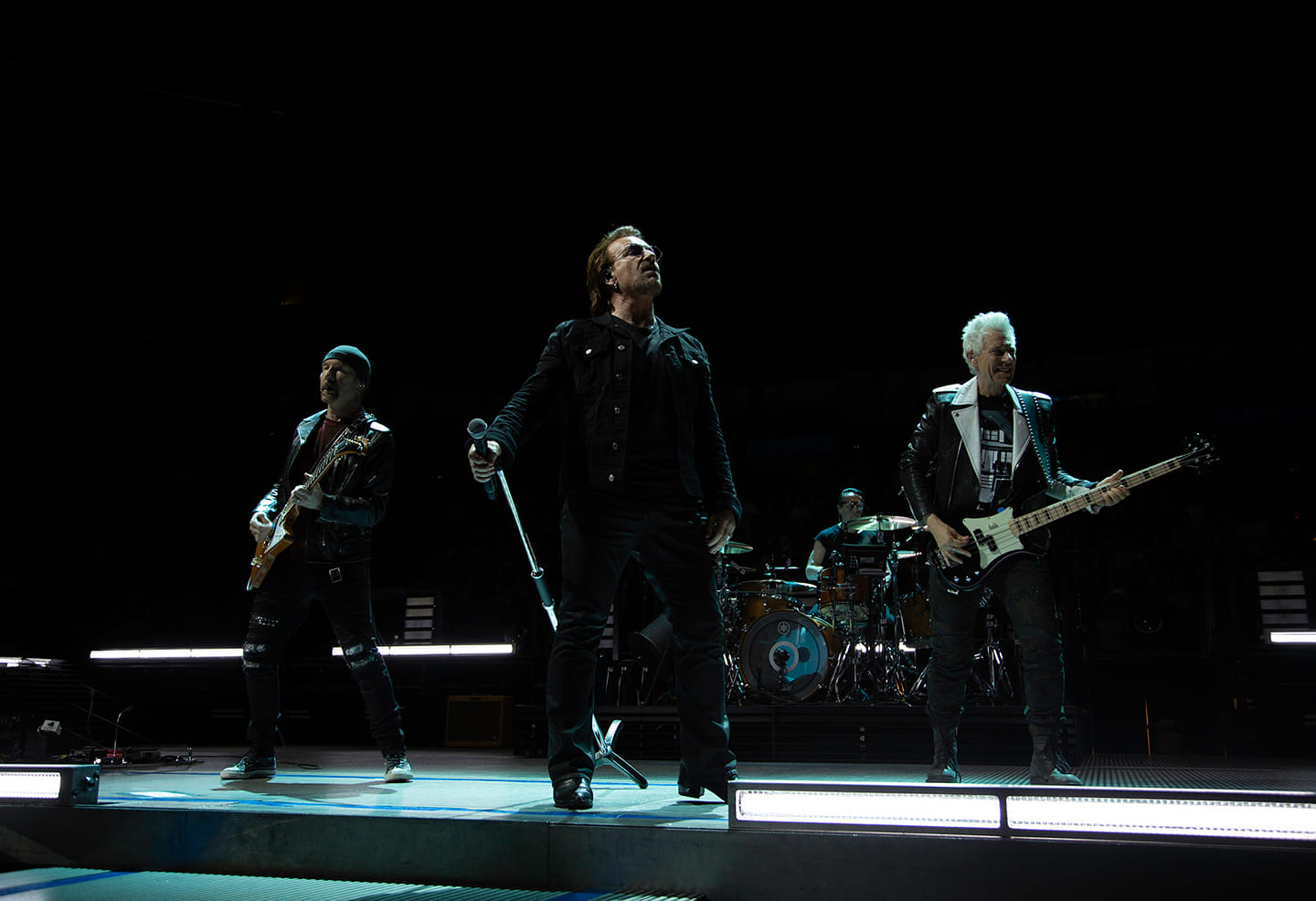
    U2 recently wrapped up their eXPERIENCE + iNNOCENCE tours – selling out four nights at Dublin’s 3Arena.

    But, despite rocking almost fifty thousand fans Irish fans with superb performances, there remains an air of uncertainty surrounding the Dublin band’s relationship with the Irish public.

    For a band that causes such an international clamour, why are Bono and Co not adored by the Irish?

    Arguably one of the most universally recognised quartets in the world, the band, who originally hail from the northside of the Liffey, have arguably produced wider reaching work than Irish greats such as James Joyce, Phil Lynott, Brendan Behan, and Patrick Kavanagh.

    Joyce, Lynott, Behan and Kavanagh all have statues dedicated to their talents, so it is a little more perplexing that there is no tribute to U2 in their home city.

    No statue, no mural, nothing.

    Even when paying a visit to cult spot Windmill Lane – where the band recorded albums such as Boy, Joshua Tree, and War – there is little to discern that the group has history there.

    Instead of any sort of tribute, the lane is filled with derelict buildings and vandalised incomprehensible spray paint.

    500x500
    The seminal track “Sunday Bloody Sunday” was released on U2’s 1983 album “War” // Facebook @U2

    How can it be that a rags-to-riches band from Dublin can share so little common ground with the general public? Songs such as Bad and Sunday Bloody Sunday about heroin abuse and the Northern Ireland troubles should surely resonate with people more than they do.

    Bono has vaguely acknowledged this problem in the past, remarking on the Conan O’Brien show in 2005 that it is part of the Irish mentality to be critical of wealth, remarking that the Irish don’t necessarily like seeing their compatriots being successful.

    This would seem like a plausible (Irish) reason to like the band, I myself often search for reasons to dislike Irish celebrities before looking for reasons to like them.

    Perhaps this is just something that comes in our DNA, a deep mistrust for people with fabulous wealth and influence. What doesn’t help Bono’s case is that he often cosies up to people in even more powerful positions than him; George Bush, Tony Blair, and Bill Clinton to name but a few.

    This kind of guilt by association is more than likely one of the major failings the singer has in the eyes of the public.

    From this point of view I can see why people would question his integrity, how can people trust a man who campaigns for the rights of children in the Middle East but also engages with leaders who’ve had such a chequered history in the region.

    That’s not to say they don’t have a large enough core group of die-hard Irish followers, but it seems like if you are not part of that group, you probably don’t like them, almost as if there’s no middle ground.

    While working at Croke Park for their four performances, I saw this first hand. While there was a lot of overseas visitors at the event, the vast majority were Irish and the large queues at the merchandise stands showed their loyalty to the band.

    It is particularly puzzling that a lot of what they do is genuinely helping people in need, yet they are viewed in a predominately negative light. Bono’s charity work with the ‘ONE campaign’ and his help toward charities such as UNICEF and AIDS research firm ‘DATA’ is overshadowed by reports of sophisticated tax strategies, particularly since the ‘Paradise Papers’ were released.

    I have always grown up with the belief that they were pretentious and pompous without really knowing why (particularly after that South Park episode). However, even though I still believe there is a high level of pretentiousness about them, I feel it is exaggerated and they should be recognised for the work they’ve done, not only in their musical field but for their humanitarian work also.

    Bono recently remarked, “we’re going away for a while” at the final leg of their tour, which was met with little to no reaction by the public or Irish news sites, even though it could well be a strong hint that the band are calling it a day. I found this a little surprising considering the scale of their international success.

    Even though there is definitely a level of pompousness about them, their music a lot more (mainly old stuff) has definitely grown on me (I’m willing to forget Get on Your Boots was ever made). A few months ago, I would have turned off a U2 song if I heard it on the radio, but I have a new-found level of respect for their work.

    I can also see how the negative side of Bono’s persona can affect the group of relatively grounded individuals in the Edge, Larry Mullen Jr, and Adam Clayton. It will be interesting to see whether Ireland will ever build statues and tributes to the band, like those towering artistic figures who came before them.

  • Homeless numbers increased by over 15 percent

    Homeless numbers increased by over 15 percent

    The Department of Housing, Planning and Local Government has released their latest figure for homelessness in Ireland. The report shows the number of people that are trying to access local authority managed emergency accommodation.

    According to the monthly reports, as of September 2018, there is a total of 9,698 people homeless. This is a 15.8 percent increase from just one year before when 8,374 people were without housing in Ireland.  

    There are currently 5,869 adults looking for shelter throughout Ireland. The majority of these are male (3,275) as against 2,594 females.

    The report also shows more than two-thirds of homeless are between the ages of 25-44 (3,507). There were over 893 adults aged 18 to 24 living in emergency homeless accommodation.

    Map 2017

    This represents an 11 percent increase when compared to the figures from September 2017 (806). Overall, 52 percent of the homeless looking for shelter were in supported temporary accommodation which includes hostels, with on-site professional support.

    Across the Dublin region there is enormous pressure in providing emergency accommodation. Dublin has the highest rate of homelessness in Ireland and the report shows that there were 3,940 adults seeking shelter.

    Map 2018

    The northwest of Ireland including Donegal, Leitrim and Sligo, is the region with the lowest figures of people seeking shelter (54). Leitrim was the only county that accounted for nobody accessing homelessness accommodation services.

    It was announced that €2.3 billion would be dedicated to housing for the 2019 budget although this has been criticised by many charities. Focus Ireland claim that the budget “is not a game changer for people who are homeless”.

    A spokesperson for the Department of Housing, Planning and Local Government told TheCity: “The budget [for] 2019 reflects the commitment to dealing with homelessness by allocating an additional €30 million for homelessness services – bringing to €146 million the total for 2019 – €60 million extra in capital funding for additional emergency accommodation and €1.25 billion for the delivery of new social homes. This will deliver 10,000 new social homes next year.

    “A national Director of Housing First was appointed in February to work with the most vulnerable of the homeless population and a National Implementation Plan is in place. This plan seeks to extend the programme nationwide with targets for Housing First tenancies in each local authority. Combined, the plan will result in almost 1,000 former rough sleepers and long-term users of emergency accommodation having their housing and support needs met.

    “The numbers [for] homelessness are too high.  However, despite the high levels of homelessness, results are being achieved.  Over 4,700 adults exited homelessness into an independent tenancy in 2017. That does not include the children who were with these families. We are on target to achieve over 5,000 exits this year,” said the spokesman.

  • Randolph resistant in stalemate at Aviva Stadium

    Randolph resistant in stalemate at Aviva Stadium

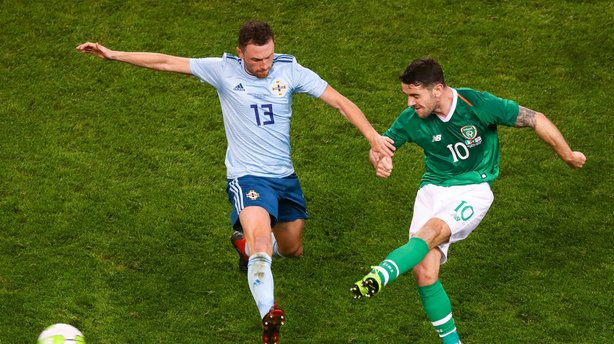
    A man-of-the-match display from Middlesborough’s Darren Randolph rescued Ireland from defeat against neighbours Northern Ireland in front of 31,241 people at the Aviva Stadium.

    Ireland welcomed the return of Robbie Brady ahead of next week’s match against Denmark after a year on the international side-line, along with returning Séamus Coleman who missed the game against Denmark.  

    Despite this boost, Martin O’Neill’s men failed to find any sustained periods of possession in the final third in a game that was crying out for a creative midfielder to link with the attack.

    Randolph pulled off heroics in either half to deny Gavin Whyte and Jordan Jones from close range.


    A laboured performance from Ireland marked what was likely to be Glenn Whelan’s final international appearance of an 85-cap career that has spanned over a decade. He was replaced by Aston Villa teammate Conor Hourihane before halftime.

    Ireland featured six changes to their starting 11 and played with a 3-5-2 formation, with James McClean and Séamus Coleman flanking Jeff Hendrick, Robbie Brady and Whelan in the middle of the park.

    Blackburn’s Darragh Lenihan marked his second international appearance with an assured performance alongside Shane Duffy and John Egan.

    Michael Obafemi remained on the bench after declaring for Ireland amid speculation about his international future, while Seanie Maguire suffered yet more hamstring bother after he limped off just 13 minutes after being introduced as a substitute.

    Ireland travel to the Parken Stadium on Monday to face Denmark in what is now a crunch clash after the goalless draw between the two in Dublin.

    ROI: Randolph, Lenihan, (Christie, 84) Duffy, Egan, Coleman, Hendrick, Whelan ©, (Hourihane, 36), Brady, McClean (Stevens, 66), O’Dowda (Curtis, HT), Robinson, (Maguire, 66) (Hogan, 79)

    NOI: Peacock-Farrell, Lewis, J Evans ©, Saville, Davis. Boyce, C Evans, (McNair, 65), Dallas, Whyte (Jones, 61), Cathcart, Smith, (Ward, 74)

  • Imports Overtake New Buys in Irish Car Market

    Imports Overtake New Buys in Irish Car Market

    Fewer motorists are licensing new vehicles this year, with Irish road users turning increasingly towards the second-hand and import market in 2018, according to figures released by the Central Statistics Office.

    A total of 5,086 new vehicles were licensed in October, a decrease of 4.8 percent from October 2017. Altogether, 2,874 new private cars were licensed last month compared to 3,255 in October 2017, a decrease of 11.7 percent. However, there were more new goods vehicles licensed this October, with a 10.4 percent increase from 1,466 last year to 1,619 in 2018. The licensing of both new tractors and motorcycles has increased from October of this year to last, up 14 and 28 percent respectively. Vehicles in Ireland are licensed when a valid motor tax disc is issued for the first time.

    Figures for January to October of 2017 and 2018 show an overall decrease in the total number of new vehicles licensed in the country this year – down 2.7 percent from 157,285 to 153,001, a decrease of over 4,000 vehicles. Overall from January to October the licensing of new cars is down 4.9 percent this year to last, while an additional 1,327 new goods vehicles licensed in 2018 brought an increase of 5.9 percent on corresponding figures for 2017.


    While less new cars are being licensed this year, 2018 has seen an increase in the number of licensed used private cars, the majority of which are imported from abroad. From January to October of this year 84,502 used private cars were licensed, an increase of 8.7 percent on the 77,734 licensed in 2017.

    Figures for the licensing of used goods vehicles have also risen in 2018 – up 6.2 percent on 11,781 to 12,509. In total from January to October this year 106,874 used vehicles were licensed compared to 99,285 in 2017, showing an increase of 7.6 percent with the licensing of an additional 7,589 used vehicles.

    Of the 118,732 new private cars licensed from January to October of 2018, the majority were diesel engines, followed by petrol engines and electric cars, while just one single diesel & electric hybrid was licensed.


    The CSO defines a private car as a privately licensed vehicle, including hire, fleet vehicles and some commercial vehicles.  ‘New vehicles’ refers to vehicles which are licensed for use in a public place, in this country, for the first time, while ‘used vehicles’ refers to vehicles which are licensed for use in a public place, in this country, for the first time, mainly imports. In the first ten months of 2018, 1.3 percent of imported private cars licensed were less than one year old, while 4,045 (4.8 percent) were ten years or older.

    Certain vehicles fall under an ‘exempt’ status, meaning that these vehicles are licensed for the first time in this country but are exempt from paying road tax. Exempt vehicles are divided into four categories – state-owned, diplomatic, fire services and disabled drivers.

    A total of 203,234 new and used private cars were licensed for the first time in 2018 – with Volkswagen proving the most popular manufacturer. Overall, 23,873 new Volkswagens were licensed between January and October of this year, followed by 20,519 Fords and 17,089 Toyotas. Over 500 less BMWs have been licensed this year compared to last, while Hyundai has also seen a decrease in popularity of 13 percent on 2017 figures. At the other end of the scale, 257 Subarus were licensed, while 86 licenses being issued saw Ssangyong bringing up the rear as the manufacturer with the least number of vehicles licensed.


  • Over eight million people visited Ireland in the first nine months of 2018

    Over eight million people visited Ireland in the first nine months of 2018

    Over eight million overseas visitors came to Ireland during the first nine months of 2018, new figures show.

    Information released by the Central Statistics Office portrays a visitor increase of seven percent on the same period for last year.

    A total of 8,203,500 people came from outside the state to visit Ireland from January to September of this year, 542,300 more than 2017.

    British visitors represent a third of all overseas visitors for the year so far, with 2,842,000 Britons venturing across the Irish Sea.

    2,976,200 Europeans have visited so far in 2018, more than 270,000 above the total from the same period in 2017.

    With 2017 being Ireland’s best ever year for tourism, according to Tourism Ireland, and with visitor figures on the rise, there is every possibility that 2018 will be even better for tourism figures on the island.

    Fáilte Ireland’s CEO Paul Kelly welcomed this, saying: “2018 has been an exceptional year for tourism. Our latest estimates now show that we will have welcomed over 9.6 million overseas tourists and 9.8 million domestic trips this year, generating €7.8 billion in revenue. There is now an impressive 260,000 people estimated to be employed in the sector, an increase of 20,000 since 2017.

    “The tourism industry is vitally important for Ireland, particularly when you consider that this growth in revenue and jobs is generated in many parts of the country where many other major industries do not exist.”

    In September of this year, the collective number of trips to Ireland by overseas residents increased by 2.3% to 968,200 – an overall increase of 21,600 compared to twelve months earlier.

    British nationals visited 9.1% less than they did the previous year with figures dropping from 327,300 to 297,600, however, trips by residents of European countries other than Great Britain rose by 6.9% from 321,400 in 2017 to 343,500 in 2018.

    Residents of Canada and the USA willing to make the long trip across the pond to Ireland rose 11 percent from 235,500 to 261,400.

    Recently, Fáilte Ireland published its annual list of Ireland’s most popular visitor attractions for 2017. This list looks at both free and paid for spots, with the Guinness Storehouse topping the former and the National Gallery of Ireland topping the latter.

    TV and film exposure has been named as a contributing factor to the high levels of incoming visitors over the past number of years, with Game of Thrones and Star Wars having major scenes shot on the island. Skellig Michael, an ancient monastic settlement off the west coast of Ireland features heavily in Star Wars: The Last Jedi released in 2017. As well as this, spots such as Castle Ward in County Down and The Dark Hedges in Co Antrim feature in Game of Thrones, which averaged 30.6 million viewers per episode in its seventh season.

  • Mis-Conceptions review: ‘The acting that came as a result was next to exceptional and really brought the audience in.’

    Mis-Conceptions review: ‘The acting that came as a result was next to exceptional and really brought the audience in.’

    Recently, I had the pleasure of seeing Helen McNamara’s fifth play, Mis-Conceptions, charmingly performed at Smock Alley Theatre in Temple Bar. Upon first inspection, the performance space seemed simplistic and minimalistic, however, this allowed for the focus to be on the plot, which gripped your attention right from the beginning.

    The set displayed different home-like settings for each scene for which the ‘Book Club meetings’ would take place, these meetings being crucial to the storyline.  Inside the set we are introduced to our six leading ladies and as described by Super Pie Theatre, it is all about “Six women. Six books. Six very unexpected misconceptions.”

    In the opening scene we are introduced to an angsty Sarah (Megan Bea Tiernan), adopted sister to Ann (Niamh Sweeney), upset and angry at a world where she feels she has no place, given up and never contacted again by her own birth mother. We are given slight insight throughout the play on each woman’s stance on having children, with the discussion of abortion popping up here and there.

    Misconceptions
    The play’s setting aims to evoke a home-like feel // Facebook

    The issue of women’s choices and women’s bodily rights is discussed frequently during the play and offers an insight into several different, and in some ways, opposing opinions from these six characters. There is mention of the Repeal campaign’s success in the play, which offers a new and exciting angle to the plot and ensures that, along with entertainment, this play addresses some real life issues faced in today’s Ireland.

    From beginning to end we are introduced to each woman’s own dealings with childbirth, or lack thereof, and are left feeling connected to each woman. They represent different, yet all equally strong, modern, Irish women. With each heartbreaking story comes feelings of pity, not lingering long before we are brought back into the story with a pop of humour.

    Spending the entire play trying to figure out the connection between all these women and their monthly book clubs, we are kept on the edge of our seat before finally the ultimate plot twist is revealed. We witness Grace (Rebecca Bloomfield) read aloud the missing chapter of her choice of book “The business of babies” where, in a surprising turn of events,  a character that had previously remained very much in the background suddenly becomes the centre of the storyline. The acting that came as a result was next to exceptional and really brought the audience in.

    Misconceptions2
    Megan Bea Tiernan gives one of the play’s standout performances // Facebook

    While all of the actors in this play are worth noting, the standouts include Michelle Costello playing the ever bubbly, humorous and, in some cases, goofy Elaine who continuously caused eruptions of laughter from the audience. Megan Bea Tiernan who played Sarah also gave a heart wrenching performance, and her acting chops are undeniable.

    The play is beautifully written by Helena McNamara and directed excellently by Niamh Cummins, offering smooth scene changes, a clear focus and united form that was impressive to witness, with each actor knowing when to pipe up and when to pull back. With everything discussed here it is easy to say that this play was exceptionally written, directed and performed by all of the cast and crew.


  • Public Safety on Irish Rail – Part Two

    Public Safety on Irish Rail – Part Two

    In the second of a two-part series, The City’s Keith Horan looks at incidents of anti-social behaviour on Intercity Irish Rail services, using figures obtained under the Freedom of Information Act.

    2018 looks set to be the worst year since 2015 for incidents of anti-social behaviour on Intercity Irish Rail services, with 280 incidents reported by October, more than the final year figure for any of the previous three years. Already this year, there have been 100 more incidents reported than in the whole of 2016. And overall, a total of 964 incidents of anti-social behaviour were reported on Intercity Irish Rail services since 2015.

    The most common complaint of anti-social behaviour made by Intercity Irish Rail customers is to do with disruptive passengers, with a total of 628 complaints – a whopping 65% of all total reports made. Like the rising total yearly trend, incidents involving disruptive passengers have been on the up since 2016 when 120 reports were recorded, to 153 in 2017, escalating to 186 by October of this year.

    According to the figures obtained for disruptive passengers on InterCity services, you are most likely to run into problems on the Galway line, which holds the title for most reports since 2015 with 105. At the other end of the scale, you are least likely to run into a disruptive passenger on the Kildare line, with only 17 reported incidents over four years. The total figure for disruptive passengers on the Kildare line since 2015 is lower than every individual yearly figure of similar reports on the Cork, Galway and Sligo lines.

    The next most common complaint around anti-social behaviour centres on reports of intimidation. Since 2015, there have been 164 reported incidents of intimidation, although this figure is skewed somewhat by a totally disproportionate 31 incidents in Longford in 2017, more than treble the yearly complaints of intimidation on every other line.

    Unsurprisingly, Longford has the highest number of reports of intimidation since 2015, with 58 made – Dundalk with 20 has seen the second highest number of reported incidents of intimidation, followed by Cork and Sligo with 16 each. Compared to Longford, if you want a care-free train journey free of intimidation, the Rosslare Europort service is ideal, with only two incidents of intimidation being reported on the line in the last four years.

    Acts of vandalism are the third most reported incident of anti-social behaviour on Intercity services, with a total of 65 reported since 2015. However, vandalism seems to be a receding problem, with reported incidents since 2016 all lower than a high of 26 in 2015.

    Longford again takes the unwanted position of number one for reports of vandalism on InterCity services, with a total of 21 incidents since 2015. Like with incidents of intimidation, Longford has a disproportionate figure in incidents of vandalism – the 11 reported in 2015 being more than double the figure reported in any year on any other line. Dundalk had the second most reports of vandalism with 13, while at the other end of the scale, the Belfast and Westport services have seen no reported incidents of vandalism being made from 2015 to October of this year.

    Incidents of theft aboard Intercity services in 2018 look set to be the highest since 2015, with more than double the amount of theft recorded in 2017. There have been 16 reports of theft made by October of this year, compared to a total of six last year. The Longford and Cork services share the position of number one in terms of reports of theft with ten each, while your bags and belongings should be perfectly safe on the Tralee and Belfast lines, with both without a report of theft in that time.

    Longford also tops the table for reported assaults on Intercity Rail services, with eight such incidents reported since 2015, closely followed by Dundalk with seven. Again, 2018 looks set to be a bad year for safety on Intercity services, with the eight reports of assault by October of this year equalling the same number for the whole of 2015. The Westport service is closest to Longford and Dundalk, with a total of three reported assaults, while both the Galway and Sligo services have yet to see an incident of assault being reported.

    Speaking to The City NRBU General Secretary Dermot O’Leary said that “the situation of anti-social behaviour on Irish Rail services is an escalating problem, with incidents rising year on year.” Mr O’Leary also said that NRBU members have been both physically and verbally assaulted on rail services, and that while issues around anti-social behaviour are a wider societal problem, he appealed to Minister for Transport Shane Ross and Minister for Justice Charlie Flanagan to intervene and deal with the problem on Irish Rail services across the country.

  • Irish man caught up in Melbourne terrorist attack

    Irish man caught up in Melbourne terrorist attack

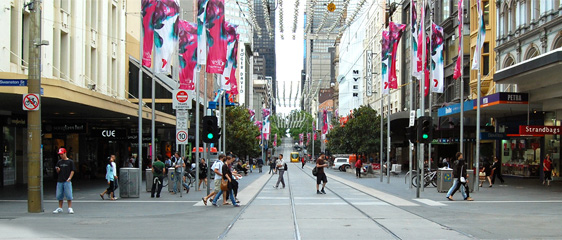
    A young Irish man in Melbourne has spoken of the ‘pandemonium’ around him as a tram he was travelling on stopped less than five hundred metres away from the scene of a deadly terror attack.

    Sam Fearon, 21, from Bayside, Dublin is currently living in Melbourne with friends and said that the city has come together following the violent incident which left one man dead and several others injured.

    The Dubliner revealed that he was on board a tram less than half a kilometre away from where the attack took place at Bourke Street. He said: “I was on the 16 tram from St Kilda Road to CBD [Central Business District]. We were coming down Swanston Street which is very near where the incident took place, and the tram stopped really suddenly. We could hear an unusual siren in the distance, I hadn’t a clue what the siren was for, it was like nothing I’ve ever heard before.”

    phototakenbysamoftheattack
    A photo of the Melbourne attack // Sam Fearon

    This alarm was a ‘terrorism siren’, the first time the siren has ever been put to use in Melbourne.

    The passengers began to speculate, particularly those on social media. “I didn’t have a clue what was going on, but people on the tram started sharing videos on their phones and gossiping and other passengers started saying that there had been some sort of attack. 

    “It was pretty scary, and it was pandemonium on board the tram, everyone just wanted to get off really quickly, as at this stage people had an idea it was a terrorist attack of some sort,” said Mr Fearon.

    There was a sense of calm when the passengers were let off the train, said Mr Fearon. “We were eventually let off the carriage and people started growing a little more confident that the incident was under control and started getting closer to the scene to see what was going on.

    “The photo I took was of a man who was considered to be a threat by the police at the time because he had a bag on him which the police confiscated. The police were quite efficient in their role I must say,” he added.

    PictureofSamthemelbournecuprecently
    Picture of Sam at the Melbourne Cup // Facebook @SamFearon

    Mr Fearon explains the terror attack sent shock waves through the city, but the annual Melbourne Cup, which takes place over two weeks, has improved the local atmosphere. “This incident is a big deal, people were very worried, but we’re all fine.

    “Now that the whole thing is under control, everyone in the city is banding together,” he said.