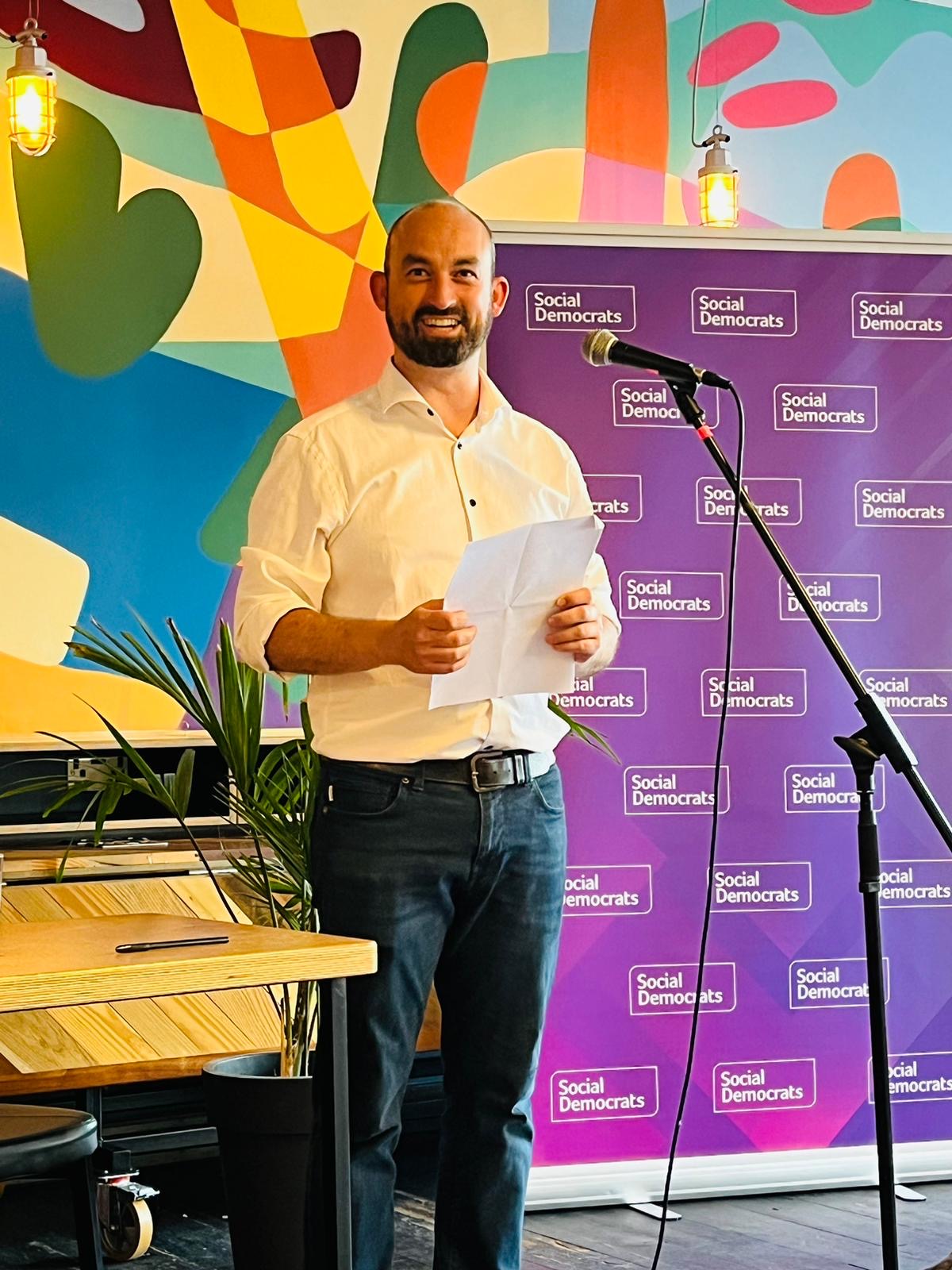
Social Democrats TD Eoin Hayes will remain a party member following the revelation of his use of blackface in 2009, party leader Holly Cairns announced on Sept. 16.
The controversy became public on the morning of Sept. 15 when the Dublin Bay South TD released a statement on X apologising for his actions after a news outlet contacted him the evening prior to confirm that they would be releasing pictures of the event.
“At a Halloween party 16 years ago, while President of the Student’ Union in University College Cork, I dressed up as someone I greatly admired at the time, US President Barack Obama — whose re-election campaign I went on to work for in 2012. As part of this costume, I wore brown makeup on my face and hands,” Hayes said in his statement.
Dressing in blackface is considered by many to be deeply offensive as it has historically been used to promote racist stereotypes.
“Blackface is part of a very, very long tradition of white performance which by and large ridicules blackness From around the 1830’s, across the 19th and well into the 20th century, white people have dressed up as black people to ridicule them, but also to mobilise different kinds of stereotypes,” Anna-Maria Mullaly, a member of both TU Dublin’s race equity group and the Social Democrats, said.
“For instance, black people would be displayed as stupid, as sexually aggressive [and] as lazy in these types of performances.”
Mullaly added.
Hayes’ stated that he “didn’t have an understanding of how hurtful [blackface] was at the time” and reiterated that he takes “full responsibility” for his actions and apologises to “any and all hurt” caused by what he did.
Mullaly, however, is sceptical of Hayes’s excuse that he did not understand the offensive nature of blackface.
“An argument has been made in some quarters that it was a different time, or that it was youthful student folly, I really don’t buy that,” Mullaly said.
“Tropic Thunder, the movie, came out the year before Eoin Hayes dressed up like this on his way to a party, and there was quite a bit of discussion about Tropic Thunder’s satirical take on blackface, so it was certainly in the news, and he would have been aware of those discussions,” she said.
Social Democrats Party leader, Holly Cairns, responded to Hayes’ statement in an interview with RTÉ on September 16th saying she was “hugely disappointed and annoyed about this situation.”
Cairns later confirmed that Hayes would not face any disciplinary action from the Social Democrat Party as the incident occurred before he joined the organisation.
“I want to be clear that it’s not an excuse, but the context of it being 16 years ago is something that I have to consider and I am taking it into consideration,” Cairns said.
Cairns also stated that Hayes “deserves an opportunity to work hard now and to try to regain people’s trust.”
This decision riled some members of the Social Democrat Party with the chairman of the party’s Dublin West branch and local election candidate, Luke Daly, citing the decision as one of the reasons that he and his secretary, Jack O’Reilly, would be leaving the party.
Mullaly seconded Cairns’ sentiment and said that Hayes “should be given the opportunity to follow through now and demonstrate, via action, his actual commitment to anti-racism.”
Carlo Acutis, a 15-year-old teenager, was canonised by Pope Leo XIV at Saint Peter’s Square in Vatican City on Sept. 7, 2025.
As the first saint born in the Millennial era, St. Carlo Acutis has captivated the hearts of hundreds of thousands of Catholics worldwide, with people of different nationalities and ages visiting his tomb.
Carlo acutis was born in london in 1991, but was raise in Italy. Growing up he had developed a passion for catholicism and technology, which he used to spread the catholic faith. He died of leukemia in 2006 and after his death two miracles were accredited to him which led to his canonization.
Carlo Acutis love for the Eucharist were recognised by the late Pope Francis. Father Michael Collins, a priest at the Archdiocese of Dublin, wrote a book on the new saint, God’s Influencer: A short biography of Carlo Acutis.
The Book of Fr. Michael Collins Photo by: Synoah Peñaflorida
Fr. Collins told TheCity.ie that there has already been an increase in young people who are showing interest in the new saint.
“I regularly get people contacting me saying ‘that I’ve been interested in Carlo Acutis’ and they share with me their stories” he said.
Nowadays, when the Church is experiencing a lack of young Christians, Saint Carlo Acutis serves as a reminder that even the younger generation can be influenced through modern Eucharistic practice.
Carlo Acutis Ireland Members Photo courtesy of: Carlos Acutis IrelandCarlo Acutis Ireland Members Photo courtesy of: Carlos Acutis Ireland
“The fact that he combined a reverence for the Eucharist, which has been in the church since the beginning, with new ways of presenting the Eucharist to the younger generation makes him an important saint,” Fr. Michael Collins added.
Aside from being an inspiration to the youth, Saint Carlo Acutis has also impacted the development of the modern Eucharist.
In his lifetime, St Carlo Acutis was fascinated with the internet. In his life the internet was still in its infancy, but that did not stop him from creating his own website and documenting the Eucharistic miracles from different places he visited.
Dr. John Scally a lecturer in theology at Trinity College, Dublin, told TheCity.ie that although the new saint doesn’t have a huge theological significance, he has so much to offer to the development of the modern Eucharist.
“I would see him as an innovator, I mean he’s gone bravely where no saint has gone before in terms of taking the church in a new direction.” Dr. Scally said.
Dr. Scally explained that in this new generation, St Carlo Acutis has developed a method that would allow him to easily connect with people.
“Jesus was a brilliant communicator because he communicated in the language of the time, in ways that people could understand. So young people can relate to Carlo, and he was able to come up with a new way of nurturing Eucharistic devotion” he said.
In his first few weeks as saint, St Carlo Acutis has already caught the devotion of the masses and it could possibly help in promoting the Catholic faith to people and specifically the younger generation.
Dr. John Scally said he “would not have great confidence in the fact that the church is using Carlo, as a poster boy to sell Catholicism […] Carlo’s story on his own is not going to be enough to save the church. We need much more people getting involved and living, being ambassadors for Jesus on Earth.”
Books inspired by St. Carlo Acutis Photo by: Synoah PeñafloridaTotems inspired by St. Carlo Acutis Photo by: Synoah PeñafloridaCandles inspired by St. Carlo Acutis Photo by: Synoah Peñaflorida
Fr. Michael also pointed out that having a saint from this era is more than a publicity stunt for the church. “The church would be foolish to look as if it’s looking for publicity […] all we want to do is share when there is good news.”
St Carlo Acutis’ tomb is currently housed at the Santa Maria Maggiore church in Assisi, Italy, where devotees visit and pray to him daily.
A study conducted by the Higher Education Authority (HEA) in 2024, found that 92% of college applicants who entered during the 2022/23 academic year progress into the third year of their course, and subsequently their final year as well.
The study indicates that gender also plays a part in the statistics on who is more likely to remain in college throughout their programme.
Those who identified as female aged 25-34, and those aged 35-44 years were the age ranges of students who maintained the highest college completion rates at 68% and 66%.
Those who identified as male, however, had a lower percentage than their female counterparts. Male students aged 25-34 had a college completion rate of 60%, while the age group of 35-45 had one of 55%.
The gap between gender in third-level education does play a role, whether we acknowledge it or not. This is especially prevalent in the older aged groups, with their rates of completing college being 5-10% lower than their younger counterparts.
Age and gender do play a factor in college dropout rates, but so does those who aren’t as financially well off. The HEA did a study on the progression rates of students who receive the SUSI (Student Universal Support Ireland) Grant from 2012-2022.
But what happens to the remaining 8% of students that either drop out of their chosen course, or change their course entirely?
Scott McDonald was a third-year mechanical engineering student in TU Dublin before deciding to change from his heavily maths-based course to a new option, culinary arts. He became a first year again this September.
“I realised I didn’t enjoy my degree anymore when I was struggling to get up in the morning for lectures and spending extra hours doing studying for topics I no longer understood,” said McDonald.
“I was becoming a lot more unhappy and miserable in my course. I’m pretty sure you could see it in the way I did my assignments too. The biggest for me was I began to dread what my future might be someday, working in an industry I clearly didn’t enjoy anymore. I just didn’t want to continue being unhappy to force myself to finish a degree I began to hate.”
According to the HEA report, degrees with the highest dropout rateswere in the services degrees, which include social care, at a high of 28%.
This is followed by any engineering, manufacturing or construction degrees at a dropout rate of 20%.
Scott continued: “When I switched to culinary arts, it was a completely different ball game. When I was in engineering, everything had to be so exact, to the T. But with my new course, I can be more creative and have more sense of freedom to explore things how I want in the kitchen. All my friends and family can see how much happier I am. I’m really glad I got over my fear and switched,” he said.
Photo courtesy of Scott McDonald
Students often feel pressure to continue with courses they decided to do when they’re 18 or 19, with parents often adding to the stress of students continuing courses they aren’t happy in.
“My advice for others going through a similar thought process is that you’ll be much happier once you take that leap of faith. You’ll see how much happier you can be when you start focusing on yourself, and what you really want to do now. You have the time,” Scott said.
Stories like Scott’s serve as a reminder to everyone pursuing degrees that no matter the year or age, that you aren’t limited on what you can do. But the most important being, there isn’t any shame on starting again.
De Profundis – a story of love, loss, anger and acceptance
What an opportunity to feel the depth and sorrow of the love of one man for another.
To celebrate 125 years since Oscar Wilde’s death, the Museum of Literature Ireland (MOLI), has produced in film key passages of the letter described as a love letter called De Profundis – written by Wilde to his lover ‘Bosie’ while Wilde was in prison from 1892 to 1895.
Photo: Mary Phelan
Luke Fallon, Visitor Experience Assistant in the museum says “although primarily people will come to the museum for James Joyce, there has also been a great interest to learn more about Oscar Wilde”.
He says that apart from celebrating 125 years since Wilde’s death this year “most people will relate only to his witticisms, whereas this piece shows a very profound and different side to the man”.
The background story is that Wilde and Lord Alfred Douglas (Bosie) were in a relationship together, much to the disgust of Bosie’s father, the powerful Marquess of Queensbury, who was a very cruel man and was determined to ruin Wilde, which he succeeded in doing, by taking him to court for gross indecency. He won his case. Wilde was sent to Reading Gaol for two years.
The film consists of the reading of some passages of his letter written to Bosie by a number of artists, writers and activists from the LGBTQ+ community.
In the reading we learn how Wilde, after his conviction in London, was brought in shackles on a train from Reading Gaol where he spent two long years in prison. The conditions were rough.
In prison he goes through a whole gamut of emotions, including anger, sadness, and incomprehension as to why Bosie never wrote to him all the time he was incarcerated. He realises that he made a huge psychological error in going with Bosie’s suggestion to press criminal libel charges against his father. He contemplates the affection he had for Bosie, and how little it was returned. In hindsight he realises he should have got rid of him before his own ruination. He recalls the bills that Bosie ran up during his stay in a Brighton hotel with a friend and which were so onerous that Wilde could not pay them. As a result he could not leave the hotel, and was ultimately arrested.
As the letter continues, he concludes that hate was always stronger than love with Bosie. He says hate blinds people, and Bosie was blinded by hate. He questions if Bosie had ever known what love was, and also why Bosie never wrote to him, not even once while he was in prison. However, he realised Bosie was also suffering, and that he had to forgive him, and wanted to turn what happened to him into a spiritual experience. He makes references to God and of learning the meaning of sorrow and beauty.
He writes “beauty and sorrow is all that interests me now. I used to live purely for pleasure and lived a selfish life. I no longer want this life.” He writes that “pain unlike pleasure wears no mask.” Prison had given him new spirit. He used to say to himself “what an ending, now I think what a beginning.” He longs to be in nature again, seeing the flowers and trees bloom again. He looks forward to meeting Bosie when he is finally liberated from prison.
The film is approximately 50 minutes long and is in a quiet room, away from the main exhibition area on the 3rd floor.
The film runs until early October.
MOLI is open 7 days a week, and also has a café and outdoor dining area.
Rugby is quickly becoming one of Ireland’s most popular sports – but has often been viewed by many as ‘upper-class’.
This is because a large majority of home-grown professional Irish rugby players have come up through the school system, which is heavily featured by fee-paying schools – particularly those who rose through the Leinster ranks.
The pinnacle of school-boy rugby in the East of Ireland, is the annual Leinster Schools Rugby Senior Cup – which is hotly contested by sixteen teams from across the province.
This has been dominated since its inaugural competition in 1887, by Blackrock College with 71 Senior Cup titles respectively.
De La Salle Churchtown was the last public school to claim Senior Cup glory back in 1985 – an achievement that has become increasingly more difficult to beat, as private schools have swept up every title since.
Back in 2014, the Irish Rugby Football Union (IRFU), appointed former Australian hooker, David Nucifora, as their High Performance Director. Since then, the IRFU have invested heavily in rugby playing private schools across the island with the aim of producing an athlete that is already prepared and has exposure to high intensity and pressure rugby by the ages of 18 or 19.
Schoolboy rugby in Ireland has become noticeably more professional in recent years with how these young players are expected to commit, train and diet, while also balancing their education.
This has put these players in a great position for when they graduate from schoolboy rugby to adult grades, however, the reason for rugby’s reputation as a posh sport is arguably because of these fee-paying schools having more funds at their disposal to dedicate to their school’s team.
This has no doubt played a vital role in many of these schools’ success while also reiterating the belief that rugby is upper-class by many, as the majority of public schools do not have the privilege of this financial backing.
European Champions Cup Final 2023 between Leinster V La Rochelle – Photo Credit: Jamie Ryan
Ryan McCormack, 18, played rugby right throughout his secondary school days with Temple Carrig, a public school is Greystones, and currently plays club rugby for Greystones Rugby club. “Rugby in private schools is such a culture – the players are given so many resources because they can afford to pump as much money into the sport as they want which adds to the idea that it is a posh sport,” he said.
“Blackrock College for example has nine rugby pitches, one of which being an astro turf. They have put so much money into gathering the best coaches and providing players with the best facilities at their disposal. It allows those players to get ahead of the curve but at the end of the day, it is worth nothing unless the player themself is willing to hard work and is determined to make it to the professional rugby scene.” said McCormack.
“I have been to many schools’ games with the likes of Blackrock, Clongowes, St Mary’s, and Belvedere and there are always at least three Leinster staff watching out for talent, but for other public schools’ games, there are very rarely Leinster development officers or scouts in attendance. There are far too many exceptionally talented players who have been overlooked due to where they play,” McCormack further explained.
While it is difficult to argue against the prioritisation of this focus given the results that have been achieved by the Irish team because of this system, many feel that it can appear from the outside looking in to be elitist and excludes young rugby players from reaching a professional level if they came through the club system or the public school system.
While this system clearly produces results for the national squad, it is also heavily catering to Leinster on an inter-provincial front – far more so than Munster, Ulster or Connacht due to the pure quantity of private schools in Dublin particularly.
On the island of Ireland, there are 30 private schools that play rugby with 12 of these being in Leinster, 6 in Munster, 6 in Ulster and 3 in Connacht.
This rhetoric does, however, seem to be slowly changing slightly in that interest in rugby is at an all-time high in Ireland thanks to the recent success of Irish Rugby in international competitions, but also in club competitions such as the URC, the Champions Cup and also in the AIL (All Ireland League).
Jamie Osborne has been one of the most recent examples of a player breaking the mould by rising through the juvenile ranks with his boyhood club, Naas, to now representing Leinster and Ireland but in recent times, playing coming from a non-private school system has been a rare sight.
Irish rugby fan Andrew Jones, 23, said: “It kind of sends a message really, doesn’t it? The best way for a player to get to that level is to go to a private school, which is unfair when you consider that where someone goes to school doesn’t tend to be their choice. As soon as that elitist aspect is brought to anything, there can also sometimes almost be a distaste toward the sport itself in certain areas.”
The IRFU has over the last number of years, been developing a series of strategic plans to promote growth in the game across the country beyond just the confines of just South Dublin and other surrounding areas’ private schools.
The promotion of the game in areas where rugby is not as popular would aid in combatting this ‘posh’ reputation that it currently has, as it would be more freely available for those who want to get involved.
Allie Sherlock was just 9 years old when she first started playing music.
The Cork native then took to the streets busking just two years after, aged 11.
Since then, the singer songwriter, now aged 19, has gone on to gain an online following of almost 15 million, amassed over 1.5 billion views online, performed on The Ellen DeGeneres Show, the Late Late Toy Show, and at a concert for Queen Elizabeth’s Platinum Jubilee, has completed a sold-out UK and Ireland headline tour, and is now working on releasing her own music and growing herself.
Following a performance of her brand-new single ‘How Love Works’ on RTÉ’s Late Late Show on Friday, November 22, Sherlock spoke with The City about her career so far, and what’s next.
Allie Sherlock poses in front of Grafton Street’s Brown Thomas, a popular spot for buskers – Photo: Liam Murphy
“I started busking because I wanted to perform in front of people,” Sherlock said. “Also, just simply because I loved music.”
“Busking on the street is very unpredictable,” she said. “You never know what can happen.”
Allie says that although her performance on ABC’s The Ellen Show was six years ago, what followed afterwards was still her best day on Grafton Street.
“When I came back from The Ellen Show, I got one of the biggest crowds I have ever gotten,” she said, speaking of the success the show gave her.
“That whole day was crazy. The most amount of CD sales, most tips, most selfies. It was all so crazy.”
Allie Sherlock speaking with Ellen DeGeneres following a performance of Adele’s Million Years Ago. The show estimated 2.1 million views during 2018. Photo: TheEllenShow / YouTube
It’s clear while speaking with Sherlock just how much she loves Grafton Street.
After all, the Cork singer is touring, doing various TV and Radio appearances, topping the Spotify viral charts, but still continues to travel up from Cork to Dublin every weekend for busking.
But why is that?
“I love it,” she said. “I’ll stop when I can’t do it anymore or if I really don’t want to do it anymore.”
“I don’t plan on doing it forever. If this whole music thing works out, I’ll be touring more, charting more, and eventually it will stop, but for now I’ll continue.”
Allie Sherlock during a busking set on Grafton Street – Photo: Liam Murphy
‘This whole music thing’, as Allie calls it, has recently taken off following the release of Sherlock’s debut original single ‘How Love Works’.
The track, co-written by X Factor star Ella Henderson, released in October, has already gained almost 300,000 streams on Spotify, and is currently ranked number one on Spotify’s Viral 50 Irish charts, at time of writing.
Allie says that after all this time of writing songs in her room, with friends, and during writing sessions, she felt that now was the best time to start releasing her own music.
“Over the years I’ve been offered loads of label deals and record deals but never took them because I was always too young or it just wasn’t the right deal, but I’m now with a label and I’m thinking ‘I’m at a perfect age, this is a great deal, let’s do this’.”
“I wasn’t sure what to expect but I’m really happy with how it [the release of ‘How Love Works’] has gone.”
“I don’t let numbers get to me,” Allie said, of both streaming figures and her almost 15 million online followers.
“I never think that ‘oh my god this is so scary’ or that I have all these eyes on me. I just think it’s all crazy how many people decided to follow me, or watch my videos, like over a billion on YouTube is just crazy to me.”
“I’m just out here living my best life.”
‘Out here living my best life’ – A smiling Allie Sherlock plays for crowds on Grafton Street – Photo: Liam Murphy
But what’s next for a 19-year-old who has seemingly already made it?
“Next year will see more releasing and more touring,” Allie said, before hinting at a tour announcement for early next year, followed by an “I don’t know if I can say that.”
“But what I can say is definitely a lot more music and more tour dates.”
Located on the south coast of Dublin Bay, Dún Laoghaire gained popularity in the Victorian era as a popular tourist destination due to attractions like the East Pier and Ireland’s first passenger railway.
However, in recent years, locals have become increasingly dissatisfied about the lack of shopping and social amenities in the area.
Some buildings in the town, such as the unused Dunne’s Stores-owned building on Upper Georges Street, have been vacant for 20 years.
The City took to the streets of Dún Laoghaire to hear from locals and get their thoughts on their town.
O’Connell Street, once the heart of Dublin’s city centre and a vibrant hub of activity, has seen noticeable neglect and signs of urban decay in recent years.
This iconic thoroughfare, known for its historic monuments and central location, is now marred by a range of issues including vacant and derelict buildings, deteriorating facades, and an increase in anti-social behaviour.
The lack of consistent investment and urban management has allowed the street’s architecture and infrastructure to fall into disrepair, which has contributed to a feeling of abandonment and insecurity among visitors and locals alike.
The following images capture the true extent of this decline. From damaged facades and boarded-up windows to graffiti-covered walls and poorly maintained shop fronts, these photographs reveal the scale of neglect that has impacted O’Connell Street.
They highlight the deteriorated state of once-vibrant buildings, showing how years of minimal upkeep and insufficient investment have led to visible decay. These images serve as a stark reminder of how urban neglect can transform even the most historically significant areas into spaces that feel unwelcoming.
The following images give a compelling case for an urgent need to restore and revitalise this once-proud avenue in Dublin’s city centre.
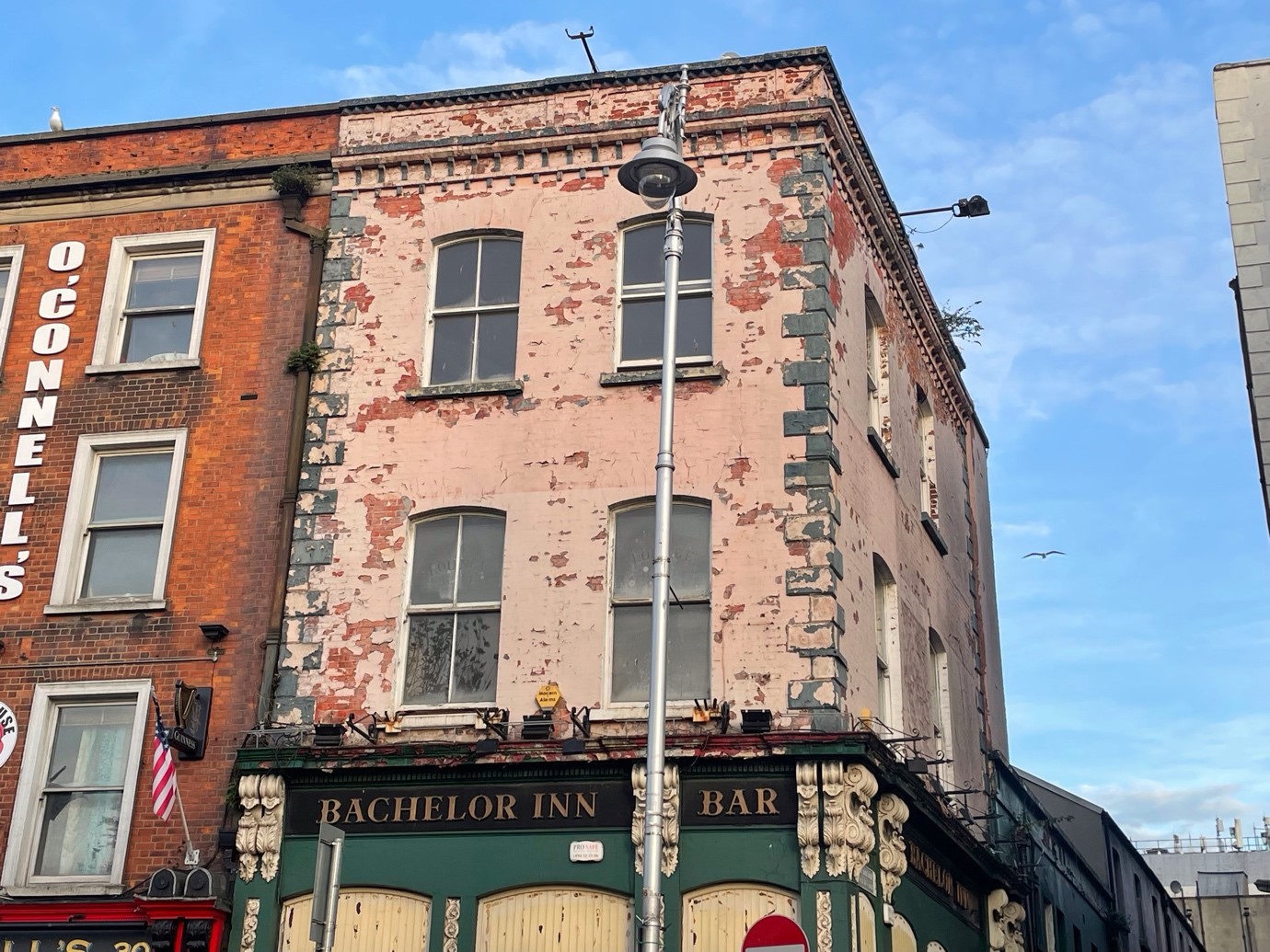
The Bachelor Inn Pub failed to reopen after closing during the Covid-19 pandemic. The building remains empty with visible exterior damage. An empty shop at O’Connell Street lower with extremely damaged windows and façade in a grave condition. Facing The GPO, the roof top of this large empty retail unit shows no visible signs of care, with roof titles damaged and rotting away. Weeds can be seen growing from the roof titles.
The previous 3 images show 3 empty and derelict buildings all within 300 metres of each other, with cracked and damaged concrete on the facades.
The final 4 images are at O’Connell Street upper and show the true dark colours of this capital’s Main Street. Major neglect with no proper treatment of structural integrity.
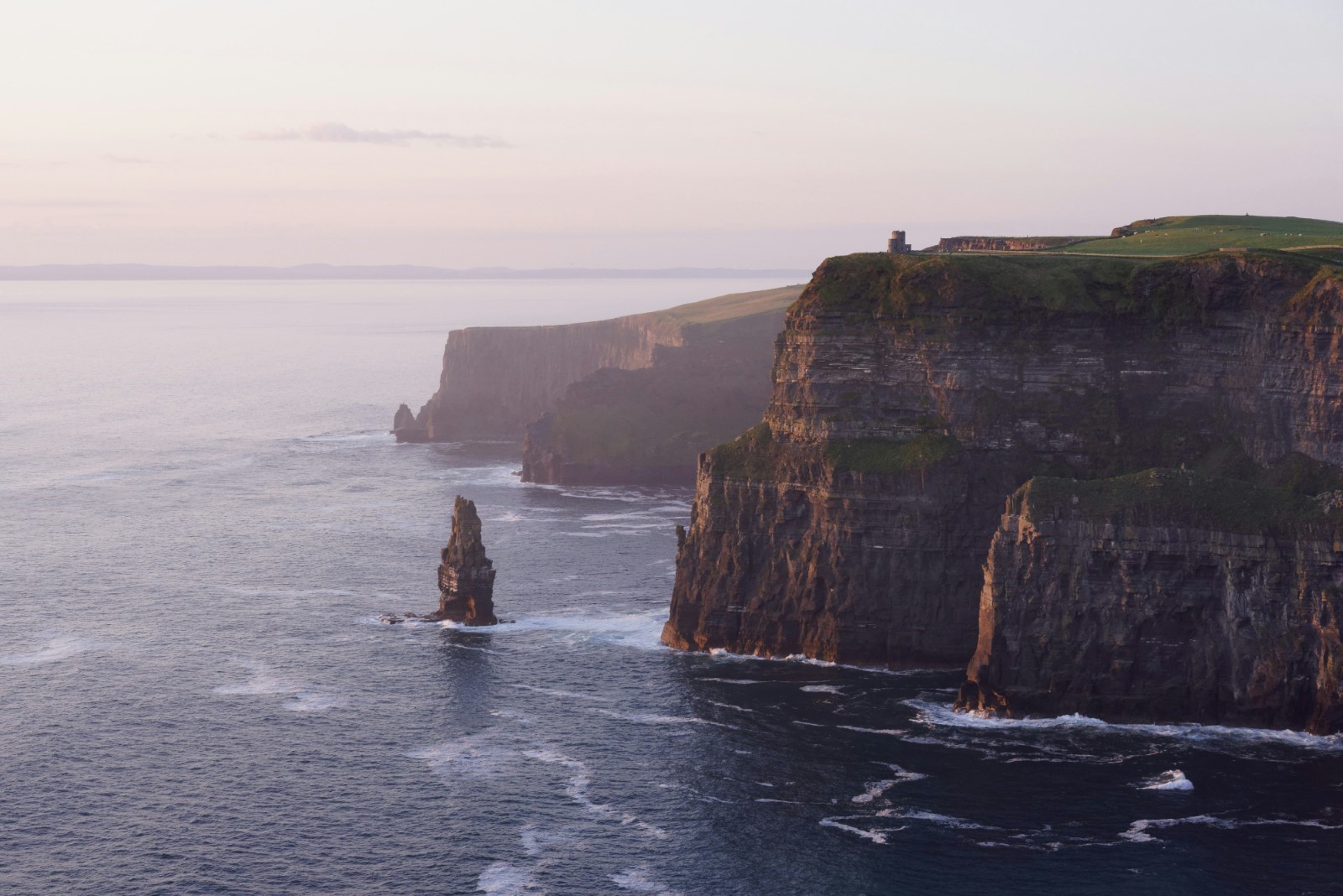
An inspection of the Cliffs of Moher walking trail carried out by Sport Ireland has found that some visitors were not equipped for conditions and engaged in reckless behaviour close to the cliff edge.
The most recent incident at the cliffs happened on November 9 after a woman’s body was recovered from the base of a cliff in Co Clare following a multi-agency operation.
Featured Image: The Cliffs of Moher. Credit: Unsplash
Sport Ireland has a responsibility for developing walking trails across the country, and for promoting a variety of outdoor and recreational activities to encourage people to become active outdoors. The organisation conducted the inspection in mid-August.
The inspection happened after two young people tragically lost their lives in the area in July.
Sport Ireland discovered that a large amount of visitors were choosing to ignore the warning signs and walk dangerously close to the edge.
Many of the visitors were straying off the official path due to sections of the walk that were too narrow to cater for the number of visitors walking in both directions. In one case attendees of a humanist wedding were found to be standing close to the cliff edge with their backs to the edge and the water below.
The report also found the trail was unsuitable for the type of people it was attracting and that the inspector saw multiple examples of dangerous or risky behaviour.
The inspector’s view was that the trail “be closed immediately” to make it safe, according to a copy of the report that was released under freedom of information laws.
In a statement sent to The City Sport Ireland said; “Following Sport Ireland’s recent inspection of The Cliffs of Moher Coastal Trail, several safety issues were identified along the trail.
In agreement with Clare Local Development Company, which manages the trail, these issues were deemed serious enough to require urgent attention.”
The visitor centre at the famous cliffs, along with 800m on either side, is managed by Clare County council, but it does not manage the cliff walk.
The coastal walk is managed instead by Clare Local Development Company (CDLC), which is responsible for its maintenance and negotiates with local landowners.
Cliffs of Moher. Credit: Pixabay
Sport Ireland added: “The Cliffs of Moher Coastal Trail is included on the National Trails Register and is on the connected Public Liability Insurance Policy, which is managed by Sport Ireland Outdoors. Sport Ireland Outdoors inspects the trails on the National Trails Register periodically to ensure they continue to meet the required standards.
To remain on this register, any safety issues reported during these inspections must be resolved within 30 days of the inspection date.
The Cliffs of Moher are a key tourist attraction in Ireland, with the connected coastal trail attracting hundreds of thousands of visitors each year. Therefore, in managing these remedial works, Clare Local Development Company have structured their plans to allow sections of the trail to remain open while other parts are closed for renovations.
Clare Local Development Company have successfully addressed all safety issues in the areas of the trail that remain open.”
They concluded: “Sections of the trail with unresolved safety issues are now closed to the public until they are addressed.”
So how can people be safer when walking along coastal trails?
The Royal National Lifeboat Institution (RNLI) is a charity that saves lives at sea in the Ireland and the UK and The City reached out to them for coastal waking advice.
A spokesperson from RNLI said; “be wary of all edges around the sea and waterside. Slips and falls happen in all locations; it is not just high cliff edges that are a risk. Always let someone know where you are going and when you expect to be back.”
“Take care when walking in dark and slippery conditions. Always take a means of calling for help and always check the weather and tides. Getting cut off by the tide is a common cause of lifeboat launches. Should you get into difficulty or see someone else in trouble, call 999 or 112 and ask for the Coast Guard.”
The Irish Coast Guard is another group that saves lives at sea. They are a part of the Department of Transport. The Coast Guard main roles include maritime safety and search and rescue.
Below is a clip of the Coast Guard carrying out a rescue on a cliff edge, courtesy of Irish Coast Guard on X:
Inclusivity and providing a safe space for all participants are core values of sport, especially when it comes to identifying as LGBTQ+.
A basketball club in Dublin has been set up this year – aimed at being an inclusive sports environment for members of the LGBTQ+ community, wishing to partake in basketball.
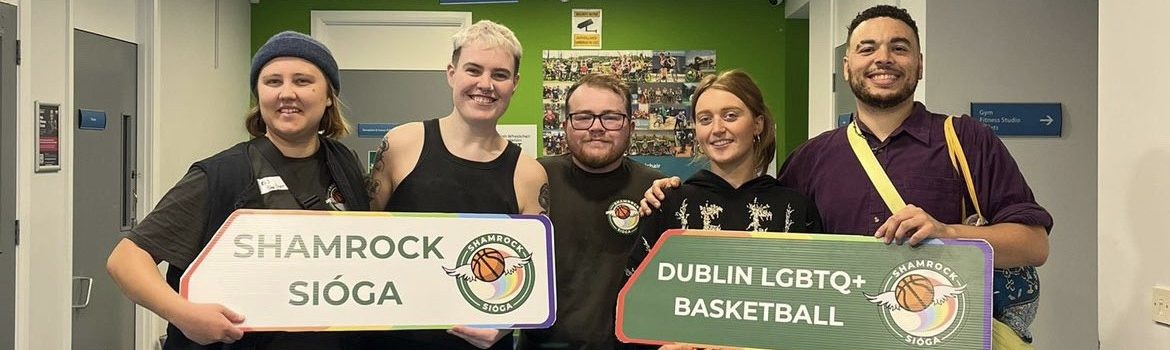
The basketball club in question is Shamrock Sióga. Set up in May of this year, it became the first LGBTQ+ basketball club in Ireland.
Shamrock Sióga had their first game of the season, last month, against Renegade and won 38-35.
The Shamrock Sióga team and committee before their first game against Renegades. Photo: @dublinlgbtbasketball
Tatiana O’Brien–Santos (She/her) is the coach at Shamrock Sióga and gave The City an insight into her experience in the LGBTQ+ inclusive club.
“Being the coach of Shamrock Sióga is so rewarding, all of our players are so hard working and give it their all at every session. There is nothing but respect both ways,” she said.
Speaking about what Shamrock Sióga means to her, she said, “LGBTQ+ people face their obstacles in life and many times these are in a sports setting. For women and LGBTQ+ people, there is almost always justification needed for their participation and I have felt this personally almost all of my sporting life. I want to eliminate that for everyone.”
The coach refers to Shamrock Sióga as the “beginning of history”. She said, “As the first LGBTQ+ basketball club in Ireland, it’s an example – a statement that’s paving the way for all and any LGBTQ+ athletes and any other minority communities, and sometimes you just have to create that space yourself.”
Coach Tatiana O’Brien-Santos in her element at a recent training session. Photo: Tatiana O’Brien-Santos
When asked about the club’s success since its formation, she said, “Our growth rate and the feedback from our members on how impactful the club has been in terms of helping people feel like they belong and feel confident in a sports context is something I’m so proud that the club has been able to achieve.
“We have been featured in national media three times over the last 6 months. We have over 140 people in our club, our followers on our socials have tripled. We played our first ever basketball match and won, we are about to host the first exclusively LGBTQ+ basketball match in Ireland. I couldn’t be happier to see the support we have received.
“Being involved in basketball for so much of my life, I wanted to use my knowledge to help fuel growth for the club and get it to where I knew it could be. Within 3 months, we were a fully established basketball club with registered members, a clear structure and a great club culture, something made possible in collaborating so well with the committee of the club who truly work so hard for Shamrock Sióga,” she added.
Along with O’Brien-Santos, Shamrock Sióga thrives in its current success thanks to several additional members of a dedicated committee.
The Shamrock Sióga committee. Left to right: Kris Kalniņa, Jess Devine, Fionn Collins, Tatiana O’Brien-Santos and Danny Carby-Robinson. Photo: Tatiana O’Brien-Santos
DannyCarby-Robinson (He/Him) is the treasurer and registrar at Shamrock Sióga.
Carby-Robinson thrives on “connecting with others” and believes in the “power of small-scale community changes – to create a larger impact.”
“Being part of Shamrock Sióga has been such a fabulous experience. Having an LGBTQ+ basketball club is super important because it creates a safe and supportive space for people to enjoy the sport without fear of discrimination, judgment or shame,” he said.
He believes that everyone brings diverse aspects of being LGBTQ+, which will help ensure their work remains “inclusive, multifaceted, and representative of all walks of life.”
He attributes homophobia, transphobia and toxic masculinity in traditional sports environments as factors when considering LGBTQ+ hesitancy with engaging in sport.
“As a closeted teenager, I joined a rugby team but quickly became discouraged by the negativity around me during an impressionable time in my life. These experiences left a lasting impact.
“Joining an inclusive club has helped me rediscover my love for sports and has shown me the importance of creating supportive environments for LGBTQ+ individuals,” he said.
Carby-Robinson hopes for Shamrock Sióga to participate in the EuroGames 2025 in Lyon as the first ever Irish basketball club to do so.
“I also want to focus on building a stronger community. I hope to connect more with other queer organisations in Dublin on collaborative events, fostering relationships that strengthen our impact in the broader LGBTQ+ community,” he added.
Jess Devine (They/Them) is the club secretary and PR officer at Shamrock Sióga.
Devine calls their experience with Shamrock Sióga “life changing”. They said, “It’s a club I didn’t know I needed in my life. Now that I’m part of it, I can’t imagine my life without it. The community that has been built through this club is fantastic. I can’t wait to see this grow and flourish with more LGBTQ+ people.”
Speaking about inclusivity in sports, they said, “I think a lot of queer folk in sport would’ve played when they were younger and as they grow up there is no inclusive space for them anymore and they fall out of love with the sport.”
“I’ve felt this way in past basketball teams as a non-binary person on a women’s team. I didn’t feel included due to the language, the gendered terms in sport and not feeling safe to come out as non-binary.
Devine calls it “crucial” for people to have a safe space where they can be their 100% authentic self, and believes this should apply to sports clubs.
Devine’s future hopes for the club are to grow bigger and have an U18s division for queer kids. They’d also “love” to get into “as many tournaments as possible” and represent Ireland.
Fionn Collins (He/Him) is the chairperson at Shamrock Sióga.
Collins wanted to create a basketball team that “catered for all” in the LGBTQ+ community. He said, “The community we have created is amazing – a safe space for all the community in sports.”
Collins feels the club is opening doors for conversations about the LGBTQ+ community in sports. He sees it as a chance to educate people and show that sports is for everyone.
In relation to LGBTQ+ people staying away from sport, he attributes this to toxic masculinity – but believes things are “slowly changing” with the help of Sporting Pride and other organisations.
Collins believes it’s “super important to have an inclusive sport” – to have “all parts of minority communities” feeling recognised and seen in the sport they want to play.
Collins feels that improving inclusion in sports will reduce poor mental health in the LGBTQ+ community.
Collins’ future hope for the club is to become as big as other LGBTQ+ clubs in Ireland like Emerald Warriors and Na Gaeil Aeracha.
“I want us to also help push policies for our trans siblings within the basketball community, to allow them to be safe and play in the sport,” he added.
Kris Kalniņa (She/Her) deals with fundraising and court bookings at Shamrock Sióga.
Growing up in Latvia, where the sports culture is “rooted in the rigid traditions of the USSR,” Kalniņa felt isolated there as an LGBTQ+ athlete “as there was little room for openness.”
She claims being part of Shamrock Sióga’s committee has been “transformative”. She said, “It’s allowed me to help build a community that prioritises inclusivity and support for LGBTQ+ athletes – fostering connections among diverse individuals who share a love for basketball and sport.”
Kalniņa attributes “experiences of exclusion” to LGBTQ+ people avoiding sports and personally felt this way growing up. She said, “The fear of rejection often overshadowed my passion for athletics. Addressing these barriers is essential for fostering acceptance.”
“An LGBTQ+ basketball club is crucial for creating a safe space where individuals can express themselves freely while enjoying the sport,” she said.
Kalniņa’s future hope for the club is to “challenge the status quo by advocating for inclusivity and equity in sports,” and envisions “participating in competitions, proposing fair rule changes, and inspiring positive change.”
“It is something I’m incredibly passionate about. My experiences in sport have shown me the power and impact of creating a space where everyone feels they belong,” she said.
Unity Sports builds on the basketball coach’s mindset and approach, by “aiming to foster inclusivity and growth in sports,” particularly for women and the LGBTQ+ community.
O’Brien-Santos’ plan with Unity Sports is to “provide opportunities for people to be their best selves in sport, and to educate coaches, teams, and organisations on creating environments that truly welcome all athletes – all with the intention to grow the audience of women and LGBTQ+ sports events.”
“Whether it’s helping women feel valued in traditionally male-dominated sports or supporting LGBTQ+ athletes who’ve often felt overlooked, we’re focused on building leaders and advocates who can bring real change to sports culture.
“I’m creating Unity Sports to break down barriers and reshape what sport can look like for everyone,” she concluded.















You must be logged in to post a comment.