Tag: ireland

  • Where silence stops, the truth begins: The Roisin Boyd story   

    Where silence stops, the truth begins: The Roisin Boyd story   

    A deep look at a woman whose journalism, feminism, and anti-colonial solidarity shaped both her career and the students she inspired along the way. 

    “It’s my DNA… I have to do it.” 

    These words are spoken with absolute certainty by a journalist who has spent decades challenging power structures. Roisin Boyd’s journalistic journey and ethical and moral compass is shown through her courageous storytelling.  

    Boyd’s path to journalism began in the politically charged atmosphere of 1980s Ireland, a place held in a political chokehold by profound social constraints. “I was interested in becoming a journalist from the age of 14,” she recalls. “My family was quite political, and my mom was a feminist. There were meetings in our house, feminist women’s liberation meetings.” 

    These weren’t just your average family gatherings; they were revolutionary assemblies. In an Ireland where contraception was restricted, divorce was forbidden, and women’s voices were systematically marginalized, these meetings were acts of radical resistance. 

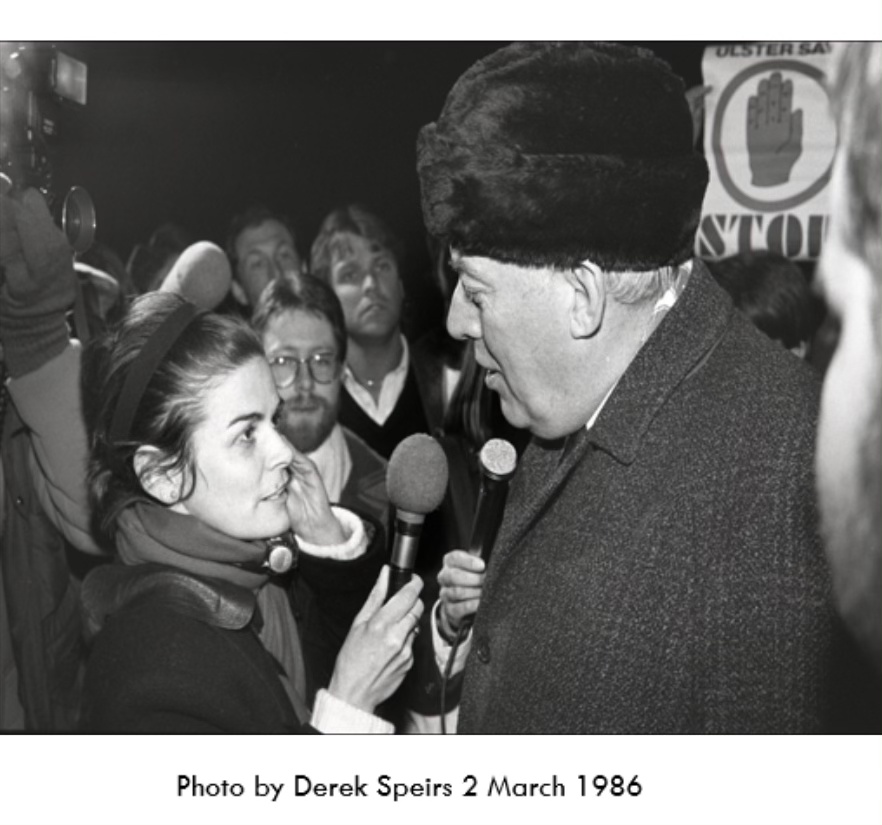
    Photo by Derek Speirs. Cleaners protest at UCD in 1985

    A common misconception when talking about the issues above, and many others, is that nothing was being done about the unjustness of it all, but many voices like Boyd’s spoke out against them even when that was maybe not the norm.  

    “We were not all lying down, taking it,” Boyd said. “There was resistance, and people were protesting.” 

    From the get-go Boyd stood up and wrote about what she believed in. Her early journalistic experiences were rooted in feminist publications. At a time when many young women were confined to traditional roles, Boyd was writing for Wicca, a feminist magazine that challenged societal norms. Later, at Trinity College, she worked on Bell Jar, named after Sylvia Plath – another important symbol of women breaking through systemic silences.  

    A defining moment of her early career came with Spare Rib, a radical London-based feminist magazine. Boyd became the first ever Irish woman on its collective, a position that would reshape her understanding of journalism and activism. 

    “When I was in London, it was really tense,” she explains. The time that Boyd made this move was during the height of the Troubles in Northern Ireland, a period of intense political conflict. Being Irish in England meant navigating difficult political landscapes. For Boyd, this meant that every story was potentially considered controversial. 

    One of Boyd’s most difficult and controversial articles, “Why You Can’t Be a Zionist and a Feminist,” shows her fearless approach to journalism. She interviewed an Israeli Jewish woman, a Lebanese woman, and a Palestinian woman in the aftermath of the Sabra and Shatila massacres. This was one of the most harrowing massacres committed in the Lebanese civil war, a conflict known for its violence. 

    “All hell broke loose,” she remembers. Shops in New York refused to sell Spare Rib, and she faced accusations of anti-Semitism. “It was so painful and so difficult to be accused of being anti-Semitic when I was trying to amplify voices of resistance and solidarity. And to highlight the horror of what had happened in the camps.” 
     
    Looking back, what Boyd did is somehow even more impressive today. Decades before it became more “acceptable” to speak openly about these topics, she was amplifying the voices that were ignored, showing how journalism really can challenge silence. Now, with more people speaking out, even the younger generation, it’s clear how necessary that courage was. 

    Boyd says that “the slur of anti-semitism is frequently weaponised to silence critics of Zionism and the Israeli state’s aggression against Palestinians.” 

    Returning to Ireland, Boyd joined RTÉ, where she encountered another form of censorship through Section 31, a law restricting media coverage of the Northern Ireland conflict. “This had a disastrous effect on RTÉ’s coverage of the north and human rights issues,” she explains. 

    Yet Boyd was not easily silenced. She found innovative ways to tell important stories, working alongside colleagues who shared her commitment to truth. Her reporting spanned international landscapes from conflicts in Somalia to highlighting the struggles of cleaners at University College Dublin, all with the same goal: to have voices heard and make a difference.  

    “Even with censorship, there were always ways, if you’re a good journalist and you’ve got supportive colleagues, to do the story,” she said. “But you have to work a lot harder to make sure your story gets out.”  

    Boyd has always balanced journalism and activism and never backed down from what she believes in. She was Head of Communications for the Irish Refugee Council from 2007 to 2010 and, when working with refugees in Ireland, she used and shared her skills by training refugee women so that their voices could be heard. 

    Her involvement with the Ireland Palestine Solidarity Campaign also demonstrates her belief in using your voice for the right reasons, whether that is in your career or day to day life. 

    Boyd’s dedication to speaking out is not just in a journalistic sense but in everything she does.  

    “Journalism always will matter,” she said, “the truth obviously really matters, and finding the truth often takes a lot of time and energy.”  

    Her approach to journalism is very layered. “I would have aligned a lot with women from the Global South,” Boyd said. “I interviewed Nawal el Saadawi, a very well-known Egyptian feminist who had been campaigning against FGM in the 80s.”  

    Her work never just skimmed the surface or the news agenda: Boyd dug deep, connecting human’s personal experiences to broader social and political struggles and issues.  

    In recent years, Boyd has been increasingly vocal about emerging challenges in Irish media and society. The rise of far-right narratives, the treatment of immigrants, and the systematic marginalization of people of colour are not just news stories for her, they are urgent calls to action. 

    “I think there’s an amazing opportunity for good journalism today in Ireland,” she said. “How do we communicate with each other on these topics? Because a lot of it’s just shouting. There’s no real communication.” 

    Her advice to young journalists is both valuable and inspirational. “If you’re going to be a journalist, you need to be engaged. You can’t just switch off from the realities happening around you.”  

    Boyd retired from her role as a lecturer in TU Dublin last year, but in her time there she inspired and taught a generation of journalists by showing them that their work is not just a profession, but a responsibility.  

    Boyd’s students had firsthand accounts in something invaluable, especially because it was reporting at times that some were not around for.  

    “I always like to say to people who weren’t around then, to remember that there was huge resistance in Ireland at that time.” 

    Boyd highlights this important fact because the students were the next generation at the sidelines of history unfolding.  

    Her motivation remains unchanged, even after retirement, as Boyd still speaks out in what she believes in, “It’s my DNA… I have to do it.”  

    In a world where the tensions rise higher every day Róisín Boyd continues to use her voice. 

    Her legacy is not just in the stories she’s told, but in the countless journalists she has inspired to see their work as a form of resistance. 

    In the words of Boyd, “Journalism is about finding the truth, no matter how difficult the journey.” 

  • Herzog Park renaming shelved as campaigners reject claims of antisemitism  

    Herzog Park renaming shelved as campaigners reject claims of antisemitism  

    By Seán Kavanagh  

    A vote to rename Herzog Park in Rathgar was withdrawn from the Dublin City Council’s agenda on Monday Dec. 1 as it was deemed not “legally sound”.  

    Chaim Herzog was an Irish-born Israeli soldier, lawyer and politician who served as President of Israel from 1983 until 1993, and the Dublin park was renamed in his honour in 1995.   

    The campaign to remove his name from the park was launched in early 2024 by Irish Sport for Palestine as they believed that “the legacies of Chaim Herzog and his family should not be associated with a public park in Dublin.” 

    “After consultation with Dublin City Councillors, we submitted a motion to the Council to ‘Remove the name Herzog Park, located in Rathgar, Dublin 6 and rename the park to Gaza Park’,” Rebecca O’Keeffe, a spokesperson for Irish Sport for Palestine, said. 

    The proposed renaming of the park caused great controversy amongst Jewish leaders around the world and many deemed the proposal to be “antisemitic”. 

    “The attempt to erase the name of a Jewish person from a public space is something that happened thousands of times in Nazi Germany,” Rabbi Elchanan Poupko, host of The Jewish World Podcast, said.  

    “In the broader context of the war being waged on the Jewish people today around the world, removing Herzog’s name is deeply unsettling,” Poupko added.  

    Taoiseach Michéal Martin echoed Poupko’s sentiments in a press release and urged Dublin City Council to reconsider their “divisive” proposal. 

    Irish Sport for Palestine strongly rejects the idea that the name change is antisemitic and says that many Jewish communities support their proposal, including Irish Jews for Palestine. 

    “We would like to point out the claims and accusations that have been made as part of the backlash are false and dangerous. Anti-Zionism is not antisemitism and equating the two is wrong. We reject this conflation and refute these accusations in the strongest manner,” O’Keeffe said.  

    Irish Sport for Palestine also claim that the backlash from Irish, Israeli and US governments were a “blatant and coordinated attempt to undermine due process” by interfering with the Councils vote.  

    “Renaming the park is not erasing history, rather it is refusing to honour and commemorate the violent colonial legacy of Chaim Herzog and his family. We believe our motion is a chance to promote a much more inclusive, representative and accurate view of history,” O’Keeffe said.  

    Members of Dublin City Council’s Commemorations and Naming Committee agreed to the removal of Herzog’s name in July and Dublin City Councillors were set to vote to confirm or reject the name removal on Monday. 

    The process of approving name changes in public parks was amended following a legislation change in 2019, and Councillors must now agree to all name changes via a ballot. 

    According to Minister for Housing and Local Government, James Browne, the regulations that govern this ballot have not yet been implemented and thus Dublin City Council currently does not hold the authority to authorise name changes 

    Despite this setback, Irish Sport for Palestine said that they will continue to fight to have Herzog Park renamed.  

    “We will absolutely continue our campaign to Rename Herzog Park. We maintain that a park in Dublin being named after a man who engaged in a campaign of colonisation as a part of the creation of the Zionist state is wholly wrong and inappropriate,” O’Keeffe said.  

  • The Comeback of Forgotten Irish Sports 

    The Comeback of Forgotten Irish Sports 

    Sports like hurling, football, and rugby are considered most popular in Ireland. Most athletes learn the rules and how to play at a young age. Ireland’s deep-rooted passion for sports stems from a long lineage of physical activities that date back to as early as the 19th century. While the Gaelic Athletic Association (GAA) keeps traditional sports like hurling and Gaelic football at the heart of local communities, other traditional sports have long been forgotten, while some are making a comeback in other counties or rural areas. 

    One sport that is gaining popularity in Ireland is rounders. 

    This type of sport was played long before the term rounders was coined; its origins can be traced back to medieval Europe. 

    Sport historian Professor Paul Rouse said,“Hitting a ball with a stick is going out all across the world, and there are variations of this big game that can be seen in different cultures”. 

    In Ireland the history of rounders goes all the way back to 1744, where versions of the sport had been played for generations.

    Rounders is considered a traditional Irish sport and is one of the sports included in the GAA charter since 1884. 

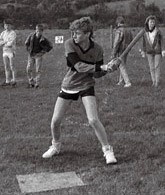
    Shirley Lennon, secretary for GAA rounders, told The City, “When the GAA was first set up in 1884, there were four sports: hurling, football, handball, and rounders. The organization changed greatly over the years, and rounders was revived in the 1950s.” 

    Rounders is a bat and ball game team sport where two teams alternate between batting and fielding. 

    It’s similar to baseball and softball but it’s different in terms of mechanics and equipment. 

    “We would have more space between our bases… the ball we use is different; we use the slither, which is the same ball they use for hurling,” Lennon explained. 

    Currently, there is no official team for rounders, “just like all GAA sports, it’s all part-time volunteering,” Shirley Lennon said. 

    Despite this, rounders is slowly gaining popularity, especially in Dublin. 

    “I think we definitely are gaining in popularity, especially since COVID. During 2021 to 2022, there’s been quite an explosion of rounders clubs,” said Lennon. 

    Rounders is also the only sport in the GAA that features mixed teams, with both male and female players competing on the same team. 

    Rounders is expected to be one of the games to be included in the upcoming 2026 Tailteann games, that is to be held in Kilkenny in the spring of next year. 

    Another sport that has made a comeback in Ireland in recent years is road bowling. 

    The origins of road bowling are unknown, but it is believed that stone-throwing traditions existed across Europe during the pre-1600s. 

    The earliest record of road bowling in Ireland started in the late 17th century to the early 18th century. The sport was commonly practiced in County Cork and Armagh. 

    Road bowling slowly faded during the 20th century due the fact that some impromptu gatherings with occasional betting led to the game to be banned by authorities, but the game was kept alive by small communities in rural areas.  

    The Road Bowling Association kept the sport alive throughout the years.  

    Seamus O’Tuama, public relations officer for the Road Bowling Association, told The City that “when the association was set up in 1954 it created competitions for players using the standard rules”.

    The association also included competitions for women and under 18s. “Then over time team competitions started, then in 1963 the association of Ireland got involved with two international road bowling associations, Germany and the Netherlands, which established European championships,” O’Tuama added.  

    Today, thanks to the influence of social media, road bowling is slowly making a comeback in Ireland; games are now being organized in County Cork and Armagh. 

    Paul Rouse said, “Road bowling is gaining its popularity because it offers something different and it’s incredibly compelling viewing.” This comeback is no surprise because “games go through queues of popularity and that’s normal. It’s not unusual,” Rouse added. 

    Road bowling competitions are continuously being held in Cork.

    Sports are an important aspect of Irish culture, and it’s a factor that shapes identity in Ireland. 

    “Sports are something that thrive both at the local level and at the international level. People have traditions in their lives, and one of the traditions is to play those sports; it’s about family, it’s about heritage, and it’s about locality… so the comeback of these sports would add to what’s there already,” said Rouse.

  • The Occupied Territories Bill Protest in Pictures

    The Occupied Territories Bill Protest in Pictures

    On the 19th of November 2025, a protest took place outside the Dáil calling for the Occupied Territories Bill to be implemented.  

    The Bill is a proposed law which would ban trade with countries who are illegally occupying territory, most notably Israel’s current occupation of Palestine.  

    This would lead to Ireland no longer engaging in the trading of goods with the Occupied Palestinian Territories.  

    There was a meeting that morning in which People Before Profit-Solidarity tabled a motion calling for the Bill to be passed through the Oireachtas before the end of the year, with other opposition parties also in support of the motion. 

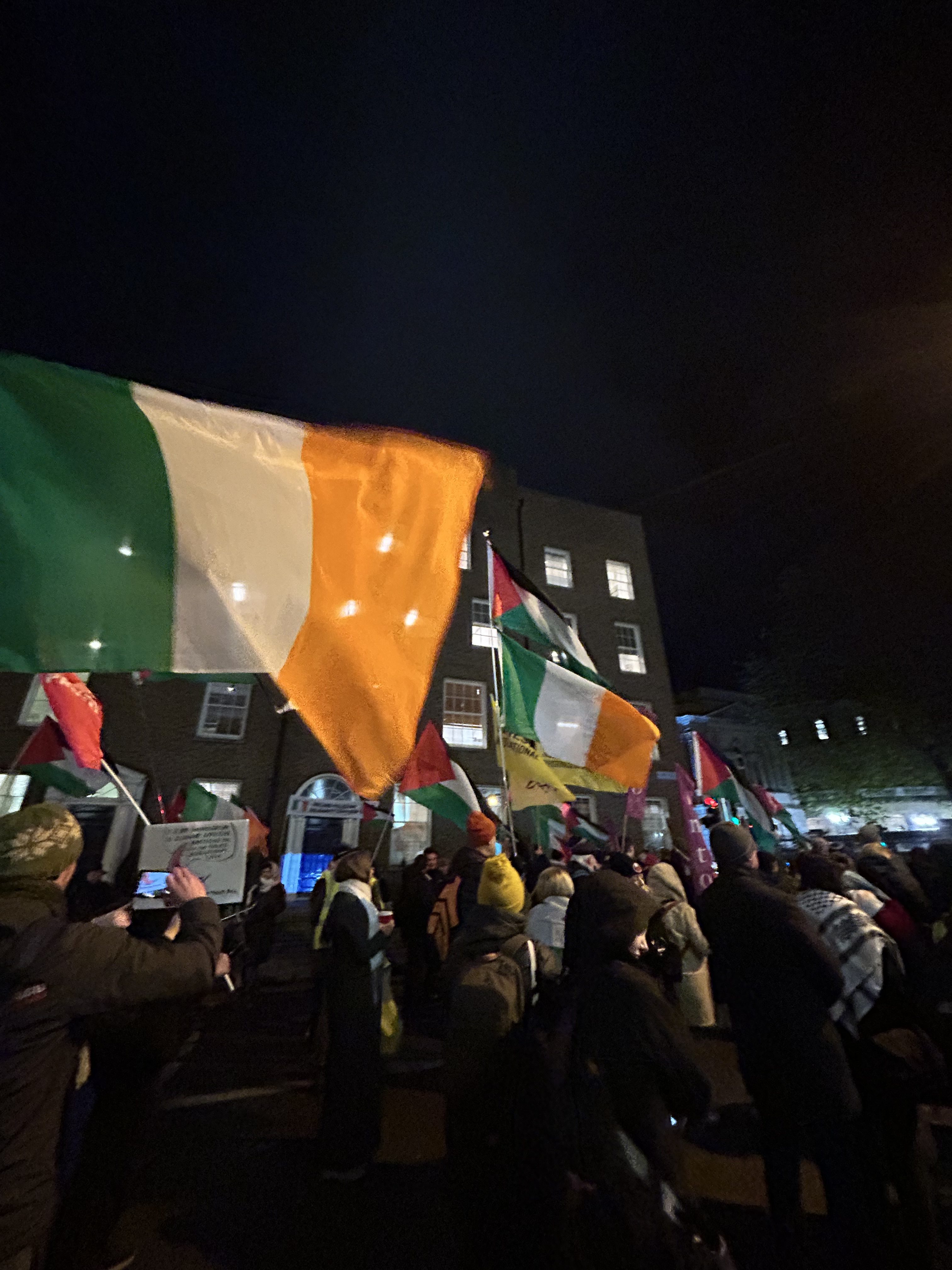
    The protest was full of Irish and Palestinian flags, and everyone was in support of the Bill being passed.  

    With loud chanting and a clear message, here is how the protest unfolded. 

    Photo 1: The calm before the storm. The ever-bright Dáil Eireann lights up the area, half an hour before the protest was set to begin. As the numbers began to build, so did the police presence, with multiple guards and a Garda car in attendance. 
    Photo 2: The protest began at 5:30pm just opposite the Dáil. Crowds began to increase at around 5:15pm, with banners, such as the “Ireland – Palestine Solidarity” banner, being raised above the gathering crowd.
    Photo 3: A man pictured with the Palestinian flag draped around him, anticipating the beginning of the protest. 
    Photo 4: The man making all the noise. Constantly beating his Palestinian drum to show his support and make his voice heard, while inspiring others around him to make as much noise as him. 
    Photo 5: This man had a clear message at the protest: “Pass The Damn Bill”. A message to the Irish Government to get the Bill passed as soon as possible, with bombs seen within some of the letters on the sign, highlighting the violence in the Middle East at the moment.  
    Photo 6: As the flags began to be raised, so did the signs. This woman pictured holds hers up proudly, demanding the Bill be passed in its entirety. The speech bubble on the sign is being said by a watermelon, a symbol of Palestinian resistance and solidarity. 
    Photo 7: This photo shows how large the crowd grew during the protest. At this point, everybody had their flags and banners but most importantly, their voices. With never-ending chanting, the crowd started to cover every inch of the road just across from the Dáil. 
    Photo 8: With both Irish and Palestinian flags now on full display, hand in hand, a message is projected on one of the buildings, calling for the end of arms trade with Israel. 

  • What will D.J. Carey’s fraud case mean for people who have genuine cancer cases? 

    Photo Credit: Bing Search 

    By Kelsey Doogan 

    The news that former Kilkenny hurler DJ Carey has been sentenced to five and a half years in prison for faking a cancer diagnosis broke on Monday November 3 and has left many people in shock and wondering what it may mean for future fundraising appeals from genuine patients who desperately need people’s help. 

    Carey was once one of the country’s most admired GAA stars has recently admitted to deceiving people into giving him money by claiming he needed funds for life-saving cancer treatment abroad. His case was described by the judge as a “serious abuse of trust”.  It has also raised questions about how we respond when someone says they’re sick, are they being honest or not?  

    For years, Irish people have been known for their generosity. When a family member, neighbour, or teammate falls ill, communities tend to rally without hesitation. Holding raffles, online fundraisers and vigils are some of the many ways they show their support. But many now fear this case could have a lasting impact on their trust in people’s honesty.  

    “It’s such a shame,” says Mary McCabe, a resident in the northeast of Ireland who helps her local cancer fundraising group. “When someone lies about something as serious as cancer, it makes you wonder what else people are comfortable lying about. How can people be expected to trust charity organisations when things like this happen?” 

    Others argue that this shouldn’t affect how we respond to illness and how we choose to express our empathy. 

    “People shouldn’t stop helping others just because of one bad cookie.” said Nicole Kieran, a resident in County Monaghan who commented on the case, who spoke to us about the topic. “Instead, it should show just how transparent charities or people who set up fundraising pages need to be about exactly how they’re spending the money people donate.” 

    Online platforms like GoFundMe have systems in place to help verify campaigns and encourage transparency but smaller community-based organisations still rely on trust from those organising it.  

    In cases such as Carey’s, that trust was betrayed on a massive scale, but it also highlighted the importance of accountability of funds when collecting donations. 

    For people battling cancer, the fallout of this lie is more personal and the emotional toll of being doubted can be severe when these people are already in a vulnerable state. Advocacy groups have spoken out since the sentencing, reminding the public that most people who seek help are genuine and really in need of help from a wider community. 

    The DJ Carey case is a harsh reminder of how easily trust can be broken and how hard it is to rebuild. While his actions may cause some to second guess future charity organisations and appeals, they should not allow the countless genuine stories of people fighting real battles every day to go unsupported. Most fundraisers come from a place of honesty, desperation and hardship, not one of deception. As Ireland grapples with the fallout of this scandal, the challenge will be to stay compassionate while also being cautious. Remember to question, when necessary, but never lose our caring and compassionate side. 

    Word count: 537 

  • My Future Fund: What does the new pension plan mean for students and small businesses? 

    My Future Fund: What does the new pension plan mean for students and small businesses? 

    By Sean Kavanagh 

    The Irish Government has announced that they will provide €154 million in contributions to fund a new pension scheme named My Future Fund, beginning in 2026. 

    This initiative will offer many young people their first opportunity to start saving for retirement, and those who aren’t focused on retirement planning can withdraw all contributions to the fund following the six-month minimum participation period.  

    Employees will have until the end of August 2026 to inform their employer that they wish to withdraw their funds and upon doing so, all contributions will be returned to them through their paycheck, minus tax.  

    “I never really thought about [saving for a pension], but it’s nice to have and even in a few months’ time if I need the money, I’ll just take out what I’ve saved,” Adam Drea, a 22-year-old student and barista, said.  

    Employees aged between 23-60, who earn €20,000 or more annually and are not already contributing to a separate pension scheme, will be automatically enrolled in the program, with auto-enrollment beginning Sept. 30, 2025.   

    Those who do not meet the criteria will still be able to partake in the program but will have to ask their employer to enroll them in the scheme. 

    Employees will pay 1.5% of their total income into the fund, and that money will be matched by their employer. The government will also contribute an additional 0.5% to the personal savings plan.  

    For example, if an employee pays €30 per week into their personal savings plan, their employer will be obligated to also contribute €30 and then the state will provide €10 to the fund, leaving the employee with a total weekly contribution of €70.  

    “Contributions are beginning at the low level of 1.5% for employees to ease the cost of the introduction of My Future Fund and give them opportunity to budget for contributions,” a spokesperson from the Department of Social Protection said.  

    While the scheme will have a minimum contribution of 1.5% of a person’s income in 2026, this figure will increase incrementally over the next decade, eventually capping at 6% in 2026. 

    This low minimum contribution in the early stages will also give small businesses an opportunity to prepare for an increase in their wage bill.  

    “Any additional cost to the business is always a challenge, especially in the current environment, and it is certainly a significant factor for 2026 costs and by extension, the available budget for salary increases,” Fergal O’Connor, CEO of Buymedia, said. 

    Employers will be expected to inform all of their employees on the implementation of My Future Fund and any business owner that attempts to hinder their staff from enrolling in the program may face a fine or imprisonment.  

    A key difference between My Future Fund and other government pension schemes is that it is not tied to a specific employer, so if you decide to change jobs, your contributions will continue to be added into the same fund when you start your new role.   

    The fund will be managed by the National Automatic Enrolment Retirement Savings Authority (NAERSA), a new state agency that has been established to implement the scheme.  

    Employees will be given the choice of whether they want their money invested in low, moderate or high-risk investment strategies.  

    Those who do not choose a specific investment strategy will have their savings invested in the ‘default’ strategy. 

    “The default risk strategy operates on a life cycle basis that de-risks as participants move towards retirement, taking advantage of higher risk growth in younger years and the stability of lower risk the closer they get to retirement,” the Department of Social Protection said.  

  • Ashling Nyhan- Balancing Studies and Sports 

    By Kelsey Doogan 

    Photo Credit: Paul Lundy Sports Photography 

    20- year old Dublin Ladies Football star Ashling Nyhan is representing her club, St Brigid’s, at the highest level,all while studying Sports Science and Health at TU Dublin. “From playing myself, I wanted to understand how athletes can get the very best out of themselves physically and mentally,.” said Nyhan.  

    Hailing from Castleknock in Dublin, near Phoenix Park, Ashling told TheCity how she got into sport and what drove her to play at such a high level. 

    “I was kind of nearly forced into GAA when I was younger. I have three older sisters who all play sports and I use to kick around with them in the garden, my oldest sister played underage for Dublin as well. My dad also coached a few underage Dublin teams, and I loved going out to watch their games, that definitely sparked my hopes to play for Dublin.” 

    As children we often brush off memories as our minds are so busy with different thoughts and it’s hard to remember things, but certain memories will live with us forever. Ashling told us about her earliest childhood memories. 

    “My earliest memory is probably playing the Go Games for both the girls and boys teams, I played with my cousin on the boys team which was quite funny as we were very competitive.” 

    The sports stars of today are expected to take on so much in their younger years between representing their school or college, to working a part time job. Playing for their club and doing it all while pulling on the Dublin jersey, and Nyhan is no exception to this trend. 

    “I do find it quite hard to juggle both college and training. Sometimes one has to give for the other to progress. Especially around exam time, I could have a very long training session the night before an exam. Some nights I’id be up late trying to get everything done but it all balances out in the end, so far anyway. I love what I study and the high intensity environment, so it’s worth the balance.” 

    For many of those who are lucky enough to succeed in their sport, it comes at a great sacrifice to their free time. Events and social gatherings often take a back seat as a result. 

    “I don’t really have much free time, but when I do I like to spend it with my family, friends and my boyfriend. I like to try switch my brain off from football the days I have off. I think it’s important to try separate the environments and basically have a life outside of football. I think it helps keep a good mental space for the long season we do end up having.” 

    Photo Credit:  Maurice Grehan 

    The days are long for students like Ashling as they aim to squeeze their busy schedules into a short space of time that comes in a day. Athletes balance more than most adults do in their day- to- day routines. 

    “Typically if I am in season during college, In the morning at 5:45 I work in a gym as a PT so it’s early hours ( I am so bad for early mornings ). I then head into college – the commute isn’t too bad its only around 25 mins to Tallaght. I get home after college around 4/5 and then I head to training around 5/6 ish. Training does go on for quite a while nearly 5 hours sometimes but we’d cover everything from pitch work, gym work, meetings and videos. I normally get home around 10:30pm and then It’s just about switching off and getting ready to go to bed.” 

    Reeping the rewards of a busy life is an amazing incentive to keep going and word through the hard times. 

    “Captaining Dublin at U14 was a really special moment because it was the first time I realised how much I loved leading and being part of something bigger than myself. Making the step up to the Senior panel and pulling on the Dublin jersey at that level was another proud moment ,it’s something I dreamt of as a kid, and to live it is unbelievable and play with some of the girls I looked up to growing up as well was surreal. But I think my proudest was winning the All-Ireland Final this year, I have been to watch the All-Ireland Finals every year, dreaming of doing it myself I never thought it would be possible so to do that with girls I have grown up playing with from u13 was a dream come true.” 

    Photo Credit: Maurice Grehan

    Ashling as achieved so much already in her playing career so we asked her what helped to keep her going and the best piece of advice she ever received from a coach over the years that has stuck with her all this time. 

    “One thing that has stuck to me that coaches have said are “Control the Controllables” –  there’s so much you can’t control in a game or training, but your attitude, your effort, and how you respond to things are always in your hands. I think that helps keep my head when going through the highs and lows of the game.” 

    Life is filled with goals and ambitions. There is life after college and we all take different paths, whether that is continue our studies in another field or gaining a job.  

    “After college I want to do a masters in physiotherapy. Any components of my course that relate slightly to physiotherapy I love and actually understand so well. It has always been an area of interest for me even outside of sports.” 

    Ashling is just one of the thousands of student athletes up and down the country  balancing their busy lives and they are an inspiration to us all.  

    Word Count: 965 

  • Echoes of the Emerald Isle in the City That Never Sleeps 

    Echoes of the Emerald Isle in the City That Never Sleeps 

    When the Irish first came to New York, they brought more than just hope of finding a better life – away from famine, rebellion and civil war. They brought with them their religion, their industriousness, their warmth – remnants of home that made their way across the Atlantic. Walking through New York City today, their presence can still be felt – in the foundations of buildings and bridges, in the stained glass of cathedrals, in the green glow of Irish pubs. This is a journey through the streets of New York, tracing the echoes of Ireland that can still be heardin this sprawling metropolis. 

    Photo by Luke Flanagan 

    The Statue of Liberty – The first sight of ‘The Land of Opportunity’ for many immigrants arriving in New York for the first time, including millions of Irish. A beacon signalling the beginning of their new life in America. 

    Photo by Luke Flanagan 

    St. Patrick’s Cathedral – The Irish in New York played a major role in the building of St. Patrick’s Cathedral, found among the chaos of Fifth Avenue. It was Archbishop John Hughes, an Irish immigrant himself from County Tyrone, who decided that the growing Archdiocese of New York needed a large cathedral. Much of the labour force that built the cathedral were also Irish immigrants. 

    Photo by Luke Flanagan 

    Photo by Luke Flanagan 

    The Empire State Building and Chrysler Building – Irish immigrants made up a significant portion of the workforce that built the Chrysler Building, which was the tallest building in the world when it was completed in 1930. Only a year later it was overtaken by the Empire State Building – the construction of which also included many Irish immigrants – which was the tallest in the world until 1970. 

    Photo by Luke Flanagan 

    Photo by Luke Flanagan 

    Photo by Luke Flanagan 

    Gibney’s, Connolly’s and O’Donoghue’s Irish Pubs – Like walking through a portal back to Ireland, hearing familiar accents and music. You won’t walk for 5 minutes in New York without seeing at least one Irish pub. Sanctuaries set up by the Irish miles and miles away that make them feel like they never left home. 

  • How Does Food Waste Contribute to Climate Change? 

    How Does Food Waste Contribute to Climate Change? 

    Food waste is something that isn’t mentioned as often when speaking about the climate crisis, as it is only accounting for 10% of the total percentage with the climate crisis.  

    The main issue with food waste is the significant resource waste it uses to bring your food from fork to plate, but also the carbon monoxide emissions. Deforestation is another major consequence for the ever-growing demand on the agriculture sector. 

    On a global scale, the average number of hectares of forests lost is 10 million each year. This happens everywhere but is most apparent in tropical forests in Brazil, Indonesia and the Democratic Republic of the Congo.  

    Climate activist Arielle Calajate, who is involved in multiple eco-friendly initiatives said, “People don’t realise how truly important the trees are to the climate, and responsible for a lot of what food we can eat. They give us fruits, nuts, healthy soil for food, a water cycle regulation, and pollination. So many important things are given to us by trees.” 

    Ireland’s deforestation rate is historically low for 2024, with only 670 hectares of trees lost. From 2001 to 2023, Ireland wasn’t as lucky and lost a total of 161,000 hectares of trees. For the small isle of Ireland, it meant we had lost 19 per cent of our national tree coverage from 2000 onwards. 

    According to Calajate,“by cutting down trees to provide us with more food, we are effectively hurting the one thing that is helping to keep everything okay. This is something the earth has been doing for centuries, long before we started abusing it.” 

    Statistics released by the Environmental Protection Agency (EPA) show that Ireland has wasted over 835,000 tonnes of food waste in 2023. This means that the average weight of food waste for a person in Ireland is 162kg. Ireland’s food wastage is higher than the European average, which is 132kg per person.  

    Statistics released by The Central Statistics Office (CSO) stated that food and non-alcoholic drinks increased in waste from 4.7% in the beginning of 2025. It is now at 5.0% in September 2025. 

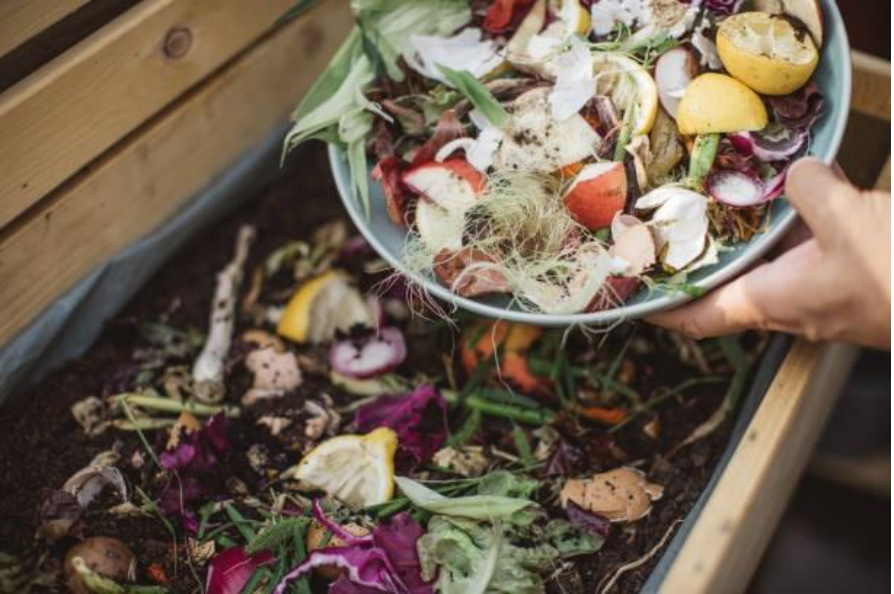
    When you keep food in a highly acidic environment of vinegar or brine, it can add to the shelf life of that food for months, when they are properly preserved and sealed. This way of preserving food helps to prevent spoiling by preventing bacteria from growing.  

    Statistics by the Environmental Protection Agency mention that global food waste accounts for 8-10% of the total greenhouse gas emissions. When food is disposed of in landfills, it releases methane gas, which is a potent gas with a climate warming potential that is 84 times higher than carbon dioxide over a 20-year period. 

    There is no problem with the usage of agricultural land to produce food for the growing population, the problem lies in large percentages of these patches of land are used to grow food which is not consumed and wastes valuable resources.  

    Research done by the World Bank Organisation found that around 70% of the world’s water usage is used for food. This makes food a significant waste of freshwater and groundwater resources. Another resource used is the energy consumption, as 38% of the total energy used globally for food, is for food that is never eaten. 

    Your own impact on food waste can be a big help to stop the growing problem of food waste and its depletion of natural resources, and most are decisions that can be made at home. Buy in smaller quantities, if possible, from your local markets. 

  • Celebrating Day of The Dead “Dia De Los Muertos” in Dublin

    Celebrating Day of The Dead “Dia De Los Muertos” in Dublin

    Dia De Los Muertos or the Day of the dead is a Mexican holiday that honors those who are no longer with us.

    Here in Dublin several events celebrated the occasion.

    The City covered the different events and explained what the occasion is all about.