Tag: ireland

  • Increase in Irish class exemptions in secondary schools

    Increase in Irish class exemptions in secondary schools

    Alison Gussago

    Photo: Unsplash

    A record number of 60,946 students have been given exemptions from studying Irish in secondary school as of September 2025, . according to TG4’s current affairs programme ‘As Láthair’, 

    There is speculation that the main reason for this unprecedently high figure comes as a result of an influx of young people immigrating into Ireland in recent years. 

    Leaving cert student Anna Caldwell tells The City, “I personally didn’t have the option to get an exemption since I’m born and raised in Ireland with no learning disabilities, but I would if I could. The language is taught terribly.” Caldwell says the way in which the language is taught is difficult and uninteresting for students. 

    Exemptions are typically granted to individuals who have special education needs or have come from abroad. 

    The Department of Education and Youth has said that the current number of exemptions equates to 1 in 7 children having permission to be excused from studying Irish. The current figure of 60,946 is up by more than 5,000 in comparison to the previous 2023/2024 school term. 

    The Department of Education and Youth has expressed concerns for the pressure that is put on schools, especially principals, when an exemption is not granted.  

    Conradh na Gaeilge, an online forum for the Irish speaking community, says the exemptions are “being granted too easily.” According to the forum, the current system is failing due to the overuse of exemptions and the disadvantages for those with learning disabilities.  

    Conradh na Gaeilge are advocating for a reformed curriculum which would allow for tailored learning in an effort to include late arrivals to the Irish education system, and to help students with literacy and comprehensive challenges. 

    “The system is definitely outdated, and I can see students’ lack of interest in it. It’s very grammar based. It could be more enticing if it involved more visual learning such as Irish films or even some more story books involved,” said Sinéad Byrne, and Irish and P.E. secondary school teacher. 

    The rate of exemptions has increased yearly and has almost doubled in the past 6 years, with 33,476 students recorded to have been exempt in 2019. 

  • Senator Tom Clonan, a man on a mission

    Senator Tom Clonan, a man on a mission

    Photo: Mary Phelan

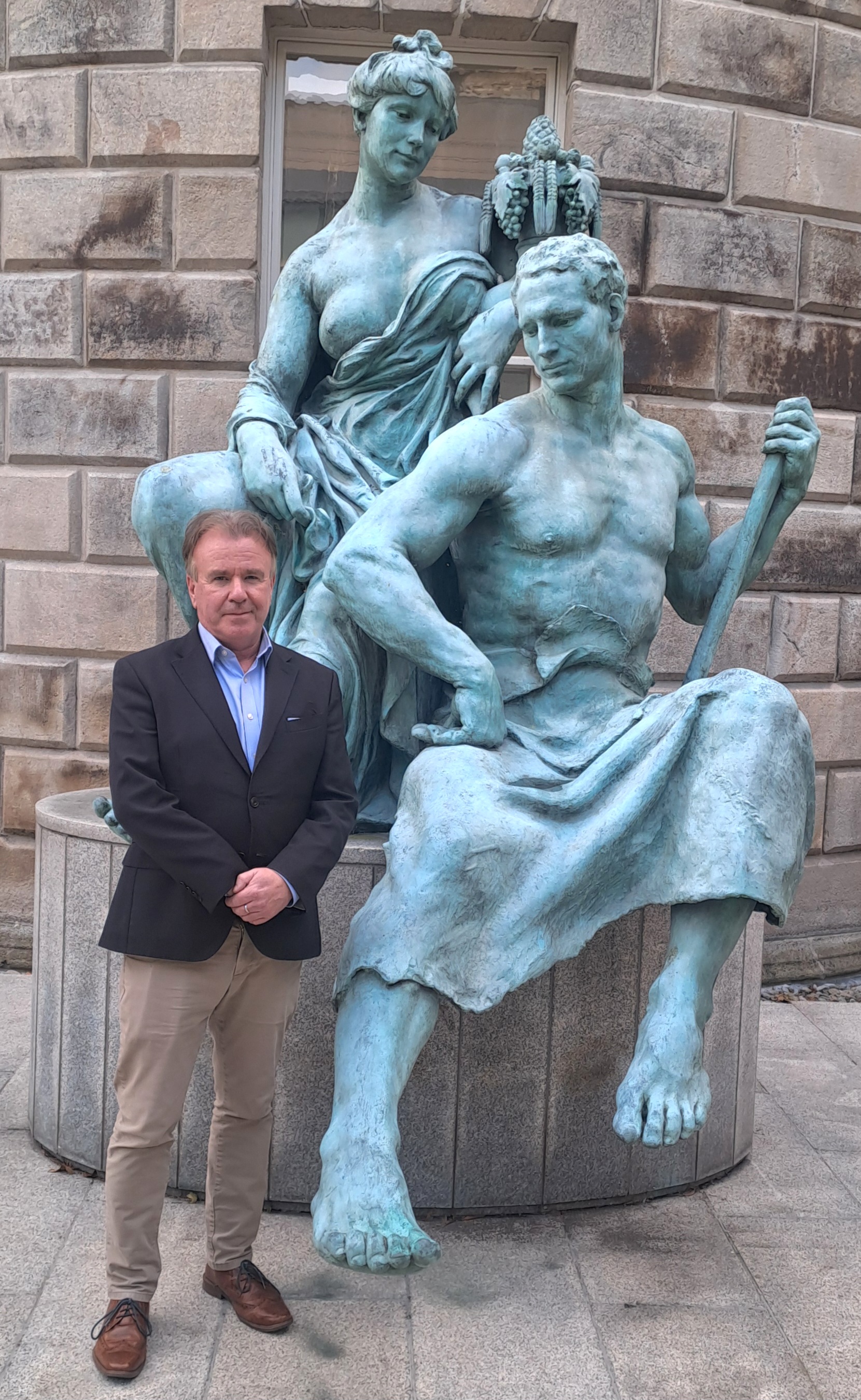
    Senator Tom Clonan – retired army captain, security advisor, member of Seanad Eireann, author and carer

    Tom Clonan is a busy man. He started his working life in the Army. He later became an academic, lecturing in the School of Media at TU Dublin.  From 2001 to 2016 he was the Irish Times security analyst and since then has been an analyst for The Journal.ie.

     He was elected 3 yrs ago as an independent senator from a constituency of over 100,000 Trinity graduates from all over the world.

    The issue of disability rights is close to Clonan’s heart. He has recently drafted two important bills.

    “The first is to give disabled citizens the legal right to services, supports, therapies and surgeries that are set out in their assessment of needs, said Clonan.”   These socio-economic rights exist in every other jurisdiction in the European Union and in the UK.

    “In many ways we are 30 to 50 years behind the rest of Europe in relation to fundamental legal rights for disabled citizens. The reasons for this are historical. When the state came into being in the 1920s the catholic church played a central role in carrying out many functions in our society, such as education and medicine, whereas issues around disabilities were often dealt with in congregated settings by the catholic church.  This aspect of care was seen through the prism of charity.”

    He hopes to bring this Bill to its final stage by christmas and then seek to have it introduced into the Dail.

    “As a single lone independent senator and as a member of the opposition, I am very proud to bring a bill to completion.  I’ve learnt a lot”.

    The second bill is more complex. It is called the disability personalised budget bill of 2024. The plan is to progress this, so disabled people will have autonomy over the means of support they need to fulfil independent fulfilled lives.  “Due to cultural and historical reasons, we are outliers and behind Europe in this regard”.

     Even though today the religious orders no longer have the same level of control in society, the idea of charity compliance and conformity troubles Clonan. They have now been replaced by ‘for profit’ corporate care providers, which Clonan says is “an appalling vista” as they are still seen through the prism of charity, as the family, not the constitution, is considered the primary carer. We have chosen a very poor model due to our post-colonial catholic past.

    “The Government is not listening to us. They listen to the financial sector, construction, big pharma and hospitality, but don’t listen to us because their views are framed by charity. They seem rather surprised when disabled citizens and carers like myself speak out because we are supposed to be happy with what we are given”.

    Many of the disabled have major obstacles to overcome. They are living in enduring poverty or are enduring homelessness or suffering from sub-optimal care from not getting spinal surgery, occupational therapy, and speech and sports therapy.

    There are a number of disabled persons organisations run by disabled persons. However, they are not Government funded, so the government is reluctant to deal with them.  “They prefer to deal with more established corporate care providers, which is wholly inadequate”. 

    “It’s a bit like the Government dealing exclusively with IBEC and refusing to deal with trade unions. It is hostile to the idea of socio-economic rights for the disabled.  They don’t believe they are worth it and see it as a matter for charity.”

     Besides his interest in disability rights, he has a firm commitment to Ireland’s neutral status and is lobbying very hard to maintain the “triple lock” which the Government is trying to get rid of.

    “It is intimately linked to our neutral status, and this is a very dangerous situation for Ireland. The Government is not modifying or amending it but removing it completely, and once it is gone the government can send any number of troops to any part of the world by a simple majority.”

    “In the absence of the triple lock, we should have an explicit constitution on neutrality like in Switzerland and Austria, so decisions to send our troops anywhere would be tempered by what’s set out in our constitution”..

    Whereas I trust the democratic process, I don’t necessarily trust the decision makers.

    “Governments make mistakes, the current debacle concerning the Presidential election is one example”, said Clonan.   Ireland is completely defenceless in air, ground, maritime and cyber domains.  We need to invest in our own defence”. “If the government insists on removing the triple lock, I will table amendments to propose alternative safeguards to protect Irish citizens, particularly Gen Z and Gen Alpha, who have already been very badly treated in terms of their right to housing and homes”.

    As far as he is concerned, the concept of future peacekeeping is gone. “It is now peace enforcement”.  

    “We are coming under pressure from our European partners”. The government believes this view would be good for research and development and financially attractive in terms of foreign direct investment. They have agreed to sign up to a package of weapons investment of nearly one trillion dollars over the next 5 to 10 years”.

    He is adamant that more money needs to be spent on houses and the fundamental rights of disabled citizens, as very little has been done to address these issues in the budget.

    In 1996 he did a PhD on how women were treated in the army.  It looked at the discrimination and systematic sexual violence against female personnel. Military authorities alleged that he falsified the findings.

    He was subjected to whistleblower reprisal, isolation and character assassination. He is the only person to have been sanctioned for his enquiry findings.  In 2021 The Women of Honour from the army came forward and made fresh disclosures of sexual violence against them while serving in the Defence Forces.  

    Finally, Micheál Martin set up an independent group enquiry, which vindicated his findings in 2023.   

    His hopes for the future? That more money is spent on health, climate change measures and housing.   

    Does he have any down time?

    .

    “Apart from work and raising a family, I’m a full-time career. I have no hobbies or interests.  It is simply not possible. This is the case for most carers”.

  • “The people are your employers” – Former Labour party TD Eithne Fitzgerald

    “The people are your employers” – Former Labour party TD Eithne Fitzgerald

    Politicians come and go; some remain elected for years while others serve in government for a short term, and there are those who persist. The third could be said for former TD Eithne Fitzgerald, who ran for national office seven times.  

    Eithne Fitzgerald was a former Labour party member and a TD who served in the south Dublin constituency from 1992 to 1997. 

    Fitzgerald first joined the Labour Party when she was a college student in 1967 which fueled her interest in the field of politics. “I joined both the UCD branch and the one in my local area,” Fitzgerald said noting that back in the day “students were able to be in both a college branch and a local branch in their constituency” which for her was the south Dublin constituency branch.  

    Fitzgerald then left the Labour Party when she graduated in 1970 and worked in the civil service in the Department of Finance. “As the civil service must be politically neutral, I resigned from the Labour Party,” she said.  

    Eithne Fitzgerald worked in the Department of Finance for two years until she got married in 1972, she then lost her permanent job due to “the marriage bar still being in force for married women up to July 1973,” Fitzgerald explained. 

    After six years of not having a permanent job, she decided to put her name forward for city council candidate for the Labour Party in the 1979 local elections. “At that stage, Dublin County Council had no women members… I felt strongly that women’s perspective needed to be articulated in the council.” Fitzgerald wanted to discuss issues like play facilities for children, and the construction of streets and footpaths for people pushing prams and buggies. She eventually won that year’s election, the first time that she was elected for local office. 

    Fitzgerald was one out of 4 women who got elected to the local government that year. “It was considered kind of a big breakthrough and traditionally… there were 36 members of the county council, and four of us were women, and we came into a council that had no women,” she said.  

    Years in local office inspired her to go further in her career, and in 1981, she and a fellow councilor ran for election to the Dáil. That year she wasn’t successful in being elected but that didn’t stop her from running. “I ran in February of 1982…1987…1989…” Fitzgerald said. She then rejoined the Labour Party in 1986. 

    Despite losing several times she did not lose hope and ran again in 1992. 

    “My fifth attempt at running for the Dáil was in 1992, where I topped the poll not only in the constituency, but received the highest vote in the country of any candidate that year. I was an overnight success on my fifth try!” said Fitzgerald  

    Fitzgerald didn’t lose hope as this was what she wanted. “I felt I could make a difference, and I suppose having trained as an economist and having worked inside the public service, I knew how to make change,” she said.  

    Being part of the Dail presented her with more opportunities and challenges, like in 1993 when she had a dual role, she was appointed as minister for finance, and she also worked in the newly formed office of the Tánaiste.  

    Freedom of Information 

    One of Eithne Fitzgerald’s first pieces of legislation during her time working in the office of the Tánaiste was the freedom of information (FOI) legislation, which she and her fellow TDs wrote from scratch in 1992. 

    Fitzgerald was asked to write the legislation of the FOI as “it was a big part of the manifesto. The Labour Party’s manifesto was about putting justice into economics and trust into politics. That was the phrase that was used,” she said.  

    In writing the FOI they’ve had to take into consideration the British Official service act which was the preceding legislation before the FOI. “I knew that in changing this, that it wouldn’t work unless there was legislation behind it. You don’t change your culture overnight unless there are some strong guardrails,” Fitzgerald said.  

    During this time, they have reviewed several legislations from other countries which were used as models in forming the Irish version of the FOI. They spoke with several politicians worldwide who were involved in creating their country’s FOI.  

    Together with her team, they did thorough research on countries that have implemented their FOIs. “To do the nuts and bolts of the legislation, was a pure joy. It was delightful to do it. I was able to get my teeth into some research and there was less opposition to it,” she said.  

    In creating the legislation there was opposition to it as the FOI will be allowing the public to access vital information. “A lot of stuff that had to be dragged into the light,” Fitzgerald said.  

    The Fianna Fail party originally didn’t accept that there would be a Freedom of Information act but said that it should just be considered. Fitzgerald and her team took this as an opportunity to further their research and push through with the legislation.  

    “What we wanted to see was the practice change towards automatic publication of what should be published,” she said.  

    The first legislation of the Freedom of Information Act was first approved in 1997. “My proudest achievement is the Freedom of Information Act,” Fitzgerald said.  

    End of an Era 

    In 1997 Eithne Fitzgerald ran for the Dail elections for the sixth time but unfortunately, she lost her seat.  

    At this time there were two local issues that affected Fitzgeralds’ campaign “One would have been my support for the travelers, and the second one was about a school in Knocklyon in County Dublin,” she said.  

    Fitzgerald once again tried to run for national government in 2002, but she failed to garner enough votes to be re-elected.  

    After her seventh run she decided to throw in the towel and move on from politics.  

    Eithne Fitzgerald, though not in politics, is still in public service; she is currently working for the National Disability Authority.“I love the work, and I love the job,” she said.  

    Reflecting on her journey as a politician, Fitzgerald learned that

    “I suppose the people are your employers. They can vote you in with a big vote. They can vote you out with another vote. That’s democracy. It’s very personal when it happens, but you get on with life and there is a life after politics”

    -Eithne Fitzgerald 

     

  • Kilmainham Gaol: Prison turned Museum 

    Photo Credit: Kelsey Doogan 

    By Kelsey Doogan 

    Kilmainham Gaol is a former prison located in Kilmainham, Dublin just south of Phoenix Park. Now it is a museum run by the Office of Public Works in Ireland. The admission fee is certainly cheap compared to similar museums in other countries. 

    While it did cater as a prison for even the most common of prisoners, it is primarily known for the imprisonment of the leaders of the 1916 Easter Rising such as Patrick Pearse, Seán Mac Diarmada, and Joseph Plunkett. All were executed within the walls of the prison byy order of the British Government at the time. 

    “One of the aspects of the site I find most interesting is the fact that it was often used to imprison the most marginalised groups in Irish society in the 19th and early 20th century,” said Brian Crowley, Curator of Collections at Kilmainham Gaol. 

    Photo Credit: Kelsey Doogan 

    It serves as a bleak reminder of a dark period of Irish history and a time of oppression and suffering in our past and this can very much be felt as you walk through the doors. 

    “Kilmainham was more or less abandoned after 1924 and was semi- ruined when the Kilmainham Gaol Restoration Society was formed in the early 1960s to restore it. The Gaol was officially opened as a museum in 1966 by President Éamon de Valera, a former prisoner in the Gaol. In addition to restoring the Gaol they also began to collect and display material related to the struggle for Irish independence,” said Crowley. 

    The Gaol is only accessible through guided tours and is definitely worth a visit. Even if you aren’t a history fanatic, there is something about standing where some of our greatest heroes stood that will live with you forever. 

    Photo Credit: Kelsey Doogan 

    As you wait for your tour guide and the tour itself to begin you are invited to wait within the old courtroom located within the Gaol, where many of these historic prisoners would have received their damning sentences. 

    Photo Credit: Kelsey Doogan 

    Within the walls of the Gaol, there were two chapels, for both protestants and Catholics. Now however, only the Catholic chapel is open to the public. You are invited to sit where the prisoners would have sat during mass. 

    The room is most notable for its red walls, a design used to distinguish the Catholic cells from the blue Protestant cells. Hours before his execution, Joseph Plunkett married the love of his life, Grace Gifford in this very room. 

    Photo Credit: Kelsey Doogan 

    The oldest section of the Gaol is called the West Wing. This part of the Gaol is dark, dull and downright gloomy.  

    Photo Credit: Kelsey Doogan 

    When first built, there was no glass in the windows, and no heating or light and the original stone walls still standing only adds to the sense of eeriness.  

    Photo Credit: Kelsey Doogan 

    The most recognisable part of Kilmainham Gaol is the East Wing, known for its huge glass roof letting in lots of natural light. During the Irish Civil War, many of the prisoners in this wing went on hunger strike.  

    Photo Credit: Kelsey Doogan 

    The East Wing has featured in many films on Irish history such as ‘Michael Collins’. 

    Photo Credit: Kelsey Doogan 

    The Tour ends in Stonebreaker’s Yard, which got its name due to the fact it was mainly used by men who had been sentenced to hard labour where they would have to manually break up stones. 

    It was in this very yard where the leaders of the Easter Rising were executed and you can stand where they stood next to the two crosses which were placed in their memory.  

    As time goes on it is easy to forget about our history as a country but places like Kilmainham are striving to not let their stories and sacrifices be forgotten. 

    Word count: 645 

  • Tying Up Loose Ends: New Competition Amongst Dublin’s Student Nights 

    Tying Up Loose Ends: New Competition Amongst Dublin’s Student Nights 

    By Rían Cahill

    Blinding lights flashed, and the floor pumped with heavy kicks as I moved through the sea of awkward elbows to the bar at the back of the crowd. €3 for a shot or add a dash for €3.50. I was in it now; the defining factors of a Dublin student night stared me in the face as I watched cliques and crowds shift their feet and scream loudly over the music. Hands high in the air swung slightly out of sync with the music, highlighting inexperienced party goers. 

    “Loose Ends”, a brand-new student focused club night launched on Thursday in an effort to nurture a much-needed expansion in the growing dance music scene. Youth-friendly pricing has been at the forefront of their approach to create a hub for young people to experience their introduction to dance music or to encourage existing interests.  

    Jack Larkin, a student DJ who played at the club told me, “It’s great that college DJs are being given this chance and to contribute to many people’s introduction to the electronic music scene in Dublin”  

    Cheap tickets and effective drink deals have been put in place to create a valid alternative to their Harcourt Street competition, who can often afford to reduce prices to entice students. 

    Launched and facilitated by the country’s leading party starters, Index, Loose Ends have vowed to create a space “built for students” according to their Instagram account. Aiming to give both students a cheaper dance music-oriented student night out and student DJs a chance to cut their teeth on one of Dublin’s most desirable venues. 

    Student DJs have always found a home in the city though. Small and intimate venues have laid host to the growth of countless Irish artists over the years and this brash claim that “Dublin’s midweek student night out has been dominated by overpriced, tacky dancefloors”, comes as a slap in the face for many promoters who have been fighting for this cause long before this new endeavour by the country’s leading promoters. 

    Carefully curated lineups that cater to different tastes and genres throughout the year are a staple of Echo Exchange, another student focused event in the city, who have been running student nights every Tuesday since January. Constant variety in lineups catering to everyone’s interests has created a surprisingly tight-knit community which often fills up the back-alley smoking area with talks of music, dancing, friendships and much more. 

    Michael Wilson, co-founder of echo exchange, told me why he started his weekly event “We started this to create a cheaper alternative to the current midweek student nights while also delivering quality music. We hoped that that combination might educate some newcomers about quality dance music along the way” 

    Students dancing in a dublin nightclub
    Photo Credits: Rían Cahill

    With the number of clubs which have closed down in the city over the past 10 years, there has been an ongoing struggle for students to reach an ever-increasing price point. Venues that take the hit to facilitate regular student nights are often dependent on a large attendance rate on a regular basis to ensure the survival of their club. The introduction of another midweek club night, especially one in a venue which has the potential to cater to over 700 people with two rooms on a good night, may just be the competition necessary for many clubs to fold. 

    A common theme amongst the younger Abbey Street crowd was the focus on non-music-oriented discussions. Compared to the Dame Street punters who seemed to obsess over subgenres, categories and equipment, the crowd seemed blissfully unaware of any complexities in the music and were happy to just dance until the lights came on. This disparity creates a sort of safety net for both events as they will likely not have to share one demographic. 

    Although venues are closing and prices are increasing, students will always find a way to go out on the town whether they can afford it or not. The presence of one more student night then creates diversity in the events which they can choose from, creating communities around the city for different musical interests. 

  • Winter Price Freezes- The People React 

    Photo by American Public Power Association on Unsplash 

    By Kelsey Doogan 

    Over the last couple of weeks both Electric Ireland and PrePay Power, two major energy and gas suppliers in Ireland, announced they would freeze their gas and electricity prices as we head into the winter months. 

    As temperatures drop and the evenings get darker, we tend to use more energy in the later months of the year, which also makes it the most expensive time of year to heat and light homes. 

    This is not a government-driven initiative and while there is pressure being put on them to introduce a nationwide freeze, one has not yet been agreed or announced.  

    Because this is an individual business decision, not a government- imposed freeze, other companies have not followed suit.  

    Energia, Bord Gáis, FloGas and others have raised their prices, further increasing the burden on their customers in Ireland. 

    “Makes you wonder how one company can do it but others can’t. We all know the winter months are expensive enough without energy suppliers increasing prices.” said Melissa McCabe, a Pinergia customer from the north east Region. 

    The government also announced that there would be no energy credits as part of this year’s budget, unlike in past years where a €250 credit was available.  

    This, paired with rising general cost of living pressures, could lead to an especially costly winter for many low and middle income households across the country. 

    For those select few companies choosing to freeze their prices, that freeze is due to stay in place until the 1t of March at the earliest. 

    “It is a relief to get word of the price freezes. It means that we can focus more money on other bills like food. In the winter months, everyone is home more often than during the summer,” said Frances Kieran, a PrePay Power customer who chose to comment on the recent news. 

    PrepayPower has had two price decreases since the start of 2023 and they also haven’t had any increases in that time frame either. 

    Photo by Henning Wiekhorst on Unsplash 

    PrePay Power serves around 240,000 customers, which represents approximately 4.5% of the Irish population. Electric Ireland, another company announcing a price freeze, has over 1.1 million customers — about 20.8% of the population. 

    While those two companies together cover about one quarter of all households in Ireland, the remaining 75% of consumers now face the possibility of price hikes in the coming months. 

    “When providers like Electric Ireland knock on the door offering their services, I may actually consider it now. I need to do what’s best for my family and while energy costs are going up, my wages certainly aren’t,” said Thomas Burns in reaction to the news of the price increases imposed by some companies over the month of October. 

    Reactions to the announcements have been mixed. People benefiting from the freezes are relieved and grateful for the financial breathing space, especially as winter bills rise. But for those with other suppliers, frustration is growing — some say they may be forced to switch providers or reduce usage, while others warn of longer-term uncertainty costs remain high. 

    Word count: 567 

  • From Pill to shot: Game-changing HIV medication available in the EU 

    From Pill to shot: Game-changing HIV medication available in the EU 

    A new HIV drug that can prevent HIV has been rolled out in Ireland. 

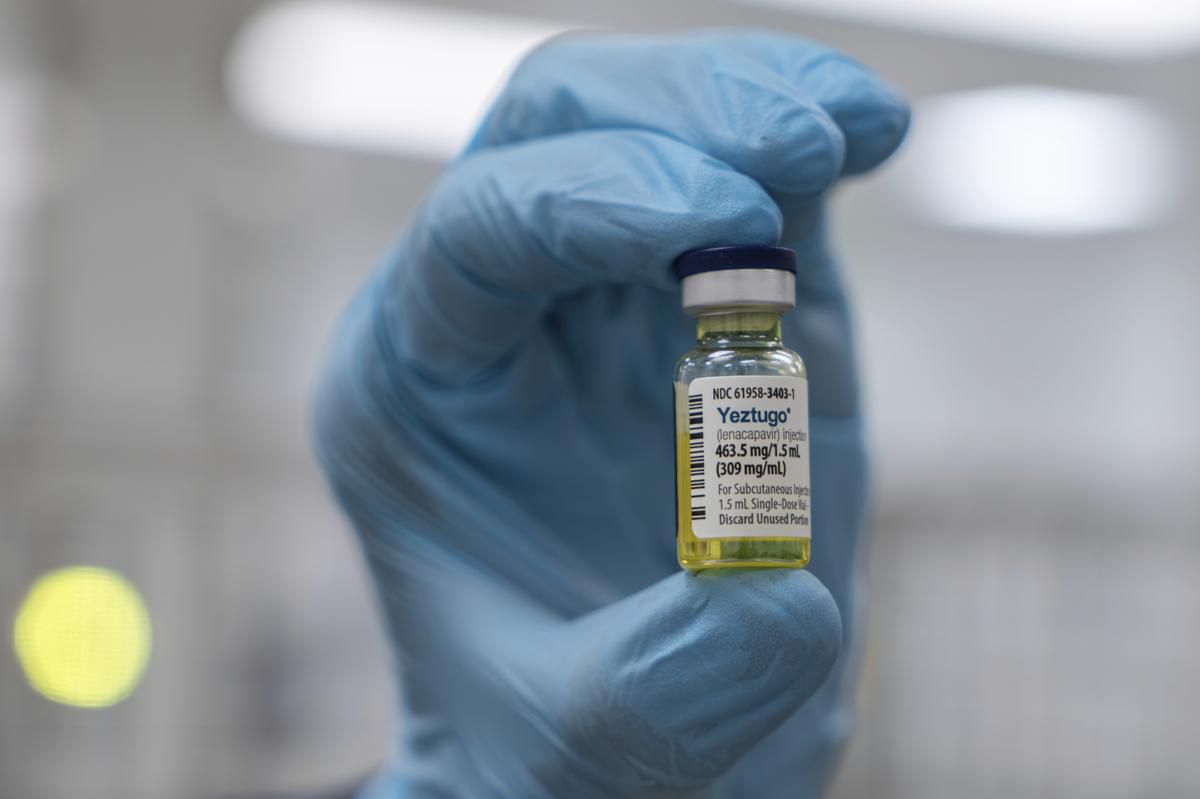
    The newly-approved HIV PrEP (pre-exposure prophylaxis) medication, called Yeytuo, is now available across the EU and will soon be available worldwide.  

    Lenacapavir was developed by GILEAD sciences back in 2010 and was approved by the US Federal Drug Administration (FDA) in August 2022. Three years later, in August 2025, Yeytuo, the EU version of Lenacapavir, was approved for PrEP medication.  

    The European Commission approved the new PrEP medication on Aug 26, 2025.  

    Yeytuo is in a class of HIV (Human Immunodeficiency Virus) medication called capsid inhibitors, which decreases the HIV in the blood.  

    Professor Jack Lambert, a consultant in infectious diseases at the Mater Hospital in Dublin said the medication represents a big leap forward in HIV treatment.  “I think the practical thing is that it’s one of the first treatments that you can give twice a year and then on top of that, it’s injectable,” said Professor Lambert. “It’s an incredible benefit on the current PrEP regimes.” 

    It is also accompanied by two tablets the day after the injection, and the patient should practice safe sex. 

    Yeytuo has also had  99.9% success rates in clinical trials in preventing HIV in patients, and it provides patients with easy uptake because it only needs to be administered twice a year, compared to taking PrEP pills daily.  

    The drug itself can be used “by people who have HIV or those who are trying to prevent it,” Professor Lambert added.  

    One underlying problem of the new medication is its very high cost, priced at $28,000 per patient.  

    Speaking to TheCity.ie, Professor Lambert said that “…it has to be cost effective, the current cost the company wants to charge for PrEP for this particular agent is beyond, and the current PrEP drugs like Truvada cost €20 to €30 a month, so huge difference in cost.” 

    At the beginning of October Gilead Sciences announced that it would make generic versions of the medication to be made available to low-income countries. 

    They are partnering with different laboratories worldwide by sharing their medical patent of Lenacapavir to lessen the cost of the medication from $28,000 to $40 a year.  

    GILEAD sciences, together with UN AIDS, Dr. Reddy Laboratories and several medical groups worldwide wide aim to make the medication more accessible by the end of 2026.  

    Countries like India have begun marketing Lenacapavir and it is to be supplied by Dr. Reddy’s Laboratories.  

    Dr. Reddy’s Laboratories aims to make the drug more accessible to 120 low-income countries.  

    Meanwhile, here in Ireland, there is still no information about the cost of the new medication, and it remains the US price, which is equivalent to more than €24,000. 

    Aside from the cost, there are also side effects to be considered when using Yeytuo, such as “major or minor reactions at the injection site,” Professor Lambert said.  

    Side-effects/Reactions could include swelling, redness, bruising, warmth, pain or discomfort, itching, hardened skin, small mass or lump/bump. 

    “I think there are very few downsides to the injectable HIV medications, both for treatment and for PrEP,” Professor Lambert added.  

    Though the medication itself is considered a game-changer in the field of HIV, its success is yet to be determined globally. 

    “What you’re going to have to do is look at the new cases over the next number of years. For example, in Ireland, there are 400 new HIV cases a year. If they implement a new PrEP program, those numbers would drop to 200. It’s just indirect evidence that the medication has been successful,” Professor Jack Lambert said 

  • Marina Carr brings ancient Greece to the Irish Stage

    Marina Carr brings ancient Greece to the Irish Stage

    The Boy: A Two-Play Theatrical Event, is finally opening in Dublin after a five year delay. Carr’s brilliant retelling of old Greek myths finally gets to be shown on Ireland’s national stage. The official opening night is Wednesday, October 1st and it is already sold out.

    The two-play spectacle is based on three Greek myths – Oedipus Rex, Oedipus at Colonus, and Antigone, written by Sophocles. The audience is encouraged to see the plays back-to-back, but they can also see them individually. Carr has spoken about these plays trying to “marry the ancient with the contemporary”.

    The two actors taking centre stage are Frank Blake and Eileen Walsh, who are playing Oedipus and Jocasta, respectively.

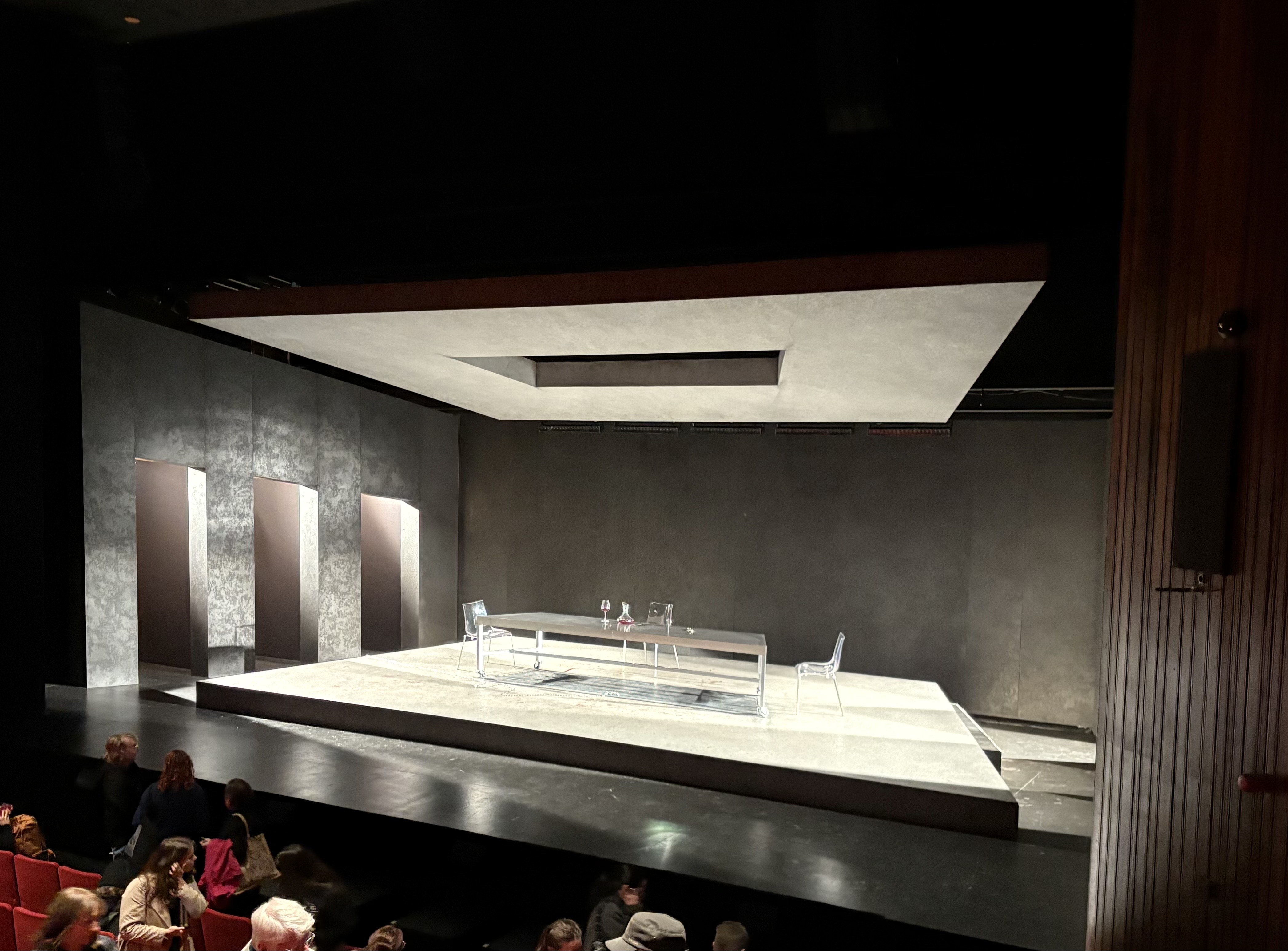
    The staging is deliberately basic, forcing the audience to focus on the actors and not their surroundings. For most of The Boy, the stage only has a dining table on it. Above the stage there is a projection of what is being shown on the stage from above; this represents the gods always looking down over the action – they are ever-present in this world. There is a thick plastic curtain that comes and goes throughout both plays, acting as a barrier between the audience and stage. The sound-heavy plastic whooshing across the stage gives an eerie feeling to the audience, almost like we were watching a crime scene.

    The Boy

    The first play The Boy surrounds the life of Oedipus from birth to after he fulfils his curse. It is based on the Greek myth, Oedipus Rex. The play is set in the kingdom of Thebes, where Oedipus’ father Laius is king.

    The audience finds out that Oedipus has been cursed from when he was a child, or more so that his father, Laius, was cursed. He gets confronted by The Shee (played by Olwen Fouére) after he captures and rapes a young boy, Chrysippus (played by Noah Behan and Harley Cullen Walsh). Laius’ curse is that he must not have a child for if he does, his child would grow up to kill him and marry his wife, Jocasta.

    The poster that can be seen outside The Abbey Theatre and on the front of the programmes promoting the show. The two main actors (Blake and Walsh) are at the centre of the poster. Captured by: Zita Fox

    The God and His Daughter

    The second play opens with the exact same dialogue as the first but the context has shifted. The audience knows about the crimes Oedipus and Jocasta have committed together; we also know that in comparison to the first play Thebes is suffering under new kings and its crops are failing.

    This play is based on the Greek myths, Oedipus at Colonus, and Antigone. The play follows Oedipus in the final stages of his life and how his curse has continued onto his children, particularly his daughter, Antigone.

    The star of the show is Éilish McLaughlin who plays Antigone. Though she is only on the stage for the first half of the play she is what the audience is drawn to the most. Her presence and monologues are incredible, it was impossible to take your eyes off her.

    TheCity got the chance to talk to Fionnuala Maher, a costume supervisor assistant. Though Maher was mainly working in the background of the costume department, she did give us an insight to what it is like to prepare for a show. Maher mentioned how the decisions were made by the designer, Catherine Fay, and the main costume makers, Tara Mulvihill and Breege Fahy. She would then go out with a brief and grab samples or photos of items she deemed appropriate. She said: “Sometimes we had to make sure there were doubles available of everything in case they were used in any scenes with blood, [amongst other things].”

    She went onto explain how like with a lot of shows, a lot of the costume changes would come down to the practicality of the clothes. She continued: “Something could look perfect on the hanger and even on the actor but might not sit correctly on them in the action of a scene.”

  • Not Tapping Out: Family-run Rascals Brewery fights rising costs and global giants to keep Irish craft beer independent

    Not Tapping Out: Family-run Rascals Brewery fights rising costs and global giants to keep Irish craft beer independent

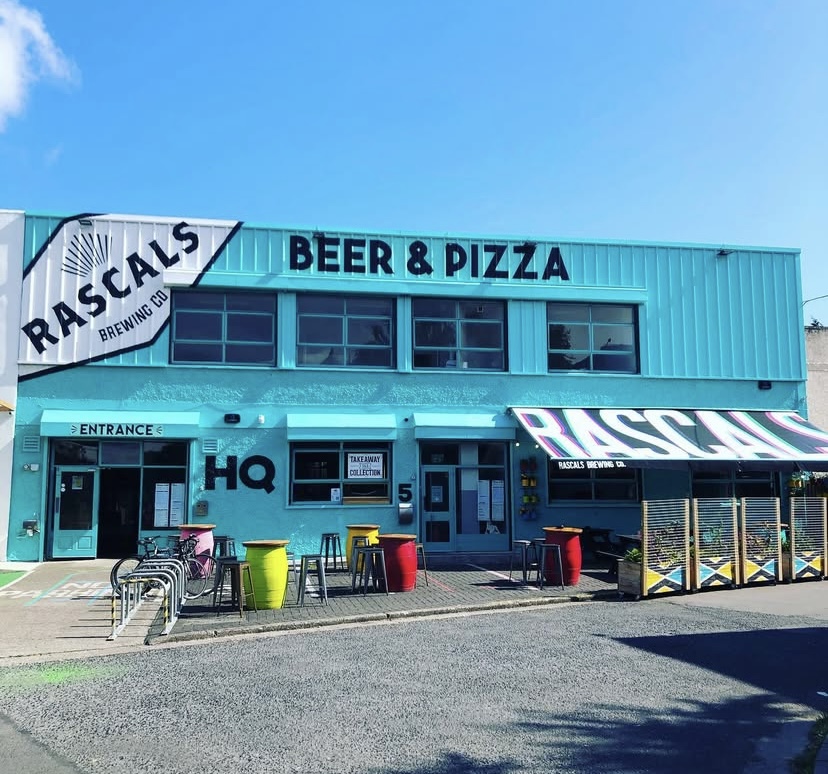
    “We’re not in the business to buy a yacht. We do this because we love what we do,” says Joe Donnelly of Rascals Brewing Company — a family-run Dublin brewery that now finds itself at the sharp end of rising costs, regulatory burdens, and a drinks industry dominated by global giants. 

    With a 30-hectare brewing facility and a popular pizza restaurant on-site in Inchicore, Rascals have built a loyal local customer base over the past 11 years, despite this many of Ireland’s independent craft breweries, it is now grappling with a mounting wave of operating costs — with a recent hike in commercial water charges threatening to push many over the edge. 

    “It’s not one thing in isolation,” Donnelly says. “It comes on foot of years of obstacles put in the way of doing business. Energy costs, inflation, rates — now water charges. At what point do we go — can the government not find the money somewhere else?” 

    The Commission for Regulation of Utilities recently announced a 9.5% rise in water charges for non-domestic users. For breweries, whose product is more than 90% water, it’s not just inconvenient — it’s existential. 

    Ireland’s ageing water infrastructure has long required investment, and few dispute that upgrades are urgently needed but for small businesses like Rascals, the government’s approach to funding those improvements is raising questions.

    “We didn’t cause the problems with the water infrastructure, but we’re being held to account for it,” Donnelly continues. “Of course, it needs to be fixed. But do businesses have to suffer punitive increases as a result?”

    While rising utility costs affect all sectors, small and medium enterprises like Rascals feel the pinch hardest. Donnelly notes that major industries such as Heineken and Diageo can absorb costs far easier — while local independents are left with little room to manoeuvre. 

    People think when you raise prices, you’re just chasing profits,” he says. “But we’re trying to stay open, employ staff, and keep our product at a standard customers expect.” 

    That standard is non-negotiable, he adds. Despite cost pressures, Rascals refuses to cut corners. 

    “We won’t start using inferior raw materials just to protect margins. We have loyal customers who expect quality. That’s what we stand for.” 

    It’s also about more than just beer. Rascals employs 26 people, many from the local area, and supports Irish suppliers across its supply chain. In Donnelly’s view, the company plays a much bigger role than just brewing. 

    Pizza served at Rascals Brewery Inchicore

    “We serve a purpose that’s much bigger than just making beer and pizza,” he says. “There’s a circular economy here that’s being overlooked.” 

    But competing on taps with multinational brands remains a challenge. Donnelly points to the increasing saturation of 0% beers by large brands, which he claims is more about market dominance than consumer demand. 

    They’ve flooded the market with 0% beers,” he says. “It’s not because everyone’s drinking them — it’s about taking up taps. That’s a spot a small Irish brewery can’t get now. It’s an unfair playing field.” 

    He also criticises how alcohol-free beers are being used as a loophole to advertise at sporting events, a tactic that further develops the dominance of global brands. 

    Off-trade access is another uphill battle. While SuperValu is praised for its support of Irish producers, Donnelly says other retailers are more difficult to break into. 

    “Every chain is different, but it’s hard,” he says. “And most people don’t drink craft beer, so you’re introducing them to it for the first time. You have to work hard to stay visible.” 

    Despite it all, Rascals remain positive— cautiously. 

    “We’re going to be here. We’ll still be brewing beer,” Donnelly says. “There might be a bit of economic Darwinism — only the strongest will survive.”

    But Rascals Brewery is not tapping out.