

2020 has definitely been a challenging year, but it has brought us many opportunities to learn and to grow- be it growing as people or growing plants. Eibhin Kavanagh talked to Peter Dowdall also known as The Irish Gardener about gardening as an activity in lockdown and the benefits of this for our mental health.
Tag: Mental health
-
Watch: The mental health impacts of Direct Provision – Asylum seekers speak to TheCity.ie
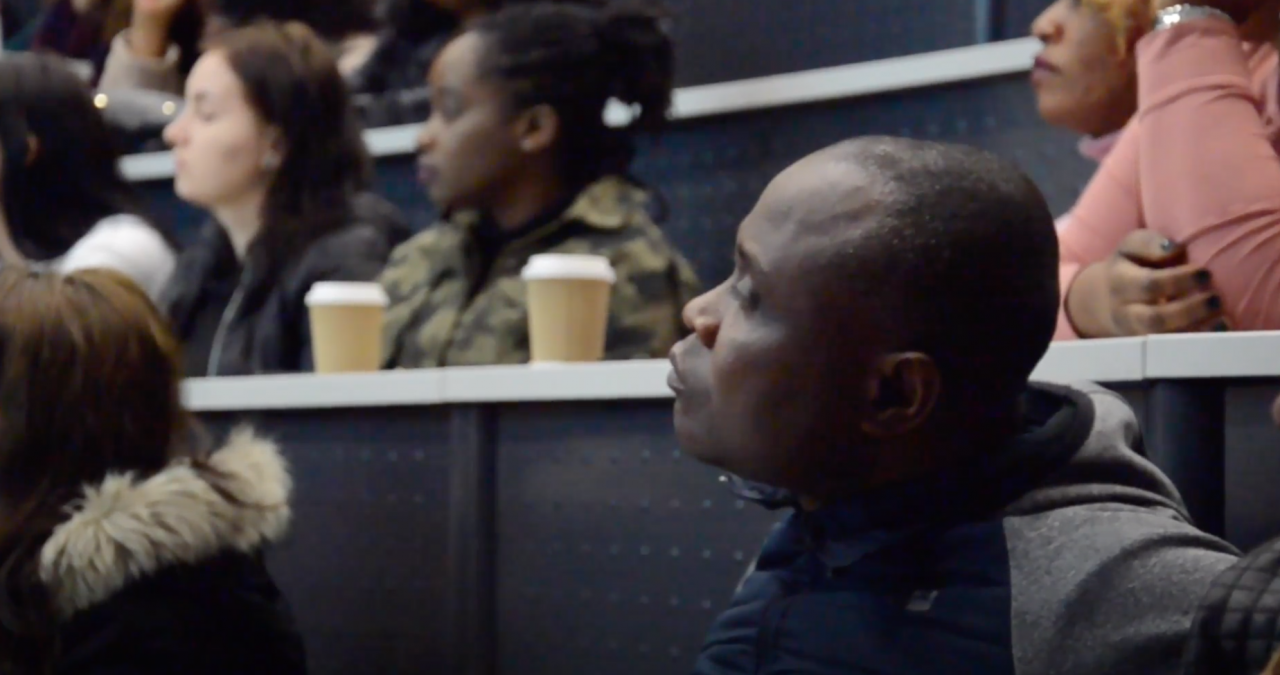
At the Asylum Seekers Feminist Conference, which took place prior to the Covid-19 lockdown, TheCity.ie spoke to Eoin from Abolish Direct Provision Ireland and conference attendees about the impact of Direct Provision on their wellbeing. By Kate Brayden, Cameron Weymes and Ayumi Miyano.
Many of those who came to the conference travelled to be there in order to hear guest speakers and panelists give talks on mental health and host art and yoga workshops. Sonia from Cameroon, Julie from Uganda — whose company ‘Julie’s Kitchen’ catered at the conference — and organiser Eoin generously spoke to us about their unique and personal experiences.
The controversial system of asylum has repeatedly hit the headlines over the mistreatment of those who must wait for their refugee status to be granted, or to be allowed to stay in Ireland. One of the State’s largest providers of accommodation to asylum seekers recorded a pretax profit of €2.36 million in 2018. That the Irish Government allows the system of asylum to be a for-profit service for multinational corporations such as Aramark has been a dominant point of frustrations. Those in the system receive just €38.80 as a weekly Daily Expenses Allowance, and are often moved to differing centres around Ireland before given time to settle in to the local community.
Many centres are located in isolated areas, far away from local villages, which harms the mental health of asylum seekers – who have few options for seeking out services and often face language barriers. For those who have survived war, famine, discrimination and sexual violence, their trauma cannot be addressed. Living conditions in certain regional centres have been a cause for complaint, as well as the troubling impact of the situation on children living in the system.
It’s worth noting that the Irish State’s response to Covid-19 in terms of testing those in Direct Provision has been heavily criticised by human rights groups, politicians, lawyers and health experts alike for effectively ignoring their concerns and putting them at risk. There are currently around 1,700 residents in centres around the country – 149 had tested positive for the coronavirus as of early May.
-
Watch: State of mind in lockdown – the impact of quarantine on those managing mental health disorders
For some, the mind can be a form of imprisonment in itself. Living with mental health disorders can be a daily struggle for many people. What happens to those people when a global pandemic hits, and the country must go into lockdown? TheCity.ie’s Kate Brayden, Cameron Weymes and Ayumi Miyano report.
The level of anxiety which the nation is currently experiencing is just a sample of what those dealing with mental illness have to cope with on an ordinary day.
For those who experience a heightened feeling of worry, fears over the health of family members and friends are extremely common, as well as fears regarding their own health. Covid-19 and the emphasis on hygiene, protecting others, and daily death tolls is causing severe stress for many. Being unable to physically see loved ones in person can take a drastic toll, and can lead to a sense of hopelessness and loneliness.
In TheCity.ie’s video project on mental health during lockdown, Kate Brayden interviewed her twin sister Eleanor, who has Obsessive Compulsive Disorder and severe anxiety, as well as Eleanor’s boyfriend Dan, who has been diagnosed with high-functioning autism and agoraphobia.
Eleanor’s family also feature in the project, illustrating how living with those suffering from psychological distress can impact the entire home. Cameron Weymes spoke to chartered psychologist Dr Christine Tizzard about the impact of quarantine and self-isolation on wellbeing in general.
-
‘I felt like I was being picked on all the time… I was mentally scarred’

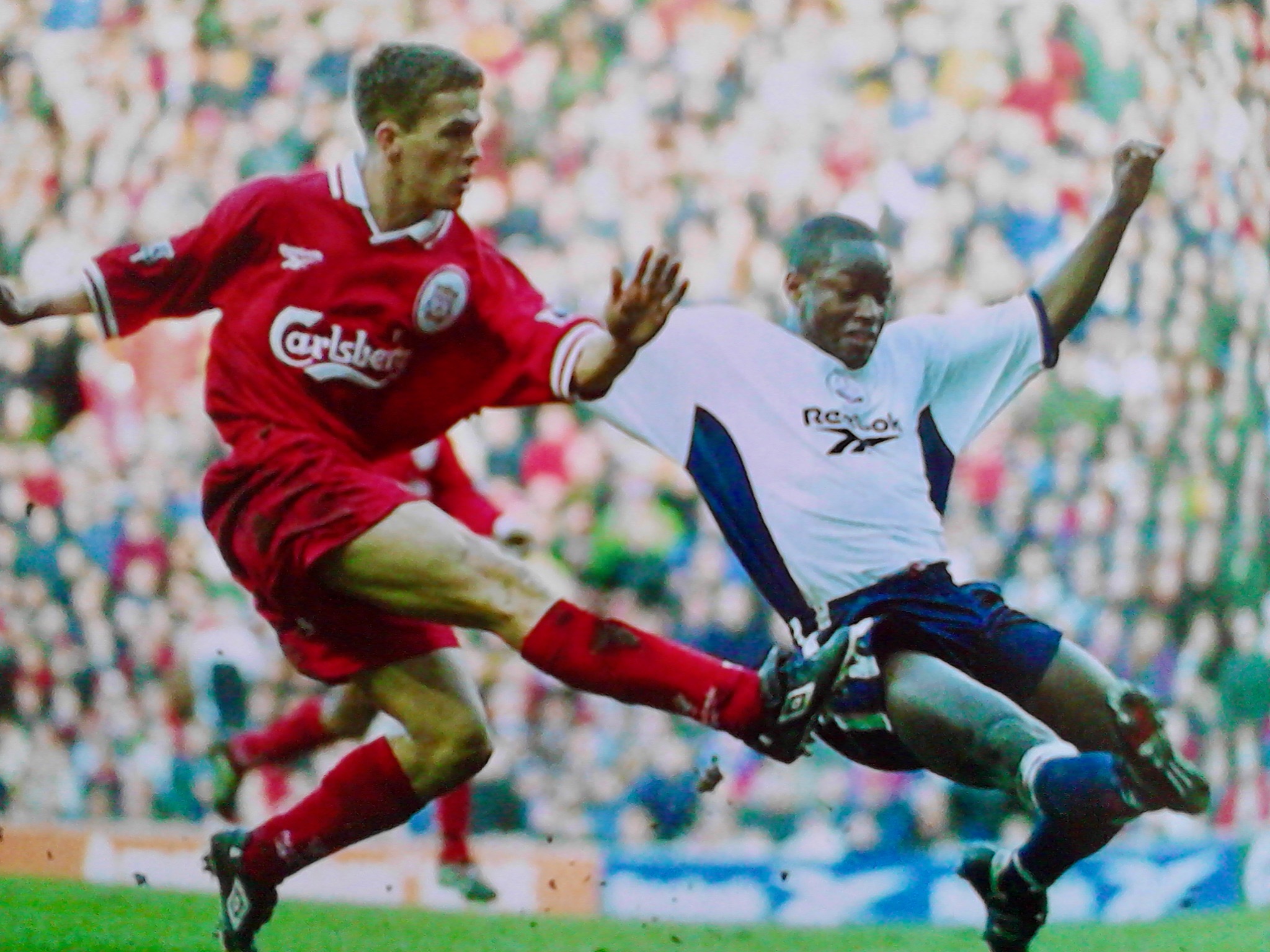
At just 18, Liverpool striker Michael Owen had the huge honour of being picked to play for his country in a World Cup (Photo: Paul Caffrey/BBC) While promoting his memoirs, Michael Owen has revealed the alleged bullying he endured as a teenage Premiership star. TheCity.ie’s Paul Caffrey examines the longstanding culture of bullying in professional football — often misdescribed as ‘character building’ — and asks if this has any place in the Beautiful Game in 2020
During a 16-year playing career that’s always divided opinion among fans, Michael Owen was generally a reserved character who preferred to let his talent do the talking.
But the former striker — who scored 158 goals for Liverpool and 40 goals for England between 1997 and 2013 — has been opening up a lot lately.
Ever since releasing his controversial tell-all memoirs eight months ago — in which he recalls being constantly “picked on” by Kevin Keegan as a young footballer in his late teens and early 20s — it seems Owen is never out of the sports headlines.
As if his no-holds-barred book Michael Owen: Reboot (an excellent read in my opinion) isn’t packed with enough revelations, Owen has followed up in recent weeks with further harrowing accounts from his early career.

Michael Owen: Reboot was published by Reach Sport last year and TheCity.ie recently purchased a copy by mail order (Photo: Paul Caffrey) Last month, speaking on Sky Sports, Owen described how, as an 18-year-old just back from his first World Cup, the much more physically imposing (and twice his age) Stuart Pearce had threatened him in a shocking fashion.
Owen told the sports channel that the encounter with a 36-year-old Pearce, just before Owen’s Liverpool kicked off against Pearce’s Newcastle on August 30, 1998, went as follows:
“Straightaway it was ‘you’re playing against me today son’ and it was serious talking about legs breaking and everything…. He tried to frighten me a little bit.”

TOUGH: Stuart Pearce calls himself a ‘nutter’ on his own Twitter (Photo: YouTube) Owen still managed to deliver a first-half hat-trick of goals, with Liverpool winning 4-1 at St James’ Park that day.
But the experience, that he spoke about publicly for the first time in recent weeks, clearly stayed with him.
Pearce, who describes himself as a “nutter” on his own Twitter, doesn’t appear to have answered those allegations yet.
The blurb for Owen’s weighty 368-page offering, that’s become one of the most talked about football books of recent years, says the ex-striker “felt he had no real voice — until now”.
Recalling his torment after Kevin Keegan took over as England manager in 1999, the married father-of-four, now 40, writes:
“With hindsight, I felt like I was being picked on all the time.”

Michael Owen says he was ‘picked on all the time’ when Kevin Keegan (pictured) was in charge of England (Photo: YouTube) Keegan’s unsuccessful spell as England manager was marked by a disastrous performance at Euro 2000.
Owen was 19 when Keegan took charge. Owen writes that as he entered the 2000/2001 season with Liverpool, he was “physically reasonably fit, but still mentally scarred by the happenings of Euro 2000 under Kevin Keegan.”
He says Keegan “was doing exactly the opposite” of what he was generally known for — supporting and motivating players — and that his Reds and England team-mate Steven Gerrard felt the same at the time.
For example, Owen recalls being berated by Keegan in front of other players at half-time during a Euro 2000 qualifier against Portugal — even though England were 2-0 up.
Keegan then subbed him — even though he’d appeared to back Owen by starting him in the first place. Owen recalls thinking to himself at the time, “what is going on here?” He adds:
“I was getting so many mixed messages, and I wasn’t buying any of them.”
Keegan, who finished his management career at Newcastle United in 2008, doesn’t appear to have answered those allegations yet.
However, Keegan was complimentary about Owen when interviewed by Newcastle website Chronicle Live last September, saying:
“Michael was a big match player. Look at the goals he scored when he was younger in particular. He was 17/18. He was unbelievable, like a 35-year-old guy in his head.”

GLORY DAYS: Owen celebrates after his two late goals secured FA Cup Final victory for Liverpool in May 2001. He writes in Reboot: “I’ll treasure the 2001 FA Cup final forever.” (Photo: YouTube) WATCH: Owen’s two late goals secure victory for Liverpool in May 2001 FA Cup Final against Arsenal
Unfortunately, there’s a longstanding culture of bullying in English football that’s rarely discussed openly.
It’s based on an outdated notion that young players need to be “hammered”, so to speak, to prepare them for the physical battles of the game.
Despite increased awareness about the mental health of young people, and players now being encouraged to think for themselves about playing strategies, allegations of bullying remain rife within the Beautiful Game.
But surely, no form of bullying should have any place in football in 2020.
As former Crystal Palace owner Simon Jordan told MailOnline last year: “Young players often learn more from honey than vinegar.”
Former Manchester City player David White told that website:
“If your youngsters are going in scared, you are not creating good footballers. There has to be a totally different attitude.”
But it seems that it may be a neverending vicious cycle handed down from one generation to the next.
In his own autobiography, GoodFella, Norwich City’s Craig Bellamy recalls being reduced to tears at the end of each day’s training as a young player in the 1990s, due to humiliation by older team-mates. Bellamy writes:
“I think the rest of the players saw it as character-building.”

“An unacceptable coaching environment”: Former Cardiff City Under-18s coach Craig Bellamy, who denied bullying young players (Photo: YouTube) Then in January of last year, Bellamy was forced to deny being a bully himself in his role as Under-18s coach at Cardiff City when the parents of two trainees came forward with detailed testimony.
Months later, an internal inquiry found the club had subjected teenage players to “an unacceptable coaching environment”.
Bellamy then apologised — though not unequivocally — to the players and parents concerned.
In response to the findings of the investigation — insisting that he still “categorically denied” all allegations against him personally — Bellamy said last October: “My only aim was to produce winners… If I inadvertently offended anyone then I am truly sorry.
“I have probably relied too much on my own life experiences playing under some of the best coaches in the world, rather than assessing the sensitivities of a new generation of players.”
However, the Welshman had reportedly remarked a few years before, tellingly:
“My biggest concern with most kids now is that they don’t have that edge to want to be better than their mate. Football takes such good care of you now at every age group that some of the hunger’s gone.”
Bellamy, 40, since left Cardiff City to coach Under-21s at Belgian side Anderlecht.

WONDROUS: A teenage Owen seconds from single-handedly beating Argentina’s defence at France ’98 to score one of the most talked about goals of the past three decades (Photo: Paul Caffrey/Michael Owen: Reboot) Relatively small in stature for a footballer, standing at 5’6, Michael Owen always admirably used his exceptional speed on the pitch — rather than brute strength — to beat the opposition and deliver goal after goal both at club and international level.
His astounding wonder goal against Argentina at France ’98 saw the then 18-year-old compared to Pelé for effortlessly beating Argentina’s defence with a 25-step solo run on goal at 16 minutes.
That goal at Saint-Étienne on June 30, 1998 was “the most significant” moment of his whole playing career, Owen writes in Reboot, adding:
“It just happened that I was ready to be the best I could possibly be at a young age. I’d never want to change anything.”
In The Day England Played Argentina, a documentary screened by the BBC in 1999 and unearthed on VHS by TheCity.ie, seasoned TV sports presenter Des Lynam says that goal “proved the boy had nerves of steel and it made him a superstar”.

Break-out panel: Paul Caffrey Owen was just 17 when he began his professional career at Liverpool in 1997. Within 12 months he’d got the call up for England and was being compared to world all-time greats like Pelé.
No doubt, his considerable achievements must have attracted some jealousy or resentment from other more seasoned players. Owen reached the peak of his career between the ages of 18 and 22 and won the Ballon D’Or, one of football’s most prestigious awards.

PROUDEST MOMENT: After scoring against Porto in the UEFA Cup fourth-round second leg at Anfield on March 15, 2001. Owen’s header at 37 minutes helped seal a 2-0 victory for Liverpool and he calls it his all-time best performance (Photo: YouTube) WATCH: Liverpool’s UEFA Cup victory over Porto in March 2001
While in Owen’s case, it appears he was headstrong enough not to let any harassment affect his playing, bullying has sadly forced other promising young players to quit the game at professional level.
As former Manchester City player Gordon Smith told Love Sport Radio last December: “We’ve lost a lot of good players over the years because they couldn’t handle being treated in that manner.
“It has changed a lot, people are trying to make it better now.
“A lot of people who are old school still feel you have to be ‘hard’.
“But we should have a bit more psychological training so coaches can realise that it can have a detrimental effect on people.”
Owen finished his playing career with Stoke City in 2013 and is now a respected pundit on the likes of ESPN, Sky Sports and BT Sport.
- Michael Owen: Reboot is published by Reach Sport and is available to buy on Amazon as an ebook or in printed format.
-
Are Instagram filters affecting your health?
By Paula Bowden
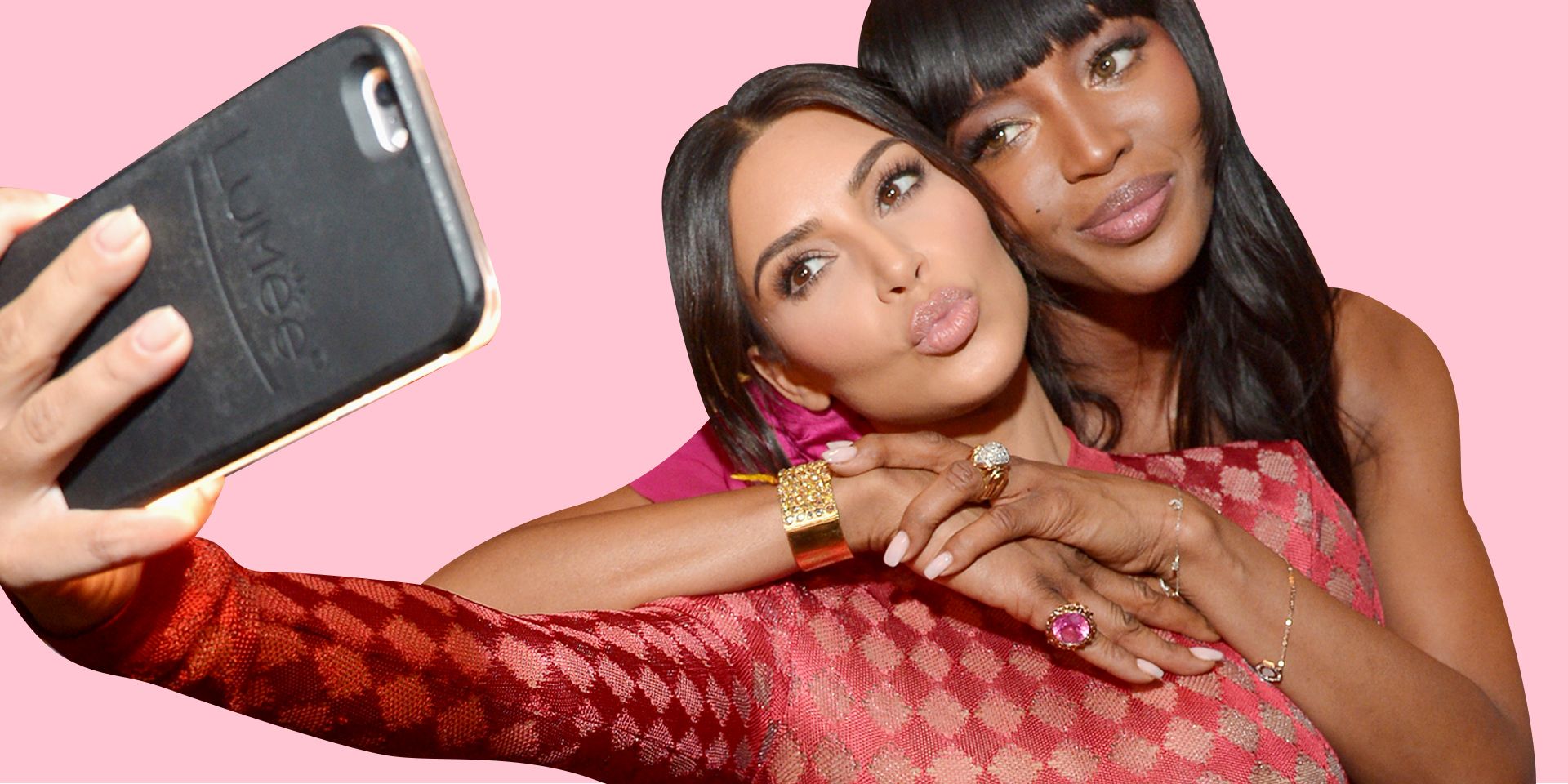
Filters. They’ve pretty much been around since the dawn of social media. Whether it’s a touch of sepia tone or the much loved dog-ears filter, you’d be hard pressed to find a social media user that hasn’t used a filter at some point. However, while the primitive filters of the past have simply changed the brightness and tone of an image, today’s filters offer users the opportunity to change their face shape, lengthen their legs and even make themselves appear slimmer, no tricky software required.
For many, filters are still a simple bit of fun but for some users, they offer up a dangerous comparison, and can have damaging effects on self-esteem, leading to a warped self-perception.
In 2018, Dr. Tijion Esho, coined the phrase “selfie dysmorphia” – the phenomenon of people requesting cosmetic procedures to resemble their filtered social media image. While previously, Dr. Esho and his counterparts were used to clients presenting pictures of celebrities for inspiration, a growing number of people are now taking their own selfies to the cosmetic surgeon and looking to make their own filtered images a reality.
While one may laugh at the initial absurdity of this idea, Mellissa McKeon (24) said her decision to get lip and cheek fillers four years ago was largely based on a desire to look more like her online presence in real life.
“When I was 20, I went on a date with a guy who I had met online and he basically flat out told me that I didn’t look like my social media pictures. He played it off as a joke, but it devastated me and made me completely question the way I looked and my confidence.
“when an app gives you that opportunity to change the thing about yourself that you hate, well I obviously jumped at the chance”
“I think from a young age I’ve always had confidence issues and my lips were always something I was really self-conscious about, I’ve always felt they were flat and just unattractive. So naturally, when an app gives you that opportunity to change the thing about yourself that you hate, well I obviously jumped at the chance, but I took it a step further and tried to create that look in real life.
“I will say, looking back at all my pictures from my very early 20s and the fact that they look nothing like me. It makes me sad to look back because I was so unhappy.”
With little or no self-esteem and a severe hatred of her own body, Melissa spent three months receiving treatment for body-dysmorphia and depression, learning how to change the obsessively negative way she thought about her appearance.
“It’s not like you’re ever completely cured,” said Melissa. “But I do treat myself better now, I’m kinder to myself and I don’t use social media as much which helps.”
Last month the social media giant, Instagram, announced a ban on so-called plastic surgery filters from their platform as they look at reviewing the terms of their wellbeing policy.
One of the filters in question, dubbed fix me, mapped out lines on the users face giving indication of where a plastic surgeon might nip and tuck to create the perfect face, while another filter plastica gave users inflated lips and higher cheek bones, showing them what they might look like if they went under the knife.
“We’re re-evaluating our policies – we want filters to be a positive experience for people”
In a statement, Instagram said: “We’re re-evaluating our policies – we want filters to be a positive experience for people.” They added that while they were re-evaluating their wellbeing policies they would be removing all effects from the gallery associated with plastic surgery and stopping any further approval of similar new effects as well as removing current effects that are reported to them.

The fix me and plastica filters.
Credit: DANIEL MOONEY/INSTAGRAMSpark AR, the augmented reality platform that creates the filters, also released a statement on their Facebook which said: “We want Spark AR effects to be a positive experience and are re-evaluating our existing policies as they relate to well-being. While this happens we’re removing all effects associated with plastic surgery from the Instagram Effect Gallery.”
These changes follow on from a recent ban by Instagram on posts that make “miraculous” claims about weight loss and are linked to a commercial promotion.
As well as this, Instagram also said that it would begin hiding promotions for cosmetic surgery and other diet products from under 18s. The new policies will also be applied to Facebook, which owns Instagram.
Barry Murphy is communications officer for the eating disorder association of Ireland, Bodywhys. He spoke to thecity.ie about the role that social media can play when it comes to mental health.
He said: “I suppose one of the challenges around social media is that it can heighten that sense of comparison maybe that we didn’t have many years ago, where we took all of our social queues in an offline context or in a peer context and obviously social media has kind of shifted a lot of that over.
“It’s become 24 hours a day, seven days a week potentially, but is there a simple answer to what effect this is having? I don’t think any one study or piece of research could really give you a succinct answer on that.”
“There’s a lot of information coming out now that social media is not particularly detrimental to youth mental health”
Barry continues: “I think when we’re talking about young people and technology we always have to ensure that that conversation is constructive and nuanced. We also have to remember that social media has not replaced traditional risk factors such as bullying or trauma. Social media has not superseded traditional risk factors in any way, they are very much still core.
“There’s a lot of information coming out now that social media is not particularly detrimental to youth mental health,” said Barry. “It’s a little bit of a mixed picture.”
Bodywhys can be contacted on 01 210 7906 or alex@bodywhys.ie.
-
Waiting lists for Child and Adolescent Mental Health Services on the rise
With public outrage over long waiting lists, Child and Adolescent Mental Health Services (CAMHS) and chaos in emergency departments need to be prioritised.
However, this importance is not reflected in the number of clinical staff or expenditure put towards mental health services. In 2007, there was a total of €990 million spent on mental health services compared to €917.8 million in 2018. That is a decrease of 7 percent in 11 years.
Following a Freedom of Information request, it was found that in July 2017, there was a total of 2,419 children and young adults on the waiting list for CAMHS. As of May this year, there are 2,639 children and teens on the waiting list, which shows an increase of 9 percent in ten months.
In 2017, 218 of those on the list were waiting over a year compared to 319 people as of May 2018, which represents a 46.33 percent increase.
The HSE management data report for March 2018, revealed that there were 18,489 CAMH referrals, including re-referrals received by the Mental Health Commission (MHC).
A total of 10,304 of those were seen by mental health services, and 226 of them were admitted to CAMHS acute inpatient units.
The MHC recently published a report which highlights the issues in mental health services, such as the gaps in service provision and the waiting lists. CAMHS is meant to be a service for young people with acute mental stress. The limited choices medical practitioners have when referring a child to mental health services places more stress on an already overstrained service.
According to a report, published in the Irish Medical Journal, paediatric services have an increased rate of mental health issues. The report revealed hidden costs in paediatric psychiatry consultation-liaison services (PCPLS).
The majority of work done by PCPLS involves children with acute or deteriorating psychiatric disorders that co-exist with other physical health conditions, and most of which are previously known to CAMHS.
In Ireland, there aren’t many options when dealing with PCLS cases in paediatric hospitals. Therefore, almost all of the 61 cases (80 percent) in 2016, as revealed in the report, were discharged to CAMHS.
The MHC explained in their 2017 annual report that there were 82 admissions of children to 21 adult units in 2017 compared to 68 in 2016. This is a result of bed shortages in dedicated children’s units across the country.
CAMHS can’t admit patients to out-of-hours care, which means that children seeking help are forced to seek medical attention in adult care services.
In the absence of CAMHS, due to their out-of-hours services, PCPLS are directed to children who show up to the emergency room with psychosomatic illnesses.
The MHC report showed that eating disorders were notably the highest mental health issue represented and account for a substantial share of expenditure. The report claims that the annual cost of bed days and one-to-one nursing care for these patients does not feature on any of the HSE CAMHS data records and comes out of hospital funds which means it’s not properly documented.
Dr Fiona McNicholas, an author of the report, told The City that “there used to be much better detailed data records in previous CAMHS reports. Given there is a large volume of work coming in, and the cost is both in hospital stay, special and manpower, it needs to be added to mental health HSE data, but it is not.”
Dr McNicholas added: “There is no ring-fenced budget for mental health provision within the paediatric hospitals. Going forward in planning the National Paediatric Hospital, this increasing volume of acute psychiatry that comes to the emergency department (ED) needs to be recognised by the HSE Mental Health Division. It needs to be measured, costed and resourced, so that the children and families in acute psychiatric crisis attending ED feel welcomed and are given a good mental health assessment without a sense that they are taking away specialist consultant liaison time from the children with combined medical and psychiatry issues.”
-
Video: Mental Physical Wellness Interview
The fitness industry is booming worldwide, a lot of thanks must go to the ever increasing influence of social media. However many fitness models or celebrities often portray unrealistic body standards and often focus on body image to promote their brand.
Michael O’Driscoll, Andrew Brennan, John Buckley and Sab Medlar, four young college students have created an Instagram fitness page of their own, however, they have replaced this objectification with a focus on the important issue of mental health.
Daniel Osborne & Eoghan McGrane sat down with creators Michael O’Driscoll and Andrew Brennan to discuss the newest group in the Irish fitness industry….
You can follow the guys here: Instagram @mental_physical_wellness
-

DIT launch online counselling service
DIT has launched a brand new online web chat service for students to avail of counselling services from the comfort of their own homes.
Quick consultations can now be carried out via Google Chat as students can instantly connect with trained counsellors based in almost every DIT campus every morning from 10am until 11am.
Although students can get in contact with counsellors from different DIT campuses, the main hub of the web service is currently based in DIT’s Mountjoy Square offices.
Speaking to TheCity.ie, DIT counsellor Catherine Whelan explained that since September when the service was initially rolled out, they have already seen a small spike in student engagement.
“A few more have been in contact this week, maybe not through the live chat but they are emailing the new address,” said Ms Whelan.
The new messaging system was introduced following another year of high demand for the service from students. Last year, some students had to wait nearly four weeks for an appointment when booking.
“We have been looking at student’s needs in the past and we would be very aware from the past that we have been under pressure, not being able to hit demand and we would have picked up this dissatisfaction from various surveys on that front,” said Ms Whelan.
“We wanted to make the service as accessible as possible, so over the summer, we’ve been reflecting on what we do. We wanted to see what way can we start addressing things differently,” continued Ms Whelan.
It was recently announced by the government that €35 million will be allocated to mental health services across the country as part of Budget 2018. However, there has been much scepticism surrounding this as mental health umbrella groups have claimed that much of this funding was already promised in last year’s budget.
According to the Irish Times, one group Mental Health Reform have said that Minister for Mental Health and Older People, Jim Daly, had confirmed that €20 million of the €35 million had already been promised in Budget 2017.
By Conor Shields
-

That sinking feeling: video games for mental health
A new gaming experience could provide support for those who experience anxiety. Zuzia Whelan learns more
-
Sticks and stones: the business of bullying in the workplace
Bullying isn’t just for kids in the playground, but what effect is the workplace bully having on our mental health? Aoife Loughnane investigates
You must be logged in to post a comment.