Tag: Mental health

  • Bressie talks mental health with students in DCU

    Bressie talks mental health with students in DCU

    Last Friday morning, Niall ‘Bressie’ Breslin held a talk in DCU about mental health.

    A talk by the singer, who is perhaps best known for being the former lead singer of ‘The Blizzards’ or as a coach for ‘The Voice of Ireland’, was organised by the DCU student health campaign, Stamp Out Stigma. It saw Bressie offer advice on those who are struggling with themselves, as well as reflecting on his own mental health struggles throughout his life.

    “It was never my illness that I wasn’t able to cope with. It was disguising it. It was the constant excuses that I had to make because of it and the constant repression of my own identity,” the singer outlined, rather eloquently.

    Bressie, who before entering the music industry played professional rugby with Leinster, explained at the start of the talk that this was something that he’s spent a fair deal of time learning about.

    “We have to start prioritising [so] that this becomes absolutely number one. From primary school, to secondary school, to third level because, guess what? Everything that you do in terms of your academic achievement and what you wanna do are worthless unless your head is able to cope with life. I learned that the hard way.”

    The 35-year old painted an extremely vivid picture of how he suffered as a teenager.

    “My only coping strategy was to completely avoid my friends … and as a 15-year-old, I was captain of my school football team, I was representing Leinster at (underage) rugby, I was in a band. I was the anti-stereotype. And I’ll tell you why, not because I was social, not because I was ‘Good-time Charlie’, but because the only time when that pain in my chest went away was when I set foot on the pitch, when I trained, or when I held an instrument. And only at that particular point did it go away. So, I became addicted.”

    Bressie went on to openly explain the extent of his demons, as panic attacks and sleepless nights became regular occurrences. He admits that at the time, it was something that when going into school, could easily go under the radar, but he feels that today teachers are more alert to it. “Our teachers are now recognising that this might not just be a kid who’s a bit of a lazy git, that [it] could be a kid in absolute distress, because I was.”

    Despite these troubles very much forming a massive part of his life, the star admitted that these problems are certainly responsible for making him the person he is today:

    “This is fundamentally where I get my belief that people who struggle with a mental health illness have an edge over other people… once they’re able to find that resilience, bring it out, nurture it, promote it, they’ll realise what they’re capable of.”

    Bressie today is a man who has learned how to do this. He uses everything he’s learned to better himself, as well as become a spokesperson for attempting to break down the stigma associated with mental health.

    “We have a very unusual relationship and understanding with what self-harm is and it’s absolutely different for everybody, but for me self-harming had nothing to do with attention, I didn’t want attention, it’s the last thing I wanted. It was a release,” he told the crowd.

    It wasn’t until he had his worst attack, to that point, when his anxiety led him into intentionally breaking his own arm in his bedroom, that he first spoke out about it, and even then it wasn’t the full story. “I didn’t tell her (his mum) the full picture, I said, ‘Mum, I’m a bit uneasy in myself at the moment.’ And, that was the difference.”

    However he admitted that the fear and shame was still too strong at this stage to really explain the extent of what he was dealing with, so he, “did what most Irish men do, I put the head down and went: ‘I’m fine, be grand.’” But, it wasn’t.

    From here, he tells the audience about the jump to third level-education, and how this only made things worse. Attempting to go to college in UCD was a step too far for his anxiety and led him to go to great lengths in order to attempt to deal with it.

    Self-medication, which Bressie attempted to outline as something that under no circumstances should be done by someone trying to get through their problems, was a measure that he sadly took to shield it. “And, here’s the funny thing about mental health illness. You think you can outrun it, you think you can do something new to make it go away, but you can’t.”

    Bressie’s problems forced him to take drastic decisions, closing important chapters in his life. Quitting rugby, he eventually moved back to Westmeath and started his band, ‘The Blizzards’. Again, despite finding success not only in Ireland, but across the UK, his inability to confront, or disclose, his ever-worsening condition led to the eventual breakdown of the band.

    “You cannot be in a relationship … if there isn’t 100% honesty. Honesty is the fundamental spine or backbone of any relationship, whether it’s a physical one, whether it’s a family one, whether it’s a friend,” he said.

    In a self-imposed exile, he moved to London, where he was barely able to leave his house. It was there he had what he describes as his one and only full-breakdown: “I was walking down the road, it was a really warm summer’s day. And, I can’t describe the fear that came over me. It just poisoned every part of my body.

    “I ran straight across a two dual-carriageway road, I didn’t even look left and right… and I ran into a park and I slept under a tree. I remember looking, I could see London city in the distance.”

    The distance from the world made him feel safe, and he slept there for the night.

    Very shortly after this, Bressie took a leap of faith. He agreed to join ‘The Voice of Ireland’ as a coach, admitting that the excuse to go home to Ireland each weekend and see his mother was the only thing motivating him to do it.

    From here he describes the overwhelming fear he had in the build up that he would suffer a panic attack on live television. After a lucky escape in just the third week of broadcast, the singer knew that he had to finally face the problem, and opened up.

    “I decided I needed to humanise it. I needed to give it a name, I needed to objectify it. So, I did… I called my mind Jeffery… I got hotel paper, and I wrote down everything I think Jeffery loves. Exercise… good people… healthy food… and on another page I wrote down everything I know that Jeffery hates, and the top of that list was toxic people.”

    From here, he made the decision to give every single therapeutic option a chance, in order to not only learn how to cope, but to garner a full understanding of what is going on with his mind. Bressie told the crowd that doing this allowed his mental fitness to reach a level he never thought imaginable.

    “It takes time for these things to work,” he said. But as someone listening to his words, it seems to have really made an impact. He cited cognitive behavioural therapy as one of the most influential treatments he used. It should be noted that he did however attempt to underline the fact that mental illness is incredibly subjective and certain treatments work differently on everyone.

    The hour long talk flew by with barely a sound uttered by those in the crowd until the end, where Bressie was met with a rapturous and respectful standing ovation for his time. With famous figures coming in to openly talk about these kinds of issues, I think it’s fair to say that we are coming a long way to finally stamping out the stigma in Ireland.

    If you ever need to reach out and talk about mental health or feeling down, contact Samaritans at: http://www.samaritans.org/.

    You can watch the talk in full at: https://www.youtube.com/watch?v=ffWsTemphhY&feature=youtu.be

  • Locals march for mental health as budget brings hope

    Locals march for mental health as budget brings hope

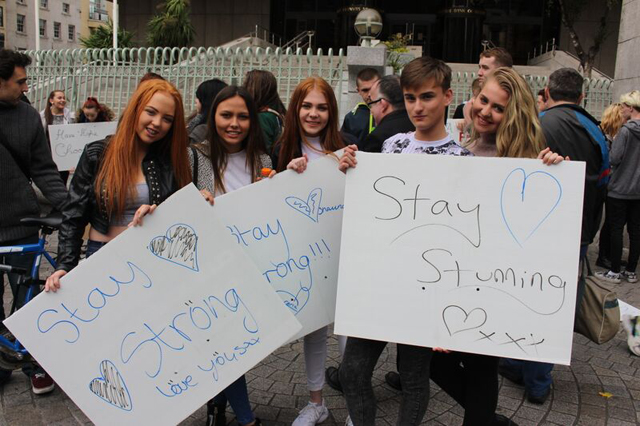
    World Mental Health Day took place last Saturday, and the afternoon saw a determined group of young people marching the streets of Dublin in the hopes of speaking up for mental health awareness.

    With the help of ‘Action For Suicide Prevention Dublin’, approximately 100 people came together at Dame Street’s Central Bank, armed with only their voices and cardboard signs. From there, they marched down by College Green, across the Liffey and up towards the Garden of Remembrance.

    With the budget taking place this week, the aim for the march was to attempt to generate as much noise as possible in order to remind people of the importance of mental health services.

    During the budget announcement, the Minister for Primary Care, Mental Health and Disability, Kathleen Lynch announced that the Government will continue to allocate an annual sum of €35 million towards mental health services.

    The march was organised by ‘Action For Suicide Prevention Dublin’ along with Jamie Harrington (16), a teen who gained recognition after saving the life of a man who was attempting to take his own life at the Ha’penny Bridge in 2014.

    “Jamie is a legend,” exclaimed marcher, Ryan McDermott, “he does so much work and really cares about people. He’s going to march for the homeless tonight as well.

    “We all know someone who’s been hurt because of their own problems. We’re marching in their memory and to give a chance to anyone who might suffer in the future,” he added.

    An estimated one in five people are directly affected by a form of mental health issue in their lifetime. There are many helplines and useful websites that you can access if you, or someone you know, is experiencing mental health concerns.

    Pieta House (Pieta.ie) – 01 601 0000
    Samaritans (Samaritans.org) – 18 506 09090

  • Walk In My Shoes broadcasts from St Patrick’s Hospital

    Walk In My Shoes broadcasts from St Patrick’s Hospital

    This week, Walk In My Shoes (WIMS), a charity aimed at promoting mental health awareness, are running a pop up radio station, which is broadcasting from St Patrick’s Mental Health Services.

    The aim of the radio station is to raise €10,000 to help young Irish people with their mental health.

    WIMS Radio is hoping to encourage listeners to become involved in the conversation and stigmas that often surround mental health. It aims to get young people talking about their mental health, as early detection is key when it comes to dealing with it.

    This week is Mental Health Awareness Week, and the motto of the charity is ‘a small step, a huge difference’.

    Stephen Cahill is a radio student in Ballyfermot College of Further Education (BCFE), who is currently working on the research team for the Aiden Power and Andrew Stanley show in the mornings.

    “I’m really enjoying working on the show. I worked on it last year and already I’ve noticed a massive improvement in the quality of the show,” said Stephen.

    “It’s mostly run by students from BCFE, and we’re so lucky to get this experience.

    “I’m also a massive advocate for mental health myself, so even on a personal level I’m delighted to be involved in the show,” he added.

    WIMS radio aims to interview guests who may have previously suffered with their mental health, or that have a positive message that they could share with their listeners.

    “We had William Meara (former DIT Student), on the show on Monday morning, and he is running a two night retreat called ‘UnPlug’ which basically teaches you how to manage your social media rather than letting it managing you. It includes activities such as Yoga, and provides a full vegetarian diet to help you relax and unwind,” he said.

    “I think that’s definitely very important in today’s society as people don’t realise how dangerous social media can be for our mental health.”

    Other familiar faces on the station include Bressie,  Al Porter and Sile Seoige.

    “I remember Bressie being on our show last year, and I was just in awe. The way he spoke about his own battle with mental health really resonated with me. This was just before the launch of his book ‘Me and My Mate Jeffery’, which I’m sure he’ll be discussing later in the week,” Stephen said.

    If you’ve missed any of the shows on Walk In My Shoes Radio, don’t worry, as you can catch their podcast on their website or listen in live on 94.3FM.

    You can also donate €2 by texting ‘Shoes’ to 57802, or for more details simply visit their website.

  • Invisibility on the streets of Dublin

    Click on any image to view as a slideshow…

    By Maira De Gois

  • The Little Things

    The Little Things

    What are the little things you do when you’re down? For some people it may be going for a walk, or chatting to a friend. 

    The Little Things campaign was set up by the HSE’s National Office for Suicide Prevention to get people talking about the little things they do to feel well again. The City’s Áine Hennessy and Alison O’ Hanlon spoke to young Cavan goalkeeper Alan O’ Mara, who is an advocate for positive mental health, about his involvement in the campaign. They also went out onto the streets of Dublin to ask people what little things they do to pick themselves up when they are feeling down. Check out the video here…

  • Bressie Launches Mental Health Website in Addition to Talks

    Bressie Launches Mental Health Website in Addition to Talks

    Bressie has launched a new website which focuses on mental and emotional health, while he continues his series of talks on mental health in Dublin and around the country.

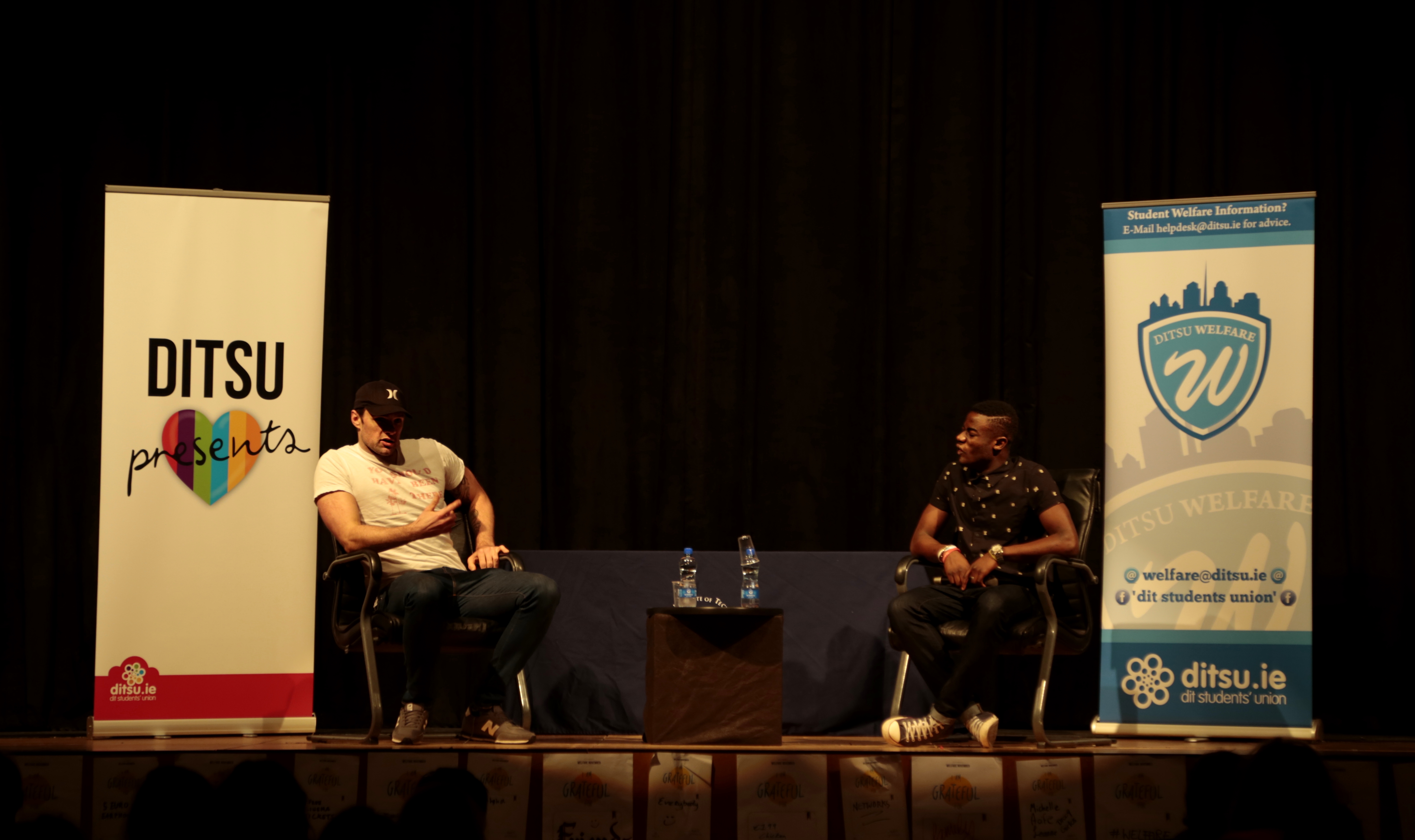
    The Dublin-based singer, best known for being the front-man for the Irish band The Blizzards and a judge on The Voice, has spoken at a number of Dublin-based colleges, including his old college UCD in October, DIT in November, and Trinity College this December.

    stage
    Photo by Cormac Dunne

    Just last month in November he launched a new website called my1000hours, which focuses on the importance of mental health as well as physical health, and will also act as an ‘online support blog’. The website explains,

    “So many of us put so much emphasis on physical fitness but seem to ignore the importance of our mental or emotional fitness. The evidence surrounding the correlation between positive mental and physical health has never been more profound”

    The concept of 1000 hours is to encourage people to improve their mental health by challenging themselves to achieve things such as learning a new skill or running a marathon. This will all be with assistance from the 1000 team “who will help with both the physical training programmes, diets etc…and also the mental processes required to achieve these challenges.

    The website is also due to add a section on musical therapy and how it could help to manage depression.

    Bressie suffers from Generalized Anxiety Disorder, and since first speaking out about his struggles a year ago in 2013 he has become an advocate for mental health in Ireland. As well as speaking at schools and colleges around the country he has also spoken on a number of television and radio programmes on the issue.

    Thanks to DITSU I got to talk to Bressie last month, after his talk on mental health in DIT as part of their Welfare November campaign:

    For more information on 1000Hours follow the links below.

    Facebook

    Twitter

    YouTube

  • Emigrated? How’s yer mammy?

    Emigrated? How’s yer mammy?

    Because I'm leaving on a jet plane, don't know when I'll be back again..
    Because I’m leaving on a jet plane, don’t know when I’ll be back again..

    Irish mothers are more likely to be depressed if their children have emigrated according to a new report by Trinity College’s Irish Longitudinal Study on Ageing (TILDA).

    The new report shows that the mental health of Irish mothers is suffering as a consequence of their children emigrating during the recession.

    It also shows that these mothers experience increased symptoms of depression and greater loneliness than mothers whose children did not emigrate.

    The researchers found, however, that with the exception of fathers aged over 65, fathers did not suffer an equivalent decline in mental health following the emigration of one or more of their children.

    In the year ending April 2006, 36,000 people had emigrated from Ireland, emigration numbers hit 89,000 in 2013 and are still rising.

    These high rates of outflow meant that a large number of TILDA participants saw their children emigrate.

    Dr Irene Mosca of TILDA says that the report shows the effect on those left behind:

    “Emigration is often discussed in terms of the people who leave, but our study shows that there are also real impacts on the people left behind.”

    “There is a narrative out there that this was a recession that impacted on young people, as negative equity and debt primarily affects young people,” said Alan Barrett of the Economic and Social Research Institute, who co-authored the study with Dr Irene Mosca.

    “But we have now identified a group of older people who have suffered a mental health difficulty as a result of the recession, because of the emigration of their kids… Mental health difficulties often develop into physical health difficulties, so the massive increase in emigration in recent years has public health implications.”

    Some Irish mammies who were left behind when their children emigrated spoke to The City about how they are coping.

    Margaret Hennessy saw her son hop the water to London in search of work as did Elaine Keoghan’s daughter, while Kathleen McCormack’s son James went further afield to Brisbane to work on the pipe lines.

    When Kathleen found out her son was moving to the other side of the world in search of work she said she felt “sad and broken-hearted. I knew I was going to be lonely. James and his wife, Ursula, were only supposed to be going to Australia for two years but that soon changed as they found good, well paid jobs and started a new life together over there. They are there almost four years now.”

    “I still miss them so much, especially now that they have just started their family over there. It was heart-breaking not being part of that. As any mother would I wanted to be there for my son on the birth of his first child, but physically I just couldn’t. I Skype them all the time but it’s just not the same as having them home”

    “Whenever I think about the huge distance that’s between us and all that he is missing out on, I just start to cry. I think it’s a maternal thing. Luckily, I have three other children at home, and grandkids too, so I am kept busy. I can only imagine what it would be like for a mother with only one child having emigrated, their whole life torn away.”

    Una Nannery, 53, took a different approach. With two of her sons gone to Australia she was fed up of being lonely and depressed so three years ago Una, her husband Eugene and their youngest son Ciaran packed up their bags and followed their two older sons, Brendan and Declan, to Melbourne.

    “‘The main influencing factor for our move was unemployment, as Eugene had no work for two years previous to our move and had no prospects of getting anything.  Also, the fact that both our eldest sons had already emigrated and were starting families here influenced our decision in a big way, we were stuck at home missing out on the most important time of our son’s lives and we missed them terribly.” So Una upped and left Ireland and hasn’t looked back since.

    “We are living in Melbourne now, in a lovely suburb called Ivanhoe.  There are many Irish over here for the same reasons as us.”

    So how does life on the other side of the world compare to home? “There’s a much better standard of living here in Australia. Eugene is working full time and on a good wage, I’m not working and we still are way better off. The weather is a huge plus also. Life here compared to life in Ireland is similar, in that during the week it’s the usual routine of work, school etc.  The main differences are work and the weather.” Una continues “Living day to day is similar here to Ireland.  Depending on the supermarket you go to and the brands. Meat is dearer here; chicken and lamb are a lot more expensive. However petrol is cheaper. Clothes and footwear are expensive.  Both eating out and alcohol, like home, can range from expensive to fairly reasonable depending on the areas you are in.  A pint of lager is $7.00 that would work out pretty similar to Dublin pub prices.”

    Speaking about the work situation Una says “There is plenty of work in the building, mining, and general outdoor work. Men seem to get work easy enough. It seems harder for women, but yet not as hard as at home. There are good agencies here, so the ladies get sorted after plenty of interviews and that, but can take 3 to 4 weeks.”

    Emigrating is a tough decision to make, no matter what age, says Una “Emigrating is ok if it is for the right reason, but right now it is the only option for many.  But yes, I would tell all young people to travel, as it really is the best experience and learning curve in any person’s life.  Ciaran is living proof, also the older boys. They love it here and have adapted so well. For me, well I’m just happy to have all my family together again.”


  • Sinead O’Connor, Miley Cyrus spat continues

    Sinead O’Connor, Miley Cyrus spat continues

    Sinead O’Connor and Miley Cyrus have continued in their cyber tit-for-tat argument.

    The feud began with a seemingly good-willed letter, drafted by O’Connor, and posted on her personal website addressed to Miley Cyrus, in relation to the young American popstar’s recent sexaully-provacative antics. However the fourth, most recent letter, has moved onto the topic of mental health – more pertinently, Miley Cyrus’ derogatory attitude towards the issue.

    Sinead O'Connor was less than thrilled to hear she was the inspiration of Miley Cyrus' new video. Image by: Pieter Morlion
    Sinead O’Connor was less than thrilled to hear she was the inspiration of Miley Cyrus’ new video. Image by: Pieter Morlion

    The first letter was drafted in response to comments Cyrus made to Rolling Stones magazine in relation to her new video, Wreaking Ball, being “like Sinead O’Connor’s video [for Nothing Compares to You] but, like, the most modern version.”

    Cyrus responded in kind with a crass twitter response saying, “before Amanda Bynes there was Sinead O’Connor,” making light of both Bynes current, and O’Connor previous struggles with mental illness.

    In the most recent letter O’Connor called for Cyrus to issue “an apology to all sufferers of mental health difficulties and all those who have had experience of suicidal feelings or who have been affected by suicide”.

    She goes on to state that “a lot of these deaths [suicide] would not take place if it were not the case that stigmatisation and bullying and buffooning of those perceived mistakenly or otherwise to have mental health issues.”

    The 20-year-old US singer is finding support hard to come by.

    Sue Baker, Director of Time to Change, a mental health anti-stigma programme has also publicly commented on the Cyrus’ ignorant statement.

    “It’s really disappointing to see Miley Cyrus mocking Sinead O’Connor’s mental health problems”, said Baker, “and this only serves to fuel stigma.

    She continued, “one in four of us will experience a mental health problem and there are times when we need to speak out and seek help. We would encourage Miley to apologise to Sinead.”

    Social counsellor Thereseanne McCormack understands the “sense of naivety” shown on Cyrus’ behalf.

    “She has been sheltered from a young age, which has clearly warped her judgement,” said McCormack.

    “I would be worried about Cyrus’ ability to lay blame upon everyone else, as it is a sign of her own worries and sub-conscious issues.”