Tag: news

  • Social media is the main source of news for Irish secondary school students

    Social media is the main source of news for Irish secondary school students

    Half of secondary school students use social media as their main news source, new figures from the Central Statistics Office show.

    The CSO said that from a total of 2,200 students, 50.2 percent said social media was where they found out what was happening in the news as part of the CensusAtSchool survey which took place between September 2017 and August 2018.

    Ianstat2

    Almost three in five (56.2%) female students chose social media, while only two in four male students (40.7%) did the same.

    Another area of the study covered trust in media, and despite using social media the most, it was ranked second to magazines for lowest levels of trust from the students. Radio and television ranked highest in terms of trust level in the questionnaire.

    In July, the Taoiseach Leo Varadkar launched the Government’s Action Plan for Online Safety, stating that the internet has ‘transformed our lives’, but also emphasised the importance of knowing that ‘illegal and harmful content’ can be accessed online.

    “While the State has a role to play [in online safety], it cannot act alone. Individuals, parents, educators, industry and law enforcement all have roles to play in making the internet a safer place,” he said at the launch.

    Other aspects of the study covered sports and student’s ideal physical ability.

    In terms of student reasons for playing sport, ‘having fun’ came out on top, with ‘to win’ being the least important reason to participate. ‘Skill’ was the most common answer for ideal physical ability, with ‘agility’ being least popular.

  • Homeless numbers increased by over 15 percent

    Homeless numbers increased by over 15 percent

    The Department of Housing, Planning and Local Government has released their latest figure for homelessness in Ireland. The report shows the number of people that are trying to access local authority managed emergency accommodation.

    According to the monthly reports, as of September 2018, there is a total of 9,698 people homeless. This is a 15.8 percent increase from just one year before when 8,374 people were without housing in Ireland.  

    There are currently 5,869 adults looking for shelter throughout Ireland. The majority of these are male (3,275) as against 2,594 females.

    The report also shows more than two-thirds of homeless are between the ages of 25-44 (3,507). There were over 893 adults aged 18 to 24 living in emergency homeless accommodation.

    Map 2017

    This represents an 11 percent increase when compared to the figures from September 2017 (806). Overall, 52 percent of the homeless looking for shelter were in supported temporary accommodation which includes hostels, with on-site professional support.

    Across the Dublin region there is enormous pressure in providing emergency accommodation. Dublin has the highest rate of homelessness in Ireland and the report shows that there were 3,940 adults seeking shelter.

    Map 2018

    The northwest of Ireland including Donegal, Leitrim and Sligo, is the region with the lowest figures of people seeking shelter (54). Leitrim was the only county that accounted for nobody accessing homelessness accommodation services.

    It was announced that €2.3 billion would be dedicated to housing for the 2019 budget although this has been criticised by many charities. Focus Ireland claim that the budget “is not a game changer for people who are homeless”.

    A spokesperson for the Department of Housing, Planning and Local Government told TheCity: “The budget [for] 2019 reflects the commitment to dealing with homelessness by allocating an additional €30 million for homelessness services – bringing to €146 million the total for 2019 – €60 million extra in capital funding for additional emergency accommodation and €1.25 billion for the delivery of new social homes. This will deliver 10,000 new social homes next year.

    “A national Director of Housing First was appointed in February to work with the most vulnerable of the homeless population and a National Implementation Plan is in place. This plan seeks to extend the programme nationwide with targets for Housing First tenancies in each local authority. Combined, the plan will result in almost 1,000 former rough sleepers and long-term users of emergency accommodation having their housing and support needs met.

    “The numbers [for] homelessness are too high.  However, despite the high levels of homelessness, results are being achieved.  Over 4,700 adults exited homelessness into an independent tenancy in 2017. That does not include the children who were with these families. We are on target to achieve over 5,000 exits this year,” said the spokesman.

  • Over eight million people visited Ireland in the first nine months of 2018

    Over eight million people visited Ireland in the first nine months of 2018

    Over eight million overseas visitors came to Ireland during the first nine months of 2018, new figures show.

    Information released by the Central Statistics Office portrays a visitor increase of seven percent on the same period for last year.

    A total of 8,203,500 people came from outside the state to visit Ireland from January to September of this year, 542,300 more than 2017.

    British visitors represent a third of all overseas visitors for the year so far, with 2,842,000 Britons venturing across the Irish Sea.

    2,976,200 Europeans have visited so far in 2018, more than 270,000 above the total from the same period in 2017.

    With 2017 being Ireland’s best ever year for tourism, according to Tourism Ireland, and with visitor figures on the rise, there is every possibility that 2018 will be even better for tourism figures on the island.

    Fáilte Ireland’s CEO Paul Kelly welcomed this, saying: “2018 has been an exceptional year for tourism. Our latest estimates now show that we will have welcomed over 9.6 million overseas tourists and 9.8 million domestic trips this year, generating €7.8 billion in revenue. There is now an impressive 260,000 people estimated to be employed in the sector, an increase of 20,000 since 2017.

    “The tourism industry is vitally important for Ireland, particularly when you consider that this growth in revenue and jobs is generated in many parts of the country where many other major industries do not exist.”

    In September of this year, the collective number of trips to Ireland by overseas residents increased by 2.3% to 968,200 – an overall increase of 21,600 compared to twelve months earlier.

    British nationals visited 9.1% less than they did the previous year with figures dropping from 327,300 to 297,600, however, trips by residents of European countries other than Great Britain rose by 6.9% from 321,400 in 2017 to 343,500 in 2018.

    Residents of Canada and the USA willing to make the long trip across the pond to Ireland rose 11 percent from 235,500 to 261,400.

    Recently, Fáilte Ireland published its annual list of Ireland’s most popular visitor attractions for 2017. This list looks at both free and paid for spots, with the Guinness Storehouse topping the former and the National Gallery of Ireland topping the latter.

    TV and film exposure has been named as a contributing factor to the high levels of incoming visitors over the past number of years, with Game of Thrones and Star Wars having major scenes shot on the island. Skellig Michael, an ancient monastic settlement off the west coast of Ireland features heavily in Star Wars: The Last Jedi released in 2017. As well as this, spots such as Castle Ward in County Down and The Dark Hedges in Co Antrim feature in Game of Thrones, which averaged 30.6 million viewers per episode in its seventh season.

  • Irish man caught up in Melbourne terrorist attack

    Irish man caught up in Melbourne terrorist attack

    A young Irish man in Melbourne has spoken of the ‘pandemonium’ around him as a tram he was travelling on stopped less than five hundred metres away from the scene of a deadly terror attack.

    Sam Fearon, 21, from Bayside, Dublin is currently living in Melbourne with friends and said that the city has come together following the violent incident which left one man dead and several others injured.

    The Dubliner revealed that he was on board a tram less than half a kilometre away from where the attack took place at Bourke Street. He said: “I was on the 16 tram from St Kilda Road to CBD [Central Business District]. We were coming down Swanston Street which is very near where the incident took place, and the tram stopped really suddenly. We could hear an unusual siren in the distance, I hadn’t a clue what the siren was for, it was like nothing I’ve ever heard before.”

    phototakenbysamoftheattack
    A photo of the Melbourne attack // Sam Fearon

    This alarm was a ‘terrorism siren’, the first time the siren has ever been put to use in Melbourne.

    The passengers began to speculate, particularly those on social media. “I didn’t have a clue what was going on, but people on the tram started sharing videos on their phones and gossiping and other passengers started saying that there had been some sort of attack. 

    “It was pretty scary, and it was pandemonium on board the tram, everyone just wanted to get off really quickly, as at this stage people had an idea it was a terrorist attack of some sort,” said Mr Fearon.

    There was a sense of calm when the passengers were let off the train, said Mr Fearon. “We were eventually let off the carriage and people started growing a little more confident that the incident was under control and started getting closer to the scene to see what was going on.

    “The photo I took was of a man who was considered to be a threat by the police at the time because he had a bag on him which the police confiscated. The police were quite efficient in their role I must say,” he added.

    PictureofSamthemelbournecuprecently
    Picture of Sam at the Melbourne Cup // Facebook @SamFearon

    Mr Fearon explains the terror attack sent shock waves through the city, but the annual Melbourne Cup, which takes place over two weeks, has improved the local atmosphere. “This incident is a big deal, people were very worried, but we’re all fine.

    “Now that the whole thing is under control, everyone in the city is banding together,” he said.

  • Dublin City Council car clamping yields €2.6 million in fines

    Dublin City Council car clamping yields €2.6 million in fines

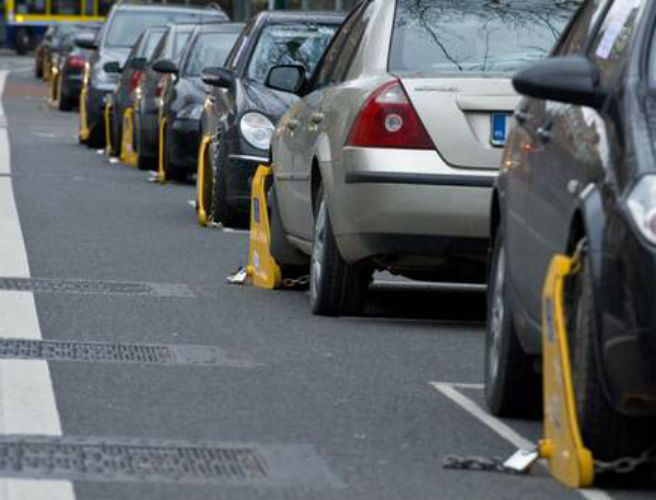
    Dublin City Council (DCC) earned over €2.6 million from clamping release fees during the first nine months of 2018, it has emerged.

    Figures released to thecity.ie show that DCC handed out 33,799 parking fines between January 1st and September 1st, 2018.

    With the standard fine for illegal parking in Dublin City set at €80, the council collected an estimated €2,647,840 but offered refunds or partial refunds on 929 occasions leaving the total sum of fines collected for the period at 2,629,600.

    The southside features more prominently within the top ten clamping hotspots in the capital, with the council keeping a watchful eye on the city’s busiest streets.

    Merrion Square is the city centre location where vehicles are most likely to be clamped, with 1,062 fines issued in this area, totalling to a sum collected of €84,960.

    Fitzwilliam Square proves to be the second most notorious clamping hotspot, with 625 offences committed and €50,000 claimed in fines.

    Mespill Road
    Mespill Road // Google Maps

    Other busy southside spots include Mespil Road (595), South Circular Road (544), Burlington Road (407), Waterloo Road (433) and Hatch Street (376).

    Across the Liffey, Gardiner Street Upper and Lower (426) proved to be the hotbed of northside clamping.

    Ormond Quay (297) and Parnell Square and Street (combined 393) make up the remainder of the top ten.

    Gardiner Street
    Gardiner Street // Google Maps

    Clamping appears to be rare on some of Dublin’s best-known streets, with O’Connell Street (0), Grafton Street (19), Dame Street (12) and Henry Street (5), registering few offences.

    The most common reasons for fines include: no valid paid parking (7,638), pay and display tickets expired by more than ten minutes (6,178), parking in permit-only areas (4,755), loading bay offences (2,440), parking on footpaths (1,874), parking within five metres of a road junction, (1,245), and parking on a double yellow line (1,035).

    Medical emergencies and compassionate cases make up the bulk of successful appeals, many of these in Parnell Square, which is adjacent to the Rotunda Hospital, one of Europe’s busiest maternity hospitals.

    On four occasions, gardaí on duty appealed fines and were successful in three of these appeals. One officer was clamped and fined for not displaying a parking ticket at Seafort Terrace in Sandymount.

    Top ten clamping hotspots in Dublin City – the number of fines

    Merrion Square – 1,062, North (182), South (412), East (86), West (382)

    Fitzwilliam Square – 625, North (317), South (182), East (53), West (73)

    Mespil Road – 595

    South Circular Road – 544

    Waterloo Road – 433

    Gardiner Street Upper (90) and Lower (335) – 426

    Burlington Road – 407

    Parnell Square (288) and Street (105) – 393

    Hatch Street– 376

    Ormond Quay – 297

    Appeals

    Total – 1764                                           Refund (50%) – 456

    Refund (Full) – 473                              Unsuccessful appeals – 835


  • Irish as an official and working language of the EU

    Irish as an official and working language of the EU

    The European Commission and the Department of Culture, Heritage and the Gaeltacht held their third conference on Irish as a full official and working language of the EU this week.

    The aim of the conference was to raise awareness of the many job and travel opportunities within EU Institutions that are available to young graduates. Because it’s an official and working language of the EU, job opportunities are available for Irish translators, interpreters, and proofreaders.

    Katherine Licken, Secretary General of the Department, said it will provide “high-quality employment” and it is “important for the Government that Irish is a full working language in the EU”.


    According to Licken, the aim is to “promote” the Irish language and to provide “a sufficient number of qualified graduates” to work in the EU Institutions.


    Licken acknowledged the amount of interest shown in this topic due to the number of representatives from the EU Institutions present at the conference.

    A high-quality knowledge of Irish is of course required to work at EU level, though, first-class training for those interested is available. Aside from the array of job opportunities, internships available in all EU Institutions were discussed – for these a knowledge of at least two official EU languages is required.

    Earlier this year, a new internship scheme, funded by the Government, was announced for Irish language graduates to work within three EU Institutions – the European Commission, the European Parliament, and the European Council – over a five-month period. The internship provides graduates with valuable training in the field of translation and the opportunity to work in a multilingual, highly professional, and skilled environment.

    The overall theme of the day was working together as a Union to reach Ireland’s aims for the Irish language within the EU. Rytis Martikonis, Directorate-General for Translation in the European Commission said: “We are in this together and it works.” Mr Martikonis acknowledged that it “remains a challenge” to reach these aims, however, current “results are promising” and there has been an increase in Irish speaking staff within the EU Institutions.

    Irish became an official and working language of the EU in 2007, though, the aim is to end the derogation of the language by 2022.

    The conference was conducted in Irish and it was unusual to see Irish interpreted to a room full of EU staff of various languages. The conference illustrated the importance of Irish as our national language and the significance of maintaining and using Irish by future generations.

  • Public Safety on Irish Rail: Part One

    Public Safety on Irish Rail: Part One

    DART and rail users – are you vexed by vandalism? Tired of tissue sellers? Disgusted by disruptive passengers? Or do you think your daily commute or weekend trip into town is among the safest journeys one could hope to take on public transport?

    Using information obtained under the Freedom of Information Act, The City looks at just how safe it is to travel by rail in Ireland – starting with the DART in the first of a two-part series which concludes next week looking at mainline journeys across the country.

    Redacted figures show that since 2015 there have been 514 reported incidents of antisocial behaviour on the DART. 2017 and 2018 have seen huge increases in the number of incidents being reported compared to previous years, with over double the number of incidents compared to 2015 and 2016. This year is set to have the highest number of complaints yet – with 175 incidents reported by the 13th of October compared to 187 in the whole of 2017.

    These rising figures support the recent calls for increased security on Irish public transport, with National Bus and Rail Union General Secretary Dermot O’Leary recently stating that: “It is no exaggeration to say that commuters and staff travelling and working on public transport are doing so in constant fear of either being attacked themselves, or witnessing various forms of anti-social behaviour, up to and including serious assault.”

    The incident of antisocial behaviour which is most commonly reported on the DART is incidents involving disruptive passengers, with 216 reported since 2015, more than a third of the 514 total incidents reported. Once again 2018 is conclusively the worst year on record – reports of 48, 31 and 54 recorded in 2015, 2016 and 2017 respectively are relatively dwarfed in comparison to the 83 incidents involving disruptive passengers reported by early October of this year.


    Vandalism is the next most common incident of antisocial behaviour that gets reported on DART services. There have been 125 reported incidents of vandalism since 2015, with 2017 and 2018 again almost lapping the previous two years in terms of figures. However, the high number of 49 incidents reported so far this year could partially be attributed to an incident at Clongriffin station on May 8th of this year, when around a dozen people in balaclavas boarded a train and caused €4,000 worth of damage in what Irish Rail described as “an unprecedented graffiti attack.”

    Following vandalism closely in reported complaints are incidents of intimidation, with 122 such reports since 2015. Bucking the trend so far, 2018 looks set to improve upon the substantial figure of 58 incidents of intimidation in 2017, with just 26 reported so far this year.

    While these figures are significant and a legitimate cause for concern, it is comforting for commuters to see that more serious incidents of theft and assault remain at a much lower level. A total of 19 assaults and 14 thefts have been reported in the redacted figures released to The City by Irish Rail, although incidents of theft in 2018 look set to surpass the highest figure of five reported in 2015, with an equal number reported as of October.

    The issue of ‘tissue sellers’ has also sprung up on DART services since 2017. This involves a person putting an item such as a packet of tissues or a lighter on train seats, along with a printed note asking for money in return for the items, which the note says will go towards helping a sick family member.  

    From the start of 2017 to October of this year there have been 13 recorded incidents of ‘tissue traders’ on DART services, although regular commuters will attest that figure is most likely higher. The Garda Press Office said that “An Garda Síochána have legislation available to deal with these matters”, referencing the Criminal Justice (Public Order) Act, 2011.  

    The Act states that if a person begs “while in a private place without the consent of the owner or occupier of the private place, he or she requests or solicits money or goods from another person or persons.” The Act also states that “a person who, while begging in any place harasses, intimidates, assaults or threatens any other person or persons is guilty of an offence and is liable, on summary conviction, to a class E fine or imprisonment for a term not exceeding one month or both.”

    Speaking to The City NRBU General Secretary Dermot O’Leary said that he would like to see the implementation of a Garda Public Transport Division, with powers of arrest to act as a deterrent to disruptive passengers. “Antisocial incidents on public transport are rising year on year, and lots of our members aren’t even reporting some incidents because such behaviour has become normalised,” he said, adding that “Irish Rail is one very serious incident away from a situation where trains won’t operate in certain areas at certain times of the day.”

  • Free The Humanitarians

    Free The Humanitarians

    After graduating from Trinity, Seán Binder, travelled to Greece to be a humanitarian worker. He worked as a diver, helping refugees fleeing their country for safety.

    Seán, from Castlegregory in West Kerry, was arrested in August along with three other volunteers. Police in Greece claimed they had partaken in human trafficking, by bringing emigrants to the Greek island of Lesbos.

    Seán is expected to face 18-months in jail in Greece.

    Family and friends of those arrested have organised protests around Europe called Free The Humanitarians.

    TheCity.ie spoke to Maja Binder, Sean’s aunt…

    Watch the video below to hear what she had to say.


  • Visits to Ireland becoming increasingly popular

    Visits to Ireland becoming increasingly popular

    Figures released by the Central Statistics Office (CSO) and sourced by the Dublin Airport Authority (DAA) have shown that Ireland has been getting a steady increase in foreign visitors for the period spanning 2010 to 2017.

    The overall figure has risen from just over 6 million people in 2010 to 9.9 million in 2017, a rise of over 35%. Unsurprisingly, Great Britain sent the most visitors to Ireland over this period with more than 25.5 million people visiting our shores in the eight year period. Conversely, 20 countries from Africa produced only 348,500 people travelling to the country.

    However, it’s when you look at the figures on a year by year basis that you begin to see the trend of the number of visitors rising every year bar a few exceptions. Germany, Spain, The Netherlands, The USA, Canada and Asia (includes 50 countries) all had increases every year without fail.  

    Visits
    Figures show a steady increase of visitors to the country in the last few years // Central Statistics Office

    While some countries and areas had annual decreases here and there, not a single one had lower figures for visitors in 2017 compared to 2010. Again, as you would expect, the majority of visitors were from Europe, but outside of that, the USA dominated with more visitors than Canada, Australia, New Zealand and Other Oceania (31 countries), Africa, Central and South America, Mexico and Asia combined.

    Niall Gibbons, CEO of Tourism Ireland, commented on Ireland’s increased number of visitors for 2018 by saying: “Particularly welcome in today’s figures is the continued strong performance from North America, with an increase of 12.9%. A number of factors are working in our favour, including more airline seats than ever before, from more gateways across the US and Canada.

    Portions

    “We’ve also seen excellent results from Mainland Europe, up 10% on January-September last year, with particularly strong performances from Germany (+20.9%) and Italy (+11.8%). While we welcome the fact that arrivals from Britain are up 1.1%, it is not yet clear if this represents a turnaround in the long-term trend. The impact of Brexit on outbound travel from Britain remains a concern.”

  • Taxi numbers up for the first time in ten years

    Taxi numbers up for the first time in ten years

    The number of valid taxi driver and vehicle licences have been steadily declining in Ireland, but are now starting to increase, according to the latest information from the National Transport Authority (NTA).

    Small Public Service Vehicle (SPSV) licences are up for the first time in ten years and SPSV driver licences are up for the first time since 2010, according to the latest statistics from the NTA.

    Since 2008, SPSV licences have been steadily declining each year, with 27,429 overall SPSV licences a decade ago. This figure had dropped to 20,581 by last year.  According to the statistics published by the NTA in September, the number has risen very slightly to 20,621.

    Since 2010, SPSV driver licences have decreased every year up until this year.  In 2010, there were 42,605 active SPSV driver licences and this number had dropped to 26,012 by last year.  As of September this year, active driver licences have increased to 26,255.

    Dublin Taxi Drivers, a Facebook page for taxi news, lost property and traffic reports, said: “Insurance is too expensive. To make a good wage drivers have to work unsociable hours and the job itself is dangerous.”

    At the start of the year, the NTA launched a campaign to recruit an additional 1,600 taxi drivers. The Authority wish to attract drivers into the industry and provide positive taxi experiences to the travelling public.  

    The NTA CEO Anne Graham said: “There are about 26,000 drivers licenced to drive a Small Public Service Vehicle in Ireland.

    “That might sound like a lot, but they are not all available all of the time, which means there can be shortages at certain periods particularly at peak hours and weekend nights.”

    Mytaxi Ireland now has over 11,000 drivers in its fleet, which is more than every other taxi company in the country combined.  

    Aidan O’Connor from mytaxi Ireland said: “1,744 new drivers have joined the mytaxi taxi fleet so far this year in response to the various incentives and bonuses we have been offering.  We are also offering €1 million in incentives to the first 500 drivers who pass the National Transport Authority’s (NTA) SPSV (small public service vehicle) test using mytaxi’s manual training platform, with 320 already passing in this way.  The platform is a free online learning tool that helps potential drivers pass the NTA’s challenging SPSV entry test and enter the taxi industry.”

    Aidan said that mytaxi has more drivers than ever before and that they are always looking to recruit. While the NTA has found that between 2008 and 2017 the total number of SPSVs, in particular taxis, declined by 24%, mytaxi has been expanding its fleet and trying to incentivise new entrants into the industry. Aidan said: “We are making progress in this respect with the 1,744 new drivers that have joined our fleet so far this year. The NTA has also recognised that the SPSV test was excessively complex and last year reduced the required passing grade from 80% to 75%. This was a welcome change and we’re now starting to see an improvement in the number of drivers entering the industry.”

    Aidan said driver recruitment will remain a top priority for mytaxi going forward as part of the drive to meet surging customer demand.