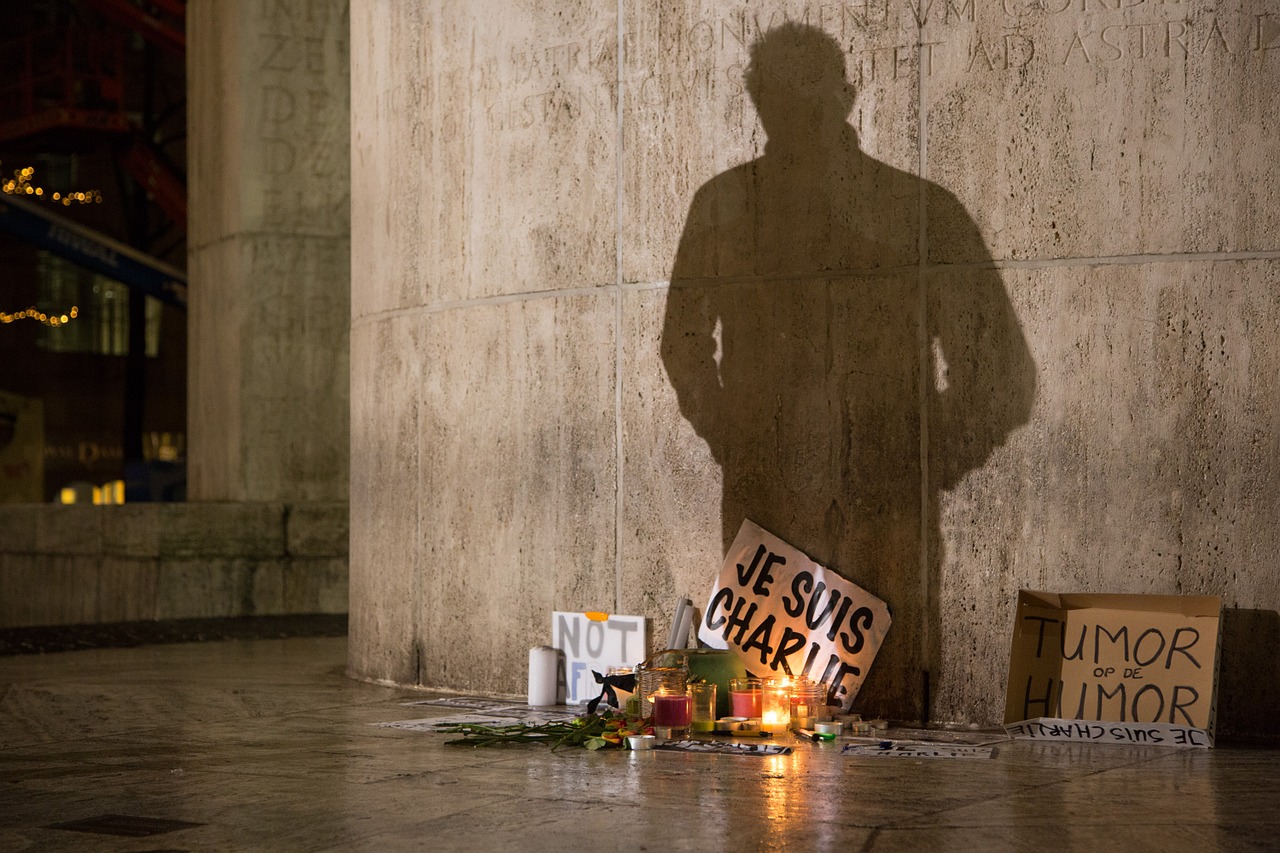
Léa Pelard reports on the French government’s position on the repatriation of French nationals who have travelled to fight with Isis in Syria and Iraq.
Tag: news
-
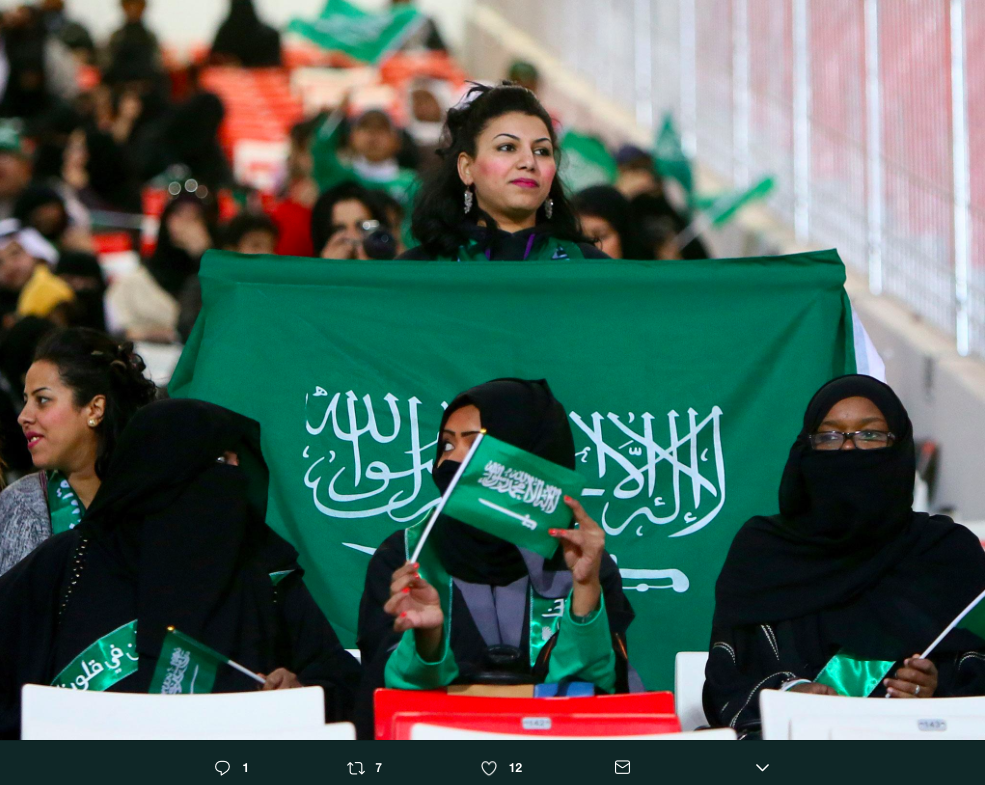
Post-oil economy plan : new rights for Saudi women?
Léa Pelard reports on the situation of women rights in Saudi Arabia, following a number of progressive royal decrees
-

Learner drivers least likely to pass their test in Dublin
Ennis is the driving test centre with the best pass rate in Ireland in 2016 according to a new report published by the Road Safety Authority.
Overall, 73.25 percent of people who took their driving test in Ennis passed.
The Road Safety Authority (RSA) have published a list of the pass rates for all its driving centres in 2016.
The figures account for the fifty driving centres that the RSA operates around Ireland.
Churchtown was the driving centre with the lowest pass rate for drivers at 42.41 percent.
In Dun Laoghaire (45.16%), Tallaght (45.22%), Raheny (46.53%), Finglas (48.05%), Naas (49.16%) Rathgar (47.77%) and Wicklow (48.87%) less than half passed their driving test.

The overall average pass rate for all driving centres was 53.65 percent. According to the RSA, these are some of the most common reasons why people fail driving tests:
- Inadequate observation moving off, at junctions, at roundabouts and when changing lanes.
- Failure to anticipate the actions of other drivers.
- Incorrect road position on the straight, on bends, turning left, turning right, at roundabouts, and when overtaking.
- Inadequate progress at junctions, roundabouts, on the straight, and when overtaking.
- Incorrect or inadequate use of mirrors and signals.
- Non-compliance with traffic controls, e.g. road signs and markings and traffic lights.
- Incorrect, inadequate or inappropriate use of vehicle controls, including gears, clutch, accelerator, steering, handbrake, foot brake, and secondary control.
- Excessive speed for the road or traffic conditions.
- Failure to yield the right of way to others.
- Lack of competence in the reverse and U-turn manoeuvres.
When asked if there was any plans to open more driving centres in 2017 the RSA said they have no plans to open any new centres but will review resources available in existing centres around the country.
“The RSA does not have any plans to open any additional driving test centres in 2018, but continues to review resources and to monitor waiting times closely and is constantly reviewing and adjusting the deployment of driver testers in order to meet demand as much as possible at the centres where the need is greatest,” said a spokesperson for the Road Safety Authority.
The pass/fail statistics for 2017 will not be finalised until early 2018. “We will publish these statistics on our website once they are finalised. It is the case that pass and fail rates are usually quite similar from year to year,” said a spokesperson for the RSA.
By Keeva Tyrrell
-
CSO figures reveal Irish women are better educated than men
Latest census figures reveal that women in Ireland are better educated than men, as 43.2 percent of women aged 15 and over received third-level education in 2016 compared with 40.7 percent of men.
Census figures released last month by the Central Statistics Office (CSO) showed that 42 percent (1,216,945) of the population aged 15 and over had a third level qualification, compared with just 13.6 percent in 1991.
“This report shows a continuing decline in the numbers of early school leavers and increases in the numbers with third level qualifications,” said Deirdre Cullen, senior statistician with the Central Statistics Office.

More women in Ireland hold third level degrees than men. Source Hajar Akl Broken down to age groups, out of those aged between 15 and 39, 56.2 percent of them had a third-level qualification, compared to 18.9 percent of those aged 65 and over.
The counties with the highest rates of completed third-level education were Dún Laoghaire-Rathdown with 61.1 percent, Galway City with 55.2 percent and Dublin City and Fingal, both with 48.7 percent. The counties with the lowest rates were Longford and Wexford, at 32.5 percent.
The figures also show that for people aged twenty, those with parents with higher levels of education were more likely to still be in education. In all, 60.6 percent of all 20-year olds in family units were students in 2016.
And among those whose parents were educated to a maximum of lower secondary level, 44.9 percent were full-time students, increasing to 65.2 percent for those with both parents educated to upper secondary level. For those 20-year olds with both parents having a degree, 87.5 percent were full-time students.
The figures also showed that those with a qualification in Arts had the highest unemployment rate in 2016, at 11.6 percent (down from 17.1 percent in 2011).
Between 2011 and 2016 the unemployment rate fell the most for those with a qualification in Engineering, Manufacturing and Construction, from 15.7 percent to 6 percent. Those with a qualification in Education had the lowest unemployment rate in 2016 at 3.1 percent.
Although more women had third-level education, more men (16,016) had a doctorate (Ph.D.) than women (12,743). The 28,759 people who stated that they had a doctorate level qualification was an increase of 30.9 percent on the 2011 figure, and up 99.5 percent on 2006. There were 23,296 persons at work among this group, while the unemployment rate was 3.4 percent.
By Hajar Akl
-
Fine Gael’s €1.2 million deficit following 2016 election
Fine Gael saw its deficit rise to €1.2 million in 2016, whereas Fianna Fáil was in position to deliver a surplus of €500,000 according to the annual financial accounts released on Thursday.
This drop in finances, according to Fine Gael’s report, has been a result of the ‘disappointing’ election, with the number of members in the Oireachtas falling lower than anticipated, and funding being affected by this.
According to a party spokesman, “Fine Gael also has a strong fundraising function, raising €1.4m gross in 2016.” The party took out a loan of €1.6 million to cover election expenses.
According to the publication of Fine Gael’s 2016 donors and donations, they publicly declared receiving €65,324 as a party, and its TDs declared receiving €23,190.
Interestingly, Fianna Fáil didn’t declare any funding as a party in 2016 (declarations are only mandatory if over €1,500 from the same individual in that year).
Eleven Fianna Fáil TDs, the Ceann Comhairle Seán Ó Fearghail and Senator Lorraine Clifford-Lee, declared that they personally were donated a total of €19,500. This is the only record of donations associated with Fianna Fáil that has been made public from 2016.
With the news emerging that Fianna Fáil are in a better financial position than Fine Gael after the cost of the 2016 election, it’s interesting to note that Fianna Fáil declared that they didn’t receive any substantial donations (over €1,500 by the same person), whereas a small party like the Socialist Party received €39,518 in donations.
Fianna Fáil have stated that 72% of their donations are small figures, but “made by a large number of people”. However, in these records of donations from 2016, there is no indication that more substantial donations (the other 28%) were made at all that year.
By Mary-Kate Findon
-

The Irish Defence Forces deployed 1,300 troops on UN missions this year
On the 17th of November, 230 Irish troops returned home following a six month deployment to South Lebanon. The 110 Infantry Battalion of the United Nations Interim Force in Lebanon (UNIFIL), were greeted at Terminal 1 in Dublin Airport by overjoyed friends and family.
Their tour of duty is in accordance with Ireland’s long-standing participation in overseas missions mandated by the United Nations. Ireland has been a member of the UN since 1955 and next year will mark the sixtieth anniversary of Ireland’s first contribution to a UN Peace Support Operation.
Figures released under the Freedom of Information Act 2014 reveal that between January 2007 and December 2016, approximately 9,812 troops have been deployed to various missions between postings for the UN, EU, Organisation for Security and Co-operation in Europe (OSCE) and the North Atlantic Treaty Organisation’s Partnership for Peace (PfP/NATO). These other organisations appear as the UN is increasingly relying on regional organisations to launch and manage operations on its behalf and under its authority.
Today, the Defence Forces have over 640 personnel serving in eleven countries and one sea under these organisations, while a total of 1,300 troops have been deployed in 2017. The Irish Defence Forces continue to show their dedication to the cause as they have “the longest unbroken record of peacekeeping service in the world [and] we can justifiably claim to be experts in peacekeeping and peace enforcement operations,” according to spokesman Commandant Pat O’Connor.
However, some may wonder what is the importance of these missions to Ireland.
“Overseas service and the associated training is where our personnel gain experience in high pressure operational environments, develop their professional leadership skills as well as the capability needed to protect Ireland against modern threats,” said Cmdt O’Connor.
“The aim of these missions is not to go in guns blazing, it is an extensive effort in the path to peace. Peacekeeping has unique strengths, including legitimacy, burden sharing, and an ability to deploy and sustain troops and police from around the globe, integrating them with civilian peacekeepers to advance multidimensional mandates.
“UN Peacekeepers provide security and the political and peacebuilding support to help countries make the difficult, early transition from conflict to peace.”

Ireland has built up quite a reputation on these missions and in fact many of our troops are depended on to lead missions. “Success is never guaranteed, because UN peacekeeping almost by definition [involves going] … to the most physically and politically difficult environments,” said Commandant O’Connor. “However, we have built up a demonstrable record of success over our sixty years … including winning the Nobel Peace Prize.”
The day to day life and tasks that these troops might face while on these missions may be a mystery to some. Former Sergeant Steven Shields, who was deployed to Lebanon, discussed what takes place when sent out for deployment.
“We monitor in a country, we observe, we report, and we keep a buffer line between two hostile forces,” he said.
“The mission is to provide peace and security within your safety zone. You do this by integrating into the local population, reporting back to higher authority and being able to have patrols and keeping a physical presence throughout the set area.”
He recounted that a normal day would involve humanitarian work, which entails helping with schools, food, water purification, infrastructure, setting up hospitals and providing medical supplies. They would then continue to integrate into the local community and visit politicians. These visits would include offering mediation services between hostile forces.
“Whatever area they are in becomes a secure zone, it means that not only do they provide the humanitarian aspect, they also provide security, so people can see a military presence. How they do that is by patrols and you’re seen. With the UN, the Irish will generally not wear helmets, they’ll wear soft flat berets. Glasses are off to make eye contact to appear friendly, but they’ll still carry weapons.”
These patrols throughout villages are so people can always be aware of a military presence protecting them, but at staggered times 24 hours a day, in order to remain unpredictable.
They also offer mine clearings for villages, secure zones where people can go to be protected and not fired upon. They also offer employment to locals, providing jobs within their camp. They also help provide an economy by buying supplies off the locals to create prosperity.
If anything happened within their camp however, they would have to report back to the UN immediately where it would be brought to a world stage.
“We were the eyes and ears of the world,” said Steven Shields.
By Mary-Kate Findon & Lee Shields
-
Over 22,000 recipients of paternity benefit in 2017
More than 22,000 fathers have taken paternity leave in 2017 so far.
Figures released by the Department of Employment Affairs and Social Protection show that 22,375 fathers have received paternity leave in the first ten months of the year.
The payment for paternity benefit is €235 per week and it allows fathers to take two weeks off work within the first six months of their child’s birth or adoption placement.
New parents (other than the mother of the child) are entitled to paternity leave from employment or self-employment following the birth or adoption of a child.
The scheme entitles a “relevant parent” to paternity leave, which can either include the father of the child, the spouse, civil partner or cohabitant of the mother of the child or the parent of a donor-conceived child.

The above map shows a county by county breakdown of how many fathers received paternity benefit since January 2017.
Dublin, Cork, Galway and Kildare all saw over one thousand people receiving paternity benefit.
The chart below shows how many people in each county received paternity benefit in 2017 so far

Source: Department of Employment Affairs and Social Protection The chart also shows an aggregate figure of how many people received paternity benefit in total in 2016 in each county.
As of 31 October 2017, 27,307 paternity benefit claims have been awarded since the commencement of the scheme on 1 September 2016.
According to a spokesperson for the department, the ‘other’ category represents “anyone claiming paternity benefit who does not have a RoI (Republic of Ireland) address. Mostly resident in NI (Northern Ireland), some UK (United Kingdom) but could include any EU (European Union) and EEA (European Econimic Area) national who are also entitled to paternity benefit – if they satisfy the qualifying conditions – even if not resident here.”
When asked if the Department thought the uptake of paternity benefit had been higher or lower than expected, a spokesperson said: “It was envisaged that the take up for paternity benefit would be lower than that for maternity benefit. This was attributed to a number of factors including parental choice, whether the father or relevant parent has sufficient PRSI contributions and whether or not their employer would top up their wages or, if self-employed, could they afford to take the time away from their business.
“Given the flexibility afforded to fathers and the scheme cycle it will be eighteen months from the commencement of the scheme before the Department will have an accurate figure for the take-up of paternity benefit in a full calendar year.”
Similarly, David Joyce, Equality and International Development Officer for the
Irish Congress of Trade Unions said it is no real surprise that uptake of Paternity Benefit is low.“This is the first time that men in Ireland have been granted any paid leave from work for family responsibilities and it is no surprise that such a major change in culture should take some time to bed in. Up to now, men didn’t have conversations with their bosses about the possibility of taking such leave while watching their female counterparts being disadvantaged by repeated absences from the workplace to look after family responsibilities,” said Mr Joyce.
Mr Joyce also said that the level of pay offered was very low. “Unless it is topped up by employers (highly unlikely unless there is a collective agreement between an employer and a trade union) – [it] is very low and a young family struggling to survive, pay rent/mortgage plus all of the costs associated with a new baby would have to think twice before deciding to take the two weeks,” said Mr.Joyce.
He also said that the introduction of paternity leave is a very welcome step towards changing our family leave system.
“It is important for fathers to develop a strong connection and attachment with their babies and the introduction of paternity leave helps in this regard. [The] reality is that we are moving from a sole breadwinner model to one that recognises the need for parents – not just mothers – to reconcile work and family life and it will take time to get there,” said Mr Joyce.
Paternity Benefit initiative was introduced in September 2016 under the Paternity Leave and Benefit and Act 2016.
By Keeva Tyrrell and Megan Walsh
-
Dublin rally for America’s ‘Dreamers’
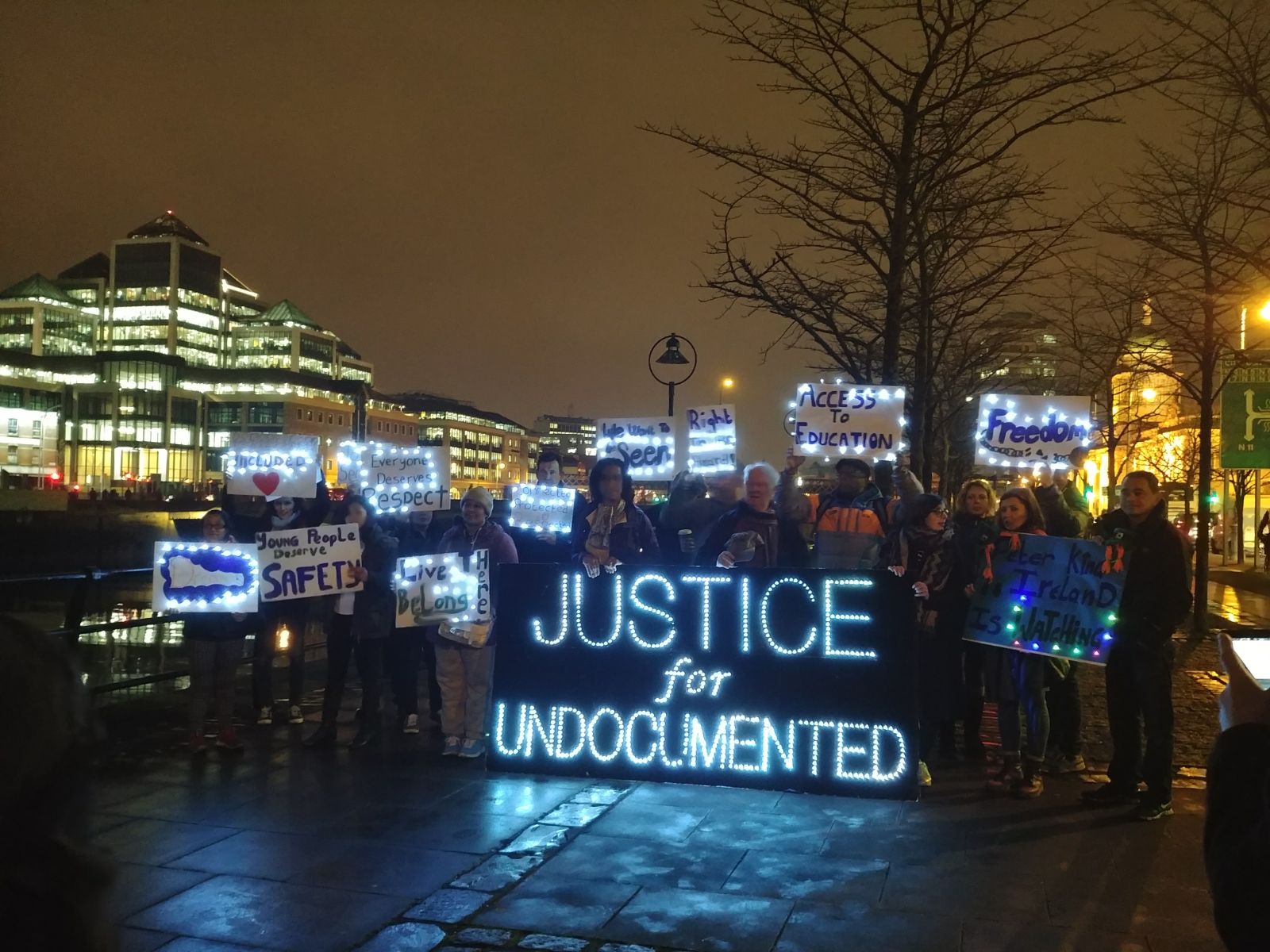
A rally was held in Dublin on Monday evening in support of the Deferred Action for Childhood Arrivals (DACA) programme in the United States.
The DACA programme was established by the Obama administration in 2012 to protect those who entered the US as minors from deportation. Donald Trump made the decision to end the programme in September this year.
Those protected under DACA are called the “Dreamers” and 787,580 were granted approval by the time Donald Trump announced his decision to rescind the programme.
On September 5th, the New York Times reported that US officials said “some of the 800,000 young adults brought into the United States illegally as children, and who qualify for the programme … will become eligible for deportation” as early as March.
The New York Times also reported that Mr. Trump had said in a statement that he was driven by a concern for “the millions of Americans victimised by this unfair system.” Jeff Sessions, US Attorney General, said the program had “denied jobs to hundreds of thousands of Americans by allowing those same illegal aliens to take those jobs.”
The rally in Dublin was organised by the Young, Paperless and Powerful (YPP), a group that focuses on the rights of undocumented youth in Ireland. The twin rally in New York was organised by ‘Make the Road New York’, an immigrant organisation based in the US.
The two organisations are appealing to Irish-American Republican congressman Peter King to “stand for the undocumented in the US” before the 6th of December, which is the deadline Congress was given to find a legislative alternative and to draft a bill that would allow Dreamers to permanently stay in the US.
Speaking to the crowd gathered at the Famine Memorial in Dublin, Sumayyah, a member of YPP said: “We believe that no young people should grow up undocumented in Ireland or anywhere. We’re a group of about 25 people, some of us are undocumented, some of us are not.
“But tonight is not about us. It’s about the undocumented young people in the US who really need our help,” she added.

Rally held in Dublin for undocumented in America. Photo by Hajar Akl “Young people in the United States are in the fight of their lives [to protect DACA],” said Migrant Rights Centre Ireland (MRCI) community worker Kate O’Connell, addressing the crowd.
A letter written by a formerly undocumented student called Shiv was read out to the crowd. He spoke of his depression and fear of being “taken away” from his family during the seven years he was undocumented.
“Every single year since 2007 I would watch a Taoiseach go to the US and seek the legalisation of undocumented Irish and I thought, ‘what a hypocrite’. Ireland has always been a nation of immigrants who left many years ago for a better life.
The Irish diaspora in the UK, the US and the Australia, for example, are a testament of how much immigrants can contribute to a country.”
In the letter, he also said “undocumented people make a huge contribution to Ireland, but so often their potential is wasted. We are young and full of potential, we are products of the Irish education system who cannot go to university.”

People gather by the river Liffey in support of the undocumented in America. Photo by Hajar Akl The MRCI estimates there are up to 26,000 undocumented people in Ireland and that between 3,000 and 5,000 of them are under the age of eighteen.
By Hajar Akl
-
Dublin City Council unable to determine the number of places of worship
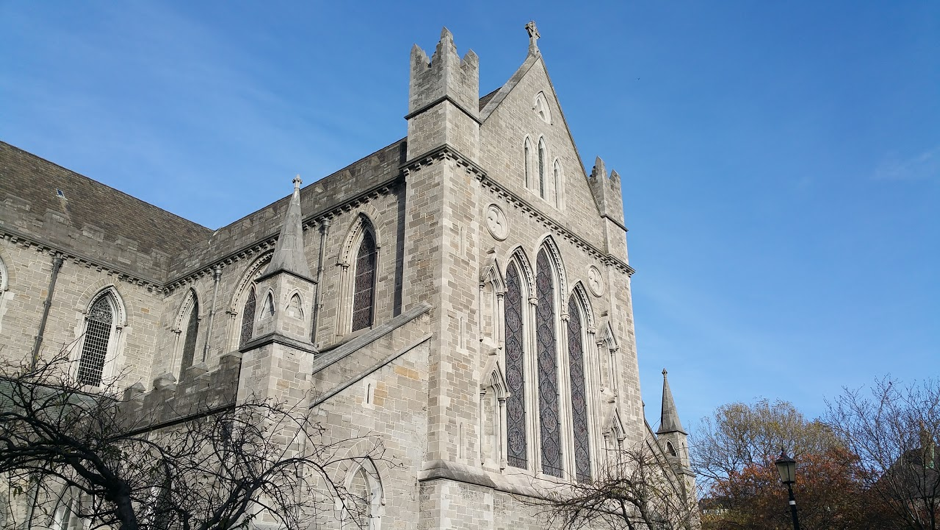
It is impossible to know the exact number of places of religious worship in Dublin, according to Dublin City Council.
The recent announcement about the arrival of the Church of Scientology’s European Headquarters in Firhouse has raised the question of what other religious institutions are operating in the city and, if so, how many there are and where are they.
In order for a building’s usage purpose to change (for example from residential to business or residential to religious), the owner must apply through Dublin City Council for permission.
There have been over fifteen applications, mostly proposed by minority religious groups since 2004 and the majority of these were accepted. There have also been over 35 cases where buildings have been used as unauthorised places of worship, but no record of the type of religion or faith has been kept.
While there is no official register for religious places of worship, it is possible to accurately estimate the number of active places of worship for some of Ireland’s larger religious denominations. Based on the CSO data for religious worship, the biggest religious denominations include Roman Catholicism, Islam, Orthodox, Presbyterian and Hindu.
Over 220 Catholic churches list their services for use online. However, this figure is probably inflated by non-active sites of worship which are still open to the public for tourism and other use. The Catholic Directory, a site which aims to help people find churches which perform mass, lists 60 active churches in the Dublin area (but there are probably more).
There are two Presbyterian churches in Dublin and five Orthodox churches, which include Greek Orthodox and Romanian Orthodox.
There are twelve mosques in Dublin for followers of Islam. According to census information, Islam is the fastest growing non-Catholic religion in Ireland, followed by the Orthodox tradition.
For places of worship for those of the Jewish faith, there are two sites. One is the Progressive Jewish Congregation, the other being the Dublin Hebrew Congregation which cater to their own communities.
There are two centres of Hindu worship as well as six centres for Buddhist worship.
It is not surprising that Catholic places of worship vastly outweigh other religious denominations, but other religions are opening new churches in Dublin, whereas the Catholic church has if anything, been closing them.
Falling numbers of those attending mass as well as dwindling numbers of diocesan priests are forcing the closure of churches around the country. Since 1972, mass attendance has fallen from 91% to 30% in 2016. According to The Irish Catholic, the number of priests fell 16% between 2004 and 2014 while applications to join the priesthood have rarely reached double figures since the year 2000.
As more people enter Ireland from different countries and cultures they will, of course, take their religion and beliefs with them and we can expect to see more churches from non-Catholic denominations in the future.
By Chris Kelly
-
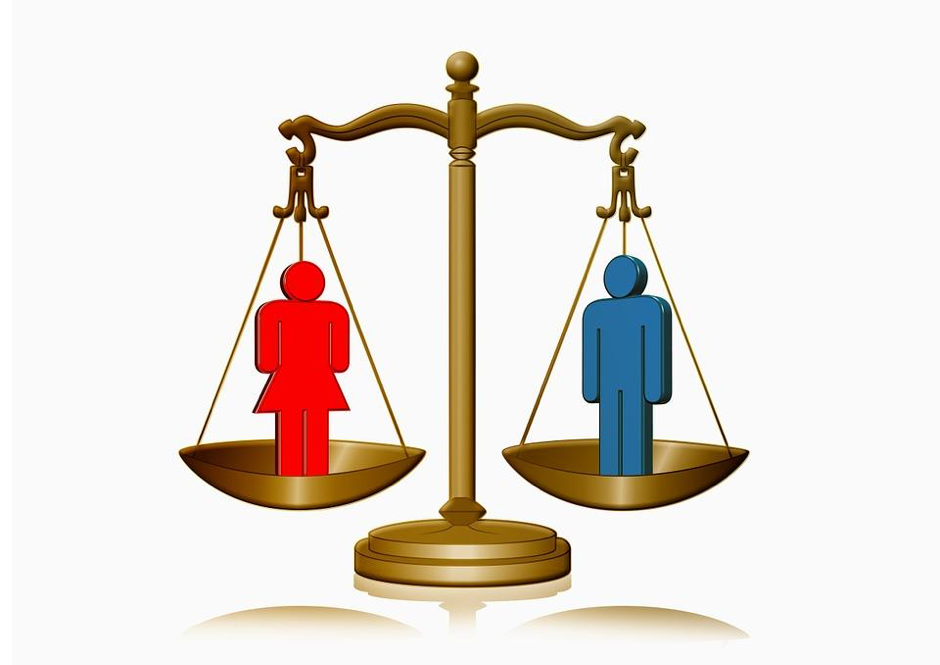
Women more likely than men to experience workplace discrimination
Women and disabled people are twice as likely as men and those without a disability to experience discrimination at work, a new study has revealed.
The study, published by the Irish Human Rights and Equality Commission and the Economic & Social Research Institute (ESRI), revealed almost one in eight people feel they have been discriminated against in the last two years.
This report comes at a time when Minister for Training and Skills John Halligan has come under fire from the media and fellow TDs after asking a female about her marital status and if she had children during a job interview.
The woman has been awarded €7,500 in compensation after the Workplace Relations Committee found that she had been discriminated against.
The data, taken from a survey of 15,000 people nationally, showed Irish travellers are ten times more likely to experience discrimination. This makes members of the travelling community the most discriminated against. Black people are three times more likely to be discriminated against.
Dr Frances McGinnity, Associate Research Professor and co-author of the report, said the different types of discrimination in the workplace include poor working conditions, bullying and harassment and unequal pay and promotion opportunities.
In recruiting, people are being discriminated against because of their race, gender, sexual orientation and disabilities along with the other five recognised grounds of discrimination in Irish law.
Different examples of how people may be mistreated based on a lack of equality include being turned down for a job, not being called for interviews, being denied an apartment or a house as well as being turned away from shops, restaurants and getting poor treatment in banks and other financial institutions.
Speaking on Ivan Yates’ show The Hard Shoulder on Newstalk, Dr McGinnity said: “We feel it’s important because of the consequences it has for that individual, be it their psychological well-being and also financial cost if they don’t get jobs or affordable housing.”
The problem of discrimination doesn’t appear to be improving or getting worse overall, although there have been some improvements in certain sectors.
“Overall, we find relative stability in the number of people reporting discrimination between 2004 and 2014 but we do find within those particular settings some changes. For example, discrimination in recruitment has gone up since there are more people reporting that and there are fewer people reporting discrimination in their access to private services, that’s banks, insurance companies, shops and restaurants.
“Housing is also included in that but the experience of discrimination in housing hasn’t fallen over time. In general, there’s been a fall in private services with the exception of housing.”
Anyone experiencing discrimination can contact their HR Manager, trade union representative or contact the Irish Human Rights and Equality Commission.
The report can be found here: http://www.esri.ie/pubs/BKMNEXT342.pdf
By Shane McGannon
You must be logged in to post a comment.