Tag: news

  • CSO figures reveal increasing Muslim population

    CSO figures reveal increasing Muslim population

    With the CSO revealing that the Muslim population is growing year on year, Hajar Akl looks at how multiple generations of Muslim people are integrating into Irish culture and making Ireland their home.

    The Muslim population is the youngest religious group in Ireland, new Central Statistics Office (CSO) figures have revealed.

    The figures, released by the CSO last week, show that the Muslim population has also increased by 28.9 percent since 2011, bringing the total number of Muslim people in Ireland to 63,443 people.

    Sheikh Yahya Alhussein, Imam of Dublin Mosque on South Circular Road, said the fact that Muslims are the youngest religious group in Ireland is “an indication that Muslims are going to be here for a long time”.

    DSC_0239
    A young Muslim child celebrating Eid. Credit: Hajar Akl

    Sheikh Alhussein has been in Ireland since 1983. He said the presence of Muslims in different workplaces is much more evident today than it was back then.

    “If you go to the city centre, or other places, you’ll find Muslims everywhere,” he said.

    He said the country has changed since he has come here and has become more inclusive by providing a range of services to the “growing community, like halal restaurants and shops and, of course, mosques in different areas of Dublin and around the country.”

    Sheikh Alhussein said there was only one mosque in Dublin until 1996. “There are now over 50 places for prayer around the country today.”

    Mudafar Al Tawash has been the administrator of the Islamic Foundation of Ireland for the last ten years. He has been living in Ireland for the past 40 years and has noticed things change significantly when it comes to the Muslim population.

    He said when they first came to Ireland, they set up the Muslim National School. Students of the school have since graduated and now their children are attending the school.

    “We are starting to see the second generation,” Mr Al Tawash said.

    “We are very pleased to see them because the second generation live as Irish and grew up in the Irish society and will play an important role in society. They will, inshaAllah [God willing], try to get rid of the stigma surrounding Islam,” he said.

    Mr Al Tawash said: “The numbers are great. It’s great to see the young people are in good number because they will play a good role in the Irish society and will serve the country in a proper way.

    “I think the future is very bright for Muslims here in Ireland because we have these younger people.”

    Mr Al Tawash said the increase in the number of Muslims has helped Irish people to know more about Islam than ever before.

    “People are spreading around Dublin and Ireland and are integrated very well and we are very lucky here in Ireland, unlike communities in different parts of Europe,” he said.

    “I see a lot of Muslim women here in law, in the media, medicine, science, engineering and other fields,” he said.

    He said he has high expectation for the new generation of Muslims growing up in Ireland.

    “We are trying to encourage the youth, Islamic societies in colleges, and we’re trying to invest in younger generations,” he said.

    Sheikh Hussein Halawa, Imam of the Islamic Cultural Centre of Ireland, said the Muslim population in Ireland is relatively new.

    Having a younger age group “is good because this means they will be better integrated into Irish society than older generations,” he said.

    “Ireland has a promising future when it comes to multi-faith and cultural tolerance and integration,” he said. “The world is not as isolated as it used to be. It’s not even like a village, it’s even smaller. What happens anywhere reaches the other end of the world. So the presence of different cultures in this country is like gathering the whole world in one place.”

    Sheikh Halawa has been in Ireland for 21 years. Today, he sees a “huge difference” to how things were in the past.

    112
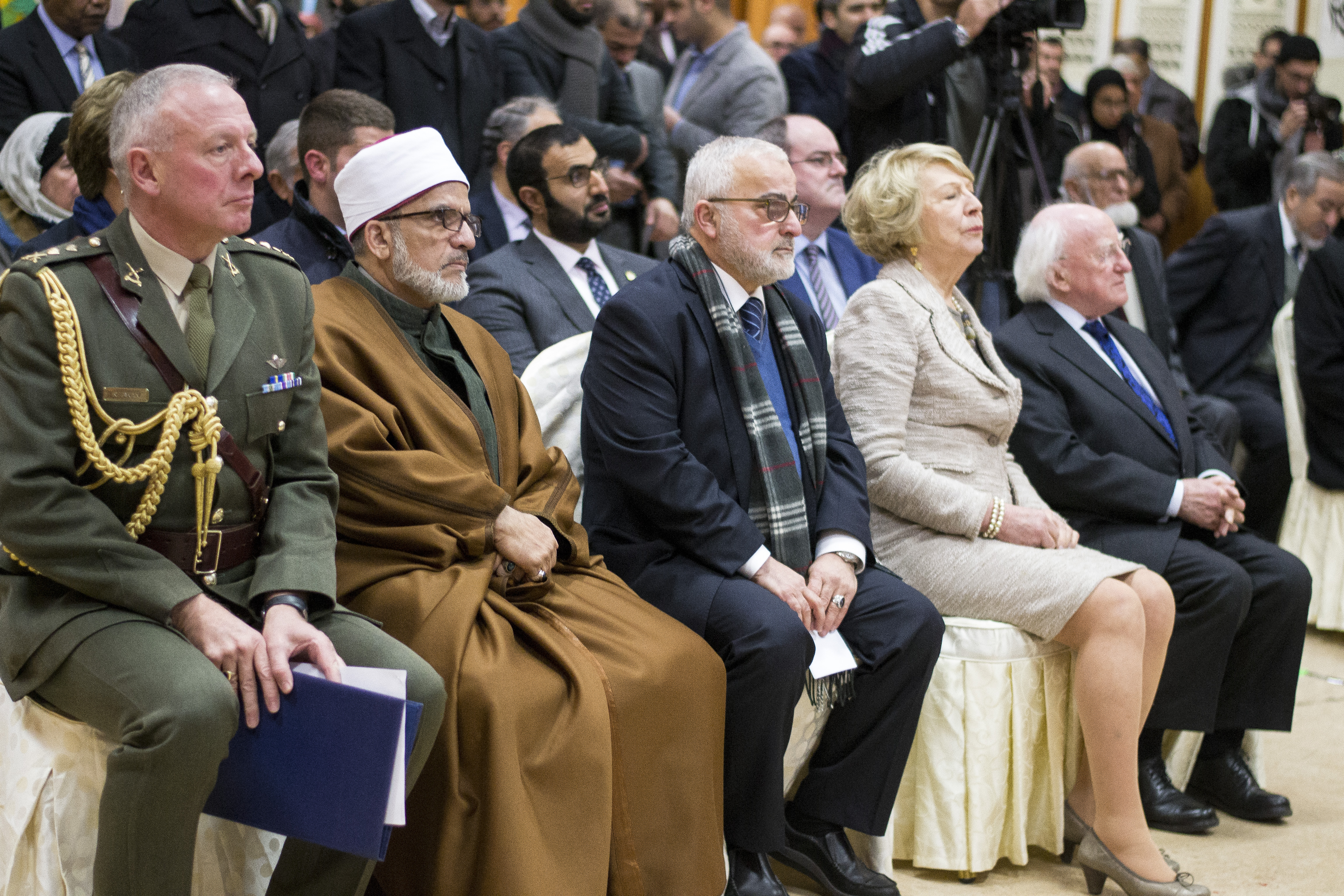
    Sheikh Hussein Halawa, Imam of the Islamic Cultural Centre of Ireland, with Cormac Devlin, former Cathaoirleach of Dun Laoghaire Rathdown County Council, and President Michael D. Higgins. Credit: Hajar Akl

    “Ireland has gotten to know a new culture and religion. When the population was small, there wasn’t that much awareness, but now there is,” he said.

    “A lot of Muslims in Ireland are very educated. This indicates the intellect of this group of people,” he said.

    “My hope is that this open communication between cultures [will] become the norm in the whole world. There are those who scare people of Islam and call for conflict. Those are the enemies of humanity. Islam is a religion of peace. My hope is for the world to understand that,” he said.

    Hiba Aburwein, secretary of the Muslim Association of Ireland also reiterated the thought that Muslims in Ireland are very educated.

    “The [Muslim] generations that are here really encourage their children to better their education. Most, if not all of them, are moderate Muslims who are helping to better the Irish economy and helping in improving the Irish community,” said Ms Aburwein.

    She said it’s “very encouraging” to see the numbers about the young Muslim demographic because “young ages are the ones that build society”.

    On the increasing numbers of Muslims in Ireland, she said: “We shouldn’t ignore that they are a growing community and part of society. If there are any policies that seek to alienate them, it will have a negative reaction. Muslims need to feel part of the Irish society.

    “We should try to push the wheel towards treating Muslims as part of society, not treating them as strangers. All organisations should work towards this,” she said.

    She said a large portion of Irish Muslims were born in Ireland.

    “We hope that Irish people will accept them as Irish citizens because we feel that Ireland is our home. Muslim doesn’t mean immigrant. There are a lot of Irish Muslims and different generations. Society needs to accept that this is our home,” Ms Aburwein concluded.

  • Protesters gather at Scientology headquarters

    Protesters gather at Scientology headquarters

    Protesters gathered outside the Victory Centre in Firhouse, Dublin on Saturday, October 14th, to oppose the Church of Scientology’s grand opening of their new headquarters there.

    It was widely reported that the religious movement had purchased the building earlier this year in order to establish a European base of operations. Controversial leader of the Church of Scientology, David Miscavige, had been flown in from the U.S to cut the ribbon at the opening ceremony.

    The road leading to the newly-refurbished centre was cordoned off for approximately 100 metres, closing off a bus stop along the way. A lollipop man who appeared to be employed by the centre’s new residents, occasionally stopped traffic to allow visitors to cross the street.

    IMG_6444[1]
    Protesters gathered in protest of the new Scientology centre
     A mix of both local and international protesters held signs and formed a picket-line across the main entrance to the building. Signs were emblazoned with witty slogans and graphic images of supposed ex-members.

    Anne-Marie, a resident of the Firhouse area, believes that the group may only view Ireland as a “soft touch” and is being used as a stepping stone in order to gain further entry into Europe.

    Another protester from North Dublin, who wished to remain anonymous, claimed that he lost a number of close friends to Scientology a few years ago.

    “I know a few people who are in the Church, people who were my friends, who were taken by the Church and now they can’t communicate with me anymore. I’ve joined in these protests because I think what they stand for is absolutely unbelievable,” said the young protester.

    Throughout the afternoon, visitors could be seen leaving the centre in small groups. None of these visitors wished to comment.

    IMG_6516[1]
    Visitors leaving the victory centre did not speak to the media
    William Drummond, a man who claimed to be a member of the Church of Scientology for over 50 years, led the protest over the course of the day. Drummond, who claimed that he was indoctrinated into the Church as a child in South Africa, said that he came to Firhouse to deliver a warning to Irish citizens.

    “The end result here is to send a message to the Irish people that this is a dangerous cult. We want to know why these people are allowed to get away with this, to practise here in Ireland,” explained Drummond.

    The opening of the new Scientology centre comes as the latest census revealed that only 87 people identify as Scientologists in Ireland. However, the Victory Centre boasts an impressive total capacity of 1,200.

    This slideshow requires JavaScript.

    The Church of Scientology includes some of the world’s biggest stars in its membership, including Tom Cruise, John Travolta and folk superstar Beck.

    By: Conor Shields

  • The Saudi opposition group born in Dublin

    The Saudi opposition group born in Dublin

    A Saudi human rights group has been launched in Dublin two weeks ago, making it the first Saudi human rights group abroad.

    The launch of the group, Citizens Without Chains (CWC),  took place on Friday the 29th of September at the Wood Quay Venue in Dublin.

    The group’s founder, Abdulaziz Almoayyad, is a businessman who has been living in Ireland for the past three years. He lives in Roscommon with his wife and three year old son.

    Mr Almoayyad said the conditions in Saudi Arabia in the last few years have become “increasingly complicated”, as a wave of arrests took place in the country over the past few months.

    He has a digital marketing company in Saudi Arabia and said he fears the Saudi government could freeze his assets as a result of his activism.

    “I don’t think opposing the Saudi government will be a walk in the park,” he said. “But if a person is aware enough he has a responsibility to do something about it, he has to.”

    Saudi opposition story
    Abdulaziz Almoayyad is the founder of Citizens Without Chains, an opposition group to Saudi Arabia.

    Mr Almoayyad said life in Ireland has inspired him to take on a more active stance in human rights and politics, as he saw “liberalism and equality” in operation.

    His father, who passed away a few years ago, was the General Manager of the Ministry of Finance in Saudi Arabia. He said his wife and family, some of whom hold positions of authority in the Saudi government, are supporters of the government and are not happy with his actions.

    “They don’t like what I’m doing. My mother said ‘why are you doing this Abdulaziz?’ I told her I have to be true to myself,” he said.

    He said his family are aware of the risk he is taking by speaking about his views publicly, but he said: “It’s a responsibility because the nation needs someone to speak out.”

    Mr Almoayyad said he fears that his three year old son would grow up to be “an intellect and free thinker”, something that could risk his freedom in Saudi Arabia, he said.

    He said people have been fearful of being part of groups that criticise Saudi Arabia. As a result, he thought creating “a public opposition group” would lessen people’s suspicions and fears, as everything will be “open and anyone can join”.

    “We found a lot of support from Saudi people and intellectuals abroad,” he said. “At the end of the day, we want to unite people. We don’t speak about ideology. We believe that the Saudi nation deserves freedom of thought and speech. We have different ideologies but are joined by a common interest [in Saudi human rights].”

    The group defines their aims in a statement, which says: “To reform the legislative framework of Saudi Arabia, to allow for the true civic participation and emancipation of all citizens. We aim to establish a system which allows for free and fair elections, and to open the civic space for free speech, and the emancipation of socio-political thought.

    “The movement, with the support and consent of its members, will aim to create a society which is built on the sharing of knowledge, ideas and culture, and which is protected by the rule of law to celebrate the diversity and freedom of these.”

    Andrew O’Brien, Trade Union Coordinator for Labour Youth, was present at the launch of CWC.

    “It’s the case of Citizens Without Chains highlighting the human rights abuses in their home country with a desire of instituting human rights and democratising the country,” he said.

    Mr O’Brien said CWC “highlights humans rights abuses by the Saudi regime” and “challenges the status quo in Saudi Arabia”.

    He said although there was an “exhilaration” recently when the Saudi government allowed women to drive, the human rights situation in the country “reeks of the kind of totalitarianism” imposed by authoritarian states.

    By Hajar Akl

  • Bus Éireann service woes continue

    Bus Éireann service woes continue

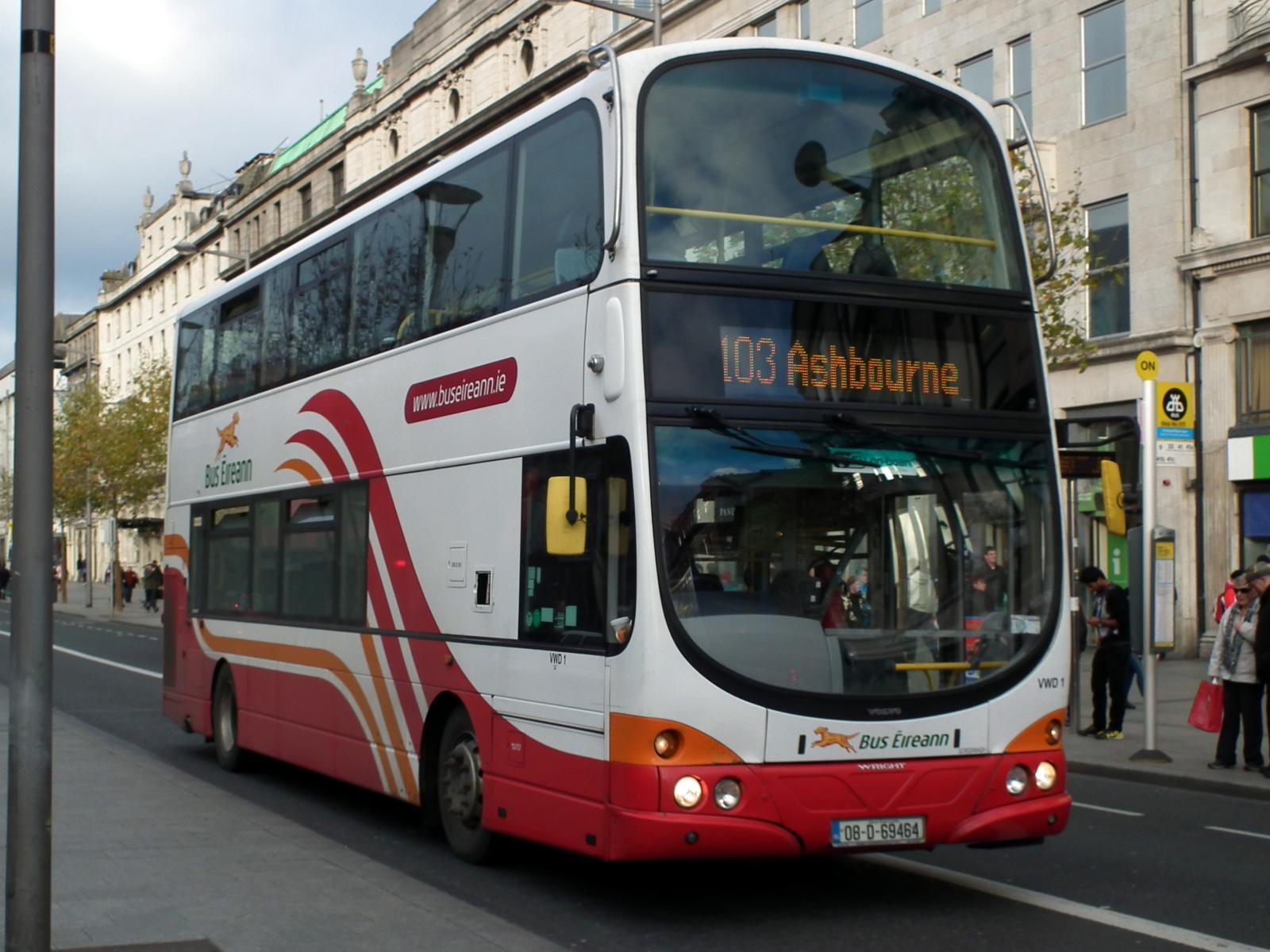
    Bus Éireann services connecting East Meath towns to Dublin are still facing major disruptions causing headaches for commuters in the area.

    Bus routes 103, 111 and 109, which cater to those in Ratoath, Athboy, Dunshaughlin and Navan, are scheduled to run every twenty minutes. However, this hasn’t been the case for almost a month now with Bus Éireann blaming high absenteeism rates among drivers for the problem. Unions representing drivers have said however, that there simply aren’t enough drivers to cover the routes.

    Locals, who use this service to get to work, school and college have been inconvenienced on several occasions due to buses not arriving on time or, in some cases, not arriving at all. Some bus schedules were also cancelled abruptly for an indefinite period of time.

    This issue was raised in the Dáil on the 4th October by Thomas Byrne TD.  Speaking on the issue, Byrne said: “Perhaps we need to ask Dublin Bus to do some of the routes particularly close to Dublin because there are huge difficulties at the moment. People are being left stranded, particularly students who cannot use the private bus services at certain times of the day.”

    Taoiseach Leo Varadkar responded saying “as it is an industrial relations matter, it is a matter between the unions and the company”.

    Fine Gael’s Regina Doherty TD met with CEO of Bus Éireann, Ray Hernan, in late September to also address the matters at hand.

    “We discussed the decline in service that many bus users in Meath have been experiencing. I will be in regular contact with Ray about this,” said Doherty.

    Doherty also posted on her Facebook page asking bus users to report late or no show buses in the comment section, to which she has received an overwhelming response with 200 complaints since the 29th September.

    A community meeting, organised by local Peace Commissioner Andrew Ralph, will take place in Ratoath on 12th October at 8pm, in hopes to gather a detailed record of all passenger problems to present to the National Transport Authority (NTA).

    By Megan Walsh


  • Budget 2018 Roundup

    Budget 2018 Roundup

    The 2018 budget has reduced taxes for earners right across the board as Paschal Donohoe, Minister for Finance, has delivered the first Fine Gael budget under the regime of Leo Varadkar.

    Budget 2018 sees the two Universal Social Charge (USC) rates decrease.  The 2.5% rate of USC will decrease to 2%, with the ceiling for this level raised from €18,772 to €19,372.  The higher 5% rate will decrease to 4.75%.

    The rate at which taxpayers pay the higher rate of income tax of 40% will rise from €33,800 to €34,500.

    Self-employed people will also reap tax benefits as the Earned Income Credit will increase by €200 to €1,150 a year.

    During his campaign to become Taoiseach, Leo Varadkar vowed to transform Fine Gael into a party for “people who get up early in the morning”.  While these changes to tax will favour low income earners and the so-called “squeezed middle”, there are other changes announced in Budget 2018 which will benefit those receiving social welfare.

    All social welfare payments are set to increase €5 a month from the end of March.

    The One Parent Family Payment and Job Seekers Transitional Scheme will both increase by €20 per week.

    People receiving social welfare long term will also receive an 85% Christmas bonus again this year.

    Housing

    In an effort to combat the housing crisis, Minister Paschal Donohoe has allocated €1.83 billion to housing in Budget 2018.  This should, the Minister says, lead to an extra 3,800 social housing units being built by local authorities and approved housing bodies next year.

    The Housing Assistance Payment (HAP) Scheme was increased by €149 million.  It is estimated this will help an additional 17,000 families next year.

    Funding for the homeless services will increase to €166 million, up €18 million from last year.

    Health

    Minister Donohoe is increasing the budget for the Department of Health to €15.3 billion for next year, a change of €685 million.

    Medical card holders over 70 will now pay just €2 for prescriptions, down from €2.50.  The monthly cap on prescriptions will decrease from €25 to €20.   

    There will also be an additional 1,800 staff hired in the health sector.  These roles will be created in services across mental health, disability, primary care, and community care sectors.

    Recruitment

    The Department of Education is set to recruit 1,300 teachers next year.  This will mean there will be 1 teacher per 26 children in every classroom.

    1,000 Special Needs Assistants positions are to be created before September 2018 as €1.7 billion will be invested in Special Needs Education.

    An additional 800 Gardaí will also be recruited.

    Budget 2018 is not, however, all give and no take.

    A new “sugar tax” will be introduced from April 2018.  A tax of 30c will be applied to drinks with eight grams of sugar or more per 100 millilitres.   There are for instance 10.6 grams of sugar per 100 millilitres of Coca-Cola.

    An added tax of 20c will be added to mineral drinks with between five and eight grams of sugar per 100 millilitres.

    Cigarette prices are set to rise by 50c from midnight on Wednesday 11th October, making the main brands like John Player, Marlboro and Silk Cut €12 a packet.

    Smokers on the streets of Bray were not impressed with the hike in prices.

    “I’ve been smoking for thirty odd years now and I remember when you could get 10 [cigarettes] for about €2 or €3,” says Vicky Byrne, 52.

    “I think it’s mental now that you’ll be paying almost €16 for a pack of 28 John Player Blue. It will probably make a lot of people consider those electric cigarettes. I don’t think many people around will last paying those prices.”

    “I think it’s ridiculous at this stage,” vents Shane Petrassi, 42 from Greystones.  “They’ve hiked up the cost of smokes every year for as long as I can remember.”

    Taoiseach Leo Varadkar described the budget as a “good budget” with “no fireworks, no big bonanza”.  It was also announced in Budget 2018 that Varadkar’s “Strategic Communications Unit” will cost €5 million in 2018.  The unit was set up when Varadkar succeeded Enda Kenny as Taoiseach and aims to communicate government messages to the general public.  The unit has been labelled a “spin machine” by many opposition TDs, including the Fianna Fáil spokesperson for housing, Barry Cowen.


    By Louise Burne and Andrew Barnes

  • Does Che Guevara belong on an Irish stamp?

    Does Che Guevara belong on an Irish stamp?

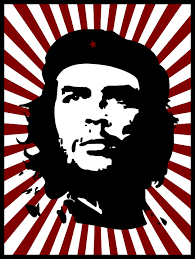
    An Post released a new €1 stamp to commemorate the 50th anniversary of the revolutionary, Ché Guevara’s death.

    The stamp in question depicts the iconic work of Irish artist Jim Fitzpatrick.  The image in question is of course Fitzpatrick’s famous two-tone painting of a photograph of Guevara by Cuban photographer Alberto Korda.

    The image itself sparks controversy where some see it as a symbol of freedom and rebellion, others merely see a reminder of a hate figure and a murderous regime.

    Che Guevara
    Ché Guevara is now on the €1 Irish stamp. Source: Pixabay.com

    The decision however, has come under fire and been met with backlash, particularly from Ninoska Perez Castellón, a Cuban-American radio host who is a prominent member of the Cuban exile community in Miami.  Castellón was a guest on RTÉ’s Morning Ireland and was perplexed as to why Ireland would “celebrate a man who slaughtered so many people”.

    She informed Morning Ireland that she had many Cubans contact her radio show who were distraught at the “offensive” stamp. “It doesn’t matter that it’s an image created by an artist, it’s the image of a murderer.”

    She was clearly outraged by Ireland’s decision and sees no honour in Che Guevara or any of his actions. “To me it’s really shameful that Ireland would put the image of someone who was a foreigner, went to Cuba to kill… was a failure in everything he did. So, I don’t know what’s there to honour about Che Guevara.”

    The radio host went on to discuss how pop culture has made him a symbol that he is not, how it has glossed over the brutal killings and harsh government with commercial t-shirts and other merchandise branded with the image.

    “Every time that I see someone with a t-shirt or that I see a country put his face on a stamp, I think what did he do to deserve this? What have been his achievements?” asked Ms Perez Castellón.

    Jim Fitzpatrick however, seems to have opposing views.  He feels that freedom always comes with a price and that unfortunately liberation and rebellion can often lead to unfortunate deaths.  He draws comparisons to Irish history and in particular Michael Collins.  Speaking to TheJournal.ie, he said: “Incidentally a lot of the criticism [the stamp is] getting is from people like Lucinda Creighton. She was in Fine Gael, started by Michael Collins – who I’m a great admirer of by the way, because he wiped out the Cairo Gang – and that wasn’t done with oranges and potatoes or melons, that was done with bullets.”

    Fitzpatrick has an interesting take and comparison.  Whereas Collins is met in Ireland with celebration and a great sense of national pride, Che Guevara is met by some in his own country and around the world as a controversial figure.  Both are known for revolution, rebellion and guerrilla warfare, yet Collins is a hero, Guevara, a rebel and a murderous villain.

    Fitzpatrick is still very proud of his painting and finds it a great honour that his work is being commemorated on a stamp. “I think any Irish artist who’s put on his own country’s postage stamp, you swell with pride when you see it.”  He has also come to accept the controversy surrounding his iconic image.

    One gripe he does have is with the use of the picture.  Fitzpatrick famously kept the image copyright-free so that it may be used by anybody in times of protest.  However this has led to many companies and fashion trends exploiting the image and putting it on anything from t-shirts to cigarette packets.  He wants to reclaim Ché saying: “I don’t care about people using it on t-shirts or sticking posters up on a wall that they print out themselves. But big business exploiting this image annoys me intensely.”


    So why has the Irish Government and An Post made the decision to honour a man who has been labelled a ‘murderer’ and ‘racist’?  For starters, Ché Guevara has Irish roots and his father even said once of his son: “The first thing to note is that in my son’s veins flowed the blood of the Irish rebels.”  However, only three weeks ago Aer Lingus had to remove advertisements at Miami International airport featuring Ché Guevara among figures of Irish descent.  But, the Department of Communications told RTÉ that the “subject matter for stamp designs are presented to government in advance. This particular subject matter was submitted and approved in December 2015 as per normal procedures.”


    The work is a recognised symbol around the world and was painted very proudly by an Irish native.  Although controversial, the image has come to transcend the man himself and become a symbol of freedom and rebellion.  For a country entrenched in those words, and with an Irish man the artist behind the symbol, is it worth looking past his atrocities to commemorate Guevara and what he stood for?

    By: Lee Shields

  • Iconic coffee kiosk closes after 38 years

    Iconic coffee kiosk closes after 38 years

    Dublin City must sadly bid farewell to one of its local icons – a quaint coffee kiosk in the city centre has been forced to close after 38 years in business.

    The Kiosk, which sits on a traffic island at the Leeson Street and Adelaide Road junction, has had a notice placed on its window informing customers of its closure.

    The note, posted by owner Ned McCarthy, simply reads: “Sadly the kiosk has had to close. I wish to thank everyone for their custom and friendship over the past 38 years. Good luck to you all for the future.”

    Coffee shop closes 2
    The notice left for customers of the iconic coffee kiosk

    McCarthy was forced to close the café, in part as a result of declining business in recent years.

    The quirky little building was originally built in 1929 as a water pressure station and public toilets before being converted into a small café in 1979.

    For 38 years, it served coffee to people rushing to work needing a quick wake-up or those just passing through curious about the little red-brick building.

    However, the Kiosk’s awkward location on a busy junction with no stop-off point meant that it struggled to have a huge impact and visibility as a coffee outlet, only being able to cater for pedestrians.

    Coffee shop closes
    The kiosk located on a traffic island on Dublin’s Leeson Street

    As Starbucks and other large coffee outlets opened in the surrounding area in recent times, the kiosk faced huge competition from multinational organisations.

    This is often the harsh reality that small businesses face against dominant market competitors, wherein their only option is to close shop due to dwindling business.

    However, despite the untimely closure of the Kiosk, the building still remains as a piece of inner-city history for nostalgia lovers and the coffee-loving locals and regulars who won’t forget the Kiosk’s charm anytime soon.

    By: Killian Dowling

  • Repeal the 8th – what do Irish students want?

    Repeal the 8th – what do Irish students want?

    With the long-awaited referendum on the 8th Amendment scheduled for May or June of 2018, Irish third level institutions are now, more than ever, making their stance on the highly contentious issue well known.


    The Union of Students in Ireland (USI) have firmly placed themselves in the pro-choice camp.  On Saturday 30th September, the USI “Students at March for Choice” campaign took to the street of Dublin to take part in the annual pro-choice march, alongside tens of thousands of other supporters looking to repeal the 8th amendment.

    Many third level institutions in Ireland have opted for a pro-choice stance on abortion.

    Maynooth University’s Students Union (MSU) President Leon Diop said that two-thirds of their students voted to be pro-choice in a referendum on the debate.

    “Maynooth Students Union is campaigning to Repeal the 8th Amendment, following on from our mandate given to us by the students we represent,”  Mr Diop says.

    diop
    Maynooth’s Student Union President, Leon Diop. Credit: MSU.


    “There was a referendum on campus to take a stance and the students voted two-thirds majority for MSU to take the stance of pro-choice.”

    The President of Waterford IT’s Students Union (WITSU), Michael Murphy, said that the students of Waterford IT voted to be pro-choice.

    “WITSU is pro-choice because we were mandated by our class reps to be Pro-Choice and to lobby for a Repeal of the 8th Amendment,” says Mr Murphy. 

    “WITSU believes [the] women of Ireland deserve bodily autonomy and [are protesting] that, currently, Irish women do not have that basic human right. We need to stop forcing our women abroad and care for their needs within our state,” Mr Murphy said.

    The President of NUI Galway’s Students Union (NUIGSU), Lorcán Ó Maoileannaigh, says that they’re pro-choice as a result of two referendums.

    “NUI Galway Students Union has adopted a pro-choice position in support of the national campaign for full reproductive rights, which includes a woman’s right to abortion, whether elective or medically necessary,” Ó Maoileannaigh confirms.

    Lorcán Ó Maoileannaigh.
    NUIGSU President, Lorcán Ó Maoileannaigh. Credit: Facebook

    “This was reaffirmed in 2014 after another referendum was held on whether to remain neutral on the issue or keep the pro-choice mandate and the pro-choice mandate was kept.

    “This means that we campaign for a full repeal of the 8th Amendment, which encompasses not just access to abortion, but a pregnant person’s right to give medical consent throughout pregnancy,” says Mr  Ó Maoileannaigh.

    Niall Behan, president of DCU’s Student’s Union, said that 84% of DCU’s students voted in a referendum in 2016 in favour of repealing the 8th Amendment.

    “We have had two referendums on the topic, we are pro-choice. The last one we had was in 2016 and there was 84% of students for pro-choice and, because of that, we are mandated to be pro-choice,” says Mr Behan.

    behan
    Niall Behan, President of DCUSU. Credit: DCUSU

    A document given by the USI to the Citizens Assembly on 5th of March 2017 shows that several other colleges in Dublin are pro-choice also.

    These include Trinity College Dublin with a 73% vote to Repeal the 8th Amendment and the Institute of Art and Design Dun Laoghaire (IADT) who have both opted for a pro-choice stance.

    DIT or IT Tallaght have yet to hold a referendum on the topic.  Representatives for DIT Student’s Union did not respond to requests for comments on the issue prior to publication.

    The Irish Times reports also that UCD’s Students Union have a mandate to hold a pro-choice position on the topic of abortion.  UCD SU president, Katie Anscough, could not be reached for comment.


    Timeline of Irish abortion referendum

    Taoiseach Leo Varadkar has given a proposed timeline of May or June 2018 to hold a nationwide referendum on the 8th Amendment.

    Commenting on this, MSU’s President Leon Diop says that he does not see the timeline as affecting the students as he said that when the marriage referendum was called in May 2015, students still made the effort to vote.

    “I think no matter when the Taoiseach calls the referendum, that students will still make their voices heard,” Mr Diop said.

    “I remember during the marriage referendum, which was called in the middle of our exams, Maynooth students still carpooled, travelled home or used postal voting to make sure the student voice was heard loud and clear.

    “I have no doubt that the students of Maynooth will go out again and ensure that they have their say.”

    WITSU’s President Michael Murphy says that although the timeline is not ‘ideal’ for students, he still believes that students will get out and vote.

    “The date chosen by the Taoiseach, while it’s not ideal for students, I still feel it will not be a big enough hindrance for it to affect student turn out because of the enormity of the topic,” says Mr Murphy. 

    NUI Galway’s Students Union President, Lorcán Ó Maoileannaigh, says that May or June is not ideal due to students not being in college or travelling on Summer J1s.

    “June is quite clearly a problematic time for students, as not only will they not be in college, but many will be travelling or on J1s. May is also not ideal but not the worst.”

    However, echoing MSU’s President Leon Diop, Mr Ó Maoileannaigh raises the point that for the marriage equality referendum students still turned out to vote.

    “Students mobilised like never before during the Marriage Equality Referendum and that was a May date.

    “This is obviously an issue many students are passionate about, so now it’s all about education and getting people out there to vote,” says Mr Ó Maoileannaigh.

    President of DCU’s Students Union, Niall Behan, also expressed concern about the proposed timeline of the referendum.

    “I think June definitely would be problematic because a lot of students go on J1s so we definitely aim towards May but we would have to make sure that it doesn’t interfere with the exam timetable,” says Mr Behan.

    By: Leanne Salmon


  • Cloud of smoke: Divisive cannabis bill set to die?

    Cloud of smoke: Divisive cannabis bill set to die?

    By Andrew Barnes

    As the Cannabis for Medicinal Use Regulation bill was passed on the first day of December last year, news outlets and social media were jam-packed with comment and controversy. What does this bill mean? Who will benefit from it? When will it come into effect? The internet was ablaze with speculation as to what exactly surrounded the proposed legislation. A quick glance back at newspapers and news feeds from around that time and the months that followed and some things are obvious. People were excited as they thought ‘weed’ would be legalised. The Irish Times speculated that the “poorly constructed” bill would make cannabis legal for recreational use for all those over 16. There was a whole lot of disinformation around what the bill really meant.

    All those who thought that they would be getting a slice of Amsterdam were wrong. The Irish Times was not quite on the button. It seemed obvious that these ‘reports’ were simply that, from just reading the bill; a bill that suggested the “regulation, labelling and production of cannabis products for medicinal use.” Almost a year later, confusion still surrounds the bill. A report carried out by the Health Products Regulatory Authority (HPRA) last January and published by Minister for Health Simon Harris on February 10th added some clarity about what may be included in the legislation, but still people felt irked.

    “From talking to people, the whole thing just seems kind of muddled” mused Keith Coughlan, who runs one of the country’s most informative websites on medicinal cannabis: cannabisireland.com. “Social Media is good for getting the point across, with Vera Twomey for example getting her message across, but there’s also a lot ignorance on it too. There needs to be more information about it. It seems the confusion is being caused by what people want [the bill] to be and what it actually is. I think [the Government] are taking baby steps around it at the moment because they don’t want any loopholes in the bill like what happened with the head shops selling those synthetic drugs a few years ago.”

    The “baby-steps” Keith speaks of are the HPRA’s recommendations, made last January and approved by Harris, of a “compassionate access scheme for cannabis-based treatment to be established”. The HPRA advised that cannabis should only be available for the treatment of patients with specified medical conditions, for those who have not responded to other treatments and where there is some evidence that cannabis may be effective. This would only allow those suffering from spasticity associated with multiple sclerosis, those suffering from nausea and vomiting associated with chemotherapy, and people with treatment-resistant epilepsy to have access to medicinal cannabis.

    “It doesn’t go far enough. Even if you look at Vera Twomey’s daughter, after all she’s been through she still needs another consultant to sign off on a medicine her child really needs,” explained Keith. “I think the stigma surrounding cannabis in the media and the disaster of the head shops a few years ago is making it much more difficult for the government to come in and actually implement a proper bill that will help a wide range of people suffering from illness. But this isn’t smoking weed we’re talking about, it’s CBD oil. It has no THC (the drug that induces the ‘high’ in cannabis), we’re not talking about five year olds smoking joints, we’re talking about controlled cannabinoid [the element in the cannabis that researchers have found beneficial] use. There shouldn’t be a problem.”

    Medicinal Cannabis image
    Confusion remains around the legalization of medicinal cannabis

    Keith set up the website in 2015 to inform and allow a discussion to take place about the use of medicinal cannabis products, a discussion that has become more progressive in recent years. “It was really set up to allow people to discuss what was working for them and what wasn’t. Where to get the CBD Oil and what was the best one to use for different conditions. Now there’s a lot more talk about it and it seems the more talk the more confusion surrounding it. We try to use the website to give clear and accurate information.”

    January’s 83 page report published by the HPRA only exemplified the gap between public and media perception and the truth of the matter. This time in scientific terms. The ‘findings’ section said: There​ appears to be a significant gap between the public perception of effectiveness and safety and the regulatory requirement for scientific data which is mandatory to determine the role of cannabis as a medicine … the best outcome for patients is the development of authorised cannabis based medicines where the safety, efficacy and quality can be assured.”

    This is something that has been suggested by Dr Michael Harty, Chairman of the Oireachtas Committee on Health. Dr Harty has opposed the bill – which passed without amendment, since its first utterance in the Dáil. His interpretation of the bill was in line with the viewpoint of the Irish Times and much of the public on the matter.  He made the argument to his colleagues that “it is designed to legalise recreational drug use in the guise of legalising it for medicinal use… [it] is so flawed that it does not deserve a second reading”.

    Dr Harty, an independent TD representing County Clare believes in cannabis for medicinal use but warns that there are dangers surrounding the substance too. “There are huge problems around smoking cannabis. As the HPRA report has shown there is not a whole lot of concrete evidence surrounding cannabis consumption. Studies so far have not been conclusive on the effects of the drug, particularly [the] use of THC and its side-effects. There have been a number of links found between cannabis use, particularly in younger people, and schizophrenia and other mental health problems.  Medicinal products, medical extracts from cannabis, that is a different issue. I have a particular interest in making medicinal cannabis products available for patients. That should be pursued.”

    This was another issue that the Joint Health Committee found in their final report in July, which has indefinitely shelved the bill. The report is strongly critical of the bill on multiple grounds. The report criticises the provision around removing cannabis from the Misuse of Drugs Act, saying that this could have “unintended policy consequences” like decriminalising cannabis in non-medicinal circumstances. It also says access to cannabis would be too loose under the bill, meaning that it could be potentially harmful for patients and would take steps towards decriminalising marijuana for recreational use.

    This is something that Keith echoes too. “While the recommendations aren’t conclusive enough for my liking I do agree with some of the ways that the [HPRA and Joint Healthcare Committees] are approaching the matter. People seem to think that there is no consequence to taking cannabis. It is a drug at the end of the day and there is probably too much positive media coverage. It does have harmful effects and people, particularly young people who are seeing all of the talk of weed being a medicine, need to know about the dangers that come with it. Saying that, who are they to judge if it benefits someone with a particular illness or not? If someone is taking CBD oil for a particular illness and finds that it is helping them recover, who are we to tell them it’s not?”

    And so it seems that the confusion surrounding the matter lies within the bill itself, while the anger, by those like Vera Twomey and Keith, has been caused by the restrictive HPRA recommendations and the findings of the Joint Health Committee.

    The man at the centre of all of this is TD Gino Kenny, who understands the confusion and anger, but said: “Overall that the bill was extremely positive, we weren’t going out trying to legalise cannabis for over 16s, that clearly wasn’t the intention … the intention of the bill was to make cannabis available for medicinal purposes for all those who need it.”

    Mr Kenny said that the spin on the bill by some, that the bill was a ‘trojan horse’ to make ways for recreational cannabis use, was down to “hidden agendas”. He said: “I think certain people have very biased opinions on medicinal cannabis. They think that the introduction of medicinal cannabis was only a Trojan horse to get recreational cannabis through the back door, but that’s completely false…. if [I] wanted to put a bill forth for recreational use I’d put a bill forward for recreational use, I wouldn’t hide it … that kind of writing was misleading. [Michael Harty] shouldn’t be giving his own personal views on the subject, especially as chairman of the Health Committee, I think he’s biased towards a bill that has gotten cross party support.”

    Mr Kenny also explained how he wasn’t pleased with the HPRA’s recommendations that medicinal cannabis would be available for use for what he believes is such a small minority of sufferers, nor did he agree with the Joint Healthcare Committee’s reports. “They are flawed, I’ve read them and it’s easy to see that it’s fundamentally flawed. The HRPA’s is quite a sizeable report, and if you read it, it’s quite prejudiced against medicinal cannabis, and it goes on to say that the only medicine that they would recommend is pharmaceutical grade cannabis, and if that’s what the end-game is for the cannabis access programme – where it only suits pharmaceutical grades, well that’s not going far enough, that’s not progress. I’m being objective when I say that, I’m taking my political hat off; that’s not progress. That’s going backwards. It’s nothing new than what we have already, they’re just fast-tracking certain pharmaceutical branded medicines to treat certain illnesses.”

    The next stage for the bill is for it to be passed to the Business Committee of the Dáil. The HRPA report and the Joint Health Committee’s report will be considered now by the members of the Business Committee (which decides matters relating to business and the agenda within the Dáil). Committee members will then decide either to accept the report or reject the findings. Kenny, along with fellow TD and advocate for the bill Richard Boyd Barrett, have promised to argue their case to the Business Committee and condemn the Joint Health Care Committee Report.

    This is unprecedented territory for a bill proposal and will lead to two possible outcomes. The Business Committee will let the bill go forward or it will accept the Joint Healthcare Committee’s report and a motion will come back to the Dáil in which they can effectively vote to squash the bill.

    No time frame has yet been given and the bill that began with confusion and hysteria looks fit to go on in the same vein.

  • Tensions running high in the campaign for medical cannabis

    Tensions running high in the campaign for medical cannabis

    As Vera Twomey’s highly publicised fight for medical cannabis continues, Hannah Lemass explains the differences between cannabis medications

    (more…)