As the Citizen’s Assembly comes to a close, Zuzia Whelan considers the results and the response from government.
Tag: news
-
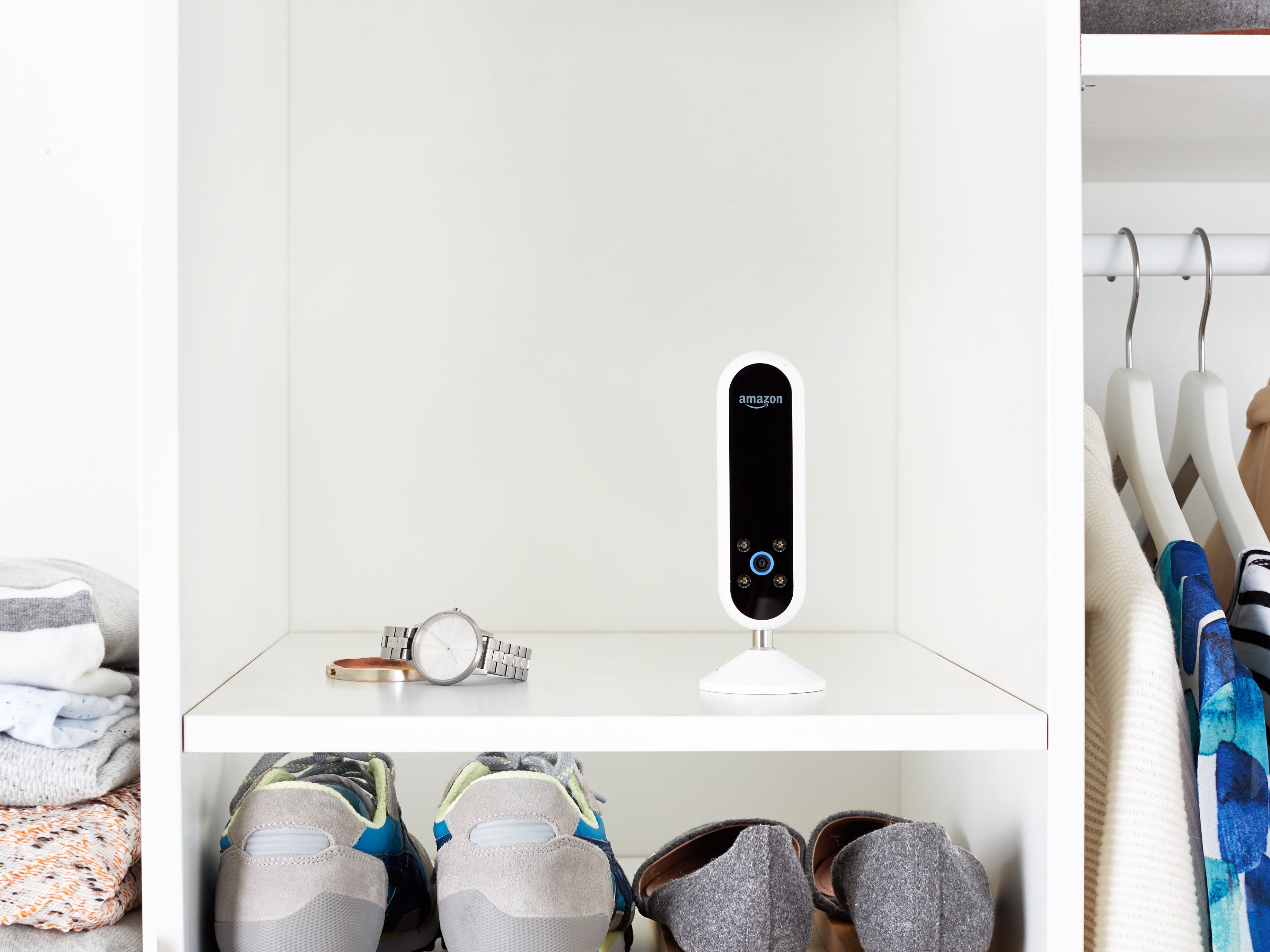
Amazon’s electronic fashion police: the Echo Look
The future of fashion is well and truly here — or is it? A gadget that rates the outfits you choose has raised the hackles of some trend-setters. Aoife Loughnane checks out the new look.
Amazon has announced its latest venture, known as the Echo Look style assistant.
The Echo Look is the newest member of the Echo device family, which includes the Echo Dot and the original Echo or ‘Alexa’.
It is what Amazon is calling its hands-free style assistant: it is voice activated and will take full length photos and videos of you in your various outfits and give you an opinion on how you look.
As if we need a robot telling us our favourite jeans look awful on us.
The device comes with a built-in depth-sensing camera and flash that allows full-length images and videos to be taken of yourself via voice command.
Images can then be added to a daily lookbook to keep track of outfits and compare them with each other.
In addition, its style check feature “combines machine learning algorithms with advice from fashion specialists” to help in choosing your outfit, according to Amazon.
This video shows exactly how the Echo Look looks and operates.
Dividing opinion
This new device is dividing opinions on social media, with many people arguing that it takes the individuality away from fashion.
Goss.ie entertainment reporter Aine O’Donnell says that she is not inspired by Echo Look and finds it offensive.
“Fashion is a creative outlet, and no one wants to be told what not to wear – especially by a machine,” she tells The City. “If I want to wear clashing colours because I feel like it, I will. I’m pretty sure the world would respect me more for that, than if I was to become a fashion clone.”
O’Donnell touches on the problem with the core element of fashion – individuality. If a robot is telling us what looks good, doesn’t that go against the whole principle of one’s own personal style?

The Echo Look rates users outfits. Image by Amazon.com Irish fashion designer Maria Lola Roche is also concerned about the issue of individuality. “’Robots need to be programmed by an individual, and it would be naïve to think that their software isn’t going to be someway affected by advertising industry. You will never know using a robot. Using a trusted stylist you will always know.”
O’Donnell agrees. “Although it can recognise trends and such, it completely misses the point. Fashion is a way of expressing yourself because you wear something you chose specifically for yourself. Fashion is individual, unique, and expressive – no bot is going to take away my personal style,” she says.
Amazon Growth
The expansion of the Echo family is not doing much to damage Amazon’s figures. Founder Jeff Bezos’ personal wealth rose last week by $1.5 billion (€1.39 billion) as the share price of Amazon.com rose by $18.32.
With the addition of a camera to the Echo, Bezos has tapped into a massive market – fashion.
Bezos made his ambitions clear when he said in an interview almost a decade ago: “In order to be a $200 billion company we’ve got to learn how to sell clothes and food.” In regards to food, Amazon have a grocery delivery service subsidiary called AmazonFresh.

The Echo Look has caused concerns over privacy. Image by Amazon.com Techcrunch has commented the future of Amazon if it cracks the fashion market, saying that, “It’s not hyperbole to say many fashion brands and retailers are facing a doomsday scenario if Bezos is able to realize the scale of his sartorial ambitions.”
There have been privacy concerns voiced by experts over issues surrounding the fact that the Echo Look camera regularly takes and stores pictures of both users and their homes.
“A lot of consumers see the convenience and don’t think about the long-term records that are being kept,” Peter Swire, an expert in privacy law at the Georgia Tech Scheller College of Business told Wired.
However, users can delete their photos that the Look takes of them at any time. Wired also said that Amazon confirmed that Echo Look will only use its machine learning smarts to identify outfits, and not anything else that it is captured in the photos.
As Amazon’s policy on how it might prevent invasive data collection is unclear and lacking, the future of privacy remains to be seen.
The Echo Look is priced at $199 and currently available only by invitation to purchase on Amazon.com.

Featured image via Amazon.com
-
National Maternity Hospital saga continues
With the plans for the new National Maternity Hospital swaddled in controversy, Hannah Lemass examines the reasons behind the row
Plans for the new National Maternity Hospital (NMH) may be in jeopardy as the board of St Vincent’s Hospital will review the project amid ongoing criticism.
The plans have faced controversy since it was announced that the St. Vincent’s Hospital Group (SVHG) would have ownership of the new NMH.
The Sisters of Charity are the largest shareholder in the SVHG and will, therefore, be the owners of the new €300 million building.
 Planning permission posted at St. Vincent’s University Campus, image Hannah Lemass
 St. Vincent’s University Campus, image Hannah Lemass
 St. Vincent’s University Campus, image Hannah Lemass
 St. Vincent’s University Campus, image Hannah Lemass
The planned site for the new National Maternity Hospital, St. Vincent’s University Campus, image Hannah Lemass
Protest
Demonstrations took place outside of maternity hospitals nationwide last weekend.
The first protest occurred on Thursday 20 April.
The crowd which included representatives from Parents for Choice and Midwives for Choice gathered outside the Department of Health headquarters on Poolbeg street in Dublin’s city centre.
The lunchtime demonstration was organised by Workers’ Party Councillor Éilis Ryan.
She criticised Minister for Health Simon Harris for tweeting on the issue of the new NMH rather than actively engaging in negotiations.
“We would prefer if you actually got involved in the negotiations and didn’t leave it up to the doctors to have to come out and make public statements about what kind of healthcare we should be having in this country.
It’s a minister’s responsibility to take back control of healthcare from the church, put it into medical hands and make sure they are the ones making the decisions”.

“It’s a slap in the face to the women of Ireland” -Robyn, a protester at the Department of Health, image by Hannah Lemass Religious institution or independent hospital
“As technology allows us to provide better and better medical care we’re going to have more and more procedures and treatments that the church rejects… the delay that I don’t want is when some form of new stem cell treatment is introduced, the board of the new NMH will have to have months-long negotiations about whether or not they approve it,” Councillor Ryan said.
Critics are fearful that having a religious order as owners will impede patient access to medical procedures that the church does not approve of, such as abortion and fertility treatments.
Former master of the NMH Dr Peter Boylan has been very vocal in his criticism of the plan for the new hospital’s ownership
“Hospitals on land owned by the Catholic Church are obliged to follow Catholic teaching and Canon Law on medical practices and procedures,” he said on Newstalk’s Pat Kenny Show.
“To believe the new National Maternity Hospital will be the only hospital in the world owned by a Catholic congregation to permit serialisation, IVF, abortion, gender reassignment surgery and any other procedures prohibited by the Church is naive and delusional,” he added.
He was concerned when Sister Agnes Reynolds of the Sisters of Charity – and sitting member of the SVHG board – did not directly comment on the influence the congregation will have at the new NMH.
When asked by The Irish Times what influence the Sisters of Charity would have she said that she “can’t make a judgment on that.”
“What she probably means is that we can’t make a judgment on that now, but wait until the hospital is built and then we will make a judgement call,” Dr Boylan said on Morning Ireland.
Acting Deputy Chairman Nicholas Kearns requested that Dr Boylan resign due to his “public intervention to criticise and oppose the overwhelming majority decision of the Board.”
Initially, Dr Boylan said he would not resign. However, on Newstalk’s Pat Kenny Show, he revealed that he had in fact submitted a letter of resignation.
“I can no longer remain the member of a board which is so blind to the consequences of its decision to transfer sole ownership of the hospital to the religious Sisters of Charity and so deaf to the disquiet of the public which it serves,” he wrote in his letter of resignation.
Minister Harris’s tweeted that the state will hold a golden share in the ownership of the hospital that will prevent the church from having any power to deny treatment.

Former Magdalene Laundry run by the Sisters of Charity in Donnybrook Dublin, image by Hannah Lemass On RTÉ’s Today With Sean O’Rourke, current Master of Holles Street Hospital Dr Rhona Mahony said that any suggestion the new hospital will be run by nuns or under a Catholic ethos is not true.
She said that when the NMH moves, it will be an independent hospital with its own independent board “dedicated solely to the provision of gynaecological, maternity and neonatal service.”
The agreement between SVHG and the NMH over the operation of the New Maternity Hospital, as mediated by Kieran Mulvey, was made public on 25 April.
The 25-page document submitted to Simon Harris outlined that the hospital will be operated as a new company officially named The National Maternity Hospital at Elm Park DAC and the SVHG will be the sole owner.
 Demonstrators at the Department of Health, image by Hannah Lemass
 Demonstrators gather at the Department of Health, image by Hannah Lemass
 Demonstrators outside of the Department of Health on April 20, image by Hannah Lemass
 The Department of Health on Hawkins Street, Dublin, image by Hannah Lemass
 Demonstrators protest at the Department of Health, image by Hannah Lemass
The first of several nationwide demonstrations was held on 20 April outside the Department of Health, image by Hannah Lemass
The report also states that “the parties [the SVHG and the NMH] are agreed that the creation of a special golden share in the DAC is the best mechanism to provide legal protection to the inviolability of the “Reserved Powers” arrangement.”
These “Reserved Powers” include:
“a) Clinical and operational independence in the provision of maternity, gynaecology, obstetrics and neonatal services (without religious, ethnic or other distinction) in the hospital at Elm Park, Dublin…
b)Control, utilise and protect all financial and budgetary matters as they relate to The National Maternity Hospital at Elm Park DAC (limited by shares)”.
The Board
The board of directors at the new NMH will be made up four directors nominated by the SVHG, four nominated by the current NMH, and one independent international expert in Obstetrics and Gynaecology.
Deputy Chairman of Holles Street Nicholas Kearns wrote in The Irish Times on 26 April that the new hospital “will operate in accordance with the law of the land, not canon law – just as it does now. It will have no religious ethos”.
He also explained that the hospital, which will take about five years to build, will have a ministerial lien which will prevent the Sisters of Charity from being able to borrow against or sell the property.
The City report on the National Maternity Hospital, video by Hannah Lemass
He also said that here is no alternative for the new NMH and that “women will benefit greatly from closer proximity to an acute adult site.”
They have been looking for a new NMH since 1998. He described the current Holles Street location as “dilapidated, antiquated building that is not fit for purpose”
Petition
An online petition started by UCD postgraduate student Denise Kiernan has over 100,000 signatures.
The petition calls for the prevention of the Sisters of Charity from becoming ‘sole owners’ of the hospital, for a formal apology from Sisters of Charity and that they pay their share of the redress scheme.

National Maternity Hospital petition (screen shot, May 1st, 2017), by Hannah Lemass Denise, who is currently taking part in a work placement at Welcome to Justice for Magdalenes, told The City that “we need to stand in solidarity with those who have faced abuse at the hands of religious institutions”.
With no end in sight for this saga, it seems that we will have to wait a bit longer for the already overdue state of the art maternity services that the country requires.

Featured image by Hannah Lemass
-
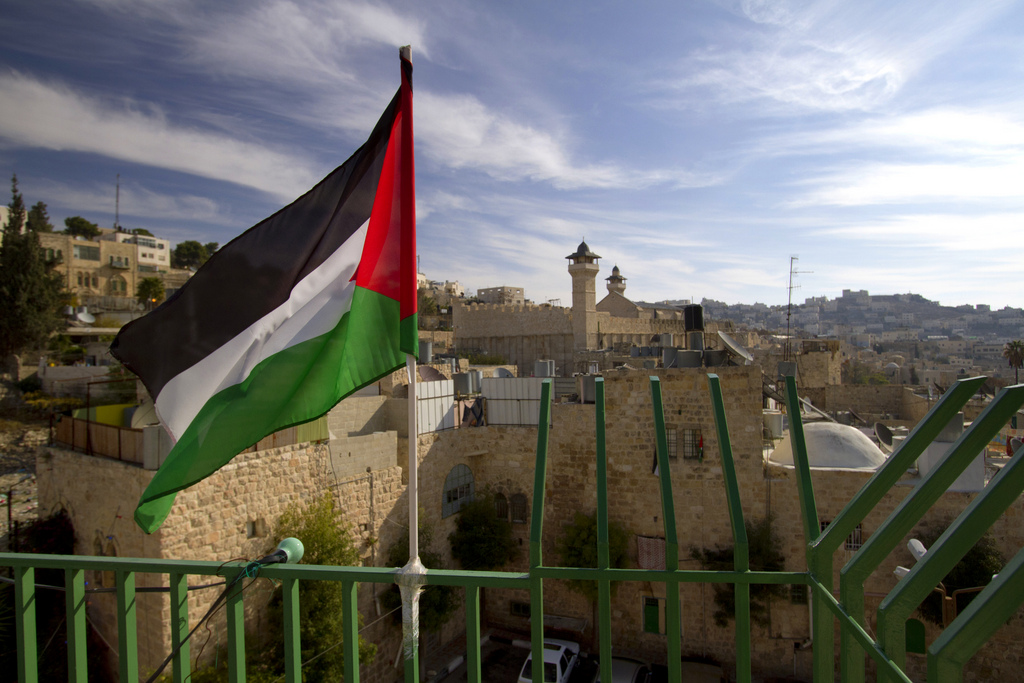
Palestinian Flag to Fly Over City Hall in “Gesture of Solidarity”
Green, white and black with a red triangle – the Palestinian tricolour is not typically seen above Dublin City Hall, however, there is a proposal to fly the flag there next month. Cormac Murphy explores the debate.
-

More than a fight for water
As the water charges have been scrapped, Hannah Lemass found that the movement represents far more at the most recent Right2Water demonstration
-

Learning on the job?
The low number of apprentices remains a legacy of Ireland’s economic crash, as Eimear Dodd learns
-
The digital playground bully
As another chat app raises fears about online harassment of children, it’s clear that parents, teachers and young people must work together to challenge this behaviour. Eimear Dodd reports
-
Going for Gold: Past, Present and Future of the Olympics
In advance of the awarding of the 2024 Olympic Games, Cormac Murphy profiles the two contenders and looks at some of the controversies of previous Games
-
Lost in the Wilders(ness)
Cormac Murphy examines the significance of the recent Dutch elections and considers whether populism has reached its limits in Europe.
Swept up in a sensationalist frenzy, one of the most anticipated and fiercely contested elections in Europe produced, at best, modest electoral success for the far-right.
Dutch voters defied earlier predictions that suggested Geert Wilders’ Party for Freedom (PVV) was on course to snap up thirty or more seats in a parliamentary election dubbed “Europe’s quarter final” by incumbent Prime Minister, Mark Rutte.
The seemingly high importance of the election in the run-up to further European elections in France (Europe’s “semi-final”) and Germany (Europe’s “final”) sparked a storm of international media attention.

Geert Wilders campaigning in Spijkenisse. Image by Peter Van der Sluijs via Wikimedia Commons Branded as a pivotal battle for populism in Europe, the PVV managed to increase their share of seats from twelve to twenty.
With 13% of the vote, they are now the second largest party in The Netherlands.
However, this is significantly lower than earlier indications suggesting a thirty seat win.
Furthermore, their second place showing was barely ahead of the next largest line-up of parties. The Christian Democrats and Democrats 66 came in joint third, with nineteen seats each.
They are also distant second, being paled by Rutte’s People’s Party (VVD) which won thirty three seats — thirteen seats more than the PVV.

Image by Cormac Murphy Negotiations to form governments in The Netherlands are notoriously drawn-out and difficult.
According to Bloomberg, since 1945 the average time taken has been seventy two days — a process that, if repeated, would take us well past the French presidential and parliamentary elections scheduled this year.
Coalition talks are currently underway to forge a future government between the VVD, D66, the Christian Democrats and GroenLinks. The PVV will not be included however.
Locked out of power as others unite against him, the final tally is not even Wilders’ best electoral outcome — falling short of the 2010 election results.
Considering the electoral wind-down for Wilders, was the heavy media coverage justified and do these elections have a wider significance for Europe as a whole?
Unravelling the Far-Right
Speaking to The City, Gavan Titley, a senior lecturer at Maynooth University who specialises in media studies of race, racism and multiculturalism in European politics said:
“The relationship between results [in different European countries] are often overemphasized and are generally much more complex, involving very particular national issues.”
However, he stated a common theme among the far-right in Europe is their ability to bring the issue of national identity into the spotlight – stating the Dutch election became a “question of Dutch identity”.
Despite Wilders being locked out of power, Titley says the election was in fact “ a dual victory for the far-right” and cited that the PVV not only managed to increase its share of seats from the previous election but also managed to shift political discourse to one that was “openly racist.”
https://twitter.com/GavanTitley/status/842303000274194432/photo/1
When asked about the fractured nature of proportional representation and the thresholds many far-right political parties fail to advance beyond, he emphasized that power is not defined solely as “executive or governmental”:
“Far-right parties have the ability to shape the news agenda and change the political culture of a country – even if they can’t take office and be involved in the decision making.”
When questioned about the future of the far-right and whether Wilders’ PVV would attempt to ‘de-demonise’ the party to broaden their appeal, he stated:
“There is no incentive for [Wilders] to defuse his language” — as he is able wield a strong degree of influence, without entering government.
The bigger European picture
The Brexit referendum and Donald Trump’s presidential win shook established politics during 2016.
Scattered in-between these two earthquake results were a series of smaller, yet emblematic elections.

Heinz-Christian Strache, head of the Freedom Party of Austria. Image by Thomas Prenner via Wikimedia Commons On December 4 2016, Austrians went to the ballot box for a second time to elect their president. While the role is purely ceremonial, Austria’s tight presidential race reflected a shifting political tide.
The far-right candidate Norbert Hofer lost to Alexander Van Der Bellen (The Greens) in the end — with it came a sigh of relief but, nevertheless it was a close call for an already embattled EU.
The same day, Italians took to the polls to vote on a constitutional referendum, which if passed, would have granted the Italian government a broader range of powers.
Populists in the country rallied behind a no vote and a no vote it was.
Following the vote Italian Prime Minister, Matteo Renzi resigned and Italian populists rejoiced.
Speaking to Time. Alfonso Bonafede of the Five Star Movement stated “Our victory shows that Italians have also said ‘no’ to the austere and destructive policies of the European Union and to the diktats of Germany. It’s about time to ask Italian voters, through a new referendum, whether they want to stay or leave the euro-area.”Fast forward a few months and all eyes were focused on The Netherlands.
Writing in The Guardian, prominent Dutch political scientist and lecturer, Cas Mudde criticised excessive media coverage of the Dutch Election – claiming the international media declared The Netherlands “the bellwether” of European politics despite lacking a winner takes all system.
In hindsight, the media may have offered Wilders an overtly ample platform.
However, given the bigger German and French elections on the horizon and a string of past close calls across Europe, the coverage was understandable.
Contagion from the Right
Despite negligible gains for the PVV, the most noteworthy result of the elections was a general move to the right.
Aping Wilders’ inflammatory language towards immigrants, Rutte made a series of strongly worded statements towards minorities in The Netherlands.
Demarcating a greater distinction to his rival, Rutte wrote an open letter in January stating that “The solution is not to tar people with the same brush, or insult or expel whole groups, but to make crystal clear what is normal and what is not normal in our country.”
“If you reject our country so fundamentally, I’d prefer you leave,” he added.
Another feature of the election was a highly charged diplomatic dispute between The Netherlands and Turkey, which threatened to blow the Dutch elections apart, just days before voters took to the polls.

The Turkish Foundation in Amsterdam. Image by Persian Dutch Network via Wikimedia Commons Turkish efforts to hold political rallies and campaign for a Yes vote in the upcoming Turkish constitutional referendum backfired when Turkish officials were banned from The Netherlands.
Mevlüt Çavuşoğlu, Turkey’s Foreign Minister urged all Turkish citizens in The Netherlands to protest outside the Turkish consulate in Rotterdam as a response.
Despite the fiery rhetoric and explosive escalation of the incident, it did not aid the far right in the Netherlands. Instead, Rutte’s hard-headed handling of the affair boosted his appeal among Dutch voters.
https://twitter.com/geertwilderspvv/status/840668970483122178/photo/1
Wilders attempted to exploit the diplomatic rift by portraying Turkish immigrants as a fifth column. The tweet above translates as “Four decades, open borders, mass immigration, preservation of culture, zero integration, dual nationality…. This is the result.”
A similar sentiment echoes across Europe as mainstream parties scramble to keep their grip on power.
Angela Merkel who welcomed over one million migrants into Germany in 2015 has made several political U-turns.
In a seemingly desperate attempt to prevent voters straying to the fledgling, far-right Alternative for Germany (AfD) party, Merkel has spearheaded a burka ban as well as revoking her open doors policy to incoming asylum seekers.
She has faced several state elections in the last year that have witnessed AfD gains at the expense of her own Christian Democratic Union (CDU) party.
With the larger federal elections scheduled for September this year, Merkel may find herself struggling to retain her position as German premier.
One down, two to go: Three of the far-right contenders who are to contest elections this year. Marine Le Pen – France (left), Geert Wilders – Netherlands (centre) and Frauke Petry – Germany (right)
Conclusion
While Dutch voters may not have been as discouraged with their political system as previously thought, it is undeniable that the mainstream victory in this election came at a cost.
Much of the centre-ground was ceded — highlighting and perhaps, partially validating some of Wilders’ positions in the eyes of the electorate.
On 25 March, EU Leaders gathered to celebrate the 60th anniversary of signing of the Treaty of Rome. Considering Britain’s departure, and a surge in populist Eurosceptic politics, it is unclear if the union will last another 60 years.
With more elections on the horizon, Europe will have to brace itself once again. Will Le Pen take the Elysee in May and deliver a fatal blow to the EU, or has the dust settled for the populist right?
Either way, the issue of national identity is rising to the forefront of many EU countries’ political agendas — aided and abetted by a far-right holding their feet to the fire.
A Netherlands’ exit from the EU, or ‘Nexit’ has failed to materialise, but with Marine Le Pen promising a ‘Frexit’ in the upcoming French elections, anything is possible, even if her chances at victory are improbable.
Time will tell who wins and how much the mainstream will mimic populist politics in an attempt to regain its appeal. Even if far-right efforts at power prove unattainable, their ability to influence the broader political spectrum is abundantly clear.Featured Image by Markus Bernet via Wikimedia Commons
-
The baggage of history: Dublin commemorates Red October
Dublin City’s commemoration of the 100th anniversary of the Bolshevik Revolution has divided opinion. Zuzia Whelan finds out more.
You must be logged in to post a comment.