Abrakebabra recently celebrated the launch of their brand new #NextGenAbra magic menu, as well as a complete overhaul of their thirty restaurants nationwide.
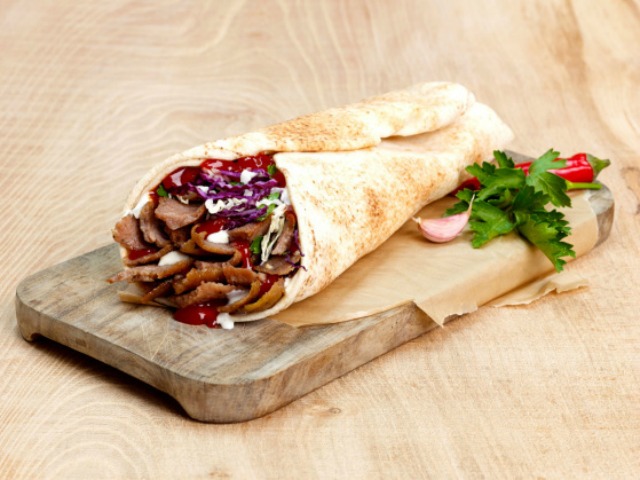
Abrakebabra is a 100% Irish owned fast-food franchise; with the original eatery opening in Rathmines in Dublin in 1982. The food chain is perhaps best known for their Doner kebabs – a popular choice for late night revellers in the city.
Guests at the Dame Street venue were treated to the new magic menu as well as an intimate experience with magic man Keith Barry. Abrakebabra have added a speciality chicken club and have upgraded their Abra-burger with 100% Irish prime beef. Delicious pulled pork and crunchy falafel with hummus have also been added. This is your place if you love loaded fries, loaded chicken baguettes and big portions.
The re-branding has come following the need to keep up-to-speed with changes in the fast-food industry and the needs to meet consumer demands. The make-over includes comfortable seating and sharing tables, as well as environmentally friendly ‘to-go’ packaging; showcasing a bold new look for the brand.
Adam Beere is Senior Brand Manager for Abrakebabra. He expressed his delight at the changes:
“Abrakebabra has been a cultural food institution among Irish clubbers and pub-goers since it opened 33 years ago and we’re proud to offer the best quality, most mouth-watering fast-food to these customers. However we felt the time was right to build on that success by introducing a reinvigorated menu and contemporary store design that will appeal to a new wave of Irish customers across Ireland.
“The menu has been designed to not only offer our world-class food options, but also provide healthier lunch-fuel and family dinner options. We feel confident that new and existing customers will appreciate our tastiest food to date, fresh look, excellent value and convenient service,” he added.
For more information or to find your nearest Abrakebabra visit Abrakebabra.com
For students living outside Dublin, it is second to none as the best place to experience Dublin city nightlife for the first time.
It’s where all Dublin-based stag parties end up. Famous for celebrating national sporting events thanks to the Dublin Gaelic football team and the Sam Maguire Cup, it’s as Irish as a chicken fillet roll.
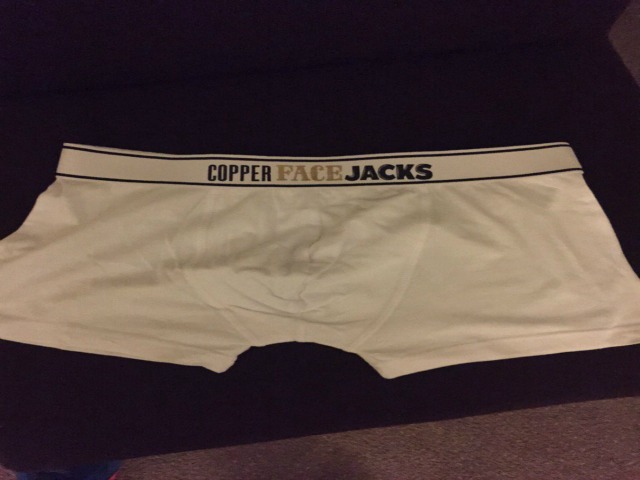
Now the infamous Dublin nightclub Copper Face Jacks on Harcourt Street is more than just a Dublin night club. The iconic club released its branded underwear earlier this week dubbed Copper Face Jocks.
The nightclub have manufactured and designed a pair of women’s briefs in a dazzling bright orange and white, along with black and gold underpants for men.
Sadly, the public will not be able to purchase the soon-to-be collector’s items. The club intends to use these one-of-a-kind briefs as prizes during events at the nightclub.
The night club have been asked on more than one occasion if they sell Coppers merchandise. “It’s always being bandied about and we thought we should do it for a bit of craic,” said Carl Andreucetti, marketing manager at Coppers. “I can’t quite remember where the idea of the Coppers pants came from.”
Dublin footballer Bernard Brogan received the pants just days before he captained the Ireland squad who beat Australia to win the Cormac McAnallen Cup.
Brogan shared the image on his Twitter account claiming the pants to be “lucky”. He posted: “Got my lucky pants for tomorrow, how could we lose now!! #CopperFaceJocks”.
You can follow Niamh Haskins on Twitter at @niamhhaskins
The Minister in charge of the National Drugs Strategy, Aodhán Ó Riordáin TD, announced plans earlier this month which could see the possession of small amounts of drugs for personal use being decriminalised.
The Labour TD outlined a plan which will see the possession of small quantities of drugs like cannabis, heroin and cocaine being decriminalised in the near future.
This announcement was made during a speech to the London School of Economics, during which the TD also said he hoped that medically supervised injection centres will be introduced as early as next year for the country’s heroin users.
This paradigm shift will almost certainly reduce drug related crime in the country and should free up resources which will allow the Garda National Drugs Unit to pursue darker underworld elements, primarily those who currently import dangerous illegal drugs into Ireland.
Ireland, however, will not be the first country to decriminalise the use of some drugs for personal use. Portugal first decriminalised the possession of personal amounts of drugs in July 2001, while the Czech Republic had previously decriminalised the possession of quantities of drugs that were obviously for personal use in January 1999. A policy of non-enforcement has allowed effectively illegal cannabis “coffee shops” to flourish in the Netherlands, fueling their tourism trade.
Closer to home, just eight people were cited for misdemeanor drug possession in the United Kingdom in 2005. Conversely, 5,461 people found themselves in the same situation in Portugal in the same year.
This stark difference shows that, in the United Kingdom, people were obviously being convicted for the same offences that will be reclassified as misdemeanors in Ireland soon.
In 2009, speaking on Portugal’s new laws, Glenn Greenwald, of American libertarian think tank the Cato Institute, said, “Now instead of being put into prison, addicts are going to treatment centres and they’re learning how to control their drug usage or getting off drugs entirely.” A similar scenario is surely the envy of the countless Irish families who feel the pain which results from drug misuse.
A study by the European Monitoring Centre for Drugs and Drug Addiction this year found that there are about 60 deaths caused by drug overdose per million people in Ireland per year. In Portugal and the Czech Republic, they found that there were no more than 5 deaths caused by drug overdoses per million people per year.
The difference in these figures is stark but, while they may paint a picture of a nation which is regressive where drug policy is concerned, the new direction which Minister Ó Riordáin is intent on taking the country in could see these eye-opening death numbers rapidly reduced.
PJ Stone, of the Garda Representatives Association, said of Minister Ó Riordáin’s plans, “I think that anything that can deal with the curse of drugs and some innovating thinking on this is to be welcomed.”
Many Irish people will be pleased at the thought of dangerous drug supplying gangs being taken out of business or, at the very least, having their business activities greatly restricted.
Minister Ó Riordáin said of the proposed new legislation, “This will be a wider discussion under the next government but once people get their head around the argument, about what decriminalisation actually means, that policy won’t be about the drug but about the individual.
“Then regardless of the drug, the individual needs an intervention and society will be saying, ‘the substance is illegal, but you are not a criminal for taking it’.”
UCD students pay up to €230 to re-sit supplemental exams – higher than any other college in the country.
Most of the universities listed above operate a capping system, whereby students are limited in how much they will have to pay.
NUI Galway, even though they are the second most expensive, charge a flat fee so students will only have to pay €195 to repeat, regardless of the number of exams they need to take.
University of Limerick caps their charge at the cost of four re-sits. NUI Maynooth, DCU and UCC all cap their charges at €280, €277 and €245 respectively, and Trinity do not charge for the first set of supplemental exams.
UCD however has no upward cap, so students will be liable for a charge of €230 per module repeat.
According to Danii Curtis, the education officer for UCD, the fee is calculated on average across the whole college. “It’s because we have a lot of practical courses so UCD averages the cost across the university and across the students,” she said.
“The practical subjects such as veterinary would be the most expensive, all the equipment and lab time means they would be on the higher end of what each repeat would cost,” she explained.
She added: “I think if you work it [out] on a per program basis you’ll have more students who can’t afford to repeat, the €230 is a fair average across the campus.”
How repeat and re-sits are conducted in UCD depends on the individual school, but UCD does allow students to carry onto the next year of their degree with 50 credits instead of the full 60 credits. However, they will need to make up those missing credits somewhere down the line.
As it stands, students who fail a module in UCD will be expected to re-sit an exam or project over the winter or summer exam periods, with no supplemental exam period set aside in the autumn unlike the majority of other colleges in Ireland.
“I would be in favour of a summer repeat period so students do not have to carry on subjects [into the next semester],” said Ms Curtis. “I’ve also started looking into a cap, and I would be in favour of a cap on three to four subjects per student.”
UCD allows students that owe the college money to repay it over the course of the semester, with students owing less than €600 allowed to receive their provisional results. However, students over that amount cannot.
In comparison to the universities, costs for taking supplemental re-sits are simplified at the Irish Institutes of Technology.
Most of the Institutes of Technology operate on a flat fee basis, so regardless of the number of repeat exams a student needs to take; they will only need to pay a set amount.
As the chart above shows, Tralee IT is the most expensive with a flat fee of €120. All the other institutes, with the exception of Dún Laoghaire Institute of Art, Design and Technology (IADT) charge €50 to €100.
Cork IT offers repeats during the December or May exam periods at a cost of €50. However, if a student needs to repeat in the autumn the cost rises to €100.
IADT is the only IT to charge on a per subject or project basis at a cost of €25. They also do not offer a cap on the amount to pay, so for a student who has to repeat multiple classes, IADT could add up to be the most expensive IT to repeat in.
To see more from Ronan, visit his Twitter at @RowSmyth.
Minister for Drugs Aodhán Ó’Riordáin has pledged that the first medically supervised injection centres (MSICs) will be open in Ireland next year.
The centres form part of his radical strategy to change the drug landscape in Ireland, a strategy that has garnered coverage across the globe.
If opened in Ireland, the centres will see somewhere that people can inject illicit drugs under the supervision of trained medical staff who will be on hand to intervene in the case of an overdose.
Once the legal restrictions around operating such centres are unblocked, drug service provider the Ana Liffey drug project hopes to run the service.
The group first proposed that they could staff and run an MSIC in Ireland, once it was legal to do so, in 2012.
Director of the Ana Liffey project Tony Duffin spoke to The City about what comes next and to dispel some concerns around the centres.
Rather than legitimising heroin or other intravenous drug-taking, the centres will ease the pressure on emergency services, save lives and provide a clinical space where those drug users who are the most marginalised can access a range of medical services, he said.
Location
One of the main concerns people have about the MSICs is where exactly they will be located.
It is still too early to decide where the centres will, or could, be located until the legislation is published. The possibility of a mobile injecting unit is also still on the table.
“One of the concerns people have is the idea of nimbyism or ‘not in my back yard’ about this, and some ‘note-sim’ ‘not over there either’ – some people are just fundamentally opposed to the idea,” he said.
“That discussion [about location] is still premature because it’s still illegal, but the simple answer is you put them where you’ve got a problem.
“When you start to pull away at that you see that you have the problem right across the city centre, so you have to put them in the optimum place.”
The key concern with using a mobile unit Mr Duffin said is that space for service users is limited and there could be an issue with people accessing the service consistently.
“While all this is going on don’t forget that public injecting is still a very big problem, people are at still at huge risk injecting,” Mr Duffin said.
“Businesses and communities still have problems with drug paraphernalia discarded across the city. The gardai are still trying to police the situation. At the moment the problem is being passed from pillar to post.”
Dublin’s drug culture is not to be underestimated he pointed out.
“We have a very significant problem in Dublin, people take copious amounts of drugs every day,” the drugs worker said.
Overdose
On top of preventing fatal overdoses – nobody has ever died in any of the eighty or so MSICs around the world – the centres have the ability to intervene in overdoses that may have otherwise been missed.
In an MSIC, an oximeter is placed on the client’s finger and it measures the level of oxygen in their blood. If the level drops below 95 they are technically overdosing and they can be treated with oxygen.
Ireland’s MSIC is likely to be based on the Sydney model where a centre was opened in 2001 in the King’s Cross area of the city – a suburb that was notorious for public drug use.
“The centre reduced ambulance call outs by 80pc because the client base are known as ‘super-utilisers’ of emergency medical services and A&Es,” said Mr Duffin.
“What does Dublin have a huge problem with at the moment? Overcrowding in A&Es, this will take some of that pressure off. You start to save money then in mainstream services.”
While consultation continues and government officials draw up the heads of a new Misuse of Drugs bill, the public conversation will continue.
“People realise that we have a problem, no one is happy about the situation. We need to do something that works if we want to improve Dublin for everybody,” said Mr Duffin.
“This is one way of improving things for people who inject drugs, businesses, families, visitors. It has a positive impact and it’s far reaching.”
Despite some minor technical hitches, the Web Summit proved a success once again and saw 1,000 investors and over 2,000 startup companies taking part in the internationally acclaimed business and technology exhibition.
Paddy Cosgrave, the Web Summit’s founder, was criticised by some for describing a Government payment to the summit of €500,000 as “hush money”.
The Government, on the other hand, have been subject to widespread criticism for not doing enough to prevent the Summit from moving their operations to Lisbon next year.
Attendees were given the chance to see a host of speakers, many of whom are highly renowned in their respective fields, during the three day event.
American animation studio Pixar’s President, Ed Catmull, spoke to listeners about what made him tick and made him the success he is today, while multi-award winning Swedish DJ Steve Angello, formerly of electronic production trio Swedish House Mafia, spoke of the effects of online streaming on the music industry on the second day of the event.
Speakers on the Summit’s Sports Stage included former Manchester United players Edwin Van Der Sar and Louis Saha. Van Der Sar was speaking as the Chief Managing Officer of Dutch club AFC Ajax where he once played, while his former teammate Saha was representing his Axisstars sports management company.
Elsewhere, Sean Rad, a co-founder of the massively successful dating app Tinder, spoke to Steven Bertoni, a Senior Editor for Forbes magazine. Rad said of the app’s success, “We are connecting people and making the world a better place with more than 1.5 million dates per week and 30 million matches per day.”
The loss of wireless internet on the premises during the first day proved to be one of the greatest problems the Summit faced. However, this was soon resolved.
The Web Summit’s five year presence in Ireland, since it was founded, now comes to an end and next year’s Summit will take place at Lisbon’s MEO Arena.
Dublin Fire Brigade (DFB) are set to use drones to fight fires by the end of the year.
The project, announced last August, has since seen six personnel at DFB trained to operate the flying devices.
Operation guidelines are currently being formulated surrounding the flying device. The drones will be used to calculate the best way to fight a fire, measure the extent of the fire and to locate missing people.
Drones can climb higher than traditional fire ladders and film expansive areas, allowing officers to gather crucial information in a short time frame.
Last April presented DFB with their first opportunity to test the drone as a severe blaze broke out at Ballymount Industrial Estate.
According to Assistant Chief Fire Officer, Dennis Keely, the project is still quite new. “It’s very early days. We don’t want people to be scared of this.”
He continued: “When you pull up you often have a lot of smoke, and it’s not always immediately clear where the concentration of the fire is.
“From an operational perspective, to have an overview, an ability to step back from the situation and a quick visual of an incident from an aerial shot can be quite advantageous.”
Drones have already been implemented by fire services in the UK where infrared and night-vision cameras are used to locate trapped people and penetrate smoke.
A former Young Fine Gael President has called on Dublin City Council to install rainbow coloured pedestrian crossings around Dublin’s city centre.
DIT graduate Dale McDermott has outlined three specific locations where the Rainbow Walks could be installed, in the hope of increasing tourism, culture and to further boost the LGBT credentials the city has built in recent years.
The city centre locations include George’s Street, outside City Hall and Panti Bar on Capel Street.
“Following the successful passing of the Marriage Equality referendum, Ireland and especially Dublin is now seen as a beacon of hope around the world for many LGBT people who come from places less than welcoming to their gay citizens.
“The LGBT community has been welcomed with open arms by the people of Ireland and I feel that this would further bolster the support for LGBT people across Dublin City and the world,” said Mr McDermott.
Having seen these rainbow coloured pedestrian crossings during a recent visit to the Castro District in San Francisco, Dale emphasised how much of a tourist attraction they are.
“I really feel that Dublin could seriously benefit from such a simple yet important and colourful touch to our beautiful city. Cities all over the world, from Tel Aviv to Sydney, have installed Rainbow Walks and given the fact that Dublin is now viewed as a prime location for gay people, this will send a further signal that Dublin is welcoming to LGBT people all over the world,” he explained.
Since the proposal was first submitted to the Council in September, Dale said that public support has been ‘absolutely fantastic’.
“There has been a lot of support from people across all parties and Panti Bliss is also very much behind the proposal,” he revealed.
Having only launched the social media campaign this week, Dale admits that he purposely waited to create an online presence in the hope to drum up public support.
“Well, when I first submitted the proposal I wanted to get a discussion going. There’s always the danger that when you prolong a campaign it will drag on, but in this instance I feel it has worked well and it seems the public are definitely getting behind it.
“The proposal is going in front of the Council in early January/ February, and in my opinion there’s always the worry that Councillors may not necessarily vote for something if it does not have the public support. However, people feel that this is a very modern idea,” he added.
For further information about Dale’s proposal, you can visit the Dublin Rainbow Walk Facebook and Twitter page.
The Irish Prison Service (IPS) accommodates more than 3,500 prisoners across seven prisons. The IPS compiles data on a daily basis, which when looked at altogether paints a comprehensive picture of life in Ireland’s prisons.
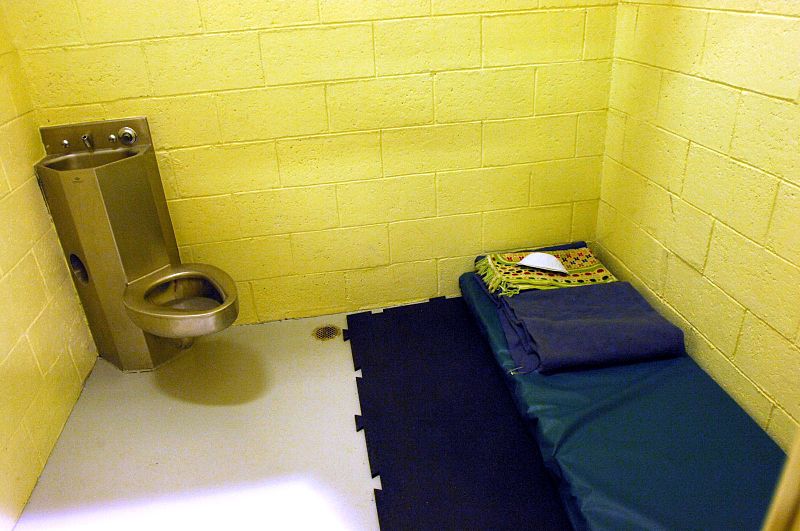
Access to a private toilet at all times is considered a basic right under best practice standards, but in Ireland not everyone has access to one due to upgrades needed in prisons and because of over-crowding.
The following chart shows the number of people who don’t have access to a private toilet at all times. The problem is worst in Cloverhill, a remand prison in Clondalkin where more than 50% of inmates must use a toilet in front of others.
In addition, some 312 prisoners were still ‘slopping out’ their cells in Portlaoise, Limerick and Cork prisons. Compensation claims are expected to be lodged by former prisoners who were subject to this practice, after similar cases in Scotland were brought to a successful conclusion for the claimants.
Access to a private toilet 24 hours a day
Work is underway to eliminate, where possible, the need for prisoners to share cells. Due to increasing capacity numbers just under a third of prisoners are now in shared cells.
In a recent parliamentary question on the subject of shared cells Minister for Justice Frances Fitzgerald pointed out that not everyone in the system wishes to be housed in a single cell.
“It should be borne in mind that in certain cases prisoners are housed together for reasons other than lack of capacity. Family members and friends often elect or are assigned a shared cell,” she said in response to a question tabled by Labour TD Ciarán Lynch.
“Shared cell accommodation can be very beneficial from a management point of view particularly for those who are vulnerable and at risk of self-harm. There will always be a need for certain prisoners to be accommodated together.”
Type of cell accommodation
Under new rules introduced by former Minister for Justice Alan Shatter in 2012, prisoners have the ability to lodge complaints against prison authorities. The most serious of these are investigated by an independent body. In Dublin prisons last year 631 complaints were lodged by prisoners.
Staff in Cloverhill Prison in Dublin had the highest number of complaints made against them by prisoners, with 257 grievances filed.
Some 44 ‘category A’ complaints, which deal with the most serious allegations, were lodged by Cloverhill prisoners last year.
However the IPS said that 24 of these complaints related to one incident and were not upheld after investigation.
Prisoner complaints are divided into six categories, the most serious of which deals with alleged “assault or use of excessive force” as well as “ill treatment, racial abuse and discrimination”.
This category also covers “intimidation and threats” and complaints of this nature are dealt with outside of the prison services due to the gravity of the allegations.
Mountjoy and Wheatfield prisons in the capital were the second and third most likely place for serious complaints to be lodged. Mountjoy prisoners submitted 19 complaints of this type, while in Wheatfield there was 18.
Meanwhile another 109 complaints were lodged in Irish prisons for other serious issues including “verbal abuse of prisoners by staff” or “inappropriate searches”.
Again, Cloverhill was subject to the most complaints under this heading, with 41 lodged.
The Clondalkin prison has a higher turnover than most other Irish prisons which could account for its high level of complaints, a spokesman for the IPS said.
The most common complaints among the Irish prisoner population however, were for basic service level issues.
They lodged 490 complaints in Dublin prisons under this category in 2014, with the Midlands topping the list at 254 complaints.
These cover issues such as “complaints about visits, phone calls, reception issues, missing clothes, not getting post on time, not getting appropriate exercise” according to official guidelines.
Number of complaints per prison
“The fact that prisoners are submitting complaints through the system is evidence that prisoners have a confidence in the system and that any issues they raise will be listened to and addressed by prison management,” a spokesman for the IPS said.
There are delays expected on DART and Iarnród Éireann services as this morning’s train strike came into effect earlier.
The most significant news from this morning’s strike is that there will be no services for the Docklands with a bus service operating from M3 Parkway and Clonsilla.
The strike took place between 6 and 9 am this morning after a dispute between Irish Rail and the two major unions for train drivers, SIPTU and the National Bus and Railworkers’ Union (NBRU), over bonuses for previous years went unresolved.
The parties were still in discussions late last night to avert strike action. This is not the first expected strike as one is also being scheduled for two weeks time on November 6th.









You must be logged in to post a comment.