Tag: news

  • Domhnall Gleeson raises money for Dublin hospice

    Domhnall Gleeson raises money for Dublin hospice

    Domhnall Gleeson is set to raise a lot of money for St. Francis Hospice in Raheny, thanks to a campaign running in conjunction with the release of his upcoming Star Wars movie.

    Fans of the film were given an opportunity to win an array of grand prizes if they donated to Star Wars: Force for Change through Omaze.

    The foundation was set up in 2014 by Lucasfilm and Disney, and fifteen members of the cast and crew from the upcoming Star Wars movie each nominated a charity of their choice to receive a percentage of the donations collected.

    Prizes include memorabilia, artwork, as well as the grand prize of being able to attend both the US and UK premieres of the movie, meet the cast and head along to the official after party.

    Speaking to The City, Dee Kinnane of Saint Francis Hospice in Raheny said, “Domhnall has nominated Saint Francis Hospice to be a part of the fifteen charities that are going to benefit from the Star Wars Omaze campaign, and we’re absolutely delighted about it.”

    She revealed that it’s “not very often” such big names get involved with their hospice, but the Gleeson family always show their support whenever they get the opportunity.

    “The Gleesons are very supportive of Saint Francis Hospice. We are delighted that Domhnall has nominated us as part of this campaign. They are brilliant. They are absolutely brilliant,” she said.

    Last year, Domhnall and his brother Brian took part in another fundraising campaign for the hospice, by starring in a charity music video.

    A Dublin band, Squarehead, came up with the song ‘2025’, and the two brothers were happy to lend their support to the video.

    All funds raised from the single went directly to the hospice.

  • 50,000 soccer fans set to face dry Good Friday

    50,000 soccer fans set to face dry Good Friday

    The Licensed Vinters Association (LVA) say that alcohol licensing laws must be changed ahead of the Ireland versus Switzerland soccer international to be held on Good Friday.

    The association which represents Dublin publicans has renewed its call for the Minister for Justice and the Government to introduce legislation to permit trading for all licensed premises on Good Friday as a matter of urgency.

    The call follows the announcement that Ireland will play Switzerland in a friendly soccer international at the Aviva Stadium on Good Friday, which falls on the 25th March next year.

    The Licensed Vintners Association, which represents 600 Dublin publicans, welcomed the announcement of the soccer friendly and said it will add hugely to the colour of the Easter holiday.

    However, the Chief Executive of the LVA, Donall O’Keeffe, described the current situation regarding licensing laws on Good Friday as ludicrous and called on the Government to remove the law immediately.

    “Every Good Friday we have tens of thousands of tourists wandering around Dublin asking why they can’t go into a pub for a drink. Now we are going to have up to 50,000 soccer fans facing the same problem. Not to mention the tens of thousands who will want to watch the match in their local pub.

    “There is less than four months to go to Easter, there is no real opposition to this measure and we have the Easter 2016 celebrations. It looks like a no brainer, but to date the Government has been dragging its heels on the issue,” he said.

    O’Keeffe said the current law amounted to discrimination against the licensed trade and made no financial sense. He said the government had previously indicated that Good Friday trading would be considered in the context of the Sale of Alcohol Bill, but so far nothing has happened.

    Earlier this year the LVA made representations to the Government on this very issue in light of the fact that the Ireland 2016 celebrations would have a particular focus on Easter weekend and that it would be hugely embarrassing if this law was still in place for such an important event.

    “The Easter 2016 celebrations – and now this soccer international – provide a terrific opportunity to showcase our capital city and it would be ridiculous if the entire hospitality sector was again forced to close on Good Friday.

    “It’s estimated that up to a quarter of a million people will pass through Dublin Airport that weekend. Once again they will be faced with locked doors on Good Friday unless the Minister takes action now,” O’Keeffe concluded.

  • Amnesty Ireland to hold vigil in Dublin tomorrow to show support for Ibrahim Halawa

    Amnesty Ireland to hold vigil in Dublin tomorrow to show support for Ibrahim Halawa

    Amnesty Ireland will be holding a vigil in the city centre tomorrow evening to highlight the case of Ibrahim Halawa, who is currently imprisoned in Egypt.

    In total, Amnesty Ireland are expecting upwards of 100 people to take part in the short vigil, with activists congregating on Fleet Street before making their way to Grafton Street.

    “We will assemble our activists into lines that run up the middle of Grafton Street at intervals, spelling out a message of solidarity,” said Kieran Clifford, campaigns and activism manager for Amnesty International Ireland.

    “The aim of the street action is to raise awareness about Ibrahim’s case to ordinary people here in Ireland,” he said.

    Amnesty Ireland hopes this demonstration will put pressure on the Egyptian authorities before his trial.

    “Our hope is that by getting a lot of attention we will illustrate the support for Ibrahim to the Egyptian government and apply more pressure on them to release him,” said Mr Clifford.

    Ibrahim Halawa, from Firhouse in Dublin, has spent the last two years in prison in Egypt. He was arrested in a mosque after a protest he was at turned violent and 97 people were killed.

    Mr Halawa is currently facing 20 years in prison, if found guilty.

    The vigil has been organised to coincide with the international day for Human Rights.

  • What will Ireland be like in 10 years?

    What will Ireland be like in 10 years?

    A survey has revealed what Irish workers and job seekers believe working in Ireland will be like ten years from now.

    The survey, which was conducted by IrishJobs.ie, gauged the views of over 2,500 Irish workers and found that 71pc are optimistic for the future, saying the economy will be better in 2025.

    According to the survey, 40pc of people believed that they would not be working in the same industry in ten years time.

    The survey shows 57pc believe Dublin city centre will be a car free zone. While two in five believe that we will be working less hours, and 85pc believed that working from home will be a more common practice.

    Interestingly, 46pc of people surveyed believe that they will be working in a job that currently doesn’t even exist, and Orla Moran of IrishJobs.ie spoke on that fact saying, “What really shines through is that change and adaptability are now part and parcel of modern Irish working life with over 40pc telling us they won’t be in the same industry in 10 years time and almost half of respondents telling us they could be doing a job in 2025 that doesn’t currently exist.”

    The survey, which was conducted to mark the company’s 20th year in business, served as a follow up to their 2005 survey which showed that a majority believed that Ireland would continue on a path of economic growth (55pc) and four out of five expected that their career patch would change over the next decade.

    Approximately 70pc predicted that Irish roads would still be over-flowing with traffic in 2015 and 55pc said that Sinn Féin would be in government.

    With most of us now getting our news from online sources, will we still be able to buy a hard copy newspaper in 2025? Yes is the answer, with 65pc certain that this will be the case.

    Other findings from the survey say that 24pc claim that they will be replaced by a robot in ten years, Paul O’Connell will be president, and Galway will have the highest quality of life in Ireland.

  • Bressie talks mental health with students in DCU

    Bressie talks mental health with students in DCU

    Last Friday morning, Niall ‘Bressie’ Breslin held a talk in DCU about mental health.

    A talk by the singer, who is perhaps best known for being the former lead singer of ‘The Blizzards’ or as a coach for ‘The Voice of Ireland’, was organised by the DCU student health campaign, Stamp Out Stigma. It saw Bressie offer advice on those who are struggling with themselves, as well as reflecting on his own mental health struggles throughout his life.

    “It was never my illness that I wasn’t able to cope with. It was disguising it. It was the constant excuses that I had to make because of it and the constant repression of my own identity,” the singer outlined, rather eloquently.

    Bressie, who before entering the music industry played professional rugby with Leinster, explained at the start of the talk that this was something that he’s spent a fair deal of time learning about.

    “We have to start prioritising [so] that this becomes absolutely number one. From primary school, to secondary school, to third level because, guess what? Everything that you do in terms of your academic achievement and what you wanna do are worthless unless your head is able to cope with life. I learned that the hard way.”

    The 35-year old painted an extremely vivid picture of how he suffered as a teenager.

    “My only coping strategy was to completely avoid my friends … and as a 15-year-old, I was captain of my school football team, I was representing Leinster at (underage) rugby, I was in a band. I was the anti-stereotype. And I’ll tell you why, not because I was social, not because I was ‘Good-time Charlie’, but because the only time when that pain in my chest went away was when I set foot on the pitch, when I trained, or when I held an instrument. And only at that particular point did it go away. So, I became addicted.”

    Bressie went on to openly explain the extent of his demons, as panic attacks and sleepless nights became regular occurrences. He admits that at the time, it was something that when going into school, could easily go under the radar, but he feels that today teachers are more alert to it. “Our teachers are now recognising that this might not just be a kid who’s a bit of a lazy git, that [it] could be a kid in absolute distress, because I was.”

    Despite these troubles very much forming a massive part of his life, the star admitted that these problems are certainly responsible for making him the person he is today:

    “This is fundamentally where I get my belief that people who struggle with a mental health illness have an edge over other people… once they’re able to find that resilience, bring it out, nurture it, promote it, they’ll realise what they’re capable of.”

    Bressie today is a man who has learned how to do this. He uses everything he’s learned to better himself, as well as become a spokesperson for attempting to break down the stigma associated with mental health.

    “We have a very unusual relationship and understanding with what self-harm is and it’s absolutely different for everybody, but for me self-harming had nothing to do with attention, I didn’t want attention, it’s the last thing I wanted. It was a release,” he told the crowd.

    It wasn’t until he had his worst attack, to that point, when his anxiety led him into intentionally breaking his own arm in his bedroom, that he first spoke out about it, and even then it wasn’t the full story. “I didn’t tell her (his mum) the full picture, I said, ‘Mum, I’m a bit uneasy in myself at the moment.’ And, that was the difference.”

    However he admitted that the fear and shame was still too strong at this stage to really explain the extent of what he was dealing with, so he, “did what most Irish men do, I put the head down and went: ‘I’m fine, be grand.’” But, it wasn’t.

    From here, he tells the audience about the jump to third level-education, and how this only made things worse. Attempting to go to college in UCD was a step too far for his anxiety and led him to go to great lengths in order to attempt to deal with it.

    Self-medication, which Bressie attempted to outline as something that under no circumstances should be done by someone trying to get through their problems, was a measure that he sadly took to shield it. “And, here’s the funny thing about mental health illness. You think you can outrun it, you think you can do something new to make it go away, but you can’t.”

    Bressie’s problems forced him to take drastic decisions, closing important chapters in his life. Quitting rugby, he eventually moved back to Westmeath and started his band, ‘The Blizzards’. Again, despite finding success not only in Ireland, but across the UK, his inability to confront, or disclose, his ever-worsening condition led to the eventual breakdown of the band.

    “You cannot be in a relationship … if there isn’t 100% honesty. Honesty is the fundamental spine or backbone of any relationship, whether it’s a physical one, whether it’s a family one, whether it’s a friend,” he said.

    In a self-imposed exile, he moved to London, where he was barely able to leave his house. It was there he had what he describes as his one and only full-breakdown: “I was walking down the road, it was a really warm summer’s day. And, I can’t describe the fear that came over me. It just poisoned every part of my body.

    “I ran straight across a two dual-carriageway road, I didn’t even look left and right… and I ran into a park and I slept under a tree. I remember looking, I could see London city in the distance.”

    The distance from the world made him feel safe, and he slept there for the night.

    Very shortly after this, Bressie took a leap of faith. He agreed to join ‘The Voice of Ireland’ as a coach, admitting that the excuse to go home to Ireland each weekend and see his mother was the only thing motivating him to do it.

    From here he describes the overwhelming fear he had in the build up that he would suffer a panic attack on live television. After a lucky escape in just the third week of broadcast, the singer knew that he had to finally face the problem, and opened up.

    “I decided I needed to humanise it. I needed to give it a name, I needed to objectify it. So, I did… I called my mind Jeffery… I got hotel paper, and I wrote down everything I think Jeffery loves. Exercise… good people… healthy food… and on another page I wrote down everything I know that Jeffery hates, and the top of that list was toxic people.”

    From here, he made the decision to give every single therapeutic option a chance, in order to not only learn how to cope, but to garner a full understanding of what is going on with his mind. Bressie told the crowd that doing this allowed his mental fitness to reach a level he never thought imaginable.

    “It takes time for these things to work,” he said. But as someone listening to his words, it seems to have really made an impact. He cited cognitive behavioural therapy as one of the most influential treatments he used. It should be noted that he did however attempt to underline the fact that mental illness is incredibly subjective and certain treatments work differently on everyone.

    The hour long talk flew by with barely a sound uttered by those in the crowd until the end, where Bressie was met with a rapturous and respectful standing ovation for his time. With famous figures coming in to openly talk about these kinds of issues, I think it’s fair to say that we are coming a long way to finally stamping out the stigma in Ireland.

    If you ever need to reach out and talk about mental health or feeling down, contact Samaritans at: http://www.samaritans.org/.

    You can watch the talk in full at: https://www.youtube.com/watch?v=ffWsTemphhY&feature=youtu.be

  • Luas accidents down in 2015

    Luas accidents down in 2015

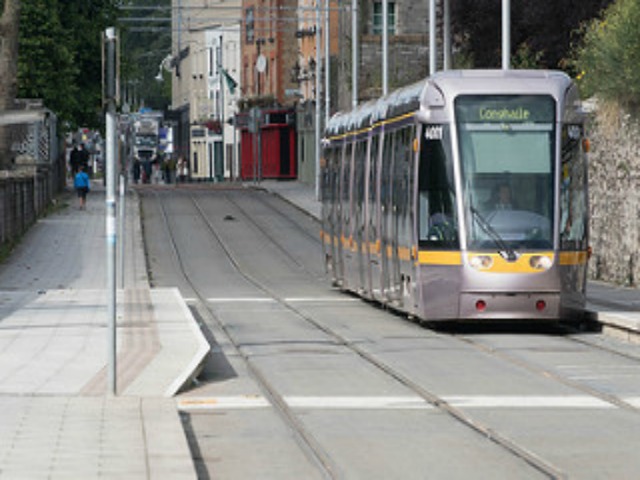
    Luas accidents have decreased this year as Gardaí have targeted drivers breaking red lights. To date in 2015, 14 incidents of Luas trams colliding with cars have been recorded.

    Some five collisions between pedestrians and Luas trams also took place. The vast majority of these incidents have been minor with few injuries recorded.

    The figures are far lower than those for similar light rail systems in other parts of the world. The main cause of accidents and Luas collisions is vehicles breaking red lights.

    The majority of accidents are concentrated in the city centre, where the tram lines are situated closer to traffic and higher numbers of pedestrians.

    There is a statistically higher concentration of incidents on the Red line, which runs from Saggart to The Point. The biggest hotspot for accidents is the junction between Benburb Street and Queen Street.

    A new initiative began at the junction earlier this year which consisted of the installation of traffic cameras around Blackhall Place which picks out and photographs cars breaking red lights. These photographs are then passed on to Gardaí. This initiative, along with a hugely successful YouTube campaign released last year, has been heralded as the main cause of the decrease.

    “The Luas is one of the safest transports systems of its kind, and one of the safest ways to travel, and accidents and road traffic collisions are statistically extremely unlikely,” said Dervla Brophy, Communications Manager for Transdev, the company responsible for the Luas.

    Some 32.4 million people used the Luas system in 2014, and Luas operators expect to see an increase to this when the 2015 figures are released.

    This along with the hugely successful YouTube campaign released last year has been attributed to the decrease.

    There have been four fatal incidents involving the Luas since its launch in 2004.

  • New Magic Menu at Abrakebabra

    New Magic Menu at Abrakebabra

    Abrakebabra recently celebrated the launch of their brand new #NextGenAbra magic menu, as well as a complete overhaul of their thirty restaurants nationwide.

    Abrakebabra is a 100% Irish owned fast-food franchise; with the original eatery opening in Rathmines in Dublin in 1982. The food chain is perhaps best known for their Doner kebabs – a popular choice for late night revellers in the city.

    Guests at the Dame Street venue were treated to the new magic menu as well as an intimate experience with magic man Keith Barry. Abrakebabra have added a speciality chicken club and have upgraded their Abra-burger with 100% Irish prime beef. Delicious pulled pork and crunchy falafel with hummus have also been added. This is your place if you love loaded fries, loaded chicken baguettes and big portions.

    The re-branding has come following the need to keep up-to-speed with changes in the fast-food industry and the needs to meet consumer demands. The make-over includes comfortable seating and sharing tables, as well as environmentally friendly ‘to-go’ packaging; showcasing a bold new look for the brand.

    Adam Beere is Senior Brand Manager for Abrakebabra. He expressed his delight at the changes:

    “Abrakebabra has been a cultural food institution among Irish clubbers and pub-goers since it opened 33 years ago and we’re proud to offer the best quality, most mouth-watering fast-food to these customers. However we felt the time was right to build on that success by introducing a reinvigorated menu and contemporary store design that will appeal to a new wave of Irish customers across Ireland.

    “The menu has been designed to not only offer our world-class food options, but also provide healthier lunch-fuel and family dinner options. We feel confident that new and existing customers will appreciate our tastiest food to date, fresh look, excellent value and convenient service,” he added.

    For more information or to find your nearest Abrakebabra visit Abrakebabra.com


  • Get your Copper Face Jocks

    Get your Copper Face Jocks

    For students living outside Dublin, it is second to none as the best place to experience Dublin city nightlife for the first time.

    It’s where all Dublin-based stag parties end up. Famous for celebrating national sporting events thanks to the Dublin Gaelic football team and the Sam Maguire Cup, it’s as Irish as a chicken fillet roll.

    Now the infamous Dublin nightclub Copper Face Jacks on Harcourt Street is more than just a Dublin night club. The iconic club released its branded underwear earlier this week dubbed Copper Face Jocks.

    The nightclub have manufactured and designed a pair of women’s briefs in a dazzling bright orange and white, along with black and gold underpants for men.

    Sadly, the public will not be able to purchase the soon-to-be collector’s items. The club intends to use these one-of-a-kind briefs as prizes during events at the nightclub.

    The night club have been asked on more than one occasion if they sell Coppers merchandise. “It’s always being bandied about and we thought we should do it for a bit of craic,” said Carl Andreucetti, marketing manager at Coppers. “I can’t quite remember where the idea of the Coppers pants came from.”

    Dublin footballer Bernard Brogan received the pants just days before he captained the Ireland squad who beat Australia to win the Cormac McAnallen Cup.

    Brogan shared the image on his Twitter account claiming the pants to be “lucky”. He posted: “Got my lucky pants for tomorrow, how could we lose now!! #CopperFaceJocks”.

    Capture

    You can follow Niamh Haskins on Twitter at @niamhhaskins

  • Drug decriminalisation could see fall in overdose related deaths

    Drug decriminalisation could see fall in overdose related deaths

    The Minister in charge of the National Drugs Strategy, Aodhán Ó Riordáin TD, announced plans earlier this month which could see the possession of small amounts of drugs for personal use being decriminalised.

    The Labour TD outlined a plan which will see the possession of small quantities of drugs like cannabis, heroin and cocaine being decriminalised in the near future.

    This announcement was made during a speech to the London School of Economics, during which the TD also said he hoped that medically supervised injection centres will be introduced as early as next year for the country’s heroin users.

    This paradigm shift will almost certainly reduce drug related crime in the country and should free up resources which will allow the Garda National Drugs Unit to pursue darker underworld elements, primarily those who currently import dangerous illegal drugs into Ireland.

    Ireland, however, will not be the first country to decriminalise the use of some drugs for personal use. Portugal first decriminalised the possession of personal amounts of drugs in July 2001, while the Czech Republic had previously decriminalised the possession of quantities of drugs that were obviously for personal use in January 1999. A policy of non-enforcement has allowed effectively illegal cannabis “coffee shops” to flourish in the Netherlands, fueling their tourism trade.

    Closer to home, just eight people were cited for misdemeanor drug possession in the United Kingdom in 2005. Conversely, 5,461 people found themselves in the same situation in Portugal in the same year.

    This stark difference shows that, in the United Kingdom, people were obviously being convicted for the same offences that will be reclassified as misdemeanors in Ireland soon.

    In 2009, speaking on Portugal’s new laws, Glenn Greenwald, of American libertarian think tank the Cato Institute, said, “Now instead of being put into prison, addicts are going to treatment centres and they’re learning how to control their drug usage or getting off drugs entirely.” A similar scenario is surely the envy of the countless Irish families who feel the pain which results from drug misuse.

    A study by the European Monitoring Centre for Drugs and Drug Addiction this year found that there are about 60 deaths caused by drug overdose per million people in Ireland per year. In Portugal and the Czech Republic, they found that there were no more than 5 deaths caused by drug overdoses per million people per year.

    The difference in these figures is stark but, while they may paint a picture of a nation which is regressive where drug policy is concerned, the new direction which Minister Ó Riordáin is intent on taking the country in could see these eye-opening death numbers rapidly reduced.

    PJ Stone, of the Garda Representatives Association, said of Minister Ó Riordáin’s plans, “I think that anything that can deal with the curse of drugs and some innovating thinking on this is to be welcomed.”

    Many Irish people will be pleased at the thought of dangerous drug supplying gangs being taken out of business or, at the very least, having their business activities greatly restricted.

    Minister Ó Riordáin said of the proposed new legislation, “This will be a wider discussion under the next government but once people get their head around the argument, about what decriminalisation actually means, that policy won’t be about the drug but about the individual.

    “Then regardless of the drug, the individual needs an intervention and society will be saying, ‘the substance is illegal, but you are not a criminal for taking it’.”


  • UCD the most expensive college in the country to repeat an exam

    UCD the most expensive college in the country to repeat an exam

    UCD students pay up to €230 to re-sit supplemental exams – higher than any other college in the country.

    image (1)

    Most of the universities listed above operate a capping system, whereby students are limited in how much they will have to pay.

    NUI Galway, even though they are the second most expensive, charge a flat fee so students will only have to pay €195 to repeat, regardless of the number of exams they need to take.

    University of Limerick caps their charge at the cost of four re-sits. NUI Maynooth, DCU and UCC all cap their charges at €280, €277 and €245 respectively, and Trinity do not charge for the first set of supplemental exams.

    UCD however has no upward cap, so students will be liable for a charge of €230 per module repeat.

    According to Danii Curtis, the education officer for UCD, the fee is calculated on average across the whole college. “It’s because we have a lot of practical courses so UCD averages the cost across the university and across the students,” she said.

    “The practical subjects such as veterinary would be the most expensive, all the equipment and lab time means they would be on the higher end of what each repeat would cost,” she explained.

    She added: “I think if you work it [out] on a per program basis you’ll have more students who can’t afford to repeat, the €230 is a fair average across the campus.”

    How repeat and re-sits are conducted in UCD depends on the individual school, but UCD does allow students to carry onto the next year of their degree with 50 credits instead of the full 60 credits. However, they will need to make up those missing credits somewhere down the line.

    As it stands, students who fail a module in UCD will be expected to re-sit an exam or project over the winter or summer exam periods, with no supplemental exam period set aside in the autumn unlike the majority of other colleges in Ireland.

    “I would be in favour of a summer repeat period so students do not have to carry on subjects [into the next semester],” said Ms Curtis. “I’ve also started looking into a cap, and I would be in favour of a cap on three to four subjects per student.”

    UCD allows students that owe the college money to repay it over the course of the semester, with students owing less than €600 allowed to receive their provisional results. However, students over that amount cannot.

    In comparison to the universities, costs for taking supplemental re-sits are simplified at the Irish Institutes of Technology.

    Most of the Institutes of Technology operate on a flat fee basis, so regardless of the number of repeat exams a student needs to take; they will only need to pay a set amount.

    image

    As the chart above shows, Tralee IT is the most expensive with a flat fee of €120. All the other institutes, with the exception of Dún Laoghaire Institute of Art, Design and Technology (IADT) charge €50 to €100.

    Cork IT offers repeats during the December or May exam periods at a cost of €50. However, if a student needs to repeat in the autumn the cost rises to €100.

    IADT is the only IT to charge on a per subject or project basis at a cost of €25. They also do not offer a cap on the amount to pay, so for a student who has to repeat multiple classes, IADT could add up to be the most expensive IT to repeat in.

    To see more from Ronan, visit his Twitter at @RowSmyth.