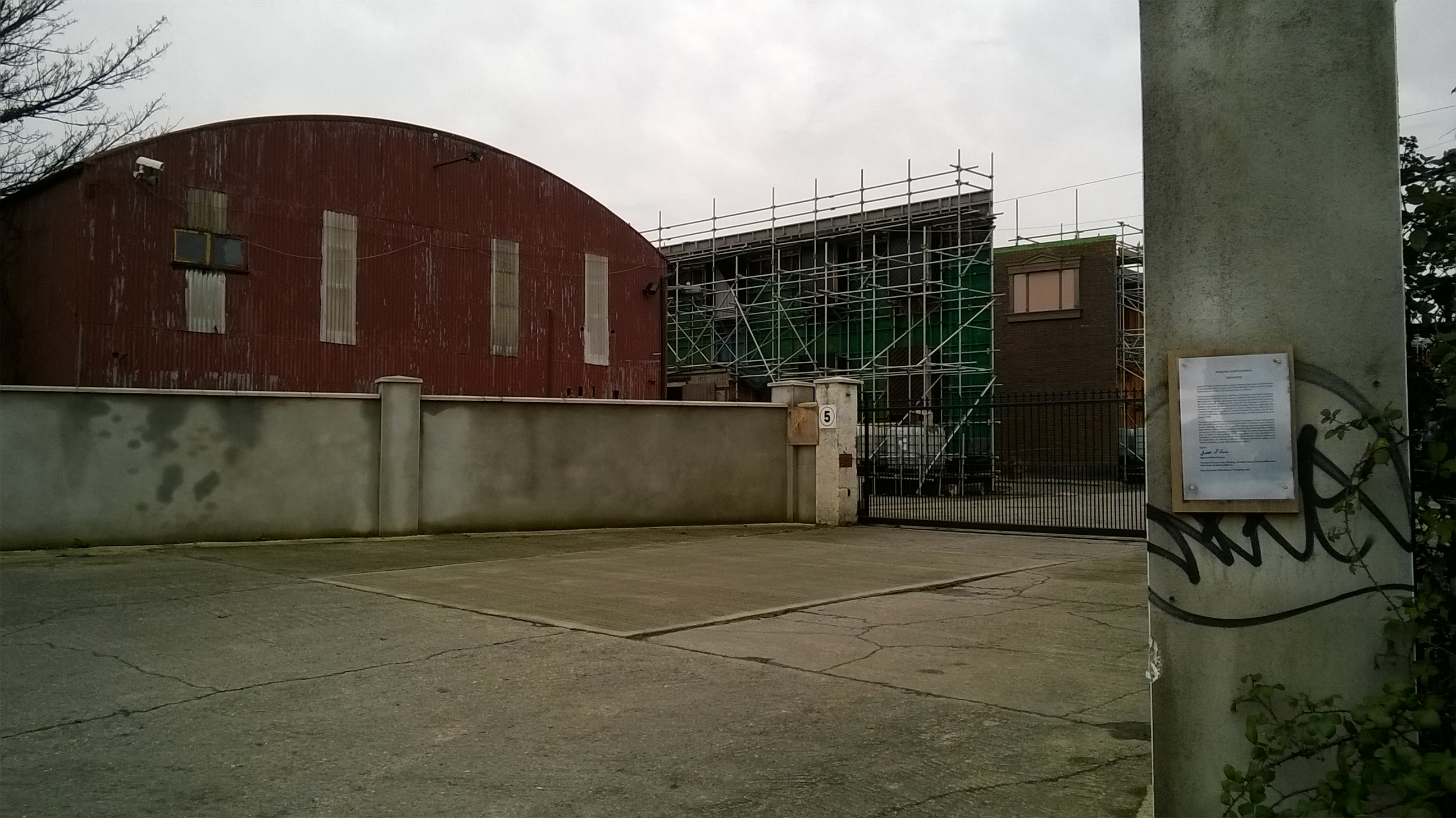
Eimear Dodd investigates the many concerns surrounding the sale of Ardmore Studios.
Tag: news
-

Super Bowl in Dublin: a reflection of acceptance
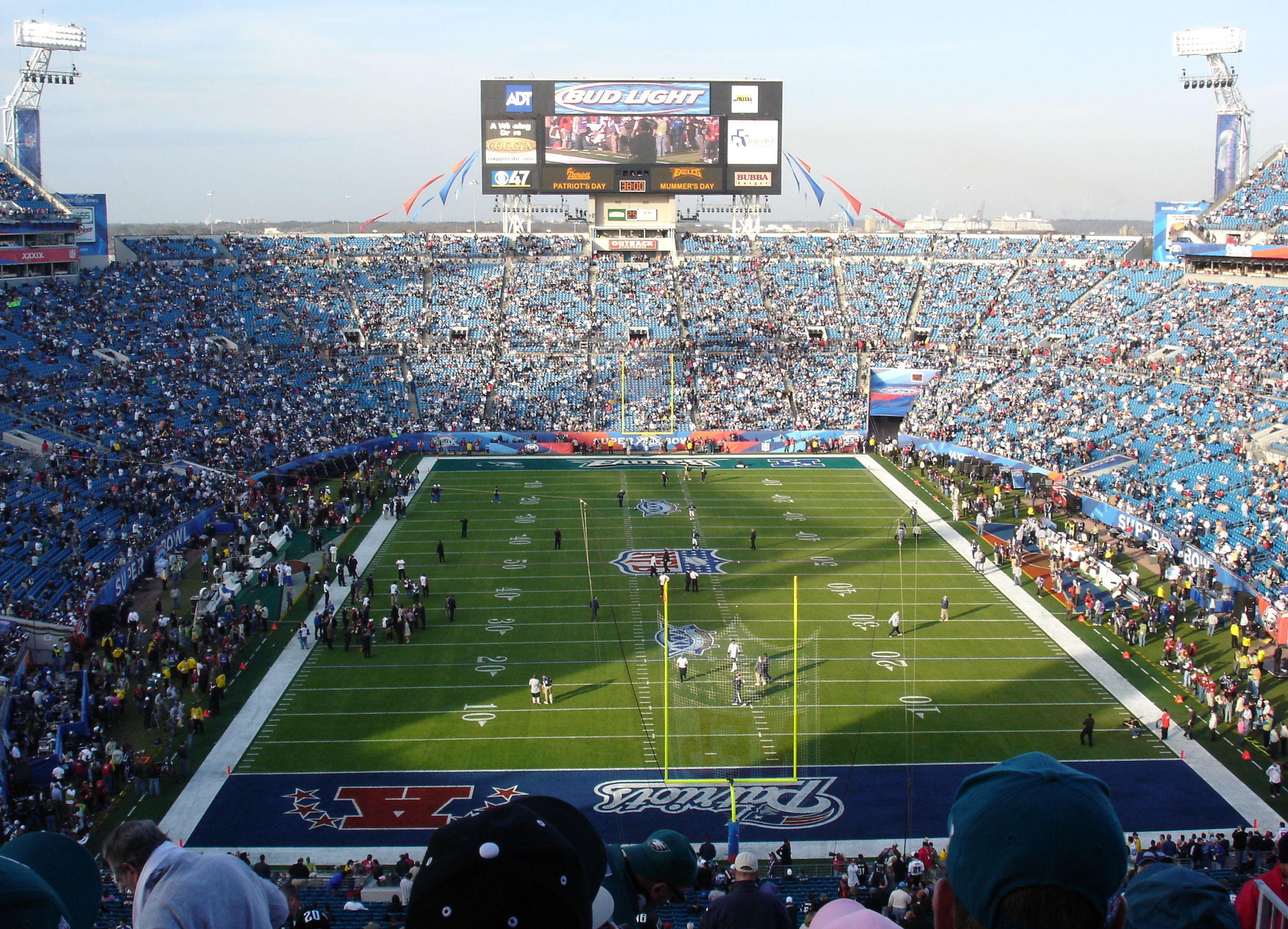
With the Super Bowl only days away and American Football on the ascension, Gary Ibbotson takes a look at how America’s game has been embraced by us Irish.
-

Total number of vehicles clamped or towed decreased by nearly 4,000 in Dublin since 2011
By Alastair Magee and Liam McInerney
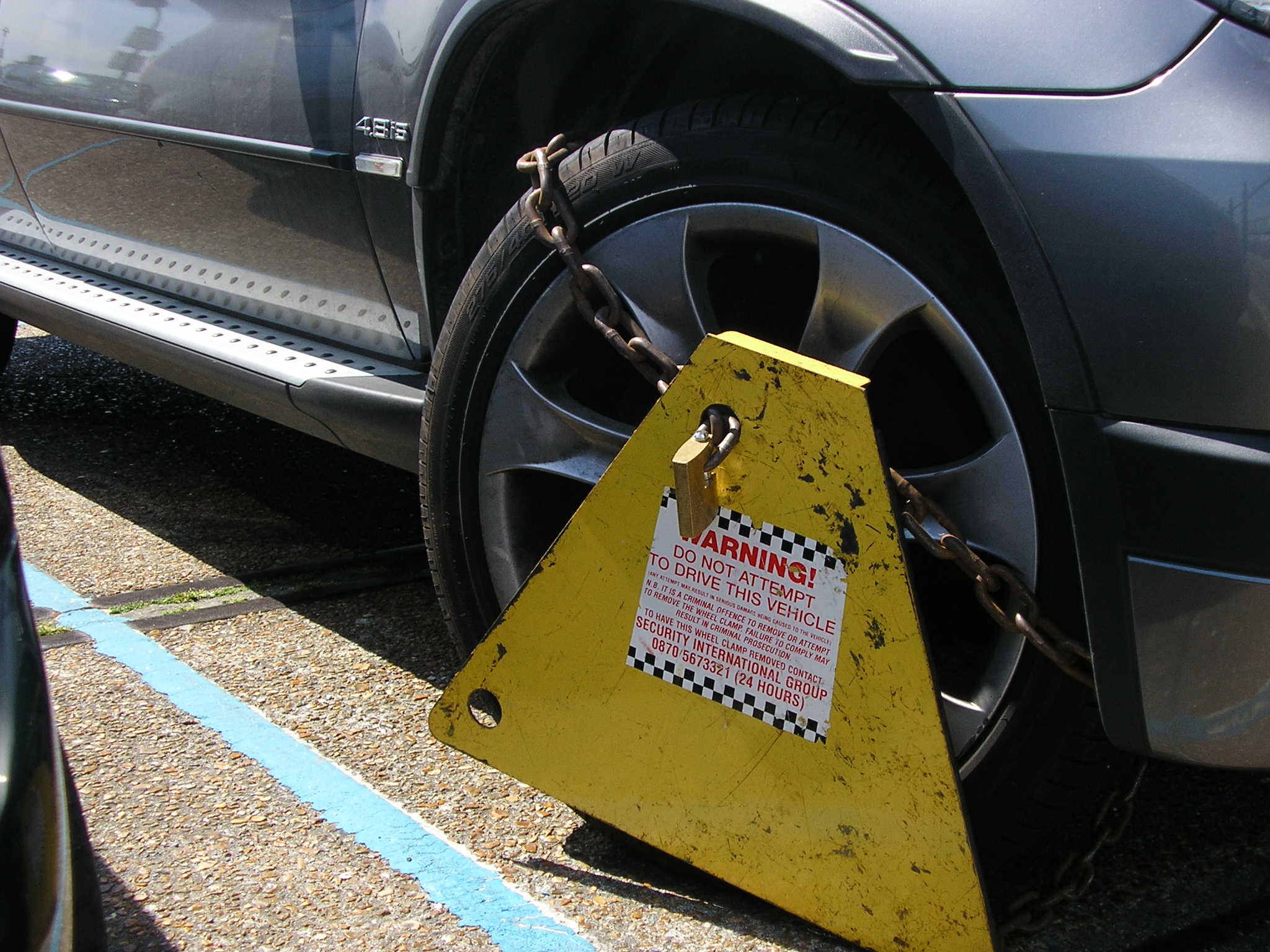
The total number of vehicle enforcements carried out by clamping company Dublin Street Parking Services (DSPS), decreased steadily in the last five years, despite a target of 60,000 being set by Dublin City Council (DCC) in 2014.
The number of vehicles clamped, relocated or towed last year fell to 54,715, a significant decrease from 58,575 in 2011, according to figures released to TheCity.ie under the Freedom of Information Act.
Last year’s decrease in enforcement followed a two-year period where the numbers averaged 56,443.

(Source: Alastair Magee and Liam McInerney) Currently, it costs €80 to have your car de-clamped by Dublin Street Parking Services (DSPS), the company that runs Dublin City Council’s parking services contract.
In his annual report for 2015, the city’s parking appeals officer, Bill Keilthy, proposed that this figure should be increased to deter consistent illegal parkers.
He argued that they should pay more than double the current standard clamp-release charge.
The number of vehicles removed to pounds in Dublin witnessed a steady increase from 344 in 2011 to 494 in 2015.

(Source: Alastair Magee and Liam McInerney) Vehicles can be towed away for several reasons. These include:
- If your vehicle causes a hazard or obstruction, e.g. on a clearway.
- If your vehicle is illegally parked, e.g. on a double yellow line.
- If the time allowed on a Pay-and-Display ticket (max. 3 hours) has expired.
Dublin City Council planned to enforce stricter measures to combat the number of illegal parkers in the city this year and the annual report will show if any of these were successful.
-

Number of road deaths has increased by nearly 25% from 2015
By Kieva McLaughlin
Some 163 people have been killed on Irish roads so far in 2016, compared to 131 people at this time last year. Specific figures will not be released until early next year, but trends that were looking optimistic after last year aren’t holding up.

Source: Wikipedia Looking at the figures and statistics on road deaths last year and over the last 10 years can help discover what kind of trends are occurring and who is most at risk.
Road deaths were the second lowest in Ireland in over half a century in 2015. Mayo had the highest number of fatalities per 100,000 people (10), while Dublin had very few, with just 1.3 per 100,000.
Dublin (17) and Cork (16) had the highest number of road fatalities in Ireland (because of their high populations) while Roscommon and Waterford both had no road deaths. Cathal Lynch from the RSA said that even though the two counties had no road fatalities last year, “It’s impossible to infer a trend from just one year of data,” so this does not necessarily mean they will continue on this course.
Some 29% of people who died in 2015 were not wearing seat belts, which could have been the deciding factor in their death. Almost one in three collisions were alcohol related with even a small amount of alcohol increasing the risk of being involved in a fatal crash. A shocking one in ten drivers (284,000) admitted to drinking before driving in the 12 months prior to November 2015, with 2 out of 5 of these drinking two or more drinks.
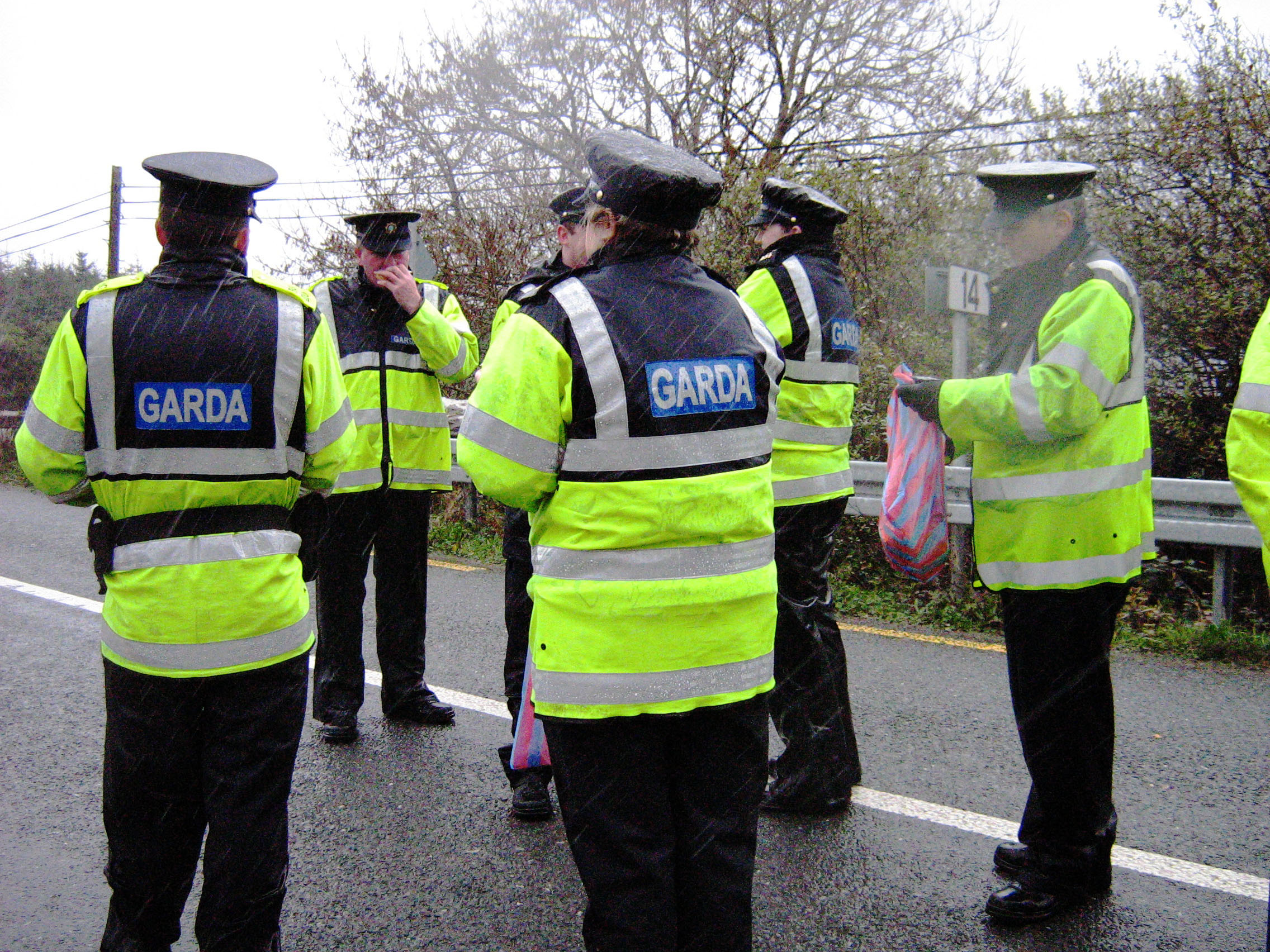
Garda Grace Byrne of Blackrock Garda station said, “People might see the stereotypical drink driver as a man having a few pints after work and then driving home. But I have noticed in recent times that there is an increase in young females being arrested for drink driving.” She has also noticed that there are more people being arrested the morning after, “they’ve been out drinking the night before and are still over the limit the next day, without even realising.”
Donegal has had the highest number of fatalities for its population continuously in the past decade, with 18.3 per 100,000 in 2005, but is making improvements, going down to almost a third of that in 2015 with 6.8 deaths per 100,000. In the last five years Roscommon has gone from 14 in 2010 (per 100,000 people) to 0 in 2015. Dublin and Cork are steadily getting lower and Galway had a huge drop from 2005 (9.1) to 2010 (2.4) but rose again in 2015 (4.8).

Created by: Kieva McLaughlin In 2015, the most vulnerable age group was 16- 25 year olds with 27% of all road fatalities. The elderly had the second highest number of road deaths with 19% and the 26-35 year age group closely followed with 17% of all the road fatalities.

Created by: Kieva McLaughlin The highest number of road deaths are drivers, totaling 46% of road fatalities in 2015. Vulnerable road users (pedestrian, motorcyclist and pedal cyclist) accounted for 38% of road deaths with the highest number being pedestrians. This was only down 2% in 5 years from 21% in 2010 to 19% in 2015.

Created by: Kieva McLaughlin A total of 76 drivers were killed in 2015, this is the same number as 2014 and down from 91 drivers in 2010.
Younger drivers were most susceptible, accounting for 25% of all drivers killed (16-25 years). The majority of driver fatalities occurred on country roads, and in particular on roads with a higher speed limit (shown below). Garda Grace Byrne thinks the main reason for accidents in Ireland is speed, “Speed is a killer, the faster you are driving and collide with a vehicle the less likely your chances are [of surviving].” As shown below, males accounted for 76% of driver fatalities.

Created by: Kieva McLaughlin Speed Limit No. of Deaths 30 km/h 1 50 km/h 6 60 km/h 6 80 km/h 31 100 km/h 29 120 km/h 3 Total
76
Table 1 (Created by Kieva McLaughlin, Figures Source: RSA)
In 2014, almost 25,700 people died in European Union countries. Over 200,000 people suffered serious, life changing injuries. However, in 2000 very few EU member states had a fatality rate lower than 8 deaths per 100,000 inhabitants but in 2014 there were only 5 EU countries with a fatality rate higher than that. There were a total of 5,700 less deaths from 2010 – 2014.
Malta, the Netherlands, the United Kingdom, and Sweden had the lowest number of fatalities, all below 3 deaths per 100,000. Lithuania, Bulgaria, Romania and Latvia had the highest number of road deaths all having 9 or more per 100,000. Latvia had the highest with 10.5 road fatalities per 100,000 people living there.
The road fatality rate of nearly every country lowered from 2010 to 2014 except Latvia which rose from 10.3 to 10.5 (per 100,000). Sweden and Lithuania both increased by 0.1 each and Estonia stayed constant at 5.9 deaths (per 100,000).
The EU average in 2010 was 6.3 and lowered to 5.1 in 2014. Ireland was below the EU average both years going from 4.7 to 4.3. An EU road safety plan wants to reduce the road deaths by half from 2010 to 2020. Although the rate has lowered by around 19% since 2010 it has only lowered 1% from 2013 to 2014. This means the rate is slowing down rather than speeding up, which, if continued at this rate, will not reach the EU’s goal.
Pedestrian fatalities are not decreasing as much as the overall rate, with 22% of all killed on the roads in 2013 being pedestrians. Pedestrians are at a higher risk in urban areas and the elderly are particularly vulnerable. Ireland was below the EU average at 18%. The Netherlands, Finland, Belgium and France were all below 15% and in Poland, Latvia, Lithuania and Romania over a third of people killed were pedestrians.
The EU has the lowest fatality rate of any region in the world, with the USA having double its rate at 10.2 (per 100,000) in 2014.

Created by: Kieva McLaughlin Footnote:
Country Abbreviations: AT Austria, BE Belgium, BG Bulgaria, CY Cyprus, CZ Czech Republic, DE Germany, DK Denmark, EE Estonia, EL Greece, ES Spain, FI Finland, FR France, HR Croatia, HU Hungary, IE Ireland, IT Italy, LT Lithuania, LU Luxembourg, LV Latvia, MT Malta, NL Netherlands, PL Poland, PT Portugal, RO Romania, SI Slovenia, SK Slovakia, SE Sweden, UK United Kingdom.
-

The number of people receiving jobseeker’s benefits is decreasing
By Colm Phelan
The number of people who are claiming jobseeker’s benefits is decreasing, after September 2016 saw the lowest numbers for over forty years.
In 2009, the number of people claiming jobseeker’s benefits rose significantly due to the economic crash.
However, since then the numbers have been on a steady decrease, with 2016 posting the lowest numbers since the surge in 2009.
According to official statistics from the CSO, September of this year recorded the lowest amount of people who are receiving weekly pay on the Jobseeker’s Benefit Scheme.
In September, it was recorded that 37,097 people had claimed from one of the three categories. This is the lowest amount for a single month since October 1974, which recorded 33,954 claims.

Source: Colly Phelan The three categories refer to the amount of pay received per week, with a maximum of€188.00 a week allocated for those fully qualified. The qualified adult rate is €124.80, with the child rate standing at €29.80 as of July 2015.
Jobseeker’s benefits are a social insurance scheme, set up to help those who are unemployed and provide them with a means of income.
A person who is unemployed has the right to claim jobseeker’s allowance providing they are capable of work and are both available to work and genuinely seeking work.
The jobseeker’s scheme also allows those who do find part time work to claim pay for the days which they are not working.
However, the amount of applications for jobseeker’s benefits is still rather high. In fact,according to statistics on the CSO website, 2016 has a similar amount of applications as previous years, even surpassing 2009 (per month) which had the highest number of people getting their applications accepted.

Source: Colly Phelan (Per month) Although the 2016 figures feature only nine months as opposed to twelve, recent years show that application figures throughout the year remain fairly consistent.
The largest increase in applications came in 2009, where the numbers jumped from 150,856 in January, to 239,079 applications in December of the same year.
The year of 2015 showed a decrease in applications from January to September, from 243,877 to 218,941 respectively.
Recent information about wait times in relation to claiming social benefits revealed that jobseeker’s claims have the quickest response time of two weeks. Child benefit claims have been recorded to take up to twenty-eight weeks.
-

Supermarkets blamed for Thomas St. butcher’s closure
By Harry Hatton
One of the longest running businesses in The Liberties closed its doors for the final time on Saturday, 29th October.

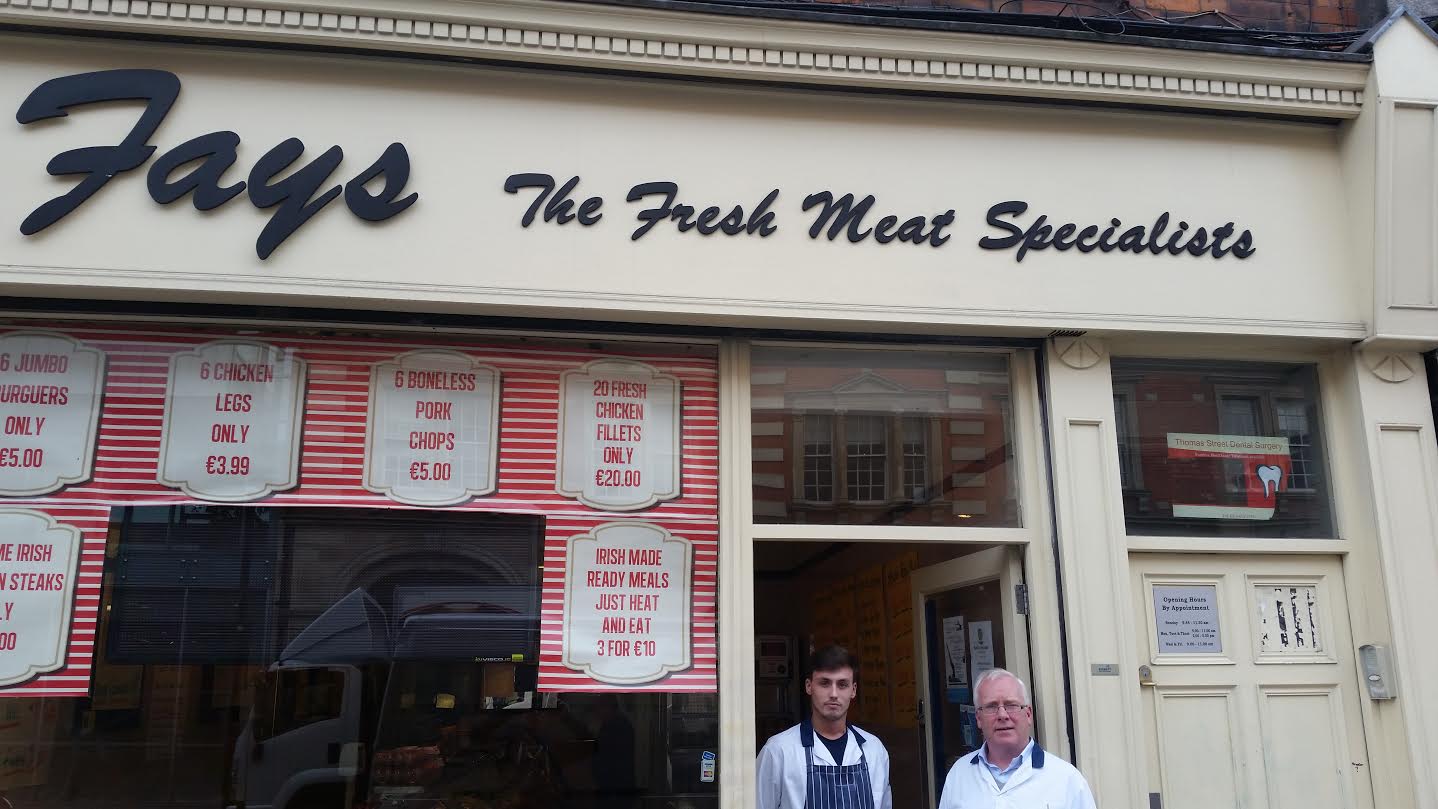
Source: Harry Hatton Fay’s Butchers on Thomas St., owned by Vivian Walsh, was a part of the south inner city street since 1973. Fay’s was a fourth generation business that was around since 1899, when it was opened first by Walsh’s great grandparents.
The initial owners of the business were the Fay’s and the surname has remained over the shop front even with its relocation to Thomas St. 43 years ago.
Walsh worked for his father in the Thomas St. shop before becoming the sole proprietor in the 1990’s. He also owned a meat brokerage company, called ‘Vivian Walsh Wholesale Meats’, but that business finished trading in 1992.
At one stage Walsh had up to 10 employees in his store but had only two members of staff at the time of closure, including his son Harry.
Walsh initially thought of closing the business two years ago and cited supermarkets in the area, such as Lidl across the road, as a primary factor in his decision.
“I took in 12 to 14 pound of fresh Irish turkeys at 22 euro each, [then] selling them for €29.99. The same week Lidl came out with 12 to 14 pound turkeys retailing €16.99. Thirteen euro cheaper than I was selling them and five euro cheaper than I can buy them.
“They’ve reconfigured the shop (Lidl) in Thomas St. They’re very clever in what they do. There used to be 50-50 dry goods and chilled, now fridges take up 75% of the space. It’s all meat and it’s all my customers.
“I picked up a receipt six months ago and it was for Lidl for €38. Thirty two (euros of the receipt) was meat. Thirty two of it was mine. This whole thing about putting a microphone under a woman’s nose asking her where she buys her meat and saying local butchers, that is a myth,” said Walsh.
Despite closing the long running business, Walsh will continue to work in the meat industry. “I have an opportunity to do a new project in the same type of business so I said I am going to do it. I was going to hang on until Christmas then I got a call to say that they need me now,” he told us.
Fay’s is the third butchers in The Liberties that has closed down in the last year, after both Dunne’s and Larkin’s on Meath St.
-

Suicide Rates hit 14 Year Low, According to Figures
By Kieva McLaughlin
In 2001, 13.5 out of every 100,000 people in Ireland died by suicide, a rate of death that has never been exceeded since. The lowest rate of suicide over the last fourteen years was in 2015, with 9.7 out of every 100,000 people taking their own life.
The numbers of suicides have generally been steadily decreasing since 2001. However, this stopped between 2008 and 2012, and the rate of suicide fluctuated between 11.1 and 12.4 per 100,0000 people during the recession. The numbers then returned to the 2007 rate of 10.6 in 2013 and have continued to decrease since then.
The increase in suicides between 2008 and 2012 can at least partly be attributed to the recession. Increased unemployment combined with depression and substance abuse was found to be some of the main factors in people taking their life during this time, according to a report by the Suicide Research Foundation.
During the recession, many people lost their jobs and had no means to support their families and in a lot of cases lost their homes. Psychotherapist Olivia Fox talks about how challenging being unemployed can be for people.
She said: “It can lead to depression and a feeling of worthlessness. In general, we could see an increase of hopelessness as people who had worked hard to get a job and a roof over their head saw their life work wiped out overnight.
“Even in this modern world of gender equality, men often psychologically feel the burden of being the ‘provider’ and when they can no longer do so, the resulting depression, pressure and hopelessness can have devastating consequences on the mental health of some.”
The suicide rates during the recession were not in fact higher than some of the early Celtic Tiger years but rather returned to higher figures after a decreasing trend in the previous few years.

(Source: Kieva McLaughin) Gender
In 2015, nearly five times as many males died by suicide (375) in Ireland as females (76) and again it’s important to point out that last year’s figures are provisional. We do however, have one of the highest rates of male suicide in the world with nearly eight males taking their lives every week.
Only 25% of males who take their own lives have a history of self-harm in comparison to 50% of females. Under 40% of males are diagnosed with a psychiatric disorder before taking their life while 70% of females are. More women contemplate and attempt suicide than men so where does the big gap come from?
Olivia Fox attributes it to the fact women are less likely to follow through when they think about the consequences.
“Men are more likely to act impulsively there and then without giving consideration to the outcome. Also the method people use to take their own life causes a disparity in the sexes. Women tend to overdose whereas men tend to use more violent methods, such as hanging or shooting which are more likely to result in death.”
Another reason she explains is that, “Men are less likely to talk about their feelings or express emotion. This can result in them isolating themselves from any personal or social supports and in them drinking more. Alcohol involvement in death by suicide seems to be higher in men than women.”

(Source: Kieva McLaughlin) Area
The area with the most suicides in 2015 was Carlow, with 21.2 suicides per 100,000 people, more than the double the national average.
The figures show a large disparity from cities and their surrounding rural areas. Waterford City reported no suicides in 2015 but the rate more than doubled in the county area from 8.8 in 2014. Galway City had a small increase from 11.1 per 100,00 in 2014 to 12.7 in 2015, but the surrounding county area’s figure rose more dramatically from 10.2 to 17.4.
-

Following the Presidential Election: Candidates Struggle to Meet the Finish Line
By Cáitríona Murphy
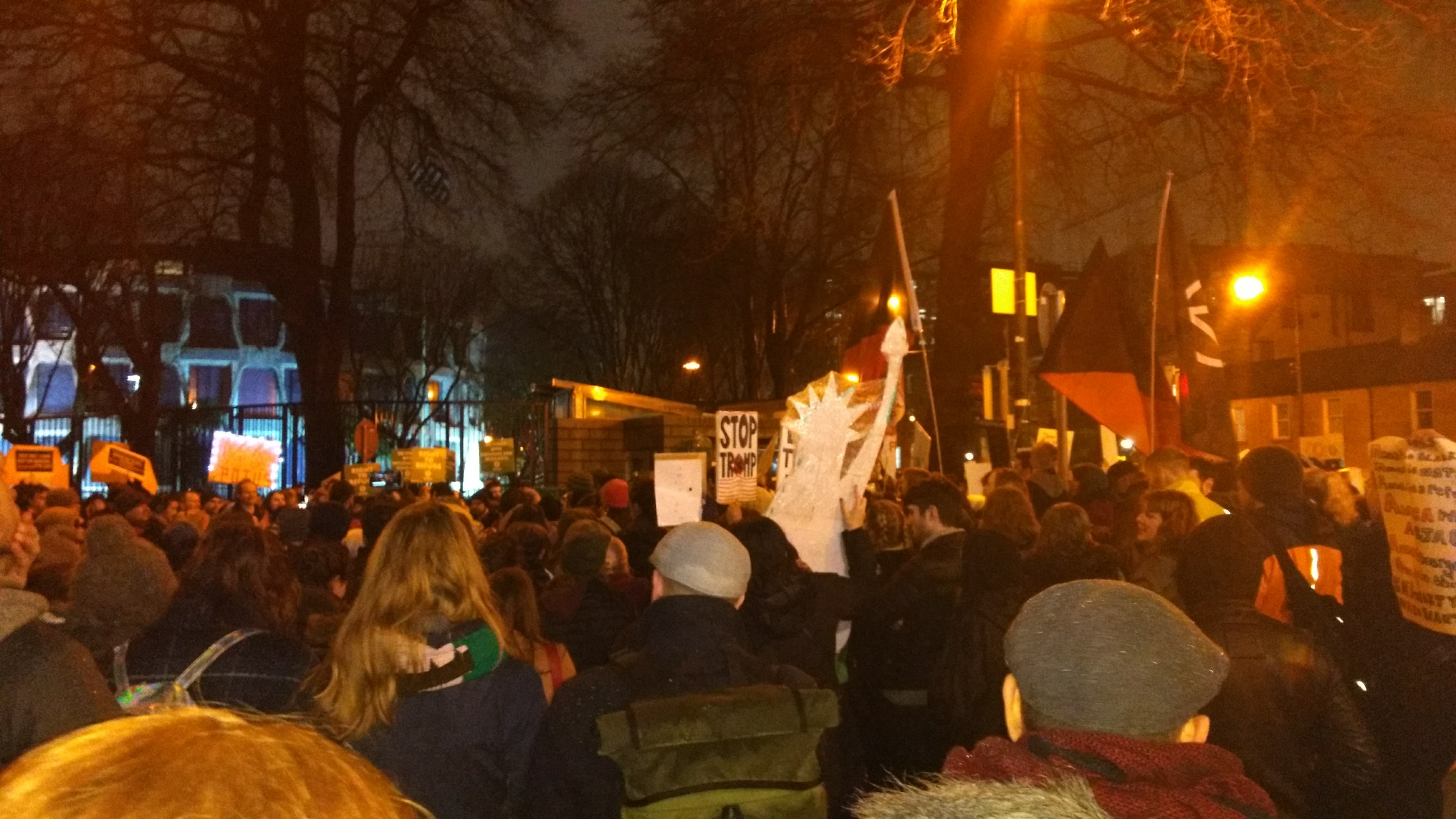
In the third of a series of articles looking at the US Presidential Election, The City’s Cáitríona Murphy fills us in on the events that have unfolded over the past ten days, including the third and final debate, and the effect that it has had on the election.
As both candidates try to prove their worthiness, outside actors shed light on each candidate’s questionable past, and spectators watch as their reputations diminish. The question now is not who is the best candidate but who could the American people stomach to see in the Oval office?

Source: Wikipedia Unsurprisingly, following the emergence of Trump’s 2005 ‘backstage at American idol’ video an array of women have come out of the woodwork accusing Mr Trump of inappropriate behaviour and sexual misconduct; including groping and making unwanted advancements.
In Thursday night’s debate, Trump told the mediator Chris Wallace that “those stories have been largely debunked” in response to the allegations from nine women. Trump insisted that the emergence of these women this week was either orchestrated by the Clinton’s campaign team or that these women just wanted their “10 minutes of fame”.
Although it is unlikely that Trump will actually be charged with sexual assault, these allegations have caused the – already divided – Republican party to split even further.
However, Clinton has not exactly had the best week either as the controversy surrounding her emails has once again blown up in her face after Wikileaks published around 20,000 pages of emails illegally stolen from John Podesta, her campaign chair.
The emails don’t really expose any new information about Clinton but rather shows us the inner workings of how Hillary Clinton works politically.
The emails have provided more details of the questionable relationship between the Clinton Foundation and its donors, her ties with big business in Wall Street and other wealthy campaign contributors.

Source: Wikileaks The text on the left is parts of Hillary’s speeches that she was paid an exorbitant amount of money to make at Goldman Sachs events, and the highlighted text shows the close relationship that she has with high profile Wall Street companies. She discusses her military tactics with the Wall Street company. “My view was you intervene as covertly as is possible for Americans to intervene,” she said. And she exposes her true economic policies in terms of regulation, “People that know the industry better than anybody are the people who work in the industry.”
Clinton is a walking contradiction when it comes to Wall Street and regulation. Up until now, she has walked a fine line between what she says to the public and what she means. However, this is not news, she has been questioned and attacked about her ties to Wall Street and all Wikileaks has done is confirm her contradictions.
The email on the right (above) is an example of the ethical difficulties that face the Clinton Foundation. This email is discussing how representatives from Qatar were hoping to get “five minutes” with former President Bill Clinton while in New York to present him with a $1 million check for his foundation as a birthday gift.
Ethical issues arise from this as the ties that the foundation has to foreign governments and financiers are unhealthy, and it raises questions about whether or not these donations are being used to buy favours from Hillary Clinton, considering at the time that this email was sent, Ms Clinton was the country’s top diplomat
This is nothing that she can be sent to jail for, and these assumptions can not be confirmed, but it does shed a light on the inner workings of the Clinton’s political dealings in the past, the foundation and Clinton’s campaign.
For anyone reading the emails and speeches that were published by Wikileaks, it may make a voter uneasy but would not exactly inspire any Democrat to go out and vote for Trump, especially after hearing some of the allegations made by his accusers.
Before the final debate on Wednesday, nine women had come forward with stories of groping and unwanted advances from Mr Trump which he denied when questioned about; “I didn’t know any of these — I didn’t see these women,” he said.
Since the debate a tenth woman has come forward, Karena Virginia, a yoga instructor and life coach from the New York region. She said she was 27 at the time and was waiting for a car to take her home when Mr Trump grabbed her right arm and “then his hand touched the right inside of my breast,” Ms Virginia said.
Getting down to brass tacks: the real policy issues
Both candidates had a tough week but both candidates also performed well on the night of the debate and the mediator Chris Wallace managed to focus the debate on important policy issues far more successfully than the mediators did at the previous debates. After every issue, each candidate was given two minutes to speak and granted brief rebuttals if necessary making it overall a successful debate for the audience and candidates alike.

Source: Flickr It was important for each candidate to get their final remarks on the topics that can make or break their campaign. What is most notable about any debate is where the candidates differ and in this case it was abortion, gun laws, immigration and the handling of the economy (specifically taxes).
In the case of abortion and gun laws, Trump assured the audience that he would appoint pro-life judges to the supreme court who “will have a conservative bent, and will be protecting the Second Amendment”, which is the amendment that gives the citizens of the US a right to bear arms.
Trump believes that the Constitution is sacred and should be interpreted how the founding fathers wanted it interpreted, whereas Clinton, along with most democrats, believes that the Constitution is a living document. She said in the debate on the issue of the Supreme Court that “it is important that we not reverse marriage equality, that we not reverse Roe v. Wade,” which was the landmark case that extended the right of privacy to a woman’s decision to have an abortion.
In terms of guns laws and the Second Amendment, in usual Hillary Clinton fashion, she tows the line and tries to stay to the centre as we saw in the debate. “I understand and respect the tradition of gun ownership. It goes back to the founding of our country. But I also believe that there can be, and must be, reasonable regulation,” she said. Whether she believes it or not, Clinton knows that she cannot afford to lose the vote of the gun owners in America.
One vote that Hillary Clinton can always rely on is that of the minority groups specifically the votes of the African-American, Latino and Hispanic communities, especially in this election. Trump has spouted particularly racist rhetoric since the beginning of his campaign and one can go as far as saying that one of the foundation policies of his campaign is his idea to build a wall between Mexico and the United States. Two weeks before the election is due to take place, nothing has changed as we heard in the debate; “Now I want to build a wall. We need the wall. The border patrol, ICE, they all want the wall. We stop the drugs, shore up the border,” he said.
Clinton’s political experience really shone through at this point in the debate as she took what Donald said and reinterpreted it for the audience, “Now, here’s what that means, it means you would have to have a massive law enforcement presence, where law enforcement officers would be going school to school, home to home, business to business, rounding up people who are undocumented, and we would then have to put them on trains, on buses, to get them out of our country.”
In this one sentence Clinton appeals to both Democrats and Republicans as she outlines how Trump’s plan would cost the country billions. As well as the cost of such an operation, this one sentence would send a chill down the spine of every conservative Republican who has nightmares about mass state intervention.
And finally probably the second biggest topic of the whole election was of course the economy and how each candidate plans to stimulate it and increase the historically low rate of GDP growth. And once again the ideological split is seen. Typical of a liberal Democratic candidate Clinton tells the audience that she wants to raise taxes and raise the minimum wage. She criticises Trump’s economic policies as she says he uses ‘trickle down’ economics that favour the wealthy and privileged whereas she “will not raise taxes on anyone making $250,000 or less,” she said.
In contrast but a stance typical of the Republican Party Trump says that, “We’re going to cut taxes massively. We’ll cut business taxes massively.” The point in doing this is to incentivise companies to stay in America, which will therefore create employment.
If voters were only to look at each candidate’s policies and political beliefs their job on the 8th of November may not be so difficult but when the voters begin to consider all of the outside and personal factors of Trump and Clinton the choice is not as clear cut. Clinton appears to be gaining ground at the moment but I truly believe the air of uncertainty that has developed over this election will remain until the last ballot is counted.
-

Focus Ireland launch charity events to help tackle homeless crisis
As it stands, up to 5,000 people in Ireland don’t have somewhere to call their home this Christmas, with families sleeping rough, living in emergency shelter or temporary accommodation.
In 2014, Focus Ireland, the country’s leading charity that works with homeless people, found themselves supporting over 11,000 men, women and children.
Speaking to The City, Rebecca Reynolds of Focus Ireland said:
“We have a new type of homelessness, which is coming from a result of economic difficulties.We’re trying our best to meet demands for our services, but demand on us has increased in some places by over 40% in the last few years.
“Fundraising is so necessary to ensure that we can provide these services that people are looking for and that people need,” she added.
This year, the charity is doing as much possible to continue their service, organising a whole host of bucket collections and events around the country.
“We have several collections organised for December,” said Rebecca.
The charity had a huge collection in the Blanchardstown Shopping Centre on Wednesday the 9th of December, with another bucket collection arranged for Friday December 18th in Dundrum Shopping Centre.
Meanwhile, the charity are aiming to raise slightly more money with a bigger event in Waterford.
Focus Ireland have arranged for a charity concert, also on Friday December 18th, in Waterford’s Christchurch Cathedral, with tickets priced at €15.
Musicians playing at the show include Ashley Loftus from The Voice, Dermot Doyle and The Trinity Gospel Choir.
Speaking about the upcoming events, Rebecca said, “We’re hoping to raise a lot of money. People are very willing to give their time when it comes to a charity event.
“The money raised goes into funding for services all around the country, and then it goes to where it’s most needed.”
Donations for the charity can be made at any of the organized collections, or simply through their website www.focusireland.ie.
-

City of a Thousand Welcomes
Have you ever wondered how to show off your knowledge of our fair city, meet new people and get a free beer or coffee in the process? Well then the City of a Thousand Welcomes programme may be just the thing for you.
Coordinated by The Little Museum of Dublin, the programme is an award-winning civic initiative which allows tourists to sign up and be matched with an ‘Ambassador’ from Dublin. They then schedule to meet for a free coffee or drink, with the Ambassador providing the tourist with an authentic view of Dublin, free of charge.
Sponsored by organisations such as Fáilte Ireland, KPMG, Luas Cross City and Dublin City Council, the initiative has consistently grown since it first commenced in 2011.
“Well when we first started the programme we were hoping to get 1,000 volunteers, but within the first few weeks we had over 2,500 people looking to volunteer. Since then, we run at capacity of 2,000 visitors each year,” Simon O’Connor from The Little Museum of Dublin explains.
According to Simon, many of the Ambassadors are retired and semi-retired professionals, however a small number of students are involved in the programme as well.
Interested individuals must be over 21 and can apply online. The process also requires that you fill out a short questionnaire and take an online quiz that tests your basic knowledge of the city.
If successful, potential Ambassadors are then invited for an informal interview in The Little Museum of Dublin, where a representative of the programme will assess the candidate’s suitability, as well as asking for some general information about the candidate and their interests.
With summer positions usually filling up by March, Simon explains that despite the programme’s popularity, they are hesitant to expand the initiative for fear of it becoming commercialised.
“The programme runs so well at the moment, we have a 100% immaculate customer service… and our ambassadors are absolutely brilliant. We’ve had four years of proofing the programme in a way, but of course it’d be great if the programme was at a stage where every Dubliner felt it was obligatory to even take part and meet a tourist once,” he said.
“However we don’t up-sell and we resist the temptation to commercialise the service,” he added.
Simon admits that tourists are sometimes “baffled” by the fact the service is free. “They always wonder what the catch is, but then we just have to tell them that there is no catch,” he said jokingly.
Well with no catches involved and the chance to meet new people and a free drink, what more could you want?
For more information about the service, just visit their website here.

You must be logged in to post a comment.