Tag: Profile

  • ‘Rome wasn’t built in a day’: Emily O’Donnell on fashion, TV, and her rise to the spotlight  

    ‘Rome wasn’t built in a day’: Emily O’Donnell on fashion, TV, and her rise to the spotlight  

    Award-winning stylist and fashion broadcaster Emily O’Donnell reflects on the hard work, persistence, and passion that shaped her path in fashion and Irish television.  

    By Peace Okolo

    When Emily O’Donnell was announced as Best Celebrity Stylist at the Gossies 2026 award show, her reaction was anything but rehearsed. 

    “I was genuinely speechless,” she said. “I rarely am.” 

    For someone who has spent over a decade in front of the camera, that moment was refreshingly human. 

    “I think this award meant so much because it was unexpected,” she said. 

    “I was just really grateful to win it and to stand there on the stage in the RDS is just a moment I’ll never forget.” 

    This was an unfiltered moment in a career that mostly looks effortless from the outside, but is built on years of uncertainty, persistence, and behind-the-scenes work that most people never see. 

    “Rome wasn’t built in a day,” she said.  

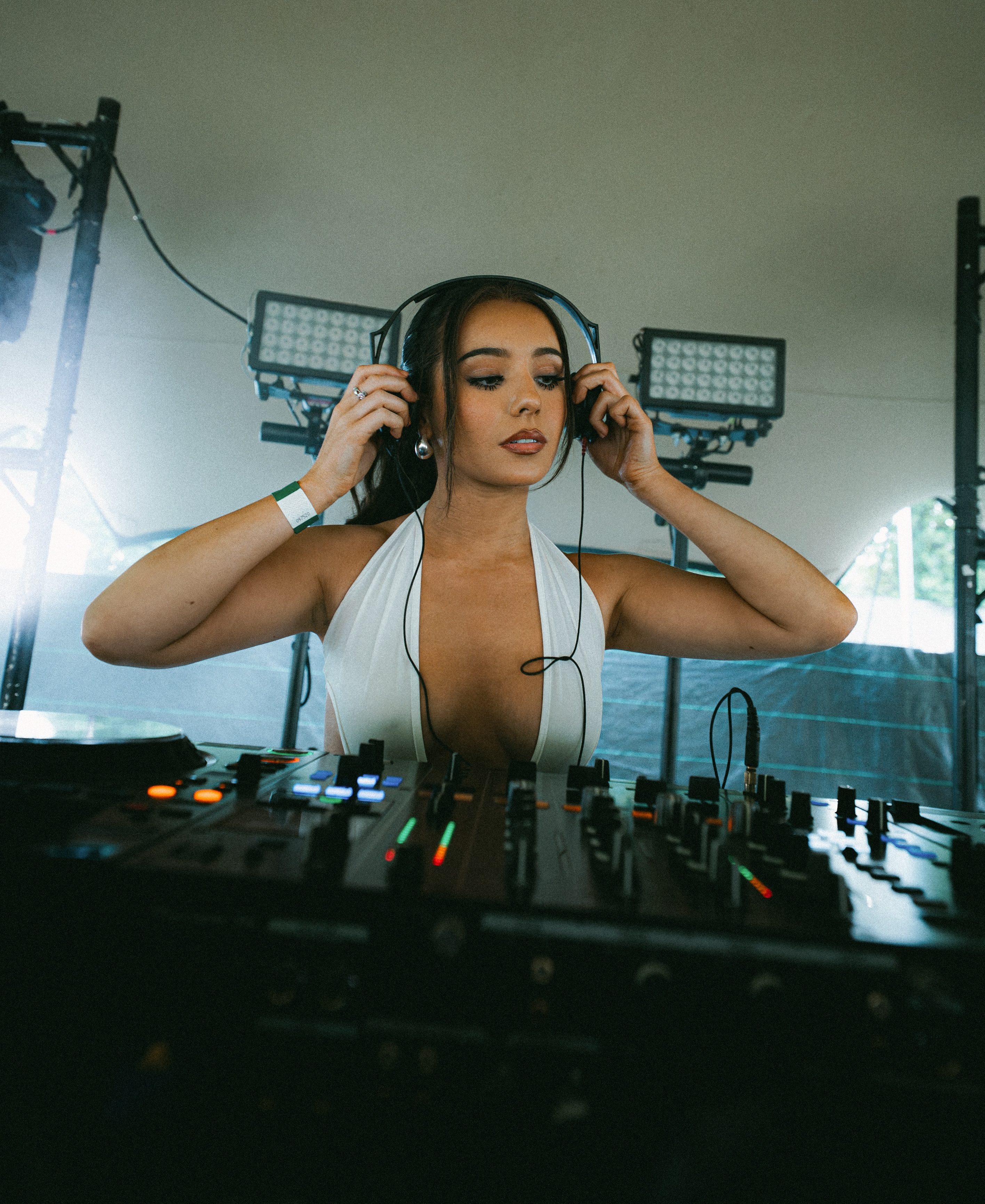
    Emily O’Donnell at the Gossies 2026 Award. Photo credit: Instagram 

    Now a familiar face on Irish television, Emily’s journey did not start in front of the camera, but in lecture halls and corporate offices. 

    “I started off doing a business degree and then a master’s in PR,” she said.

    “But even then, I always gravitated towards fashion, but I didn’t know how to turn that into a career at the time.” 

    Armed with a business degree and a master’s degree in public relations, she initially followed what she describes as the “predictable” route into corporate PR.  

    But it didn’t take long for her to realize it wasn’t where she belonged. 

    “I was using the degree and the master’s that I had, you know, worked really hard for, but I just felt I wasn’t creatively fulfilled,” she said.  

    “I didn’t want to spend the next 40 years of my life staring at a computer.” 

    This realisation marked a turning point in her career, where she decided to explore styling, a role that wasn’t widely understood in Ireland at the time.  

    “At that stage, people didn’t really know what a stylist was,” she said. “This was many years ago in Ireland, where there wasn’t as much opportunity in the creative fields for women to a certain extent.” 

    Emily O’Donnell in a live television studio. Photo credit: Instagram 

    Emily’s early career was defined by taking every opportunity she could find.

    From writing for emerging online fashion platforms to working behind the scenes on shoots, she slowly combined her interests in fashion, media, and storytelling. 

    Instead of waiting for the perfect opportunity, she started where she could – assisting stylists, taking courses, and saying yes to anything that gave her experience.  

    “I don’t know anyone who works in television who just walked in and sat down on the stool or the couch and started presenting at, like, top level,” she said.  

    “Everyone has made coffee, carried equipment, or assisted in shoots. You learn every part of the business from the ground up.” 

    Then came the opportunity that would eventually change everything.  

    Emily got a call from a producer and was asked to take part in a television pilot, to which she said yes, even though she wasn’t fully sure what to expect. 

    “It was a pilot show for RTE about a cultural exchange between two generations. That show ended up winning an IFTA (Irish Film & Television Award) in 2008 for Best Reality Program,” she said.  

    “That’s when a producer told me I had the ‘gift of the gab’,” she said. 

    “But she said, to become a presenter, you need to be a presenter of something.” 

    For her, that “something” was always going to be fashion.  

    What followed was another pivot in her journey. She went back to education, this time to study television production and presentation, while friends around her settled into more traditional life paths. 

    “At the time, I was wondering, is this ever going to pay off?” she said.

    “But now that I look back, I feel I was being guided in the right direction all the time, even though it was a longer road, it was the road to where I was meant to be.”  

    That moment marked the beginning of her transition into live television and broadcasting. 

    After completing professional training in TV production and presentation, Emily began combining freelance styling with media work, eventually landing a role on a regional TV show that would run weekly for over two years. 

    “I got a call from someone in the business about a new station called Irish TV. They were looking for presenters and asked if I could meet them at Johnny Fox’s,” she said.  

    “Now, my mom, I think, thought I was on my way to get murdered at this point.” 

    But determined to chase her passion, she went anyway.

    Paired with a cameraman and director, she was tasked with producing and presenting a pilot about County Wicklow.   

    “They basically said, if the pilot is good, you’ve got the gig. If not, that’s it.” 

    The pilot was a huge success.  

    “For the next two and a half years, we had a weekly show at seven o’clock every Sunday,” she said.

    “That was the moment I realized I could actually do this full time.”  

    She created, produced, and presented “The Hat Show Fashion Series” and co-produced “Wicklow County Matters,” both of which aired on Sky Channel 191 from 2014-2017.  

    The Hat show series was so well-received that the Irish Times named it one of their Top TV Shows of the Year in 2016. 

    Emily’s persistence eventually paid off when she secured another role as a Fashion Broadcaster with Virgin Media Television, a milestone she had been working towards for years. 

    “I had sent in so many showreels before that,” she laughed. “Some of them were so bad. But I was determined.” 

    Throughout her career, Emily has remained a strong advocate for Irish designers by using her platform to spotlight emerging talent. 

    “Some designers don’t get seen unless someone gives them that opportunity,” she said.

    “One post or one TV feature can completely change their career.” 

    She recalls working with a Ukrainian designer whose work gained major attention after being featured on television. 

    “Her bags ended up in Vogue,” she said. “That’s the impact visibility can have.”  

    “Any time I get the chance to help or promote an Irish brand, I always try to do it because I want to give something back and help, particularly women in the fashion industry.” 

    While her job may appear glamorous on screen, Emily highlighted the realities behind working in the industry, particularly its instability. 

    “It’s not a career where you just walk into a permanent job,” she said. “You have to be comfortable with uncertainty.” 

    She talked about one of the most challenging periods of her career during the COVID-19 pandemic, when retailers were closed and productions halted, forcing her to adapt quickly.  

    “I would say that was the most terrifying time because before that, I felt I was sort of getting to the peak of my career, and things were so busy, and for all that work to just drop off was terrifying and challenging,” she said. 

    For those hoping to follow a similar path, Emily’s advice is simple: be patient, consistent, and self-aware. 

    “Every single thing you do leads to the next thing,” she said. “Even the small opportunities matter.” 

    She also stresses the importance of self-promotion: “If people don’t know what you can do, they can’t give you opportunities,” she said.

    “Blow your own trumpet, essentially.” 

    Looking back, Emily sees her journey not as a linear path, but as a series of stepping stones that led her exactly where she needed to be. 

    “Rome wasn’t built in a day,” she said. “But if you keep going, you’ll get there.” 

    More than a decade into her career, Emily O’Donnell’s journey is still evolving, but if there’s one thing her story makes clear, it’s that success in creative industries rarely happens overnight. 

    Instead, it’s built in layers; through resilience, perseverance, and the willingness to keep going, even when the path isn’t clear.  

  • Far from home, Poojan Mahajan builds Sui Dhaghaa

    Far from home, Poojan Mahajan builds Sui Dhaghaa

    The clothing brand Sui Dhaghaa is the story of Poojan Mahajan’s journey of creativity and resilience. When Mahajan moved from India to Ireland for her studies, she never imagined she would build a clothing brand that blends South Asian traditions with a new country.

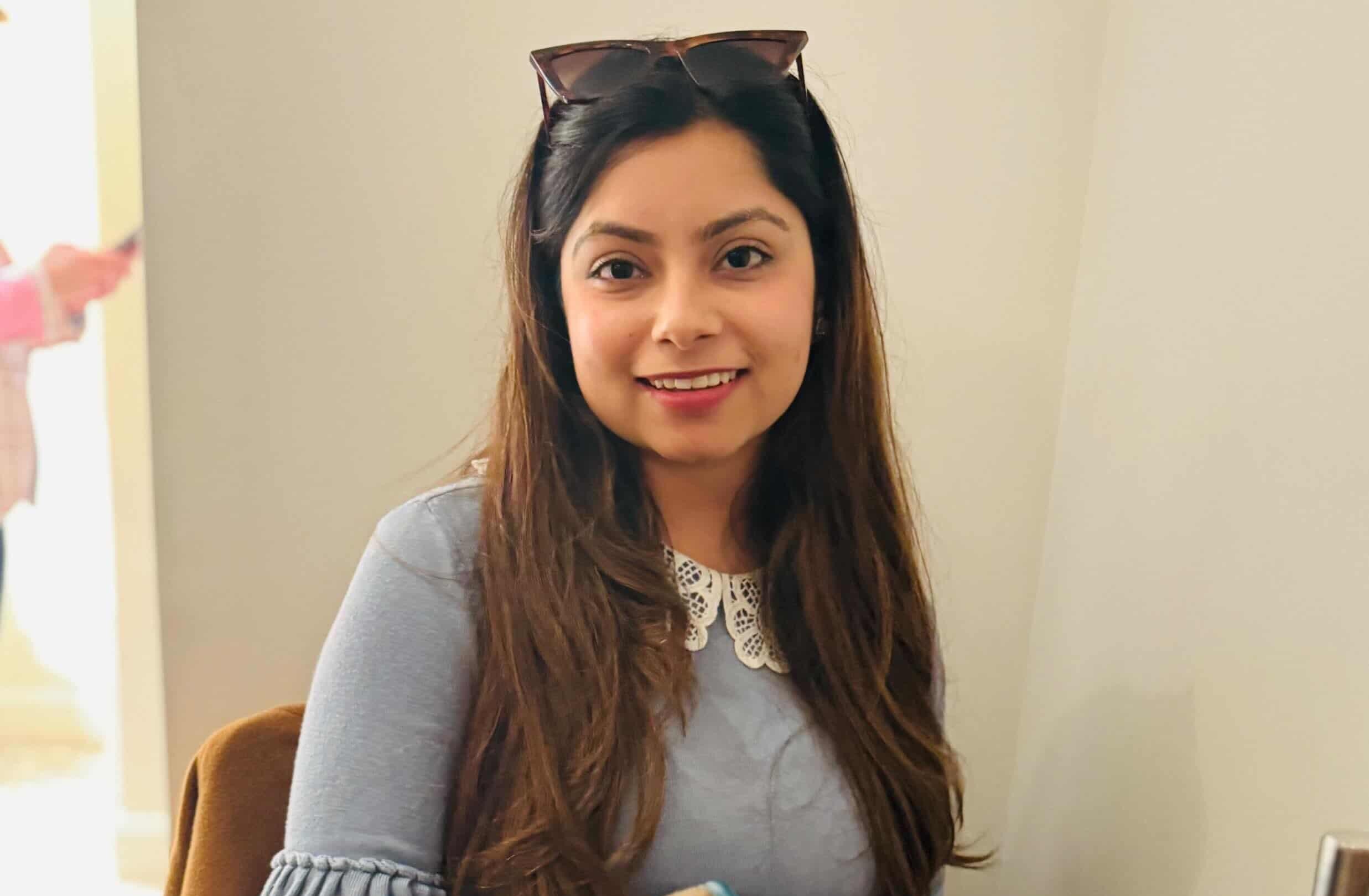
    Poojan Mahajan in a Sui Dhaghaa outfit. Photo Credit: Poojan Mahajan

    “I was having an Indian Masala Tea and thought I needed to do something to feel more confident, not lost in life. I wanted a pathway to success,” she said


    With ambitions in her suitcase and uncertainty in her heart, she arrived in the unfamiliar streets of Ireland in 2018 and navigated emotional challenges. “I did not have a plan to start a business here. I finished my master’s in international business at the University of Limerick, landed a new job, and once you have a job, it feels like you have a stable career, but I was not happy. I was doing marketing in a construction company,” she said.


    Thousands of miles from home, Poojan Mahajan was often shadowed by the sense of not belonging. “I was in a foreign land, but still missed home. I missed the feeling of belongingness,” Mahajan said, “I realised I need to build something for myself; I am the one who will be recognised. This is how I thought of starting the Sui Dhaghaa.”


    Mahajan’s Sui Dhaghaa- meaning needle and thread – symbolises connection and simple tools that stitch pieces of fabric together. “I want to connect it back to my origin. And if you tell someone in English that it means needle and thread, they will connect as well. To me, needle and thread stress the meaning of boutique,” she said.


    For Poojan Mahajan, it has become a way of bridging cultures in Ireland, keeping traditional roots alive. “I noticed the local community wanted to find out about Indian wear. People could not travel back to India that often, so that’s where I see a huge demand, but there was no supply,” she said. “I do stitch here; get dresses altered, but get my raw materials from India because you cannot get that clothing in Ireland.”


    Mahajan believes that not every passion is taught; some are passed through inheritance. “It is not always what you studied; sometimes it is what you inherited from your parents. In India, my mother and my father run a clothing business. I have seen my parents since childhood working on it, so I know how to do it. I know the basics; I need to upskill and learn how to do business.”


    Turning the idea into reality comes with a set of emotions, doubts, and determination. “I first started to build Sui Dhaghaa in 2023, but at the beginning, I feared judgment and how the public would respond. That was the first question,” Mahajan said, “and the second was how I would even start. I did not have a team. I had to do everything on my own. I have experience in International Business, and I know tricks and ways that I could facilitate building a brand.”


    Despite her doubts, Mahajan’s idea began to take shape in Lucan, Dublin. “In a foreign land, it was challenging to start; how to comply, how to really start. I just took a leap of faith and opened an Instagram page. I come from marketing; I know that social media would help reach a mass audience and could save huge amounts on advertising.”


    The challenge, she says, was straightforward. Building something from scratch comes with some hurdles. “Operating a business in a foreign land is very different,” she said, “I face the challenges in the supply chain, with logistics proving the complicated part. If you ship something from India, it takes much longer. The expected time could be 10 to 15 days; realistically, it could take a month.”


    For Mahajan, some challenges are unavoidable and are a part of the process. “In this situation, there is not much you can control; you must give it time.”


    With hard work and dedication, Mahajan began to earn customers’ trust. “I now have more than 500 clients, and we are currently delivering all over Ireland. It’s not only the Indian diaspora. But now Indian and Irish weddings are becoming more popular. The people were delighted that they didn’t have to travel to the UK to buy dresses for such events now.”


    “I remember the milestone in this journey when I prepared dresses for 11 bridesmaids, and it was a life-changing experience and gave me confidence to do a job for someone,” she said


    Through Sui Dhaghaa, Mahajan created a space for women to bring their own vision of clothing to life. “I realised it was a means for women to customise dresses as they like. It gives women the freedom to bring their own fashion ideas to life,” she said.

    Photo Credit: Poojan Mahajan

    Mahajan’s little wins and passion aim to expand her business. “I am trying to make efforts to extend it to larger audiences. I am also trying to get on Amazon.”


    Looking back on her journey of Sui Dhaga, she carries a simple message, “Until you don’t try, you don’t realise your potential. Initially, it does not have to be perfect. At least put yourself out there, be vulnerable, and have a zeal to learn. It is only about taking a leap of faith in yourself because if you don’t, no one else will.”

  • You’re having a laugh!  

    You’re having a laugh!  

    TheCity caught up with up-and-coming comedian Darren Gaffney to chat about his first solo gig, the high and lows of live performance, and why getting barred from a place isn’t always permanent. 

    By Rebecca Reilly 

    Originally from the small village of Kilnaleck in County Cavan, which, according to Darren, had the record for most pubs per capita in Ireland, his upbringing was typical of rural Ireland. His mum is a nurse and dad a plumber, Darren was influenced heavily by the two f’s of country living – farming and football. “My uncle had a farm, so I spent a lot of time with him, playing football and going to mass – all that crack,” he laughs. A childhood that would be familiar to many rural inhabitants of Ireland, Darren maintains, is why his comedy hits. “People get it!”  

    Having been bitten by the performance bug early in life, Darren performed at Scór and Réadóirí competitions, both of which focused heavily on Irish culture. Participants would showcase the likes of Irish dancing, poetry, and music. “I remember there was a segment called recitations. I dressed up as a farmer and recited a funny poem. I always loved being on stage.” 

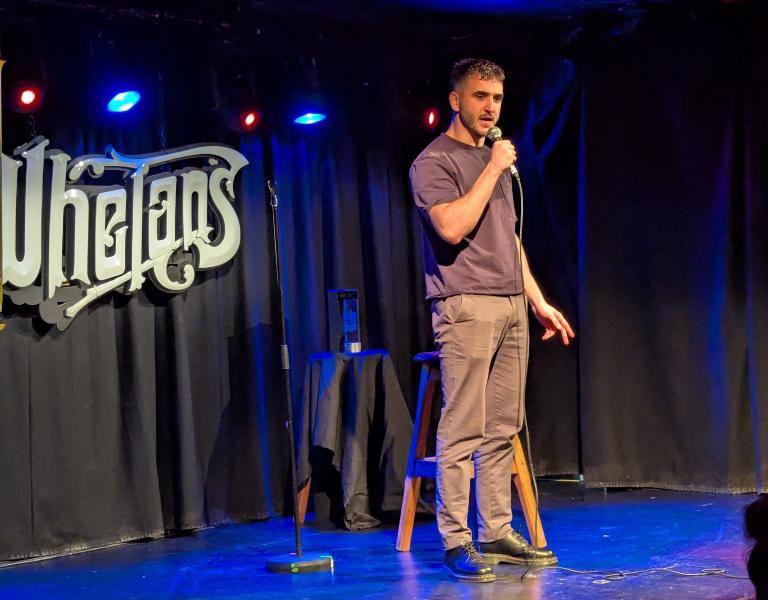
    Darren Gaffney. Photo credit:  Sinéad Murphy and Zoe Sanford 

    One would be forgiven for thinking Darren might have dived right into performing arts, but a more serious route came calling. “I did politics, economics and law in college. I thought it might become a TD for the craic!” But after a year’s Erasmus in Poland, Darren decided to bite the bullet and try to crack comedy on his return home. “I never thought about being a comedian. But I had a lot of friends who kept telling me I should do it. When I came back to Ireland, I signed up for an open mic on the Ha’penny Bridge.”  

    It was a daunting experience. “You don’t have a clue when you start, so I didn’t tell anyone. I kept it a secret and just drove up to Dublin,” he recalls. “The first gig went well, but I think on the second gig, I got drunk, and I was so nervous. And it went awful! I don’t drink at all now before going on stage.”  

    In 2020, COVID hit and like so many, Darren had to put his career on pause. It didn’t deter him; he was adamant he was going to succeed, a slog that was going to be much harder than he was prepared for. “You must have thick skin. Nobody cares about you at the start; you must fight for everything. If I knew how much work it was going to be, I don’t know if I would have done it!”  

    Darren Gaffney. Photo credit: Sinéad Murphy and Zoe Sanford. 

    A tenacious attitude led Darren to forge his own path, not to be dependent on others for his success. “That’s why I started a comedy club, Bite the Bullet, in the Cat and Cage in Drumcondra. Trying to book gigs at the start – you’re just another comedian; there are loads of them. Not everyone wants to help; you’re on your own, really. You get a bit of respect if you have some get-up-and-go.” Bite the Bullet comedy also runs in the Chelsea Drugstore in Dublin city centre, The Tap House in Ranelagh and an ad hoc show in the Imperial in Cavan – where, ironically, Darren was once barred from. 

    With his first solo gig in Dublin just around the corner (two sold-out nights in Little Whelans on the 12th and 13th of April and a third night added on the 14th), Darren says his comedy sets are very reflective of his genuine self. “I try to really like myself on stage. In real life, I’m always messing around. It’s high energy and unpredictable as hell,” he laughs. With a big emphasis on Irish life and growing up in rural Ireland, the 28-year-old draws his inspiration from observing life and interacting with the audience. “A lot of comedians look down on that audience interaction, but it was something I was good at from the outset.”   

    Observational and genuine comedy is something that has granted Darren success on TikTok, social media almost being a prerequisite for comedy now. Living a dual life online and on stage can come with its difficulties. “Stuff that works on TikTok might not work on stage and vice versa,” he said. “The stuff that comes out of nowhere is usually better. I was trying to think of content before a gig the last day, and I just came up with a video about how nobody puts children in the back of vans or cars anymore – and it blew up! I took it in one take. Other content I take a long time thinking of, maybe comes across a bit forced? It’s weird.”   

    Darren Gaffney. Photo credit: Sinéad Murphy and Zoe Sanford. 

    As the old saying goes, what goes up must come down, and being on stage has become something of an addiction to Darren.  “It’s such a rollercoaster of emotion; you come from the highs of your life to crushing lows,” he reveals. “You get home after being mental on stage for an hour – you can’t sleep. I was chatting to a comedian who was doing a small gig in London once, and he went walking around London and ran into Ricky Gervais, who was on his way to Wembley on a post-gig walk as well.”   

    “One time after a good gig in Mullingar, I was driving home, and the guards started following me. They stopped me and asked me if I was on drugs. I drove the whole way out of the road with no lights on! Since that moment, I’ll always chill for half an hour after a gig.”   

    Darren is hoping to do a tour of Ireland, and all going well, across the water in the UK. Like his comedy hero, Tommy Tiernan, Vicar Street or the Olympia is the primary objective. “Selling out either of those would be class. Although if I did that, I’d probably be thinking of the next thing. That happens to me a lot. But if I sold out either of those, that would be the dream.” 

  • Where silence stops, the truth begins: The Roisin Boyd story   

    Where silence stops, the truth begins: The Roisin Boyd story   

    A deep look at a woman whose journalism, feminism, and anti-colonial solidarity shaped both her career and the students she inspired along the way. 

    “It’s my DNA… I have to do it.” 

    These words are spoken with absolute certainty by a journalist who has spent decades challenging power structures. Roisin Boyd’s journalistic journey and ethical and moral compass is shown through her courageous storytelling.  

    Boyd’s path to journalism began in the politically charged atmosphere of 1980s Ireland, a place held in a political chokehold by profound social constraints. “I was interested in becoming a journalist from the age of 14,” she recalls. “My family was quite political, and my mom was a feminist. There were meetings in our house, feminist women’s liberation meetings.” 

    These weren’t just your average family gatherings; they were revolutionary assemblies. In an Ireland where contraception was restricted, divorce was forbidden, and women’s voices were systematically marginalized, these meetings were acts of radical resistance. 

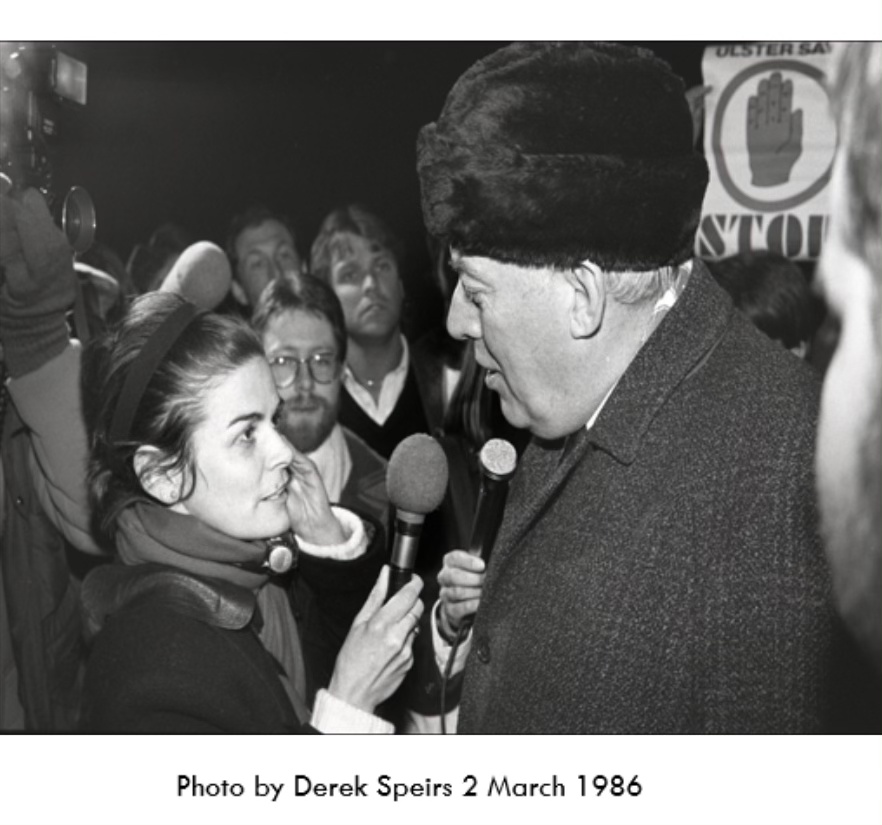
    Photo by Derek Speirs. Cleaners protest at UCD in 1985

    A common misconception when talking about the issues above, and many others, is that nothing was being done about the unjustness of it all, but many voices like Boyd’s spoke out against them even when that was maybe not the norm.  

    “We were not all lying down, taking it,” Boyd said. “There was resistance, and people were protesting.” 

    From the get-go Boyd stood up and wrote about what she believed in. Her early journalistic experiences were rooted in feminist publications. At a time when many young women were confined to traditional roles, Boyd was writing for Wicca, a feminist magazine that challenged societal norms. Later, at Trinity College, she worked on Bell Jar, named after Sylvia Plath – another important symbol of women breaking through systemic silences.  

    A defining moment of her early career came with Spare Rib, a radical London-based feminist magazine. Boyd became the first ever Irish woman on its collective, a position that would reshape her understanding of journalism and activism. 

    “When I was in London, it was really tense,” she explains. The time that Boyd made this move was during the height of the Troubles in Northern Ireland, a period of intense political conflict. Being Irish in England meant navigating difficult political landscapes. For Boyd, this meant that every story was potentially considered controversial. 

    One of Boyd’s most difficult and controversial articles, “Why You Can’t Be a Zionist and a Feminist,” shows her fearless approach to journalism. She interviewed an Israeli Jewish woman, a Lebanese woman, and a Palestinian woman in the aftermath of the Sabra and Shatila massacres. This was one of the most harrowing massacres committed in the Lebanese civil war, a conflict known for its violence. 

    “All hell broke loose,” she remembers. Shops in New York refused to sell Spare Rib, and she faced accusations of anti-Semitism. “It was so painful and so difficult to be accused of being anti-Semitic when I was trying to amplify voices of resistance and solidarity. And to highlight the horror of what had happened in the camps.” 
     
    Looking back, what Boyd did is somehow even more impressive today. Decades before it became more “acceptable” to speak openly about these topics, she was amplifying the voices that were ignored, showing how journalism really can challenge silence. Now, with more people speaking out, even the younger generation, it’s clear how necessary that courage was. 

    Boyd says that “the slur of anti-semitism is frequently weaponised to silence critics of Zionism and the Israeli state’s aggression against Palestinians.” 

    Returning to Ireland, Boyd joined RTÉ, where she encountered another form of censorship through Section 31, a law restricting media coverage of the Northern Ireland conflict. “This had a disastrous effect on RTÉ’s coverage of the north and human rights issues,” she explains. 

    Yet Boyd was not easily silenced. She found innovative ways to tell important stories, working alongside colleagues who shared her commitment to truth. Her reporting spanned international landscapes from conflicts in Somalia to highlighting the struggles of cleaners at University College Dublin, all with the same goal: to have voices heard and make a difference.  

    “Even with censorship, there were always ways, if you’re a good journalist and you’ve got supportive colleagues, to do the story,” she said. “But you have to work a lot harder to make sure your story gets out.”  

    Boyd has always balanced journalism and activism and never backed down from what she believes in. She was Head of Communications for the Irish Refugee Council from 2007 to 2010 and, when working with refugees in Ireland, she used and shared her skills by training refugee women so that their voices could be heard. 

    Her involvement with the Ireland Palestine Solidarity Campaign also demonstrates her belief in using your voice for the right reasons, whether that is in your career or day to day life. 

    Boyd’s dedication to speaking out is not just in a journalistic sense but in everything she does.  

    “Journalism always will matter,” she said, “the truth obviously really matters, and finding the truth often takes a lot of time and energy.”  

    Her approach to journalism is very layered. “I would have aligned a lot with women from the Global South,” Boyd said. “I interviewed Nawal el Saadawi, a very well-known Egyptian feminist who had been campaigning against FGM in the 80s.”  

    Her work never just skimmed the surface or the news agenda: Boyd dug deep, connecting human’s personal experiences to broader social and political struggles and issues.  

    In recent years, Boyd has been increasingly vocal about emerging challenges in Irish media and society. The rise of far-right narratives, the treatment of immigrants, and the systematic marginalization of people of colour are not just news stories for her, they are urgent calls to action. 

    “I think there’s an amazing opportunity for good journalism today in Ireland,” she said. “How do we communicate with each other on these topics? Because a lot of it’s just shouting. There’s no real communication.” 

    Her advice to young journalists is both valuable and inspirational. “If you’re going to be a journalist, you need to be engaged. You can’t just switch off from the realities happening around you.”  

    Boyd retired from her role as a lecturer in TU Dublin last year, but in her time there she inspired and taught a generation of journalists by showing them that their work is not just a profession, but a responsibility.  

    Boyd’s students had firsthand accounts in something invaluable, especially because it was reporting at times that some were not around for.  

    “I always like to say to people who weren’t around then, to remember that there was huge resistance in Ireland at that time.” 

    Boyd highlights this important fact because the students were the next generation at the sidelines of history unfolding.  

    Her motivation remains unchanged, even after retirement, as Boyd still speaks out in what she believes in, “It’s my DNA… I have to do it.”  

    In a world where the tensions rise higher every day Róisín Boyd continues to use her voice. 

    Her legacy is not just in the stories she’s told, but in the countless journalists she has inspired to see their work as a form of resistance. 

    In the words of Boyd, “Journalism is about finding the truth, no matter how difficult the journey.” 

  • Barry Heneghan discusses his political journey and plans for remaining government tenure 

    Barry Heneghan discusses his political journey and plans for remaining government tenure 

    Barry Heneghan is a 27-year-old independent TD for Dublin Bay North, elected in the 2024 Irish general election on his first attempt.  

    A graduate from both Belvedere college and DCU, Heneghan graduated with a master’s in mechanical engineering focusing on sustainable energy systems.  

    In an interview with The City, Heneghan discussed his political journey, his aspirations for the rest of his current tenure and his decision to support the Government as an independent. 

    “I saw how slow things could be in politics and I thought that I could speed up this process. My friend’s mother was diagnosed with cancer, and I made a portrait of Che Guevara in the style of Jim Fitzpatrick. When I brought it to her, by chance Finian McGrath was visiting and asked who made the portrait as he wanted one. This was around a month before the local elections (2024), and we just got to chatting, he mentioned that Damien O’Farrell was thinking of retiring, so there was the option of getting both their backing (McGrath and O’Farrell), we talked on key points of focus and he asked if I was willing to run with his help,” said Heneghan.  

    “-I always thought that I would be good for it, and then we ran a 4-week campaign ending up getting 2,450 votes (2,452), the highest that any independent got in the Dublin local election at that time. The general election was also looming, so there was an option there. Some people did say it was a bit cheeky to go straight for it, but if you think that you can represent the people the best, then you give them that option. I was hoping I could get the fifth seat and I ended up getting the fourth, but it will be a different game the next time if you look at the transfers I got.”

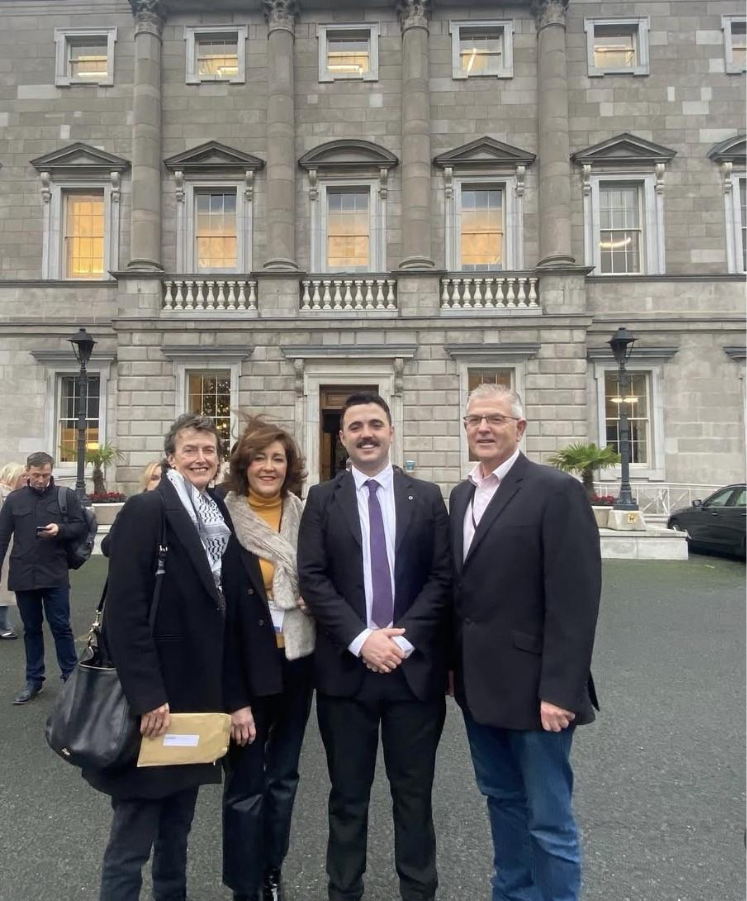
    (Barry Heneghan, middle right, outside of Leinster House. Provided by: Barry Heneghan) 

    Discussing his first year in office, Heneghan offered insights into the juggling act between working and speaking in the Dáil, as well as working with and for his constituents in the sprawling Dublin Bay North area.  

    “The days and weeks are jam packed. Tuesdays, Wednesdays, Thursdays we’re in here (Dáil Éireann) and then Mondays and Fridays were doing a lot of stuff in the constituency. I’m launching my clinics, were trying to get 7 locations in north Dublin. Initially I had an office for my first 8 months, but it had no signage, didn’t have my name you know compared to down the country, TDs would have their name for their constituency office.” 

    “For my constituency I want to have clinics in Baldoyle, Howth, Darndale, Coolock, Artane, Clontarf, Sutton, Kilbarrack, and Marino. If I can rotate clinics Mondays and Fridays and maybe a Saturday every so often up in Belmayne, it’s good to get people to meet you one on one. One thing I would not like in four years’ time when I’m going for re-election is for someone to say, “oh I never seen you”, so I want to be more visible. Social media is one thing (for visibility), but there’s an elderly cohort that wouldn’t see that, some people don’t have that access, and that’s what these clinics are for.”  

    Dublin Bay North’s demographical profile shows that Heneghan is correct in his aim for more visibility for older people, as 17.1% of voters are over 65, compared to the state average of 13.4%. Heneghan also named all of Dublin Bay North’s major settlements (Except Fairview) in his list for future clinics in the area, a sign of his knowledge of the area and his commitment to inclusion for the entire community. 

    “As long as I can continue to help people and think that my office and my team would offer people in north Dublin the best option to represent them, then I would seek re-election, or renewing my contract. I like to say that politics is like a contract, so you can see what I’m trying to do, be it climate change, energy, housing, childcare, disabilities, gaeilge, Dublin Bay itself, and if I can go back to people and say ‘well I done this, I helped with this’, if you don’t break your contract of the things you set out to do then people will be happy with you. In turn, hopefully they don’t break the contract for you.”- 

    “It’s always risky as a Government-supporting independent, people won’t always be happy with it, but when you see key issues that I wanted done being done, for example Gaelcholáiste Reachrann’s permanent building just went to tender, and while every TD will claim ownership, it was a joint achievement in the chamber and one of my key priorities. People elected me to get as much as possible done, this is how you get as much as possible done.” 

    “There are some issues that the Government do that I don’t agree with, but, I would rather have an ear to the ministers, have access to their offices, and be able to work with them. We had a meeting with the housing minister, before the housing plan that was just announced, where I expressed my key issues for disabilities, for the accessibility officer for Dublin City Council, and for the modular homes and flats. If I had of went in with the opposition, I wouldn’t have had that meeting, I wouldn’t be able to help people who get on to me. I had a decision, ‘do I want a long political career, sounding good, but getting nothing done, or the possibility of not getting re-elected, but being as affective as possible and having a short political career’ and I preferred the latter.”- 

    “The social economics of the constituency vary a lot, we have areas that are severely under pressure in terms of service, and people are looking for those services. One of the things I would love to see would be better support for youth who have left school, the crown paints site which as we know now is not going to be used as an IPAS centre, I would want even half of that to be for mental health and disabilities and also to have maybe the other half as a trade school, people who aren’t suited for school, can be the perfect mind for trades, these young people who may leave school early, then fall into the wrong side of life, but if you give the them support at the start of their life and say ‘hey there’s two roads you can go down, either the wrong road or you can go down a road where you can really make a good life for yourself’, you know the country already has a lack of tradesmen and women, if we can show people that they can go into these trades, this would be something I’d love to see for North Dublin.”-

  • “I’m not far off the dream:” Aspiring pilot explains the ups and downs of learning to fly 

    “I’m not far off the dream:” Aspiring pilot explains the ups and downs of learning to fly 

    Being a pilot is an occupation that the majority of us would imagine to be of high importance and extremely pressurised. Now, imagine being in that position as young as 23-years-old. While that would sound daunting to most, that is the reality for Dáire Murphy, a young man from Lucan, Dublin, who will complete his training to become fully-fledged pilot. 

    Murphy started honing his craft at the National Flight Centre (NFC) where he completed all his necessary training as a student pilot and got a commercial flying license. This allowed him to continue his training and get inside the cockpit.  

    “I’m with Emerald Airlines now, so I’ve done my initial training with them, health and safety, fire training, all that sort of stuff,” said Murphy. “I’m doing a two-week course doing flight simulations, then I do what’s called line training, where I fly with a specialised captain until they deem me fit enough to not need anyone there and I can be a fully unrestricted commercial pilot flying passengers.”  

    It is a job that is heavily sought after, but extremely tough to get into, due to the harsh nature of flying and the long process of the training and exams, which many people who think they want to go into aviation simply cannot complete. 

    “The exams are designed to filter out people who aren’t suitable for the job, they don’t want people who just like the idea of being in uniform and sitting up the front. You can’t just pick someone off the street and teach them how to fly an airplane. You do have to put the work in,” said Murphy. 

    Daire Murphy pictured after receiving his Private Pilot License. Photo from nfc.ie 

    An obvious factor which may turn a lot of people off aviation is the cost. Like many other things, the cost of training would instantly discourage many young hopeful pilots, with Murphy himself further showing how much commitment he had to this course: 

    “By the time you’re walking into an airline, you could have shelled out around €100,000 or €120,000, which is a huge amount of money. I was working in retail before and 50%, sometimes more, of what I was earning was put aside into a different account for my training. If I was earning around €3,000 a month I wasn’t actually seeing much of it.” 

    Like any other sort of course, there are always people who will drop out. Dropout rates are usually correlated with the difficulty level of a course with “4 out of 13 dropped out of [Murphy’s] full time course during the exams, so only 9 will graduate from the class, which is sad because you make friends with these people, but you have to want it.” 

    While it could be assumed that a line of work such as this would require intense studying and training, the short time frame given to complete these hours may come as a surprise to some. 

    “It is a legal requirement to complete 13 exams and 750 hours in the classroom, which is about 6 or 7 months. It’s the equivalent of a 4-year masters condensed into these 7 months or so,” he said. 

    The common narrative is that people go into this line of work because they got the idea from a family member, but not Murphy. He explains how flying has been the only thing he was talking about “since [he] could talk”. 

    He said, “maybe it’s rare that someone with no aviation background wants to do it, but I’ve never questioned it, I never thought that it wasn’t for me and I wouldn’t change any decisions I’ve made along the way.” 

    In a world in which there are so many different lines of work to go into, it is rare that somebody sticks to what they are doing from, in Murphy’s case, as young as 17 years old.  

    “There were times when I was sat there doubting myself, thinking I’d never be able to get through it, or I’d never see the end of it.” 

    This line of work really is a one step at a time type of work, with even Murphy himself evidently feeling that it is almost never ending at times. However, he can see the light at the end of the tunnel now. 

    “I still have a few more weeks in the classroom, making sure we know everything, then a few more flight simulations which will be done by December. Then I have to fly the aircraft and do what’s called a circuit, which is basically just flying the aircraft around, practicing takeoffs and landings, then I’m ready to have passengers on board. I’ll still be observed at that point because safety is the priority,” he explained.  

    Emerald airlines are unofficially known as a stepping stone towards being an Aer Lingus pilot, which Murphy hopes will get him one foot in the door in order to achieve his ultimate goal. 

    “When Aer Lingus go hiring and recruiting pilots, they do take a lot of young pilots from Emerald. They’re starting a new course in January, and they’re talking 10% of Emerald’s pilots, which is a huge number. Aer Lingus would definitely be my end goal, like a lot of other Irish pilots would say.” 

    While it’s been established how this business is not suitable for everyone, Murphy would encourage people who are considering aviation to “not overthink it and just go for it”. 

    “The more you think about it, the more reasons you’ll come up with not to do it. Definitely do your research and don’t dwell on it too much. You’ll start coming up with reasons not to do it if you just start thinking negatively.” 

  • Stay With Us: The Community-Led Cafe

    Stay With Us: The Community-Led Cafe

    Have you ever been in a coffee shop and thought you could make it better? That is exactly what Steven Harris thought before he opened Stay With Us cafe in 2022. A dream project that became reality after Harris was advised to have another income on the side, as his job was only a 6-month contract work in sports. Stay With Us has grown its own community in the small space it occupies just down the road from St. Peter’s Church in Phibsborough.

    Harris said working as a barista was what inspired him to open his own business. He had saved up money and started looking for a place to open. “I say to people [I did] not [have] enough to buy a house but enough to start a business,” he said.  Harris said he did not intentionally choose Phibsborough; it just happened to have a unit that was the size he wanted and within the price range he was looking for.

    Harris and his friend did all the labour to make sure the unit was up and ready for business in just 6 short weeks. When asked about the quick turnaround, he explained how not having to wait on any tradesmen meant they could work quickly. Though Harris did not have a background in construction, he said he was lucky to have some DIY knowledge and had the advantage of asking people he knew for some help; he also relied on some YouTube tutorials. He said because they were doing the work for free at the start it “gave the business a kickstart off the bat without having a lot of outgoings.”

    Hot chocolate bought in Stay With Us, latte art creating a swan on top. Photo credit: Zita Fox

    When asked about the possibility of expanding the Stay With Us brand, Harris informed The City that he already has another cafe in Dublin. Opened on the 31st of May and located in Temple Bar, Mantle, is more of a premium specialty coffee product, as opposed to the more community -oriented cafe in Phibsborough. Harris wanted to open something new rather than opening a replica; he wanted it to be the polar opposite to what he already owned. “I find when people expand out or change, for example, you kind of lose that personal touch of the area,” he said.  

    Harris is a physiotherapist for the NHS in Scotland for most of the year. That is where he got the idea to have multiple different establishments.  There is a man in Edinburgh who owns around 12 coffee shops, but they all have different names and none of them are related to each other. He goes on to say that they are a similar fit if you know what to look for then of course, you would realise it is the same person who owns them all.

    Harris points out how all those cafes have their own little communities, workers, and regulars and how he too wanted to have that broad appeal. He said having the different brands to market makes it far more interesting for himself: “everything’s just slightly different and a bit fresher.”

    Stay With Us continues to pull people in with its charm. Full of treats and drinks, mainly coffee, the cafe has created a small, safe bubble in the centre of Dublin. Whether you go in when it is lashing rain, morning time, or the last order of the day, you will be greeted with some of the most welcoming staff around. For now, it seems that Harris is happy with just the two cafes, but who knows what the future holds.

  • Why are electric car sales continuing to decline? 

    Why are electric car sales continuing to decline? 

    By Luke Hurson

    2024 has been a disappointing year for the electric vehicle market, so far.  

    Latest figures from The Society of the Irish Motor Industry (SIMI) revealed that in September 1010 new electric cars were registered which was a massive 30.8% lower than the 1,460 that were registered in September 2023.  

    16,133 new electric cars have been registered so far, this year, as of the end of September. This is a 25.8% decrease compared to the same period in 2023 when 21,726 electric cars were registered. 

    Brian Cooke the Director General of SIMI commented: “The new electric vehicle segment has experienced another month of decline in registrations, marking the eighth consecutive month of this trend.” 

    “It is vital that we see positive measures from the Government to support the EV project and help reverse this drop in demand for EVs. Reinstating and extending EV supports, as well as investing in a reliable charging infrastructure, can help regain lost momentum in the electric vehicle project. The industry remains committed to supporting the transition to electrification,” he said.   

    An electric car charging at a charging station. Credit: Pixabay

    So why has there been such a steep decline this year? 

    In January 2022, the Irish Government got rid of the €2,500 grant for new plug-in-hybrid-electric vehicles (PHEVs). This resulted in a reduction in PHEV sales and an increase in battery electric vehicle sales (BEVs), which was the intention.  

    In July 2023, the Government reduced the grant for new BEVs from €5,000 to €3,500. Although there wasn’t a sudden impact, there is now a slowdown in sales of BEVs, whereas PHEV sales are increasing again. 

    Many people in the EV scene find that it is harder to get the mass market to make the switch to electric compared to the early adopters.  

    The early adopters tend to be more comfortable with risks like range anxiety or queuing at charging points – whereas the mainstream adopters are less likely to be wealthy and are not as comfortable with the same risks. 

    Luke Donnellan, a mechanic for Renault spoke to The City. “A lot of the cars we sell are either hybrid electric or petrol. Not a lot of people are ready to make that change to fully electric yet. 

    “A lot of people are still very reliant on diesel and are very unsure of the range of electric cars, as well, because with a petrol or diesel cars, when they run out of fuel, it’s not a big deal, you can just fill it up and away you go but with an electric car you’re almost stranded. 

    “A lot of people do have that range anxiety and It’s also made harder when there isn’t the infrastructure there to charge all these cars. 

    “A big thing that we’re seeing as well is people trading in their brand-new electric vehicles because they buy the electrics and realise there’s nowhere to charge them and how much it is to charge them. A lot of them realise they can’t charge the cars at work, so then they’re left with these cars where they have to plan everything. You can’t just go do something; you have to plan your entire trip from start to finish and it’s a lot,” he said. 

    An electric car plugged in at an integrated charging station parking space. Credit: Unsplash

    EVs can also provide different mechanical problems to that of a petrol or diesel car.  

    “One thing that we are noticing is because all these electric cars use regenerative braking systems, where they don’t actually use their brakes and they use the slowing down of the wheels to try to charge the battery up – the brakes are getting completely rusted out,” said Donnellan.  

    “Even though they’ve only used 20% of their brake pads, their brake discs are so badly corroded, they need to change their brake pads and discs more frequently than a petrol car, so there’s more maintenance in that sense,” Donnellan added. 

    Hybrid vehicles, however, are rising in popularity. There has been a 12% increase in regular hybrid sales this year, totaling 26,079 new registrations at the end of September.  

    Similarly, there has been growth in plug-in hybrid sales, now amounting to 10% of total sales with 11,766 registrations. 

    Petrol remains the most popular choice for Irish buyers, with 36,339 registrations, followed by diesel with 26,947. 

    More support and infrastructure are needed if the Government has any hope of reaching their target of 845,000 EVs by 2030. 

  • “I saw myself and my church friends as completely cut off from the rest of world”: The growth of Evangelical churches in Ireland 

    “I saw myself and my church friends as completely cut off from the rest of world”: The growth of Evangelical churches in Ireland 

    by Diana Lazar

    For centuries, Catholicism has been the leading religion in Ireland. While it still leads by far, no one can deny the steady decline of Catholic identification and church attendance numbers in the past few decades.

    According to the Census 2022, there has been a 10% decrease from 79% to 69% of the population who identify as Catholic since the previous Census six years ago.

    Evangelical churches such as the Pentecostal and Presbyterian churches have been noticeably growing due to inward migration, particularly from Africa, Asia, South America, and certain eastern European countries. They tend to be more conservative in their theology and social beliefs than other branches of Christianity.

    Maria Pop grew up in the Pentecostal church community, “I attended church regularly every Sunday, and occasionally on other days of the week,” she said. “Parents in the church are told that since the first few years of a child’s life are the main formative years and the framework for the rest of the child’s life, it is imperative to expose the child as much as possible to the church.”

    She took part in many of the church activities as a child.

    “My main experiences as a young child in the church are mostly positive. I would attend Sunday school with other children my age. We’d read books and comics, watch movies, play games, and occasionally prepare songs to sing in front of the rest of the church.

    “Of course, all these activities were Christianity presented in a child-friendly manner. That is until you reach ‘older child’ status and suddenly the Sunday school teachers are talking about alcohol, sins, lust, purity, Satan, spiritual warfare, and the rapture. At this point, my church attendance had trailed off. I tried to push away some of the ideas they were putting on us,” Pop said.

    After her attendance started to drop, things were not the same for her anymore.

    “When I did attend, it was nice to catch up with my church friends, but the heavy, seemingly philosophical topics covered in Sunday school were always a source of unease. It felt like anytime someone would mention the evil world, they would be referring to people like me, who weren’t completely engrossed in the church,” she said.

    For Pop, being a part of a community did come with positive aspects.

    The church has been a consistent source of community my whole life. They were alwaysthere, and they continue to always be there. We were taught how to play instruments, we’d go on trips locally, and abroad. We’d go Christmas carolling with our families. It was a positive experience to grow up with the sight of the church adults carrying out charity events and travelling to areas of poverty to support people in need. The church raises money and transports necessities to impoverished areas every Christmas,” she said.

    Image: Unsplash

    Pop does not agree with some of the ideologies shared in the church, however.

    “Most of the churchgoers are simple, humble people with good intentions, but they’ve just been raised to see the world as this horrifying monster that wants to break apart their families and corrupt their kids. Some of the ideas that have been passed down through the generations are damaging, and they continue to be passed down, despite the progressive century we are in.

    “Not unexpectedly, most of the churchgoers, including women themselves, are prejudiced against women. Frequently during church services, the pastor, or the men in leadership will preach about women’s faults. How women lead men to perversion by wearing skirts that are too short, or too tight. How women of today need to learn how to listen to men, because God made men rational, but women emotional. Often, they will list things that women in the church are not allowed to do like paint their nails, get Botox, wear jewellery or heavy makeup,” she added.

    Judgement fell upon her from her community as she grew older.

    “Throughout my adolescent years, my church friends, and other church adults found my posture, my humour, my lack of style, and my aspiring career goals distasteful. It is a commonly accepted idea that women need to be meek and kind, always dress nicely, and they must always assume a mature motherly persona, even from a young age. Yet, the men in the church are allowed to make crude jokes, be loud, attend Sunday service in jeans, lack basic manners, and most of all, have dreams bigger than just a wife and children,” she said.

    The women are expected to start a family as soon as possible.

    “If a woman is unmarried in her mid-twenties, people begin to wonder what is wrong with her. But if a man is thirty and unmarried, nobody bats an eyelid. There isn’t much of a concept of a woman wanting anything other than a husband and as many children as the Lord gives her. College is just something we’re supposed to do while we wait to get married. Once we’re married, we’ll forget about everything that we’ve learnt, and start giving our husband children.

    “The concept of submission is taken very seriously in the church, and the nineteen-year-old girls who get married are expected to fully submit to their husband’s wishes and wait on them hand and foot. This submission can be from something as minor as permission for a new hairdo, to something as major as their career choice or number of children to have,” Pop added.

    Image: Unsplash

    The church places a great deal of focus on the Biblical Book of Revelation’s ‘End Times’ which is an ideology about the rapture coming to Earth soon. The belief is that all repented Christians will get brought to heaven, while everyone else gets left behind to suffer.

    “In my personal experience, it was a great way to introduce an abundance of anxiety into a nine-year-old child. I would constantly ask my parents for reassurance that I was good enough to be saved. Innocuous thunderstorms, flight turbulence, news of wars and environmental disasters, all seemed, to my fragile mind, as signs that the end was possibly occurring, or just about to occur,” she said.

    The idea of some people not being saved in the apocalypse created a division between Pop and others.

    “Mentally, I saw myself and my church friends as completely cut off from the world. We were different, and we were going to go to Heaven. All the other kids were sinners and would go to hell. Many churchgoers, even as adults, have adopted this divide between themselves and the ‘unholy’ world. Their interactions are superficial with people of different beliefs, including other denominations.

    “Being raised in the church gave me a sense of superiority as a child, but as I became a teenager and distanced myself from the church, I realised how alienating it is to think that way. All humans are brought onto the same earth, we all have the same fundamental needs, and we are much more similar than we are different, even down to a genetic level,” she said.

    Her drift from religious belief strained her relationship with her family.

    “This is a common occurrence for anyone who slightly strays away from the church. It is baffling how families that would express excitement for the birth of their child, and that nothing else matters except that their baby is healthy, are the same families who are willing to cut off their grown-up child, all because they no longer share the same beliefs.

    “Many are under the illusion that having a child means that the child will only ever be an extension of themselves, rather than a person with independent beliefs and wishes. So, they do not accept when the child deviates away from the good Christian soldier-for-Christ script. It is easier for them to reject their child and lose their emotional connection to them because if they are unbelievers, they are going to eternally suffer in Hell, and that reality would be too difficult to bear,” she added.

  • ‘It was amazing and infuriating’: Designing Mark Porter’s Life 

    ‘It was amazing and infuriating’: Designing Mark Porter’s Life 

    by Diana Lazar

    Award winning and one of Europe’s most renown editorial designers Mark Porter lived in Scotland until he was six years old, after which he moved and grew up in the south of England.  

    “I love Scotland and I might move back there one day, but I haven’t lived there since I was very small,” Porter said.  

    His father’s engineering background was one of the reasons Porter got interested in art and design.  

    “Before computers, my father used to do engineering drawings at home. He had a drawing board and technical pens. I started doing drawings using his beautiful pens,” Porter said. 

    A technical pen, also known as a Rapidograph pen. Source: Pexels 

    While at school, Porter worked as a labourer on the construction of a motorway near his home. 

    “We were a middle-class household, so I got to meet different people who I normally wouldn’t have met. It’s made me be grateful for being able to make a living doing what I do, knowing people have much tougher jobs than I do. 

    “I tried to keep it quiet, but it came out that I was going to Oxford, and I thought people might resent that, but everyone was lovely and told me that they’re grateful I’m not going to do what they do for the rest my life,’” Porter added. 

    Porter studied modern languages at Oxford University. He lived in Spain for a year as part of his course, teaching teenagers English.  

    “It was a very small town. It wasn’t glamorous. There were no other British people there and I had to speak Spanish all day, every day, so at that time I spoke fluently. I used to dream and think in Spanish. It was weird,” he said.  

    Porter got his first design job on a magazine about wine, selling advertising to Spanish winemakers.  

    “I hated being a salesman, but I was interested in design. It was a very small magazine, and it was pretty badly designed, so I redesigned it, showed it to the editors, and they decided that they liked it better than what they had. That was just enough to get me a job on a proper magazine,” he said. 

    His next job was for Expression which was a magazine for people with American Express cards.  

    “It was a professional setup with good art direction and good budgets to spend on photography and illustration. When I was there, I was conscious that everybody else had been to art college and I hadn’t, so I had a lot of imposter syndrome. I expected people to say, ‘you’re not a proper designer, get out of here. 

    “I learned an enormous amount there and went on to work on a lot of other magazines, which is how I really learned my trade,” Porter added. 

    Source: Pixabay

    Porter had a personal relationship with The Guardian before his redesign of it got named best designed newspaper in the world.  

    “My dad used to read The Guardian and we would do the crosswords together, so when I came to redesign it, it was quite emotional for me because I had the memories of growing up with my father as a Guardian reader,” he said.  

    When he was younger, Porter looked up to the idea of getting a D&AD (Design and Art Direction) Award.   

    “The awards looked like stubby pencils. My art director from Expression had a few of them in his office and I used to think ‘wow he’s really made it.’ When I was still doing The Guardian magazine, before I took over the whole newspaper, I won a D&AD award. A yellow pencil. That was the moment I thought ‘okay, I can really do this’ because that was the symbol to me of what a proper designer was. 

    “When I did The Guardian redesign, I won a black pencil (the most prestigious D&AD award; reserved for ground-breaking work), which was unusual because they only give out one or two a year. Then, I really thought I had made it. That was probably the most important project of my career because it’s what gave me the reputation and profile which enabled me to do other things,” he added.

    Mark Porter in the TuDublin recording studio. Source: Diana Lazar 

    The rise of digital media has changed his career in more than one way.   

    “I enjoy doing digital designs but it’s a very different kind of challenge. Now that you see everybody’s work all over the world, it’s hard to do something new. With almost everything you do; someone can find some project from Brazil or Vietnam that looks a bit like what you did,” Porter said. 

    Porter had a roller-coaster journey working with the late Tibor Kalman.  

    “It was amazing and infuriating. He was quite a temperamental and difficult guy, like a lot of geniuses are, so he drove me crazy. We had a layout in Colors that we ended up doing 17 different ways because he kept saying we could make it better and, in the end, he concluded that the first one I did was the best. 

    “He was full of brilliant ideas. He changed the ways I thought about design, the way that I judged my own work and the purpose of what I was doing,” he added. 

    Porter shared some of his experiences of working with journalists. 

    “It always amazes me how obsessed journalists are with credit. What they care most is about getting their name at the front of a newspaper. When I was working at The Guardian, most of the journalists cared about what the people at The Times thought about what they’re writing, not what the audience thought. Sometimes, I have to remind people that they’re working for the audience, not for themselves,” he said. 

    Porter had some advice for anyone starting out in the creative media industry. 

    “Be as adaptable as you can and go into things with an open mind. When I started off my career, it was all print and I thought it was never going to change. The other thing is to try to work with the best people that you can because that’s how I built my career. I was lucky as a junior designer to work with great creative directors. I didn’t get my design education in college, but I did in business,” he added.