Tag: slider

  • If you build it, they will come… Eventually

    If you build it, they will come… Eventually

    Lavanda (left) and V-Face (right) on Lower Grangegorman Road. Photo by Colm McGuirk

    “The fact that this unit was close to TU Dublin was a huge factor in the decision to go ahead with it.” Sarah Boland, owner of V-Face, is talking about her vegan fast-food restaurant’s proximity to the impressive new home of Technological University (TU) Dublin.

    The city campus of what used to be called DIT, built as the centrepiece of a major regeneration programme for Grangegorman in north Dublin city, is ready to welcome around 10,000 students plus staff – once Covid restrictions are no longer necessary. 

    Boland’s is among a number of independent businesses on the Lower Grangegorman Road that had factored those numbers into their plans. 

    “It’s going to be a huge campus, so obviously footfall will increase massively,” Boland says. 

    In the turbulent 10 months since it opened, V-Face has had to make some think-on-your-feet adjustments to compensate for lost bums on its 40 seats. Among them is the outdoor eating area installed on the opposite corner, in cooperation with Dublin City Council, and the window hatch through which Boland speaks to The City. 

    “Coffee and sandwiches were never in the business model,” Boland says, “but we said ‘let’s bring out a lunch offering.’ The burgers were doing really well, but were more for the evening offering. [The hatch and coffee counter] have been designed in a way that, once the pandemic is gone, you can also swing around and serve people that come in.”

    Dining tables installed by V-Face. Photo by Colm McGuirk

    While V-Face benefitted from a model partly geared towards takeaway from the off, former Mediterranean restaurant Lavanda on the opposite corner has had to reset completely in the last year. 

    “We tried to do takeaway Mediterranean food during the first wave,” says Croatian owner Robert Velic, “but it didn’t work very well.”

    Lavanda’s enforced rebirth was planned with the new TU Dublin campus in mind – it now sells toasties, slices of pizza and sweet treats.  

    “We’ll see when the students come back if we made the right choice”

    Robert Velic

    “The second wave came and then we completely changed. We were expecting those students. We adapted the prices to four or five euro,” Velic says.

    “When the lockdown ends,” he continues, “it’s going to be a proper takeaway and we can add a few more things to the menu when business picks up and the colleges are back. We’ll continue to target students and walk-ins. We’ll see when the students come back if we made the right choice.”

    A few doors up, Russia native Alexander Yegorov’s print and copy shop should be bustling. 

    His unit is next door to one of two new student apartment complexes on this stretch of road built in the controversial ‘co-living’ mould (and, in the ultimate symbol of the area’s gentrification, on the site of the former ‘Squat City’).

    “We opened our shop three months ago,” Yegorov tells us. “They move the lockdown every two months. I expected the students would be here from the new year. But now, it won’t be until summer time. 

    “But it’s OK,” Yegorov adds. “We can survive until summer.”

    “We knew it was a long game, but it’s been a lot longer than anticipated”

    Rebecca Feely

    On the next corner, Rebecca Feely of Kale+Coco tells The City that when she chose the location for her plant-based healthy food cafe in 2019, “it was under the assumption that there’d be lots of students.”

    “We knew it was a bit of a long game,” Feely says, “because they were moving students bit by bit. But it’s been a lot longer than anticipated.”

    While noting that her prices might be a little above the average student’s range, she tells us, “it’s always been in my head to focus more on marketing to students, but I haven’t had the chance yet because we haven’t had the students there yet.”

    Kale+Coco has leaned more towards retail of food products to help stay afloat in what has been a difficult year.

    Rebecca Feely in her cafe Kale+Coco. Photo by Colm McGuirk

    “We were never actually told to close, so you feel almost obligated to keep trading because you have bills to pay,” Feely says. 

    “You have rent due. If you’re not ordered by the government to close, you’re not covered by any insurance, your landlords aren’t going to give you a break,” she adds.

    While the eventual arrival of students should help jump-start these Lower Grangegorman businesses, it could well signal the end for Happy Days Coffee Van on the new campus a little further up the road. 

    The mobile cafe was set up by local resident Olivia O’Flanagan in response to the “inertia and isolation” her neighbours were faced with during the first lockdown last spring. 

    O’Flanagan, a former lecturer with no background in business, was given the green light to operate on TU Dublin’s campus for as long as its own catering services were closed. 

    “It’s a lockdown project to keep us all busy and connected and give some kind of focus for the local community,” she tells The City.

    Happy Days Coffee Van set up at the entrance of TU Dublin’s Grangegorman Campus. Photo by Colm McGuirk

    Hiring only locals helped her secure the temporary contract – staff can return to their own homes for the mandatory bathroom access.

    “For me, it’s not a business endeavour,” O’Flanagan says, “though it has made money and is paying eight people’s wages on 20 hours a week. They’re all delighted and their parents are saying they were all sitting in their bedrooms cracking up.”

  • Don’t pass the Dutch: Off-licence customers ‘spoiling themselves’ during pandemic

    Don’t pass the Dutch: Off-licence customers ‘spoiling themselves’ during pandemic

    A shot outside of Fagan’s off-licence by Colm McGuirk

    Along with Jeff Bezos, Cavan GAA, and plexiglass salespeople, off-licences can be counted among the ‘winners’ of the past 12 months.

    Although pub and nightclub closures meant that alcohol consumption fell in Ireland during 2020, the inevitable switch to home boozing ensured it didn’t fall by much.

    A staff member in O’Briens at Hart’s Corner tells us “it’s been manic, really busy. Fridays are like Christmas Eve every weekend.”

    Her colleague remembers their spacious stock room as nearly too jammed to enter in December, though it’s not just in quantity that buying patterns have changed.

    “People are treating themselves to better quality,” she continues. “At the weekend, people are spoiling themselves and paying maybe €20 for a nice bottle of wine, or a bottle of bubbly or something. Maybe going the extra mile or two because obviously they can’t go to the pub, they can’t go out for meals. Instead of buying their regular bottle of whiskey, people are splashing out the extra 10, 20, 30 euro, or maybe even more,” she explains.

    A worker in Carolan’s Corner on the North Circular Road details even more extravagant spending.

    Carolan’s Corner on North Circular Road. Photo by Colm McGuirk

    “Green Spot, Yellow Spot and Midleton [whiskeys] – they’re more popular now,” she says. The latter sells in Carolan’s for €350.

    “We’re selling more top whiskeys than we’ve ever done,” she says.

    Down the road in Drumcondra, Tom O’Connor of McGrath’s has recorded “a huge uptake in wine. It has gone through the roof,” he says.

    “It was experimentation at first but I’d say now nearly two out of every three customers that are buying beer will go with craft beers”

    Tom O’Connor

    Beer drinkers might have noticed of late an extra shelf or two in their local off-licence devoted to pricier craft beers. Has the pandemic accelerated their creep into mainstream tastes? O’Connor’s experience would suggest so.

    “When the first lockdown happened,” he says, “people were looking for more variety. That’s why we started getting them in. And it was experimentation at first but I’d say now nearly two out of every three customers that are buying beer will go with craft beers, and will spend more in the off-licence than they used to spend. I would think mainly because they’re not drinking in pubs, so they’ve got more income to buy better beers.”

    McGrath’s in Drumcondra. Photo by Colm McGuirk

    Among the leaders in the Irish craft beer market are O’Hara’s of Carlow, and its chief executive Seamus O’Hara has a similar take to O’Connor.

    He tells The City, “My impression over the lockdown has been that people are maybe a bit more adventurous and trying different beers and getting into craft beer – mixing and matching and talking to their friends on Zoom or whatever.”

    While larger companies like O’Hara’s have had to take the hit on lost pub and festival sales, for some smaller breweries it’s been all positive in business terms.

    “We’re doing better than we would have been before the pandemic,” says Seamus McMahon of Brehon Brewhouse in Co Monaghan, who used 2020’s lockdowns to rebrand and expand their product range. “We have sold a lot more beer. Domestically and internationally as well. We’ve put a lot of beer into England, and [business] has been holding up pretty well since the lockdown.”

     “There’s an old man who only drank Guinness his whole life. Now he’s always asking for recommendations for new stuff”

    Brehon’s bottom line has been enhanced by exports, but complications relating to imports may have inadvertently helped out Irish breweries too. Back in O’Brien’s, The City is told that they’ve “found it hard to get stock in, specifically from places like America or Germany, but certainly the Irish stuff has come through. We’ve had a lot more Irish craft beer coming in.”

    The expanded selection has broken lifetime habits for some. We’re told of an older regular customer who “only drank Guinness his whole life. I’ve seen him every week and now he’s always asking for recommendations for new stuff.”

    Lucas Gomes, who works in Fagan’s in Phibsborough, points out a more dispiriting consequence of the enforced change of routine for some older customers.

    “There’s one fella in his 80s who comes here, and he always asks me when we’re going to get back to normal, because it’s bad to be sitting at home drinking, wanting to chat. He was saying it’s strange because now he drinks much more than he used to in the pubs.

    “I think [some of the older customers] are more lonely,” Gomes continues. “There is one guy who comes here three or four times a day. So, instead of buying everything together, he comes in the morning and then at one or two o’clock and again in the evening. He always stands here and talks about the day, the news… It’s an opportunity to have a good chat.”

    Another grim aspect that shouldn’t be ignored here is the reported increase in alcohol misuse during the pandemic, which at its worst can manifest itself in domestic abuse. Tanya Ward, chief executive of the Children’s Rights Alliance, told the Irish Independent in January “it can get very toxic at home, as people have lost jobs because of Covid and are struggling with mental health and every day is a grind, so we are concerned.

    “It has definitely been an issue that has hugely come up. If people are drinking harmfully every day, that impacts their ability to parent their children… and it can sometimes result in them being violent.”

    Drinks Ireland has predicted that the current emphasis on quality over quantity will outlive the pandemic.

    We’ll have to wait for the ‘last orders’ bell to ring again to find out.

  • Same ocean, different boat: The rural-urban lockdown divide

    Same ocean, different boat: The rural-urban lockdown divide

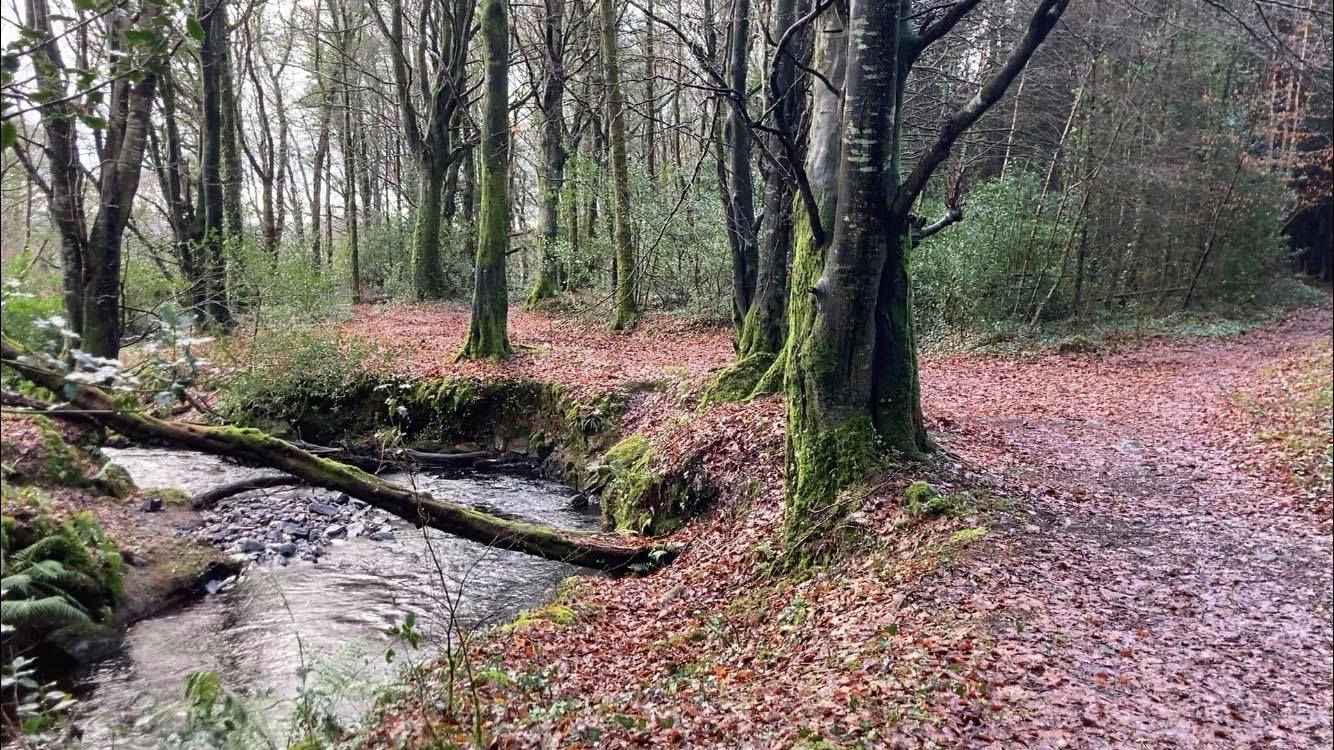
    Monellan Woods in County Donegal. Photo by Niamh Alexander

    “We’re all in the same boat.”

    We have all heard this saying in some shape or form since lockdown began. It has been repeated over and over as a way of reassuring the masses that we are all in this together – that we need to present a united front to beat the virus.

    Which is true – to an extent.

    It might be more accurate to say we are all in the same ocean, but different boats.

    Every one of us will have a different experience of lockdown to tell. Do you live with your family or housemates or even alone? Maybe you have not left the house since last March or maybe you are a key worker and haven’t actually stayed at home at all. Do you live on the top floor of an apartment building or in a spacious house with a garden?

    The River Liffey in Dublin city. Photo by Stephen Hylands via Pexels.com

    This is especially true in the case of quarantining in the countryside versus in a city. I have experienced both country and city living, and I can attest to the vastly different experiences. 

    “I spent the first lockdown at home, and I live in quite a rural area,” says Arlene Bonner, a student from Donegal who has since moved to Dublin.

    “We were lucky that the weather was really good, so I actually spent a lot of it outside, you know going for walks or just sitting in the garden. I think that maybe lessened the feeling of anxiousness or claustrophobia that a lot of other people talked about. There’s a woods near my house so I spent a lot of time there which was nice,” she says. 

    For Dublin resident Jennifer Carleton, the experience was very different:

    “I would definitely love to be quarantining in the countryside instead of the city. I live in a housing estate so there isn’t a lot of green spaces that I can really enjoy. I’m beside a really busy road so I don’t have a lot of options. I kind of just have the one route if I want to go for a walk or anything. I spend most of my time indoors,” she tells me.

    Georgian houses in Dublin. Photo by Skitterphoto via Pexels.com

    For a lot of people, this is the main draw for living in more rural areas, especially during lockdown. Having the option to explore more open spaces and scenic countryside can make for a more pleasant lockdown experience.

    “I think lockdown is going to be pretty lonely no matter where you are”

    Jennifer Carleton

    However, countryside living can also have its drawbacks.

    “I do think being in lockdown in Donegal was a lot more isolating than Dublin. I didn’t really see anyone except my family for the full six weeks, but in Dublin I live in an apartment complex, so I have lots of neighbours that I see most days. There’s always people around,” says Bonner.

    When asked if she found lockdown in a city to be isolating, Carleton said that lockdown is difficult regardless of where you spend it:

    “I think lockdown is going to be pretty lonely no matter where you are, but yeah I do think being in a city is easier in that sense. I know most of my neighbours so we’re able to meet up outside as long as we stay far apart.”

    Most people assume that the isolation of the countryside would be relatively safer than a crowded city. However, this has not rung true for Ireland’s Covid-19 statistics. Rural areas have reported some of the highest number of cases per 100,000 of the population since the pandemic began.

    For a while, Donegal had the highest 14-day incidence rate in the country. Other rural areas have been particularly high – Co Offaly currently has a 14-day incidence rate of 369.4, higher even than Dublin.

    In contrast, some urban areas such as Blackrock or Dun Laoghaire in Dublin have experienced a considerably low number of cases per 100,000.

    It is difficult to know exactly why cases in some rural areas have been so high, and health officials have yet to pinpoint an exact reason. 

    “I do think it’s a case of letting your guard down. I think people expect rural areas to be safer and they might not be as good at sticking to some of the restrictions. It’s a lot harder to forget about (the pandemic) in a busy city,” says Bonner.

    Whatever the reason, it is important to remember that not everyone’s experience of the lockdown has been equal.

    In particular, minority groups have been disproportionately affected by Covid, with “Black, Black Irish, Asian, Asian Irish and Traveller groups [being] more likely to contract Covid-19 than those who are white Irish”, which can be attributed to occupation and housing conditions, according to a recent report by The National and Economic Social Council (NESC).

    The report shows that groups such as migrants, Irish Travellers, and those living in Direct Provision centres live in circumstances that leave them more susceptible to the virus.

    Issues such as poor renting conditions, house-sharing with non-family members, and overcrowding has led to significant Covid-19 outbreaks within these groups.

  • Pups on the pier

    Pups on the pier

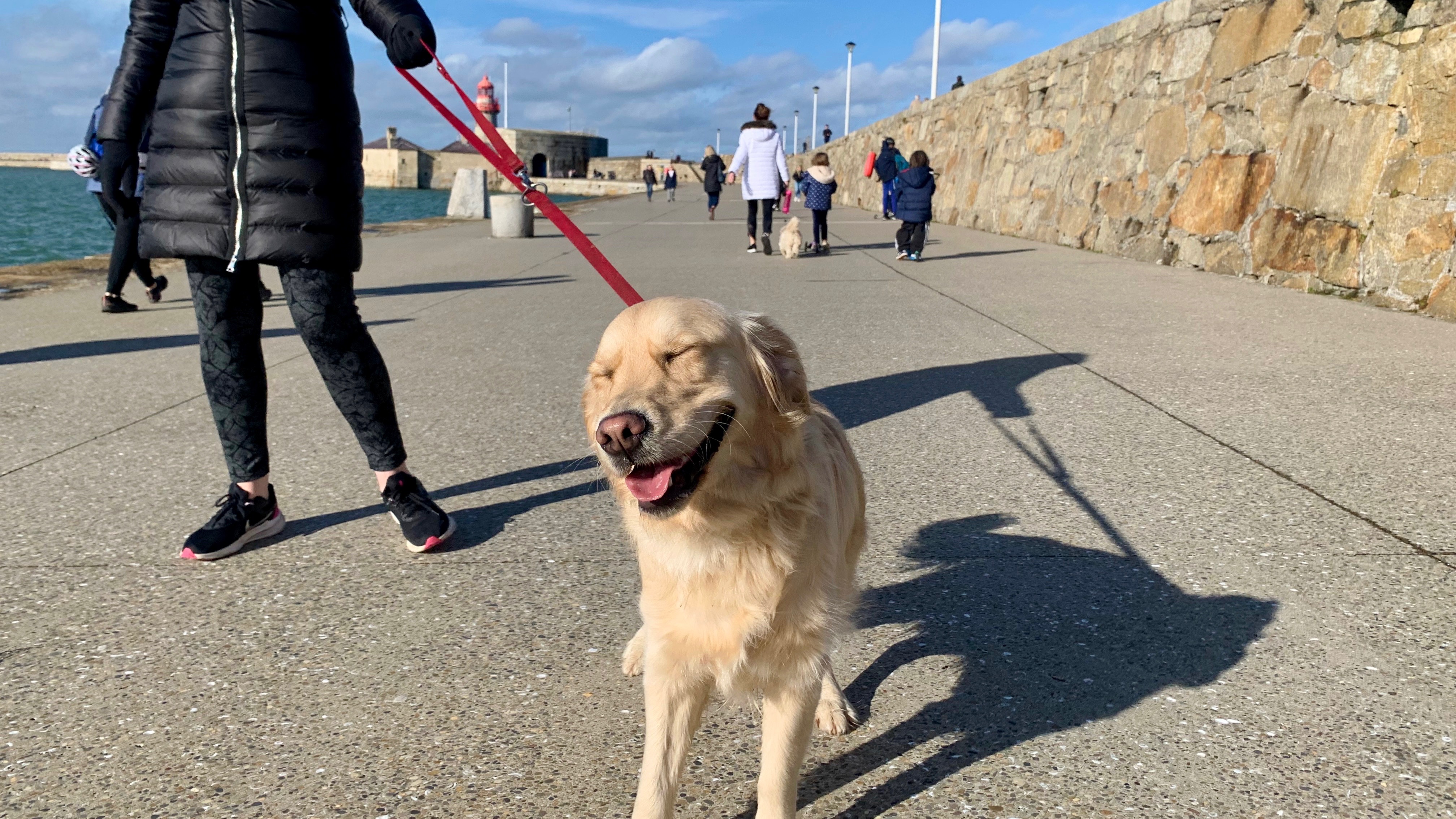
    With a high of 13 degrees celsius, Monday, 15 February 2021 marked one of the of the warmest days of the winter this year. Like many South Dublin natives, I strolled the East Pier in Dún Laoghaire to enjoy this rare moment of warm weather and sunny skies. Here are some of the furry friends that I met on my journey.

    “She’s almost a year old now, we’re lucky to have had the lockdown to train her”
    “While you’re at it, make sure you tell the owner’s to pick up their pet’s crap too”
    “She’s the model of the family”
    Smiley Cosmo abiding by social distancing measures
    “It’s hard for him to see all the action from so low down, so he loves when I let him stand on the benches”
    Cone of no shame
    “They’re just a bit camera shy”
    “Bonnie isn’t one for walking”
    “My record is thirteen dogs at once”
    “We asked Lulu to sit, but she didn’t get the memo”
    Major, the Siberian Husky
    “It might be hard to capture them, since they never sit still”
    “Don’t forget to make her the star of the piece”
    Seeing triple with half siblings Woody, Buzz and Kenny.
    Young puppy, Milo on high alert for birds
  • Five Black businesses that are making serious money moves

    Five Black businesses that are making serious money moves

    A package delivered by Nogora. Photo by Dolapo Agunbiade

    One of the most impactful ways to celebrate Black History Month is by putting your money where your mouth is. By supporting Black businesses, you are spreading wealth around the Black community and closing the racial wealth gap.

    Over the past few years in Ireland, there has been a steady rise in Black businesses and although I cannot name them all, here are five affordable ones to follow this lockdown.

    An array of credit cards popping out of a jean’s pocket. Photo by Dolapo Agunbiade

    “It’s not for profit. It’s meant to take a stand”

    Funto Joye

    1 Nogora Beauty

    On 28 January 2021, Nogora Beauty became Ireland’s first Black-owned e-commerce hair care and beauty supply store. The site features a wide range of products, from silk bonnets and wave sponges to lashes and lip gloss. Nogora Beauty was created as a response to the shortage in supply of Afro-hair products displayed in Irish stores. 

    The creator – Funto Joye – in an interview with The City said, “I want it to be for our community.” He continued, “It’s not for profit. It’s meant to take a stand.” 

    Nogora Beauty stocks popular Black-used brands like Aunt Jackie’s, Eco Styler gel and Cantu, while also featuring products from Black Irish businesses: byO and Melt Effect (more on that later).

    2 Awe-some Creations

    Felicia Awe’s company, Awe-some Creations,  is not one that we’ll be saying bye to anytime soon. Her business can satisfy all your delicacy needs and more. They do it all: savoury dishes, chocolate fountains and flavourful drinks. 

    The business started 10 years ago at church programme Summerfest, where Awe was asked to bring drinks. From there, at the tender age of 19,  her career in mixology began. Awe-some Creations can cater for any occasion: business events, birthdays and bridal showers on small and larger scales. 

    “I feel it’s very important to support and promote black businesses but if we don’t support ourselves how can we expect others to do so?” Awe told The City.

    The brand even runs masterclasses showing you how to make some of their refreshing cocktails. Their site is currently under construction. However, you can still order through email, Instagram, Facebook or directly over the phone. 

    3 Bees of Honey

    Mimmie Malaba’s vegan self-care brand Bees of Honey is the wellness brand you wish you’d known about at the start of lockdown number one. Since 12 February 2020, Bees of Honey has been bringing customers the daily essentials to start their self-help journey. 

    Their 100% organic products promote stability, peace and comfort. Their whipped body butter, healing candles and sage sticks soothe the spirit while relaxing auras around you. 

    “Supporting a small black owned business is like supporting any other small business. It impacts you as a buyer because we look after you as a person and not just another statistic,” said Malaba.

    Bees of Honey may be fairly young but the company has already had an enormous amount of success. The one-woman brand has been featured in Image Magazine and is certainly one to watch. 

    4 Melt Effect

    Founder Mariam Oshundairo launched Melt Effect in June 2020. She is committed to giving her clients the best foundations to put their best foot forward. 

    For Black women, getting your hair done can be seen as a gruelling task that goes on for hours on end. This is one of the reasons why this brand specialises in providing quality hair products that will keep your edges laid and make your wig stay put. Oshundairo has developed an adhesive formula that’ll leave people asking, “What lace?” 

    Melt Effect items can be found on their site, as well as on the previously mentioned Nogora Beauty. 

    “We invite the world to join in this celebration of African excellence by supporting, while spicing up their wardrobes”

    Umoja Linn

    5 Umoja Linn

    Umoja Linn was created by Liswa McDonald and China Soribe in 2017 during their college days at National University of Ireland Galway. Their Afrocentric fashion brand is a collaboration of African and Irish talent as the two work closely with numerous African designers, photographers and other creatives. 

    The company has had many achievements thus far, and have featured in Country Magazine and Irish Tatler. Umoja Linn’s success goes even further, as their clothes starred in Pharrell Williams and Jay Z’s music video Entrepreneur. 

    In our discussion about Black History Month, the creators said, “we invite the world to join in this celebration of African excellence by supporting us, while spicing up their wardrobes!”

    Even with their mass successes, every brand I spoke to disclosed the desire for their items to be sold in shops around Ireland. Some even expressed the possibility of opening up their own stores, depending on future restrictions. 

    This is the end of this Black History Month series. However, celebrating and supporting Black accomplishments shouldn’t be limited to once or twice a year. To truly make a difference, Black efforts should be recognised at the same volume as White ones. This is the only way we’ll ever have a harmonious society.

  • New York Times’ documentary Framing Britney Spears shines a spotlight on sexism

    New York Times’ documentary Framing Britney Spears shines a spotlight on sexism

    Album artwork of Spears’ third studio album, Britney

    It was 1998 when a 16-year-old Britney Spears hit our TV screens with the music video for her debut single Hit Me Baby One More Time – a song that would propel her to superstardom.

    Twenty-three years later, society’s fascination with the pop star’s life is still going strong. 

    With six number one albums, 10 world tours, highly publicised mental health struggles, and now the #FreeBritney movement that focuses on her unusual conservatorship case, Spears’ name has never left the media – and tabloid culture has eaten up her every move. These are all things Framing Britney Spears explores as it documents the rise and fall of the global sensation.  

    Much of the documentary focuses on the media’s treatment of Spears, and how the blatant sexism and misogyny directed towards the singer, along with the lack of respect for her privacy, acted as a catalyst to cause the deterioration of her mental health and subsequent loss of control over her own life. 

    Throughout the documentary, we are presented with archive interview footage where media figures frequently ask inappropriate questions or make remarks centred around the singer’s sexuality. Spears is constantly asked about her clothing, breast implants, relationships, and her virginity – but rarely about her actual music. 

    This is something Spears has had to endure throughout the entirety of her career, and something she highlighted as a double-standard from the get-go. 

    The documentary focuses on Spears, but it’s also a look at the treatment of young women in the industry as a whole. Spears was not alone in her constant experience of casual misogyny. 

    “It’s hard enough being a woman in a male dominated industry”

    Soulé

    Many people have taken to social media to highlight examples of these misogynistic behaviours that took place right before our eyes.

    For example, the following clip from The Ellen Show, where singer Taylor Swift is relentlessly probed about the number of romantic partners she has had and is so humiliated that she is reduced to tears. 

    Swift is no stranger to the criticism surrounding her sexual life, and has often remarked on how her male counterparts do not go through the same levels of scrutiny.

    As more and more examples popped up online, I wondered to what extent this type of  casual misogyny exists here, in the Irish entertainment industry. The experiences of massive public figures like Spears and Swift are magnified, but similar occurrences are all too relatable for young women in the industry worldwide. 

    “As far as I’m concerned [sexism and misogyny] has been and still is a major issue, not only here in Ireland but all over the world”

    Katerina Chrysopoulou

    In October last year, Dublin drummer Emmanual ‘Smiley’ Osungboun made a number of sexist comments on a now deleted podcast referring to artist Soulé by name and implying women’s musical skills or abilities are influenced by their menstrual cycle. His comments were not surprisingly met with much outrage and disappointment. 

    “It’s hard enough being a woman in a male dominated industry – it’s another thing having fought and succeeded in obtaining a seat at the table to have our skills undermined based on our ‘periods’,” Soulé wrote on twitter. 

    This is just one example of the exhausting misogynistic behaviours female artists must endure.

    “As far as I’m concerned [sexism and misogyny] has been and still is a major issue, not only here in Ireland but all over the world. I’m from Greece and before I moved to Dublin I was an active musician there and can honestly say I have experienced similar behaviours in both countries.” Says Katerina Chrysopoulou, a Greek musician and performer based in Dublin.

    Katerina Chrysopoulou playing in Whelans. Photo courtesy of Katerina Chrysopoulou. Instagram page @_katerinachrys

    Chrysopoulou adds that she wants to be clear about one thing – the problem of sexism is not a men vs women problem, as is commonly thought. Although 99% of her experience with sexism has come from men, she has also been subjected to sexism by women.

    Katerina Chrysopoulou in Dun Laoghaire pier. Photo courtesy of Katerina Chrysopoulou. Instagram page @_katerinachrys

    “One example, which I’ve experienced myself, is the way men – and sometimes women – treat females who are in a position of power. Female band leaders, conductors, music teachers, and many more, have such a hard time doing their job because they are not taken seriously only because they are women. And when they finally try to make people take them seriously, they will be called bossy, crazy, hysterical, and asked if they are on their period,” she says.

    The unfortunate truth is that sexism and misogyny are extremely deep-rooted in our society and double standards remain prevalent. But Chrysopoulou believes there are many things one can do in order to better cope with these issues in the industry – or any workplace for that matter.

    “Surrounding yourself with people who love and support you is a big one, as they will create a support ‘system’, if you like, that will protect and uplift you at all times.

    “Facing sexism is not an easy thing and the more confident we are in ourselves and our skills, the easier it will be to stand up for ourselves, face those issues and even attempt to stop them from happening to us once and for all.”

  • Covid-19 abroad: The US and the impact of the pandemic from coast to coast

    Covid-19 abroad: The US and the impact of the pandemic from coast to coast

    Video by Liam Daly

    The first US Covid-19 fatality was reported in Seattle on the 28 February 2020 – one year later and the deaths have now risen to half a million.

    In that time the US has been a mainstay in worldwide news and media for a multitude of social and political issues ranging from the strange to the shocking.

    Throughout the last year, the American people have become increasingly polarised – the brutal killing of George Floyd and the resulting protests revealed systemic issues of racism in the US which were brought to the fore in worldwide media, on top of that, then-president Donald Trump’s approach to handling the pandemic was controversial, and did nothing to quell the tense atmosphere in the US.

    The US entered the pandemic with an already problematic healthcare system, which the Trump had inherited – a healthcare system which had been decreasing in funding every year since 2002.

    Trump’s devil-may-care attitude to the virus and his peddling of conspiracy theories did not help this fragile system, and the magnitude of lives lost is a sad reflection of this.

    Through this historic period, Cillian Dunne, 24, a recent college graduate, published author, and budding Hollywood screenwriter has lived on both the east and west coasts of the United States.

    First in Boston, where he has been living for the past five years while completing his college degree, then, upon graduating, he drove cross-country to settle in Santa Monica, where unfortunately he has been mostly confined to his apartment since October.

    “Since we got here we’ve been under the strictest lockdown in America”

    Cillian Dunne

    While things are starting to reopen as more than one million people in LA have been vaccinated, thousands of cases per day keep the locals wary.

    “ICU wards are getting within their threshold. I’m sure we’ll get put into another lockdown,” says Dunne.

    A quick vaccine rollout has lead to an increase in optimism. Some reputable sources are backing ‘herd immunity’ and speculate that a herd immunity threshold can be achieved as early as late-spring or at worst, the end of summer.

    This theory has its complications however, and arguments have been made against it. While a quick vaccine rollout seems the perfect solution that we all have been searching for, the danger of increasing variant strains of the coronavirus complicates the situation – we may vaccinate against the current strains but a new variant could come along tomorrow and make that work null and void.

    The only way to tackle this problem is to learn to live with Covid-19 while work on vaccines and studies of the virus improve – and in the US, the new president’s policies are putting this into action.

    President Biden’s approach to the pandemic has been significantly different to Trump’s.

    Biden has focused on personal protective equipment (PPE) and improving access to it. Increases have been made to testing capacity, travel restrictions, and mandates requiring Americans to wear masks have been introduced. There has also been a focus on returning to schools and workplaces safely.

    If the US can maintain their current vaccine trajectory, the country could reach herd immunity as early as July, however it is also projected that in that time an additional one million people could die – and that is without interference by new variants.

    The more important strategy could prove to be in the policies the new administration are implementing rather than in the questionable herd immunity plan.

    Sunset in Boston, Photo by Kristin Vogt via Pexels.com
  • Freezebruary boys: South Dublin group embrace the challenge of sea swimming for 28 days in a row for charity

    Freezebruary boys: South Dublin group embrace the challenge of sea swimming for 28 days in a row for charity

    Cian Murphy, Conor Murphy, Neville Godfrey and Derek Dunne moments before attempting the Freezebury challenge for 16 minutes on 16 February. Photo courtesy of Tom Murphy

    Participants across the country have undertaken the Freezebruary challenge for the month of February, in aid of numerous charities throughout Ireland – and that means sea-swimming each day of the month.

    Those opting for the more extreme version of the challenge are required to having an increase of time spent in open water, starting from one minute on 1 February, rising to 28 minutes on 28 February.

    The Freezebruary Boys, four young men based in South Dublin – Cian Murphy, Conor Murphy, Derek Dunne, Neville Godfrey – are taking part in the challenge, in aid of the heart and stroke charity, Croí. 

    Currently, they have raised over €12,000 for their chosen charity, with donations coming from people throughout Ireland and abroad.

    “At the beginning of the month, we had to swim whilst being in the middle of a snow shower”

    Neville Godfrey

    “My mother died last year due to a stroke, so we agreed collectively that Croí was the charity we wanted to go with,” Godfrey says. “We have seen some of the amazing work that Croí has put in throughout the years for [those] who have suffered a stroke or heart conditions,” he continues.

    When coping with the harsh circumstances for sea-swimming at this time of the year, Godfrey says the task has been “highly demanding” for the group as they have experienced a variety of weather conditions throughout February.

    ‘’At the beginning of the month, we had to swim whilst being in the middle of a snow shower and by mid-February, there were high gusts of winds down by the coast that made it difficult for us. We are decent swimmers and do it regularly in the summer months, so the tough conditions have only spurred us on more to face the challenge,’’ says Godfrey.

    “You find out a lot about yourself when you’re staring in the face of adversity’’

    Neville Godfrey

    According to Swim Ireland, open water temperatures in the sea tend to dip below 10 degrees Celsius during the winter months and will not rise above that level until April at the earliest.

    What about the mental benefits of sea swimming?

    “Physically it is quite daunting for the body, but at the end of the day, it’s just you against the water. Each swim we’ve done has been so beneficial towards maintaining positive mental health,” Godfrey says.

    The support for the campaign has exceeded the expectations of Godfrey and his three counterparts, as they expected to garner some attention but nothing close to the over 500 donors contributing to the fundraiser.

    “In the beginning, we expected to raise a few hundred euro for Croí, by 6 February we had already raised €8,000. We couldn’t believe how much we raised in such a short space of time,” Godfrey says.

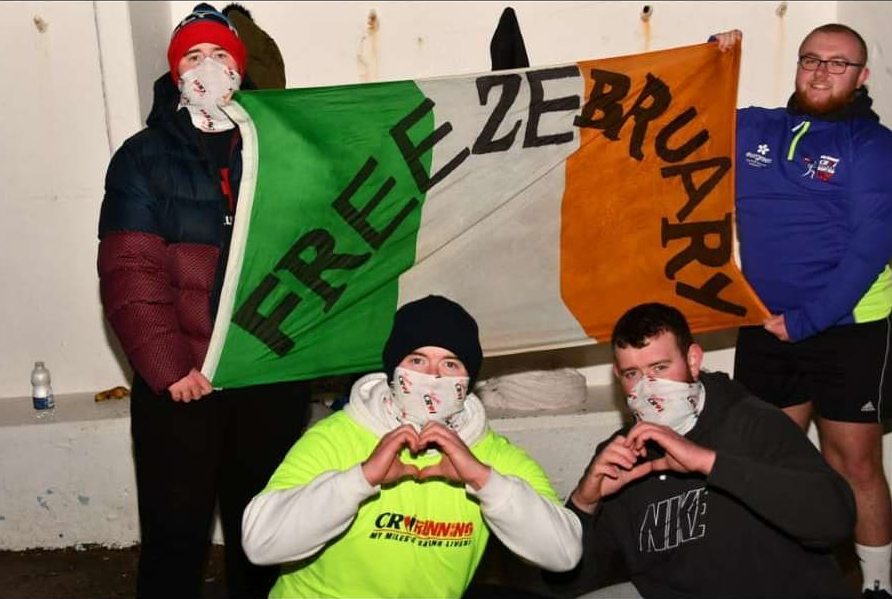
    The Freezebruary Boys pose with the tricolour after having their ninth dip of the month. Photo courtesy of Tom Murphy

    “We have the advantage of having four of us running the campaign, so we could reach out to several people through our friends and family – but it just blew up to the point where everyone in the area was donating towards the cause.

    ‘’People have been so generous when donating to us. People with [whom] we have no affiliation were donating hundreds. We received a donation of €200 from one individual, who then gave another €280 moments later, it’s surreal,” he continues.

    The vehicle for pushing the fundraiser was their Instagram page, which gained 1,000 followers in a week. On their Instagram, they post daily updates of their experience with the difficult challenge.

    Through social media, they managed to target numerous people in their community while also receiving assistance from some notable names. Some include TV presenter Laura Whitmore sharing the social media page and former rugby player and originator of the Freezebruary challenge Damien Browne, who backed the fundraiser online.

    Thus far, they have raised €14,500 in donations with a target of €15,000.

    You can donate towards Freezebruary Boys here

  • Player Wills redevelopment receives lukewarm reception from Dublin 8 residents

    Player Wills redevelopment receives lukewarm reception from Dublin 8 residents

    A picture of an old clock on an older building. Photo by Jake Hurley

    A planned 19-storey housing development on the South Circular Road has been met with opposition from local residents who have described the proposed tower block as a “glorified tenement”. 

    US property group Hines aims to build 732 apartments at the Dublin 8 site, a significant proportion of which will be co-living units and studio apartments.

    The planned housing block will join a second 16-story building which Hines have been granted permission to build on the adjoining Bailey Gibson packaging plant. 

    According to Hines’ 2021 development update, two parks will also be built in the surrounding area, bringing the scale of the project up to 27 acres – nine times the size of Croke Park.

    The tower block is set to encompass the site of the former Player Wills factory, a beloved art deco building that Dublin 8 Residents Association representative Mark Stedman feels should be preserved by Dublin City Council.  

    “A lot of cities reimagine similar industrial buildings, but the development shouldn’t destroy the cultural heritage of the site”

    Rebecca Moynihan

    “It’s one of the last few remaining industrial boom factories to be found around Dublin, along with the Smurfit printworks site in Glasnevin,” said Stedman, referencing the northside site earmarked by Scanron Limited for a development which was ultimately rejected by An Bord Pleana last year.

    Parts of the Player Wills factory are set to be converted into a community centre for arts and culture along with commercial space for businesses and co-working facilities. 

    While Dublin City Council have been in contact with Hines regarding the preservation of the site, it has not yet put the building on its list of protected structures. Labour’s senator Rebecca Moynihan has been pushing for the site to be added since November 2018. 

    “A lot of cities reimagine similar industrial buildings, but the development shouldn’t destroy the cultural heritage of the site,” said Moynihan, who is particularly concerned about how the building’s interior will be redesigned.

    “In the context of the current and future pandemics, for profit co-living is an unsustainable model”

    Mark Stedman

    Residents have also been critical of the high-density nature of the housing outlined in the plan – particularly the co-living element proposed by Hines. 

    Championed by former housing minister Eoghan Murphy, co-living offers residents a private room but shared kitchen facilities. Developments of this nature are also exempt from part V social housing obligations.

    “In the context of the current and future pandemics, for profit co-living is an unsustainable model,” said Stedman.

    “The housing density is far greater than what you’d see in cities like Paris and London. It’s overpriced student living with a flashier name,” he added.

    Senator Moynihan echoed this sentiment, seeing the project as ambitious but ultimately flawed.

    “Parts of the development like the retail space on the lower floors are good but the height is really concerning, ideally a development of this scale would be facing a body of water rather than a main road,” said Moynihan.

    “You can get good density for inner city housing, but it’s suddenly jumped up to 19 stories,” she continued. 

    A peak at the development site. Photo by Jake Hurley

    Furthermore, the Labour senator feels that more housing should have been made available for first time buyers and longtime residents. The proposed housing is “almost entirely buy to let”, she said.

    Hines’ development update states that the “landlord is keen to promote long term occupation” and further suggests the housing complex is fulfilling an existing need for smaller accommodation in the market.

    In addition, “70-80% of all demand for housing in Dublin is for smaller one to two person homes. Indeed 90% of this local districts [sic} rental properties searched on Daft.ie were for one to two bedroom homes,” it reads.

    The proposal also emphasises a commitment to “deliver modern, high quality apartments and a quality of life experience”.

    Senator Moynihan is unconvinced, however.

    “I imagine the units will be very expensive, what we need is more affordable housing,” she said.

    “It’s a large site in the middle of a city so it does need to be developed, but the key to any development of this nature is to make it work for both its own residents and residents of the surrounding area,” Moynihan said.

    A closer look at Hines’s development site. Photo by Jake Hurley

    Mark Stedman is equally sceptical of the development’s potential for alleviating the strains of the housing crisis.

    “We’re all short housing, we would like to have housing built, it’s very needed but this just isn’t the right type,” he said.

    “It’s all built to rent for extortionate prices, it doesn’t do anything for the housing issues, and It doesn’t add much to the surrounding area,” the Dublin 8 Residents Representative continued.

    Last November, minister for housing Daragh O’Brien moved to ban co-living developments. This will not retroactively affect Hines application, however, as it was made prior to this change. 

    An Bord Pleana is set to make a final decision regarding the South Circular Road building on 15 April.

  • An end in sight? Government promises to end Direct Provision as residents go on hunger strike

    An end in sight? Government promises to end Direct Provision as residents go on hunger strike

    Lucky Khambule, MASI co-founder and anti-direct provision activist. Photo taken from MASI Instagram page (@masi_movement_asylum_seekers) with permission

    The recent acknowledgement of the horror women and children were subjected to in the Mother and Baby homes across the country for the best part of the century shed light on both the ability of Irish institutions to treat the vulnerable incredibly inhumanly, and our society’s ability to ignore, or even to cooperate with it.

    If it were not so depressing, it would almost seem ironic to watch taoiseach Micheál Martin apologise to the victims of the Church and State’s inequity, when it is reasonable to imagine a future taoiseach standing in his place apologising for the cruelty inflicted under the watch of the current government – direct provision.

    Direct provision has become an increasingly contentious issue over the last decade, and while this week the long-awaited White Paper announcement promised an end to direct provision in the foreseeable future, elsewhere in the country, asylum seekers went on hunger strike in protest of substandard meals.

    I spoke to Lucky Khambule, who lived in direct provision for three years before going on to co-found MASI, the Movement of Asylum Seekers in Ireland, where he is the current coordinator.

    We discussed the impact of the pandemic on direct provision, the ongoing hunger strike, and the important moment we are at in deciding the fate of asylum seekers in the future.

    The Pandemic

    The events of the last year have impacted all our lives, not excluding those who live in direct provision.

    Social distancing and access to online education are things beyond imagination within the facilities operating currently.

    “The main thing was to keep people quiet”

    Lucky Khambule

    There have been outbreaks in direct provision centres nationwide, like the controversial Skellig Star Hotel, which has since been closed. However, its residents have been relocated to other centres, some experiencing outbreaks in multiple centres.  

    “[People] are scared and anxious,” Khambule said. The centres are unequipped to face quarantining while still maintaining operations for those who have not been infected.

    In the Killarney centre, 25 people had to be moved to a separate isolation facility while they endured the disease.

    In terms of education, 1700 children currently live in direct provision, and they are suffering more than most.

    Online learning has exposed inequality countrywide, with many Irish students unable to keep up with classmates due to a lack of resources.

    Within direct provision, parents unable to work and receiving less than €40 a week are unable to provide children with the laptops, phones or tablets needed to learn online.

    “We campaign for the right to education, especially with the tentative education [in place]” Khambule said.

    He was critical of the education provided to children in direct provision which he stated could use drastic improvements even before the pandemic.

    Lucky Khambule and other activists supporting the closure of the Skellig Star Hotel. Image taken from MASI Instagram account with permission

    Hunger Strike

    Almost simultaneous to the announcement of the White Paper, the story broke that people in a direct provision centre in Cork were refusing their meals on the grounds of substandard nutrition, especially for their children.

    The residents are complaining that food is being thrown away anyway, due to lack of quality and meals even being served burnt.

    “I am dealing with two centres [on hunger strike].” Khambule said.

    “They have tried communicating with the management, and the management is not listening to them. And they have decided now to take control. They do not want to be there, they’re tired of that, they want their own space where they can be able to cook their own meals.”

    While this campaigning across the country has brought some relief, with a number of centres gaining their own cooking facilities – the sad fact remains that this has not been adopted nationwide.

    Most of the residents are using their allowance to purchase different food to cook for children and those with medical conditions, as the meals provided are inadequate.

    “Substandard food, they are tired of eating rice and potatoes.” Khambule stated. “Why must cooking their own food be taken away from them? Why must it take a hunger strike to be listened to?”

    The residents have compiled a letter of complaint which has been sent to the Department of Children and the International Protection Accommodation Service (IPAS).

    “The department takes complaints from residents very seriously.” A spokesperson for the department confirmed to The Irish Times.

    Khambule disputes this claim: “When they complain about the food, they are saying that people are complaining too much. You’re sitting in that centre for three years, eating the same food, you are hearing some centres are being able to cook for themselves and you are afraid you are being left behind.”

    This has been amplified by the abnormally long waiting times for asylum seekers to be processed in Ireland – something which the United Nations High Commissioner for Refugees (UNCHR) expressed concern about in 2019 and has not seemed to improve since.

    There are widespread stories of sharing rooms for 18 months, and longer, before even getting an initial interview.

    Something that we have all learned over the course of the lockdowns is how hard it is to keep yourself occupied.

    As well as improving the nutritional value of your meals, cooking can also be a welcome activity for someone who has limited options.

    “It would be nice for them to cook in the kitchen, it’s something to do,” Khambule said.

    “The oppression, and the fear, and the intimidation, the living conditions were horrendous”

    Khambule

    It seems something basic that could be provided by the centres, and under the State’s national standards for accommodation centres, released last month, it is legally binding.

    These centres are way behind this standard, but this is not uncommon, and many complaints have been made to the Department of Justice and Equality.

    The department originally called for individual contractors, who profit from these centres, to provide evidence that these allegations were false.

    Following 33 inspections carried out last year, the Department of Children confirmed the presence of cockroaches found in a direct provision centre in Monaghan, but did not confirm other allegations of mould, rodents and multiple cases of skin disease.

    These inspections have ceased since Ireland entered level 5 restrictions in October – with the government reducing the number of inspections for every centre from three times a year to once a year, as a result of the pandemic.

    White Papers

    On Tuesday, Minister for Integration Roderic O’Gorman announced that the new IPAS system would completely replace Direct Provision advancing “integration and inclusion”.

    This is included as a part of the White Paper on ending direct provision which was due to be released at the end of 2020 but is now to be published next week.

    The minister has stated that the paper will inform on the intention to abolish the system and replace it with a new model.

    Khambule finds it difficult to accept: “In my opinion, these are empty promises.”

    “Okay, yeah they have been backing the White Paper. The government is far apart from the people. They want to make the Irish people believe they are doing a good job. Doing good for asylum seekers and refugees, but they don’t tell you our complaints. The complaints we have every day, it is important we keep on talking about it. When the government makes promises [for change] but we don’t find that they have started.”

    The Future

    Although it is difficult to see a bright future for refugees and asylum seekers, this is not hindering the optimism of the activists striving toward change.

    “We will wait, we will see what the White Paper says, it is very important, because our strategy will be based around it.”

    The main thing to take from the White Paper is the hope that it will remove private contractors from being able to profit from the centres.

    “We need to find a way to remove the people who benefit from the misery. The people who claim to provide service, remove them and let the people breathe, so they can have room to shape their own lives,” Khambule stated.

    “Our cry is the way we are treated as we are waiting for our applications, to highlight the issues affecting us as people that seek asylum, for the government to make policies that would seem to make us human,” says Khambule.

    As of 2021 there are more than 7000 people living in direct provision across 38 centres, with 30% of them being children. It can only be hoped that this system comes to an end soon and this cycle of repeated history can end with it.