Tag: slider

  • Cosy for Covid: House-hunting in lockdown

    Cosy for Covid: House-hunting in lockdown

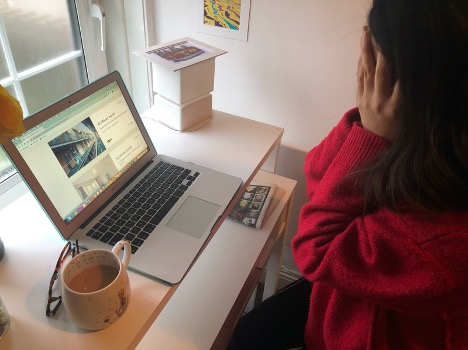
    House-hunting can be an ordeal! A disgruntled hunter clutches their face in despair. Photo by Colm McGuirk

    Regular renters in Dublin may know the feeling – you pour your heart out across dozens of viewing requests, then watch tumbleweed blow through your inbox.

    The pandemic has gone some way to reducing the numbers in this scrap for exorbitantly priced rooms. According to property site Daft.ie, there are around a thousand more homes available to rent in Dublin today than at this time last year. 

    Properties previously listed on AirBnB but now being advertised as short-term lets are the main contributor to this rise. Another is the mini-exodus to other counties and countries prompted by lost jobs and a shift online for work and study.

    Software developer Mo Fiebiger has seen this reflected in the numbers applying for rooms in the Northside house she shares with six others.

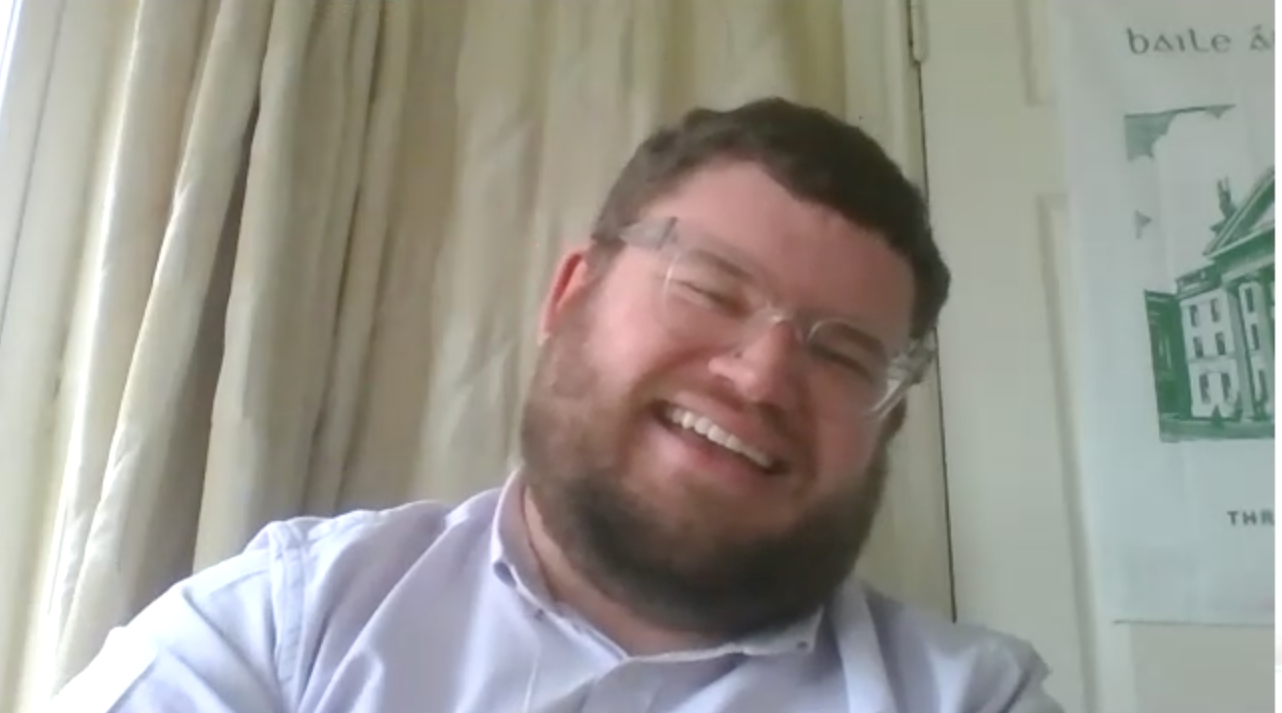
    “We’re quite close to the city centre and in the past we would get between 50 and a hundred applicants. Now we’re lucky if we even get 10 to 20. That can be quite stressful, because we have a lot of people here and we really focus on having a good dynamic for those who live here, so you want to have plenty of options to choose from.

    “But on the other hand, you obviously don’t want to invite too many strangers in at the moment.”

    For house viewings in the last year, she has asked applicants to wear a mask and sanitise their hands on entering. A fairly obvious request, it might seem, but artist Alan Hall encountered a range of Covid caution when looking for a room last autumn.

    “Now with the pandemic there’s an extra level to navigate, because everyone has their own way of living and dealing with it, so it becomes very personal”

    Alan Hall

    “It went from people who were really regimented about it – keep the distance, do Zoom calls first; to people who worked in hospitals and weren’t wearing masks; to people that were still having parties. I went to one house and they told me they had parties. I was like, ‘OK, cool, obviously not now?’ And they said, ‘Yeah, now’.

    “When you’re viewing a house,” Hall continues, “you only have 10 minutes to figure out if you like it, if you like the vibe. Now with the pandemic there’s an extra level to navigate, because everyone has their own way of living and dealing with it, so it becomes very personal – these extra indicators about whether or not you might gel with the people you’re about to live with. I’d bring my own sanitiser, for example, and for some people that seemed like overkill. I said no to a few places I thought weren’t taking it seriously enough.”

    As of January, in-person viewing is advised against until you’re ready to sign a contract, with virtual viewings recommended. Having your disembodied head guided around via smartphone doesn’t always leave you with the full picture, as audio-visual technician Jeff Doolin has learned.

    An applicant being doused in hand sanitiser at the entrance of a house viewing. Photo by Colm McGuirk

    “Virtual viewings are a bit strange,” he says, “because you just can’t get the real feel for it – someone just walking around, maybe with a dodgy connection. Some of them walk around slowly, which is good, and then some of them just run around. And you’re like, ‘Wait, what? Hold on, pause that for a second. Was that the jacks?’”

    Daithí Ó Cinnéide, who works in film, was left frustrated by a virtual viewing experience.

    “I had to do an interview on Zoom first before they decided to offer me a viewing,” he tells us. “I liked the room and they liked me. But then when I got there it was a different room from the one I’d seen, and only the box room was left for the same price. So I had to keep searching.”

    Beauty therapist Kathleen O’Reilly thinks this new means of viewing a home may have encouraged scammers to pounce. She has come across a few herself.

    “One lady I was talking to sent me a video of an apartment. I thought it looked great so she sent me a contract. I read it and she sent me her bank details. I said I’d think about it over the weekend, but she was very abrupt. She said, ‘No, this needs to be sent now, €1,400.’ She said she was Irish, but from her texts she clearly wasn’t. So, I wrote back saying I hoped she found someone for the room and reported her to Daft.”

    “For what we’re looking for, there still isn’t much out there, and there’s always a price on desperation”

    Sarah Jane Doogan

    The property site reported a 3.3% fall in rent prices in Dublin last year – a drop that was barely perceptible to Sarah Jane Doogan, a software engineer on the lookout for a place to share with her boyfriend.

    “I would have expected the prices to fall a lot more,” she says. “For what we’re looking for, there still isn’t much out there, and there’s always a price on desperation.”

    She’s noticed a surprising positive upshot of viewing a non-house share home during a pandemic.

    “The thing that stood out to me was how it’s less dehumanising now, because you get an individual slot for viewing. I’ve been renting for 15 years and back in the day you’d book a time when you’d go to a viewing. But in the last five or six years [before the pandemic], it started to change, where you’d go to a viewing and there’d be loads of people there, some of them throwing deposit money at the agent.”

    The modest fall in rent prices last year was only reported for Dublin, with the rest of the country seeing a slight increase. The landlords, it would seem, still have the upper hand.

  • Weigh in: Should paid promotion of diet products be banned?

    Weigh in: Should paid promotion of diet products be banned?

    Photo by Cottonbro on Pexels.com

    The Food Safety Authority of Ireland (FSAI) recently shut down FatBurney.com – a website selling weight loss products apparently containing a harmful chemical that can have unpredictable, and sometimes fatal, side effects.

    The reason for the closure was because the company was “selling and marketing a highly toxic industrial chemical, 2,4-Dinitrophenol (DNP) using a website address that implied the substance may be used for weight loss”, the FSAI said in a statement released on 8 February.

    The chief executive of the FSAI, Dr Pamela Byrne, expressed concern over the use of DNP in weight loss products, stating that there are “serious health risks from taking slimming products purchased online”.

    “DNP’s use has serious and unpredictable side effects, including death”

    Dr Pamela Byrne

    “It is illegal for DNP to be sold for use as a weight loss product and it is not allowed in food. Its use has serious and unpredictable side effects, including death. There has been one recorded death in Ireland in 2015 and the UK National Poisons Information Service has recorded 32 deaths in the UK from 2007 to date,” she said.

    Ads promoting many different kinds of these products – all promising a miraculous weight loss – have become commonplace, usually featuring an image of a slim, glamorous celebrity expounding on the benefits of a detox tea or meal replacement shake. Companies recruit legions of celebrities and influencers to flog their products to the eager public.

    Celebrities such as Khloe Kardashian, Amber Rose, and Trisha Paytas have all been associated with dieting products, posting paid ads on their social media accounts to encourage fans to invest in these products in order to someday achieve a body like theirs. 

    The dieting industry has become a billion-dollar business; it was worth a massive $71 billion in the United States in 2020 (down 9% from the year before), and celebrities are cashing in.

    Products promising to cause a lack of appetite have grown in popularity, with brands selling pills, gummies or even lollipops that claim to prevent cravings, and aid in a quick and easy weight loss.

    However, this growth in popularity has not been without its controversy. While some celebrities and influencers have embraced the dieting culture, others have not been afraid to speak out against it. The Good Place star Jameela Jamil has been extremely vocal on the topic and has called out multiple celebrities for endorsing companies that promote various weight loss products.

    Jamil, who has been open about the tough experiences she has had with dieting products, has not held back on her criticisms of the industry:

    “It’s incredibly awful that this industry has bullied you until you became this fixated on your appearance. That’s the media’s fault. But now please don’t put that back into the world, and hurt other girls, the way you have been hurt. You’re a smart woman. Be smarter than this.” She commented under a now deleted Instagram post of Khloe Kardashian endorsing a weight loss shake by the brand Flat Tummy Co.

    Jamil maintains that the dieting culture is grounded in misogyny – and has an extremely detrimental effect on the minds and bodies of young girls:

    “No. F*ck off. No. You terrible and toxic influence on young girls. I admire their mother’s branding capabilities, she is an exploitative but innovative genius, however this family makes me feel actual despair over what women are reduced to,” she wrote in a now deleted tweet aimed at Kim Kardashian.

    “Weight loss pills and drinks are all about making money. It’s not healthy or sustainable”

    Grace Taylor

    Paid advertisements are extremely lucrative for influencers and this, combined with celebrity worship culture, has created a viable business model for weight loss brands.

    Paying people to promote and tell their followers to invest in a certain product, when in some cases they haven’t actually tried it themselves, means that people are willing to endorse products without knowing potential side effects. 

    “Weight loss pills and weight loss drinks are all about making money. It’s not healthy or sustainable. I think people buy these products because so many companies promote how fast you can lose weight, and everyone would love a quick fix” says Grace Taylor, who runs a fitness account on Instagram (@gracey.fit).

    While they may seem like an easy alternative, they are not conducive to a healthy and sustainable diet:

    “Any product or company that states you can lose weight quickly are just doing it in a very unhealthy way,” says Taylor. “Whenever my followers have asked me about weight loss products, I will always tell them you are better off eating the same amount of calories in a meal rather than a meal replacement drink.”

  • Covid-19 abroad: Europe’s first recorded case – how France has handled the coronavirus pandemic

    Covid-19 abroad: Europe’s first recorded case – how France has handled the coronavirus pandemic

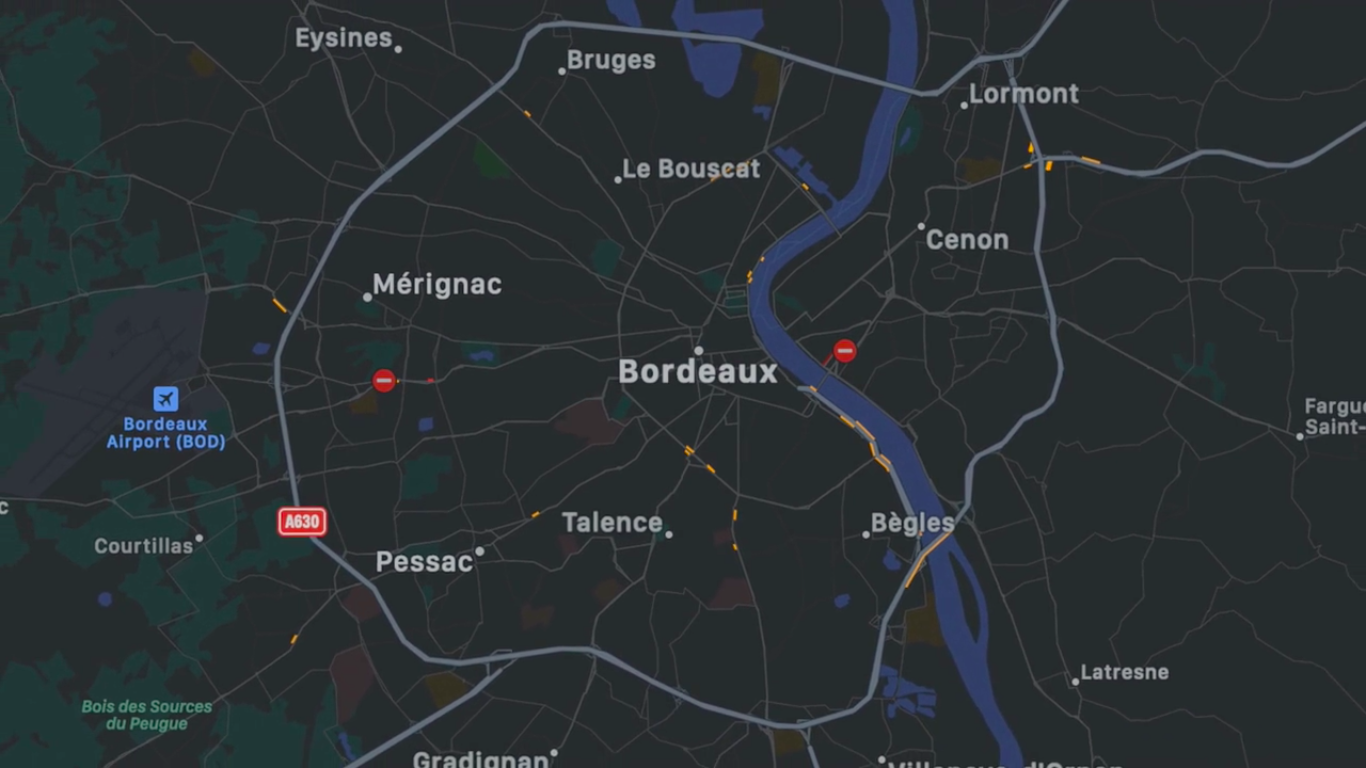
    Map of Bordeaux from Google Maps. Screenshot by David Doyle

    On 24 January 2020, the first European case of Covid-19 was confirmed in the French city of Bordeaux. This marked the starting point of an on-going pandemic, that still affects the country today. Due to a high population with leading touristic figures throughout the world, cases began to surge across France.  

    In early March, Amandine Verbiese returned to her native home of France, after living in Ireland for 5 years. Upon making her homecoming, France was on the cusp of becoming one of Europe’s worst affected countries, as there are over 3.4 million positive Covid-19 cases recorded today. 

    France officially went into a national lockdown on 16 March, as President Emmanuel Macron announced in a televised address that only essential services would remain open and a stay-at-home quarantine would be implemented. 

    “I just don’t know when this is going to end’’ 

    Amandine Verbiese

    ‘’The first [lockdown] was particularly tough. When we left our house, we had to fill out a document giving our reasons for travel, whether it was going to work or walking the dog’’, said Verbiese. 

    She tells me how important it was to provide documentation during the first lockdown, as those who didn’t may receive a large fine or potential imprisonment if breached multiple times.  

    Verbiese has turned to gaming online as a coping mechanism during the pandemic. She is involved in numerous online communities and keeps in contact with her friends and family through video calls. 

    The coming weeks will prove vital for France as the existing health minister Oliver Veran is assessing the country’s current situation, as another lockdown may potentially be on the cards – due to the daily hospital admission figures of 1,500 over the past few weeks. 

  • Podcast: Black and Irish on ‘Embracing the dynamics of a modern, diverse Ireland’

    Podcast: Black and Irish on ‘Embracing the dynamics of a modern, diverse Ireland’

    Black and Irish logo

    Black and Irish is an organisation that looks to celebrate and share the stories of black and mixed raced people living in Ireland. In light of Black History month, I wanted to chat with Eric Ehigie, the political coordinator of Black and Irish, to hear about their organisation’s mission as well as his opinions on racism, representation and identity as an Irish black man in 2021. I recorded this audio piece so that Ehigie could share in his own words his experience and views on these important issues freely.

    Eric Ehigie, the political coordinator of Black and Irish. Photo courtesy of Eric Ehigie

    To find out more about this organisation, follow @black_andirsh on instagram or visit their website.

  • Black history month and how to celebrate it in a pandemic

    Black history month and how to celebrate it in a pandemic

    ‘Ma kpa mi lekun ooo’ painting by Shade Mawoyeka, image used with her permission

    In these uncertain times, we have all been given the burden of figuring out how to navigate festive occasions. One that has recently come upon us is Black History Month. February is the US’s month of choice and the most mainstream – unlike Ireland’s festivities that takes place in October. However, that doesn’t mean that celebrations can’t extend to the rest of the world. 

    People may ask, ‘What is the point?’ or ‘Why are they allowed to have designated times of the year?’ Black History month – also known as African History Month – is a time where we set aside Eurocentric teachings to learn about significant Black events and characters in history. Contrary to widespread belief, the month was not prescribed to victimise Black people but to take time out of the year to commend their efforts and contributions to society. 

    Here are some ways you can mark the occasion from the comfort of your home.

    Conversations

    One major way you can join in this month is simply by talking. Topics that are deemed as taboo, such as race, should be discussed thoroughly throughout the month. Using social media platforms such as Instagram, Facebook or Twitter is a great way to spread awareness of racial bias and keeping these conversations alive. As American political activist Angela Davis once said, “In a racist society, it is not enough to be non-racist. We must be anti-racist.” 

    Photo by Jopwell on Pexels.com

    It should also be noted that these discussions should not be used as an opportunity to alleviate white guilt. Usually when race is brought up, numerous media outlets solely focus on negative aspects and as important as it is to talk about colourism and micro-aggressions, it is just as important to explore the brighter side of Black people’s experiences. 

    Podcasts

    Photo by Tommy Lopez on Pexels.com

    Another way to commemorate the month is by listening to podcasts. If you do not know how to instigate a conversation on racial injustice or inequality, then listening is key. By listening to Black experiences, you can deduct information from their stories and then share what you learnt with others. Apple and Spotify are awash with podcasts that delve into a myriad of topics and race is no exception. 

    By listening to informative voices, you can get a better insight into what it means to be a minority from all corners of the globe. GirlTrek’s Black History Bootcamp and Black History Year are aptly named African American podcasts that reflect on Black heroes, the past and how far American society has progressed racially.

    Some may claim that there is a disconnect between the racial climate in the United States and Ireland. However, podcasts such as Black and Irish, Where’s Your Head At? and Oh Man Podcast unveil the curtain of race related conflict that lies within the country.  

    Literature

    You can also celebrate the month by reading books and watching films that feature Black protagonists. By showing your support to Black endeavours, the demand for artistic works created by minorities increases. 

    Thanks to technology, there is a wide scope of Black literature to admire across various platforms. The book Don’t Touch My Hair by Emma Dabiri – based on Emma’s perception of growing up in Ireland as a mixed-race child while tackling the complexities of Black hair – can be found on iBooks, Amazon and other notable websites. 

    As for films, this year Virgin Media’s Dublin International Film Festival will be held virtually. The line-up showcases a variety of Black talent, the most noteworthy being Lia Campbell’s short film To All My Darlings, a story of love, loss and community. 

    Photo by Suzy Hazelwod on Pexels.com

    These are just a few ways you can educate yourself and assist others this Black History Month. Nevertheless, the conversations don’t have to stop and start twice a year. In an online post about the month, Amanda Adè of the Black and Irish podcast stated, “being culturally responsive means acknowledging [Black] culture outside of dedicated holidays.” 

    Check in with us again next week for more ways to support the Black community. 

  • Irish childcare workers feel pushed to periphery while Government sits down with teacher’s union

    Irish childcare workers feel pushed to periphery while Government sits down with teacher’s union

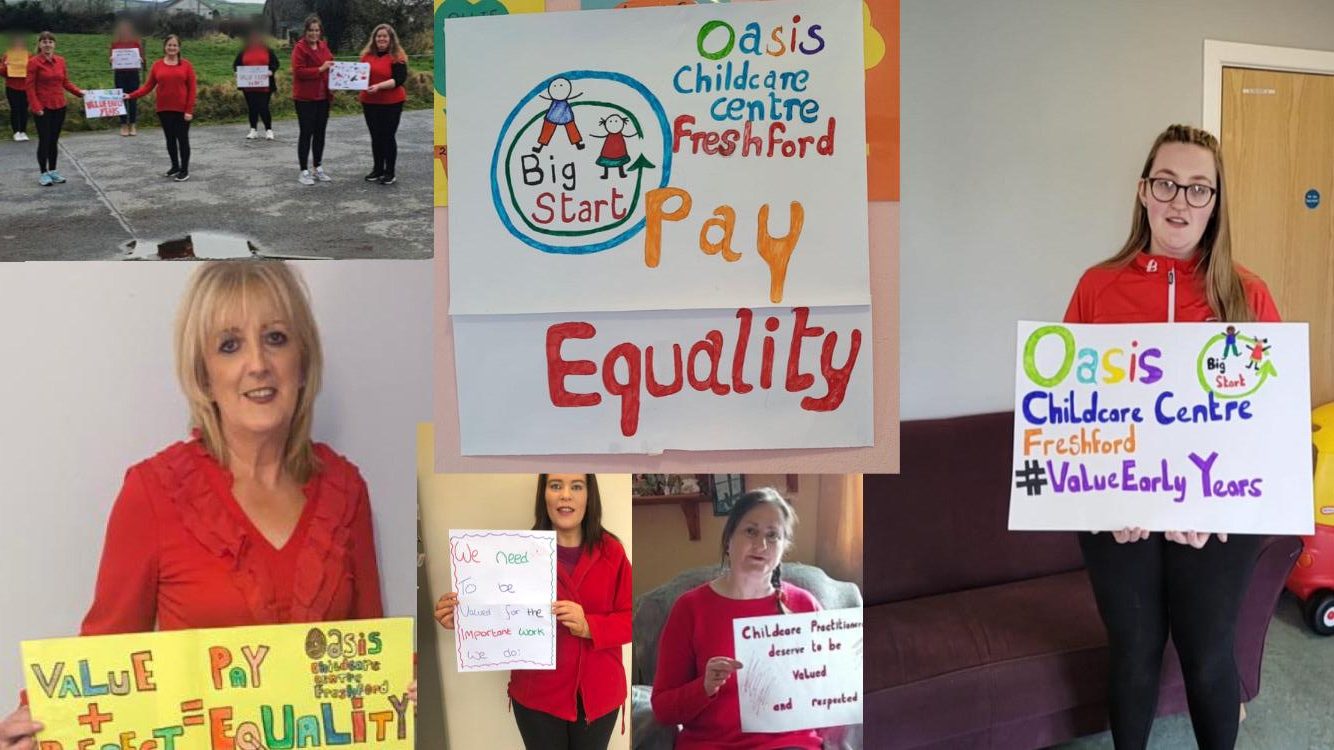
    Pictured above: Oasis childcare workers virtually gather to protest. Photos by Caroline Cody Brennan

    On Friday 5 February, childcare practitioners took to social media, donning bright red outfits and holding home-made signs, in an effort to raise awareness of the ongoing problems within the childcare sector.

    As it stands, many workers earn below the living wage and often have to deal with poor working conditions, while parents are forced to pay expensive rates for the service.

    The virtual day of action, which was organised by SIPTU’s Big Start Ireland campaign, highlighted the key causes of these issues – a lack of state investment.

    Currently, Ireland invests just 25% of the European average in the Early Years Education sector.

    Caroline Cody Brennan, a childcare worker from Kilkenny, says she feels let down by the government.

    “I really love what I do, but for the amount of work I do, to be making under the living wage, I think it’s unfair. You hear a lot of empty promises about the government investing more money and possibly giving us raises, but that seems to be all false promises,” she says.

    She adds that while this is such a critical line of work, she feels like young people would not be encouraged to pursue careers in the field given the current issues.

    “It’s definitely more like a vocation – you have to really care and be drawn to it. There’s obviously no way young people go into this line of work for the money.”

    Eve Kavanagh, who is currently undergoing a Level 8 in Early Childhood Studies, says she feels quite disheartened by the issues highlighted last Friday.

    “You see so much about primary and secondary school teachers and the urgency of vaccinating them, but it’s like people forget about childcare workers”

    Caroline, child care worker

    “I’ve always loved working with children, so I knew I wanted to go into [childcare] as a career. But it’s really disheartening to think that even after completing college and putting all this time and money in, that I’ll probably make just above minimum wage. I know that’s the situation for a lot of people, but surely there’s something wrong there.

    “It’s such an important job in the functioning of society, and young people just aren’t being encouraged to pursue a career in it.”

    The virtual day of action came exactly one year after 30,000 practitioners marched in Dublin city to highlight the lack of government funding  – but much has changed since then. As the Covid-19 situation unfolded, so did new issues in this sector.

    girl in red dress playing a wooden blocks
    Photo by cottonbro on Pexels.com

    Currently, childcare workers are in line to be vaccinated alongside teachers in group 11 of the government’s vaccine rollout plan.

    But practitioners are now asking to be vaccinated with key workers, who fall under group six of the rollout.

    A survey conducted by Amárach Research revealed that 82% of Irish adults believe childcare professionals should be vaccinated along with key workers.

    Caroline and her co-workers think it is essential that childcare practitioners receive the vaccine as soon as possible.

    “It’s like people forget about childcare workers”

    Caroline, childcare worker

    “You see so much about primary and secondary school teachers and the urgency of vaccinating them, but it’s like people forget about childcare workers. We are in much closer proximity to the children, pre-school kids and babies can’t socially distance and they sure as hell can’t wear masks. Because of this, it really can make the workplace a scary place to be at times.

    “I absolutely think we should be vaccinated along with all other key workers. We have been key workers throughout this entire pandemic. It’s not just going to protect us, it’s for the children and their families too.”

    On 11 February, Big Start Ireland released an open letter to Minister Stephen Donnelly, requesting childcare workers be recognised as key workers. Diane Jackson, SIPTU organiser, wrote:

    “Our members are at work despite the risk to themselves and their families, they are making an enormous sacrifice on behalf of society in the provision of what is a key service. There is a great deal of fear and anxiety amongst the workforce which has existed ever since services first reopened. We are asking that the case of this workforce is recognised.”

    There has been no response as of yet about moving childcare practitioners forward for the Covid vaccine.

  • No ink spilled – tattoo studios struggle during Covid

    No ink spilled – tattoo studios struggle during Covid

    Pictured above: AWOL Tattoo Galway. Photo courtesy of AWOL

    With the nation currently in yet another lockdown in a bid to curb the spread of Covid, one industry that has taken a significant battering since March 2020 with the constant closing and reopening is the tattooing industry. the industry is very much at the mercy of the virus as tattoo studios remain deserted and the artists are left idle with no clear idea of when they can return to work.

    The tattoo industry in Ireland has been shrouded in uncertainty since the beginning of the pandemic last March. Tattoo shops are usually the last to open and the first to close, leaving industry professionals in the dark when it comes to the stability of their profession. 

    As a result, the artists and shops have faced many obstacles, from economic costs to rescheduling appointments and adapting to new guidelines when they are permitted to open.

    “The constant stop start of lockdowns has affected us a lot behind the scenes. Not everyone gets a rent break unfortunately”

    Shane Boulger

    “We are last to be allowed to go back to work, we are getting completely f****d over,” says Joe Murphy, an artist working in Live Fast tattoo. “As soon as we are allowed open it doesn’t necessarily mean that there is work lined up. We can’t book appointments because we have no idea of a date we can return to work.” 

    “This past year has been surreal for small businesses,” says Áine Wall, co-owner of AWOL tattoo in Galway. “It’s been very stressful. Very difficult. The constant closing and reopening has made our business life extremely challenging… We had to completely redesign the studio too, add more dividing walls etc, costing us a lot of money. 

    “Not to mention the fact that we still have overheads like rent, bills and tax bills while we are closed,” Wall continues. “Our bank account is basically haemorrhaging money. It’s such an uncertain time for small businesses and many have not or will not survive.”

    Another to voice his concerns about the current situation is Shane Boulger, a tattoo artist working out of Dublin’s Life’s Too Short tattoo studio.

    “The constant stop start of lockdowns has affected us a lot behind the scenes. It’s not as simple as just stop and start. We have individual clients to contact and reschedule, studio owners have multiple overheads to clear as not everyone gets a rent break unfortunately.”

    Boulger has clients that have been waiting almost a year to be tattooed, and he feels somewhat responsible for their plight as his clients could be waiting months for their appointment. 

    “I can’t help but feel like I’m letting these people down each time I have to contact them and let them know our situation has changed again. My inbox is full of people messaging for tattoo house calls, even going as far as inviting themselves to my house for a ‘nixer’ — something I would never do, definitely not during a pandemic.”

    “I can’t help but feel like I’m letting these people down each time I have to contact them and let them know our situation has changed again”

    Boulger

    When shops are permitted to open there are further guidelines and regulations imposed that studios must adapt to, such as reconfiguring the layout of their spaces with barriers to ensure the safety of both employees and clients. Social distancing is limiting the number of clients allowed in the shop and walk-ins are a thing of the past, as all tattoos must be booked in advance leading to the back-log mentioned by Boulger.

    He also believes that “tattooing has become a little bit less personal and the process isn’t as enjoyable for the client with masks, screens and barriers.” He adds that “social distancing and limiting bodies in the shop has affected me in a few ways. The number of days I work is down.”

    However, he does acknowledge this is necessary as a means to help stop the spread and continue to work around Covid-19.

    In addition, he mentioned that while he is currently out of work it has given him more time to work on another project, allowing him to diversify and adapt during Covid, to earn another stream of income while he waits for the studios to reopen.

    “I have been working on another project that I can run alongside my tattooing, but it’s not ready yet – similar to prints/ T-shirts/ hoodies with what I would call tattoo flash art in my style.”

    Closed tattoo studio Dublin City. Photo by James Molloy

    Many other artists and studios have also decided to diversify their businesses by means of gift cards, selling prints of artwork, merchandising and running competitions such as raffles in order to promote their brand and raise funds.

    With recent speculation suggesting that the current lockdown will last until late April or early May, presumably a gradual reopening of the economy can take place thereafter. The tattoo community wonders when studios can reopen and whether or not they will be the last industry to be allowed to rejoin the Irish economy. 

    Furthermore, with the mounting costs, owners of studios must factor in the possibility of permanent closure or cutting back on overhead costs.

    The next few months will be decisive for the survival of the tattoo industry in Ireland as we know it. The sooner things can return to a level approaching normality, the better for all those affiliated to tattooing in Ireland.

  • Reject modernity, embrace tradition: could Bebo be back for good?

    Reject modernity, embrace tradition: could Bebo be back for good?

    The classic Bebo logo, via Wikipedia Commons

    When the homepage of the once beloved social media site displayed a coming-soon message, rumors began to swirl online of Bebo’s highly anticipated return, which has since been confirmed by co-founder Michael Birch. 

    Before Facebook’s uncontested dominance through the 2010s, Bebo was a strong contender in the then emerging field of social media, gaining a considerable foothold in Ireland, Britain, Australia and New Zealand. 

    The site was sold to AOL in 2008 for $850m but was later bought back by Birch and his wife Xochi for $1m. 

    “I feel like it allowed for the creative side of the individual to be expressed a lot better than current social media sites”

    Veronica Lee

    During the height of its popularity, Bebo seemed to exert an outsized influence on the Irish cultural landscape – mullets were dyed and straightened to achieve the “spicer” style popularised on the site, friendships were forged or torn asunder at the hands of its top 16 function – even Love/Hate crime boss Nigel ‘Nidge’ Delaney was depicted as a Bebo devotee. 

    In 2006, it was described by the Irish Independent as “officially the most popular site in Ireland”, boasting over 500,000 Irish users at the time. 

    While a cynic may view the site’s return as yet another extension of the nostalgia industrial complex that has all but defined millennial cultural output, it’s not hard not to see the appeal of a return to Bebo’s simplistic interface and apolitical landscape in the Q-anon era. 

    Late last year Myspace, a comparable relic of the pre-Zuckerberg internet was revived by an 18-year-old coder named An, capturing the imagination of Gen-z who missed out on the site’s original run. 

    The Author in His Bebo Days, taken by Jake Hurley

    Bebo differs from the social media sites that outlasted it mainly because of the large scope of customisation available to users, including skins (profile themes and layouts), flashboxes (videos which would autoplay upon loading a Bebo page) and a variety of apps and widgets that could be embedded into your personal site. 

    “I used to make custom Bebo skins using an early version of photoshop. They were terrible and embarrassing but the skills I learned from that set the foundation for a lot of what I do today,” said Zak Milofsky, 26, who now works as a photo editor. 

    Veronica Lee, also 26, recalls being drawn to this element of Bebo when she first made an account.

    “I loved that aspect of Bebo, being able to have control over the complete layout of the page,” she told me. “I feel like it allowed for the creative side of the individual to be expressed a lot better than current social media sites.”

    This element of customisation made Bebo the perfect space for Irish teenagers to develop their own sense of identity, as well as divide themselves into subcultural groups. 

    Two prominent but ideologically opposed factions reigned supreme amongst mid-noughties Dublin-area teenagers – both vying for dominance of the coveted, now redeveloped space outside Dublin’s Central Bank. 

    First were the scene kids, a less brooding emo offshoot focused on brightly dyed hair, clothes from the American chain Hot Topic and an affinity for the kinds of Warped Tour bands who now sport extensive “controversies” sections on their Wikipedia pages. 

    The spicers, a uniquely Irish phenomenon, were more inward facing then their globalist scenester cousins and sported a unique aesthetic built around elaborate mullets, extensive Adidas wardrobes and a penchant for “shuffling” to hardcore techno.

    “I would have liked to think I was a spicer, I had a white Adidas jumper that was washed once a month because I only had one and needed to wear it at all times,” Invisible Friends podcast host Aoife Doran, 23, tells me. “I also had a side fringe so severe that it actually worsened my lazy eye and resulted in me having to wear an eye patch at 13. Not a look.” 

    As a facilitator of unbridled and often downright confusing youth expression, Bebo was predictably met with moral panic amongst parents – the flames of which were stoked in no small part by media outlets which tended to suggest a link between the site and a rise in binge drinking amongst Irish teens. 

    “Selecting your top 16 could make or break a friendship”

    Zak Milofsky

    “Happiest when: I’m locked at Wez! Drinks: Hino! Dutch Gold! I swear to god it’s actually nice! Cans are mingin’, bottles all the way,” wrote an unnamed bebo user quoted in a 2006 Irish Independent article.

    To circumvent the watchful eyes of concerned parents, many mid-2000s teens were forced to take matters into their own hands.

    “I surreptitiously made an account in my neighbours office with my friend. My mam walked in, saw what was happening and took away my Gameboy for two weeks because she believed Bebo was the most dangerous thing to youths of the day,” 22-year-old Matt Corrigan admits. 

    The risk of a confiscated Gameboy was a risk worth taking, as the stigma of being left out of the Bebo craze and the social politics built around the top 16 friends ranking was too great to endure. 

    “Selecting your top 16 could make or break a friendship. I think the ability to share so much about yourself online was new to the Bebo teens and created a competitive atmosphere where there was pressure to keep updating,” Milofsky says.

    Despite Bebo’s ultimate fall from grace at the hands of social media behemoth Facebook, it’s clear that the site holds a particular place in the hearts of Irish millennials. What remains to be seen however, is if nostalgia is enough to get Bebo’s planned relaunch off the ground. 

  • Three Castles Burning: An interview with historian Donal Fallon

    Three Castles Burning: An interview with historian Donal Fallon

    A screenshot of Donal Fallon during his virtual interview with Mario Bowden. Screenshot by Mario Bowden

    It was while going for a walk around my 5km that I decided to reach out to historian Donal Fallon. In an episode of his podcast Three Castles Burning, Fallon mentions the previous life of an art deco building along the Royal Canal that now houses the new Bernard Shaw. To my surprise, it was the garage of the first Irish commercial airline – Iona National Airways. I couldn’t believe that a building that I walked and cycled by daily had such a unique life story.

    Three Castles Burning is a social history podcast, capturing the tales and intricacies that make up the fabric of Dublin. Running since November 2019, each episode contains a unique deep-dive into the city’s treasures – From discussing hallmark pubs such as Grogan’s, the emergence of subcultures like the punk scene in 1977, and even the stories of migrant communities who have left their stamp on the city, like the Italian community in Dublin who helped give rise to the chipper.

    Fallon, a tour guide in normal times, tells me that there’s a real chance to engage with Dubliners through the aural medium. 

    “When you work in heritage and tourism, the majority of the people you meet are not from here. That’s just how it is and that’s the same in any city. On a tour for visitors, you have to go from before Saint Patrick all the way to the Northern Irish peace process in two hours. So when you have an Irish audience, you have the ability to go into much finer, minute detail, which I really really like. It’s a different challenge,” Fallon says.

    “There are still people interested in local history, it’s not something you can just turn on and off”

    Donal Fallon

    Fallon’s no stranger to capturing all things Dublin. In 2009, he started a blog called Come Here to Me. Coining its name from the Dublin slang to express the tantalising exchange of information, the blog set out to capture the essence of the capital’s nooks and crannies – from music, history, politics, and even pub crawls. Come Here to Me was a big hit amongst Dubliners – and for Fallon, it gave him an audience. 

    Over time, however, the art of blogging began to dwindle, Fallon admits: “I noticed that the readership on Come Here to Me was kind of dropping off. Not like off a cliff, but over time there was less and less. And I wondered, where are those people going? Because they’re still there” Fallon chuckles.

    “There’s still people interested in local history, it’s not something you can just turn on and off. So the challenge for me was how do I get to reconnect with people who I knew were there from Come Here to Me. That I knew were still there,” he tells me.

    It was time for a change and Fallon saw podcasts as the way forward. He tells me how he learns as he goes, taking inspirations from some of his own favourite podcasts – such as the Bowery Boys Podcasts – a social history exploration of New York City. 

    “In a way, Podcasts are the new pirate radio”

    Fallon

    Listeners might notice Fallon’s shout-out to Radio Free Kimmage at the end of each episode. Like many others, I foolishly assumed that it was a real local radio station. But as Fallon explains to me, the nod towards a faux station is simply an homage to the pirate radio scene. Fallon see the parallels between that scene and what he’s doing now – providing alternative and independent content. 

    “Podcasts, in a way are the new pirate radio.” Fallon laughs. “They are increasingly widening what’s on offer. And I really like that. Especially if you look at the podcast charts in Ireland, the top of it is still big radio shows – usually clips from news shows on RTE and so on. But these independent programmes produced on kitchen tables in Kimmage can compete with them. I think that’s fantastic!”

    Three Castles Burning logo, by Donal Fallon

    Today, the podcast is a great success. Released every week, it has attracted an audience of not just locals, but ‘Dubliners in exile’ – with strong numbers of Irish abroad, from Britain to Australia – tuning in for their nostalgia fix. This is no surprise to Fallon.

    “I think that’s how it’s always been. If you go back all the way to when Joyce wrote about exile: the further you are from a particular place, the more you feel a connection to it. That’s been a very noticeable thing that Irish abroad have definitely gotten behind it. I’ve gotten very nice emails from people saying that they really miss these places. The Forty Foot in particular, that had a real emotional resonance with people,” he tells me.

    Each episode has the ability to intrigue anyone in a way that’s unique to them – much like my own experience passing the Bernard Shaw. With more people out and about on their daily walks, a podcast like this can spark curiosity to something right around the corner. 

    “I think if you can change someone’s everyday walk, and make them think about that one little thing that they didn’t know was there before, I think that changes the way people look at the city, but the way they look at life you know, to go a little bit slower. I always try to make the podcast a bit more visual. I know it’s all audio of course but I like saying ‘Next time you pass so-and-so, look at this’, I think that can change the way you look at the city,” he says.

    While Fallon is optimistic about some sort of bounce back for the heritage and tourism industry, the success of Three Castles Burning has kept the Irish history scene on the road – and in turn, our history alive.

  • Eve Belle finds harmony in lockdown

    Eve Belle finds harmony in lockdown

    The virtual ‘new normal’, a screenshot of Eve Belle over Zoom. Photo by Izzy Rowley

    Although Eve Belle and I live in the same city, we do not live within the same five-kilometre distance, and lockdown restrictions have demanded a Zoom call. Thankfully, Belle’s charm easily translates through a WiFi connection.

    There’s been a tangible shift in the artist’s career – she released her debut album, In Between Moments, last October to great critical acclaim, she has been named as one of Hot Press’ Hot for 2021 artists, and has been a part of the Other Voices #Courage series.

    Releasing her debut album during a global pandemic cannot have been an easy choice – with touring off the table, it’s harder than ever to promote your music.

    “If I had waited for the right moment, four months on, I’d still be waiting, so I just decided to make the right moment,” she tells me.

    Luckily, there was an upside: “It’s an unusually good time to release music because there are people who are really reliant on having a new thing to focus on and a new thing to listen to.”

    In-lieu of the stage, Belle diligently performed over Instagram live – a platform many musicians have relied on during the pandemic. When I tell her I once heard another musician describe it as the fat-free version of gigging, she laughs and says “that sounds about right”.

    “I saw a boy I liked. He didn’t want to talk to me, so I went home and wrote a song about it as if it was the end of the world”

    Eve Belle

    Performing as part of the Other Voices #Courage series alongside Neil Hannon and Cathy Davey gave her a chance to escape the virtual world. “It was the first time I’d gotten to do anything resembling a gig since March. So, I was literally beside myself to be at anything even remotely in the shape of a gig,” she says.  

    She’s just released this performance as an EP of paired-back, acoustic versions of three songs on her album.

    Other Voices has been a constant in Belle’s career – performing on the Other Voices stage at Electric Picnic when she was 16, and then playing the musical trail in Dingle later. “It was a lovely way to continue the trajectory of that, so it was definitely close to my heart to be back,” she says. 

    How did Belle see herself as an artist when she first started out?

    “I wanted to be in emo bands in school, but my mum said no. I’m very glad she said no – I would’ve absolutely wrecked my voice, but at the time I was like ‘oh my god, why are you doing this to me?!’” She laughs.

    Belle’s lyric-driven songwriting style comes naturally to her – holding on to her emo roots by writing what she calls “sad bops”.

    “I remember, I was like 13, and went to some event where I saw a boy I liked. He didn’t want to talk to me, so I went home and wrote a song about it as if it was the end of the world.

    “I’ve changed in no way – everything that happens to me I write a song about… But it was cringier and worse back then,” she laughs.

    Coming back to the present, I ask Belle how she made the move from acoustic guitar to a fully produced, popified album.

    “I was just lucky enough to have somebody in the studio who, when I would say ‘this might sound really weird, but I want to try this’ he was saying ‘I’m already there, I’m already doing it.’”

    “It was a lovely way to continue the trajectory of that, so it was definitely close to my heart to be back”

    Belle

    This “somebody” is Fred Cox, who has also worked with Rag‘n’Bone Man and Grace Carter. Belle credits her confidence in the studio to their creative relationship – one built on trust and sonic experimentation. This, she says, was all part of the creative journey she was on at the time – and the album is a snapshot of that journey.

    “There is a distinct difference between what I’m writing now and what I was writing before, because there is such a distinct difference in how I exist now,” she says, referring to her life in lockdown.

    “It’s just had an effect on how I view the world, myself, and the things that are happening. In the same way I have grown and changed, my music has also grown and changed.

    “In the past six months I’ve started writing more with the piano, which definitely feeds into a more lyrical style.

    “With guitar, you’ve got it in your hands, which is grand, but you’re driving the process completely along on lyrics. I feel like with piano, it’s more atmospheric, which feeds back into writing.”

    Unfortunately, we’ll have to wait until the world opens back up to hear this exciting new material, and Belle can’t wait for that to happen, “I keep telling everyone, I’ll even go to the opening of an envelope.”

    Catch Eve Belle at her gig in Whelan’s in April and stream In Between Moments and Other Voices Courage (Live Acoustic Sessions) on Spotify now.