Tag: Sport

  • Lydia Des Dolles takes a swing at combat sport stereotypes

    Lydia Des Dolles takes a swing at combat sport stereotypes

    By Aoife Kearns

    In June 2019, Ireland welcomed home one of the most decorated athletes of this generation, newly crowned lightweight undisputed champion of the world – Katie Taylor. Last weekend, Taylor added to her WBA, WBS, IBF and WBO world titles to date, by becoming WBO light-welterweight Champion in Manchester.

    Since Taylor’s rise to prominence, public interest in combat sports or ‘fight sports’ such as boxing has risen dramatically. Be it boxing, MMA or martial arts, not only have the public engaged with coverage that the likes of Taylor or Conor McGregor have received on the international stage, more and more people are taking up these sports, hugely expanding the sports’ status on the island of Ireland.

    Lydia Des Dolles was one of the many people who took up a combat sport four years ago, in the wake of Taylor’s rise to notoriety. After a ten-year career in the music industry, she wanted to try something different but never anticipated it would lead to a platform with an audience of 45,000 people per month and videos with over 1.2 million views.

    Winning the ‘Rising Star in New Media’ award at 2018’s All-Ireland Business Summit, her channel Fight Connect TV, reports on combat sports and documents the journey from amateur to the professional ranks in the sport.

    The stereotypical viewpoint surrounding combat sports is that it’s barbaric or that it’s dangerous and it’s only skinhead guys with tattoos that get inside an octagon, a ring or a cage

    Lydia Des Dolles
    Lydia speaks to Conor McGregor after his first UFC loss
    Source: FightConnectTV Youtube

    “I joined a Jiu Jitsu gym which is a ground based, wrestling, grappling martial art. I did that for about a year and a half and I didn’t do anything else, just worked and trained,” said Des Dolles.

    “After that I kind of fell into doing social media for an MMA event that was held in the Three arena. It was there that I was exposed to a whole new world that I had no idea existed in Ireland”

    From there, Des Dolles started a Snapchat account where she covered events happening in Ireland. As the scene grew dramatically she started to receive requests to cover more and more shows and Fight Connect TV was born.

    “The growth in combat sports has been incredible. There’s easily two or three combat sports or martial arts’ events happening per week.”

    “The major ones are predominantly in Dublin and the capital gets the bigger events but it is growing nationwide. There’s more and more smaller community-based events happening and they need the support of the public as well.”

    “There’s room for MMA, there’s room for martial arts, there’s room for combat sports alongside hurling and football and all these other great sports that are in Ireland at the moment”

    Lydia Des Dolles

    Des Dolles has seen people’s attitudes change drastically since she first started out.

    “The stereotypical viewpoint surrounding combat sports is that it’s barbaric or that it’s dangerous and it’s only skinhead guys with tattoos that get inside an octagon, a ring or a cage. But that stereotype is really outdated.”

    “You only have to look at the likes of Katie Taylor, the highest-ranking sports star that this country has ever produced and she fights and she’s in combat sports so that alone should spark something in the media and the government to get behind fight sports.”

    Taylor’s homecoming in Dublin Airport in June will go down in the history books, but not for all the right reasons. Minister for Sport, Shane Ross, made a now infamous appearance at the arrival gates that resulted in an array of memes, plastered on social media. Thankfully, people didn’t hold back when it came to calling out the Minister for Sport for his farcical photobombing.

    Source: @LydiaDesDolles Instagram

    “Anyone who saw the footage of Katie Taylor coming home from America with all of her belts this summer would have seen the Minister for Sport, Shane Ross, behind her.”

    “As funny as they are, the reality is that Minister Ross does not support combat sports.” 

    “It’s definitely not a niche sport anymore”

    Lydia Des Dolles

    “He has spoken in the past about how he doesn’t think combat sports including boxing and MMA should be regulated as national sports. Hopefully that PR disaster might change his mind.”

    Des Dolles truly believes the time has come for these sports to receive the same respect and recognition as some of the other sports that are vastly covered in mainstream Irish media.

    Photo Credit: @FightConnectTV

    “It’s definitely not a niche sport anymore, and from what we’re seeing, the likes of kids that once would have gone to hurling or rugby or football are now starting to take up MMA as well”

    “There’s room for MMA, there’s room for martial arts, there’s room for combat sports alongside hurling and football and all these other great sports that are in Ireland at the moment”

    Lydia Des Dolles is the creator of Fight Connect TV.

    You can follow her on Facebook, Twitter, Youtube, Instagram and Twitter @FightConnectTV.

  • ACL injuries on the rise in football

    ACL injuries on the rise in football

    By Evin Grant

    The most common injuries in football are pulled hamstrings, sprained ankles and dead legs. However, a far more serious injury is starting to become more prominent across the sport in recent years.

    Anterior Cruciate Ligament (ACL) tears have been on the rise in recent years and offer far more serious consequences for footballers, often ruling them out for over eight months.

    Photo Credit: Pixabay

    Dr. Riley Williams of the Hospital for Special Surgery (HSS), recently explained some reasons for the ACL tear being closely associated with sports people, footballers in particular.

    “High-velocity, change in direction, pivots and rotation of lower extremities can affect the function and stability of an ACL,” said Dr Williams. “ACL injuries can occur when contact is made with another player but can also arise from non-contact situations such as landing awkwardly when passing a ball.”

    “Recovery time for an ACL tear can be anywhere between six months to a year”

    Recovery time for an ACL tear can be anywhere between six months to a year, depending on the circumstances and professional clubs will often enlist specialist treatment and around-the-clock rehabilitation services to aide their players recovery. Notably, Florian Lejeune, of Newcastle United, who amazingly returned from an ACL tear after just six months last season.

    However, for football clubs in Ireland who do not have such luxuries, an ACL tear to one of their players can be highly damaging and often lead to a prolonged length of absence. Hugh Douglas  of Bray Wanderers, Darren Cole of Derry City and Gary Boylan of Sligo Rovers are all SSE Airtricity League players who have suffered an ACL injury recently.

    One player who knows both the physical and mental anguish of injury is 20-year-old Bohemians striker, Cristian Magerusan. The highly rated, Romanian-born forward has suffered several metatarsal injuries and one ACL tear in the last two years alone.

    “The recovery was basically like starting from the beginning”

    “It was the worst pain ever when I did it,” said Magerusan about tearing his ACL. “The recovery was basically like starting from the beginning, so like small movements of the knee and trying to walk on it and all.

    “It’s been a long road and mentally very tough but I feel much stronger now coming back.”  

    Magerusan is now nearing return following a gruelling nine months on the side-lines. He underwent ACL reconstruction surgery and was back walking without crutches just three days later.

    From that point on, it has been a difficult journey for him both mentally and physically, but with a return to the pitch just around the corner, Magerusan and others show that the dreaded ACL tear can be conquered.

  • Joanne Cantwell on the future of women in sports

    Joanne Cantwell on the future of women in sports

    RTÉ presenter Joanne Cantwell talks to thecity.ie about her experience of being a female sports presenter in today’s climate. With the new 20×20 campaign shaping a new narrative for women in sports, is sexism still prevailing in an industry predominantly run by men?

  • Sport Ireland record rise in doping for 4th consecutive year

    Sport Ireland record rise in doping for 4th consecutive year

    Sport Ireland recorded a rise in “doping whereabouts” failures in 2017 for the fourth year in a row, TheCity.ie can reveal.

    Failures have risen from four in 2014 to twelve in 2017, a 200 percent increase in a four year period. Over this time, the number of athletes tested has fallen from 1,054 in 2014 to 989 in 2017.

    A whereabouts failure includes those who have missed a test or failed to make a whereabouts filing, according to the World Anti-Doping Agency.

    Under the Sport Ireland Act (2015), Sport Ireland’s function in relation to Anti-Doping includes “to facilitate, through the promulgation of guidelines and codes of practice, standards of good conduct, fair play and the elimination of doping in sport.”

    Although testing as a whole fell from 2014 to 2017, GAA testing both in and out of competition and blood also rose steadily by 29 percent over the last four years.

    Testing by the IRFU also increased over the four year period by 29 percent while the FAI testing rose by 2 percent.

    jackstat
    Source // Flourish

    No surprises as Athletics Ireland conducted the most tests over the last four years combined. Perhaps more unexpectedly, Ladies Gaelic Football testing has remained static at four each year for the last number of years.

    The IRFU do not test in competition and the FAI do not do blood testing, while organisations like the GAA, Athletics Ireland, Swim Ireland and Horse Sport Ireland test both in and out of competition as well as blood.

    Ciaran Dunne, the vice-captain of the London Senior Football Team and a player representative on the GPA isn’t surprised to see the number of GAA players tested rising.

    “I don’t think any current or former players would have a problem with increased frequency of testing. Players have an ownership and responsibility for what we/they ingest and what goes into our bodies.

    “I don’t feel it’s a major issue in the game and for the sport to be recognised and merited within the sporting world then anti-doping will need to be an element of it.”

  • A losing battle? Legal broadcasting versus illegal streaming

    A losing battle? Legal broadcasting versus illegal streaming

    The advances made in recent web-based technology is quite remarkable, with almost everything you could possibly desire available to you on your smartphone, laptop or any other device.

    As a football enthusiast, I still remember the frustration of my favourite football team not having their game broadcast on live TV, and instead having to check for any score updates using ‘Teletext’. Although I was grateful for this technology at the time, I can’t honestly say it’s something I miss using.

    Luckily, I was probably among the last generation who would have to resort to such ‘caveman’ technology.

    Today, you are only ever a few gentle thumb-presses on a screen away from viewing almost anything you want online. Twitter, one of the internet’s biggest successes at the moment, has even recently teamed up with Periscope, a live-streaming application which streams directly from the device of its users, so that they can broadcast anything to any number of people.

    There is no doubt that these two online ‘giants’ teaming up is great for us, as we are getting visual news and insights that we may previously have been starved of, and we are getting these insights almost as soon as they happen; quicker than ever before.

    However, as with almost all things good on the internet, there are many ways in which these live streams can be exploited in a way that breaks the law, and in turn, takes viewers away from legitimate broadcasts. This is something that is regularly happening in the English Premier League.

    In a survey completed by the UK-based sports industry (SIG) it was revealed that 54% of those aged between 18 and 24 years admitted to using illegal sports streams in order to watch their favourite team.  A third of this group also admitted that they use illegal streaming for football regularly.

    With only 4 percent of over 35s admitting to using online streaming to view football matches, it is hardly a surprise that the age group (which is almost three times more likely to be unemployed than the UK’s national average) is evidently far less likely to pay subscription fees for sports. Such subscriptions with Sky Sports and BT can cost up to €69.50 per month for a basic sports package. It is also the same age group that’s more likely to have the requisite skills in modern technology to comfortably bypass any TV subscription to watch whatever they desire.

    In 2017, Sky Sports released their viewing figures which revealed they were down a staggering 25 percent since 2010. Their flagship ‘Super Sunday’ had also seen a huge decrease in viewing, with the afternoon kick-offs averaging 1.1 million views in 2017/18 season compared to 1.7 million in 2011/12.

    SteStat1

    Denial

    Both Sky Sports and BT repeatedly decline to admit that this downfall in viewing figures was caused by illegal streaming. Instead, they pointed at other major events that occurred in particular years and claimed that regular viewers may have had other interests.

    However, in November 2017, BBC Radio 5 Live Daily surveyed 1,000 Premier League fans which again proved that illegal streaming was becoming more and more popular.

    According to the poll, “Nearly half of fans say they have streamed a match online through an unofficial provider – just over a third do so at least once a month and about one in five at least once a week.”

    The Main Reasons:

    • Other family member/friend is streaming and they just watched
    • The quality of streaming was of high quality
    • Sports packages were not viewed as good value for money
    • Fans ‘not knowing’ it was illegal to stream

    Following this report by BBC 5 Live, research company ComRes then proceeded to do a survey of 1,000 adults who reported to being regular viewers of all Premier League football.

    What were the survey’s results?

    • 34 percent of supporters said they streamed live Premier League matches online through an unofficial provider at least once a month, and 21 percent at least once a week.
    • 45 percent of these fans had illegally streamed a match using an illegal provider at least once.
    • Younger fans (aged 18-34) are considerably more likely than their older counterparts to say they stream live football matches online through an unofficial provider – 65 percent do so at least once a month compared to 33 percent of 35-54 year olds and 13 percent of those aged 55+.
    • Of those fans who stream matches illegally, the most popular reasons are because a friend/family member does it and they just watch (29%); because the quality of online streaming is good (25%) and because sports TV packages are not good value for money (24%).
    • 12 per cent of Premier League fans think it is legal to stream games online (not through an official provider), while 34 percent think it is always illegal and 32 percent don’t know; 4 percent believe it is not breaking the law but Sky or BT could fine you if they find out, 7 percent think it is sometimes illegal, and 10 percent believe it is legal to watch but illegal to upload a stream.

    SteStat2

    Since these surveys, both Sky and BT have begun a legal battle against all illegal streams which broadcast their footage to viewers who do not pay for the content.

    Matthew Hibbert, head of litigation at Sky UK has said that the Sky company have become successful in cutting off all illegal streams thanks to a recent court ruling granting them greater power to go after server providers and shut down illegitimate providers.

    Hibbert now claims that “live streams of the premier league can no longer be easily found in the UK.”

    In 2018, the High Court issued a “blocking order” which will force internet providers to cut streams throughout the 2017/18 Premier League season.

    However, there should be room for concern in this statement that illegal football streaming is becoming tougher to gain access to. While some popular streaming sites may have been targeted, meaning you can no longer stream matches on their sites, I personally have never struggled to find a stream when needed, and there are still many ways of finding these illegal streams all over the internet.

    I surveyed twenty men in my local pub, ranging in ages from 18 to 55 years old. All twenty admitted that they have often used illegal streaming sites to watch football matches.

    One twenty-year-old said: “Any time Liverpool aren’t live on TV I’ll try stream it. I don’t think I’ve ever struggled to get a good stream, I mirror my phone onto the telly and honestly you wouldn’t know I was watching a stream. That’s how good the streams are.”

    Another soccer fan had a similar outlook. He said: “My son downloaded an app onto my phone for me and it’s brilliant. It streams every sports channel from anywhere in the world. I do have a sports package at home but sometimes a match I want to watch won’t be on so I use my phone to stream it instead.”

    The only thing certain about the future of legal and illegal broadcasting is that app-makers will always find a way. With streaming applications and sites being both widespread and easily accessible, legal broadcasting stations are fighting an uphill battle.

  • Leinster Steamroll Saracens in Aviva Showdown

    Leinster Steamroll Saracens in Aviva Showdown

    John Burke reports on Leinster’s outstanding performance and convincing win over title holders Saracens in Champions Cup Quarter Final. 

    (more…)

  • Milan, Match-fixing & Money: The Story of How Athlone Town Became Ireland’s Laughing Stock

    Milan, Match-fixing & Money: The Story of How Athlone Town Became Ireland’s Laughing Stock

    2017 was arguably Athlone Town’s worst year in its 130 year history. This season is bound to be interesting, writes Dylan O’Neill

    (more…)

  • Video: Salute to the Juggerheads

    Video: Salute to the Juggerheads

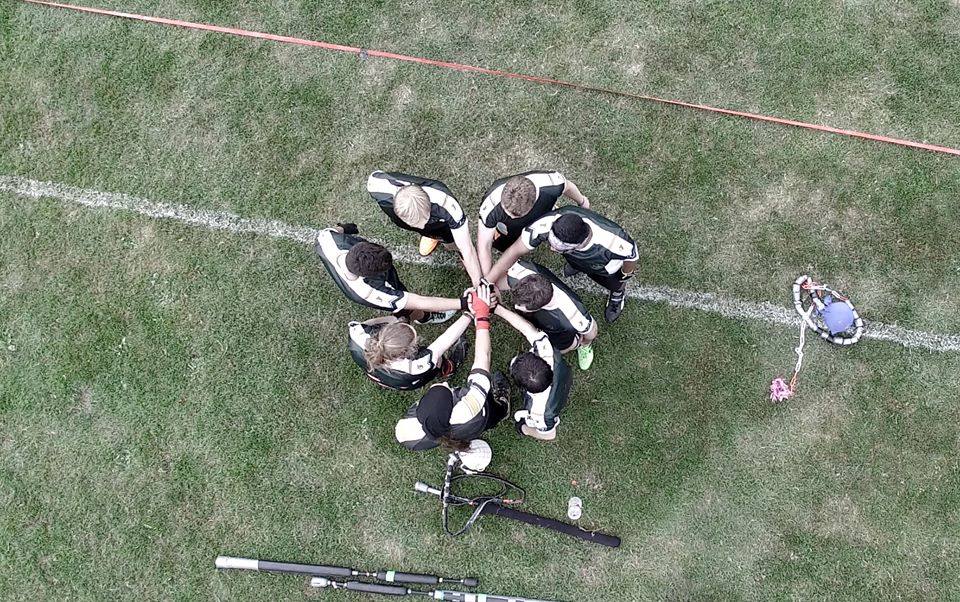
    Henry Phipps & Lee Shields find out about Jugger and look at how the only two teams in Ireland are trying to make the sport popular

  • Value of youth rises with game time

    Value of youth rises with game time

    The 2016/17 football season saw the rise of plenty of young stars. By the end of the season young players were attracting big clubs and massive transfer fees. Over the summer transfer window Ousmane Dembele, aged 20 from Borussia Dortmund, was signed by Barcelona for a fee of €105m, while 18 year-old Kylian Mbappe was signed by PSG from Monaco in a loan deal that will see him sign for the Parisian super club next summer for a fee of €145m.

    With these young players and many more showing their worth, I decided to find out which of the top 5 leagues are the most generous when it comes to giving these players opportunities.

    DO Graph

    Based on the total number of minutes played by all players last season, against the total number of those minutes given to youth players, decided as players aged 21 and under, I calculated the percentage of playing minutes given to youth players in each of Europe’s top 5 football leagues.

    Based on this data, the French Ligue 1 is the best location for young talent to play, coming in with nearly 3 times as many minutes given to youth players as the last placed Premier League.

    To delve further, I calculated the most and least youth friendly clubs in each league based on their minutes given to youth players.

    Surprisingly, it’s one of the most expensive squads in the Premier League that tops the list for giving minutes to youth players, although aside from the academy graduate Marcus Rashford the remaining minutes come from Luke Shaw and Anthony Martial, coming in at a collective €85m in transfer fees.

    It’s no surprise to see Spurs so high with the majority of their minutes coming from Young Player of the Year Dele Alli, and Everton make their way in at third thanks to Mason Holgate and Tom Davies making their way onto the scene this season.

    Crystal Palace are the only team in any of the Top 5 leagues to not give a single minute to youth players, while their neighbours in the league table Swansea gave less than a full 90 minutes themselves. Chelsea, however, were flying without youth, although most of their young lads were finding playing time over at Vitesse.

    There are similar findings in other leagues with Serie A leaders Juventus, and Real Madrid and Barcelona battling it out for the title in Spain, all rejecting the use of youth themselves. The only player to really make a mark in any of these teams is Marcos Asensio at Real Madrid, whom Zidane has taken a liking to. Maybe it’s the luxury of being able to send players out on loan to develop at smaller clubs that allows these teams to have fantastic squads while also having thriving youth at a moment’s notice.

    Toulouse lead the line for youth players, they’re currently sitting in 12th, after two relegation-threatening 17th place finishes in a row maybe the young lads have been the kick that team needs to move up the table.

    Finally I took a look at the individuals who have found the most success in each position this season.

    DO Table

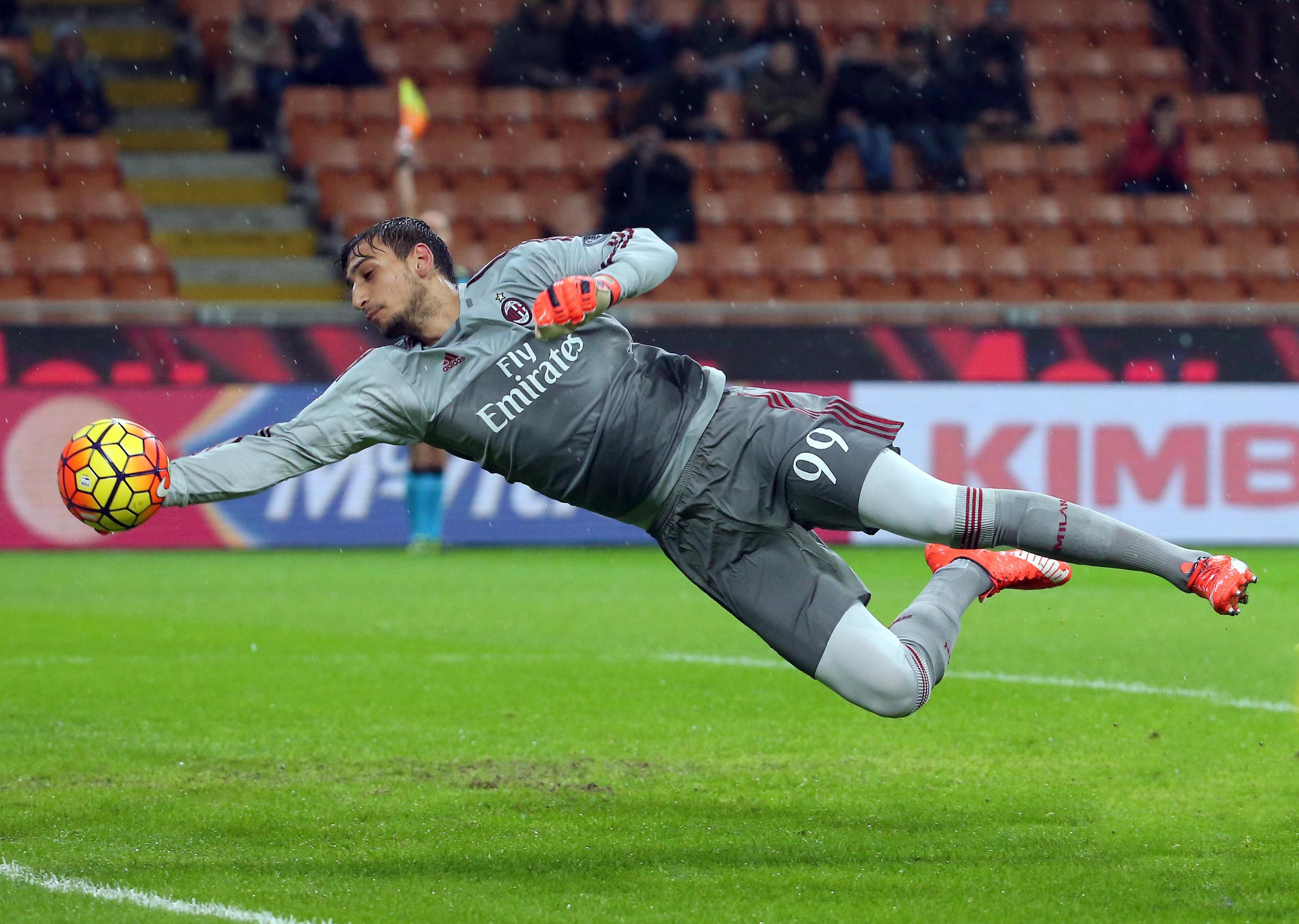
    Gianluigi Donnarumma was an ever-present for AC Milan last season, leading to a pursuit of the 18 year-old by Juventus who he desperately tried to sign for over the summer before changing his mind and staying with Milan.

    Football tends to flow more freely as you move up the pitch and so generally teams like to have more consistent defensive line ups than in attack, and this is shown here as the further forward you go from Goalkeeper to Forward, the less minutes are given on average.

    By Daniel Osborne

  • Video:  The magical world of Quidditch in Dublin

    Video: The magical world of Quidditch in Dublin

    Henry Phipps & Lee Shields explore the world of Quidditch in Dublin and the growing popularity of the magical sport.