Ireland is now, again, one of the countries in EU where the economy is growing fast. Photo by: Maira De Gois
However, there is a problem that should be tackled: homeless people sleeping rough on the streets of Dublin. Photo by: Maira De Gois
Many of us pass by every day without noticing the social exclusion. Photo by: Maira De Gois
To earn a living without crime, the only alternative they have is to ask pedestrians for a few pennies. Photo by: Maira De Gois
Government’s problem or ours? Why should we give them some pennies when a few coins will not bring any solutions? Photo by: Maira De Gois
What change could ensure them proper food and shelter? Photo by: Maira De Gois
Without a roof over their heads, they have to strive against hunger and, in some cases, violence. Photo by: Maira De Gois
Due to their poor living conditions, some homeless people can suffer from mental illness such as depression, anxiety, schizophrenia and psychosis. Photo by: Maira De Gois
Invisibility: the cruel reality of being excluded. Photo by: Maira De Gois
Many homeless people have this sad life because of drug addiction, job loss or family problems. Photo by: Maira De Gois
Shame: They end up on the streets due to lack of government assistance and family support. Photo by: Maira De Gois
The métro is a huge system of public transportation. You can be lost in the middle of Paris and there will still be a station waiting for you somewhere, at a maximum of 500m from where you are desperately trying to go.
It is used by 1.5 billion commuters per year (Source RATP), and by 48 people per second.
The Parisian métropolitain has never been a place in which you would spend your whole afternoon with your friends, chatting about how nice this place is and how the wonderful fragrance that tickles your nose is reminding you of your holidays in Greece. It has never been a place where you would stay for a long time anyway. Except if the RATP is experiencing some troubles with the railway, or if you have to commute from one side to the other side of Paris. In that case, good luck.
But more than wishing luck to you all, we should also wish some courage to the women and young girls who need to use this transportation system.
The Joys Of Being a Woman in the Métropolitain.
According to a survey made in July 2014, 94 per cent of the women have experienced sexist violence. The term “sexist violence” is grouping several types of violent acts that, in this case, women faced while taking the subway.
In the graphic below, the feminist organisation Osez Le Féminisme established a rather frightening graphic which enables us to see what most of the women have already faced during their commute.
94% women already faced sexist violence
The most widespread kind of violence is about the unappropriated looks that someone gives you. 72 per cent of the women participating in the survey have experienced it. Some people might say that looking is not something violent, but they clearly have not experienced it. It is as if you were judged from head to toes, every single part of your body is being analysed by disgusting eyes.
You have to keep in mind that you are underground, in a closed wagon that only opens when arriving to a station. You have to keep in mind that this wagon can be packed, and that you can not really move. You feel trapped. The person watching you knows it, and takes a kind of perverted pleasure to watch you struggle. This person wants you to feel ill-at-ease.
You are stuck, and there is not much to do about it. You have to try to ignore it. But note down that you might experience this several times per week, and your daily journey in the métropolitain will be a stressful part of your day.
But that is not all. The survey also shows that 57 per cent of the women have already been followed in the subway, that 36 per cent already had to face exhibitionist and men masturbating in front of them and that 34 per cent of the women already experienced sexual aggression.
Female Commuters, This Doesn’t Mean That You Have to Stay at Home.
Being a woman born in Paris, I used to take the métro on a daily basis. And those things are happening, it’s a fact. I have already been followed. I have already been a victim of what we call the “frotteurs”, those guys who are rubbing their parts against you when the wagon is packed. And I’ve been shocked.
But I never stopped taking the subway to go from a point A to a point B. The métro allows you to move from one side of the town to the other, and women should not stop using it. Authorities have to take this problem more seriously. And it would deprive me from the freedom to move.
I won’t stop using it, because I am not the one responsible for what is happening.
… Or Am I ?
Let’s make it clear. Women are not responsible for what’s happening concerning the sexual harassment in the Parisian subway. Yet some people are thinking that because she wore this or she wore that, she deserved it. Campaigns have been made by organisations such as Terre des Femmes in order to fight against this type of prejudice.
Campaign made by Terre Des Femmes
If you want to wear a dress, wear a dress. If you want to wear a mini skirt, wear one. No one should tell you how to dress, and you shouldn’t have to dress in a special way to avoid being raped. No one should have an “anti-rape outfit” in their cupboard. The way you dress should not be the thing that people should be concerned about. People should be concerned about how to stop those people to act in such an inhuman way.
Yet, according to the survey made by Osez Le Féminisme, three out of four women are adapting their outfits and behaviours when they are taking the métro. Because they fear what might happen to them. And this is not normal.
75% Women are adapting their behaviours when taking public transportation.
So once more, no. If you are wearing a skirt, you’re not responsible for what the others might do to you. You feel better when you wear a dress? Go for it.
It’s Time to Fight Back.
Several organisations are fighting for the rights of women. As seen above, Terre Des Femmes did some powerful visuals to fight against the idea that a woman’s outfit might make her responsible for what is happening to her.
Osez Le Féminisme decided to fight back with some humour. By using the visual codes already used by the RATP – French public transportation company – they started to put up some stickers in the métro in order to raise awareness on this horrific problem.
Reaction found on twitter to Osez Le Féminisme ‘s campaign.
On Tumblr, several illustrators started to take their pens and start illustrating what women are confronted to in the streets … and in the subway. The Tumblr “Projet Crocodile” – from which the illustration below is taken – is receiving several e-mails from witnesses and victims of sexist violences.
“Ok. I’m going to throw up.” Taken from the Tumblr Projet Crocodile
Via drawings and events organised by such persons, the awareness is brought on this issue. And if things are not going to change immediately, those actions are surely going to help.
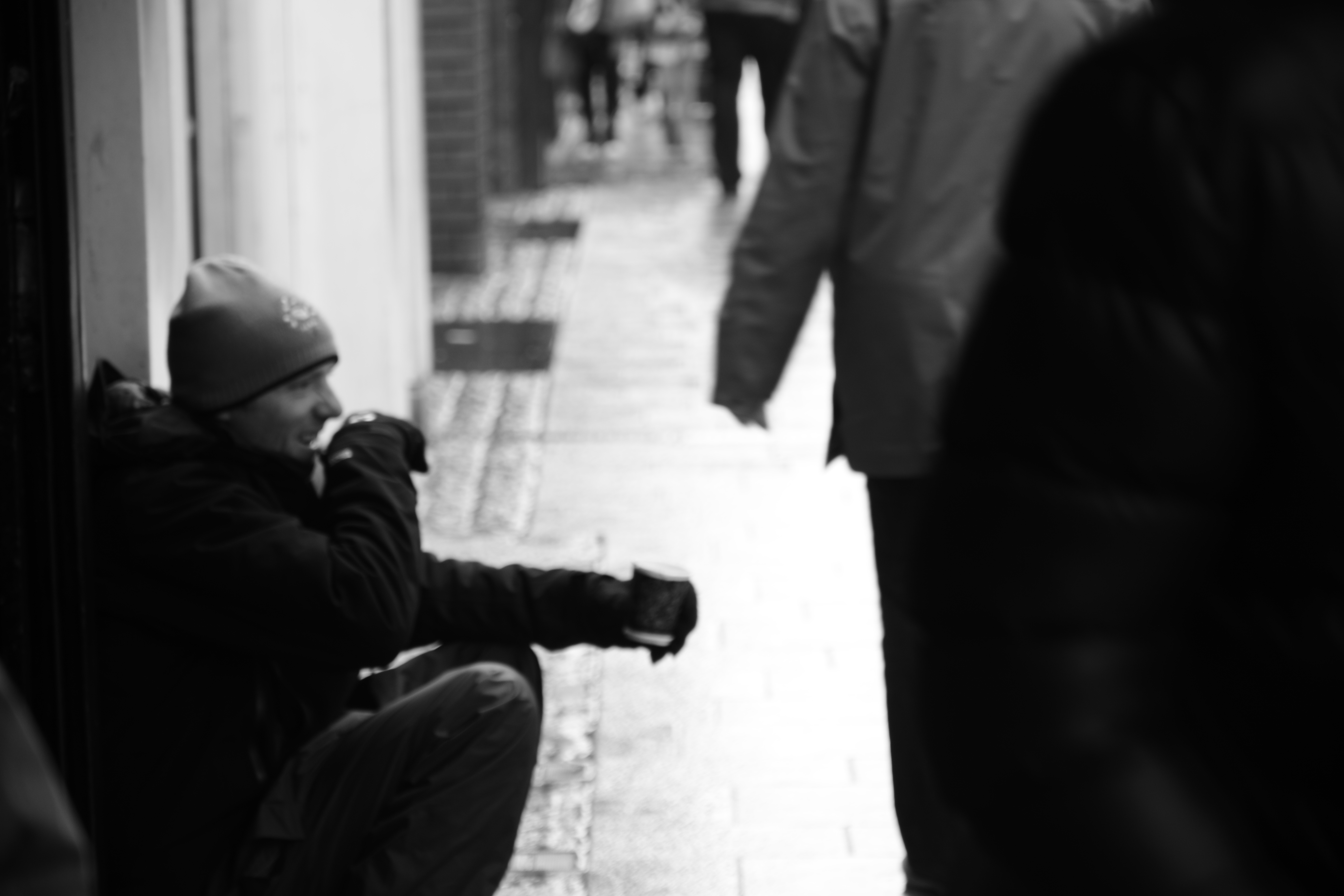
Homeless at Henry Street in Dublin. Photo by: Maira De Gois
Last year, Ireland was among world’s top countries on the Human Development Index (HDI). The nation was in eleventh place in the ranking. This means that Irish people had a good standard of education, health, wealth and equality. However, there is a disturbing reality: you can see many people on the streets begging for money. Many of them have this sad fate because of drug addiction, job loss or family problems. Homeless people find themselves in these appalling situations and their only alternative is to ask pedestrians for few pennies.
James B. (27) has lived on the streets since September last year. James was wrapped up in a blanket to protect himself against the cold. He said: “I’ve no other option besides asking for money. If not, I can’t eat, I can’t survive. I can’t wait for government aid.”
John C. (54) stated: “Things have gotten worse in this country. You can’t find a decent job these days like years ago. It’s better to beg for money than stealing money.”
Without a roof over their heads, they have to strive against hunger and, in some cases, violence. In order to provide permanent housing options, supports, preventive services, the Dublin Simon Community (DSC) supports the homeless and helps them to rebuild their lives. This institution provided services to more than 3,000 people in Dublin, Kildare, Wicklow and Meath who are homeless or are at risk of homelessness. Aoife Mulhall works for Mental Health Department, she remarked: “At Simon, we listen to people who turn to us for help and do everything we can to support them to move out of homelessness into independent living”
Due to their poor living condition, some homeless people can suffer from mental illness or addiction. In one survey carried out in 2013, DSC revealed that out of 163 homeless people who looked for its assistance, 63% suffered from depression, 46% from anxiety, 11% from schizophrenia and 11% from psychosis. To provide mental health assistance every year, Dublin Simon Community receives 52% of Statutory funding and 48% is received from fundraising.
Chart given by Dublin Simon Community
Dublin Simon Community’s goal is to create a more positive future for homeless. Aoife pointed out: “We strive to empower people to access, secure and retain a home of their own by reducing the reliance on short-term emergency accommodation and providing permanent supported housing for people to sustain a home in their local community.” She added: “Moving people into supported housing produces life-enhancing and life-saving results and is more cost-effective in the long run.”
Ar an Luain seo chaite, d’fhreastail tuairim is 50,000 daoine isteach sa chathair, áit a bhí ‘Road to the Rising’ faoi lán seol. Bhí an lá bunaithe ar an saol mar a bhí sa bhliain 1915, rud a bhí suimiúil ann féin toisc gur chuir sé béim ar an gCéad Chogadh Domhanda is an bhfeachtas Suifraigéid. Bhí am chlár leagtha amach le drámaí, léachtanna agus ceolchoirm san áireamh agus laistigh den GPO bhí cuairteoirí ábalta taighde a dhéanamh ar baill chlainne agus an saol lena raibh siad gafa i 1915. Timpeall na cathrach bhí daoine, mná ach go háirithe, gléasta mar a bheadh contrapháirteanna leo i rith na hama. Le taispeántais leagtha amach ar pháirt saighdiúrí Eireannacha sa Chéad Chogadh Domhanda, mar shampla i Gallipoli, bhí na sluaite baillaithe timpeall lár Sráid Ó Chonaill ag labhairt faoi firící nár thuig siad cheanna. Ag tarraingt mórán árd bhí tram ceilliúratha uaidh Iarsmalann Náisiúnta Iompair na hEireann. Ar an dtaobh amuigh den tram bhí an sluán cáilliúl, ‘Votes for Women’ agus ar an gcúl bhí litreacha crochta a scríobhadh go gearrad i ndiaidh an tabhairt i dtír na ngunnaí i mBinn Eadair.
Bhí páirt lárnach ag Amharclann na Mainistreach ar an lá. Bhí ceardlanna léamh filíochta, ag comóradh an tréimhse, agus féachaint siar ar litríocht a tháinig ón am chomh maith. I ndiaidh léacht dar teideal, ‘In search of the Rabble’, d’éirigh liom labhairt le Mary Harrington, scrúdaitheoir de chuid Institiúd Teicneolaíochta Atha Cliath. Bhí teachtaireacht aicí le haghaidh mná ach go háirithe, maidir le luachanna na 1900, ar fiú smaoineamh orthu anois ag teacht chomh fada leis an Reifreann.
Deis iontach a bhí anseo an stair a mhaireachtáil agus níor tháining sé roimh ama. Tá mé ag súil le rudaí móra uaidh ceilliúradh 2016. Feicfidh mé ann sibh.
Having spent many weekends in Galway and viewing myself as somewhat of a Galway aficionado, I felt compelled to share my experiences of this small city in the west of Ireland. If you wish to escape the busy streets of Dublin but still want to immerse yourself in urban life, Galway is the perfect spot for you!
With a population of 75,000 it may be small but it is certainly mighty. Galway is known for its stake in the arts and culture scene and there is always something going on in this town. While the weather can often be less than inspiring, you can be sure to find something to do when you pass through and when the weather is good in Galway it oozes an effervescent energy.
In the city centre there are plenty of bars, pubs, restaurants, cafes and shops to keep you entertained for a long weekend or even a week or two holidays. There is always something happening in the city that is different, making your trip that little bit extra special.
What’s on in Galway?
If you are planning a trip in the upcoming weeks there is lots of exciting events. Over the Easter weekend the annual food festival took place at the Spanish Arches. Paired with sunny skies and not a drop of rain in sight (but plenty of wine) it made for a memorable feast. Whatever your taste buds crave, there was something to satisfy it so I recommend checking it out next year. There is also a weekly market in Galway City, which opens all year on Saturday and Sundays and even on Fridays in July and August. This market has been running for centuries and you can find everything from beeswax candles to falafels to wooden furniture. http://galwaymarket.weebly.com/
Galway Food Festival, Easter Weekend 2015. Photo by Rachael Hussey
Galway Food Festival, Easter Weekend 2015. Photo by Rachael Hussey
Galway Food Festival, Easter Weekend 2015. Photo by Rachael Hussey
Galway Food Festival, Easter Weekend 2015. Photo by Rachael Hussey
Organic fruit and vegetables, Galway Food Festival, Easter Weekend 2015. Photo by Rachael Hussey
Galway Food Festival, Easter Weekend 2015. Photo by Rachael Hussey
For film fanatics, The Japanese Film Festival is coming to the Eye Cinema from the 12th April to the 16th. http://www.jff.ie/
For those who would are looking for more action and adventure, there is the Galway Water Sports Show on the 11th and 12th of April. http://galwaywatersportshow.com/
For the brave at heart who long to be at one with the elements, The Western Lakes and Atlantic Challenge (WLAC) might be what you are after. This cycling challenge suits everyone; it includes a short cycle (family friendly) and also a long cycle for the more athletically gifted. Taking place on the 26th April, it gives you enough time to get into shape before the big day. http://www.wlac.ie/
The Cúirt International Festival of Literature takes place in Galway City this year and it runs from the 21st April to the 28th and includes authors such as Colm Toibin and Jane Hershfield. From a celebration of Yeats to a Poetry Slam, the festival includes an eclectic mix that caters to many audiences. http://www.cuirt.ie/en
Over the summer there will continue to be exciting events so be sure to keep a look out for upcoming events in Galway for Summer 2015.
Where to Eat?
Despite its diminutive size as far as cities go, you can always find somewhere to eat and all appetites are catered for. Whether it is a salad and a healthy juice or hearty pub grub and a nice pint, Galway will have it. Here are my top places to eat depending on the mood you or in or your dietary requirements.
Weekend Brunch
As brunch continues to gain popularity across Ireland and we scratch our heads to think of what life was like before it became part of our weekend ritual, here is the lowdown to Galway’s best brunch options.
Gourmet Tart Co. in Salthill is a great place to go for something quick and delicious. It has a lovely deli and bakery section as well as serving lunch and dinner. On the weekends they cater for the brunch clientele and it is always tasty and the service is reliable. Rachael’s recommendations: brioche French toast, as it is zesty and sweet. http://www.gourmettartco.com/
My favourite place to spend a Sunday morning in Galway is Ard Bia at Nimmos. From the cakes displayed at the entrance door, to the stone bar, to the fresh juices, to the menu, everything is perfection! This place is hidden away under the Spanish Arches and is a must try. Not only is the food delicious but also the vibe is great and the building itself is quaint and full of character. The waiter’s laid back but friendly attitude will make you feel at home especially after a night on the town. Rachael’s recommendations: my absolute favourite brunch dish from here is the buttermilk pancakes, they are fluffy cakes of heaven and with honey, mascarpone and berries accompanied, they are the perfect Sunday treat. http://www.ardbia.com/
Ard Bia at Nimmo’s, Spanish Arches, Galway. Photo by Rachael Hussey
Ard Bia at Nimmo’s, Spanish Arches, Galway. Photo by Rachael Hussey
Ard Bia at Nimmo’s, Spanish Arches, Galway. Photo by Rachael Hussey
Art fro sale in Ard Bia at Nimmo’s, Spanish Arches, Galway. Photo by Rachael Hussey
Gourmet Tart Co. Salthill, Galway. Photo by Rachael Hussey
Lunch
For lunch in the city my best recommendation is McCambridges. Based conveniently on Shop Street in the city centre this is a charming spot. While it may not look like much from the outside, inside there is a large delicatessen grocery store full of specialist foods and a coffee spot. Upstairs is the restaurant and you can often be kept waiting to get your hands on their delectable lunch options. Rachael’s recommendations: the falafel wrap and don’t forget to order a side of sweet potato fries. They have nice desserts for afters as well. https://mccambridges.com/
McCambridges, Shop Street, Galway. Photo by Rachael Hussey
Coffee in the sun. McCambridges, Shop Street, Galway. Photo by Rachael Hussey
McCambridges, Shop Street, Galway. Photo by Rachael Hussey
Dinner
For a fairly fancy dining experience that costs a little extra, it has to be Kai. Based just outside the city centre on Sea Road, this small spot offers something unique to its punters. With a constantly changing menu, Kai keeps you on your toes and everything is made with fresh and organic ingredients and for vegetarians out there, the options are always great. With mains starting at €20 it is not a cheap option but you won’t be disappointed in quality or taste. http://kaicaferestaurant.com/
If you are craving something more exotic, check out eastern Tandoori. With reasonable prices, attentive staff and delicious Indian cuisine, Eastern Tandoori is a hit in my books. Based on Spanish Parade it is easily accessible for those spending the day in the city centre. Rachael’s recommendations: onion bhaji to start followed by tikka masala and garlic naan bread. http://eastern-tandoori-galway.com/
Eastern Tandoori, Spanish Parade, Galway. Photo by Rachael Hussey
Pub Grub Dinner
There are plenty of pubs to choose from and here are a couple of pubs that do great drinks and food too. A few pints or glasses of wine, paired with hearty and flavoursome food might be the ticket after a busy day in Galway.
Everyone who goes to Galway should venture to Salthill, this seaside town is only a ten-minute drive from the city centre and is packed with pubs. Oslo is one that combines a good atmosphere, craft beer and great food perfectly. After taking a stroll down the promenade, be sure to pop in to Oslo for a drink and some food. Rachael’s recommendations: the falafel burger or the broiled salmon. http://www.galwaybaybrewery.com/oslo/
A little bit further outside the city you will find a pub that holds a restaurant upstairs, Tom Sheridan’s Bar & Restaurant in Knocknacarra. You may need a car to venture out here but if you have a rented car or you are willing to get a taxi, you can spend an enjoyable evening here. Rachael’s recommendations: traditional fish and chips but most items I have tried have not disappointed. http://tomsheridans.ie/
Where to Party?
Galway is known as a student city and a party place. Whether you are a student out with classmates or on a long weekend off from work or on a hen/stag do, there are plenty of places to let your hair down with a few drinks and some music. While there are much fewer clubs in Galway compared to Dublin, there is an abundance of pubs and a few nightclubs worth visiting.
Pubs
As well as the pubs mentioned for pub grub there are a couple of city centre pubs that stand out for me.
Tigh Neachtain’s is in the centre of the city and covers all bases for a popular Irish pub. It is over 100 years old so it has character and history, they host live music nights and have over 130 types of whiskey, what more could you want? http://www.tighneachtain.com/
Located on the same street in the Latin Quarter is The Quays. This pub trumps Tigh Neachtain as it is nearly 400 years old and it also provides music throughout the week. This area of town is always buzzing and a great place to start your evening off. http://www.galwaycitypubguide.com/the-quays.html
The Quay’s, Latin Quarter, Galway. Photo by Rachael Hussey
Tigh Neachtain, Cross Street, Galway. Photo by Rachael Hussey
Tigh Neachtain, Cross Street, Galway. Photo by Rachael Hussey
Clubs
The nightclub scene is not huge in Galway as more emphasis is placed on pubs but there are two nightclubs worth visiting if you have the stamina to keep going after visiting the Galway pubs.
Halo is situated on Upper Abbeygate Street and is an upmarket spot. It is over 23s however so not suitable for the younger students. It has a smoking area and has sizeable dance floor areas and with cocktails for under €10 it is pretty reasonable as far as club prices go. http://www.halonightclub.com/
Karma Club is another popular nightclub and is conveniently located on Eyre Square. It is a good spot to hit after 12.00 am when you are looking to keep the party going till the early hours, just be aware nightclubs in Galway close earlier and you will be out on the streets by 2.30 am. http://www.karma.ie/
Coffee and Cake
If you have little interest in hitting the bars, there are plenty of cute coffee and tea joints around town. My favourites are Cupan Tae, which will wow you with its kitschy furnishings and mouth watering homemade cakes and its neighbour, Pura Vida. They do great coffees and juices and it has a substantial outdoor area for a seat in the sun.
Cupan Tae, Quay Lane, Galway. Photo by Rachael Hussey
Cupan Tae, Quay Lane, Galway. Photo by Rachael Hussey
Pura Vida, Quay Street, Galway. Photo by Rachael Hussey
Whatever you enjoy doing on a weekend away Galway certainly has it. Only two hours by car from Dublin and with hourly buses leaving from the quays in the city centre for only €12 single journey, check Galway out this year for an idyllic staycation.
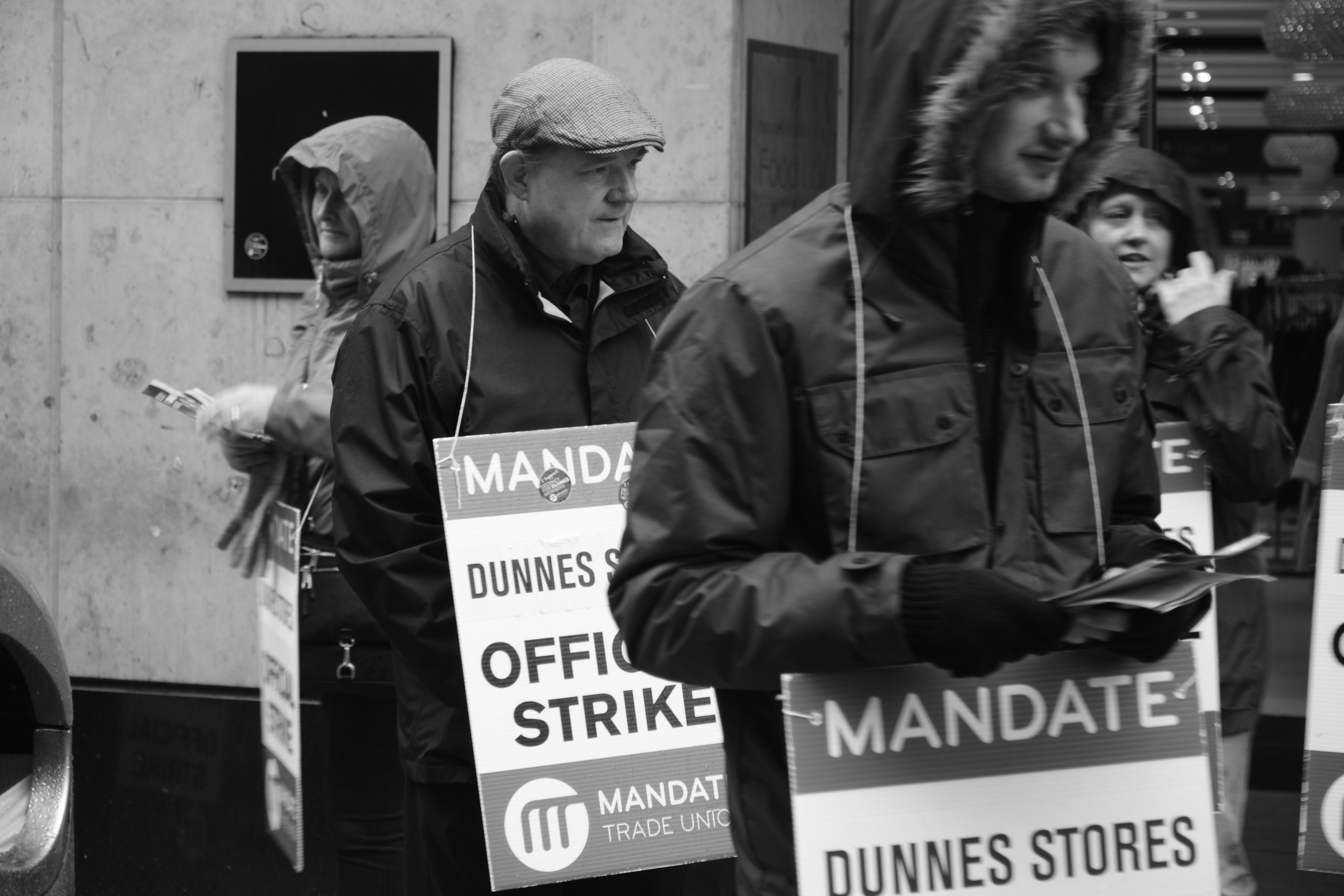
This Thursday, employees from Dunnes Stores went to Henry Street to protest against working conditions, part of a strike against the chain of stores across the country.
The workers are striking for increased job security, more working hours per week and increased pay.
Michael Meegan, organiser for the Mandate trade union, which is seeking to represent Dunnes workers, said: “We claim for better contracts, but the company refuses to talk to us. Most Dunnes Stores workers are working under 15 hours per week. A number of members come to us very frustrated because they cannot get a bank loan or credit union loan.”
While journalists and photographers were watching the protest, some employees were distributing “Decency for Dunnes Works” stickers urging people to support the workers’ claims and not cross the picket line.
Sarah B, sales assistant, said: “Basically, we want security in our job because 15 hours is not enough. What they do is to give you a three month contract and then they let you go and hire someone else.We call for right to representation, secure jobs and fair pay.”
Female culinary students are at a premium but where are all the female chefs?
Aoife Lawless looks at what is holding back women chefs in high-end restaurants…
What’s happening to all our female chefs? When I enrolled in Culinary Arts six years ago my fellow female classmates were in the majority, and most of us wanted to be chefs. A recent study conducted a survey of 170 Irish head chefs: only 15% were female. So where have the women gone?
“Cooking has traditionally always been female,” says Máirtín Mac Con Iomaire, veteran lecturer at DIT Cathal Brugha Street. Mac Con Iomaire doesn’t agree that the industry as a whole is male dominated, and says the issue of gender divide in the professional kitchen boils down to “positions of seniority rather than a question of male dominance”.
There is, he admits, a historic division of labour. “Historically, the female ‘cooks’ veered into institutional cooking, such as in hospitals and schools, whereas their male counterparts sought out ‘status’ as leading chefs in renowned restaurants. Female cooks, male chefs!” Similar “glass ceilings”, he says, loom over other professions such as teaching and nursing.
Mac Con Iomaire went on to give me at least twenty names of prominent female chefs in the present day, most at Michelin level, spanning Britain and Ireland. However, such a short list succeeding only in driving me back to my original question: Where are all the female chefs?
“Female chefs are often pushed towards the pastry section,” says researcher Mary Farrell. “A female chef interning at Dublin’s prestigious Michelin starred restaurant, Chapter One, was directed towards pastry by her male mentor, advising her that‘that’s where you’ll make money’.” Farrell, a PhD student, is trying to answer, in rigorous academic terms, that same question as to the whereabouts of leading female chefs.
“They’ll make excuses about unsociable hours, the desire to rear a family and the assumption that female chefs will want to veer into pastry at some stage of their careers”,says Farrell, who doesn’t buy these answers and instead believes that “the industry itself is to blame”, that the male chefs in positions of leadership are controlling the fate of their female subordinates.
A successful business woman herself, Farrell graduated from Cathal Brugha Street in 1984, long before the Culinary Arts programme became a degree. She has owned multiple businesses in the hospitality industry; she was head chef at one of these, Café Fresh, a vegetarian restaurant in the Powerscourt centre.. At present she owns and runs a catering company accommodating for special dietary requirements such as Coeliac disease, dairy intolerance and diabetes.
She has in the past worked with a male head chef who was “aggressive and resistant to change”, she says, creating an awkward and hostile kitchen environment for all his colleagues. As a woman, she was treated as though she “didn’t know what she was talking about”, no matter what the issue, and his opinion was “absolute”. When he left her organisation he went on to work at a Michelin level restaurant and she was forced to take over the kitchen. “In his absence a change occurred in the kitchen – the tension was lifted and the staff were happy.” She doesn’t think male chefs can look far enough past their own ego to see a restaurant as a whole entity, as a business, not just a stage on which they play the lead.
Tom Kerridge, head chef of the Hand and Flowers, a Michelin two-star gastro-pub in England, made some controversial statements regarding female chefs at the Cheltenham Literature Festival in October. “I like girls in the kitchen a lot: it brings down that testosterone level.” He continued to disparage female chefs, stating that women lack the “fire in the belly” to make it at Michelin level. “They are out there; it’s just whether it’s the industry for them. I’m not sure, at that level,” he added before further patronising remarks such as “girls in a kitchen make blokes feel happy at work” before covering himself with a last-minute save: “This doesn’t apply to just girls. We have loads of blokes who do a runner because the pressure and intensity of cooking at that level is so intense.”
All this talk made me think about my own kitchen experiences and reflected on how I had been treated as a young female chef.
On my first internship I was immediately referred to the pastry chef for training in a separate kitchen from the main one. The pastry chef was delighted to have company in his usually segregated kitchen and I was relieved to not be joining a much feared “boys’ club” environment. I meekly pointed out in my mid- apprenticeship review with my college supervisor and head chef that I had no interest in pastry and perhaps I could be involved in the workings of the main kitchen. I was then entrusted to the sous-chef, a pregnant Polish woman who was strict but kind and taught me more in one month than I’d learned in all of my first year in college. The chef directly under her, a male chef, barked orders at me daily and refused to give me measurements for recipes whilst scoffing at my inadequacies.
In my third year I interned at Fallon & Byrne and it was here that I fell back in love with cooking; I had already begun plotting a career as a writer, but this place drew me toward a career as a chef. The hierarchy of the restaurant was equally divided between males and females. The head chef was only 30 and had risen to his position not only through years of experience, but also through education. He had returned to Cathal Brugha Street a couple of years after completing his chef training in order to study management and it was with his combined skills he achieved head-chef status. His sous-chef was a very pregnant and very capable woman of the same age. They had worked together at a hotel and when he graduated to the position of head chef at Fallon & Byrne he took her with him, along with two other female chef-de-parties. Below the head- and sous-chef, male chef-de-parties outnumbered females three to two, but the numbers were evened out with the addition of a pastry chef and occasional chef-de-partie. Another intern from Cathal Brugha Street was female and, lastly, the recently promoted kitchen porter was a male commis-chef. The female chefs were both feared and respected, though they rarely raised their voices. They made it clear they had standards and these were adhered to even when they were not present. I continued to work for them throughout my final year in college and was never put in a position where I felt uncomfortable or undervalued because of my gender and the kitchen environment maintained constant professionalism.
My experiences in a professional kitchen highlighted many of the issues Mary Farrell raises about attitudes to female chefs. I was directed towards pastry. Male chefs did, sometimes, try to undermine and bully me and certainly did succeed in clouding my judgement for a time. Yet the main excuse, as was given to Mary, of females stepping back for family life was unfounded in my experiences, I had witnessed female chefs balancing family life and their careers whilst still providing positive role models.
But I was never content to chop and peel for endless hours, or endure burns, cuts and scalds on a regular basis in the hope of eventually obtaining a senior role in a kitchen after spending four years completing my degree. Perhaps therein lies the answer: education creates aspirations beyond manual labour for minimal reward. Many male chefs rise through the ranks from porter to head chef. The male students who dropped out of Culinary Arts continued in the profession, some of them very successfully. Many of my female peers continued their education at Masters and PhD level in areas of product development and education, the latter now delivering the lectures they once attended.
The glass ceiling of female seniority in the professional kitchen may remain unbroken, for now, simply because female chefs may have their eyes on a bigger prize.
On November 2013, Ukrainians took to the streets to claim a better future. In Maidan, the central square of Kiev, protesters expressed their indignation and outrage at the lack of economic growth, mismanagement and corruption. The wave of violent protest that ensued left injured bodies scattered on the streets and resulted in the deposing of the President, Viktor Yanukovych. Thus, the Euromaidan Revolution, also known as Revolution of Dignity, was established to give back hope and dignity to the citizens.
Between the 12th and 20th of March, the Ukrainian Connection Society organized the photographic exhibition “Ukraine: Inspiring Dignity”, which took place at European Union House. Most of the pictures portrayed people on the streets who were fighting for freedom and identity which were devastated by corrupted government. Spend a few minutes walking around the hall, it is enough for anyone to realize that dignity was the word so well represented in several photographs displayed on the stand board.
For Andriy Vysidalko, dignity is a word which carries a lot of meanings and it would be impossible to express in just a few sentences. Andriy has lived in Ireland for 13 years and he could not turn a blind eye to what is happening in Ukraine. He states: “Concept of Ukraine inspiring dignity…”. After Andriy had taken a deep breath, he continued: “The revolution itself was called Revolution of Dignity. Simply because people rose up against a corrupted regime, which ruled Ukraine a number of years. It represents a struggle for better life. It represents Ukraine identity… at a different level. It represents a culture struggling for a better future.”
The name of the event had real importance. Padraig Purcell, project coach of the Ukrainian Connection Society, stated that the name should represent the brave and values based stand the people of Ukraine took. Padraig pointed out: “When discussing the most appropriate name for the exhibition I initially proposed ‘Ukraine Inspiring Freedom’. Anya [founder of the event] considered dignity was appropriate. So, the two of us came up with ‘Ukraine Inspiring Dignity’.” He adds:“Dignity means the way in which the people in Ukraine went about winning freedom from a very corrupt terror regime. They are very gentle, very calm, very musical and very wise about the way they changed their world and took a dignified step towards freedom. It was not violent in mentality or in actuality. It was a totally different way to do things; a lesson to the people of our world that there is always hope and there is always a better way to achieve goals if people work together for good and each other.”
Far from home since her early twenties, Anya Kozak was one of the founders of the Ukrainian Connection Society. She has lived in Ireland for eight years after being a resident in several countries such as Russia, United States and Sweden. Anya stated that the main purpose of this event was to spread the truth of what happened in Ukraine. She said: “Our main agenda of this exhibition is to spread the truth and tell people, Irish people, foreigners who come to Ireland that Ukrainians got fed up with corruption, went to streets for dignity and they were not leave until their voices were heard by the government.” Anya added : “ It could be seen in history that they had to stay on streets for three or four months in very bitter cold and they stood up for their rights.”
The events had support from the Ukrainian church community, Lithuanian embassy and Ukrainian embassy in Ireland. In addition to this, Anya considered that they also had a lot of support from Irish and Ukrainian people in general. The founder pointed out: “ The Lithuanian embassy got on board with us, they were very interested in sharing this exhibition and spreading the truth and awareness in Europe of what really happened because they went through it a few years back and they understand the situation that the Ukraine is going through now.”
“Ukraine: Inspiring Dignity” represents for Anya an “immense will of power of Ukrainian people”. She remarked: “I am impressed to see my people stand up for their own rights. I have never seen such persistence in any other country. They are ready to lose the most precious gift, which is their lives, to stand up for the rights, to stand up for the rights of their children and to eliminate post-Soviet corruption in Ukraine.”
All these members of Ukrainian Connection Society expressed what many Ukrainians long for their future: a better life. A life in which they can live with dignity, free from violence, fear and corruption.
What is it about the Whelan’s? How comes all the cool Indie bands are playing in this venue? No one knows, but once more, here I am standing in the queue. A queue? Here in Dublin for a small Indie band? It was quite surprising.
Happy People is the second album released by the band from Birmingham. They have been on their UK tour, been to Belfast and took some time to come down to Dublin. It is not that often that small or mid-famous bands are coming to Ireland’s capital city.
Anyway, they were here and I was queuing. Let’s analyse what is to be found as part of Peace’s audience. First of all, I am glad to see that the gig is a strictly over 18’s. It means that young groupies won’t be around the stage, screaming and throwing their bras on stage. Good point. Very good point. That’s probably a concept that I should export to Paris.
It is even more a good point since Peace is one of those cool British bands that is very popular amongst the “cool kids”. You know, those “I’m-just-being-cool-so-what-if-I-get-drunk-I’m-already-15-Mom” kind of people. Thank God they are not the only ones to like Peace.
Time to get in. Some girls were stopped at the entrance. It’s strictly over 18’s and the bouncers aren’t making any exceptions. Is that a smile on my face? Maybe.
But the smile did not stay for long. As we entered the venue with my friend, we saw what we feared. The first rows were occupied by really young women. I forgot that over 18’s meant that 18 and 19 years old were allowed to be in here. Damn it.
Some of them have already started to scream things at anyone who crosses the stage and they are taking a ridiculous amount of selfies, dropping their phone from time to time as a result of the one and only drink that they ordered. Someone please help us.
And that’s when Princess arrived. Princess is the name of the supporting band, they’re from Dublin and I must admit that they did a good job. Generally speaking, supporting bands aren’t anything special. They are doing a kind of “musique d’ascenseur” – the music which is played in some fancy elevators, it’s not bad, but no one gives a damn.
Surprisingly, it was not like this for Princess. They had catchy tunes, and even if some giggles were heard from time to time, most of the audience were captivated by the band. The sound of the drums was again too loud, but that’s part of the Whelan’s way of doing things, I guess. Nonetheless, they managed to entertain the crowd. It was a very pleasant introduction to the second part of the evening.
As they finished their set, I turned around. Teenage girls everywhere. Yes, I’m kind of obsessed by their presence. They freak me out.
I decided that I would stay a bit in the front to wait for the band, take a few pictures and then… retreat. Hurry! Before they push you against the stage. They might appear like tiny creatures, but they do have strength.
Peace’s members started to arrive on stage, I took few photos and escaped, leaving my friend on the first row alone. I found shelter in the back of the room, where I noticed that the venue was separated in two. Young girls in the front, women and men in the back. Clever adults.
Peace started their set with ‘Bloodshake’ ( From their 2012 EP – Delicious ), one of the songs that made them famous. The effect is immediate. When you’re listening to ‘Bloodshake’, you could easily imagine yourself on a Caribbean beach, with some traditional music, drinking a cocktail made out of several exotic fruit.
Unfortunately, the band encountered several sound problems. The drums were too loud, the guitar wasn’t well adjusted and the mic wasn’t working properly. The guys seemed quite pissed off, but kept on playing their setlist. In a different order than the one that was initially planned.
As a matter of fact, what was supposed to be a setlist aimed at reaching a musical intensity pick was a bit ruined by the sound problems. ‘California Daze’ (From their 2013 debut album – In Love), one of their softest and dreamiest tracks came in too early. I don’t deny that the song is brilliant, but the timing was not good. I won’t put the blame on them, they had to play it so that the adjustments could be made for ‘Money’ ( From their 2015 second album – Happy People).
As soon as they started ‘Money’, the audience started to jump up and down. The problems encountered by the band did not seem to have any effect on half of the audience. Good for them.
They kept on going with ‘Lovesick’ and ‘Wraith’ ( Both from In Love ), and people looked rather happy. Girls were screaming things that no one could really understand. One was pointing at the bassist, screaming that he was the one doing the show. “You’re THE boy tonight, go for it!”
Then it was the encore time, where they decided to end up with ‘World Pleasure’ (From their last album). This was a good choice, the song lasts for about 6 minutes and is pretty catchy. A young girl climbed on the side stage, pretending to rap and showing off her rapper dance moves. She was soon asked to get off the stage by a staff member, went down … and climbed up again. I told you that teenagers are strong. And strong-willed. A bouncer eventually came to bring her down and the show ended. How glad I was to be in the back of the room.
I turned to my neighbour, a friendly man all suited up and asked him what he was doing here, since I thought that this kind of band was only praised by teenager girls. He chuckled. “Oh, my friend had a spare ticket, so it was either being alone at home on a Friday night, or being here at Whelan’s. And I must say that I quite enjoyed the gig.”
If I had to sum up, I’d say that :
The concert was pleasant, but nothing amazing happened.
Peace managed to play despite the fact that a lot of technical problems occurred, so I salute them for that.








You must be logged in to post a comment.